Your business plan is only useful if someone other than you can run it. At Series B, the board wants defensible assumptions. Your new VP Finance wants a working model on day one. Your CFO needs to stress-test burn against three hiring scenarios before next quarter's review.
A static document in Google Docs does none of that. The right business planning software should hold the narrative, the financial model, and the execution rhythm together, so your leadership team can operate from it without routing every question back through you.
The global business plan software market reached $1.39 billion in 2025 and is projected to grow at 7.4% CAGR through 2034, according to Straits Research (2026). Demand is rising precisely because founders recognize that planning needs to be a system, not a one-time exercise.
This guide covers 21 tools across plan writing, financial forecasting, strategy execution, and accounting-connected planning. Use it to find the right fit for your stage and workflow.
What's inside
This guide is for Series B SaaS founders, finance leads, and operators who need planning software that goes beyond a polished document. Tools were selected based on four criteria:
- Planning depth: Does the tool handle forecasting, scenarios, and assumptions, not just text?
- Board-readiness: Can it produce investor-grade outputs and financial statements?
- Collaboration: Can Finance, GTM, and Product co-own parts of the plan?
- Category coverage: The list spans plan writing, financial modeling, accounting data, and strategy execution
TL;DR
- Best overall for investor-ready planning: LivePlan gives founders guided writing plus financial forecasting and benchmarks
- Best for modern plan writing: Upmetrics combines templates, AI writing support, and a pitch deck builder
- Best for startup ideation: IdeaBuddy and Cuttles help teams move from a rough idea to a structured plan
- Best for financial modeling: PlanGuru, Modeliks, and Causal handle forecasts, scenarios, and driver-based assumptions
- Best for strategy execution: AchieveIt and ClearPoint Strategy fit teams that need dashboards and quarterly accountability
- Best for accounting-connected planning: QuickBooks and Xero give finance teams real data to anchor forecasts
What is business plan software?
Business plan software helps teams create, organize, forecast, and present a business plan using guided templates, financial modeling tools, collaboration features, and export-ready documents.
For a scaling SaaS founder, this category splits into four distinct jobs. Some tools focus on writing the plan narrative. Others specialize in financial projections and scenario modeling. A third group handles strategy execution after the plan is approved. A fourth provides accounting data that grounds your forecasts in actual numbers.
Core features to look for
- Guided business plan templates and structured writing flows
- Financial forecasting, cash flow projections, and what-if scenarios
- Scenario planning with assumption editing across downside, base, and upside cases
- Pitch deck and investor document exports
- Collaboration controls, version history, and shared editing
- Accounting or spreadsheet integrations for live financial data
- Goal tracking, initiative dashboards, and execution reporting
- Security, permissions, and data access controls
Business plan software versus templates
A template documents a point-in-time strategy. Planning software keeps the assumptions alive. When your VP Finance wants to model what happens if churn rises two points, a spreadsheet template requires manual reconstruction. Software built for scenario planning lets you adjust one driver and see the downstream impact across revenue, headcount, and runway in minutes.
For SaaS founders preparing for a fundraise or board review, the ability to update assumptions quickly, distribute the model to Finance and GTM leads, and export a board-ready summary is the practical difference between a living plan and a filing cabinet document. Tools that connect to QuickBooks or Xero also close the gap between your financial model and your actual numbers, which matters when a board member asks whether your actuals are tracking to plan.
When to use business plan software
Prepare for fundraising or lender review
Use a plan-writing tool like LivePlan or Upmetrics when you need a clean narrative, auditable financial projections, and polished exports. For SaaS, that means clearly modeling ARR growth, CAC payback, burn multiple, and headcount plans, so investors can stress-test your assumptions rather than question your structure.
Model cash flow and operating scenarios
Reach for a dedicated forecasting tool like PlanGuru, Modeliks, or Causal when the board wants to see three scenarios before the next off-site. Driver-based modeling lets you tie revenue to sales capacity, churn assumptions, and expansion rate, so your downside case is credible, not a wild guess. Dedicated budgeting and forecasting software makes that iteration fast.
Align the leadership team around execution
Use strategy execution tools like AchieveIt or ClearPoint Strategy when the plan has been approved and ownership needs to land with Finance, Product, GTM, and CS. These tools convert strategic initiatives into tracked milestones with dashboards, so you stop running weekly status meetings to find out where things stand. Good sales planning software and account planning software plug into this layer too.
Business plan software comparison
The table below covers all 21 tools with verified pricing and G2 ratings. Rows are ordered by relevance to the primary planning job: Plan writing first, then financial modeling, then accounting data, then execution tracking.
| # | Product | Best for | Key differentiator | Pricing | G2 rating |
|---|---|---|---|---|---|
| 1 | LivePlan | Investor-ready plans | Guided plans plus financial forecasting and benchmarks | From $15/mo (annual) | 4.5/5 |
| 2 | Upmetrics | Modern plan writing | AI writing, templates, pitch deck builder | From $14/mo (annual) | 4.7/5 |
| 3 | IdeaBuddy | Startup ideation | Business canvas and step-by-step guidance | Free trial; paid plans available | 4.8/5 |
| 4 | Enloop | Automated scoring | Plan scoring and financial ratio analysis | From $11/mo (annual) | N/A |
| 5 | Bizplan | Fundraising stories | Modular visual builder with financial command center | From $20.75/mo (annual) | 3.7/5 |
| 6 | Cuttles | Early-stage startups | Simple pitch and plan builder | Contact for pricing | 4.4/5 |
| 7 | iPlanner | Advisor-led planning | Collaborative planning workspaces | Contact for pricing | 4.5/5 |
| 8 | Business Sorter | Visual strategy planning | Card-based planning system with task tracking | 14-day free trial; contact for pricing | 4.8/5 |
| 9 | PlanGuru | Financial forecasting | Up to 10-year budgeting, scenarios, and three-way forecasting | From $83/mo (annual) | 4.5/5 |
| 10 | GoSmallBiz | Small-business guidance | Planning plus advisory and compliance bundle | From $15/mo | N/A |
| 11 | BizPlanBuilder | Funding documents | Templates plus financial models for funding rounds | From $49/mo | N/A |
| 12 | StratPad | Step-by-step strategy | Guided strategy builder with performance tracking | Contact for pricing | N/A |
| 13 | Smartsheet | Collaborative execution | Spreadsheet-style work management and dashboards | From $9/member/mo (annual) | 4.4/5 |
| 14 | Aha! | Product-led strategy | Roadmaps connected to strategic planning and goals | From $9/user/mo (annual) | 4.4/5 |
| 15 | AchieveIt | Plan execution | Strategic initiative tracking and accountability dashboards | Custom pricing (20-user minimum) | 4.4/5 |
| 16 | Wrike | Project-based execution | Work management tied to deliverables and resource planning | From $10/user/mo | 4.2/5 |
| 17 | QuickBooks | Financial visibility | Accounting data to ground plan assumptions | From $19/mo (promotional) | 4.0/5 |
| 18 | Xero | Cloud accounting | Bank-connected reporting and financial management | From $27/mo | 4.4/5 |
| 19 | Modeliks | Financial modeling | Driver-based models, investor reports, and KPI dashboards | From $19/mo | 4.9/5 |
| 20 | ClearPoint Strategy | Strategy reporting | Strategy dashboards, KPI tracking, and automated reporting | Custom pricing | 4.6/5 |
| 21 | Causal | Scenario modeling | Integrated financial and operational planning (now part of Lucanet) | Custom pricing | N/A |
Best business plan software for 2026
1. LivePlan

LivePlan is a business planning platform built for founders and advisors who need a structured plan plus financial forecasting in one tool. It guides you through each section of a business plan with prompts, connects financial projections to your narrative, and produces pitch-ready and lender-ready exports. QuickBooks Online and Xero integrations let you track actuals against your plan after publishing.
Best for: Founders preparing investor, lender, or board-facing plans who want one tool for writing and forecasting.
Key features
- Guided plan builder with AI writing assistance
- Financial forecasting with what-if scenarios
- Market research and industry benchmarks
- Budget-versus-actual dashboards
- Pitch presentation and PDF exports
Why choose LivePlan: It is the most complete option for founders who need a polished plan and a working financial model without managing two separate tools. The benchmarking feature helps validate whether your assumptions look credible compared to your industry.
LivePlan pricing: Standard runs $20/mo monthly or $15/mo billed annually. Premium is $40/mo monthly or $30/mo annually. A LivePlan Expert add-on costs $30/mo for one-on-one video support.
G2 rating: 4.5/5
2. Upmetrics
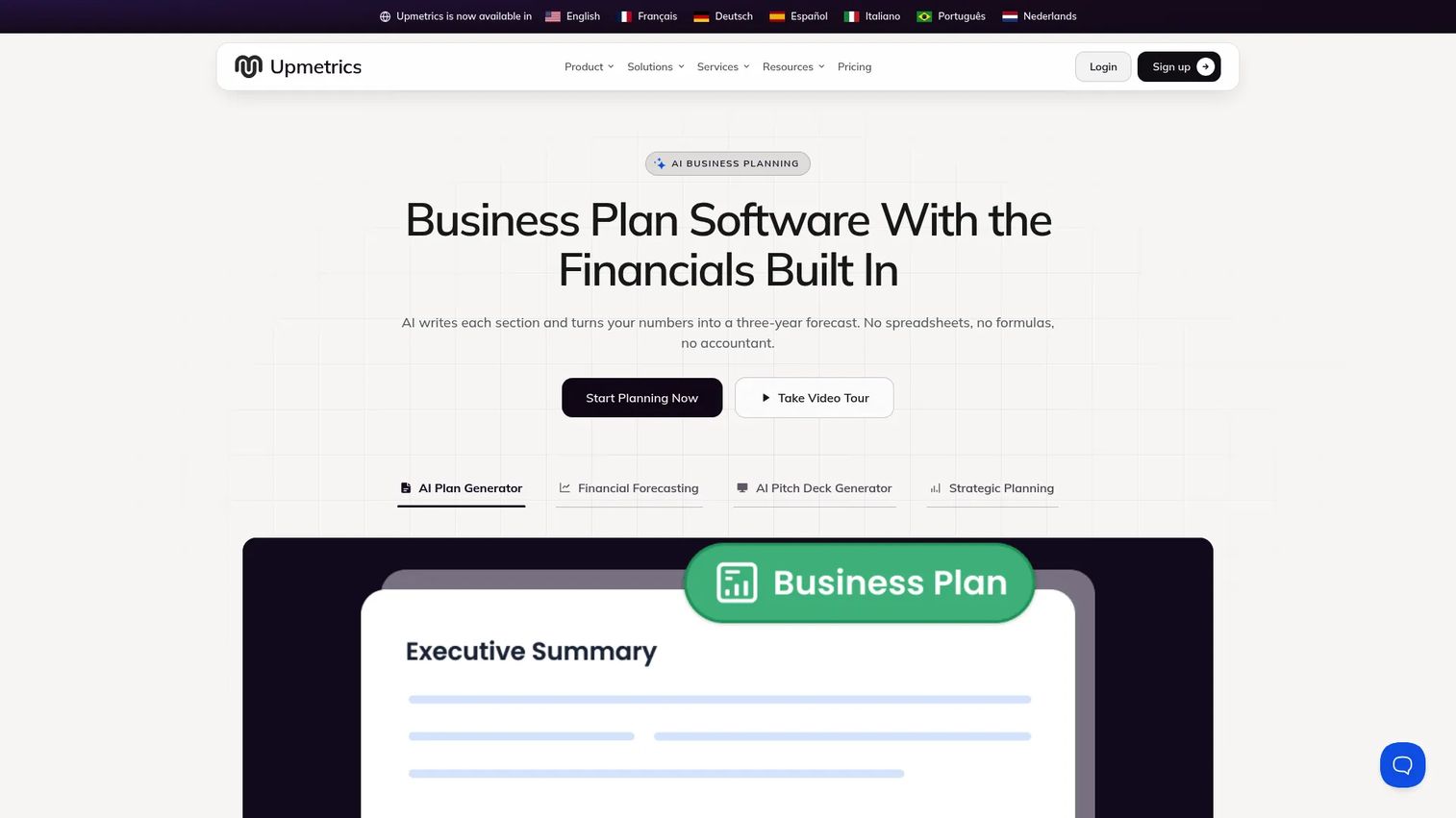
Upmetrics is an AI-powered planning platform that covers business plan writing, financial forecasting, pitch decks, and strategic planning. It includes a library of templates, AI industry research reports, interactive financial dashboards, and collaborative workspaces with version control. Exports cover PDF, Word, PowerPoint, and Excel.
Best for: Entrepreneurs and consultants who want to move quickly from rough concept to polished investor document.
Key features
- AI plan writing and industry research
- Financial forecasting with interactive dashboards
- AI pitch deck builder
- Collaborative workspaces with multi-versioning
- PDF, DOC, PPT, and Excel exports
Why choose Upmetrics: For SaaS founders who have done this before and want a faster drafting experience, Upmetrics removes the blank-page problem. The AI research reports save time on market sizing, which is usually the most painful section.
Upmetrics pricing: Premium starts at $19/mo monthly or $14/mo billed annually. Professional (for consultants managing multiple clients) is $49/mo monthly or $37/mo annually. A 7-day demo access and 15-day money-back guarantee are available.
G2 rating: 4.7/5
3. IdeaBuddy
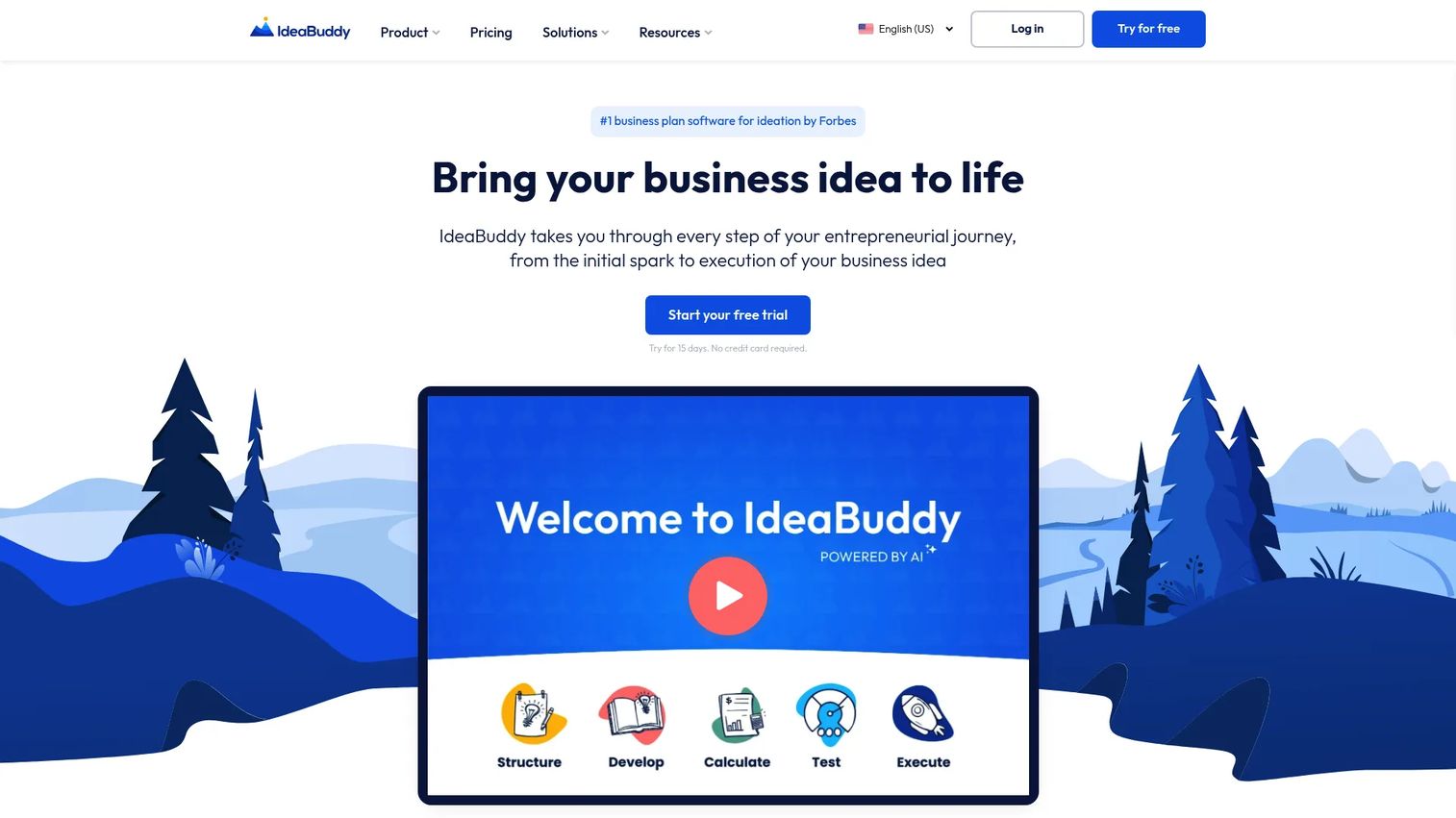
IdeaBuddy is an AI-powered planning tool that guides teams from early idea validation through a structured business model. It uses a canvas-based approach and step-by-step planning flow, making it practical for founders exploring a new product line or market before committing to a full plan.
Best for: Entrepreneurs and early-stage teams validating a business idea or testing a new market before writing a formal plan.
Key features
- Business model canvas and step-by-step planning
- Idea validation workflow
- Financial planning and projections
- AI writing assistance
- Export to PDF, Word, and Excel
Why choose IdeaBuddy: At Series B, the value is not writing a plan for your core product. It is pressure-testing a new product line or expansion market before you allocate headcount. IdeaBuddy's canvas structure forces the right questions early.
IdeaBuddy pricing: A free 15-day trial is available. Paid Dreamer and Founder plans exist, but exact prices were not displayed on the pricing page during verification. White Label and Enterprise pricing require a quote. Contact IdeaBuddy directly for current plan costs.
G2 rating: 4.8/5
4. Enloop
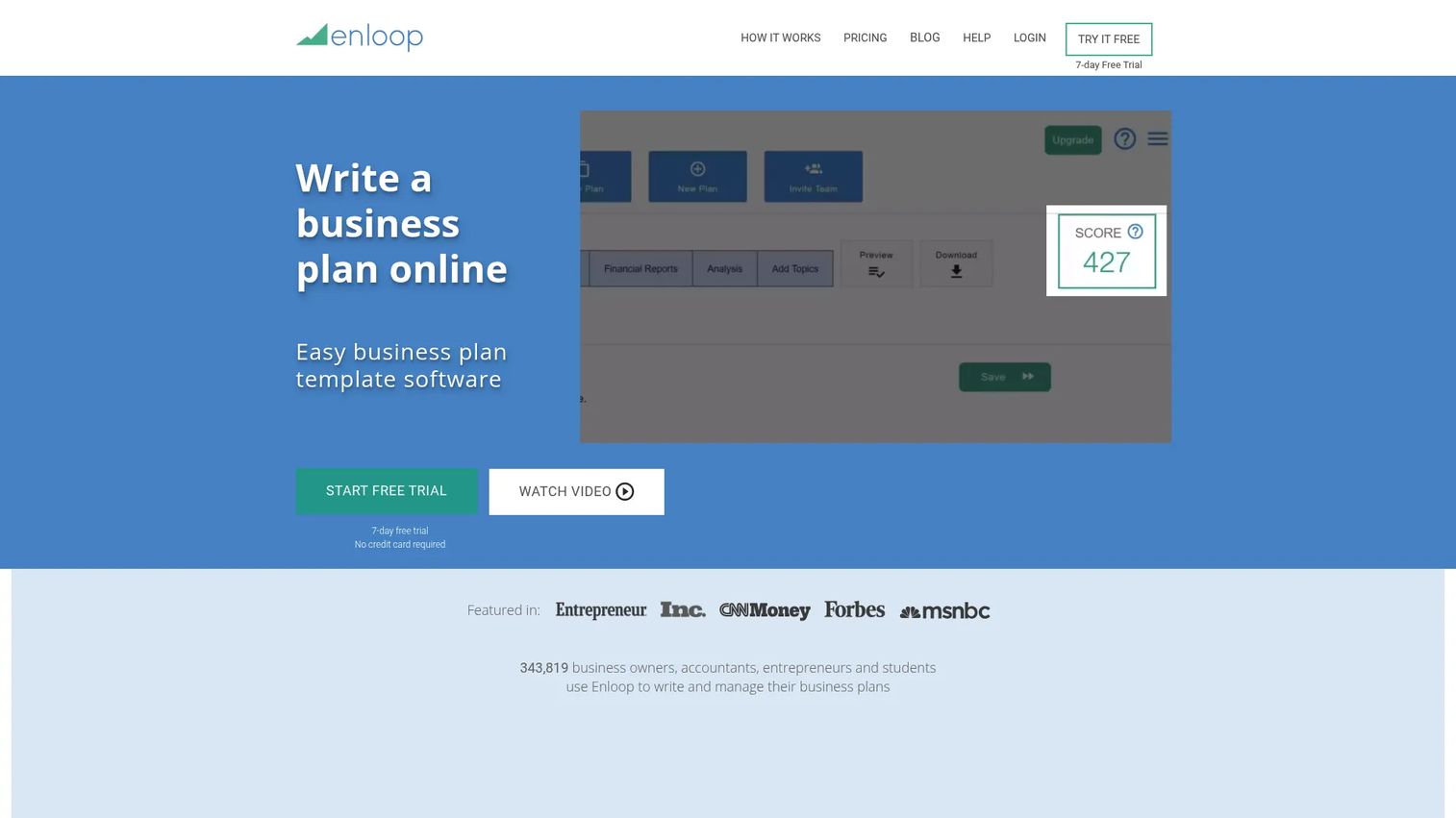
Enloop is online business-plan software that automates financial forecast generation and scores your plan in real time as you write. Its TextSync feature links your narrative text to your financial data, and the performance score gives immediate feedback on plan quality and financial health. Note that as of October 2026, Enloop is not currently accepting new registrations while undergoing a service upgrade.
Best for: Entrepreneurs and small teams who want immediate, automated feedback on the quality and financial strength of their plan.
Key features
- Automated financial report generation
- Real-time performance scoring
- Financial-ratio analysis
- TextSync writing linked to financial data
- Export-ready plan documents
Why choose Enloop: The automated scoring is the differentiator here. Rather than finishing a plan and wondering whether your numbers look defensible, Enloop surfaces issues as you work, which saves a review cycle.
Enloop pricing: A 7-day free trial is available. The Detailed plan runs $19.95/mo monthly or $11/mo billed annually. Performance is $39.95/mo monthly or $24/mo annually.
5. Bizplan
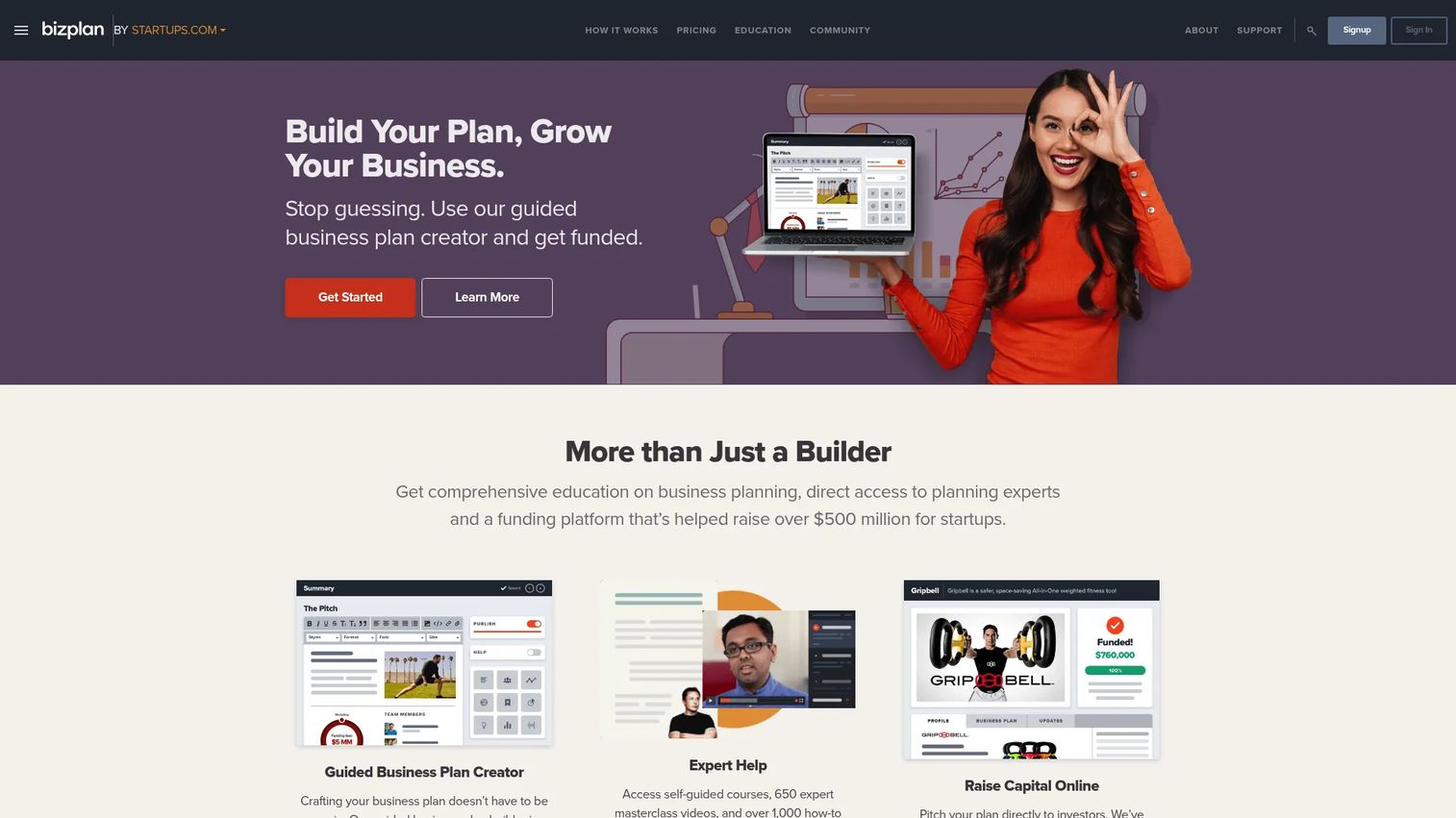
Bizplan is a startup-oriented planning tool with a modular, drag-and-drop plan builder designed to produce a fundraising story rather than a static document. It includes a financial command center with revenue projections and financial reports, plus online sharing and PDF publishing.
Best for: Startups and early-stage founders who want a plan structured around investor storytelling and fundraising momentum.
Key features
- Drag-and-drop modular plan builder
- Financial command center with revenue projections
- Online plan sharing and PDF publishing
- Progress tracking across plan sections
- Startups.com platform access included
Why choose Bizplan: The fundraising orientation is the point of differentiation. If your immediate goal is a funding round and you want the plan to read like a pitch rather than a compliance document, Bizplan's structure reflects that intent.
Bizplan pricing: Monthly access is $29/mo. Annual billing runs $20.75/mo, billed as $249 per year. Lifetime access is a one-time $349 payment.
G2 rating: 3.7/5 (based on 3 reviews)
6. Cuttles
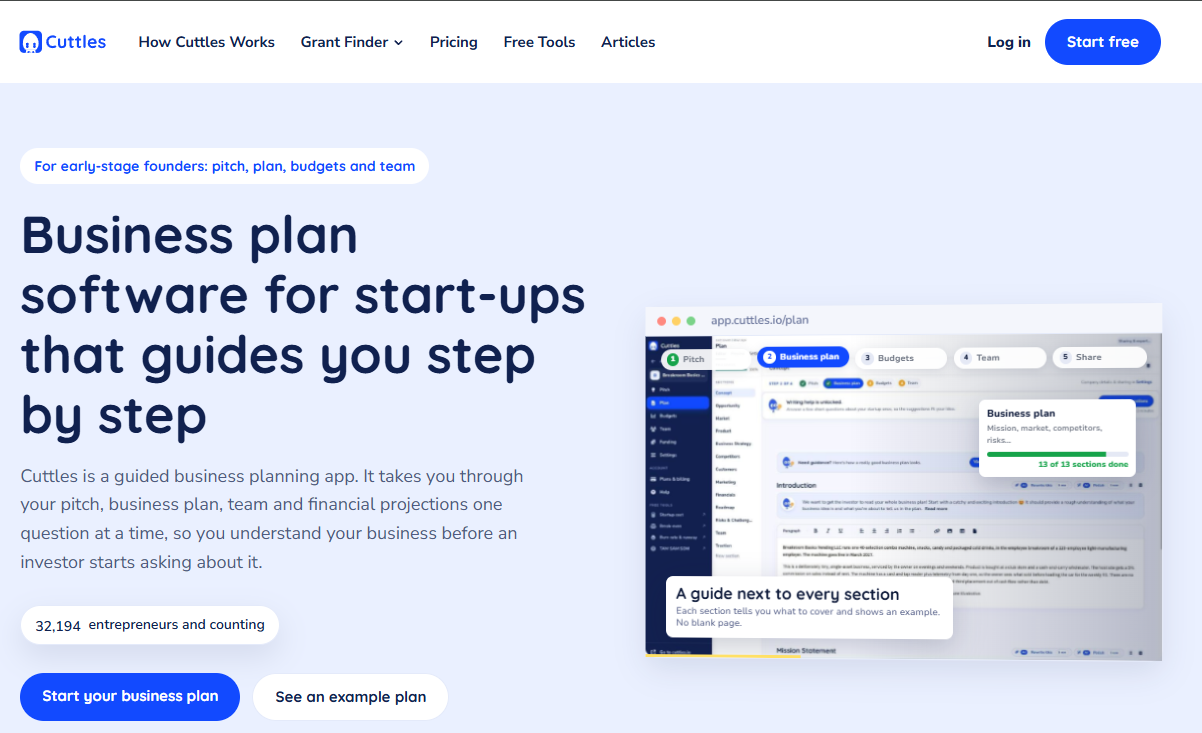
Cuttles is a guided startup planning tool covering pitch creation, business plans, team definition, budgets, and financial projections. It focuses on keeping the planning experience simple and accessible for early-stage founders who do not need deep financial modeling tooling.
Best for: Early-stage entrepreneurs who need to move from idea to investor-ready pitch without a finance background.
Key features
- Startup pitch and plan builder
- Budget and financial projection tools
- Team structure planning
- Guided planning steps
- Collaboration and sharing
Why choose Cuttles: For founders earlier in their journey or testing a new venture from an existing SaaS company, Cuttles reduces the planning time significantly. Later-stage teams needing driver-based scenario modeling will want to pair it with a more robust forecasting tool.
Cuttles pricing: Specific pricing tiers were not available on the first-party site during verification. Contact Cuttles directly for current plan details.
G2 rating: 4.4/5
7. iPlanner
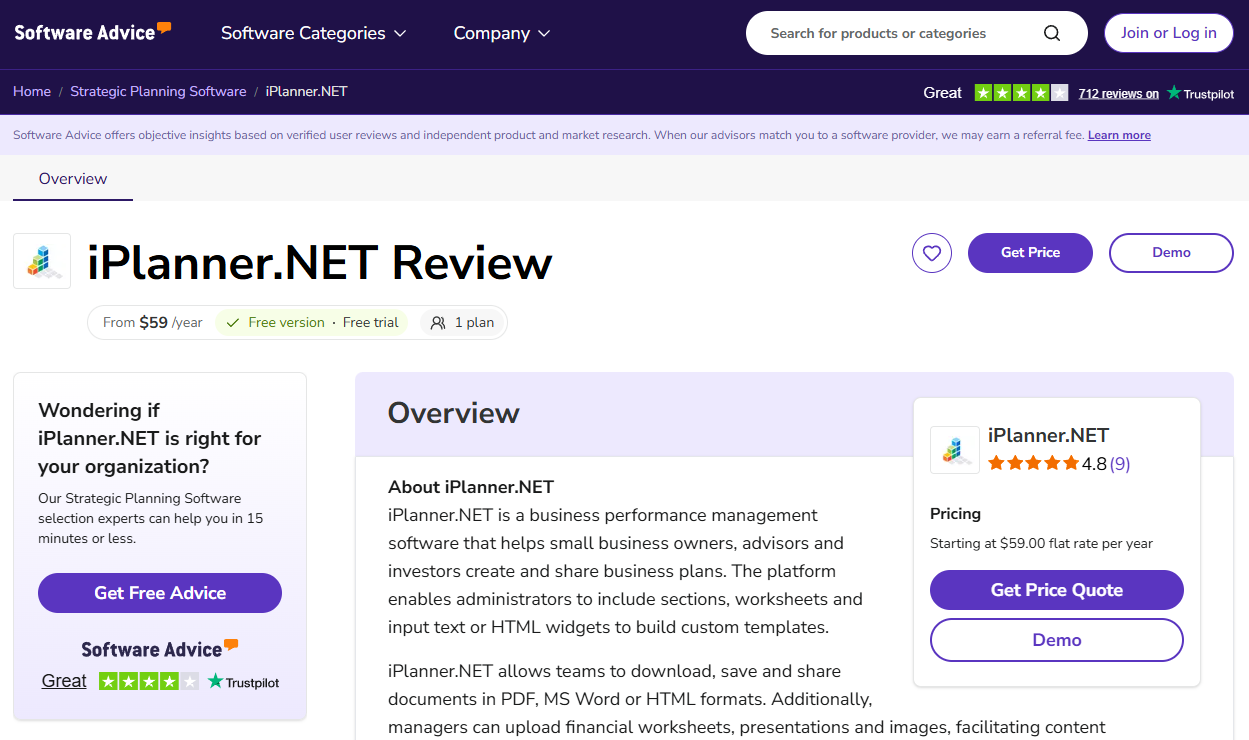
iPlanner is an online business-planning platform built for entrepreneurs, mentors, and business-support organizations that need collaborative planning workspaces. It supports financial forecasting, three-way financial projections, what-if scenario modeling, and structured export options including Word, Excel, and HTML.
Best for: Consultants, advisors, and business-support organizations managing guided planning across multiple clients or mentees.
Key features
- Collaborative, centrally managed business plans
- Financial forecasting with what-if scenario modeling
- Three-way financial projections (income statement, balance sheet, cash flow)
- Sales forecasting with monthly, quarterly, and yearly views
- Export to MS Word, MS Excel, or HTML
Why choose iPlanner: The multi-user, advisor-focused structure makes it practical for incubators, accelerators, and consultants running planning programs. For a Series B founder hiring an external CFO advisor, having a shared workspace with full financial visibility is a real workflow improvement.
iPlanner pricing: First-party pricing was unavailable during verification. Contact iPlanner directly for current package details.
G2 rating: 4.5/5 (based on 3 reviews)
8. Business Sorter
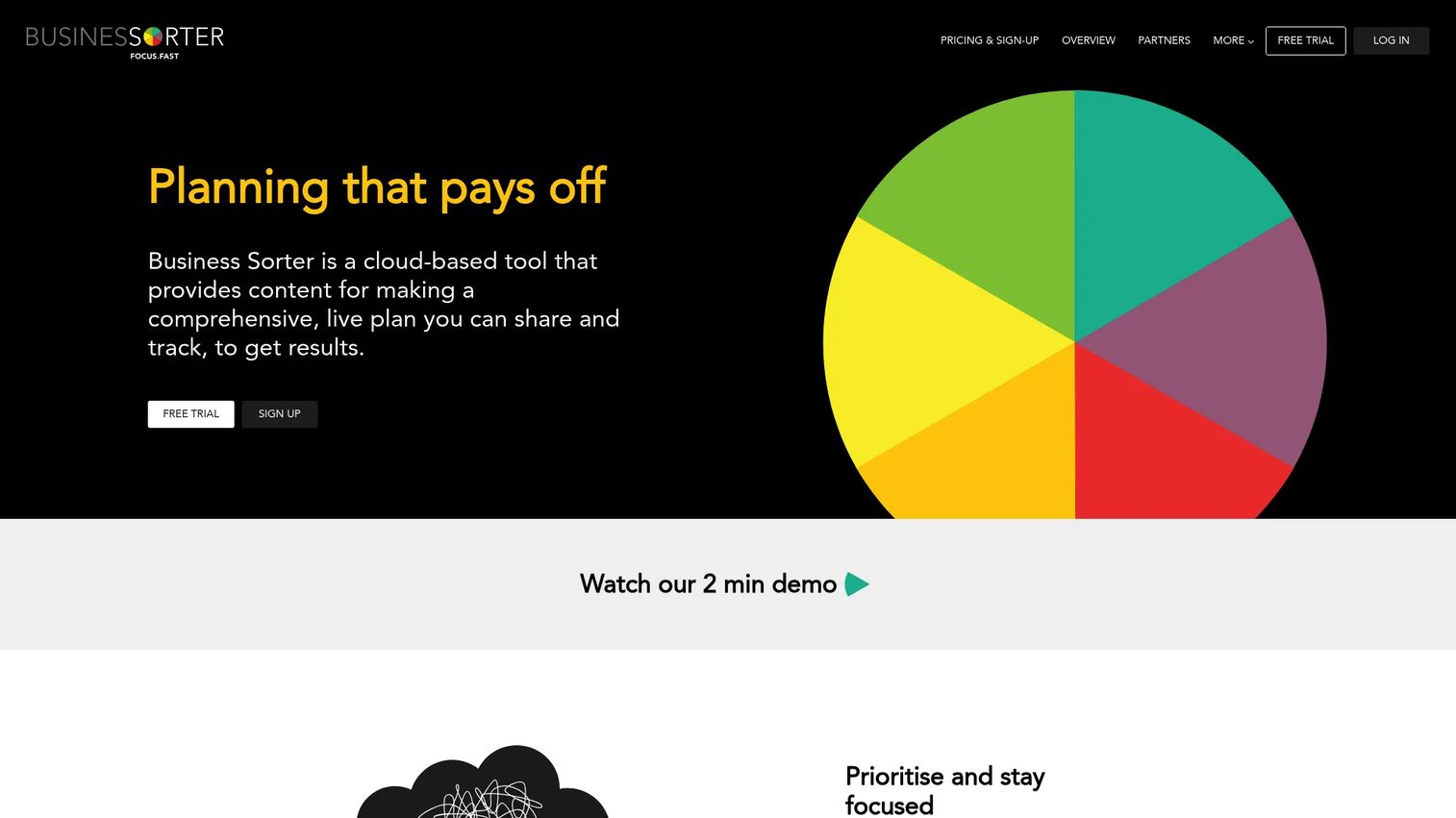
Business Sorter is a cloud-based planning tool that uses a card-sorting methodology to help leadership teams organize strategy across finance, sales, people, operations, products, and brand marketing. Plans are live documents with task assignments, review workflows, and progress tracking built in.
Best for: Small businesses and leadership teams that need a structured strategy planning process before drafting a long-form plan.
Key features
- Card-based planning across six business areas
- Task assignment and follow-through tracking
- Built-in business guidance and learning
- Team collaboration and plan sharing
- Create plans for the whole company or individual teams
Why choose Business Sorter: If your leadership team has never aligned on what the strategy actually is, the card-sorting approach forces the conversation before anyone starts writing. It is a workshop-in-software that works well as a pre-planning step before moving to a more formal document.
Business Sorter pricing: A 14-day free trial is available. Specific plan pricing was not displayed on the first-party site during verification. Contact Business Sorter for current rates.
G2 rating: 4.8/5 (based on 3 reviews)
9. PlanGuru
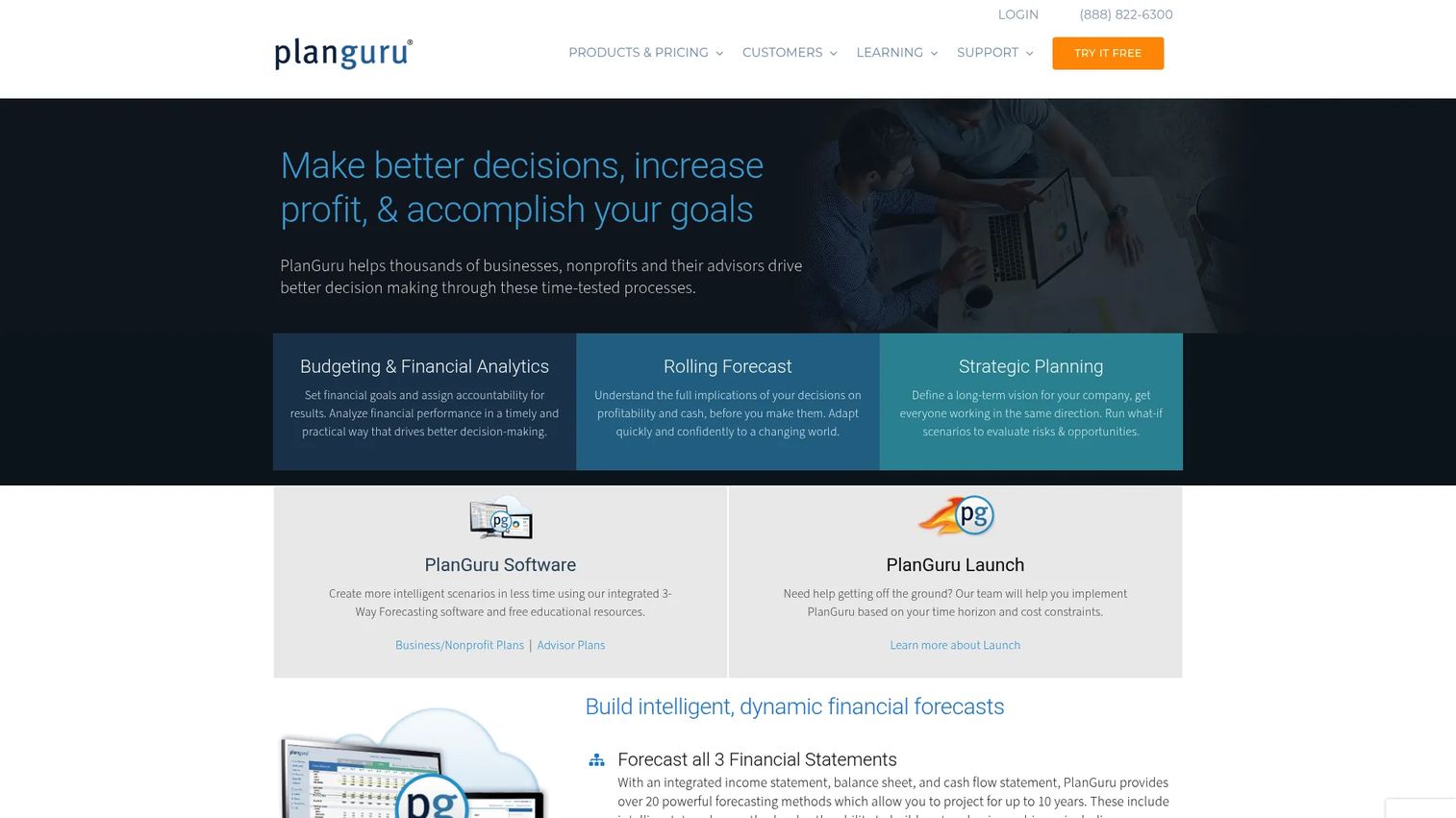
PlanGuru is a cloud-based budgeting, forecasting, and financial analysis platform built for teams where finance depth matters more than narrative polish. It supports up to 10-year projections, unlimited scenarios, three-way forecasting, 20-plus standard forecasting methods, and a formula builder for custom logic.
Best for: Finance-heavy teams, SMBs, and advisors who need board-ready projections and serious scenario discipline.
Key features
- Up to 10-year budgeting and forecasting
- Unlimited scenarios and three-way forecasting
- QuickBooks Online, Xero, and Excel imports
- Workforce planning tools
- Multi-unit consolidations and Excel reporting add-in
Why choose PlanGuru: When the board wants a proper scenario analysis, not just a slide with three revenue numbers, PlanGuru provides the structure. It is more finance-oriented than narrative-oriented, so pair it with a plan-writing tool if you also need a polished document.
PlanGuru pricing: Single Entity runs $83/mo billed annually or $99/mo monthly. Single Entity with Analytics is $166/mo annually or $199/mo monthly. Multi-Unit Consolidations is $399/mo. A free trial is available.
G2 rating: 4.5/5
10. GoSmallBiz
GoSmallBiz bundles business plan software with advisory resources, compliance training, legal services, website building, and tax consultation. The business plan tool includes industry-specific templates, financial projections, and narrative plans with step-by-step tutorials.
Best for: Small-business owners who want planning software combined with advisory and compliance support in a single subscription.
Key features
- Business plan templates with financial projections
- Online business consultation and advisory access
- Google Business Profile optimization
- Compliance training, legal services, and tax consultation
- Website builder with hosting
Why choose GoSmallBiz: The bundled service model reduces the number of vendor relationships a small business owner has to manage. For a Series B SaaS team, the planning tools are functional but less suited to complex SaaS financial modeling; GoSmallBiz fits a different buyer profile at an earlier stage.
GoSmallBiz pricing: Business Plan Software alone is $15/mo. The Essentials bundle (planning plus marketing and growth tools) is $49/mo or $499/yr. Assurance (compliance, legal, tax, and corporate records) is $69/mo or $699/yr.
11. BizPlanBuilder
BizPlanBuilder (offered through Business Power Tools) is a business planning system focused on funding documents, strategic roadmaps, and financial models covering revenue, costs, profit, and valuation. It includes an investor presentation deck and funding resource library.
Best for: Founders, owners, and advisors preparing detailed plans for banks, investors, or grant applications.
Key features
- Customizable business plans and strategic roadmaps
- Financial models for revenue, costs, and valuation
- Investor presentation deck and funding resources
- Strategic planning and growth guidance
- Sample plans and writing guidance
Why choose BizPlanBuilder: The depth of the financial modeling templates and the funding-focused structure make it a solid pick for teams that need a comprehensive funding document rather than a lean startup canvas. A 14-day jump-start is advertised.
BizPlanBuilder pricing: Monthly access is $49. Annual access is $499. Lifetime access is a one-time $999 payment.
12. StratPad
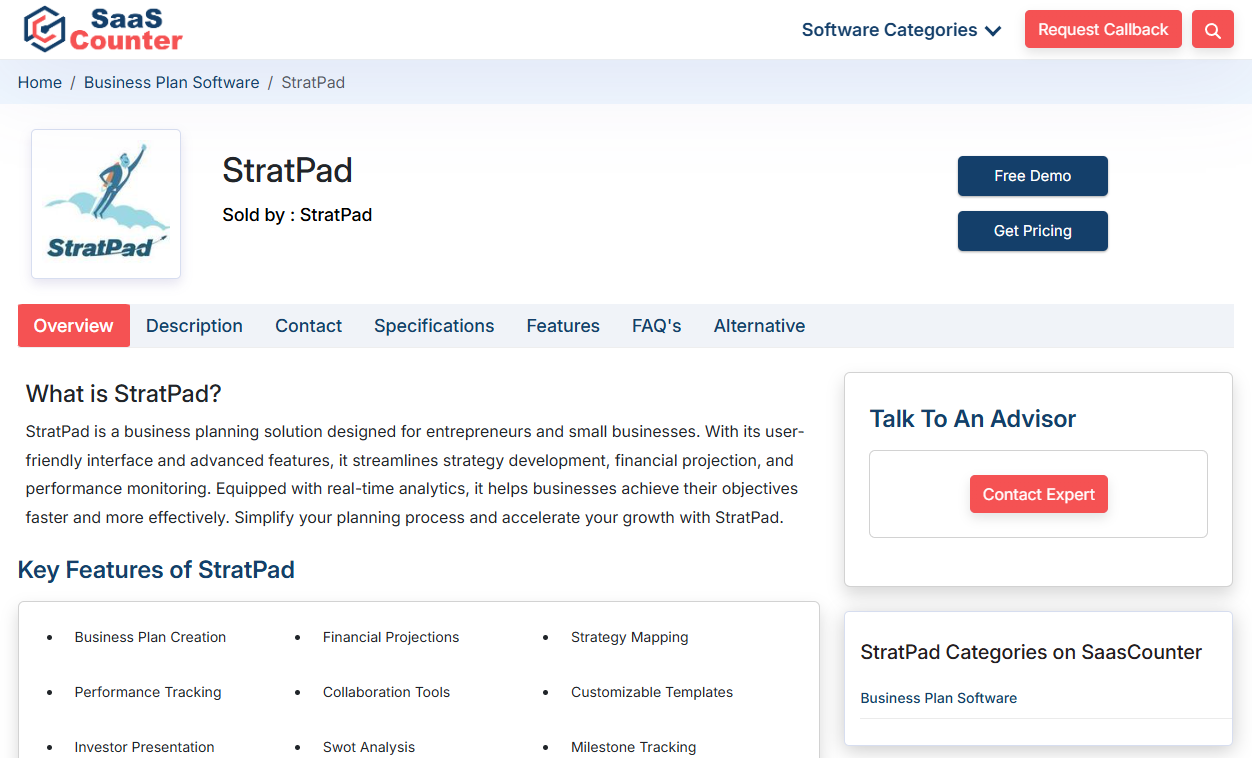
StratPad is a business planning and strategy management platform covering plan creation, financial projections, strategy development, performance tracking, and real-time collaboration. It is designed to give business owners a structured path from strategy to execution.
Best for: Business owners who want a guided strategy planning tool with clear next steps and financial summaries.
Key features
- Guided strategy builder
- Financial projections and summaries
- Action planning and milestone tracking
- Real-time collaboration
- Performance tracking and reporting
Why choose StratPad: StratPad is practical for operators who want clarity and forward momentum built into the planning tool. Note that the official domain redirected during verification; confirm current availability and pricing directly with StratPad before purchasing.
StratPad pricing: First-party pricing was unavailable during verification. Contact StratPad directly for current plan details.
13. Smartsheet
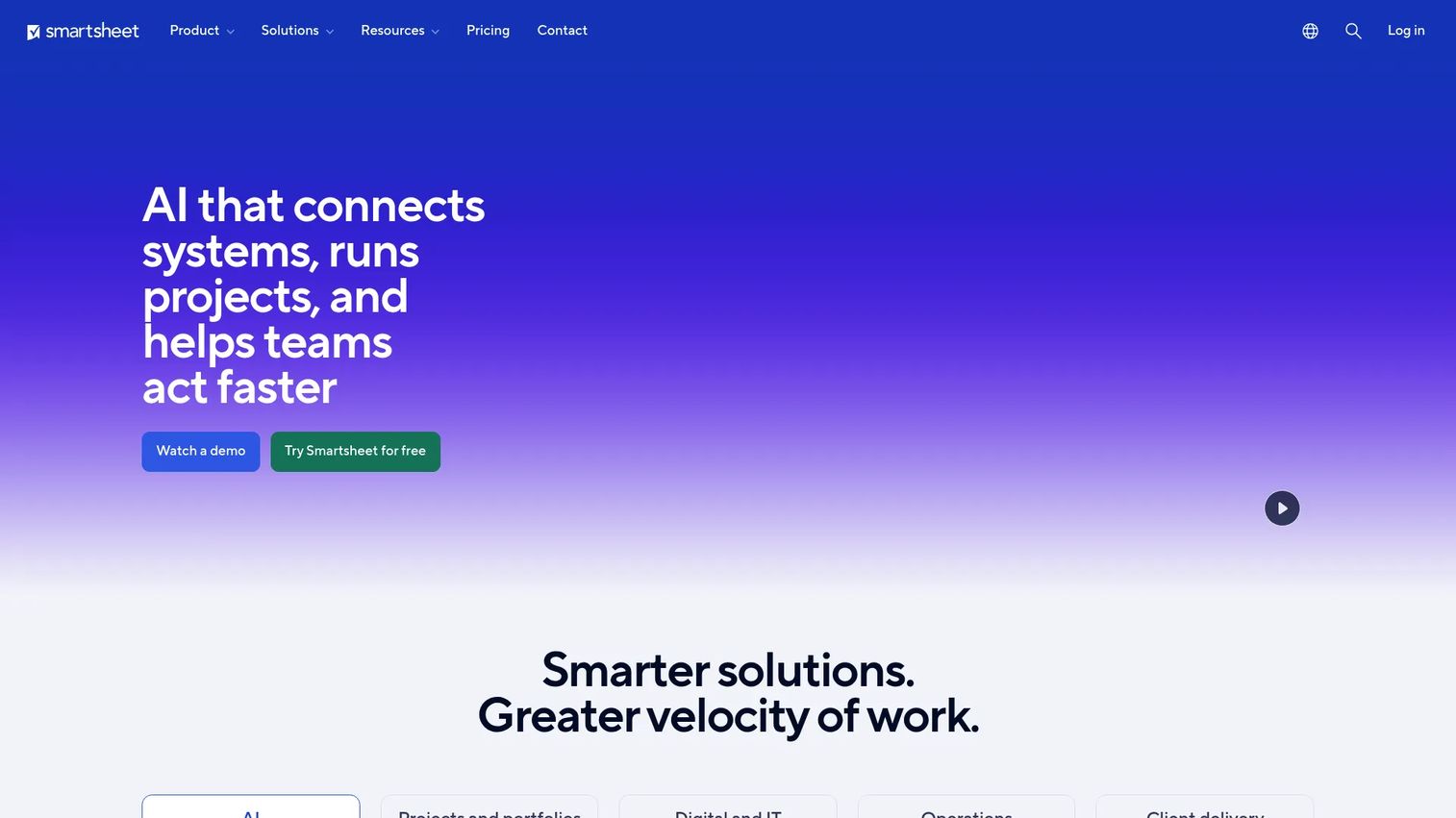
Smartsheet is an AI-powered work management platform that turns planning into cross-functional execution using grid, Gantt, card, and calendar views. It is not a plan-writing tool, but it excels at converting approved strategic initiatives into tracked work with dashboards, automation, and resource planning.
Best for: Teams that need to turn business plan deliverables into projects with clear ownership and progress visibility.
Key features
- Planning templates and grid-based workflows
- Gantt, board, calendar, and dashboard views
- Workflow automation and integrations
- Resource planning and capacity tracking
- AI-powered insights and reporting
Why choose Smartsheet: If your bottleneck is not writing the plan but executing it across Finance, Product, and GTM, Smartsheet handles the operational layer. It integrates with over 400 applications, which matters for teams with existing CRM and analytics stacks. Advanced planning and scheduling software guides can help you evaluate related execution tools.
Smartsheet pricing: Pro starts at $9/member/mo billed yearly. Business is $19/member/mo billed yearly. Enterprise and Advanced Work Management use custom pricing. A free plan and free trial are available.
G2 rating: 4.4/5
14. Aha!
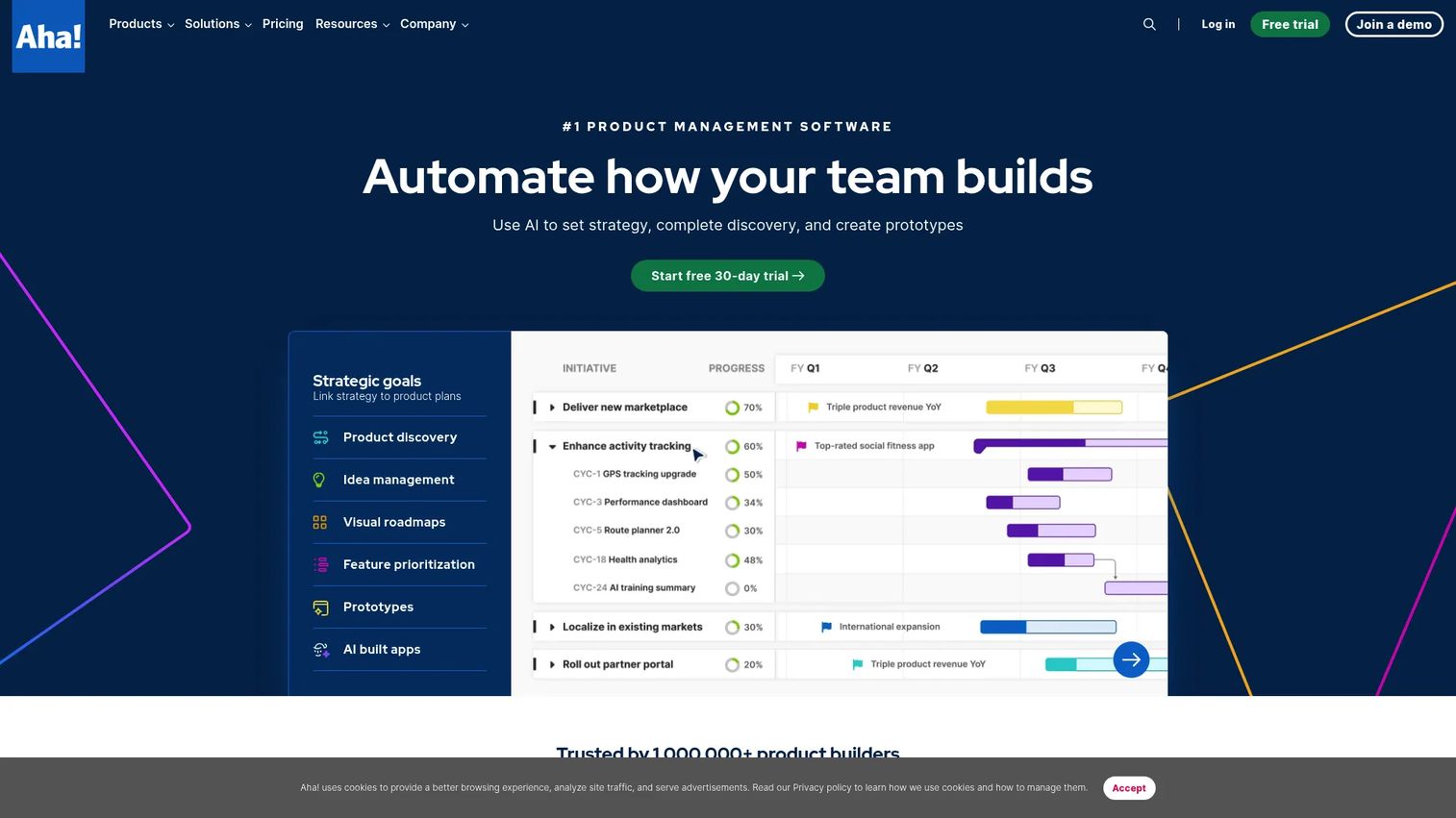
Aha! is a product management software suite covering strategy, roadmaps, customer feedback, ideas management, documentation, and agile development planning. For SaaS founders whose business plan depends heavily on product bets and roadmap sequencing, Aha! ties those decisions to strategic goals in a single platform.
Best for: Product-led SaaS teams that need strategy, roadmaps, and feature planning connected to broader business objectives.
Key features
- Product strategy and visual roadmaps
- Goals and strategic initiatives
- Ideas portals and feedback scoring
- Collaborative whiteboards and wireframes
- Agile development planning and integrations
Why choose Aha!: When your business plan is fundamentally a product plan, Aha! keeps the strategy and execution aligned in one place. It is more relevant for product-centric organizations than for finance-first planning workflows.
Aha! pricing: Aha! Roadmaps starts at $59/user/mo. Aha! Whiteboards and Aha! Develop start at $9/user/mo. Aha! Ideas starts at $39/user/mo. No permanent free tier; free trials are available across products.
G2 rating: 4.4/5
15. AchieveIt
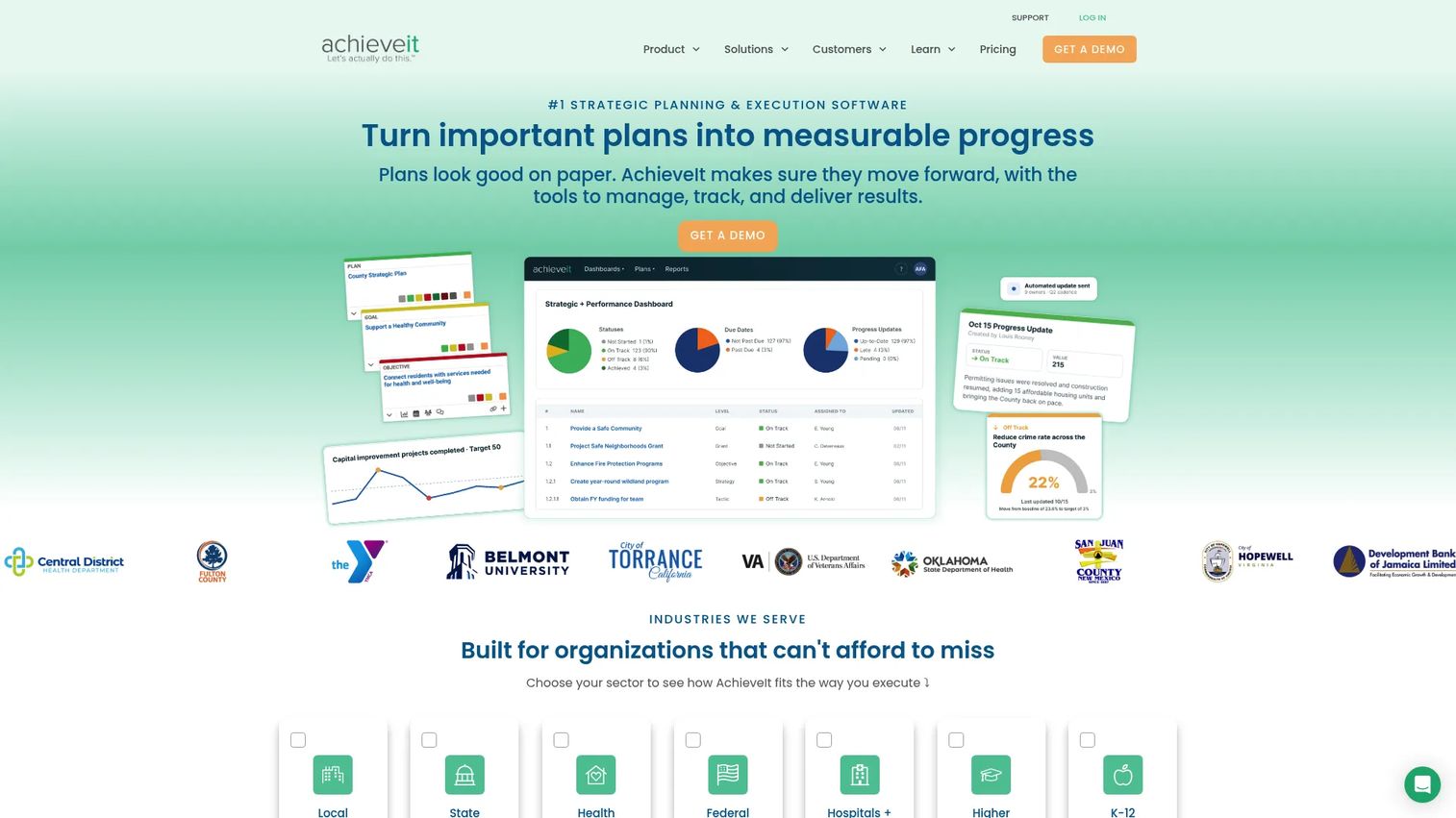
AchieveIt is a strategic planning and execution platform that connects plans, ownership, and progress tracking across teams. It automates progress-update collection, builds real-time dashboards, and provides executive reporting, so leadership teams can see what is and is not tracking without a weekly status meeting.
Best for: Organizations with complex strategic initiatives that need formal accountability, cross-functional visibility, and disciplined quarterly execution.
Key features
- Integrated strategic planning and execution tracking
- Automated progress-update collection
- Real-time dashboards and initiative reporting
- Ownership workflows and accountability tools
- Data Integration API for connecting external sources
Why choose AchieveIt: Once the plan is written and approved, AchieveIt becomes the operating system for executing it. The 20-user minimum reflects its enterprise orientation, but it is well suited to leadership teams at 50-plus people who need structure around quarterly OKRs and strategic priorities.
AchieveIt pricing: Core, Plus, and Pro plans are available, all requiring a minimum of 20 users. All pricing is by custom quote. No standard free trial is offered.
G2 rating: 4.4/5
16. Wrike
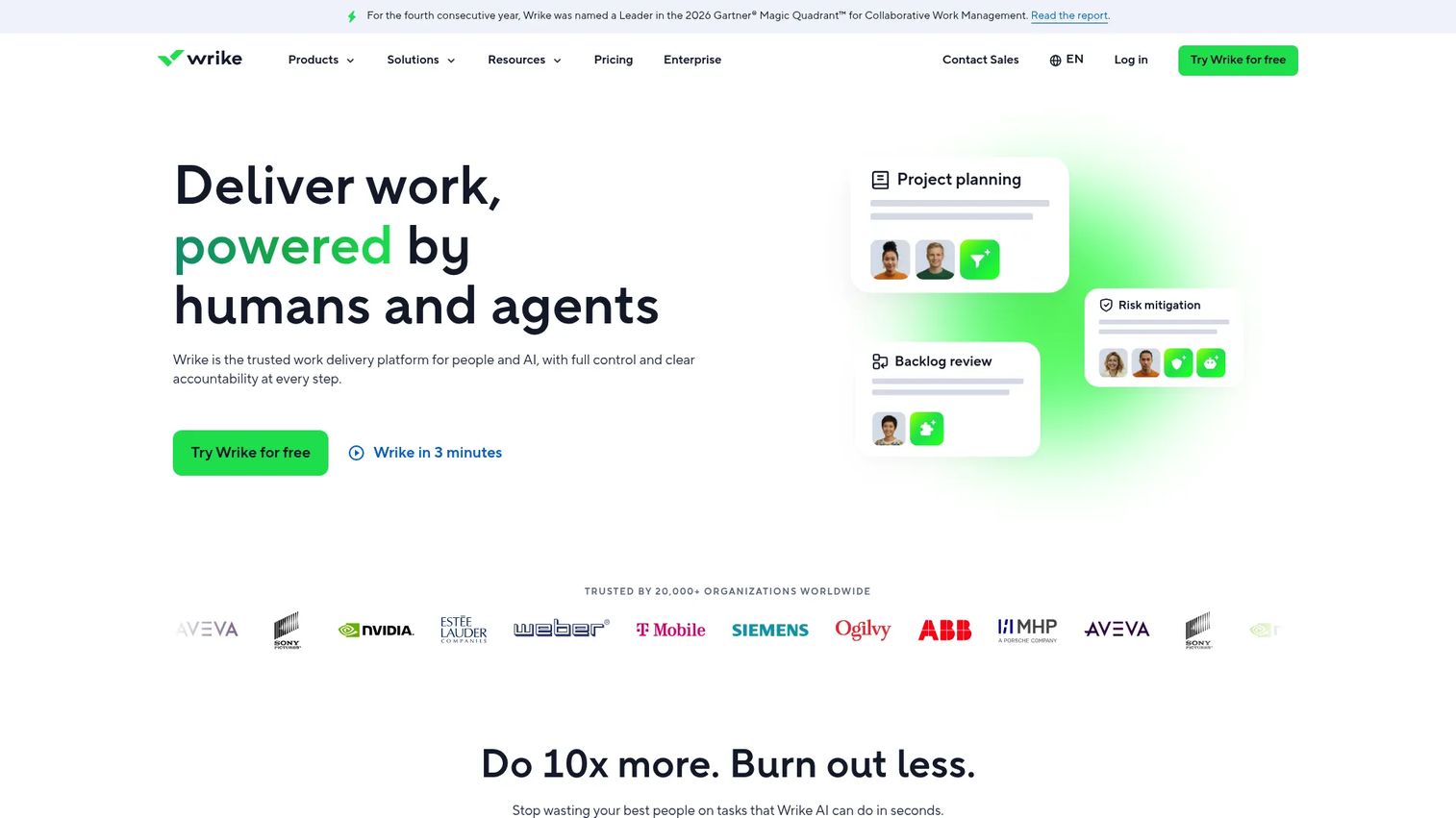
Wrike is a work delivery platform for teams that need to convert business plan initiatives into projects, milestones, and deliverables. It supports interactive Gantt charts, workflow automation, resource planning, and over 400 integrations. It is an execution layer, not a plan-writing or forecasting tool.
Best for: Organizations turning business plan commitments into cross-functional project work with resource tracking.
Key features
- Interactive Gantt charts with dependencies and milestones
- Workflow automation and AI tools
- Board, table, Gantt, calendar, and chart views
- Resource planning and capacity visibility
- 400-plus integrations and open API
Why choose Wrike: For SaaS teams running multiple concurrent initiatives across GTM, product, and operations, Wrike brings the work into one system. It does not replace plan-writing or financial modeling software, but it handles the delivery layer cleanly.
Wrike pricing: Free tier available. Team runs $10/user/mo. Business is $25/user/mo billed annually. Pinnacle and Apex are custom-priced for complex enterprise workflows.
G2 rating: 4.2/5
17. QuickBooks
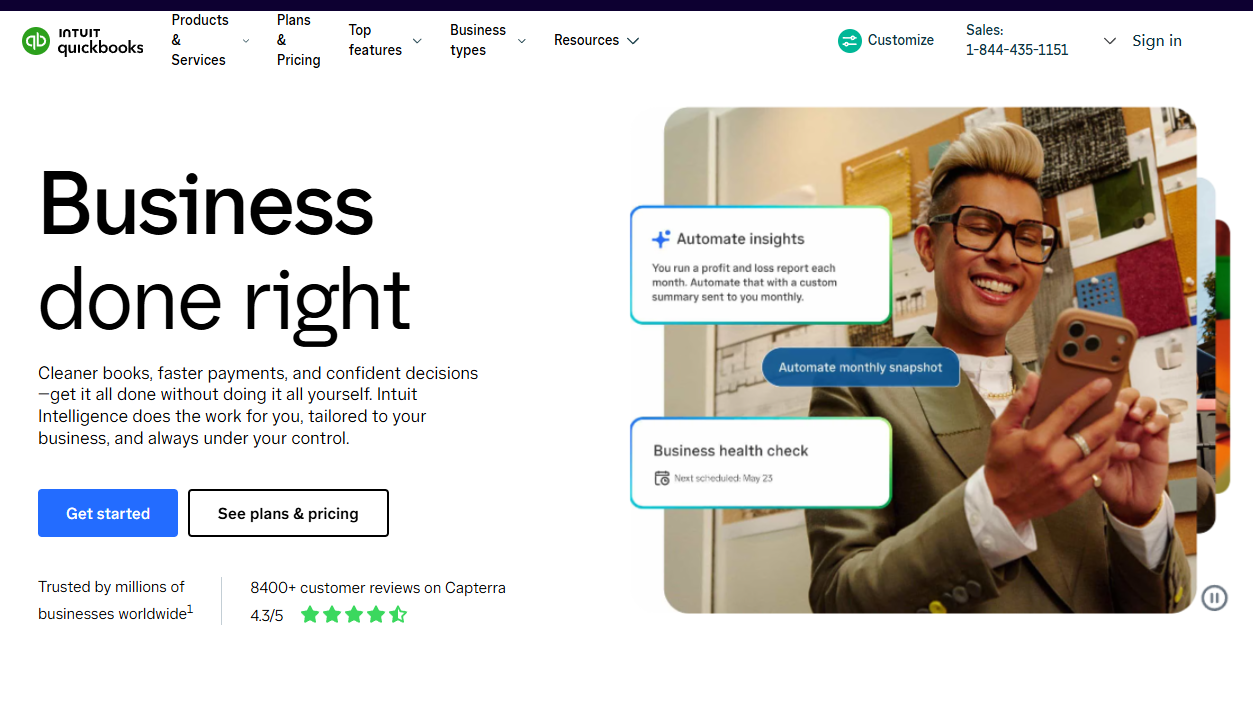
QuickBooks Online is cloud accounting software that tracks revenue, expenses, invoicing, taxes, and inventory. For planning purposes, it provides the financial data that grounds your model in actuals. LivePlan and PlanGuru both integrate directly with QuickBooks, pulling real numbers into your forecast without manual exports.
Best for: Small and growing businesses that want accounting data feeding directly into planning assumptions and financial reports.
Key features
- Income and expense tracking
- Bank feeds and bank-account connections
- Tax and sales-tax tracking
- Invoicing and payment reminders
- Insights, reports, and multi-currency support
Why choose QuickBooks: The reason to include QuickBooks in a planning stack is integration, not standalone planning. When your actuals flow automatically into your planning model, the gap between what you planned and what happened narrows. QuickBooks is a financial data source that makes forecasts more credible. Pair it with dedicated cash flow management software for deeper analysis.
QuickBooks pricing: Simple Start runs $19/mo (promotional rate; regular price $38/mo). Essentials is $42.50/mo promotional ($85/mo regular). Plus is $70/mo promotional ($140/mo regular). Advanced is $170/mo promotional ($340/mo regular). A free trial is available.
G2 rating: 4.0/5
18. Xero
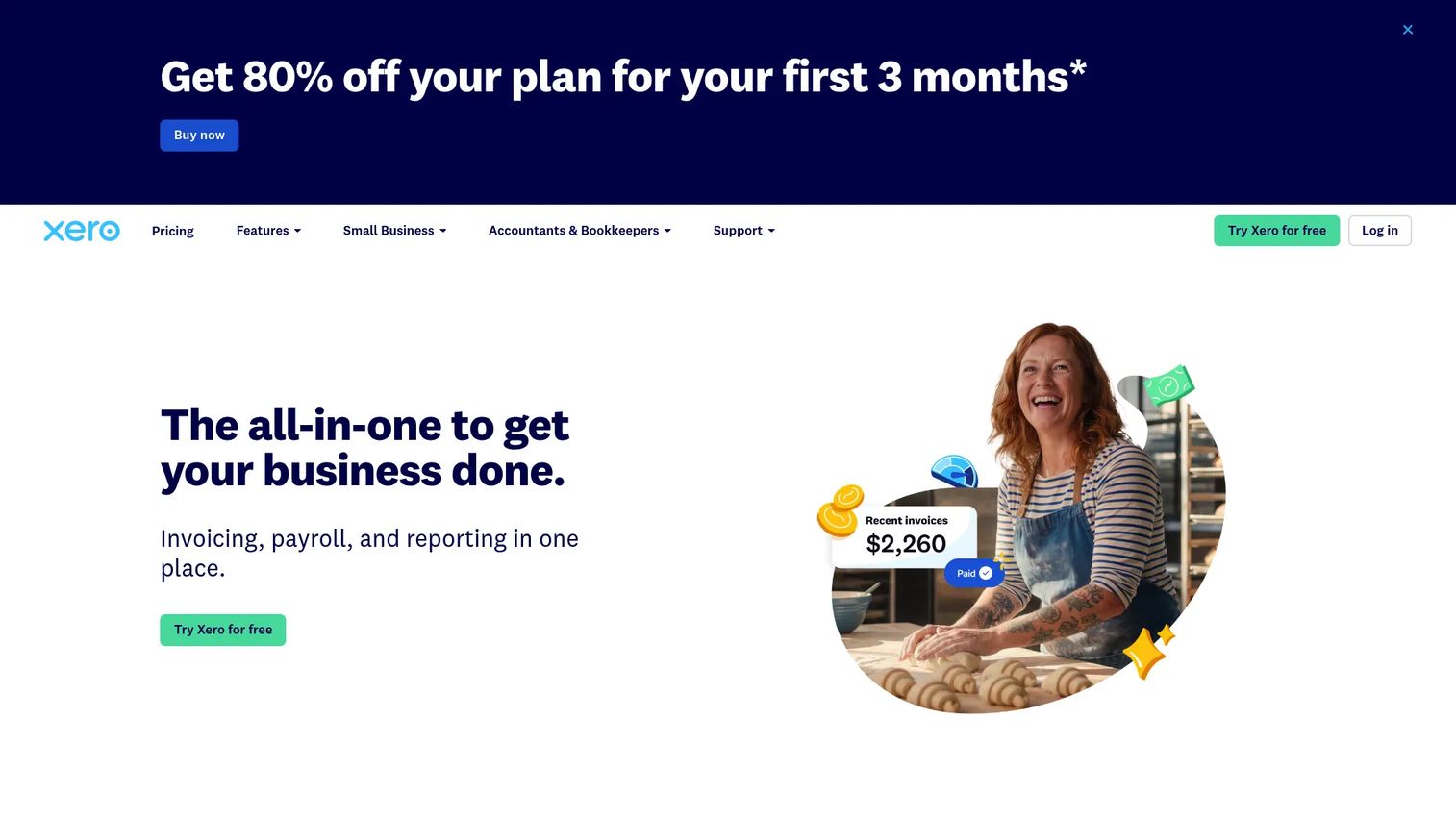
Xero is cloud accounting software with bank connections, reconciliation, bill management, expense tracking, and financial reporting. Like QuickBooks, its planning role is as a financial data layer. Xero connects to a broad app marketplace including planning and forecasting tools.
Best for: Small and growing businesses that want cloud-based accounting with strong bank reconciliation and reporting to anchor financial planning.
Key features
- Bank connections and reconciliation
- Online invoicing and bill management
- Expense claims and multi-currency accounting
- Financial reporting and analytics
- App integrations and AI finance partner JAX
Why choose Xero: Xero earns a place in a planning workflow for the same reason QuickBooks does: Actuals anchor forecasts. If your team already uses Xero for accounting, connect it to a dedicated modeling tool like Modeliks or PlanGuru rather than rebuilding your financial data manually.
Xero pricing: US plans (effective October 1, 2026): Early is $27/mo, Growing is $59/mo, Established is $97/mo. No free tier.
G2 rating: 4.4/5
19. Modeliks
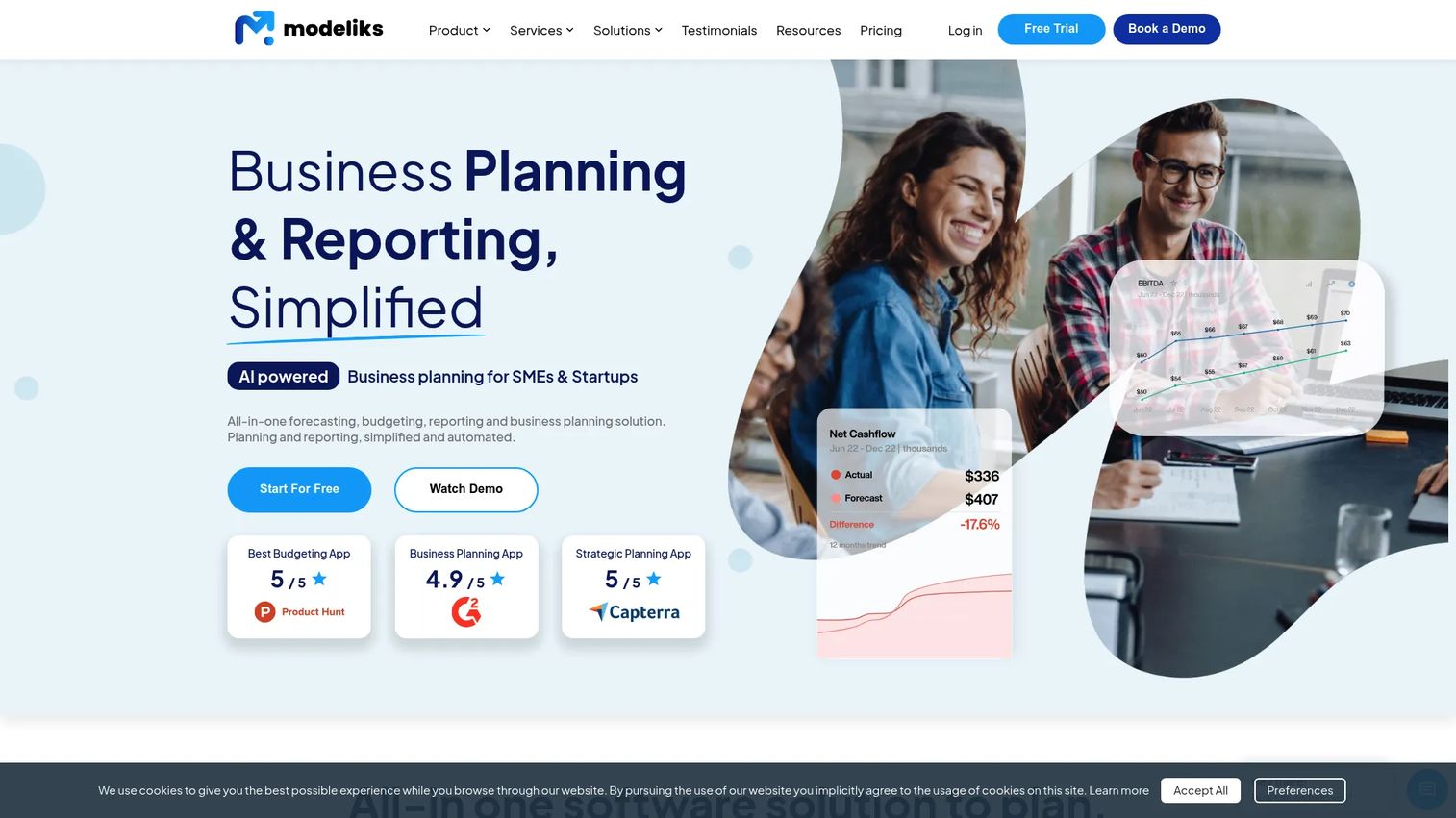
Modeliks is an AI-powered business planning and reporting platform that combines driver-based financial forecasting, scenario planning, automated dashboards, business plan creation, and investor-ready pitch deck generation. It is built for teams that want structured financial models without starting from a blank spreadsheet.
Best for: SMEs and SaaS founders who need integrated financial planning, reporting, and investor documents in one platform.
Key features
- Driver-based financial forecasting and scenario planning
- Automated reports comparing actuals, plans, and prior periods
- AI-assisted business plan creation
- Investor-ready pitch deck generation
- KPI dashboards with real-time tracking
Why choose Modeliks: For a Series B founder who wants one place for the financial model, the board report, and the investor narrative, Modeliks combines what you would otherwise split across PlanGuru and a plan-writing tool. The driver-based modeling approach is particularly useful for SaaS teams modeling ARR, churn, and expansion assumptions. G2 reviewers rate it 4.9/5 across 18 reviews, the highest rating on this list.
Modeliks pricing: Start plan runs $19/mo. Fund plan (adding driver-based modeling, industry financial model templates, and scenario analysis) runs $35/mo. A 15-day free trial is available, no credit card required. Note that pricing above is from third-party (G2) reporting; verify directly with Modeliks before purchasing.
G2 rating: 4.9/5
20. ClearPoint Strategy
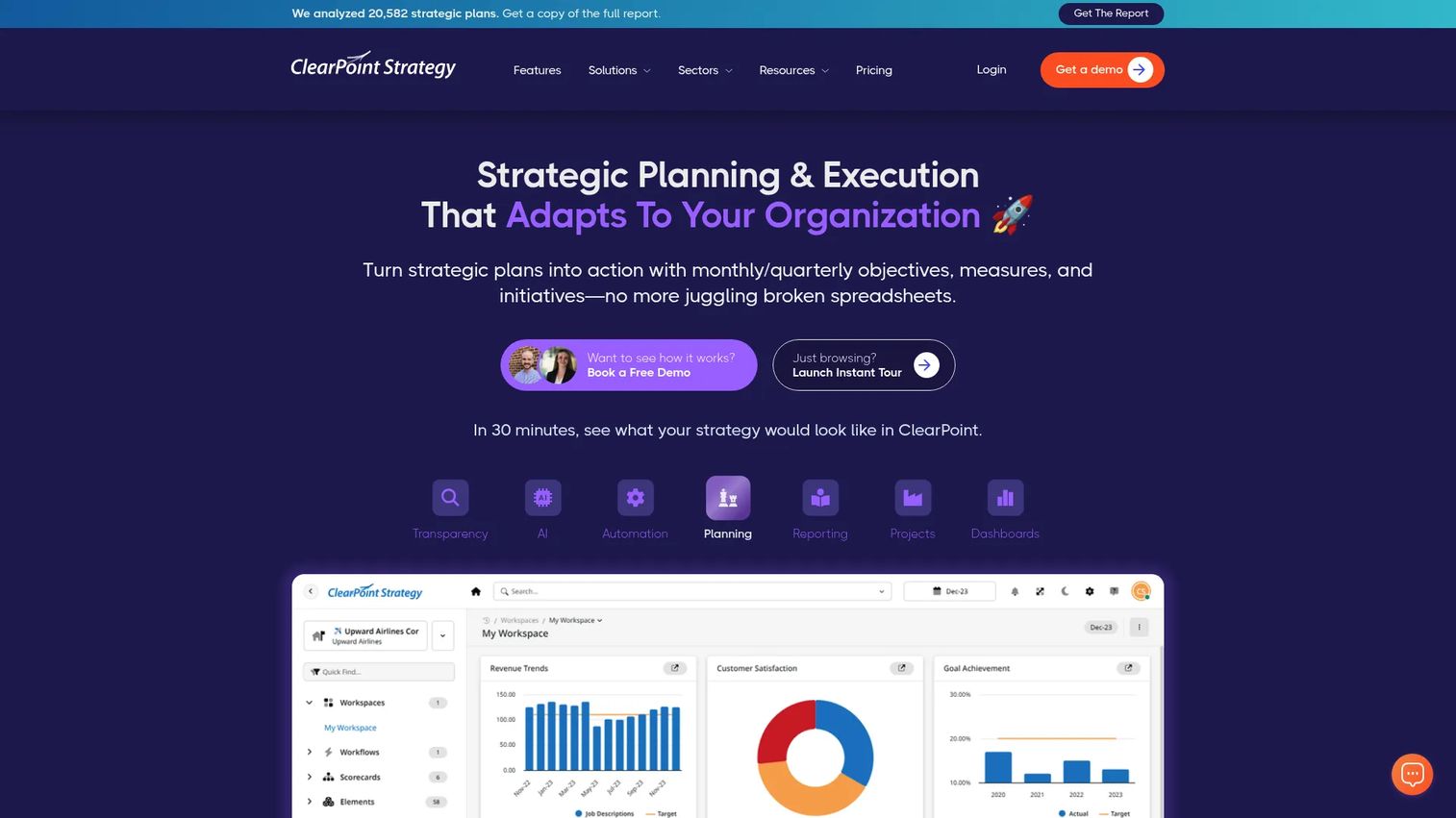
ClearPoint Strategy is a strategy execution platform for organizations that have an approved strategic plan and need disciplined reporting against it. It covers KPI tracking, OKRs, initiative management, risk management, AI-powered strategy assistance, and automated executive reporting.
Best for: Organizations with established strategies that need centralized performance tracking, scorecards, and cross-department reporting.
Key features
- Strategic planning and scorecards
- KPI and measures tracking
- Objectives and key results (OKRs)
- Initiative and project tracking
- Dashboards and automated reporting
Why choose ClearPoint Strategy: The use case is post-plan execution management. If your strategy already exists and the problem is that leadership cannot see whether initiatives are on track without a manual report, ClearPoint automates that visibility. Plans start at 10 users and include onboarding support.
ClearPoint Strategy pricing: Custom pricing based on users, support level, integrations, and feature set. No numeric tiers are published; contact ClearPoint for a quote.
G2 rating: 4.6/5
21. Causal
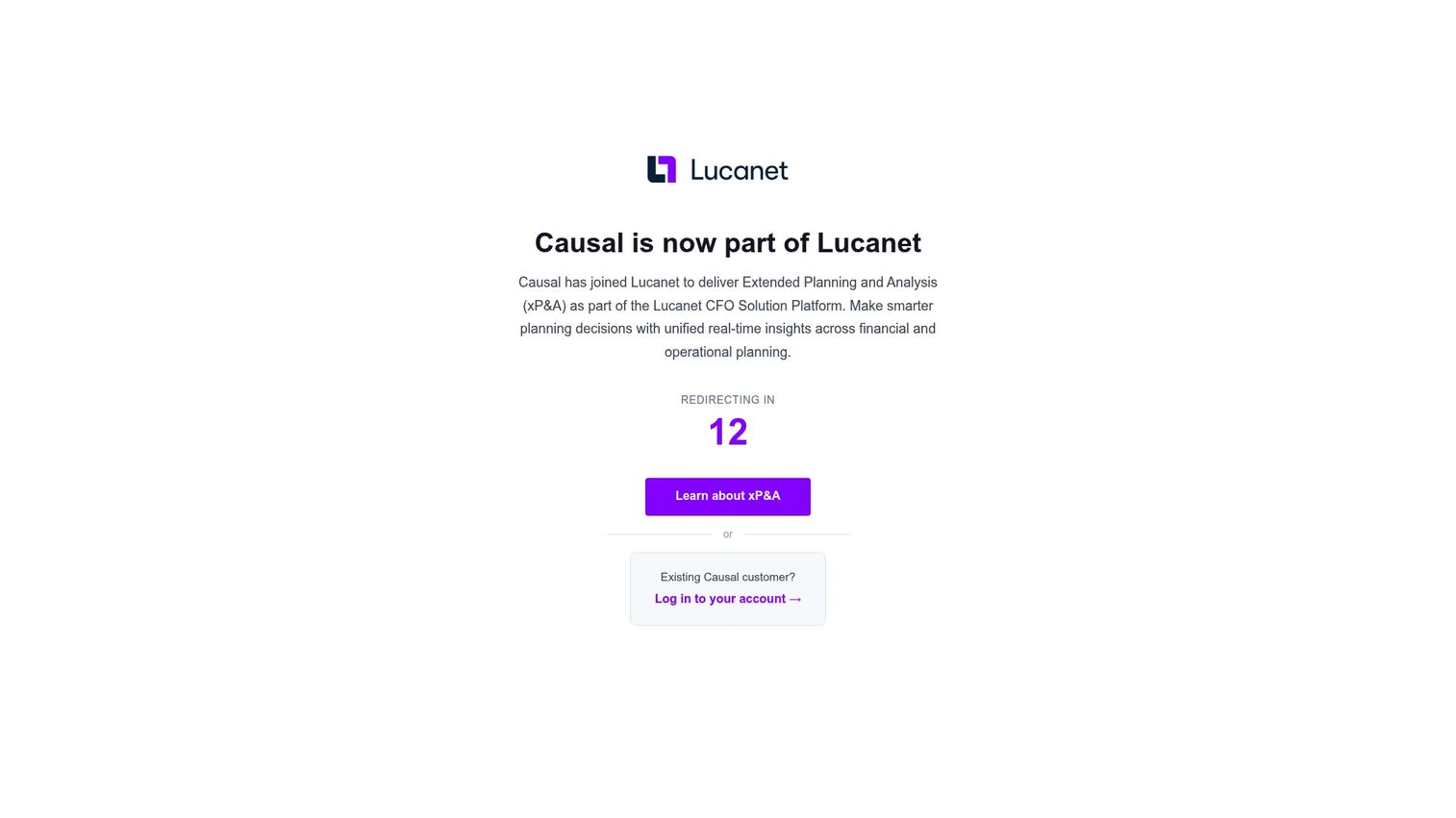
Causal has been acquired by and is now part of Lucanet, an extended planning and analysis (xP&A) platform. The combined offering supports integrated financial and operational planning, dynamic multi-dimensional modeling, variance and scenario analysis, collaborative workflows, and custom reporting.
Best for: Finance teams needing integrated financial and operational planning with scenario analysis and collaborative reporting.
Key features
- Unified planning, analysis, and reporting
- Dynamic multi-dimensional modeling
- Variance and scenario analysis
- Collaborative workflows with permissions
- Custom reporting and dashboards
Why choose Causal (Lucanet): Causal was known for its driver-based modeling and visual scenario planning before its acquisition. The Lucanet platform extends that into a broader xP&A system. For SaaS founders building financial rigor into the finance function, this is a more enterprise-oriented path. Confirm current product availability and whether legacy Causal features have migrated before purchasing.
Causal pricing: Lucanet offers Basic, Advanced, and Professional packages with a minimum 12-month license. No prices are displayed publicly; contact Lucanet for a quote.
Considerations when choosing business plan software
Match the tool to the job
Business plan writing, financial modeling, accounting visibility, and strategy execution are four separate jobs that happen to share the word "planning." A founder preparing a lender document needs a different tool than a VP Finance modeling runway scenarios. Identify which job is most urgent before evaluating features.
Check forecasting depth before committing
Ask whether the tool supports driver-based assumptions, scenario modeling, and cash flow projections. For SaaS, that means being able to model ARR growth, churn, CAC payback, expansion revenue, and burn multiple without rebuilding the logic from scratch when one assumption changes. A basic revenue table is not enough for board-level scrutiny.
Look for collaboration and version control
Planning breaks down when Finance, Sales, and Product edit separate files. Prioritize tools with commenting, shared access controls, and version history. If six people are editing the model simultaneously with no record of changes, the plan will drift quickly.
Decide whether the plan needs to become execution
Some tools produce a document. Others support running the business against the plan on a quarterly basis. If your goal is a polished deliverable for a fundraise, a plan-writing tool is sufficient. If the goal is a system your leadership team operates from, you need execution tracking on top of the plan itself.
Verify pricing, exports, and data ownership
Many planning tools gate their most useful features behind higher tiers. Check whether PDF and DOCX exports, advanced forecasting, additional users, and accounting integrations require an upgrade before signing annually. Also confirm where your data lives and what happens to it if you cancel.
Conclusion
The right choice depends on which part of the planning problem is most painful right now.
For writing a complete business plan with integrated financial forecasting, LivePlan and Upmetrics are the strongest starting points. IdeaBuddy and Cuttles work well for validating a new idea before committing to a full plan.
For financial modeling and scenario discipline, PlanGuru handles deep forecasting for finance-first teams. Modeliks bundles the financial model with investor documents and dashboards. Causal (now Lucanet) suits teams building a serious xP&A practice.
For strategy execution after the plan is approved, AchieveIt and ClearPoint Strategy provide structured accountability. Smartsheet and Wrike handle the operational delivery layer.
For accounting-connected planning, QuickBooks and Xero anchor your forecasts in actual numbers rather than estimates. Both integrate with dedicated planning tools, so you do not have to choose one or the other.
Start by identifying whether you need a plan document, a financial model, or an execution system. Shortlist two to three tools from the relevant category, run one planning workflow through each, and commit before buying annually.
FAQs
LivePlan is the broadest pick for founders who need guided writing and financial forecasting in one tool. Upmetrics suits teams that want faster drafting with AI support. PlanGuru is the right choice when forecasting depth matters more than document polish. For strategy execution after the plan is written, AchieveIt and ClearPoint Strategy lead the category.
At a minimum, look for guided writing, financial projections, cash flow modeling, collaboration controls, and clean exports. For SaaS founders, the more critical features are scenario planning tied to ARR, churn, and burn assumptions, plus board-ready exports that do not require significant reformatting before a review.
A template handles a one-time plan for a simple use case. Software earns its place when the plan needs financial scenarios that update when assumptions change, shared access for Finance, GTM, and Product, and recurring exports for board or investor reporting. When the plan has to stay current across quarters, software replaces templates.
LivePlan, Upmetrics, IdeaBuddy, Cuttles, and Bizplan are the five strongest startup-focused options. The right choice among them depends on whether the startup needs idea validation first (IdeaBuddy, Cuttles), investor-ready documents with forecasting (LivePlan, Upmetrics), or a fundraising-oriented narrative builder (Bizplan).
PlanGuru is the most capable dedicated forecasting tool, supporting 10-year projections, unlimited scenarios, and three-way financial statements. Modeliks combines financial modeling with business plan creation. Causal (now Lucanet) covers driver-based modeling and scenario analysis for finance teams. LivePlan includes forecasting within a plan-writing workflow. QuickBooks and Xero provide the accounting data that feeds those forecasts. For a deeper look at this category, the budgeting and forecasting software guide covers additional options.
Yes, if it produces investor-ready financial projections, a clear narrative, and polished exports. LivePlan, Upmetrics, Bizplan, and BizPlanBuilder all orient their output toward funding rounds. Remember that software improves structure and presentation. The assumptions still need to be grounded in evidence your investors can validate.
Business plan software helps you write the plan and build the supporting financials. Strategic planning software, like AchieveIt and ClearPoint Strategy, tracks progress against the plan after it is approved. The two categories address different moments: Before the board meeting and after the board meeting. Many organizations need both, connected by shared goals and ownership.
Entry-level plan-writing tools start around $14 to $20 per month. Dedicated financial forecasting platforms like PlanGuru start at $83/mo billed annually. Strategy execution platforms like AchieveIt use custom pricing with a 20-user minimum. Accounting tools like QuickBooks and Xero range from $19 to $97/mo depending on the plan. The driver is usually forecasting depth, seat count, and integration requirements rather than the plan document itself. For a broader look at related software categories, explore the best business intelligence software guide.