Your Scope 1 and 2 numbers are clean. You bought the electricity, you burned the fuel, you can trace every line. Then the board asks about Scope 3, and the whole thing gets messy.
Scope 3 is where most carbon programs stall. The data lives outside your company, scattered across suppliers who measure differently or not at all. The GHG Protocol splits value chain emissions into 15 distinct categories, from purchased goods to business travel to end-of-life treatment. For most companies, Scope 3 is the majority of the footprint, and it is the hardest part to defend under audit.
The market has responded fast. Research and Markets pegs the scope 3 emissions management software market at USD 1.72 billion in 2026, growing at a 19.43% CAGR through 2031. That growth is regulatory pressure made visible. CSRD, ESRS, CDP, SBTi, and ISSB are all pushing value chain accounting from optional to expected.
So the question stops being whether to buy software and becomes which one survives board scrutiny.
What's inside
This guide is for founders, sustainability leads, and finance teams comparing carbon accounting software for Scope 3 programs. Not general ESG platforms, specifically the tools that handle value chain emissions with enough rigor to pass an audit.
We picked and ranked these platforms on four criteria:
- GHG Protocol alignment: calculations that map cleanly to the 15 Scope 3 categories
- Supplier data capture and traceability: primary data collection, supplier engagement, and an audit trail behind every number
- Audit-ready reporting and exports: exportable inventories and evidence that survive third-party review
- Decarbonization planning: hotspot analysis, scenario modeling, and supplier reduction plans
Pricing, features, and G2 ratings reflect verified values at the time of writing.
TL;DR
- Best free benchmark for GHG Protocol-first teams: the GHG Protocol standards and training, the reference point every other tool is measured against
- Best for hybrid software plus advisory: Sphera, for teams that want lifecycle data and methodology support alongside the platform
- Best broader carbon platform: Pulsora, for reporting and compliance across Scopes 1, 2, and 3
- Best for decarbonization-first accounting: Plan A, which ties certified calculations to reduction targets
- Best for enterprise climate programs: Watershed, for large teams pulling from many data sources
- Best for finance-grade rigor: Persefoni, built for disclosure readiness and board communication
- Best operating layer for supplier data: Sweep, for collaboration and supplier workflows across teams
What is scope 3 emissions software
Scope 3 emissions software is a category of carbon accounting software that helps companies measure, manage, and report value chain emissions across the 15 categories defined by the GHG Protocol Scope 3 Standard.
Unlike Scope 1 and 2, which cover direct operations and purchased energy, Scope 3 covers everything upstream and downstream: suppliers, logistics, product use, business travel, and waste. Most of that data sits outside your walls, which is why dedicated tooling exists.
Core capabilities to expect from a Scope 3 platform:
- Category-based calculations: emissions math mapped to all 15 GHG Protocol categories
- Supplier engagement workflows: requesting, chasing, and validating primary data from your value chain
- Emissions factor libraries: vetted factors with control over which sources apply where
- Audit trails and exports: traceable calculations and exportable inventories for third-party review
- Reporting and target tracking: mapping to CSRD, CDP, SBTi, ISSB, and TCFD
- Hotspot analysis and reduction planning: finding where emissions concentrate and modeling how to cut them
The good tools do more than count. They turn a value chain inventory into a defensible number and then into an action plan. That distinction, between screening, accounting, and decarbonization planning, is what separates a spreadsheet replacement from an operating system for your carbon program.
When to use scope 3 emissions software
Build a first-pass value-chain inventory
Spreadsheets work until they don't. The moment you have dozens of suppliers, inconsistent data formats, and 15 categories to cover, manual accounting starts breaking under its own weight. This is the point to move to software. A platform gives you category coverage out of the box and a structured way to fill supplier data gaps, so your first inventory is complete rather than a patchwork of estimates.
Prepare for audit-ready reporting
A number on a slide is not the same as a number that survives review. Audit-ready reporting means every figure traces back to a source, a method, and an emissions factor. When your program touches CSRD, ESRS, CDP, SBTi, ISSB, or TCFD, you need that evidence trail ready before the auditor asks. Software captures it as you go, instead of forcing a scramble at reporting time.
Turn reporting into reduction planning
Measurement is the entry ticket, not the goal. Once you know your footprint, you need hotspot analysis to see where emissions concentrate, scenario modeling to test reduction pathways, and supplier reduction plans to act on the biggest contributors. This is where a platform earns its place in the stack, by connecting what you reported to what you do next.
Comparison table
The table below narrows the field fast. Use it to shortlist two or three platforms, then read the detailed sections for fit. Ratings and pricing reflect verified values at the time of writing; several enterprise vendors run through sales rather than public price pages.
| # | Product | Best for | Key differentiator | Pricing | G2 rating |
|---|---|---|---|---|---|
| 1 | GHG Protocol | GHG Protocol-first teams | The authoritative Scope 3 standard and training | Free standards; paid courses | Not rated |
| 2 | Sphera | Hybrid software plus advisory | Lifecycle data and methodology support | Contact sales | 4.0/5 |
| 3 | Pulsora | Broader carbon programs | ESG plus carbon across Scopes 1, 2, 3 | Contact sales | 4.5/5 |
| 4 | Plan A | Decarbonization-first accounting | Certified calculations tied to targets | Contact sales | Not rated |
| 5 | Watershed | Enterprise climate programs | Data ingestion across many sources | Contact sales | 4.5/5 |
| 6 | Persefoni | Finance-grade reporting | Free Pro tier, disclosure readiness | Free Pro plan | 4.8/5 |
| 7 | Sweep | Supplier data operations | Value chain data collection and tracking | Contact sales | 4.9/5 |
Best scope 3 emissions software for 2026
1. GHG Protocol / Greenhouse Gas Protocol
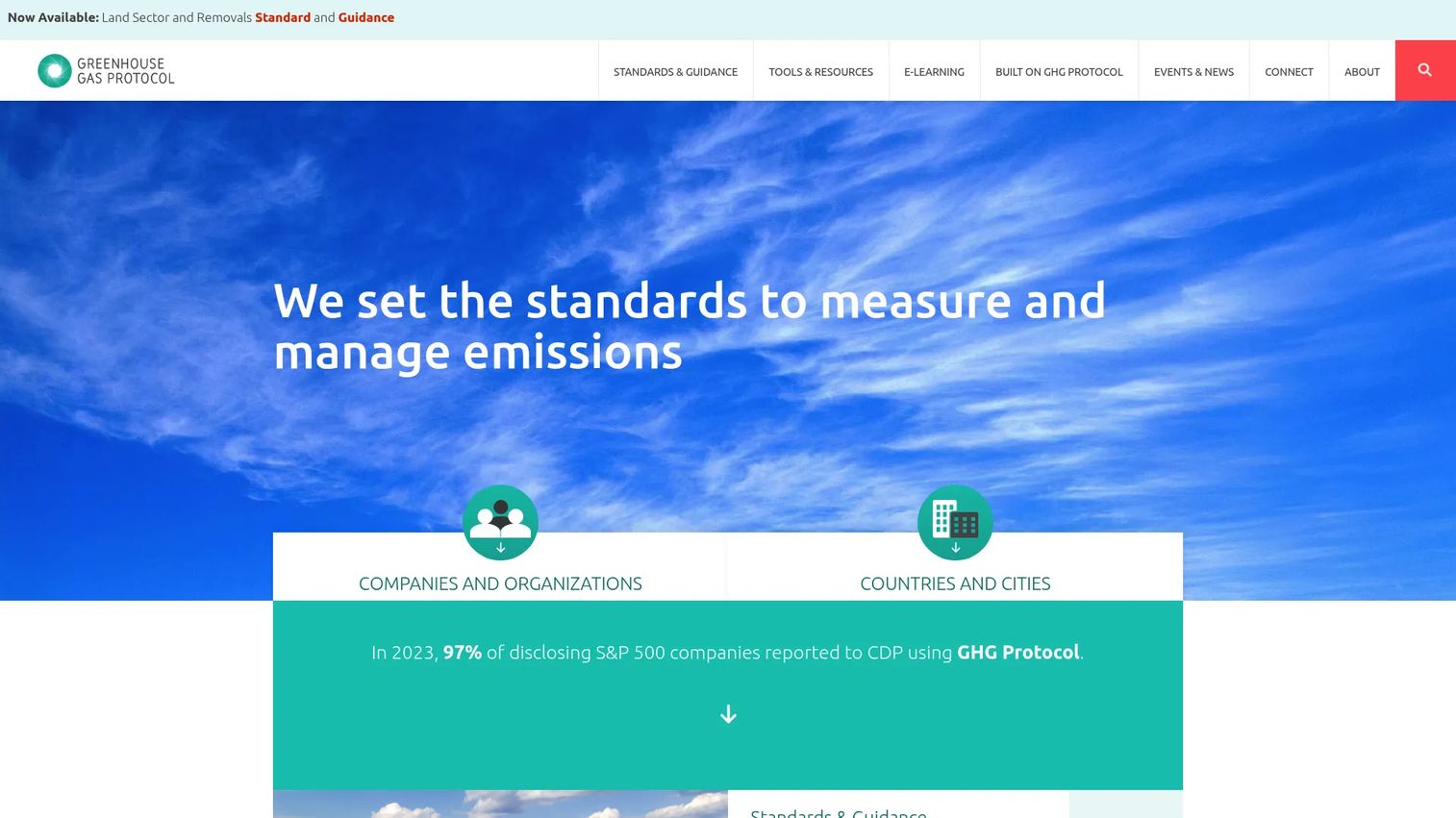
GHG Protocol is not a software vendor. It is the standards body that defines how the entire category accounts for emissions. Every other tool on this list maps its calculations back to the GHG Protocol Corporate Value Chain (Scope 3) Standard. If you are building a program from scratch, this is where you start, because it sets the rules the auditors and frameworks expect.
The Protocol publishes the 15-category Scope 3 framework, corporate accounting guidance, and a library of tools and resources for building emissions inventories. It also runs e-learning courses that walk your team through the methodology before you commit to a platform. Treat this as your baseline reference, not your operating system, because it defines correct rather than automating the work.
Best for: teams that want to ground their program in the authoritative standard before choosing accounting software.
Key features
- GHG accounting standards and Scope 3 category guidance
- Tools and resources for emissions inventories
- Online e-learning on GHG accounting methods
- 15-category value chain framework
Why choose GHG Protocol: No paid platform can substitute for understanding the standard your reporting will be judged against. Start here, then buy software that implements it well.
Pricing: The core standards and guidance are free. E-learning courses vary, with some free and paid courses running from $30 up to $600 for the Corporate Value Chain (Scope 3) Standard e-learning.
The Protocol itself carries no G2 rating, since it is a standards organization rather than a commercial product.
2. Sphera
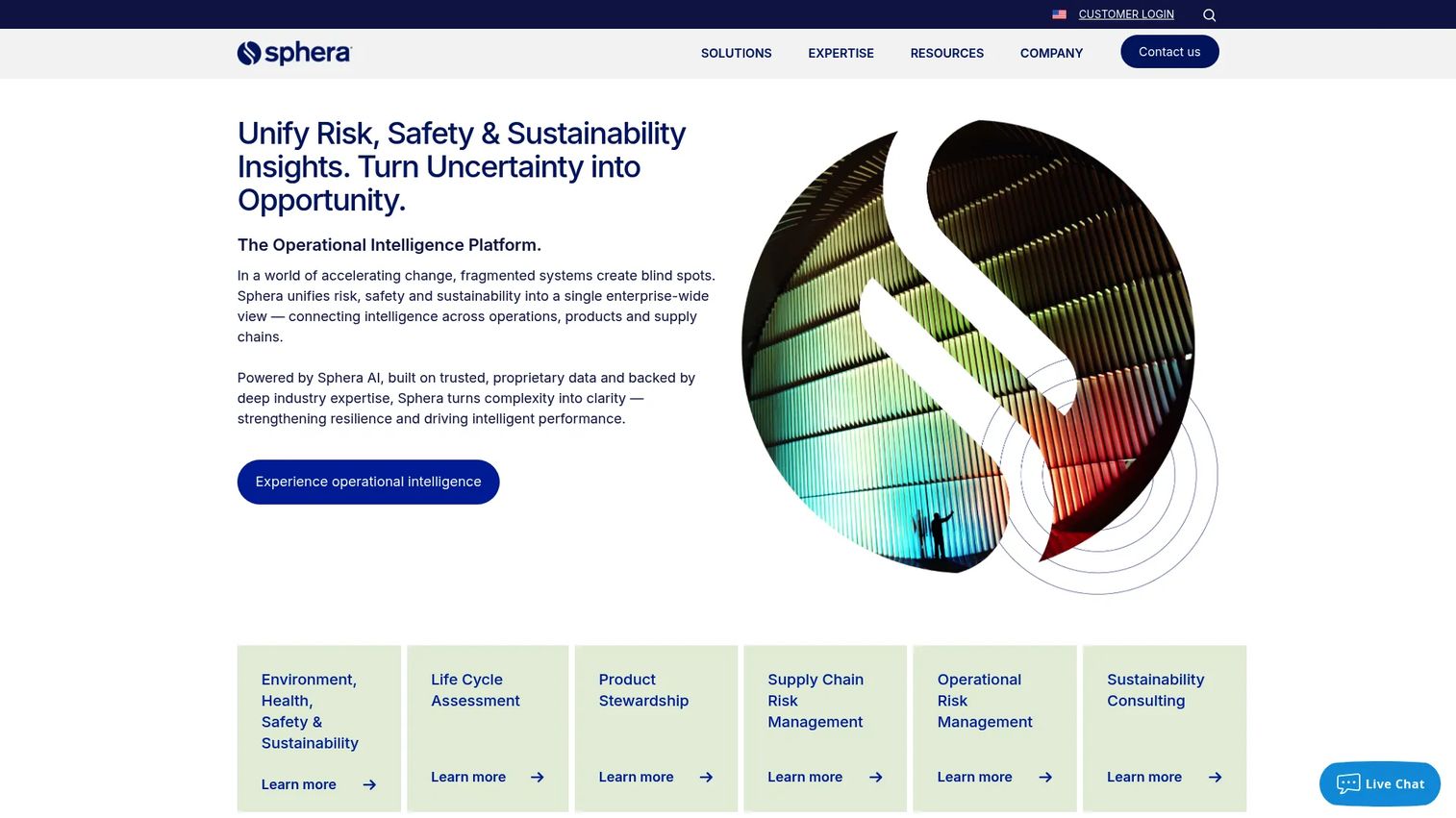
Sphera pairs enterprise software with advisory support for operational risk, safety, sustainability, and product stewardship. For Scope 3, that combination matters. When your supplier data quality is weak and your methodology questions are hard, having lifecycle data expertise alongside the platform closes gaps a pure-software tool leaves open.
The SpheraCloud operational intelligence platform covers value chain accounting, supply chain risk, and sustainability management. Its strength is lifecycle data depth, hotspot identification, and supplier engagement backed by people who know the methodology. This is the pick for teams that want audit-ready inventories and a partner who can defend the numbers, not just generate them.
Best for: enterprises that want software plus advisory support to build defensible Scope 3 inventories.
Key features
- SpheraCloud operational intelligence platform
- EHS, operational risk, and product stewardship
- Supply chain risk and sustainability management
- Lifecycle data and hotspot identification
Why choose Sphera: If your program is stuck on data quality or methodology, the advisory layer is worth more than another dashboard. It suits teams that want expertise, not just tooling.
Pricing: Sphera doesn't publish pricing. The platform runs through a request-a-demo and sales process, which is standard for enterprise operational software of this scope.
Sphera holds a 4.0/5 rating on G2.
3. Pulsora
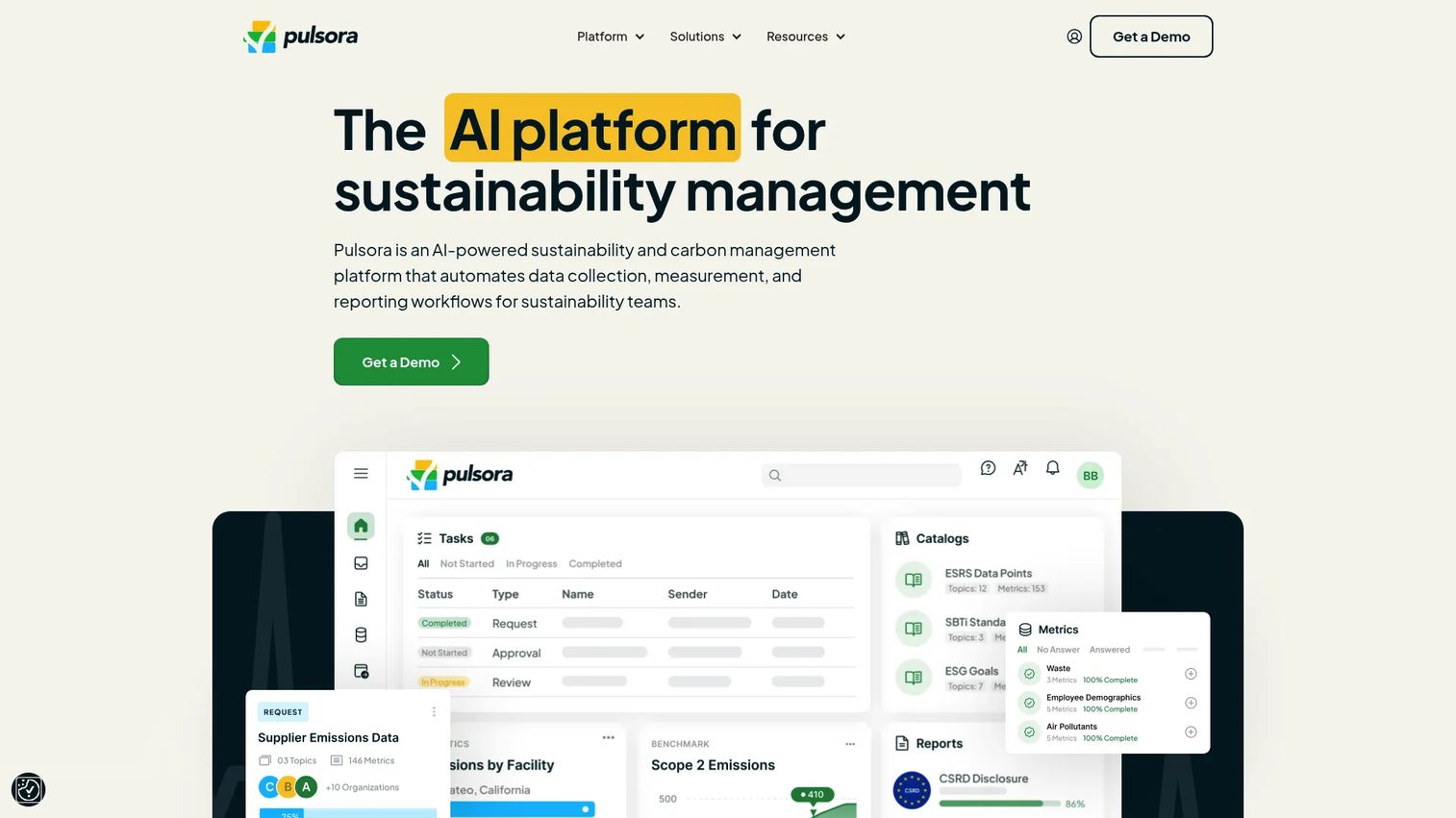
Pulsora is a carbon management platform built for enterprise sustainability teams that need ESG reporting and carbon accounting in one place. If you are managing Scope 3 as part of a broader ESG mandate rather than a standalone carbon project, its breadth is the draw.
The platform handles ESG data collection with automated workflows, carbon accounting across Scopes 1, 2, and 3, and regulatory reporting with disclosures and audit trails. That last piece matters for founders facing board scrutiny, since the audit trail is what makes a reported number defensible. Pulsora serves companies that want to consolidate ESG and carbon reporting instead of running two systems.
Best for: enterprise teams that want ESG reporting and carbon management on a single platform.
Key features
- ESG data collection with automated workflows
- Carbon accounting across Scopes 1, 2, and 3
- Regulatory reporting and disclosures
- Audit trails for reported figures
Why choose Pulsora: Reach for it when Scope 3 is one piece of a wider ESG reporting obligation and you want a single system rather than a stitched-together stack.
Pricing: Pulsora doesn't list pricing and directs prospects to request a demo, which is typical for enterprise ESG platforms.
Pulsora holds a 4.5/5 rating on G2.
4. Plan A
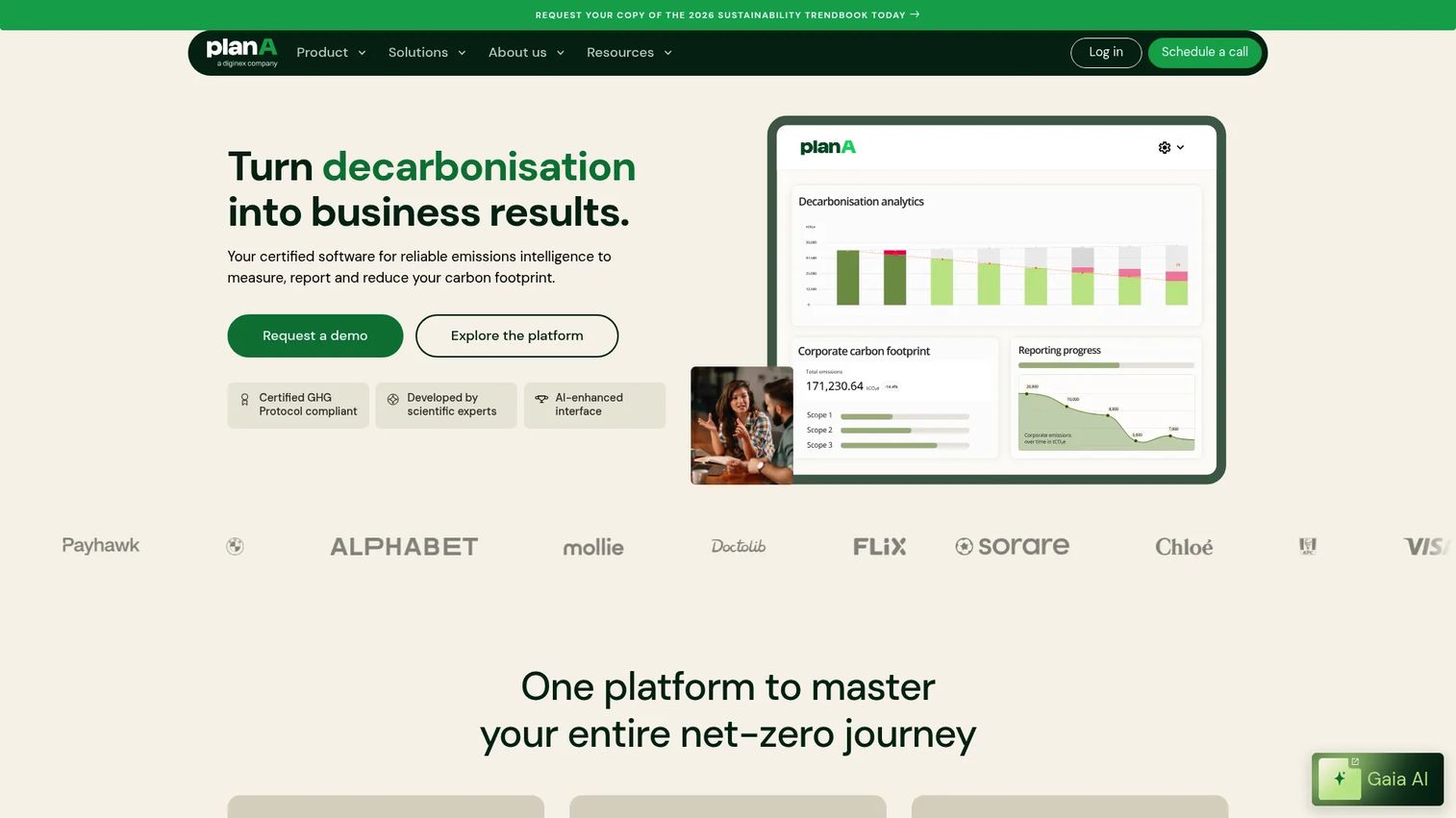
Plan A takes a decarbonization-first stance on carbon accounting. It measures emissions across Scopes 1, 2, and 3, then pushes straight into reduction targets and forecasting. For teams that want measurement and action in one workflow rather than two, that framing fits.
The platform generates carbon footprint and ESG reports, sets reduction targets, and forecasts both future emissions and future costs. That cost forecasting is a useful angle for founders who need to tie decarbonization to a budget line the board will understand. Plan A suits companies that want certified calculations and reporting rigor without treating measurement as the finish line.
Best for: businesses that want a managed carbon accounting platform with reduction planning built in.
Key features
- Emissions measurement across Scopes 1, 2, and 3
- Carbon footprint and ESG report generation
- Reduction target setting
- Emissions and future cost forecasting
Why choose Plan A: Pick it when you want the path from measurement to reduction planning to live in one tool, with cost forecasting to make the business case.
Pricing: Plan A doesn't show pricing and routes users to a demo request instead.
Plan A does not have an established G2 rating at the time of writing.
5. Watershed
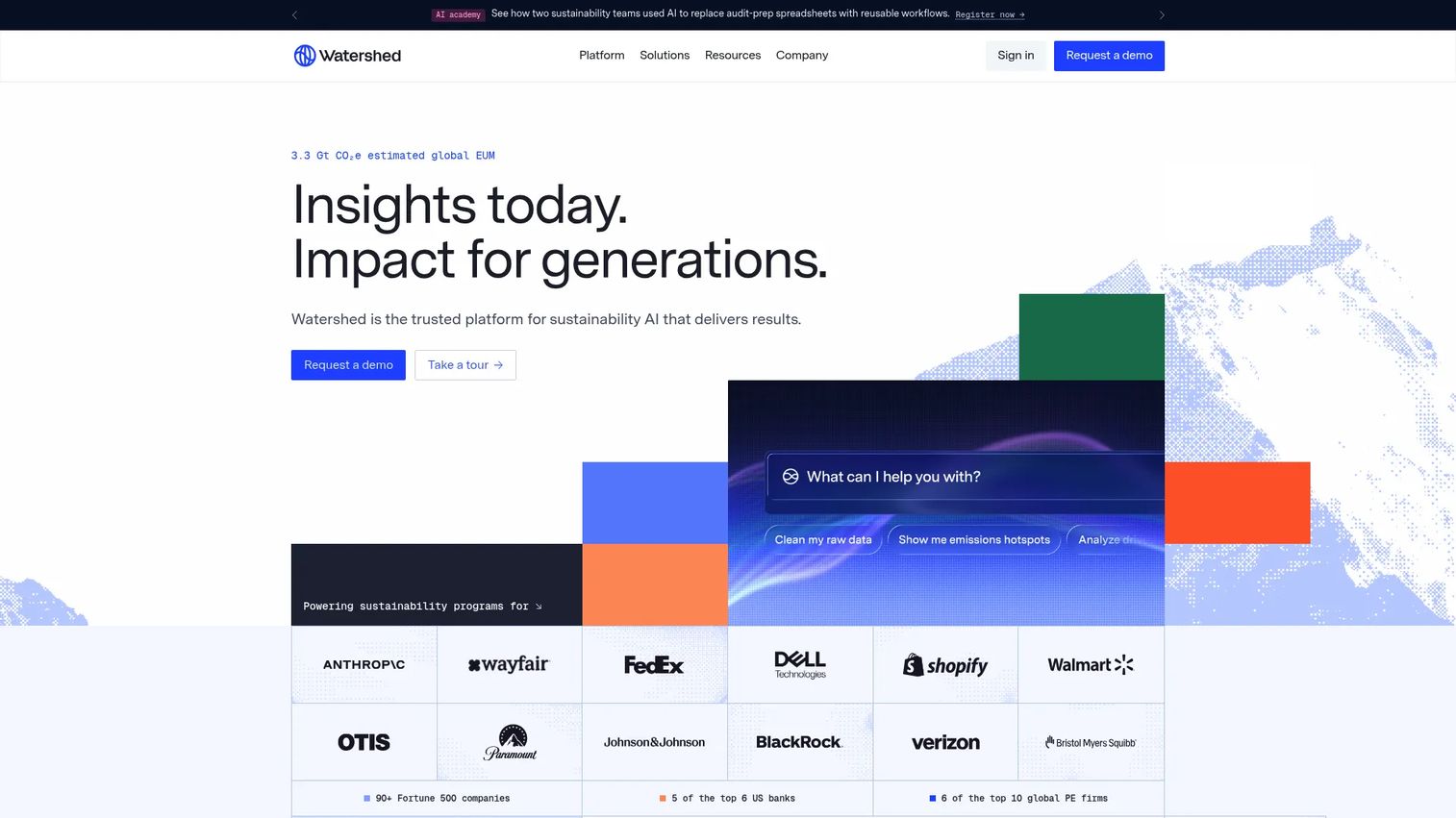
Watershed is an enterprise sustainability platform for measuring, reporting, and reducing environmental impact. Its center of gravity is data. For large teams pulling emissions data from many systems and stakeholder groups, the ingestion and cleaning layer is the differentiator.
The platform measures emissions, water, and land use, offers AI-assisted reporting and drafting, and provides tools to ingest, clean, map, and analyze data. That data pipeline is what makes Watershed fit organizations with fragmented sources, since getting messy value chain data into a usable state is often the hardest part of a Scope 3 program. It suits large teams that need measurement, reporting, and reduction workflows under one roof.
Best for: large organizations pulling sustainability data from many sources into one reporting workflow.
Key features
- Emissions, water, and land use measurement
- AI-assisted sustainability reporting
- Data ingestion, cleaning, and mapping
- Analysis and reduction workflows
Why choose Watershed: It fits when your bottleneck is data volume and fragmentation across teams, and you need a platform that turns scattered inputs into a clean inventory.
Pricing: Watershed doesn't publish standard pricing. Its pricing page directs teams to contact sales, and enterprise costs vary by scope.
Watershed holds a 4.5/5 rating on G2.
6. Persefoni
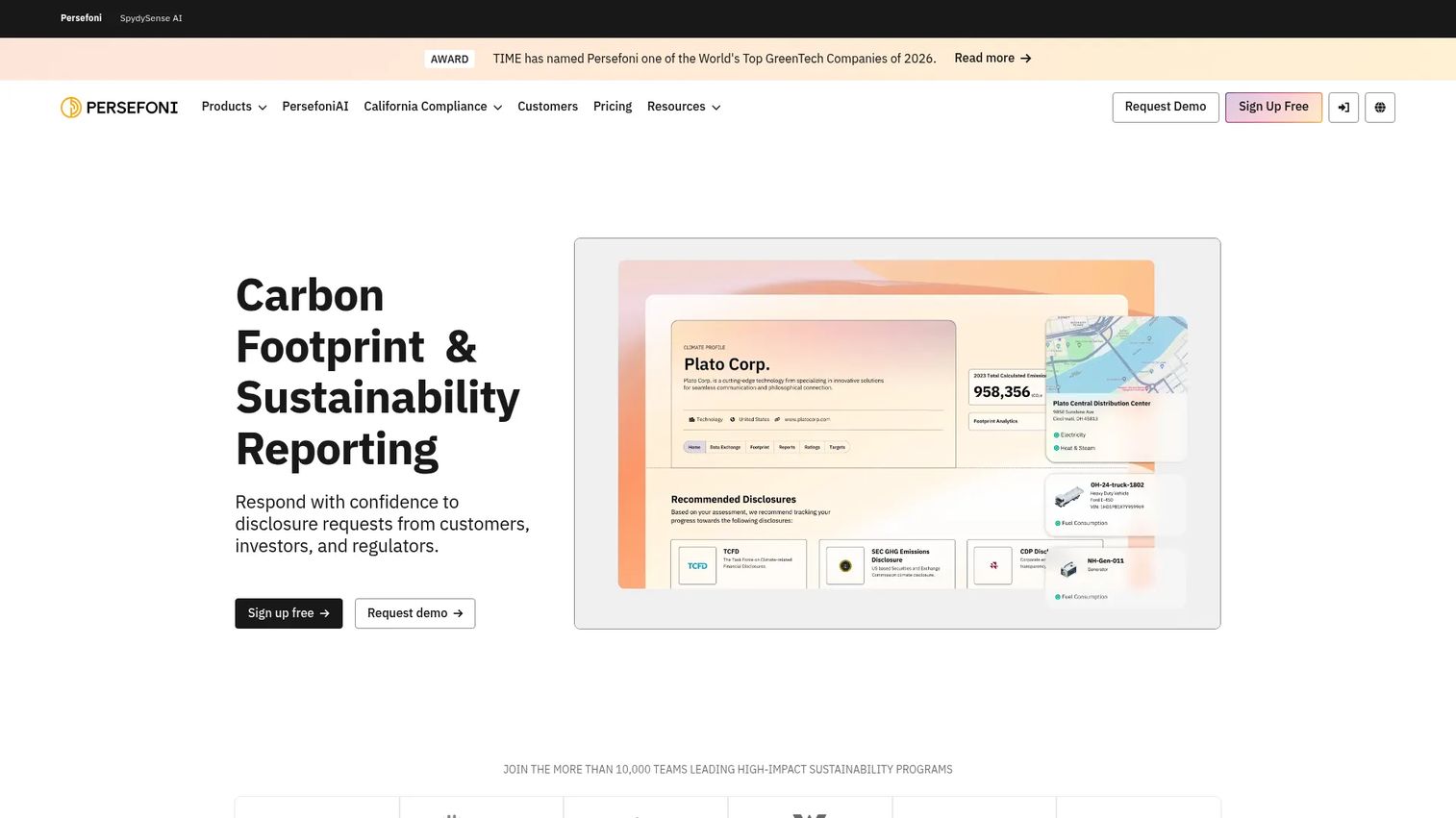
Persefoni builds carbon accounting and climate disclosure software with a finance-grade approach. That framing resonates with founders and finance teams who need numbers clean enough for board communication and disclosure. Rigor and program control are the selling points here.
The platform measures Scope 1, 2, and 3 footprints, builds sustainability reports for frameworks like CSRD and ISSB, and includes a Copilot with AI-assisted carbon accounting. Notably, Persefoni Pro is free with no credit card required, which lowers the barrier for a team wanting to test finance-grade accounting before committing to the Advanced tier. It suits teams that prioritize disclosure readiness and defensible reporting.
Best for: companies that need carbon accounting and climate disclosure built for finance and board scrutiny.
Key features
- Scope 1, 2, and 3 footprint measurement
- Report building for CSRD and ISSB
- Copilot AI-assisted carbon accounting
- Free Pro plan to start
Why choose Persefoni: The free Pro plan plus finance-grade rigor makes it a strong first-week test for founders who want to prove the accounting before spending. Advanced covers enterprise-scale needs.
Pricing: Persefoni Pro is free with no credit card required. Persefoni Advanced is the higher-tier plan for enterprise-scale needs, with pricing handled through the vendor.
Persefoni holds a 4.8/5 rating on G2.
7. Sweep
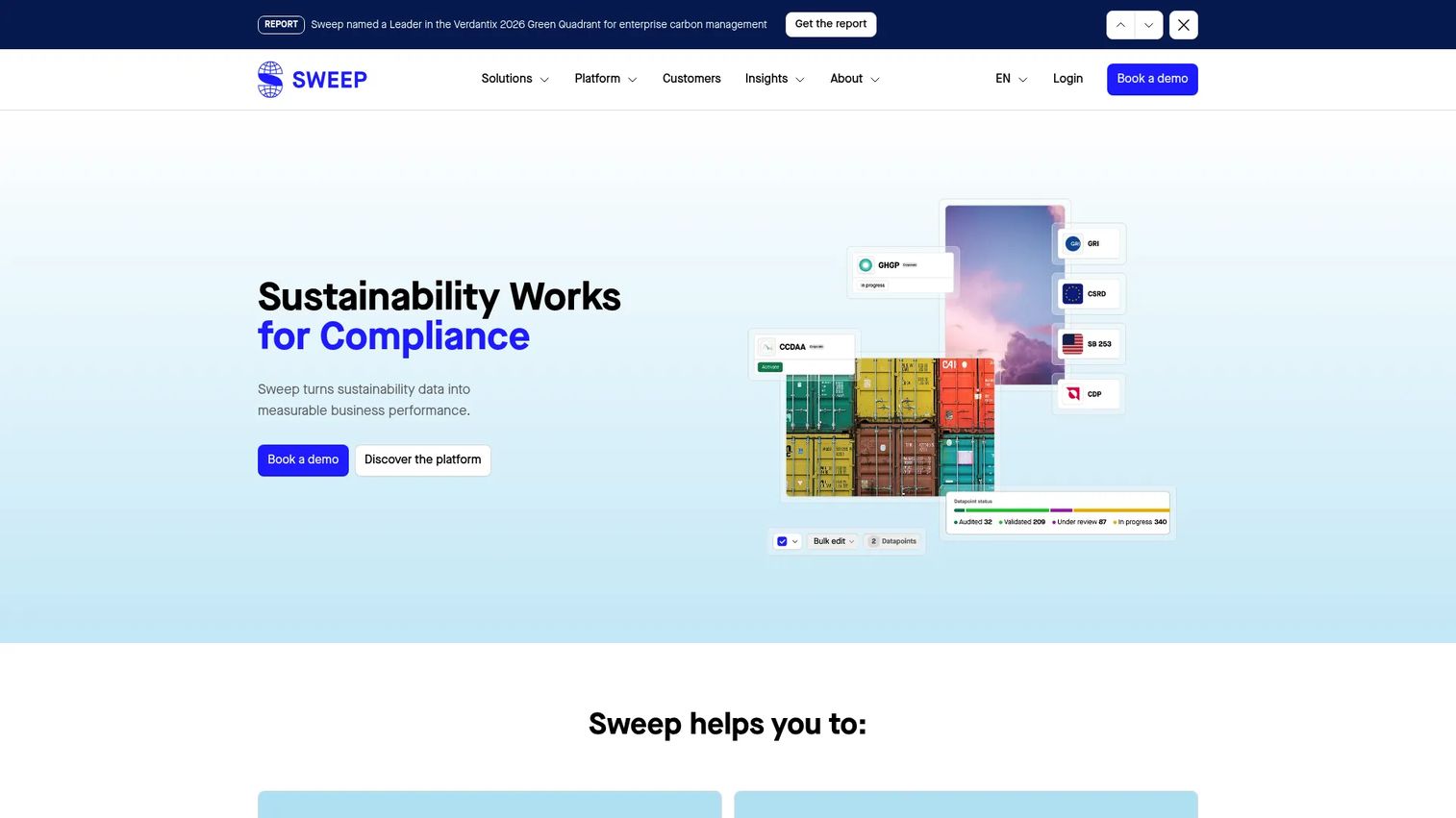
Sweep is a sustainability data management platform built for carbon, ESG reporting, and compliance. Its practical strength is the operating layer for value chain data, the supplier collaboration and data collection that most Scope 3 programs struggle with.
The platform centralizes sustainability data across the organization and value chain, provides audit-ready reporting with built-in compliance templates, and handles supplier data collection and risk tracking. That supplier workflow focus is what makes Sweep a fit for teams whose main obstacle is getting primary data out of their suppliers and into a defensible format. It suits enterprise teams that need a practical layer for managing carbon and ESG data across many contributors.
Best for: enterprise teams that need a working layer for supplier data collection and value chain reporting.
Key features
- Centralized sustainability data across the value chain
- Audit-ready reporting and compliance templates
- Supplier data collection and risk tracking
- Organization-wide data management
Why choose Sweep: Choose it when supplier engagement and primary data collection are your hardest problems, and you want that workflow at the center rather than bolted on.
Pricing: Sweep emphasizes booking a demo. A separate product page references a Sweep Starter plan with an upgrade to Pro, though prices are not listed.
Sweep holds a 4.9/5 rating on G2.
Considerations
Before you commit, run every shortlisted platform against these five criteria. They map directly to whether the tool survives board scrutiny and an audit.
GHG Protocol coverage
Confirm the platform calculates across all 15 Scope 3 categories, not just the easy ones. Ask how it maps to the Corporate Value Chain Standard and how it handles categories where you have little data. Weak category coverage produces an inventory that looks complete until an auditor probes it.
Supplier engagement depth
Primary data beats estimates every time, and it is the hardest data to get. Look at how the platform requests, chases, and validates supplier data. A strong supplier engagement workflow is often the difference between a screening estimate and a defensible number.
Traceability and audit readiness
Every figure needs a source, a method, and an emissions factor behind it. Check that the platform keeps an audit trail automatically and lets you export inventories with the evidence attached. If you have to reconstruct the trail at reporting time, the tool is not doing its job.
Reduction planning and scenario modeling
Measurement is the entry ticket. Verify the platform offers hotspot analysis to find where emissions concentrate, plus scenario modeling and supplier reduction plans to act on them. Without this, you are reporting a problem instead of solving it.
Integration fit and implementation effort
Check what the platform connects to: your ERP, procurement, finance, and existing data sources. A tool that plugs into your systems shortens time-to-first-inventory. One that does not becomes a data-entry job disguised as software.
Conclusion
Scope 3 is the hardest part of any carbon program because the data lives outside your company. The right software turns that scattered value chain data into a number you can defend and a plan you can act on.
Where you start depends on your maturity. If you are early, ground yourself in the GHG Protocol standard first, then test a free tier like Persefoni Pro before spending. If your data quality is weak, a hybrid software-plus-advisory platform like Sphera closes the methodology gaps. If Scope 3 is one piece of a broader mandate, a wider platform like Pulsora or Watershed handles reporting and reduction planning together. And if supplier data collection is your bottleneck, Sweep puts that workflow at the center, while Plan A ties certified calculations to reduction targets and cost forecasting.
Pick two or three from the shortlist, run them against the five considerations above, and buy the one that survives an auditor's questions. That is the real test, not the demo.
FAQs
Carbon accounting software is the broad category covering all emissions, Scopes 1, 2, and 3. Scope 3 software is the subset built specifically for value chain emissions, with supplier engagement and category-level accounting across the 15 GHG Protocol categories. Most strong Scope 3 tools are full carbon accounting platforms that happen to handle the hardest scope well.
Through supplier engagement workflows: the platform sends data requests to your suppliers, chases responses, and validates what comes back. Better tools support primary data collection, where suppliers submit their actual emissions rather than you estimating from spend. When primary data is missing, the software falls back to emissions factors applied to activity or spend data.
Traceability. Every reported figure must link back to a source, a calculation method, and the emissions factor used. Audit-ready reporting means that evidence trail is captured automatically and exportable, so a third-party reviewer can follow any number to its origin without you reconstructing it after the fact.
Yes. Most platforms on this list map their outputs to frameworks including CSRD, ESRS, CDP, SBTi, ISSB, and TCFD. The software structures your value chain inventory so the disclosures those frameworks require can be generated with the evidence attached. Confirm the specific frameworks each tool supports before buying, since coverage varies.
The stronger ones do. Beyond measurement, look for hotspot analysis to find where emissions concentrate, scenario modeling to test reduction pathways, and supplier reduction plans to act on the biggest contributors. Plan A and Persefoni lean into reduction planning, while broader platforms like Watershed and Pulsora fold it into wider reporting workflows.
If you have a handful of suppliers, consistent data, and no external reporting obligation, a spreadsheet can carry a first-pass estimate. The moment you face dozens of suppliers, 15 categories, inconsistent data formats, or an audit under CSRD or CDP, manual accounting starts breaking. That is the trigger to move to dedicated software.
Traceability and supplier engagement depth. Those two determine whether your number survives board scrutiny and an audit. After that, weigh reduction planning and integration fit. A free tier like Persefoni Pro lets you test the accounting rigor in week one before committing budget, which matters when you are protecting cash.
The 15 categories cover very different data, from purchased goods to business travel to end-of-life treatment. Some tools handle a few categories deeply and others cover all 15 at varying depth. Map your material categories first, the ones that dominate your footprint, then confirm the platform accounts for those with strong methodology rather than rough estimates.