

You close a strong quarter. Then a board member asks a simple question: what's the current IRR across the portfolio, and how does it compare to last quarter? You open three tabs. A banking dashboard. A spreadsheet someone updated last week. A CRM that half the team ignores. Forty minutes later, you have a number you're not sure you trust.
That's the real problem with most real estate investment software decisions. It isn't a feature gap. It's fragmentation. Deal data lives in one tool, rent flows through another, investor reporting gets rebuilt by hand in slides every month, and nobody owns a single source of truth. The result is a business that runs on heroics instead of systems.
The market is moving fast on this. The global real estate investment software market is projected to grow from USD 7.17 billion in 2026 to USD 19.25 billion by 2034, a 13.14% CAGR, according to Fortune Business Insights (2026). More telling for operators: over 58% of mid-to-large real estate investment firms have adopted or are actively procuring dedicated investment management software by 2026, up from roughly 39% in 2021, per Dataintelo (2026). The teams that scale cleanly are the ones treating software as infrastructure, not a nice-to-have.
This guide compares 10 platforms so you can pick by workflow, not by brand recognition.
What's inside
This guide is for investors, operators, syndication firms, and proptech teams who need repeatable reporting and less manual work across the investment lifecycle. It covers the full stack: deal sourcing, underwriting, portfolio management, accounting, and investor reporting.
We chose tools based on four criteria:
- Workflow breadth: how much of the sourcing-to-reporting cycle it covers
- Reporting depth: how reliably it produces numbers you can defend
- Scalability: whether it holds up as the portfolio and team grow
- Ease of use: how fast a new hire gets productive without hand-holding
No tool wins on all four. The point is to match the platform to where your operation actually breaks.
TL;DR
- Best all-in-one for growing portfolios: Baselane combines banking, bookkeeping, rent collection, and reporting for investors who want financials in one place.
- Best for deal sourcing and analysis: PropStream leads on nationwide property data, comps, and lead generation for acquisition-heavy teams.
- Best for enterprise reporting and governance: MRI Software delivers investment accounting, investor reporting, and fund-level control for larger firms.
- Best for underwriting and valuation: Argus by Altus Group handles commercial cash flow forecasting and scenario modeling for CRE teams.
- Best for off-market outreach: DealMachine and REISift cover driving for dollars, list building, skip tracing, and follow-up discipline.
- Best CRM layer: HubSpot CRM organizes investor and lead relationships alongside your property-specific tools.
Most operators end up running two or three of these together. The right property investment software depends on whether your bottleneck is finding deals, managing them, or reporting on them.
What is real estate investment software
Real estate investment software is a category of tools that help investors and firms source deals, underwrite properties, manage portfolios, handle accounting, and report performance to stakeholders. It replaces the scattered mix of spreadsheets, banking apps, and manual decks that most operations start with.
The category spans several overlapping functions. Some platforms specialize in one; others try to cover the full lifecycle. Core capabilities usually include:
- Deal sourcing and lead generation: property data, off-market lead lists, comps, and outreach tools
- Underwriting and analysis: cash flow modeling, scenario testing, valuation, and return calculations
- Portfolio management: performance tracking across properties, funds, and entities
- Accounting and bookkeeping: transaction tagging, reconciliation, and real estate investment accounting workflows
- Investor reporting: capital account statements, distribution tracking, and dashboards for LPs and boards
- Property operations: rent collection, tenant management, and resident-facing portals
The distinction that matters most for buyers: real estate investment management software is built around the capital and performance side, while property management software is built around day-to-day operations. Many firms run both. Understanding which job you're solving first keeps you from buying a data platform when you needed an accounting system, or the reverse.
When to use real estate investment software
The trigger is usually a specific breakdown, not a general urge to modernize. Here are the three most common.
Streamline deal sourcing and lead generation
You're burning hours pulling property records, building lists, and chasing owners across disconnected tools. Deal sourcing software for real estate investors centralizes public records, comps, skip tracing, and outreach so acquisitions run on a repeatable process instead of a scramble. This matters most for wholesalers and acquisition-heavy teams where pipeline volume drives everything.
Centralize portfolio visibility and performance tracking
You own more than a handful of properties and can no longer answer performance questions from memory. Real estate portfolio management software pulls occupancy, cash flow, and returns into one view, so you stop reconstructing numbers before every board call. If you're spending the first day of each month rebuilding a performance snapshot, this is your signal.
Automate investor reporting and accounting workflows
You're rebuilding the same capital account statements and distribution reports by hand, every period. Real estate investment reporting software and real estate investment accounting software automate the ledger-to-report path, so LPs and stakeholders get consistent numbers without you touching a spreadsheet. This is the difference between reporting that scales and reporting that eats a week.
How to read the comparison table
The table below sorts tools by how central they are to a full investment workflow, starting with the broadest all-in-one option. "Best for" tells you the primary buyer. "Key differentiator" is the one thing that tool does better than the rest. Pricing reflects entry tiers where published; some enterprise platforms price by portfolio size and quote directly.
| # | Product | Best for | Key differentiator | Pricing | G2 rating |
|---|---|---|---|---|---|
| 1 | Baselane | All-in-one investor finances | Banking, bookkeeping, and rent in one platform | Free; Smart $20/mo | Not published |
| 2 | PropStream | Deal sourcing and analysis | Nationwide property data and lead generation | From $99/mo | 4.7/5 |
| 3 | MRI Software | Enterprise reporting | Investment accounting and fund reporting | From $60/mo (OnLocation) | 4.2/5 |
| 4 | Argus by Altus Group | Underwriting and valuation | CRE cash flow forecasting and modeling | Quote-based | Not published |
| 5 | DealMachine | Off-market lead sourcing | Driving for dollars and skip tracing | From $119/mo | Not published |
| 6 | REISift | List management and follow-up | Data cleanup and pipeline discipline | See site | Not published |
| 7 | ATTOM Data Solutions | Research and underwriting data | Deep property and market datasets | Quote-based | Not published |
| 8 | Matterport | Property visualization | 3D digital twins and virtual tours | Free; paid by space | 4.1/5 |
| 9 | HubSpot CRM | Relationship management | Flexible CRM and pipeline tracking | Free; paid from $7/mo/seat | 4.4/5 |
| 10 | Yardi RENTCafe | Resident-facing operations | Leasing and resident portal at scale | Free for renters | 4.0/5 |
Best 10 real estate investment software tools for 2026
1. Baselane

Baselane is an all-in-one financial platform built specifically for real estate investors. It combines banking, bookkeeping, rent collection, and property management in one place, which is exactly the consolidation most growing operators need. Instead of stitching together a business checking account, an accounting tool, and a separate rent app, you run the financial side of the portfolio from a single system.
The pull here is workflow breadth on the money side. Rent flows in, transactions auto-tag to the right property, and the numbers roll up into reporting without manual reconciliation. For a founder-operator who wants clean books without hiring a bookkeeper on day one, that removes real friction.
Best for: Real estate investors who want banking, bookkeeping, and rent collection in one platform.
Key strengths
- Banking and bookkeeping essentials in one account
- Rent collection with a built-in tenant portal
- Smart automation: auto-tagging, auto-receipt matching, and low-balance transfers
Why choose Baselane: If your operation is small to mid-sized and your pain is scattered financials, Baselane collapses several tools into one. It fits investors who want repeatable bookkeeping and reporting without enterprise overhead or a dedicated finance hire.
Baselane pricing: The Core plan is free. The Smart plan is $20/mo with advanced automation and a 30-day trial.
2. PropStream

PropStream is real estate data and lead-generation software for finding, analyzing, and marketing off-market property leads. It's the tool acquisition teams reach for when the bottleneck is finding deals, not managing them. Nationwide property records, comps, and filtering let you build targeted lists, then reach owners through skip tracing and outreach.
This is real estate deal analysis software at the front of the funnel. You can run comps to size up a deal, then move straight into contacting the owner without switching platforms. The mobile app supports driving for dollars, so field sourcing feeds the same pipeline.
Best for: Real estate investors and wholesalers who need property data, comps, and outreach tools in one platform.
Key strengths
- Nationwide property data and lead generation
- Skip tracing and outreach tools
- Mobile app with comps and driving for dollars
Why choose PropStream: Choose PropStream when sourcing and analysis matter more than fund accounting. It's strongest for volume-driven acquisition teams who need to find, screen, and contact owners fast. It won't handle investor reporting, so pair it with an accounting layer.
PropStream pricing: Essentials starts at $99/mo ($81/mo billed annually). Pro is $199/mo, and Elite is $699/mo. A 7-day free trial includes 50 leads.
3. MRI Software
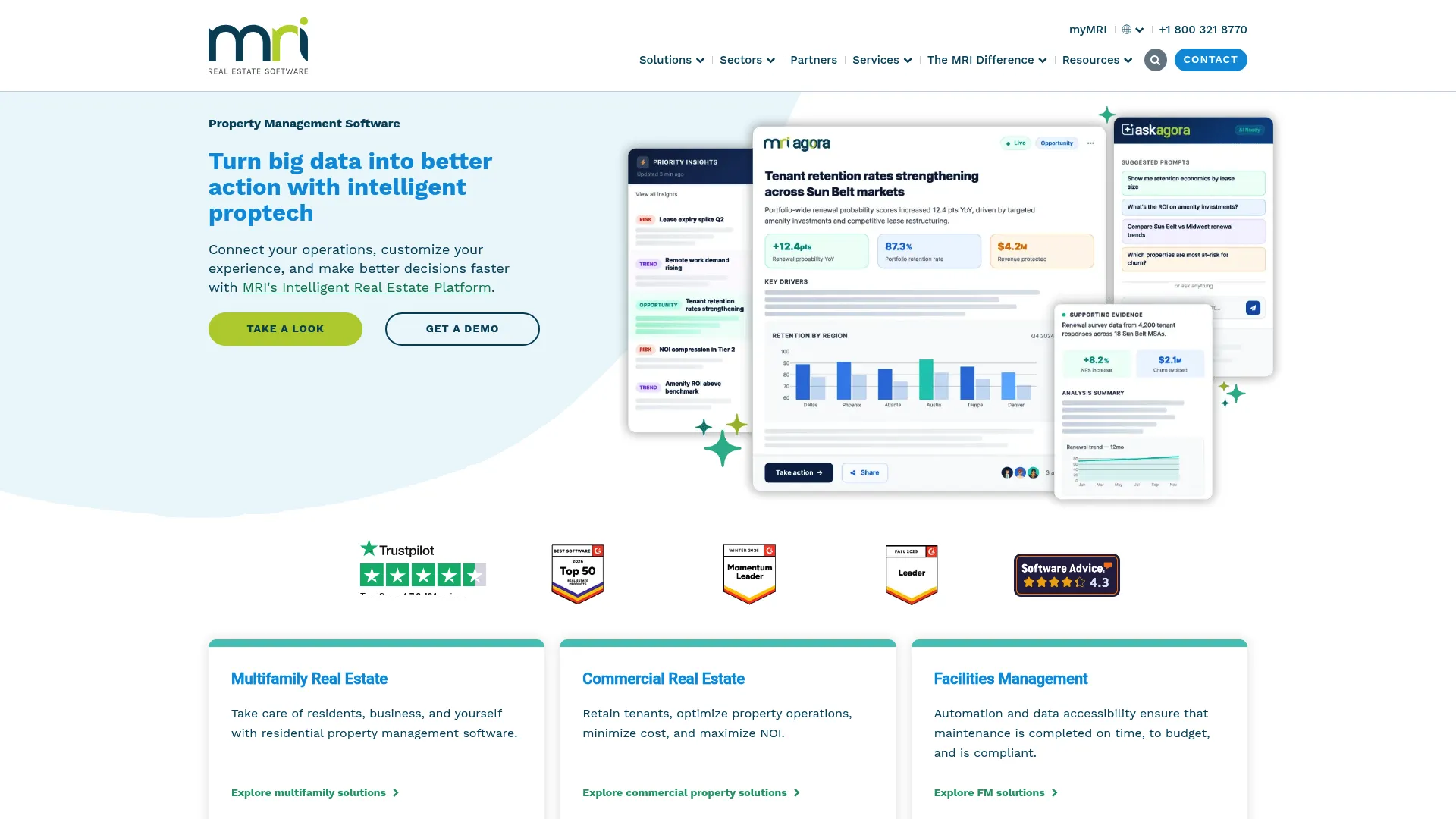
MRI Software is a real estate software platform for property management, investment management, facilities, lease, and related operations. It sits at the enterprise end of the category. Where lighter tools cover one function, MRI is built for firms that need investment accounting, investor reporting, and fund-level control under one roof.
This is where governance and reporting depth become the deciding factor. Larger firms managing multiple entities, funds, and stakeholders need audit-ready numbers and consistent statements. MRI's investment management and reporting stack targets exactly that, integrating property operations with the capital side.
Best for: Real estate organizations needing an integrated operations and property software suite.
Key strengths
- Real estate property management
- Lease management and lease accounting
- Investment management and reporting
Why choose MRI Software: Choose MRI when you've outgrown spreadsheets and need enterprise-grade real estate investment reporting software with governance built in. It fits firms where reporting reliability and multi-entity control outweigh the simplicity of a lighter tool.
MRI Software pricing: Brand-level pricing is quoted by portfolio. The MRI OnLocation product publishes plans starting at $60/mo (Small), $170/mo (Medium), and $304/mo (Large), with custom pricing available.
4. Argus by Altus Group
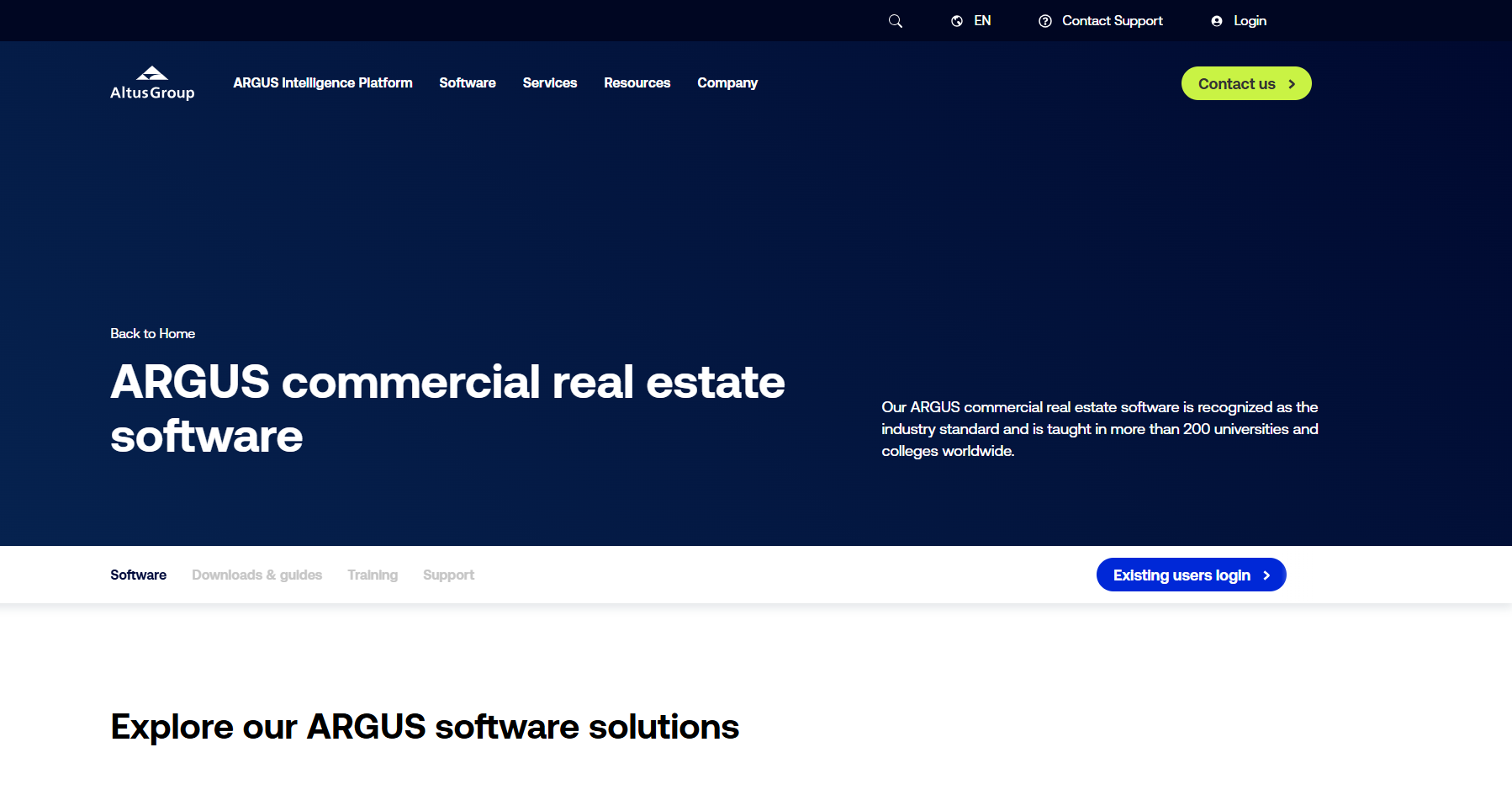
Argus by Altus Group is a commercial real estate software suite for valuation, cash flow forecasting, portfolio performance, and fund management. It's the standard many CRE teams use for underwriting complex deals. When a valuation depends on lease rollovers, rent escalations, and multiple exit scenarios, Argus is built to model it.
This is sophisticated financial modeling, not lead sourcing. Acquisitions teams use it to forecast cash flows on a target property, and portfolio managers use it to run valuations across holdings. Its recent AI-powered assistant, ARGUS Assist, adds a conversational layer to those workflows.
Best for: Commercial real estate teams needing valuation and forecasting software.
Key strengths
- Commercial property valuation and cash flow forecasting
- Portfolio performance and asset management workflows
- AI-powered conversational assistant (ARGUS Assist)
Why choose Argus: Choose Argus when your deals are commercial and your underwriting is complex enough to need scenario modeling. It's the fit for teams where valuation accuracy drives acquisition and hold decisions. It's a modeling engine, not an all-in-one platform.
Argus pricing: Software subscription pricing is quoted directly. Publicly listed prices cover self-paced eLearning packages, starting at $425 for the ARGUS Developer beginner package.
5. DealMachine

DealMachine is real estate data software for finding motivated off-market leads and contacting property owners. It leans hard into the acquisition motion, especially driving for dollars. You spot a distressed property, add it from your phone, pull owner data, and start outreach. The workflow is built for investors who source deals on the ground.
Where PropStream is a broad data platform, DealMachine is tuned for owner outreach and list building at speed. Its 700+ filters help narrow lists, and built-in direct mail and marketing automation handle the follow-through. It complements a broader stack rather than replacing your accounting or reporting tools.
Best for: Real estate investors and wholesalers sourcing off-market leads.
Key strengths
- Driving for dollars and virtual driving
- Skip tracing with phone numbers and email addresses
- List building with 700+ filters and marketing automation
Why choose DealMachine: Choose DealMachine when off-market sourcing is your growth engine and you want a mobile-first workflow. It fits small teams and solo investors who source deals in the field and need outreach built in.
DealMachine pricing: Starter is $119/mo, Pro is $179/mo, and Pro Plus is $279/mo. Annual billing discounts and a 7-day free trial are available.
6. REISift
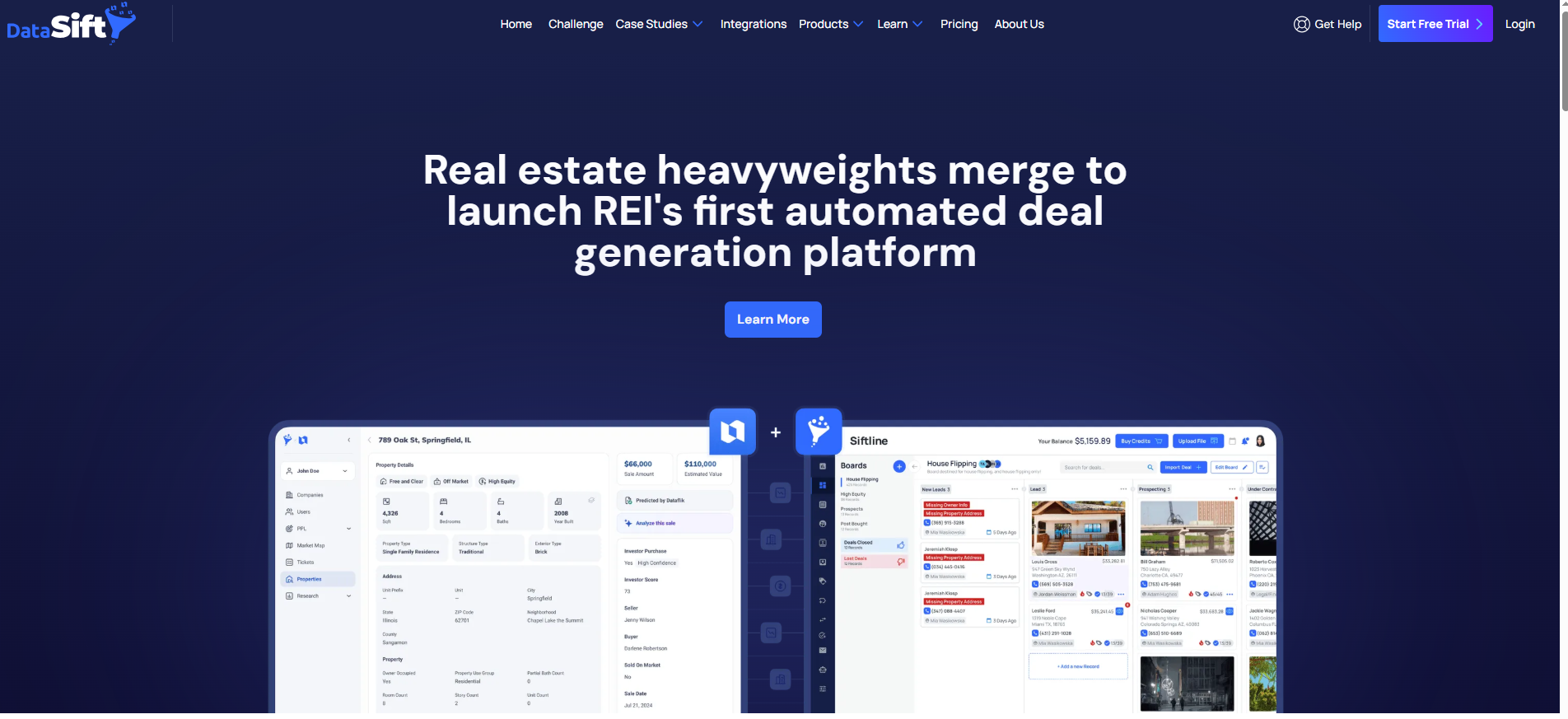
REISift is a data management and follow-up platform for real estate investors drowning in messy lead lists. If you've ever pulled three overlapping lists, then lost track of who you've already contacted, this solves that. It cleans, dedupes, and organizes lead data, then keeps your pipeline and follow-up disciplined.
The angle here is data discipline. Sourcing tools generate volume, but volume without organization is noise. REISift sits downstream of that, turning raw lists into a clean, workable pipeline with consistent follow-up. It's the operational glue between finding leads and actually working them.
Best for: Investor teams that need list management, data cleanup, and consistent follow-up.
Key strengths
- Lead list cleanup and deduplication
- Pipeline organization and stage tracking
- Follow-up workflows to keep deals moving
Why choose REISift: Choose REISift when your problem isn't finding leads, it's managing the ones you already have. It fits teams running high list volume that need order and follow-up rigor before deals slip through the cracks.
REISift pricing: Plans are published on the REISift site and scale by contact and upload volume. Check the pricing page for current tiers.
7. ATTOM Data Solutions

ATTOM Data Solutions is a property data provider that supplies market intelligence, valuation inputs, and investor research. It's less a workflow app and more a data layer. Research-heavy teams and proptech builders use ATTOM to feed underwriting models, market analysis, and internal tools with deep, structured property data.
This is where data quality and coverage matter most. If your underwriting depends on accurate tax, deed, mortgage, and valuation data at scale, ATTOM is built to be that foundation. It powers real estate portfolio analytics and research rather than front-line sourcing or reporting.
Best for: Research-heavy teams and proptech builders who need deep property and market data.
Key strengths
- Nationwide property and market datasets
- Valuation and risk data inputs
- Data feeds and API access for internal tools
Why choose ATTOM: Choose ATTOM when your differentiation is analytical depth and you want to build on reliable data rather than a packaged workflow. It fits firms and proptech teams that treat data as infrastructure.
ATTOM pricing: Pricing is quoted based on data volume and delivery method. Contact ATTOM for a tailored quote.
8. Matterport
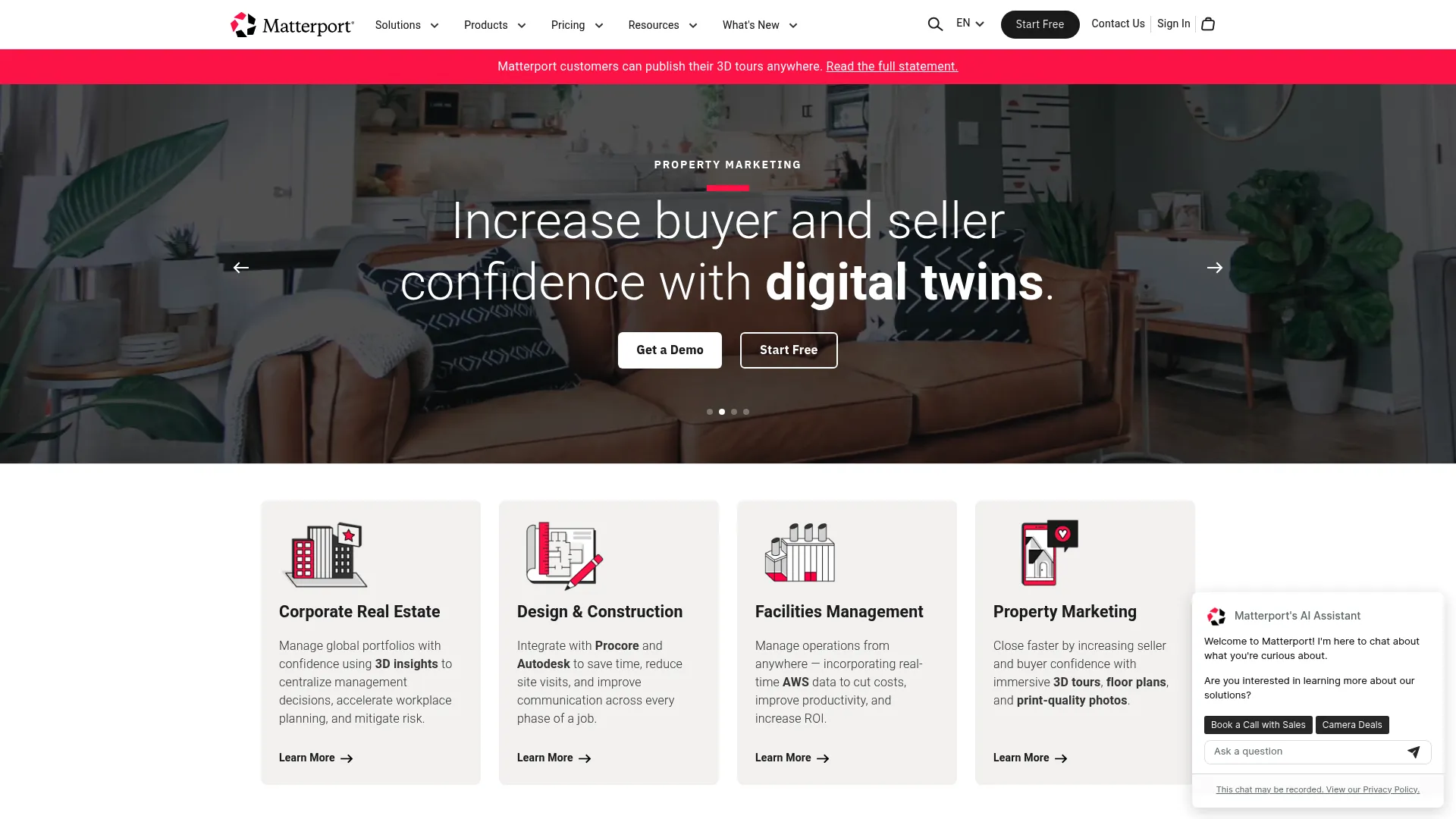
Matterport is a 3D digital twin and property marketing platform for capturing, sharing, and analyzing spaces. For investors, it solves a specific problem: evaluating and presenting properties without being on-site. You capture a space once, then review it remotely, share it with partners, or use it in marketing.
This supports evaluation and marketing, not accounting or reporting. Remote investors use digital twins to assess condition and layout before committing. Its AI-powered Property Intelligence adds automations on top of the capture, and multiple spaces can merge into one digital twin for larger assets.
Best for: Teams that need interactive 3D tours, digital twins, and property marketing assets.
Key strengths
- Immersive 3D experiences from supported cameras and mobile devices
- AI-powered Property Intelligence automations
- Merge multiple spaces into one digital twin
Why choose Matterport: Choose Matterport when remote property review and presentation are part of your workflow. It fits investors evaluating properties across markets and firms that market assets to partners or tenants visually. It's a visualization layer, not a financial system.
Matterport pricing: A Free Forever plan is available. Paid Starter, Professional, and Business plans are billed annually based on active spaces, with Enterprise priced by quote.
9. HubSpot CRM
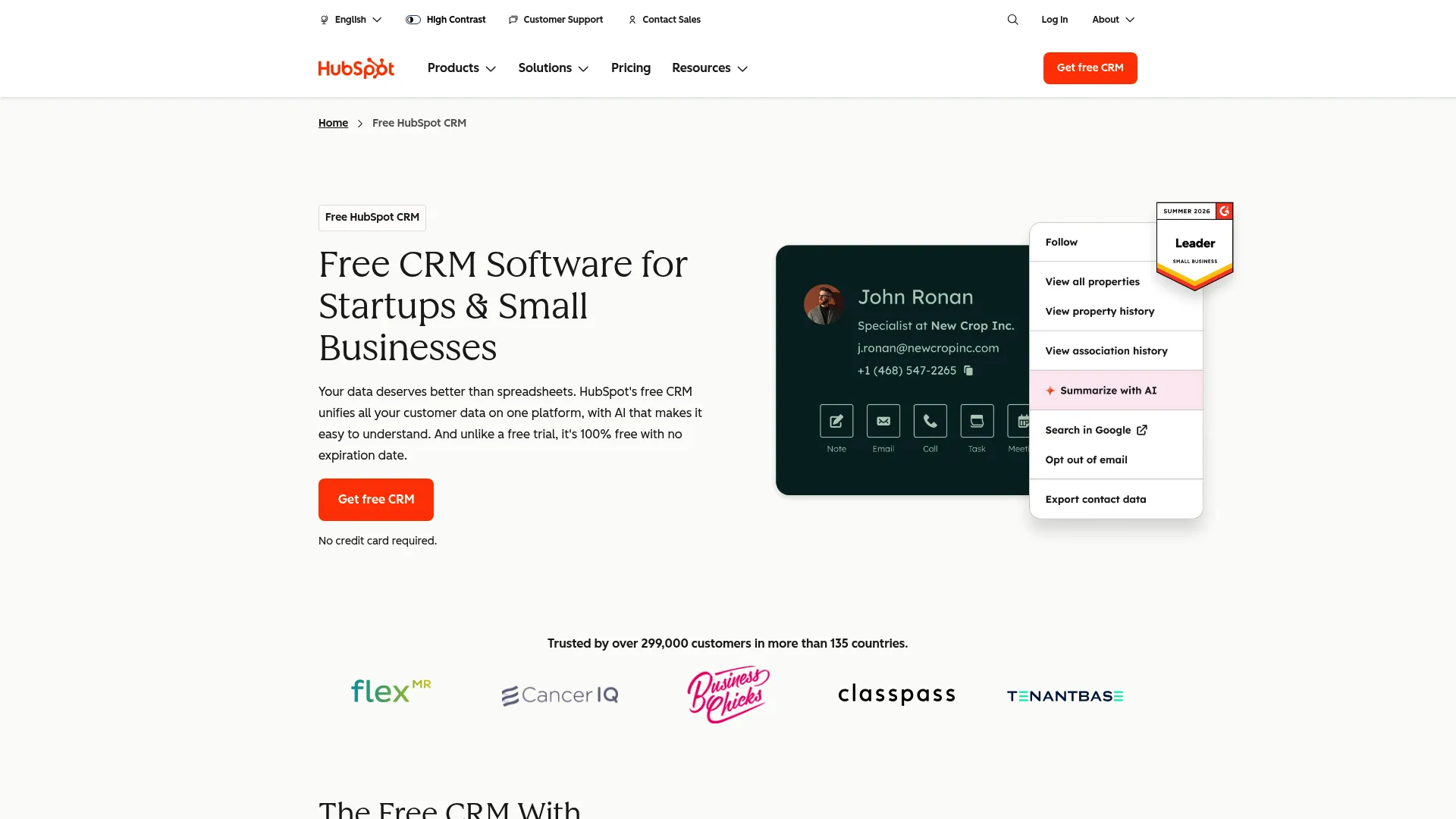
HubSpot CRM is free CRM software that unifies customer data and adds premium capabilities as you grow. It isn't real estate specific, and that's the point. Firms managing investor relationships, lead pipelines, and outreach need a flexible CRM layer that sits alongside their property-specific tools.
For a real estate operation, HubSpot tracks the relationship side: investor contacts, deal pipelines, and follow-up automation. When an acquisition tool sources leads and an accounting tool handles the books, HubSpot is where the human relationships and communication history live. Its free tier makes it low-risk to start.
Best for: Teams wanting a free CRM that can scale into a broader customer platform.
Key strengths
- Contact management and deal pipelines
- CRM import and reporting dashboard
- Follow-up and workflow automation
Why choose HubSpot CRM: Choose HubSpot when relationship and investor management matter and you want a CRM that grows with you. It fits firms that need pipeline tracking and communication history alongside, not inside, their property tools.
HubSpot CRM pricing: The Free tier supports up to 2 users. Starter begins at $7/mo/seat, Professional at $45/mo/seat, and Enterprise at $75/mo/seat.
10. Yardi RENTCafe

Yardi RENTCafe is an apartment search and resident portal platform for finding, applying, paying rent, and managing resident tasks. For operators with multifamily or resident-facing portfolios, it handles the tenant side of the business at scale: listings, applications, lease signing, and resident self-service.
This connects to property management and reporting visibility. When residents apply, sign, and pay through one portal, the operational data flows into a cleaner picture of portfolio performance. It's built for operators managing residents at volume, not for deal sourcing or fund accounting.
Best for: Property managers and renters needing an integrated leasing and resident-services portal.
Key strengths
- Apartment search and listings
- Online applications and lease signing
- Resident portal for rent payments and maintenance requests
Why choose Yardi RENTCafe: Choose RENTCafe when resident-facing operations are central to your portfolio and you need leasing and self-service at scale. It fits multifamily operators who want tenant workflows tied into broader portfolio operations.
Yardi RENTCafe pricing: Browsing listings and resident portal features are free for renters. Pricing for property managers is quoted directly and not publicly disclosed.
What to evaluate before you buy
The right pick depends on where your operation breaks. Run through these before committing.
Workflow coverage
Map your actual lifecycle: sourcing, underwriting, management, accounting, reporting. Mark where the manual work lives now. Buy for the biggest gap first, not the longest feature list. Most operators need two or three tools, not one that claims to do everything.
Reporting reliability
If the software can't produce numbers you'd defend in a board meeting, it fails the core test. Check whether reports pull from clean, connected data or require manual assembly. Investor reporting software earns its place by removing the monthly rebuild.
Scalability
The tool that fits 10 properties may buckle at 100. Ask how pricing and performance change as entities, funds, and users grow. A founder-operator should look for something that survives the next fundraise, not just this quarter.
Integration and data flow
Isolated tools recreate the fragmentation you're trying to escape. Check what connects to what: does your CRM talk to your accounting system, does your sourcing tool feed your pipeline? The value is in the data moving without you carrying it by hand.
Time to first win
You'll know within the first week whether a tool earns adoption. If a new hire can't get productive fast, the platform becomes shelfware. Favor tools where the first useful output comes quickly over ones that promise depth after a long setup.
Conclusion
There's no single best real estate investor software, only the best fit for where your operation strains. If your bottleneck is scattered financials, Baselane consolidates banking, bookkeeping, and rent into one system. If it's finding deals, PropStream and DealMachine lead on sourcing, and REISift keeps the resulting lists disciplined. If it's enterprise-grade reporting and governance, MRI Software is built for multi-entity control, and Argus handles the complex underwriting behind commercial valuations.
The supporting layers matter too. ATTOM feeds research-heavy underwriting with deep data, Matterport handles remote property review, HubSpot organizes investor relationships, and Yardi RENTCafe runs resident operations at scale.
Your next step is simple. Map your lifecycle from sourcing to reporting, find the point where you're still doing work by hand, and buy for that gap first. Then check how it connects to the rest of your stack before you sign. The goal isn't more tools. It's a system that produces reliable numbers without the founder in the middle of every report.
FAQs
It helps investors and firms source deals, underwrite properties, manage portfolios, handle accounting, and report performance to stakeholders. Depending on the platform, it replaces spreadsheets, banking apps, and manual reporting decks with connected workflows. The best fit covers whichever part of your lifecycle currently runs on manual effort.
It pulls transaction, occupancy, and cash flow data into structured models and reports instead of hand-built spreadsheets. Underwriting tools like Argus forecast cash flows across scenarios, while reporting platforms like MRI generate capital account statements and distribution reports automatically. The result is consistent numbers you can defend without rebuilding them each period.
Investment software centers on the capital and performance side: sourcing, underwriting, portfolio analytics, and investor reporting. Property management software centers on operations: rent collection, tenant workflows, and resident portals. Many firms run both, and tools like Baselane and Yardi RENTCafe blur the line by covering operational and financial workflows together.
For residential and off-market analysis, PropStream leads with nationwide data, comps, and lead generation in one platform. For commercial underwriting with complex cash flow modeling, Argus by Altus Group is the standard. Your choice depends on whether you're screening volume or modeling individual complex deals.
Yes. Small operators often benefit most because manual work eats a larger share of their time. Baselane, with a free Core plan, and HubSpot CRM, with a free tier, let small portfolios start without upfront cost. The goal is to build clean habits before the portfolio grows.
Reliable data flow, consistent statement generation, and reports you'd defend under scrutiny. Look for automated capital account statements, distribution tracking, and dashboards that pull from connected data rather than manual assembly. MRI Software targets this for larger firms that need governance and audit-ready output.
Rarely all three well. Sourcing tools like PropStream and DealMachine excel at finding deals, while accounting and reporting platforms like Baselane and MRI excel at financials. Most operators combine two or three tools and connect them, rather than expecting one platform to cover the entire lifecycle.
Choose a data platform like ATTOM when your team builds its own analysis and needs raw, reliable property data. Choose an all-in-one platform when you want packaged workflows for banking, bookkeeping, and reporting without building anything. The deciding question is whether you have the technical capacity, and appetite, to build on top of data yourself.