Training content scattered across shared drives, Loom recordings, outdated decks, and manager Slack messages is a ramp problem disguised as a content problem. Reps can't find what they need, can't retain what they see once, and managers have no visibility into who is ready to run a deal and who isn't.
The promise of online learning platforms is straightforward: Structured, repeatable, measurable learning that doesn't depend on who happens to be in the room. According to Eurostat (2026), 34.8% of EU internet users took an online course or used online learning materials in 2025. Adoption is rising because the alternative, rebuilding training from scratch every quarter, doesn't scale.
The harder problem is that "online learning platform" covers an enormous range of tools. A course marketplace, an enterprise LMS, a creator storefront, and a live meeting tool all get labeled the same way. Picking the wrong category means paying for features you won't use while missing the ones you actually need.
This guide cuts through that confusion.
What's inside
This guide covers 21 online learning platforms for 2026, evaluated for use case fit, reporting depth, integrations, learner experience, and pricing transparency.
- Who it's for: Sales Enablement Managers, L&D leaders, course creators, and operators comparing elearning platforms for onboarding, certification, or professional development
- Platform categories covered: Creator course platforms, course marketplaces, LMS products, corporate training platforms, and professional development libraries
- Selection criteria: Category fit, reporting and analytics depth, CRM and HRIS integrations, learner adoption, and pricing transparency
- Enablement lens: How each platform supports rep ramp, certification, content governance, and manager visibility
TL;DR
- Best for selling branded courses: Teachable, Thinkific, and LearnWorlds give creators full control over their course site, checkout, and student experience
- Best for professional development libraries: Coursera and LinkedIn Learning offer broad catalogs for upskilling distributed teams without building every course internally
- Best for team training and certification: Docebo, LearnUpon, and ProProfs Training Maker cover onboarding paths, compliance tracking, and cohort reporting at scale
- Best for open-source control: Moodle gives technical teams a fully customizable LMS they can self-host at no software cost
- Best for academic course delivery: Blackboard Learn handles institution-grade course management, gradebooks, and compliance at the university level
- Best for technical upskilling: Codecademy and Treehouse work for teams that need coding fluency, not sales methodology training
What is an online learning platform?
An online learning platform is software that hosts, delivers, manages, sells, or organizes digital learning content for learners, instructors, businesses, or institutions.
The category spans very different tools. A Sales Enablement Manager building rep onboarding paths needs different capabilities than a consultant selling courses or a university managing academic courseware. Understanding which type you need is more important than comparing feature lists within a category you haven't matched to your job.
The main types of online learning platforms
| Platform type | Best for | Examples from this list |
|---|---|---|
| Creator course platform | Selling branded courses | Teachable, Thinkific, LearnWorlds, Kajabi |
| Course marketplace | Reaching existing learner demand | Udemy, Skillshare, Coursera |
| Corporate LMS | Employee training and certification | Docebo, LearnUpon, ProProfs Training Maker |
| Academic LMS | Institution-wide course delivery | Moodle, Blackboard Learn |
| Skill library | Professional development | LinkedIn Learning, Codecademy, MasterClass, Treehouse |
Key features to look for
Evaluate platforms on these capabilities before shortlisting:
- Course authoring, content hosting, and version control
- Assessments, quizzes, and certification tracking
- Learning paths by role, cohort, or stage
- Mobile access for distributed and field teams
- Discussion, cohorts, and community tools
- CRM, HRIS, SSO, and collaboration integrations
- Analytics by learner, course, team, and cohort
- Ecommerce, payments, and coupons for creator platforms
- Governance, permissions, and content expiration for internal teams
When to use an online learning platform
Onboard new hires without rebuilding training every quarter
A structured learning platform lets you build onboarding paths that reps follow without manager intervention. You can set 30, 60, and 90 day certification checkpoints, track completion by cohort, and give managers a dashboard that shows who is ready to run a discovery call and who needs more time. This removes the dependency on a single trainer or a single launch week.
Deliver ongoing sales training after launch week
Product launches, competitive shifts, and new talk tracks all require training that reaches every rep, not just the ones who attended a live session. Platforms with drip content and completion tracking let you push updates to reps in a structured sequence. Reinforcement after a live kickoff session improves retention in a way that a single recording never will.
Sell or distribute courses at scale
Creators, consultants, and education businesses use online course platforms to package knowledge into paid products with branded checkouts, affiliate tools, and marketing funnels. This use case is different from corporate training. Prioritize ecommerce, branded site control, payment options, and learner ownership rather than compliance reporting or HRIS integrations.
Online learning platforms comparison
The table below covers all 21 platforms in this guide. Pricing reflects each vendor's published rate as of October 2026. G2 ratings are current at time of writing.
| # | Product | Best for | Key differentiator | Pricing | G2 rating |
|---|---|---|---|---|---|
| 1 | Teachable | Creators selling branded courses | Simple course storefront with built-in monetization | From $39/month | 3.8/5 |
| 2 | Coursera | Professional certificates and workforce learning | University and employer-backed course catalog | From $59/month (Coursera Plus) | 4.5/5 |
| 3 | Skillshare | Creative skill development | Subscription marketplace for project-based classes | $13.99/month (annual) | 3.3/5 |
| 4 | LinkedIn Learning | Business skill development | Course library tied to LinkedIn profiles | $379.88/seat/year (Teams) | N/A |
| 5 | Zoom | Live virtual classes and workshops | Familiar live classroom delivery | Free; paid from $14.16/user/month | 4.6/5 |
| 6 | Moodle | Open-source LMS control | Fully customizable, self-hosted LMS | Free (self-hosted) | 4.1/5 |
| 7 | Blackboard Learn | Higher education LMS | Institution-grade academic course management | Custom pricing | 4.0/5 |
| 8 | LearnWorlds | Interactive branded academies | Course site builder with interactive video | From $24/month (annual) | 4.7/5 |
| 9 | Thinkific | Creator and small business courses | Branded course selling with community tools | From $54/month | 4.5/5 |
| 10 | FreshLearn | Lightweight course monetization | Courses, digital products, and memberships | Free plan; paid from $35/month | 4.5/5 |
| 11 | Kajabi | Course businesses with marketing funnels | Courses, email, and sales funnels in one product | From $143/month (annual) | 4.1/5 |
| 12 | Academy of Mine | B2B professional training organizations | Customizable LMS with client portals | From $999/month | 4.0/5 |
| 13 | LearnDash | WordPress-based course sites | LMS plugin for existing WordPress sites | From $199/year | 4.2/5 |
| 14 | LifterLMS | WordPress learning businesses | Modular course and membership tools for WordPress | Free core plugin; bundles from $199/year | N/A |
| 15 | Udemy | Marketplace reach and self-paced learning | Large learner marketplace with instructor reach | Contact Udemy for subscription pricing | 4.5/5 |
| 16 | Codecademy | Technical skill development | Hands-on browser-based coding practice | Free plan; paid from $14.99/month | 4.3/5 |
| 17 | MasterClass | Inspirational expert-led learning | Premium expert video classes across broad topics | From $10/month (annual) | N/A |
| 18 | Treehouse | Beginner technical skill learning | Project-based tech learning tracks | From $25/month | 4.3/5 |
| 19 | ProProfs Training Maker | Business training and certification | Employee training with assessments and reporting | Free plan; paid from $4.98/learner/month | 4.6/5 |
| 20 | Docebo | Enterprise learning programs | AI-powered corporate learning suite | Custom pricing | 4.3/5 |
| 21 | LearnUpon | Multi-audience business LMS | Separate portals for employees, customers, and partners | Custom pricing | 4.5/5 |
Best 21 online learning platforms for 2026
1. Teachable
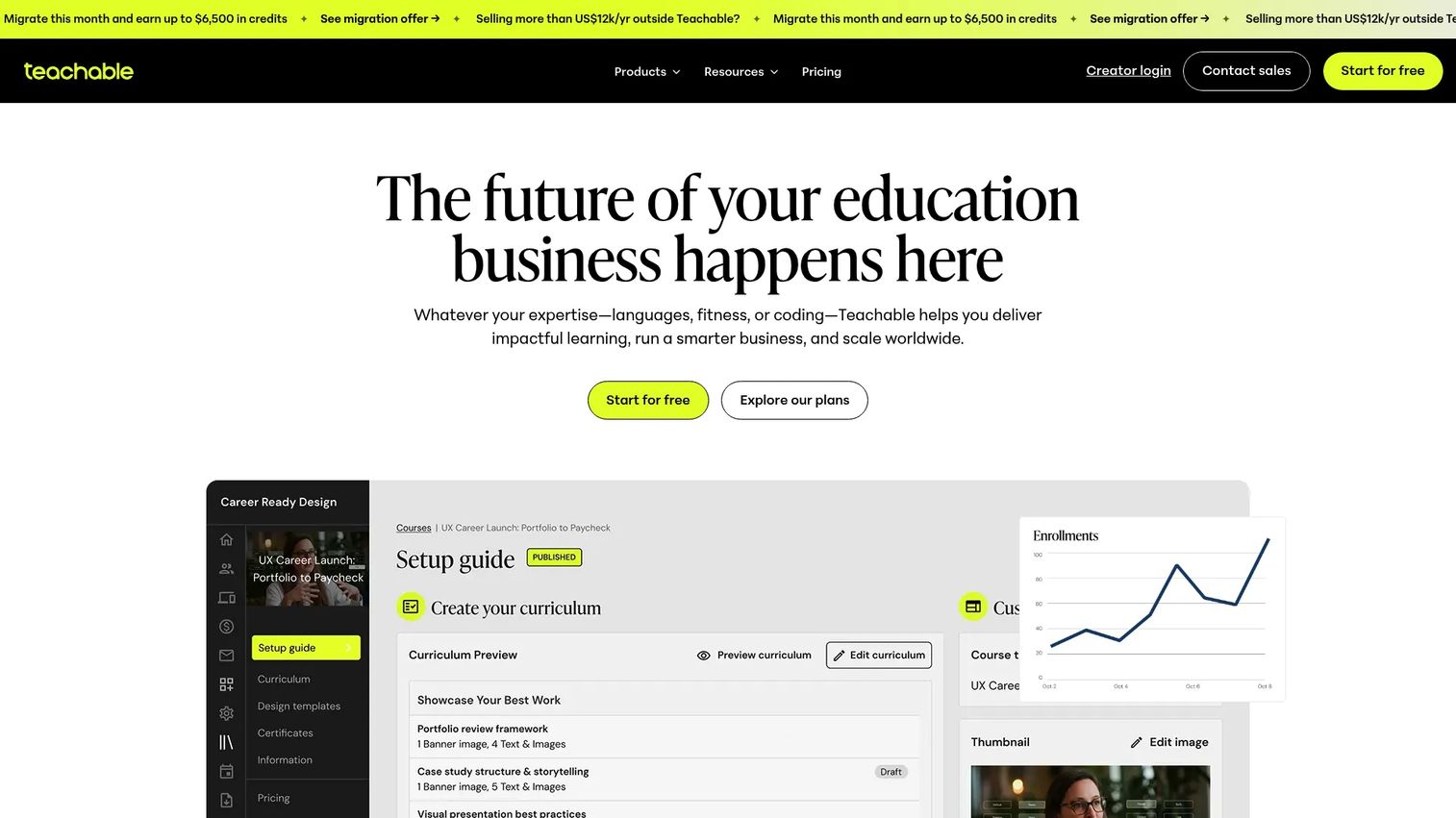
Teachable is an all-in-one platform for building, selling, and managing online courses, coaching programs, memberships, and digital downloads. It targets creators, consultants, and small education businesses who want a branded course storefront without needing a developer. AI-assisted course creation and built-in payment handling with tax support reduce the production overhead for solo operators.
Best for: Creators and small teams selling paid online courses under their own brand.
Key features
- Drag-and-drop course builder with AI creation tools
- Built-in payments with tax handling and checkout
- iOS and Android student mobile apps
- Quizzes, certificates, drip content, and compliance tracking
- Coupons, upsells, abandoned-cart emails, and affiliate tools
Why choose Teachable: Strong fit when monetization and student management matter more than internal training governance. Sales enablement teams scaling rep onboarding may find the creator-first reporting limited for cohort tracking and manager visibility.
Teachable pricing: Plans start at $39/month (monthly billing). The Builder plan runs $89/month, Growth is $189/month, and Advanced is $399/month. A 7-day free trial and 30-day money-back guarantee apply to paid plans, with annual billing saving 22%.
G2 rating: 3.8/5
2. Coursera
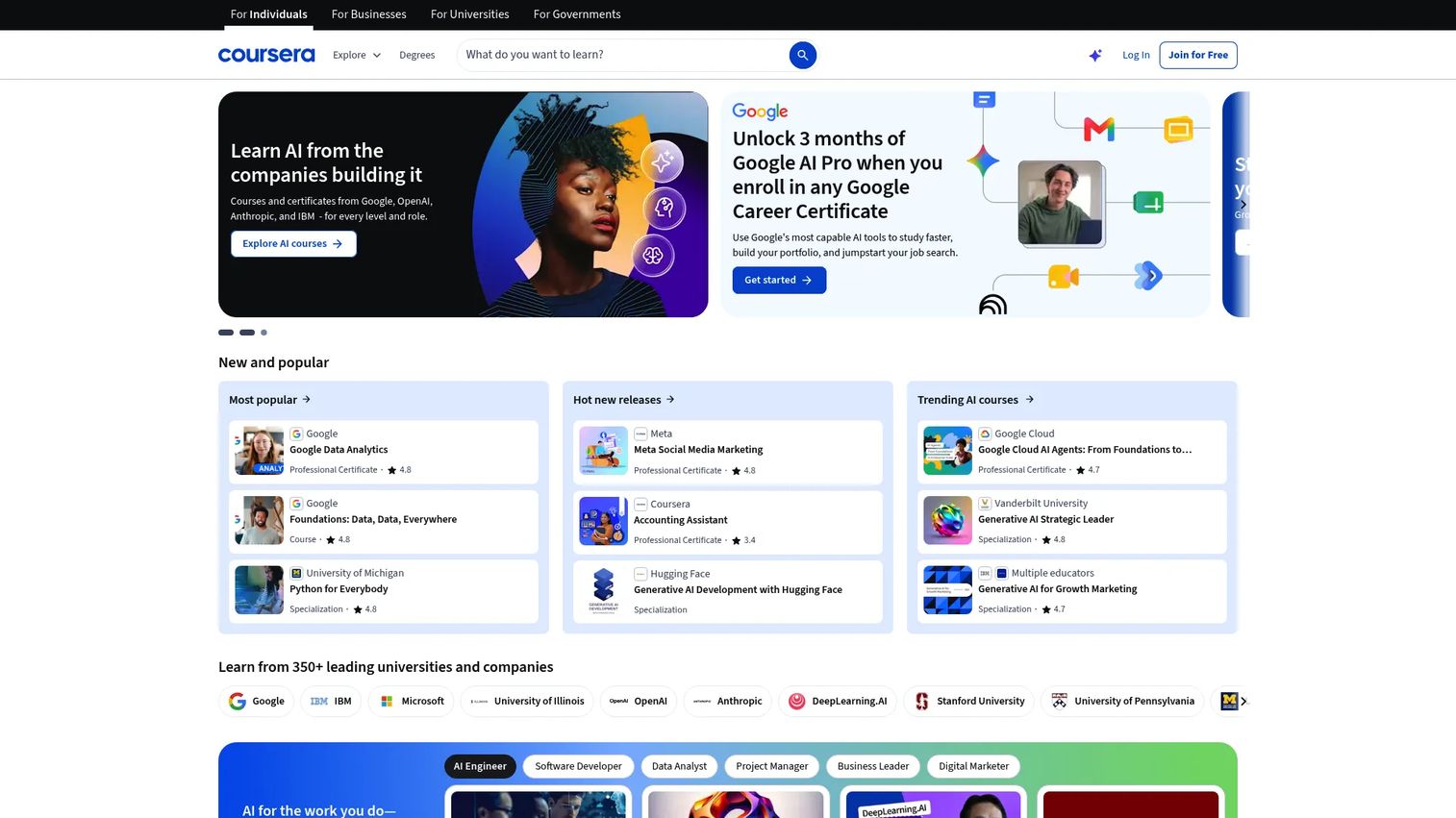
Coursera is a learner and workforce learning platform offering courses, Professional Certificates, Specializations, Guided Projects, and degree programs from universities and employers. For enablement teams, it works as a professional development library rather than a custom sales training LMS. Reps can complete role-relevant certificates from Salesforce, Google, or leading universities on their own schedule.
Best for: Professional upskilling and credential-based learning for distributed teams.
Key features
- 10,000+ courses and learning programs
- Professional Certificates and Specializations
- Guided Projects and hands-on learning
- Mobile app access
- LMS integrations and academic-integrity tools for institutions
Why choose Coursera: Choose it when external credentials and institutional credibility matter for rep development. It is less suited as the single system for company-specific talk tracks, internal certification workflows, or manager-level readiness reporting.
Coursera pricing: Coursera Plus costs $59/month or $399/year for unlimited access to eligible courses and certificate programs. Enterprise pricing requires a sales conversation. Some free course previews and individual free courses are available.
G2 rating: 4.5/5
3. Skillshare
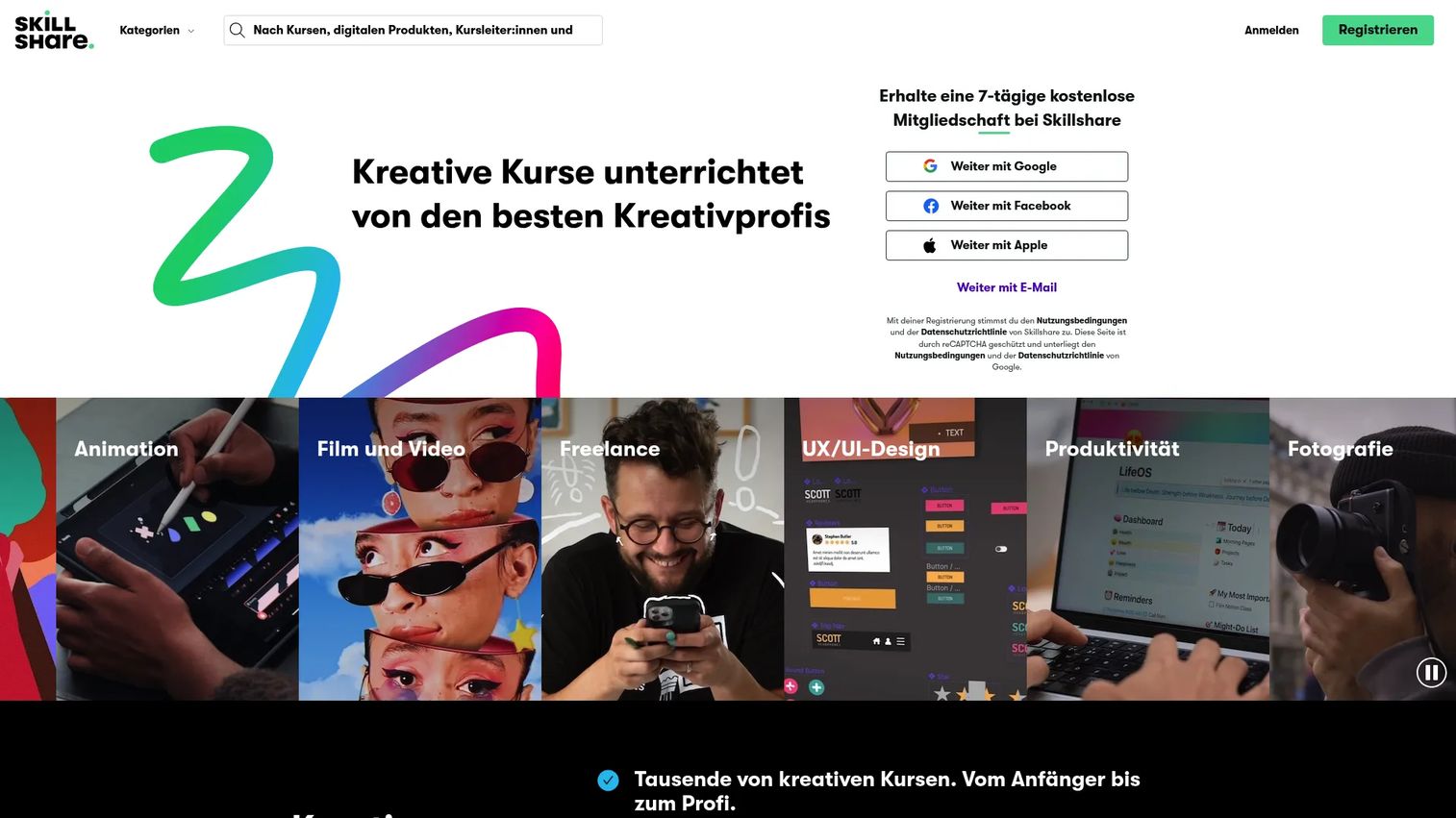
Skillshare is a subscription-based course marketplace built around creative skills, design, productivity, and entrepreneurship. Thousands of project-based classes are available on demand, with offline mobile access for learners on the go. For enablement, it fits informal skill development rather than structured certification or role-based readiness paths.
Best for: Creative skill development and informal team learning subscriptions.
Key features
- Unlimited access to thousands of classes
- Project-based learning with galleries and peer feedback
- Learning Paths and personalized recommendations
- Offline mobile access
- Certificates and badges
Why choose Skillshare: Good for building a broad learning culture on a modest budget, particularly for creative, marketing, or design-adjacent roles. It is not the right fit when you need strict completion tracking, role-based certification, or CRM-linked analytics.
Skillshare pricing: Membership runs $13.99/month billed annually ($167.88/year). Regional pricing applies in some markets.
G2 rating: 3.3/5
4. LinkedIn Learning
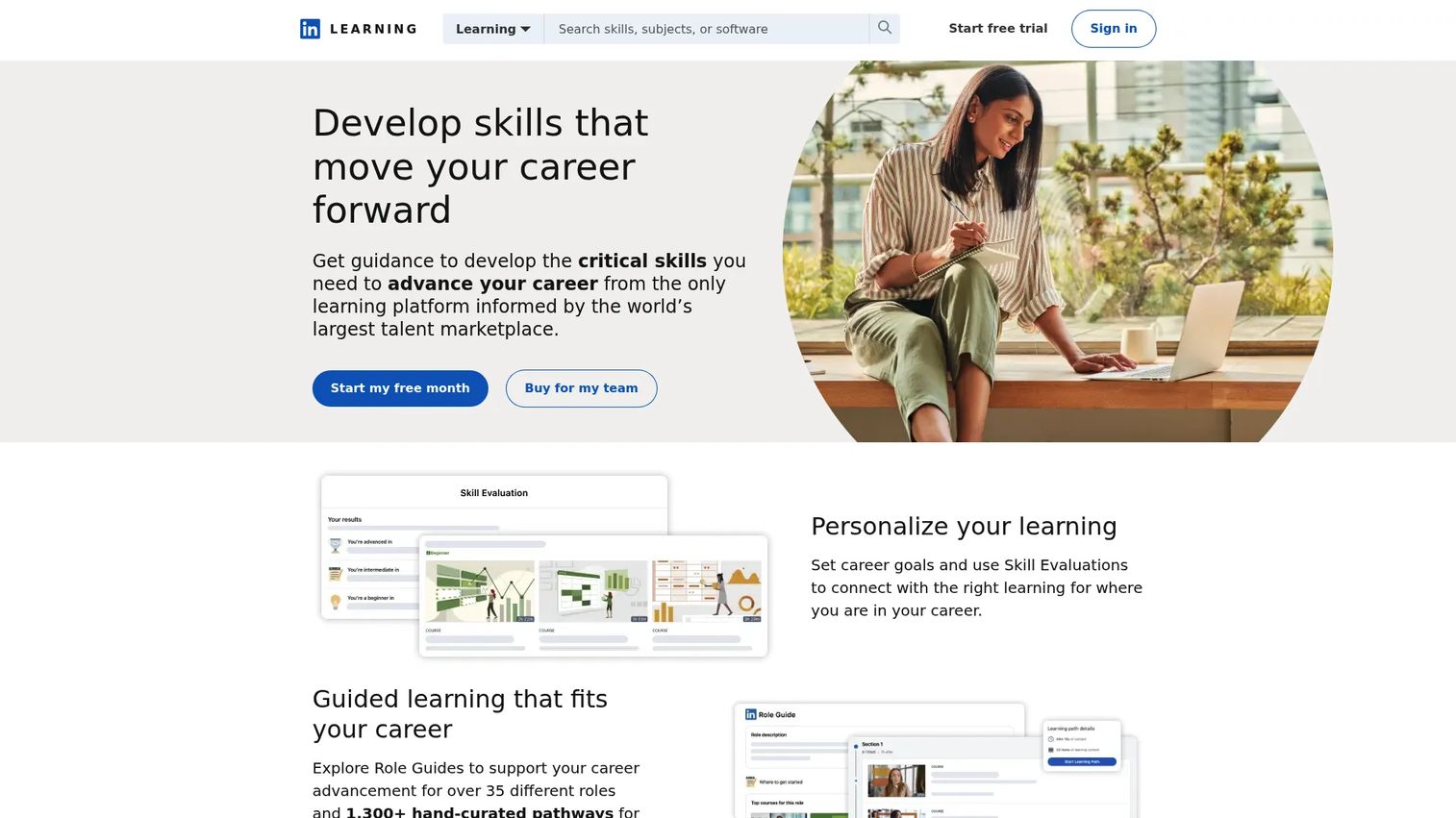
LinkedIn Learning is a professional development library covering business, technology, and creative skills. Course completions link directly to LinkedIn profiles, giving learners visible credentials and giving organizations a way to support career development alongside job performance. Personalized recommendations, Role Guides, and Learning Plans help reps follow structured paths relevant to their function.
Best for: Business skill development across distributed sales and enablement teams.
Key features
- 26,000+ courses and learning paths
- AI-powered coaching and role-play experiences
- Hands-on practice with quizzes and exercise files
- Professional Certificates and certification preparation
- Admin reporting and LMS/LXP integrations
Why choose LinkedIn Learning: Strong fit when you want structured professional development without building every course in-house. Pair it with a dedicated LMS when you need internal certification workflows, content governance, or onboarding paths tied to a specific sales methodology.
LinkedIn Learning pricing: Teams pricing starts at $379.88 per seat per year (up to 20 licenses). Individual access is tied to a LinkedIn Premium subscription. Enterprise pricing requires contacting sales.
5. Zoom
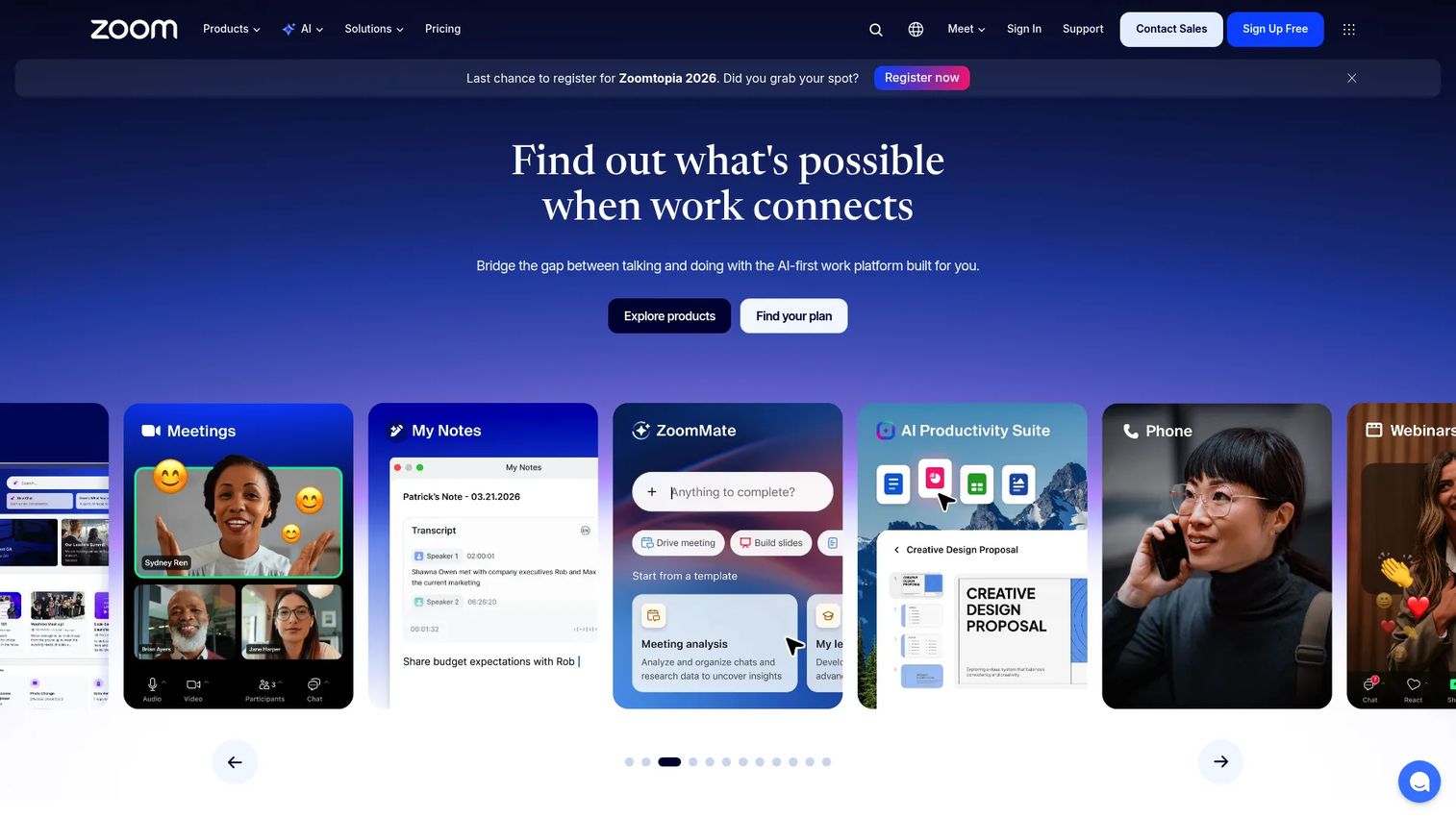
Zoom is an AI-first collaboration platform covering video meetings, chat, phone, and workplace productivity. It appears on this list because live virtual classroom delivery is a real part of many online learning stacks, and Zoom is the dominant tool for synchronous training sessions, onboarding workshops, and manager-led coaching calls.
Best for: Live training sessions, virtual classrooms, and manager-led workshops.
Key features
- Video meetings and webinars
- Breakout rooms and whiteboards
- AI meeting summaries and note-taking
- Session recordings for async follow-up
- Team chat and calendar synchronization
Why choose Zoom: Choose Zoom when synchronous delivery and live interaction matter. It does not replace course management, certification tracking, or long-term analytics. Most enablement teams pair it with an LMS rather than using it as a standalone learning platform.
Zoom pricing: The Basic plan is free. Pro costs $14.16/user per month billed annually. Business runs $18.33/user per month billed annually. Enterprise pricing requires contacting sales.
G2 rating: 4.6/5
6. Moodle
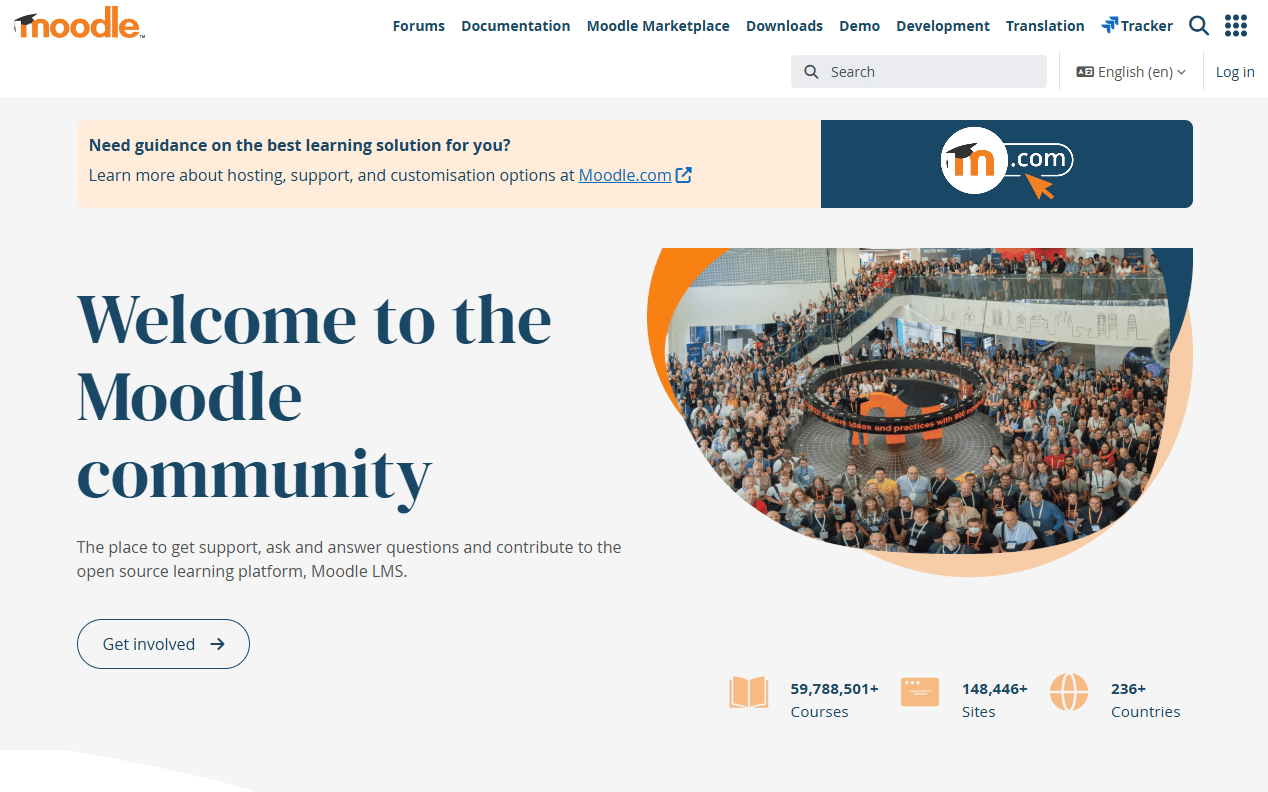
Moodle is an open-source learning management system used by schools, universities, and organizations that want control over their course environment. When self-hosted, the software is free. Organizations needing a managed cloud option can use MoodleCloud or a Moodle partner. A large plugin marketplace and multilingual support make it one of the most flexible LMS products available.
Best for: Teams that need open-source flexibility and have technical resources to manage setup and maintenance.
Key features
- Course and activity creation with forums, wikis, quizzes, and assignments
- Progress tracking and gradebook
- Customizable themes, roles, and permissions
- Multilingual support
- Plugin marketplace with broad integration options
Why choose Moodle: Strong fit when control, extensibility, and software cost matter. Note that self-hosted setup and ongoing maintenance require a technical owner. Organizations without that capacity should evaluate managed hosting or consider a commercial LMS instead.
Moodle pricing: The Moodle LMS software is free when self-hosted. The Moodle App has a free tier and a Premium plan at €499/year. MoodleCloud is a paid annual subscription; contact Moodle or a certified partner for hosted pricing.
G2 rating: 4.1/5
7. Blackboard Learn
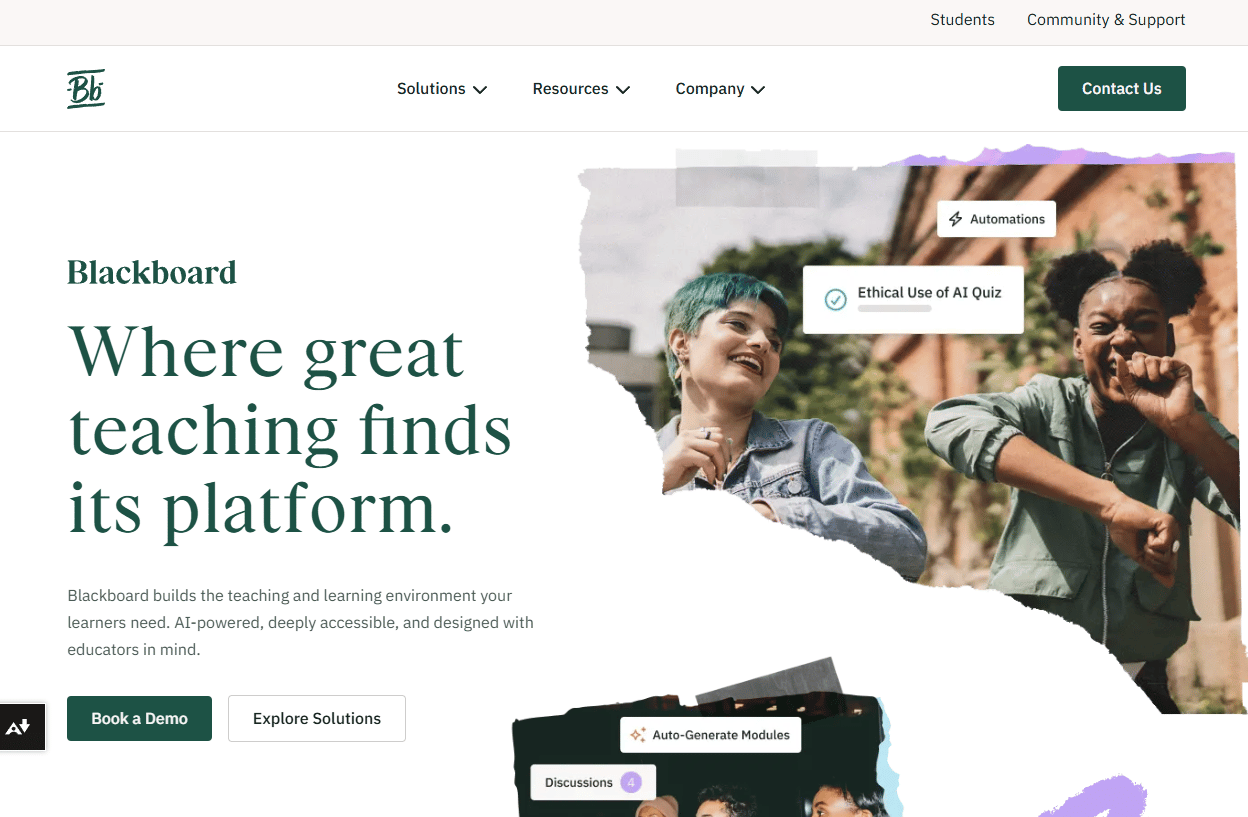
Blackboard Learn, now part of Anthology, is a learning management system built for higher education institutions, K-12 organizations, and enterprise course delivery. It handles course content management, gradebooks, assignments, discussion boards, and institution-wide learning workflows at scale. Academic-integrity tools and accessibility features make it a standard in university environments.
Best for: Higher education institutions and large organizations needing institution-grade academic course management.
Key features
- Course content and learning modules
- Assignments, tests, grading, and gradebook
- Discussions and collaboration tools
- Learning analytics and progress tracking
- Mobile access and accessibility features
Why choose Blackboard Learn: Choose it when academic course administration, institutional governance, and compliance are the priority. It is not a lightweight creator course storefront or a quick-start corporate onboarding tool.
Blackboard Learn pricing: Custom pricing. Contact Anthology directly for institutional or enterprise quotes. No public tier pricing was confirmed at time of writing.
G2 rating: 4.0/5
8. LearnWorlds
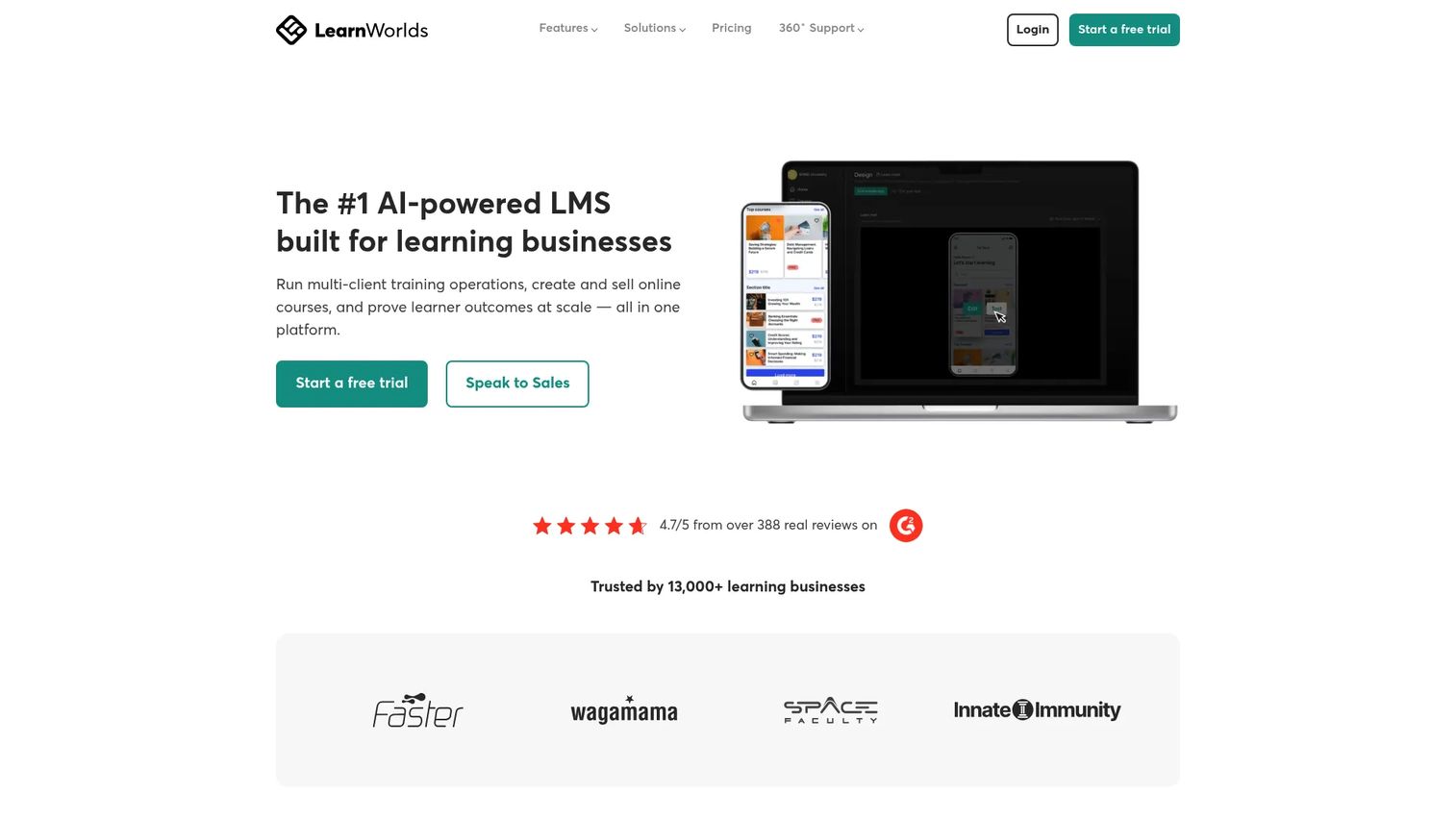
LearnWorlds is an all-in-one platform for building, selling, and delivering branded online courses and training academies. Interactive video, an assessment builder, SCORM and LTI support, and a white-label mobile app make it one of the more feature-complete creator platforms for organizations that want a polished branded learning experience. It serves course creators, training providers, and corporate learning teams.
Best for: Businesses building branded academies with interactive course experiences and strong learner engagement tools.
Key features
- AI-assisted course creation and interactive video
- Assessment builder and SCORM/LTI support
- White-label site builder and mobile app
- Marketing, affiliate, checkout, and subscription tools
- Analytics and reporting
Why choose LearnWorlds: Strong fit when learner engagement and branded experience matter as much as content delivery. It can serve customer education, creator academies, and professional training programs, not only solo course sellers.
LearnWorlds pricing: Starter is $24/month billed annually (or $29/month). Pro Trainer is $79/month annually. Learning Center is $249/month annually. Corporate pricing is custom. The Starter plan includes a $5 per paid enrollment fee; upper tiers do not.
G2 rating: 4.7/5
9. Thinkific
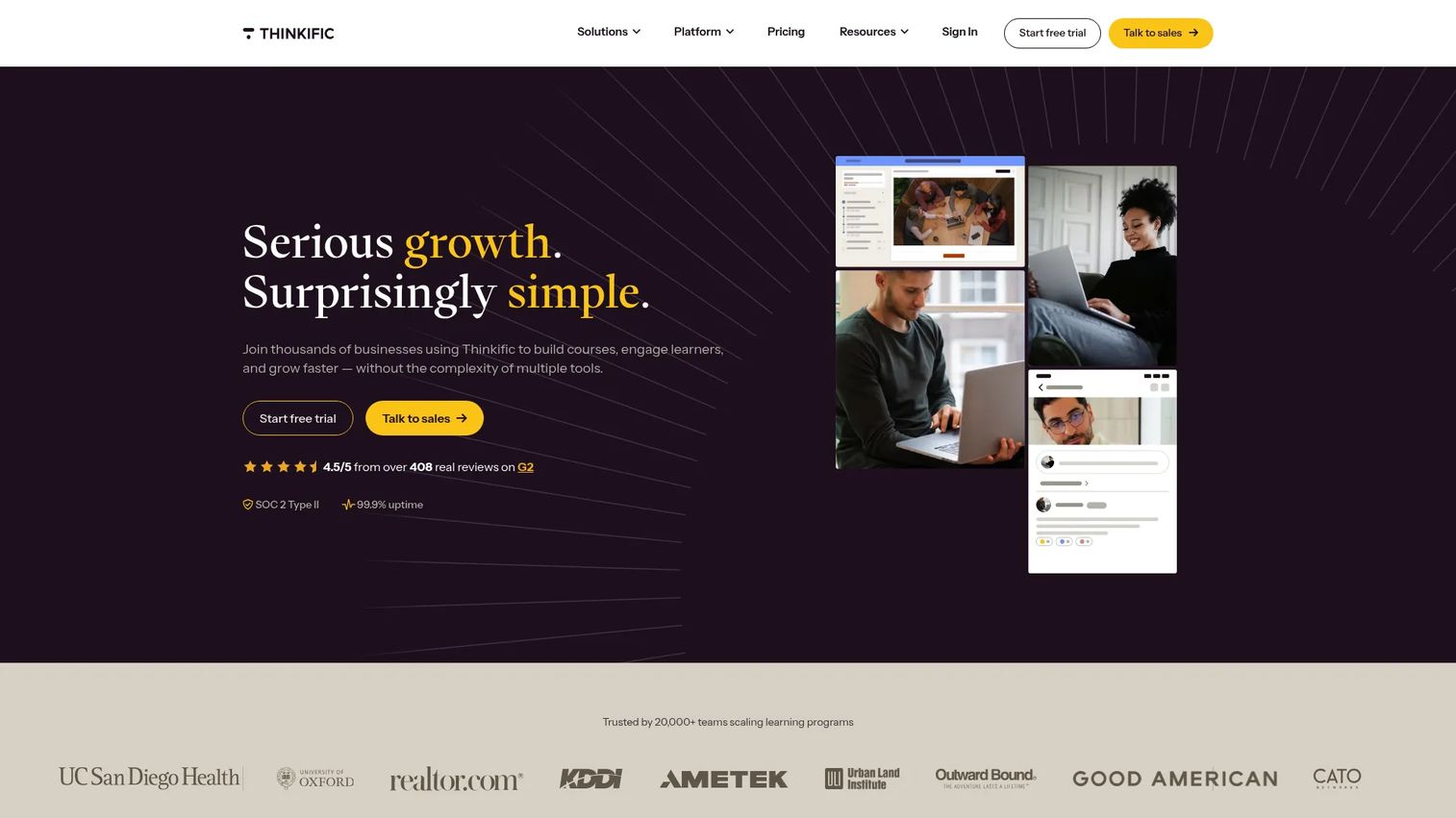
Thinkific is a course creation platform for experts, consultants, and small businesses that want to sell branded learning products. A drag-and-drop course builder, community tools, and commerce features cover the full creator workflow without requiring a developer. Subscriptions, bundles, order bumps, and payment plans give creators flexible monetization options.
Best for: Small businesses and creators launching branded online courses with community and membership options.
Key features
- Drag-and-drop course builder with video, quizzes, and surveys
- Communities with discussions and live events
- Commerce tools including subscriptions, bundles, and coupons
- Student analytics
- No transaction fees on paid plans
Why choose Thinkific: Choose it when you want full ownership of your brand and student experience at a transparent monthly price. It is less suited to complex enterprise training governance or multi-team certification workflows.
Thinkific pricing: Basic is $54/month (or $40/month billed annually). Start is $109/month. Grow is $219/month. Thinkific Plus uses custom pricing. No free plan is available, but a free trial is offered.
G2 rating: 4.5/5
10. FreshLearn
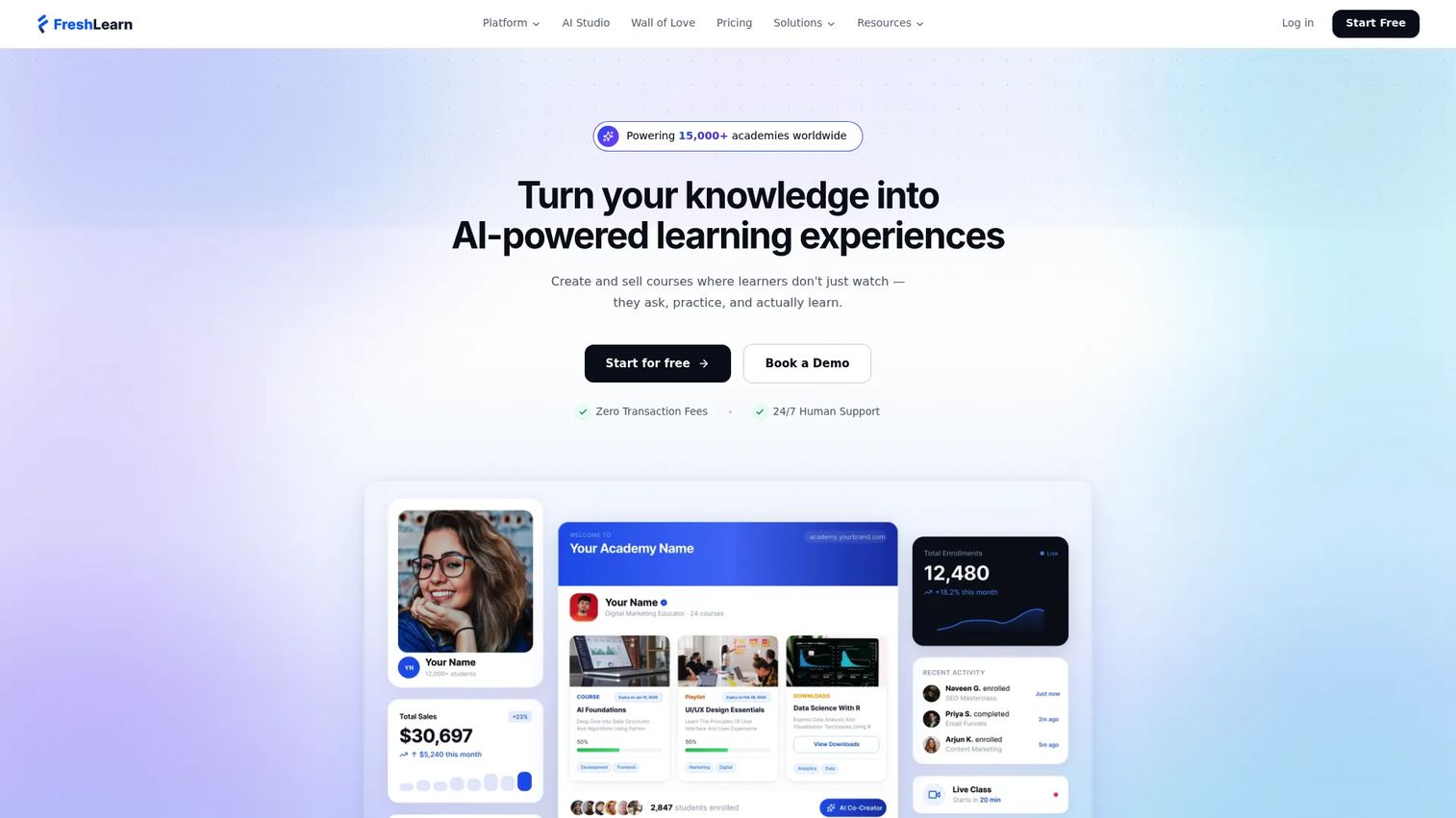
FreshLearn is a platform for creating, selling, and delivering courses, coaching programs, cohorts, digital downloads, and memberships. It covers the full creator workflow from course building to email automations and branded checkout, with zero transaction fees across all plans. A free plan makes it one of the more accessible entry points for creators just starting out.
Best for: Creators who want course monetization tools without transaction fees or a complex setup.
Key features
- Course creation with video, text, quizzes, and assignments
- Digital downloads, memberships, and live cohort programs
- Email campaigns, automations, and landing pages
- Certificates, assessments, and gamification
- Analytics and 0% transaction fees on all plans
Why choose FreshLearn: Good for straightforward course monetization at a low entry cost. Business training teams should verify cohort reporting, admin controls, and CRM integrations before committing, as the platform skews toward individual creators.
FreshLearn pricing: A free plan is available. The Pro plan starts at $35/month billed every two years ($49/month standard). No Brainer is $49/month biannual ($79/month standard). No Brainer+ is $99/month biannual ($149/month standard). Enterprise pricing is custom.
G2 rating: 4.5/5
11. Kajabi
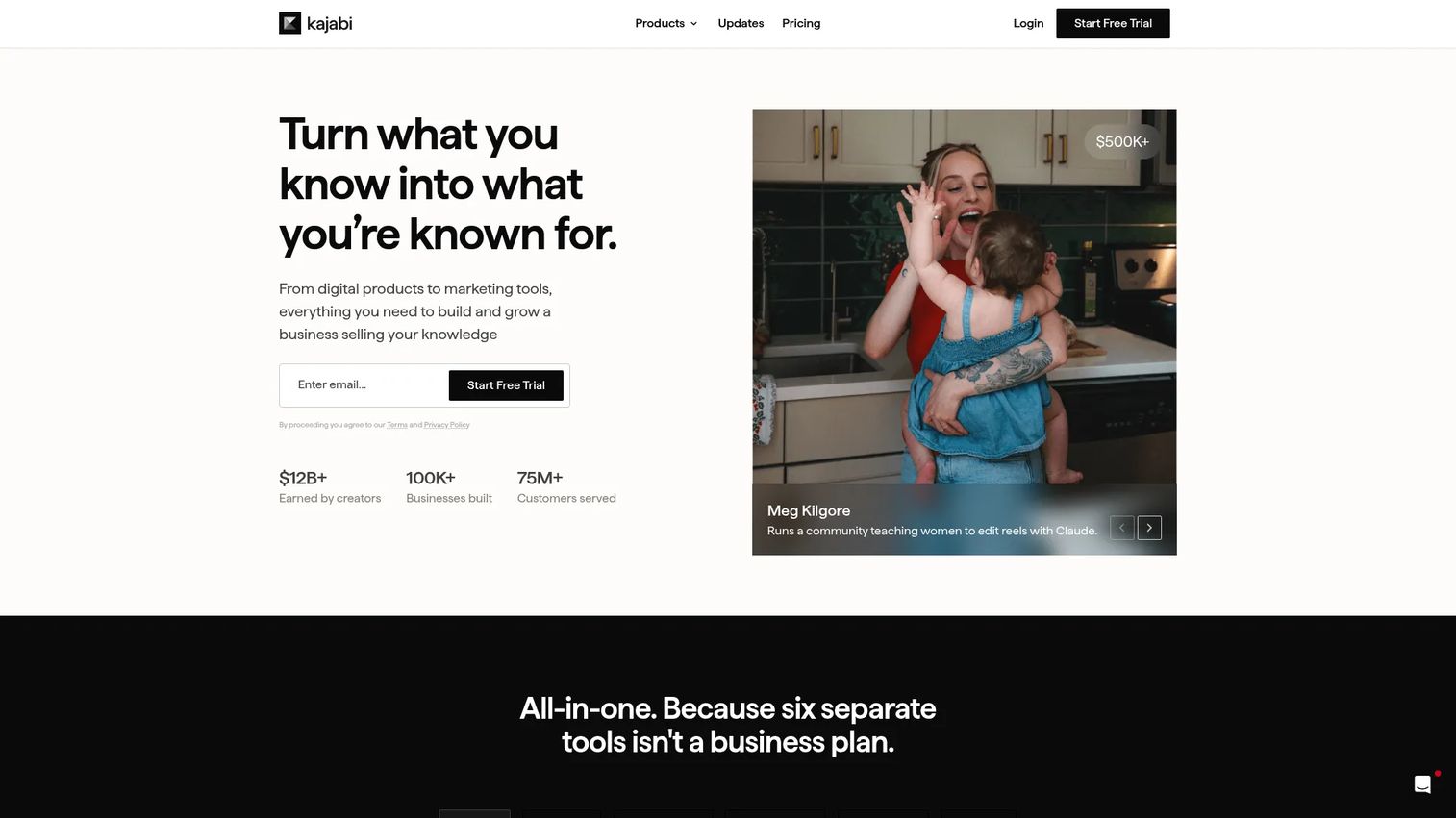
Kajabi is an all-in-one platform for course businesses, memberships, coaching programs, newsletters, podcasts, and digital products. Beyond course delivery, it includes a website builder, email marketing, sales funnels, and checkout tools. AI-assisted content creation helps creators produce more without additional tools. This breadth makes Kajabi stronger as a business-in-a-box for creators than as an internal training platform.
Best for: Course entrepreneurs who want learning delivery, marketing, and sales tools in a single product.
Key features
- Course hosting and cohort courses
- Website builder, landing pages, and sales funnels
- Email marketing and automations
- Coaching and community tools
- AI-assisted content and marketing tools
Why choose Kajabi: Choose Kajabi when selling and nurturing learners at scale matters alongside content delivery. An internal sales enablement team is unlikely to need the full marketing and ecommerce layer, so evaluate whether the price-to-features ratio fits a corporate training use case.
Kajabi pricing: Basic is $143/month billed annually ($179/month). Growth is $199/month annually ($249/month). Pro is $399/month annually ($499/month). A trial is available; no free tier is offered.
G2 rating: 4.1/5
12. Academy of Mine
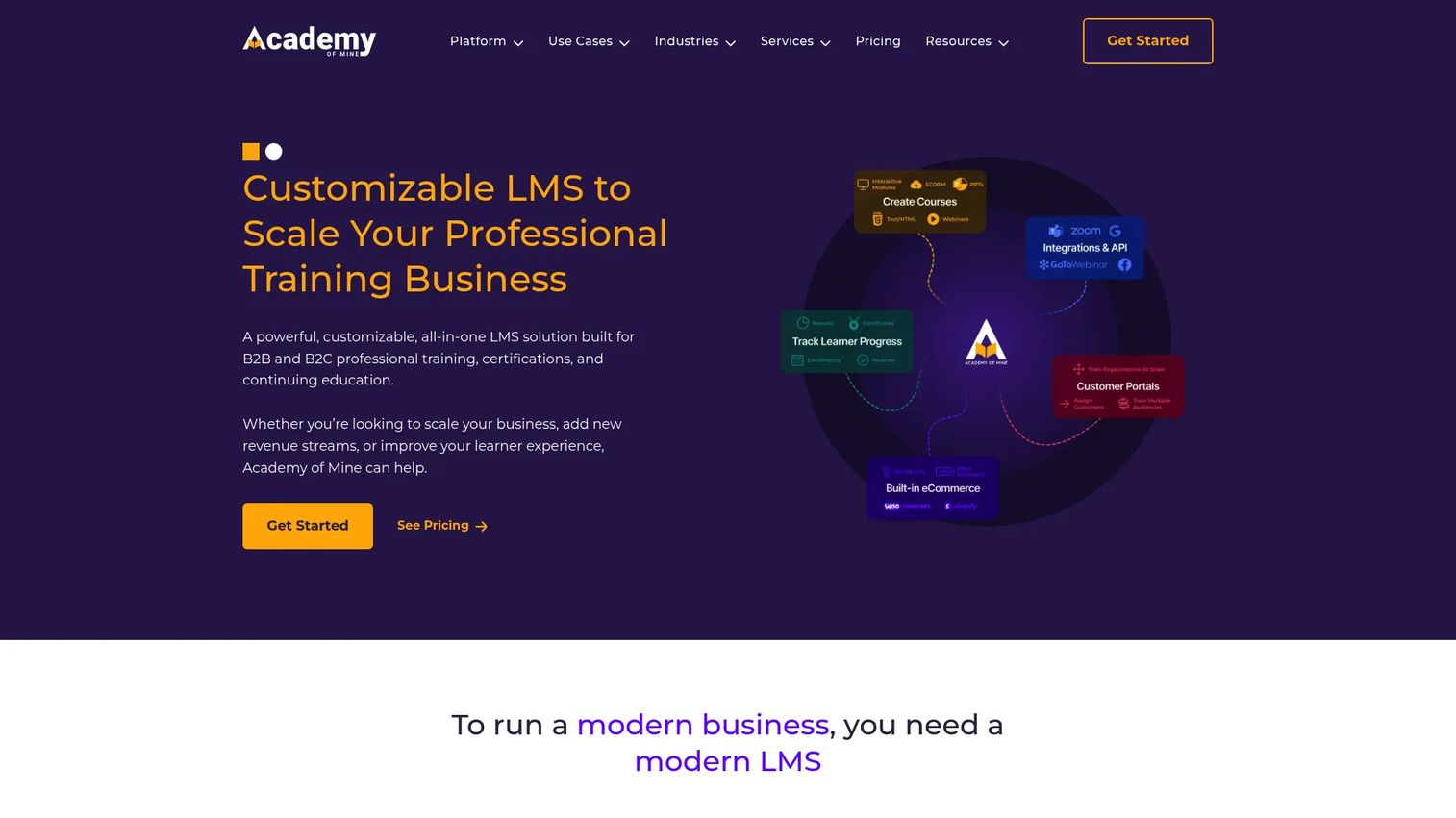
Academy of Mine is a customizable B2B learning management platform for professional training organizations, continuing education providers, and companies that sell training to business clients. Client portals let you manage multiple organizations from one platform. Custom branding, SCORM support, ecommerce for paid training, and webinar integrations via Zoom and Microsoft Teams make it suited to training providers that serve corporate clients.
Best for: Professional training organizations selling learning products to business clients.
Key features
- Custom LMS with white-label branding
- B2B client portals for managing organizations
- Course creation with SCORM, PDFs, videos, and other content
- Assessments, surveys, and certificates
- eCommerce for selling training and reporting tools
Why choose Academy of Mine: Well suited for organizations whose business model is delivering training to other companies. Sales enablement teams should evaluate whether the implementation effort and starting price align with their use case and team size.
Academy of Mine pricing: The Professional plan starts at $999/month. Enterprise pricing is custom, covering unlimited users, dedicated success support, and unlimited customizations.
G2 rating: 4.0/5
13. LearnDash
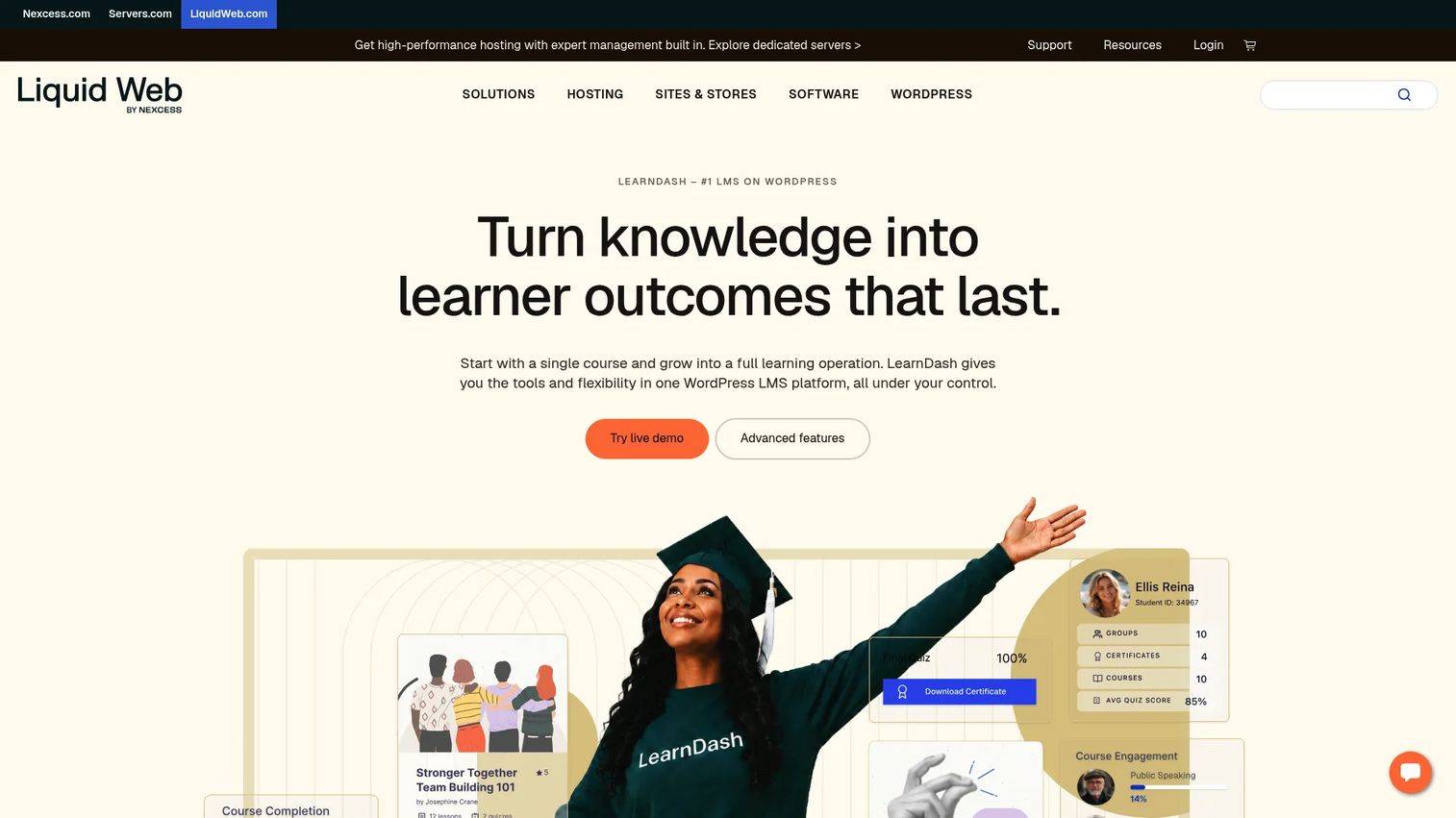
LearnDash is a WordPress LMS plugin for teams that want to build and sell courses inside an existing WordPress site. Advanced quizzes, drip content, prerequisites, assignments, certificates, and WooCommerce support give WordPress-native teams a capable course management layer without switching platforms.
Best for: WordPress users who want to add a full LMS to their existing site.
Key features
- Drag-and-drop course builder with drip and prerequisite content
- Advanced quizzes and assignments
- Certificates, badges, and gamification
- Course subscriptions, memberships, and one-time purchases
- WooCommerce and payment gateway support
Why choose LearnDash: Choose it when WordPress is already the content platform and you want plugin-based flexibility. Non-technical teams should account for WordPress admin and possible developer time for setup and ongoing maintenance.
LearnDash pricing: Licenses are sold annually: 1 site is $199/year, 10 sites is $399/year, and Unlimited is $799/year. Updates and support are included.
G2 rating: 4.2/5
14. LifterLMS
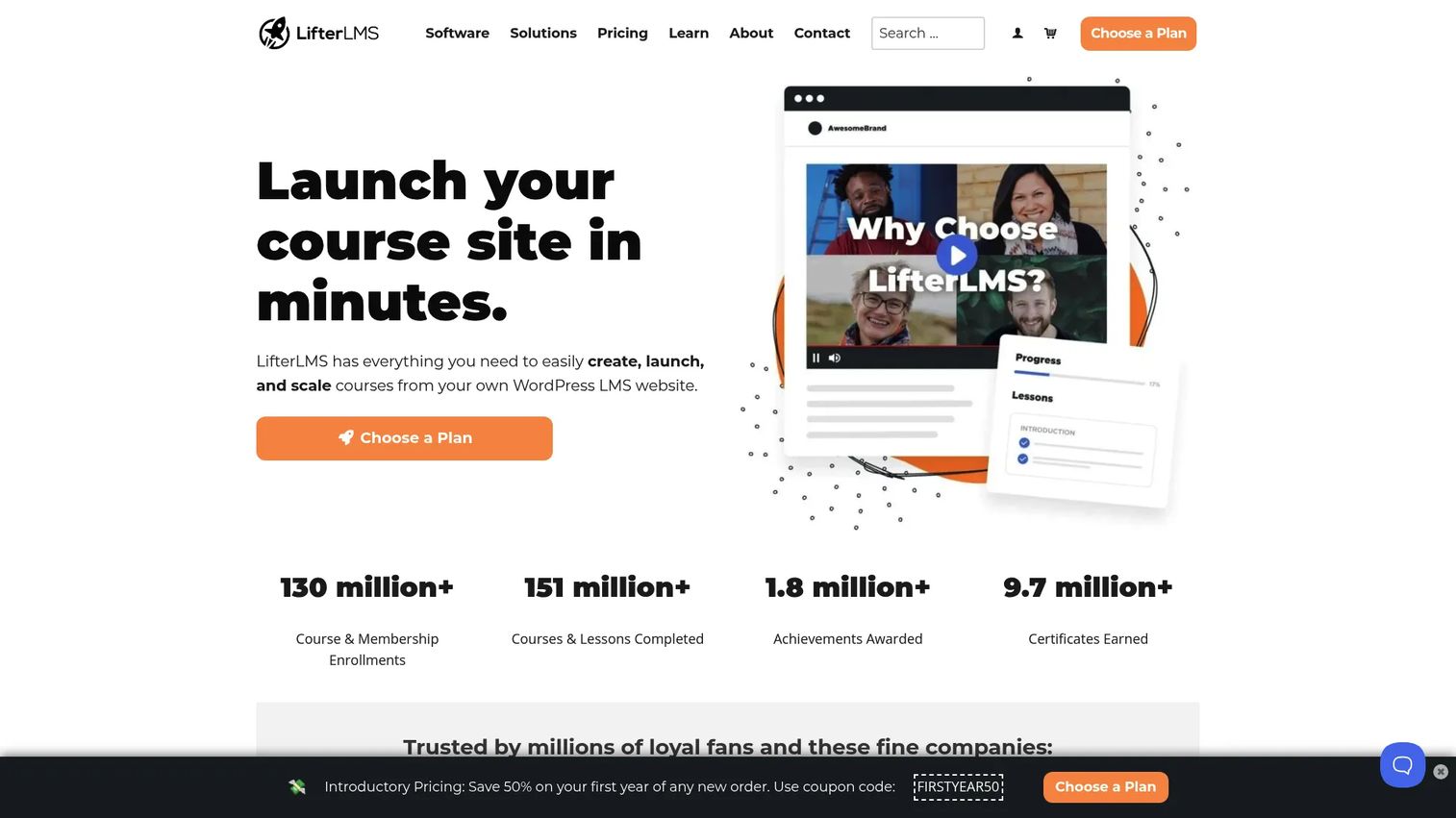
LifterLMS is a WordPress LMS plugin covering courses, memberships, coaching, certificates, and learning communities. A modular add-on system lets teams build the feature set they need without paying for capabilities they won't use. The Core Plugin is available free, with bundles adding ecommerce, integrations, and advanced support.
Best for: WordPress-based learning businesses that need modular course and membership features.
Key features
- Multimedia course builder with quizzes and drag-and-drop organization
- Memberships, protected content, payment plans, and course bundles
- Certificates, achievement badges, and gradebook
- Student management and reporting
- Payment integrations and subscription billing
Why choose LifterLMS: Good for WordPress teams that want to build a learning business incrementally, adding only the add-ons they need. Account for hosting costs, plugin maintenance, and site updates, as ongoing ownership sits with your team.
LifterLMS pricing: The Core Plugin is free. Annual bundles run from $199/year (Earth) to $299/year (Universe) to $799/year (Infinity). Listed prices are first-year introductory rates; renewals are at the standard price.
15. Udemy
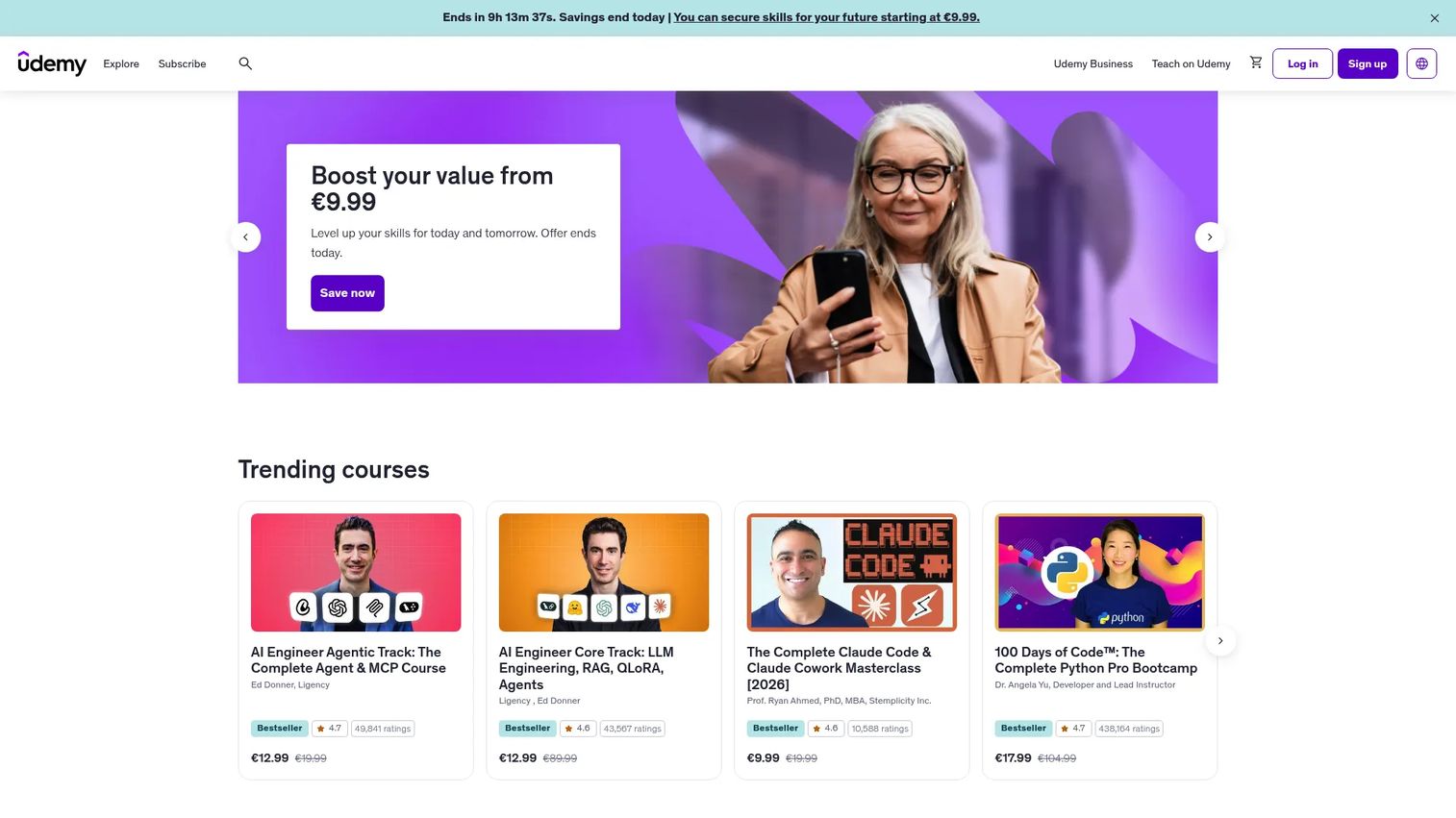
Udemy is one of the largest online course marketplaces, with a broad catalog covering business, technology, creative skills, and personal development. Learners discover and purchase courses from independent instructors, and organizations can access curated business catalogs through Udemy Business. It is a learner acquisition and discovery platform first, not a structured corporate LMS.
Best for: Marketplace reach, self-paced skill learning, and broad course discovery.
Key features
- Large marketplace with video, article, and PDF lectures
- Quizzes, assignments, and coding exercises
- Certificates of completion
- Mobile app access
- Udemy Business catalog for organizational learning
Why choose Udemy: Choose it when learner acquisition or broad catalog access matters more than controlled onboarding paths. Instructors have less brand control than on a dedicated creator platform, and organizations have less governance than in a corporate LMS.
Udemy pricing: Individual course prices vary by title. Subscription and Udemy Business pricing is not publicly listed on the pricing page; contact Udemy for team and enterprise rates.
G2 rating: 4.5/5
16. Codecademy
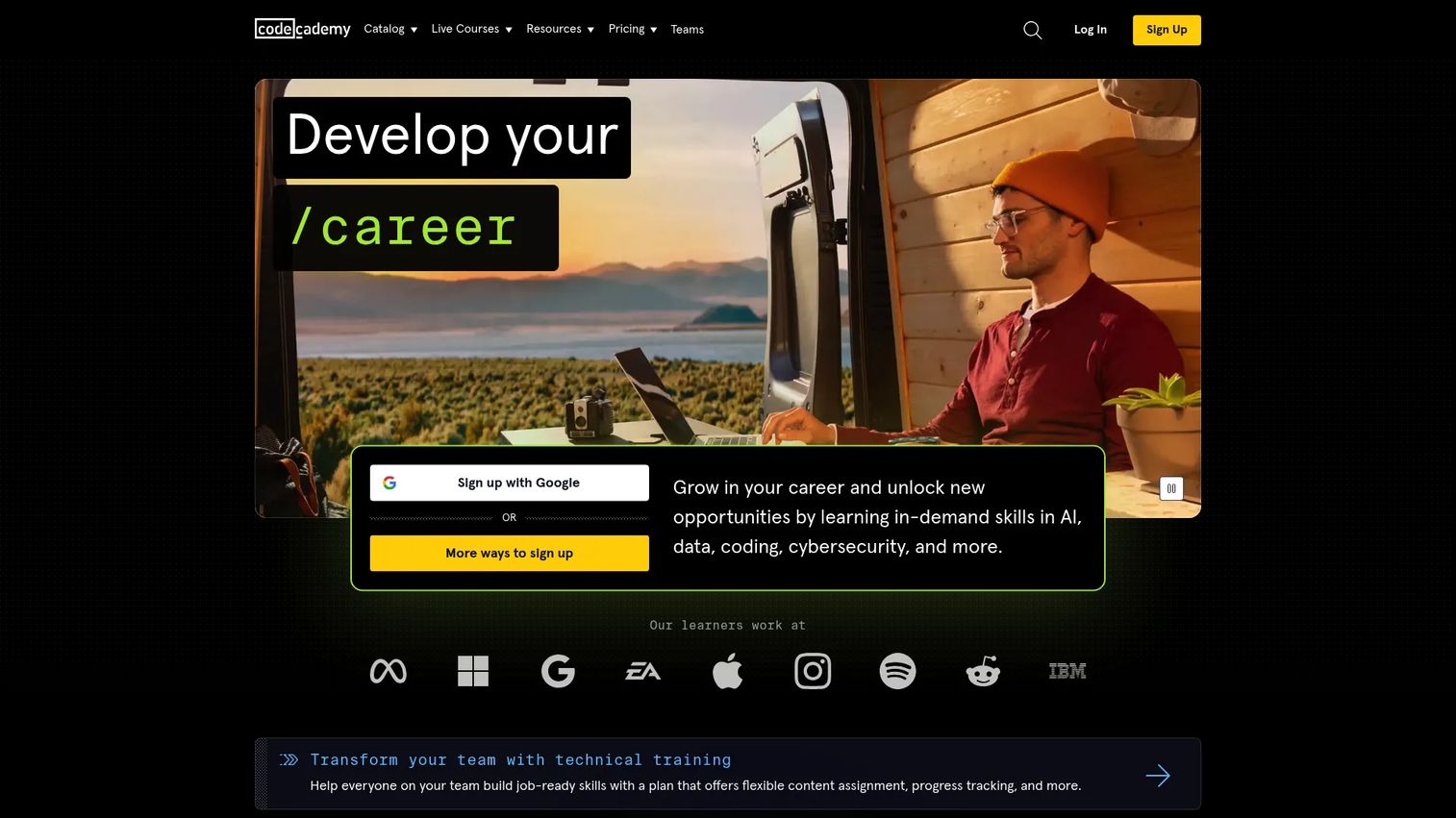
Codecademy is a hands-on technical learning platform for coding, data, AI, cybersecurity, and cloud skills. A browser-based code editor, career paths, job-readiness tools, and an AI Learning Assistant help learners build technical fluency without a separate development environment. For enablement, it fits technical onboarding or product-fluency development for sales engineers and solutions teams.
Best for: Technical upskilling, developer education, and sales teams needing stronger product and coding fluency.
Key features
- Interactive browser-based code editor
- Career paths, skill paths, and certification paths
- AI Learning Assistant and code challenges
- Live bootcamps and workshops
- Teams plan with admin analytics
Why choose Codecademy: Strong fit when technical skill development is the goal. It is not a general LMS for custom company sales content, compliance training, or manager-led coaching programs.
Codecademy pricing: A Basic (free) plan is available. Plus is $14.99/month billed annually ($29.99/month). Pro is $19.99/month annually ($39.99/month). All Access is $54.99/month or $659.88/year. Teams run $24.92/month per user billed annually. Enterprise pricing is custom.
G2 rating: 4.3/5
17. MasterClass
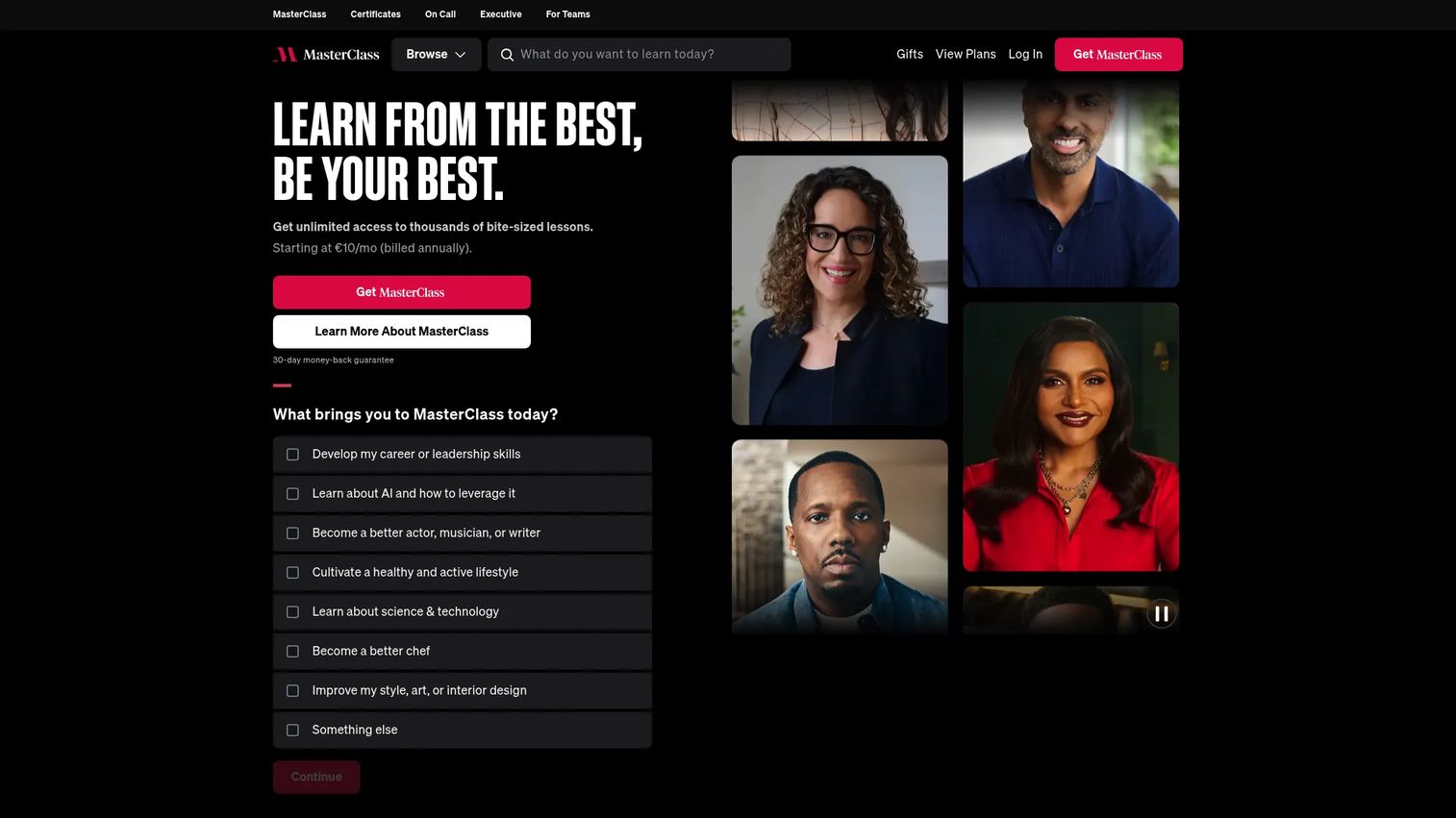
MasterClass is an expert-led subscription learning platform featuring high-production video classes across leadership, creativity, business, storytelling, and personal development. Classes are taught by recognized experts and public figures. For enablement, it functions as a culture and inspiration tool rather than a compliance or certification platform.
Best for: Inspirational learning and expert-led professional development as a team culture investment.
Key features
- 200+ classes and original series with new content added monthly
- Unlimited access to thousands of bite-sized lessons
- Audio-only lessons for mobile consumption
- Offline downloads on select plans
- Team plans available
Why choose MasterClass: Choose it when inspiration and soft-skill development matter and the team would benefit from expert-led perspective. Do not frame it as a certification or structured readiness platform.
MasterClass pricing: Standard is $10/month billed annually. Plus is $15/month annually. Premium is $20/month annually. A 30-day satisfaction guarantee applies.
18. Treehouse
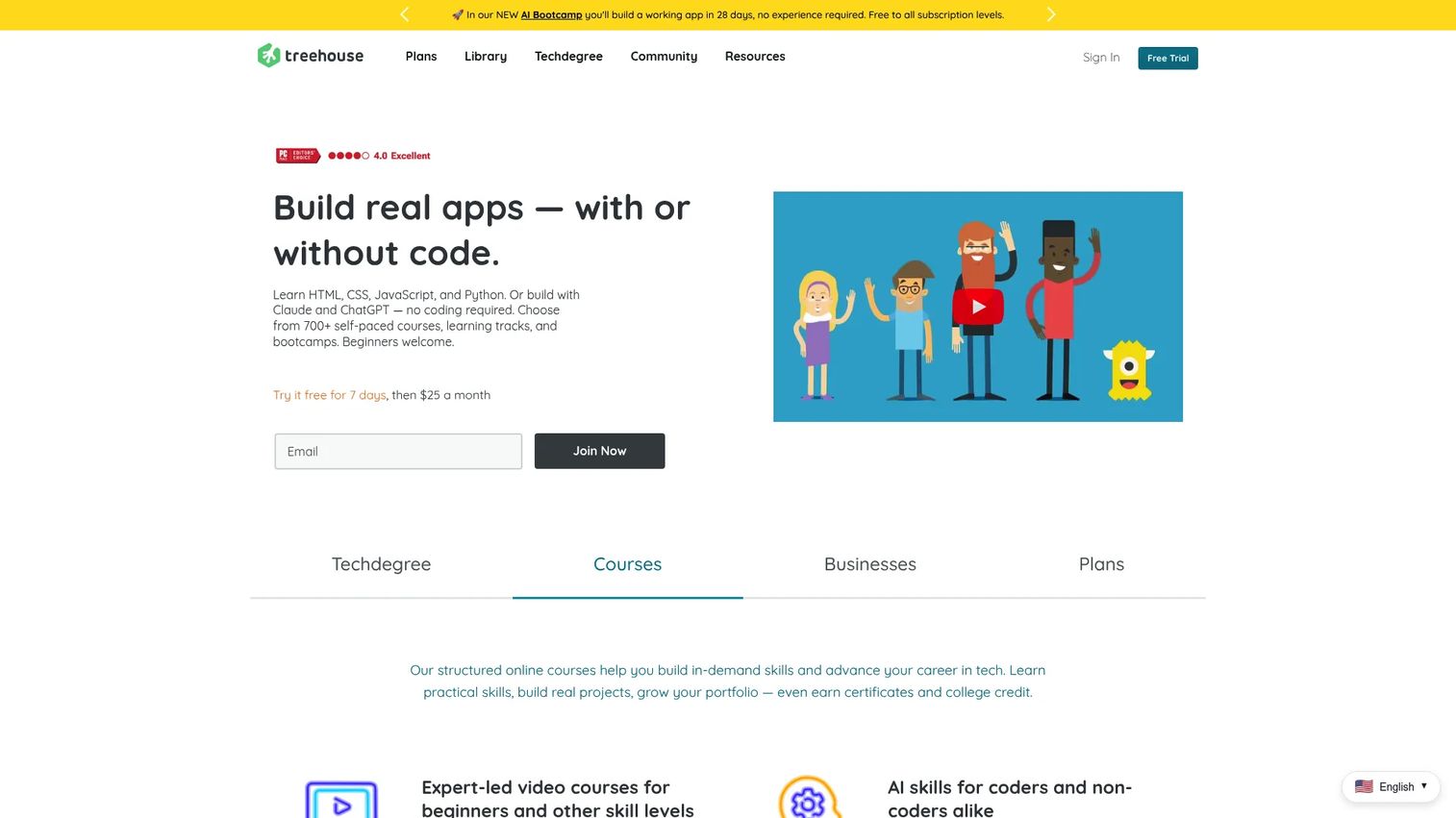
Treehouse is a tech education platform covering coding, web development, data analysis, and AI skills. Project-based Techdegree bootcamps include peer reviews, technical coaching, and certification. A beginner-friendly structure and browser-based coding environment lower the barrier for learners new to technical topics.
Best for: Beginners and career changers seeking structured technical skill learning or a guided coding bootcamp.
Key features
- Self-paced video courses and tech learning tracks
- Interactive quizzes and browser-based coding environment
- Project-based Techdegree bootcamps with peer reviews
- Technical coaching and community support
- Certificates for Techdegree programs
Why choose Treehouse: Strong fit when learners need a structured path into coding or technical confidence. It is not a general LMS for custom company training or sales methodology certification.
Treehouse pricing: Courses starts at $25/month. Courses Plus is $49/month. Techdegree is $199/month. Treehouse for Teams is $299/seat/year (nonprofits, schools, and libraries at $199/seat/year). A 7-day free trial applies to individual plans.
G2 rating: 4.3/5
19. ProProfs Training Maker
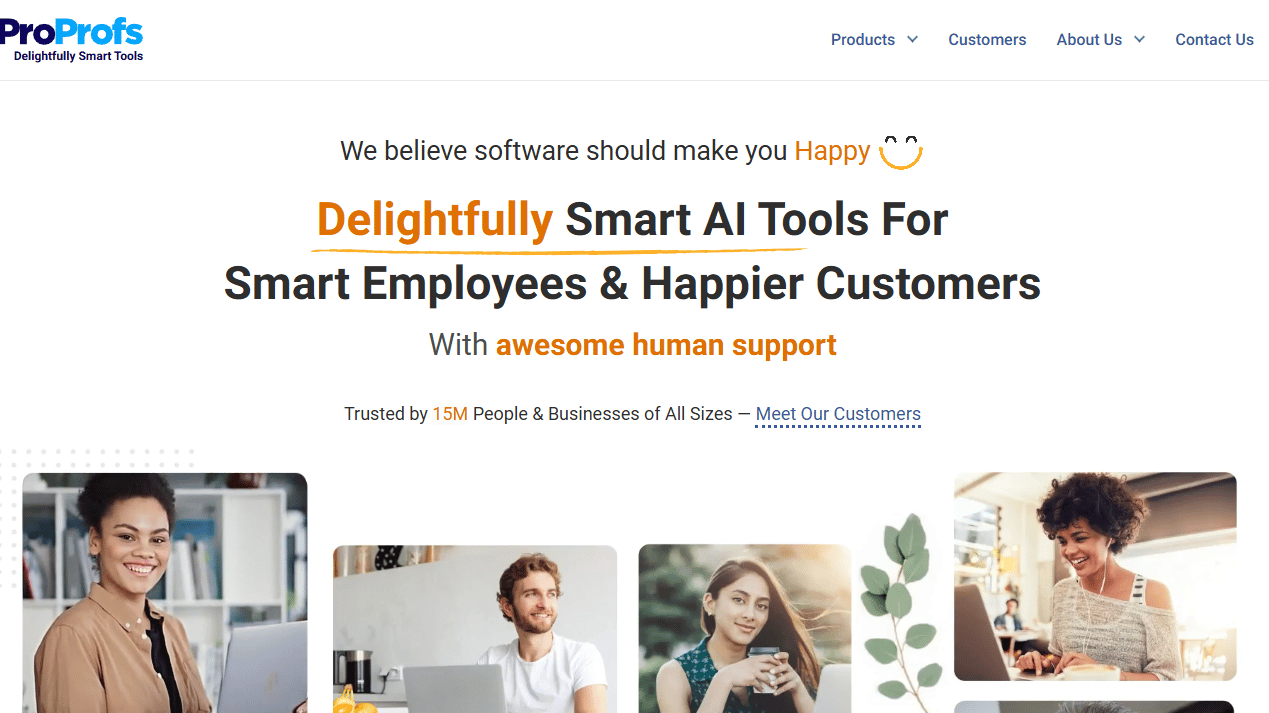
ProProfs Training Maker is a business training platform for employee onboarding, compliance training, quizzes, and learner assessments. AI-assisted course creation, 500+ ready-to-use compliance and skill-development courses, and completion tracking make it directly relevant to Sales Enablement Managers who need structured onboarding paths with measurable certification checkpoints.
Best for: Business training, employee onboarding, assessments, and certification tracking.
Key features
- AI-assisted course creation
- 500+ ready-to-use compliance and skill-development courses
- Learner progress tracking and reporting
- Quiz builder and certificates
- People Development Suite for broader HR training programs
Why choose ProProfs Training Maker: Choose it when practical employee training with built-in assessments and trackable completion is the priority. Evaluate how well it maps to role-based readiness paths and whether the reporting depth fits your cohort and manager visibility needs.
ProProfs Training Maker pricing: A free plan covers up to 10 learners. Business Complete Elite is $4.98 per active learner per month billed annually. The People Development Suite starts at $499/month billed annually.
G2 rating: 4.6/5
20. Docebo
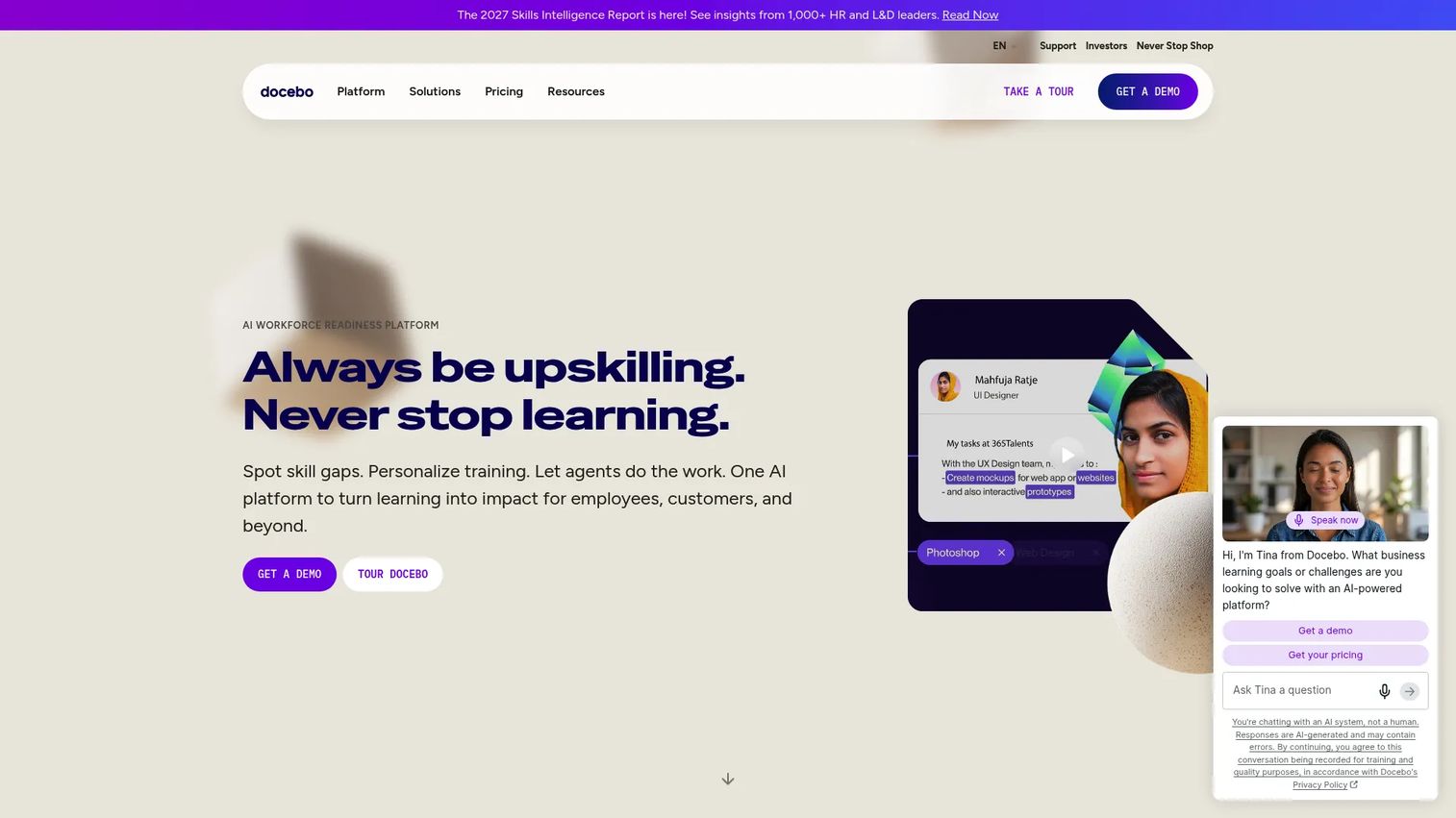
Docebo is an AI-powered enterprise learning platform for employees, customers, partners, and extended enterprise training. AI-powered content creation, personalized learning recommendations, semantic search, and reporting automation make it suited to organizations running large-scale learning programs across multiple audiences and geographies.
Best for: Enterprise organizations scaling learning programs across employees, customers, and partners.
Key features
- AI-powered content creation and interactive course authoring
- Personalized learning and semantic search
- Learning administration automation and reporting
- Extended enterprise and multi-audience support
- Content marketplace and integrations
Why choose Docebo: Strong fit when training spans multiple audiences and requires AI-assisted personalization at scale. Sales enablement teams should evaluate implementation resources and admin ownership before committing, as the platform is designed for enterprise-grade programs.
Docebo pricing: Two core tiers, Elevate and Enterprise, are available. Both use custom pricing based on active users, selected modules, and integrations. Contact Docebo for a quote.
G2 rating: 4.3/5
21. LearnUpon
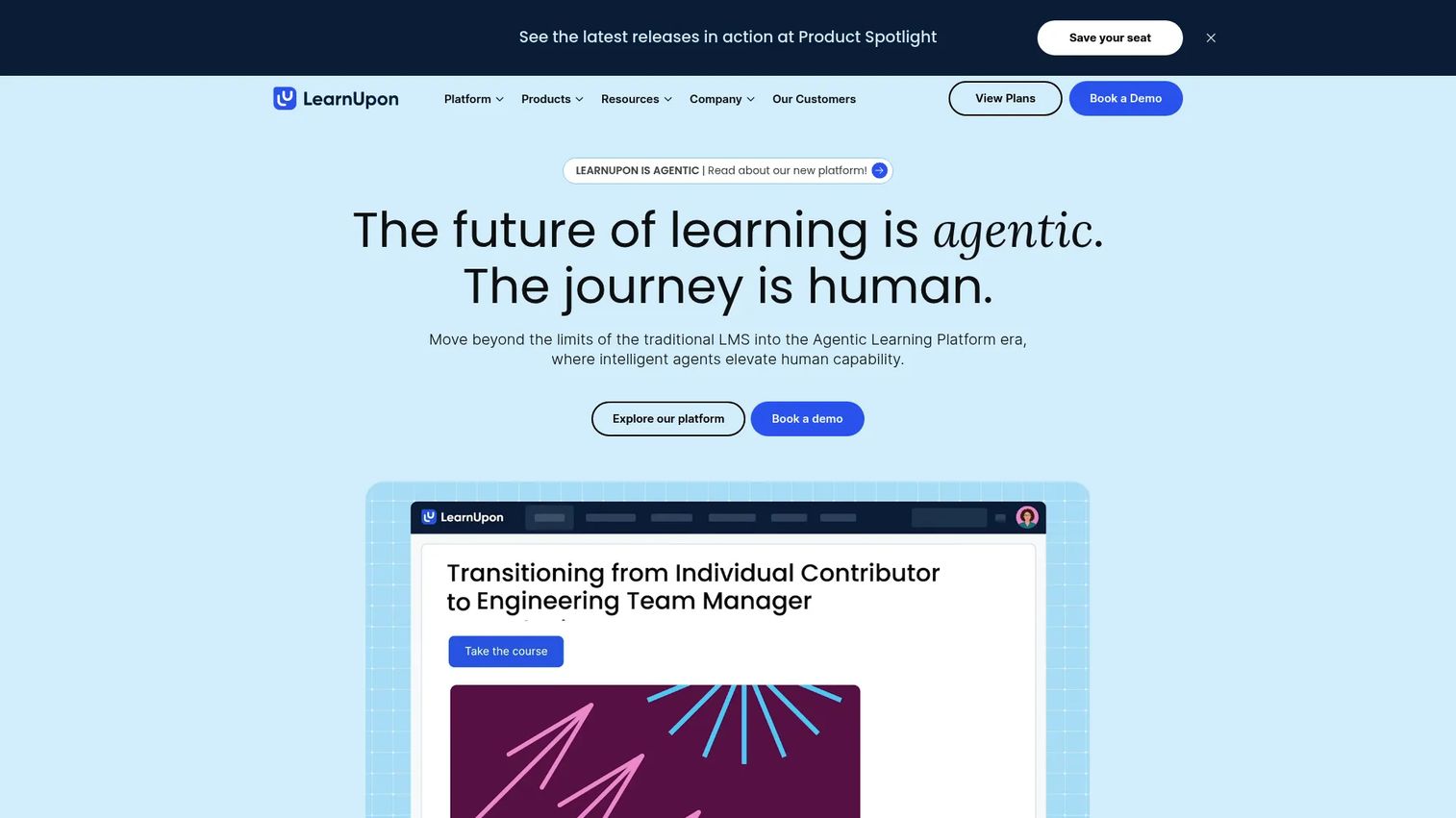
LearnUpon is an agentic learning platform for employee onboarding, customer education, compliance training, association learning, and extended-enterprise programs. Multi-tenant Learning Portals let organizations deliver distinct learning experiences to separate audiences from one admin. Certifications, re-certifications, Zoom and Microsoft Teams integrations for live sessions, and a REST API round out a capable business LMS.
Best for: Businesses training multiple distinct learner audiences, including employees, customers, and partners, from one platform.
Key features
- Multi-tenant Learning Portals for separate audiences
- AI-powered course creation and learning automation
- Certifications and re-certifications
- Live Learning with Zoom, Microsoft Teams, and Google Meet integrations
- Reporting and analytics with eCommerce and API access
Why choose LearnUpon: Choose LearnUpon when the training audience spans internal teams and external learners who need separate but consistently managed experiences. Clean admin and learner interfaces make it a practical fit for structured enablement programs.
LearnUpon pricing: Plans are audience-based with user minimums: Employees from 100 users, customer education from 300 users, and associations from 150 users. All plans require a sales conversation for pricing.
G2 rating: 4.5/5
Considerations when choosing an online learning platform
Match the platform type to the job
A course marketplace, corporate LMS, creator storefront, and live meeting tool all serve different workflows. Buying a creator platform when you need certification reporting and role-based readiness paths means paying for ecommerce you won't use and missing the governance you actually need. Clarify the primary job before evaluating features.
Check reporting beyond completion rates
Sales Enablement Managers need more than a course-completed timestamp. Ask whether the platform shows cohort-level progress, quiz scores, certification status, manager dashboards, and skill development over time. Platforms with thin analytics make it difficult to connect training to rep behavior and sales outcomes.
Verify integrations before rollout
Training that doesn't connect to your CRM, HRIS, SSO, or collaboration tools creates manual work and erodes adoption. Confirm that the platforms you're evaluating support your specific stack, including Salesforce, HubSpot, Microsoft Teams, Slack, and your identity provider. A stated integration and a deep, bidirectional integration are different things.
Plan for content maintenance
Training content decays fast. Products change, messaging shifts, and competitive threats evolve. Evaluate how the platform handles version control, content ownership assignment, expiration dates, and content review workflows. Platforms that make updates cheap and auditable reduce the risk of reps learning from outdated material.
Test adoption with a real cohort
A platform that performs well in procurement review can fail when real reps touch it. Run a pilot with one onboarding cohort or one launch enablement program before full rollout. Measure completion, quiz scores, and whether reps can find what they need without assistance.
Conclusion
The best online learning platform for your team is the one that matches how your learners work, not the one with the longest feature list.
For creators and education businesses, Teachable, Thinkific, LearnWorlds, and Kajabi cover course building, branded checkout, and monetization. For professional development, Coursera, Udemy, Skillshare, and LinkedIn Learning give teams access to broad catalog libraries for upskilling without building content internally. For academic course delivery, Moodle and Blackboard Learn handle institution-grade requirements. For business training and certification, ProProfs Training Maker, Docebo, and LearnUpon are the strongest picks for structured onboarding, compliance, and multi-audience programs. For technical learning, Codecademy and Treehouse build coding and product fluency. For live delivery, Zoom fills the synchronous gap.
If your learning program also includes product education, onboarding flows, or self-serve product understanding, interactive product experiences can sit alongside your learning stack and let buyers or new users explore your product without scheduling a call.
Start your journey with Guideflow today!
FAQs
Docebo, LearnUpon, and ProProfs Training Maker are strong choices for business training. The right pick among them depends on audience size, reporting requirements, certification workflows, and integration needs. ProProfs suits smaller teams with a lower per-learner cost, while Docebo and LearnUpon scale for enterprise programs across multiple audience types.
An online learning platform is the broader category covering any software that delivers or organizes digital learning content, including course marketplaces, creator storefronts, and professional development libraries. A learning management system (LMS) is a specific type of online learning platform focused on managing, delivering, tracking, and reporting structured learning. Moodle, Blackboard Learn, Docebo, and LearnUpon are LMS platforms.
Teachable, Thinkific, LearnWorlds, Kajabi, FreshLearn, and Academy of Mine all support course creation and sales. Creators should prioritize branded checkout, course site control, payment options, student data ownership, and marketing tools. Kajabi suits those who want an all-in-one business platform; Teachable and Thinkific suit those who want a focused course storefront at a lower entry price.
Docebo, LearnUpon, ProProfs Training Maker, and Moodle are strong options depending on training depth and team size. Key factors are structured onboarding paths, quiz-based assessments, certification checkpoints, manager reporting, and cohort tracking. ProProfs offers the most accessible entry pricing for smaller teams.
Yes, when the platform improves ramp speed, training consistency, and certification completion. The measurable value comes from connecting training data to rep behavior: Certification rates, quiz scores, talk-track adoption, and stage conversion. Platforms that offer cohort reporting, role-based paths, and manager dashboards make that connection more direct.
Role-based learning paths, mobile access, quiz and assessment tools, certification tracking, content governance with version control, CRM and HRIS integrations, analytics at the learner and cohort level, and manager visibility are the most relevant features. Prioritize platforms that connect training completion to readiness indicators rather than treating completion as the end metric.
No. Platforms reduce repetitive delivery and improve reinforcement, but live training is still necessary for role-play, manager coaching, objection handling practice, and feedback loops. The strongest enablement programs use a platform for structured content delivery and certification, then layer in live coaching and peer learning on top.
Pricing varies significantly by category. Creator platforms typically run $30 to $400/month depending on the plan and features. Skill libraries like Coursera charge $59/month per learner or annual team rates. Technical platforms like Codecademy start at $14.99/month individually or $24.92/seat/year for teams. Enterprise LMS products, including Docebo and LearnUpon, require custom quotes driven by user count, modules, and integrations. Open-source tools like Moodle are free to self-host but carry implementation and maintenance costs.