Your team started with a spreadsheet, a shared inbox, and a booking portal or two. It worked. Then trip volume grew, client requests piled up, and the cracks showed. A payment lands in one system, a commission gets tracked in another, an itinerary lives in a designer's inbox, and nobody can answer a simple question without opening five tabs.
That is the exact moment agencies start shopping for travel agency software. Not because they want another tool, but because the manual work has become the bottleneck. The global travel management software market is expected to grow from $10.28B in 2025 to $16.08B in 2030 at a 9.0% CAGR, according to The Business Research Company (2025), largely on the back of teams moving off disconnected booking tools and onto centralized platforms.
Here is the honest part: there is no single best software for travel agency teams. The right pick depends on which workflow is breaking first. If itinerary production is the problem, you want different travel business software than an agency drowning in commission reconciliation or one that needs enterprise-grade back-office reporting. This guide splits the market by that logic so you can match the tool to the fault line.
If you evaluate operational software patterns often, you already know the drill: the winning platform is the one that creates repeatable booking workflows without routing every decision through you. The same principle that makes a good CRM or contract management tool valuable applies here, clean data, controls, and integrations that hold up as you scale.
What's inside
This guide compares seven travel agency management software platforms chosen for breadth of workflow coverage: client management, itinerary building, supplier ecosystem support, payment handling, commission tracking, and operational depth. We selected tools based on how well they solve a core agency job, how they fit a growing team's stack, whether pricing is transparent, and the review signal behind them.
The list spans three camps: advisor-first and agency-first platforms built around itineraries and CRM, payment-first tools built around collection and booking flow, and operations-first systems built for back-office control and supplier connectivity at scale.
TL;DR
For skimmers, here is the shortlist by use case:
- Best overall all-in-one coverage: Travefy, for advisors and agencies that need itineraries, CRM, invoices, and commissions in one place.
- Best travel agent software for CRM depth and workflow: Tern, with AI-assisted planning, commission handling, and reporting.
- Best for agency operations and reporting: TravelOperations, a CRM and ERP back-office platform.
- Best for payments and booking workflows: WeTravel, for collection, multi-currency, and itinerary distribution.
- Best for booking infrastructure: Sabre, for agencies tied to supplier inventory and distribution.
- Best for global ecosystem breadth: Amadeus, for broad supplier connectivity and enterprise travel infrastructure.
- Best for content and distribution rails: Travelport, for multi-source retailing and booking access.
What is travel agency software?
Travel agency software is a platform that helps travel advisors and agencies manage bookings, client records, itineraries, payments, commissions, and reporting from one system instead of scattered tools. It replaces the spreadsheet-and-inbox setup that breaks as trip volume grows.
Most buyers expect a core set of modules. The strongest travel software solutions combine these into a single workflow rather than forcing you to stitch them together:
- CRM and client management: A central record for every client, trip, proposal, and conversation. This is the backbone of any crm for travel agents setup.
- Itinerary and proposal building: Tools to assemble branded day-by-day plans, share them with clients, and turn approved proposals into bookings.
- Booking workflows: Coordination of flights, hotels, activities, and transfers, often through travel booking software connected to supplier inventory.
- Payments and checkout: Client payment collection, deposits, installment plans, and multi-currency handling.
- Commission management: Tracking what suppliers owe, reconciling payments, and reporting on revenue per advisor.
- Reporting and back-office automation: Dashboards, financial reporting, auditability, and role controls for larger teams.
- Supplier integrations: Connections to GDS content, host agencies, and travel ecosystem partners.
Not every platform covers all of these deeply. That is the point of a shortlist. An itinerary-first tool and an enterprise ERP both call themselves an agency management platform, but they solve different problems.
When to use travel agency software
Three signals tell you it is time to move off manual work and onto a real system.
Centralize client and trip workflows
When client records live in one place, proposals in another, and trip details in a third, you lose time reconstructing context on every request. A platform that unifies client management, proposals, trip details, and communication gives your team one source of truth. This matters most when more than one advisor touches the same client and nobody wants to ask "where are we on this trip?" again.
Replace manual itinerary and booking work
When advisors rebuild the same itinerary structure from scratch on every trip, the repetition eats hours that should go to selling. Travel itinerary software with reusable templates, a proper itinerary builder, and booking coordination turns a two-hour assembly job into a fifteen-minute one. If your team spends more time formatting than advising, this is the fault line to fix first.
Scale payments, commissions, and back office
When the business outgrows spreadsheets for money movement, you need reporting, auditability, and role controls. Commission management that reconciles supplier payments automatically, plus payments and checkout flows that handle deposits and installments, removes the month-end scramble. Growing agencies hit this wall when commission tracking stops fitting in a single tab.
Comparison table
Here is a fast way to compare the seven platforms by intent, key use case, pricing, and review signal. The table is sorted by relevance to the travel agent software buyer, starting with advisor and agency all-in-one tools and moving toward enterprise booking infrastructure.
| # | Product | Intent | Key use case | Pricing | G2 rating |
|---|---|---|---|---|---|
| 1 | Travefy | All-in-one advisor and agency software | Itineraries, proposals, CRM, invoices, commissions | From $39/mo | 4.5/5 |
| 2 | Tern | CRM-heavy operations platform | AI-assisted planning, CRM, commission reconciliation | From $49/seat/mo | Not enough reviews |
| 3 | TravelOperations | CRM and ERP back-office | Operations, dashboards, back-office automation | From $120/user/mo | Not listed |
| 4 | WeTravel | Payments and booking operations | Payment collection, itineraries, multi-currency | Free; Pro from $79/mo | 4.0/5 |
| 5 | Sabre | Booking and distribution tech | Supplier inventory, distribution, retailing | Quote-based | 4.3/5 |
| 6 | Amadeus | Global travel technology | Supplier connectivity, booking APIs, enterprise infra | Quote-based | 4.7/5 |
| 7 | Travelport | Travel commerce and retailing | Content distribution, booking rails, APIs | Quote-based | 4.5/5 |
Use the table to narrow, then read the sections below to match a platform to the workflow that is breaking first in your agency.
1. Travefy
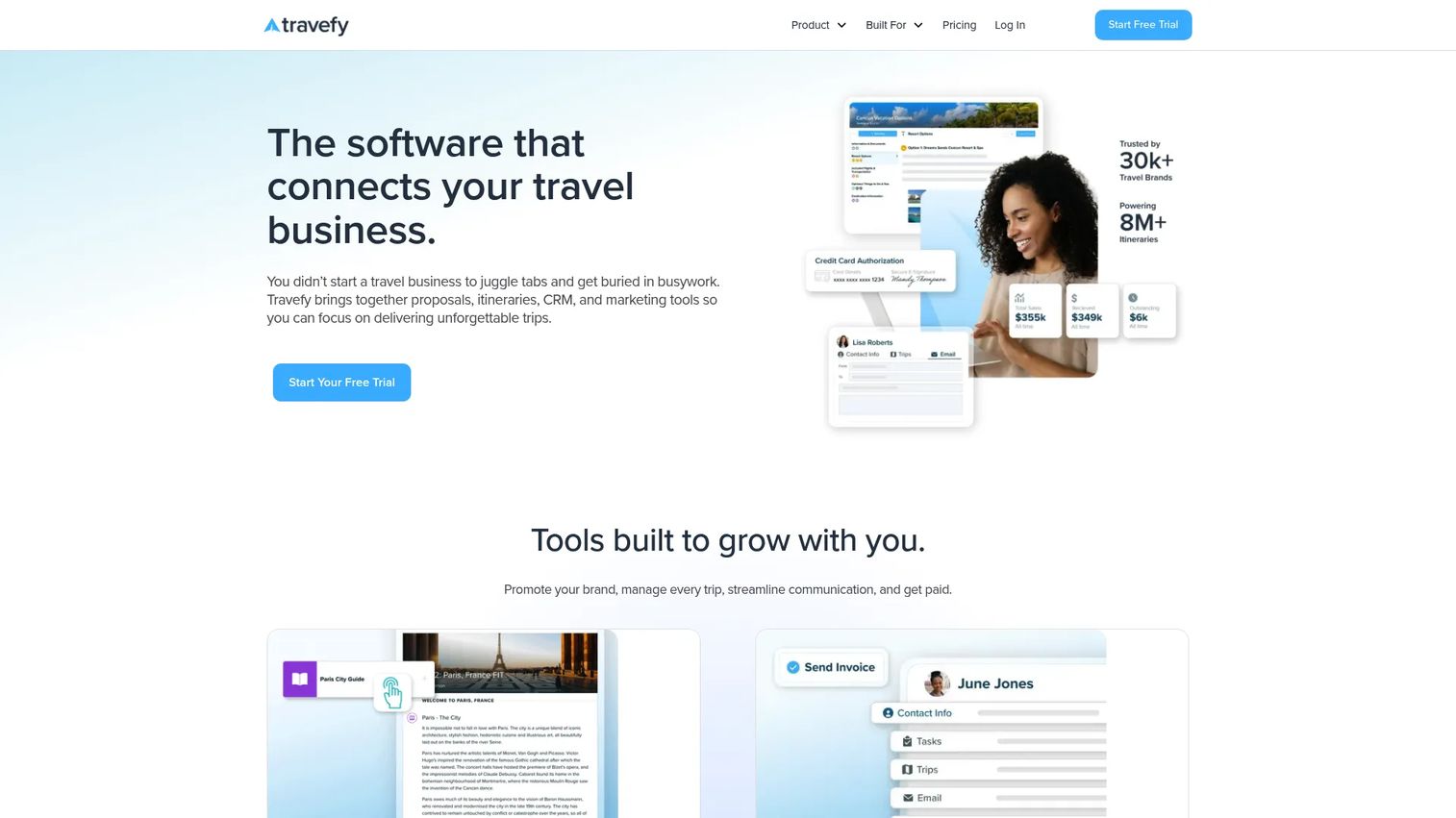
Travefy is the itinerary-first, agency-friendly all-in-one platform on this list. It packages itinerary and proposal building, a CRM with forms and automations, invoicing, commission tracking, and a website builder into one system built for travel advisors and agencies. If your team needs branded trip plans that look professional and a client record that keeps up, this is the default starting point.
Best for: Travel advisors, agencies, and tour operators that need itinerary, proposal, and client-management tools in one place.
Key strengths
- Itinerary and proposal builder: Assemble branded, day-by-day itineraries and proposals fast, then share polished trip plans clients can view on any device.
- CRM with forms and automations: Capture leads through forms, automate follow-ups, and keep every client and trip in a single record.
- Website and landing page builder: Build a branded travel website and landing pages without a separate tool, so marketing and operations live together.
Why choose Travefy: It is the strongest fit when itinerary production is your bottleneck and you want CRM, invoices, and commission management attached rather than bolted on later. For a growing agency that values one clean system over a stack of point tools, Travefy earns its place as the all-in-one travel advisor software default.
Travefy pricing: Core starts at $39/month billed annually. Premium starts at $59/month billed annually. Agency pricing is custom and starts as low as $20/seat/month based on volume and terms. There is no public free tier, but Travefy offers a 10-day free trial with no credit card required.
2. Tern
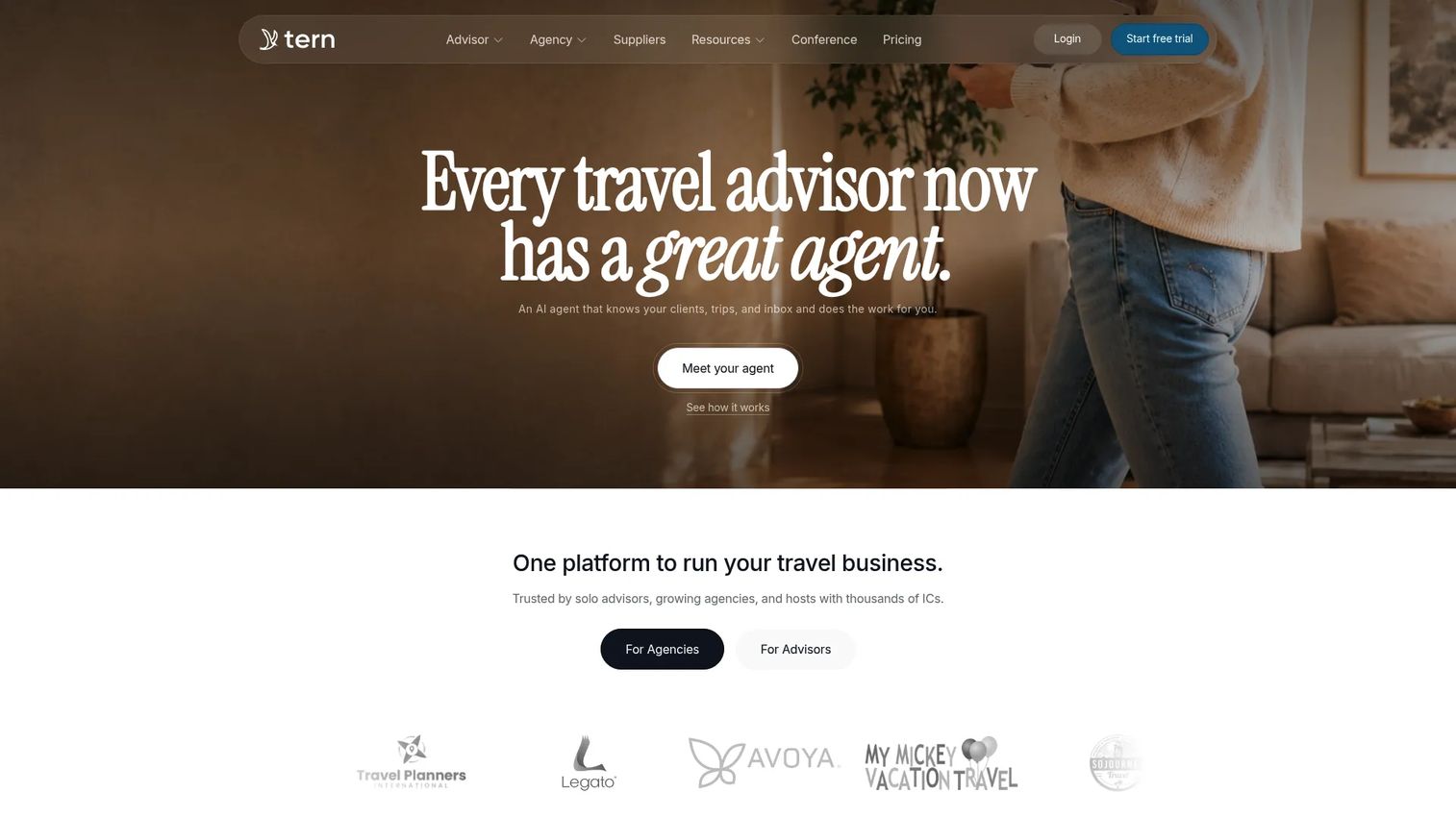
Tern is the workflow-heavy operations platform for advisors, agencies, and hosts. It leans hard into AI-assisted trip planning and data entry, then wraps it in a full CRM, scheduling, forms, reporting, and agency features like commission reconciliation and team collaboration. If you want a single crm for travel agents that also handles the operational load of a scaling team, Tern is built for that.
Best for: Travel advisors and agencies that want an all-in-one operations platform with AI assistance and back-office depth.
Key strengths
- AI-assisted itinerary building and data entry: Cut the manual work of assembling itineraries and entering trip data, so advisors spend time advising, not typing.
- CRM, email integration, and reporting: Manage clients, sync email, schedule, capture forms, and report on the business from one connected system.
- Agency features and commission reconciliation: Reconcile commissions, collaborate across a team, and run back-office automation that scales with headcount.
Why choose Tern: Choose it when the operational side is breaking, commission reconciliation, team handoffs, and reporting, and you want AI to absorb the repetitive planning work. It is the strong pick for agencies scaling past solo advisors who need supplier integrations and clean workflows without founder-style heroics on every trip.
Tern pricing: Tern for Advisors starts at $49/seat/month billed monthly, with quarterly and annual options shown at $35/seat/month. Every plan includes itineraries, CRM, AI tools with included usage, email integration, scheduling and booking, credit card authorization, forms, and reports. A free trial is offered.
3. TravelOperations
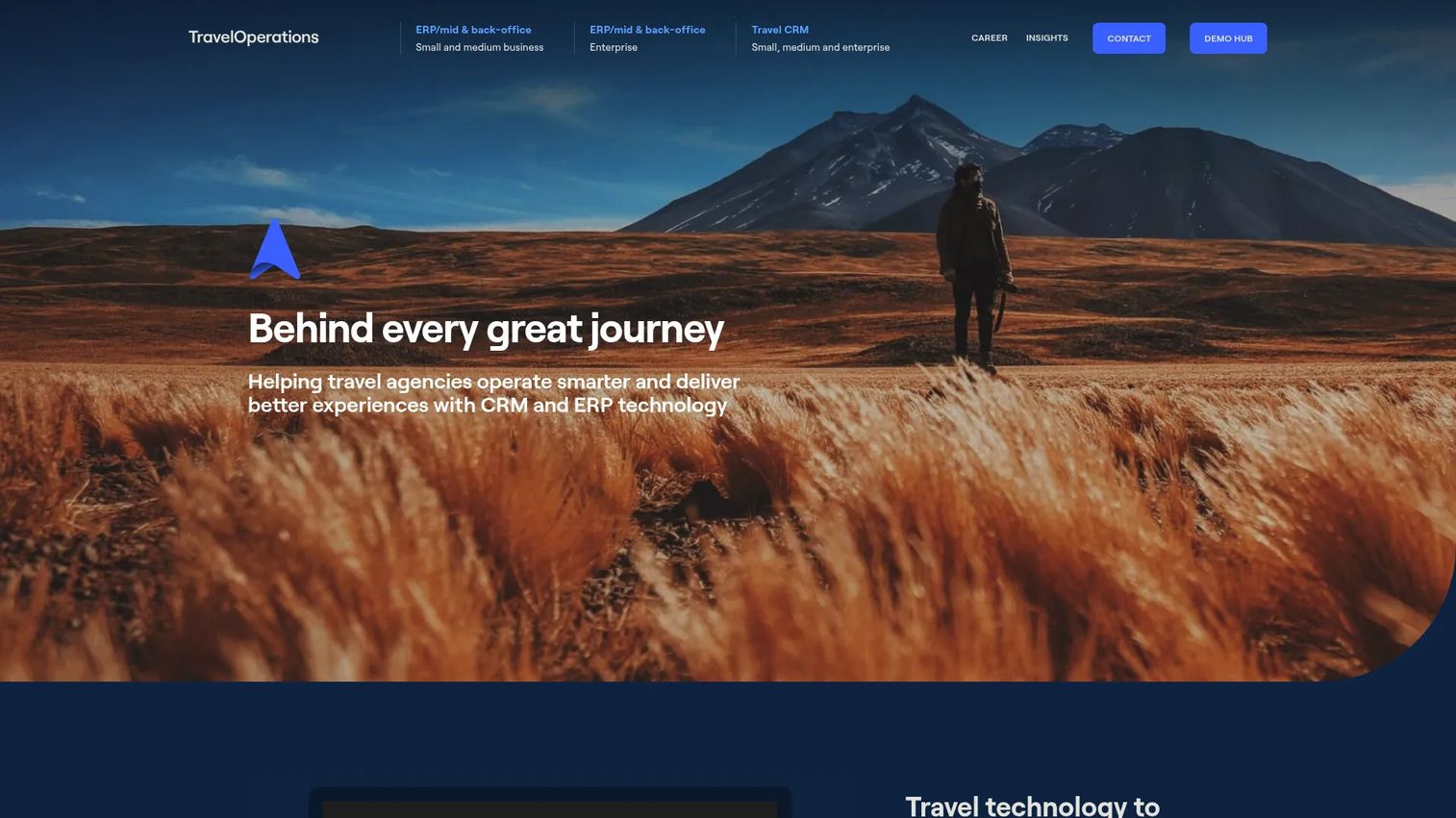
TravelOperations is the CRM and ERP back-office platform on this list. Built on Microsoft Dynamics 365, it combines a travel CRM for sales, marketing, and customer service with mid- and back-office ERP for both small and medium businesses and enterprises. This is travel agency management software for teams where operational control and financial reporting matter more than lightweight trip planning.
Best for: Travel businesses that need integrated CRM and back-office operations on a Dynamics 365 foundation.
Key strengths
- Travel CRM for the full customer lifecycle: Run sales, marketing, and customer service from one record instead of separate point tools.
- ERP mid- and back-office: Handle financial operations, reconciliation, and reporting with enterprise-grade back-office automation.
- Scales from SMB to enterprise: Choose the tier that fits your size, with supplier integrations into major travel ecosystem partners.
Why choose TravelOperations: Pick it when the back office is the fault line, when dashboards, auditability, and process automation outweigh how fast you can build a single itinerary. For agencies that think in operations first, it is the closest thing here to a true agency management platform with ERP depth.
TravelOperations pricing: Publicly listed pricing shows an implementation fee plus subscription pricing based on number of users. The ERP mid- and back-office plan is available from 120 USD per user per month with a minimum of 10 users. The vendor also sells a separate industry report priced at 300.00€, which is not a software subscription tier.
4. WeTravel
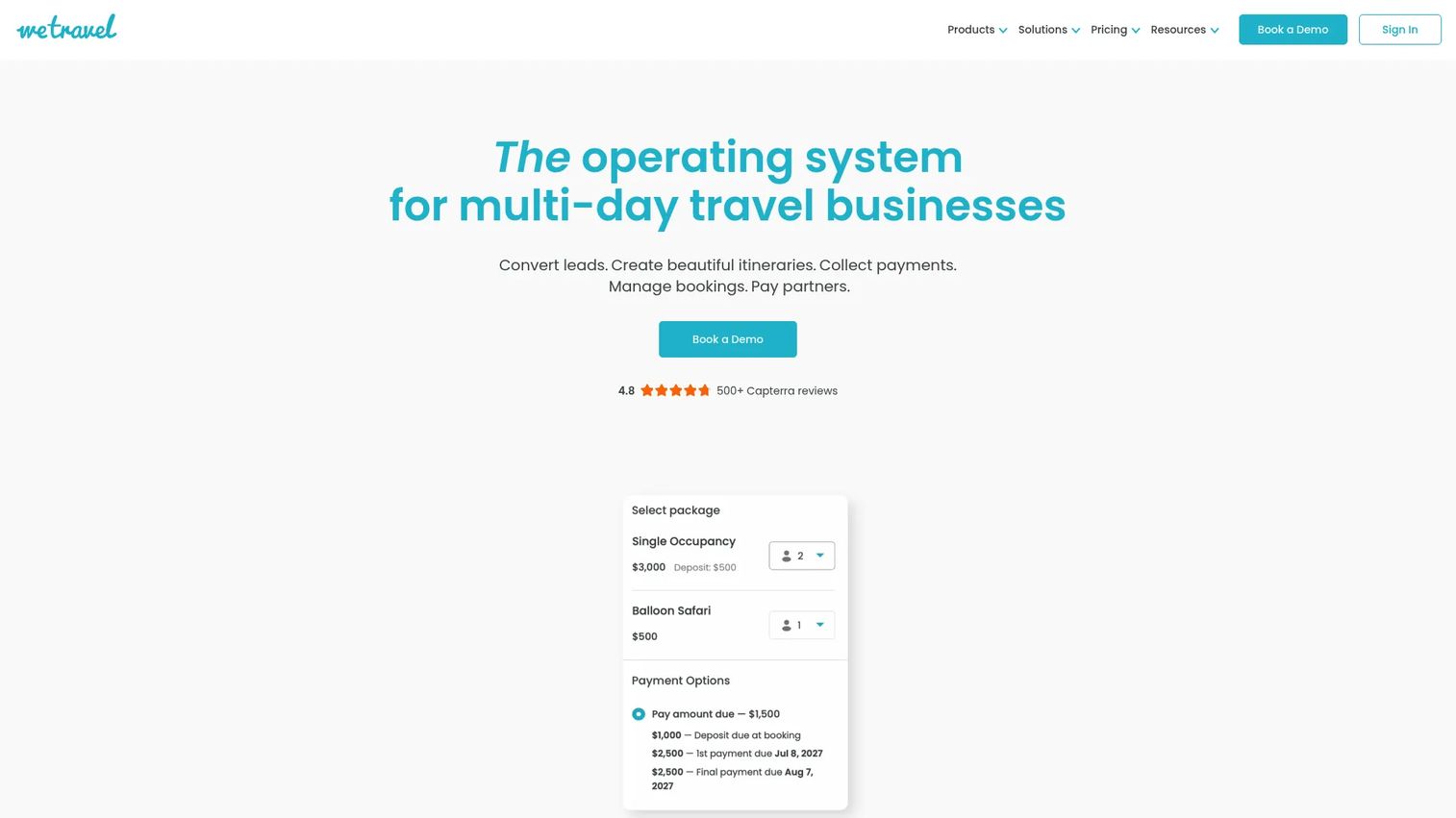
WeTravel is the payment and client operations platform. It was built to digitize how multi-day travel businesses collect money, with booking and payment collection, multi-currency support, an itinerary builder, and CRM lead capture. If money movement is where your workflow strains, deposits, installments, and cross-border collection, WeTravel is the payment-first pick.
Best for: Tour operators and travel businesses that need a booking, itinerary, and payments platform in one.
Key strengths
- Booking and payment collection: Collect deposits, installments, and full payments with flows built for multi-day trips, the core of clean payments and checkout.
- Itinerary builder: Assemble and distribute travel itinerary software outputs clients can view and book against.
- CRM and lead capture: Capture leads and manage clients alongside the money movement, so bookings and payments stay connected.
Why choose WeTravel: Choose it when collection and booking operations are the priority, especially if you work across currencies or run trips with installment payment schedules. It is the practical pick for organizers who need commission management and payments handled without a heavy back-office system.
WeTravel pricing: WeTravel lists a free Basic plan, a Pro plan at $79/month billed month-to-month, and an Enterprise plan with custom pricing. New users get a 60-day free trial. Payment-processing fees apply on top of subscription tiers and vary by transaction type.
5. Sabre
Sabre is the travel commerce and booking ecosystem option. It is a travel technology company offering an open, modular platform for airlines, agencies, and suppliers, with AI-powered tools, modular suites, and a global distribution and retailing network. This is the pick when your agency lives close to booking infrastructure and supplier inventory rather than itinerary design.
Best for: Airlines and travel agencies needing booking, distribution, and retailing technology at scale.
Key strengths
- AI-powered travel platform: Modern, AI-assisted tooling across booking and retailing workflows.
- Modular suites for airlines and agencies: Adopt the components that fit your motion instead of a single monolithic product.
- Global marketplace and distribution network: Access broad supplier inventory through Sabre's distribution rails.
Why choose Sabre: Choose it when inventory access and distribution matter more than lightweight trip planning, and when your agency needs the booking rails that GDS-scale operations depend on. Sabre Red 360, its agency desktop, carries a solid review signal for agencies that live in the booking flow.
Sabre pricing: Sabre does not publish public pricing. Access and packaging are quote-based through its sales team, which is typical for GDS-scale distribution technology. Expect enterprise contracts rather than a self-serve plan.
6. Amadeus
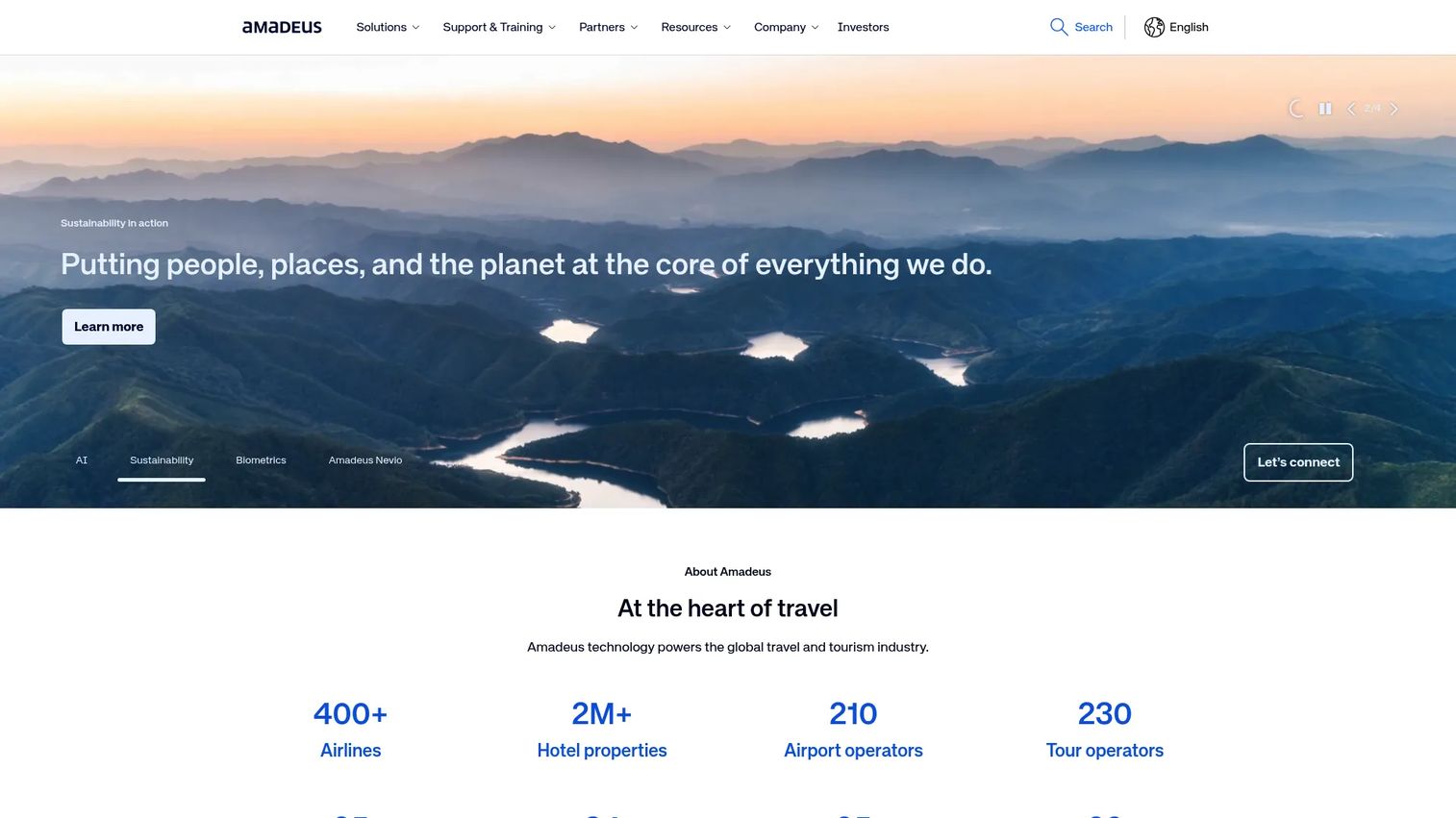
Amadeus is the global travel technology platform on this list. It offers distribution, booking, and developer APIs across flights, hotels, cars and transfers, destination experiences, and itinerary management. For agencies that need broad supplier connectivity and enterprise-grade infrastructure, Amadeus is built for ecosystem breadth and scale.
Best for: Travel companies and developers needing airline, hotel, and booking API connectivity.
Key strengths
- Self-service travel APIs: Start with documented APIs and a free test environment before moving to production.
- Enterprise APIs with customized pricing: Scale into enterprise-grade connectivity when volume and complexity grow.
- Broad content coverage: Access flights, hotels, cars and transfers, destination experiences, and itinerary management through one provider.
Why choose Amadeus: Choose it when supplier integrations and global connectivity are central to your model, or when you have developer bandwidth to build on top of travel APIs. It carries the highest review signal in this group and suits agencies and platforms that need infrastructure, not just an itinerary tool.
Amadeus pricing: Amadeus does not publish numeric pricing on its main site. The developer program indicates a free test environment and pay-as-you-go production pricing, with enterprise APIs on customized pricing. Plan for a sales conversation for anything beyond the self-service developer tier.
7. Travelport
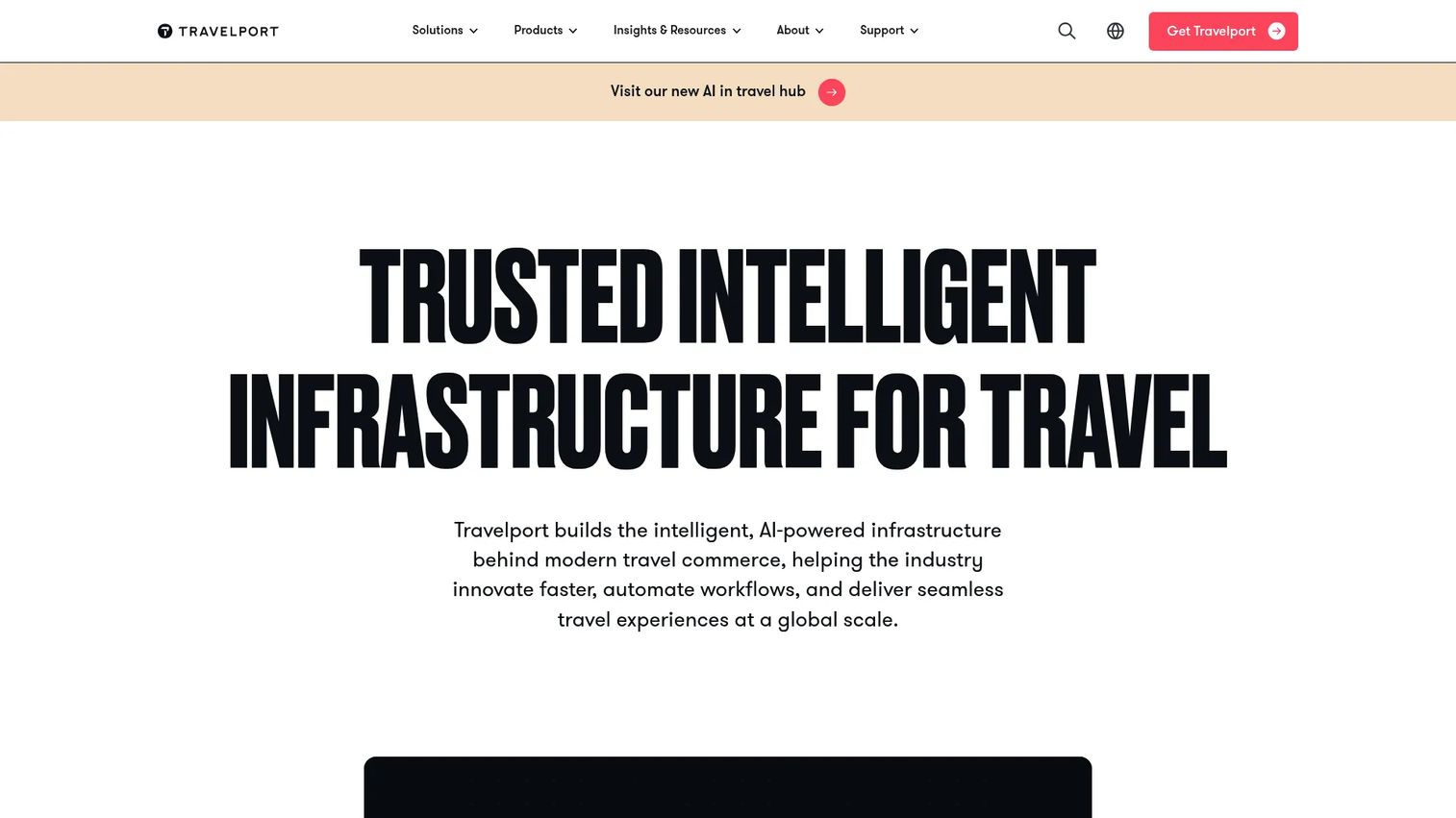
Travelport is another major travel commerce and booking platform. It provides a modern retailing platform, APIs, and content distribution tools through Travelport+, the Smartpoint desktop, and cloud-native TripServices APIs. This is the pick when access to content, distribution, and booking rails is central to how your agency operates.
Best for: Travel agencies and suppliers needing multi-source retailing and booking infrastructure.
Key strengths
- Travelport+ platform: A modern retailing platform built for travel agencies that need multi-source content.
- Smartpoint desktop: Familiar desktop access for agents working in a booking-heavy motion.
- TripServices cloud-native APIs: Build modern integrations on cloud APIs for content and booking.
Why choose Travelport: Choose it when distribution and supplier connectivity sit at the center of your business, and you want retailing tools plus the APIs to modernize how agents book. It suits agencies that need booking rails and content access more than a client-facing itinerary builder.
Travelport pricing: Travelport does not publish public pricing. Its pages direct visitors to contact sales, so packaging is quote-based and structured around enterprise distribution agreements. Expect a scoped conversation based on content needs and volume.
How to choose the right travel agency software
Before you commit, run the shortlist against a short checklist. The goal is a platform that creates repeatable booking workflows and holds up as you scale, not one that adds another silo.
Which workflow is breaking first?
Match the tool to the fault line. Itinerary production strain points to Travefy or Tern. Money movement points to WeTravel. Back-office and reporting complexity points to TravelOperations. Booking and distribution needs point to Sabre, Amadeus, or Travelport.
Team size and sales motion
A solo advisor and a 50-person agency need different systems. Check seat pricing, collaboration features, and whether the platform supports the handoffs your team actually makes. A tool that works for one advisor can create friction across a growing team.
Integration depth
Look at how the platform connects to supplier inventory, payments, and your existing stack. Shallow integrations force manual re-entry, which is the exact problem you are trying to remove. The best travel software solutions reduce tools while increasing signal.
Governance and reporting
For growing agencies, role controls, auditability, and clean reporting matter as much as features. If you cannot answer a board-style question about revenue per advisor without exporting three files, the reporting layer is too thin.
Conclusion
There is no single best travel agency software for every agency, and any list that claims otherwise is selling you something. The right choice comes down to which workflow is breaking first: itinerary production, client management, payment collection, commission tracking, or back-office reporting.
For advisors and agencies that want itineraries, CRM, and commissions in one system, Travefy is the all-in-one starting point. Tern is the pick when operations and commission reconciliation are the strain. TravelOperations wins on back-office and ERP depth. WeTravel leads on payments and collection. Sabre, Amadeus, and Travelport are the choices when booking infrastructure and supplier connectivity sit at the center of your model.
Pick based on the fault line, not the feature list. The best travel business software is the one that removes your current bottleneck and creates workflows your team can run without you in every trip. Start with the workflow that hurts most, shortlist the two tools that solve it, and run a trial before you sign.
Start your journey with Guideflow today!
FAQs
Travel agency software is a platform that helps travel advisors and agencies manage bookings, client records, itineraries, payments, commissions, and reporting from one system. It replaces scattered spreadsheets, inboxes, and booking portals with connected booking workflows that scale as trip volume grows.
At minimum, look for CRM and client management, an itinerary and proposal builder, booking coordination, payment collection, commission tracking, and reporting. Larger teams should also weigh supplier integrations, role controls, and back-office automation. Not every tool covers all of these deeply, so match the feature set to your priority workflow.
Yes. Travefy and Tern both combine a travel CRM with an itinerary builder in one platform, so client records and trip plans stay connected. This is the most common setup for advisors who want proposals, client management, and commissions in a single system rather than separate tools.
Small agencies and solo advisors usually get the best fit from Travefy or WeTravel. Travefy leads on itineraries, CRM, and commissions with transparent pricing from $39/month. WeTravel offers a free Basic plan and strong payments and checkout flows for teams focused on collection.
Growing agencies that need operational depth tend to choose Tern for AI-assisted workflows and commission reconciliation, or TravelOperations for CRM and ERP back-office control. Agencies tied to booking infrastructure lean toward Sabre, Amadeus, or Travelport for supplier connectivity at scale.
A travel CRM focuses on client records, communication, and pipeline. A full travel agency management platform adds itineraries, bookings, payments, commissions, and reporting on top of that CRM layer. Most crm for travel agents buyers eventually want the broader platform so their client data and operations live in one place.
Most modern platforms do. WeTravel specializes in payment collection, deposits, and multi-currency handling, while Travefy and Tern include commission management and reconciliation alongside client and itinerary tools. The depth varies, so confirm how a platform handles supplier commissions and installment payments before committing.
Start with the workflow that is breaking first, itinerary production, client management, payments, commissions, or back-office reporting, and shortlist the two tools that solve it best. Then check team size fit, integration depth, and reporting before running a free trial. The right travel booking software removes your current bottleneck without adding another silo.