Contract management software (CLM) is a digital platform that automates the entire agreement lifecycle, from drafting and negotiation through signature, storage, and renewal, within a centralized repository. It replaces the scattered emails, shared drives, and manual tracking that cause contracts to slip through the cracks.
The average enterprise manages thousands of active contracts at any given time, and without proper tooling, missed renewals and compliance gaps become expensive problems. This guide covers the 10 best contract management software tools for 2026, what features actually matter, and how to pick the right solution for your team's specific workflows.
What's inside
This guide covers the best contract management software for 2026, selected based on feature depth, ease of use, integration capabilities, and real user reviews. You'll learn what contract management software actually does, why it matters for your team, and how to pick the right tool for your specific workflows.
TL;DR
- Contract management software (also called CLM) streamlines the entire agreement lifecycle from drafting through renewal in a centralized digital repository.
- Top picks include Ironclad for enterprise legal teams, Juro for fast-moving commercial teams, and PandaDoc for small businesses.
- Key selection criteria: AI capabilities, workflow automation, CRM integrations, and security certifications.
- The right tool can cut contract cycle times significantly and eliminate missed renewals that cost companies thousands annually.
What is contract management software
Contract management software, often called CLM (contract lifecycle management), is a digital platform that automates and streamlines all stages of contract management. It handles drafting, negotiation, signature, storage, and renewal within a centralized repository, reducing manual errors and accelerating contract cycles.
Think of it as the single source of truth for every agreement your organization touches. Instead of hunting through email threads, shared drives, and filing cabinets, you have one searchable place where contracts live and move through their lifecycle automatically.
The typical contract lifecycle breaks down into five stages:
- Drafting: Creating contracts using templates and automated data entry from your CRM or other systems.
- Negotiation and review: Collaboratively editing and redlining directly within the platform, with version control tracking every change.
- Approval: Automatically routing contracts to the right stakeholders based on preset rules.
- Signing: Using secure, legally binding electronic signatures without leaving the platform.
- Storage and renewal: Storing all contracts in a centralized repository with powerful search and automated alerts before key dates.
Why you need contract management software
Centralized contract repository eliminates scattered files
Most organizations store contracts across shared drives, email attachments, and physical filing cabinets. This creates a nightmare when you need to find a specific clause or check an expiration date.
A contract document management system provides a single source of truth with powerful searchability and version control. You always know where the latest document lives, and you can find any contract in seconds rather than hours.
Faster contract turnaround accelerates revenue
Every day a contract sits waiting for approval or signature is a day your deal isn't closed. Automated workflows and pre-approved templates can cut contract cycle times from weeks to days.
For sales teams, this directly impacts quota attainment. For procurement, it means faster vendor onboarding.
Automated renewal tracking prevents missed deadlines
Missed renewal dates cost companies real money. Auto-renewals you didn't want, lapsed agreements that disrupt operations, or compliance gaps that create legal exposure.
Contract tracking software automatically sends alerts 30, 60, or 90 days before renewals or expirations. This proactive approach gives you time to renegotiate terms or make informed decisions about whether to continue.
Built-in compliance reduces legal risk
Standardized templates and pre-approved clause libraries ensure every contract follows company policies. Detailed audit trails show exactly who changed what and when.
For regulated industries, this isn't optional. SOC 2, GDPR, and HIPAA requirements demand this level of documentation and control.
Cross-team collaboration breaks down silos
Contracts touch legal, sales, procurement, finance, and HR. Without a shared platform, teams pass documents back and forth via email, creating version confusion and communication gaps.
A unified contract management system lets everyone work together in one place, with role-based permissions controlling who can view, edit, or approve.
Key features to look for in contract management tools
AI contract review and analysis
AI-driven analysis automatically reviews contracts to identify risks, extract key clauses, and pull important data. The software can read a contract and instantly flag non-standard terms, missing clauses, or unfavorable conditions.
The practical benefit: your legal team spends less time on routine review and more time on high-value work.
Template libraries and clause management
Pre-approved templates and clause libraries enforce consistency and speed up drafting. Business teams can self-serve on standard agreements without waiting for legal to create each contract from scratch.
Look for tools that let you lock down certain clauses while allowing flexibility in others.
Automated approval workflows
Automated contract management systems route contracts to the right people based on preset rules. A standard NDA might go directly to legal, while a contract over a certain value automatically includes finance approval.
Native electronic signature
Many platforms include built-in e-signature, which keeps the entire process in one place. This is often faster and more seamless than integrating with a separate tool like DocuSign or Adobe Sign.
However, if your organization already has an e-signature standard, check that the CLM integrates smoothly with it.
CRM and ERP integrations
Your contract software connects with Salesforce, HubSpot, SAP, or whatever systems your team already uses. This allows customer information to automatically populate contracts, and signed contract data to flow back into your CRM.
Without integrations, you're back to manual data entry and the errors that come with it.
Advanced search and smart storage
A modern contract document management system includes OCR (optical character recognition) to make scanned documents searchable, full-text search across all contracts, and metadata tagging for organization.
Contract analytics and reporting
Dashboards provide visibility into contract status, average cycle time, value at risk, and upcoming renewals. This data helps leaders make informed decisions about process improvements and resource allocation.
10 best contract management software solutions
| # | Product | Best for | Key differentiation | Pricing | G2 rating |
|---|---|---|---|---|---|
| 1 | Ironclad | Enterprise legal teams | AI-powered workflows | Custom | 4.5/5 |
| 2 | Juro | Fast-growing tech companies | Browser-native editor | From $59/user | 4.8/5 |
| 3 | DocuSign CLM | DocuSign power users | E-signature integration | Custom | 4.3/5 |
| 4 | PandaDoc | SMB sales teams | Document and proposal builder | From $19/user | 4.7/5 |
| 5 | ContractSafe | Simple contract storage | Unlimited users | From $299/mo | 4.7/5 |
| 6 | Agiloft | Complex custom needs | No-code platform | Custom | 4.5/5 |
| 7 | Concord | Growing mid-market teams | Unlimited e-signatures | From $17/user | 4.5/5 |
| 8 | ContractWorks | Security-focused teams | Simplicity and security | From $600/mo | 4.6/5 |
| 9 | Conga Contracts | Salesforce-centric orgs | Revenue lifecycle focus | Custom | 4.4/5 |
| 10 | Icertis | Global enterprises | Enterprise-scale compliance | Custom | 4.4/5 |
1. Ironclad
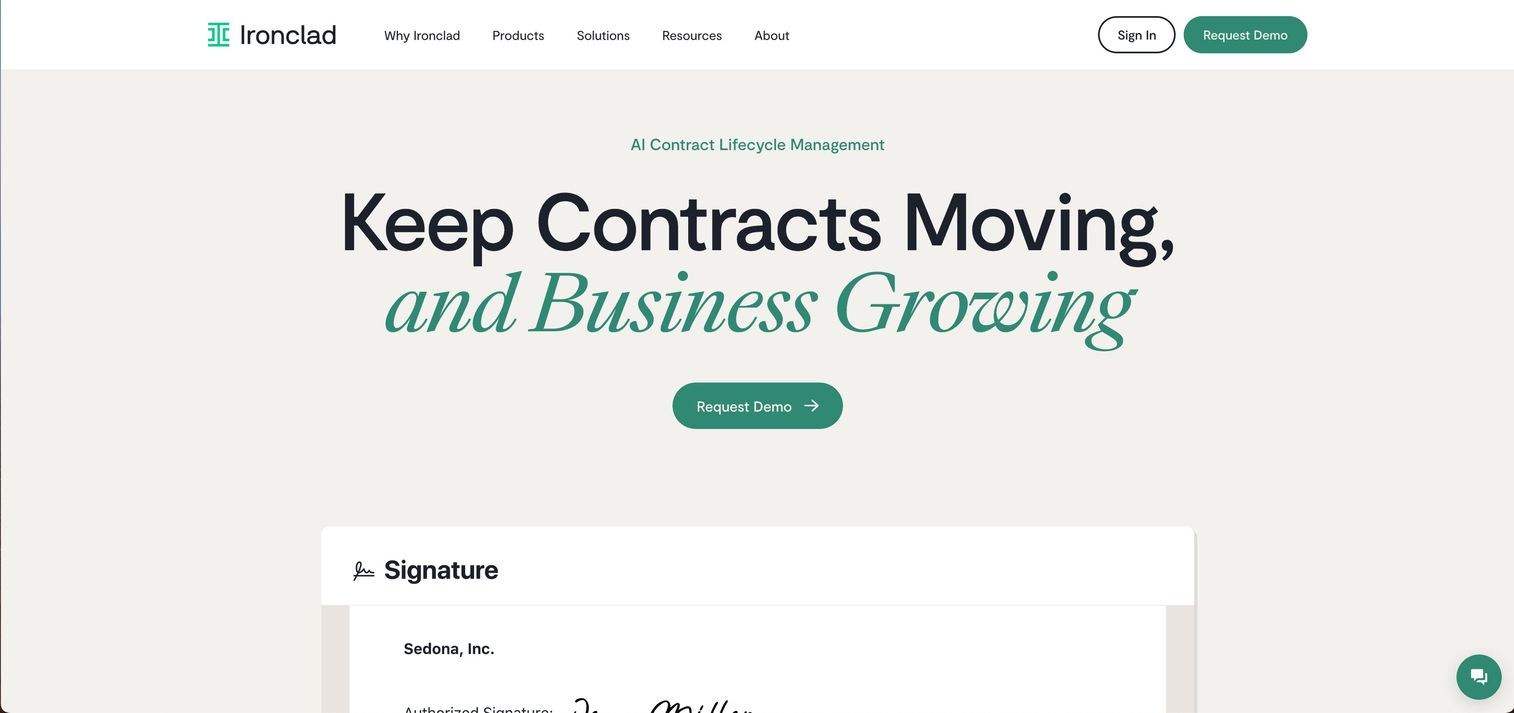
Ironclad is an enterprise-grade CLM designed for high-volume legal teams managing complex contract workflows. The platform combines AI-powered contract analysis with deep workflow automation.
Best for: Large organizations with dedicated legal operations teams and complex approval workflows.
Key strengths
- AI-powered contract analysis surfaces risks and extracts key data automatically
- Deep workflow automation handles multi-step approval routing
- Repository with advanced search and filtering capabilities
- Integrations with Salesforce, Slack, DocuSign, and major business tools
Why pick Ironclad?
Choose it when you have the budget and team size to take full advantage of enterprise features. The platform excels at handling complexity, but smaller teams may find it more than they need.
Pricing: Enterprise custom quotes. Contact Ironclad for details.
2. Juro
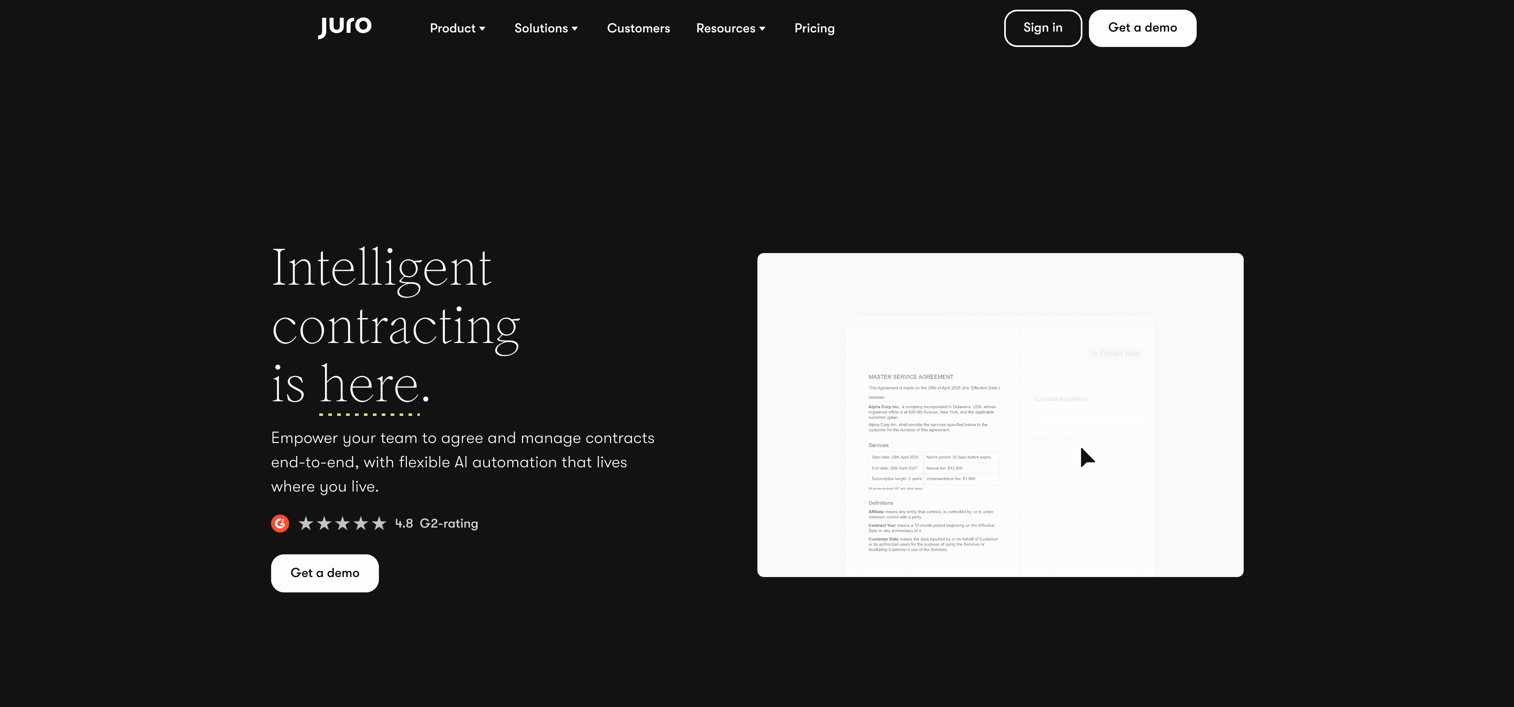
Juro is a browser-based contract management platform built for speed. Commercial teams can draft, negotiate, and sign contracts without ever opening Microsoft Word.
Best for: Sales, HR, and commercial teams at fast-growing companies who want quick contract turnaround.
Key strengths
- Browser-native editor eliminates the Word-to-PDF-to-signature dance
- Self-serve contract creation lets business teams handle routine agreements
- AI contract review flags risks and non-standard terms
- Native e-signature included in all plans
Why pick Juro?
It's particularly strong when your bottleneck is getting contracts through negotiation quickly. The browser-based approach genuinely speeds things up compared to traditional document workflows.
Pricing: Plans start at $59/user/month. Contact Juro for enterprise pricing.
3. DocuSign CLM
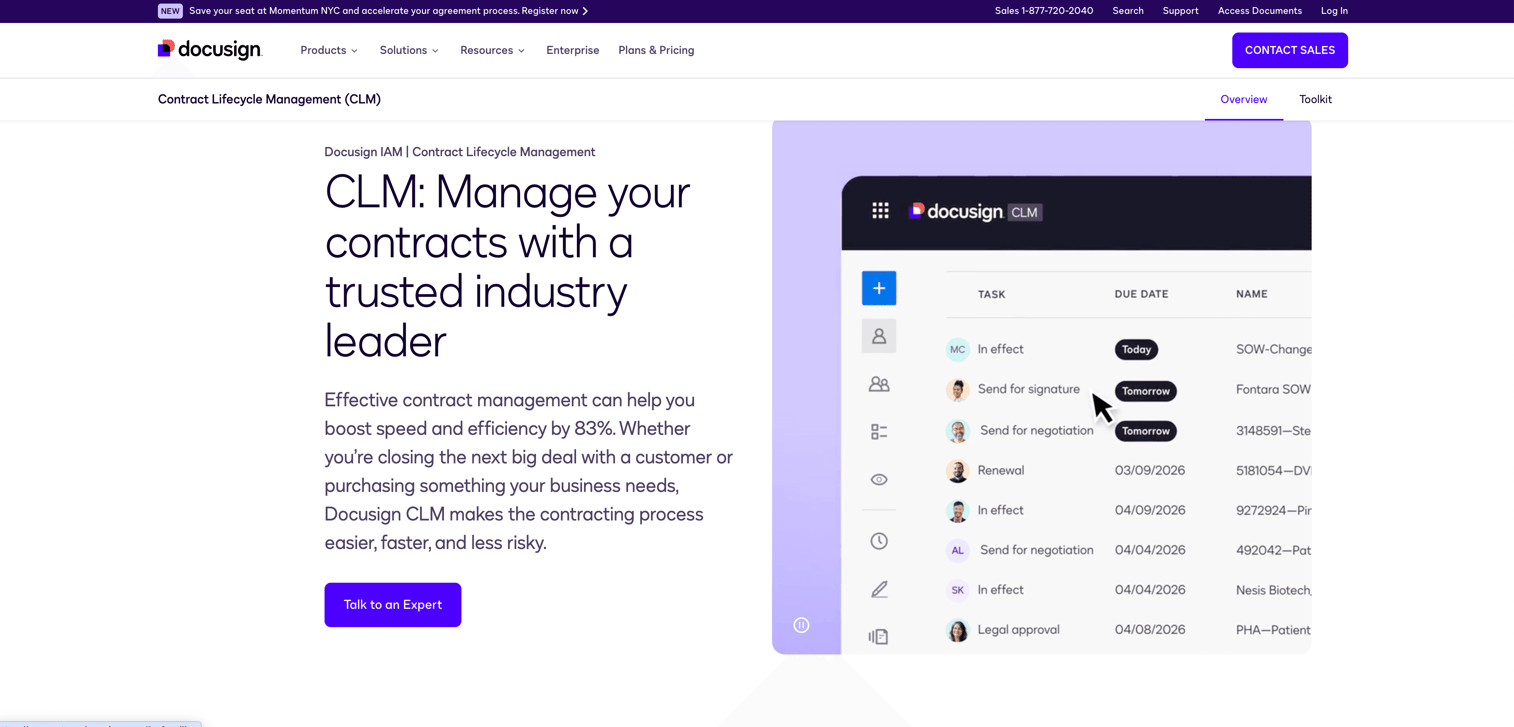
DocuSign CLM extends the familiar DocuSign e-signature experience into full contract lifecycle management. If your organization already relies on DocuSign for signatures, this creates a natural expansion path.
Best for: Organizations already using DocuSign eSignature who want to add pre-signature workflow capabilities.
For teams using DocuSign to manage contract workflows, this short guide walks through how to configure sender notifications to stay on top of every agreement.
Key strengths
- Seamless integration with DocuSign eSignature
- Agreement workflow automation with conditional logic
- AI-powered contract analytics and insights
- Broad third-party integrations including Salesforce and SAP
Why pick DocuSign CLM?
The integration advantage is real if you're already a DocuSign shop. However, if you're starting fresh, evaluate it against purpose-built CLM tools rather than defaulting to the familiar name.
Pricing: Custom enterprise pricing. Contact DocuSign for quotes.
4. PandaDoc
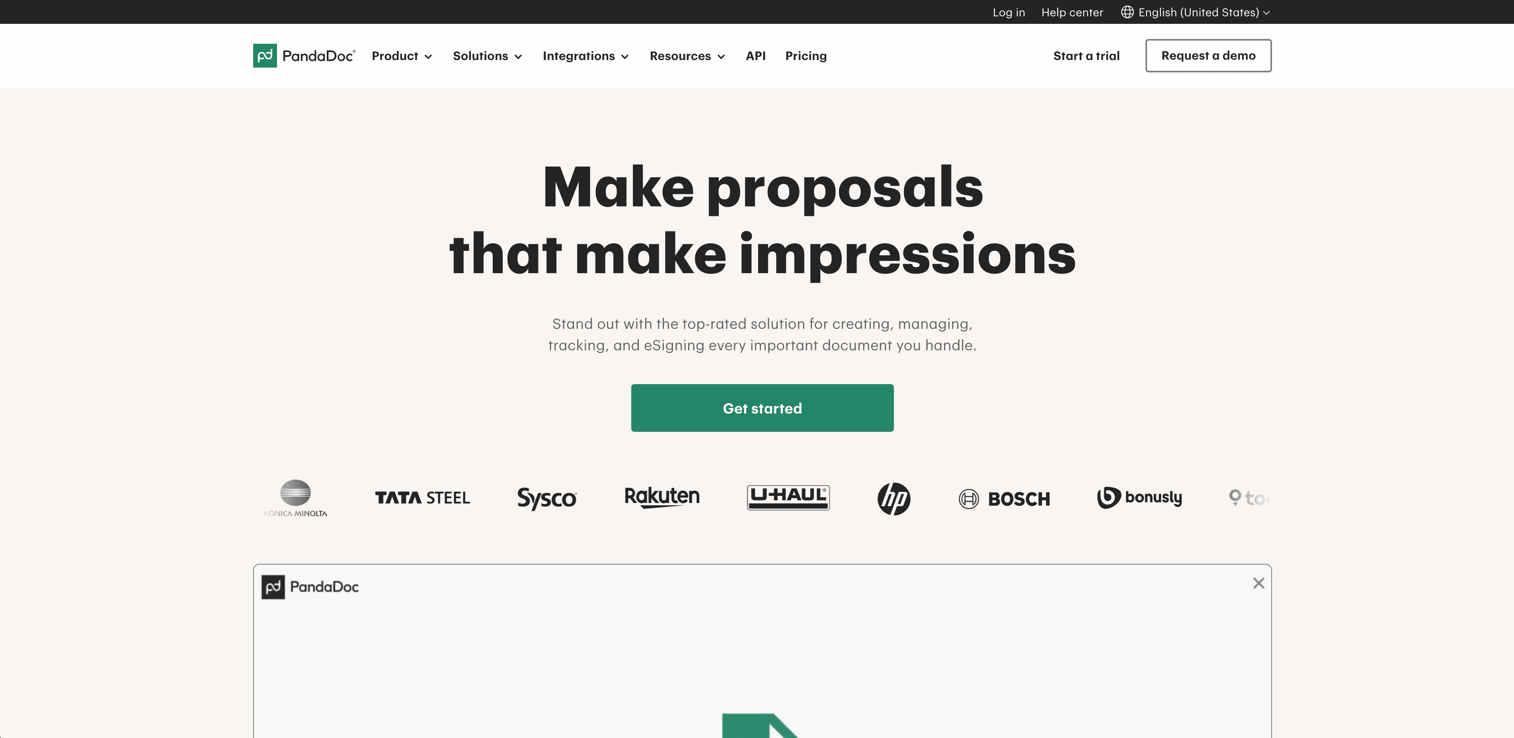
PandaDoc focuses on making document creation and signing easy for small to medium businesses. It's less of a traditional CLM and more of a document automation tool with contract capabilities.
Best for: SMB sales teams who want proposals, quotes, and contracts in one tool without enterprise complexity.
If you’re evaluating PandaDoc for contract management, this quick walkthrough shows how to upload and start managing a contract inside the platform in just a few steps.
Key strengths
- Drag-and-drop document builder with templates
- Built-in e-signatures on all plans
- CRM integrations with Salesforce, HubSpot, and Pipedrive
- Content library for reusable text blocks and assets
Why pick PandaDoc?
It's the right choice when you want document automation broadly, not just contract management specifically. The proposal and quote features add value beyond pure CLM.
Pricing: Free plan available. Paid plans start at $19/user/month.
5. Contract Safe
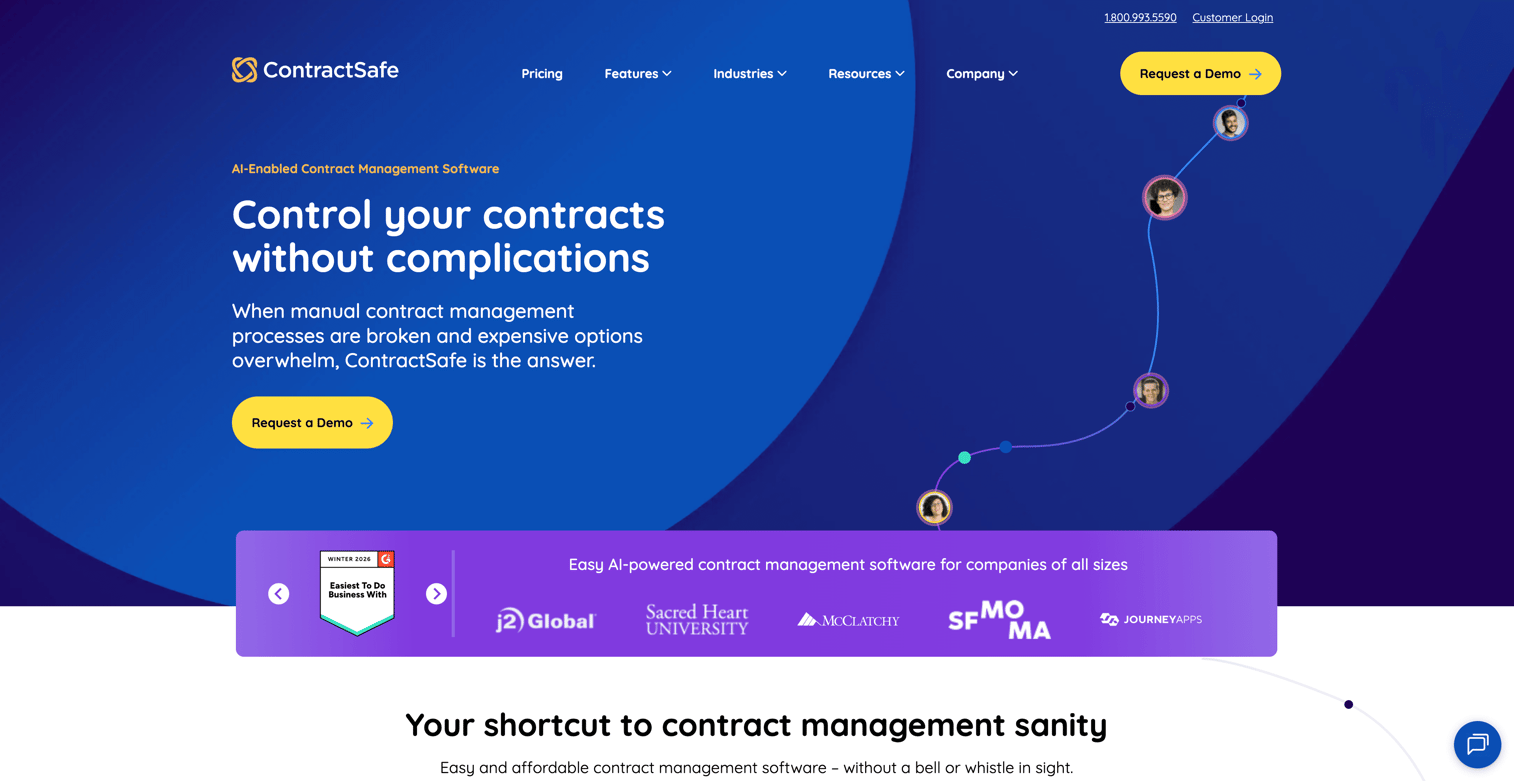
ContractSafe takes a different approach: it focuses on being an excellent contract repository rather than trying to manage the entire lifecycle. If your main problem is finding and tracking existing contracts, this simplicity is a feature.
Best for: Teams that primarily want organized contract storage and renewal tracking without complex workflow automation.
Key strengths
- Fast implementation (often same-day)
- Unlimited users included in all plans
- AI-powered search and data extraction
- Renewal and milestone alerts
Why pick ContractSafe?
Choose it when your contracts are already being created elsewhere and you just want a better place to store and track them. The unlimited user model also makes it cost-effective for larger teams.
Pricing: Plans start at $299/month. Contact ContractSafe for details.
6. Agiloft
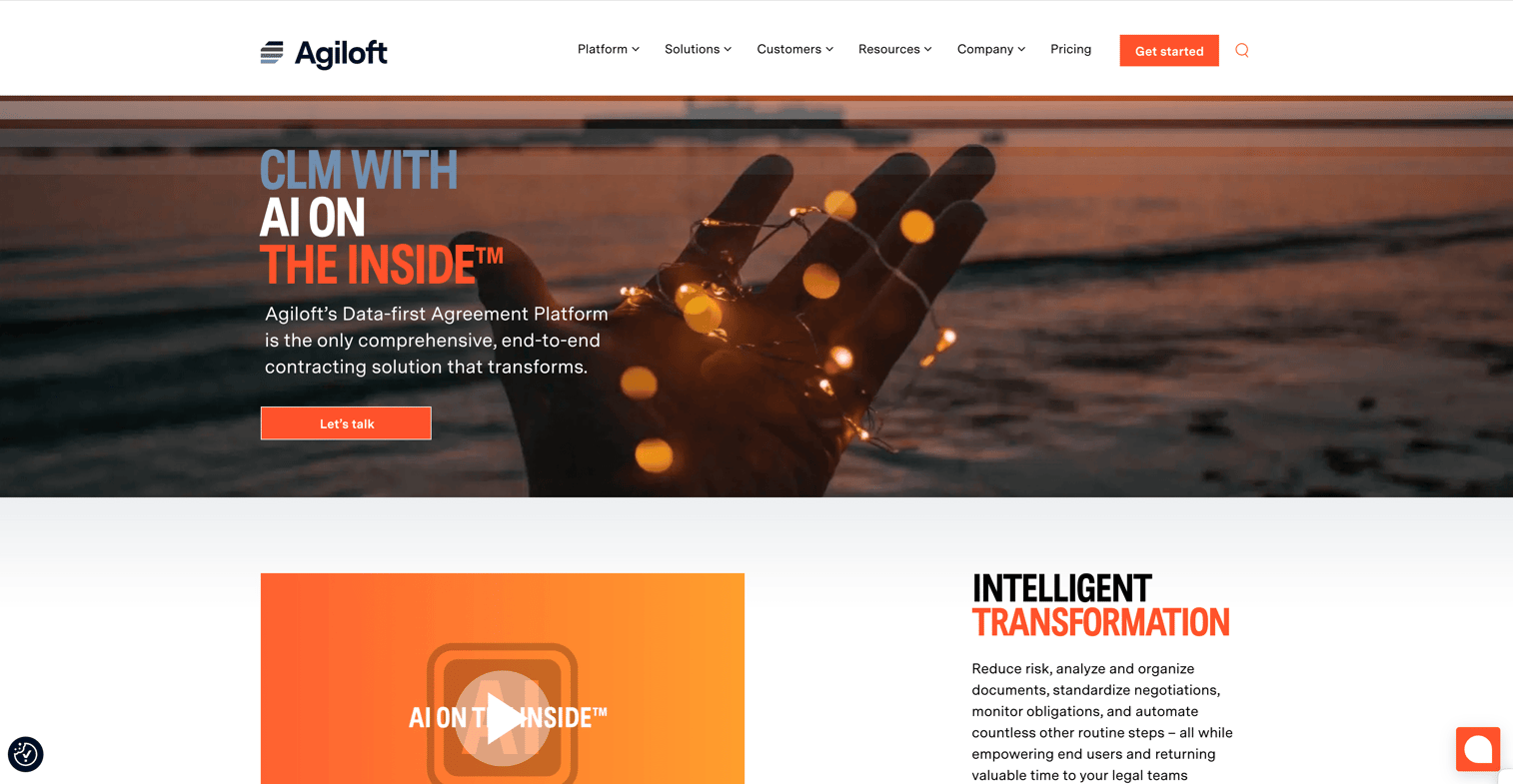
Agiloft is built for organizations with unique requirements that off-the-shelf solutions can't handle. The no-code configuration engine lets you customize nearly everything without developer resources.
Best for: Enterprises with complex, non-standard contract processes that require extensive customization.
Key strengths
- No-code configuration engine for deep customization
- AI clause extraction and risk scoring
- Flexible workflow builder with conditional logic
- On-premise or cloud deployment options
Why pick Agiloft?
It's the right choice when your processes are genuinely unique and you've outgrown tools that force you into their workflow. The customization depth is both its strength and its complexity.
Pricing: Custom enterprise pricing. Contact Agiloft for quotes.
7. Concord
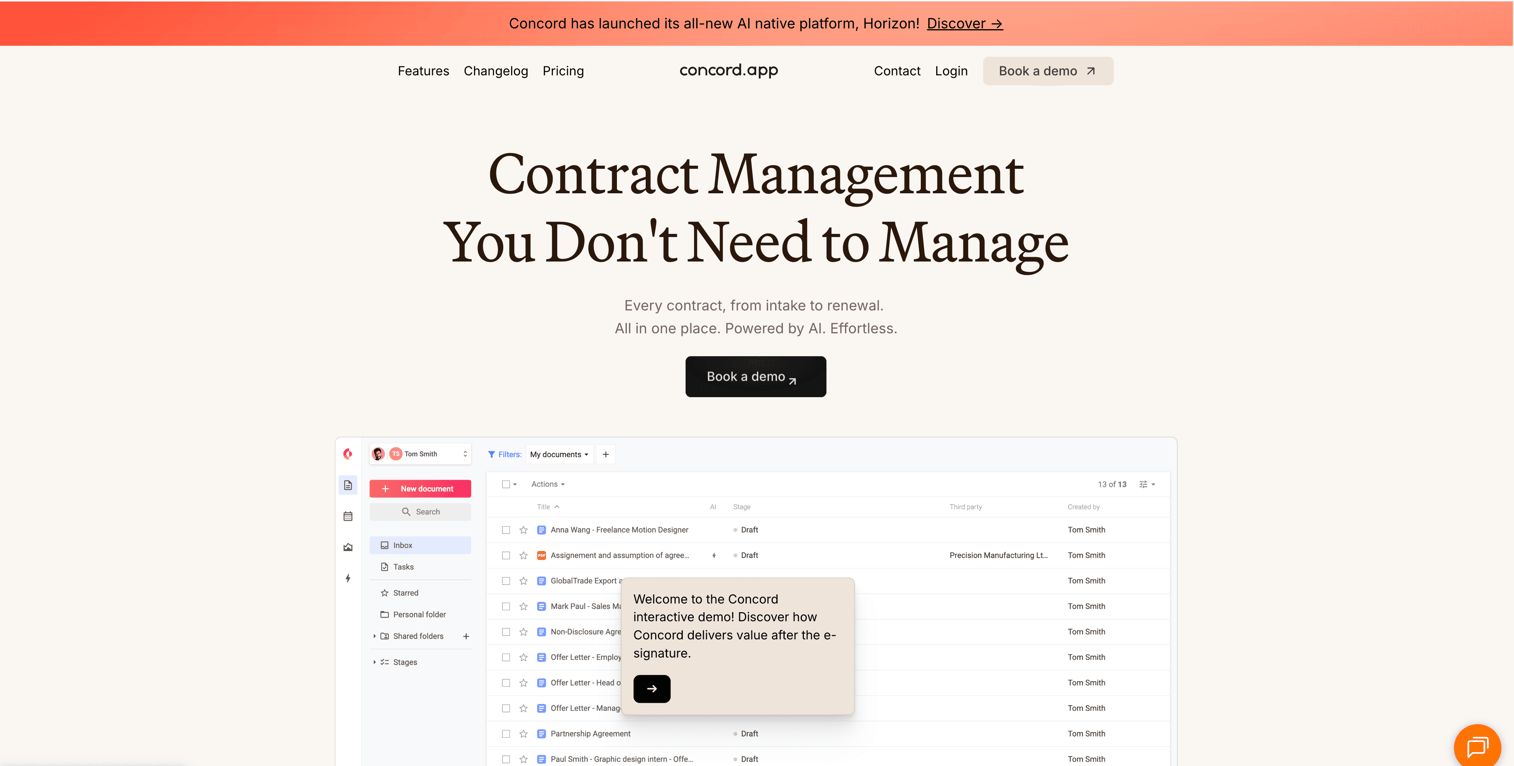
Concord positions itself as straightforward, end-to-end contract lifecycle management with unlimited e-signatures on all plans.
Best for: Growing mid-market teams who want full CLM capabilities without signature volume limits.
Key strengths
- Unlimited e-signatures on all plans
- Real-time collaboration and commenting
- Version history and detailed audit trails
- Google Workspace and Microsoft 365 integrations
Why pick Concord? The unlimited signature model matters if you process high contract volumes. It's also a solid choice for teams who want CLM basics done well without enterprise complexity.
Pricing: Plans start at $17/user/month. Contact Concord for enterprise pricing.
8. ContractWorks
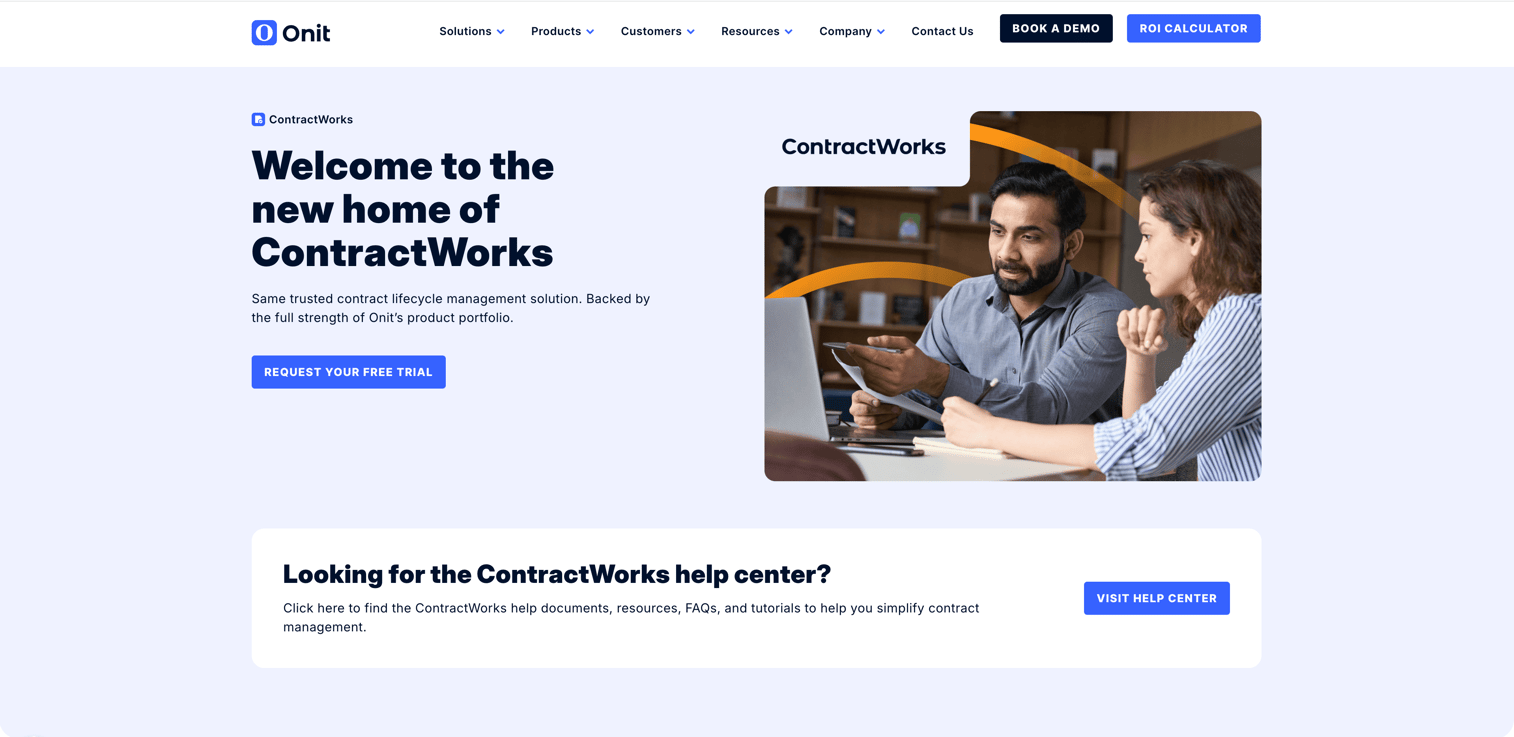
ContractWorks emphasizes security and simplicity for mid-market companies. It's a contract repository with strong compliance features rather than a full workflow automation platform.
Best for: Security-conscious teams who prioritize compliance and straightforward implementation over advanced automation.
Key strengths
- Bank-level security and SOC 2 Type II compliance
- OCR for searching scanned documents
- Custom reporting and dashboards
- Role-based access controls
Why pick ContractWorks?
Choose it when security and compliance are your primary concerns and you don't want complex pre-signature workflows. The implementation is notably faster than enterprise CLM tools.
Pricing: Plans start at $600/month. Contact ContractWorks for details.
9. Conga Contracts
Conga Contracts is part of a broader revenue lifecycle management platform with deep Salesforce integration. If your organization runs on Salesforce, this native connection creates significant workflow advantages.
Best for: Salesforce-centric organizations managing the full quote-to-contract process.
Key strengths
- Native Salesforce integration (not just a connector)
- Contract generation directly from CRM data
- Clause library with intelligent suggestions
- Analytics tied to revenue and pipeline data
Why pick Conga?
The Salesforce integration is genuinely deeper than most competitors. However, if you're not heavily invested in Salesforce, this advantage disappears.
Pricing: Custom pricing. Contact Conga for quotes.
10. Icertis
Icertis is built for global enterprises with complex compliance requirements across multiple jurisdictions. The platform handles supplier contracts, procurement, and regulatory compliance at scale.
Best for: Large enterprises with global operations and complex regulatory requirements.
Key strengths
- Enterprise-scale AI and machine learning capabilities
- Global compliance and regulatory support across jurisdictions
- Supplier and procurement contract management
- Advanced obligation tracking and management
Why pick Icertis?
It's designed for complexity that smaller tools can't handle. If you're managing contracts across dozens of countries with different regulatory requirements, this is the weight class you want.
Pricing: Enterprise custom quotes. Contact Icertis for details.
Who uses contract management software
Contract management solutions serve multiple departments, each with distinct use cases.
Legal teams and legal operations
Legal teams use CLM to manage risk, ensure compliance, govern templates, and handle their workload more efficiently. The AI review and clause library features matter most here.
Sales and revenue operations
Sales teams use CLM to accelerate deal closure by reducing contract bottlenecks. Visibility into pending agreement status helps forecast more accurately and identify stuck deals.
Procurement and vendor management
Procurement teams manage supplier contracts, track vendor agreements, and ensure third-party obligations are met. Renewal tracking prevents unfavorable auto-renewals.
Human resources
HR departments manage employment agreements, NDAs, contractor agreements, and onboarding documents. Template standardization ensures consistency across hiring.
Finance and operations
Finance teams ensure contractual obligations align with financial planning, support audits with detailed records, and gain visibility into committed spend.
How to choose the right contract management system
Define your contract volume and complexity
Start by assessing your current state. How many contracts do you manage annually? Are your workflows simple (sign and store) or complex (multi-department approval chains)?
High volume with simple workflows points toward repository-focused tools like ContractSafe. Complex workflows with multiple stakeholders call for full CLM capabilities.
Map your integration requirements
Consider the tools your team already uses. CRM integration with Salesforce or HubSpot is often critical for sales contracts. ERP integration matters for procurement.
Teams evaluating their broader software stack might also explore product marketing tools to understand how contract management fits into the larger go-to-market motion.
Evaluate automated contract management capabilities
Assess the depth of workflow automation you actually want. Simple routing is different from complex conditional logic that varies by contract type, value, and region.
Don't pay for enterprise workflow capabilities if your process is straightforward.
Assess security and compliance standards
Ensure the vendor meets your security requirements. SOC 2 Type II is standard for business software. GDPR compliance matters for EU data. HIPAA compliance is required for healthcare.
Ask for security documentation during evaluation, not after you've already committed.
Test the software before committing
Always request demos and free trials to test with your actual use cases. Interactive demos let prospects experience software before committing to live sales calls, which can speed up your evaluation process.
Contract management software pricing models
Contract management software typically uses one of three pricing structures:
- Per-user monthly pricing: Common for SMB and mid-market tools. Costs scale with team size, which can become expensive for large organizations.
- Annual enterprise contracts: Larger vendors provide custom quotes based on contract volume, features, and support level.
- Unlimited user models: Some vendors like ContractSafe offer flat-rate pricing regardless of user count, which benefits organizations with many occasional users.
Most enterprise vendors require a demo to get accurate pricing. Always ask for a detailed breakdown and compare total cost of ownership, not just the headline number.
Stop losing deals to contract bottlenecks
The right contract management software eliminates administrative delays, reduces legal and financial risk, and gives your organization clear visibility into contractual obligations. Focus on your team's specific workflows and critical integration requirements to find the right fit. For teams also looking to improve how they showcase products during the sales process, Guideflow helps you create interactive product demos that buyers can explore before contract negotiations even begin.
Start your journey with Guideflow today!
FAQs about contract management software
Implementation ranges from same-day for simple repository tools like ContractSafe to several months for enterprise CLM platforms requiring complex integrations and data migration. Plan for longer timelines if you're migrating thousands of existing contracts or integrating with multiple systems.
Yes, most platforms support bulk upload of existing PDFs and documents. Many use AI extraction to automatically pull key data like parties, dates, and values from legacy contracts. However, data quality varies based on document format and the AI's capabilities.
Contract tracking software primarily focuses on post-signature storage and renewal alerts. CLM (contract lifecycle management) covers the entire lifecycle from creation and negotiation through signature and renewal. Choose based on where your biggest pain points actually are.
Yes, many solutions are designed specifically for small businesses with SMB-friendly pricing and features. PandaDoc and ContractSafe are good examples. The key is avoiding enterprise tools that require dedicated administrators to maintain.
SOC 2 Type II certification is the baseline standard for business software security. Depending on your industry, you may also want GDPR compliance for EU data handling or HIPAA compliance for healthcare-related agreements. Always verify certifications directly with the vendor.
AI contract review scans contract language against predefined rules and legal benchmarks to flag non-standard clauses, missing terms, or unfavorable conditions. The AI compares your contract against similar agreements to identify outliers that warrant human review.
Pricing varies widely from $17/user/month for mid-market tools to six-figure annual contracts for enterprise platforms. The main cost drivers are user count, contract volume, feature depth, and support level.
Yes, most major CLM platforms offer native or API-based integrations with popular CRMs. Conga has particularly deep Salesforce integration, while tools like Juro and PandaDoc connect well with HubSpot. Verify the specific integration depth during your evaluation.