A feeder trips at 2am. Twenty years ago, the first sign was a phone call from an angry customer. Today, your control room should already know, already be rerouting, already be dispatching a crew before the complaints start.
That gap between "we found out from a customer" and "the system already handled it" is what modern grid management software closes. Utilities are adding distributed solar, EV charging load, and battery storage faster than legacy SCADA and paper switching plans can track. The global grid management software market reached $6.8B in 2025 and is forecast to hit $14.2B by 2034, according to Dataintelo (2025). That growth is not hype. It reflects real operational pressure: variability you cannot see, outages you cannot predict, and data trapped in systems that do not talk to each other.
The tool you pick determines whether your operators react to the grid or run ahead of it.
What's inside
This guide compares eight grid management platforms for utility and utility-adjacent operations teams. We picked vendors based on four practical criteria, not marketing claims.
- Real-time operations: control-room visibility, SCADA and ADMS depth, network operations
- DER and renewable support: distributed energy resource integration, forecasting, market coordination
- Outage recovery: detection, switching, and disruption management speed
- Integrations and security: OT/IT connectivity, historian and asset-system fit, cyber resilience
The list spans platforms and suites used across generation, transmission, distribution, and network operations. The lens is buyer evaluation, not vendor positioning.
TL;DR
- Best for full utility orchestration: GE Vernova GridOS, an end-to-end grid orchestration software platform
- Best for reliability and performance: DNV, strong on asset and compliance readiness
- Best for broad digital grid management: AspenTech, deep modular coverage across the operations stack
- Best for control-room modernization: Schneider Electric, distribution operations depth
- Best for network and operations depth: Oracle, enterprise-connected network management
- Best for enterprise infrastructure alignment: IBM, cloud and analytics scale
- Best for connected grid and OT integration: Cisco, the network layer beneath grid operations
- Best for smart grid and utility breadth: Toshiba, smart grid and microgrid coordination
If you run distribution and want one orchestration narrative, start with GE Vernova. If reliability and audit readiness lead your decision, look at DNV first.
What is grid management software?
Grid management software is the operational technology layer electric utilities use to monitor, optimize, and coordinate the grid across generation, transmission, distribution, distributed energy resources, and outage response. Where SCADA reads the grid and legacy tools schedule work, a modern grid management platform ties real-time telemetry, analytics, and automated control into one operating picture.
Utility grid management software matters now because the grid changed shape. Rooftop solar, storage, and EV load turned a one-way system into a two-way one. WorldMetrics (2026) reports that 78% of utilities worldwide had deployed at least one smart grid software solution as of 2023. That adoption tracks a simple reality: you cannot run a bidirectional grid on tools built for a one-directional one.
Core capabilities to expect from energy grid management software:
- Real-time data visibility: live telemetry from field devices into the control room
- Grid analytics and forecasting: load, generation, and DER prediction
- DER and renewable integration: DER management for solar, storage, and flexible load
- Outage and disruption management: detection, switching, and crew coordination
- Control-room automation: ADMS and network operations workflows
- OT/IT and historian integrations: connection to asset, market, and data-fabric systems
- Security and resilience controls: cyber posture across operational technology
When to use grid management software
Modernize legacy grid operations
Fragmented systems stop scaling when visibility and coordination break down. If operators toggle between six screens to understand one feeder, the tooling is the bottleneck. A unified platform replaces stitched-together consoles with one operating picture, so a switching decision does not require three logins and a phone call.
Integrate DERs and renewables
Distributed solar, storage, and EV load add variability that legacy planning never assumed. DER management software forecasts output, coordinates flexible assets, and keeps voltage stable when a cloud passes over a solar-heavy feeder. If your interconnection queue is growing, this is usually the first real driver of adoption.
Improve outage recovery
Faster detection, automated switching, and coordinated crew dispatch shrink the window between fault and restoration. Strong outage management turns a multi-hour event into a self-healing reroute for many customers. Every minute of restoration you cut shows up directly in reliability metrics like SAIDI and SAIFI.
Coordinate enterprise data flows
Grid software rarely lives alone. It connects historians, asset management systems, market platforms, and operational data fabrics so one event updates every system. When network operations data flows cleanly into planning and finance, decisions stop waiting on manual exports.
Comparison table
Verify pricing and ratings against current vendor and review sources before you commit. Most vendors here sell through enterprise sales, so published numbers reflect one product line rather than a whole utility contract.
| # | Product | Best for | Key differentiator | Pricing | G2 rating |
|---|---|---|---|---|---|
| 1 | AspenTech | Broad modular utility operations | Digital Grid Management suite across EMS, ADMS, DERMS, historian | Custom, contact sales | 4.5/5 |
| 2 | DNV | Reliability and compliance support | Asset performance plus flexible deployment | ISRS from GBP 1,440/yr | 3.5/5 |
| 3 | GE Vernova | End-to-end grid orchestration | GridOS orchestration and grid data fabric | Custom, contact sales | 4.3/5 |
| 4 | Toshiba | Smart grid and microgrid coordination | Smart grid and microgrid operations breadth | Custom, contact sales | Not listed |
| 5 | Schneider Electric | Control-room modernization | One Digital Grid Platform for distribution | Custom, quote-based | Not listed |
| 6 | Cisco | Connected grid and OT/IT integration | Networked foundation for grid data | From $14.50/user/mo | 4.3/5 |
| 7 | Oracle | Network operations depth | Network Management System with enterprise fit | OCI example from $54/mo | 4.1/5 |
| 8 | IBM | Enterprise infrastructure alignment | Cloud platform and advanced analytics | Watson Discovery from $500/mo | 4.3/5 |
Best 8 grid management software platforms compared
1. AspenTech
AspenTech sits at the industrial-software end of grid management, with a Digital Grid Management suite that spans generation, transmission, distribution, and pipeline operations. Named components cover EMS, ADMS, DERMS, historian, microgrid, and network model management. That breadth is the point: utilities that want one vendor across several grid functions get an operations technology layer rather than a single-point tool.
Best for: Utility teams that want a modular platform across several grid functions in one vendor relationship.
Key features
- Domain coverage across generation, transmission, distribution
- EMS, ADMS, and DERMS modules in one suite
- Historian and network model management depth
- Microgrid and DER coordination options
- Control-room modernization framing
Why choose AspenTech: Pick it when you want operational depth and breadth from a single relationship instead of assembling point tools. It fits utilities modernizing several connected functions at once rather than solving one narrow gap.
AspenTech pricing: AspenTech sells through its sales team and does not display figures, so expect a custom quote scoped to the modules and scale you need. Its site routes evaluators to a contact form for a trial or conversation.
AspenTech holds a 4.5/5 rating on G2.
2. DNV

DNV approaches the grid from reliability and assurance rather than pure control-room operations. Its software spans asset integrity, risk, and renewables, backed by advisory, certification, and verification services. For utilities where reliability metrics and audit readiness lead the decision, that combination of software plus assurance is the draw.
Best for: Utilities prioritizing reliability, compliance support, and asset visibility alongside audit readiness.
Key features
- Reliability and asset performance focus
- Asset integrity and risk management workflows
- Planning and analysis support
- Cloud and on-prem deployment options
- Certification and verification services
Why choose DNV: Choose DNV when maintenance and planning have to line up with regulatory pressure, and when you want a vendor that pairs software with assurance expertise. It fits reliability-led teams more than teams chasing real-time orchestration first.
DNV pricing: DNV publishes clear pricing for its ISRS licensing, which starts at GBP 1,440 per year for organizations up to 200 employees and scales by employee band up to GBP 17,600 for 10,000 employees. A 30-day free trial is available for its Solar Resource Compass tool. Broader software offerings are quote-based.
DNV holds a 3.5/5 rating on G2.
3. GE Vernova
GE Vernova builds its grid story around GridOS, an orchestration platform spanning network operations, network lifecycle, DERMS, renewables management, and visual intelligence. The pitch centers on fast disruption recovery and broad orchestration across modern grid operations, all sitting on a grid data fabric architecture. If you want one platform coordinating several operational domains, this is the clearest example on the list.
Best for: Utilities looking for end-to-end orchestration across modern grid operations rather than a narrow point solution.
Key features
- End-to-end GridOS orchestration platform
- DER and renewables management
- Outage and disruption recovery
- Network lifecycle and operations coverage
- Grid data fabric architecture
Why choose GE Vernova: Choose it when you are modernizing across multiple operational domains at once and want a single orchestration narrative to align teams. It fits distribution utilities that need DER, outage, and network operations working from shared data.
GE Vernova pricing: GE Vernova sells its grid software through enterprise sales rather than a published price list, so pricing arrives as a scoped proposal. Reach the team through its site for a tailored quote.
GE Vernova holds a 4.3/5 rating on G2.
4. Toshiba

Toshiba brings a broad smart grid and microgrid presence to the category, grounded in grid automation and distributed operations. Its energy and digital infrastructure lines tie DER integration to smart grid operations rather than a single control-room product. For utilities where microgrid and distributed coordination sit at the center of a modernization plan, Toshiba's umbrella is worth a look.
Best for: Utilities that need smart grid and microgrid coordination as part of a wider modernization effort.
Key features
- Smart grid operations breadth
- Microgrid support
- Grid automation focus
- DER coordination relevance
- Utility infrastructure positioning
Why choose Toshiba: Choose Toshiba when your evaluation starts with modernization and coordination, especially where microgrid and distributed operations drive the plan. It fits buyers who want a broad smart grid umbrella backed by industrial hardware depth.
Toshiba pricing: Toshiba handles its energy and infrastructure offerings through direct sales and quotes rather than a public price list, so pricing comes from a scoped conversation with its team.
Toshiba does not have a verified G2 rating for a specific grid product.
5. Schneider Electric
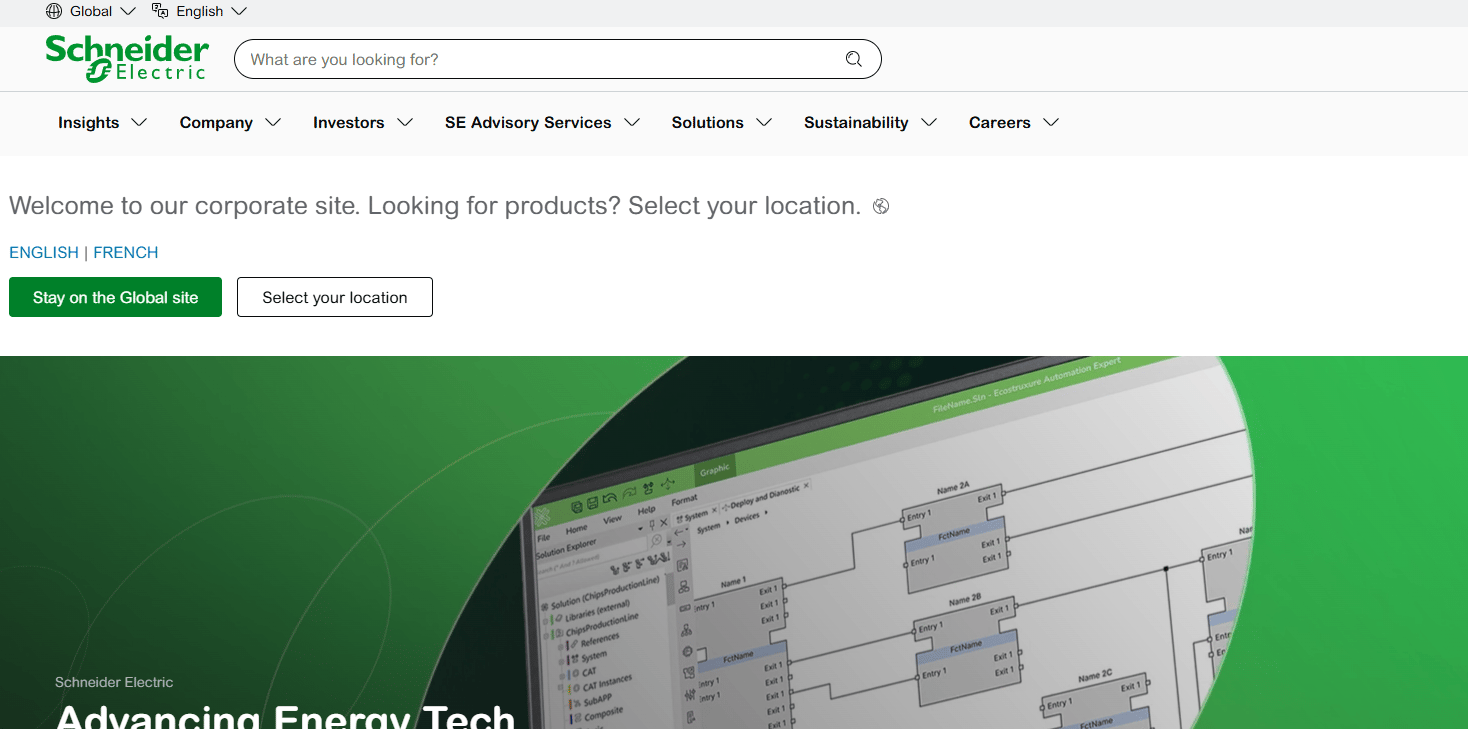
Schneider Electric anchors its grid story on the One Digital Grid Platform, aimed at distribution operations and modernization. Its wider portfolio spans energy and industrial automation, with EcoStruxure and connected products feeding grid workflows. The draw is a recognizable enterprise vendor with distribution depth and broad system integration across utility operations.
Best for: Utilities modernizing distribution operations and grid coordination with a recognizable enterprise vendor.
Key features
- One Digital Grid Platform for distribution
- Distribution operations depth
- Modernization and automation support
- Integration across utility systems
- EcoStruxure connected products
Why choose Schneider Electric: Choose it when you want an established vendor with distribution-operations depth and broad transformation messaging. It fits teams focused on operational coordination and modernization outcomes across a large installed base.
Schneider Electric pricing: Schneider Electric routes grid platform buyers through quotes and distributor channels rather than a public SaaS price page, so expect a scoped proposal based on your operations.
Schneider Electric does not have a verified G2 rating for its grid platform.
6. Cisco
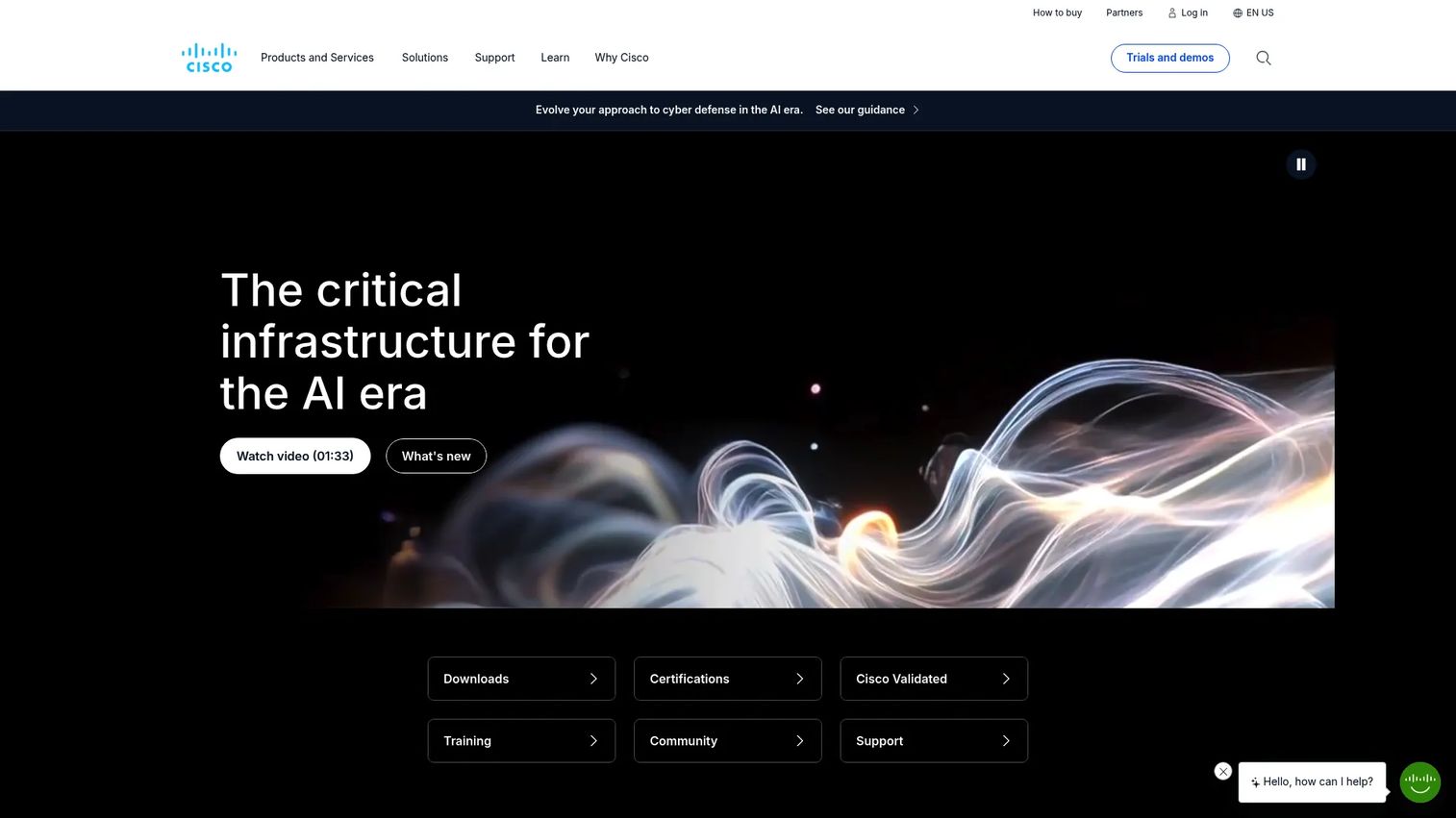
Cisco plays a different role here: the connectivity layer beneath grid operations software. Its connected grid networking moves OT and IT data reliably and securely across utility environments, from substations to the control room. Grid visibility depends on data that arrives intact, and that is the foundation Cisco supplies.
Best for: Utilities needing a connected infrastructure and OT/IT integration layer beneath their operations software.
Key features
- Connected grid networking infrastructure
- OT/IT integration alignment
- Network reliability focus
- Utility communications relevance
- Secure data connectivity foundation
Why choose Cisco: Choose Cisco when grid management depends on dependable, secure connectivity and you are modernizing the data and communications layer under your operations stack. It complements grid orchestration software rather than replacing it.
Cisco pricing: Cisco publishes a starting hybrid-work package at $14.50 per user per month, while its broader enterprise and networking lines run quote-based through partners. A free trial is available on its collaboration offerings.
Cisco holds a 4.3/5 rating on G2.
7. Oracle
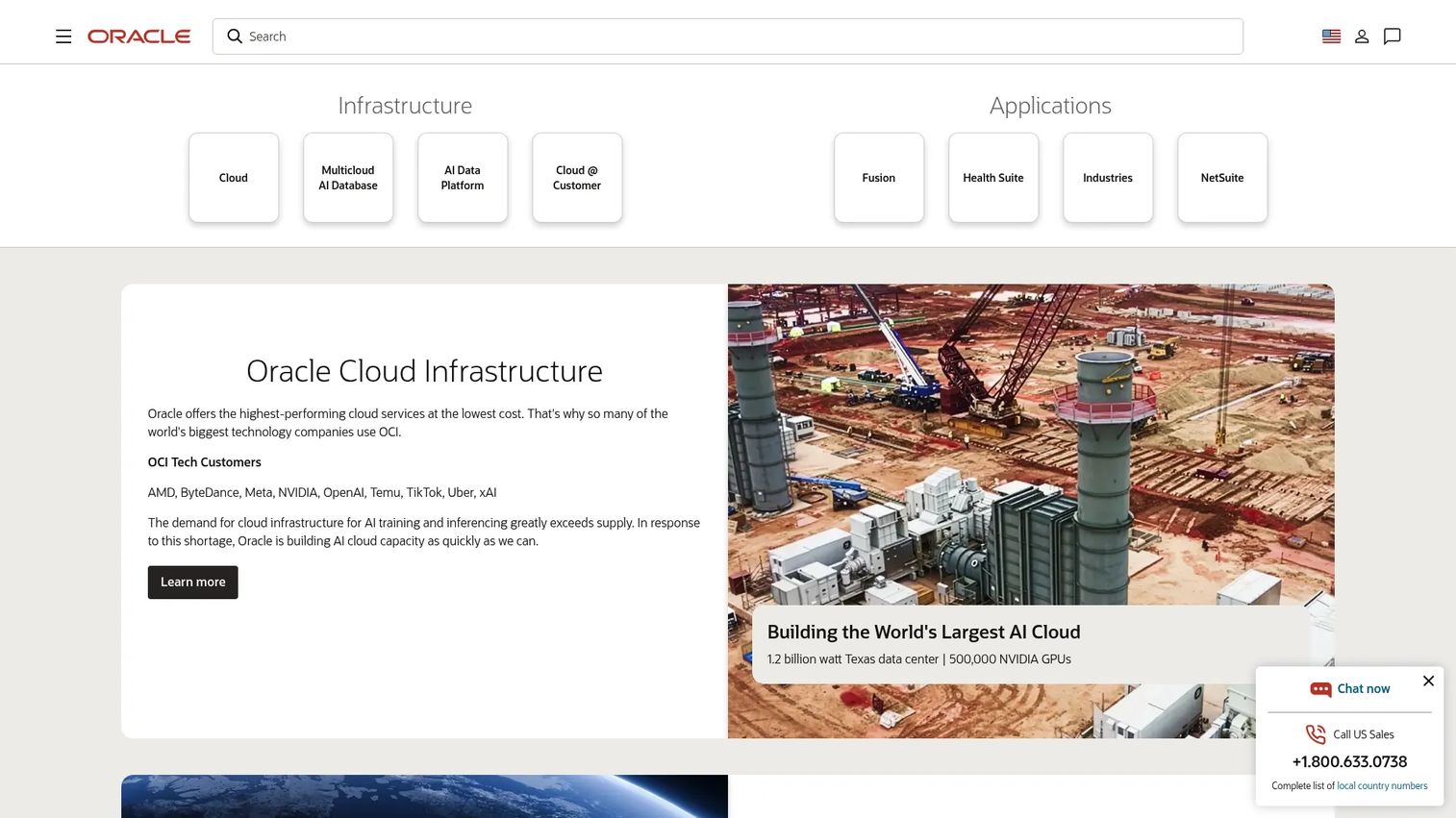
Oracle brings its Utilities Network Management System to grid operations, with strength in network monitoring, distribution visibility, and enterprise system fit. For utilities already running Oracle systems, the appeal is alignment: network operations data connecting to the broader enterprise stack rather than living in a silo. It usually shows up as part of a wider enterprise software decision.
Best for: Utilities that want network management tied tightly to enterprise systems and data.
Key features
- Network Management System depth
- Distribution operations visibility
- Enterprise integration fit
- Distribution support
- Data and system alignment
Why choose Oracle: Choose Oracle when you already run Oracle infrastructure or want network operations aligned across enterprise applications. It fits buyers evaluating grid operations inside a broader enterprise software strategy.
Oracle pricing: Oracle does not publish one universal subscription price for its utilities software; its cloud pricing page shows an OCI example at $54 per month and offers a Free Cloud Tier sign-up. Utilities offerings are scoped through sales.
Oracle holds a 4.1/5 rating on G2.
8. IBM
IBM enters the grid landscape through cloud infrastructure and advanced analytics rather than a purpose-built control room. Its strength is systems integration and enterprise-scale data infrastructure, connecting grid operations to larger analytics and business workflows. For utilities with a heavy integration agenda, IBM belongs in evaluations where grid data must reach beyond operations.
Best for: Utilities that want analytics and systems integration at enterprise scale.
Key features
- Cloud-based platform orientation
- Advanced analytics and AI
- Systems integration strength
- Business analytics support
- Enterprise-scale infrastructure
Why choose IBM: Choose IBM when grid operations need to connect with larger analytics and enterprise workflows, and when a strong integration agenda drives the decision. It fits utilities with broad enterprise data needs more than teams wanting a single control-room product.
IBM pricing: IBM prices vary by product line. As one public example, Watson Discovery starts at $500 per month for its Enterprise plan and $5,000 per month for Premium, with a 30-day no-cost trial. Grid-specific work is scoped through sales.
IBM holds a 4.3/5 rating on G2.
Considerations before you buy
Match the platform to your operational problem
Shortlist by the problem, not the feature list. Outage recovery, DER integration, and control-room modernization pull toward different vendors. If your pain is a growing interconnection queue, weight DER management heavily; if it is restoration time, weight outage management and automated switching.
Check integrations with your existing stack
Grid software only works if it talks to your historians, asset management, and market systems. Confirm supported protocols, historian compatibility, and OT/IT data flows before signing. A platform that cannot read your existing telemetry becomes another silo, not a fix.
Confirm the deployment model
Cloud, on-prem, and hybrid each carry different security and latency implications for real-time operations. Some utilities cannot move certain workloads off-prem for regulatory reasons. Ask each vendor which deployment models they support and what a hybrid path looks like.
Evaluate security and cyber resilience
Operational technology is a target, and grid software sits on critical infrastructure. Ask about segmentation, access controls, audit logging, and how the vendor handles OT security specifically. Cyber resilience is not a bolt-on here; it is a core requirement.
Verify pricing and support scope
Most vendors quote custom enterprise contracts. Get clarity on implementation cost, ongoing support tiers, and what the number actually covers before comparing. A low license figure can hide a large implementation and integration bill.
Conclusion
The right grid software platform follows from the operational problem you are solving, not from a feature checklist.
- Choose AspenTech for broad modular utility operations across the stack
- Choose GE Vernova for orchestration and fast outage recovery
- Choose DNV for reliability and compliance support
- Choose Oracle or IBM when enterprise systems and integration shape the decision
- Choose Schneider Electric, Cisco, or Toshiba when distribution modernization, connectivity, or smart grid breadth is the core issue
Shortlist by operational problem first. Then verify integrations against your historian and asset systems, confirm the deployment model your regulators allow, pressure-test security posture, and get pricing in writing. Most of these vendors sell through enterprise sales, so budget time for scoping conversations before you can compare real numbers side by side.
FAQs
It gives utilities one operating picture of the grid, from generation and transmission through distribution, DERs, and outages. Operators use it to monitor real-time telemetry, forecast load and generation, automate switching, and coordinate crews. The goal is running ahead of grid events instead of reacting to customer complaints.
SCADA reads and controls field devices, and ADMS handles distribution operations like switching and fault management. Grid management software is the broader layer that can include ADMS while adding DER management, analytics, orchestration, and enterprise data flows. Think of SCADA and ADMS as components inside a wider electric grid software platform.
Prioritize real-time visibility, DER and renewable integration, outage management, and OT/IT integrations with your historians and asset systems. Security and cyber resilience are non-negotiable on critical infrastructure. The right weighting depends on whether your primary driver is outage recovery, DER growth, or control-room modernization.
For DER management, test forecasting accuracy, flexible-load coordination, and how the platform handles two-way power flow on solar-heavy feeders. For outage management, look at detection speed, automated switching, self-healing reroute logic, and crew dispatch coordination. Ask vendors to walk through a real fault scenario end to end.
At minimum, historians, asset and enterprise asset management systems, market platforms, and operational data fabrics. Confirm supported industrial protocols and how OT data moves securely into IT systems. Clean integration is what keeps a grid orchestration software platform from becoming yet another isolated console.
Track reliability metrics like SAIDI and SAIFI for outage improvement, plus restoration time, DER hosting capacity, and operator efficiency. Reduced truck rolls, faster switching, and fewer manual data exports all show up in operating cost. Set a baseline before deployment so you can attribute the change.
Look for network segmentation between OT and IT, strong access controls, full audit logging, and vendor practices built specifically for operational technology. Grid software runs on critical infrastructure, so cyber resilience must be designed in, not added later. Ask how the vendor handles vulnerability response and OT-specific threats.
It depends on your latency needs, regulatory constraints, and existing infrastructure. Real-time control workloads and regulated data often stay on-prem, while analytics and planning increasingly move to cloud. Many utilities land on a hybrid model, so ask each vendor how their deployment options and hybrid paths actually work.