Your managers keep saying they need headcount. Your board keeps asking why attrition is up. Meanwhile, employees who could fill those gaps are sitting two floors away, invisible to both conversations.
According to SHRM, 35% of organizations used an internal talent marketplace in 2025, up from 25% the year before. The jump reflects a simple pressure: External hiring is slow, expensive, and increasingly unreliable at a stage where every bad senior hire costs three to six months of momentum.
Talent marketplace software changes the equation. Instead of defaulting to a new req every time a capability gap appears, leaders get visibility into what their existing workforce can do, then connect those people to roles, projects, gigs, and career paths inside the company. The result is faster deployment, better retention, and workforce planning that holds up in a board meeting.
This guide covers 20 platforms and consulting services, explains the category clearly, and gives you the buying criteria to forward directly to your People leader.
What's inside
This guide is for founders, executives, and People Ops leaders evaluating talent marketplace platforms in 2026. Tools were selected from recognized market listings and vetted for fit across internal mobility use cases.
- 20 platforms and services compared, from enterprise suites to specialist tools
- Evaluation criteria: skills intelligence, opportunity matching, career pathing, integrations, analytics, and implementation fit
- Verified pricing and G2 ratings drawn from live vendor and review pages
- Founder-relevant framing throughout: Retention, internal fill rate, workforce visibility, and scale
TL;DR
- Best overall enterprise talent marketplace: Gloat, for large organizations building AI-driven internal mobility and skills-based workforce systems
- Best for career pathing and retention: Fuel50, for companies where employees need to see a clear growth path inside the business
- Best for skills intelligence at scale: Eightfold Talent Intelligence Platform, for organizations building a broader talent intelligence layer across hiring and mobility
- Best for Workday-centered teams: Workday Talent Management, for enterprises already standardized on Workday
- Best for SAP-centered enterprises: SAP SuccessFactors Career and Talent Development, the only option on this list with a publicly listed price ($2.94/user/month)
- Best for advisory-led implementation: Mercer talent marketplace consulting, for leaders who need operating model clarity before platform rollout
What is talent marketplace software?
Talent marketplace software helps organizations match employees to internal jobs, projects, gigs, mentors, learning paths, and career opportunities using skills, interests, availability, and business demand.
Unlike a traditional HRIS, which stores job titles and org chart positions, a talent marketplace treats skills and aspirations as live data. It creates a dynamic supply-and-demand engine inside the company: Employees surface what they can do and want to do, and the platform routes them toward work, development, and career moves that match.
Core capabilities of talent marketplace platforms
- Skills profiles and inferred skills
- Internal role matching
- Project and gig marketplaces
- Career pathing and next-role recommendations
- Mentoring and coaching connections
- Learning suggestions tied to career goals
- Workforce planning analytics
- Manager and HR dashboards
- HRIS and ATS integrations
- Governance, permissions, and access controls
Talent marketplace vs. internal mobility platform
An internal mobility platform typically focuses on internal job postings, redeployment, and career moves between roles. A talent marketplace is broader: It includes projects, gigs, stretch assignments, mentoring, learning, and workforce intelligence alongside internal jobs.
The distinction matters when you are scoping a purchase. If the immediate problem is internal hiring velocity, a narrower mobility tool may cover it. If the problem is workforce capacity visibility and employee development, a full marketplace earns its cost.
Talent marketplace vs. skills intelligence platform
Skills intelligence is the data layer; the marketplace is the activation layer. A skills intelligence platform maps what people can actually do, including skills adjacencies and inferred capabilities beyond job titles. A talent marketplace uses that data to route people toward opportunities, learning, and career development.
Some platforms do both. Others partner or integrate across the two layers. When evaluating vendors, ask which layer they own and what they depend on a third party to provide.
When to use talent marketplace platforms
Reduce external hiring pressure
Before opening another req, check whether the capability already exists inside the company. A talent marketplace gives HR and business leaders an inventory of skills, availability, and willingness to take on new work. Internal fill rate, redeployment, and capacity visibility become measurable rather than intuitive.
Build career paths employees can see
Retention often breaks when employees cannot see where they are going. Promotions feel opaque, lateral moves feel invisible, and growth conversations stay abstract. A marketplace makes roles, projects, mentors, and learning paths visible, so employees can connect daily work to a longer trajectory inside the company.
Turn skills data into workforce planning
Static job titles tell you who someone is, not what they can do. A talent marketplace pulls skills data into workforce planning so HR and executives can model gaps, identify redeployment options, and show the board a skills inventory rather than a headcount spreadsheet.
Talent marketplace platforms comparison
The table below gives you a starting point for vendor shortlisting, not a procurement decision. Verify pricing and G2 ratings on each vendor's live pages before entering any commercial conversation. Pricing for most enterprise platforms is quote-based; the table reflects that where applicable.
| # | Product | Best for | Key differentiator | Pricing | G2 rating |
|---|---|---|---|---|---|
| 1 | Gloat | Enterprise internal talent marketplaces | Agentic AI matching across roles, projects, gigs, mentoring, and skills | Contact sales | 4.4/5 |
| 2 | Fuel50 | Career pathing and employee retention | Modular skills intelligence and talent marketplace suite | Contact sales | 4.4/5 |
| 3 | 365Talents | Skills intelligence and internal mobility | AI skills mapping with 100+ HRIS integrations | Contact sales | 4.8/5 |
| 4 | Gigged.AI | Project-based and on-demand talent | Internal gig matching plus vetted on-demand specialist network | Contact sales | 4.8/5 |
| 5 | Workday Talent Management | Workday-centered enterprises | Talent management connected to Workday core HCM | Contact sales | 4.4/5 |
| 6 | Beamery | Talent lifecycle and workforce planning | Talent CRM, skills intelligence, and workforce planning combined | Contact sales | 4.1/5 |
| 7 | PeopleFluent Talent Mobility | Regulated enterprise talent mobility | Talent mobility, succession, and development workflows | Contact sales | 4.0/5 |
| 8 | ProFinda | Skills-based matching for professional services | AI-powered resource allocation and opportunity marketplace | Contact sales | 5.0/5 |
| 9 | Radancy Talent Acquisition Cloud | Talent acquisition with internal mobility | AI-powered candidate and employee experience across talent journeys | Contact sales | 4.7/5 |
| 10 | SAP SuccessFactors Career and Talent Development | SAP-centered enterprises | Career development inside SAP SuccessFactors; only listed price at $2.94/user/month | $2.94/user/month | N/A (Capterra: 4.0/5 for suite) |
| 11 | Cornerstone Workforce AI | Learning-led workforce agility | People Graph connecting learning, skills, and talent development | Contact sales | 4.0/5 |
| 12 | DevSkiller TalentBoost | Technical skills visibility | Skills map with 5,000+ predefined IT and digital skills | From $1/employee/month | 4.6/5 |
| 13 | Eightfold Talent Intelligence Platform | Enterprise skills intelligence | AI talent intelligence across hiring, mobility, and workforce planning | Contact sales | 4.2/5 |
| 14 | Empath | Human-centered career development | Employee growth and coaching (site inaccessible at research time; verify current status) | Unverified | Unverified |
| 15 | Neobrain Talent Marketplace | Skills-based workforce planning | AI profile-to-opportunity matching with mentoring and development | Contact sales | 4.7/5 |
| 16 | Prismforce | Professional services workforce planning | Skills, staffing, deployment, and AI readiness for services firms | Contact sales | 3.8/5 |
| 17 | Reejig | Workforce intelligence and AI work design | Work Context Graph mapping jobs, tasks, workflows, and agents | From $30K (POC) | 3.5/5 |
| 18 | SumTotal | Learning management with talent development | Integrated LMS plus talent workflows for regulated industries | Contact sales | N/A (Capterra: 4.2/5) |
| 19 | Phenom Talent Marketplace | Employee experience and internal mobility | AI-powered matching for roles, gigs, mentors, and learning | Contact sales | 4.3/5 |
| 20 | Mercer talent marketplace consulting | Strategy and implementation advisory | Consulting-led operating model design before or during platform rollout | Proposal-based | N/A |
Best 20 talent marketplace platforms for 2026
1. Gloat
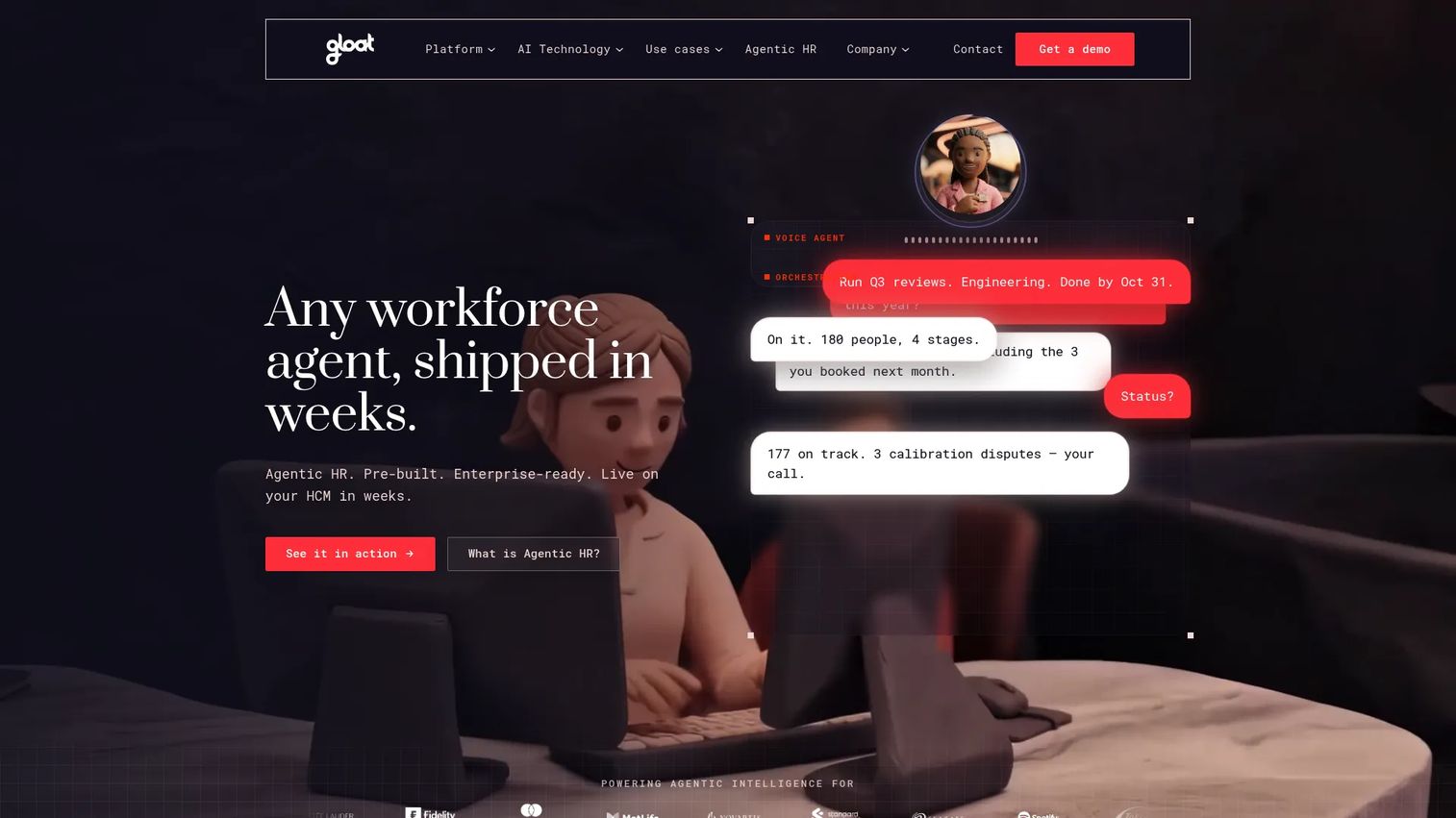
Gloat is an enterprise agentic HR and workforce-orchestration platform that connects workforce data, skills, people, and work through a suite of AI-powered products. Its Signal, Mosaic, and Ascend products cover workforce intelligence, work orchestration, and employee readiness respectively. Large enterprises use it to make internal capability visible across the whole organization and to route employees toward opportunities before opening an external req.
Best for: Large enterprises building a dedicated, AI-driven internal talent marketplace as a strategic workforce system.
Key features
- Agentic AI workforce orchestration across roles, projects, gigs, and mentoring
- Skills and workforce intelligence with semantic matching and career readiness
- Workforce readiness through learning, mentoring, and internal mobility
- Governed HCM integrations with Microsoft Teams, Slack, and Google Chat
Why choose Gloat: Choose Gloat when the organization is large enough to benefit from a standalone talent marketplace rather than a module inside an existing HR suite, and when skills-based internal mobility is a strategic priority rather than a tactical experiment.
Gloat pricing: Pricing is quote-based. Expect cost to move with employee count, selected product modules, and the implementation scope. Contact sales for a proposal.
G2 rating: 4.4/5
2. Fuel50
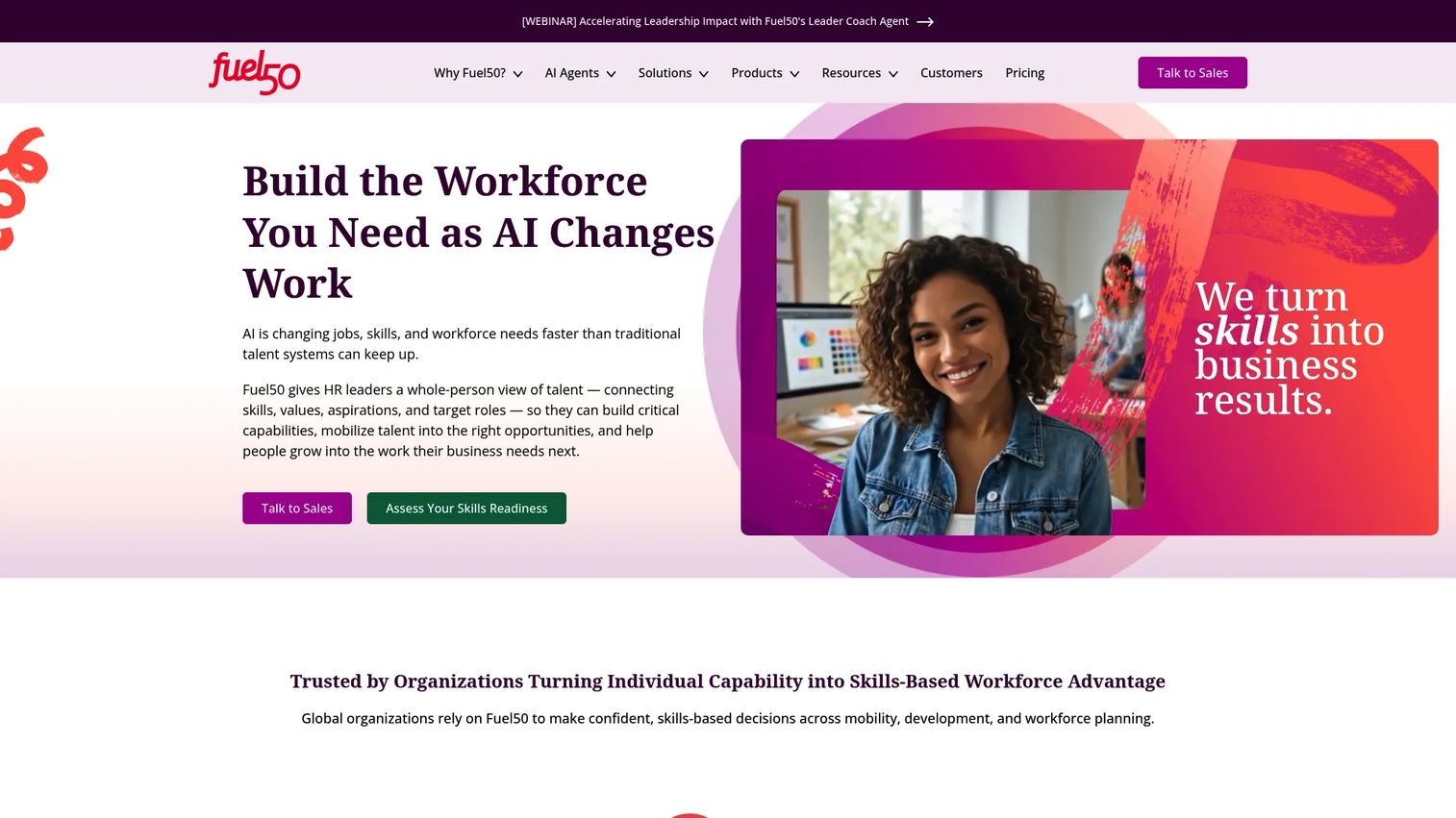
Fuel50 is an enterprise workforce transformation platform combining skills intelligence with an internal talent marketplace. It covers skills architecture, talent mobility, gigs, succession, coaching, and career growth in a modular structure. Companies use it when the retention problem is tied to employees not knowing where they can go inside the business.
Best for: Mid-size and large enterprises where career visibility, development, and employee-led mobility are the primary retention levers.
Key features
- Skills intelligence including skills ontology, architecture, and inventory
- Internal talent marketplace for mobility, gigs, succession, and coaching
- AI Career Advisor with personalized career paths and skills-gap discovery
- Opportunity matching across roles and development experiences
- Agent Hub for modular capability extension
Why choose Fuel50: Fuel50 excels when the first question employees ask is "where can I go from here?" and the company cannot answer it without a structured career framework.
Fuel50 pricing: Both the Skills Intelligence and Talent Marketplace tiers are sold through sales conversations. The pricing page lists modular capabilities but shows no numbers. Cost moves with workforce size, selected modules, and integration scope.
G2 rating: 4.4/5
3. 365Talents
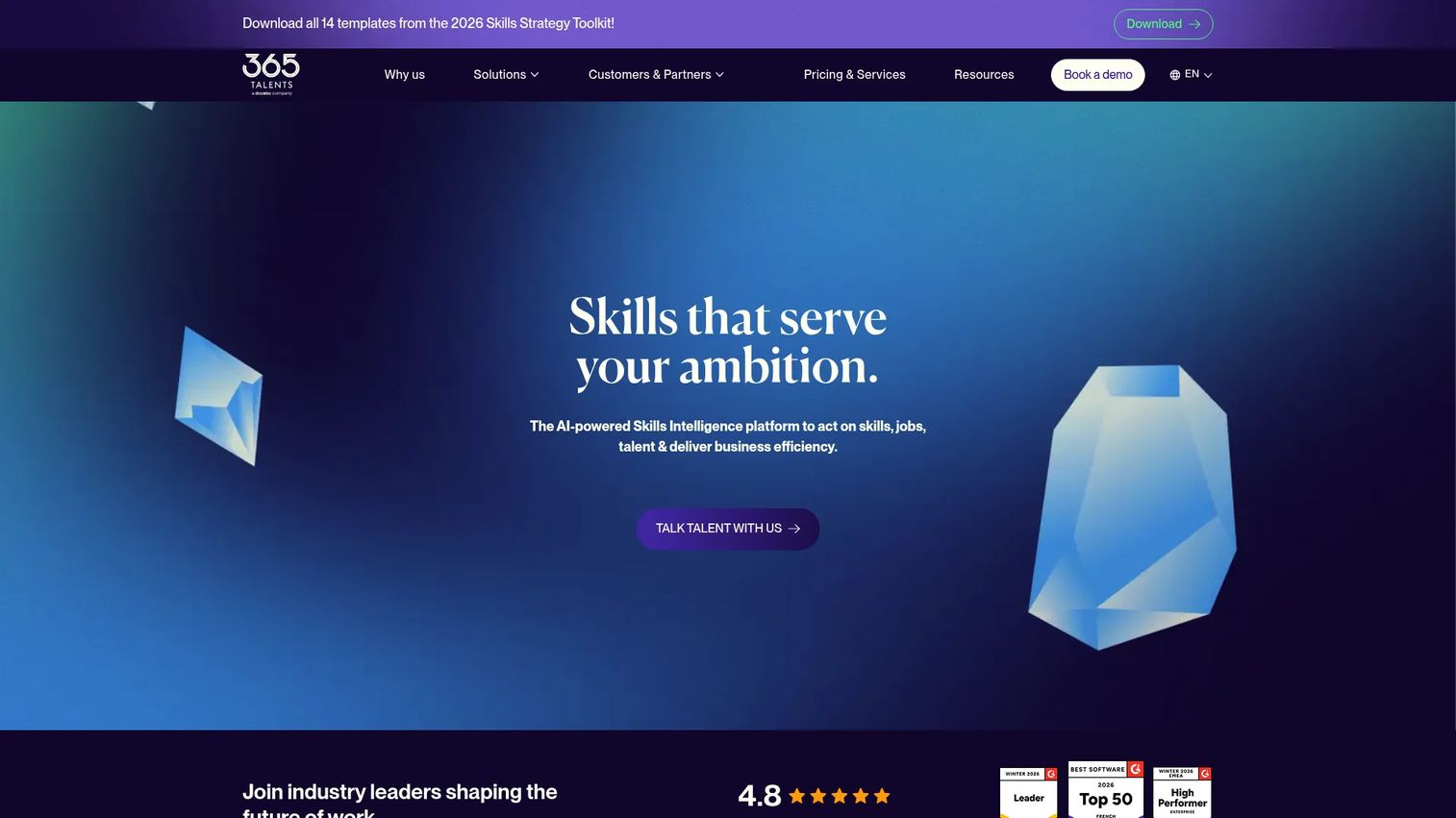
365Talents is an AI-powered skills intelligence and talent experience platform built to map workforce skills and activate them through personalized opportunity recommendations. It connects to more than 100 HRIS, LMS, and ATS tools, which matters when skills data needs to flow across a complex HR stack. European and global enterprises use it frequently given its multi-language support and regional HR tool integrations.
Best for: Large and enterprise organizations that want structured skills mapping and opportunity recommendations connected to an existing HRIS stack.
Key features
- AI skills detection and dynamic skills mapping
- Personalized recommendations for jobs, projects, training, and mobility
- Dynamic job and career frameworks
- Career development and succession planning
- Workforce analytics and skills-gap insights
- 100+ integrations with HRIS, LMS, and ATS platforms
Why choose 365Talents: Choose 365Talents when the immediate blocker is skills visibility, the company needs structured mapping quickly, and integration breadth across HR tools matters.
365Talents pricing: Pricing is customized. Cost reflects employee count, selected modules, integrations, and support tier. Request a proposal through the vendor site.
G2 rating: 4.8/5
4. Gigged.AI
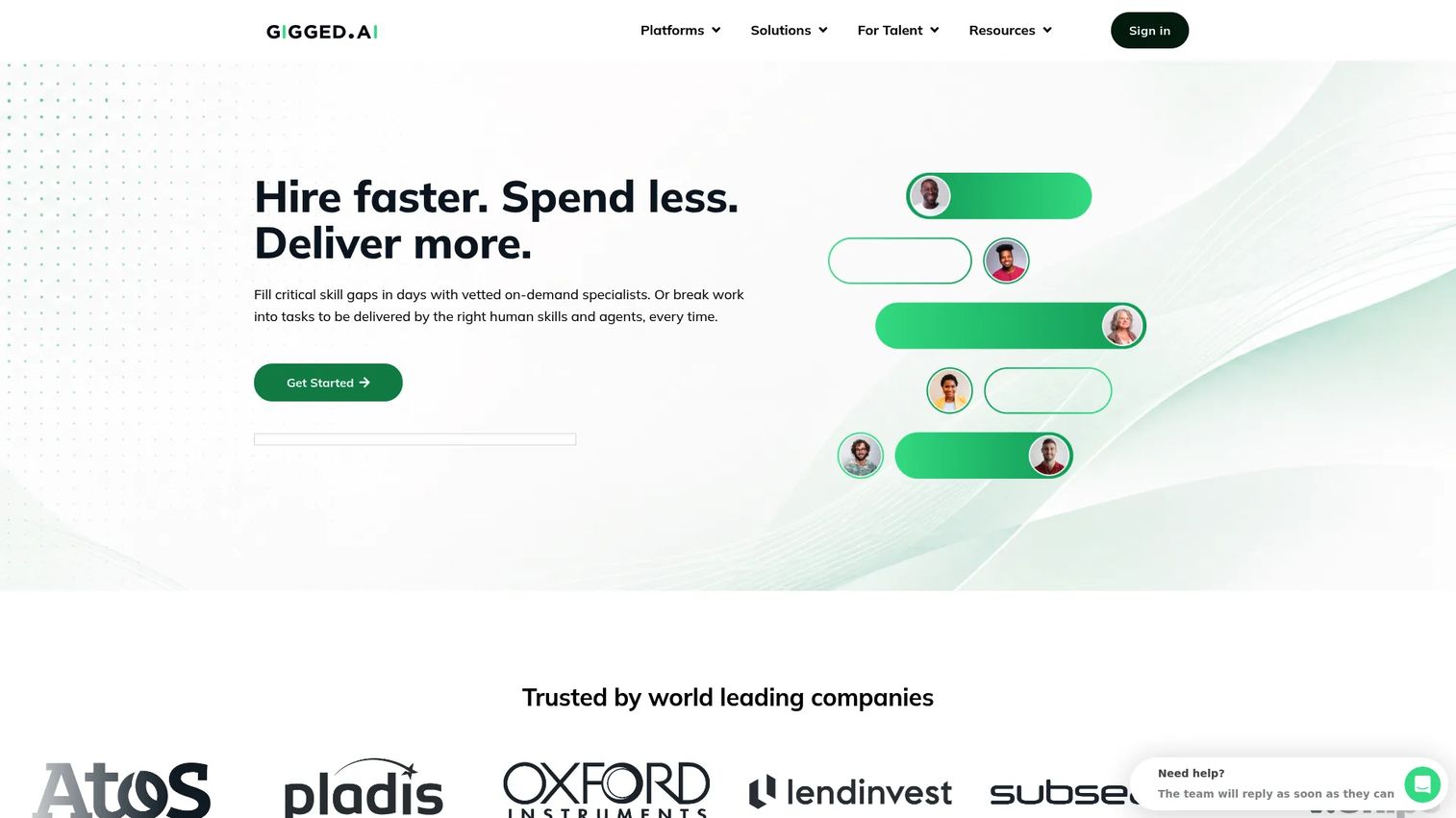
Gigged.AI helps enterprises deploy the right mix of full-time employees, on-demand specialists, and AI agents through two connected platforms: A Workforce Intelligence Platform for internal skills and capacity visibility, and a Mobilise platform for project staffing and task matching. It also maintains a vetted network of on-demand technology specialists for gaps that internal talent cannot fill.
Best for: Enterprise technology teams that need flexible access to vetted technical talent alongside visibility into internal human and AI capabilities.
Key features
- Unified inventory of human skills and AI agents
- Real-time dashboards for utilization and skills gaps
- Project staffing and task matching through Mobilise
- AI matching with vetted on-demand technology specialists
- Integrations with Jira, Slack, Asana, ServiceNow, and Microsoft Teams
Why choose Gigged.AI: Gigged.AI suits organizations that want to combine internal project staffing with access to verified external specialists under one platform, particularly in technology services contexts.
Gigged.AI pricing: The Workforce Intelligence Platform uses contact-based pricing. The on-demand talent platform operates on a pay-as-you-go model with a transaction fee per hire. Annual subscription plans are also available. Contact sales for current figures.
G2 rating: 4.8/5
5. Workday Talent Management
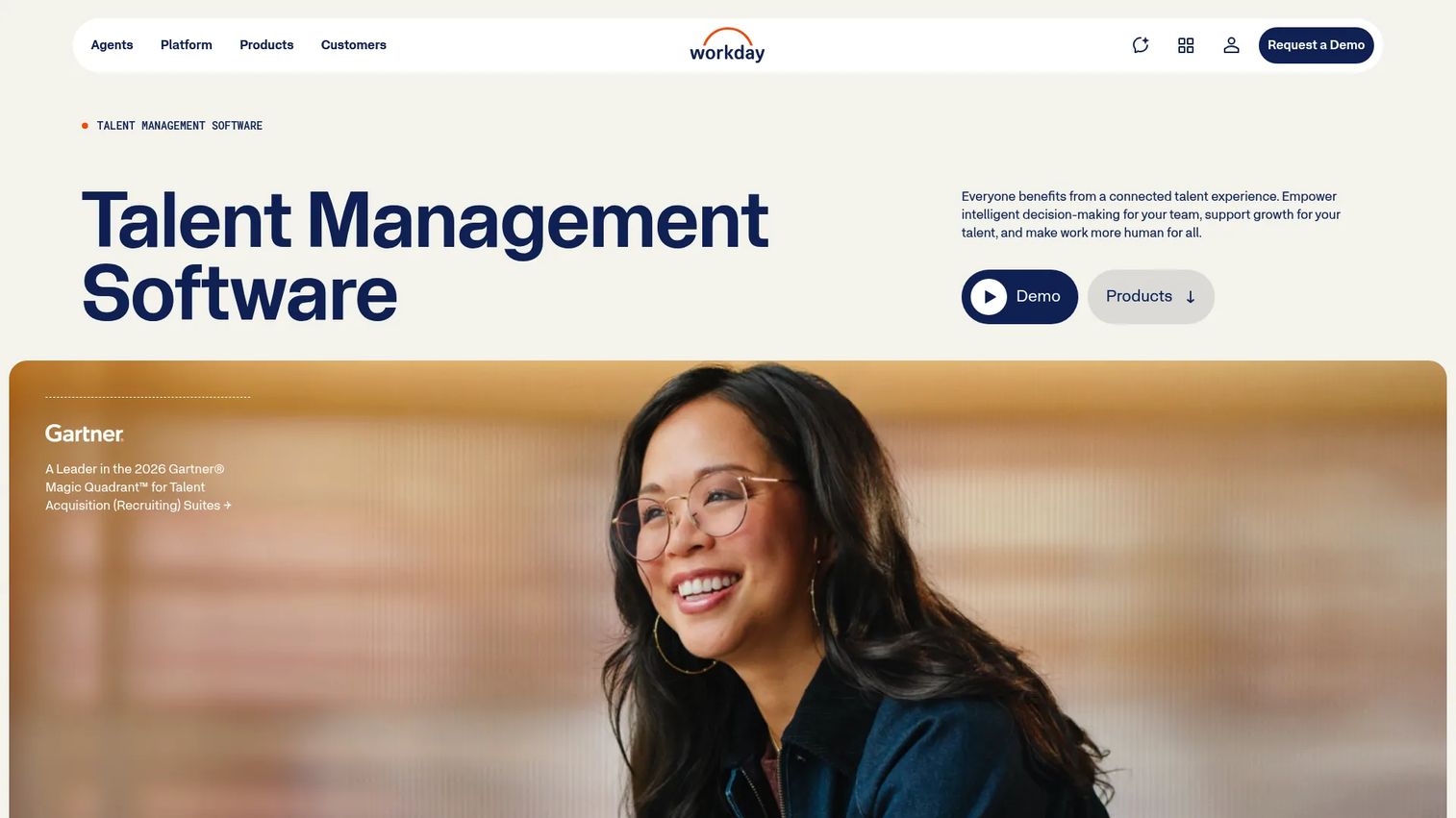
Workday Talent Management is the talent layer inside the Workday HCM suite. It covers recruiting, onboarding, performance, career development, skills management, and succession planning in a unified environment. For companies already running Workday as their HR system of record, adding talent management capabilities avoids a separate integration project entirely.
Best for: Large organizations already standardized on Workday that want talent mobility capabilities connected to core HR data without adding another vendor.
Key features
- AI-powered career development and internal mobility
- Skills management and talent insights
- Performance enablement, goals, and feedback
- Succession planning with readiness modeling
- Workday HCM ecosystem integration
Why choose Workday Talent Management: The primary case is integration simplicity. If Workday already owns your HR data, this keeps talent mobility inside the same data model and removes the need to sync skills and career data across systems.
Workday Talent Management pricing: Workday does not display pricing. Cost moves with organization size, modules selected, and contract terms. Contact your Workday account team or sales for a quote.
G2 rating: 4.4/5
6. Beamery Talent Lifecycle Management Platform
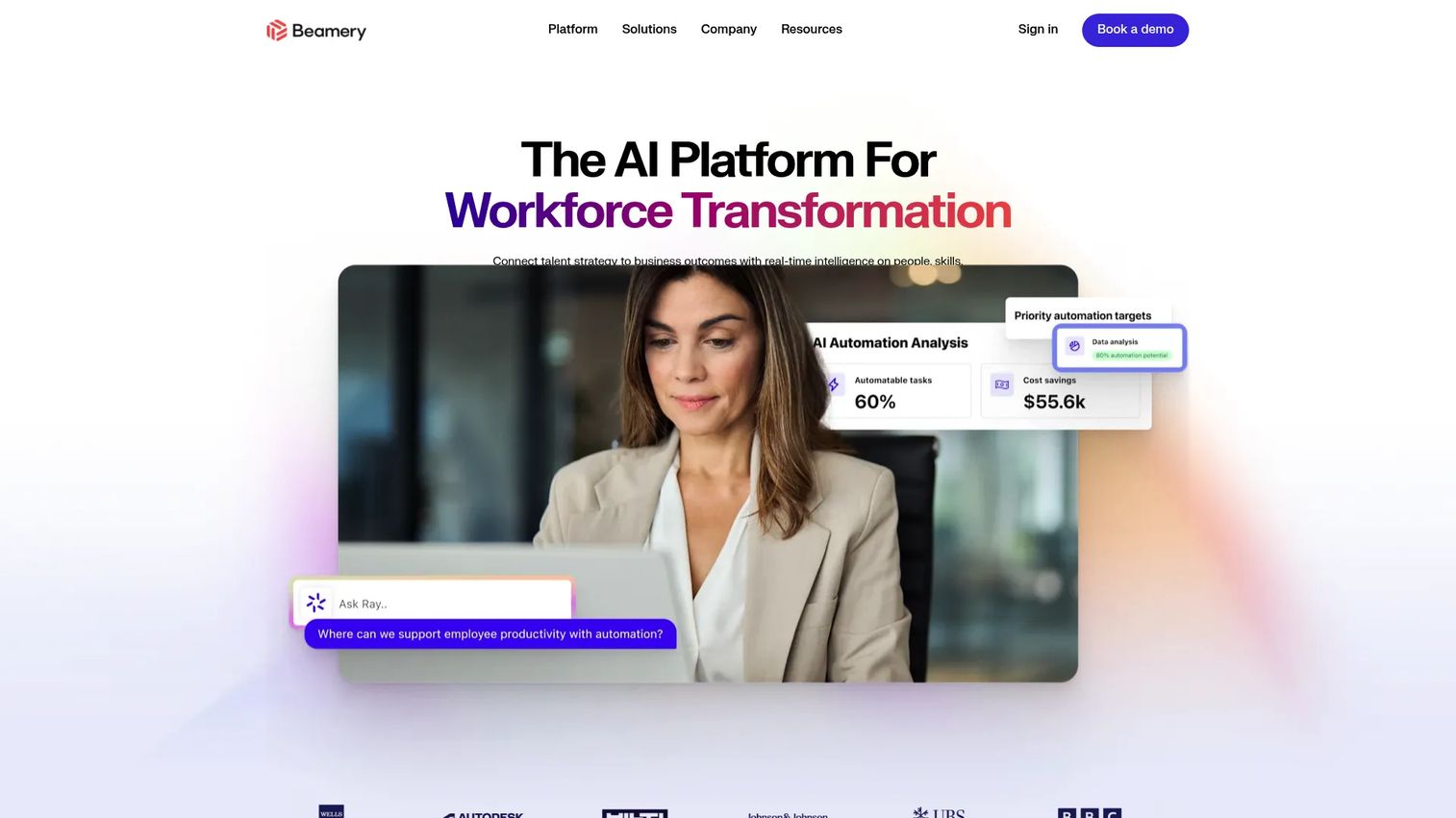
Beamery is an AI-powered workforce transformation platform that connects skills, role, task, and talent data to help enterprises plan, hire, redeploy, and reskill talent. Its scope spans both external talent acquisition and internal workforce intelligence, which makes it relevant for organizations that see internal mobility and external recruiting as connected supply questions. It integrates with Workday and SAP SuccessFactors.
Best for: Large enterprises seeking skills-based workforce planning, talent acquisition, and internal mobility in a connected platform.
Key features
- Workforce intelligence and skills intelligence
- Talent CRM with skills-based sourcing and matching
- Talent marketing and automated engagement
- AI talent advisor with explainable recommendations
- Talent lifecycle analytics and workforce planning
Why choose Beamery: Beamery fits organizations that want to stop treating internal and external talent as separate pipelines and build a unified talent supply model instead.
Beamery pricing: Enterprise pricing is not publicly displayed. Cost is user-based and tied to required functionality. Contact Beamery for a proposal.
G2 rating: 4.1/5
7. PeopleFluent Talent Mobility
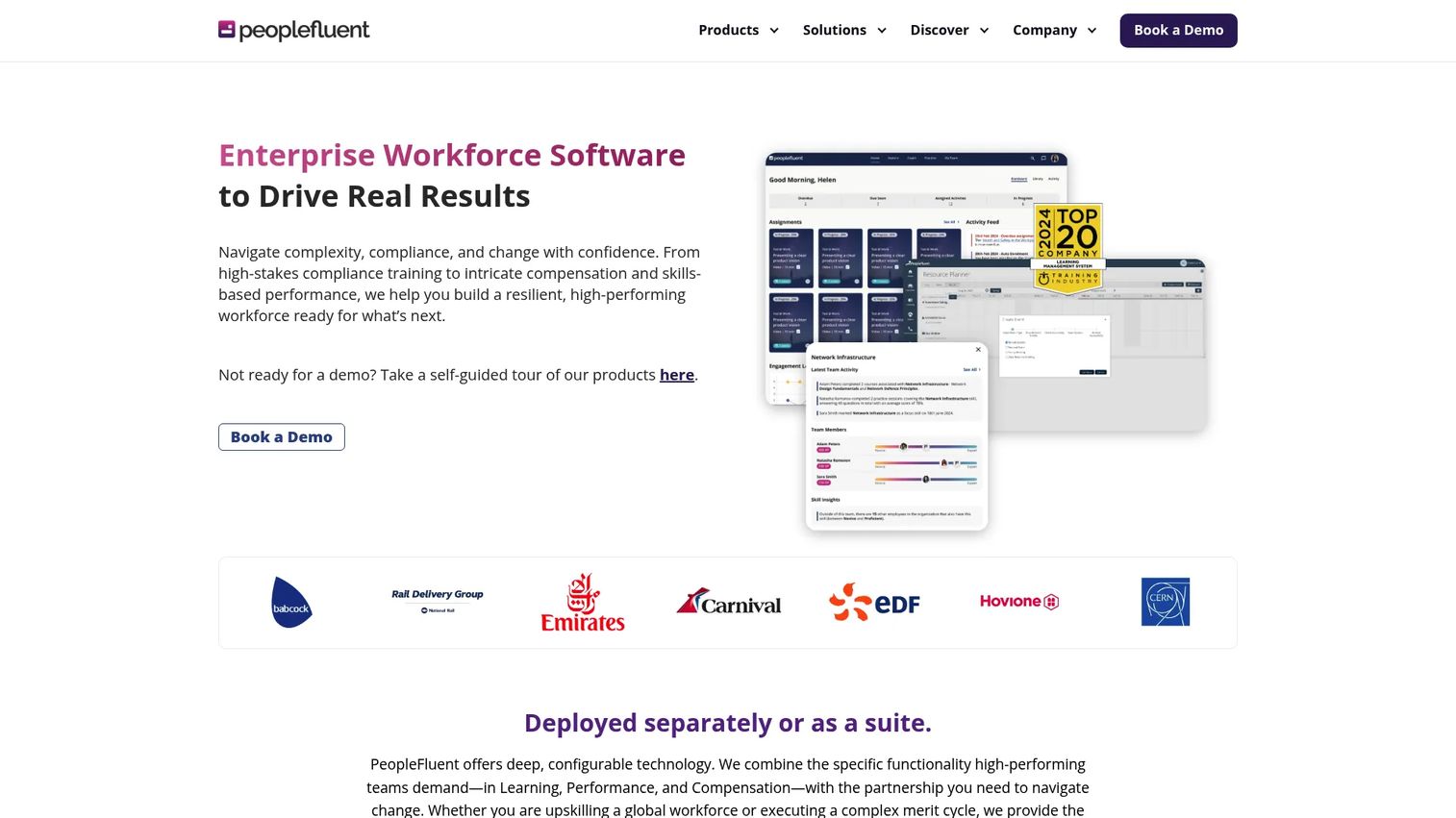
PeopleFluent is an enterprise talent management platform covering employee development, career paths, succession planning, performance management, and internal mobility. It targets complex, regulated organizations that need configurable talent processes and governance rather than a modern consumer-style marketplace experience.
Best for: Mid-to-large regulated enterprises with formal talent development and succession processes that need configurability over consumer-grade design.
Key features
- Unified talent profiles
- Career-path and employee development tools
- Succession planning and scenario modeling
- Performance management workflows
- Enterprise reporting and analytics
Why choose PeopleFluent: PeopleFluent works for organizations where governance, auditability, and HR process configuration matter more than a modern self-serve employee experience.
PeopleFluent pricing: No pricing page is available. Pricing is sales-led and reflects employee count, modules, and implementation complexity. Contact PeopleFluent for a quote.
G2 rating: 4.0/5
8. ProFinda
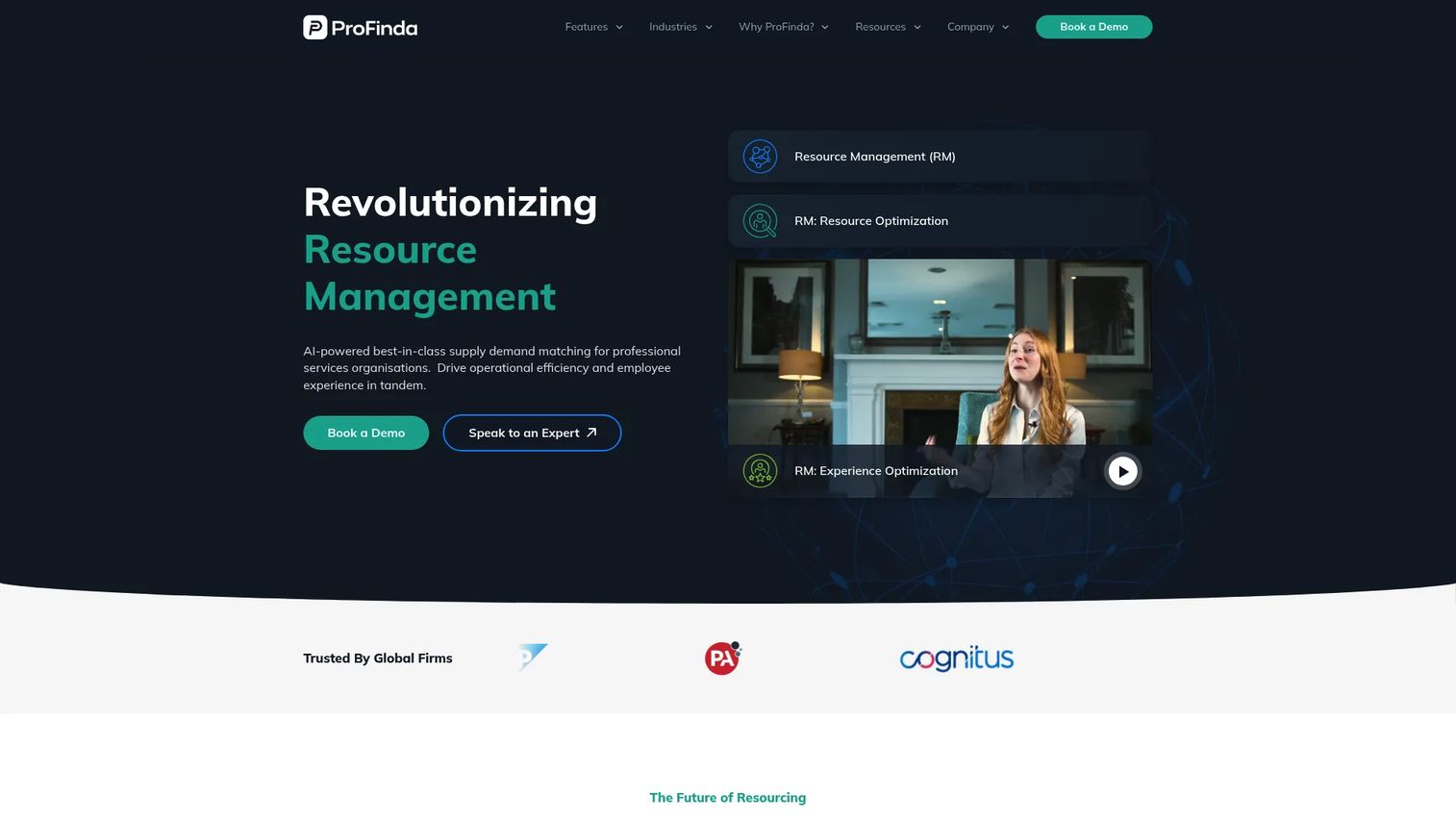
ProFinda is an AI-powered resource management and workforce optimization platform built for professional services organizations. It maps internal expertise, allocates people to projects, and optimizes utilization through AI-assisted search and matching. Where other talent marketplace platforms focus on career mobility, ProFinda's center of gravity is staffing, scheduling, and profitability.
Best for: Large professional services firms that need to find internal expertise fast, reduce bench time, and improve project staffing accuracy.
Key features
- AI-powered search and skills matching
- Resource allocation and dynamic scheduling
- Workforce and capacity planning
- Opportunity marketplace for internal project staffing
- Profitability and scenario planning tools
- Advanced utilization reporting
Why choose ProFinda: ProFinda is the right call when the talent marketplace problem is primarily about finding who can do what, not building long-term career paths. It suits services firms with significant bench management needs.
ProFinda pricing: Pricing is bespoke, delivered after a demo. Contact sales through the ProFinda site for a proposal.
G2 rating: 5.0/5
9. Radancy Talent Acquisition Cloud
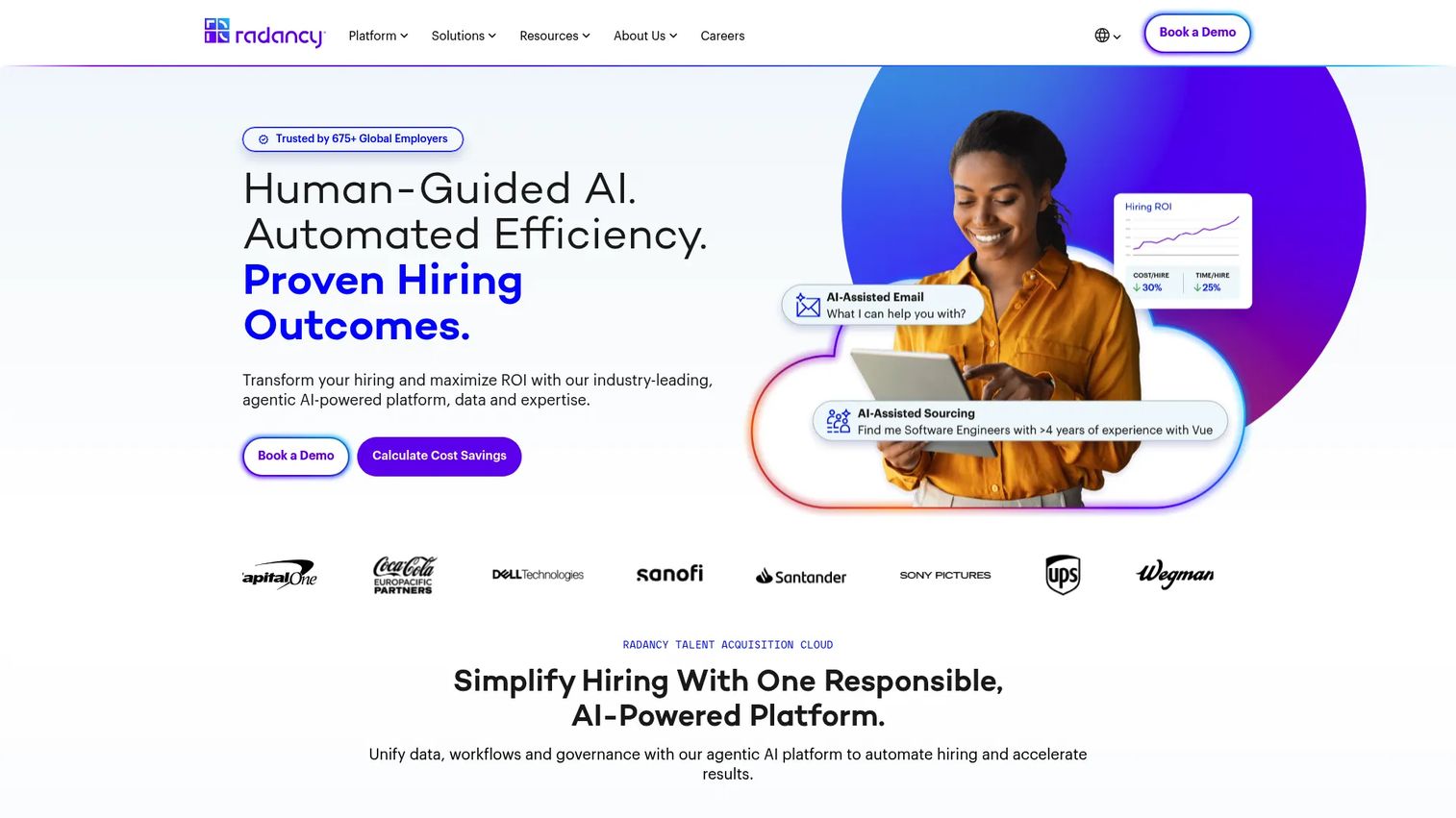
Radancy is an agentic AI-powered talent acquisition platform covering sourcing, candidate engagement, screening, scheduling, and hiring. Its talent acquisition cloud includes internal career site capabilities and employee experience components that support internal mobility as part of a broader hiring strategy. It is primarily an external recruiting platform with internal mobility as an adjacent use case.
Best for: Enterprise organizations that want internal mobility connected to their talent acquisition infrastructure, rather than as a standalone employee-facing marketplace.
Key features
- AI-powered sourcing and candidate matching
- Candidate relationship management with pipeline automation
- AI-assisted screening and interview scheduling
- Career site experiences for internal and external candidates
- Talent analytics across candidate and employee journeys
Why choose Radancy: Choose Radancy when internal mobility sits within a broader talent acquisition strategy and the company wants to manage both through a single platform.
Radancy pricing: No public pricing is available. Contact Radancy's sales team for current enterprise pricing.
G2 rating: 4.7/5
10. SAP SuccessFactors Career and Talent Development
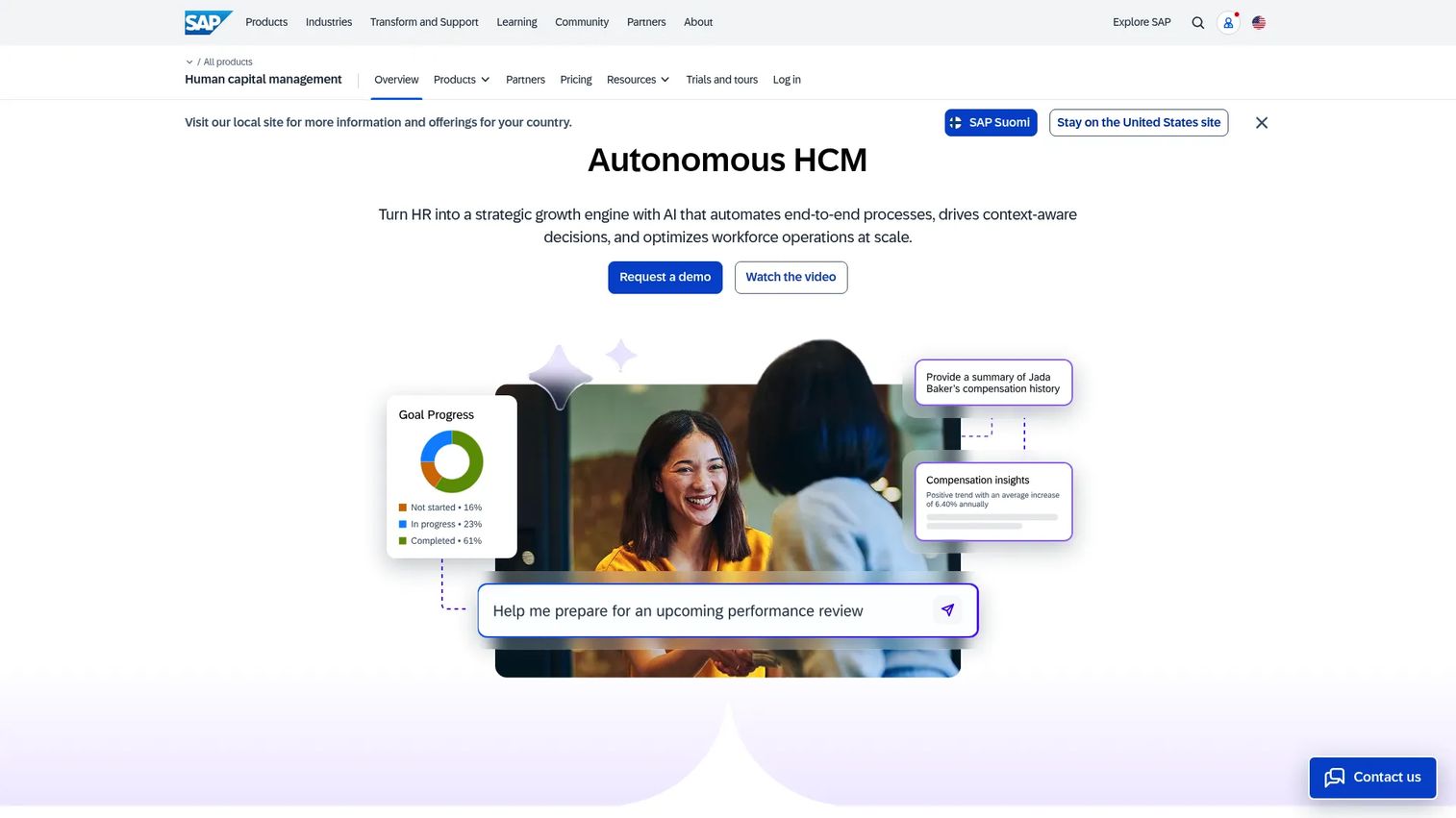
SAP SuccessFactors Career and Talent Development is the career and talent layer inside the SAP SuccessFactors HCM suite. It covers skills-based career paths, AI-driven recommendations, succession planning, mentor matching, and opportunity marketplace features in a governed, enterprise HR environment. It is the logical shortlist option for companies already running SAP for HR.
Best for: Large enterprises using SAP SuccessFactors as their core HR platform that want career development and talent mobility without adding a separate vendor.
Key features
- Integrated skills model with AI-driven recommendations
- Career paths and readiness insights
- Strategic succession and talent planning
- Mentor-mentee matching
- Opportunity marketplace recommendations
- SAP SuccessFactors suite integration
Why choose SAP SuccessFactors Career and Talent Development: The case is integration depth and governance. Companies already running SAP get talent mobility connected to their existing org data, compliance controls, and HR workflows without a new data sync challenge.
SAP SuccessFactors Career and Talent Development pricing: SAP publicly lists $2.94 per user per month, billed per authorized user with one-to-three year contract terms. This is the only platform on this list with a published numeric price. Implementation is not included.
11. Cornerstone Workforce AI
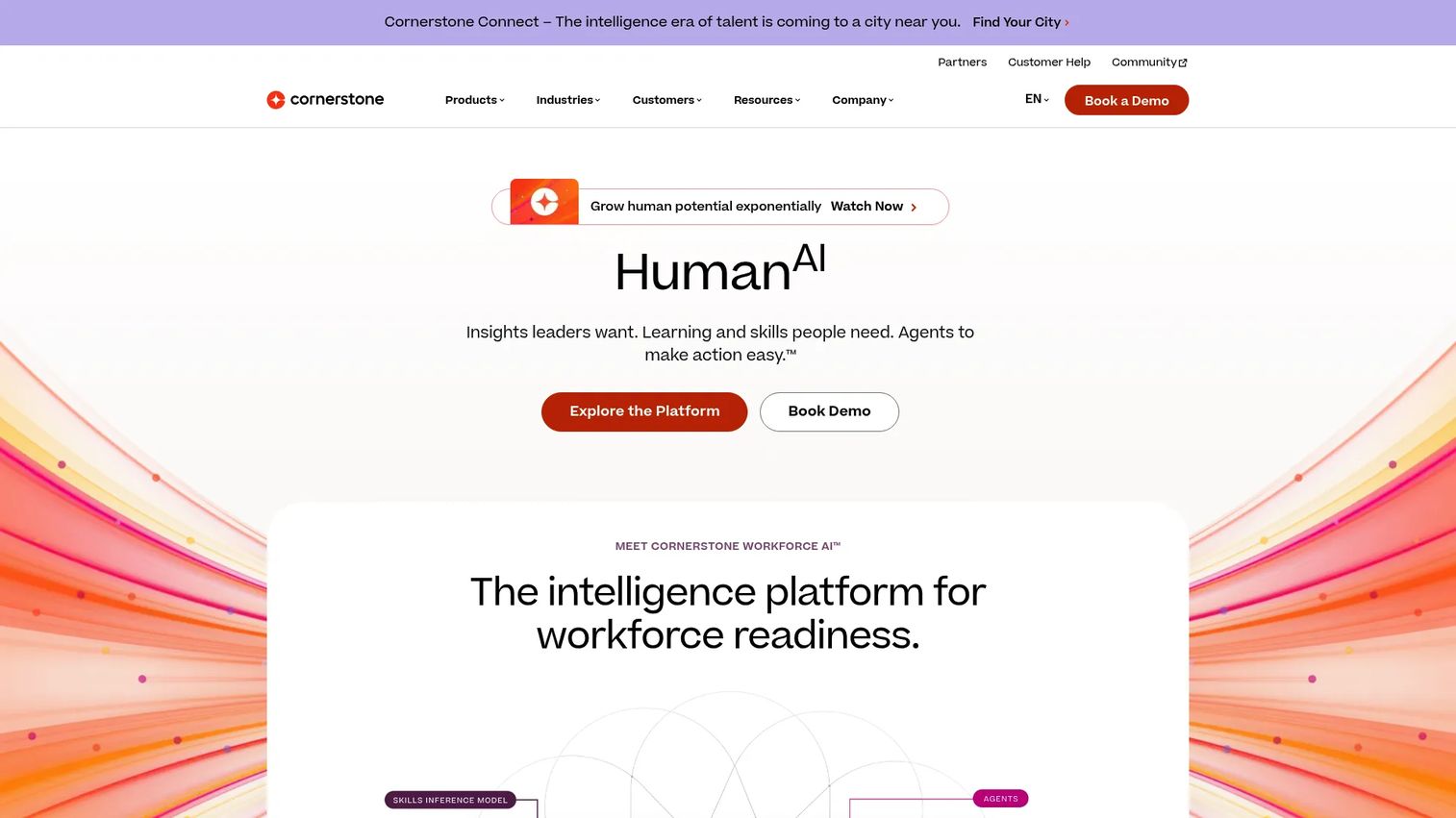
Cornerstone is an intelligence platform for workforce readiness that combines workforce data, skills intelligence, learning, talent development, and AI agents. Its People Graph connects employee data across the organization, while readiness agents (including Future of Work, Embark Navigator, and Skills Architect) help organizations act on that data. It has a strong learning and development heritage and suits companies that see upskilling and reskilling as the primary path into skills-based mobility.
Best for: Enterprise organizations that want learning, skills intelligence, and talent development connected in one platform with AI-driven workforce readiness features.
Key features
- Workforce intelligence through the Cornerstone People Graph
- Skills Architect for skills ontology and gap analysis
- AI readiness agents for future-of-work planning
- Learning, performance, and talent marketplace capabilities
- Integrations with Salesforce, Slack, and Microsoft Teams
Why choose Cornerstone: Cornerstone performs best when the organization wants to approach mobility through a learning-led path, where connecting skill-building to internal opportunity is the core workflow.
Cornerstone pricing: Pricing spans Learn+, Elevate+, Intelligence+, and Readiness Agents tiers, each priced per employee per year or by tiered employee count bands. Numeric prices are not displayed. Contact sales for current figures.
G2 rating: 4.0/5
12. DevSkiller TalentBoost
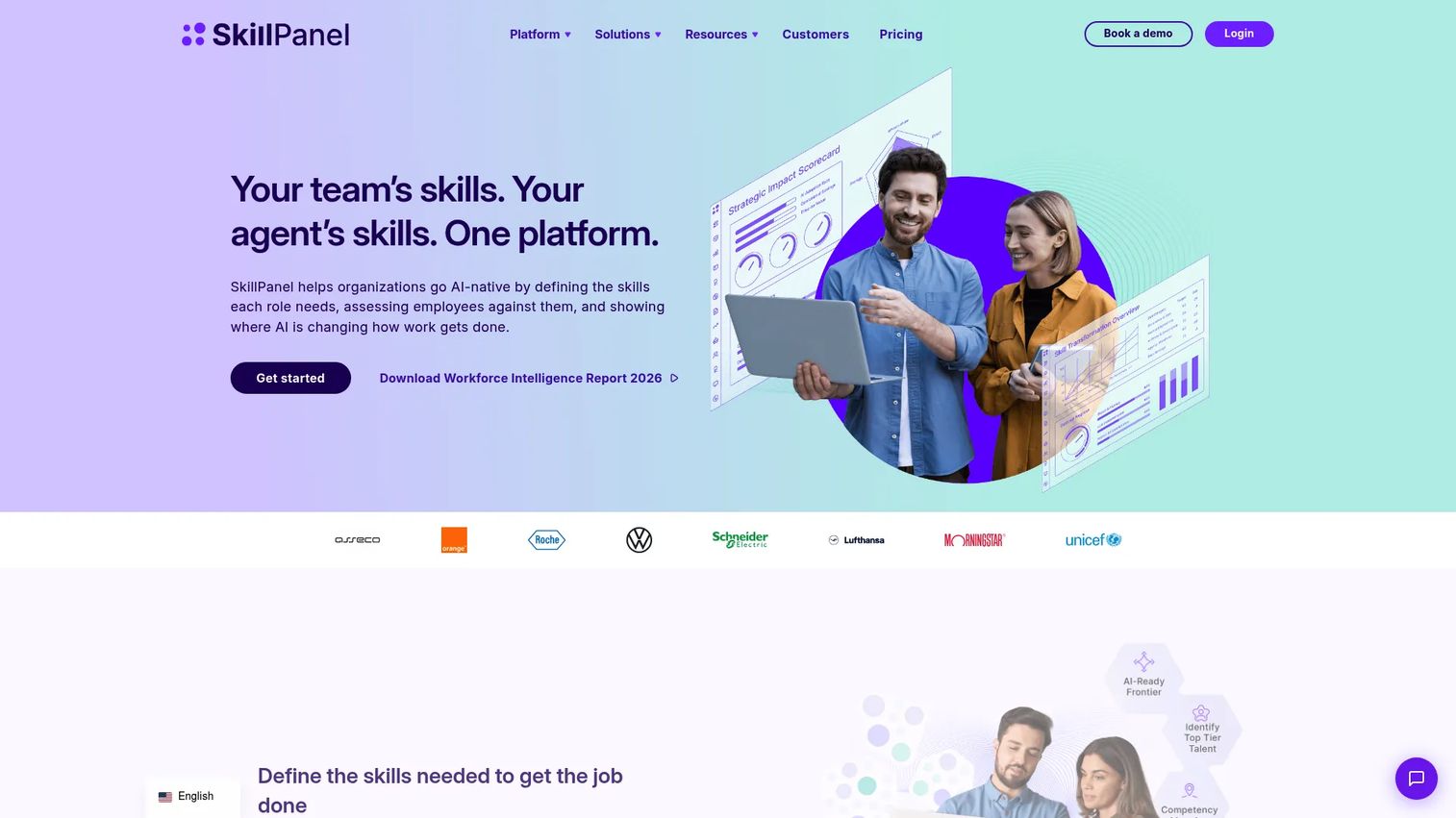
DevSkiller TalentBoost is now branded as SkillPanel, a skills intelligence and talent management platform covering workforce skills mapping, gap analysis, internal mobility, and career development. Its library of more than 5,000 predefined digital and IT skills makes it particularly relevant for engineering-heavy organizations. Skills assessments pull from self-assessments, peer reviews, manager input, and technical evaluations.
Best for: Organizations with significant technical and digital workforces that need structured skills visibility and internal mobility grounded in verified capability data.
Key features
- Interactive workforce skills map with 5,000+ predefined skills
- Multi-source skills assessments (self, peer, manager, technical)
- Skills-gap analysis and career development tools
- Internal mobility and talent decision analytics
- Guided onboarding and a 3-month money-back guarantee
Why choose DevSkiller TalentBoost: DevSkiller TalentBoost is the right starting point when the talent marketplace question begins with engineering and technical skills gaps, and when verified skills data matters more than breadth of marketplace features.
DevSkiller TalentBoost pricing: SkillPanel starts from $1 per employee per month, with guided onboarding included. This is one of the few platforms on this list with a publicly stated entry price.
G2 rating: 4.6/5 (rated as SkillPanel on G2)
13. Eightfold Talent Intelligence Platform
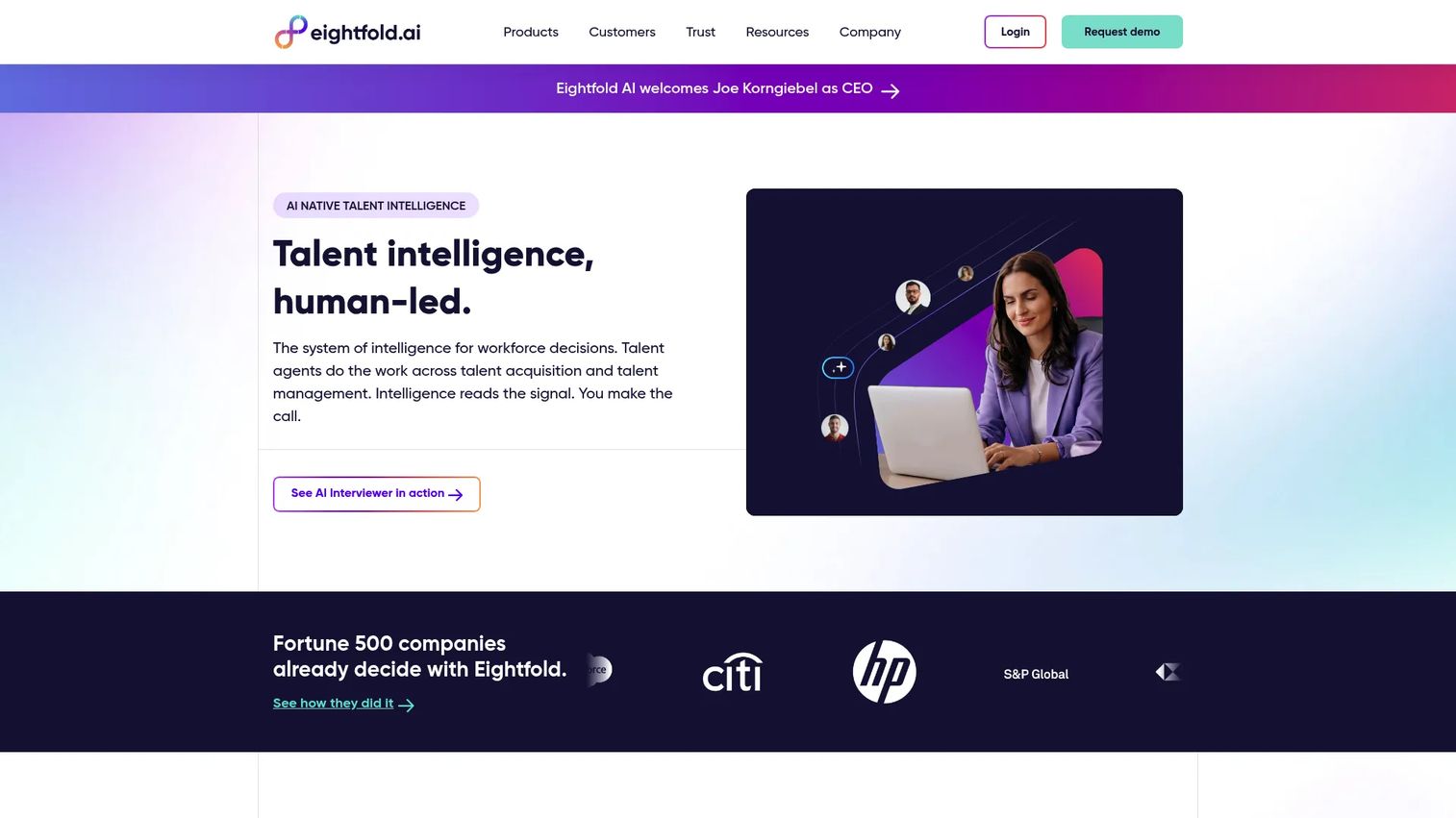
Eightfold is an AI-native talent intelligence platform covering hiring, workforce development, internal mobility, and workforce planning. Its skills inference engine infers capabilities from career histories and work patterns beyond what employees self-report, which creates a richer foundation for matching and planning. Large global organizations use it as the intelligence layer that sits across both external recruiting and internal talent allocation.
Best for: Large and global organizations building a skills-first talent intelligence layer that spans recruiting, internal mobility, and workforce planning in one data model.
Key features
- AI talent intelligence across hiring, mobility, and workforce planning
- Skills inference beyond self-reported profiles
- Personalized career recommendations
- Talent redeployment and resource management
- Bi-directional ATS, HRIS, VMS, and LMS integrations
- Agentic AI for recruiting workflow automation
Why choose Eightfold: Eightfold fits companies that want skills inference at scale, not just self-reported skills profiles, and that need talent intelligence to operate across both internal and external pipelines.
Eightfold pricing: No public pricing page is available. Pricing is enterprise quote-based. Contact sales for a proposal.
G2 rating: 4.2/5
14. Empath
Empath is listed here as a named market participant in talent marketplace and career development software. The empath.com domain was inaccessible during research, and no current product details, pricing, or G2 rating could be verified from first-party sources. Before shortlisting, confirm current product availability and positioning directly with the vendor.
Best for: Verify with the vendor before shortlisting.
Key features
- Career development and internal opportunity discovery (verify current state)
- Employee growth and coaching workflows (verify current state)
Why choose Empath: Conduct a direct vendor conversation to confirm current product scope and availability before including in an evaluation.
Empath pricing: Contact the vendor directly.
15. Neobrain Talent Marketplace
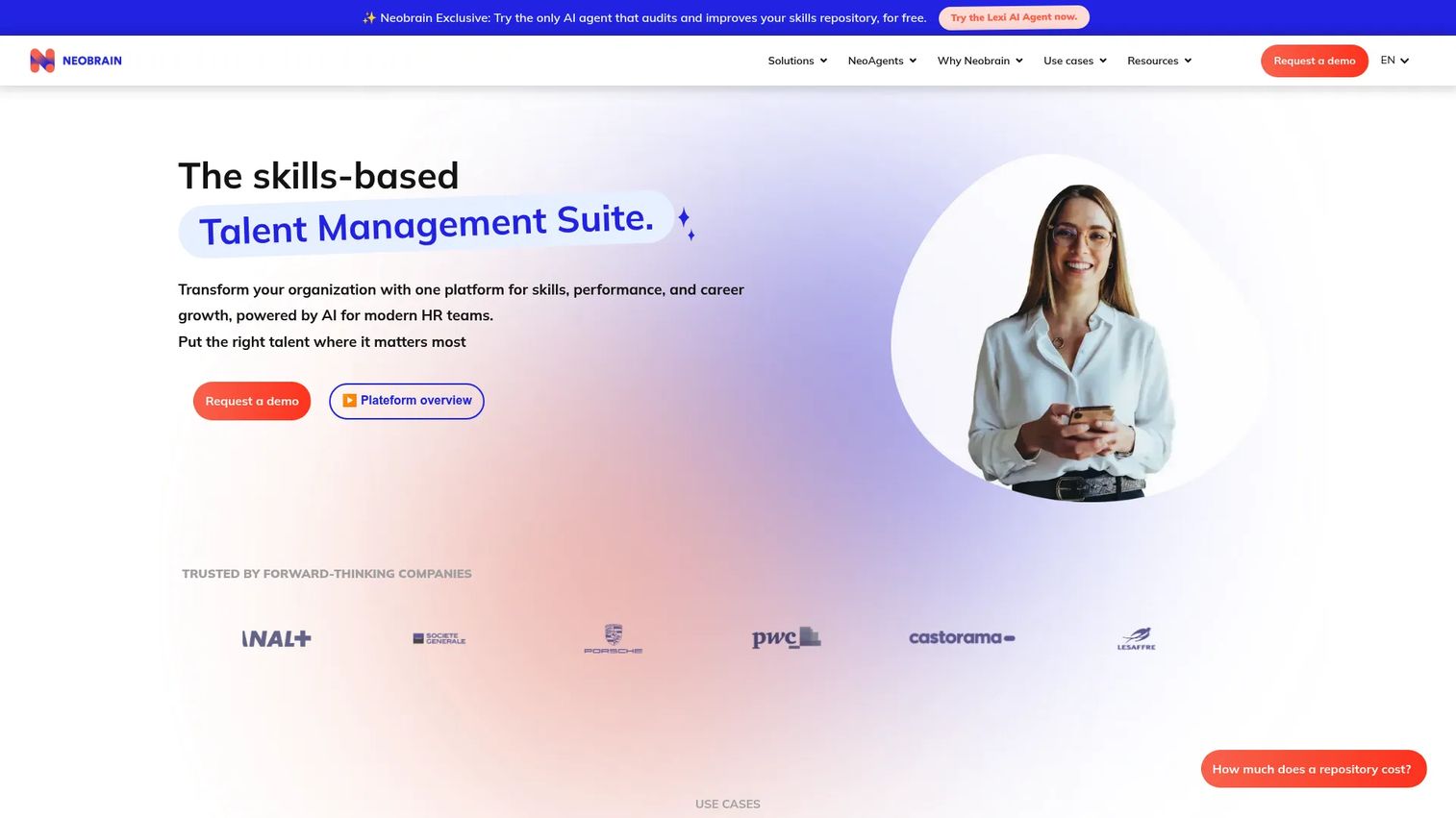
Neobrain is an AI-powered internal talent marketplace that matches employees' skills and aspirations with career opportunities, mentoring, training, and short-term assignments. It focuses on skills-based workforce planning and internal mobility, with particular strength in AI profile-to-opportunity matching and personalized career recommendations. Mid-size and large enterprises use it to move from static job architecture toward skills-based talent allocation.
Best for: Large and mid-sized enterprises building skills-based workforce planning and internal mobility with a focus on AI-driven opportunity matching.
Key features
- AI-powered profile and opportunity matching
- Personalized career paths and internal mobility recommendations
- Short-term assignments and project staffing
- Skills mapping and skills-gap visibility
- Personalized learning and development recommendations
Why choose Neobrain: Neobrain is strong when both skills architecture and internal opportunity matching need to move together, and when the organization wants AI-driven recommendations rather than a purely self-serve employee experience.
Neobrain pricing: Pricing is not publicly displayed. Contact Neobrain for a proposal based on workforce size and selected modules.
G2 rating: 4.7/5
16. Prismforce
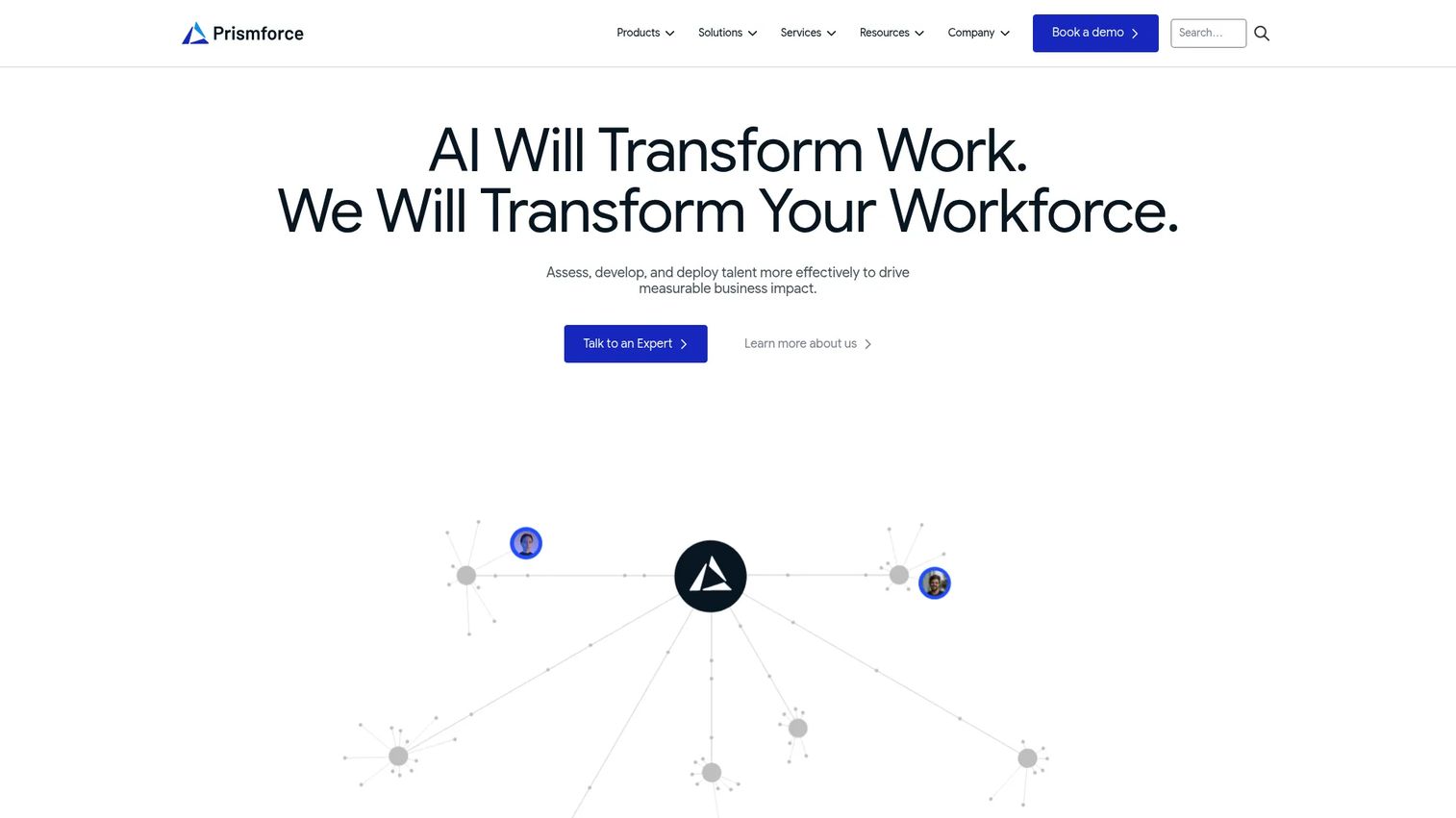
Prismforce is an AI-powered workforce management and talent supply chain platform built for enterprise IT and technology-services organizations. It covers skills intelligence, AI-driven staffing, workforce forecasting, career development, and AI readiness assessment through its AI Quotient (AIQ) framework. It is not a general-purpose internal talent marketplace; its center of gravity is billable capacity, staffing, and skills alignment in services contexts.
Best for: Enterprise IT and technology-services or professional-services organizations managing skills, staffing, workforce planning, and talent mobility across project-based work.
Key features
- AI-powered skills intelligence and continuous skill discovery
- AI-driven staffing, talent matching, and internal mobility
- Workforce forecasting and planning
- AI Quotient (AIQ) readiness assessment
- Career development, reskilling, and learning recommendations
Why choose Prismforce: Prismforce fits companies where the talent marketplace problem is primarily billable capacity and skills alignment for services delivery, not broad employee career development.
Prismforce pricing: No public pricing is available. Contact sales for a proposal; expect cost to move with user count, modules, and deployment complexity.
G2 rating: 3.8/5
17. Reejig
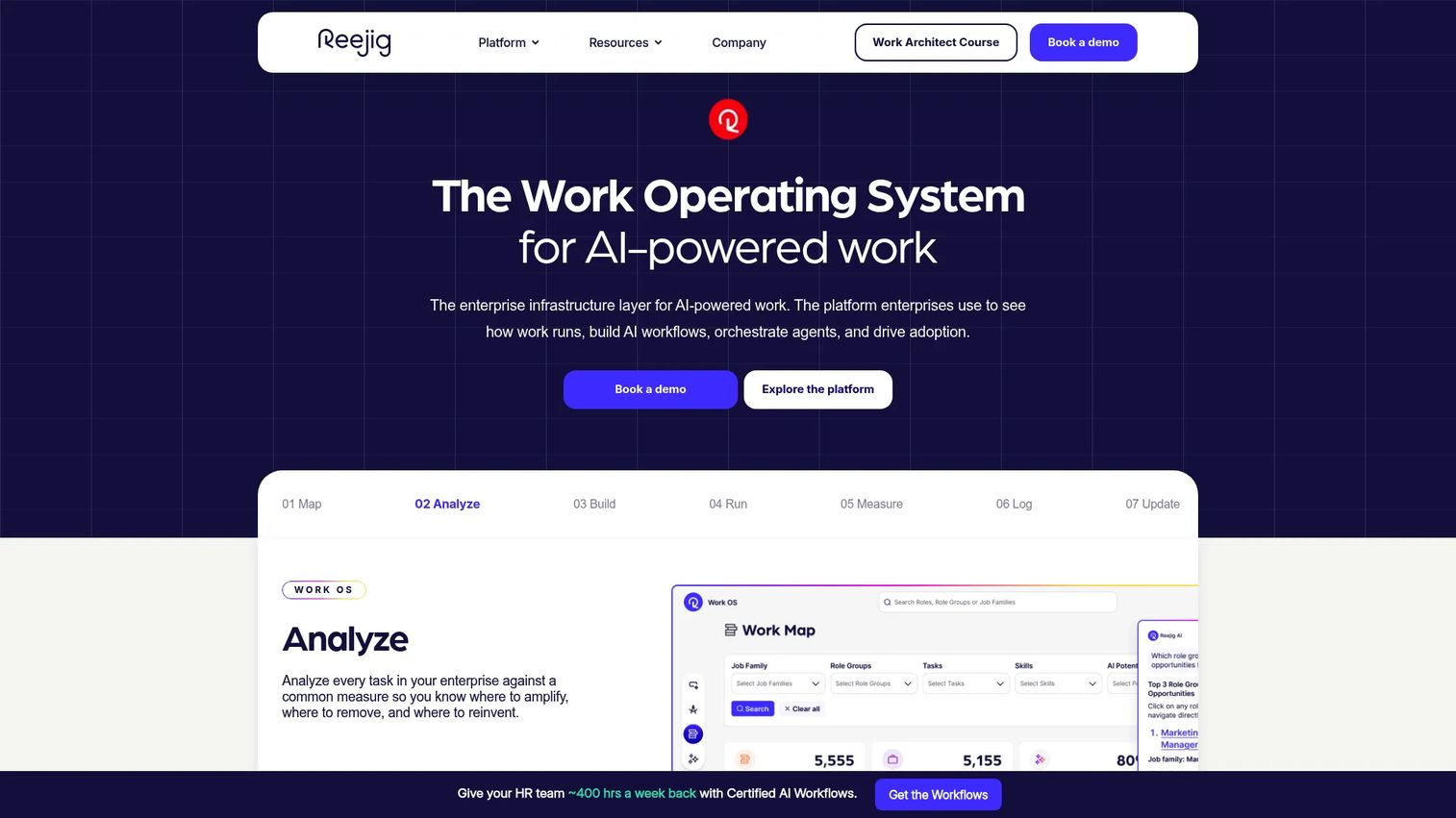
Reejig has repositioned as a Work Operating System for AI-powered work, helping enterprises map work, build AI workflows, orchestrate human and AI agents, and measure adoption and impact. Its Work Context Graph maps jobs, tasks, subtasks, workflows, dependencies, and policies at the task level. Rather than a traditional talent marketplace, it now operates as a work redesign and AI orchestration platform.
Best for: Large enterprises redesigning work and deploying AI agents at the department level, where workforce intelligence needs to go below the job level to the task and workflow level.
Key features
- Work Context Graph mapping jobs, tasks, and workflows
- Task-level AI potential analysis
- Builder Studio for redesigning workflows and orchestrating agents
- ROI measurement for hours released and value created
- Enterprise audit trail and workflow log
Why choose Reejig: Reejig is most relevant for organizations ready to move beyond skills matching into AI-enabled work redesign, where the question shifts from "who can do this job?" to "how should this work be redesigned and by whom?"
Reejig pricing: Enterprise packages include a $30K, 5-day proof of concept; $50K for two-team builds; $75K for three-team builds; and $250K per department on a 3-year contract. These figures appear in first-party Copilot enablement materials.
G2 rating: 3.5/5
18. SumTotal
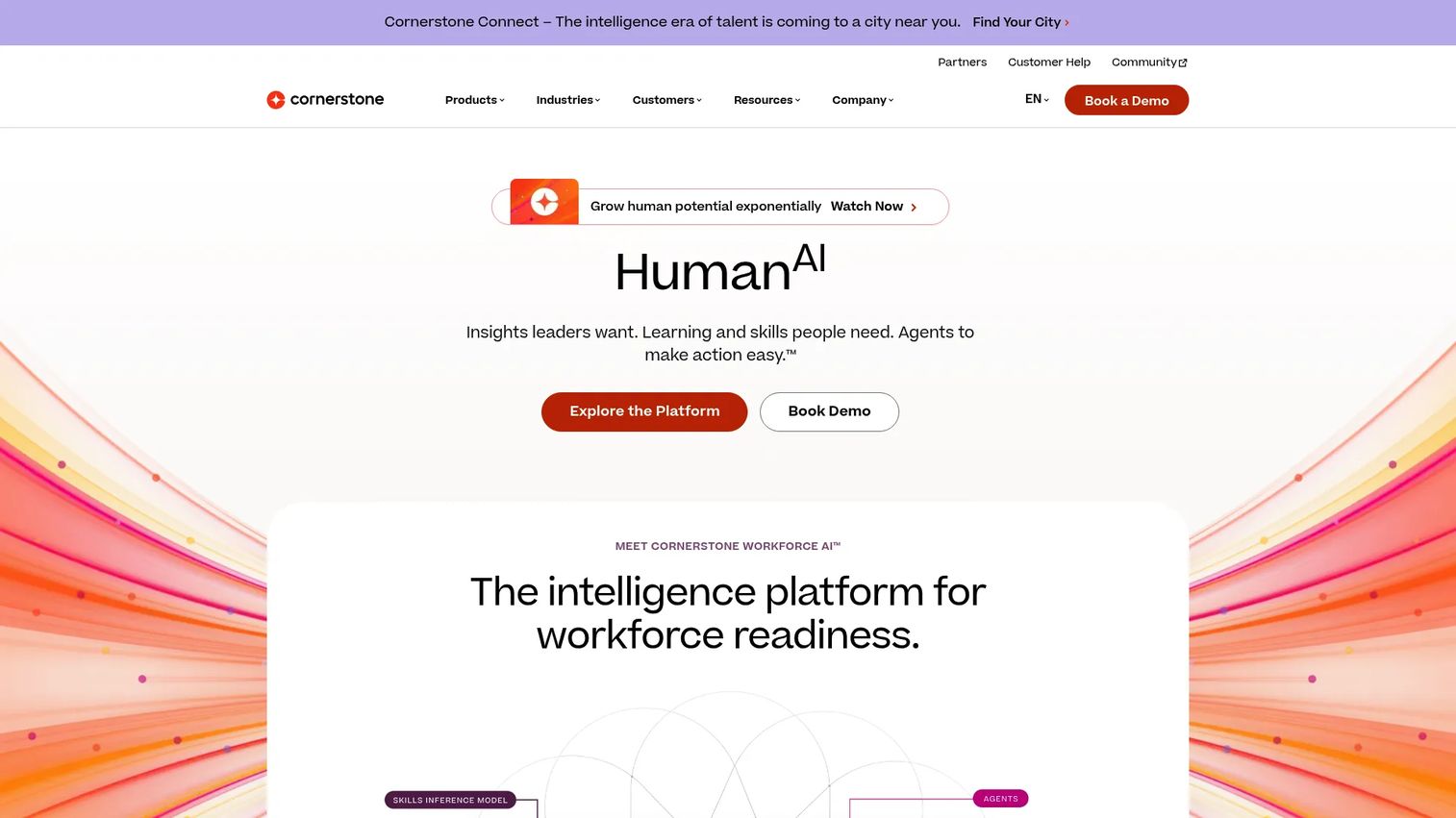
SumTotal is an enterprise learning management and talent development platform for complex, highly regulated organizations. It covers instructor-led, blended, mobile, and offline learning alongside compliance training, performance management, succession, and talent development. Note that the SumTotal homepage currently redirects to Cornerstone OnDemand; verify current product branding and availability directly with the vendor.
Best for: Large, complex, and highly regulated organizations that need integrated learning management and talent development with strong compliance training capabilities.
Key features
- Learning management across multiple delivery modalities
- Compliance training with SCORM, AICC, xAPI, and CMI5 support
- Talent development covering performance and succession
- Certifications and curricula management
- Analytics and reporting dashboards
Why choose SumTotal: SumTotal suits organizations that approach mobility through a learning and compliance lens, where regulated training requirements are as important as career pathing.
SumTotal pricing: No public pricing is displayed. The site directs visitors to request a demo. Contact sales for current pricing.
19. Phenom Talent Marketplace
Phenom is an AI-powered talent experience platform with an internal talent marketplace module covering role matching, gigs, mentors, learning, and career development. It sits within Phenom's broader Applied AI platform, which spans the full candidate and employee experience. Organizations that want internal mobility to be part of a wider talent experience strategy, rather than a standalone HR tool, are the target buyer.
Best for: Enterprise organizations that want internal talent marketplace capabilities embedded in a broader talent experience platform spanning both candidates and employees.
Key features
- Skills-based matching for internal roles and opportunities
- Career pathing with skills-gap visibility
- Internal gigs and short-term projects
- Learning and mentor matching
- Internal-only job postings and employee applications
Why choose Phenom: Phenom performs best when internal mobility is one workstream inside a broader talent experience investment, and when the company wants candidate and employee journeys managed in a consistent platform.
Phenom pricing: Pricing is not publicly listed. Contact sales for a proposal.
G2 rating: 4.3/5
20. Mercer talent marketplace consulting

Mercer provides consulting and technology-enabled services for skills-powered talent management and internal talent marketplaces. Unlike every other entry on this list, Mercer is a consulting service, not a software platform. It covers readiness assessment, business case development, operating model design, implementation guidance, and change management support. Companies engage Mercer before or during a platform rollout when internal HR capability cannot carry the operating model design on its own.
Best for: Organizations that need strategic advisory support, business case building, and operating model design before committing to a talent marketplace platform.
Key features
- Talent marketplace readiness assessment
- Business case development and ROI modeling
- Operating model design for skills-based talent strategy
- Implementation guidance and governance frameworks
- Change management support
Why choose Mercer: Mercer belongs on the shortlist when leaders are unsure whether the organization is ready for a marketplace, what governance should look like, or how to build internal buy-in before going to a platform vendor.
Mercer pricing: Consulting pricing is proposal-based and moves with scope, geography, stakeholder complexity, and engagement length. Contact Mercer for a project proposal.
G2 rating: No G2 rating verified for this specific offering.
Considerations when choosing talent marketplace platforms
Match the platform to company scale
Most of the platforms reviewed here are built for 1,000-person organizations and above. A 200-person SaaS company may not yet have the job architecture, HR operations maturity, or internal opportunity volume to make matching valuable. Buying too early creates process overhead without a strong signal return. Consider starting with structured career paths and a skills inventory before investing in a full marketplace.
Check the skills data model
Skills taxonomy, ontology, inferred skills, and employee-validated profiles sit at different levels of accuracy and maintainability. Bad skills data produces bad matches. Ask vendors how their skills models are built, how they stay current, and whether employees, managers, or the system drives updates. A skills graph that depends entirely on employee self-reporting degrades fast.
Evaluate which opportunity types the platform actually supports
Strong platforms should cover a mix of full-time internal roles, projects, gigs, stretch assignments, mentoring, learning, and career path recommendations. Not every marketplace covers all of these. Ask for a demo of each opportunity type your organization will actually use, and verify that the employee experience for each is complete rather than a stub feature.
Plan for manager behavior before you buy
Talent hoarding is the most common implementation risk. Managers who see strong performers as irreplaceable will resist transparency about who can take on new work. A talent marketplace fails when the culture punishes internal movement. Executive sponsorship, manager incentive alignment, and clear governance for how mobility requests are handled must be in place before rollout.
Verify integrations and analytics before shortlisting
Integration with your HRIS, ATS, LMS, and performance management system determines whether the platform has good data at launch or requires a significant data cleanup project first. For founders and executives, the analytics question is equally critical: Can the platform produce internal fill rate, skills gap visibility, mobility rate, and retention impact in a format suitable for a board update?
Conclusion
The market for talent marketplace platforms in 2026 is wide, and the right choice depends heavily on company size, HR stack, and the specific problem driving the investment.
For enterprise-scale internal mobility with AI-driven workforce orchestration, Gloat stands out. Fuel50 leads on career pathing and retention. Eightfold goes deepest on skills intelligence across internal and external talent. Workday and SAP SuccessFactors are the natural choices for companies already embedded in those ecosystems. Gigged.AI and ProFinda serve project-based staffing and on-demand talent. DevSkiller TalentBoost offers one of the few publicly listed entry prices at $1 per employee per month for technical skills visibility. Mercer is the right first call when the organization needs advisory support before selecting software.
Before you send any of these to your People leader, decide which problem you are actually solving: Mobility velocity, skills visibility, project staffing, career development, or workforce planning. That decision narrows the shortlist faster than any feature comparison. Then ask each finalist for implementation timeline, integration requirements, pricing by employee count, and proof from a company at similar scale.
FAQs
Talent marketplace software helps organizations match employees to internal jobs, projects, gigs, mentors, learning paths, and career opportunities based on skills, aspirations, and business demand. Unlike a job board or HRIS, it treats the workforce as a dynamic supply of capability rather than a static org chart. The goal is to route people toward work and growth before opening an external requisition.
An internal mobility platform typically focuses on internal job postings, candidate movement between roles, and redeployment. A talent marketplace is broader: It includes short-term projects, gigs, mentoring, learning, career path recommendations, and workforce intelligence alongside internal hiring. The distinction matters when scoping a purchase, because mobility platforms often cover one layer while full marketplaces attempt to connect the entire employee opportunity surface.
The best fit is usually organizations with several hundred employees or more, sufficient skills variety across functions, and enough internal opportunity volume to make matching useful. Smaller SaaS companies often benefit more from structured career frameworks and a basic skills inventory first. For a Series B company at 50 to 150 employees, the immediate investment is usually clearer job architecture and manager capability, with a platform becoming relevant as the org grows past 200.
Most platforms use AI for skills inference (reading career history to infer capabilities beyond self-reports), opportunity matching (surfacing relevant roles, projects, and gigs to employees), career recommendations (next-role paths and learning suggestions), and workforce planning insights (skills gaps, redeployment options, and succession readiness). Buyers should ask how each model is trained, what data it relies on, how recommendations are explained, and how the platform handles bias auditing.
Only two platforms on this list publish a starting price: SAP SuccessFactors Career and Talent Development at $2.94 per user per month, and DevSkiller TalentBoost (SkillPanel) from $1 per employee per month. All others are quote-based. Enterprise pricing generally moves with employee count, selected modules, integration scope, and implementation support. Reejig publishes package-level prices for proof-of-concept and team deployments starting at $30K.
The critical capabilities are skills profiles with reliable data, opportunity matching across roles and projects, career pathing with gap visibility, HRIS integration, and analytics that produce actionable workforce planning outputs. Mentoring, learning connections, and gig support are important secondary features for platforms claiming broad marketplace coverage. Governance, access controls, and manager-facing dashboards are equally important for enterprise adoption.
Timelines vary significantly. Key factors include data quality in the existing HRIS, the complexity of HRIS integration, the maturity of the company's skills taxonomy, the change management capacity of the HR team, and the rollout scope. Most enterprise implementations run three to nine months for a meaningful launch. Piloting with one business unit or function first is a practical way to surface data and adoption issues before a company-wide rollout.
The most common failure points are stale or incomplete skills data, poor manager buy-in and talent hoarding, weak executive sponsorship, too few internal opportunities to make matching valuable, and unclear ownership of the platform post-launch. Software cannot fix a culture that punishes internal movement or a management layer that treats mobility as a retention threat rather than a development tool. Change management and governance design matter as much as platform selection.