You hired for growth. Now you are watching your best people stall because nobody has a clear path forward, managers are coaching from instinct, and leadership cannot answer a simple question: who is ready for what next?
That gap costs more than it looks. The talent management software market is projected to grow from roughly USD 12.7 billion in 2025 to somewhere between USD 29 and 41 billion by the mid-2030s, a CAGR generally in the 11 to 13 percent range, according to Fortune Business Insights and Precedence Research (2025). Companies are spending on this because the alternative, running development on spreadsheets and manager memory, breaks the moment you scale past 50 people.
For a founder, this is not an HR vanity purchase. Manager effectiveness drives ramp time. Development plans drive retention. Succession visibility drives your ability to promote from within instead of running an expensive external search every time a lead departs. A good system takes work that used to route through you and turns it into a repeatable operating layer. If you are thinking about the broader stack that supports scaling teams, the same logic that applies to growth marketing tools and employee advocacy software applies here: buy the system that reduces founder dependency, not the one with the longest feature list.
This guide breaks down seven platforms that actually move those numbers, with verified pricing and ratings where public.
What's inside
This is a shortlist for HR leaders, People Ops, and founders evaluating talent development software for scaling teams. We looked at seven platforms across the talent lifecycle: performance management, learning and development, internal mobility, and succession planning.
We chose tools based on four criteria that matter most when you are trying to build systems instead of buying HR theater: depth of development workflows (performance, goals, 1:1s, feedback), learning and skills infrastructure, analytics that give leadership real visibility, and fit for your stage. Pricing and G2 ratings are pulled from live sources and noted where public. Enterprise suites and lighter modern platforms both appear, because the right answer depends on where you are.
TL;DR
- Best unified people-and-finance platform: Workday, for organizations that want development sitting inside one connected data model.
- Best for development tied to performance: Lattice, for scaling teams that want reviews, goals, 1:1s, and growth plans in one place.
- Best for enterprise learning depth: Cornerstone OnDemand, when learning infrastructure matters more than lightweight workflows.
- Best full HR suite with talent embedded: SAP SuccessFactors, for global enterprises.
- Best for regulated, configurable environments: PeopleFluent.
- Best broad HCM with talent modules: UKG Pro.
- Best modern performance and OKR workflows: Peoplebox.ai, for mid-market teams wanting AI-assisted talent management with lighter overhead.
What is talent development software?
Talent development software is a system that helps employees grow through structured learning, performance management, skills development, internal mobility, and succession planning, usually inside a single platform. It sits inside the broader category of talent management software, which also covers recruiting, onboarding, and compensation. Development is the growth layer: the part focused on turning current employees into better, more promotable versions of themselves.
The distinction matters when you buy. A full talent management system tries to cover the entire employee lifecycle. A talent development platform concentrates on the workflows that build capability and readiness over time. Most modern talent management suites include development as a module, and most development-first tools have expanded into adjacent talent management solutions.
Core features to expect from talent management software tools in this category:
- Performance management: performance reviews, goals, 1:1s, feedback, and competency frameworks that give managers a consistent structure.
- Learning and development: an L&D platform or learning management layer with content, role-based paths, and skills-based development.
- Internal mobility and career pathing: role maps, skills clouds, and visibility into who is ready for what next.
- Succession planning: high-potential employee identification and readiness views for critical roles.
- Analytics: talent analytics that connect development activity to retention, engagement, and performance outcomes.
- Integrations: HRIS, payroll, identity, learning content, and collaboration tools so the system fits your existing stack.
The best hr talent management software connects these layers so a skills gap surfaced in a review flows into a learning path and, eventually, a succession slate.
When to use talent development software
When managers are coaching inconsistently. If your review cycle lives in a Google Doc and every manager runs 1:1s differently, you have no system, you have habits. A talent management platform standardizes performance management and gives managers structure they can actually follow. This is the fastest way to lift manager quality without cloning your best manager.
When retention is slipping and you cannot see why. People leave when they stop growing. If exit conversations keep surfacing "no path forward," you need development plans, career pathing, and visibility into engagement before the resignation, not after. Analytics here pay for the tool.
When you are promoting from panic instead of a plan. Every time a team lead leaves and you scramble for a replacement, you are paying the succession planning tax. Talent development software with high-potential identification and readiness tracking lets leadership see the bench before they need it. For founders, this is the difference between scaling the org and rebuilding it every quarter.
Comparison table
Here is how the seven platforms compare on intent, key use case, pricing, and G2 rating. Pricing reflects public first-party sources where available; several enterprise suites are quote-based.
| # | Product | Intent | Key use case | Pricing | G2 rating |
|---|---|---|---|---|---|
| 1 | Workday | Enterprise unified suite | HR, payroll, finance, and talent in one data model | Contact sales | 4.2/5 |
| 2 | Lattice | Development tied to performance | Reviews, goals, 1:1s, growth plans | From $4 seat/month | 4.7/5 |
| 3 | Cornerstone OnDemand | Enterprise learning depth | Learning, skills, compliance training | Quote-based | 4.0/5 |
| 4 | SAP SuccessFactors | Global HR suite | Core HR plus embedded talent management | Contact sales | 4.1/5 |
| 5 | PeopleFluent | Regulated, configurable | Learning, performance, recruiting for regulated industries | Contact sales | 3.8/5 |
| 6 | UKG Pro | Broad HCM | HR, payroll, workforce plus talent modules | Quote-based | 4.3/5 |
| 7 | Peoplebox.ai | Modern performance and OKRs | Performance, goals, engagement, AI hiring | From $2/emp/month | 4.5/5 |
1. Workday
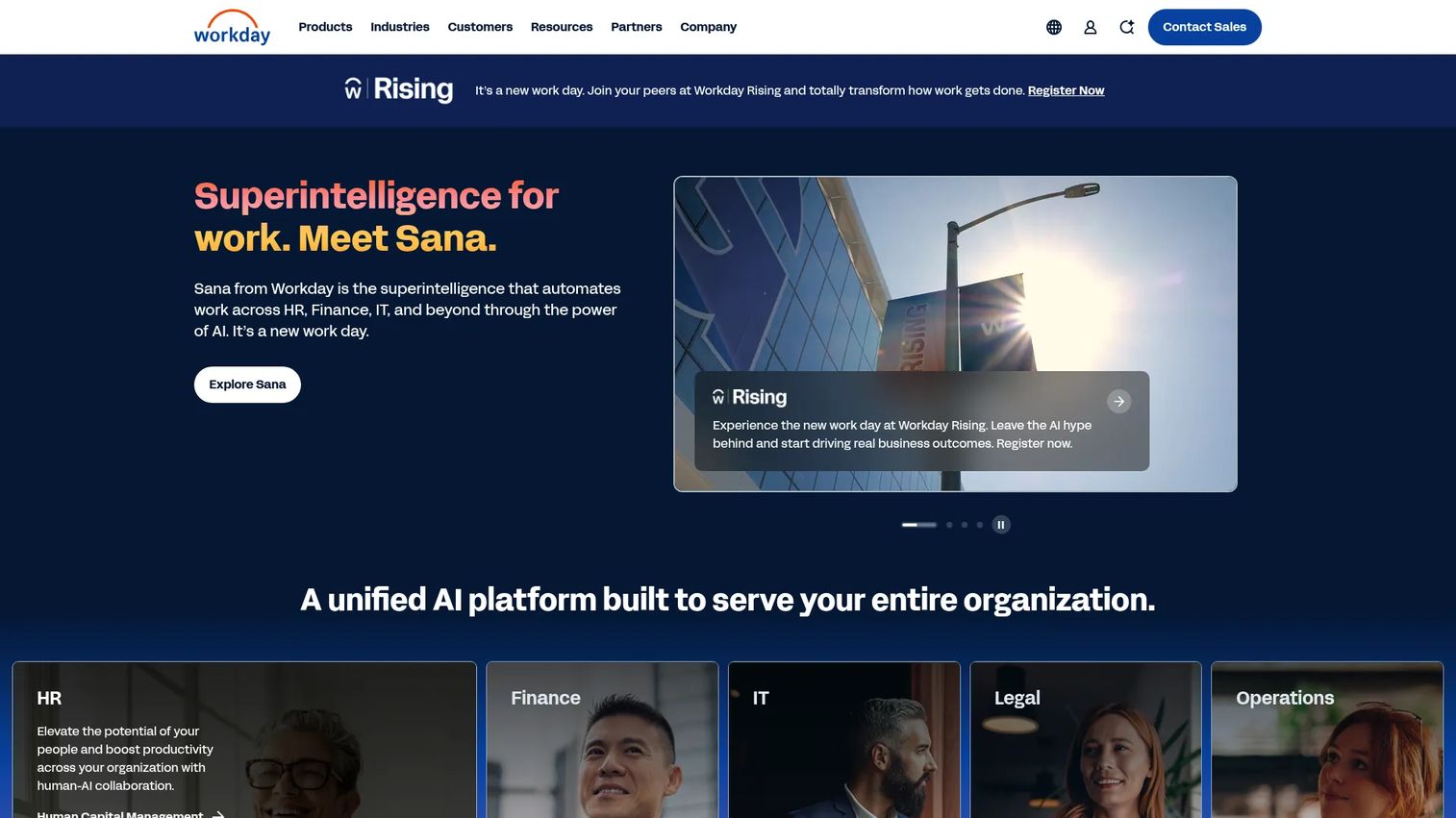
Workday is an enterprise cloud platform for HR, payroll, finance, and AI-driven work management, with talent development sitting inside one connected data model. Instead of running development as a bolt-on, Workday puts skills, learning, performance, and mobility in the same system as your headcount and finance data. That connection is the whole pitch: when development activity and workforce data live together, leadership can actually plan.
Best for: Midmarket to enterprise organizations that want a unified HR and finance suite with development at the center.
Key strengths
- Unified data model: HR, payroll, and finance in one platform, so talent decisions connect to headcount and cost.
- Governed AI agents: automation and AI built with audit controls, not bolted on as a marketing claim.
- Real-time analytics: reporting and audit controls that give leadership talent analytics they can trust in a board meeting.
Why choose Workday: If you already run at enterprise scale and want succession planning, learning, and performance connected to your financial data, Workday's unified model is hard to beat. The trade-off is that it is built for the 5,000-person company, not the 50-person one. For a Series B founder, this is usually a "later" decision, not a "now" one.
Workday pricing: Workday does not publish numeric pricing. The company states that pricing is available by speaking with an expert, and its midsize business plans are contact-sales only. Expect an enterprise-tier commitment with implementation scope to match.
2. Lattice
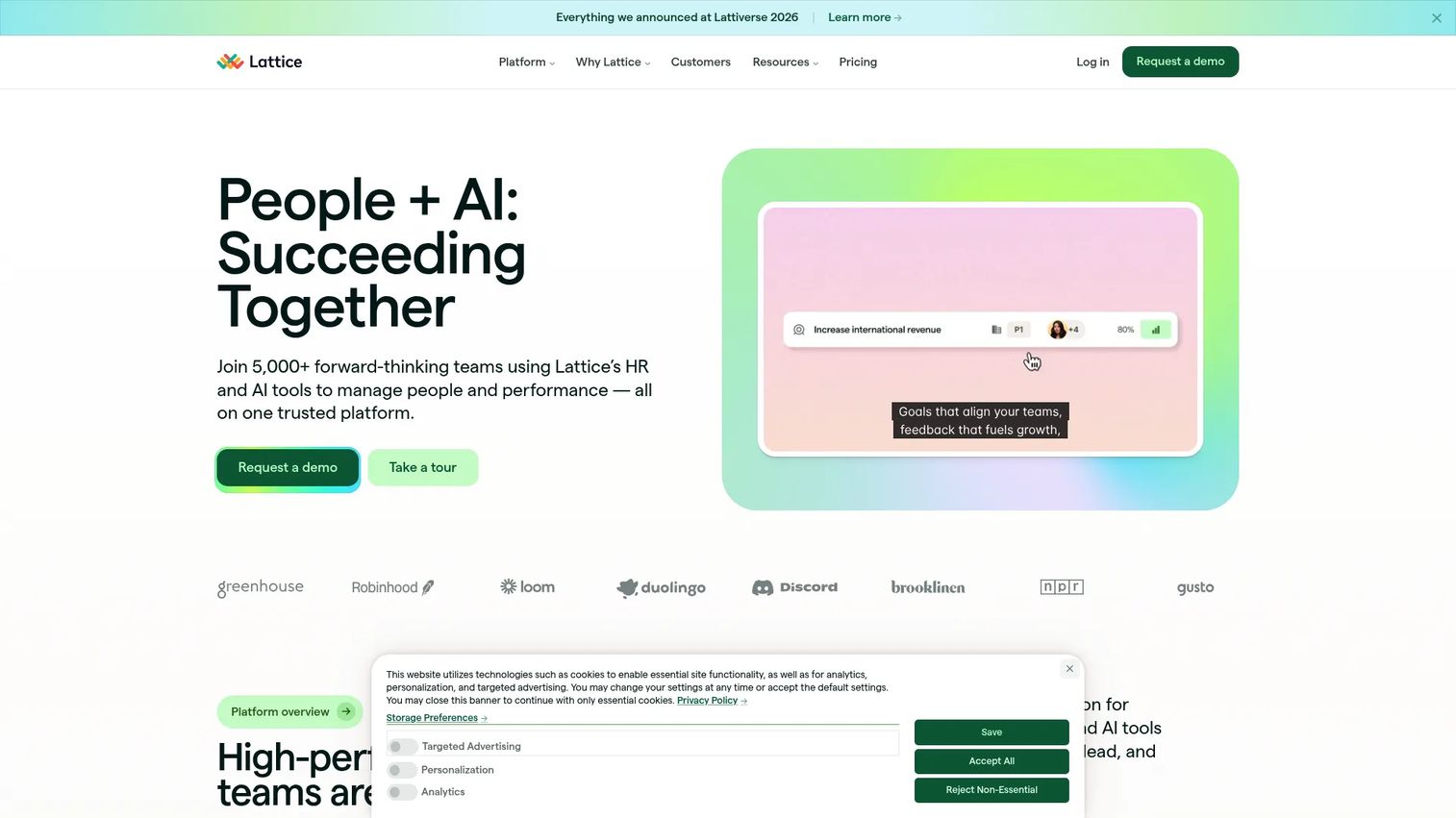
Lattice is an AI-powered people management platform that ties development directly to performance management. Reviews, goals and OKRs, 1:1s, feedback, engagement surveys, and growth plans all live in one place, which is exactly what a scaling team needs when development and performance keep drifting apart in separate tools. Lattice reports that thousands of teams use its HR and AI tools to manage performance, engagement, pay, and more in one platform.
Best for: HR and people teams managing performance, goals, engagement, and development together as scaling companies.
Key strengths
- Performance reviews and feedback: structured review cycles and continuous feedback that give managers a repeatable coaching rhythm.
- Goals and OKRs: goal tracking that connects individual work to company objectives, so 1:1s have a spine.
- Engagement surveys and analytics: engagement data tied to performance, so you see disengagement before it becomes a resignation.
Why choose Lattice: For a founder building a repeatable people operation, Lattice earns its place because it standardizes the manager workflow without heavy enterprise overhead. Development plans sit next to reviews, so growth is not a once-a-year conversation. The Grow add-on adds career pathing when you are ready for it.
Lattice pricing: Lattice bills annually in USD with a stated $4,000 minimum annual agreement. Individual products start around $4 seat/month (Engagement), with Performance and Goals & OKRs at $8 seat/month, and a Foundations bundle at $11 seat/month. The Grow development add-on is +$4 seat/month, Compensation is +$6 seat/month, and Enterprise is a custom quote. There is no free tier.
3. Cornerstone OnDemand
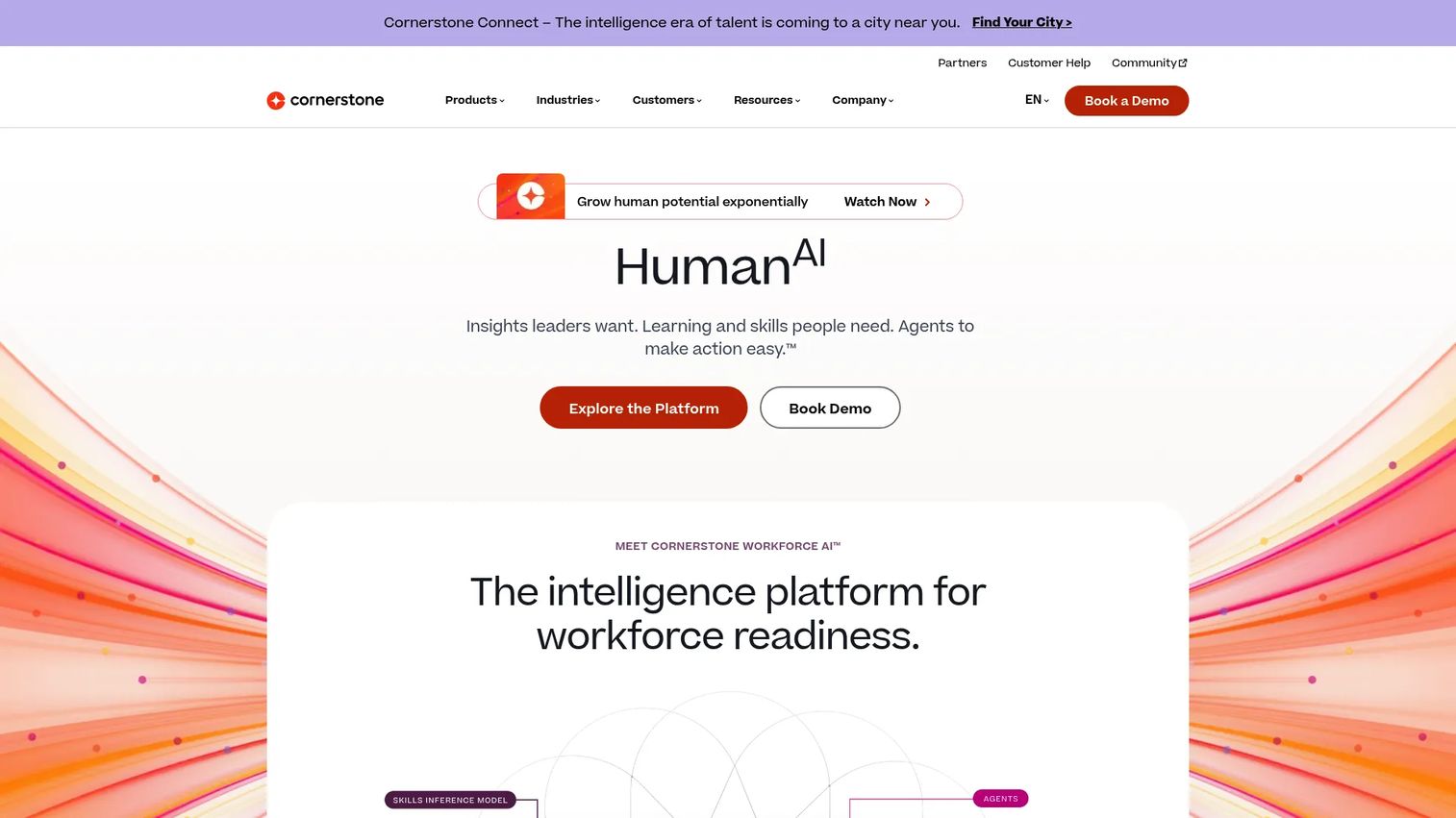
Cornerstone OnDemand is an AI-powered workforce readiness platform built around learning, talent, and compliance. Where lighter tools treat learning as a checkbox, Cornerstone treats it as core infrastructure: compliance-ready training, role-based learning paths, and a deep content library that supports skills-based development at scale. If learning is the center of your development strategy, this is the category leader for depth.
Best for: Large organizations that need enterprise learning, skills, and talent development at scale.
Key strengths
- Cornerstone Learning: compliance-ready training and role-based learning paths for regulated and complex workforces.
- Content subscriptions: curated multi-modal learning content, so you are not sourcing courses one at a time.
- Workforce AI and agents: AI for skills inference, readiness, and learning assistance that personalizes what each employee sees next.
Why choose Cornerstone OnDemand: Choose Cornerstone when learning infrastructure matters more than lightweight performance workflows. If you have compliance training obligations, a large content need, and a mandate to build skills across thousands of employees, this is purpose-built for that reality. Smaller teams usually do not need this depth yet.
Cornerstone OnDemand pricing: Cornerstone does not publish numeric pricing on its public site. Pricing appears to be quote-based, aligned with enterprise learning deployments. Expect to scope by employee count, content subscriptions, and modules.
4. SAP SuccessFactors
SAP SuccessFactors is cloud-based human capital management software covering core HR, payroll, talent, analytics, and employee experience. Talent development is embedded inside a broad HCM suite, which is the point for global enterprises: recruiting, onboarding, learning, performance, and compensation run on shared data across regions and compliance regimes. SAP reports more than 9,900 organizations using its HCM solutions across segments, industries, and regions.
Best for: Large, global organizations that need an enterprise HCM suite with talent development built in.
Key strengths
- Core HR and payroll: the system-of-record foundation that global operations require.
- Talent management suite: recruiting, onboarding, learning, performance, and compensation in one connected suite.
- HR analytics and workforce planning: talent analytics and planning tools built for scale and complexity.
Why choose SAP SuccessFactors: Choose SuccessFactors when you operate globally and need talent development to sit inside a full HR suite with serious compliance and localization support. The breadth is the value and the commitment. This is an enterprise decision with an enterprise implementation, not a quick win for a 60-person team.
SAP SuccessFactors pricing: SAP does not publish a numeric starting price. Its HCM pricing page shows packages and add-ons as contact-sales or request-a-quote. Pricing scales with modules, employee count, and deployment scope.
5. PeopleFluent
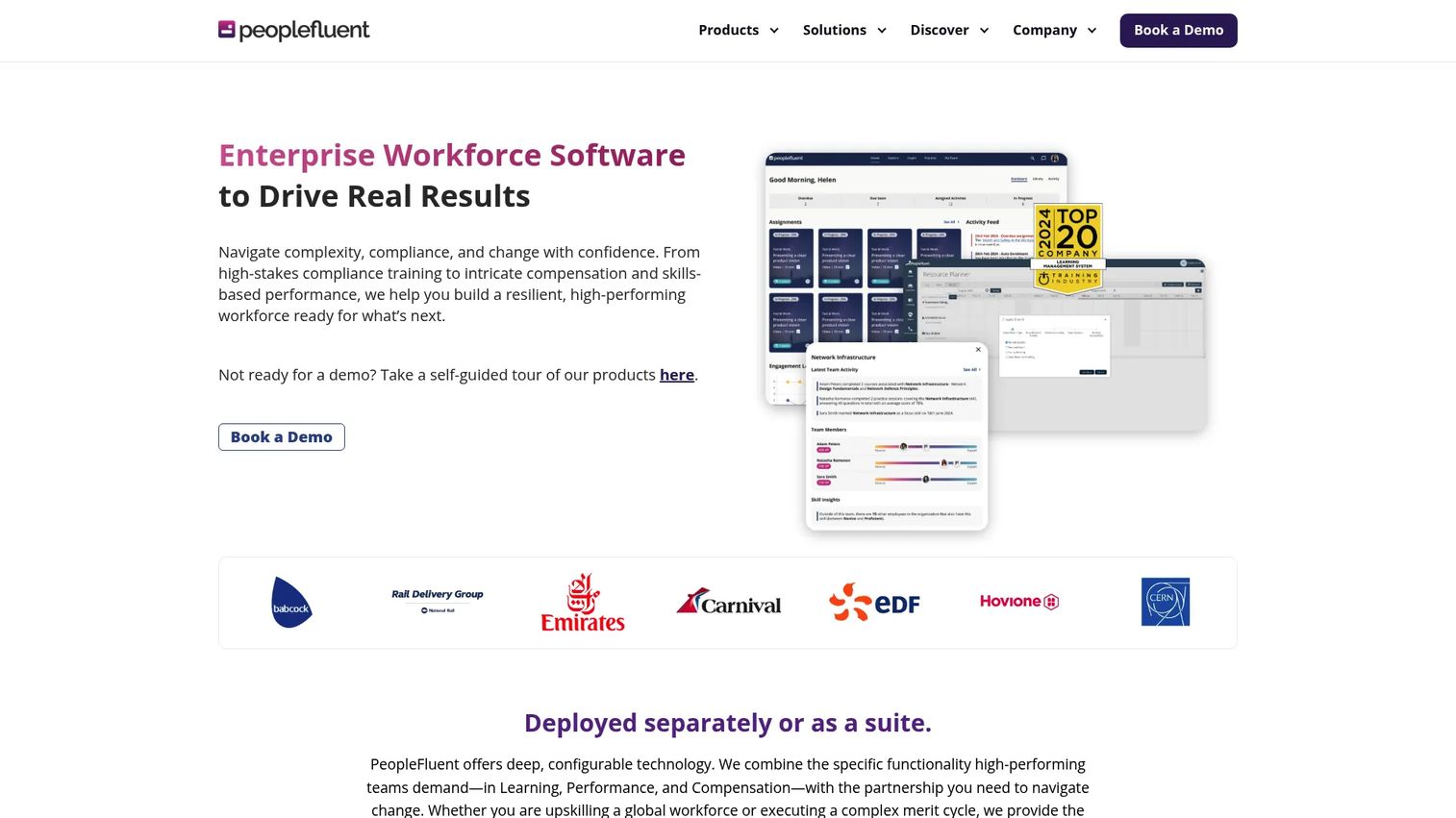
PeopleFluent is enterprise talent management and learning software built for regulated industries. Its strength is configurability: unified talent profiles, performance management with goals and feedback, learning for compliance and development, and a recruiting and talent management suite that bends to complex workflows. When your industry demands specific processes and audit trails, that flexibility matters more than a slick UI.
Best for: Mid-market to enterprise HR teams in regulated industries that need deep configurability.
Key strengths
- Learning management: compliance and development learning built for regulated environments.
- Performance management: goals and feedback workflows that adapt to complex organizational structures.
- Recruiting and talent suite: unified talent profiles connecting hiring, performance, and development.
Why choose PeopleFluent: Choose PeopleFluent when your requirements are non-standard and configurability is the deciding factor. Regulated industries with strict process and reporting needs get more room to model their reality here than in more opinionated platforms. Teams that want fast out-of-the-box setup usually look elsewhere.
PeopleFluent pricing: PeopleFluent does not publish public pricing. The site directs visitors to request a demo or contact sales. Pricing is quote-based and scoped to your configuration and employee count.
6. UKG Pro
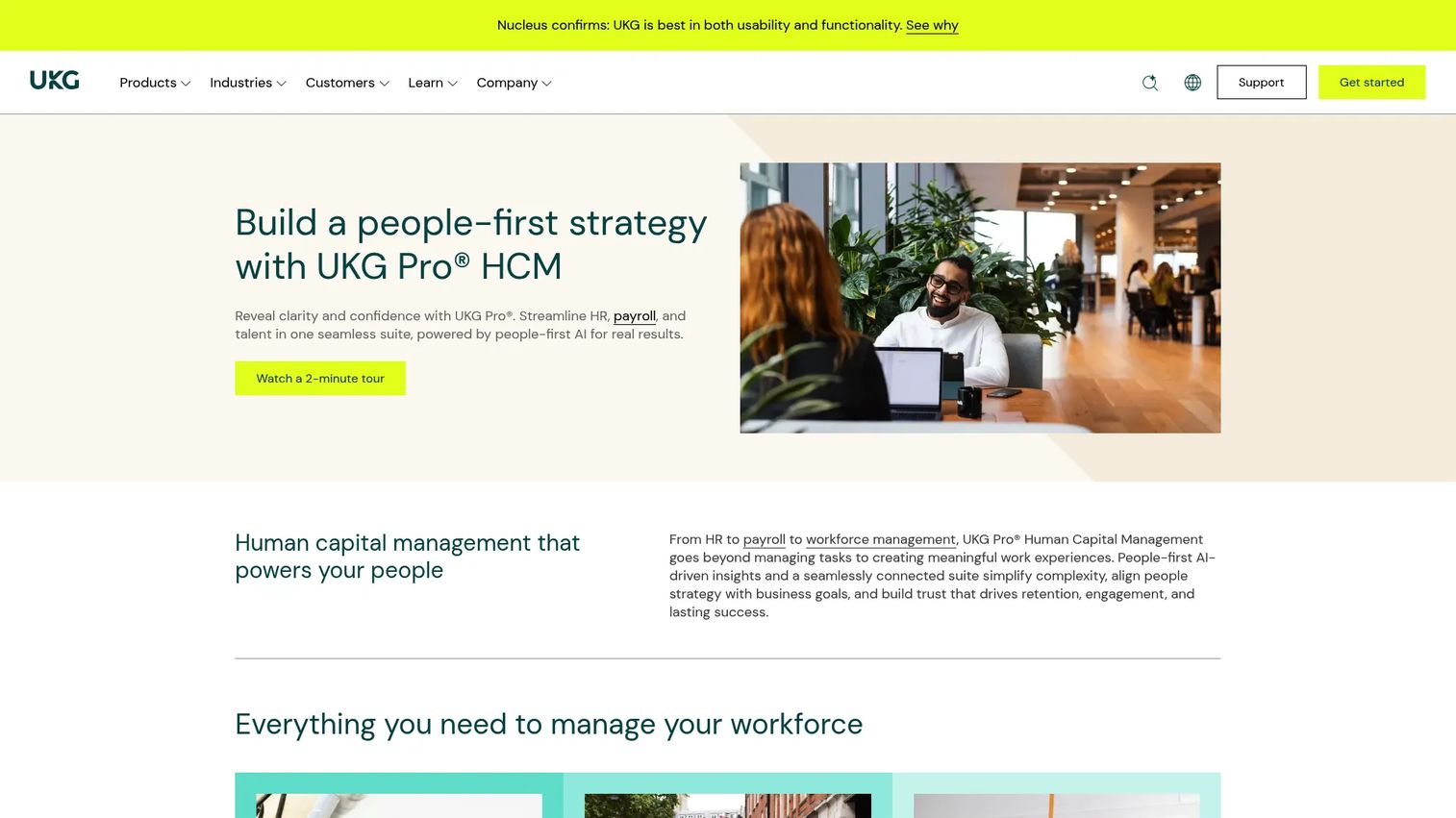
UKG Pro is a cloud HCM suite covering HR, payroll, time and attendance, talent, and workforce management. For organizations that want a broad HR foundation with talent development capabilities included, UKG Pro consolidates the operational HR stack and layers talent modules on top. The appeal is one system for payroll, workforce management, and development instead of three.
Best for: Midmarket to enterprise organizations that want unified HR, payroll, and workforce management with talent modules.
Key strengths
- Human resources: a full HR system of record for growing and complex organizations.
- Payroll: integrated payroll that connects compensation to the same platform as development.
- Time and attendance: workforce management built for hourly, shift-based, and mixed workforces.
Why choose UKG Pro: Choose UKG Pro when your priority is a broad HCM foundation and talent development is one capability among several you need in one place. It is especially strong for companies with significant hourly or frontline workforces where time, payroll, and development belong together. Development-first teams may want a more focused tool.
UKG Pro pricing: UKG does not publish numeric pricing on its public site. Pricing appears to be quote-based, scoped by employee count and module selection. Expect an HCM-suite commitment rather than a per-seat self-serve tier.
7. Peoplebox.ai
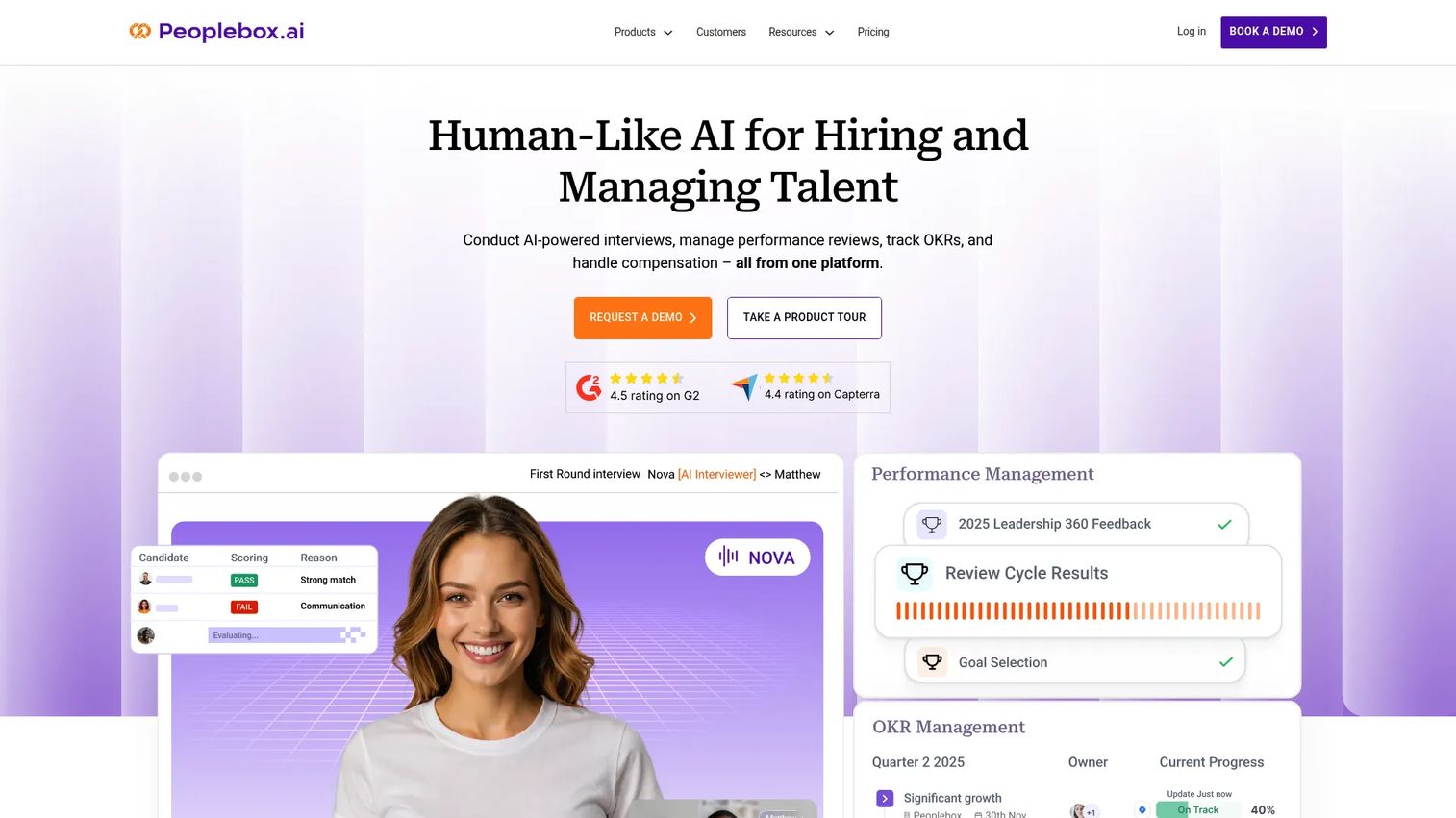
Peoplebox.ai is AI talent management software covering hiring, performance, goals, engagement, and compensation. It is built for teams that want modern performance and development workflows without heavy enterprise overhead. Performance reviews, OKRs, calibration, 1:1s, 360 feedback, and AI-assisted hiring sit in one platform, with modular pricing so you buy what you need. Peoplebox reports adoption across hundreds of organizations.
Best for: Mid-market HR teams that want one platform for performance, OKRs, engagement, and AI-assisted hiring.
Key strengths
- Performance management: reviews, goals, calibration, and compensation in one workflow, so development connects to pay.
- AI hiring tools: resume screening and AI interviews that speed the top of the talent funnel.
- Engagement and feedback: 1:1s, 360 feedback, and business reviews that keep development continuous, not annual.
Why choose Peoplebox.ai: For a scaling team, Peoplebox earns its place with modern workflows and modular pricing that fits a mid-market budget. You can start with engagement or development plans and add performance management and AI as you grow, without committing to a full enterprise suite on day one. That flexibility is exactly what a founder wants from a new tool.
Peoplebox.ai pricing: Peoplebox publishes module-based, per-employee pricing billed annually. Engagement starts at $2/emp/month, Individual Development Plans at $3/emp/month, Compensation at $5/emp/month, and Performance Management and 360 degree at $8/emp/month each. The Nova AI Teammate is a custom quote. There is no free tier.
Considerations before you buy
Before you sign, pressure-test the tool against how it will actually run in your company, not how it looks in a demo.
Manager adoption
The best talent management system fails if managers do not use it. Look for workflows managers can follow in minutes, not a system that needs a training program to operate. Ask to see the 1:1 and review flow from a manager's seat, not the admin console.
How the layers connect
Performance, learning, internal mobility, and succession planning should talk to each other. A skills gap in a review should be able to trigger a learning path and feed a succession slate. If those live in disconnected modules, you are buying four tools wearing one logo.
Analytics leadership will actually read
You need talent analytics clean enough to answer "who is ready for what next" and "where is retention risk" without stitching together dashboards. Confirm the reporting maps to decisions you make weekly, not vanity metrics.
Integrations and stage fit
Check HRIS, payroll, identity, learning content, and collaboration integrations before committing. Then be honest about stage: a 60-person company usually needs performance and development workflows first, and heavy succession complexity later. Buy for the next 18 months, not for the org chart you imagine at 5,000 people.
Conclusion
Talent development software is an operating leverage decision. The right system lifts manager quality, keeps your best people growing, and gives leadership a clear view of who is ready for what next, which is exactly the work that otherwise routes back through the founder.
For scaling teams that want development tied tightly to performance, Lattice is the strongest starting point, with reviews, goals, 1:1s, and growth plans in one place. Peoplebox.ai is the modern, modular pick for mid-market teams that want AI-assisted workflows without enterprise overhead. If learning infrastructure is your center of gravity, Cornerstone OnDemand leads on depth. And for global enterprises, Workday and SAP SuccessFactors put development inside a unified data model, while UKG Pro and PeopleFluent serve broad HCM and regulated, configurable needs.
Start with the workflows your managers will touch every week, prove adoption, then expand into succession and analytics. Buy the system that reduces founder dependency, not the one with the longest feature list.
Start your journey with Guideflow today!
FAQs
Talent development software combines learning and development, performance management, skills-based development, internal mobility, and succession planning in one system. It focuses on helping employees grow and helping leadership see who is ready for what next. Most modern platforms deliver this as connected modules rather than separate tools.
Talent management software is the broader category, covering the full employee lifecycle including recruiting, onboarding, performance, compensation, and development. Talent development is the growth layer inside it, focused specifically on learning, skills, mobility, and succession. Most talent management suites include development as a module, and most development-first tools have expanded into adjacent talent management solutions.
Prioritize a skills framework or skills cloud, role maps, development plans, and clear visibility into readiness. Career pathing works when employees can see the skills a next role requires and the path to build them. Leadership needs the same data in reverse: who is ready, who is close, and where the gaps are.
Yes, once you scale past the point where you personally know every employee's growth path. The tool improves manager quality, shortens ramp time, reduces retention risk, and gives you a succession bench instead of a fire drill every time a lead leaves. For a Series B founder, that is direct operating leverage, not an HR nicety.
Usually performance management, consistent manager workflows, and lightweight development plans, before heavy succession complexity. Standardizing reviews, goals, and 1:1s delivers the fastest lift in manager effectiveness. Add succession planning and deeper talent analytics once the core performance rhythm is adopted and running.
Look for practical use cases: coaching prompts for managers, skills inference from work and reviews, and personalized learning recommendations. Ask the vendor exactly what the AI does and what data it uses, not whether it is "AI-powered." Generic AI claims without a specific workflow are a red flag.
Prioritize HRIS, payroll, identity and single sign-on, learning content, collaboration tools, and your analytics stack. These integrations keep employee data consistent and let development activity connect to the rest of your operations. Weak integrations create duplicate data entry and dashboards nobody trusts.
It varies by tool class. Lighter performance and development platforms can be live in weeks, while full-suite enterprise systems covering HR, payroll, learning, and succession often take several months and dedicated implementation resources. Scope timeline against employee count, module breadth, and how many existing systems you are integrating.