A merchandiser walks into a store. The endcap promotion that marketing built a campaign around is buried behind a competitor's display. The planogram is wrong. The price tag is missing. Nobody at headquarters knows any of this happened until the quarter closes and the numbers come in soft.
That gap between what brands plan and what actually happens on the shelf is the problem retail execution software exists to close. For teams running field sales, merchandising, and store audits across hundreds or thousands of locations, the difference between a guess and a photo with a timestamp is the difference between knowing your in store execution is working and hoping it is.
The market reflects how seriously brands now take this. Growth Market Reports put the global retail execution software market at US$3.25B in 2025, projected to reach US$7.72B by 2034 at a 10.1% CAGR, with North America accounting for 37.8% of revenue. GetLatka counted 73 SaaS companies in the space serving roughly 25,000 combined customers in 2026. The category is crowded, and the platforms differ in ways that matter to your operating model.
This guide ranks eight real retail execution platforms by how well they fit different field sales execution realities. If you also evaluate adjacent stacks, our roundups of the best field sales software and audit management software cover the neighboring categories.
What's inside
This guide is built for operators and go-to-market buyers choosing a retail execution solution: brand teams, CPG field organizations, distributors, and enterprise retail ops. We selected platforms on four criteria that decide day-to-day usefulness: execution depth (audits, tasks, promotions), offline mobile reliability, photo proof and planogram compliance, and integration fit with the systems you already run. We did not rank on marketing claims. Each entry explains who the tool fits, what it does well, and how it is priced where pricing is public.
TL;DR
- Best all-in-one for field sales plus execution: Pepperi, for B2B brands and wholesalers needing ordering and execution in one system.
- Best merchandiser-first retail execution platform: Repsly, for CPG brands and retail service teams focused on shelf visibility.
- Best for audit-heavy field programs: GoSpotCheck by FORM, with public entry pricing and strong visual reporting.
- Best for distributors: SimplyDepo, combining route planning, order management, and execution.
- Best for large frontline retail operations: Zipline, for unified store-team communication and tasking.
- Best enterprise store governance: Cegid Retail Store Excellence, for centralized standards and compliance.
- Best shelf intelligence-led program: Wiser Solutions, for pricing and digital shelf data.
- Best managed field network: ThirdChannel, pairing software with field reps.
What is retail execution software?
Retail execution software is a category of store execution software that helps brands, distributors, and retailers manage and verify what happens at the point of sale. It coordinates field reps and merchandisers, captures store conditions through photos and checklists, and reports on compliance so headquarters can see whether promotions, planograms, and brand standards are actually live in stores.
Most retail merchandising software in this category shares a recognizable feature set:
- Store visit and task management: Schedule visits, assign tasks by store or rep, and track completion against a route or calendar.
- Store audits and checklists: Structured retail audit checklists for shelf conditions, stock levels, pricing, and brand standards.
- Photo capture and photo proof: Time-stamped, geotagged images that document shelf state and prove work was done.
- Planogram compliance: Compare actual shelf layouts against the planned planogram, often with image recognition.
- Promotions execution: Verify that displays, pricing, and promotional materials match the trade plan.
- Offline mobile app support: An offline-first mobile experience so reps work in low-connectivity stockrooms and backrooms, then sync later.
- Reporting and analytics: Dashboards that turn store-level data into compliance scores and trends.
- Integrations: Connections to ERP, CRM, and trade promotion systems so execution data flows into the rest of the business.
The common thread: replace anecdotal "the store looked fine" reporting with structured, verifiable evidence. That shift from hearsay to data is what makes retail execution management software worth the spend.
When to use retail execution software
Not every team needs the same depth. Match the tool to the moment.
Verify planogram compliance at scale
When you run planograms across many stores and resets happen constantly, manual checks fall behind reality. Retail execution tools with planogram compliance and image recognition let you compare the shelf against the plan and flag gaps before they cost sales. This is the core use case for CPG brands fighting for shelf space.
Prove promotions are live with photo capture
Trade spend is large and hard to verify. When marketing funds a display program, photo proof with timestamps and geotags shows whether the promotion actually went up. Photo capture turns trade promotion execution from a trust exercise into an auditable record.
Keep field teams productive offline
Stores have dead zones. Stockrooms, backrooms, and rural locations often lack signal. An offline mobile app that captures visits, photos, and orders without a connection, then syncs when service returns, keeps field sales execution moving regardless of connectivity. If offline reliability is non-negotiable, weight it heavily in your evaluation.
Comparison of the best retail execution tools
The table below summarizes how each retail execution solution fits a buyer profile. Pricing is shown where it is public; several vendors quote based on scope. For adjacent buying decisions, our guide to audit management software and event management software cover related operational tooling.
| # | Product | Intent | Key use case | Pricing | G2 rating |
|---|---|---|---|---|---|
| 1 | Pepperi | All-in-one field sales plus execution | B2B ordering, DSD, retail execution | Custom | 4.3/5 |
| 2 | Repsly | Merchandiser-first execution | Field merchandising, shelf visibility, image recognition | Plan-based, annual | 4.3/5 |
| 3 | GoSpotCheck by FORM | Audit and task execution | Checklists, image recognition, photo reporting | From $40/user/mo | 4.7/5 |
| 4 | SimplyDepo | Distributor execution | Orders, routes, retail execution | Core plan, free trial | 4.7/5 |
| 5 | Zipline | Frontline retail operations | Communications, tasking, audits | Custom | 4.8/5 |
| 6 | Cegid Retail Store Excellence | Enterprise store governance | Tasking, compliance, brand standards | Custom | 4.6/5 |
| 7 | Wiser Solutions | Shelf intelligence-led execution | Pricing, in-store execution, digital shelf | Custom | 4.3/5 |
| 8 | ThirdChannel | Managed field network | Merchandising, assisted selling, visibility | Custom | 4.3/5 |
1. Pepperi
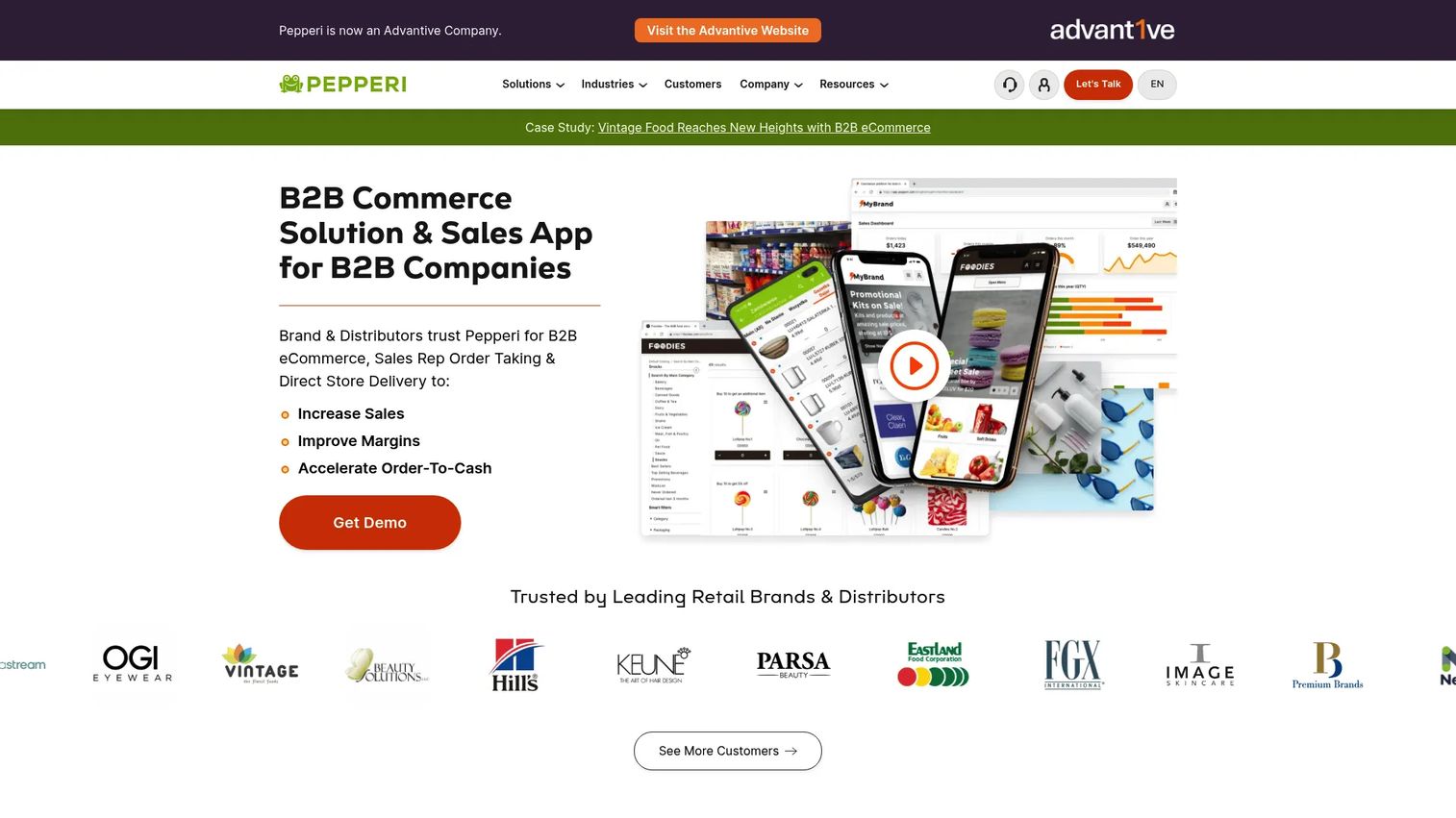
Pepperi is a B2B commerce platform that combines eCommerce, sales rep order taking, route accounting and direct store delivery, retail execution, and mobile CRM in one system. For brands and wholesalers that want their reps to take orders and verify execution on the same store visit, it is the broadest option on this list. The appeal is consolidation: one mobile app handles both the commercial transaction and the merchandising audit.
Best for: B2B brands and wholesalers that need omnichannel sales and order-taking workflows alongside retail execution.
Key strengths
- B2B eCommerce with buyer-specific catalogs: Each customer sees their own pricing, discounts, and order history, so reps and self-serve buyers work from accurate data.
- Field and sales rep mobile order taking: Reps capture orders in-store and pair them with execution tasks in a single visit.
- Route accounting and DSD with offline support: Direct store delivery and route accounting run offline, then sync, which suits beverage, snack, and DSD-heavy categories.
Why choose Pepperi: If your field motion is fundamentally about selling and ordering, with execution as a connected layer rather than a standalone program, Pepperi avoids the seam between two separate tools. Teams running both DSD and merchandising compliance get the most value, since trade promotions and retail execution live next to order taking.
Pepperi pricing: Pepperi's first-party pricing page uses a contact-us model and references annual and month-to-month billing, but does not publish numeric prices or named tiers. Plan to scope pricing through their sales team. Pepperi holds a 4.3/5 rating on G2.
2. Repsly
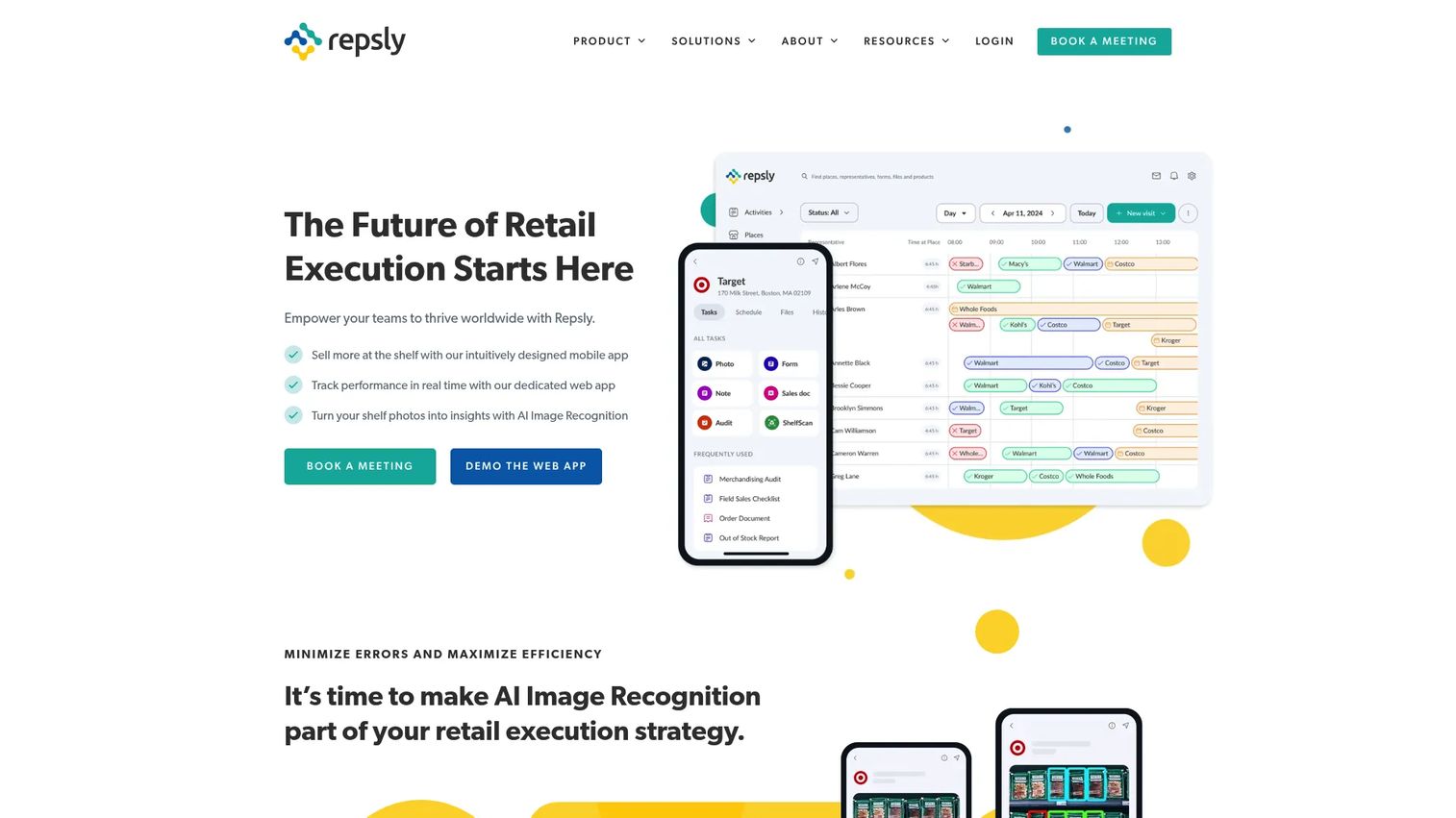
Repsly is a retail execution platform built around CPG and field teams, known for field merchandising, image recognition, and store visit workflows. Where Pepperi leads with commerce, Repsly leads with execution and shelf visibility. The product centers on getting reps into the right stores, capturing what they see, and turning that into insight headquarters can act on.
Best for: CPG brands and retail service teams that need field execution and shelf visibility as the primary motion.
Key strengths
- Representative database and account management: Keep rep assignments, store data, and account history organized so visits target the right locations.
- Scheduling, workday tracking, and real-time activity feed: Managers see field activity as it happens, not at end of day.
- AI image recognition, integrations, and insights dashboards: Photo capture feeds image recognition for planogram and shelf checks, then rolls up into dashboards.
Why choose Repsly: Repsly fits brands whose field teams exist to merchandise and audit rather than to take orders. The real-time activity feed and image recognition make it a strong retail merchandising software choice for teams that measure success by compliance and shelf conditions. Reporting is built to prove execution to internal stakeholders.
Repsly pricing: Repsly offers Core, Grow, Scale, and Flex plans. The pricing page lists plans and features but does not publish numeric prices. Contracts require a 12-month minimum commitment with annual upfront payment, and there is no free tier. Repsly holds a 4.3/5 rating on G2.
3. GoSpotCheck by FORM
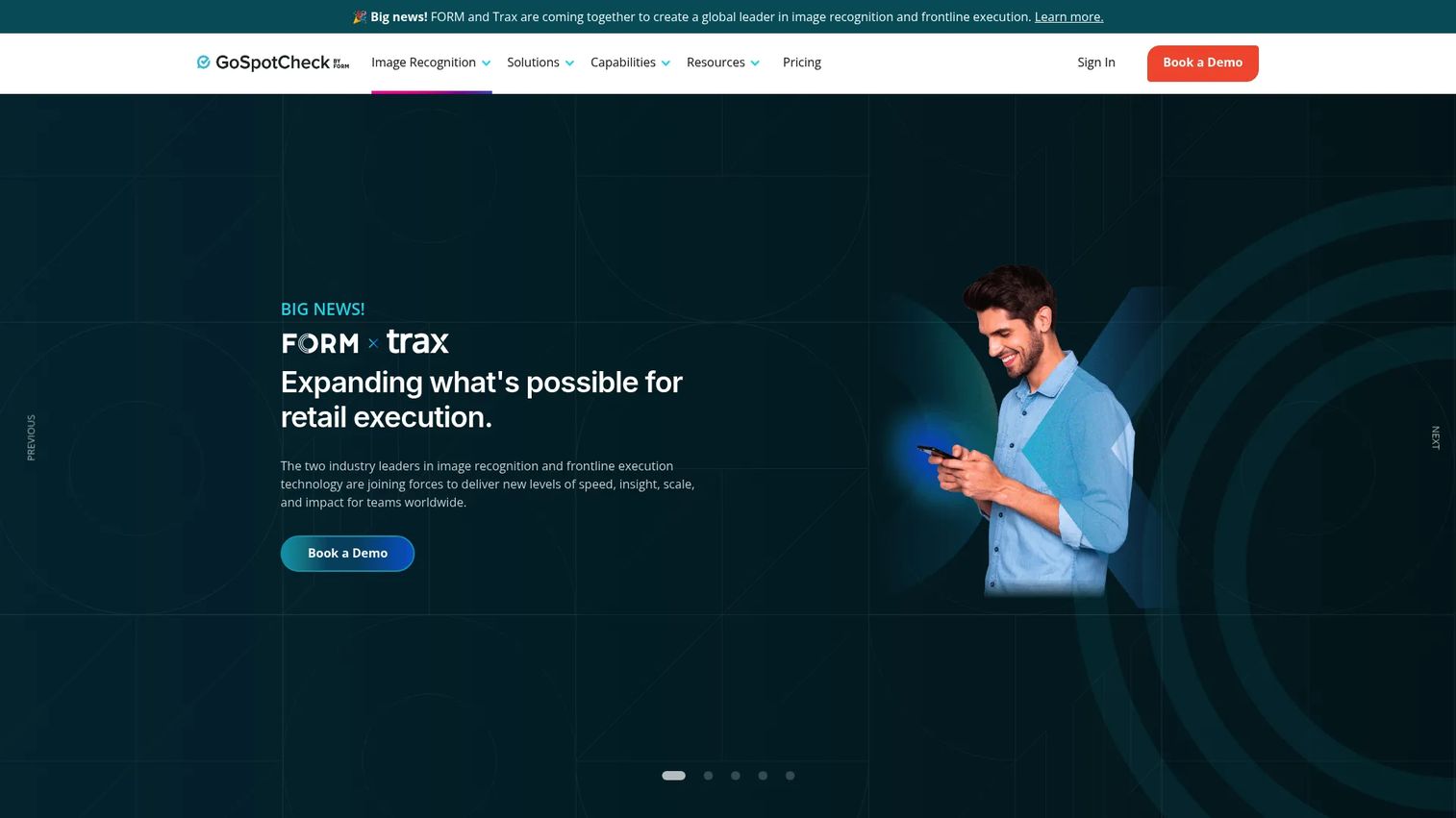
GoSpotCheck by FORM is field execution software focused on task management, image recognition, photo reporting, and analytics for frontline teams. It earns a place on this list for audit-heavy programs where the priority is fast, structured data capture and clean visual reporting across distributed teams. The mobile experience is designed for reps who run a high volume of store audits.
Best for: Retail, consumer goods, and field sales teams that need mobile execution and visual reporting at scale.
Key strengths
- Task management and execution: Assign, sequence, and track tasks so reps know exactly what to do in each store.
- Image recognition: Automated shelf and display analysis from photos speeds up planogram compliance checks.
- Photo reporting and analytics: Visual evidence rolls into dashboards that quantify execution across locations.
Why choose GoSpotCheck by FORM: When your program is anchored on store audits and photo proof rather than order taking, GoSpotCheck's focus on task execution and image recognition keeps reps fast and managers informed. It also publishes entry-level pricing, which makes budgeting easier than with quote-only vendors.
GoSpotCheck by FORM pricing: The Essentials plan starts at $40 per user per month with a 20-user minimum. Pro and Enterprise are custom pricing through sales. There is no free tier. GoSpotCheck by FORM holds a 4.7/5 rating on G2, the highest-rated option among the publicly-priced tools here.
4. SimplyDepo
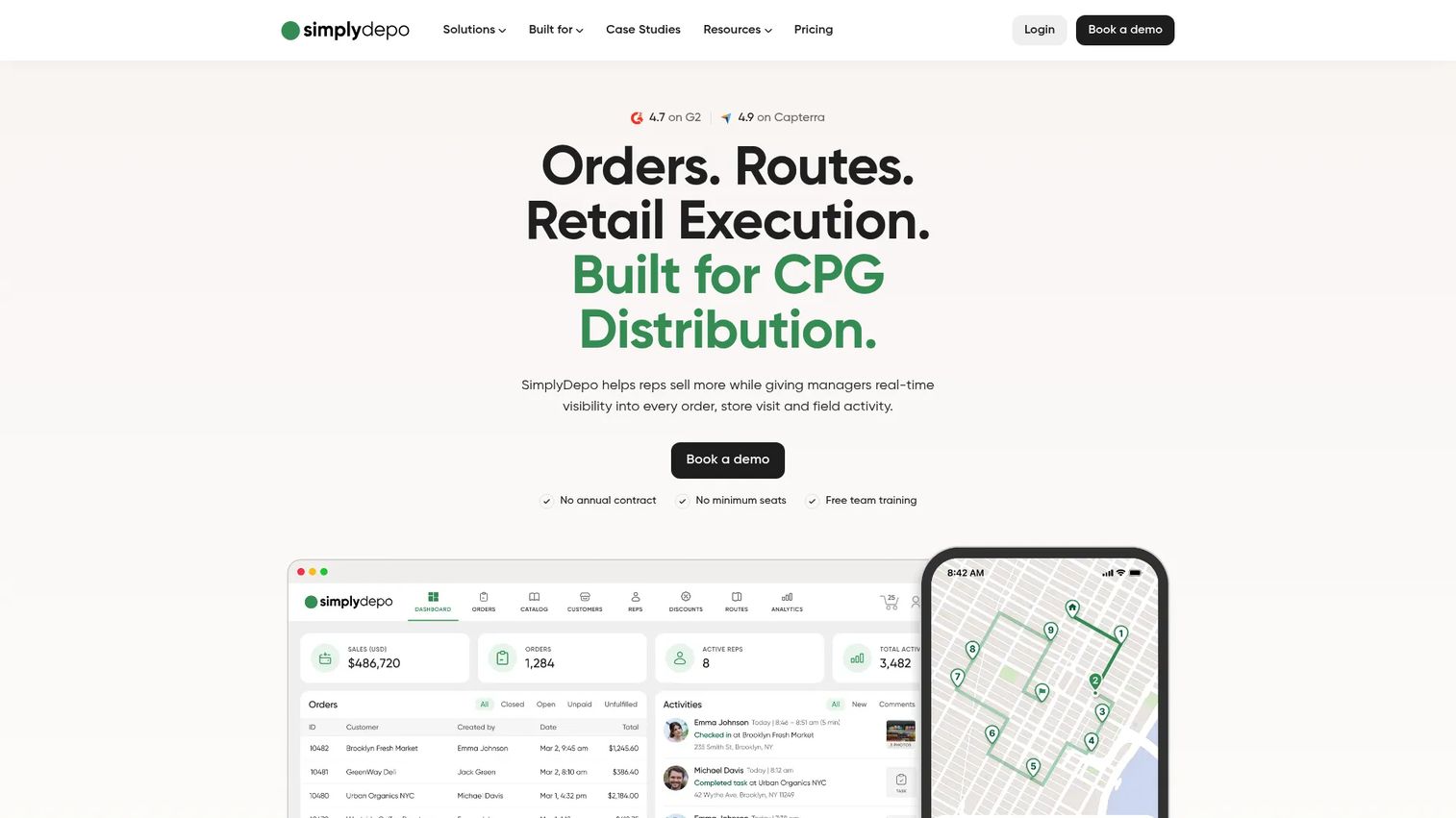
SimplyDepo is a B2B sales and retail execution solution built for CPG brands, distributors, and merchandising teams. It bundles the workflows distributors care about most: CRM, order management, route optimization, visit scheduling, and shelf photo logging in one mobile-first system. For distribution teams that want orders, routes, and execution under one roof, it is purpose-built.
Best for: CPG distribution teams that need one system for orders, routes, and retail execution.
Key strengths
- CRM and customer management: Keep customer records, history, and account context with the rep in the field.
- Order management and pricing lists: Reps take orders against accurate, customer-specific pricing on the visit.
- Route optimization, visit scheduling, and shelf photo logging: Plan efficient routes, schedule visits, and capture shelf photos as proof.
Why choose SimplyDepo: SimplyDepo's distributor-friendly positioning shows in how tightly route planning and order management connect to execution. If your operating model is distributor sales with merchandising attached, the unified workflow reduces tool sprawl. The offline mobile support keeps reps productive in low-connectivity stores.
SimplyDepo pricing: SimplyDepo's public pricing page offers a 30-day free trial and a Core Plan with add-ons, but does not display numeric prices. There is no free tier beyond the trial. SimplyDepo holds a 4.7/5 rating on G2.
5. Zipline
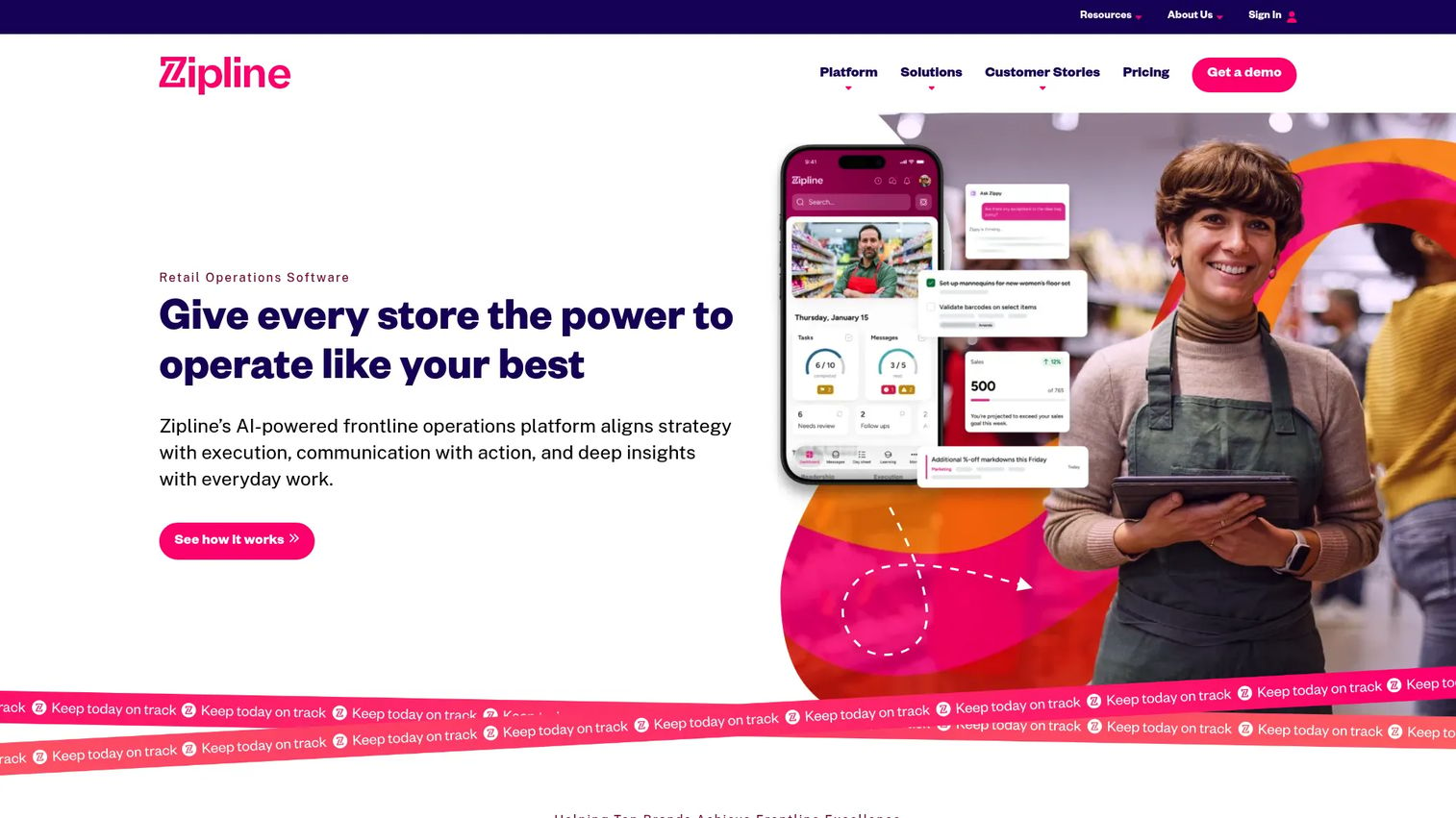
Zipline is a retail operations platform for frontline communication, task management, learning, and insights. It sits a step wider than pure merchandising tools, aimed at large retail brands that need to coordinate store teams, push tasks, and verify execution across many locations. Where field-rep tools serve brands visiting retailers, Zipline serves the retailer's own store teams.
Best for: Large retail brands that need a unified frontline execution platform across many stores.
Key strengths
- Frontline communications and task management: Send the right message and task to the right stores, then track completion.
- Learning module and resource library: Train store teams and keep reference material accessible in the same place.
- Store audits, assessments, and an AI companion: Run audits and assessments, with an AI assistant (Zippy) to surface what matters.
Why choose Zipline: Zipline fits retail organizations managing their own frontline workforce rather than brands sending reps into third-party stores. The combination of communications, tasking, and audits in one platform reduces the chaos of running store execution through email and spreadsheets. It is the strongest fit when execution governance spans an entire store network.
Zipline pricing: Zipline uses quote-based pricing. Its pricing page states there is no one-size-fits-all plan and invites prospects to scope a tailored plan with sales. Zipline holds a 4.8/5 rating on G2, the highest rating on this list.
6. Cegid Retail Store Excellence
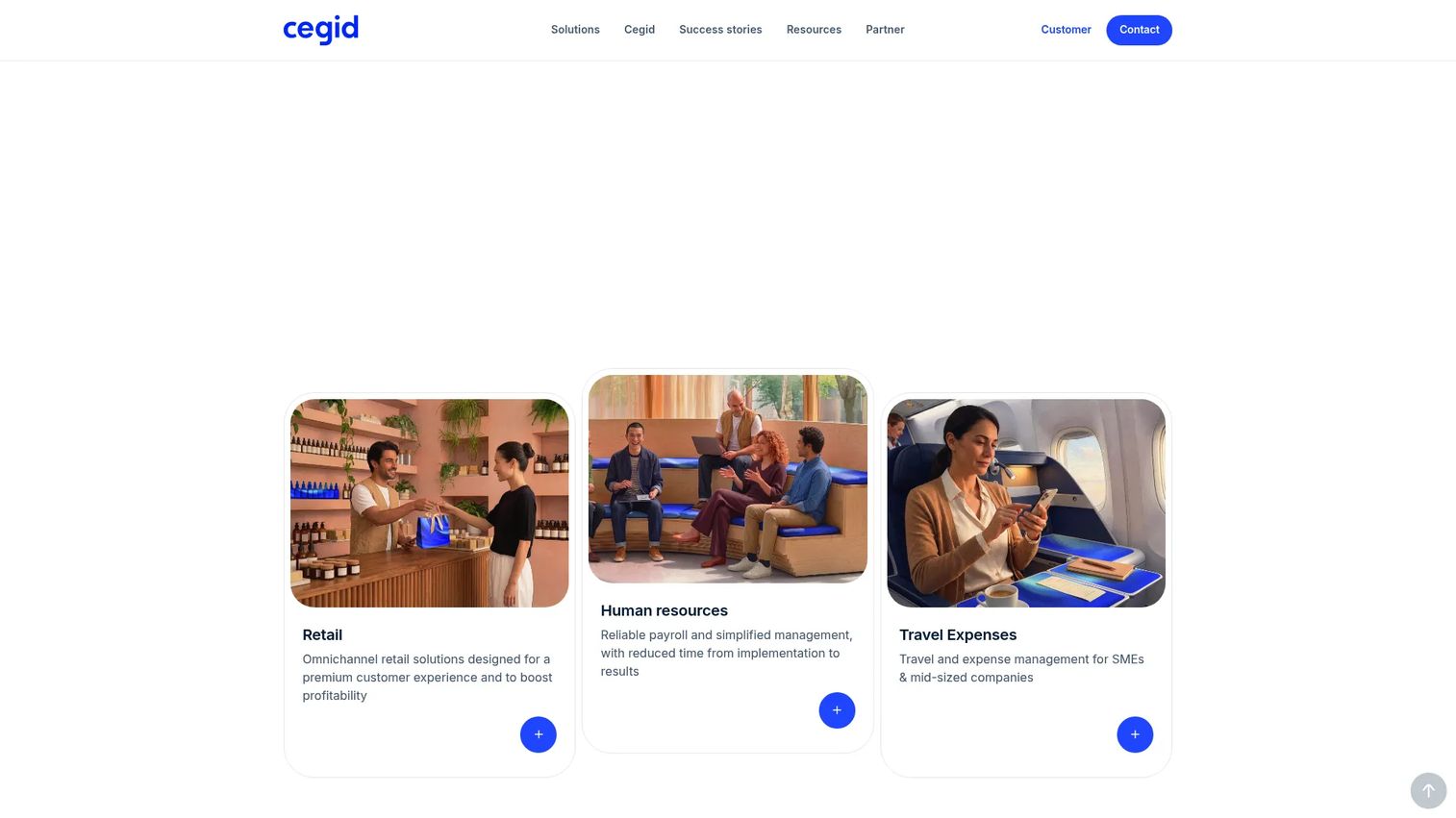
Cegid Retail Store Excellence is an AI-powered retail task management platform for store operations, communications, compliance, and team engagement. It is the enterprise governance option here, built for branded store operations and global retail organizations that need centralized standards enforced consistently across regions. The emphasis is on store standards, visual merchandising, and compliance at scale.
Best for: Retailers that need centralized store execution, tasking, and compliance management across a large footprint.
Key strengths
- Task management and store communications: Coordinate work and messaging across stores from a central system.
- Brand standards and visual merchandising: Enforce consistent brand presentation and visual standards in every location.
- Compliance checks, audits, and team engagement: Run compliance audits and workforce optimization alongside execution.
Why choose Cegid Retail Store Excellence: For global retail organizations where governance and consistency outrank field-rep ordering, Cegid's centralized model fits the operating reality. It pairs task management, compliance, and brand standards with team engagement, which matters when the people executing are store associates rather than visiting reps. Enterprise operational fit is the headline.
Cegid Retail Store Excellence pricing: Cegid uses a request-a-demo model and does not publish numeric pricing or tier names on its product pages. Scope pricing through their team. Cegid Retail Store Excellence holds a 4.6/5 rating on G2.
7. Wiser Solutions
Wiser Solutions is commerce execution software for brands and retailers focused on pricing, in-store execution, digital shelf, and MAP monitoring. It is the shelf intelligence-led option, built for brands that need stronger visibility into store conditions and pricing rather than a pure field-rep tasking tool. Wiser leans toward data and intelligence: what is on the shelf, at what price, and how it compares.
Best for: Retailers and brands that need enterprise pricing and commerce execution intelligence.
Key strengths
- Real-time price monitoring and price intelligence: Track pricing across stores and channels to catch gaps and MAP violations.
- In-store execution and retail auditing: Combine field audits with shelf data to verify conditions on the ground.
- Digital shelf intelligence and MAP execution: Extend visibility from physical shelves to digital listings.
Why choose Wiser Solutions: Wiser fits brands whose biggest execution gap is visibility, not workforce coordination. If you already know your reps are visiting stores but lack hard data on pricing and shelf conditions, the intelligence layer is the differentiator. It supports programs where pricing compliance and digital shelf visibility carry as much weight as physical merchandising. For teams building broader market intelligence stacks, our roundup of the best customer data platform covers a related layer.
Wiser Solutions pricing: Wiser does not publish public pricing and directs visitors to contact sales or book a demo. Wiser Solutions holds a 4.3/5 rating on G2.
8. ThirdChannel
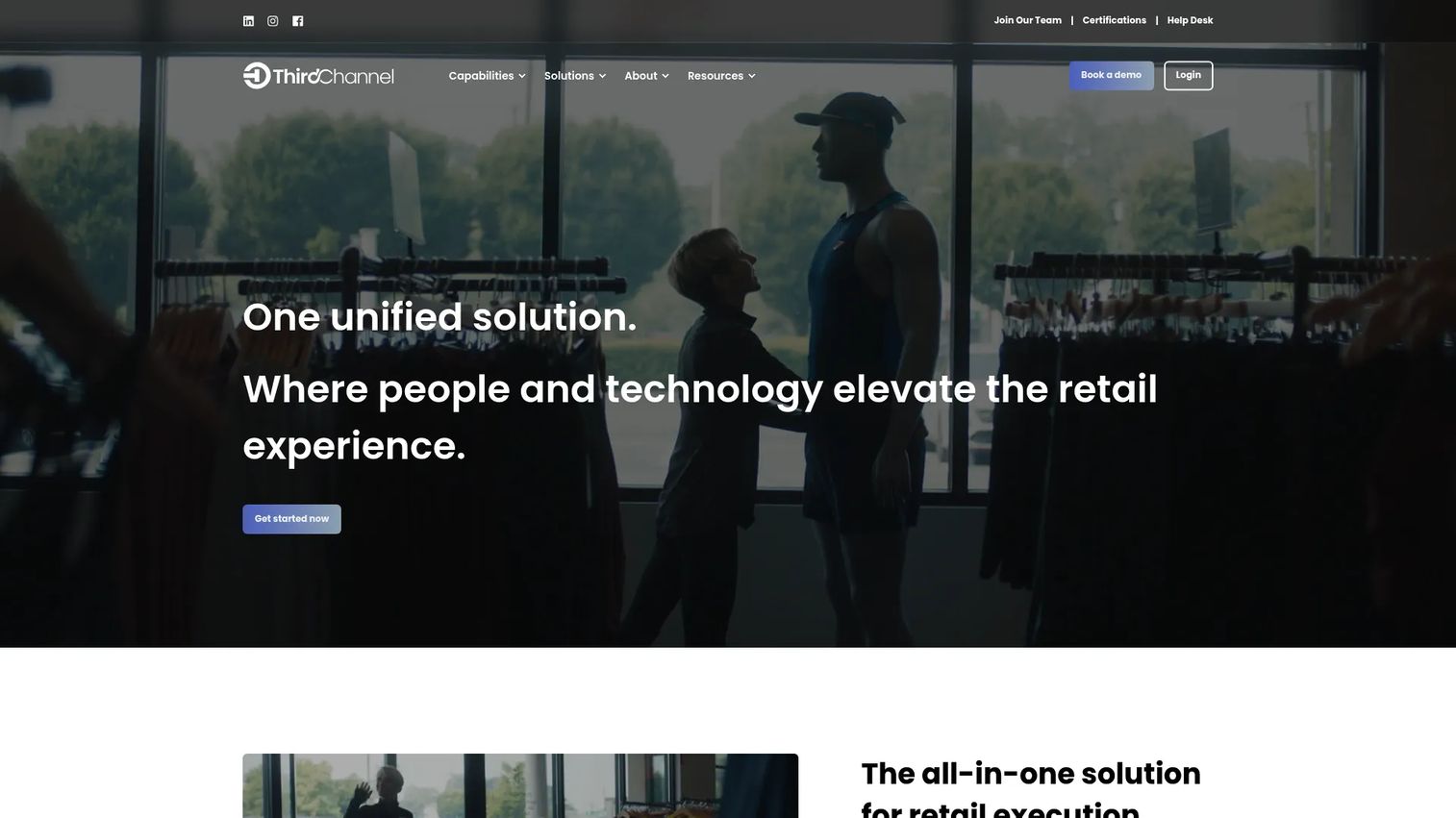
ThirdChannel is a retail execution platform that combines field reps and software for store-level visibility and action. It is the managed-network option: brands get both the technology and the people to execute merchandising, assisted selling, and brand standards across a distributed store network. For brands that lack their own field force, this pairing matters.
Best for: Brands that need retail execution, merchandising, and field-team visibility across many stores.
Key strengths
- Workforce Suite: Manage a distributed field team and the work they perform in stores.
- Merchandising: Execute and verify merchandising and brand standards at the shelf with photo proof.
- Assisted Selling: Field reps support sell-through, not just shelf compliance.
Why choose ThirdChannel: ThirdChannel suits brands that want execution outcomes without building and managing a field force themselves. The combination of software plus reps means brand standard enforcement, photo proof, and store visibility come as a package. If your constraint is people on the ground rather than software alone, this model fills the gap.
ThirdChannel pricing: ThirdChannel does not display public pricing and directs visitors to contact sales or schedule a demo. ThirdChannel holds a 4.3/5 rating on G2.
How to choose a retail execution solution
Use these criteria to narrow the field before you sit through demos.
Match the tool to your operating model
The biggest sorting question is who executes. If your reps take orders, lean toward Pepperi or SimplyDepo. If they merchandise and audit, Repsly or GoSpotCheck by FORM. If store associates execute, Zipline or Cegid. If you lack a field force, ThirdChannel. Wiser fits when visibility outranks coordination.
Test offline reliability with a real route
An offline-first mobile app is easy to claim and hard to verify. Run a pilot in your toughest stores, the rural locations and the concrete backrooms, before committing. Watch how the app behaves when it loses signal mid-visit and whether photos and orders sync cleanly later.
Pressure-test photo proof and planogram compliance
Ask exactly how photo capture, timestamps, and geotags work, and how image recognition handles your shelf complexity. Planogram compliance is only as good as the comparison logic behind it. Have a rep capture a real shelf and check the output.
Confirm the integrations you actually need
Execution data is most valuable when it flows into ERP, CRM, POS, and trade promotion systems. Confirm the specific connectors you need exist and are supported, not just listed. Weak integration turns a strong tool into another silo.
Conclusion
The right retail execution software depends less on a feature checklist than on how your field motion actually works. For B2B brands and wholesalers that sell and execute in the same visit, Pepperi is the broadest all-in-one. For merchandiser-first CPG teams measuring shelf compliance, Repsly leads. GoSpotCheck by FORM is the cleanest fit for audit-heavy programs and offers public entry pricing, while SimplyDepo wins for distributors that need routes, orders, and execution together.
For larger operations, Zipline coordinates a retailer's own frontline teams, Cegid Retail Store Excellence governs enterprise store standards, Wiser Solutions leads shelf and pricing intelligence, and ThirdChannel pairs software with a managed field network.
Start by naming your operating model, then shortlist two or three tools that fit it and run a pilot in your hardest stores. The platform that survives a real route with bad signal and a messy shelf is the one worth buying. To compare neighboring tooling, our guide to the best field sales software is a useful next read.
FAQs
Retail execution software helps brands, distributors, and retailers manage and verify what happens in stores. It coordinates store visits, runs store audits, captures photo proof of shelf conditions, and tracks compliance against planograms, promotions, and brand standards. The goal is to replace anecdotal field reports with structured, verifiable data that headquarters can act on.
The features that decide daily usefulness are task management, an offline mobile app, photo capture and image recognition, reporting and analytics, and integrations. Task management keeps reps focused on the right work per store. Offline access keeps them productive in low-connectivity locations. Photo proof and image recognition verify execution, and integrations push that data into the systems you already run.
Field sales execution is the broader category, covering ordering, CRM, and the full commercial relationship with a customer. Retail execution is centered specifically on store condition, merchandising, and compliance: whether the shelf, the planogram, and the promotion match the plan. Many platforms, like Pepperi and SimplyDepo, span both, but the execution layer is about verifying in-store reality rather than closing the sale. Our best field sales software guide covers the broader category.
There is no single winner. Use a framework. Smaller CPG teams that merchandise and audit favor Repsly or GoSpotCheck by FORM. Distributor-model CPG brands that take orders on visits favor SimplyDepo or Pepperi. Brands needing shelf and pricing intelligence lean toward Wiser Solutions, and brands without their own field force look to ThirdChannel. Match the tool to your execution complexity and operating model.
Yes, the better platforms are offline-first. Stores have dead zones in backrooms and rural areas, so a strong offline mobile app lets reps capture visits, photos, audits, and orders without a connection, then sync automatically when service returns. Offline reliability is one of the most important things to pilot before buying, since field teams cannot afford to lose data mid-visit.
Reps photograph the shelf during a store visit, and the app attaches a timestamp and geotag to prove when and where the photo was taken. Image recognition compares the actual shelf against the planned planogram to flag gaps, out-of-stocks, and misplacements. Teams use this photo documentation for accountability, trade promotion execution verification, and compliance scoring across locations.
Look for ERP, CRM, POS, trade promotion management, and analytics integrations. ERP and POS connect execution data to sales and inventory. CRM ties store activity to account records. Trade promotion management links execution proof to the spend it justifies. Analytics integrations let you blend execution data with the rest of your reporting. Confirm the specific connectors you need are supported, not just listed.
ROI comes from time saved, better compliance, fewer manual tasks, and improved store-level visibility. Measure rep time per visit before and after, the share of stores meeting planogram compliance, the speed of identifying out-of-stocks, and the reduction in manual reporting. The clearest ROI signal is trade promotion execution: when photo proof confirms displays went up, you can defend the spend and cut waste on promotions that never reached the shelf.