Your customer data lives in at least a dozen tools right now. Your email platform knows open rates, your CRM tracks deals, your analytics tool sees page views, and none of them talk to each other. That fragmentation is why personalization feels impossible at scale.
A customer data platform pulls all of that scattered information into unified profiles your marketing team can actually use. This guide breaks down what CDP software does, how it compares to CRMs and DMPs, and reviews 15 platforms across both actionable and data-focused categories.
What's inside
This guide covers what CDP software is, how it differs from a CRM or DMP, and provides a detailed comparison of 15 top platforms. We also include key selection criteria to evaluate your options.
This guide is for marketing teams, product marketers, and growth teams currently evaluating customer data platforms.
TL;DR
- What a CDP does: A CDP unifies first-party customer data from your website, app, and CRM into single, comprehensive customer profiles.
- Two main CDP categories: Actionable CDPs include built-in campaign execution tools. Data/Analytics CDPs focus on providing solid data infrastructure for other tools.
- Top picks by use case: Twilio Segment for developer-first flexibility, Salesforce Data Cloud for existing Salesforce shops, Klaviyo for e-commerce brands.
- Selection focus: When choosing a CDP, the most important factors are integration depth, data activation capabilities, and time-to-value.
What is a customer data platform
A customer data platform (CDP) is software that aggregates, organizes, and unifies first-party customer data from multiple sources into a single, persistent, and accessible customer profile. Sources typically include your website, mobile app, CRM, and support tools. This unified database is sometimes called a customer database platform or consumer data platform.
A key characteristic of a CDP is that it is marketer-managed. The platform is designed for marketing teams to use without constant dependency on engineering resources.
- First-party data focus: Collects data you own directly from your customers' interactions with your brand.
- Persistent profiles: Creates lasting customer records that update in real time as new data becomes available.
- Accessible to marketing: Built for marketers to use for segmentation and activation without writing code.
What CDP software does
A customer data platform performs four core functions to turn scattered customer information into actionable insights. Together, they create a single source of truth that powers personalized marketing and sales efforts.
Collects and unifies first-party data
A CDP pulls behavioral, transactional, demographic, and identity data from disparate sources across your tech stack. It uses automated tagging to capture interactions without manual effort. This process removes the need for manual data handling and consolidation.
Builds unified customer profiles
The platform uses a process called identity resolution to stitch together anonymous and known user data from different devices and sessions into a single, cohesive profile. Identity resolution creates a "golden record" for each customer, providing a complete view of their journey and interactions with your brand.
Segments audiences in real time
CDPs offer dynamic segmentation capabilities that allow marketers to create targeted audience segments based on behavior, attributes, or predictive scores. This can happen in real time and without writing SQL queries, enabling marketers to quickly adapt campaigns to changing customer behavior.
Activates data across channels
Data activation is the process of pushing segments and unified profiles to other tools in your stack, such as email marketing platforms, ad networks, web personalization engines, and support systems. This is a key differentiator from data warehouses, as CDPs are built to make data immediately actionable across all customer touchpoints.
CDP vs CRM vs DMP
It's common to confuse CDPs with CRMs and DMPs, but they serve distinct purposes. Understanding their differences is crucial for building the right tech stack.
| Aspect | CDP | CRM | DMP |
|---|---|---|---|
| Primary data type | First-party behavioral + transactional | First-party sales/support interactions | Third-party anonymous audiences |
| Profile persistence | Permanent, unified profiles | Contact records | Temporary (cookie-based) |
| Primary user | Marketing | Sales/Support | Advertising |
| Identity resolution | Yes, cross-device | Limited | No |
| Best for | Personalization at scale | Managing relationships | Programmatic advertising |
A CRM manages known contacts and sales pipelines. A DMP manages anonymous ad audiences for programmatic campaigns. A CDP unifies both known and anonymous data into actionable profiles for cross-channel marketing.
When to use customer data platform software
Investing in a CDP makes sense when you encounter specific challenges related to data fragmentation and the need for real-time personalization.
You have customer data scattered across multiple tools
If your customer data is fragmented across your email platform, analytics tools, CRM, and support desk - a top-three barrier for 28% of businesses according to CMSWire - a CDP can consolidate it into a single, unified view of the customer.
You need real-time personalization at scale
When batch processing data is too slow for your marketing needs, a CDP enables real-time profile updates and segment membership changes, allowing for personalization that can lift revenues by 5-15% according to McKinsey.
Your teams see different versions of the same customer
A CDP resolves the issue where sales sees one version of a customer and marketing sees another. It creates a single source of truth that all teams can rely on.
You are preparing for a first-party data strategy
With the move toward a cookieless future and stricter privacy regulations, the importance of first-party data is growing. A CDP provides the necessary infrastructure to support this strategic shift.
Customer data platform comparison table
Here is an overview of the 15 tools reviewed in this guide. The table highlights their category, key differentiator, pricing tier, and G2 rating.
| # | Product | Category | Key differentiation | Pricing | G2 rating |
|---|---|---|---|---|---|
| 1 | Insider | Actionable | All-in-one CDP + engagement | Enterprise | 4.6 |
| 2 | Bloomreach | Actionable | E-commerce personalization | Enterprise | 4.5 |
| 3 | Salesforce Data Cloud | Actionable | Native Salesforce integration | Enterprise | 4.3 |
| 4 | Emarsys | Actionable | B2C industry playbooks | Enterprise | 4.3 |
| 5 | Adobe Real-Time CDP | Actionable | Native Adobe ecosystem | Enterprise | 4.3 |
| 6 | Optimove | Actionable | CRM marketing & retention | Enterprise | 4.6 |
| 7 | ActionIQ | Actionable | Composable for enterprise | Enterprise | 4.5 |
| 8 | Twilio Segment | Data & Analytics | Developer-first, 700+ integrations | Mid-Market/Ent | 4.6 |
| 9 | Tealium | Data & Analytics | Enterprise data governance | Enterprise | 4.4 |
| 10 | mParticle | Data & Analytics | Mobile-first data pipelines | Enterprise | 4.3 |
| 11 | Treasure Data | Data & Analytics | Enterprise-scale data cloud | Enterprise | 4.3 |
| 12 | Klaviyo CDP | Data & Analytics | E-commerce native platform | SMB/Mid-Market | 4.6 |
| 13 | Hightouch | Data & Analytics | Composable/Reverse ETL | Mid-Market/Ent | 4.7 |
| 14 | Rudderstack | Data & Analytics | Open-source, warehouse-first | Mid-Market/Ent | 4.7 |
| 15 | Lytics | Data & Analytics | Behavioral scoring engine | Mid-Market | 4.2 |
15 best customer data platforms for marketing and sales teams
The customer data platform market, projected to reach $37.11 billion by 2030, divides into two main categories. Actionable CDPs include built-in campaign execution and personalization engines, offering an all-in-one solution. Data & Analytics CDPs focus on data infrastructure, identity resolution, and feeding clean, unified data to downstream tools for activation.
Actionable customer data platforms
Actionable CDPs include built-in engagement and personalization capabilities, allowing marketers to manage data and execute campaigns from a single platform.
1. Insider
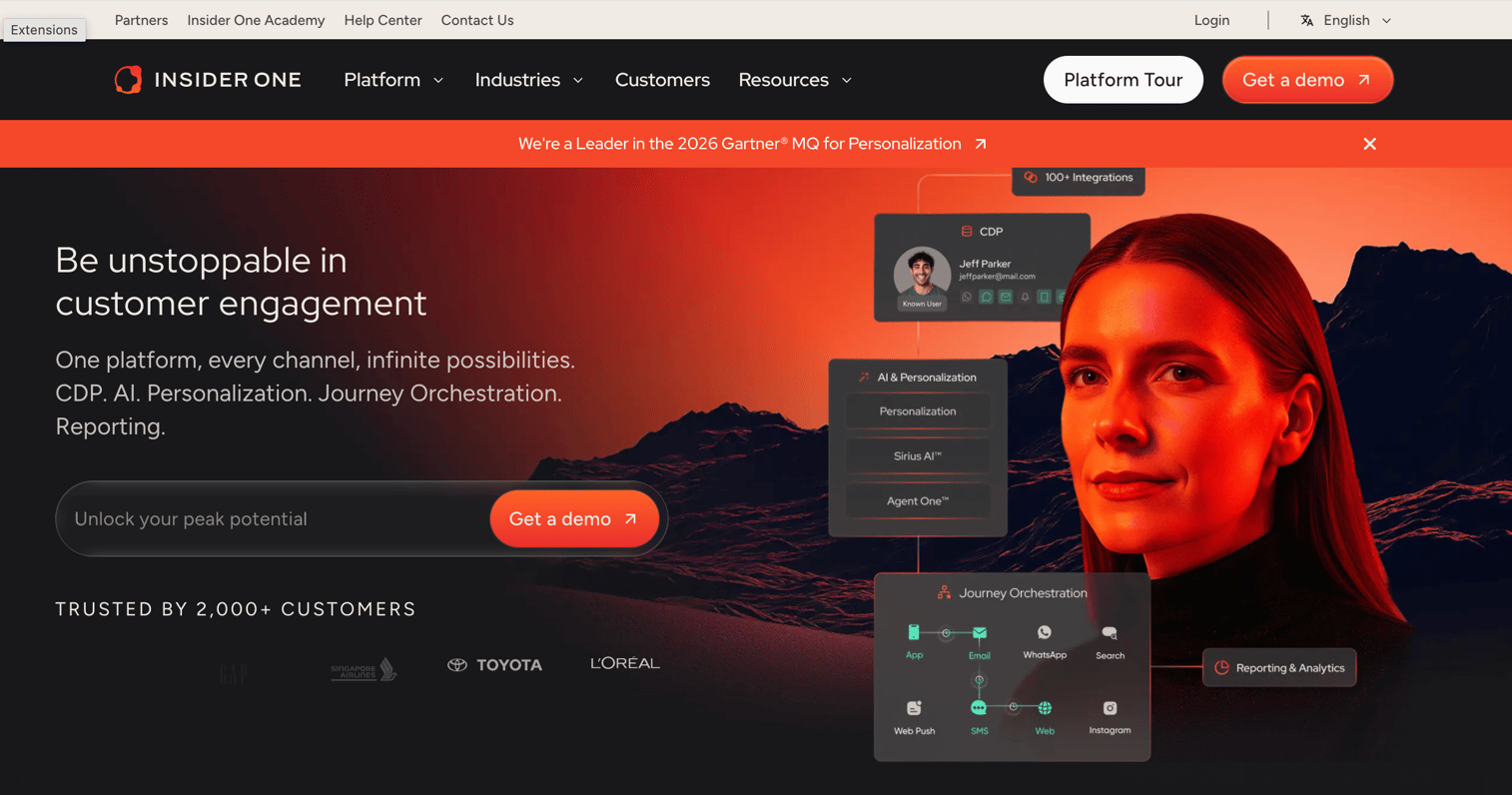
Insider offers the Insider One platform, an all-in-one solution that combines a CDP with a full suite of cross-channel engagement tools. It is best for enterprise marketers who want a single platform for both data unification and campaign orchestration.
Key strengths
- AI-powered segmentation and predictive analytics
- Advanced cross-channel journey orchestration
- Over 100 pre-built integrations
- Native personalization for web, app, email, and SMS
Choose Insider if you want to eliminate the need for separate engagement tools for email, push notifications, and on-site personalization. Pricing is in the enterprise tier.
2. Bloomreach
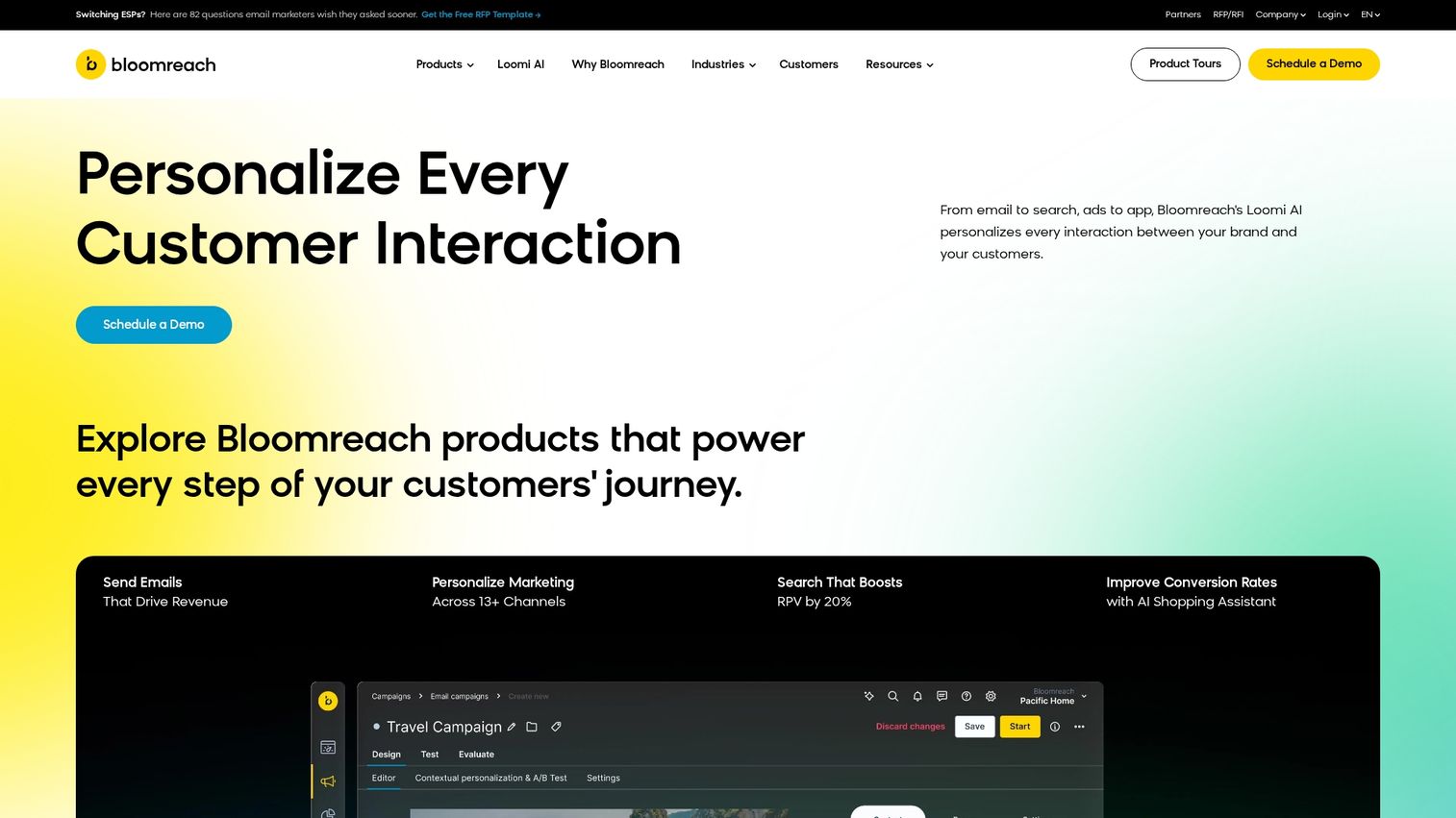
Bloomreach is a CDP with a strong focus on e-commerce. It is best for retail and e-commerce brands looking to enhance their digital experience through personalized product discovery.
Key strengths
- Advanced product discovery and search personalization
- Real-time product recommendations
- Unified customer view connecting online and offline behavior
- Deep commerce expertise
Choose Bloomreach for its ability to drive revenue through personalized shopping experiences. Pricing is in the enterprise tier.
3. Salesforce Data Cloud
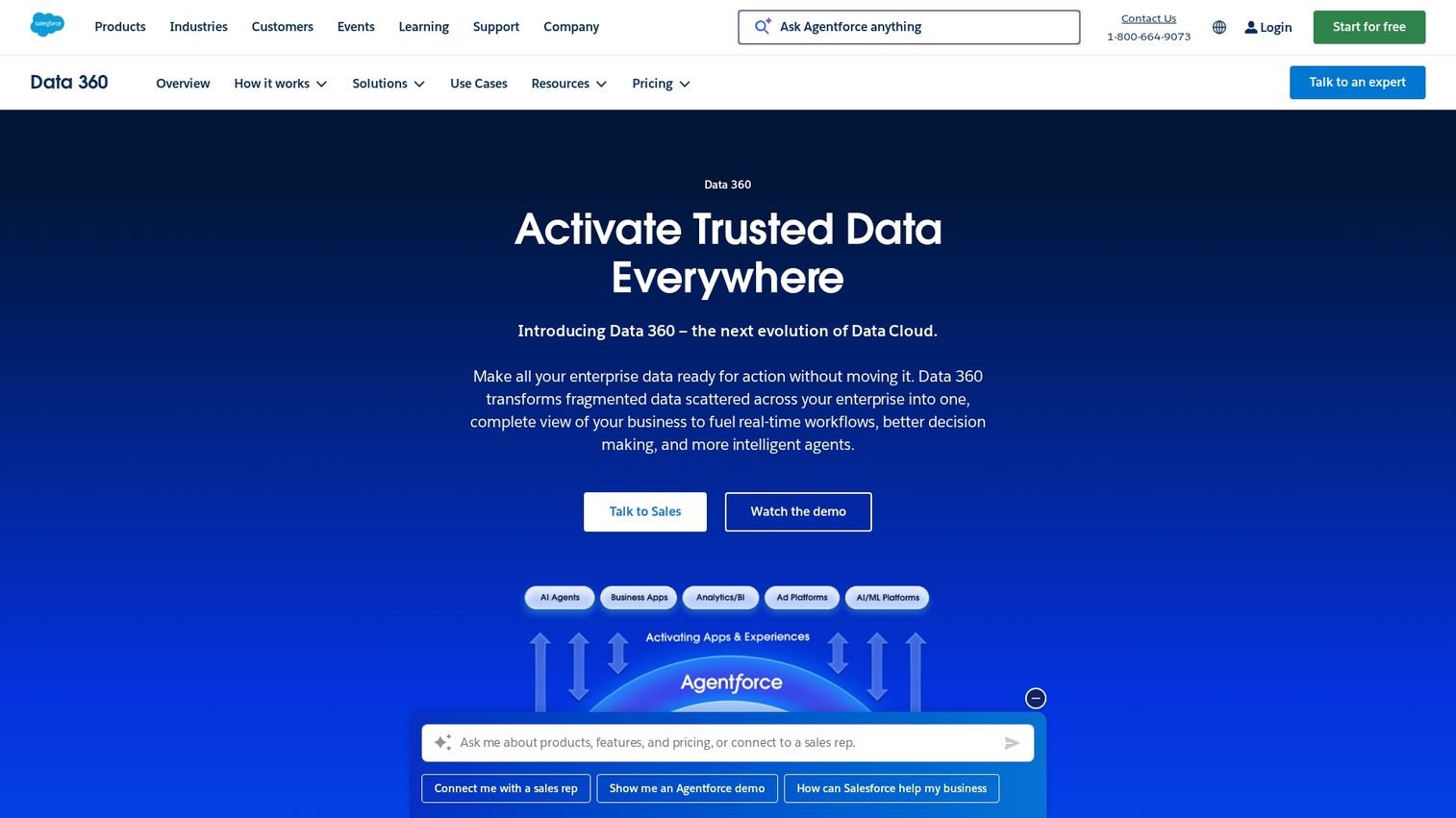
Salesforce Data Cloud is the native CDP for the Salesforce ecosystem. It is best for organizations already heavily invested in Salesforce products like Sales Cloud and Marketing Cloud.
Key strengths
- Seamless integration with Einstein AI for predictive insights
- Flow for process automation
- Real-time profile unification
- Direct connection to Marketing Cloud for activation
Choose Salesforce Data Cloud if you want to create a unified customer profile within your existing Salesforce stack. Pricing is in the enterprise tier.
4. Emarsys
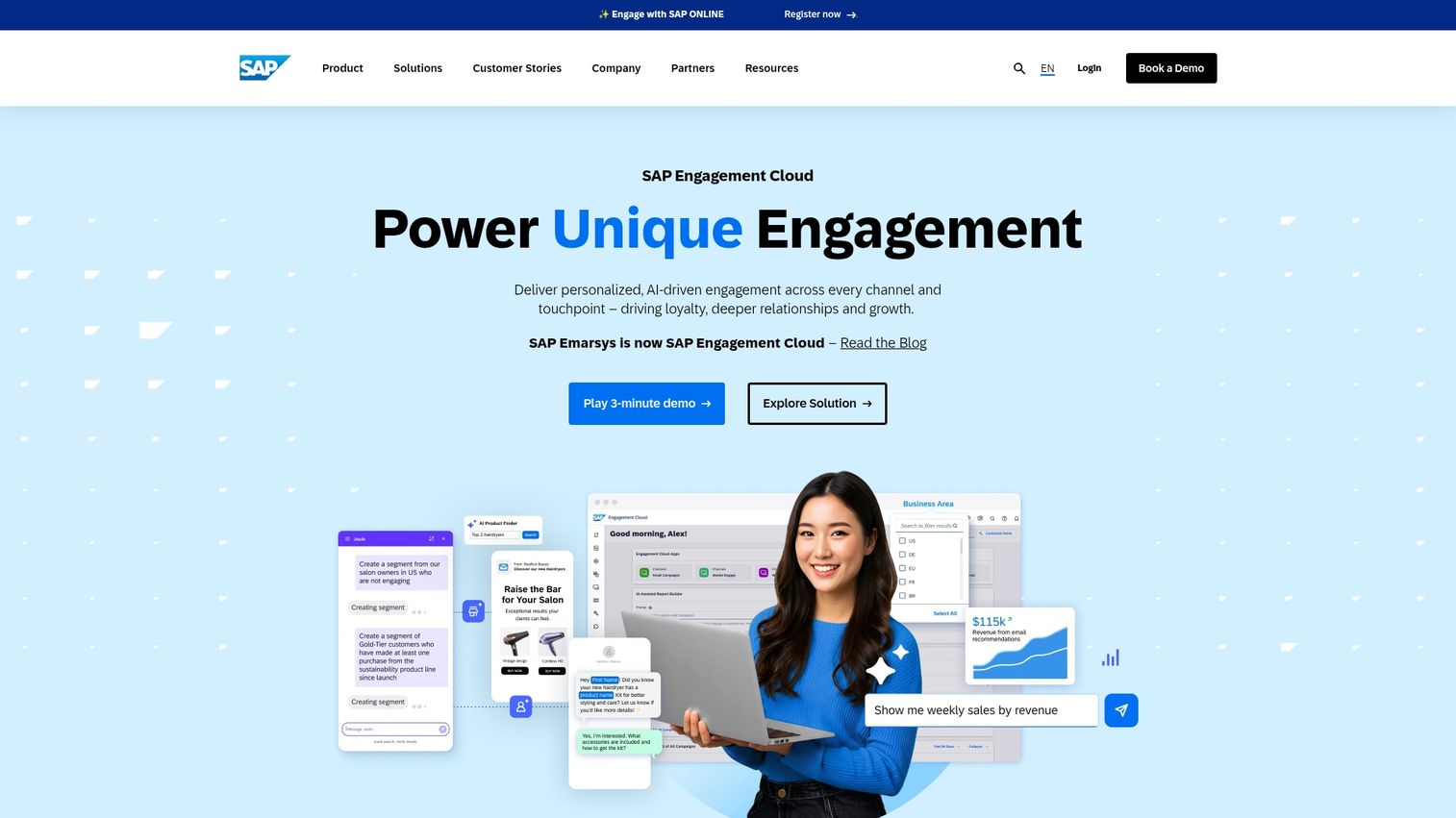
Emarsys, an SAP company, is an omnichannel customer engagement platform with a built-in CDP. It is best for mid-market and enterprise B2C companies, particularly in retail and e-commerce.
Key strengths
- Pre-built, industry-specific marketing playbooks
- Powerful omnichannel automation
- Native support for loyalty programs
- Extensive template library for faster time-to-value
Choose Emarsys for its ability to deliver quick wins with proven marketing playbooks. Pricing is in the enterprise tier.
5. Adobe Real-Time CDP
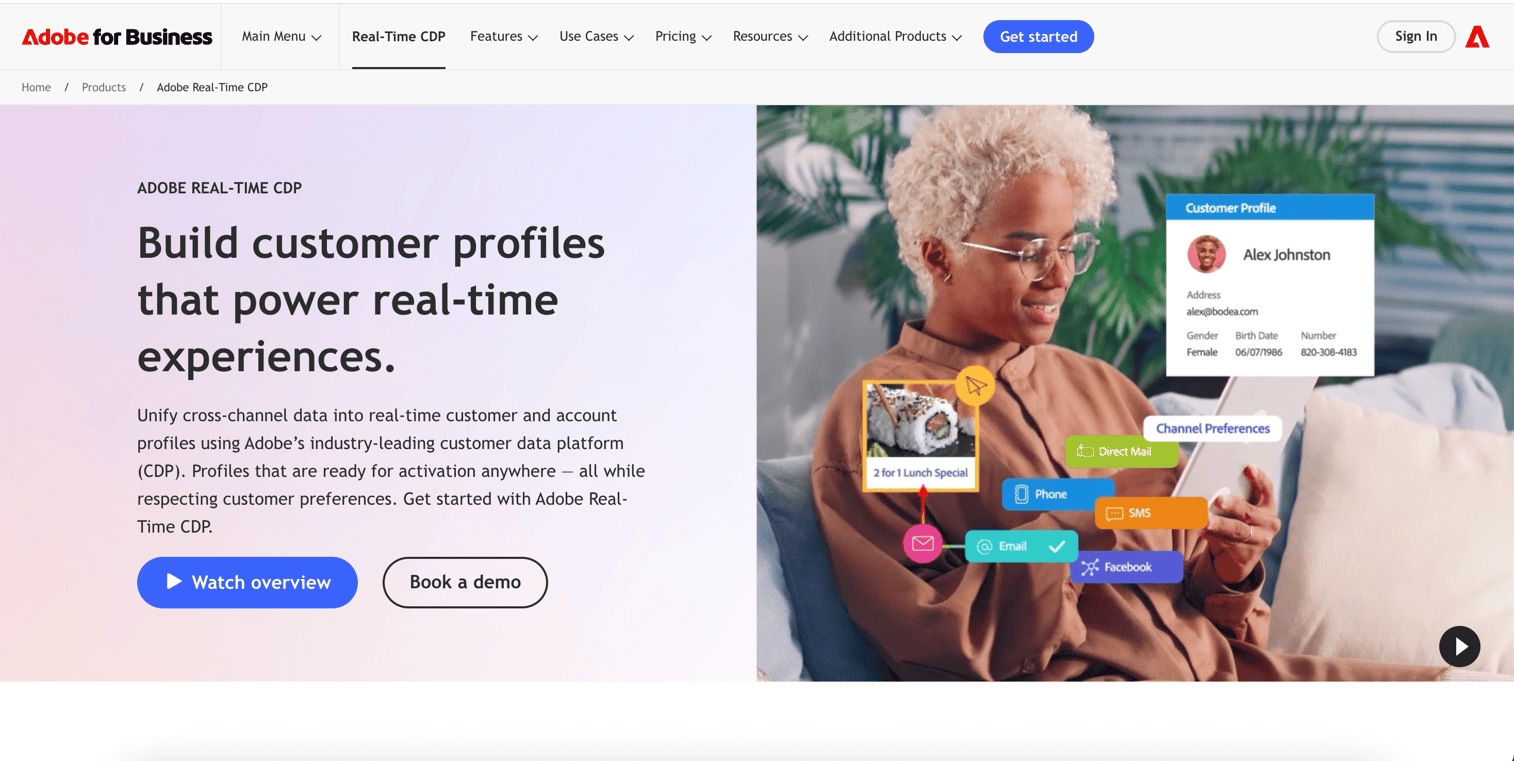
Adobe Real-Time CDP is part of the Adobe Experience Platform and is designed for large enterprises. It is best for companies already using the Adobe Experience Cloud stack.
Key strengths
- Real-time profile activation
- Support for both B2B and B2C data models
- Robust privacy and consent controls
- Native integration with Adobe Journey Optimizer
Choose Adobe Real-Time CDP for its seamless integration within the Adobe ecosystem. Pricing is in the enterprise tier.
6. Optimove
Optimove is a CRM marketing platform with a CDP at its core, focusing on customer retention and lifetime value. It is best for data-rich verticals like gaming, retail, and finance.
Key strengths
- Predictive customer modeling
- Self-optimizing campaigns that continuously test and refine
- Strong focus on increasing customer lifetime value
- Advanced retention analytics
Choose Optimove if your primary goal is to optimize customer retention and loyalty. Pricing is in the enterprise tier.
7. ActionIQ
ActionIQ is an enterprise hybrid CDP that combines the benefits of a packaged and composable approach. It is best for large enterprises that want both robust data infrastructure and marketer-friendly activation tools.
Key strengths
- Composable architecture that sits on top of a data cloud
- Intuitive UI for non-technical users
- Powerful data cloud integration
- Enterprise-grade security and governance
Choose ActionIQ to connect IT's data infrastructure with marketing's need for self-serve activation. Pricing is in the enterprise tier.
Data and analytics CDPs
Data and analytics CDPs focus on data collection, identity resolution, and feeding clean, unified data to downstream activation tools in your marketing stack.
8. Twilio Segment
Twilio Segment is a leader in the CDP space, known for its developer-focused approach. It is best for product-led and engineering-heavy organizations that want flexible data infrastructure.
Key strengths
- Library of over 700 integrations
- Real-time event streaming
- Protocols for ensuring data governance and quality
- Developer-friendly APIs and documentation
Choose Segment for its unmatched integration breadth, which makes it a global customer data platform standard for developers. Pricing is available for both mid-market and enterprise tiers.
9. Tealium
Tealium AudienceStream CDP is an enterprise-grade platform focused on data orchestration and governance. It is best for large enterprises with complex data stacks and strict compliance requirements.
Key strengths
- Server-side tag management
- Real-time data orchestration
- Robust consent management features
- Strong compliance and data governance
Choose Tealium for its strength in compliance and data governance, making it a trusted choice for regulated industries. Pricing is in the enterprise tier.
10. mParticle
mParticle is a mobile-first CDP designed to help brands manage customer data across web and mobile apps. It is best for mobile app companies and multi-platform businesses.
Key strengths
- High-quality SDKs for data collection
- Real-time data pipelines
- Advanced identity resolution
- Data quality controls to ensure clean data
Choose mParticle for its deep expertise in handling the complexities of mobile data. Pricing is in the enterprise tier.
11. Treasure Data
Treasure Data offers an enterprise customer data cloud designed to handle massive data volumes. It is best for large enterprises with complex data needs and a global customer base.
Key strengths
- Ability to scale to enterprise levels
- Integrations with machine learning platforms
- CDP BI capabilities for advanced analytics
- Strong presence in the Japanese market
Choose Treasure Data when you want a platform that can handle enterprise-scale data complexity. Pricing is in the enterprise tier.
12. Klaviyo CDP
Klaviyo CDP is a native platform built for e-commerce businesses. It is best for Shopify and other e-commerce brands that want a unified solution for data, email, and SMS.
Key strengths
- Deep e-commerce integrations
- Built-in email and SMS marketing
- Predictive analytics tailored for commerce use cases
- Churn risk and lifetime value predictions
Choose Klaviyo if you are an SMB e-commerce brand looking for an all-in-one solution. Pricing is available for SMB and mid-market tiers.
13. Hightouch
Hightouch is a leading composable CDP, also known as a Reverse ETL tool. Reverse ETL is the process of syncing data from a data warehouse back to operational tools. Hightouch is best for data teams that have already invested in a central data warehouse like Snowflake or BigQuery.
Key strengths
- Warehouse-native approach (doesn't copy and store your data)
- Flexible data activation to hundreds of tools
- SQL-based interface for segmentation
- Represents the composable CDP approach
Choose Hightouch to leverage your existing data infrastructure without creating another data silo. Pricing is available for mid-market and enterprise tiers.
14. Rudderstack
Rudderstack is a warehouse-first CDP with open-source roots, built for technical teams. It is best for engineering teams that want maximum control and flexibility over their customer data pipelines.
Key strengths
- Warehouse-first architecture
- Available open-source option
- Real-time event streaming
- Strong data governance features
Choose Rudderstack for the control and flexibility it offers technical teams. Pricing is available for mid-market and enterprise tiers.
15. Lytics
Lytics is a CDP with a strong focus on its decision engine and behavioral scoring. It is best for mid-market companies that want to leverage behavioral data to drive personalization.
Key strengths
- Content affinity modeling that scores users based on engagement
- Behavioral scoring
- Privacy-first approach to data
- Actionable insights from behavioral intelligence
Choose Lytics for its depth in behavioral intelligence and its ability to surface actionable insights. Pricing is in the mid-market tier.
How to choose the right customer data platform
Selecting the right CDP requires a careful evaluation of your specific needs and existing tech stack. Consider the following criteria.
Integration capabilities with your existing stack
Evaluate the availability of pre-built connectors for your current tools, including your CRM, email platform, ad networks, and analytics software. Check if the integrations are native and bidirectional or if they require middleware.
Data security and compliance features
Cover your requirements for GDPR, CCPA, and other privacy regulations, including consent management. For global customer data platform needs, evaluate data residency options to ensure data is stored in the required geographic locations. Check for certifications like SOC 2 or HIPAA if they are relevant to your industry.
Ease of implementation and time to value
Ask potential vendors about their typical deployment timeline. Evaluate whether your team can self-serve the implementation or if it will require heavy professional services. Consider the total cost of ownership beyond the license fee, including implementation and training costs.
Activation and personalization capabilities
Determine if you want a platform with built-in activation channels (an actionable CDP) or if you plan to push data to separate, best-of-breed tools. Evaluate whether your use cases require real-time activation or if batch updates are sufficient.
Analytics and reporting depth
Cover the native analytics capabilities of the platform. When considering the best CDP with analytics features, evaluate its built-in reporting, dashboarding, and BI integrations.
Pricing model and total cost
Understand the common pricing models, which are often based on Monthly Tracked Users (MTUs), event volume, or user seats. Ask about potential overage charges and the full cost of implementation and ongoing support.
How to activate your customer data for better conversions
Unified customer profiles only create value when they are activated to improve the customer experience. Here are key activation approaches:
- Personalize website experiences: Use CDP segments Use CDP segments combined with demand generation tools to show relevant content, offers, and CTAs based on a visitor's past behavior and known attributes.
- Trigger real-time campaigns: Set up behavior-based email, SMS, or push notifications that are sent immediately when customers take specific actions, like abandoning a cart.
- Sync audiences to ad platforms: Push high-value segments to Google, Meta, and LinkedIn for more targeted advertising campaigns.
- Enable sales with customer context: Push CDP insights and a full customer history directly into your CRM, so your sales team has complete context before every conversation. and can deliver more impactful live demos.
- Create self-serve product experiences: Let prospects explore your product through interactive demos, using CDP data to personalize the experience without requiring them to schedule a call.
FAQs about customer data platform software
The implementation timeline varies by complexity but typically ranges from a few weeks for simpler setups to several months for enterprise deployments that involve multiple data sources and custom integrations.
CDP pricing varies widely based on data volume (MTUs or events) and features. Entry-level plans can start in the low thousands of dollars per month, while enterprise deployments can reach six figures annually.
No, CDPs and CRMs serve different but complementary purposes. A CDP unifies customer data for marketing activation, while a CRM manages sales relationships and pipeline. Most organizations use both together for a complete customer view.
A composable CDP is an approach that uses your existing data warehouse (like Snowflake or BigQuery) as the central data layer and adds activation capabilities on top, rather than copying data into a separate platform. Examples include Hightouch and Rudderstack.
CDPs create anonymous profiles for unknown visitors using device IDs and browser cookies. They then stitch anonymous profiles to known identities when a visitor authenticates, signs up, or provides an email address.
Prioritize integrations with your core marketing and sales stack: your email platform, advertising channels (Google/Meta), CRM, analytics tools, and any customer-facing applications where you want to activate personalization.
CDP ROI is typically measured through improved campaign performance (higher engagement, conversion rates), operational efficiency (time saved on manual data work), and the direct revenue impact from personalization and better targeting.
A customer intelligence platform (CIP) focuses primarily on analytics and generating insights from customer data, while a CDP emphasizes data unification and activation for marketing campaigns. Many modern CDPs now include strong customer intelligence capabilities.