You have a marketing strategy but your pipeline isn’t filling fast enough. Your team is juggling multiple platforms, struggling to track which campaigns are driving high quality, qualified leads and watching prospects slip through the cracks between touchpoints.
Sound familiar?
The problem isn’t your strategy - it’s the challenge of marketing at scale. HubSpot says 61% of marketers say generating traffic and leads is their top challenge, yet most teams use 6-8 disconnected marketing tools that create more friction than flow. The bottom line: without streamlined tools, manual effort and fragmented workflows slow you down.
What's inside
This guide walks through 21 best demand generation tools with detailed comparisons of both basic features and advanced features, pricing breakdowns, and best-fit use cases. You’ll find feature analyses, integration capabilities, and honest assessments of when each tool works best (and when it doesn’t). We’ve included everything from email marketing automation platforms and email campaigns to interactive demo builders like Guideflow, so you can match solutions to your specific pipeline gaps. The guide also explores how these marketing tools can complement your existing strategies.
TL;DR
- Demand generation tools are essential for nurturing prospects and converting them into high quality leads as part of a coordinated marketing campaign.
- Guideflow offers no-code interactive demos, integrates with CRM systems to automate lead scoring and follow ups.
- Evaluate tools based on how they match your demand generation strategy, solving specific bottlenecks in your workflow.
- Key features to consider are multi-channel campaign execution, granular analytics, marketing automation and a user friendly interface. When evaluating demand gen tools consider basic features for foundation and advanced features for scaling and complex workflows.
- Prioritize tools that provide measurable results, robust analytics and support your team’s unique demands in the demand generation process and integrates with your existing marketing.
What are demand generation tools
Demand generation tools help marketing teams bring in, nurture and convert prospects into qualified leads through automated multi-channel campaigns. They do the heavy lifting of moving prospects from awareness to sales ready conversations, reducing manual work and increasing conversion rates. Beyond capturing existing demand they also create awareness and educate buyers who may not yet know they need a solution.
This category includes:
- Email marketing automation platforms
- Lead scoring systems
- Content personalization engines
- Multi-channel campaign orchestration tools
- Interactive demo builders
- Account-based marketing (ABM) platforms
Each tool tackles a different piece of the same puzzle: turning anonymous visitors into engaged prospects ready to talk to sales.
The right tools speed up prospect decision making, improve conversion rates between stages of the funnel, lower your cost per qualified lead and provide clear attribution data on what drives revenue. They also ensure marketing and sales teams are aligned, qualified leads are routed properly and continuous testing and optimization to measure pipeline and revenue impact – not just lead volume.
When to use demand generation tools
You’ll want demand gen tools when manual effort is holding you back. Here are some common scenarios:
- Your outreach can’t keep up with growth targets
- Prospects are falling through the cracks between touchpoints
- You can’t tell which activities are actually generating your best leads
- You’re managing complex buyer journeys with multiple stakeholders and longer sales cycles
- You need automation to scale your sales processes efficiently
Best demand generation tools for 2026 and beyond
Below you will find a table of top tools, highlighting each tool’s best use case. These span comprehensive analytics, marketing automation, content, and lead capture to help teams scale pipeline and conversions.
| # | Product name | Intent | Key use case | Price starts at | G2 rating |
|---|---|---|---|---|---|
| 1 | Guideflow | Interactive demo | No-code builder | Free + $35/mo | 5.0/5 |
| 2 | Leadpages | Landing pages | Drag-and-drop pages | $37/mo | 4.3/5 |
| 3 | Chili Piper | Meeting automation | Instant scheduling | Custom pricing | 4.6/5 |
| 4 | Hotjar | Website analytics | Session replay | Free + $39/mo | 4.3/5 |
| 5 | Clay | Data enrichment | AI data workflows | Free + $149/mo | 4.9/5 |
| 6 | Leadfeeder | Website visitor ID | Company tracking | Free + $99/mo | 4.6/5 |
| 7 | Descript | Content creation | AI video editing | Free + $16/mo | 4.6/5 |
| 8 | Instapage | Landing pages | Page builder | Custom pricing | 4.3/5 |
| 9 | PartnerStack | Partner programs | Affiliate tracking | Free + Custom | 4.7/5 |
| 10 | Kit (formerly ConvertKit) | Email marketing | Subscriber mgmt | Free + $33/mo | 4.4/5 |
| 11 | Ahrefs | SEO analytics | Backlink analysis | Custom pricing | 4.5/5 |
| 12 | HockeyStack | Attribution analytics | Revenue insights | Custom pricing | 4.6/5 |
| 13 | Google Search Console | SEO insights | Search analytics | Free | 4.5/5 |
| 14 | Devi | Social lead gen | Keyword monitoring | $19/mo | N/A |
| 15 | Sprout Social | Social management | Multi-channel posts | $199/mo | 4.4/5 |
| 16 | Webflow | Site building | Visual design | Custom pricing | 4.4/5 |
| 17 | Warmly | Visitor ID & chat | Sales insights | Free + $7/mo | 4.6/5 |
| 18 | RB2B | Visitor identification | Real-time ID & alerts | Free + $79/mo | 4.5/5 |
| 19 | AdRoll | Retargeting ads | Dynamic CPM ads | Free + $36/mo | 4.15/5 |
| 20 | HubSpot | All-in-one CRM | Marketing platform | Custom pricing | 4.4/5 |
| 21 | Salesforce | Demand gen, RevOps & revenue ops | CRM & pipeline management | Custom pricing | 4.4/5 |
| 22 | LinkedIn Sales Navigator | ABM & outbound targeting | Lead/account search & signals | Custom pricing | 4.4/5 |
| 23 | Outreach | SDR & sales follow-up | Sequences & rep workflows | Custom pricing | 4.3/5 |
1. Guideflow
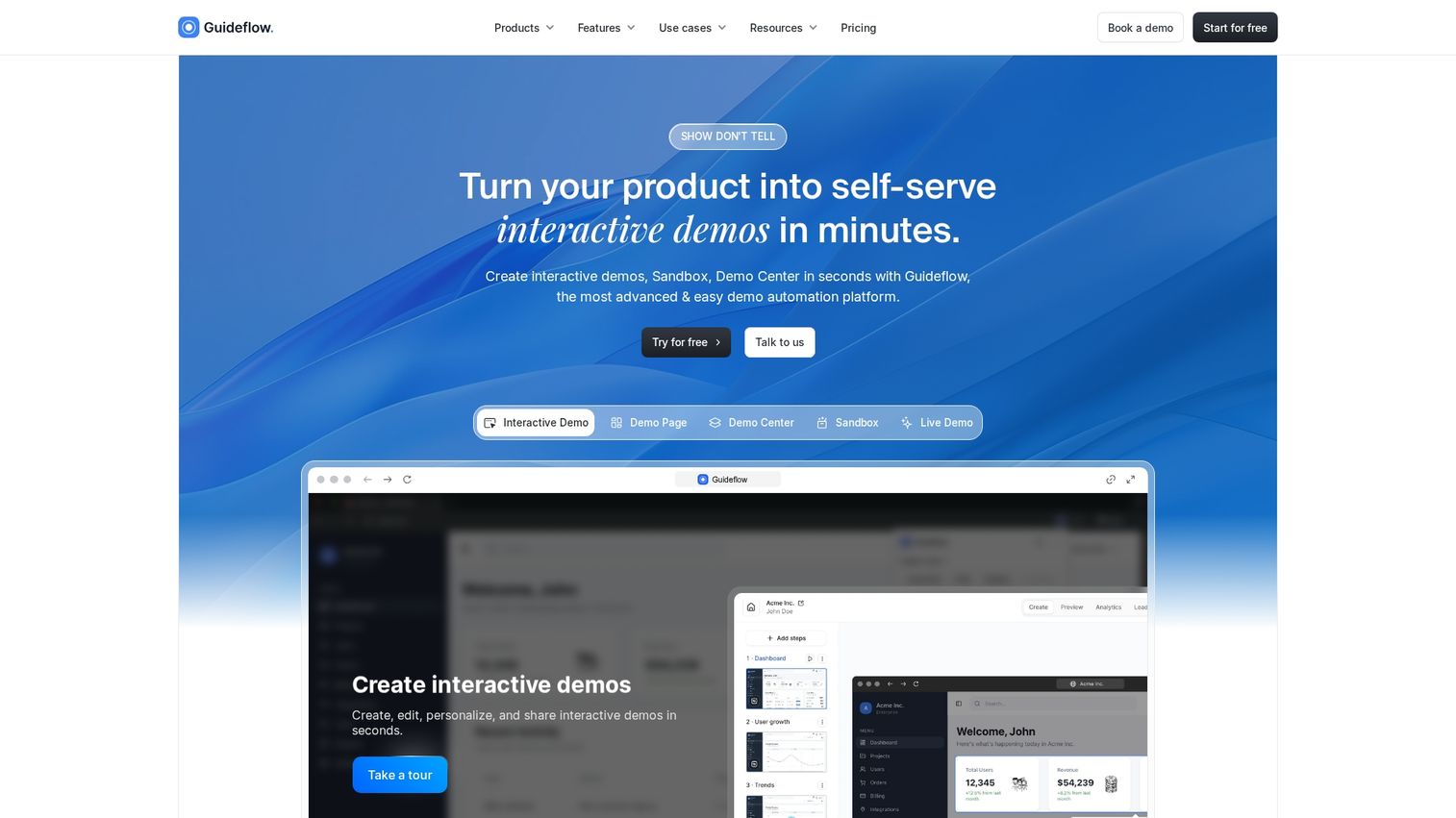
Guideflow captures workflows from any app or website via Chrome extension to create interactive demos, product tours, sandboxes and guides without code. Sales and marketing teams use it to let prospects experience the product hands-on, collect contact details via embedded forms, and track engagement to build MQL pipelines.
It solves the problem of static screenshots and time-intensive sales calls by delivering self-serve, personalized experiences that generate qualified leads. Users report 200% increases in demo conversions after embedding interactive demos on landing pages.
Best for: Product marketing managers (PMMs) at SaaS companies scaling demand gen. Ideal for teams that need to scale demo experiences across multiple buyer personas without engineering resources.
Key features
- Captures product workflows in seconds and updates them easily, so you can create interactive demos for change-logs, review sites like G2, or social shares without recoding workflows.
- Integrates with CRMs like Salesforce, HubSpot, and Pipedrive to sync lead data and form responses directly.
- Tracks engagement signals and intent data for seamless sales handoffs, reducing cost per qualified lead.
- Real-time analytics on user sessions, drop-offs, demographics, and completions, plus notifications via Slack or email to identify high-intent prospects immediately and improve conversion rates between funnel stages.
- powerful AI stack auto-generates text, datasets, image edits, and personalization (e.g., natural language adjustments or visitor recognition) so you can tailor demos for personas or use cases.
Guideflow pricing
Guideflow has published plans: Free (includes basic features), Solo ($35/month), Growth ($499/month), Advanced ($1,499/month). The Free plan gets you started; higher tier plans include sandbox demos, advanced integrations, and more seats.
Start your journey with Guideflow today
2. Leadpages
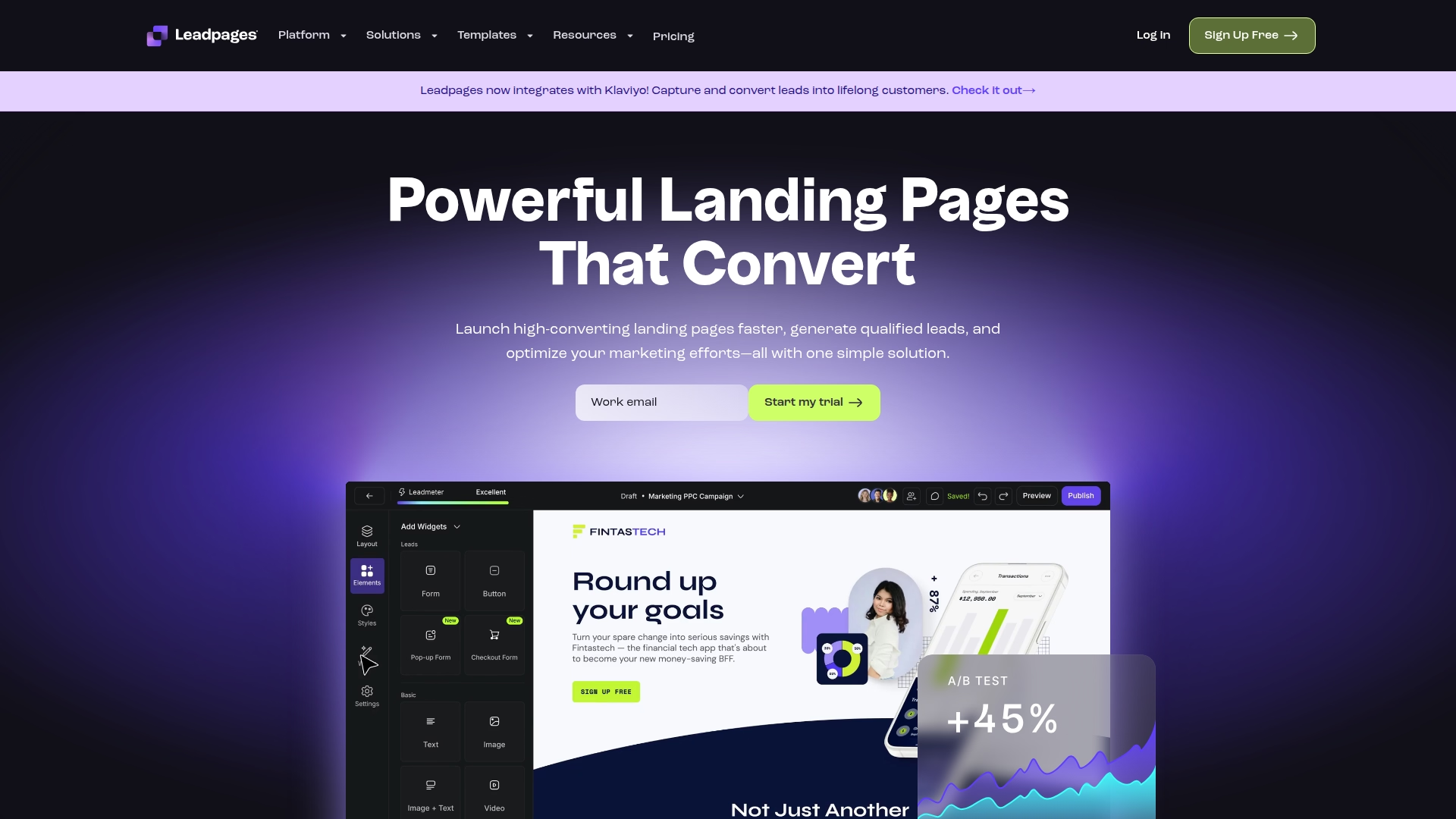
Leadpages is a landing page builder that lets you create opt-in pages, pop-ups, and alert bars to capture leads and drive sales directly on those assets.
Best for: Small businesses and solo marketers starting lead gen campaigns.
It offers a drag-and-drop builder with 250+ templates and mobile-responsive designs for quick deployment without dev resources. Leadpages supports unlimited traffic, leads, and A/B testing on Pro plan, includes 40+ integrations (Stripe, email tools) plus lead enrichment, and provides free hosting with one-click publishing.
Though Standard plan limits to 5 landing pages, it solves the problem of building high-converting pages without coding.
Leadpages pricing
Standard ($37/month annual) for 5 pages; Pro ($74/month annual) adds A/B testing/payments; Custom/Advanced from $399+/month; 14-day free trial.
3. Chili Piper
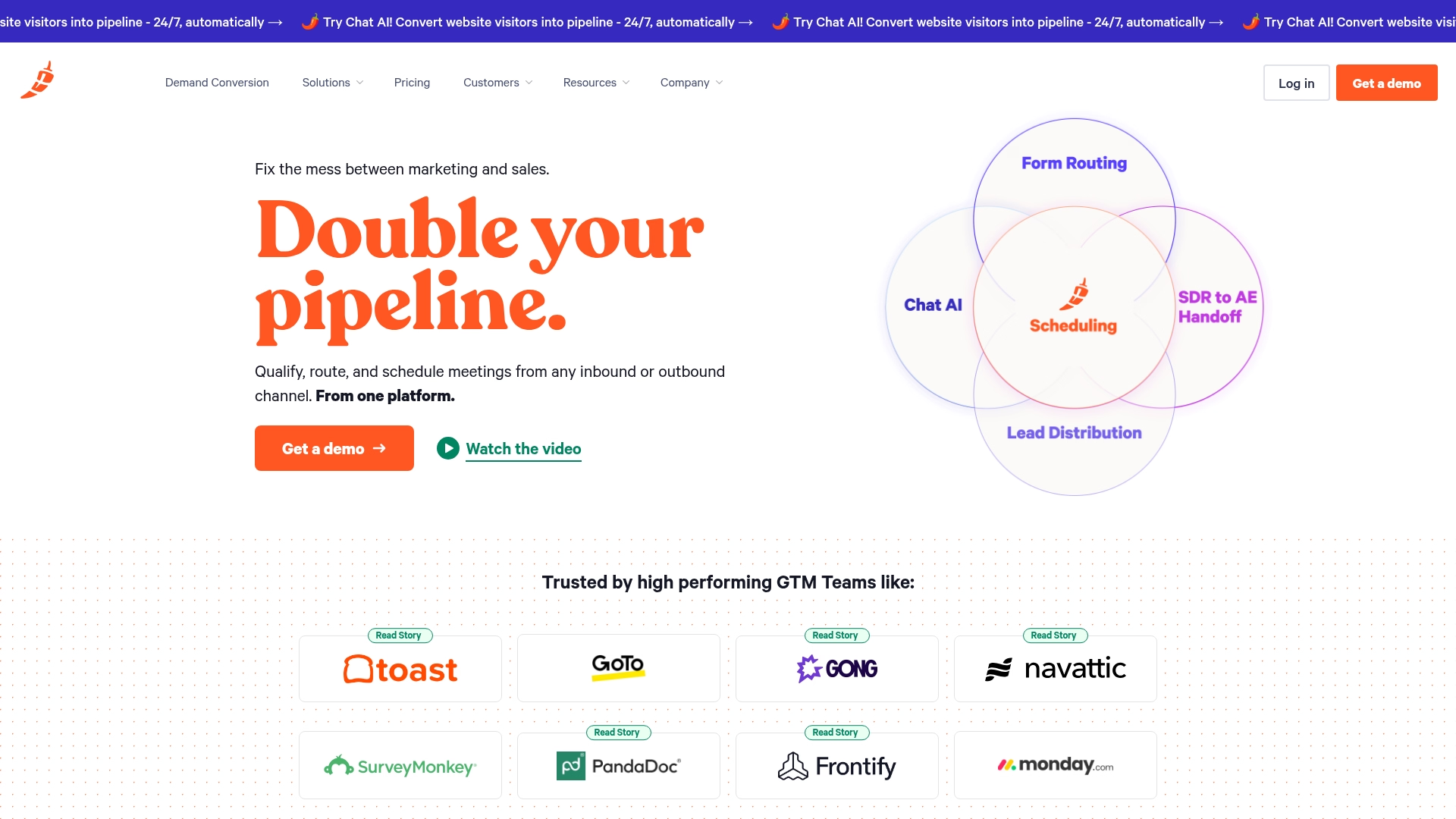
Chili Piper automates lead routing and instant meeting booking from web forms, helping sales teams qualify inbound and outbound leads faster to shorten sales cycles, convert leads efficiently, and boost conversions. Company offers a suite of tools designed to enhance demand generation by streamlining scheduling and lead management processes.
Key features
- ChiliCal: Simplifies meeting scheduling with one-click booking, reducing friction in the customer journey.
- Form Concierge: Qualifies, routes, and schedules prospects directly from web forms, ensuring high-quality leads are captured efficiently.
- Concierge Live: Connects prospects through live calls, enhancing real-time engagement.
These tools help businesses convert more leads by optimizing the customer experience and improving operational efficiency.
Best for: Sales and revenue teams at mid-market to enterprise companies using CRMs like HubSpot or Salesforce.
Chili Piper pricing
Chili Piper offers several pricing plans based on the product you choose, like Concierge, Handoff, Distro, and Instant Booker. Each plan is tailored to different scheduling and routing needs. Starts at $45/user/month plus CRM-specific platform fees.
4. Hotjar
Hotjar provides heatmaps, session recordings, surveys, funnels, and feedback tools to visualize user interactions and user behavior on websites, helping identify drop-offs, confusion, and friction points to optimize pages for better conversions.
Best for: B2B marketers and product teams running demand gen sites needing qualitative insights on their target audience.
It shows click, scroll, and movement patterns via heatmaps, enabling precise tweaks to page layouts that reduce bounce rates. Hotjar’s session recordings replay real user journeys with AI summaries, while incoming surveys collect on-site feedback tied to sessions to explain drop-offs in key flows like signups.
Though it can impact web page performance if not implemented correctly, it reveals exact behaviors that guesswork can’t identify. Teams seeking more advanced conversion rate optimization (CRO) capabilities may also consider using a visual website optimizer, such as VWO, for A/B testing and deeper optimization.
Hotjar pricing
Free tier with basic limits; paid plans start around $40/month.
5. Clay
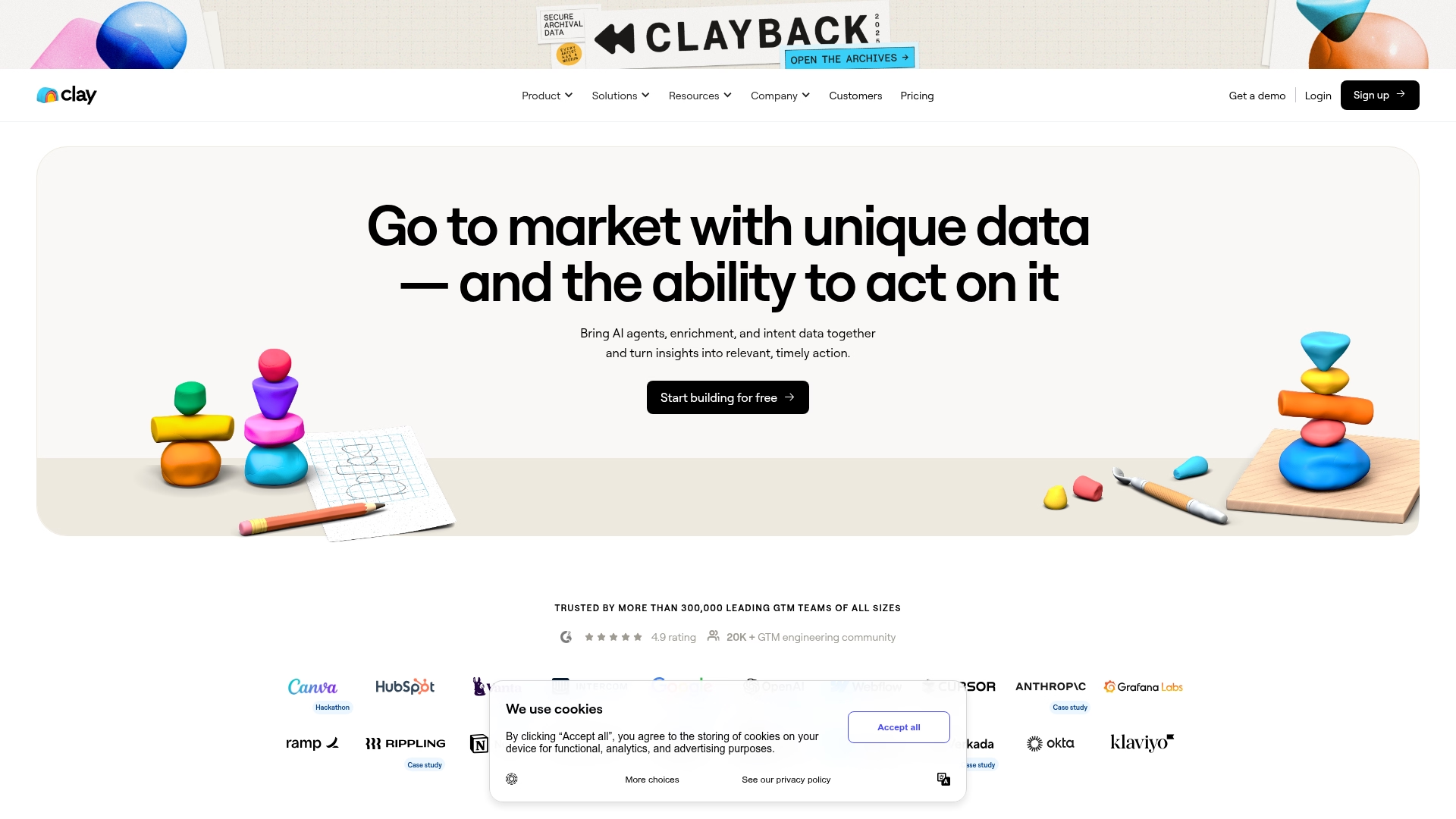
Clay automates targeted marketing campaigns by pulling and enriching prospect data from multiple sources (150+ providers like Apollo, Clearbit, and People Data Labs), combining it with CRM records and intent signals to build targeted lists, score leads, and trigger personalized outreach workflows - all without engineering. As an AI-powered data enrichment tool, Clay consolidates data from multiple sources to streamline outreach efforts for revenue teams.
Best for: Outbound sales and RevOps teams targeting ICPs like mid-sized tech firms in cybersecurity or fintech.
It syncs millions of CRM records with 150+ data providers using waterfall logic that triples enrichment rates over single-provider tools. Clay builds dynamic buyer segments by layering signals like funding, hiring, or tech stack with AI, then pushes enriched data to CRMs or email sequencers without code.
Though it has a steep learning curve and higher costs, it replaces manual research and siloed tools.
Clay pricing
Free plan with limited credits; Paid plan from $134/month up to $720/month for Pro.
6. Leadfeeder
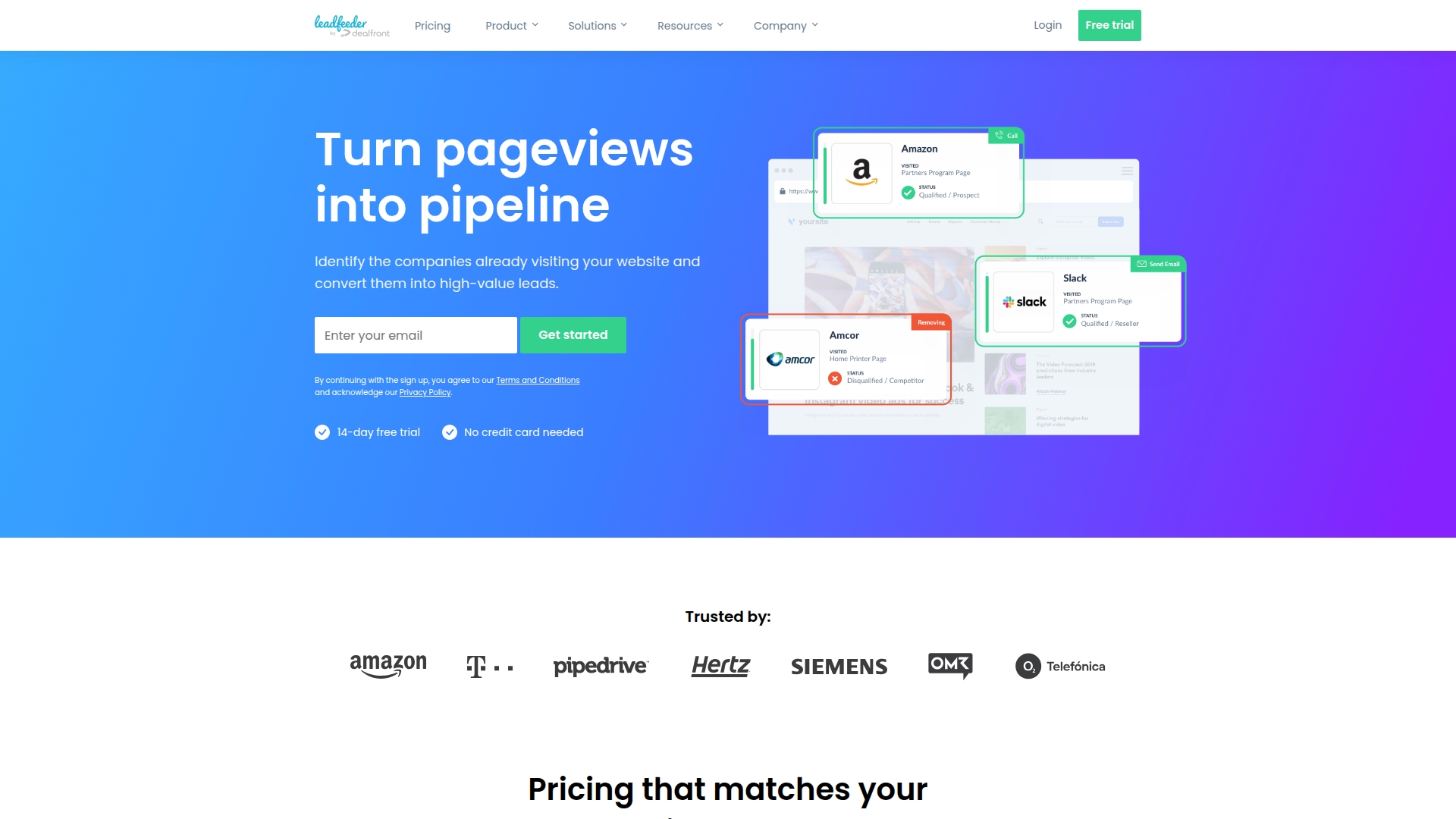
Leadfeeder identifies anonymous B2B companies visiting your website via IP tracking, revealing their behavior like pages viewed and visit duration to prioritize outreach and convert traffic into sales leads without relying on forms. It also helps teams collect and manage lead details of identified companies, making it easier to organize and execute effective outreach.
Best for: B2B sales teams at mid-market organizations running account-based strategies.
It identifies companies from website visits using daily-updated IP databases and integrates with CRMs like Salesforce, HubSpot, and Pipedrive for automatic lead routing. Leadfeeder offers lead scoring, custom segmentation, and real-time alerts to help reps prioritize high-intent visitors based on activity like repeat visits or pricing page views.
Though company identification accuracy varies by visitor networks, it solves the problem of invisible website traffic.
Leadfeeder pricing
Tiers based on monthly identified companies; includes free 14-day trial on the €99 paid plan.
7. Descript
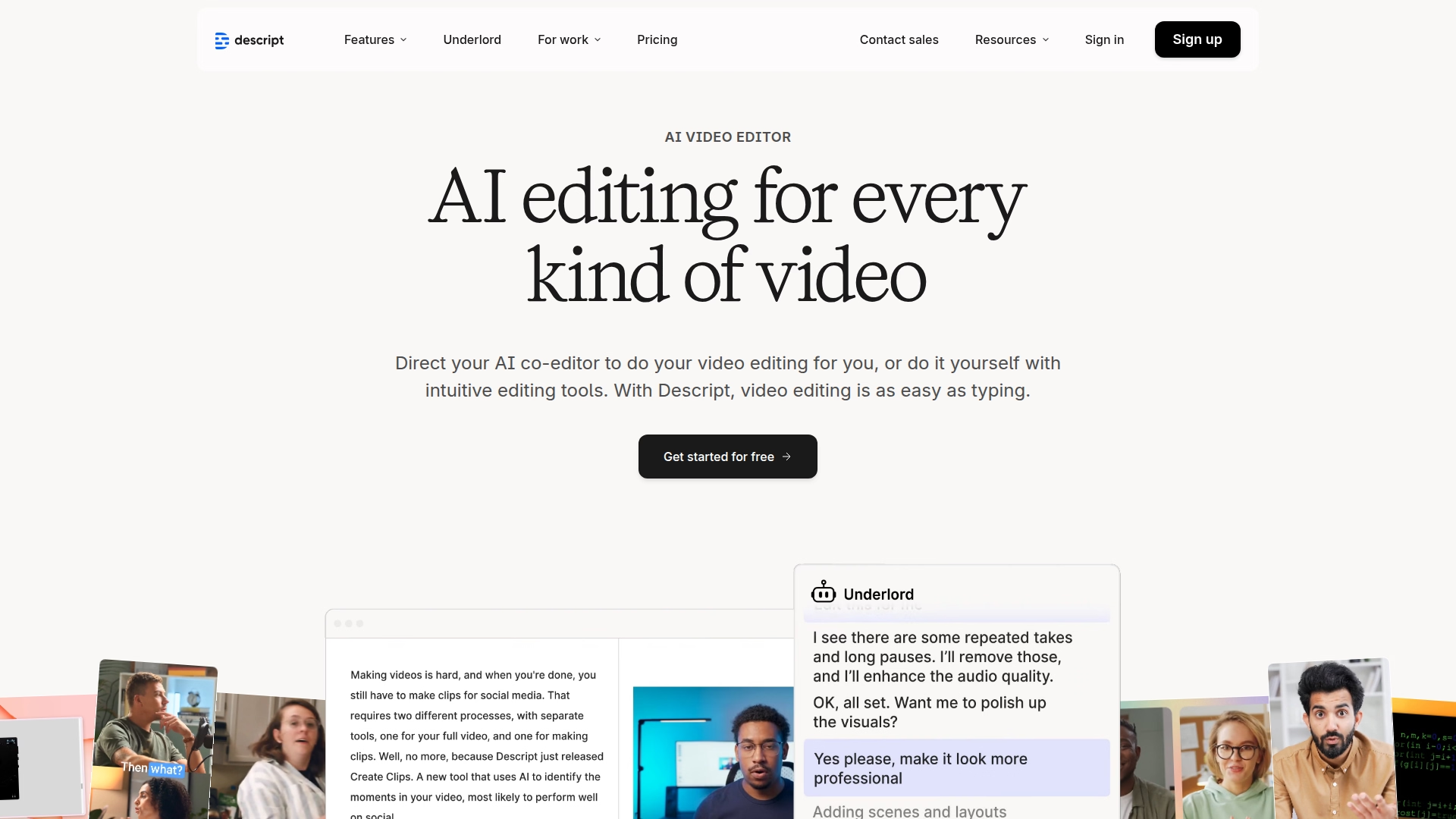
Descript is an AI-powered audio and video editing tool that lets users edit media by editing text transcripts, solving the problem of time-intensive manual trimming, filler removal, and dubbing for podcasters, video creators, and content teams.
Best for: Solo creators or small teams producing weekly podcasts or videos.
It uses text-based editing that syncs transcript changes instantly to media files, cutting edit time from hours to minutes. Descript's AI features include Studio Sound (noise removal), filler word detection, and Overdub (voice synthesis), with collaboration tools and Brand Studio templates on Business plans.
Though the media-minute model counts uploads against quotas, it automates polishing with predictable monthly credits.
Descript pricing
Hobbyist ($16/mo annual) includes 10 media hours; Creator ($24/mo annual) includes 30 hours; Business ($50/mo annual); Enterprise custom; Free tier offers 1 hour with watermarks.
8. Instapage
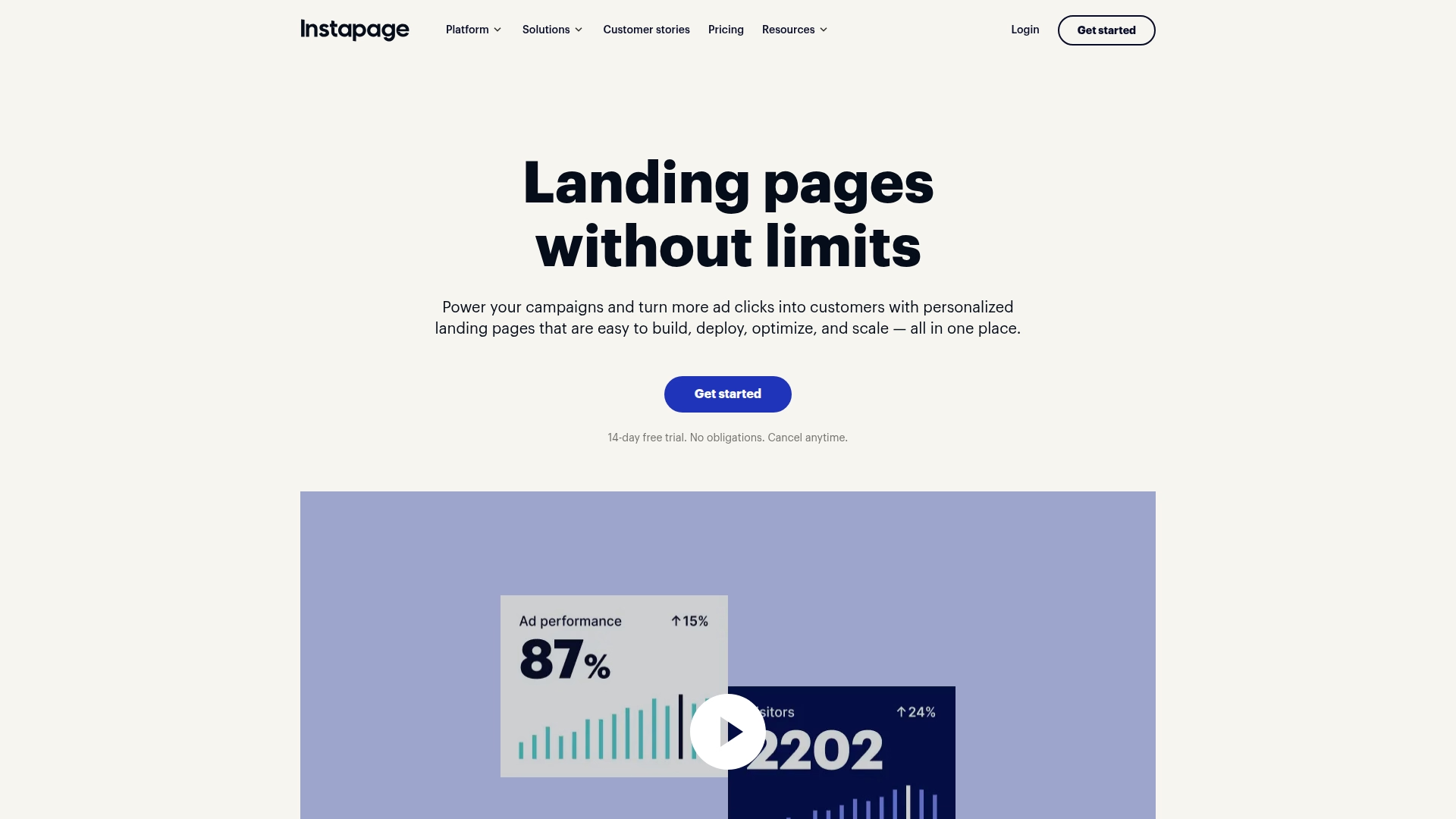
Instapage is a landing page platform that lets growth teams build, personalize, test, and scale high-converting landing pages for paid ads without developers, solving the problem of mismatched ad-to-page experiences that drop conversions. Instapage also enables the creation of landing pages optimized for their target audience, helping teams tailor messaging to specific audiences and increase conversions.
Best for: Growth teams running paid ad campaigns for lead generation.
It offers a drag-and-drop builder with 500+ layouts for quick mobile-optimized page creation, plus real-time visual collaboration to cut review cycles from days to hours. Instapage enables ad-to-page personalization and global blocks to map ads to matching landing pages and update multiple pages with one click, with conversion rate optimization capabilities.
Though basic analytics lack custom reports, it delivers faster campaign launches and higher ROI.
Instapage pricing
Contact sales required; Building Plan reportedly $299/month; 14-day free trial.
9. PartnerStack
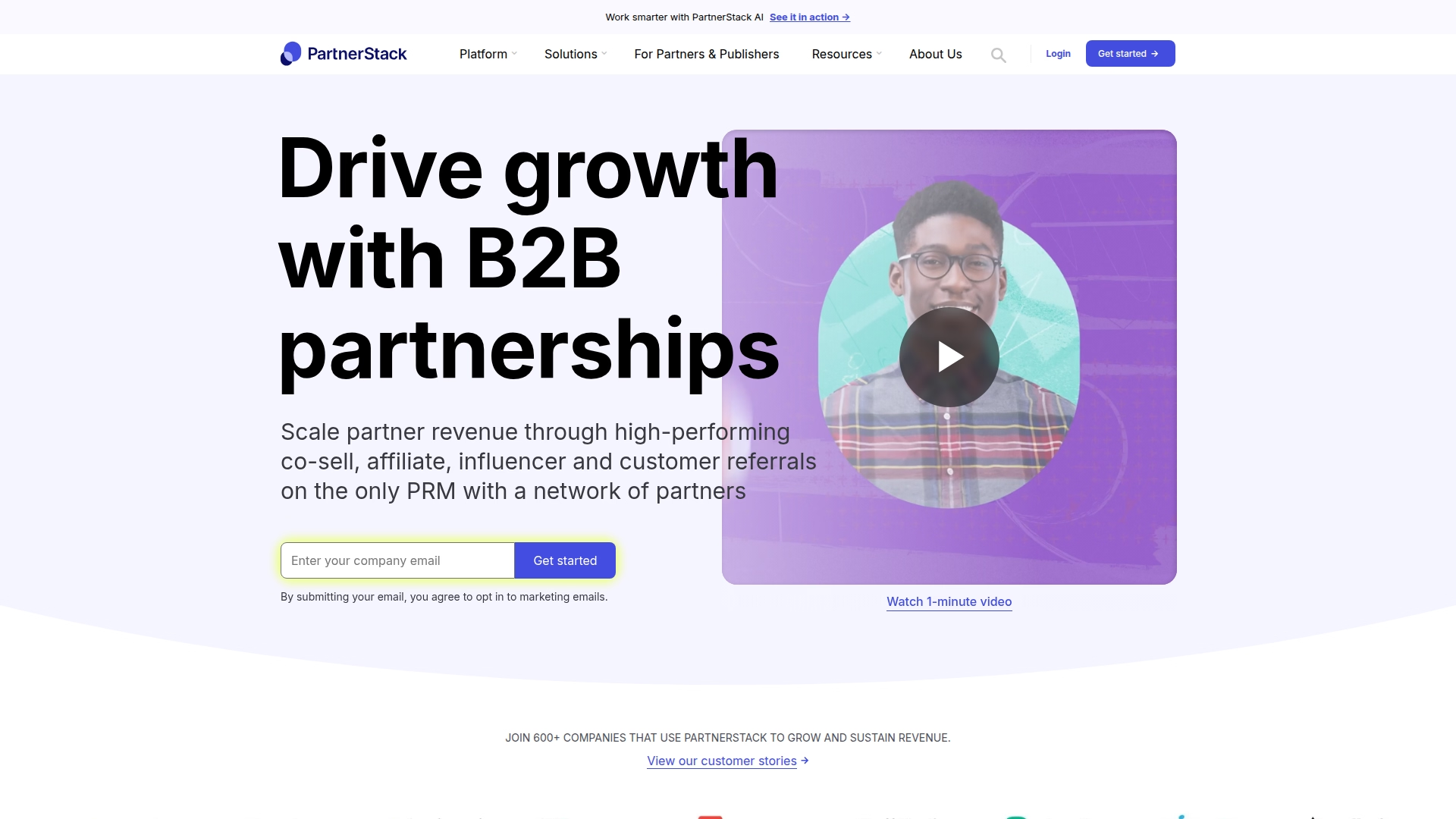
PartnerStack automates the full partner lifecycle - from recruitment and onboarding to tracking, optimization, and commission payouts - for B2B SaaS companies building ecosystems with affiliates, co-sell partners, influencers, and referrers. Customer success teams can also leverage PartnerStack to improve partner engagement and retention.
Best for: Growth-stage B2B SaaS vendors seeking predictable demand via partner networks.
It automates custom onboarding journeys for different partner types and tracks partner-sourced leads end-to-end with CRM syncing and detailed reporting. PartnerStack supports multiple program types (affiliate, co-sell, referral) with tiered commissions and provides access to a marketplace of 115,000+ active B2B partners for recruitment.
Though setup can be complex for teams new to partnerships, it solves manual partnership management by automating payouts and enabling scalable revenue.
PartnerStack pricing
Custom pricing; not publicly published.
10. Kit
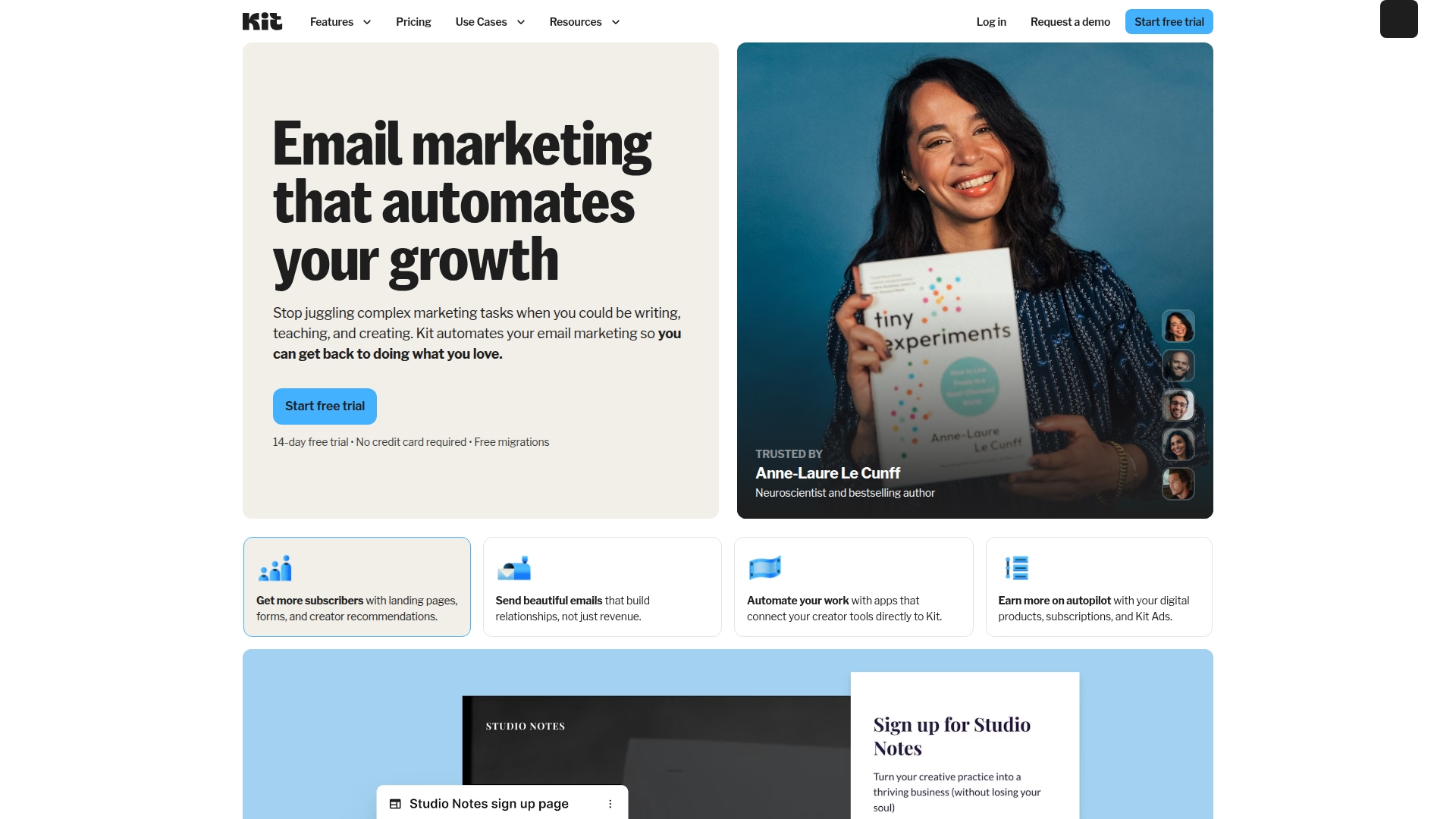
Kit (formerly ConvertKit) is a powerful email marketing platform and newsletter tool that lets creators build subscriber lists, run visual automations, and send broadcasts or email campaigns to monetize content without complex setups.
Best for: Bloggers, podcasters, and solopreneurs with up to thousands of subscribers.
It offers a visual automation builder for subscriber tagging, sequences, and funnels without code, plus 70+ direct integrations including RSS campaigns and paid recommendations. Kit’s free plan includes unlimited emails to up to 10,000 subscribers with core forms and landing pages.
Though recent price hikes increased costs, it turns one-off readers into repeat customers via targeted emails.
Kit pricing
Free plan (up to 10,000 subscribers); Creator starts at $39/month for 1,000 subscribers; Creator Pro starts at $59-93/month; annual billing offers 2 months free.
11. Ahrefs
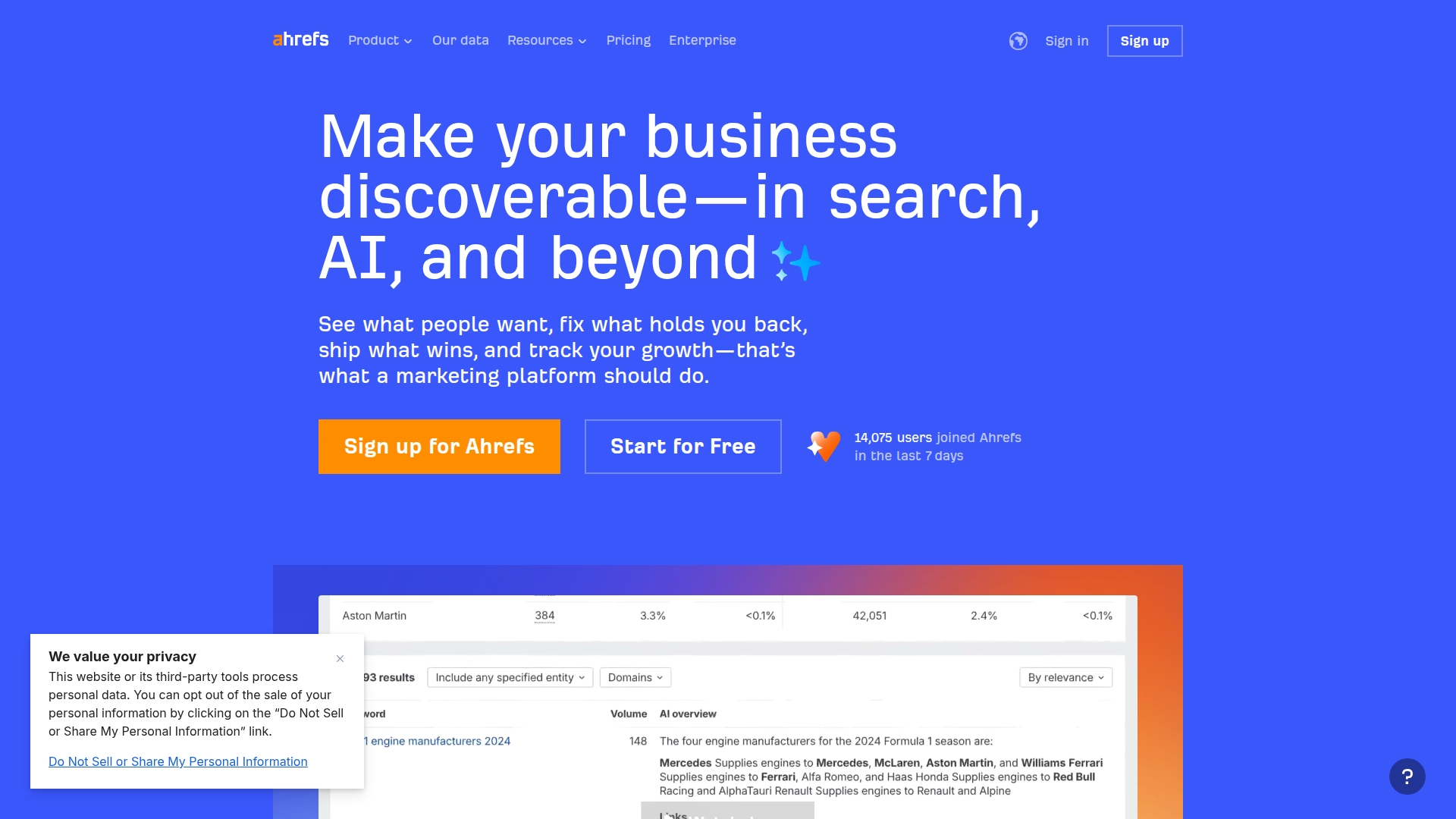
Ahrefs is an SEO and content intelligence platform designed to help B2B marketers with content marketing usecases that include research keywords, analyze competitor strategies, and create search-optimized content that drives organic demand. Ahrefs is widely used for search engine optimization and improving search engine rankings, making it a go-to tool for increasing online presence and demand generation. Its backlink analysis feature helps identify new link building opportunities, enabling users to acquire high-quality backlinks and further boost their SEO campaign performance.
Best for: Content marketers, SEO specialists, and content marketing teams at mid-market to enterprise companies.
It offers Keywords Explorer to surface high-intent search terms and Content Explorer to identify top-performing competitor content for filling gaps. Ahrefs provides Site Explorer to reveal competitors’ organic traffic sources and backlink strategies, plus integrated AI workflows for content creation, technical SEO audits, and rank tracking.
Though it starts at a steep $129/month and requires SEO expertise, it solves the problem of finding and ranking for what your audience is actively searching.
Ahrefs pricing
Starts at $129/month for five projects and 500 credits per user.
12. HockeyStack
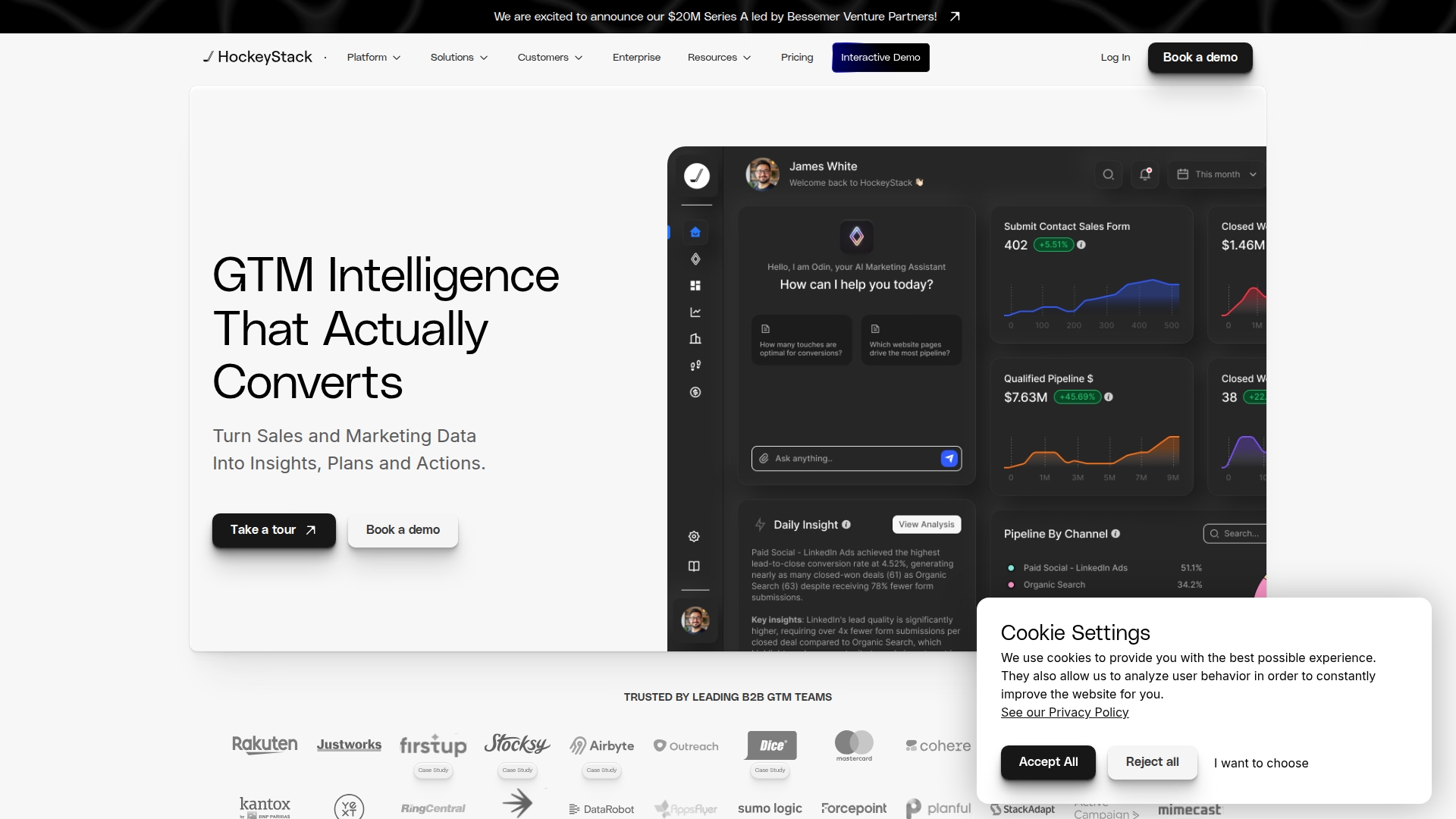
HockeyStack is an analytics platform that unifies online and offline GTM data into visual buyer journeys, dashboards, and AI recommendations to reveal how marketing touchpoints like emails, ads, and content drive revenue. It also allows teams to analyze user behavior across touchpoints for deeper insights into visitor interactions and campaign effectiveness.
Best for: SaaS and B2B marketing scaling demand generation.
It offers multi-touch attribution with custom models and lift reports to measure incremental campaign impact on revenue. HockeyStack’s AI tools like Odin Analyst provide forward-looking insights and account plans from CRM and web signals, while stakeholder maps auto-surface buyers and sync actions across tools for unified outreach.
Though it relies heavily on data integrations that may require setup time, it solves the problem of siloed data and eliminates manual spreadsheets.
HockeyStack pricing
Requires demo; not published on official site.
13. Google Search Console
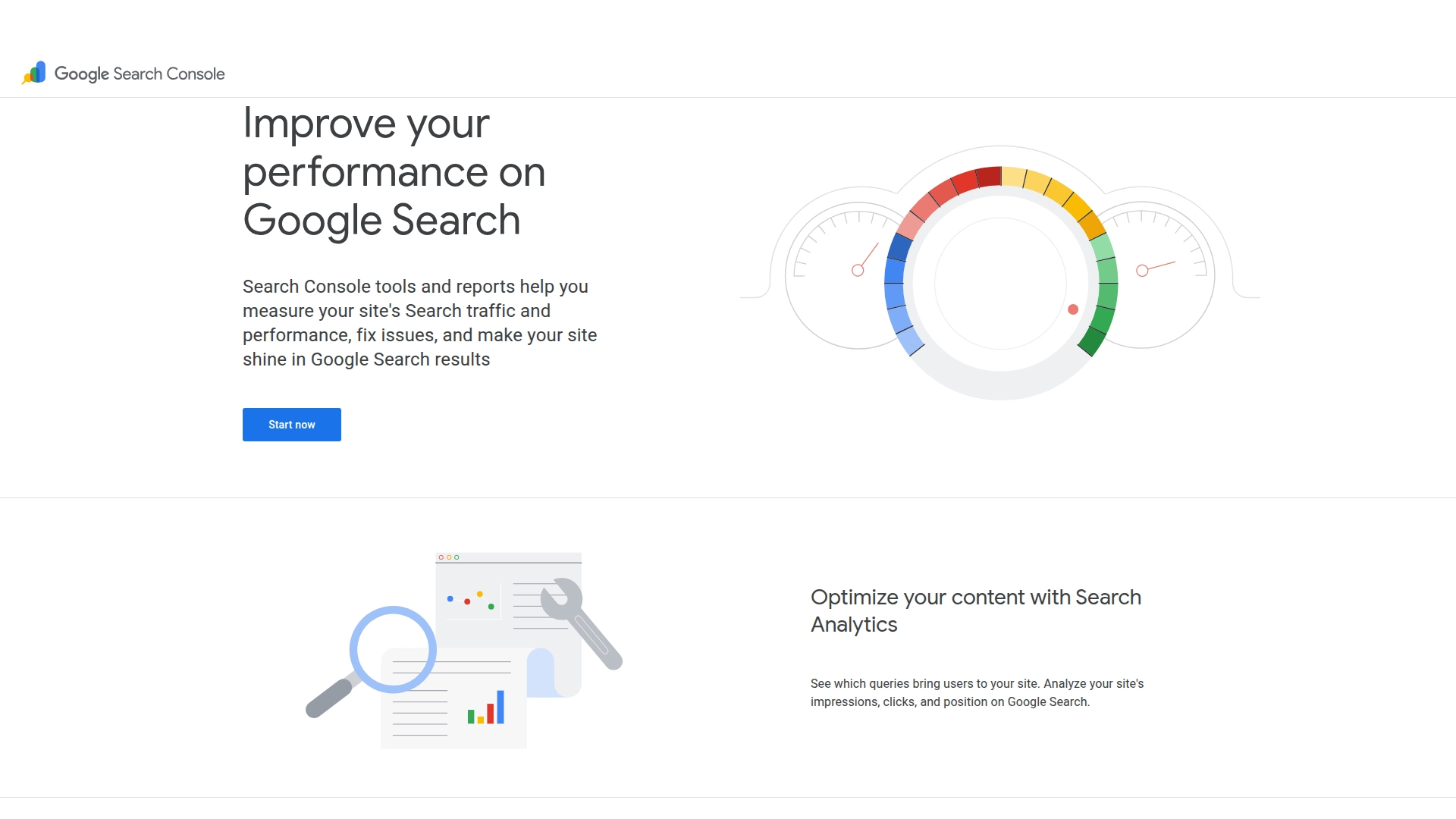
Google Search Console is a free tool from Google for monitoring your site’s performance in search results, identifying indexing issues, and delivering unique data on queries, clicks, and impressions not available elsewhere.
Best for: Website owners, SEO practitioners, and content marketers targeting search-driven demand. It is essential for search engine optimization efforts, helping improve website ranking and organic search visibility.
It offers performance reports showing exact queries, clicks, impressions, and positions for precise content optimization. GSC’s URL Inspection tool lets you request immediate indexing to speed up visibility from days to hours, plus integrates with GA4 for unified dashboards. Though data has a 2-3 day delay, it solves problems like slow indexing and missed keyword opportunities.
GSC pricing
Free for all users; requires a Google account and site verification.
14. Devi
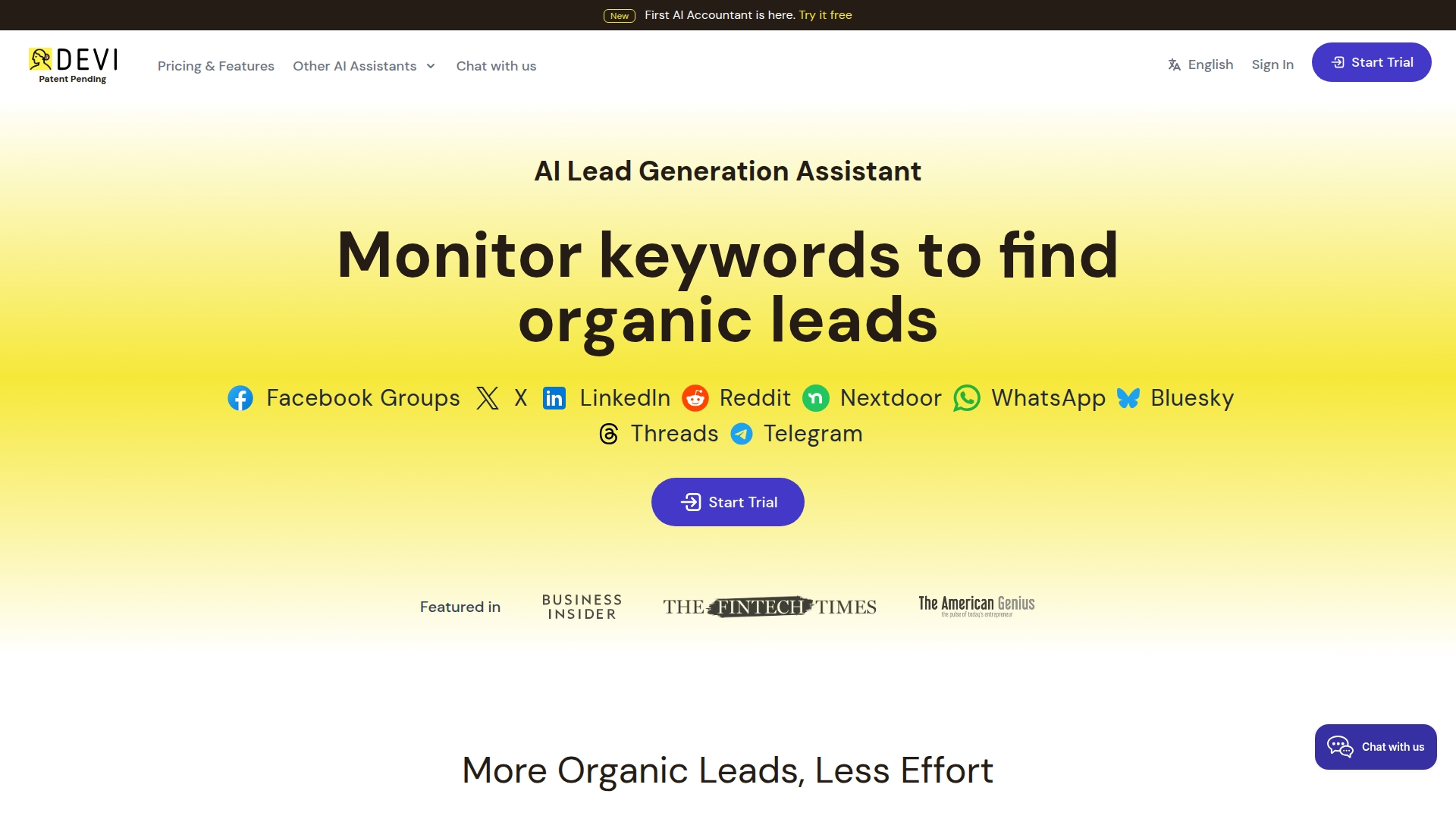
Devi monitors keywords across social platforms like Facebook Groups, LinkedIn, Reddit, Twitter/X, Instagram, Nextdoor, and WhatsApp to detect high-intent leads discussing buying needs, then generates personalized AI outreach messages, automates content scheduling, and runs social media campaigns to engage leads across platforms.
Best for: Solopreneurs, small businesses, and sales & content marketing teams targeting social discussions for warm leads.
It monitors up to 25 Facebook groups plus global posts in a unified dashboard, generating 1-click ChatGPT-powered replies in multiple languages. Devi creates AI visual content from industry news with branding and schedules posts across platforms, plus provides lead tracking analytics to optimize monitoring.
Though analytics focus on basic lead tracking, it frees teams from manual scanning to focus on closing deals.
Devi pricing
Free trial includes 25 Facebook groups and 1000 ChatGPT API calls; monthly paid plan unlocks all features (full pricing not published).
15. Sprout Social
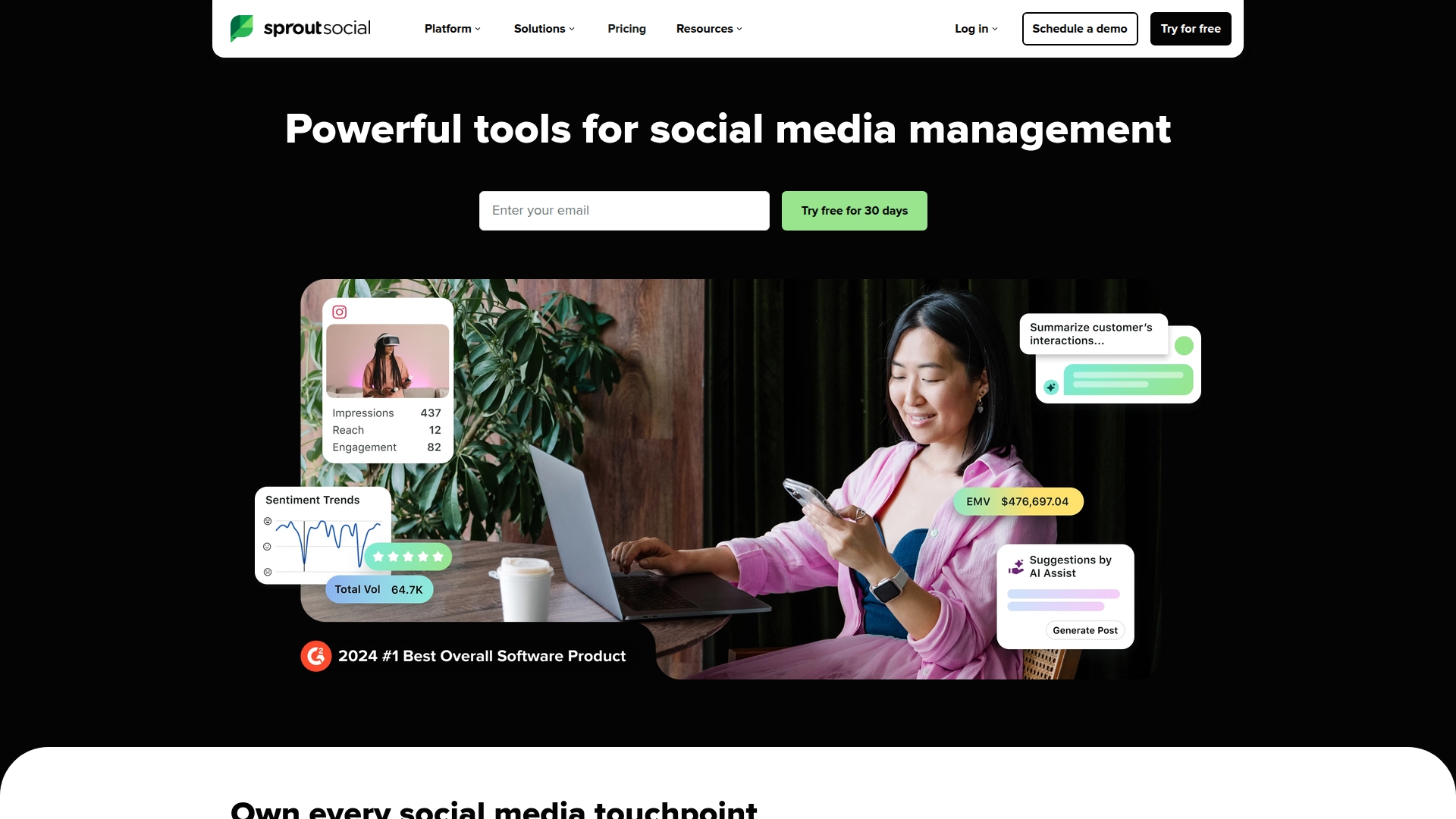
Sprout Social is a social media management platform that centralizes publishing, scheduling, monitoring, engagement, and analytics across profiles like Facebook, Instagram, and X, helping social media teams track conversations, respond faster, and measure ROI. Sprout Social also streamlines the management of social media campaigns, making it easier to plan, automate, and analyze outreach as part of a broader demand generation strategy.
Best for: Small to enterprise teams handling multiple social profiles and high-volume engagement.
It supports up to 5 social profiles on the Standard plan with publishing, scheduling, and basic reporting, while unlimited profiles on Professional plans add AI tools like optimal send times and sentiment analysis. Sprout Social includes analytics features for tracking user engagement across profiles, as well as API integrations, rule builders for automation, and mobile apps for on-the-go monitoring.
Though per-seat pricing scales quickly, it centralizes multi-profile management without scattered tools.
Sprout Social pricing
Annual-billed plans starting at $199/seat/month for Standard; $299 for Professional; $399 for Advanced; custom Enterprise; 30-day free trials.
16. Webflow
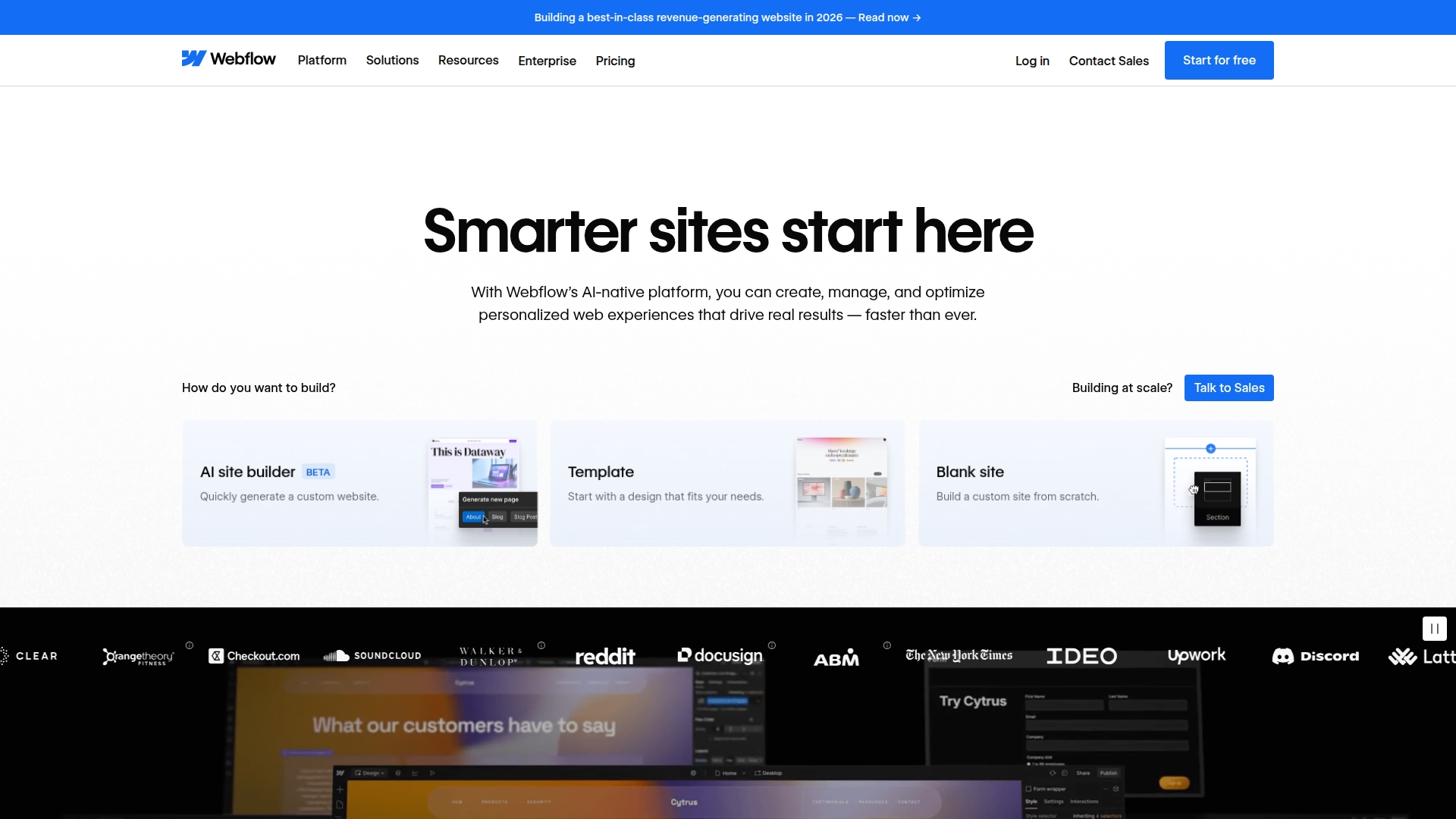
Webflow is a visual website builder that lets marketers create conversion-optimized sites with CMS for dynamic content, forms, and personalized elements to capture and nurture B2B leads without coding.
Best for: B2B marketers building custom sites for lead generation and nurturing.
It offers CMS collections for dynamic content like personalized blogs, native form tools with Zapier/HubSpot integrations for automated lead capture, and an AI site builder that generates full sites and CMS items. Webflow includes built-in analytics and conversion rate optimization capabilities like A/B testing to optimize conversions.
Though it relies on third-party tools for advanced form logic, it solves the problem of building scalable landing pages and funnels with CRM integration.
Webflow pricing
Free tier for basic sites; paid plans start at ~$24/mo for Lite, ~$29/mo for Core billed annually.
17. Warmly
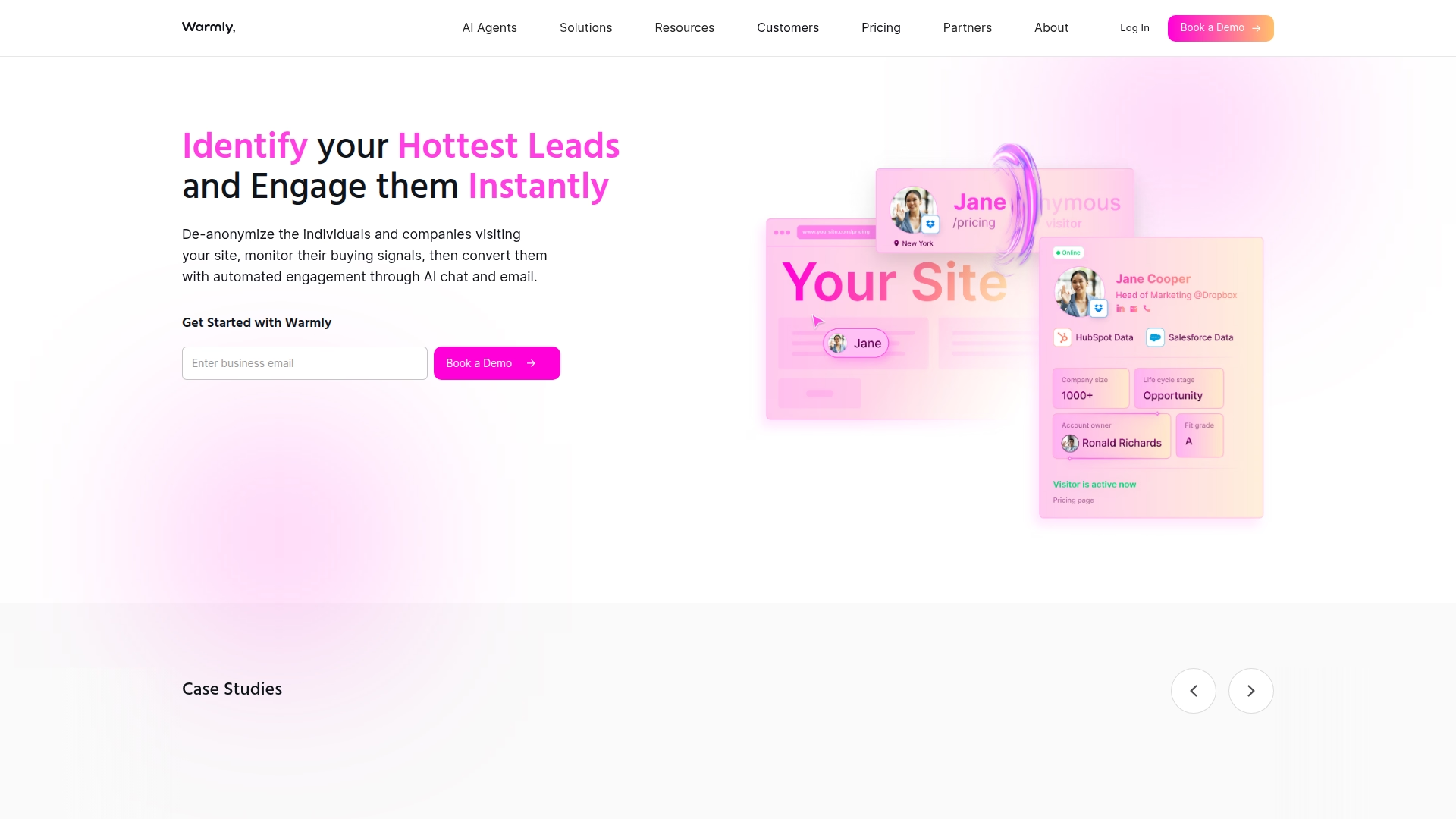
Warmly automates outreach to high-intent website visitors and leads by tracking person-level intent signals in real time and engaging them via AI-driven chat, email campaigns, and LinkedIn messages, helping GTM teams book more meetings without expanding SDR headcount. Warmly can also complement tools like Sales Navigator for LinkedIn-based lead engagement, enhancing B2B sales strategies with advanced search and engagement tracking.
Best for: B2B marketing and sales teams scaling demand generation.
It integrates with intent tools like 6sense, Clearbit, and Bombora to identify researching companies and supports multi-channel workflows including website chat, AI email campaigns, and LinkedIn outreach. Warmly provides lead qualification, follow-up automation, and an ROI dashboard to track engagement and conversions.
Though HubSpot integration caps at 500 monthly active accounts on starter plans, it solves missed opportunities from anonymous site traffic.
Warmly pricing
Starter tier: 1 domain, up to 3 users ($15/extra seat monthly), 30 days historical insights, 500 monthly active accounts/leads.
18. RB2B
RB2B identifies website visitors at both company and contact level, delivering real-time LinkedIn profiles and intent signals directly to Slack or your CRM, helping sales teams engage high-intent prospects the moment they visit your site.
Best for: B2B sales and marketing teams running account-based marketing or outbound sales programs.
It captures visitor identification in real time with instant Slack and Teams notifications, integrates with HubSpot, Salesforce, Apollo, and Clay for automated lead routing, and provides ICP filters to focus on decision-makers. RB2B offers contact-level identification primarily for US visitors with company-level identification globally, increasing coverage from 15-20% on free plans to 70-80% on Pro+ plans.
Though contact-level identification is US-focused, it solves the problem of anonymous website traffic by turning visitors into actionable pipeline opportunities.
RB2B Pricing
Free plan available; Starter at $79/month, Pro from $149/month, Pro+ from $199/month based on monthly visitor volume.
19. AdRoll
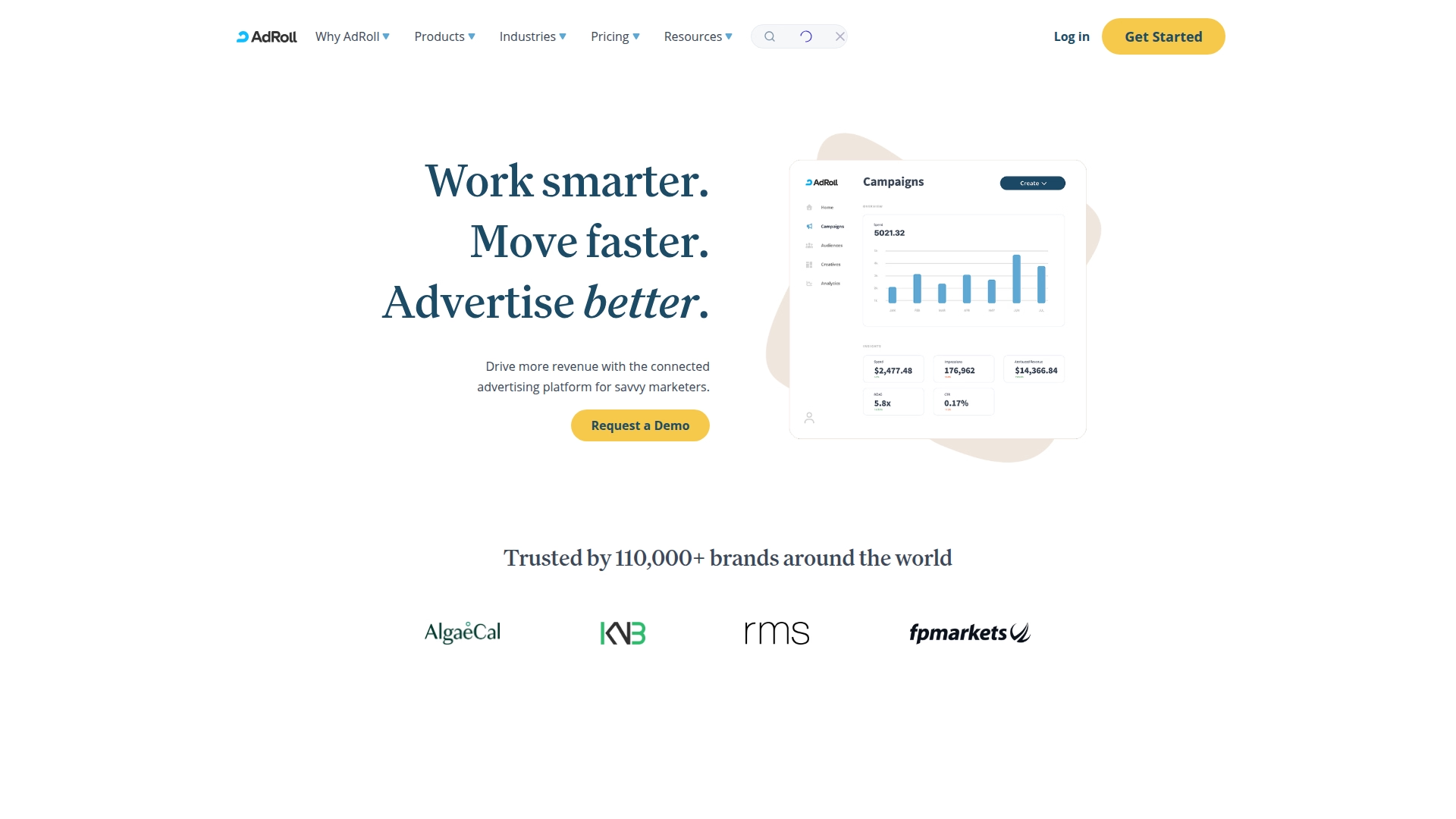
AdRoll is an AI-powered advertising platform that runs retargeting and full-funnel demand generation marketing strategies across display ads, video, social, web, mobile, and CTV to re-engage website visitors, nurture high-intent users, and drive conversions like cart recovery or pipeline generation. AdRoll enables you to improve campaign performance across channels to increase brand awareness and drive conversions, making it a strong choice for businesses aiming to expand their market reach.
Best for: E-commerce retailers and B2B marketers with defined ICPs like firmographics or buyer intent.
It supports diverse ad formats optimized via BidIQ AI, which analyzes 2.5 million predictions per second to adjust bids and boost engagement. AdRoll integrates with Shopify, Google Ads, MailChimp, and CRM lists for cross-channel attribution from a single dashboard, plus offers ABM-specific targeting with firmographics and intent signals from G2/Bombora.
Though it requires ongoing manual tweaks alongside AI for peak performance, it unifies multi-channel targeting and reduces fragmented ad spend.
AdRoll pricing
Flexible pricing based on ad spend, starting around $300/month.
20. HubSpot
HubSpot is an all-in-one marketing platform that combines content distribution, lead capture, automation, and analytics to drive consistent demand across the full customer funnel. HubSpot is also widely used for inbound marketing strategies, providing a comprehensive methodology and toolset to attract and engage potential customers.
Best for: Mid-market B2B companies and startups building inbound demand generation programs.
It integrates forms, chat flows, and automated email sequences directly with your CRM for seamless lead data flow and personalization. HubSpot offers multi-channel distribution for email, social, and paid ads with ROI tracking, plus granular lead scoring to prioritize high-intent leads and AI-powered content generation via Breeze Copilot.
Though it has a learning curve for smaller teams, it solves the fragmentation problem of managing multiple tools, and also includes intuitive data visualization.
Here's how to create a dashboard in HubSpot:
Hubspot pricing
Free and paid tiers; starting from $13/month to several thousands for advanced plans.
21. Salesforce
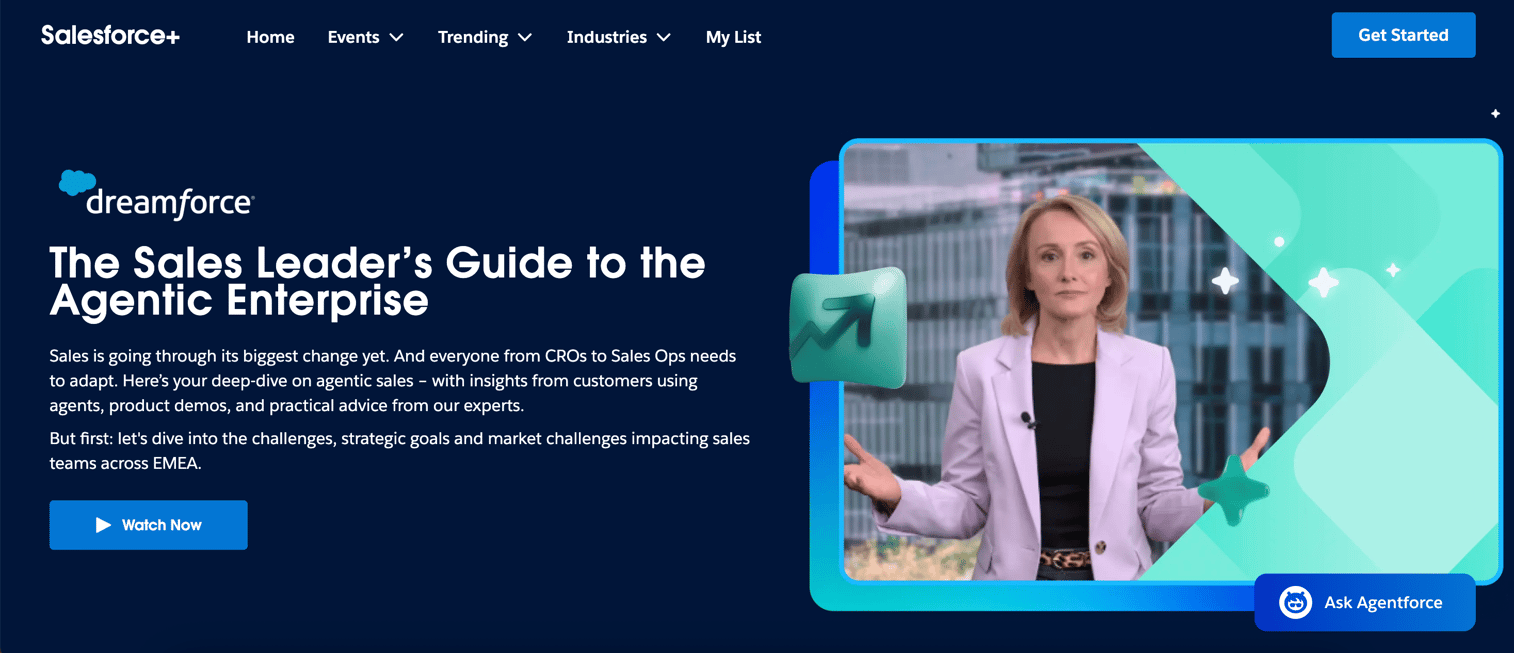
Salesforce is where demand gen stops being a spreadsheet sport. It’s the source of truth for lifecycle and pipeline: who owns the account, what stage it’s actually in, and what changed since the last touch. Not glamorous. But it’s how teams stop losing revenue to sloppy handoffs and invisible deals.
Best for: Demand gen, RevOps, and revenue teams at mid-market to enterprise companies that need clean lead routing, reliable forecasting, and consistent follow-up across multiple reps.
Demand gen teams run marketing automation (Marketo) synced to Salesforce - this integration tutorial is core to their stack
Key feature
- Lead and opportunity management with stage history and attribution-friendly reporting
- Workflow automation for routing, alerts, and MQL-to-SQL handoffs between marketing and sales
- Integrations across your GTM stack (ads, email, enrichment, scheduling, analytics)
Salesforce pricing
Paid plans; pricing varies by edition and add-ons.
22. LinkedIn Sales Navigator
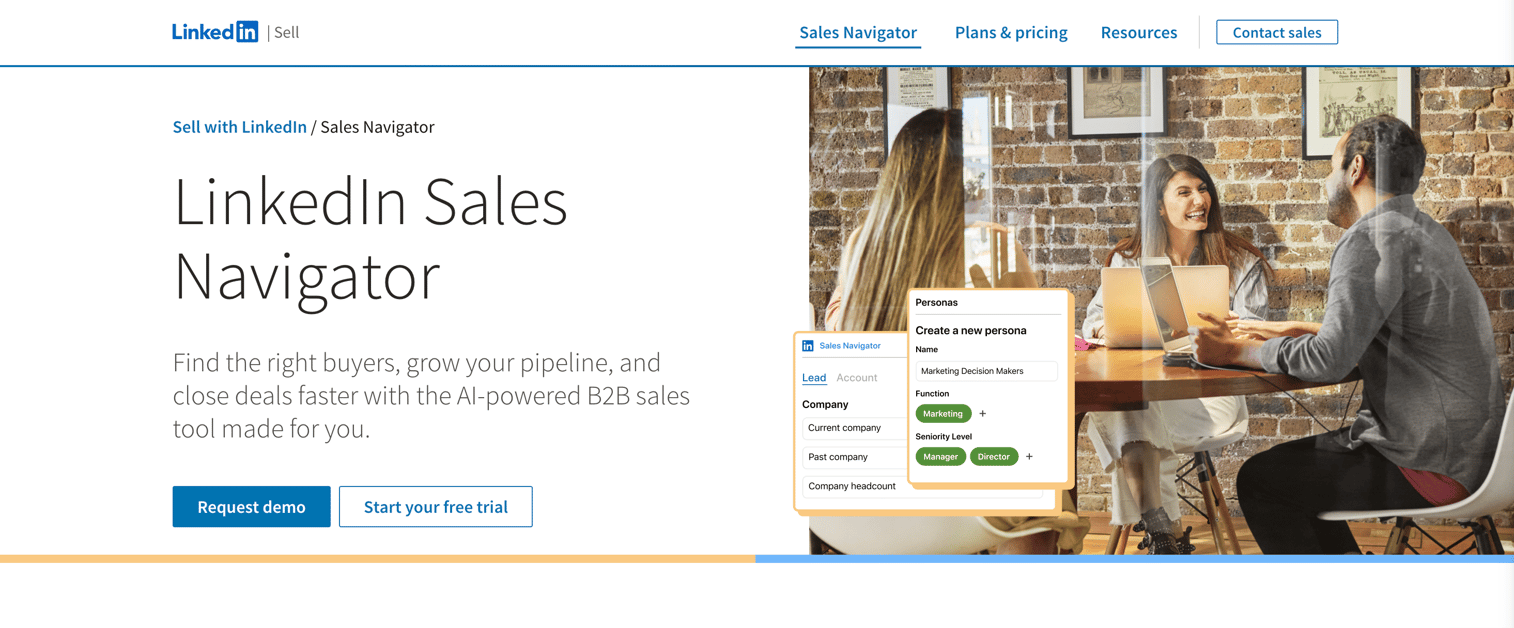
You can have a strong campaign and still miss because you’re talking to the wrong person inside the right company. LinkedIn Sales Navigator helps demand gen teams and SDRs find the actual buyer and the internal champion, not just a job title that looks good in a spreadsheet. The win is focus: build tighter account lists, map stakeholders, and use real signals like job changes and posted activity to time outreach and ABM plays.
Best for: ABM, demand gen, and outbound teams building targeted account lists and mapping buying committees.
Key features
- Advanced lead and account search to find the right people fast
- Saved lists and alerts for job changes, new hires, and prospect activity
- Notes and CRM sync (depending on setup) to keep targeting consistent across teams
LinkedIn Sales Navigator pricing
Paid plans; pricing varies by tier.
23. Outreach
Most “follow-up problems” aren’t messaging problems. They’re execution problems. Leads stall in the gaps between touches: no owner, no next step, no accountability. Outreach makes follow-up hard to ignore. It turns sequences and tasks into a system reps actually run day to day, and it gives demand gen and sales leaders visibility into what happened after the form fill or first reply.
Best for: SDR, demand gen, and sales teams running structured outbound and disciplined inbound follow-up at scale.
Key features
- Multi-step sequences for email + calls + tasks
- Rep workflows and task management that reduce dropped leads
- Analytics, coaching, and QA features (tier-dependent) to diagnose what’s working and what’s not
Outreach pricing
Custom pricing.
What to consider before choosing your demand generation tools
The “best” demand generation tools are the ones that fit your team’s workflows and growth goals and align with your overall marketing strategy. Look for concrete capabilities like CRM integration, multi-channel campaign execution, advanced analytics and lead capture or enrichment.
Prioritize tools that solve your team’s bottlenecks - whether that’s automating outreach, visualizing user journeys or rapidly building high-converting landing pages - while fitting within your data and privacy requirements. The right tools generate demand by supporting targeted outreach and engagement and bringing more potential customers to your business.
Why teams are choosing Guideflow
- Interactive, no-code demos: Guideflow lets teams quickly capture and update product workflows from any app or website and build interactive demos and product tours for changelogs, review sites or outbound marketing campaigns - no engineering required.
- Seamless CRM and sales integration: Real-time syncing with Salesforce, HubSpot and Pipedrive means lead data and engagement signals flow directly into your pipeline and support intent tracking and fast sales handoffs.
- Actionable analytics: Get instant visibility into demo engagement, drop-offs and high-intent prospects so you can follow up with qualified leads.
- AI-powered personalization: Built-in AI tools speed up demo creation and personalization for different personas or use cases.
- Tradeoffs: Guideflow requires a Chrome extension for initial capture and its security and storage details are less transparent than some enterprise competitors. It’s for SaaS marketers and PMMs focused on scalable, interactive demand gen - not for teams that need advanced compliance or non-browser workflow capture.
Conclusion
Here’s the practical way to decide: Match your tool choice to your biggest growth challenges and how your team works. Some tools excel at outbound automation and lead enrichment (Clay, Warmly), others at landing page or demo creation (Instapage, Guideflow, Supademo) and some offer unified platforms for analytics, attribution or CRM integration (HubSpot, HockeyStack, AdRoll). Every option has tradeoffs in setup, pricing or specialization - there’s no perfect solution, only a best fit for your stage and goals.Ultimately, the best demand generation strategy is about generating demand and converting leads efficiently. Try the short list that fits your needs: start a free trial, request a demo or map one core campaign to see which tool generates and converts demand most efficiently.
FAQs
Demand generation tools are platforms that help marketing and sales teams create awareness, nurture prospects and convert them into qualified leads by engaging with them through various campaigns and touchpoints. Common types of tools include email marketing software and social media scheduling tools - and sales tools that automate, optimize and scale sales and marketing processes. They streamline the entire buyer journey from initial awareness to the purchase decision.
Use demand generation tools when your team needs to scale personalized engagement, reduce grunt work in marketing activities, improve attribution between marketing activities and revenue or when prospects need multiple touchpoints before converting. They’re especially useful for B2B companies with complex sales cycles and those that need automation for repetitive tasks.
The benefits include better lead quality, faster pipeline velocity, reduced time-to-conversion, better buyer experience and analytics. These tools help with your demand generation strategy through automation and data-driven processes. These tools provide measurable attribution across campaigns so you can justify your marketing spend.
Choose tools that fit your team’s workflows and growth goals. Look for features like CRM integration, campaign execution, advanced analytics and lead capture. Advanced features like multi-step automation, premium integrations, custom logic and advanced outreach tools can be a deciding factor for teams with complex needs. Prioritize tools that solve your specific challenges whether that’s automating outreach or building high-converting landing pages.
Yes, several other marketing tools offer free tiers or trials, like HubSpot and Leadfeeder. GSC is another tool that provides valuable insights into website performance on Google search, including search queries, indexing and user engagement metrics. Free tools usually include base functionalities so you can access core features for free. For more advanced features like multi-step automation, premium integrations, custom logic, advanced outreach tools, personalized content, high-performance website design and complex scheduling capabilities you’ll need to upgrade to a paid plan.
Demand generation is about creating awareness and interest in a brand or product, nurturing prospects through the buyer journey while lead generation is about capturing contact information - especially contact details - from potential customers. Demand generation is a broader strategy that looks at the whole customer journey.
Many demand generation tools offer seamless integration with popular CRMs like Salesforce, HubSpot and Pipedrive so lead data and engagement signals flow directly into your existing workflows.
Tools like HubSpot, Guideflow and HockeyStack are great for B2B companies because of their lead management, advanced analytics and integration capabilities for complex sales processes. Sales Navigator is also a great tool for B2B lead qualification and engagement, leveraging LinkedIn’s massive network and advanced search features.
Measure ROI by tracking key performance indicators (KPIs) like lead conversion rates, pipeline velocity and overall revenue generated from campaigns. Most demand generation tools have analytics and reporting features to help you measure performance.