Your reps spend hours researching accounts that never respond - 73% of B2B buyers actively avoid suppliers who send irrelevant outreach. Meanwhile, competitors with better data reach the same buyers first and book the meetings you wanted.
Sales intelligence software fixes this by surfacing verified contacts, company insights, and buying signals so you can focus on accounts that are actually ready to buy. This guide compares 15 sales intelligence tools, explains when each delivers the most value, and shows you how to build a stack that turns data into closed deals.
What's inside
This guide compares 15 sales intelligence platforms that help revenue teams find, research, and engage the right buyers. You'll learn what sales intelligence software actually does, when it delivers the most value, and how to pick the right tool for your sales motion. We also cover how to pair data platforms with engagement tools like interactive demos to convert the leads you surface.
TL;DR
- Sales intelligence software collects and analyzes data about prospects, customers, and market behavior to help you identify leads, personalize outreach, and close deals faster.
- Data providers like ZoomInfo and Cognism excel at contact discovery, while intent platforms like 6sense and Bombora surface buying signals.
- Buying criteria that matter most: data accuracy in your target market, integration depth with your CRM, and total cost including credits.
- Pairing sales intelligence with interactive demos from Guideflow helps convert identified leads into engaged buyers by letting prospects experience your product before a call.
What is sales intelligence software
Sales intelligence software refers to digital platforms that collect, analyze, and deliver data about prospects, customers, and market behavior. Revenue teams use sales intelligence tools to identify leads, personalize outreach, and close deals faster. The core capabilities include B2B contact databases, intent data, firmographics, and technographics. Instead of guessing who to call, you get data that tells you who is likely to buy and why.
How sales intelligence differs from CRM
CRM stores relationship data you already have. Sales intelligence provides external data you don't have yet.
| CRM | Sales intelligence |
|---|---|
| Stores existing contacts | Discovers new prospects |
| Tracks interactions you've had | Surfaces buying signals you haven't seen |
| Internal data from your team | External data from the market |
| Records what happened | Predicts what might happen |
Think of CRM software as your memory and sales intelligence as your research assistant. One remembers conversations; the other finds new people worth talking to.
Core data types in a sales intelligence system
Sales intelligence platforms typically provide several categories of data:
- Contact data: Direct dials, verified emails, job titles, and reporting structures
- Firmographic data: Company size, revenue, industry, location, and growth stage
- Technographic data: Software and tools the company currently uses
- Intent data: Signals showing active research on topics relevant to your solution
- Trigger events: Job changes, funding rounds, hiring spikes, and expansion signals
The best platforms combine multiple data types so you can build targeted lists based on who fits your ICP and who is actively in-market.
Who uses sales intelligence tools
SDRs and BDRs use sales intelligence for prospecting and building outbound lists. Account executives rely on it for deal research and understanding buying committees. Sales ops teams use it for data hygiene and CRM enrichment. Marketing teams leverage it for ABM targeting and campaign personalization.
When sales intelligence platforms deliver the most value
Not every team benefits equally from sales intelligence software. Here are the situations where it makes the biggest difference.
Your contact data is outdated or bouncing
If your email bounce rates exceed 5% or reps regularly hit disconnected phone numbers, you have a data quality problem. Sales intelligence platforms continuously verify and update contact information, so you spend time selling instead of chasing bad data.
Reps spend more time researching than selling
Manual prospect research eats into selling time - sales reps spend only 30% of their time actively selling. If your reps spend more than 30 minutes per account gathering basic information, sales intelligence automates the discovery of decision-makers, org charts, and company context.
You want intent signals to prioritize accounts
Intent data shows which companies are actively researching solutions like yours. 95% of winning vendors are already on the buyer's Day One shortlist, so this helps reps focus on accounts most likely to buy rather than spreading effort across cold outreach.
You want to scale outbound without adding headcount
Better data and signals let existing reps work more efficiently. Instead of hiring more SDRs, you can increase output per rep by giving them higher-quality targets and better context for personalization.
Best sales intelligence software comparison
| # | Product | Intent | Key differentiation | Pricing | G2 rating |
|---|---|---|---|---|---|
| 1 | Guideflow | Interactive prospect engagement | No-code demo creation with analytics | Free tier available | 5.0/5 |
| 2 | ZoomInfo | Comprehensive B2B database | Largest contact database with intent | Enterprise pricing | 4.4/5 |
| 3 | LinkedIn Sales Navigator | Social selling | LinkedIn network leverage | From $99/month | 4.3/5 |
| 4 | Apollo.io | All-in-one prospecting | Data plus outreach in one tool | Free tier, paid from $49/month | 4.8/5 |
| 5 | Cognism | GDPR-compliant European data | Diamond Data verification | Custom pricing | 4.6/5 |
| 6 | Lusha | Quick contact lookup | Browser extension simplicity | Free tier, paid from $29/month | 4.3/5 |
| 7 | 6sense | Account-based marketing | Predictive analytics and intent | Enterprise pricing | 4.3/5 |
| 8 | Clearbit | Real-time data enrichment | HubSpot native integration | Custom pricing | 4.4/5 |
| 9 | Demandbase | ABM-focused intelligence | Account intelligence plus advertising | Enterprise pricing | 4.3/5 |
| 10 | Lead411 | Trigger-based prospecting | Growth intent and verified data | From $99/month | 4.5/5 |
| 11 | Seamless.AI | High-volume prospecting | Real-time contact search | Custom pricing | 4.2/5 |
| 12 | UpLead | Data accuracy focus | Real-time email verification | From $99/month | 4.7/5 |
| 13 | Bombora | Intent data provider | Company Surge intent signals | Custom pricing | 4.4/5 |
| 14 | LeadIQ | Prospecting workflow | One-click capture to CRM | Free tier, paid from $39/month | 4.2/5 |
| 15 | Hunter.io | Email finding and verification | Domain search simplicity | Free tier, paid from $49/month | 4.4/5 |
1. Guideflow
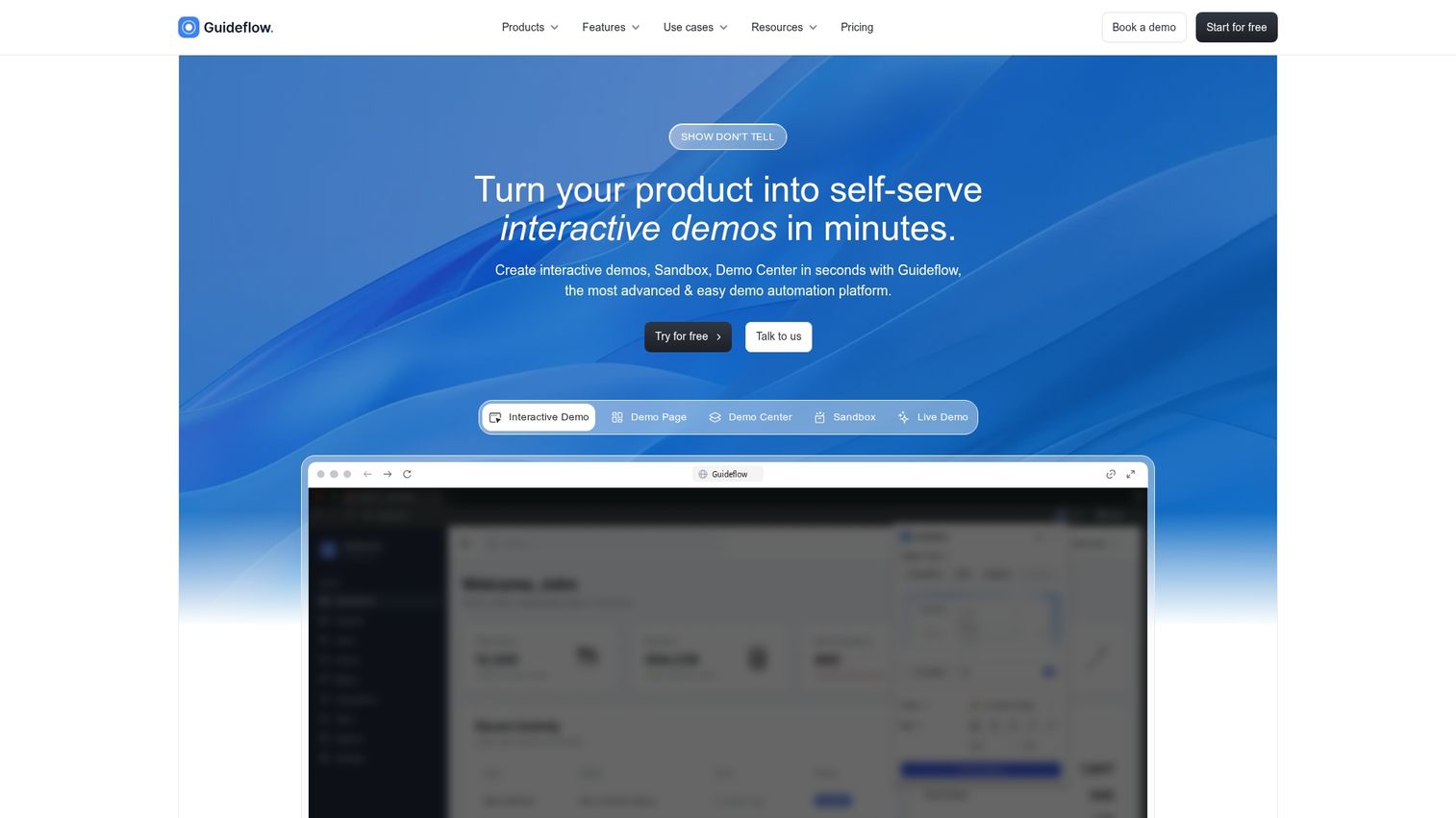
Guideflow transforms sales intelligence into buyer action. While data platforms tell you who to target, Guideflow lets prospects experience your product through clickable, step-by-step demos you can embed on landing pages, link in outbound emails, or share in sales conversations.
The gap most teams face: you identify the right accounts with sales intelligence, but prospects still can't feel the product until they book a call. That friction creates drop-off. Interactive demos close that gap by letting buyers self-educate on their own terms.
Best for: Pre-sales teams and growth teams using PLG-style distribution who want a self-serve "try it now" experience without engineering lift.
Key strengths
- Browser-based capture: Record your product flow directly from your browser and turn it into a clickable demo in minutes
- No-code editing: Personalize demos with your prospect's logo, name, and use case without touching code
- CRM-driven personalization: Pull variables from Salesforce or HubSpot to tailor demos at scale
- Multi-channel sharing: Embed on your site, link in emails, or share on LinkedIn and in ads
- Engagement analytics: Track impressions, completion rates, and which steps prospects engage with most
Why pick Guideflow
Pick Guideflow when your sales intelligence surfaces great leads but conversion stalls because prospects can't experience the product. Interactive demos and sandboxes function like automation because they scale a core sales action: showing, not telling.
Guideflow pricing
- Free: $0/month (5 guideflows, unlimited viewers, 7-day analytics)
- Solo: $40/month (unlimited guideflows, advanced analytics, lead forms)
- Growth: $499/month
- Advanced: $1,499/month
- Enterprise: From $2,999/month
Start your journey with Guideflow today!
2. ZoomInfo
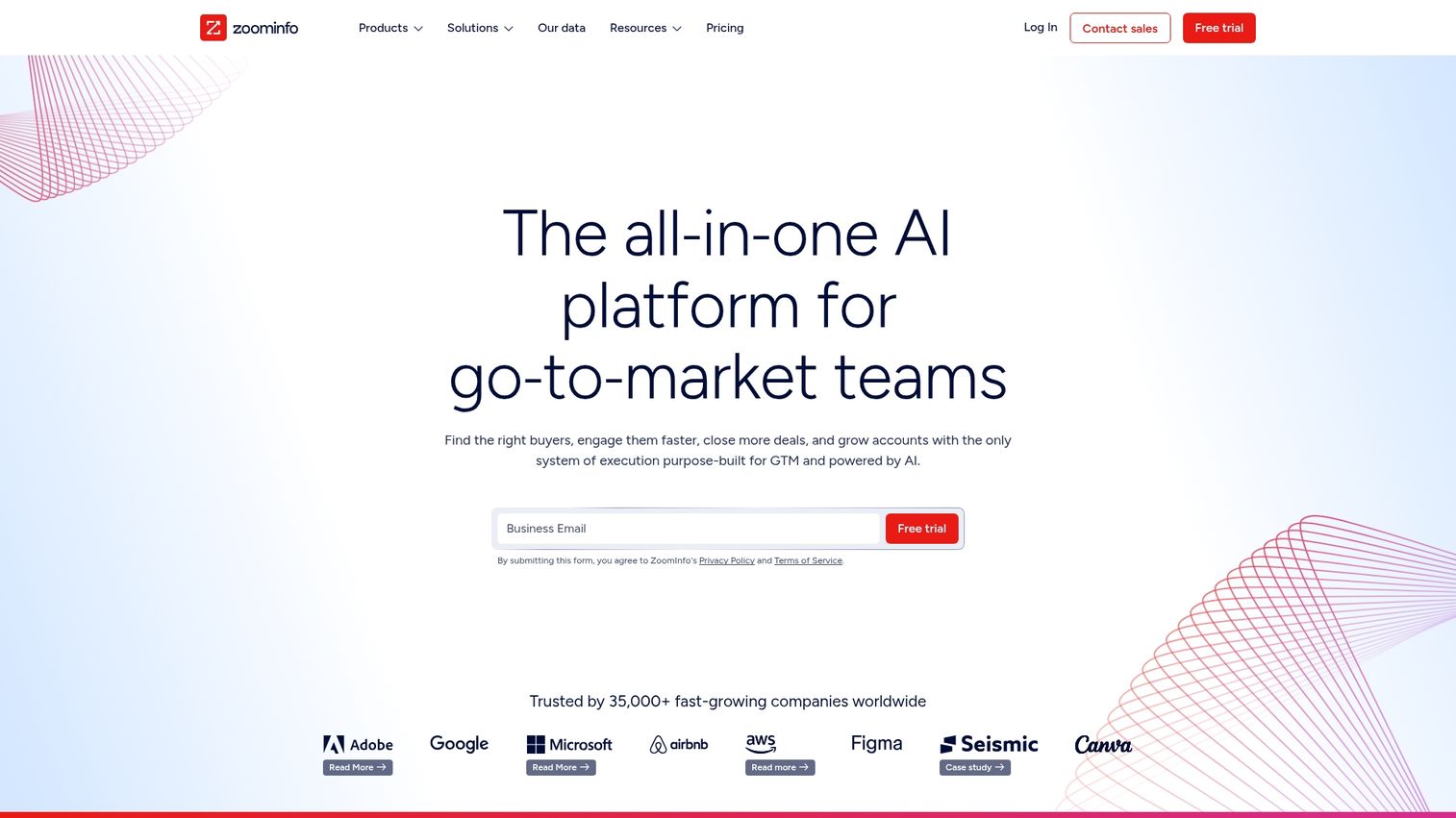
ZoomInfo is the industry-leading B2B sales intelligence platform with the largest contact database in the market. It combines firmographics, technographics, and intent data to help enterprise sales teams identify and engage decision-makers across complex buying committees.
Best for: Enterprise sales teams that want comprehensive data coverage and are willing to pay for depth.
Key strengths
- Extensive B2B database: Over 100 million business contacts with direct dials and verified emails
- Intent data: Identifies companies actively researching topics relevant to your solution
- Org chart mapping: Visualizes reporting structures and buying committee members
- Workflow automation: Triggers actions in your CRM based on data changes
- Salesforce and HubSpot integrations: Native connections that keep data flowing
Why pick ZoomInfo
ZoomInfo works well when you want the broadest possible coverage and your budget supports enterprise pricing. It's particularly strong for teams selling into large organizations where understanding the full buying committee matters.
ZoomInfo pricing
Enterprise pricing with custom quotes based on seats, credits, and features.
3. LinkedIn Sales Navigator
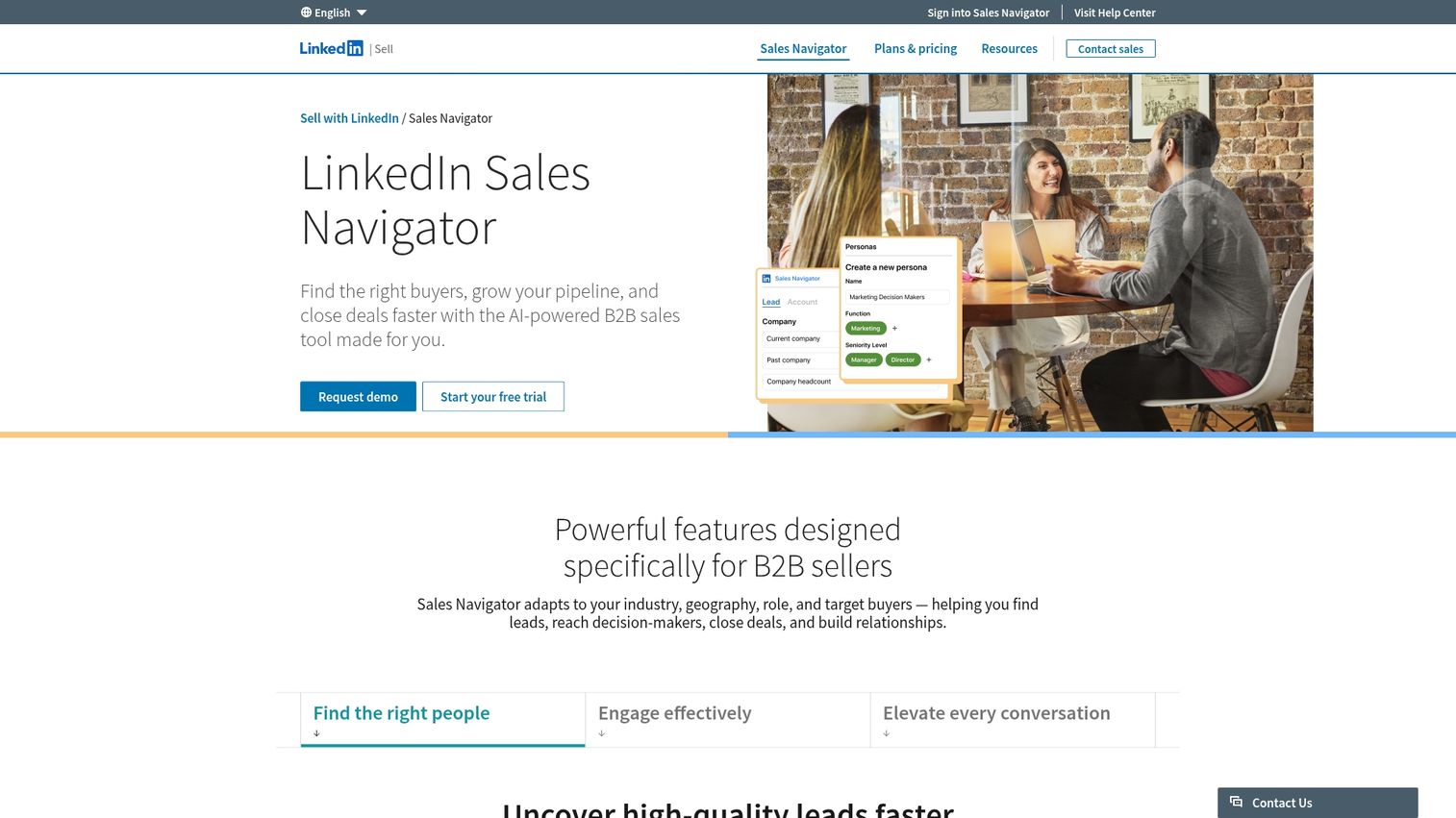
LinkedIn Sales Navigator leverages LinkedIn's professional network for prospecting and tracking buying signals. It's built for relationship-based selling where warm introductions and social context matter.
Best for: Sales teams that rely on social selling and want to leverage existing LinkedIn connections.
Key strengths
- Real-time alerts: Notifications when prospects change jobs, post content, or engage with your company
- InMail credits: Direct messaging to prospects outside your network
- Advanced lead filters: Search by seniority, function, company size, and more
- CRM sync: Connects with Salesforce and other CRMs to log activity
- TeamLink: Shows warm paths to prospects through colleague connections
Why pick LinkedIn Sales Navigator
Pick it when your sales motion depends on relationships and social proof. It's less about raw data volume and more about context and warm introductions.
LinkedIn Sales Navigator pricing
Core starts at $99/month, Advanced at $149/month, and Advanced Plus requires custom pricing.
4. Apollo.io
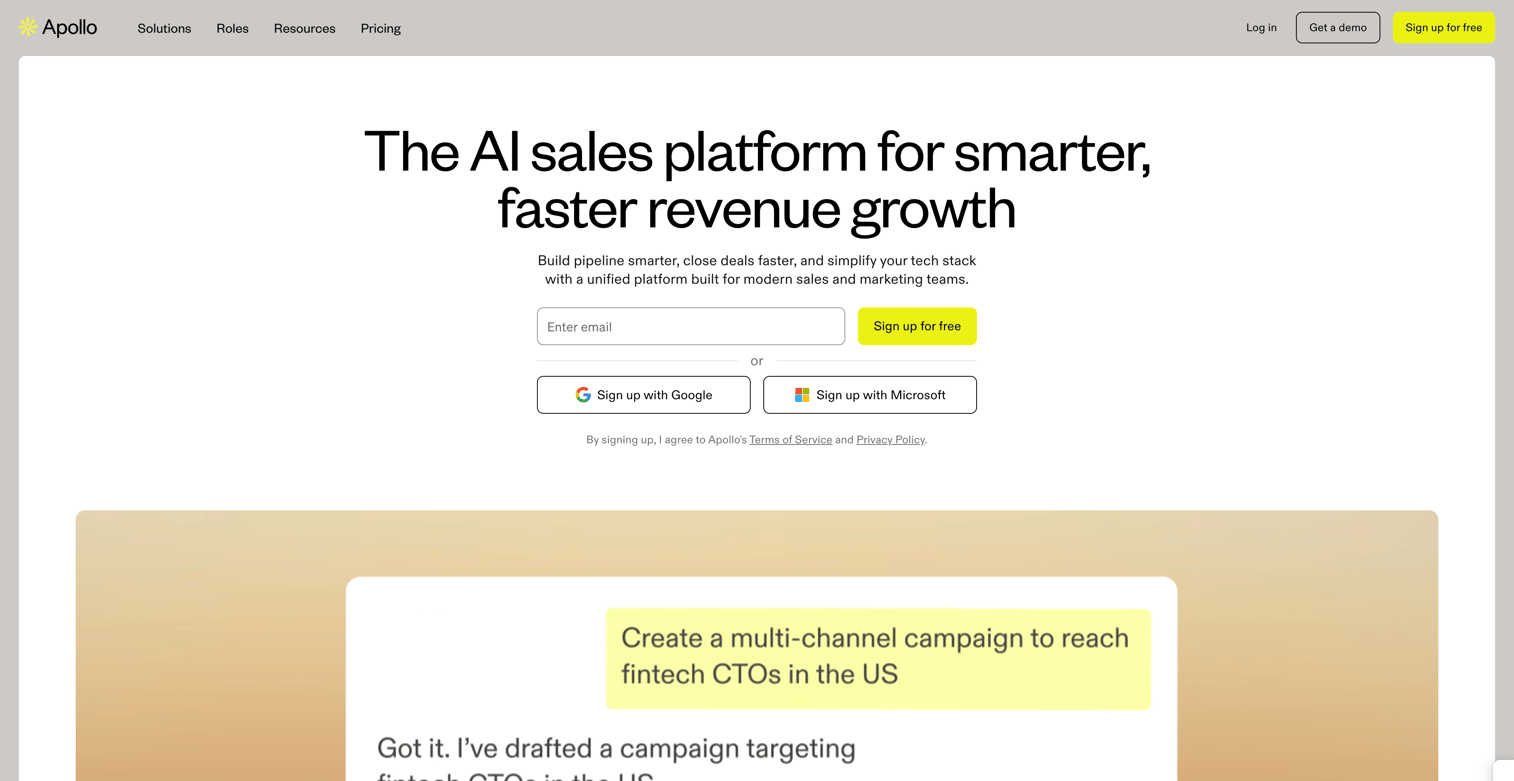
Apollo.io combines sales intelligence with outreach capabilities in a single platform. You get contact data, email sequencing, and a dialer without juggling multiple tools.
Best for: SMBs and startups that want data plus engagement in one affordable tool.
Key strengths
- Contact database: Over 275 million contacts with email and phone data
- Email sequencing: Build and automate multi-step outreach campaigns
- Built-in dialer: Make calls directly from the platform
- Enrichment: Automatically update CRM records with fresh data
- Affordable pricing: Generous free tier and reasonable paid plans
Why pick Apollo.io
Apollo works well for teams that want to consolidate their stack. Instead of paying separately for data and outreach tools, you get both in one place at a fraction of enterprise pricing.
Apollo.io pricing
Free tier available with limited credits. Paid plans start at $49/month per user.
5. Cognism
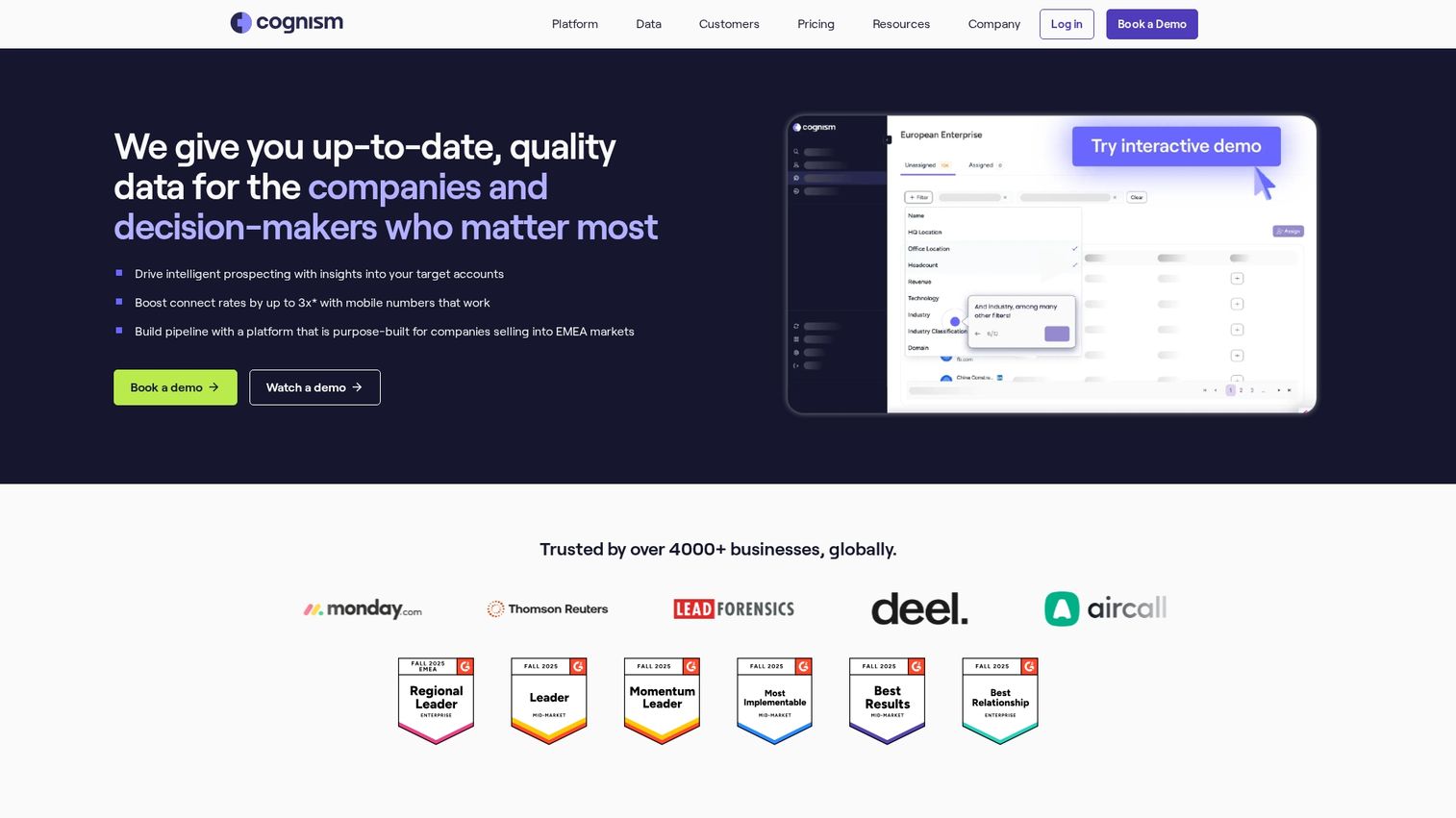
Cognism is a B2B sales intelligence company with particular strength in European data and GDPR compliance. Their Diamond Data verification process manually confirms contact information for higher accuracy.
Best for: Teams selling into EMEA markets where data compliance and accuracy matter most.
Key strengths
- Diamond Data verification: Human-verified mobile numbers for key contacts
- GDPR compliance: Built for European data privacy requirements
- Intent data partnership: Bombora integration for buying signals
- Chrome extension: Capture contact data while browsing LinkedIn or company websites
- International coverage: Strong data across Europe, Middle East, and APAC
Why pick Cognism
Pick Cognism when you sell internationally and want confidence in data compliance. The Diamond Data verification is particularly valuable for reaching senior decision-makers.
Cognism pricing
Custom pricing based on seats and data access.
6. Lusha
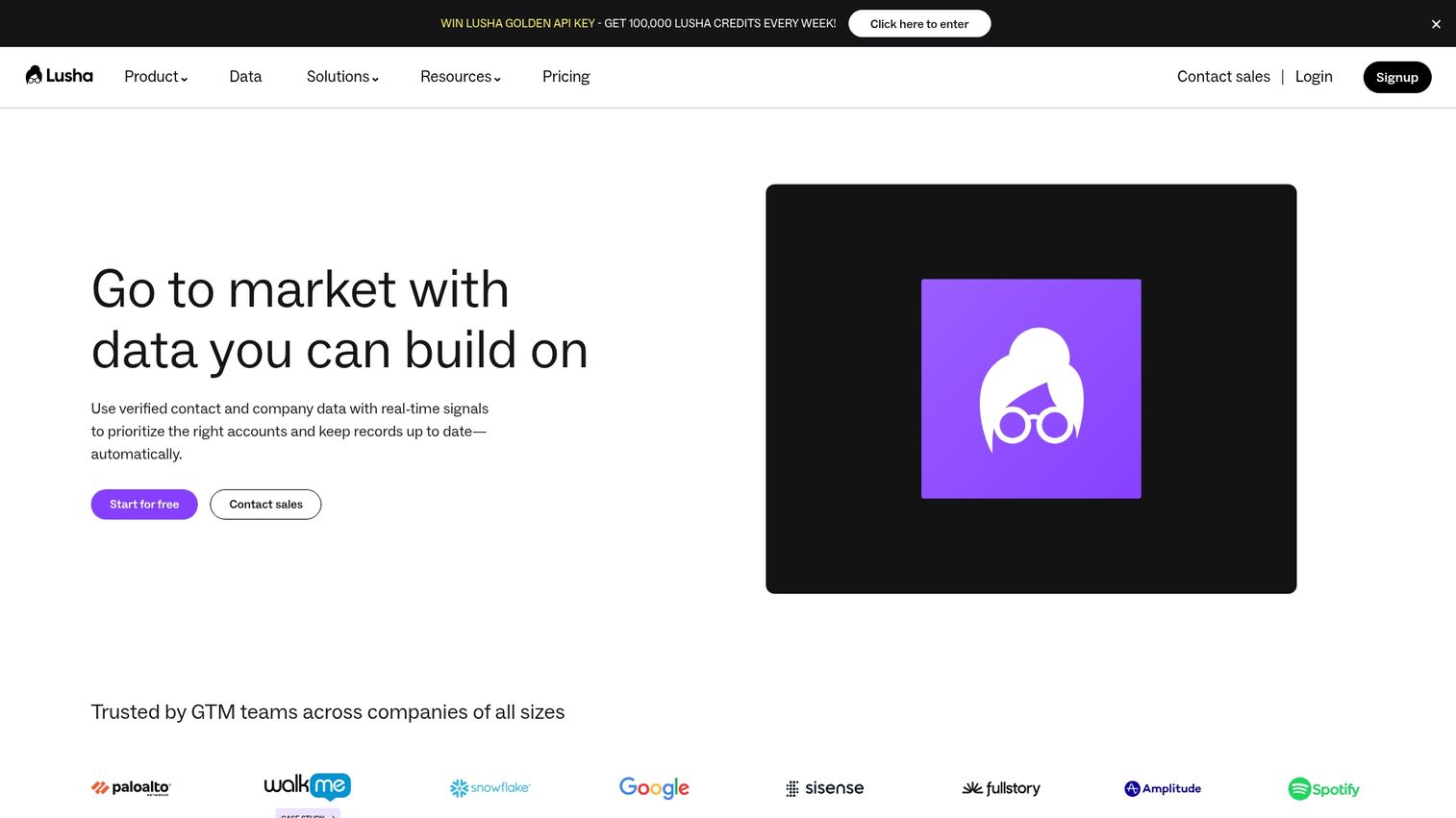
Lusha offers a lightweight sales intelligence tool for fast contact data lookup. It's designed for individual reps who want quick access to direct dials and emails without complex workflows.
Best for: Individual reps and small teams that want simple, fast contact lookup.
Key strengths
- Browser extension: Find contact data while browsing LinkedIn or company websites
- Credit-based model: Pay for what you use without large upfront commitments
- Salesforce integration: Push contacts directly to your CRM
- Data accuracy focus: Verification processes to reduce bounces
- Simple UX: Minimal learning curve for new users
Why pick Lusha
Lusha works well when you want speed and simplicity over depth. It's not the tool for complex ABM programs, but it's excellent for quick prospecting.
Lusha pricing
Free tier with limited credits. Paid plans start at $29/month per user.
7. 6sense
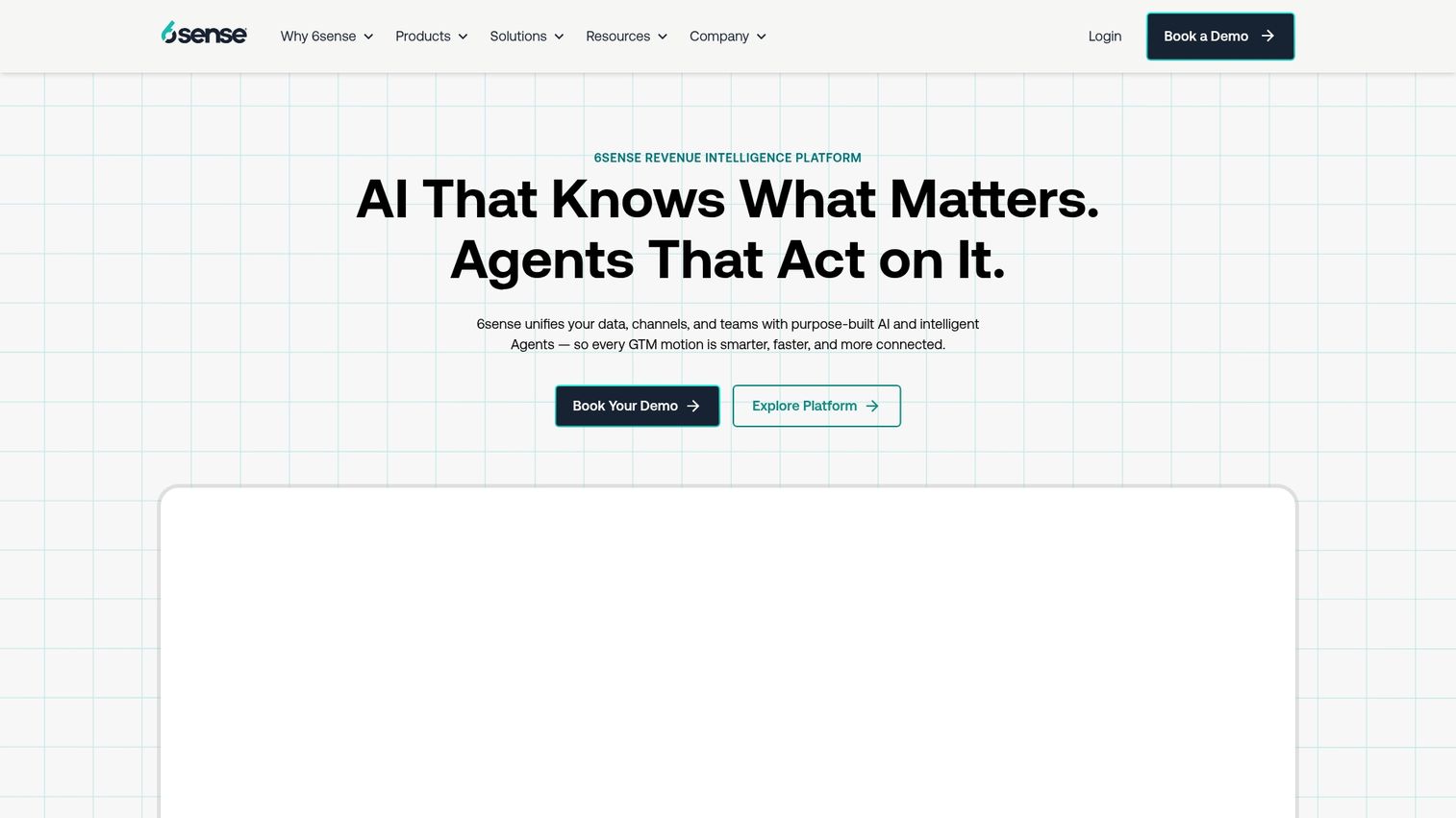
6sense is an AI-powered sales intelligence platform specializing in account-based marketing and intent. It predicts which accounts are in-market and orchestrates engagement across channels.
Best for: Enterprise companies running sophisticated ABM programs.
Key strengths
- Predictive analytics: AI models that identify accounts likely to buy
- Account identification: De-anonymizes website visitors to reveal company-level interest
- Intent data: Proprietary signals showing research activity
- Orchestration: Coordinates outreach across sales, marketing, and advertising
- Revenue AI: Forecasting and pipeline intelligence
Why pick 6sense
Pick 6sense when you're running enterprise ABM and want predictive capabilities beyond basic intent data. It's a significant investment but delivers sophisticated account prioritization.
6sense pricing
Enterprise pricing with custom quotes.
8. Clearbit
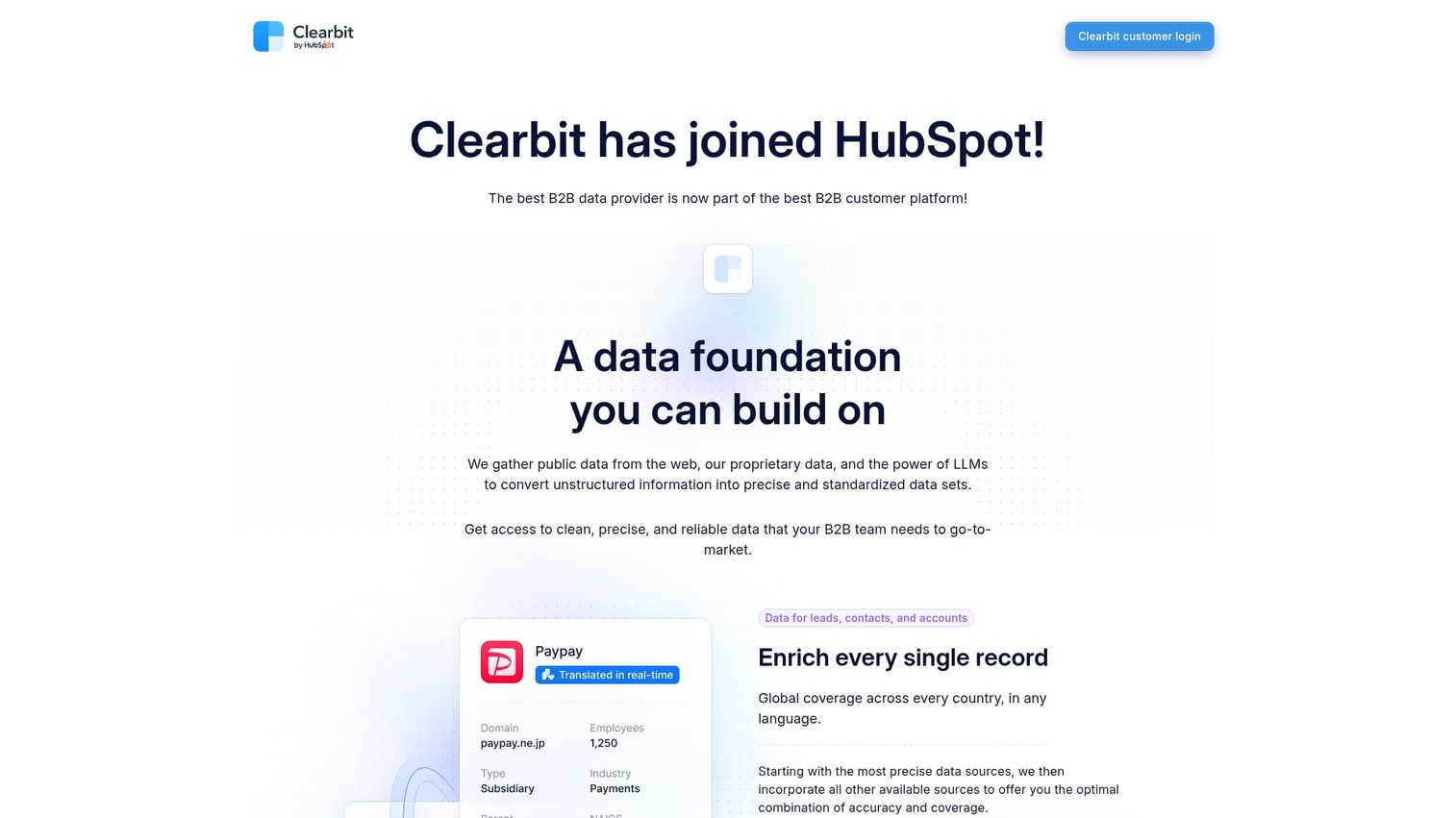
Clearbit, now part of HubSpot as Breeze Intelligence, provides real-time data enrichment and website visitor identification. It's particularly strong for marketing-sales alignment and form optimization.
Best for: Teams using HubSpot that want native enrichment and visitor identification.
Key strengths
- Real-time enrichment: Automatically append firmographic and technographic data to leads
- Form shortening: Reduce form fields by auto-filling known information
- Website visitor identification: Reveal companies browsing your site
- HubSpot native integration: Deep connection with HubSpot CRM and Marketing Hub
- API access: Build custom enrichment workflows
Why pick Clearbit
Clearbit works well when you're already in the HubSpot ecosystem and want enrichment that feels native. The form shortening alone can significantly improve conversion rates.
Clearbit pricing
Custom pricing based on usage and features.
9. Demandbase
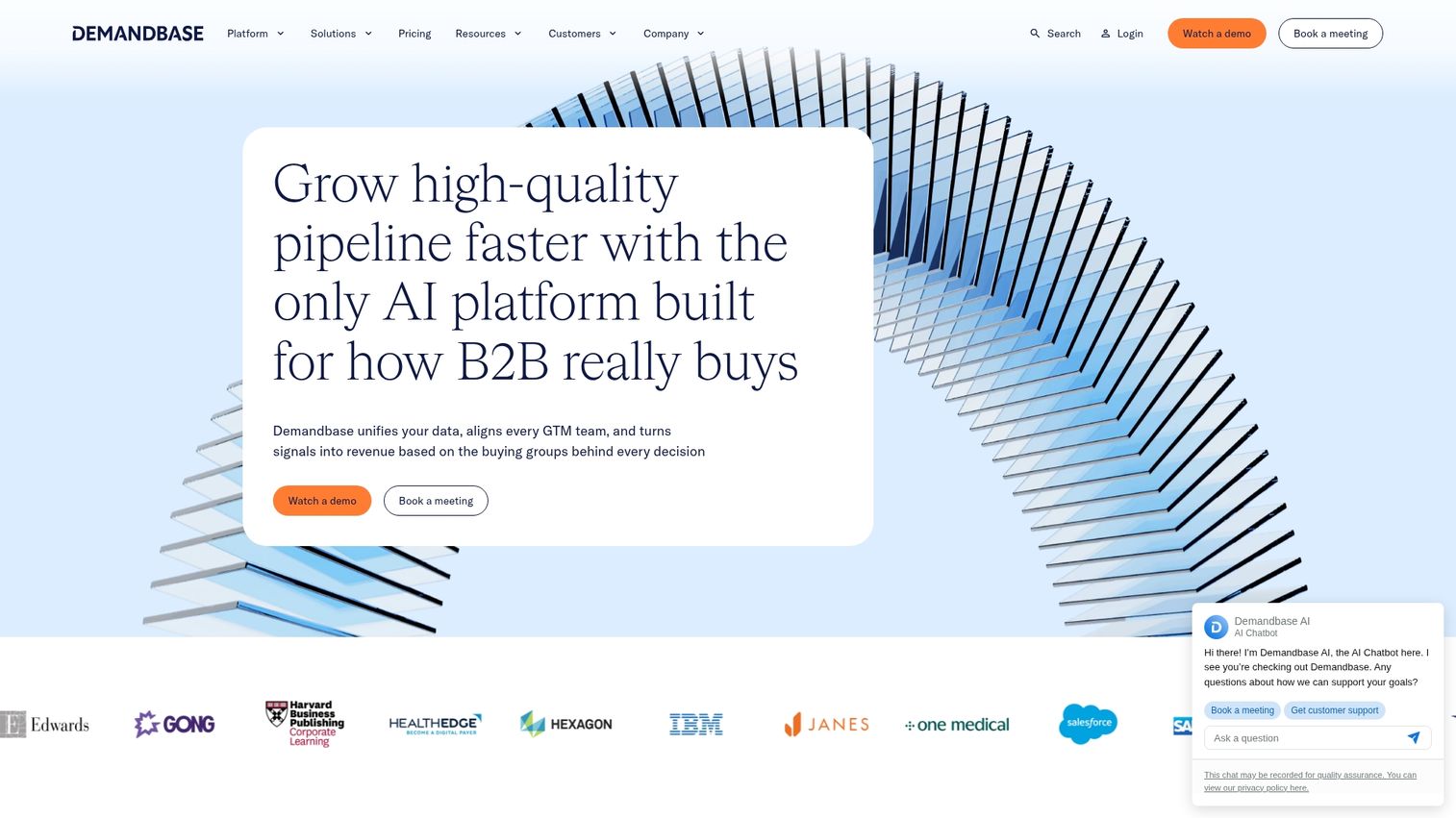
Demandbase is an ABM-focused B2B sales intelligence platform that combines account intelligence with advertising capabilities. It's built for enterprise companies running coordinated account-based go-to-market.
Best for: Enterprise companies that want to align sales intelligence with ABM advertising.
Key strengths
- Account intelligence: Deep firmographic and technographic data on target accounts
- ABM advertising: Target accounts with display ads across the web
- Intent data: Signals showing account-level research activity
- Sales insights: Alerts and recommendations for account engagement
- ABM analytics: Measure account engagement and pipeline impact
Why pick Demandbase
Pick Demandbase when you want to coordinate sales intelligence with advertising in a single platform. It's particularly strong for teams running multi-channel ABM programs.
Demandbase pricing
Enterprise pricing with custom quotes based on accounts and features.
10. Lead411
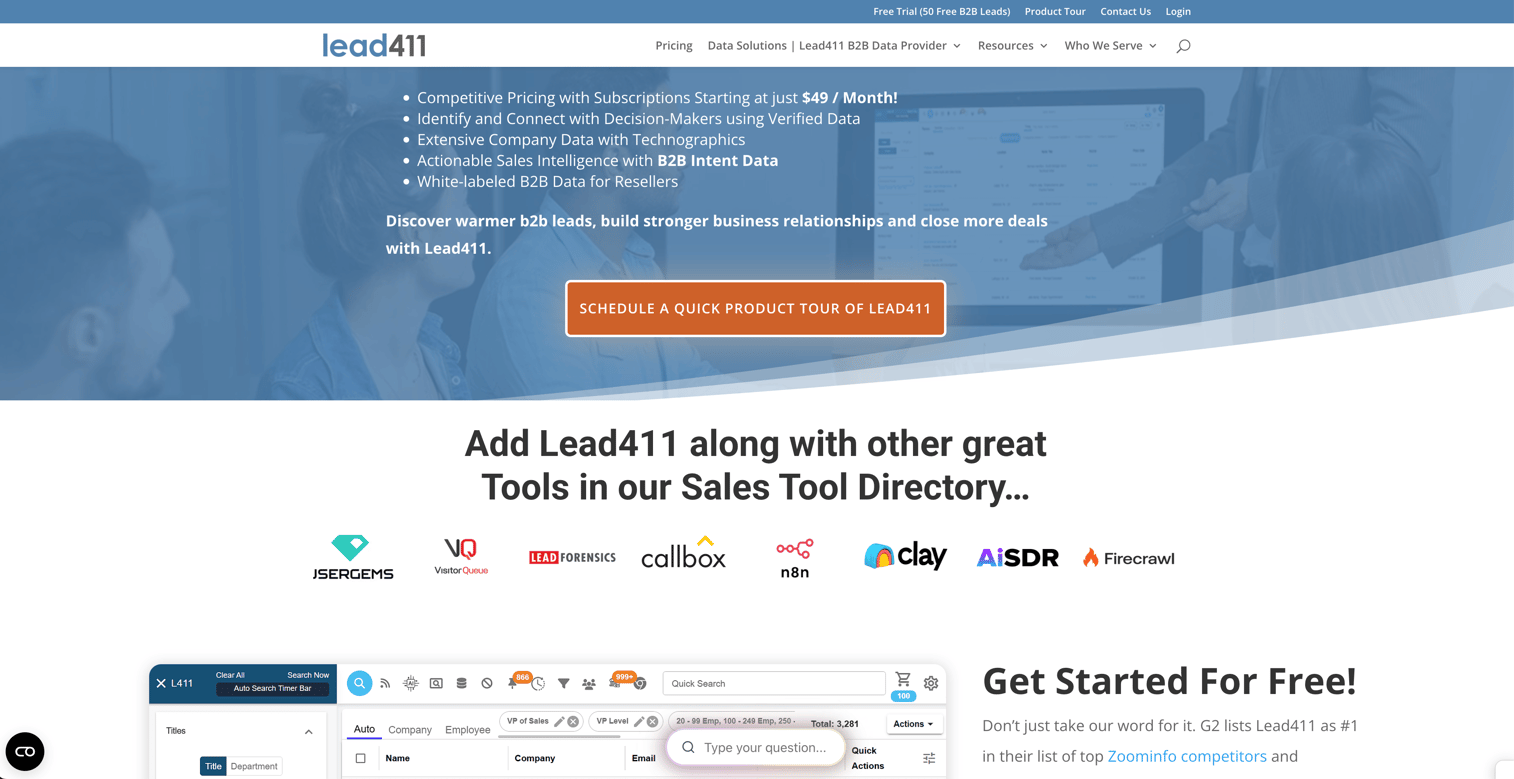
Lead411 is a sales intelligence company offering verified data with trigger alerts. It focuses on growth signals like hiring, funding, and expansion that indicate buying readiness.
Best for: Teams that want to time outreach based on company growth signals.
Key strengths
- Verified emails: High deliverability rates through verification processes
- Growth intent data: Signals based on hiring, funding, and expansion
- Trigger alerts: Notifications when target accounts show buying signals
- Unlimited access plans: Flat-rate pricing without credit limits
- Bombora intent integration: Additional intent signals from the leading provider
Why pick Lead411
Lead411 works well when timing matters. The trigger alerts help you reach out when companies are actively growing and more likely to invest in new solutions.
Lead411 pricing
Plans start at $99/month with unlimited access options available.
11. Seamless.AI
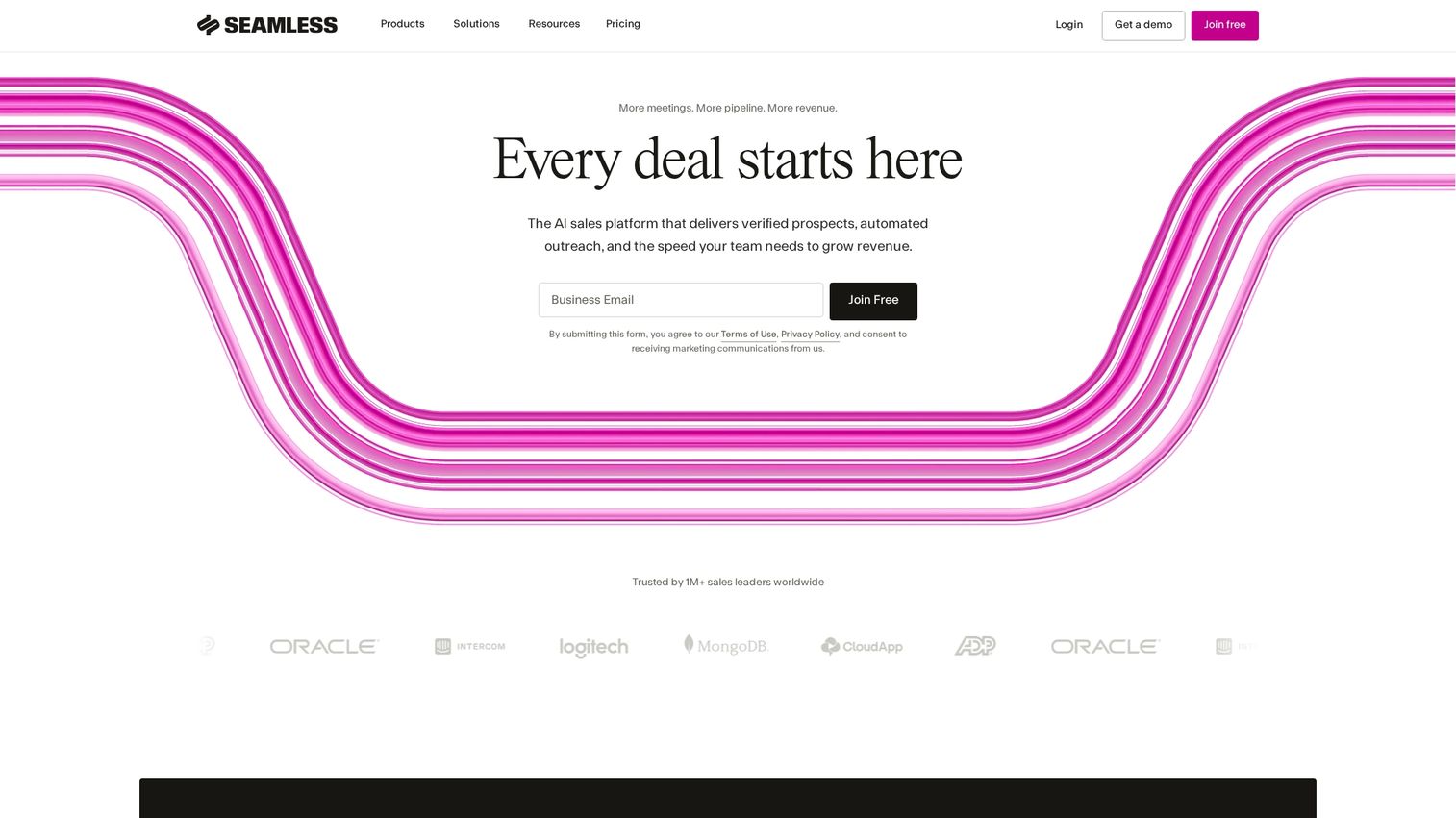
Seamless.AI is a real-time contact search engine designed for high-volume prospecting. It uses AI to find and verify contact data as you search.
Best for: SDR teams doing heavy outbound that want volume over depth.
Key strengths
- Real-time search: Finds contact data on demand rather than from a static database
- AI-powered recommendations: Suggests similar contacts based on your searches
- Chrome extension: Capture data while browsing LinkedIn or company websites
- Autopilot list building: Automatically builds lists based on your criteria
- CRM integrations: Pushes contacts to Salesforce, HubSpot, and other CRMs
Why pick Seamless.AI
Pick Seamless.AI when you want volume and speed for high-activity outbound. It's less about data depth and more about finding contacts quickly.
Seamless.AI pricing
Custom pricing based on seats and usage.
12. UpLead
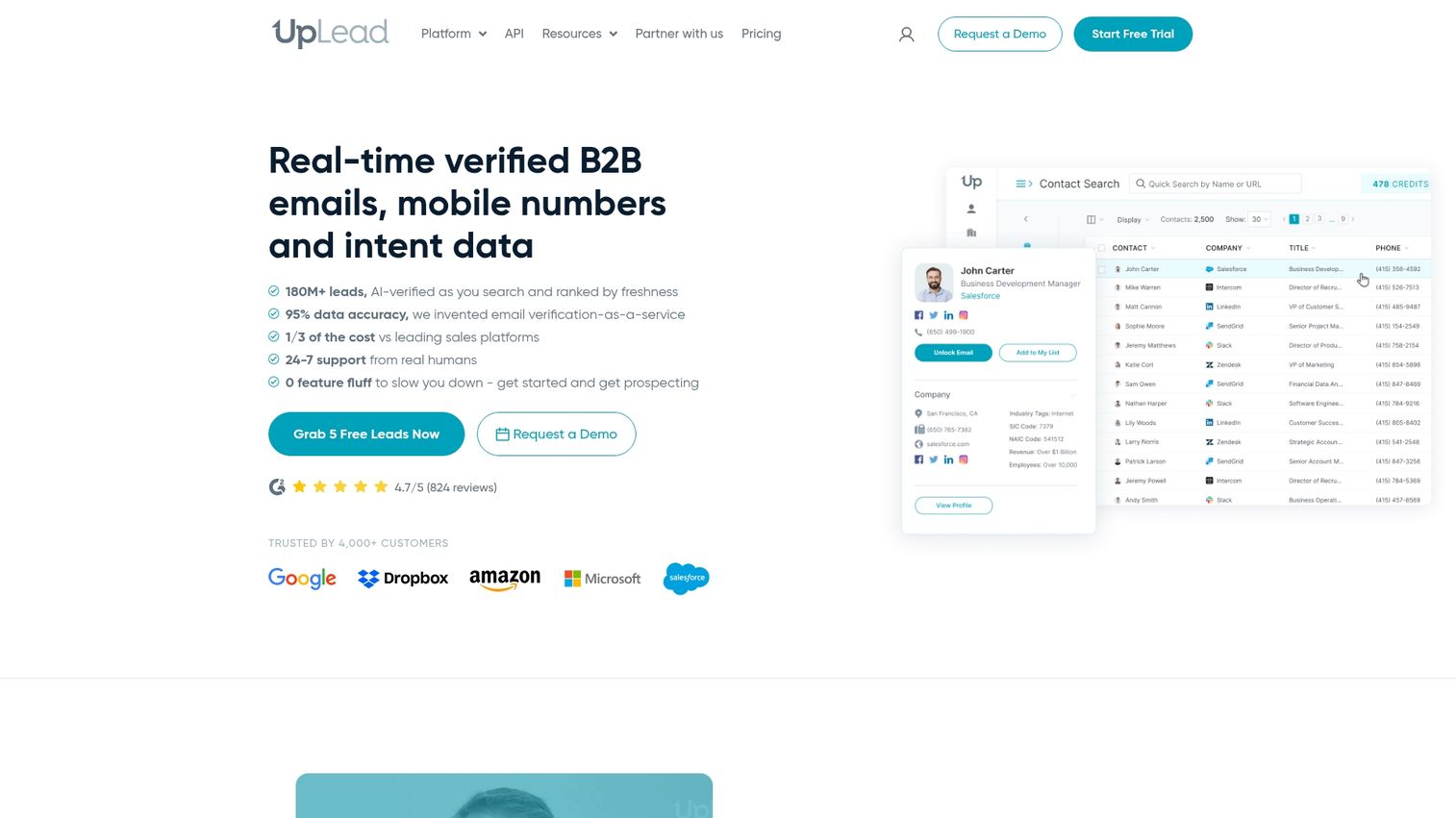
UpLead is a data accuracy-focused sales intelligence platform with real-time email verification. It emphasizes deliverability over database size.
Best for: Teams that prioritize email deliverability and data accuracy over volume.
Key strengths
- Real-time email verification: Verifies emails at the point of export to reduce bounces
- Technographic filters: Search by the technologies companies use
- Intent data: Identifies companies researching relevant topics
- Affordable pricing: Competitive rates compared to enterprise alternatives
- Data accuracy guarantee: Credits back for bounced emails
Why pick UpLead
UpLead works well when deliverability matters more than database size. The accuracy guarantee gives confidence that your outreach will actually reach inboxes.
UpLead pricing
Plans start at $99/month with various credit tiers available.
13. Bombora
Bombora is the leading intent data provider that powers many other sales intelligence platforms. It offers standalone intent signals for account prioritization.
Best for: Companies that want pure intent data to layer on top of existing tools.
Key strengths
- Company Surge intent: Proprietary methodology for identifying research activity
- Cooperative data network: Aggregates signals from thousands of B2B websites
- Topic taxonomy: Granular topics to match your solution categories
- Platform integrations: Feeds into major CRMs, MAPs, and sales intelligence tools
- Privacy compliance: GDPR and CCPA compliant data collection
Why pick Bombora
Pick Bombora when you already have contact data but want intent signals to prioritize accounts. It's the source that many other platforms license.
Bombora pricing
Custom pricing based on topics, accounts, and integrations.
14. LeadIQ
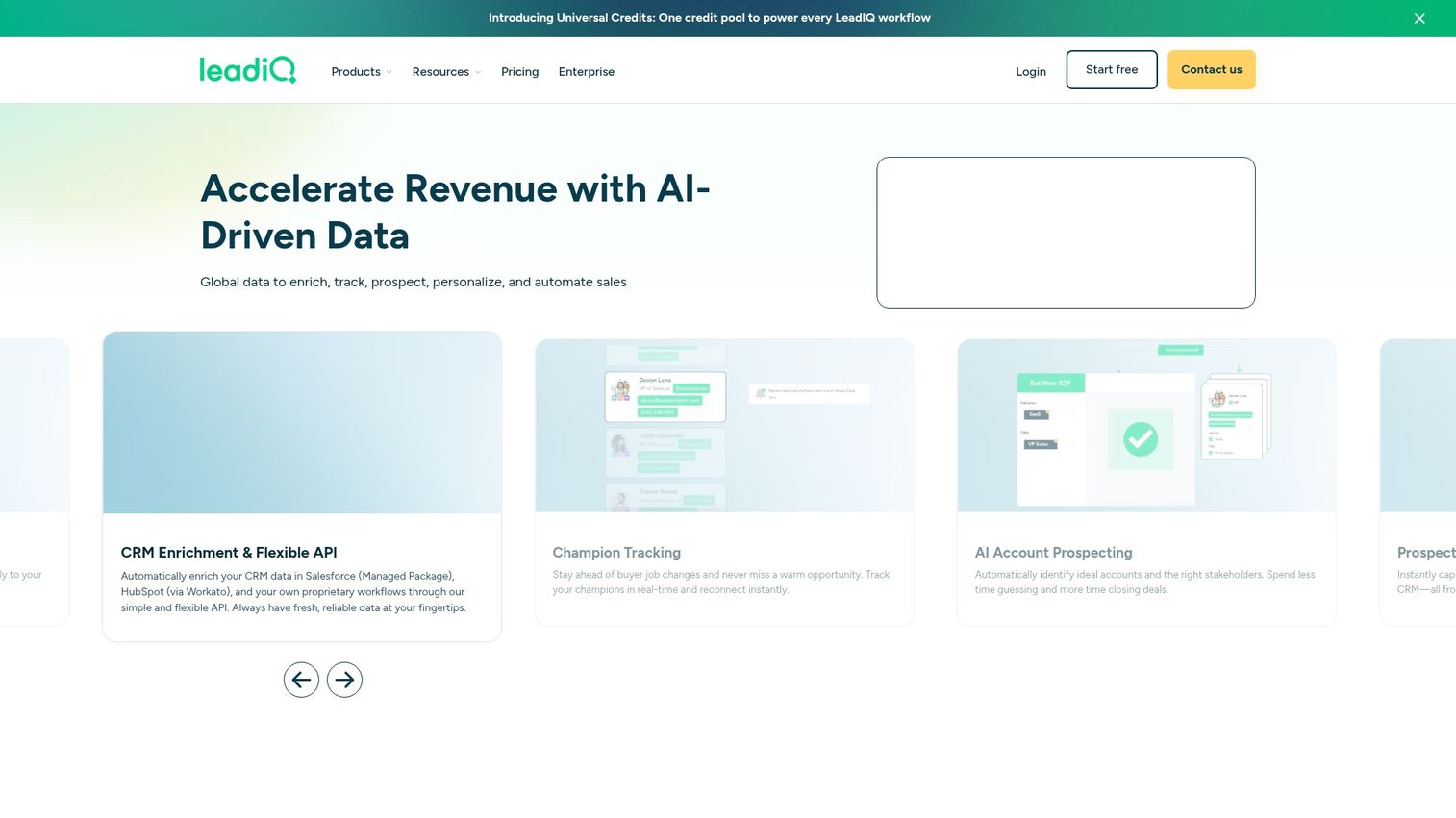
LeadIQ is a prospecting workflow tool that captures and syncs contact data with minimal friction. It's designed for SDRs who live in LinkedIn and want one-click capture.
Best for: SDRs who prospect heavily on LinkedIn and want seamless CRM sync.
Key strengths
- One-click capture: Add contacts to your CRM directly from LinkedIn
- Job change tracking: Alerts when contacts move to new companies
- Salesforce and Outreach sync: Native integrations with popular sales tools
- Team collaboration: Share prospect lists and notes across the team
- Personalization assistance: AI-generated message suggestions
Why pick LeadIQ
LeadIQ works well when your prospecting workflow centers on LinkedIn. The one-click capture removes friction from the research-to-outreach process.
LeadIQ pricing
Free tier available. Paid plans start at $39/month per user.
15. Hunter.io
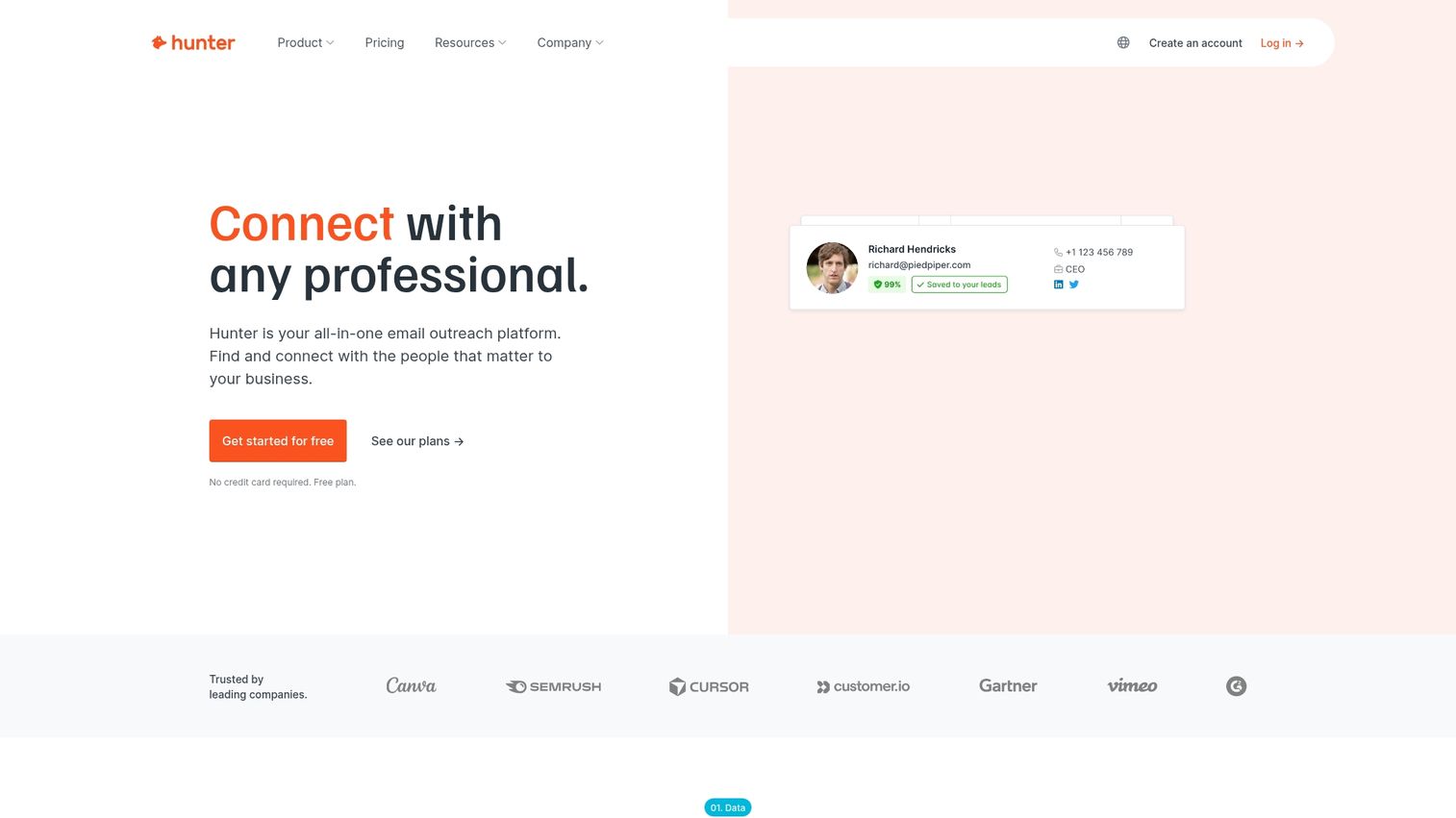
Hunter.io is a lightweight email finder and verification tool. It's designed for small business sales intelligence and email-first outreach.
Best for: Small teams and individuals who want simple email finding without complexity.
Key strengths
- Domain search: Find all email addresses associated with a company domain
- Email verification: Check deliverability before sending
- Email campaigns: Basic outreach capabilities built in
- Affordable pricing: Generous free tier and low-cost paid plans
- API access: Build email finding into your own workflows
Why pick Hunter.io
Hunter.io works well when email is your primary outreach channel and you want simple, affordable contact finding. It's not a full sales intelligence platform, but it does one thing well.
Hunter.io pricing
Free tier with 25 searches/month. Paid plans start at $49/month.
What top sales intelligence platforms have in common
Across all 15 tools, certain capabilities appear consistently. Understanding baseline expectations helps you evaluate any platform.
Verified and continuously updated contact data
All leading platforms invest in data verification and refresh cycles. Static databases decay at roughly 30% per year as people change jobs and companies evolve. Continuous updates matter more than initial database size.
Native CRM and sales engagement integrations
Sales intelligence tools connect to Salesforce, HubSpot, Outreach, and Salesloft to be useful. Data that doesn't flow into workflows creates friction. Look for bi-directional sync, not just one-way export.
Intent and buyer signal tracking
Modern sales intelligence platforms go beyond static data to surface signals showing active buying research. This is the shift from "who could buy" to "who is buying now." Intent data typically comes from content consumption patterns across B2B websites.
Compliance with data privacy regulations
Reputable sales intelligence companies maintain GDPR, CCPA, and other regulatory compliance. They can document data sourcing and honor opt-out requests. Ask vendors about their compliance posture before committing.
How to choose the best sales intelligence tool for your team
The right tool depends on your sales motion, target market, and existing stack.
Match the platform to your sales motion
High-volume outbound benefits from different tools than ABM or enterprise sales. Intent platforms like 6sense suit complex deals with long sales cycles. Contact databases like Apollo suit transactional sales with shorter cycles.
Evaluate data quality for your target market
Test data accuracy in your specific verticals and geographies. A platform strong in US tech may be weak in European manufacturing. Request sample data for your actual target accounts before committing.
Assess integration depth with your stack
Beyond basic CRM sync, evaluate enrichment triggers, workflow automation, and bi-directional data flow. Shallow integrations create manual work that erodes the time savings you're paying for.
Compare total cost including credits and seats
Credit-based pricing can look cheap but scale expensively. Calculate realistic usage based on your prospecting volume before committing. Some platforms offer unlimited access that may be more cost-effective at scale.
How to build a complete B2B sales intelligence stack
Sales intelligence data alone doesn't close deals. The data tells you who to target; you still have to engage them effectively.
Consider structuring your stack in layers:
- Data layer: Contact and account intelligence (ZoomInfo, Cognism, Apollo)
- Intent layer: Buying signals and prioritization (Bombora, 6sense)
- Engagement layer: Interactive demos and personalized outreach (Guideflow)
- Orchestration layer: CRM and sales engagement (Salesforce, Outreach)
The engagement layer is where many teams have a gap. You surface great leads with sales intelligence, but prospects still can't experience your product until they book a call. Interactive demos from Guideflow help convert identified leads into engaged buyers by letting them explore your product on their own terms.
Start your journey with Guideflow today!
FAQs about sales intelligence software
Most sales intelligence platforms offer browser extensions and CRM integrations that can be set up within a day. Enterprise deployments with custom integrations and data migration typically take several weeks depending on complexity.
Teams generally see returns through reduced research time, improved email deliverability, and higher connect rates. Specific outcomes depend on data quality and how well the tool fits your sales motion.
Sales intelligence automates contact discovery and company research but works best when reps add contextual personalization that data alone cannot provide. The goal is to reduce research time, not eliminate human judgment.
Reputable sales intelligence companies document data sourcing, honor opt-out requests, and provide compliance features like consent tracking and data processing agreements. Ask vendors for their compliance documentation before purchasing.
Sales intelligence provides data about who to sell to. Sales enablement provides content, training, and tools for how to sell. Many organizations use both together, with sales intelligence feeding into enablement workflows.
Small businesses typically benefit from tools like Apollo.io, Lusha, or Hunter.io that offer affordable pricing tiers with essential contact data and outreach features without enterprise complexity.
Update frequency varies by platform. Leading providers refresh data continuously through automated verification, while others update quarterly. Ask vendors for their specific refresh methodology and accuracy guarantees.