Your reps sent 200 emails last week. Twelve people replied. Two booked meetings. The problem isn't effort or even targeting. It's that prospects are drowning in outreach and have learned to ignore anything that feels like noise.
Sales engagement tools exist to fix this by coordinating multi-channel sequences, automating follow-ups, and giving reps the data to focus on prospects who are actually engaged. This guide breaks down what these platforms do, the features that matter, and 12 tools worth evaluating for your team.
What's inside
This guide covers what sales engagement platforms actually do, the core features that separate useful tools from shelfware, and a detailed breakdown of 12 platforms worth evaluating. We selected tools based on the depth of CRM integration, multi-channel outreach capabilities, AI feature maturity, and pricing transparency. You'll also find guidance on matching the right tool to your specific sales motion.
TL;DR
- Best for enterprise teams: Outreach, Salesloft, Salesforce Sales Engagement
- Best for mid-market and growing teams: HubSpot Sales Hub, Apollo.io, Klenty
- Best for email-first workflows: Instantly, Reply.io, Lemlist, Mixmax
- Best for letting prospects experience your product: Guideflow
- The right sales engagement platform depends on your sales motion, your CRM stack, and whether prospects want to see and interact with your product before committing to a conversation.
What is a sales engagement platform
Sales engagement tools like Outreach, Salesloft, and HubSpot are platforms that streamline sales outreach by automating multi-channel cadences across email, calls, and LinkedIn. Many of them feature AI capabilities that help sales teams increase productivity, personalize communication at scale, and track every prospect interaction.
While often used alongside a CRM, a sales engagement platform serves a different purpose. A CRM is your system of record, storing customer data and tracking relationship history. A sales engagement platform is your system of action, orchestrating the outreach activities that build relationships in the first place.
- Centralized outreach: Manage all prospect touchpoints from one interface instead of toggling between email, dialer, and LinkedIn.
- Automated sequences: Build multi-step cadences that trigger based on prospect behavior or time delays.
- Activity logging: Sync every interaction back to your CRM automatically, eliminating manual data entry.
- Performance visibility: See which sequences, templates, and reps drive results so you can double down on what works.
When to use sales engagement software
Scaling outbound prospecting without adding headcount
When your sales team hits the limits of manual outreach, reps can no longer effectively manage a growing pipeline. Sales engagement automation allows a single rep to handle a much higher volume of prospects while maintaining personalization.
Improving response rates across channels
Prospects are increasingly numb to single-channel outreach. With average cold email reply rates at just 2.09%, a cold email alone will likely get ignored, but that same email followed by a LinkedIn connection request and a well-timed call increases reply rates. Coordinated, multi-channel sequences are now table stakes for competitive sales teams.
Unifying sales activities in one system
When reps toggle between their email client, a separate dialer, LinkedIn, and the CRM, activities get missed and data falls through the cracks. Tool sprawl makes it impossible for managers to get a clear view of team performance and pipeline health.
Enabling buyers to self-educate before the call
Contentful's 2025 B2B Buyer Benchmark Report found that 84% of B2B buyers say self-service tools are critical when choosing a vendor, and many prospects want to experience the product on their own terms before committing to a live conversation. Sales engagement can be layered with tools that provide an interactive demo, giving buyers a way to self-qualify and arrive at the first call already understanding your value.
Common features of sales engagement platforms
Multi-channel sequencing
Often called cadences or sequences, multi-channel sequencing allows you to build automated, multi-step outreach campaigns across email, phone, social media, and video. McKinsey research found that 72% of B2B companies selling via 7+ channels grew their market share. The best platforms let you set conditional logic, so the next step changes based on whether a prospect opened an email or clicked a link.
CRM integration and activity sync
A deep, bidirectional sync with your CRM is critical. All engagement data, including every email sent, opened, clicked, and replied to, as well as every call made, flows back to the contact record in Salesforce or HubSpot without requiring manual data entry from the rep.
AI-powered recommendations and automation
AI capabilities in sales engagement are evolving quickly. Features range from send-time optimization and response likelihood scoring to auto-generated email copy and conversation intelligence that analyzes sales calls.
Engagement analytics and reporting
Robust analytics provide visibility into key performance metrics like email open rates, link clicks, reply rates, call outcomes, and overall sequence performance. Managers use dashboards to coach reps, identify top-performing strategies, and optimize outreach.
Personalization at scale
Modern platforms go far beyond simple mail merge. Dynamic variables, custom fields, and conditional logic tailor messaging based on a prospect's persona, industry, pain points, or deal stage.
| Feature | What to look for | Why it matters |
|---|---|---|
| Multi-channel sequences | Email, phone, LinkedIn, video support | Prospects respond to varied touchpoints |
| CRM integration | Native Salesforce/HubSpot sync | Eliminates manual data entry |
| AI capabilities | Send-time optimization, content suggestions | Increases rep efficiency |
| Analytics | Sequence and rep performance dashboards | Enables coaching and iteration |
| Personalization | Dynamic variables, conditional content | Improves relevance and reply rates |
Sales engagement tools comparison table
| # | Product | Best for | Key differentiator | Pricing | G2 Rating |
|---|---|---|---|---|---|
| 1 | Guideflow | Letting prospects experience product | Interactive demos and sandbox environments | Free tier available | 5.0 |
| 2 | Outreach | Enterprise sales teams | Comprehensive sequence builder | Custom pricing | 4.3 |
| 3 | Salesloft | Mid-market to enterprise | Cadence + conversation intelligence | Custom pricing | 4.5 |
| 4 | HubSpot Sales Hub | Teams in the HubSpot ecosystem | Native CRM integration and ease of use | Free tier available | 4.4 |
| 5 | Apollo.io | Data and outreach in one platform | B2B database + engagement features | Free tier available | 4.8 |
| 6 | ZoomInfo Sales | Data-first organizations | Enterprise-grade contact intelligence | Custom pricing | 4.4 |
| 7 | Instantly | High-volume email outreach | Email warmup and deliverability | Starts at $30/mo | 4.8 |
| 8 | Reply.io | AI-powered multichannel outreach | AI features with transparent pricing | Starts at $60/mo | 4.6 |
| 9 | Lemlist | Creative email personalization | Image and video personalization | Starts at $50/mo | 4.4 |
| 10 | Klenty | Growing mid-market teams | Straightforward and affordable | Starts at $50/mo | 4.6 |
| 11 | Mixmax | Gmail-centric teams | Native Gmail inbox experience | Starts at $29/mo | 4.6 |
| 12 | Salesforce Sales Engagement | Teams standardized on Salesforce | Native to Sales Cloud with Einstein AI | Add-on pricing | 4.3 |
12 best sales engagement platforms for B2B teams
1. Guideflow
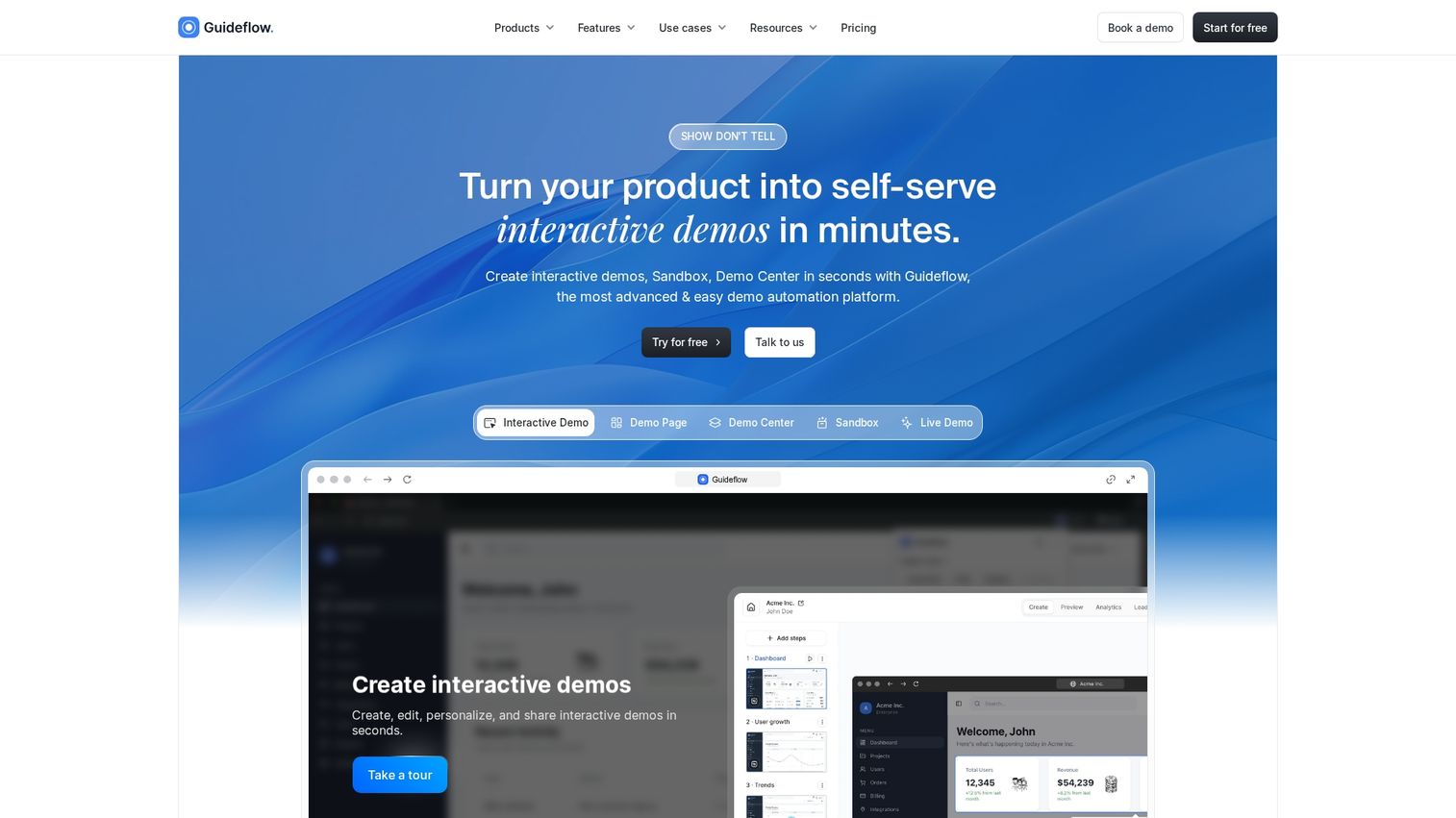
Guideflow adds a layer of product experience to the traditional sales engagement workflow. While most platforms focus on outreach volume, prospects increasingly want to see and interact with a product before booking a call. Guideflow lets sales and marketing teams create interactive product demos, guided tours, and sandbox environments that can be embedded directly into sales sequences.
Best for: Pre-sales teams and marketing teams who want prospects to experience the product to understand its value.
Key strengths
- Capture product flows in a few clicks and refine them with a no-code, drag and drop editor.
- Personalize demos for each prospect, company, or use case.
- Embed interactive demos directly in emails, on landing pages, and within sales sequences.
- Track every click and interaction with built-in analytics to see what features prospects care about.
Why choose Guideflow?
Guideflow fits when your sales engagement strategy requires more than emails and calls, and when prospects ghost because they can't visualize your product's value.
Guideflow pricing
Free tier available, with paid plans starting at $40/month.
Start your journey with Guideflow today!
2. Outreach
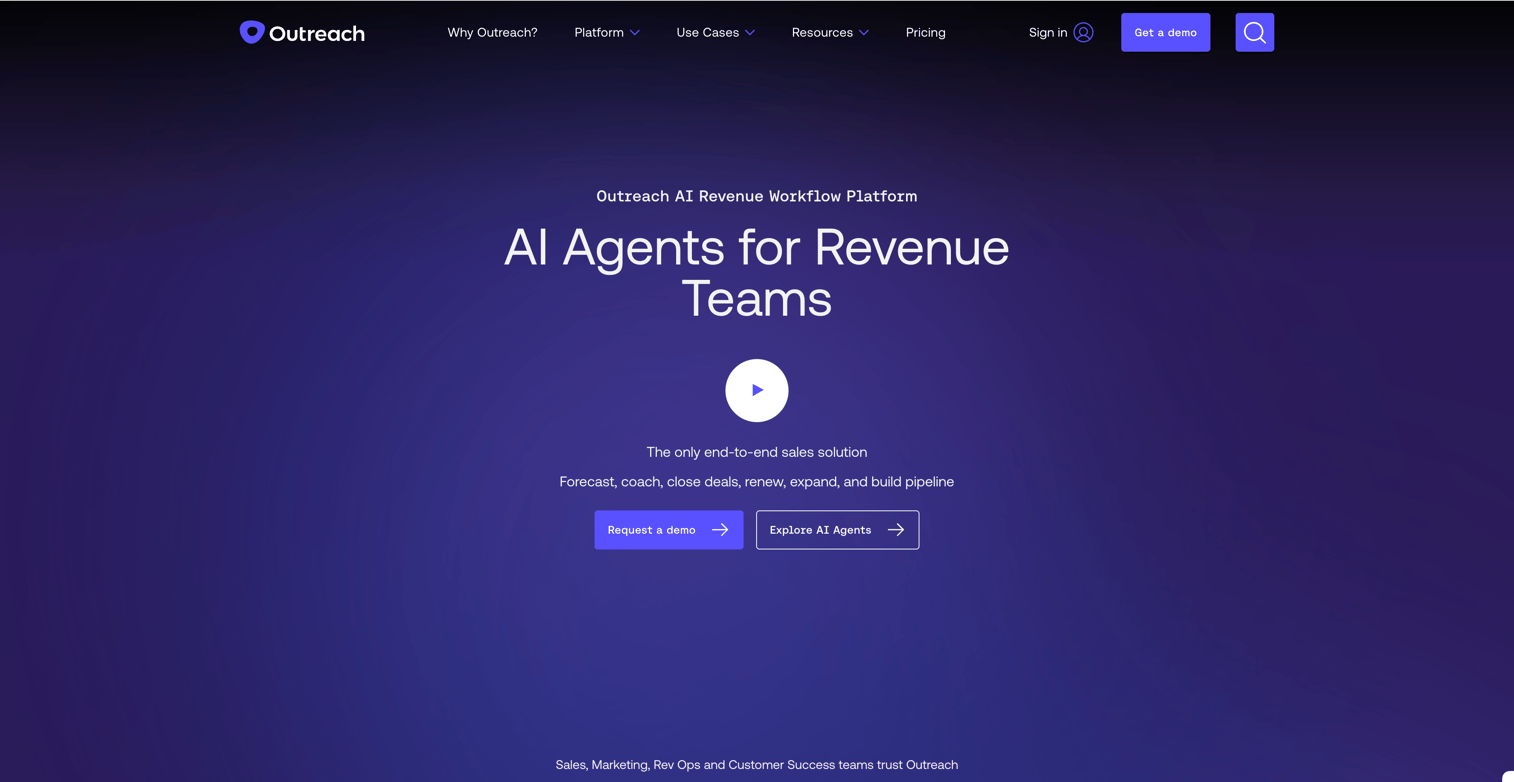
Outreach is the market leader for enterprise sales engagement, offering a comprehensive platform for managing complex, high-volume outreach. The platform is known for its robust sequence builder, deep Salesforce integration, and AI-powered insights.
Best for: Large, enterprise sales teams with complex sales motions and a requirement for granular control and reporting.
Key strengths
- Advanced multi-channel sequence builder with A/B testing.
- AI-driven insights ("Kaia") for real-time call coaching and content recommendations.
- Best-in-class Salesforce integration and activity logging.
- Detailed analytics for rep performance and sequence effectiveness.
Why choose Outrach?
Outreach works well when you want the most powerful and feature-rich platform on the market to manage a large-scale sales operation.
Outreach pricing
Custom pricing, typically geared towards enterprise contracts.
3. Salesloft
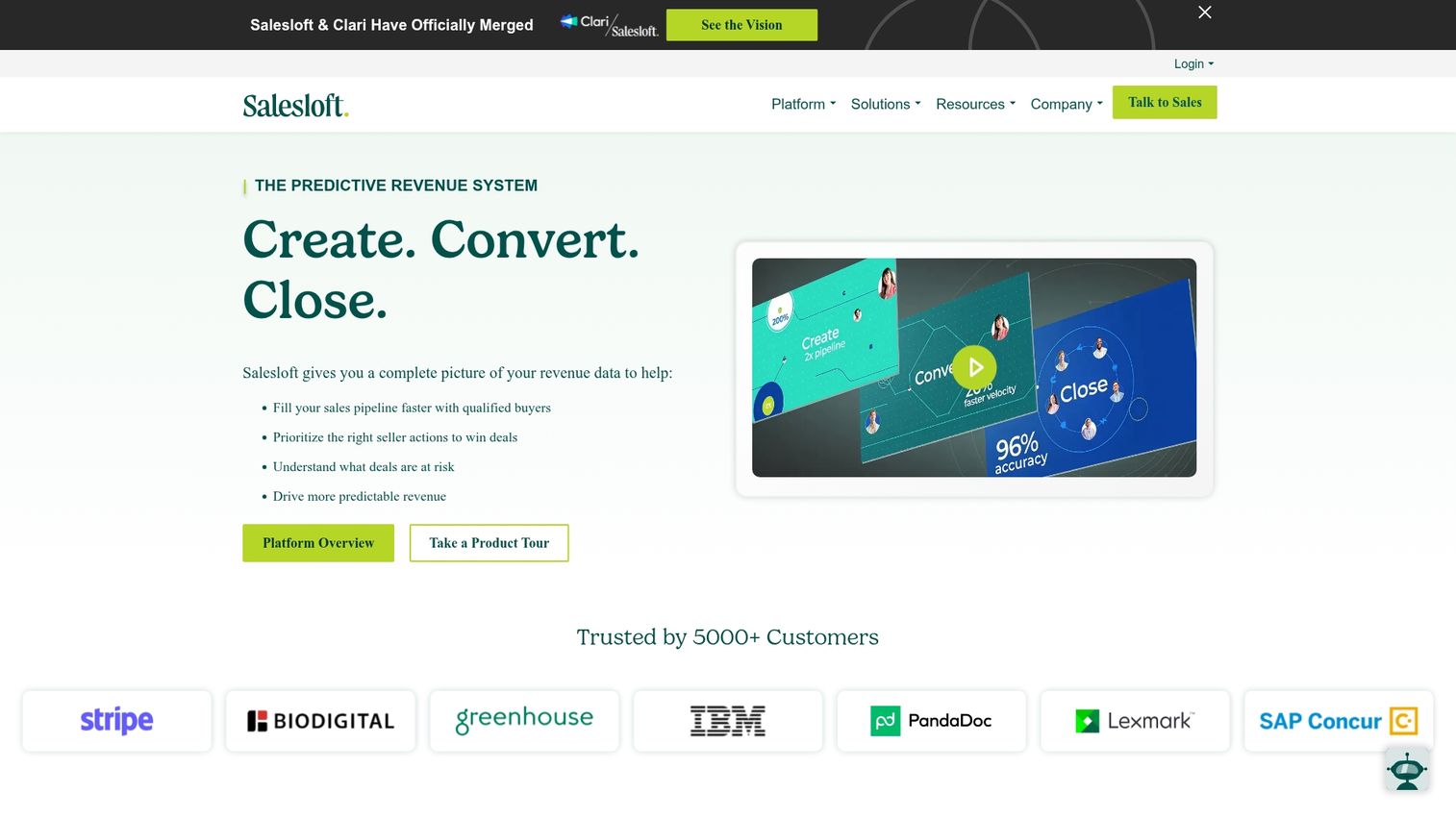
Salesloft excels at combining multi-channel cadence management with conversation intelligence. The platform is a strong choice for teams that rely heavily on phone calls and want integrated call recording, transcription, and coaching features alongside email sequences.
Best for: Mid-market to enterprise teams that want a unified platform for both outreach execution and sales call coaching.
Key strengths
- Intuitive "Cadence" builder for email, call, and social steps.
- Integrated conversation intelligence for analyzing sales calls.
- Strong mobile app for reps on the go.
- Robust analytics and coaching dashboards for managers.
Why choose Salesloft?
Salesloft fits when call coaching and conversation intelligence are as important to your sales process as email automation.
Salesloft pricing
Custom pricing based on team size and feature set.
4. HubSpot Sales Hub
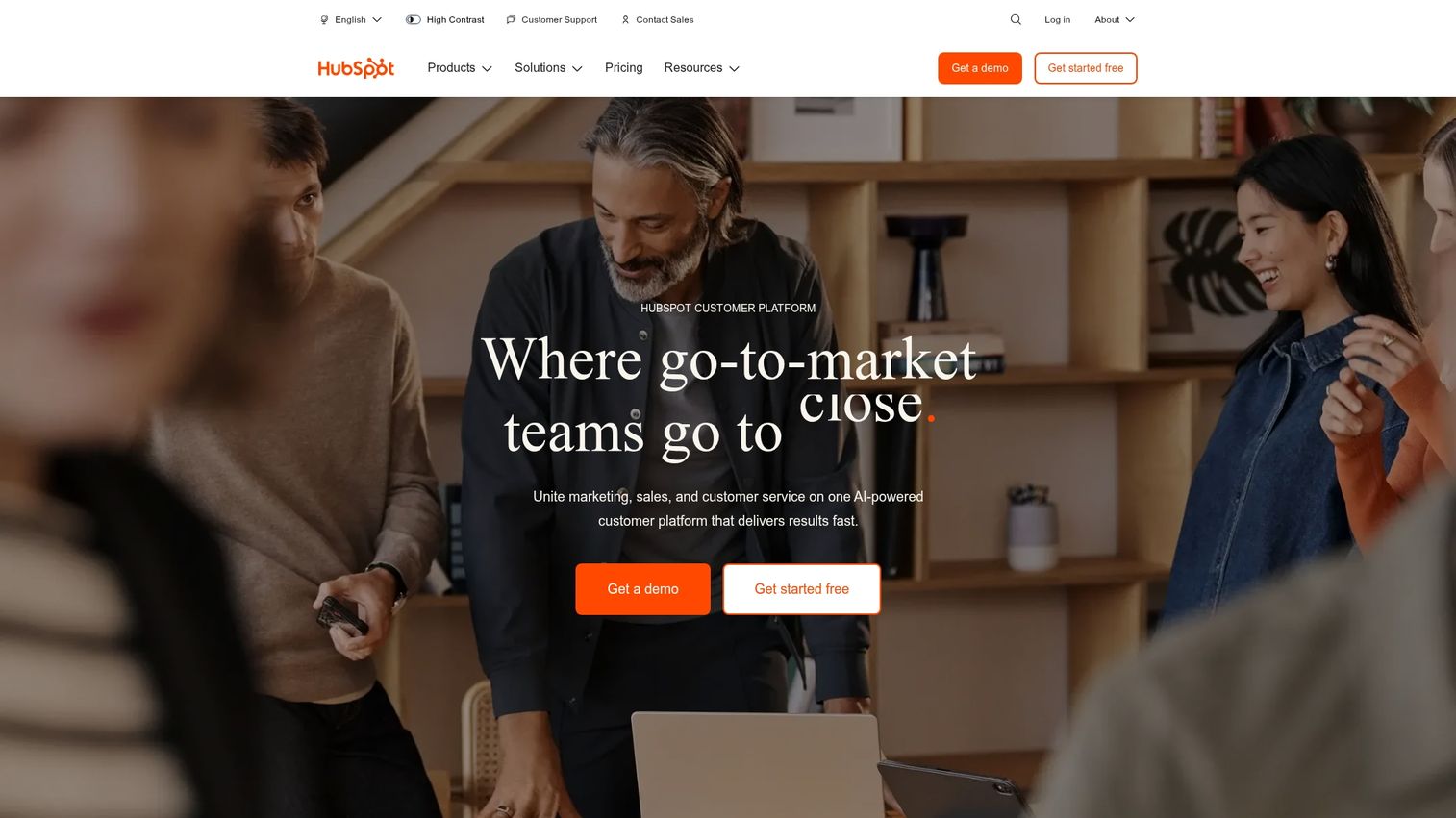
HubSpot Sales Hub is an all-in-one sales platform that includes a strong set of sales engagement features. Its primary advantage is seamless, native integration with the HubSpot CRM, making it an ideal choice for teams already invested in the HubSpot ecosystem.
Best for: Small to mid-market teams, especially those already using HubSpot CRM, who want an easy-to-use, integrated solution.
Key strengths
- Native integration with HubSpot CRM, Marketing Hub, and Service Hub.
- Features include email sequences, meeting scheduling, and call tracking.
- User-friendly interface that is easy for new reps to learn.
- Generous free tier for getting started.
Why choose Hubspot?
HubSpot Sales Hub works well when you want a simple, unified platform and are already using or planning to use the HubSpot CRM.
See how to enroll contacts in a HubSpot sequence in just a few clicks.
HubSpot pricing
Free tier available; paid plans start at Professional and Enterprise levels.
5. Apollo.io
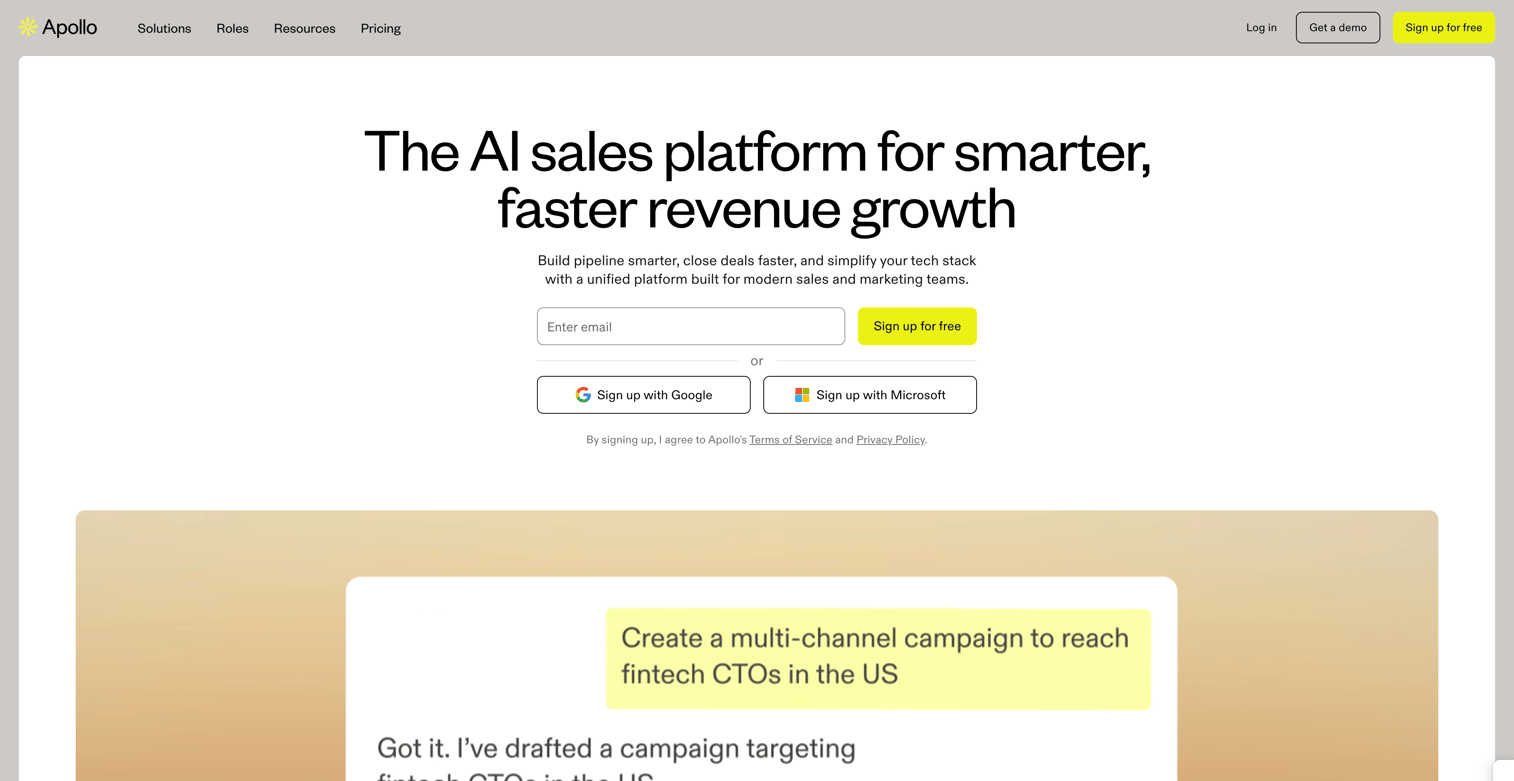
Apollo.io combines a massive B2B contact database with a full-featured sales engagement platform. The combination allows teams to find prospects and engage them with multi-channel sequences all within a single tool, streamlining the entire top-of-funnel workflow.
Best for: Sales teams, particularly in startups and SMBs, that want both high-quality prospecting data and outreach automation in one affordable platform.
Key strengths
- Access to a database of over 275 million contacts.
- Integrated email sequencing, dialer, and task management.
- Chrome extension for prospecting on LinkedIn and company websites.
- Competitive pricing with a functional free tier.
Why choose: Apollo.io fits when you want to consolidate your tech stack and get both lead data and engagement tools from a single provider.
Here's how to add contacts to an outreach sequence directly inside Apollo.
Apollo pricing
Free tier available; paid plans are competitively priced.
6. ZoomInfo Sales
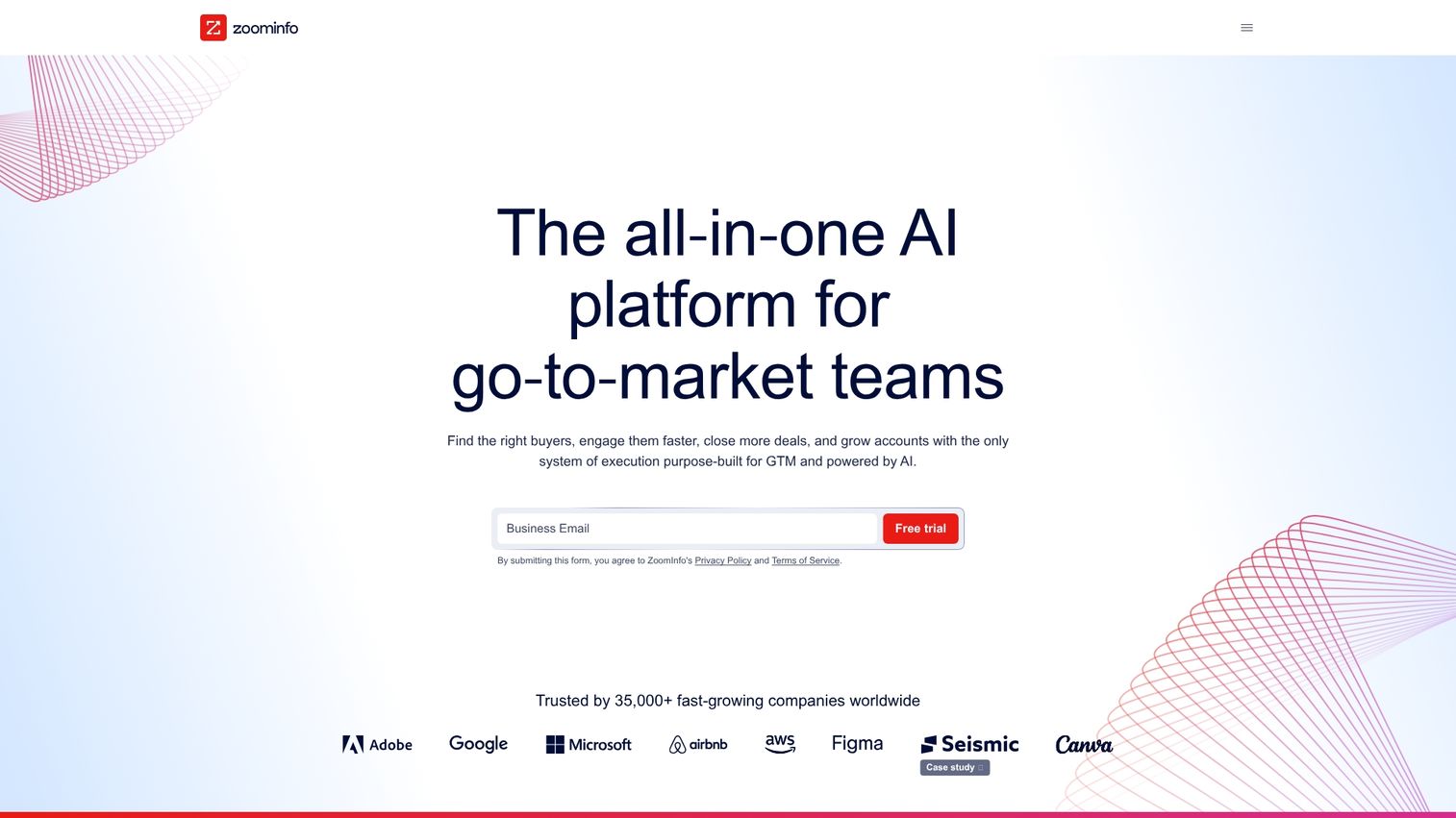
ZoomInfo Sales combines ZoomInfo's B2B data with sales engagement and conversation intelligence capabilities. The platform is an enterprise-grade solution for organizations that prioritize data accuracy.
Best for: Enterprise organizations that are existing ZoomInfo customers and want to leverage that data directly within engagement workflows.
Key strengths
- Contact and company intelligence.
- AI-powered conversation intelligence for call analysis.
- Automated workflows that trigger based on data signals.
Why choose Zoominfo?
ZoomInfo Sales fits when data accuracy is paramount and you want engagement activities fueled by reliable B2B intelligence.
Zoominfo pricing
Custom pricing, typically sold as part of a larger ZoomInfo package.
7. Instantly
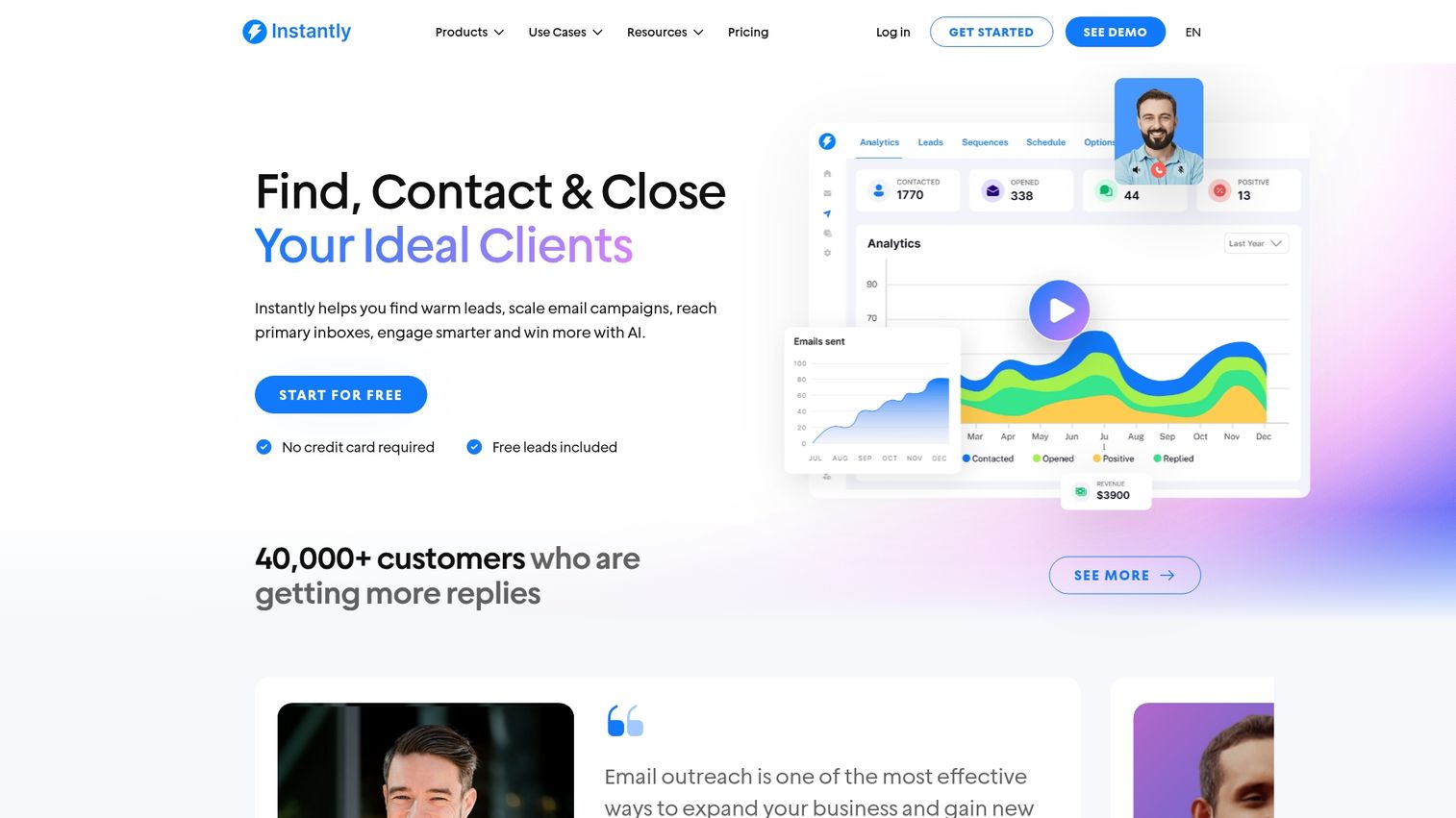
Instantly.ai is a sales engagement platform focused on cold email outreach, deliverability, and scale. The platform is known for unlimited email account warm-up, which helps ensure emails land in the primary inbox.
Best for: Outbound-heavy teams and lead generation agencies that prioritize email deliverability and sending volume.
Key strengths
- Unlimited email account warm-up to protect sender reputation.
- Campaign builder designed for high-volume cold email.
- Built-in lead database and validation features.
- Simple, transparent pricing.
Why choose Instantly?
Instantly fits when your primary goal is to send a large volume of cold emails and ensure they don't land in spam.
Instantly pricing
Transparent, affordable plans based on active leads.
8. Reply.io
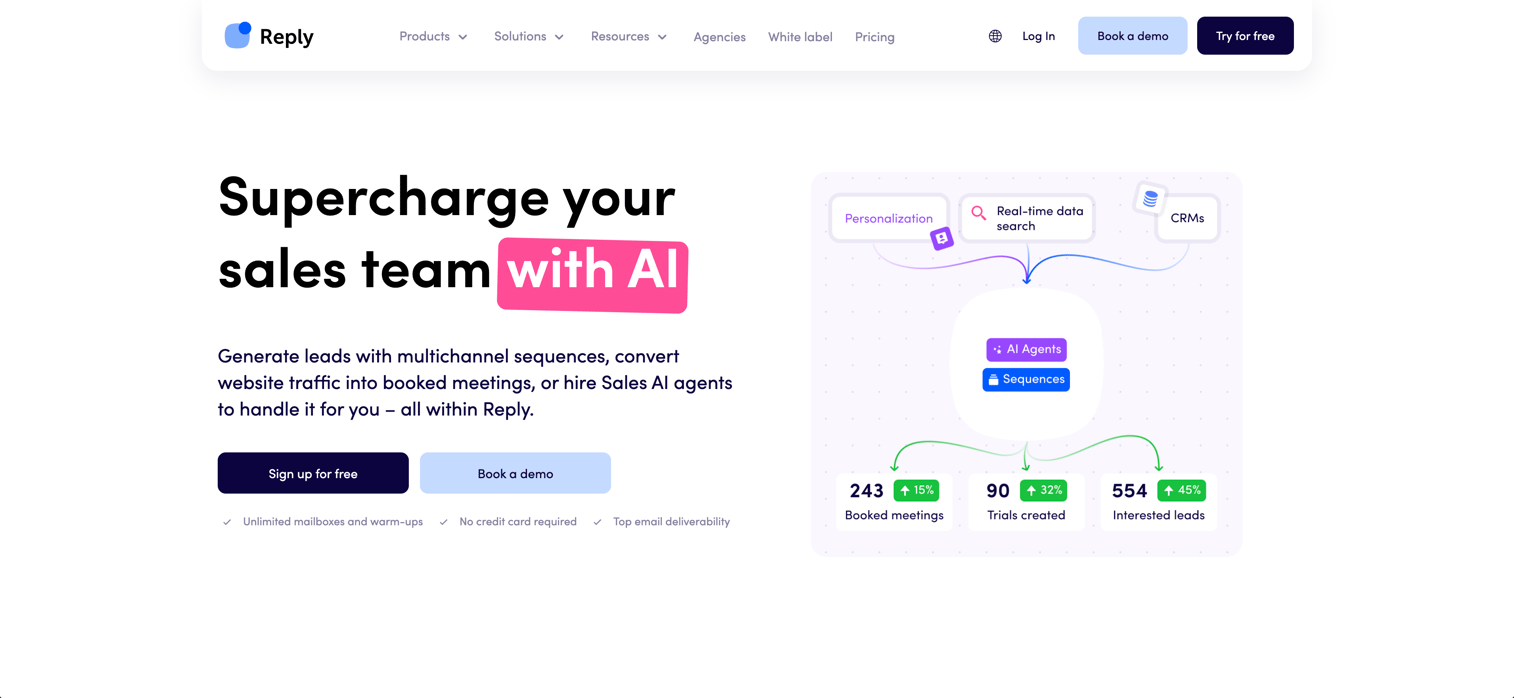
Reply.io is an AI-powered, multi-channel sales engagement platform that helps teams automate outreach across email, LinkedIn, calls, and WhatsApp. The platform offers a balance of features, AI capabilities, and transparent pricing.
Best for: Mid-market sales teams looking for a powerful, AI-enhanced multi-channel outreach tool with clear, predictable pricing.
Key strengths
- AI-powered sequence and template generation.
- Multi-channel support including LinkedIn, WhatsApp, and SMS.
- Built-in appointment booking and a Chrome extension for prospecting.
- Transparent, user-based pricing.
Why choose Reply.io?
Reply.io fits when you want advanced AI features and multi-channel capabilities without the enterprise-level price tag.
Reply.io pricing
Publicly available pricing plans based on user count.
9. Lemlist
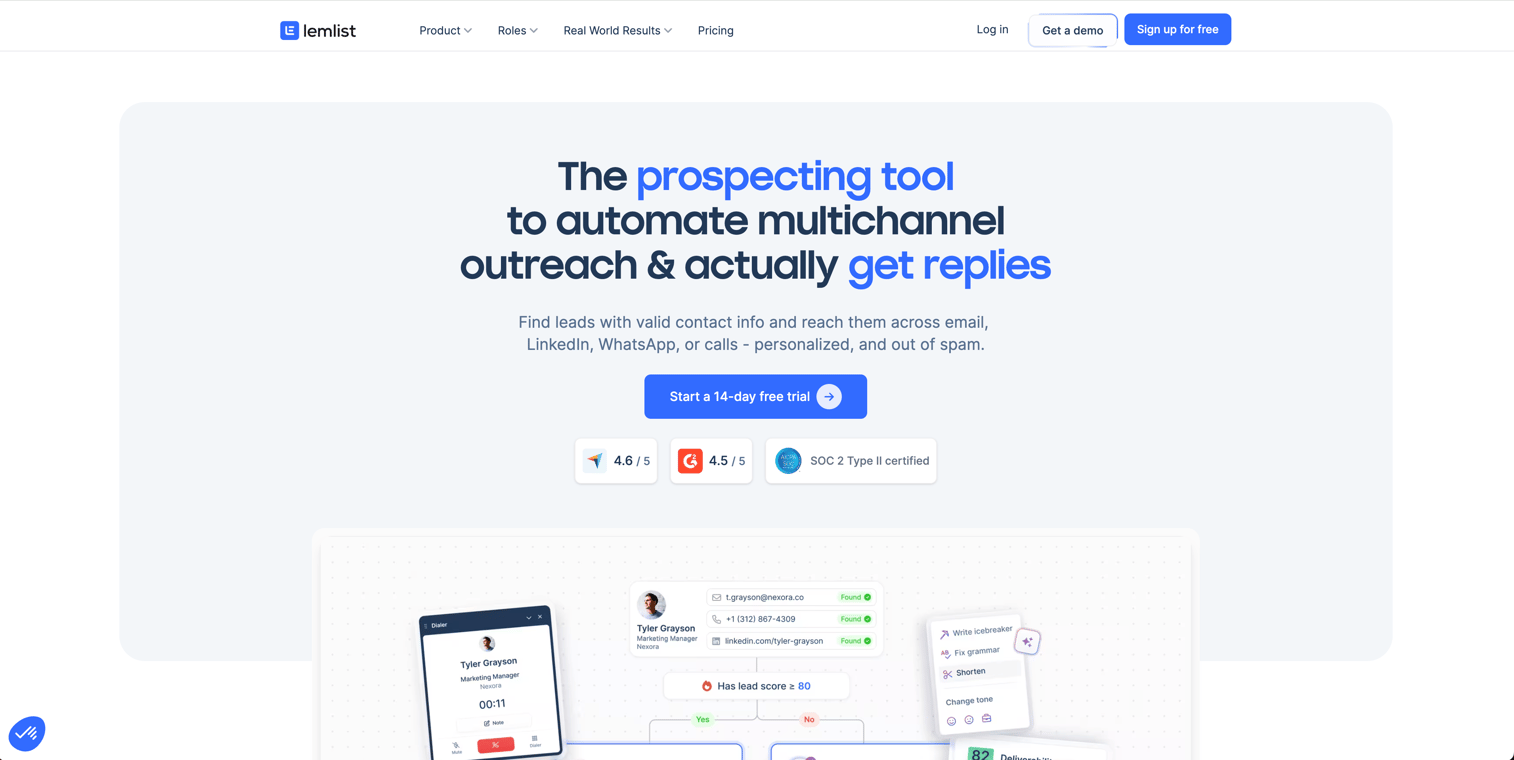
Lemlist carved out a niche by focusing on creative personalization and deliverability for cold email. The platform is known for allowing users to dynamically insert personalized images and videos into emails.
Best for: Sales and marketing teams that want to differentiate outreach with creative and personalized visual elements.
Key strengths
- Dynamic image and video personalization.
- Strong focus on email deliverability with "lemwarm" warm-up tool.
- A/B testing and clear, simple reporting.
- Active user community for sharing tips and strategies.
Why choose Lemlist?
Lemlist fits when you want cold emails to be memorable and break through the noise with creative personalization.
Start by building your contact list in Lemlist before launching personalized campaigns.
Lemlist pricing
Publicly available pricing plans.
10. Klenty
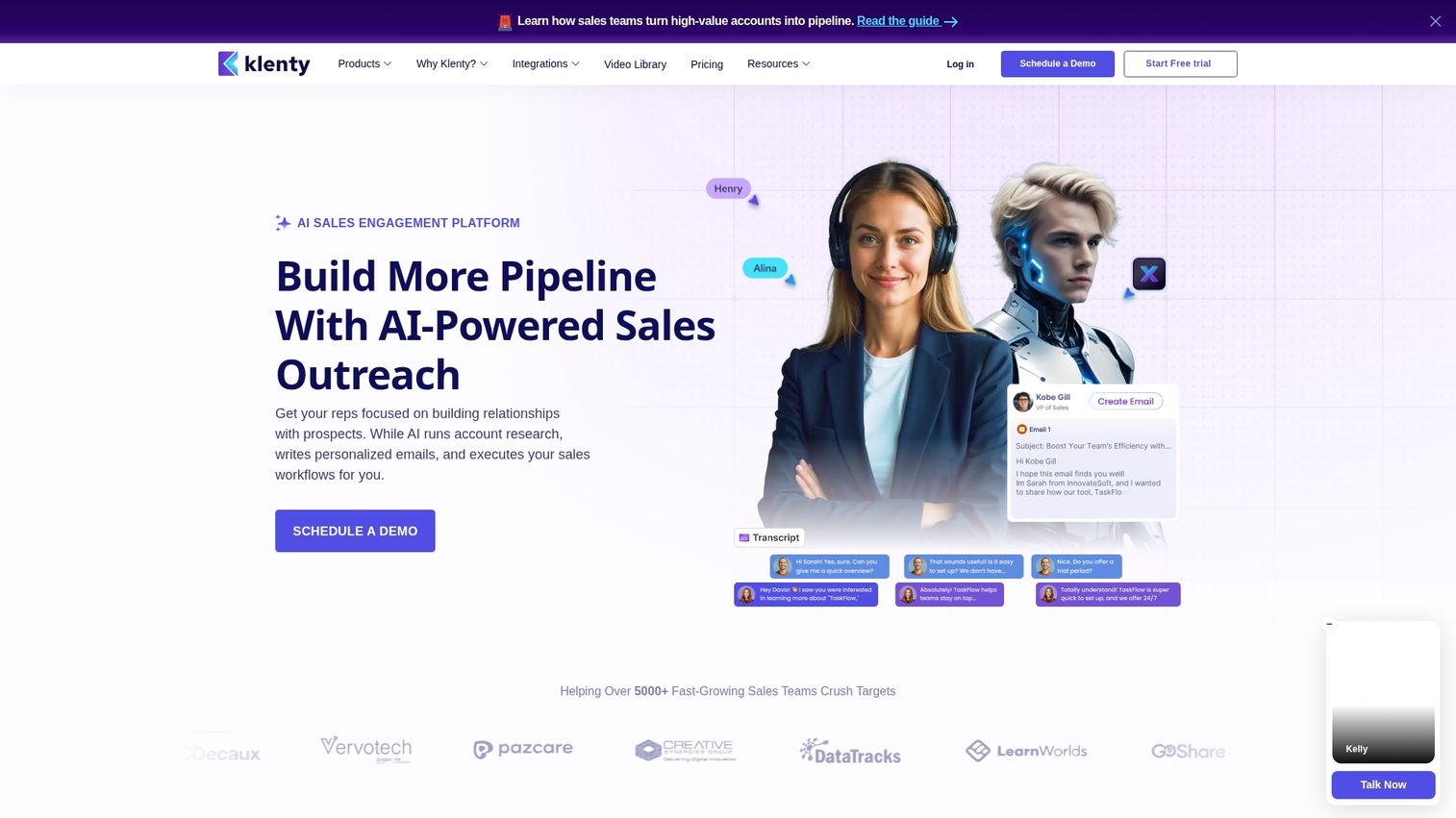
Klenty is a sales engagement platform designed for growing sales teams that want a powerful yet straightforward tool. The platform offers multi-channel sequences, deep CRM integration, and a user-friendly interface without the complexity or cost of enterprise-focused platforms.
Best for: Growing SMB and mid-market teams looking for a capable and affordable alternative to tools like Outreach and Salesloft.
Key strengths
- Simple and effective multi-channel cadence builder.
- Tight, bidirectional integrations with HubSpot, Salesforce, and Pipedrive.
- "Cadence Playbooks" to help teams get started quickly.
- Affordable and transparent pricing.
Why choose Klenty?
Klenty fits when you want core sales engagement functionality that is easy to implement and won't break the bank.
Klenty pricing
Transparent, affordable plans based on user count.
11. Mixmax
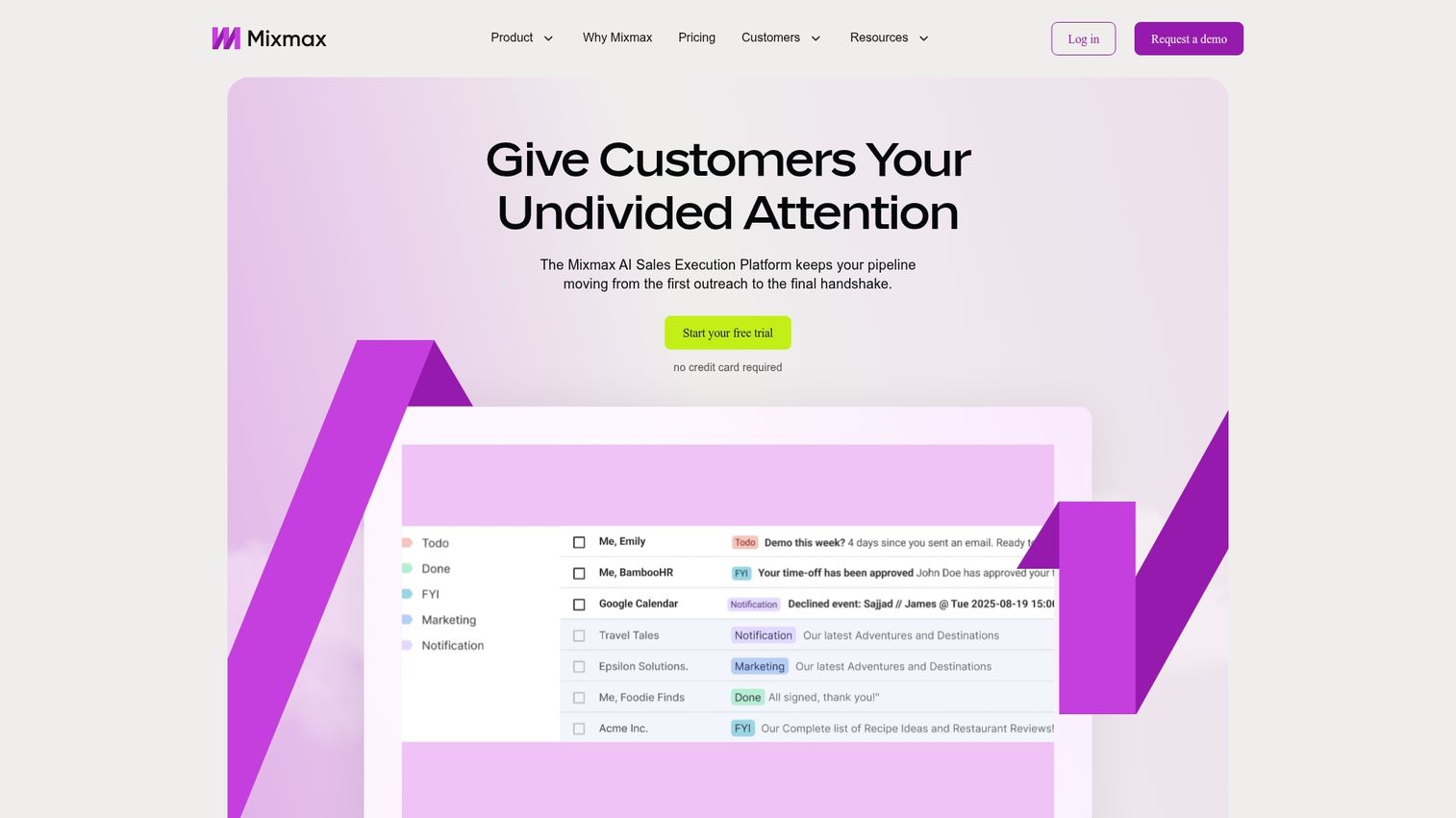
Mixmax is a sales engagement platform that lives directly inside your Gmail inbox. The platform is designed for reps and teams who want to enhance their existing email workflow with sequences, templates, scheduling, and tracking without ever leaving Gmail.
Best for: Sales teams and individuals who are heavily reliant on Gmail and want to add engagement features directly into their existing workflow.
Key strengths
- Native Gmail and Google Workspace integration.
- In-email polls, surveys, and meeting scheduling.
- Side-bar with CRM data and task management.
- Easy to install and use.
Why choose Mixmax?
Mixmax fits when your team lives in Gmail and you want to minimize context switching by adding powerful sales features directly to the inbox.
Mixmax pricing
Free tier available; paid plans are per-user, per-month.
12. Salesforce Sales Engagement
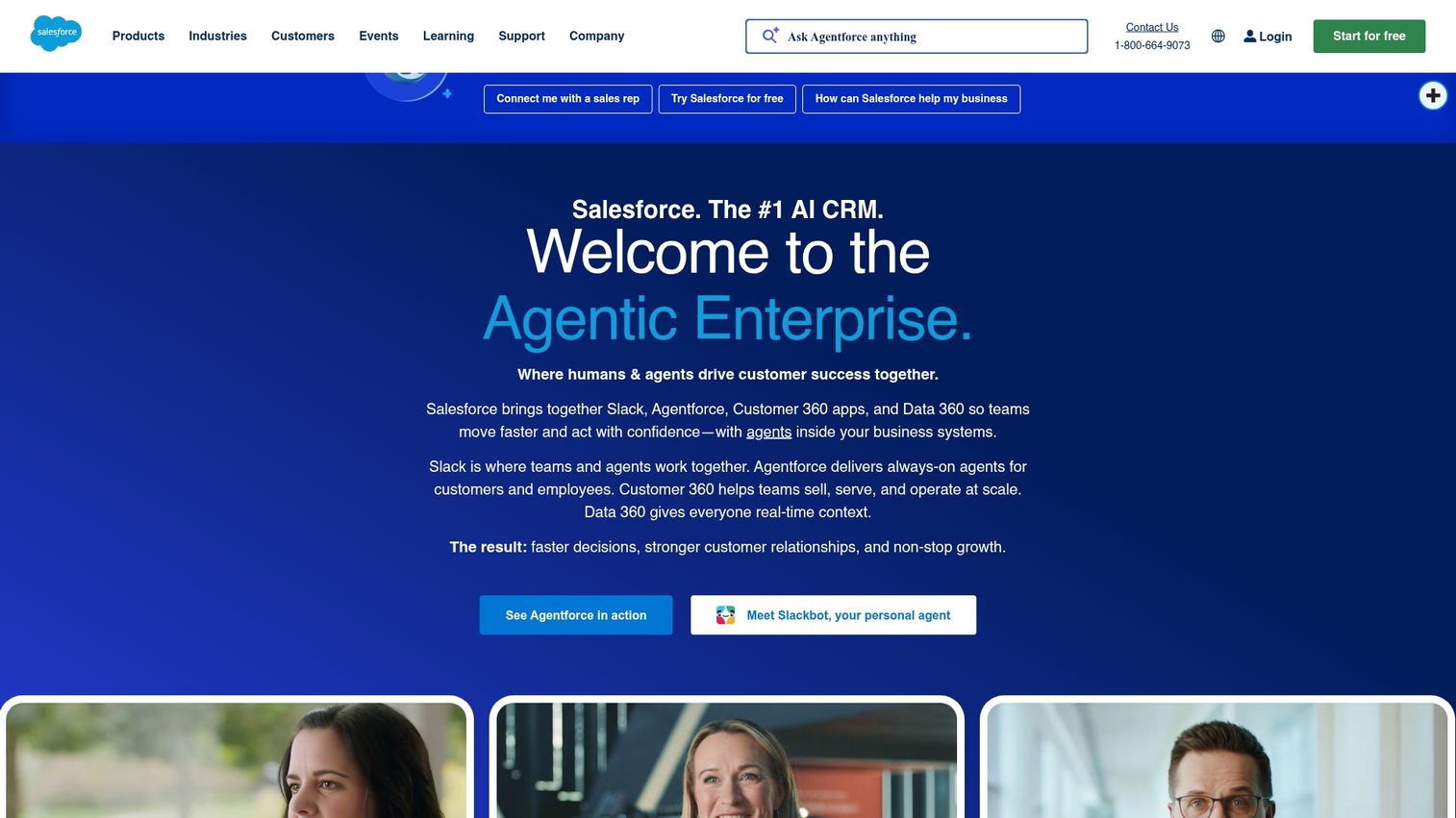
Part of the Sales Cloud platform, Salesforce Sales Engagement is the native engagement layer for organizations standardized on Salesforce. Reps can execute multi-step cadences, prioritize tasks with an intelligent work queue, and leverage Einstein AI insights, all without leaving the Salesforce UI.
Best for: Organizations that are deeply invested in the Salesforce ecosystem and want a fully native, integrated engagement solution.
Key strengths
- Fully native to Salesforce Sales Cloud.
- "Cadences" for building automated outreach steps.
- "Work Queue" powered by Einstein AI to prioritize tasks.
- All data and reporting live within Salesforce.
Why choose Salesforce?
Salesforce Sales Engagement fits when your entire GTM operation runs on Salesforce and you want to avoid third-party integrations and data sync issues.
Connect LinkedIn Sales Navigator to Salesforce to power multi-channel prospecting from one place.
Salesforce pricing
Available as an add-on to Sales Cloud Enterprise Edition and above.
How to choose the best sales engagement platform
Match the tool to your sales motion
The right tool depends heavily on how you sell. High-touch, complex enterprise sales benefit from platforms with deep conversation intelligence and account-based features. High-volume outbound teams, on the other hand, prioritize deliverability and automation speed.
Evaluate CRM integration depth
Native, bidirectional integrations matter more than third-party connectors. Before buying, ask whether the platform syncs all activities automatically, if it supports custom objects and fields from your CRM, and how it helps maintain data hygiene.
Assess AI and automation capabilities
"AI-powered" can mean anything from basic send-time optimization to full conversation intelligence that analyzes sales calls. Evaluate the depth of the AI features and match them to your team's sophistication to avoid paying for capabilities you won't use.
Calculate total cost of ownership
Look beyond the per-seat, per-month price. Ask vendors about mandatory implementation fees, costs for premium support, and any add-on charges for essential features or integrations to understand the true total cost.
Consider how prospects experience your product
Traditional sales engagement focuses on the volume and quality of outreach, but it often misses a key piece of the buyer's journey. Modern buyers want low-friction ways to evaluate your product on their own. Adding interactive demos or sandbox environments to your sequences can fill this gap. This is a key differentiator among modern product marketing tools.
| Your situation | Prioritize | Consider |
|---|---|---|
| Enterprise, complex sales | Conversation intelligence, Salesforce integration | Outreach, Salesloft, Salesforce Sales Engagement |
| Mid-market, growing team | Ease of use, transparent pricing | HubSpot Sales Hub, Apollo.io, Klenty |
| High-volume outbound | Deliverability, email warmup | Instantly, Lemlist, Reply.io |
| Gmail-centric workflow | Inbox-native experience | Mixmax |
| Prospects want to see product | Interactive demos, self-serve experiences | Guideflow |
Build a sales engagement stack that drives revenue
The best sales engagement software is the one that aligns with your team's size, sales motion, and existing CRM stack. While outreach automation is crucial for efficiency, modern buyers expect to self-educate. Pairing automated sequences with product experiences like interactive demos creates a combination that increases engagement and accelerates conversion.
Start your journey with Guideflow today!
FAQs about sales engagement tools
A CRM is a system of record that stores customer data and manages long-term relationships. A sales engagement platform is a system of action that automates and tracks the outreach activities used to create relationships. Most teams use both, with the sales engagement tool syncing all activity data back to the CRM.
Yes, HubSpot Sales Hub includes core sales engagement features like email sequences, meeting scheduling, and activity tracking. While it's a great all-in-one solution, dedicated platforms like Outreach and Salesloft often offer deeper functionality for teams with highly complex sales motions.
Several platforms offer excellent starting points. HubSpot Sales Hub has a robust free tier for basic CRM and email tracking. Apollo.io provides free credits for both prospecting and sequencing. Guideflow offers a free plan for creating and sharing interactive product demos.
Interactive demos give prospects a way to experience your product between outreach touches. Instead of just asking to "book a call," you can offer a self-guided tour, reducing friction and giving your sales team valuable engagement data on which features interest each prospect.
Implementation time varies widely. A basic setup for a small team with a standard CRM can take a few days. However, a full rollout for an enterprise organization with custom integrations and extensive team training can span one to three months.
Teams measure ROI by tracking key metrics before and after implementation, such as reply rates, meetings booked, pipeline generated, and sales cycle length. The best platforms provide attribution reporting that connects specific engagement activities to closed-won revenue.
Yes, they are a strong fit. PLG companies use sales engagement tools to run targeted campaigns to convert users who have shown product interest but want sales assistance. Pairing automated engagement sequences with personalized interactive demos helps scale the conversion of product-qualified leads into paying customers.