Sending the same message to 10,000 leads and hoping 50 convert is how B2B marketing worked a decade ago. Account-based marketing flips that model: you pick the 50 accounts most likely to buy, then build campaigns specifically for them. The challenge is that ABM requires coordinating data, advertising, content, and sales outreach across dozens of stakeholders at each target account. This guide covers 16 ABM tools that handle different pieces of that puzzle, from intent data providers to demo automation platforms, so you can find the right fit for your team's strategy and budget.
TL;DR
- Account-based marketing (ABM) software helps B2B teams target specific high-value accounts with personalized campaigns instead of casting a wide net.
- Top ABM platforms for 2026 include Userled, Demandbase One, 6sense, and Terminus for enterprise-level orchestration, plus RollWorks and ZoomInfo for mid-market teams.
- Guideflow supports ABM by letting you create personalized interactive demos that engage target accounts and reveal buying intent.
- The right tool depends on your ABM maturity, existing tech stack, and whether you prioritize account identification, advertising, or engagement.
What's inside
This guide covers 16 ABM tools across multiple categories: all-in-one platforms, intent data providers, data enrichment tools, and content personalization solutions. You'll learn what each tool does best, when to use it, and how to choose the right fit for your team's strategy and budget.
What is account-based marketing software
Account-based marketing software helps B2B marketing teams and sales teams focus on specific high-value accounts rather than generating leads at scale. The core idea is treating each account as a "market of one," delivering tailored messaging to the roughly 10 decision-makers who influence a purchase decision at your ideal customers.
- Account identification: Find and prioritize accounts based on firmographics (company size, industry, revenue), technographics (tools they use), and intent signals (research behavior).
- Personalization at scale: Tailor messaging, content, and advertising for each target account without creating everything from scratch.
- Sales and marketing alignment: Connect marketing campaigns directly to sales activities with a unified view of account engagement. Aligned organizations achieve 24% faster three-year revenue growth.
- Engagement tracking: Monitor account-level analytics and intent signals to see which accounts are ready for outreach.
Types of ABM tools for B2B marketing teams
The ABM software category includes several distinct tool types. Understanding the differences helps you identify which solutions fit your specific situation.
Core ABM platforms
All-in-one solutions like Demandbase, 6sense, and Terminus combine account identification, advertising, orchestration, and analytics in a single interface. Core ABM platforms work best for mature teams managing complex, multi-channel ABM programs who want everything in one place.
Intent data providers
Tools like Bombora and TechTarget Priority Engine specialize in identifying signals that show which accounts are actively researching topics related to your product. Intent data, used by 91% of B2B technology marketers to prioritize accounts, helps you focus outreach on accounts already in a buying cycle.
Account and contact enrichment tools
Enrichment tools add firmographic, technographic, and contact data to your existing CRM records. ZoomInfo and Clearbit fall into this category, helping you build complete account profiles for better targeting. Enrichment fills in the gaps when your CRM data is incomplete or outdated.
ABM advertising platforms
ABM advertising platforms serve targeted ads to specific accounts across display, social, and other digital channels. Unlike traditional advertising that targets broad audiences based on demographics, account-based advertising focuses spend exclusively on decision-makers within your target accounts.
Content personalization and demo automation tools
This category includes tools for creating tailored content experiences. Demo automation platforms let you build personalized product walkthroughs that engage target accounts without scheduling live calls, while capturing engagement data that reveals buying intent.
Sales engagement and orchestration tools
Orchestration tools coordinate multi-channel outreach sequences across email, phone, and social. Sales engagement platforms help teams execute personalized "account plays" by automating tasks and ensuring timely communication with key contacts.
When to use ABM software
ABM software delivers the best results in specific scenarios where a targeted, high-touch approach makes sense.
- High average contract value: ABM works when deal sizes justify the personalized attention and resources required for each account.
- Long sales cycles with multiple stakeholders: When buying processes involve large committees, ABM helps you orchestrate communication and build consensus across the organization.
- Clear ideal customer profile: You need to know exactly which accounts to target. A well-defined ICP is a prerequisite for effective ABM.
- Sales and marketing alignment: ABM requires tight coordination between teams. Poor alignment can lead to 30% longer sales cycles, so if your sales and marketing groups already collaborate on goals, ABM tools amplify their efforts.
ABM tools may not fit early-stage companies without a defined ICP, businesses with high-volume, low-ACV customers, or organizations lacking sales and marketing alignment.
ABM software comparison table
| # | Product | Intent | Key differentiation | Pricing | G2 rating |
|---|---|---|---|---|---|
| 1 | Userled | ABM personalization | AI-powered 1:1 microsites and multi-channel account experiences at scale | Custom pricing | 4.7/5 |
| 2 | Guideflow | Demo personalization | No-code interactive demos with account-level analytics | Free + paid from $40/mo | 5.0/5 |
| 3 | Apollo.io | Sales intelligence | Affordable contact database | Free + paid from $49/mo | 4.8/5 |
| 4 | LeanData | Lead-to-account routing | Advanced lead matching in Salesforce | Custom pricing | 4.6/5 |
| 5 | Demandbase | All-in-one ABM | Enterprise orchestration and AI-powered insights | Custom pricing | 4.3/5 |
| 6 | 6sense Revenue AI | Predictive analytics | AI-driven buying stage predictions | Custom pricing | 4.3/5 |
| 7 | Demandscience | ABM advertising | Multi-channel advertising and native chat | Custom pricing | 4.4/5 |
| 8 | RollWorks | Mid-market ABM | Accessible account-based advertising | Custom pricing | 4.3/5 |
| 9 | ZoomInfo | Contact data | Best-in-class B2B contact database | Custom pricing | 4.4/5 |
| 10 | Bombora | Intent data | Company Surge® identifies research topics | Custom pricing | 4.4/5 |
| 11 | Clearbit | Data enrichment | Real-time API-based enrichment | Custom pricing | 4.4/5 |
| 12 | HubSpot Marketing Hub | Integrated ABM | Native ABM tools within HubSpot CRM | From $800/mo | 4.4/5 |
| 13 | Marketo Engage | Enterprise automation | Deep Adobe ecosystem integration | Custom pricing | 4.1/5 |
| 14 | LinkedIn Sales Navigator | Social selling | Account-based prospecting on LinkedIn | From $99/mo | 4.3/5 |
| 15 | PathFactory | Content intelligence | AI-powered content tracks | Custom pricing | 4.4/5 |
| 16 | Drift | Conversational marketing | Account-based chatbots | Custom pricing | 4.4/5 |
15 best ABM software and tools
1. Userled
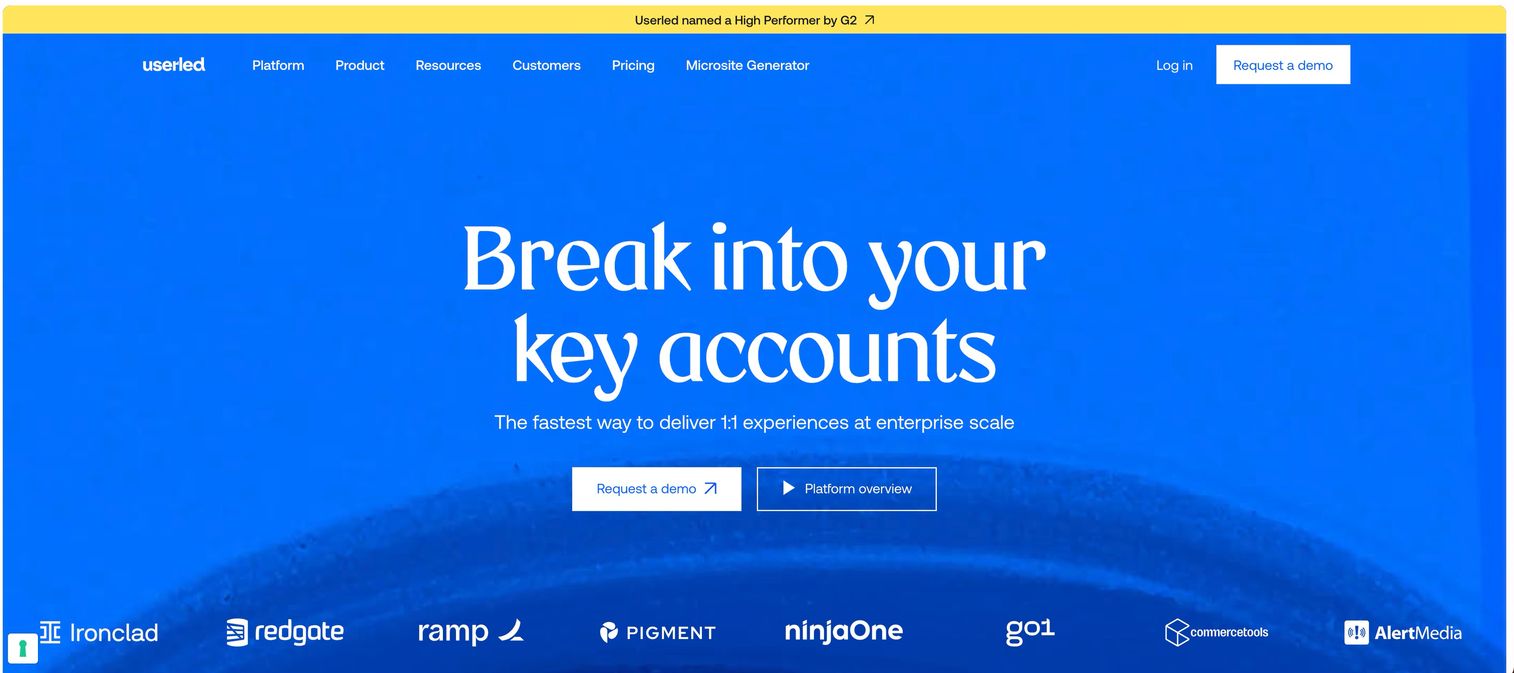
Userled is an ABM execution platform built for mid-market and enterprise B2B teams. It bridges the gap between intelligence and pipeline - giving marketers and salespeople everything they need to run personalized, multi-touchpoint plays at scale, from 1:many campaigns right through to 1:1 account experiences.
Best for: B2B marketing and sales teams looking to put their ABM strategy into motion with personalized ads, microsites, and actionable engagement insights - without the heavy operational lift.
Key strengths
- Runs 1:many, 1:few, and 1:1 ABM plays across every touchpoint at scale
- Personalized microsites and LinkedIn ads tailored to any target account or use case
- AI-powered content creation with control over wording, creative, and language
- Scaled 1:1 LinkedIn ads with optimized bidding to reduce cost and maximize exposure
- Real-time engagement insights at both account and contact level
- Sales Plugin that brings personalization tools directly into the browser, so reps never have to break their workflow
Why choose Userled
Choose Userled when you want to move beyond intent data and actually execute your ABM strategy - creating experiences that feel personal at every touchpoint. It empowers both marketing and sales to work from the same playbook, turning insights into pipeline with minimal friction.
Userled pricing
- LinkedIn Ads: From $2,000/month, billed annually
- Microsites: From $2,000/month, billed annually
- Sales Plugin (Microsite add-on): From $599/month for 5 seats, billed annually
- Enterprise: Custom pricing available
2. Guideflow
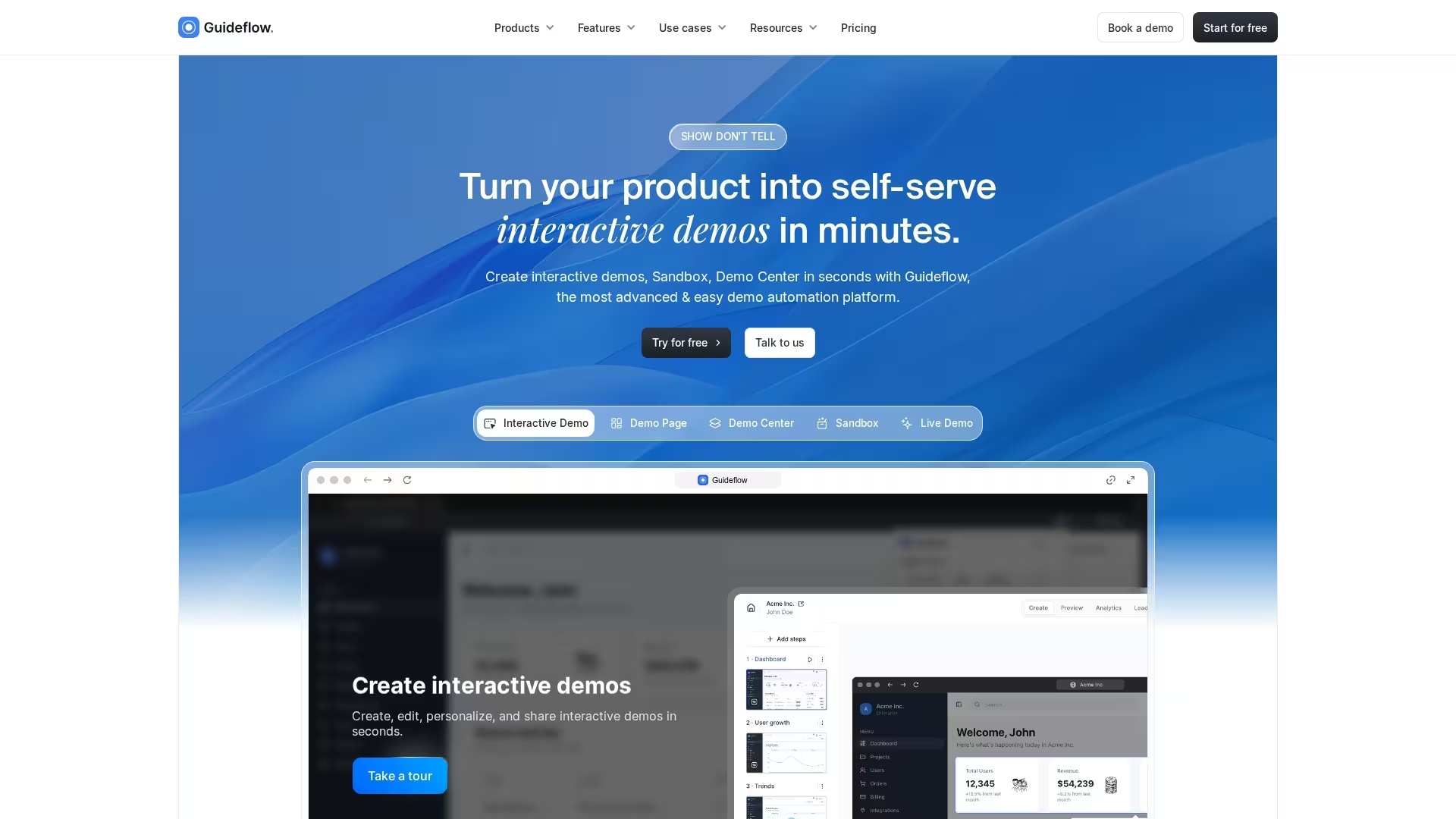
Guideflow is a demo automation platform that supports ABM with personalized interactive product experiences. Instead of pushing every prospect into a "book a demo" funnel, you capture your product flow and turn it into clickable, step-by-step demos you can share with target accounts.
Best for: B2B teams looking to engage target accounts with personalized, on-demand product demos that reveal buying intent.
Key strengths
- Create personalized demos for each target account using dynamic variables
- Capture and share product experiences without engineering resources
- Track engagement at the account level to identify high-intent buyers
- Integrate with CRM and marketing tools to sync account data
- Distribute demos via email, website, or social for multi-channel ABM campaigns
Why choose Guideflow
Pick Guideflow when you want every target account to experience your product before a call. The analytics reveal which accounts are most engaged, helping your sales team prioritize outreach.
Guideflow pricing
Free plan available. Paid plans start at $40/month.
Start your journey with Guideflow today!
3. Apollo.io
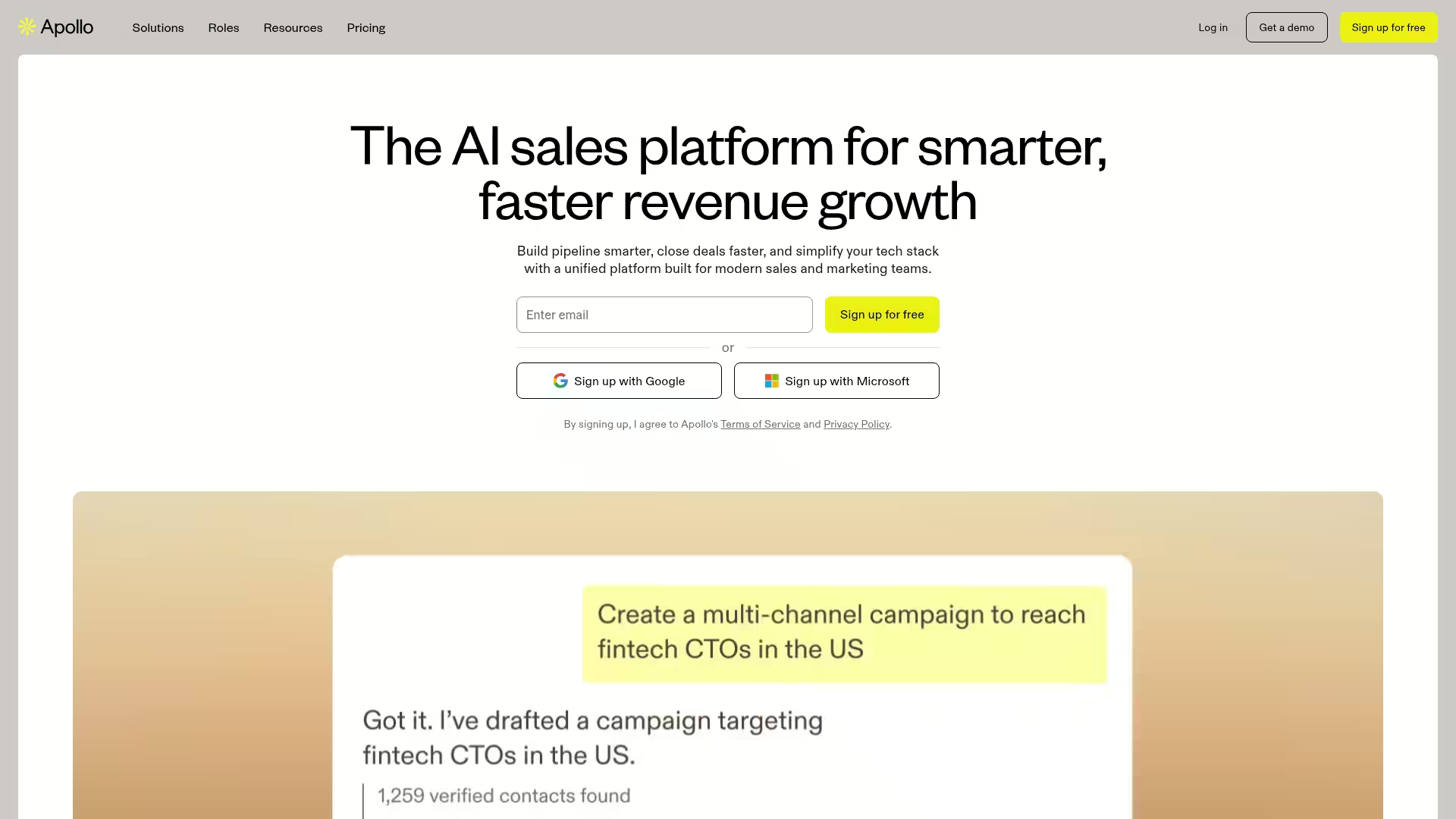
Apollo.io is a sales intelligence and engagement platform offering a large contact database, sequencing tools, and account scoring at an accessible price point. Apollo is particularly strong when it comes to building highly targeted account lists. With its advanced filtering capabilities, teams can narrow down companies by industry, size, location, and technology stack - a foundational step in any account-based marketing strategy.
If you're new to Apollo’s targeting features, this step-by-step walkthrough explains how to use industry filters to quickly identify high-fit accounts: How to use industry filter options on Apollo
Best for: Growing teams and startups looking for an affordable platform for prospecting and engagement.
Key strengths
- Extensive database of contacts and companies
- Multi-channel email and call sequences
- Account scoring to prioritize engagement
- Workflow automation
Why choose Apollo.io
Pick Apollo.io for its value, combining a massive B2B database with robust sales engagement features at a lower cost than enterprise alternatives.
Apollo pricing
Free plan available. Paid plans start at $49/month.
4. LeanData
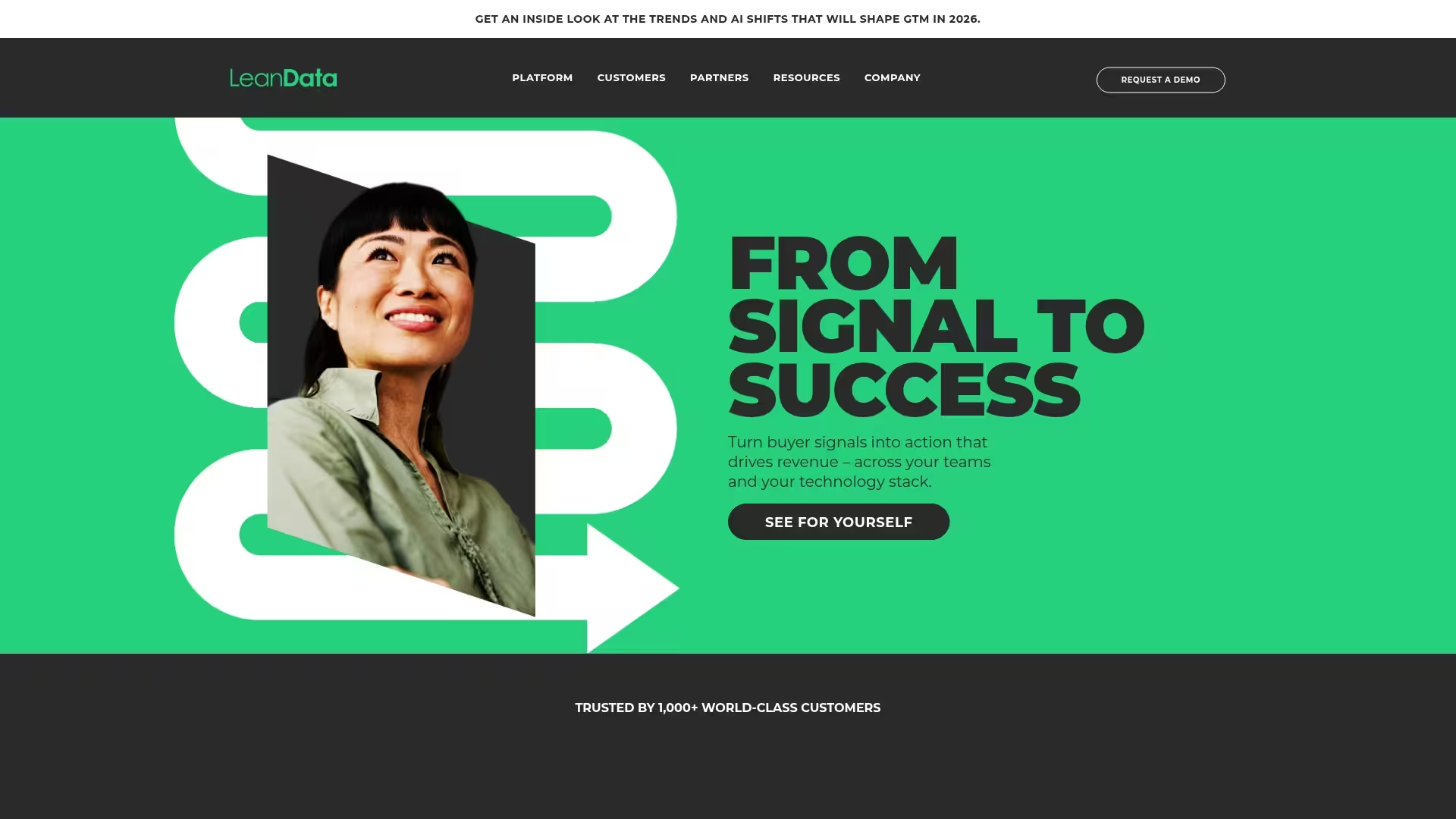
LeanData specializes in lead-to-account matching and routing within Salesforce, solving one of ABM's most persistent operational challenges: ensuring every inbound lead gets matched to the correct account and routed to the right sales owner. When multiple contacts from the same company fill out forms or engage with your content, LeanData's matching engine automatically associates them with a single account record, preventing duplicate accounts and ensuring your team has a complete view of account engagement. The platform then routes leads based on sophisticated rules you define - territory, account ownership, product interest, or engagement score - so high-value accounts reach the right rep immediately.
Best for: Companies with complex lead management and routing needs in Salesforce, particularly those with multiple product lines, overlapping territories, or high inbound volume from target accounts.
Key strengths
- Industry-leading lead-to-account matching algorithm that uses fuzzy logic to connect leads even when company names don't match exactly
- Drag-and-drop interface for building routing flows that lets ops teams create complex routing logic without code
- Advanced attribution models that track which marketing touchpoints influenced account progression through the funnel
- Native Salesforce application that runs directly inside your CRM without requiring data to sync to external systems
- Round-robin and load-balancing capabilities to distribute accounts fairly across sales teams
Why choose LeanData
Pick LeanData to solve the foundational data problem of connecting leads to accounts and ensuring fast, accurate routing. Clean routing is essential for any ABM program to function correctly - when leads from target accounts sit unassigned or get routed to the wrong rep, you lose momentum and risk missing opportunities. LeanData eliminates these operational gaps so your sales team can focus on engaging accounts rather than sorting through routing errors.
LeanData pricing
Custom pricing based on requirements.
5. Demandbase
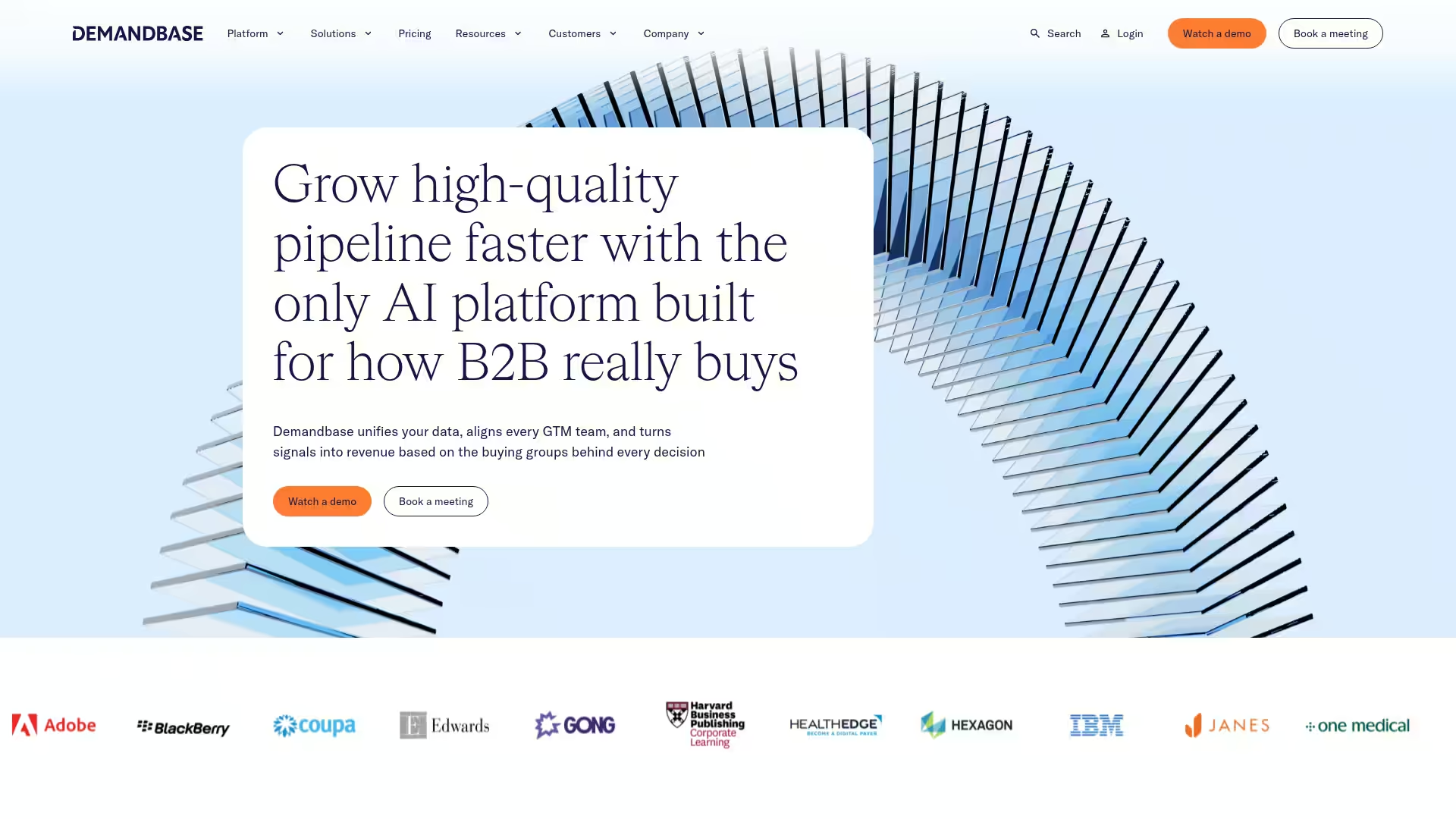
Demandbase is a comprehensive ABM platform built for enterprise teams managing complex, multi-touch account journeys. The platform unifies account identification, advertising, sales intelligence, and analytics into a single interface, eliminating the need to stitch together multiple point solutions. Demandbase One combines proprietary intent data with third-party signals to surface accounts actively researching solutions in your category, then orchestrates coordinated campaigns across display, social media, connected TV, and web personalization to engage buying committees at every touchpoint.
Best for: Large B2B organizations running mature, sophisticated ABM programs with dedicated resources for implementation and ongoing optimization.
Key strengths
- AI-powered account identification and prioritization that scores accounts based on fit, intent, and engagement to surface the highest-value opportunities
- Native ABM advertising across display, social, and connected TV with precise targeting down to specific job titles within target accounts
- Proprietary intent data combined with third-party signals from partners like Bombora to identify accounts in active buying cycles
- Deep sales intelligence including org charts, contact data, and engagement history that enables highly personalized outreach
- Account journey analytics that track every touchpoint from first engagement through closed deal, revealing which channels and tactics drive pipeline
Why choose Demandbase
Pick Demandbase when you need a unified platform that orchestrates every aspect of your ABM program. Its AI-powered account scoring surfaces the accounts most likely to convert, while cross-channel orchestration ensures consistent messaging across every touchpoint. The platform provides a complete picture of the account journey, making it ideal for enterprise teams executing sophisticated, multi-channel ABM strategies at scale.
Demandbase pricing
Custom pricing based on requirements.
6. 6sense
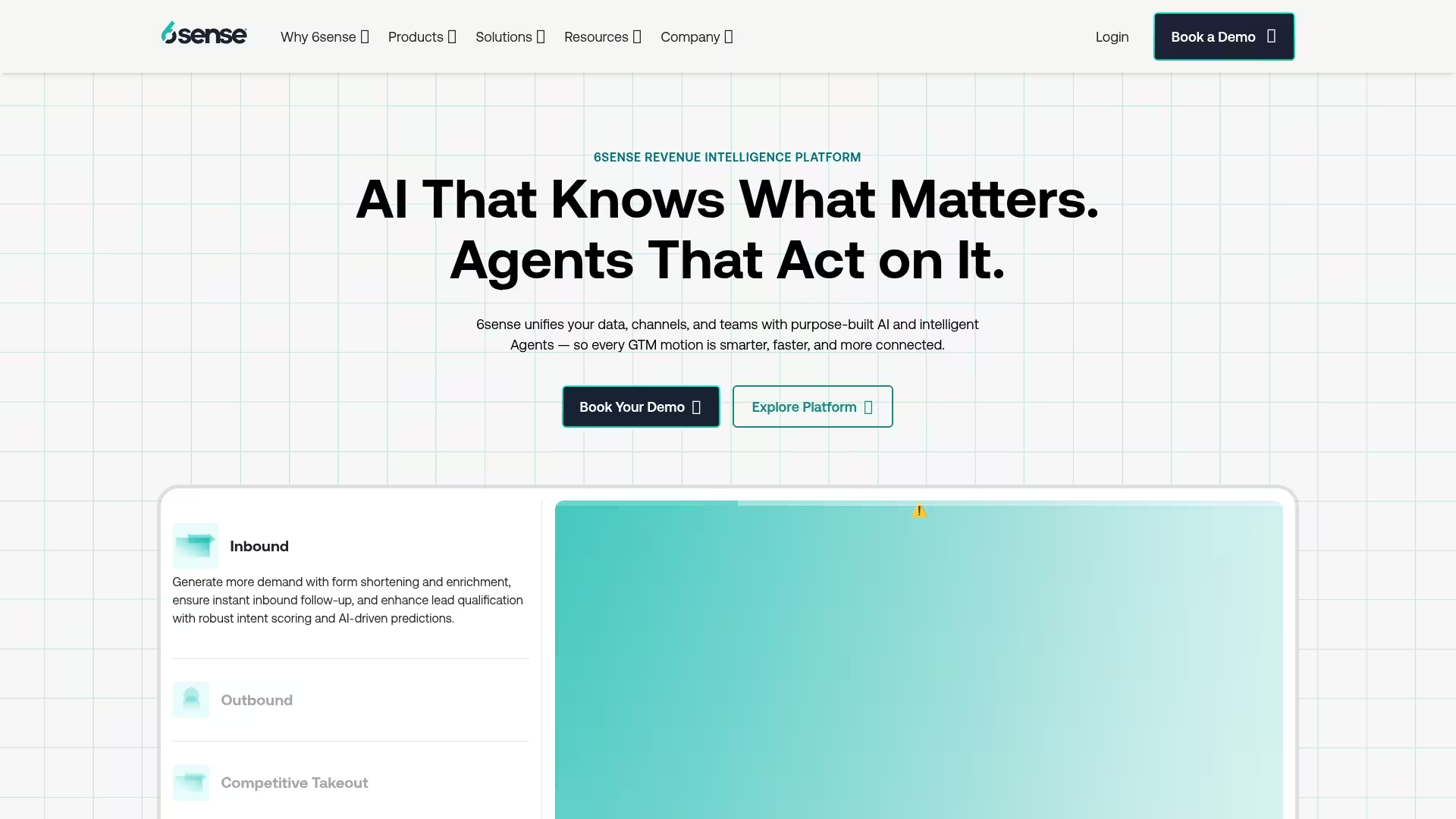
6sense Revenue AI uses predictive analytics and machine learning to identify which accounts are in an active buying cycle before they reach out. The platform analyzes billions of intent signals across a massive B2B data network, tracking research behavior, content consumption, and engagement patterns to predict buying stage with remarkable accuracy.
Best for: Data-driven teams wanting to prioritize accounts based on predictive analytics and buying stage intelligence.
Key strengths
- Predictive analytics that identify in-market accounts up to six months before they engage sales
- Rich intent data from a proprietary B2B data network tracking research across thousands of sites
- AI-driven account prioritization and scoring based on fit, intent, and buying stage
- Anonymous website traffic identification that reveals which companies are visiting your site
- Buying stage predictions that categorize accounts across awareness, consideration, decision, and purchase phases
Why choose 6sense
Pick 6sense for its powerful buying stage predictions that tell you not just which accounts are in-market, but exactly where they are in the buying journey. This intelligence helps teams focus resources on accounts most likely to convert and tailor messaging to match each account's readiness to buy.
6sense pricing
Custom pricing based on requirements.
7. Demandscience
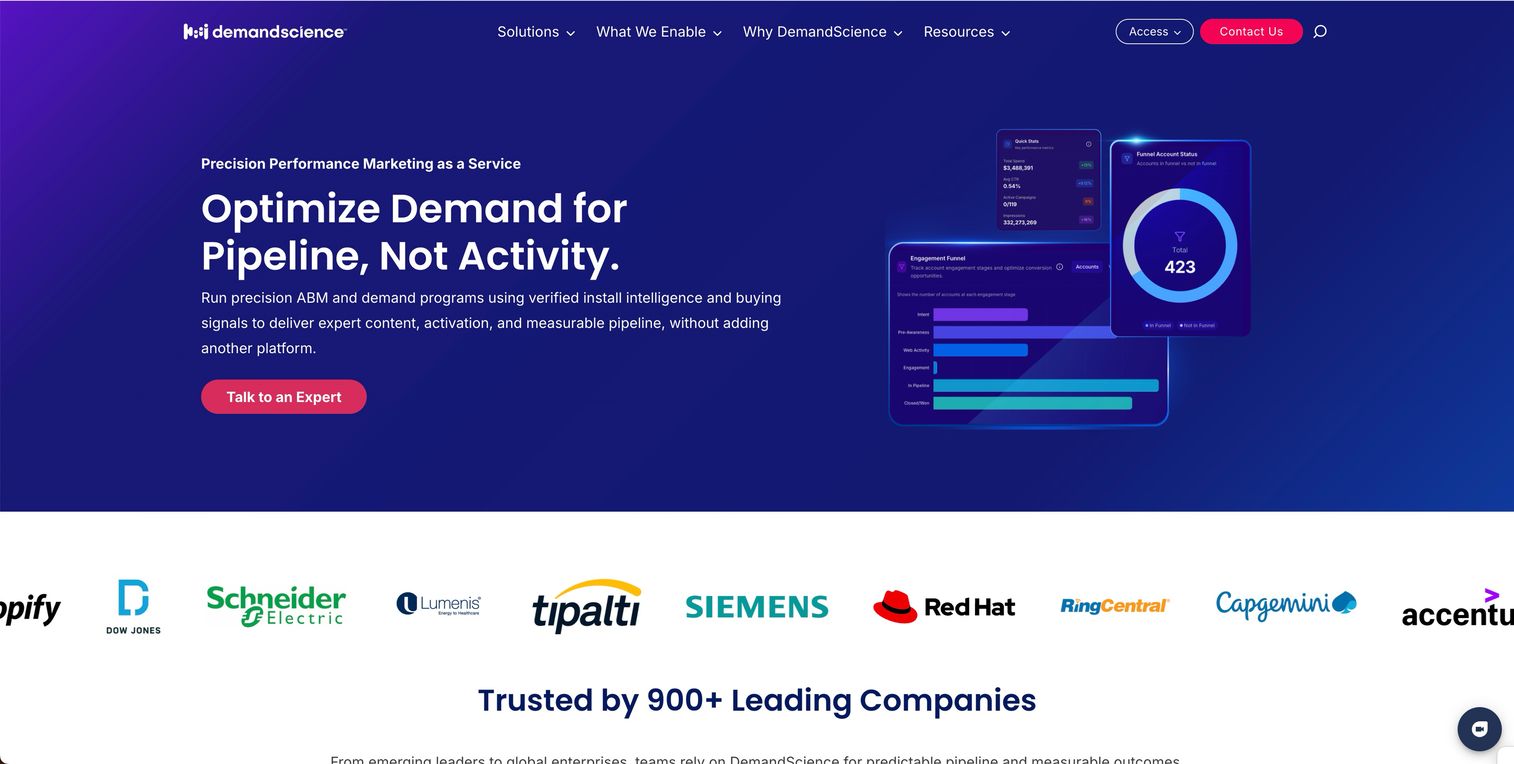
DemandScience is a multi-channel ABM platform that excels at orchestrating coordinated advertising campaigns across display networks, conversational chat, email sequences, and dynamic web personalization. The platform's advertising engine lets you target specific job titles within your target accounts across multiple channels simultaneously, ensuring buying committee members see consistent messaging whether they're browsing industry publications, scrolling LinkedIn, or visiting your website. DemandScience's chat functionality recognizes visitors from target accounts and serves personalized conversation flows based on their company profile and previous engagement history.
Best for: Teams focused on executing sophisticated account-based advertising campaigns that require precise targeting and cross-channel coordination.
Key strengths
- Advanced display and social media advertising targeting that reaches specific personas within target accounts across premium B2B publisher networks
- Native integration with LinkedIn Matched Audiences for seamless account list syncing and campaign execution on the platform where B2B buyers spend time
- Account-based chat experiences that recognize visitors from target accounts and deliver personalized greetings, content recommendations, and routing based on account tier and engagement stage
- Multi-touch attribution reporting that connects advertising impressions and clicks to pipeline and revenue, showing which channels and messages drive account progression
- Coordinated campaign orchestration that ensures target accounts see consistent messaging across every digital touchpoint, from first impression through deal close
Why choose DemandScience
Pick DemandScience when advertising is central to your ABM strategy and you need to surround target accounts with coordinated messaging across multiple channels. The platform's strength lies in its ability to execute complex, multi-channel advertising campaigns that maintain message consistency while adapting creative to each channel's format and audience context.
DemandScience pricing
Custom pricing based on requirements.
8. AdRoll
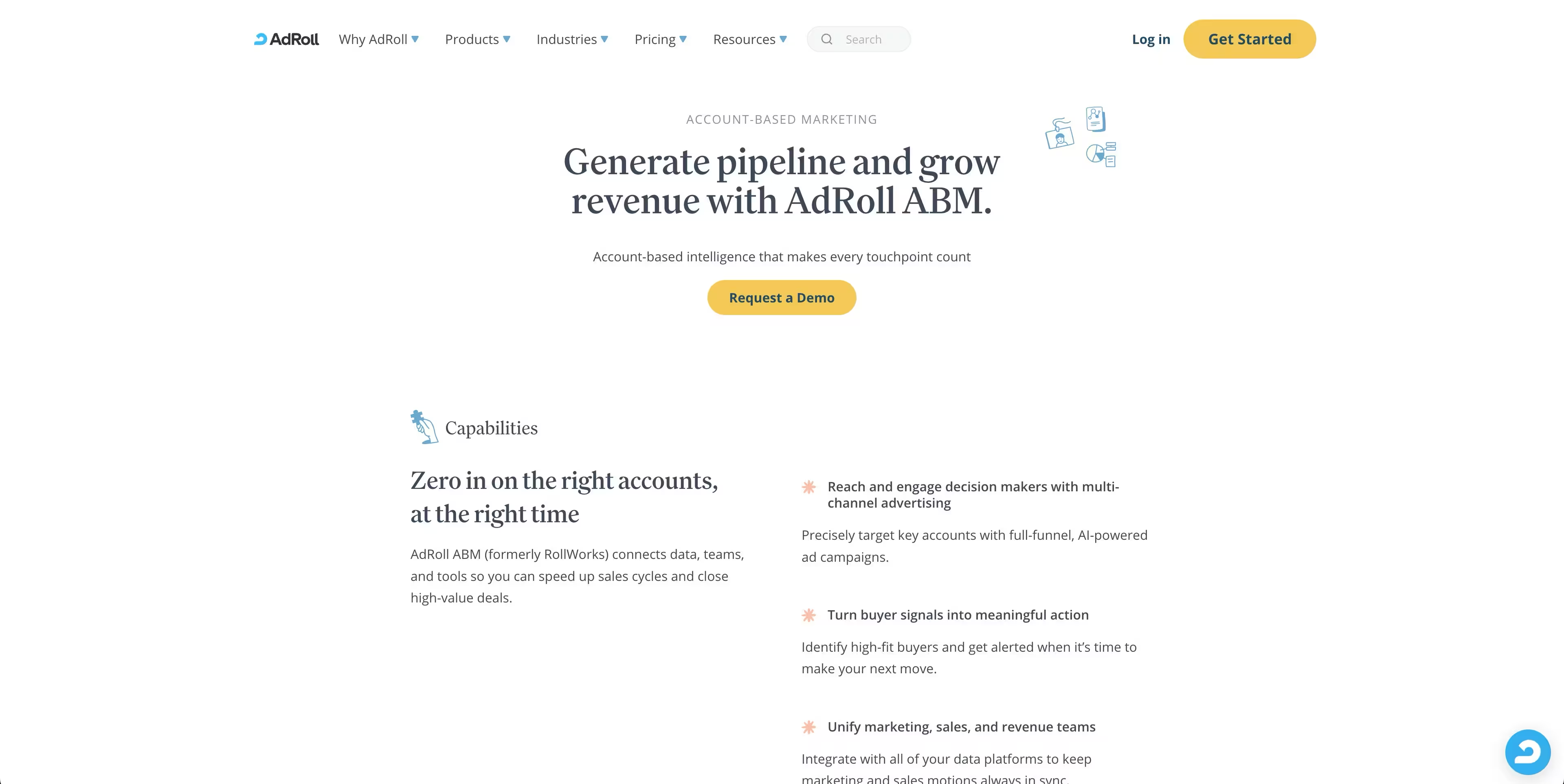
AdRoll (formerly RollWorks), a division of NextRoll, is an ABM platform built specifically for mid-market companies that want enterprise-grade account targeting without the complexity or price tag of platforms like Demandbase or 6sense. The platform combines account-based advertising across display, social, and web channels with sales automation features that alert reps when target accounts show engagement, creating a closed loop between marketing spend and sales action.
AdRoll's advertising engine lets you upload target account lists and automatically matches them to decision-makers across LinkedIn, Facebook, Instagram, and a network of premium B2B publisher sites. The platform's retargeting capabilities track visitors from target accounts across devices and channels, serving consistent messaging that reinforces your value proposition at every touchpoint. Its lookalike modeling analyzes your best-fit accounts and finds similar companies exhibiting comparable firmographic and behavioral patterns, helping you expand your target account list with data-driven precision.
Best for: Growing B2B companies starting their ABM journey who need an affordable, easy-to-implement platform that delivers immediate value through account-based advertising without requiring extensive technical resources or a dedicated ABM team.
Key strengths
- Precise account targeting using firmographic filters (company size, industry, revenue) combined with intent signals that identify accounts actively researching solutions in your category
- Advanced retargeting that follows target account visitors across devices and channels, plus lookalike audience modeling that identifies new accounts matching your ideal customer profile based on behavioral and firmographic similarities
- Sales insights dashboard that alerts reps via email or Slack when target accounts visit your website, engage with ads, or hit specific engagement thresholds, enabling timely outreach when accounts show buying signals
- Deep Salesforce integration that syncs account lists, engagement data, and campaign performance directly into your CRM, automatically updating account records with advertising touchpoints and creating tasks for sales follow-up
- Self-service campaign setup with pre-built templates and guided workflows that let marketing teams launch account-based advertising campaigns in days rather than weeks
Why choose AdRoll
Pick AdRoll for its user-friendly interface and accessible entry point that doesn't require a six-figure budget or months of implementation. The platform provides a solid foundation for account-based advertising with straightforward campaign setup, transparent reporting, and pricing that scales with growing teams. It's particularly strong for companies transitioning from traditional demand generation to ABM who want to test the waters with targeted advertising before committing to a full-suite enterprise platform.
AdRoll pricing
Custom pricing based on advertising spend and feature requirements, with options designed specifically for growing teams and mid-market budgets.
9. ZoomInfo
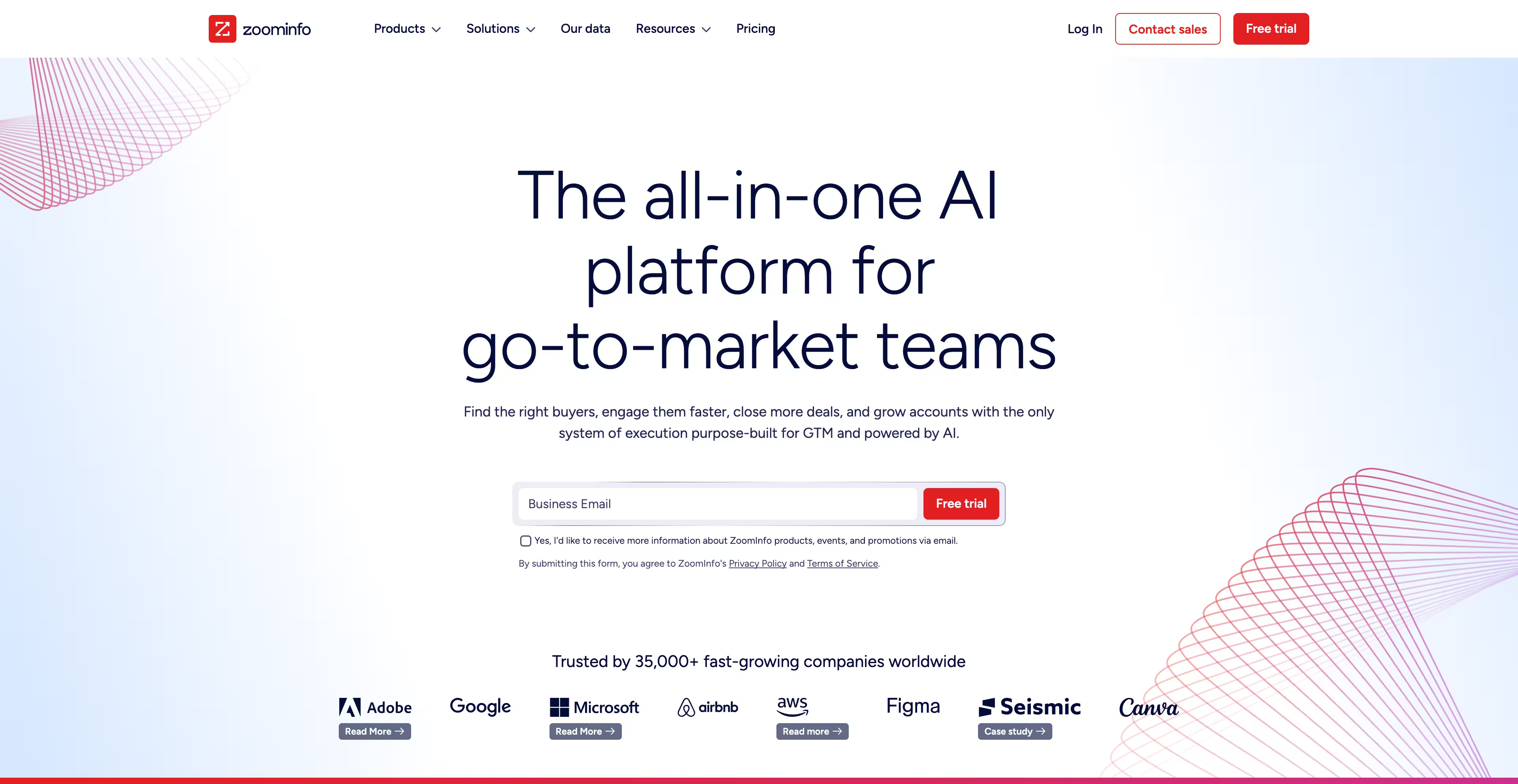
ZoomInfo provides highly accurate contact and company data for account enrichment and targeting. The platform maintains one of the largest B2B databases with over 100 million verified business contacts and detailed profiles on millions of companies worldwide. ZoomInfo's data collection methodology combines human verification with automated web crawling to ensure accuracy rates that consistently exceed industry standards.
The platform's company intelligence goes beyond basic firmographics to include organizational hierarchies, technology stack details, funding history, and employee growth trends. This depth allows ABM teams to identify not just which accounts to target, but exactly who to reach within those accounts and what messaging will resonate based on their current technology environment and business priorities.
Best for: Teams that need a foundation of accurate contact and company data for target accounts, particularly those targeting mid-market and enterprise companies where decision-making involves multiple stakeholders across different departments.
Key strengths
- Industry-leading B2B contact and company database with over 100 million verified contacts and direct dial phone numbers that bypass gatekeepers
- Detailed company intelligence including org charts that map reporting structures, technographics showing installed software and tools, and firmographics covering revenue, employee count, and growth signals
- Streaming intent signals that track when target accounts research topics related to your solution across thousands of websites, helping you identify accounts entering active buying cycles
- Native CRM enrichment that automatically updates Salesforce, HubSpot, and other CRM records with fresh contact and company data, eliminating manual data entry and keeping your database current
- Advanced search filters that let you build precise account lists based on dozens of criteria including job changes, hiring activity, technology adoption, and company news events
Why choose ZoomInfo
Pick ZoomInfo to ensure your teams work with accurate, comprehensive data that eliminates the guesswork from account targeting. The platform's combination of contact accuracy, organizational mapping, and intent signals gives your sales and marketing teams the intelligence they need to identify the right accounts, reach the right people, and engage at the right time. Quality data fuels more effective targeting and personalization, and ZoomInfo's verification processes mean your team spends time engaging prospects rather than chasing down outdated contact information.
ZoomInfo pricing
Custom pricing based on requirements, typically structured around the number of users and data access levels needed.
10. Bombora
Bombora is the leading provider of B2B intent data, tracking content consumption patterns across a cooperative network of thousands of B2B websites to identify which companies are actively researching specific topics. Its proprietary Company Surge® data monitors when accounts show statistically significant spikes in research activity around topics relevant to your products, signaling that they've entered an active buying cycle. Unlike basic website visitor tracking, Bombora aggregates anonymous browsing behavior across its entire publisher network to build a comprehensive picture of account-level research patterns, revealing buying intent weeks or months before prospects reach out directly.
Best for: Teams wanting to prioritize accounts demonstrating clear buying intent based on actual research behavior rather than relying solely on demographic fit or past engagement.
Key strengths
- Unique intent data methodology based on a cooperative of over 4,000 B2B websites that share anonymous consumption data, creating visibility into research happening across the entire B2B web rather than just your owned properties
- Extensive topic taxonomy covering more than 10,000 business topics that map to specific products, services, and business challenges, allowing precise matching between account research and your solution areas
- Surge scoring that identifies when an account's research intensity reaches statistically significant levels compared to baseline activity, helping you distinguish genuine buying signals from casual browsing
- Widespread data partnerships with major ABM platforms including Demandbase, 6sense, and Terminus, plus native integrations that push intent signals directly into your existing workflow
- Seamless CRM and marketing automation integration that enriches account records with real-time intent scores and topic interests, enabling automated workflows triggered by buying signals
Why choose Bombora
Pick Bombora to add a powerful layer of intent to your ABM strategy that reveals which target accounts are actively researching solutions in your category. The platform's cooperative data model provides visibility into research happening across the entire B2B web, not just your own properties, helping you focus resources on accounts already in-market rather than those simply matching your ICP criteria. This timing intelligence transforms ABM from educated guessing into data-driven prioritization based on actual buying behavior.
Bombra pricing
Custom pricing based on requirements, typically structured around the number of accounts monitored and topics tracked.
11. Clearbit
Clearbit, now part of HubSpot, provides real-time data enrichment that automatically appends firmographic, technographic, and contact information to leads the moment they interact with your website or fill out a form. The platform's API-first architecture makes it particularly powerful for teams that want to embed enrichment directly into their existing workflows, automatically updating CRM records, triggering personalized email sequences, or routing leads based on company attributes without manual data entry.
Clearbit's Reveal product identifies anonymous website visitors by matching IP addresses to company records, showing you which target accounts are browsing your site even before they fill out a form. This visibility helps marketing teams understand account-level interest and enables sales teams to reach out proactively when high-value accounts show engagement.
Best for: Teams using HubSpot who want native enrichment capabilities, or development-savvy organizations needing a flexible, API-first approach to embed real-time data enrichment across multiple touchpoints in their tech stack.
Key strengths
- Real-time enrichment that instantly appends over 85 data points to form submissions, including company size, industry, technology stack, and employee count, eliminating the need for lengthy forms that hurt conversion rates
- Comprehensive firmographic and technographic data covering millions of companies worldwide, with details on installed technologies that help you identify accounts already using complementary tools or competitive solutions
- Form shortening that reduces form fields from 10+ to just email address by automatically enriching submissions with company and contact data, improving conversion rates while maintaining data quality
- Website visitor identification (Reveal) that matches anonymous IP addresses to company records, showing which target accounts are researching your site and which pages they're viewing
- Native HubSpot integration that enriches contacts and companies automatically within your CRM, plus flexible APIs that connect to custom applications, marketing automation platforms, and data warehouses
Why choose Clearbit
Pick Clearbit when you want to eliminate manual data entry and lengthy forms that create friction in the buyer journey. Its real-time enrichment instantly qualifies leads based on company attributes, enabling immediate routing to the right sales rep and personalized follow-up based on firmographic fit. The platform's API-first design makes it ideal for teams with technical resources who want to embed enrichment throughout their entire go-to-market stack, from website forms to CRM records to email personalization engines.
Clearbit pricing
Custom pricing based on requirements, typically structured around enrichment volume and feature access.
12. HubSpot Marketing Hub
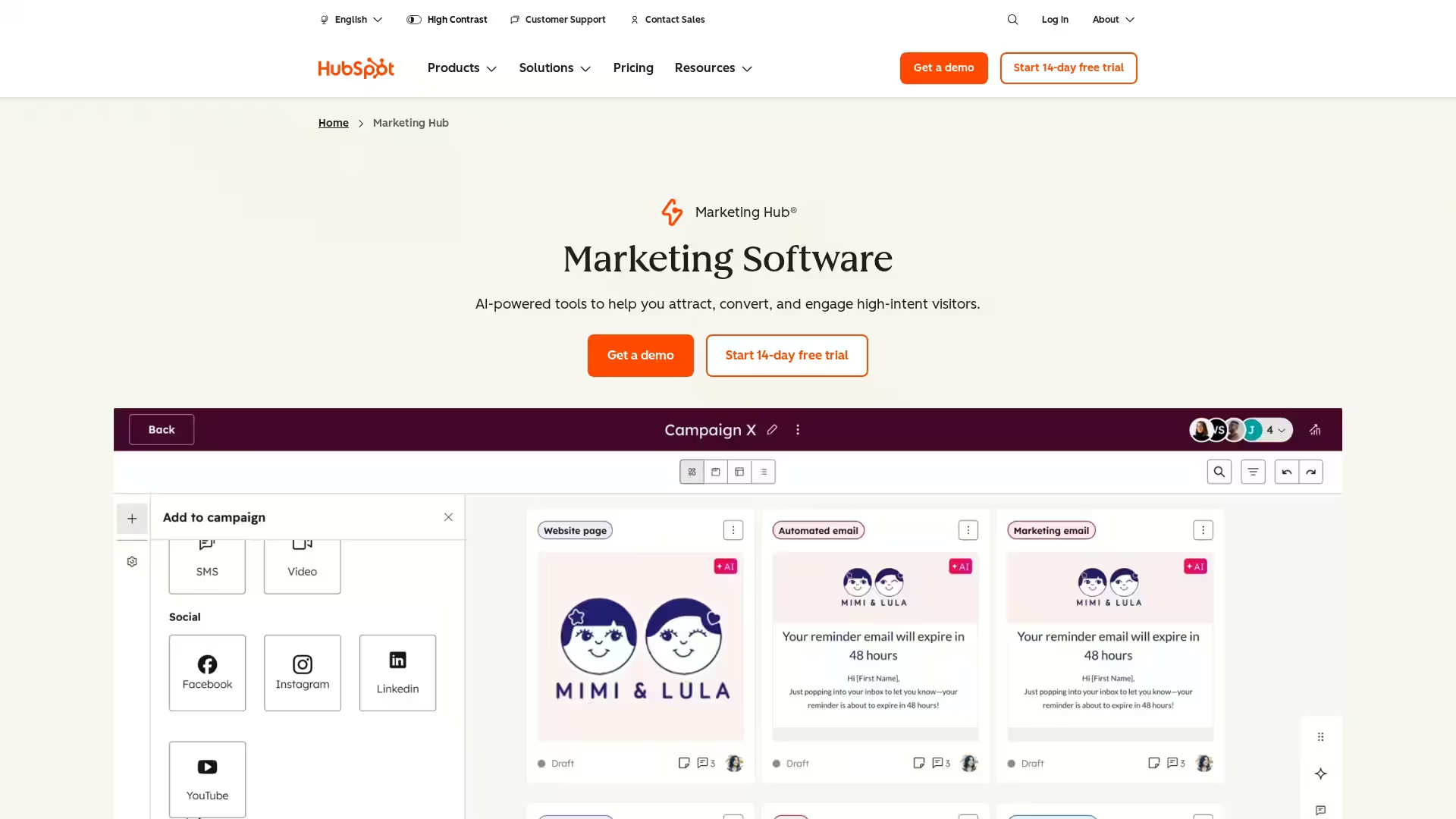
HubSpot Marketing Hub includes a robust set of native ABM tools that eliminate the need for separate point solutions if you're already using HubSpot CRM. The platform lets you create target account lists, assign account owners, and track engagement across every touchpoint - from email opens to website visits - within a unified interface. HubSpot's company scoring automatically prioritizes accounts based on fit and engagement, while its ABM automation tools trigger personalized email sequences, task assignments, and internal notifications when target accounts hit specific engagement thresholds. You can also build account-specific landing pages and forms that recognize visitors from target companies and serve tailored content based on their industry, company size, or previous interactions.
Best for: Teams already using HubSpot CRM who want a tightly integrated ABM solution.
See how to build targeted account segments in HubSpot with this interactive walkthrough
Key strengths
- Native integration with HubSpot CRM Platform that syncs account data, engagement history, and sales activities across marketing and sales teams without requiring third-party connectors or manual data transfers
- Target account lists and properties for segmentation that let you group accounts by industry, revenue, engagement level, or custom criteria, then build campaigns specifically for each segment
- Automated company scoring to prioritize engaged accounts based on website visits, email interactions, form submissions, and other touchpoints, surfacing which target accounts are showing the strongest buying signals
- Pre-built ABM dashboards and reports that track account engagement, pipeline influence, and campaign performance across your target account list, eliminating the need to build custom reporting from scratch
Why choose HubSpot
Pick HubSpot for a seamless, all-in-one experience if you're already invested in its ecosystem.
HubSpot pricing
Marketing Hub Professional starts at $800/month.
13. Marketo Engage
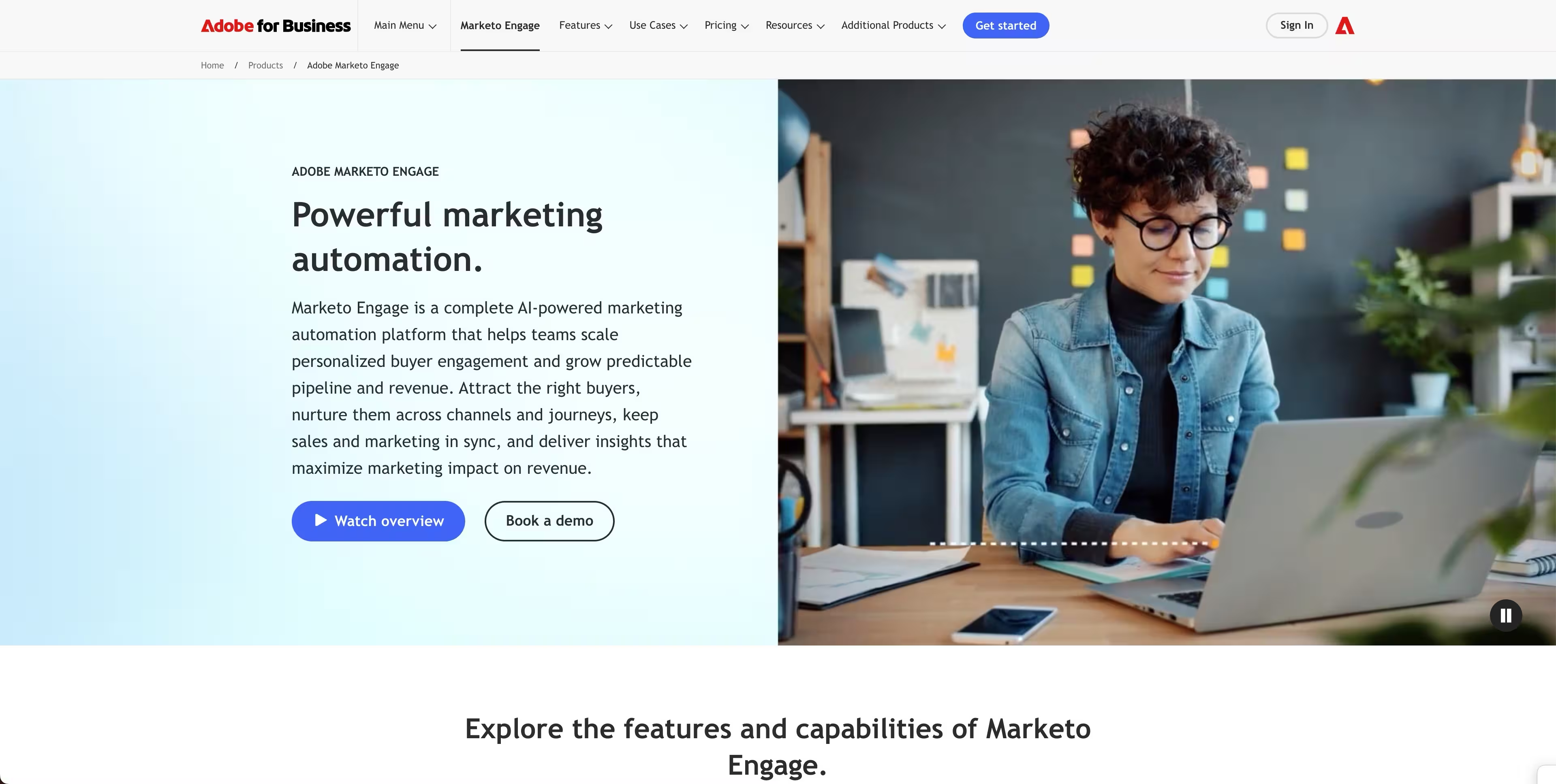
Marketo Engage, part of Adobe Experience Cloud, is an enterprise-grade marketing automation platform with sophisticated ABM capabilities built for organizations running complex, multi-touch campaigns across global markets. The platform combines traditional marketing automation features like email nurturing and lead scoring with account-based tools that let you orchestrate coordinated campaigns targeting entire buying committees. Marketo's account profiling aggregates engagement data from all contacts within a target company into a unified account view, showing you which organizations are most engaged even when individual contacts show varying levels of activity. Its AI-powered predictive audiences analyze historical conversion patterns to identify which accounts in your database match the characteristics of your best customers, helping you expand your target account list with data-driven precision.
Best for: Enterprise teams with complex marketing operations spanning multiple regions, product lines, or business units, especially those already using other Adobe products like Analytics, Target, or Experience Manager who want tightly integrated campaign orchestration.
Key strengths
- Advanced account profiling and scoring that aggregates engagement from all contacts within a company into account-level metrics, revealing which organizations show the strongest buying signals even when individual contacts have varying engagement levels
- AI-powered predictive audiences that analyze conversion patterns from your historical data to identify lookalike accounts matching your best customers' characteristics, helping you expand target lists beyond manual ICP criteria
- Complex cross-channel campaign orchestration with visual workflow builders that coordinate email, web personalization, events, and advertising across multiple touchpoints, ensuring consistent messaging throughout long buying cycles
- Seamless Adobe Experience Cloud integration that connects Marketo data with Adobe Analytics for attribution reporting, Adobe Target for web personalization, and Adobe Experience Manager for content management, creating a unified martech ecosystem
- Revenue cycle modeling that maps accounts through custom stages from awareness to closed deal, tracking velocity and conversion rates at each phase to identify bottlenecks in your ABM funnel
Why choose Marketo
Pick Marketo for deep customization and enterprise scalability within the Adobe ecosystem. The platform handles complex requirements like multi-currency reporting, regional compliance rules, and sophisticated attribution models that simpler tools can't support. Its strength lies in orchestrating intricate, multi-touch campaigns across large buying committees while maintaining tight integration with Adobe's broader marketing technology suite.
Marketo pricing
Custom pricing based on requirements, typically structured around database size, feature access, and number of workspaces needed for different business units or regions.
14. LinkedIn Sales Navigator
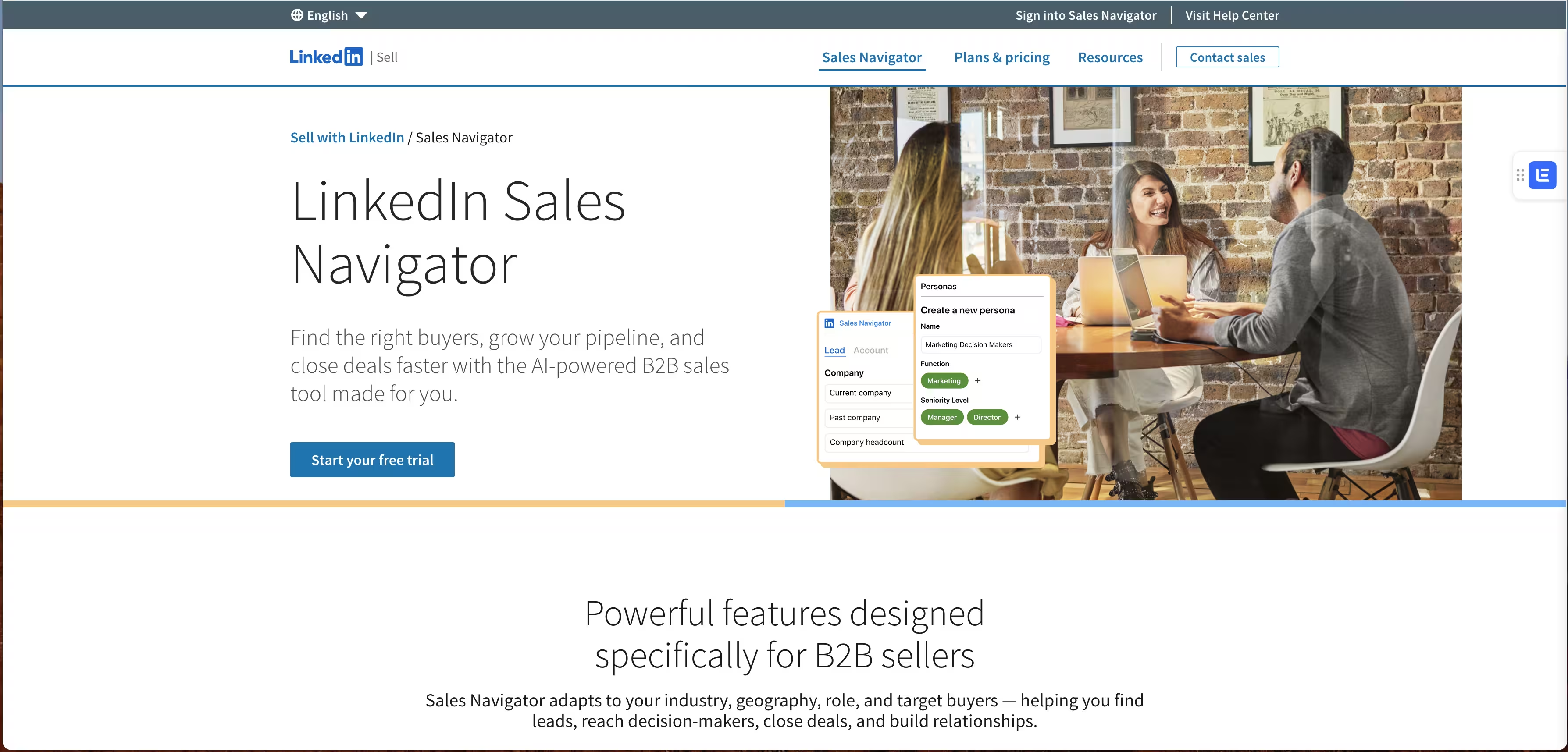
LinkedIn Sales Navigator is a social selling platform built specifically for account-based prospecting within LinkedIn's professional network. The tool helps sales teams identify decision-makers at target accounts, track engagement signals, and build relationships through warm introductions. Sales Navigator's advanced search capabilities let you filter prospects by job title, seniority, company size, industry, and even recent job changes, making it easier to build precise lists of contacts within your target account list. The platform's relationship mapping feature shows you existing connections between your team and prospects, revealing warm introduction paths that significantly improve response rates compared to cold outreach.
Best for: Sales teams executing account-based prospecting strategies who need to identify and engage multiple stakeholders within target accounts through LinkedIn's professional network.
Key strengths
- Advanced search filters that let you find prospects by job title, seniority, company size, industry, geography, and recent activity like job changes or company growth, enabling precise targeting within your ICP
- Relationship mapping (TeamLink) that reveals existing connections between your colleagues and prospects at target accounts, showing you who can make warm introductions and dramatically improving response rates
- Real-time alerts when target accounts post updates, change jobs, or appear in the news, giving you timely conversation starters for personalized outreach
- CRM integration with Salesforce, HubSpot, and other platforms that syncs prospect data and activity automatically, eliminating manual data entry and keeping account records current
- InMail messaging that lets you reach prospects outside your network with higher deliverability than cold email, plus message templates and tracking to measure response rates
Why choose LinkedIn Sales Navigator
Pick Sales Navigator to leverage LinkedIn's 900+ million member network for identifying and engaging buying committee members at target accounts. The platform's relationship mapping capabilities help you find warm introduction paths that convert at significantly higher rates than cold outreach, while real-time alerts ensure you reach out at moments when prospects are most receptive.
LinkedIn Sales Navigator pricing
Plans start at $99/month per user for Sales Navigator Core, with Team and Advanced tiers offering additional features like CRM integration and advanced search capabilities.
15. PathFactory
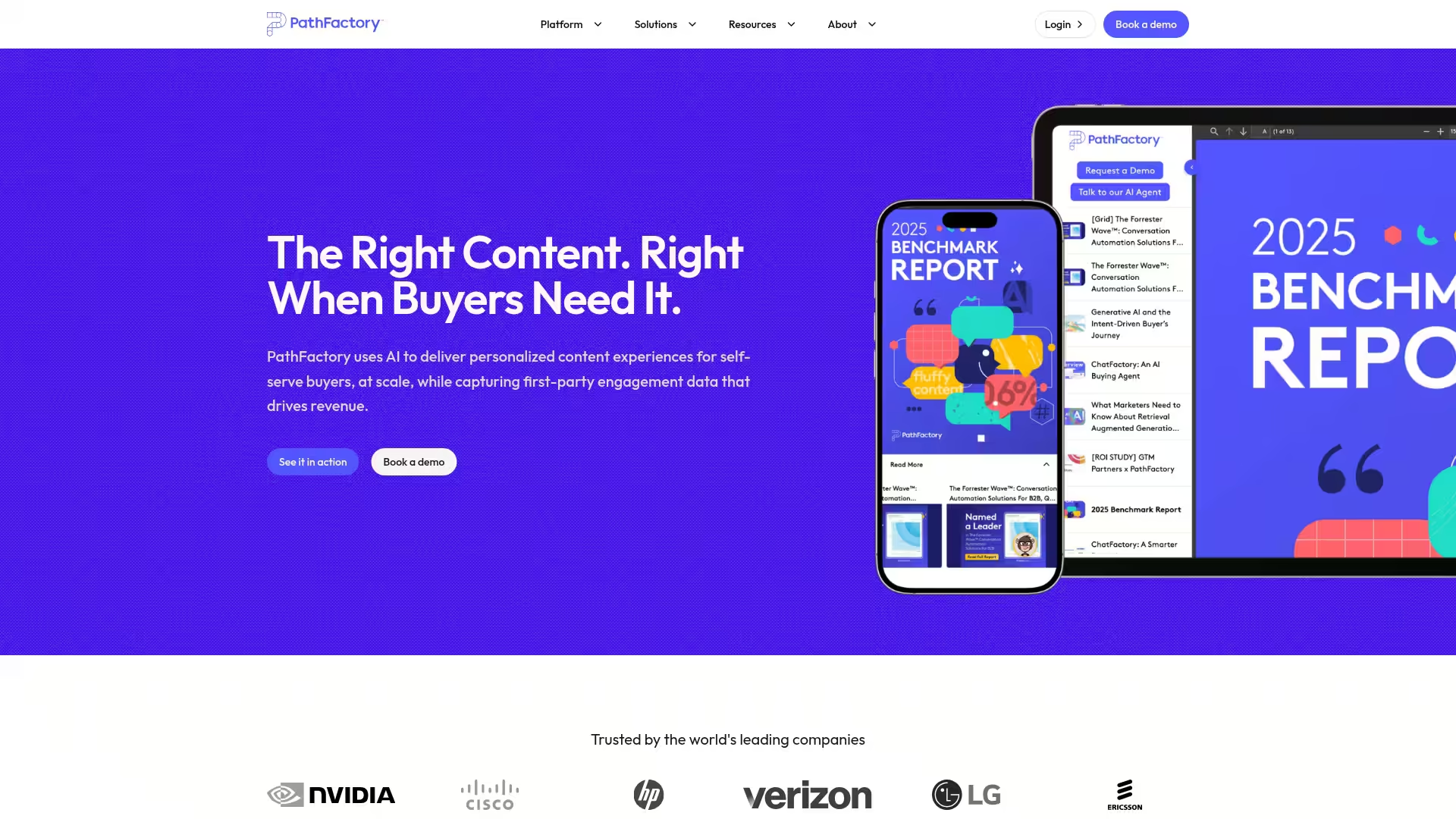
PathFactory is a content intelligence platform that helps you create personalized content experiences for target accounts by organizing assets into guided journeys rather than forcing buyers to hunt through scattered resources. The platform's content track feature lets you sequence whitepapers, case studies, videos, and other assets into logical paths that match different buyer personas or stages, then serve the right track to each account based on their industry, company size, or previous engagement. PathFactory tracks granular engagement metrics like time spent on each asset, scroll depth, and content completion rates, giving you visibility into which specific topics and formats resonate with each target account.
Best for: B2B teams with extensive content libraries running content-heavy ABM strategies who need to guide buyers through complex educational journeys while measuring what actually gets consumed.
Key strengths
- Curated content tracks that sequence multiple assets into guided journeys tailored to specific personas, industries, or buying stages, eliminating the need for buyers to navigate through your entire content library
- Deep engagement analytics measuring actual content consumption including time spent, scroll depth, and completion rates rather than just clicks and downloads, revealing which topics genuinely interest each account
- AI-powered content recommendations that suggest the next best asset based on what similar accounts consumed and what typically drives progression through the funnel
- Personalized microsites for target accounts that aggregate relevant content in a branded destination, making it easy to share comprehensive resources with buying committees
- Binge-worthy content experiences that automatically serve the next relevant asset when a visitor finishes one piece, keeping engaged buyers in your content ecosystem longer
Why choose PathFactory
Pick PathFactory when you have a substantial content library and need to guide target accounts through educational journeys while capturing granular engagement data. The platform reveals not just which accounts are engaging, but exactly which topics, formats, and narratives resonate most, helping you refine messaging and prioritize sales outreach based on demonstrated content interests rather than guesswork.
PathFactory pricing
Custom pricing based on requirements.
16. Drift
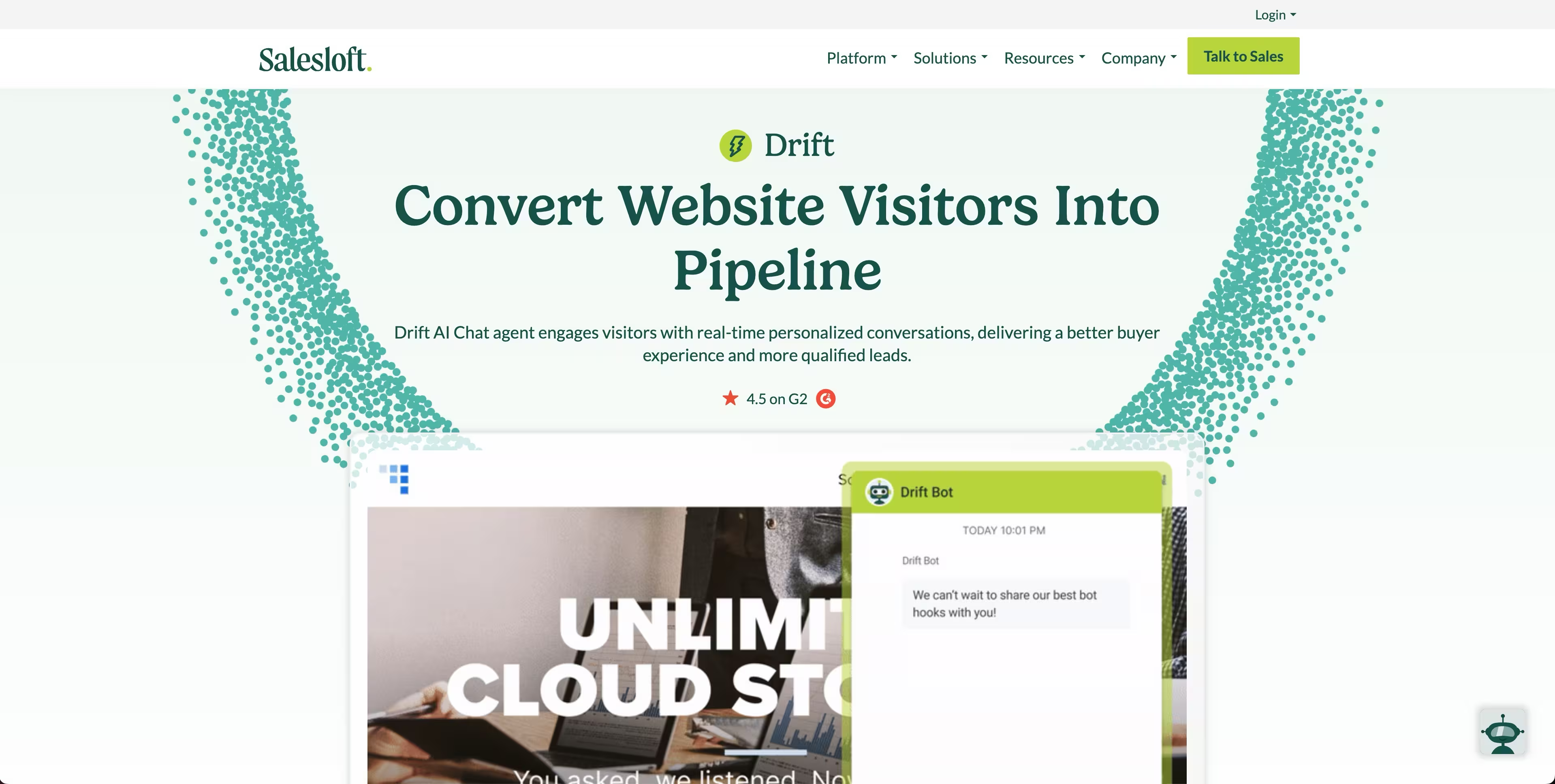
Drift is a conversational marketing platform that uses AI-powered chatbots and live chat to engage website visitors in real-time, turning anonymous browsing into immediate conversations with your sales team. The platform's ABM capabilities recognize visitors from target accounts the moment they land on your site, then automatically trigger personalized chat experiences based on the account's industry, company size, previous interactions, or position in your target account list. Instead of showing generic "Can I help you?" messages to everyone, Drift serves tailored greetings that reference the visitor's company and specific pain points, then routes high-priority accounts directly to the right sales rep or books meetings instantly without back-and-forth email scheduling.
Best for: Teams wanting to engage target accounts the moment they visit the website, particularly organizations with high website traffic from target accounts who need to convert that anonymous interest into immediate sales conversations.
Key strengths
- Account-based chat playbooks that recognize visitors from target companies and deliver personalized greetings, custom routing rules, and tailored conversation flows based on account tier, industry, or engagement history
- Real-time alerts that notify sales reps via Slack, email, or mobile app the instant a target account visits your site, showing which pages they're viewing and enabling immediate outreach while the prospect is actively researching
- Integrated meeting scheduling that lets qualified visitors book time directly on your sales team's calendar without leaving the chat window, eliminating the friction of email coordination
- Revenue attribution reporting that connects chat conversations to pipeline and closed deals, showing which accounts converted through conversational channels and calculating ROI for your chat investment
- Conversational landing pages that replace traditional forms with chat-based qualification, improving conversion rates by making the experience feel more human and reducing form abandonment
Why choose Drift
Pick Drift to instantly connect your pre-sales teams with high-value prospects from target accounts while they're actively researching your solution. The platform's real-time engagement capabilities help you capitalize on buying intent the moment it appears, shortening sales cycles by eliminating the delays inherent in form-based lead capture and email follow-up sequences.
Drift pricing
Custom pricing based on requirements, typically structured around conversation volume and feature access.
How to choose the right ABM tool
Choosing the right ABM tool requires looking beyond features to how a solution fits your strategy, team, and tech stack.
- Define your ABM maturity: Are you starting out or running a mature program? Beginners may benefit from a simple point solution, while advanced teams might require a comprehensive platform.
- Map your existing tech stack: How will the new tool integrate with your CRM, marketing automation platform, and ad networks? Seamless integration is critical for aligning sales and marketing.
- Identify your primary use case: What's your biggest challenge? Prioritize tools that solve your most pressing problem, whether that's account identification, advertising, or engagement.
- Consider team size and resources: Some platforms require significant resources for implementation. Ensure you have capacity to adopt and effectively use the tool.
- Evaluate data quality and coverage: How accurate is the tool's data for your target market and regions? ABM campaign success depends on underlying data quality.
Turn ABM targets into pipeline with interactive demos
The success of any account-based marketing program depends on delivering relevant, compelling experiences to target accounts at the right moment. While identifying and advertising to accounts is crucial, converting attention into pipeline requires a frictionless way to showcase your product's value.
Interactive demos let you give every target account a personalized, self-guided product experience. This approach eliminates scheduling friction and captures deep engagement data that reveals account-level intent, helping your sales team prioritize outreach and turn engaged accounts into qualified opportunities.
Start your journey with Guideflow today!
FAQs about account-based marketing software
ABM software focuses on targeting specific accounts with coordinated campaigns, while marketing automation handles broader lead nurturing and campaign execution. Many teams use both together for a comprehensive strategy.
Interactive demos let you create personalized product experiences for target accounts, reducing friction in the buying process while capturing valuable engagement data at the account level to identify high-intent buyers.
Pricing varies widely, from free tiers for basic tools to six-figure enterprise contracts for full-suite ABM platforms. Most mid-market solutions start in the range of $15,000 to $50,000 per year.
Most teams see early engagement signals within weeks of implementation, but measurable pipeline and revenue impact typically takes multiple quarters due to longer B2B sales cycles associated with high-value accounts.
Yes, many tools offer accessible pricing tiers. According to Grand View Research, SMEs are the fastest-growing ABM adopter segment, and smaller teams can start with high-impact point solutions like data enrichment or interactive demos before investing in a full, all-in-one ABM platform
Essential integrations include your CRM (like Salesforce or HubSpot), marketing automation platforms (like Marketo or HubSpot), key ad networks (like LinkedIn and Google), and communication tools like Slack for real-time alerts.
Key metrics include account engagement scores, pipeline generated from target accounts, deal velocity, win rates on ABM accounts versus non-ABM accounts, and account penetration (the number of engaged contacts per account).
Dynamic content tools, interactive demos with variable personalization, and content experience platforms allow teams to tailor messaging and experiences without creating entirely new assets for each individual account.