Your SDRs spend 60% of their time on non-selling tasks that don't involve actually talking to prospects. Finding contacts, researching companies, writing personalized emails, following up, scheduling meetings. AI SDR tools now handle all of it, from prospecting to booking, without human intervention.
What's inside this guide
This guide covers what AI SDR software actually does, how it compares to hiring human reps, and 11 tools worth evaluating. You'll find a comparison table for quick scanning, detailed reviews with pricing, and a practical framework for launching your first AI SDR in 30 days. We also cover the mistakes that derail most implementations.
TL;DR
- AI SDR tools automate B2B prospecting, lead qualification, and personalized multi-channel outreach, helping sales teams book more meetings without adding headcount.
- Top platforms like 11x.ai, Artisan, AiSDR, and Clay handle everything from finding prospects to sending deeply researched, personalized emails.
- The best AI SDR software integrates with your CRM, personalizes at scale, and coordinates outreach across email and LinkedIn.
- Costs typically run $500 to $3,000 per month, compared to $80,000+ annually for a human SDR with benefits and tools.
What is an AI SDR and why sales teams are adopting them
AI SDR tools are software platforms that use artificial intelligence to automate B2B prospecting, lead qualification, and personalized multi-channel outreach. Top platforms like 11x AI, Artisan, AiSDR, and Clay handle everything from finding prospects to executing high-volume, deeply researched sales engagement autonomously.
The core promise is straightforward. AI SDR software takes over the repetitive, time-consuming work that human SDRs spend most of their day doing: researching accounts, writing personalized emails, managing follow-up sequences, and routing qualified leads to closers.
Core functions of AI SDR software:
- Lead sourcing: Finding and enriching contact data from databases, intent signals, and social platforms.
- Personalization at scale: Writing tailored messages using prospect data, company news, and behavioral triggers.
- Sequence automation: Scheduling and sending multi-touch outreach across email and LinkedIn.
- Response handling: Detecting replies, categorizing intent, and routing qualified leads to human reps.
When does an automated SDR outperform a human? High-volume outbound motions, executing sequences with perfect consistency, and maintaining persistent follow-up across time zones. Human reps still win when deals require relationship depth, creative objection handling, or navigating complex buying committees.
Comparison table of the best AI SDR tools
| # | Product | Best for | Key differentiator | CRM integration |
|---|---|---|---|---|
| 1 | Guideflow | Converting AI SDR leads | Demo personalization for follow-up | Salesforce, HubSpot |
| 2 | Breakout | Inbound AI SDR | Identifies anonymous visitors and converts them live on-site and off-site | Salesforce, HubSpot, Attio, Clarify |
| 3 | AiSDR | Personalized omnichannel | Social signals and adaptive sequences | HubSpot native |
| 4 | 11x AI | Full-cycle autonomous | AI agent handles entire workflow | Major CRMs |
| 5 | Artisan AI (Ava) | Research and writing | Lead discovery plus personalization | Salesforce, HubSpot |
| 6 | Apollo | Prospecting with data | Large contact database included | Salesforce, HubSpot |
| 7 | Reply.io | Sequence building | Conversational AI for replies | Major CRMs |
| 8 | Instantly | High-volume cold email | Unlimited accounts and warmup | Zapier-based |
| 9 | Smartlead | Multi-inbox management | Inbox rotation at scale | Zapier, webhooks |
| 10 | Clay | Data enrichment | Waterfall enrichment from many sources | Salesforce, HubSpot |
| 11 | Amplemarket | All-in-one engagement | Prospecting, sequences, deliverability | Salesforce |
Best AI SDR platforms for outbound sales
1. Guideflow
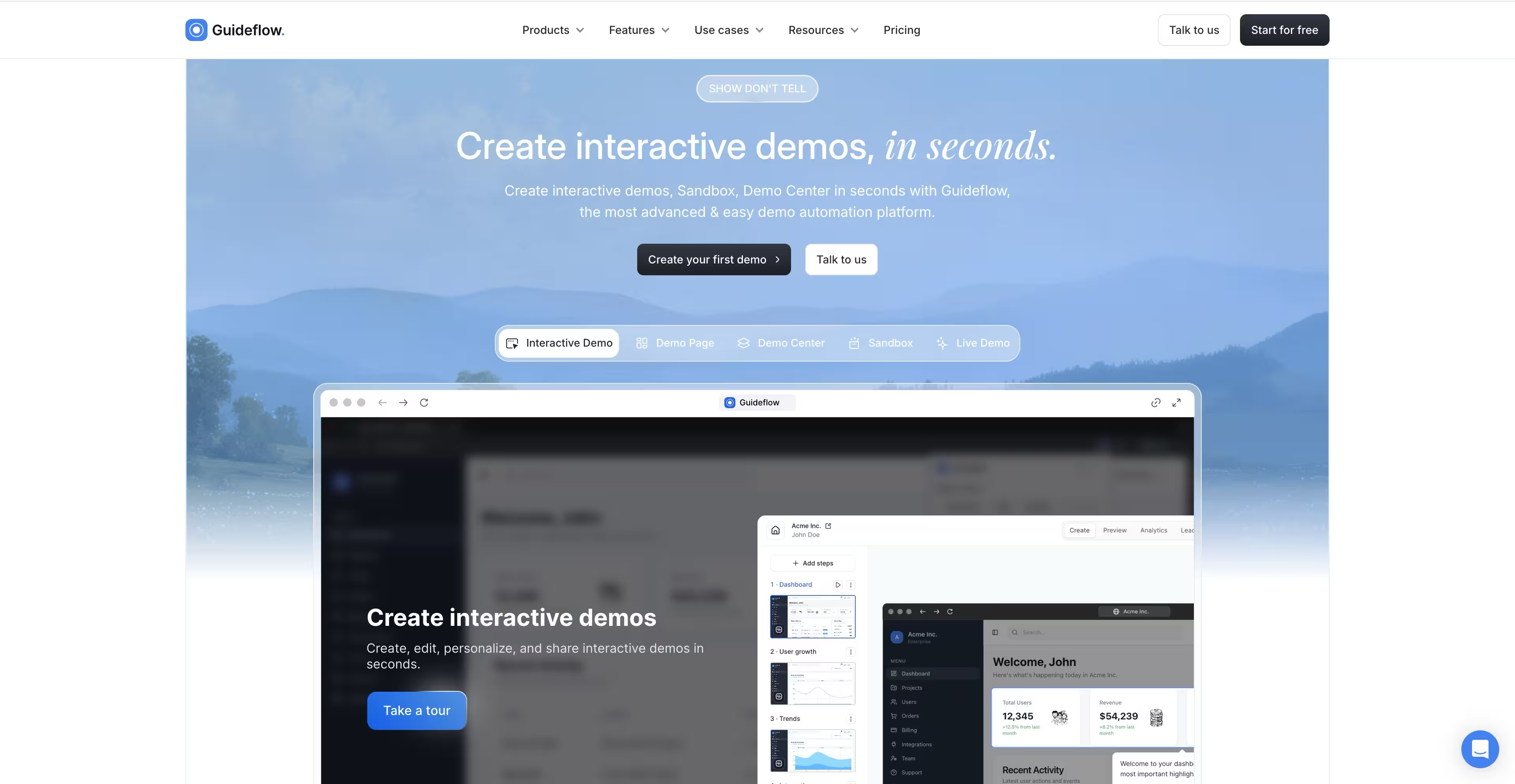
Guideflow solves a critical gap in the AI SDR workflow: what happens after the SDR gets a reply. While SDRs excel at generating interest, conversion often stalls when prospects receive generic PDFs or boring landing pages. Guideflow lets you create personalized, clickable interactive product demos that prospects explore on their own terms.
Key features
- No-code demo creation: Capture your product flows in a few clicks.
- Personalization at scale: Tailor demos for each company or role using dynamic variables.
- Multi-channel sharing: Embed demos in emails, landing pages, or a centralized demo center.
- Engagement analytics: See which prospects viewed your demo, what they clicked, and for how long.
Pricing: Freemium model with paid plans for advanced features.
Start your journey with Guideflow today!
2. Breakout
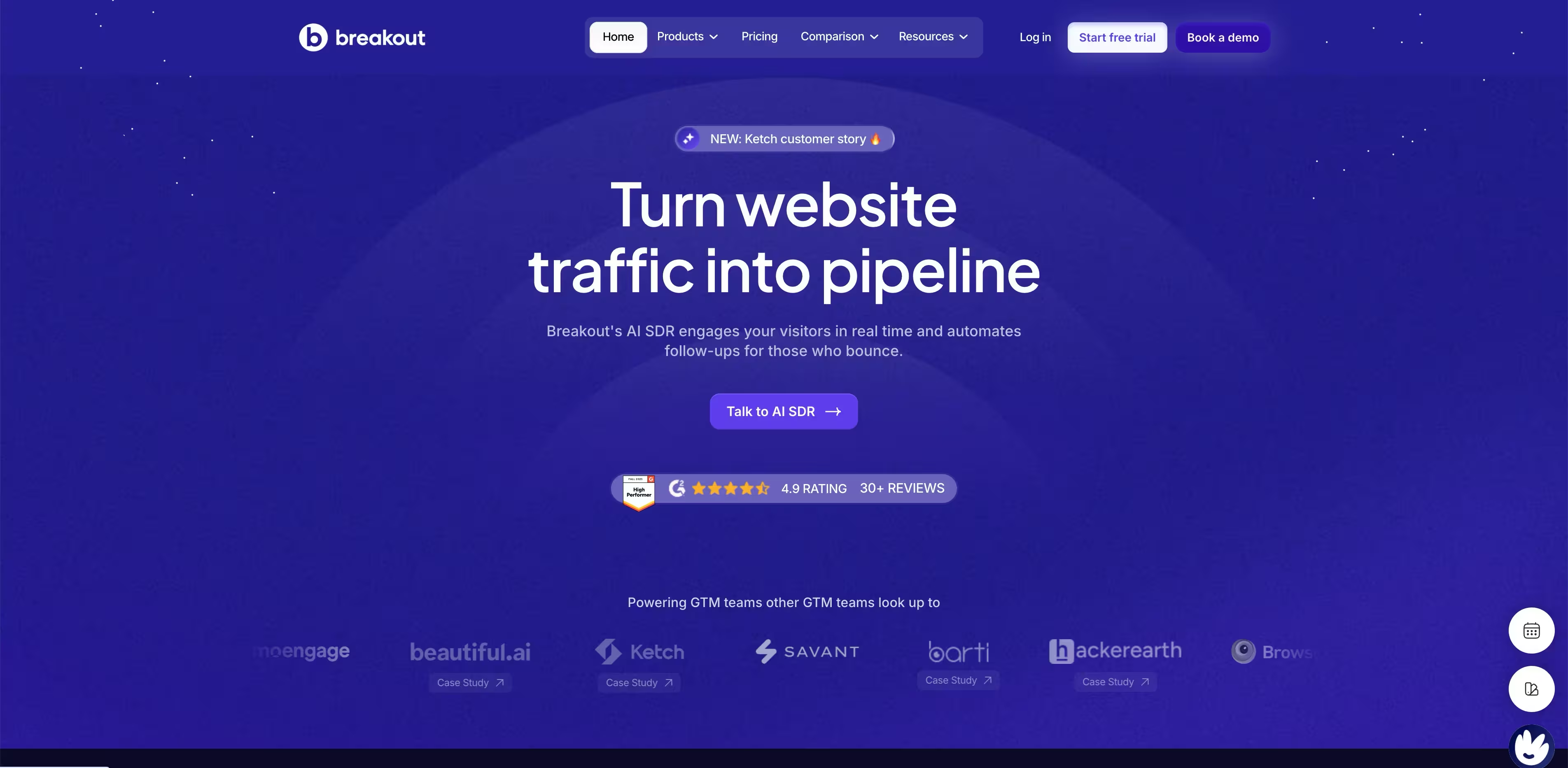
Breakout is an inbound AI SDR. Rather than sourcing cold prospects, it works on traffic you already have: identifying anonymous website visitors, engaging them in real time, qualifying them against your ICP, and booking the meeting before the visitor leaves the page. For most B2B teams, inbound is the highest-intent pipeline source and the one least served by outbound-first AI SDRs.
Best for: Teams whose pipeline is inbound-led and who are losing qualified traffic to slow follow-up.
Key features
- Visitor identification: resolve anonymous traffic to company and, where available, individual level.
- Live qualification and routing: AI agents qualify handraisers and route or book instantly, removing the speed-to-lead gap.
- Inbound-to-outbound plays: turn a single site visit into coordinated multi-channel outreach across the buying committee.
- Site personalization: adapt on-page messaging to the identified visitor's company and role.
Pricing: Free trial available, with paid plans by volume.
3. AiSDR
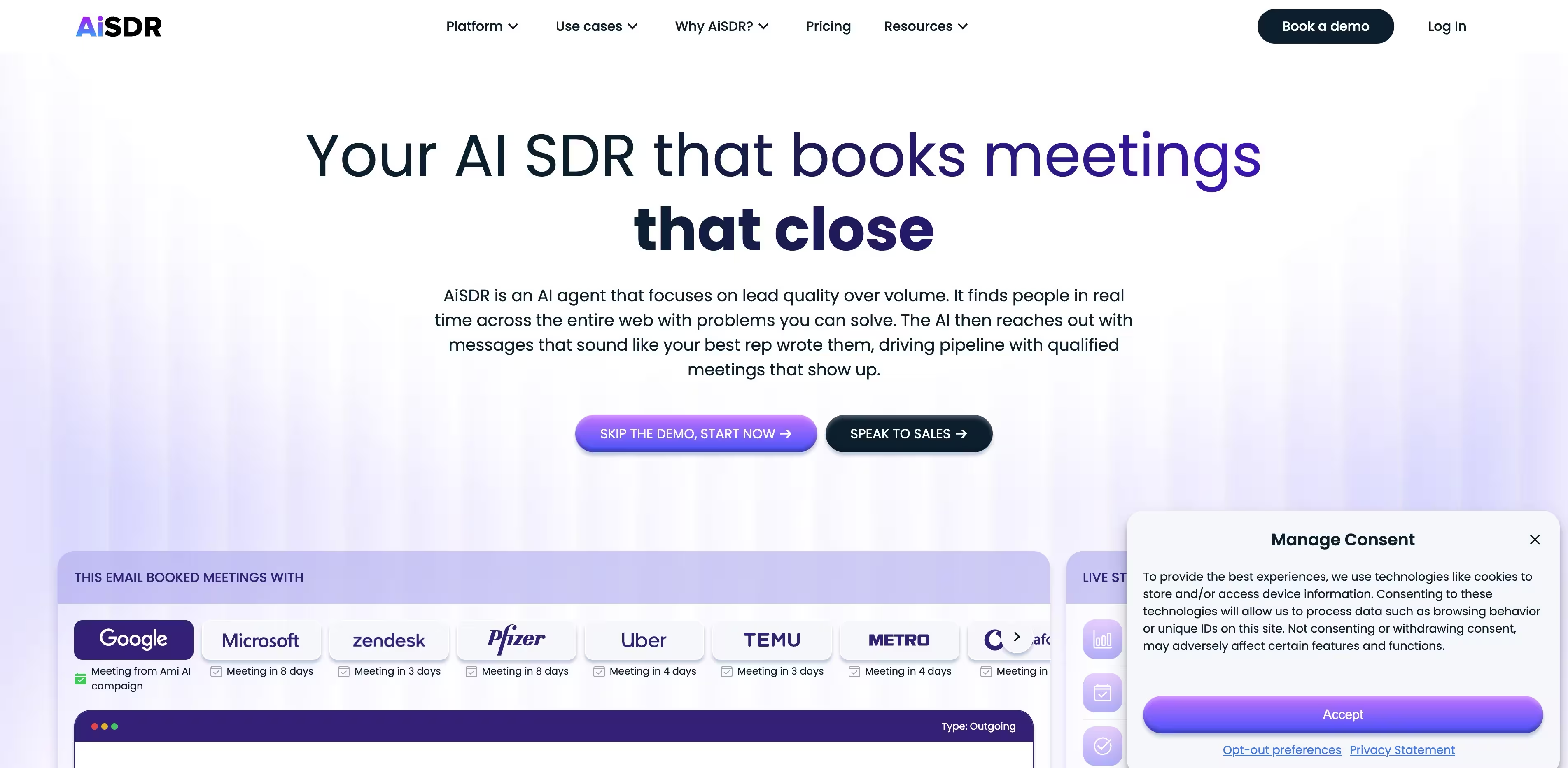
AiSDR uses live social signals to time outreach and features native HubSpot integration. The platform monitors LinkedIn activity and company news to personalize messages and adapt sequences based on engagement patterns. Best for teams that want a dedicated AI SDR tool with strong emphasis on deep personalization.
Best for: Teams that want a dedicated AI SDR with deep, signal-based personalization and a HubSpot-centric stack.
Key features
- Signal-based timing: Triggers outreach from LinkedIn activity, company news, and other buying signals.
- Personalized messaging: Writes each email using prospect and company research instead of fixed templates.
- Adaptive sequences: Adjusts follow-up based on how each prospect engages.
- Native HubSpot sync: Logs activity and updates contacts directly in HubSpot.
Pricing: Subscription starting at mid-tier pricing.
4. 11x AI
11x AI positions itself as the fully autonomous AI SDR. The AI agent handles the complete outbound workflow from prospecting to booking meetings, making it suitable for teams comfortable delegating the entire top-of-funnel motion.
Best for: Companies that want to hand off the entire top-of-funnel outbound motion to an AI agent.
Key features
- Autonomous prospecting: The AI SDR agent finds and researches leads that match your ICP.
- End-to-end outreach: Writes, sends, and follows up on multi-channel sequences without manual input.
- Reply handling and booking: Responds to prospects and books meetings on your reps' calendars.
- CRM sync: Pushes activity and meetings into major CRMs.
Pricing: Enterprise custom pricing.
5. Artisan AI (Ava)
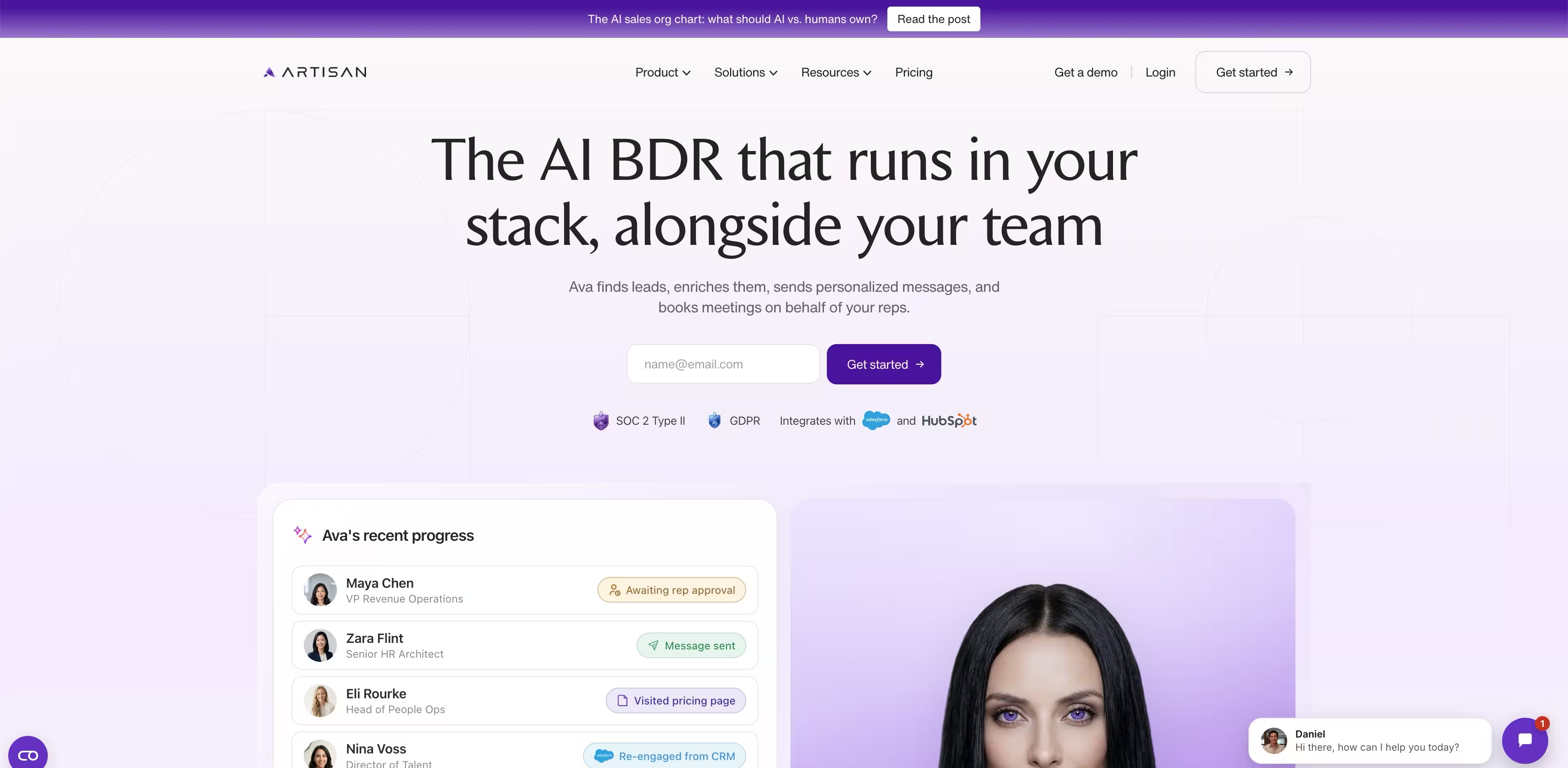
Artisan's agent Ava focuses on deep research automation. The platform offers flexible operation modes, letting teams choose between fully autonomous "autopilot" or human-in-the-loop review before sending.
Best for: Teams that want AI-researched, personalized outreach with the option to review messages before they send.
Key features
- Built-in lead database: Ava sources prospects from Artisan's B2B data instead of a separate data tool.
- Deep research: Pulls company and prospect context into each message.
- Autopilot or human-in-the-loop: Choose fully autonomous sending or approve messages first.
- Deliverability tools: Includes email warmup and sending safeguards.
Pricing: Custom pricing based on volume.
6. Apollo
Apollo combines one of the largest B2B contact databases with sequence automation. Teams can source prospecting data and execute outreach within a single tool, eliminating separate data enrichment purchases.
Best for: Teams that want contact data and outreach automation in a single platform.
Key features
- B2B contact database: Search and filter a large database of contacts and companies.
- Data enrichment: Fill in missing emails, phone numbers, and firmographics in your CRM.
- Sequences: Run multi-step email, call, and LinkedIn task sequences.
- AI writing assistance: Generate personalized emails from prospect data.
Pricing: Freemium with paid tiers for more credits.
7. Reply.io
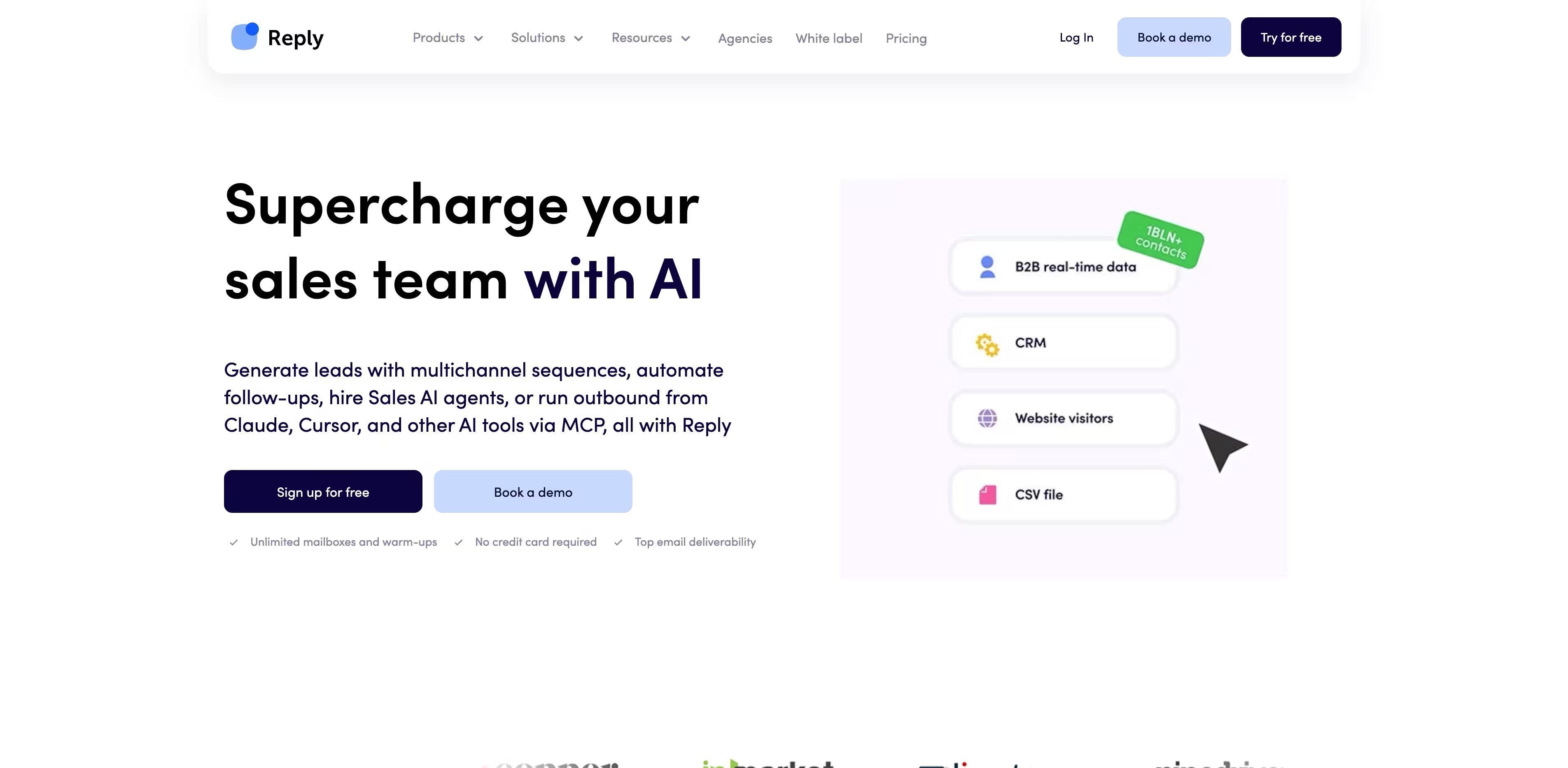
Reply.io is a sales engagement platform with a built-in AI SDR, Jason AI. It helps with sequence creation, handling replies, and booking meetings for teams already using Reply.
Best for: Existing Reply customers who want AI SDR capabilities without switching platforms.
Key features
- AI SDR agent: Jason AI builds sequences, writes messages, and handles replies.
- Multichannel sequences: Combine email, LinkedIn, calls, and other channels in one flow.
- Meeting booking: Books meetings automatically from positive replies.
- Deliverability tools: Email warmup and inbox health monitoring.
Pricing: Subscription with AI features in higher tiers.
8. Instantly
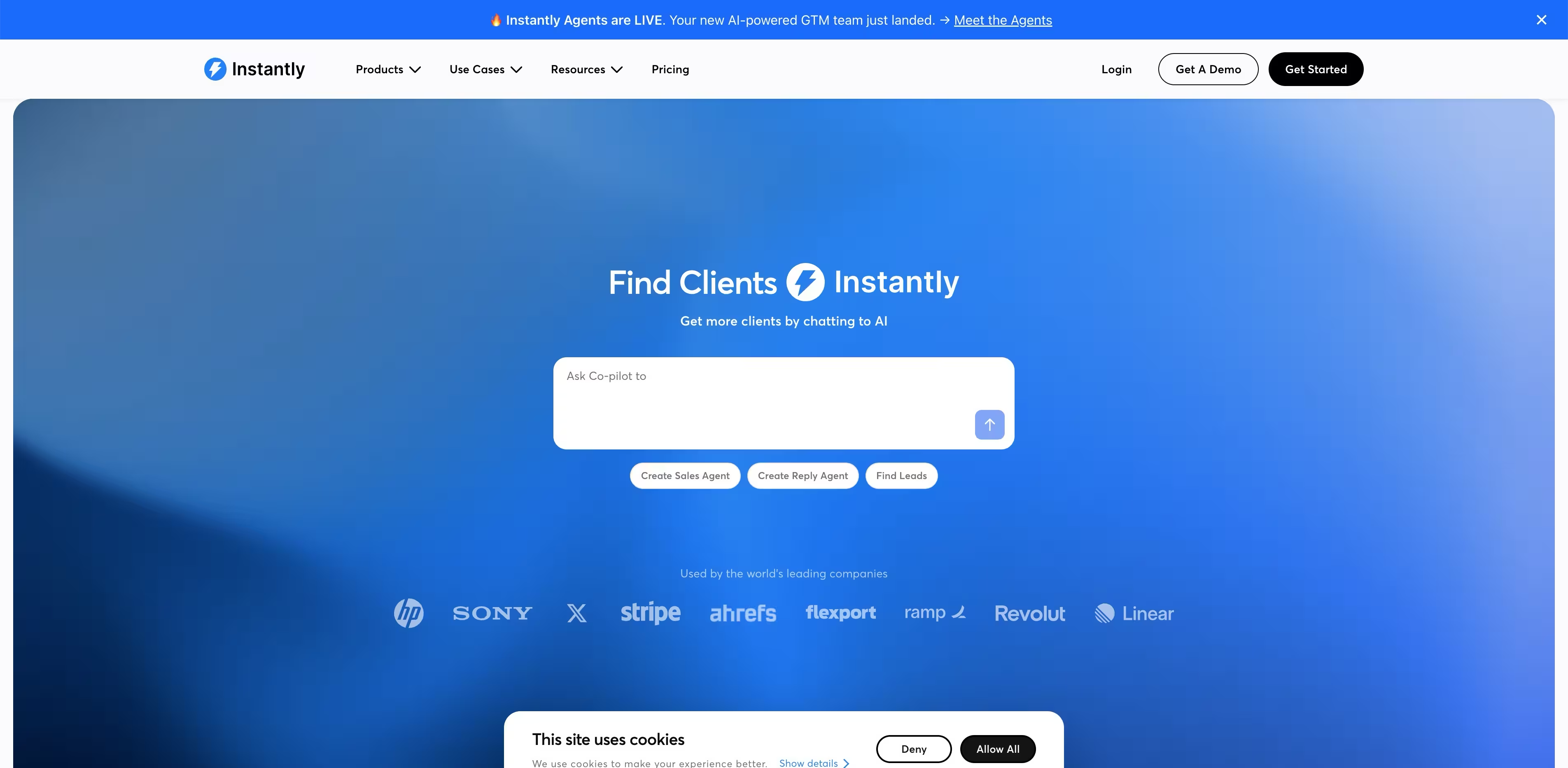
Instantly prioritizes deliverability and scale over deep personalization. The platform supports unlimited email accounts and includes robust warmup tools for high-volume cold email campaigns.
Best for: Teams running high-volume cold email that need deliverability at scale.
Key features
- Unlimited email accounts: Connect as many sending accounts as you need on paid plans.
- Built-in warmup: Automated warmup to protect sender reputation.
- Lead database: Find and add B2B contacts without a separate data tool.
- Unified inbox: Manage replies from all sending accounts in one place.
Pricing: Subscription, affordable at scale.
9. Smartlead
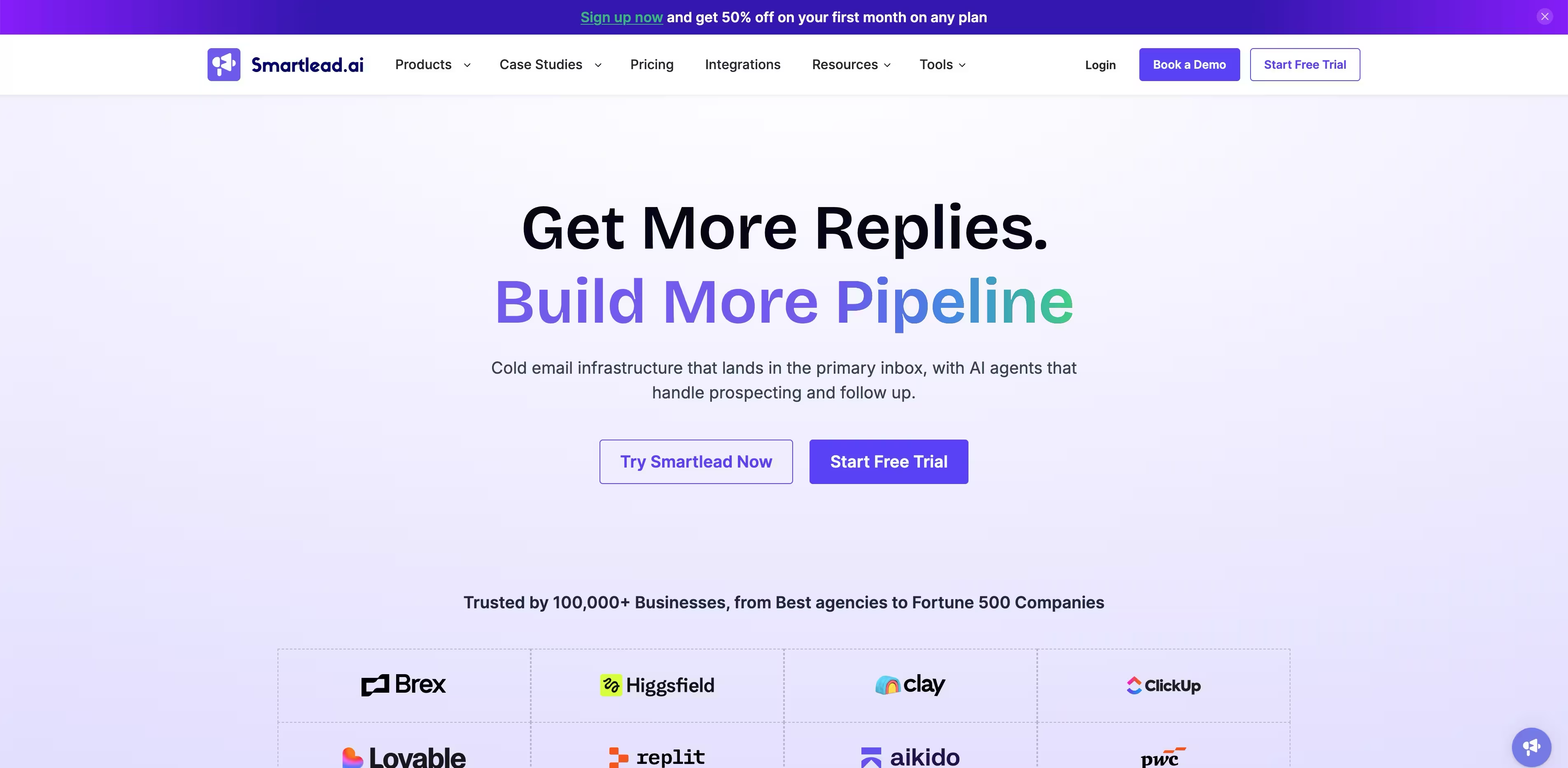
Smartlead handles multi-inbox management for agencies and teams running campaigns across multiple domains. The platform offers white-label options and sophisticated inbox rotation.
Best for: Agencies and teams managing outbound across many domains or clients.
Key features
- Inbox rotation: Spreads sends across multiple mailboxes to protect deliverability.
- Unlimited warmup: Automated warmup for every connected mailbox.
- Master inbox: Handle replies from all campaigns and mailboxes in one view.
- White-label client portal: Give agency clients branded access to their campaigns.
Pricing: Subscription based on sending volume.
10. Clay
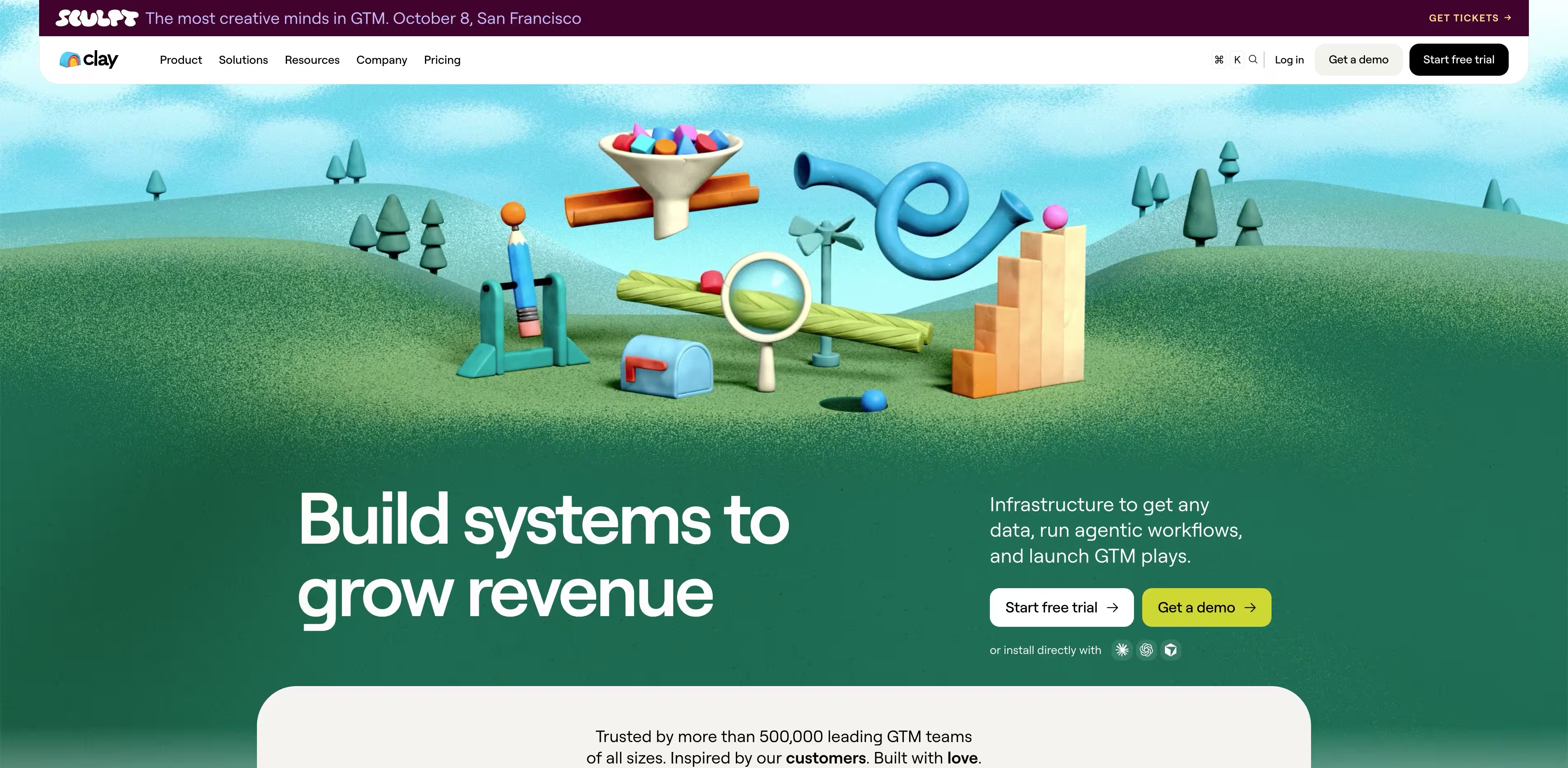
Clay serves as a data enrichment and workflow automation layer. Its AI agent, Claygent, uses waterfall enrichment from dozens of sources to provide high-quality data for hyper-personalization.
Best for: Technical or RevOps-led teams building custom prospecting and enrichment workflows.
Key features
- Waterfall enrichment: Queries many data providers in sequence to maximize match rates.
- Claygent: AI research agent that pulls custom data points from the web.
- AI-written personalization: Generate personalized lines and emails from enriched data.
- CRM and sequencer sync: Push enriched records to your CRM and outreach tools.
Pricing: Subscription based on credits and enrichment volume.
11. Amplemarket
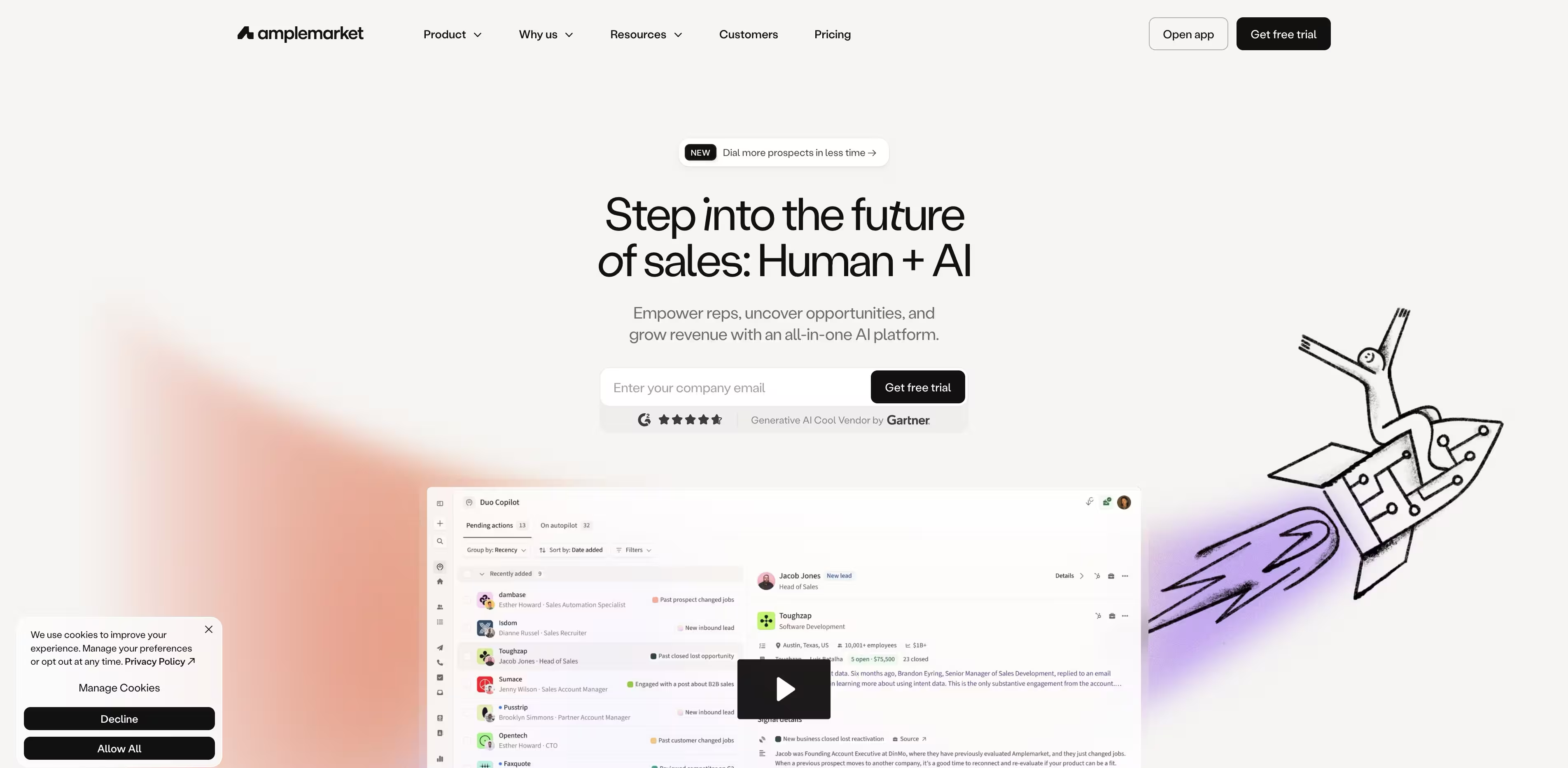
Amplemarket combines prospecting, multi-channel sequencing, and deliverability management in one platform.
Best for: Teams that want to consolidate prospecting, sequencing, and deliverability into one platform.
Key features
- Prospecting data: Search and enrich B2B contacts inside the platform.
- Multichannel sequences: Combine email, LinkedIn, and calls in one sequence.
- AI copilot: Surfaces buying signals and drafts personalized outreach.
- Deliverability suite: Warmup, mailbox health, and sending safeguards built in.
Pricing: Subscription, mid to high tier.
AI SDR tools vs hiring human SDRs
A human SDR costs roughly $60,000 to $80,000 in base salary, plus benefits, tools, management overhead, and several months of ramp time. AI SDR platforms typically run $500 to $3,000 per month depending on volume and features.
| Factor | AI SDR tools | Human SDR |
|---|---|---|
| Ramp time | Immediate | 3-6 months |
| Coverage | 24/7, all time zones | Business hours |
| Personalization ceiling | Data-driven, scalable | Intuition-driven, limited scale |
| Complex objection handling | Limited | Strong |
| Cost structure | Subscription-based | Salary + benefits + management |
Hidden costs most teams miss:
- Deliverability infrastructure: Separate domains, warmup tools, and inbox rotation services add up quickly.
- Data quality: Bad contact data renders AI outreach ineffective, so expect ongoing investment in enrichment.
- Human oversight: Someone still reviews output quality, refines campaigns, and handles edge cases.
- Integration work: Connecting the AI SDR to your CRM and tech stack requires setup time.
Most teams with clean data and well-targeted sequences see initial results within the first month. Full payback depends on your average deal size and sales cycle length.
What to look for in AI SDR software
Not all AI SDR tools personalize outreach equally. Some pull basic firmographic data for simple mail merges. The best platforms scrape LinkedIn profiles, news articles, and intent signals to write genuinely relevant messages.
Key evaluation criteria:
- Research depth: Does the AI reference specific, timely triggers or just insert {FirstName}?
- CRM integration: Look for bidirectional sync, automatic activity logging, and intelligent lead routing.
- Deliverability protection: Automated domain warmup, inbox rotation, configurable sending limits, and spam monitoring.
- Analytics: Open rates, reply rates, positive vs. negative response categorization, and meetings booked by segment.
For a complete view of performance, combine outreach analytics with engagement data from tools that track how prospects interact with your content after they reply.
How to choose the right AI SDR tool
The right tool depends on your outbound strategy. Teams running high-volume campaigns prioritize deliverability features like those in Instantly or Smartlead. Teams focused on account-based outreach look for deep research capabilities in AiSDR, Artisan, or 11x AI.
Match capabilities to your motion:
- High volume: Prioritize deliverability, warmup, and inbox rotation.
- Account-based: Look for deep research, personalization, and intent signals.
- Hybrid: Consider all-in-one platforms like Amplemarket or Apollo.
Before committing, verify CRM integration depth. Does it offer bidirectional sync? Can it trigger sequences from CRM events? Does it connect with your marketing automation tools?
How to launch an AI SDR in 30 days
Week 1: Audit data and define your ICP. Clean your CRM data and clearly define your Ideal Customer Profile. Garbage in, garbage out applies directly to AI SDR performance.
Week 2: Configure sequences and connect your stack. Build initial outreach sequences, connect your CRM and email infrastructure, and begin domain warmup.
Week 3: Test deliverability and monitor quality. Run test campaigns to small segments. Check inbox placement and review AI-generated messages for accuracy and brand fit.
Week 4: Scale what works. Expand to larger segments, set up alerts for positive replies, and establish clear handoff processes for moving qualified leads to human reps.
Mistakes to avoid with AI SDR software
Prioritizing volume over quality. Sending high volumes to poorly targeted lists damages domain reputation and wastes budget. Fewer, well-researched messages outperform mass blasts.
Skipping domain warmup. New sending domains require gradual volume ramp-up. Skipping warmup lands emails in spam and gets domains blacklisted.
Ignoring the human handoff. AI SDRs generate interest, but humans close deals. Define clear handoff criteria or lose the qualified leads the AI worked to generate.
Sending generic follow-up content. An AI SDR can secure a reply, but momentum dies when follow-up is a static PDF. Replace boring assets with personalized interactive demos that let prospects experience your product immediately. Pre-sales teams that make this switch see higher conversion rates from reply to meeting.
Why interactive demos increase AI SDR conversion rates
When a prospect replies to a hyper-personalized AI email, they expect a relevant next step. Generic slide decks or simple booking links increase friction and cause drop-off. Interactive demos let prospects explore your product on their own terms, immediately and asynchronously.
- Embed in follow-up sequences: Replace PDF attachments with personalized demo links.
- Gate for lead capture: Use demos as high-value assets to capture contact information from engaged prospects.
- Track engagement: See exactly which features prospects explored, providing valuable intelligence for sales conversations.
This approach is how marketing teams and demand generation leaders maximize ROI from their AI SDR investment.
Build your AI powered sales development stack
The best AI SDR stack combines automation with high-quality prospect experiences. Choose platforms that matches your outbound motion, ensure it integrates with your CRM, prioritize deliverability from day one, and elevate follow-up content with interactive experiences.
Start with one tool, test it for a month, and iterate based on results.
Start your journey with Guideflow today!
FAQs about AI SDR tools
AI SDRs excel at top-of-funnel prospecting and initial qualification. They typically hand off to human reps for multi-stakeholder negotiations where relationship depth and nuanced problem-solving matter most.
Most platforms allow training on your brand voice using example emails, tone settings, and approved templates. Quality varies by tool, and ongoing human review is usually required to maintain consistency.
Aggressive sending without proper warmup triggers spam filters and gets domains blacklisted. Using built-in deliverability features and following gradual ramp-up schedules is essential before scaling volume.
After initial setup, most teams spend a few hours per week on high-level tasks: reviewing output quality, adjusting targeting, and managing qualified lead handoffs.
Most AI SDR platforms are optimized for outbound prospecting. Some can nurture inbound leads with automated sequences, but their core strength is creating new opportunities from cold outreach. A separate category of inbound AI SDRs - such as Breakout - is built specifically for this motion, identifying and engaging visitors on your website in real time rather than sourcing cold contacts. Teams with meaningful inbound traffic often run one of each.
Advanced AI SDRs categorize replies and respond to simple objections. Complex or heated exchanges almost always require human intervention to preserve relationships and handle nuance appropriately.
Yes, many teams run hybrid models where AI handles initial outreach and qualification while human SDRs focus on warm follow-up and complex accounts. Gartner predicts 75% of B2B buyers will prefer human interaction over AI by 2030, making clear handoff rules essential to avoid duplicate outreach.