Your reps spend hours prepping demos that get canceled. They dig through folders for case studies that may or may not exist. Meanwhile, the deals that should close this quarter are stalling because the right content isn’t reaching the right stakeholder at the right time.
Sales enablement tools solve this by putting content, training, and buyer engagement data in one place where reps can actually use it. This guide breaks down what sales enablement software does, the main categories to consider, and 10 platforms to evaluate in 2026.
TL;DR
- Sales enablement tools give reps the content, training and insights to close deals faster and hit quota more consistently.
- Categories content management, training platforms, conversation intelligence, demo automation, sales engagement software.
- Top picks Guideflow for interactive demos, Highspot for enterprise content, Gong for call analysis, HubSpot Sales Hub for all-in-one CRM.
- Choose based on your primary pain point: content findability, rep onboarding, demo delivery, or pipeline visibility.
What’s inside
This guide covers everything you need to evaluate and select sales enablement software in 2026. You’ll find definitions, tool categories, a ranked list of 15 platforms with pricing and ratings, a comparison table, key features to look for and a framework to make your decision.
- What sales enablement software actually does
- The main types of enablement tools and when each fits
- Detailed breakdowns of 10 top platforms
- Side-by-side comparison table
- Features that matter most for adoption and ROI
- How to choose the right platform for your team
What is sales enablement software
Sales enablement software is technology that helps sales teams find the right content, get trained on products and processes, and track what actually moves deals forward across the broader sales process and selling process. Gartner defines revenue enablement platforms as systems that unite sales content, training, coaching, and analytics into a single platform supporting revenue teams across the entire buyer journey.
Modern sales enablement platforms typically include content management and search, training and coaching modules, analytics on what content gets used and what converts, and integrations with CRM systems like Salesforce and HubSpot. Some also extend into conversation intelligence, proposal automation, and interactive demo delivery.
The core problem: there's a gap between marketing creating content and sales actually using it. Without enablement software, reps spend only 28% of their week actually selling, with much of the rest lost to searching for materials. Deals stall because the right case study or competitive battlecard isn't accessible when it matters.
Modern sales enablement platforms typically include sales content management, training and coaching modules, sales analytics on what content gets used and what converts, and sales enablement analytics, plus integrations with CRM systems like Salesforce and HubSpot for customer relationship management and centralized customer data. Some also extend into conversation intelligence, proposal automation, and interactive demo delivery, helping sales enablement teams support the wider sales organization.
Types of sales enablement tools
The sales enablement category has expanded significantly. Understanding the landscape helps you match tools to your specific gaps rather than buying an all-in-one platform that does everything adequately but nothing exceptionally.
Content management platforms
Content management platforms, including sales content management tools, organize, store, and serve sales collateral so reps can find the right deck, case study, or one-pager in seconds. Teams also use these platforms to organize both sales content and marketing content. They typically include AI-powered search, content recommendations based on deal stage, and analytics showing which assets correlate with closed deals, while also protecting sales data and company data through permissions and governance.
Sales training and coaching software
Training platforms handle onboarding for new reps and support formal sales enablement programs alongside ongoing skill development for the team. Features often include video practice and role-play, certifications, quizzes, manager feedback loops, sales coaching, and sales playbooks, and many also include a learning management system for structured learning. The goal is reducing ramp time and improving consistency across the sales org while helping sales managers and sales leaders reinforce effective sales tactics and track team performance.
Sales intelligence tools
Intelligence platforms provide account and contact data, buying signals, and market insights, helping teams gain valuable insights from multiple data sources before outreach begins. They help reps prioritize outreach and personalize messaging based on what's actually happening at target accounts rather than guessing, and sales intent tools use behavioral signals to surface the best opportunities and turn account and contact signals into actionable insights for reps.
Conversation intelligence platforms
Conversation intelligence tools record, transcribe, and analyze sales conversations and other customer interactions automatically. They surface coaching moments, track competitor mentions, and identify patterns in winning versus losing deals, giving teams valuable insights from buyer interactions and clearer coaching opportunities. Managers use them to scale coaching without sitting on every call, which improves sales performance over time.
Demo automation software
Demo automation platforms create interactive product demos that buyers can explore without scheduling a live call, including for digital sales rooms and self-guided buyer review. This category has grown rapidly as buyers increasingly prefer self-service evaluation before engaging with sales, and demo automation can improve sales communications during remote evaluation.
Sales engagement platforms
Sales engagement tools automate and track multi-channel outreach sequences across email, phone, and social. They coordinate touches, support sales outreach across channels, A/B test messaging, and surface which sequences drive meetings and pipeline while improving efficiency throughout the sales cycle.
Proposal and CPQ tools
Configure-price-quote software streamlines the creation of proposals, quotes, and contracts. CPQ tools reduce errors in pricing, speed up deal cycles, and often include e-signature capabilities.
Best sales enablement tools and software
| # | Tool | Intent | Use case | Pricing | G2 Rating |
|---|---|---|---|---|---|
| 1 | Guideflow | Demo automation | Interactive demos at scale | Free + $40/mo | 4.8/5 |
| 2 | Highspot | Content management | Enterprise content governance | Enterprise | 4.7/5 |
| 3 | Seismic | Enablement cloud | Complex content automation | Enterprise | 4.7/5 |
| 4 | Showpad | Content + coaching | Unified enablement | Contact sales | 4.6/5 |
| 5 | Mindtickle | Sales readiness | Rep onboarding and training | Contact sales | 4.7/5 |
| 6 | Gong | Conversation intelligence | Call analysis and coaching | Contact sales | 4.8/5 |
| 7 | Salesforce | CRM + enablement | Salesforce ecosystem users | $25-165/user/mo | 4.4/5 |
| 8 | HubSpot | All-in-one CRM | SMB and mid-market | Free + $15/user/mo | 4.4/5 |
| 9 | Outreach | Sales engagement | High-volume outbound | Contact sales | 4.3/5 |
| 10 | Salesloft | Engagement + intelligence | Unified revenue workflow | Contact sales | 4.5/5 |
1. Guideflow
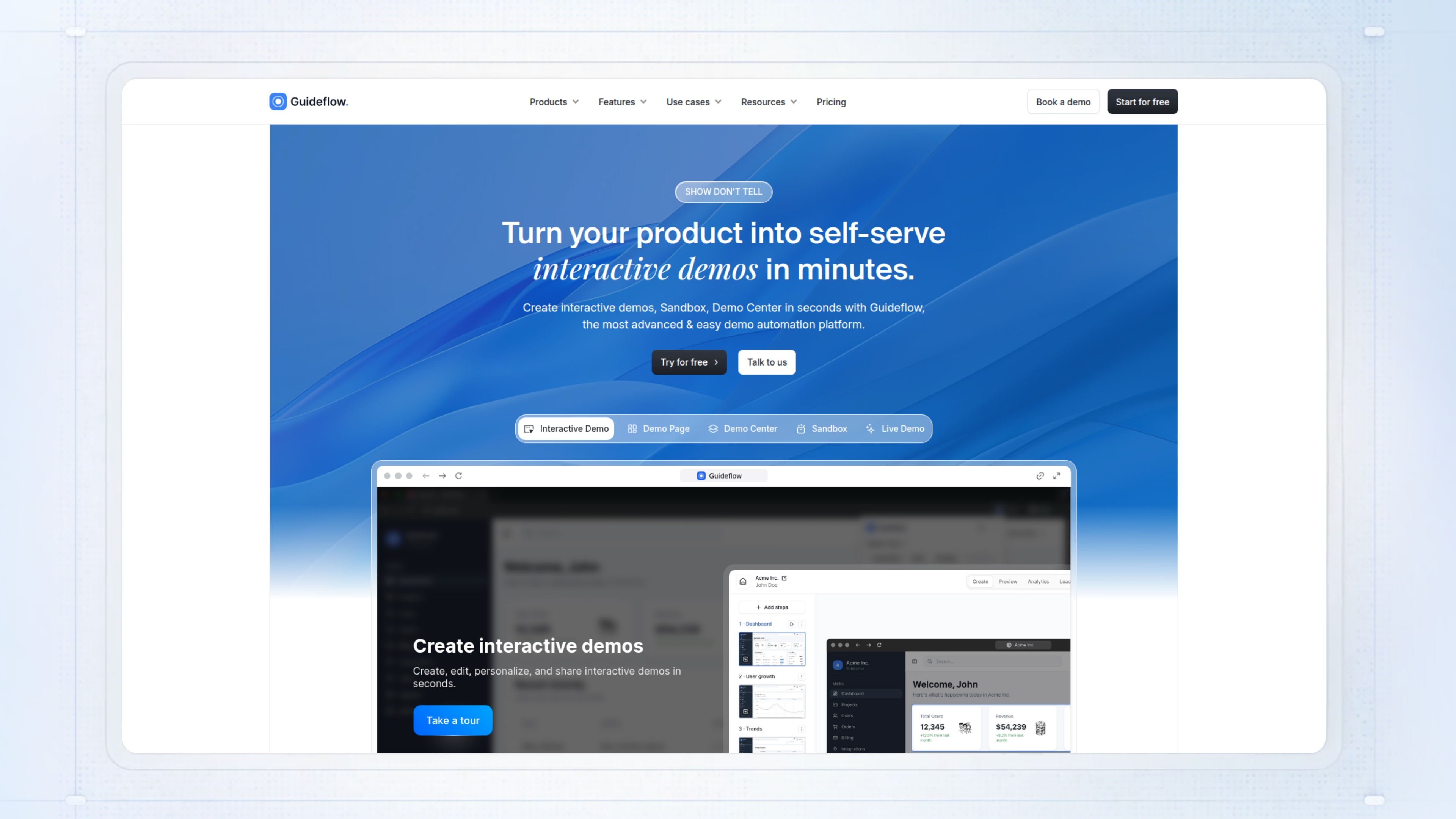
Guideflow is a demo automation platform that turns your product into clickable, self-serve experiences prospects can explore on their own. Instead of relying on static screenshots or forcing everyone into a "book a demo" flow, you capture your product and create guided walkthroughs in minutes for faster content creation around interactive product experiences.
Best for:Pre-sales teams and marketing teams who want to scale personalized product experiences without engineering work.
Key features:
- No-code capture and editing for interactive demos, sandboxes, and demo centers
- Personalization at scale with dynamic variables from CRM data
- Engagement analytics showing completion rates, drop-off points, lead scoring, and actionable insights from buyer engagement
- Integrations with Salesforce, HubSpot, Slack, and 3,000+ tools
Pricing: Free tier available. Paid plans start at $40/month for Solo, scaling to Growth ($499/month) and Enterprise tiers.
G2 rating: 5.0/5
Start your journey with Guideflow today!
2. Highspot
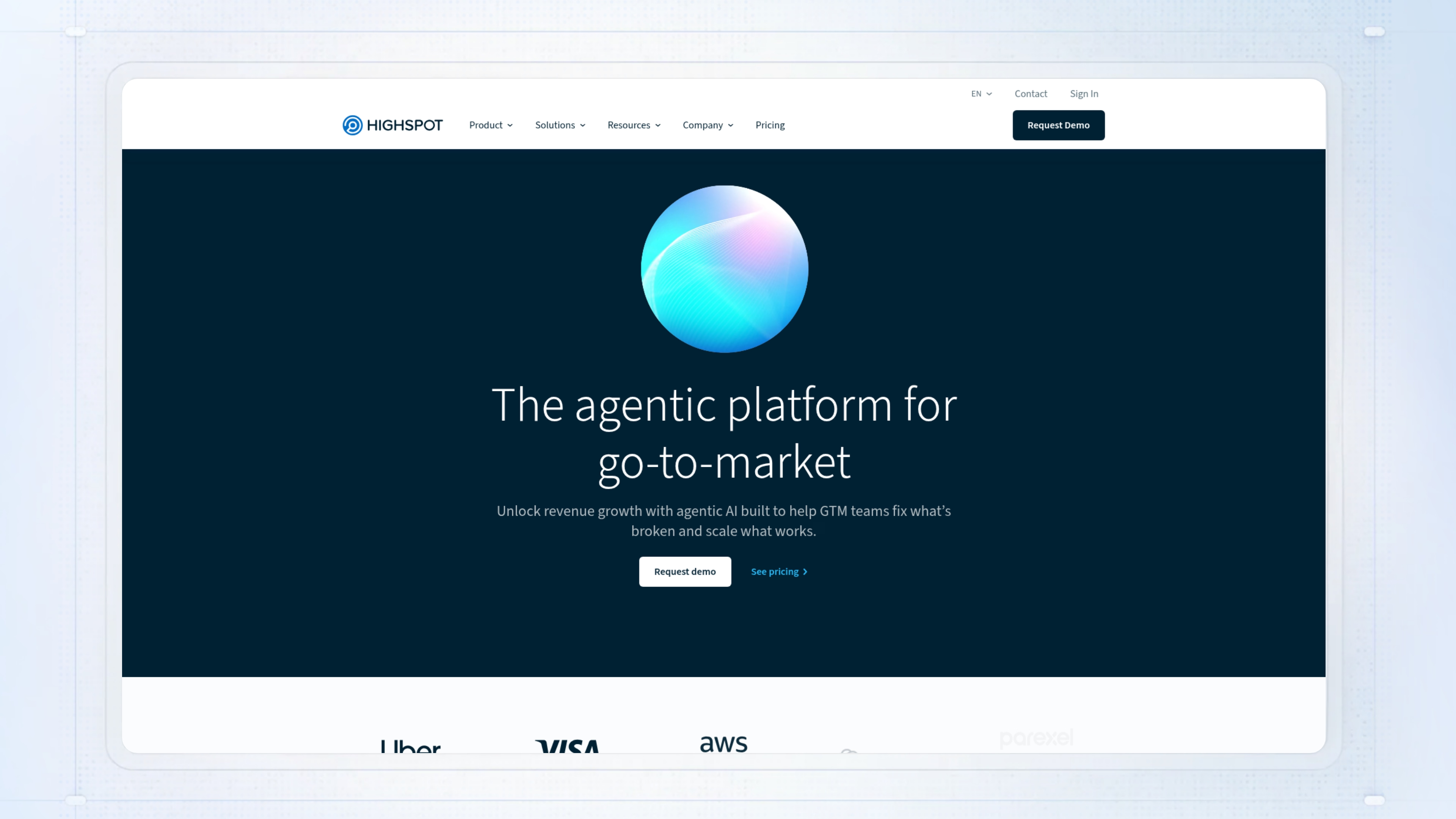
Highspot is a popular sales enablement platform built for enterprise content governance, AI-powered recommendations, and training delivery.
Best for: Large sales organizations with complex content libraries and strict governance requirements.
Key features:
- AI-driven recommendations with tailored delivery of sales assets across teams
- Content scoring showing what assets drive revenue
- Integrated training and coaching modules with support for sales enablement resources
- Native Salesforce and Microsoft integrations
Pricing: Enterprise pricing, contact sales.
G2 rating: 4.7/5
3. Seismic
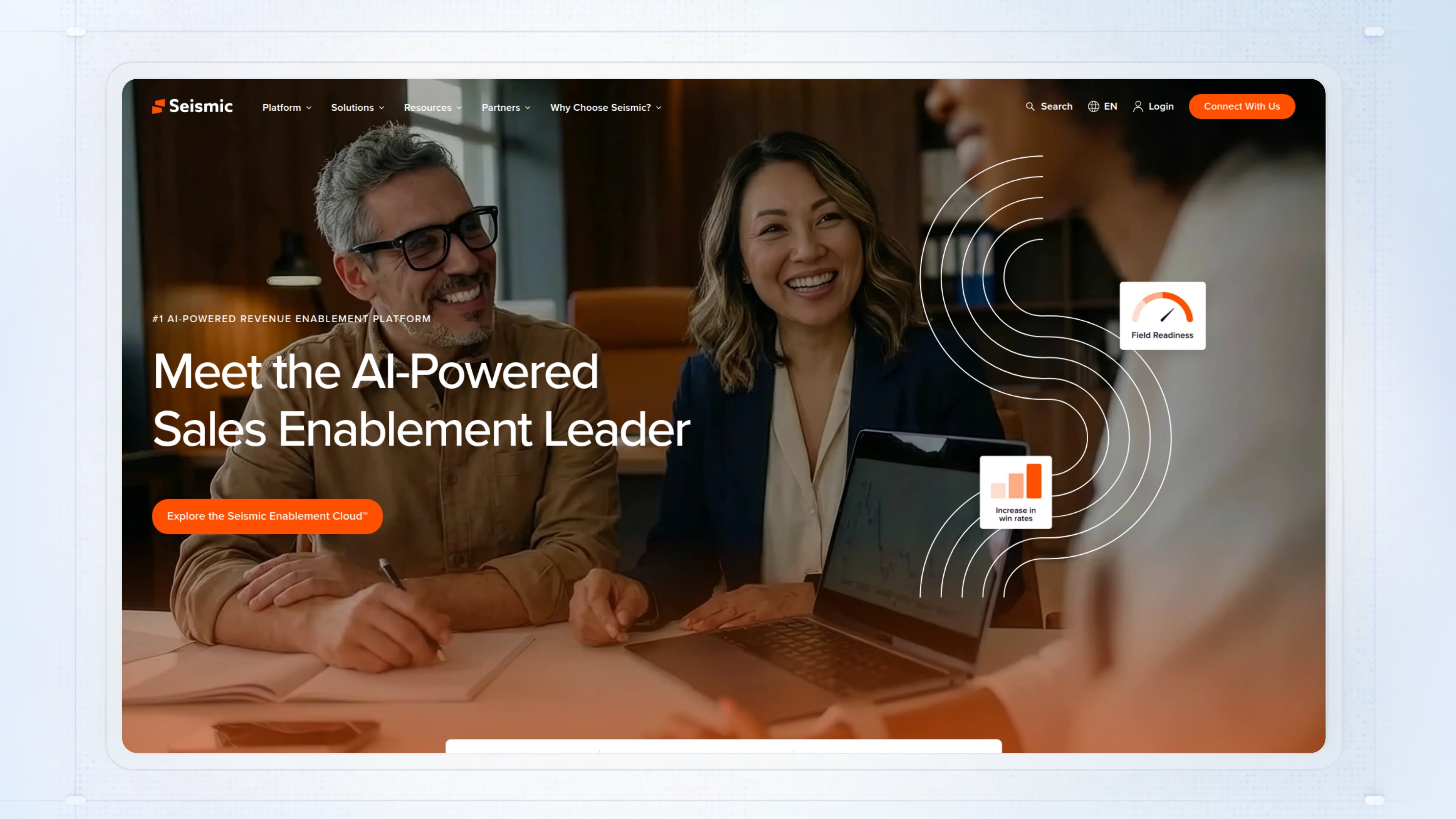
Seismic positions itself as an enterprise enablement cloud combining content management, learning and buyer engagement in one platform.
Best for: Enterprise teams with complex content automation needs and multiple buyer personas.
Key features
- Content automation with dynamic assembly
- Learning paths and certifications
- Analytics dashboards connecting content to revenue
- LiveDocs for personalized content generation
Pricing: Enterprise pricing, contact sales.
G2 rating: 4.7/5
4. Showpad
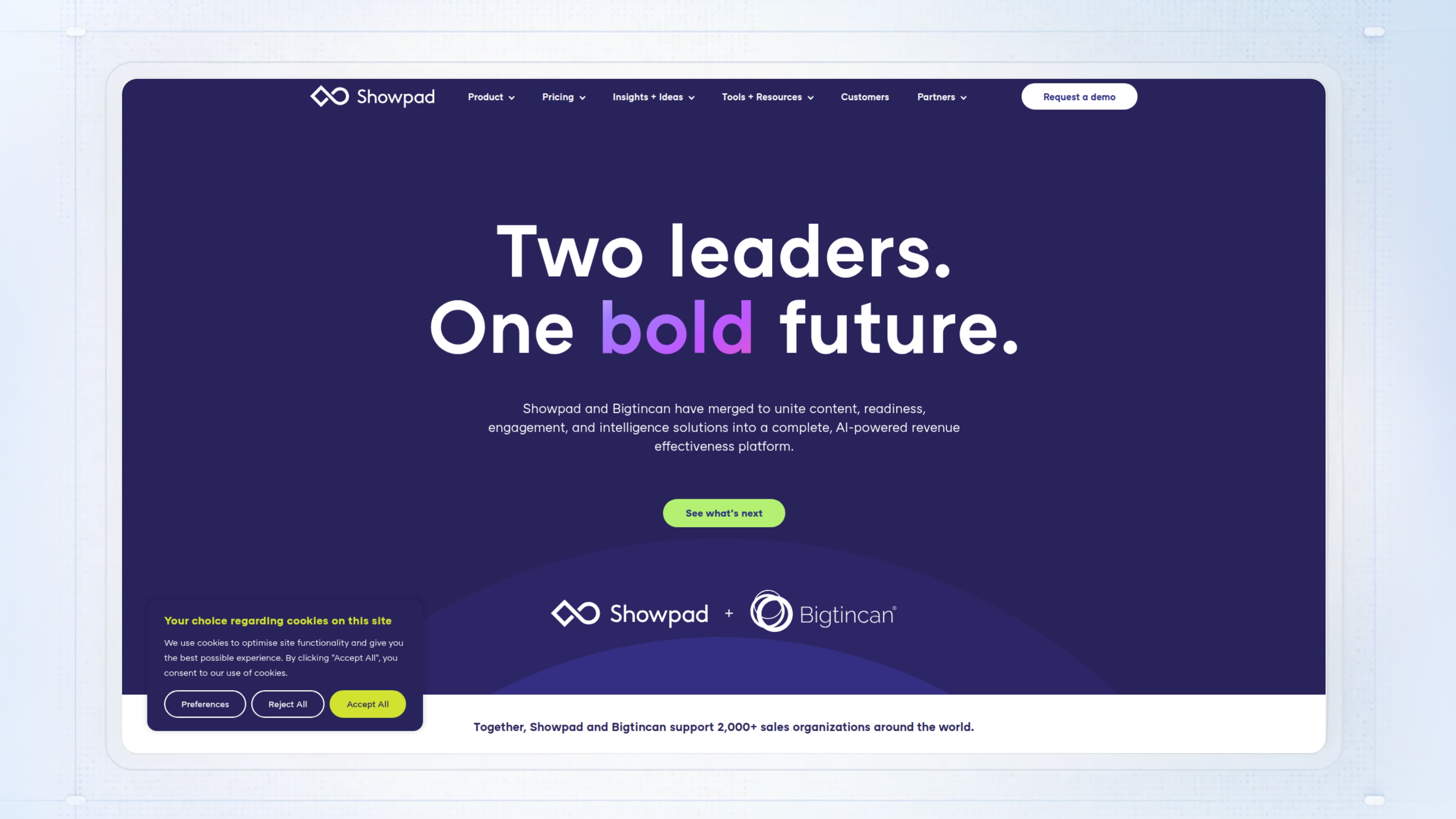
Showpad combines content management with seller training and coaching in a single platform designed for mid-market and enterprise teams.
Best for: Organizations wanting content and coaching unified without managing separate tools.
Key features
- Content recommendations and analytics
- Video coaching and practice tools
- Buyer engagement tracking
- Shared spaces for deal collaboration
Pricing: Essential, Plus and Ultimate tiers. Contact sales for pricing.
G2 rating: 4.6/5
5. Mindtickle
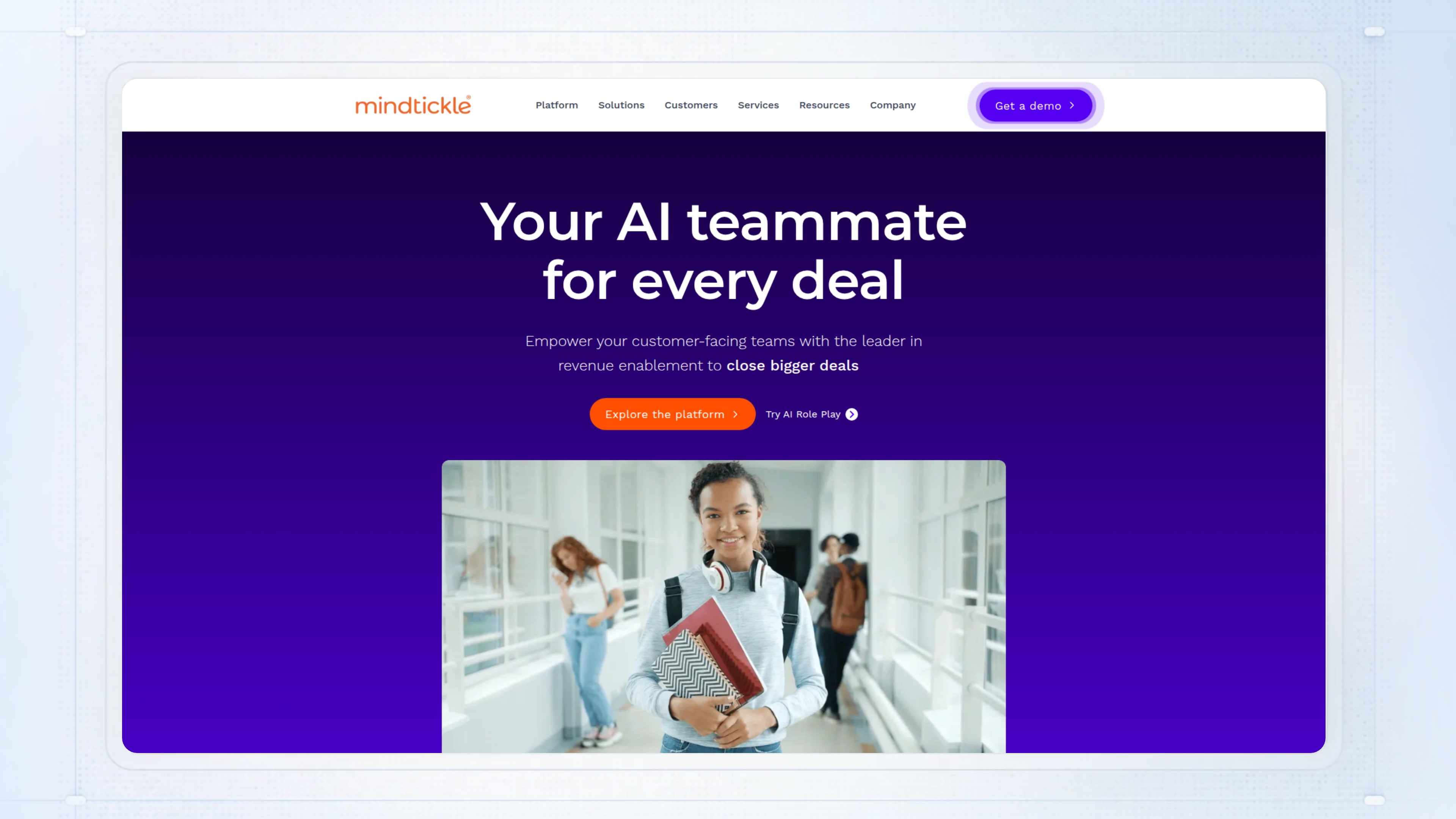
Mindtickle focuses specifically on sales readiness, onboarding and ongoing skill development rather than content management.
Best for: Organizations prioritizing faster ramp time and consistent rep performance over content delivery.
Key features
- Role-play practice with AI feedback
- Certifications and competency tracking* Call recording and coaching
- Readiness index scoring
Pricing: Contact sales.
G2 rating: 4.7/5
6. Gong
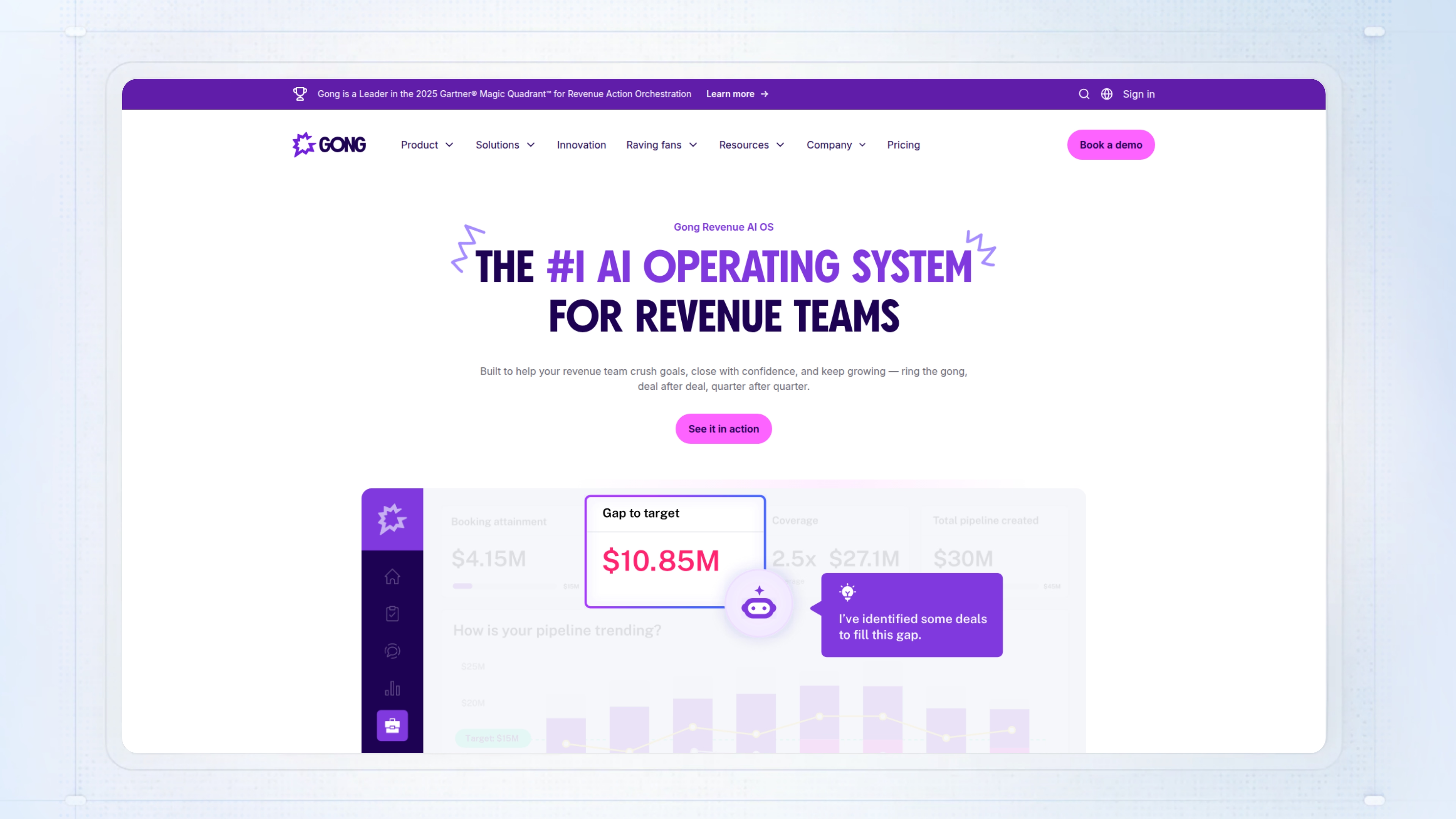
Gong is a conversation intelligence platform that records, transcribes, and analyzes sales calls to surface coaching insights and deal risks across the sales pipeline.
Best for: Teams wanting to improve rep performance through call analysis and deal intelligence.
Key features:
- Automatic call recording and transcription with sales analytics from call and deal data
- Deal boards with risk scoring
- Competitor mention tracking
- Pipeline analytics and forecasting
Pricing: Contact sales for pricing.
G2 rating: 4.8/5
7. Salesforce
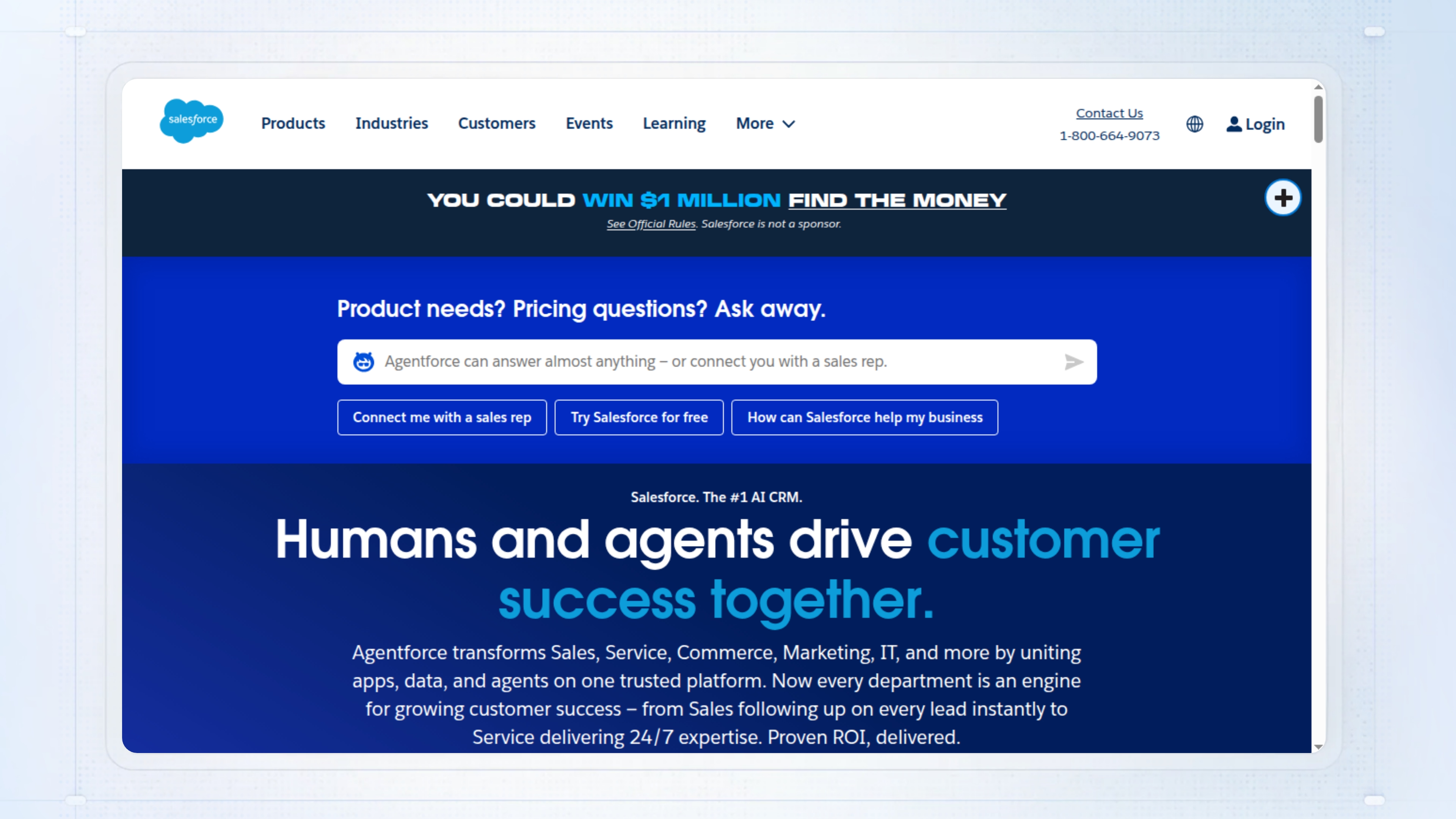
Salesforce Sales Cloud is the dominant customer relationship management platform, with built-in enablement features including Einstein AI insights, opportunity management, and an extensive app ecosystem that centralizes customer data and supports customer interactions across the sales funnel.
Best for: Teams already invested in the Salesforce ecosystem who want enablement capabilities without adding tools.
Key features:
- Opportunity and pipeline management
- Einstein AI for lead scoring and insights
- AppExchange integrations with specialized tools
- Customizable workflows and automation
Pricing: Starter at $25/user/month, Professional at $80/user/month, Enterprise at $165/user/month.
G2 rating: 4.4/5
8. HubSpot
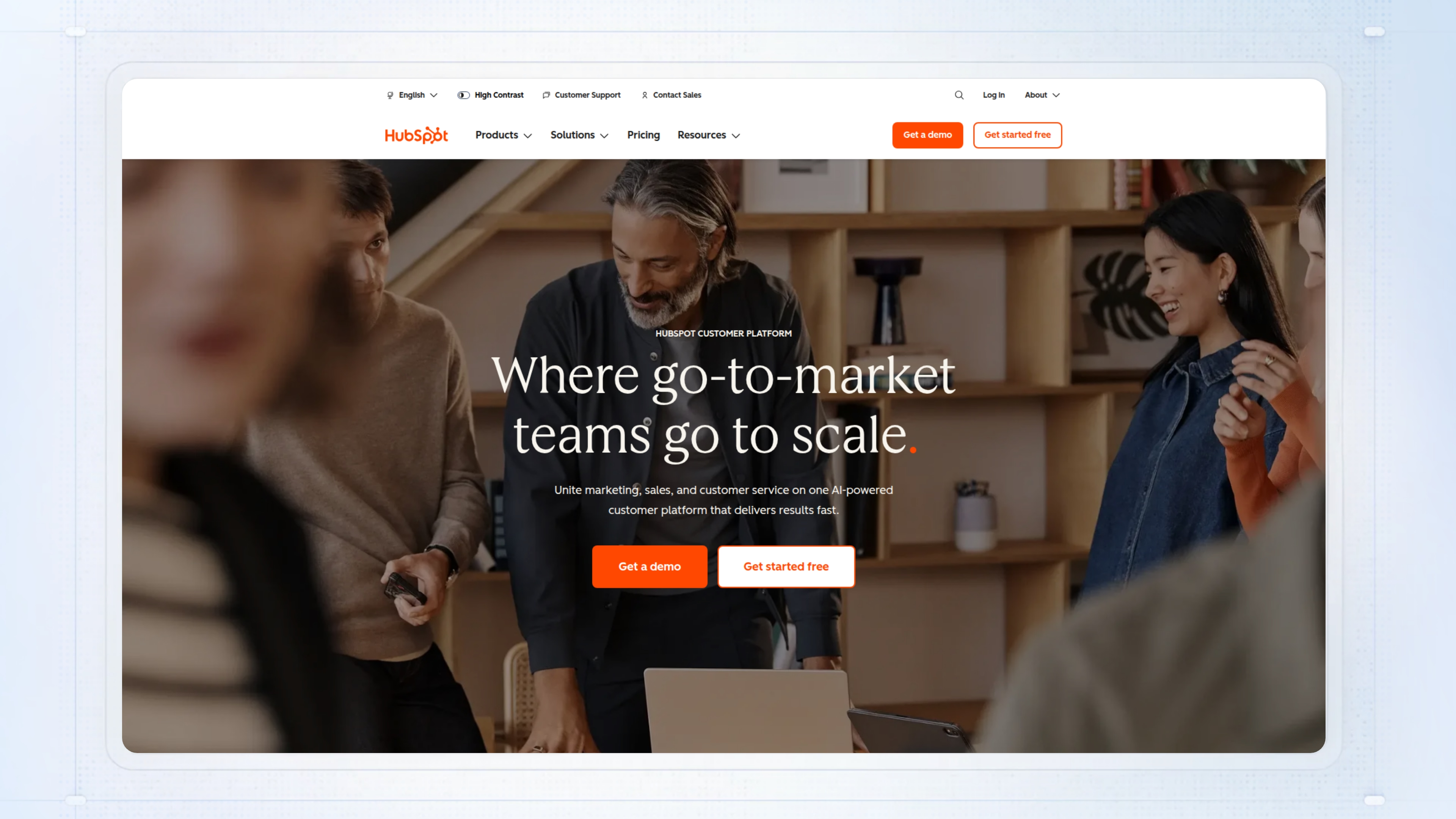
HubSpot Sales Hub combines CRM, email sequences, meeting scheduling, and playbooks in an all-in-one platform designed for ease of use and to structure the sales process inside one system.
Best for: SMB and mid-market teams wanting a unified sales platform without enterprise complexity.
Key features:
- Email sequences and templates
- Meeting scheduling and routing
- Playbooks for guided selling and consistent sales tactics
- Pipeline management and reporting
Pricing: Free CRM available. Starter at $15/user/month, Professional at $90/user/month.
G2 rating: 4.4/5
9. Outreach
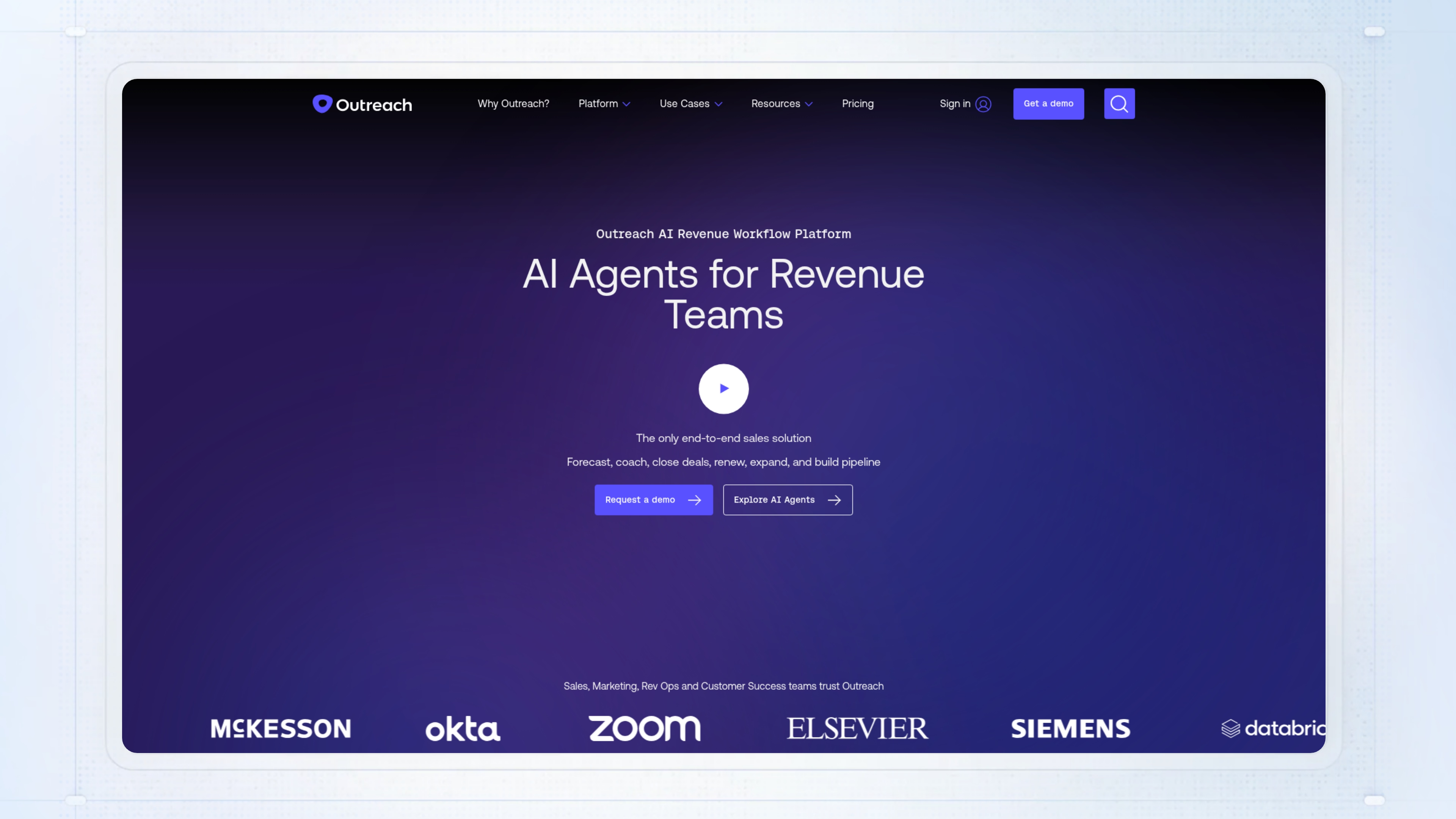
Outreach is a sales engagement platform focused on automating sales outreach and tracking engagement across the selling process.
Best for: Teams running high-volume outbound who need sequence automation and A/B testing.
Key features:
- Multi-channel sequences across email, phone, and social
- A/B testing for messaging optimization
- Pipeline management and deal inspection, with sequence and pipeline data helping inform better sales outcomes
- AI-powered recommendations
Pricing: Contact sales for pricing.
G2 rating: 4.3/5
10. Salesloft
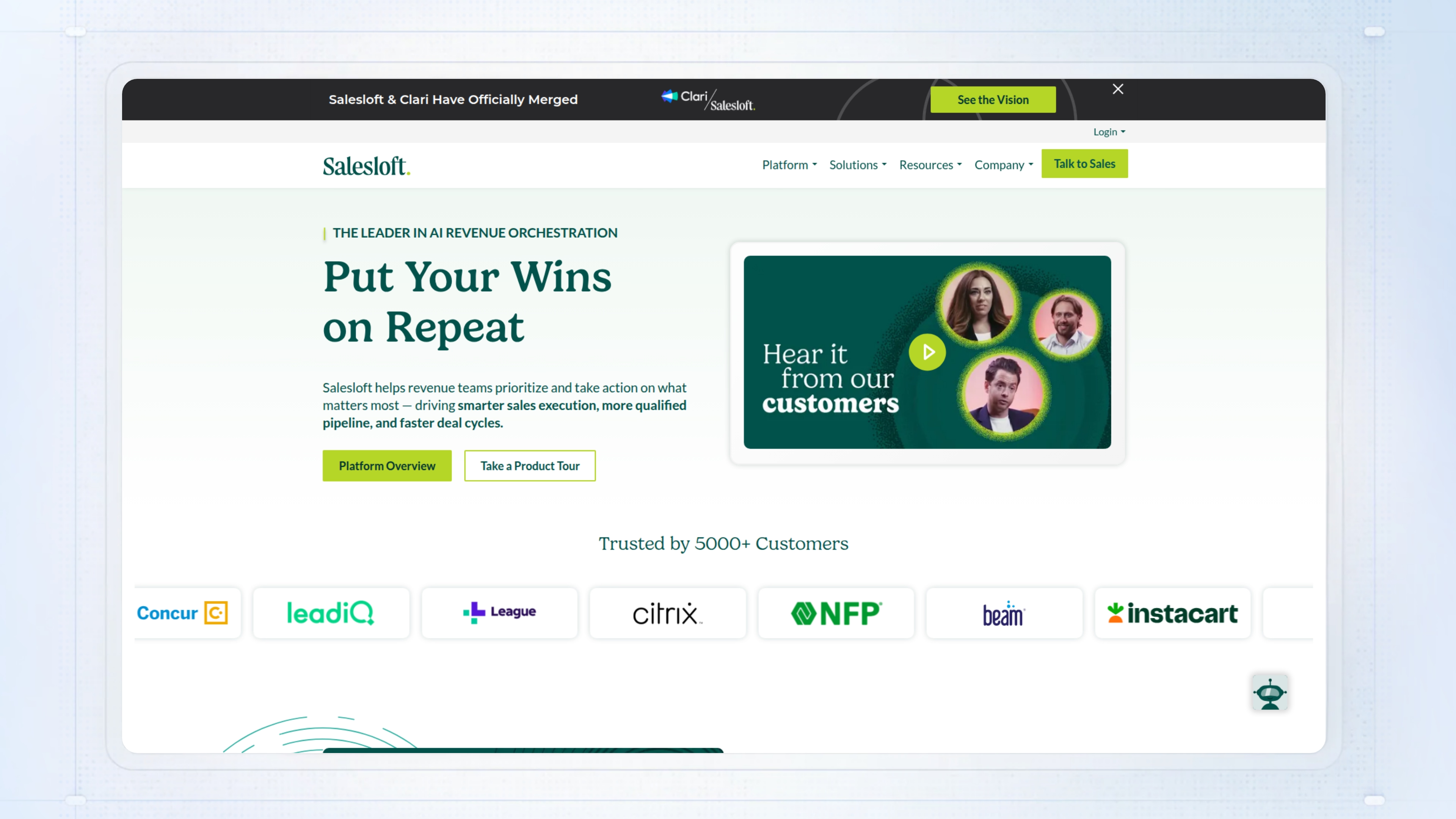
Salesloft combines sales engagement with conversation intelligence and deal management in a single revenue workflow platform, supporting sales operations across that workflow.
Best for: Revenue teams wanting engagement automation plus coaching and forecasting capabilities.
Key features:
- Cadence automation for email and calls
- Conversation intelligence with call recording
- Deal intelligence and forecasting
- Coaching and performance analytics with sales enablement analytics
Pricing: Contact sales for pricing.
G2 rating: 4.5/5
Must-haves in sales enablement software
Content organization and search
Reps abandon tools they can't search quickly. Look for AI-powered search that understands context, not just keywords. The best platforms surface relevant content based on deal stage, persona, and past engagement patterns.
AI-powered recommendations
Modern enablement platforms suggest content automatically rather than requiring reps to hunt. The right case study appears when a deal reaches negotiation, or the competitive battlecard surfaces when a specific competitor is mentioned.
Recommendations
Modern enablement platforms suggest content automatically rather than requiring reps to hunt. The right case study appears when a deal reaches negotiation, or the competitive battlecard surfaces when a specific competitor is mentioned.
Analytics and engagement tracking
You want visibility into what content gets used, what buyers engage with, and what correlates with closed deals, and sales enablement analytics plus sales analytics are what make that visibility possible. Without this data, you're guessing which materials actually help reps win, instead of getting actionable insights from reporting that connect activity to sales outcomes and revenue outcomes.
CRM and tech stack integrations
Enablement tools only work if they connect to where reps already work and integrate with your existing tech stack, not replace it. Native integrations with Salesforce, HubSpot, Outlook, and Slack - including sales software, CRM, communication, and marketing systems - determine whether the platform becomes part of daily workflow or sits unused, which matters even when evaluating other sales enablement tools.
Personalization capabilities
The ability to tailor content, demos, and outreach by account, persona, or industry separates effective enablement from generic content dumps. Look for dynamic variables, conditional content, and easy customization without design skills.
Mobile access
Field sales and reps who work outside the office need enablement that travels with them. Mobile apps with offline access ensure materials are available regardless of connectivity.
Benefits of sales enablement tools
Faster sales rep onboarding
Structured training and easy content access reduce ramp time significantly. Organizations using enablement platforms typically see new reps reach quota faster than teams relying on tribal knowledge and scattered resources.
Higher win rates and deal velocity
When reps have the right content at the right moment, deals move forward instead of stalling. Teams using enablement tools often report a 19% increase in win rates and shorter sales cycles, which can support faster revenue growth.
Unified content library across teams
Marketing and sales working from one source of truth eliminates the problem of reps using outdated decks or creating their own off-brand materials. Version control and governance ensure consistency.
Improved sales productivity
Less time searching means more time selling. In fact, 65% of organizations report increased sales with enablement tools, and 65% report using them to automate parts of the sales process. Enablement platforms typically save reps several hours per week previously spent hunting for content or recreating materials that already exist.
Better buyer engagement
Interactive content like demos and personalized microsites let buyers self-educate on their terms. This matches modern buying preferences where a significant portion of the journey happens before engaging sales.
How to choose the right sales enablement platform
Define your enablement goals first
Start with the problem, not the tool. Set specific sales goals first - whether content findability is your biggest gap, rep onboarding is taking too long, or demos require too much manual work—because clear goals make it easier to pick the right sales enablement software. Match the tool category to your primary pain point.
Evaluate integration requirements
List your existing tools: CRM, email, calendar, video conferencing, marketing automation software. Evaluate how the platform fits your broader tech stack and supports customer data flows, then ensure it connects natively to avoid manual data entry and workflow friction. B2B sales organizations use nearly 10 tools on average, which makes integration even more important.
Assess ease of adoption
Tools only work if reps use them. Prioritize platforms that fit existing workflows with minimal behavior change. The fanciest features mean nothing if adoption stays low.
Consider total cost of ownership
Look beyond license fees. Factor in implementation time, training requirements, ongoing administration, and the cost of integrations. A cheaper tool that requires dedicated admin time may cost more overall.
Test with your actual workflows
Run a pilot with real use cases before committing. Measure adoption rates, time savings, and impact on the metrics you care about. Most vendors offer trials or proof-of-concept periods.
Start building your sales enablement stack today
The right sales enablement tools depend entirely on where your team struggles most. Content management platforms solve findability. Training tools fix onboarding. Conversation intelligence improves coaching. Demo automation scales product experiences. Most teams benefit from starting with one focused solution rather than an all-in-one platform that does everything adequately. Solve your biggest pain point first, measure the impact, then expand.
If interactive demos and buyer self-service are priorities, Start your journey with Guideflow today!
For teams building out their full stack, explore our guides on product marketing tools and demand generation tools.
FAQs about sales enablement tools
HubSpot Sales Hub and Guideflow both offer free tiers and quick setup, making them great starting points for small teams without dedicated enablement staff. HubSpot covers CRM and sequences while Guideflow handles interactive demos.
Sales enablement focuses specifically on equipping sales teams and sales reps with content, training, and tools. Revenue enablement extends the same approach to all customer-facing roles, including customer success, account management, support, and customer success teams.
Implementation ranges from same-day for simple tools like demo automation platforms to several months for enterprise content management systems requiring migration, taxonomy design and training rollout.
Most modern sales enablement platforms offer native integrations with major CRMs. Depth varies from basic data sync to embedded workflows where reps never leave the CRM interface.
ROI typically shows in reduced ramp time for new reps, higher content usage rates, and improved win rates, and it can also appear in measurable sales outcomes and revenue outcomes, not just operational metrics. Specific impact depends on your current baseline and adoption rates, but stronger sales performance can contribute to revenue growth over time.
Interactive demos are enablement content that buyers can access without scheduling a call. They help reps scale personalized product experiences across more deals while giving buyers the self-service evaluation they prefer.
Most teams benefit from a primary platform for content or training plus specialized tools for specific needs like conversation intelligence or demo automation. All-in-one platforms exist but often sacrifice depth for breadth.
Sales enablement provides content, training and insights. Sales engagement focuses specifically on automating and tracking outreach activities like email sequences, call cadences and social touches.