
Your marketing stack has 47 tools. Your conversion rate hasn't moved in six months. The problem usually isn't missing software. It's the wrong combination of tools that don't talk to each other, creating data silos that cost companies 20–30% of revenue and manual work instead of growth loops.
What's inside
This guide covers 25 growth marketing tools across analytics, CRM, automation, SEO, lead generation, and conversion optimization. You'll find a comparison table to evaluate options quickly, plus guidance on building a stack that fits your company stage. Each tool is selected based on how well it scales, integrates with existing systems, and delivers measurable results.
What are growth marketing tools
Growth marketing tools accelerate customer acquisition, retention, and revenue through data-driven experimentation and automation. Top tools include analytics platforms like Amplitude and Mixpanel, CRM and automation systems like HubSpot and ActiveCampaign, conversion optimization tools like Hotjar, and SEO platforms like Semrush and Ahrefs. Key categories also include lead generation tools like Clearbit and Apollo, social media management like Buffer, and integration platforms like Zapier.
What separates growth tools from traditional marketing software? Growth tools focus on rapid testing and building scalable loops across the entire funnel. They help you run experiments, measure what works, and double down on winning tactics without waiting months for results.
Core capabilities of effective growth tools
The best growth marketing tools share a few common traits:
- Data collection and tracking: Understand user behavior across every touchpoint, from first visit to conversion and beyond.
- Automation: Remove manual tasks from repetitive workflows so your team can focus on strategy.
- Personalization: Tailor messaging and experiences to specific segments based on real behavior.
- Testing and optimization: Run experiments to improve conversion rates and validate assumptions.
- Integration: Connect with your existing CRM, analytics, and communication tools without custom development.
Why growth teams invest in the right tools
Growth teams operate across the full funnel and typically juggle acquisition, activation, retention, and referral simultaneously. Without the right stack, teams waste hours on manual data entry, miss follow-up windows, and struggle to prove ROI to leadership.
The right tools reduce friction in the buyer journey and accelerate the path from awareness to conversion, with 76% of companies seeing ROI within one year. They also provide the attribution data you need to justify budget and optimize spend across channels.
When to use growth marketing tools
The right tools depend on your company's stage and goals. Different situations call for different priorities, so choosing a stack that aligns with your immediate needs matters more than chasing feature lists.
Early-stage startups building a first stack
Start lean with free tiers and essential categories only. Focus on foundational tools for analytics, a basic CRM, and one automation tool to connect your apps. Avoid overbuying before you have product-market fit.
A typical early-stage stack might include Google Analytics for web tracking, HubSpot's free CRM for contact management, and Zapier to connect everything together. This keeps costs low while giving you the data you need to make decisions.
Scaling teams optimizing for efficiency
At this stage, invest in tools that reduce manual work and improve conversion rates. Add conversion optimization tools, data enrichment platforms, and more sophisticated marketing automation software to scale your efforts.
You might also consider adding interactive product experiences to your website. Letting prospects experience your product before a sales call can reduce friction and improve qualification rates.
Enterprise teams consolidating their stack
Focus on integration and governance to manage a complex tech environment. Reduce tool overlap, centralize data in a single source of truth, and ensure consistent measurement across all teams. Prioritize tools with robust APIs and enterprise-grade security compliance.
Comparison of the best growth marketing tools
| # | Product | Category | Use case | Pricing | G2 Rating |
|---|---|---|---|---|---|
| 1 | Guideflow | Conversion Optimization | Interactive product demos | Freemium | 5/5 |
| 2 | Zapier | Automation | Workflow automation | Freemium | 4.7/5 |
| 3 | HubSpot | All-in-One CRM | CRM and marketing automation | Freemium | 4.4/5 |
| 4 | Clay | Data Enrichment | Outbound personalization | From $149/mo | 4.9/5 |
| 5 | Ahrefs | SEO | Backlink and keyword analysis | From $99/mo | 4.6/5 |
| 6 | Semrush | SEO | All-in-one SEO and PPC | From $129/mo | 4.5/5 |
| 7 | Google Analytics | Analytics | Website traffic analysis | Free | 4.5/5 |
| 8 | Amplitude | Analytics | Product and behavioral analytics | Freemium | 4.5/5 |
| 9 | Mixpanel | Analytics | User action tracking | Freemium | 4.5/5 |
| 10 | Hotjar | Conversion Optimization | Heatmaps and session recordings | Freemium | 4.3/5 |
| 11 | Intercom | Customer Messaging | Live chat and chatbots | From $74/mo | 4.5/5 |
| 12 | ActiveCampaign | Email Marketing | Email and marketing automation | From $29/mo | 4.5/5 |
| 13 | Customer.io | Customer Messaging | Multi-channel lifecycle messaging | From $100/mo | 4.4/5 |
| 14 | Brevo | Email Marketing | Email, SMS, and chat | Freemium | 4.5/5 |
| 15 | Clearbit | Data Enrichment | B2B lead enrichment | Freemium | 4.4/5 |
| 16 | LinkedIn Sales Navigator | Lead Generation | B2B prospecting | From $99/mo | 4.3/5 |
| 17 | Apollo | Lead Generation | Sales intelligence and engagement | Freemium | 4.8/5 |
| 18 | Lemlist | Email Marketing | Cold email outreach | From $59/mo | 4.4/5 |
| 19 | Unbounce | Conversion Optimization | Landing page building and testing | From $99/mo | 4.4/5 |
| 20 | Optimizely | Conversion Optimization | A/B testing and experimentation | Custom | 4.3/5 |
| 21 | Segment | Customer Data Platform | Data collection and routing | Freemium | 4.6/5 |
| 22 | Buffer | Social Media | Social scheduling and analytics | Freemium | 4.3/5 |
| 23 | Typeform | Lead Generation | Interactive forms and surveys | Freemium | 4.5/5 |
| 24 | Airtable | Workflow Management | Campaign and data organization | Freemium | 4.6/5 |
| 25 | Make | Automation | Advanced workflow automation | Freemium | 4.7/5 |
25 best growth marketing tools for business
1. Guideflow
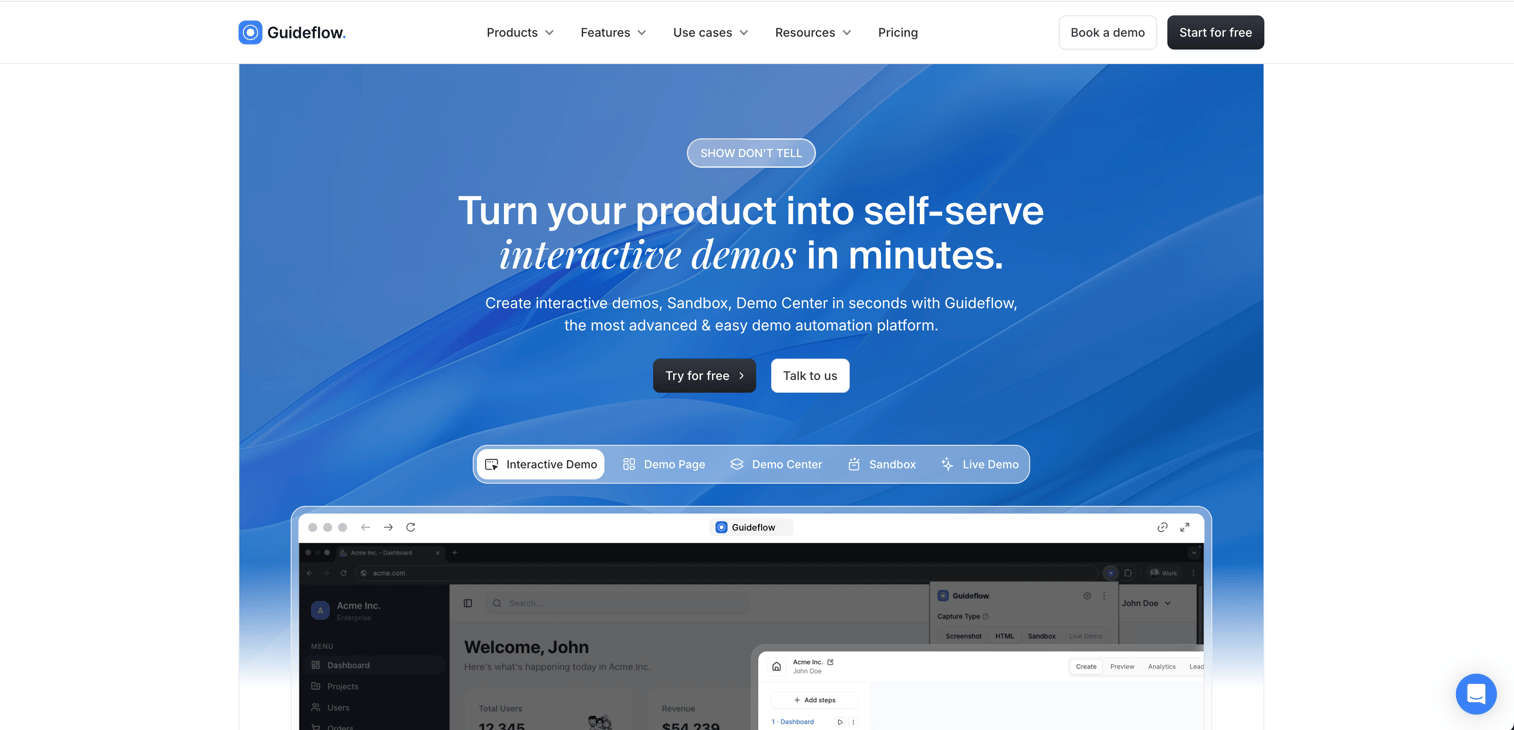
Guideflow is a demo automation platform that turns your product into an interactive demo prospects can experience instantly, without scheduling a call. Built on a "show, don't tell" philosophy, it lets you capture product flows in a few clicks, personalize them at scale with AI, and share them anywhere.
Best for: Marketing and pre-sales teams who want to convert more website visitors into pipeline without adding sales calls.
Key strengths
- Capture complex product flows directly from your browser in minutes
- Use AI-powered editing to generate steps, translations, and voiceovers automatically
- Personalize demos with CRM variables and dynamic content
- Share demos via links, embeds, emails, or social platforms
- Track completion rates, drop-off points, and conversion events with advanced analytics
Why choose this tool: Guideflow helps you un-gate your product and let prospects self-serve, reducing friction and accelerating your sales cycle.
Pricing: Free plan available. Paid plans start at $40/month.
Start your journey with Guideflow today!
2. Zapier
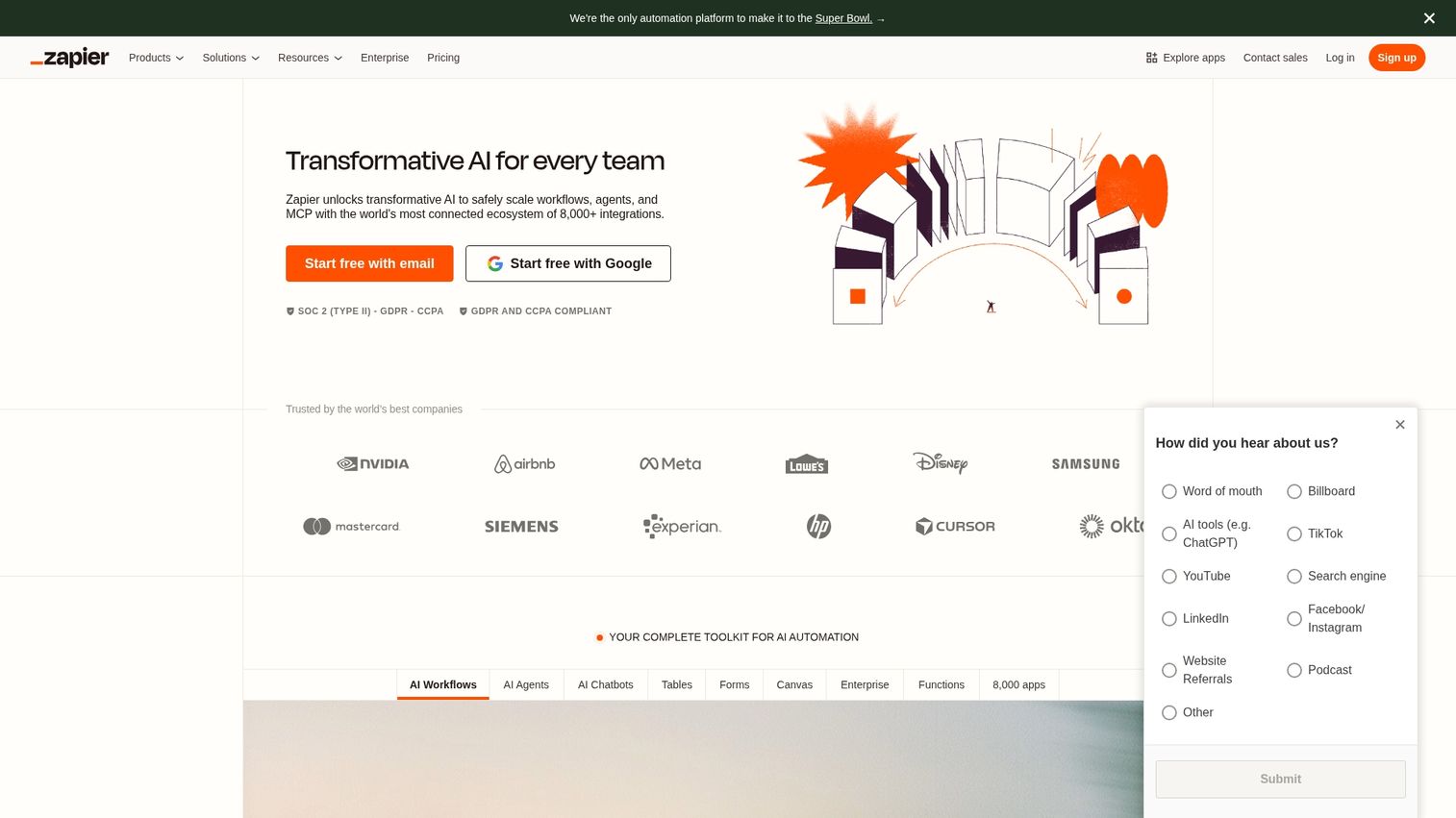
Zapier connects over 6,000 web apps without requiring any code. You create automated workflows called "Zaps" that move data between tools based on triggers and actions, eliminating manual data entry and keeping your entire tech stack in sync.
Best for: Teams that want to move data between different tools automatically without developer resources.
Key strengths
- Integrates with thousands of popular business and productivity apps
- Build multi-step workflows with conditional logic and filters
- Automate repetitive tasks to save time and reduce human error
- Easy-to-use visual editor for building and managing Zaps
Why choose this tool: Zapier is the industry standard for no-code automation. If you're copying data between spreadsheets and CRMs manually, this is usually the first tool to add.
Pricing: Free tier for basic workflows. Paid plans start at $19/month.
3. HubSpot

HubSpot combines a CRM with marketing, sales, and service hubs in one platform. It provides a single source of truth for all customer interactions, making it easier to manage relationships and create personalized experiences across the entire customer lifecycle.
Best for: Teams wanting a unified system for managing contacts, email marketing, and sales pipelines.
See how easy it is to add and manage contacts in HubSpot with this step-by-step interactive tutorial.
Key strengths
- Free CRM with robust contact management and deal tracking
- Built-in email marketing, landing pages, and forms
- Powerful marketing automation and lead nurturing workflows
- Comprehensive reporting dashboards to track performance
Why choose this tool: HubSpot's free CRM is an unbeatable starting point for startups, and its integrated hubs provide a scalable path for growth.
Pricing: Free CRM available. Paid Marketing Hub plans start at $800/month for full automation features.
4. Clay
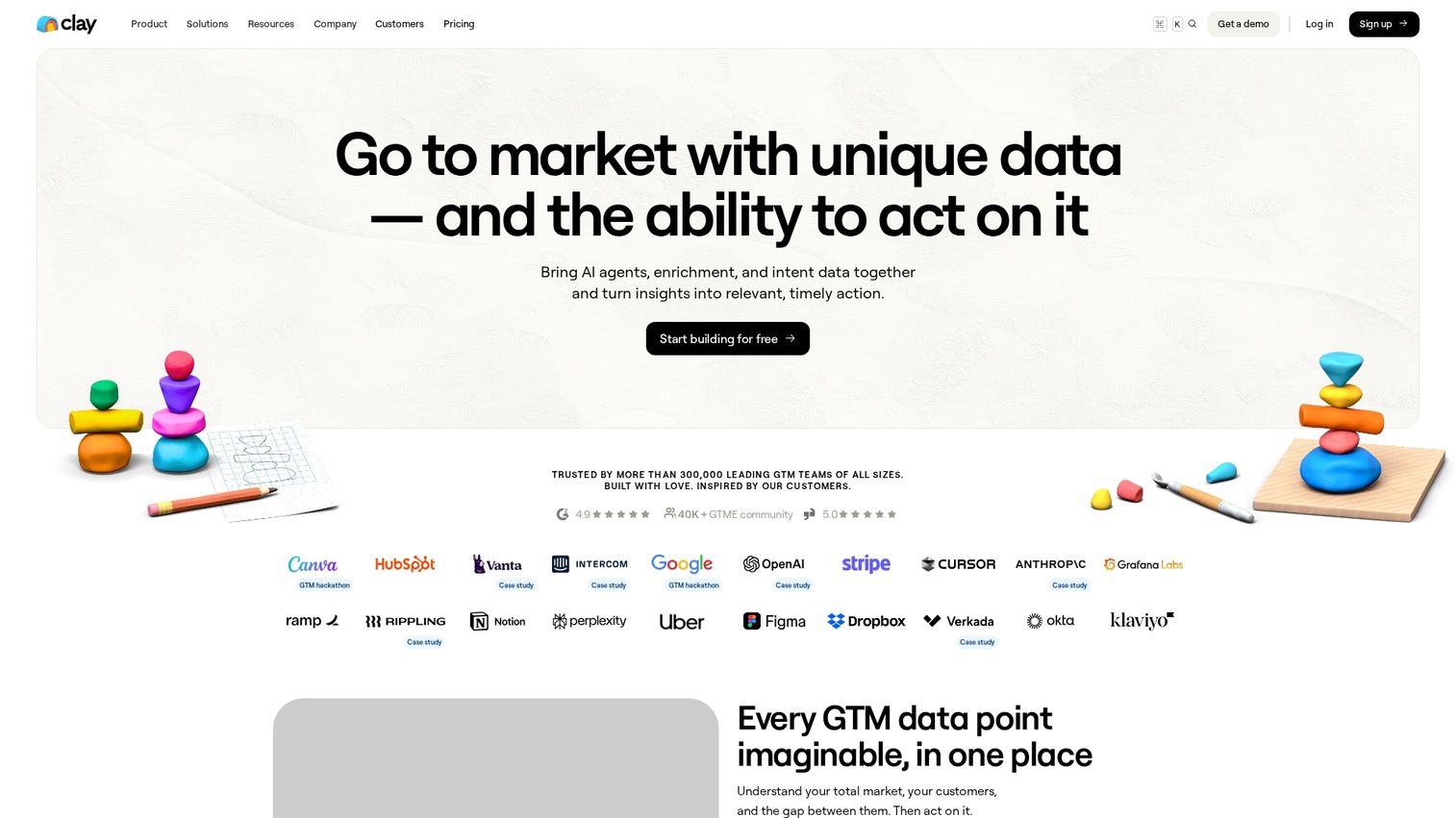
Clay is a data enrichment and personalization platform designed for modern outbound campaigns. It uses a waterfall enrichment model, pulling data from over 50 providers to find information on your prospects. Clay's AI capabilities also help you write highly personalized messages at scale.
Best for: Sales and growth teams building targeted prospect lists for outbound campaigns.
Key strengths
- Waterfall enrichment combines multiple data sources for higher accuracy
- AI-powered message personalization and list building
- Integrates directly with CRMs and sales engagement tools
- Find and verify emails, phone numbers, and social profiles
Why choose this tool: Clay automates the most time-consuming parts of prospecting and personalization, allowing teams to focus on building relationships instead of researching contacts.
Pricing: Plans start at $149/month based on credit usage.
5. Ahrefs
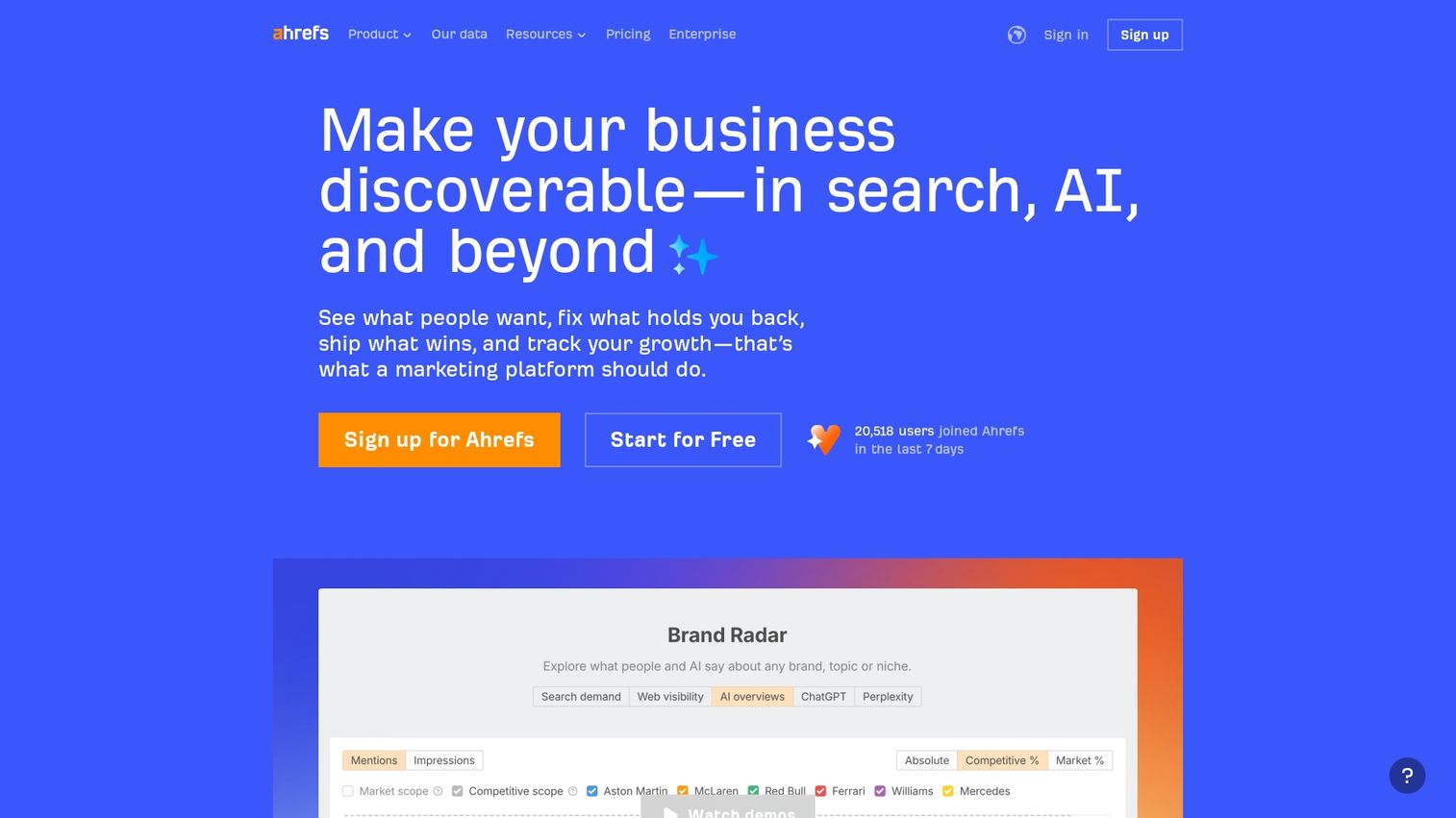
Ahrefs is a leading SEO and content research platform known for its powerful backlink analysis and keyword research tools. It helps teams understand their competitive landscape, identify high-value keywords, and track search engine rankings over time.
Best for: Teams focused on driving organic growth through search engine optimization.
Walk through Ahrefs' keyword research workflow in this hands-on interactive tutorial.
Key strengths
- Industry-leading backlink index for competitor analysis
- In-depth keyword research tool with accurate difficulty scores
- Comprehensive site audit tool to identify technical SEO issues
- Rank tracker to monitor keyword performance over time
Why choose this tool: Ahrefs provides the deep data and competitive insights needed to build and execute a successful SEO strategy.
Pricing: Plans start at $99/month.
6. Semrush
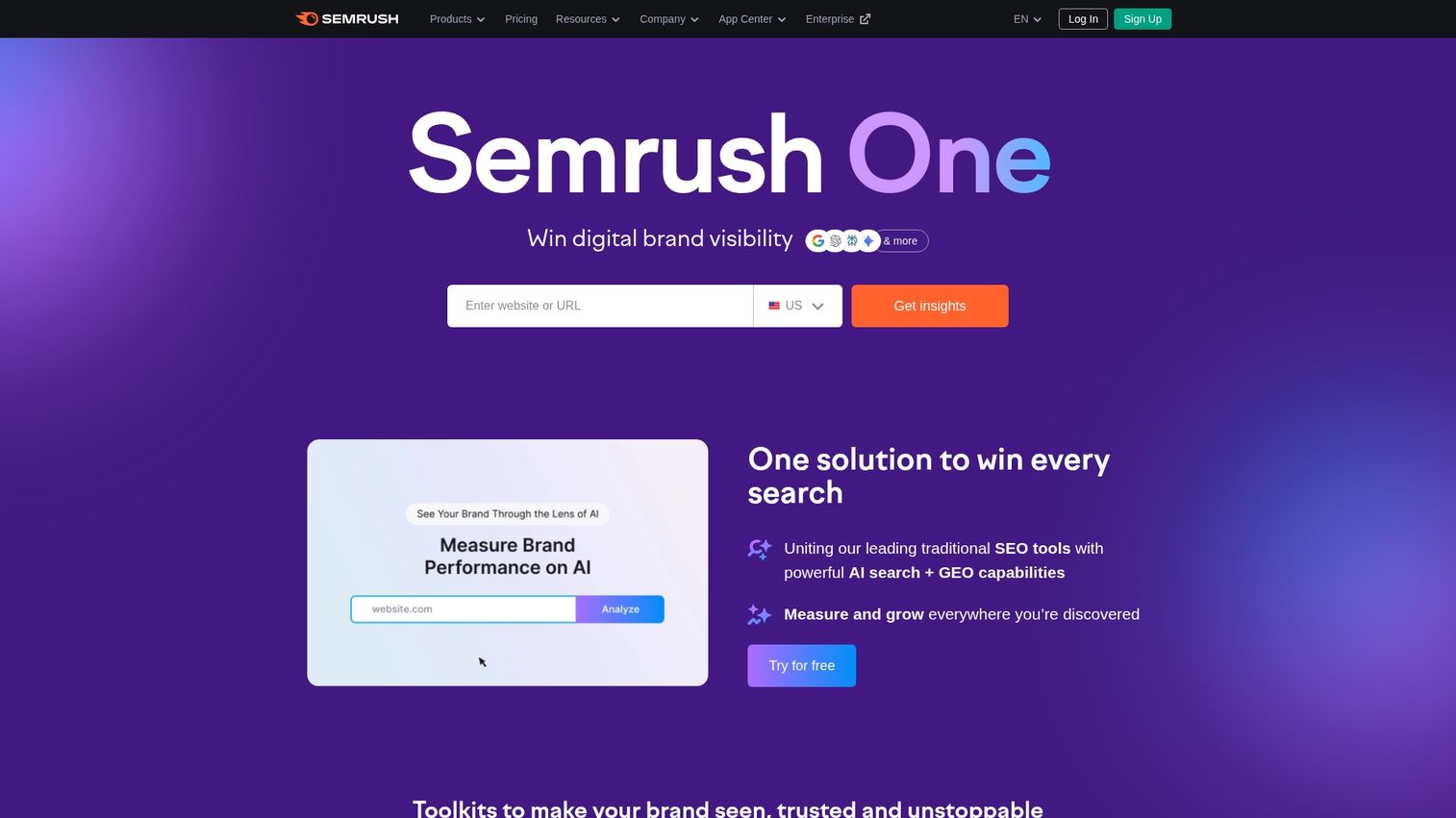
Semrush is a comprehensive digital marketing suite covering SEO, content marketing, competitive analysis, and paid search. It provides an all-in-one solution for marketing teams that manage both organic and paid channels.
Best for: Marketing teams managing SEO and paid search campaigns together.
Explore Semrush's Keyword Magic Tool in action with this interactive tutorial.
Key strengths
- Keyword tracking and position monitoring
- Content optimization tools with writing assistance
- In-depth PPC and advertising research
- Site health monitoring and technical SEO audits
Why choose this tool: Semrush consolidates dozens of marketing functions into one platform, making it a cost-effective choice for integrated teams.
Pricing: Plans start at $129/month.
7. Google Analytics

Google Analytics is the foundational web analytics platform for tracking website traffic and user behavior. It provides essential data on where visitors come from, what pages they view, and how they convert.
Best for: Foundational website tracking and marketing attribution.
Key strengths
- Detailed event tracking for user interactions
- Audience insights and demographic data
- Conversion path analysis to understand the customer journey
- Seamless integration with Google Ads and other Google products
Why choose this tool: It's free, powerful, and essential for understanding website performance and user engagement.
Pricing: Free. Enterprise version (Analytics 360) available for large organizations.
8. Amplitude
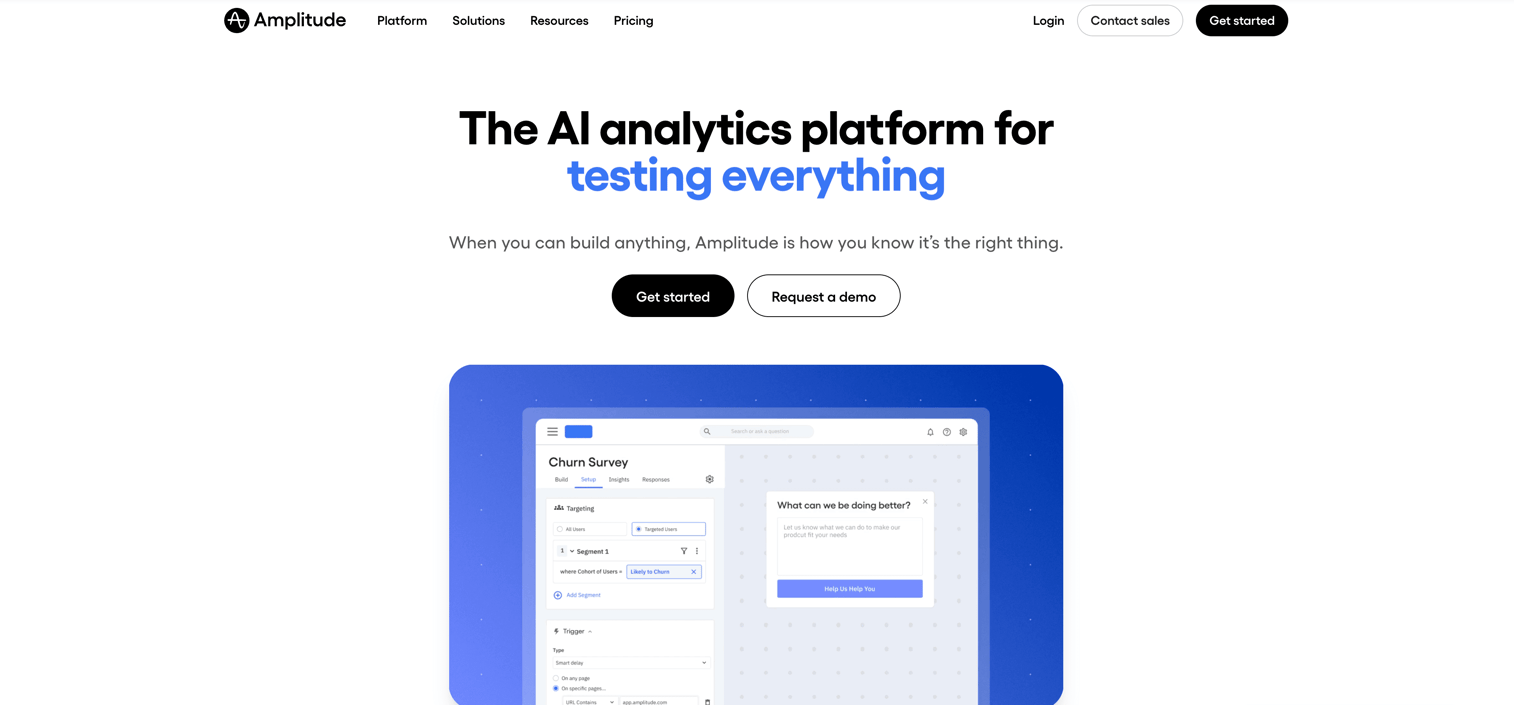
Amplitude is a product analytics platform that focuses on behavioral data and user journeys. It helps product-led growth teams understand how users interact with their product, track feature adoption, and identify points of friction.
Best for: Product-led growth teams tracking feature adoption and user behavior.
See how to find and analyze user cohorts in Amplitude with this interactive tutorial.
Key strengths
- Cohort analysis to track user groups over time
- Funnel visualization to identify drop-off points
- Retention tracking to measure user stickiness
- Built-in experimentation and A/B testing analysis
Why choose this tool: Amplitude provides the deep product insights needed to improve user activation, engagement, and retention.
Pricing: Generous free plan available. Paid plans based on data volume.
9. Mixpanel
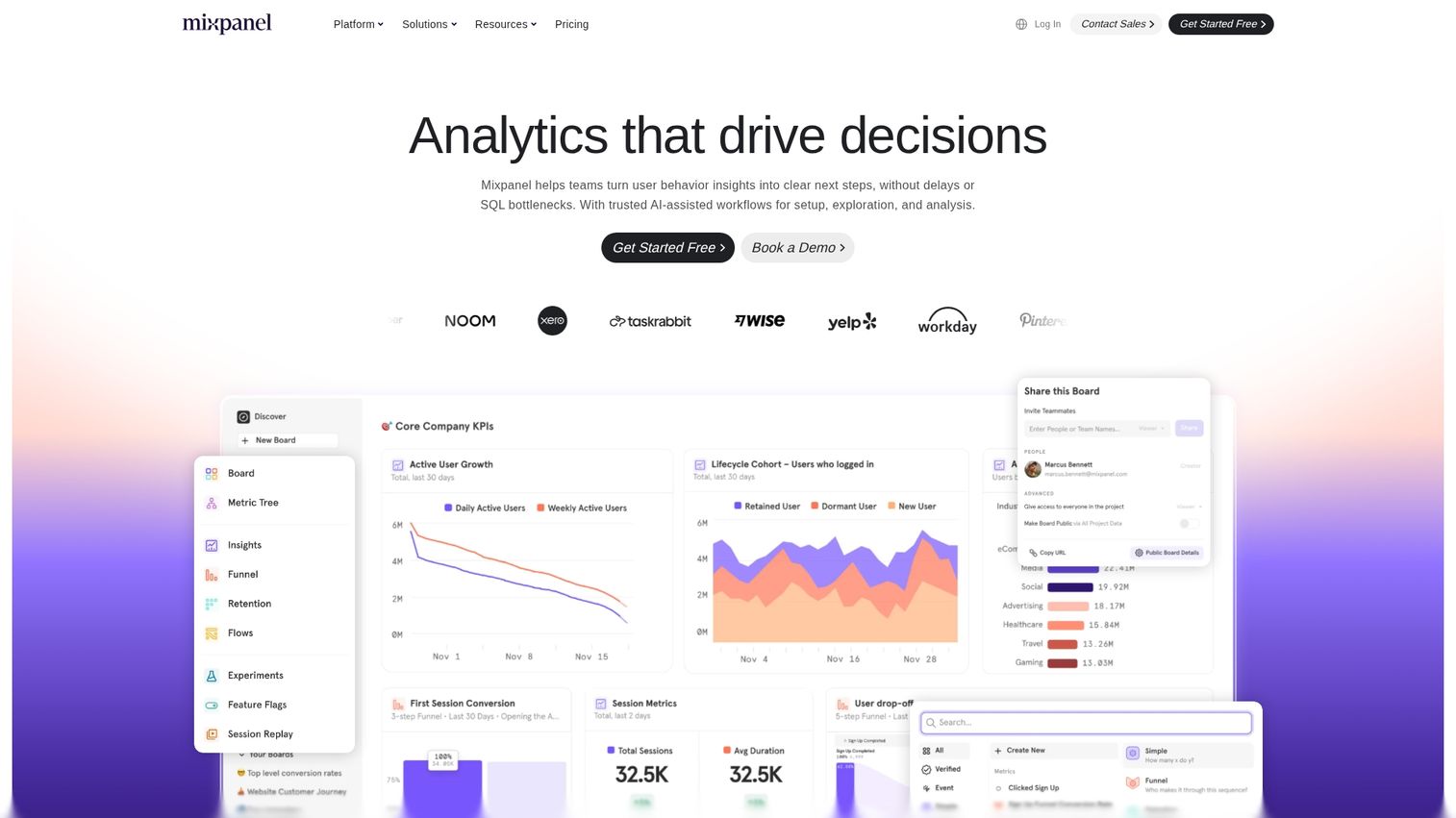
Mixpanel excels at tracking user actions and conversions at a granular level. It allows teams to go beyond page views to understand exactly what users are doing inside their product.
Best for: Teams needing granular, user-level insights into product engagement.
Key strengths
- Powerful event-based tracking for any user action
- Advanced user segmentation and cohort analysis
- A/B test analysis and impact measurement
- Real-time dashboards and reporting
Why choose this tool: Mixpanel is ideal for teams that want to answer complex questions about user behavior and optimize for key conversion events.
Pricing: Free tier for startups. Paid plans scale with data volume.
10. Hotjar
Hotjar provides qualitative user behavior insights through heatmaps, session recordings, and feedback surveys. It helps you visualize where users click, how far they scroll, and what they experience on your site.
Best for: Conversion optimization specialists and UX researchers.
Key strengths
- Click, move, and scroll heatmaps to visualize user attention
- Session replays to watch real user journeys
- On-site feedback polls and surveys to collect user sentiment
- Easy setup and integration with any website
Why choose this tool: Hotjar helps you understand the "why" behind your data, uncovering usability issues and opportunities for improvement.
Pricing: Free basic plan. Paid plans based on session volume.
11. Intercom
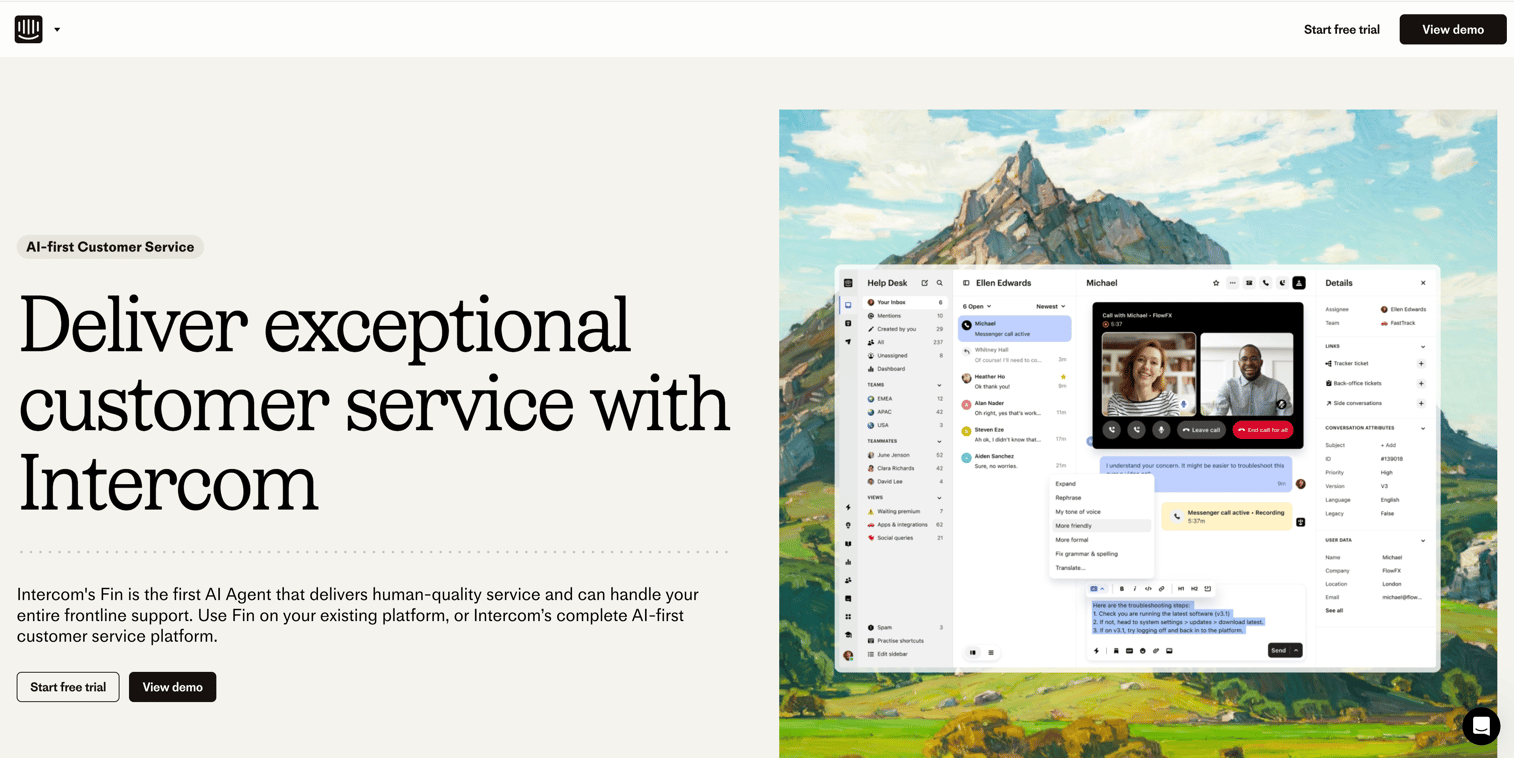
Intercom is a customer messaging platform that facilitates communication for sales, support, and engagement through live chat, chatbots, and in-app messages.
Best for: Teams using live chat and in-app messaging to drive conversions and support.
Key strengths
- Customizable chatbots to qualify leads and answer questions 24/7
- Integrated help center and knowledge base
- Product tours to onboard new users
- Customer data platform to segment and target users effectively
Why choose this tool: Intercom unifies customer communication in one platform, creating a seamless experience for both users and internal teams.
Pricing: Starter plans available. Pricing based on seats and contacts.
12. ActiveCampaign
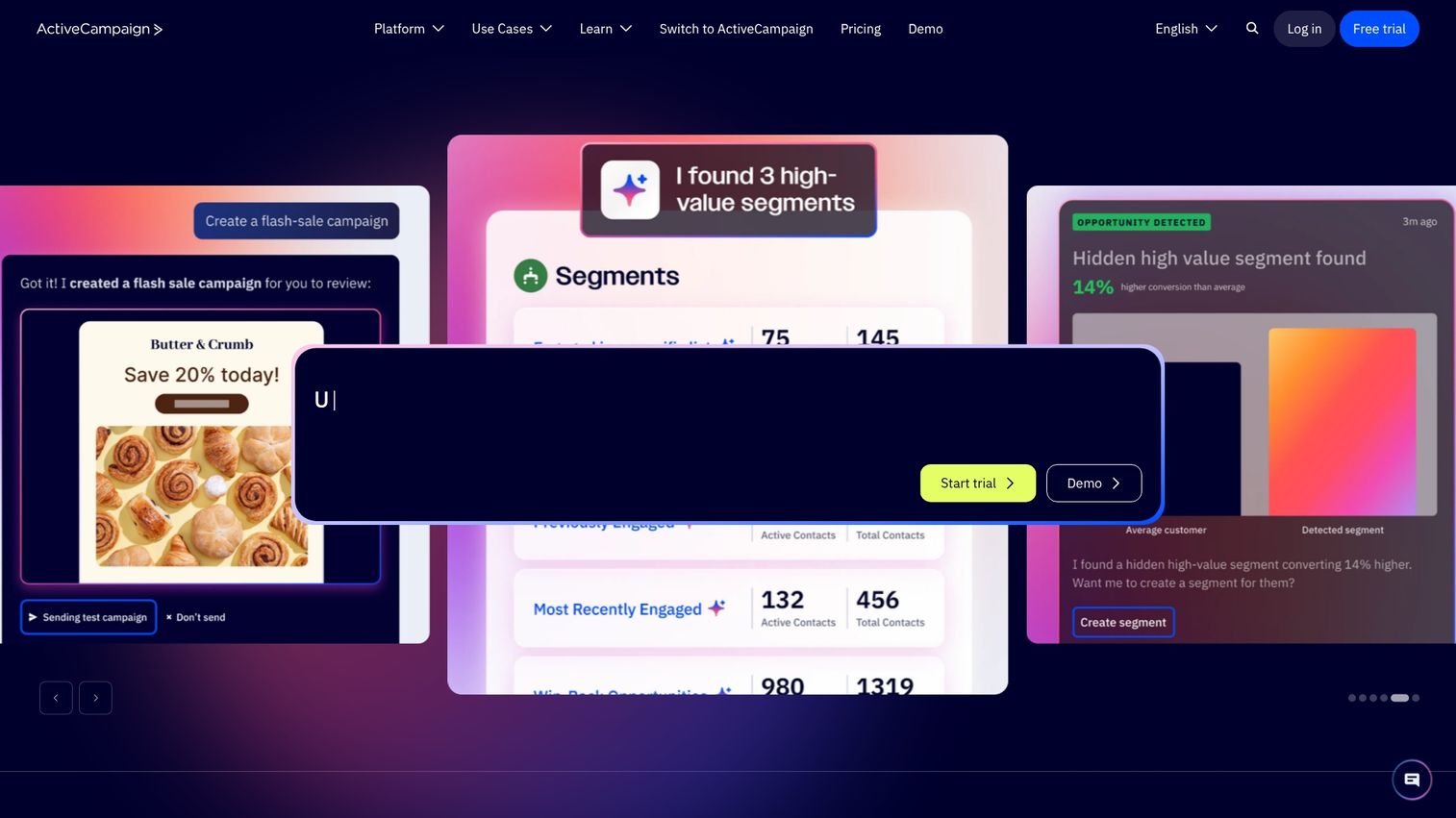
ActiveCampaign is a powerful email marketing and automation platform designed for sophisticated lifecycle marketing. Its visual automation builder allows teams to create complex email sequences with lead scoring and predictive sending.
Best for: Teams needing sophisticated email sequences and advanced lead scoring.
Learn how to build lead capture forms in ActiveCampaign with this interactive tutorial.
Key strengths
- Intuitive visual automation builder
- Predictive sending to deliver emails at the optimal time
- Built-in CRM features for sales and marketing alignment
- Advanced segmentation and personalization capabilities
Why choose this tool: ActiveCampaign offers enterprise-level automation at a price point accessible to small and mid-size businesses.
Pricing: Plans start at $29/month based on contacts.
13. Customer.io
Customer.io is a messaging platform built for product and growth teams to automate lifecycle messaging. It specializes in sending triggered campaigns across multiple channels based on real-time user behavior.
Best for: Product and growth teams automating complex lifecycle messaging.
Key strengths
- Powerful behavioral triggers for timely and relevant messages
- Multi-channel campaigns across email, push, and SMS
- Data pipelines to sync customer data from various sources
- Robust A/B testing for optimizing message performance
Why choose this tool: Customer.io is highly flexible and developer-friendly, making it ideal for tech-savvy teams that want full control over their messaging logic.
Pricing: Plans start at $100/month based on user profiles.
14. Brevo
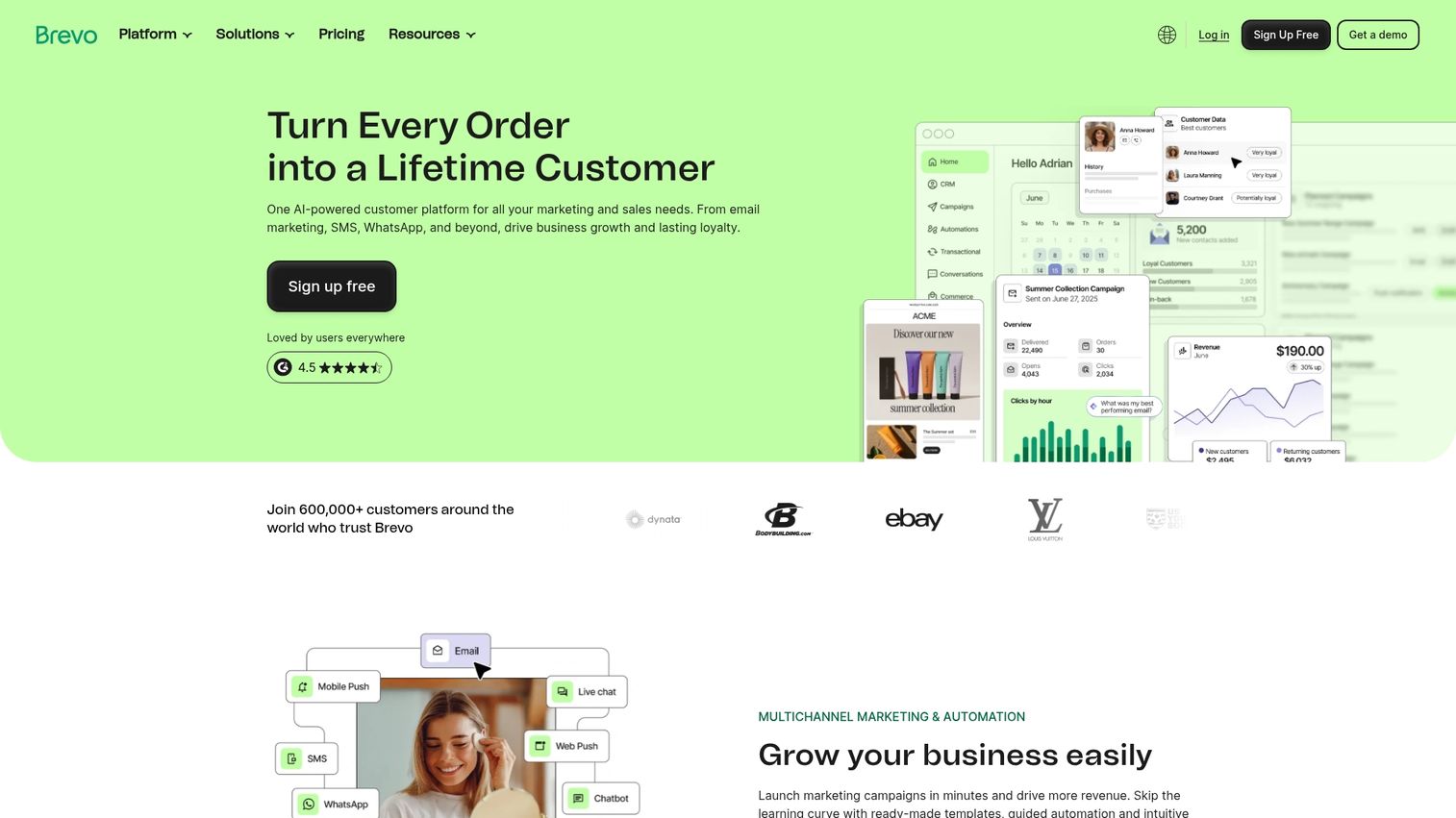
Brevo (formerly Sendinblue) is an all-in-one marketing platform offering email marketing, CRM, SMS, and chat at an affordable price.
Best for: Small to mid-size teams needing affordable email automation and multi-channel marketing.
See how to set up automated marketing workflows in Brevo with this interactive tutorial.
Key strengths
- Generous free tier for email campaigns
- SMS marketing and transactional email capabilities
- Built-in landing page builder and signup forms
- Simple marketing automation workflows
Why choose this tool: Brevo provides a wide range of marketing tools in one package, offering excellent value for teams on a budget.
Pricing: Free plan with daily sending limits. Paid plans based on email volume.
15. Clearbit
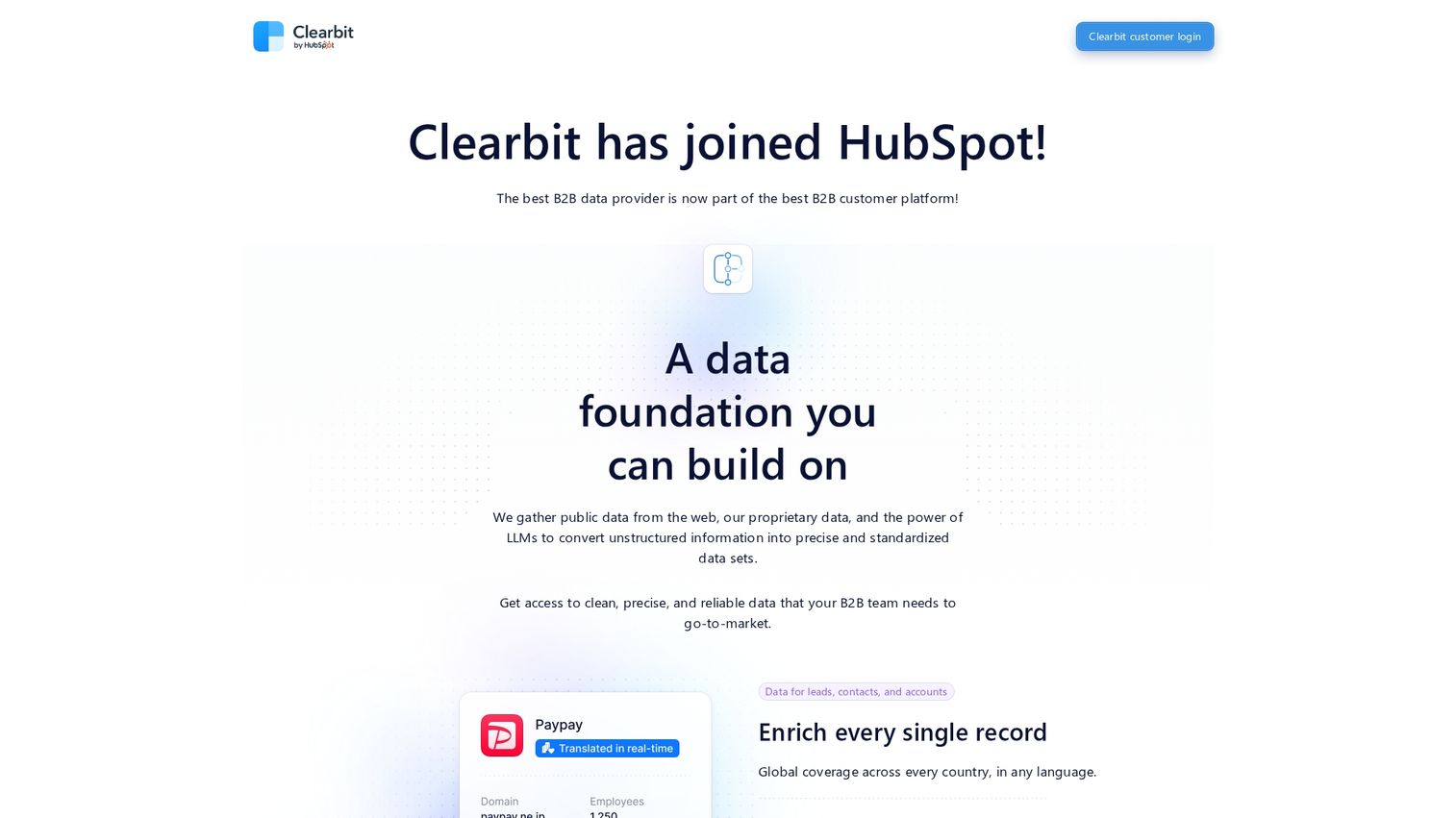
Clearbit is a B2B data enrichment platform that provides real-time intelligence on leads, contacts, and accounts. It helps teams shorten forms, identify anonymous website visitors, and personalize outreach.
Best for: Teams personalizing outreach and qualifying leads with firmographic data.
Key strengths
- Real-time API for enriching leads as they come in
- Reveal anonymous website traffic to identify target accounts
- Form shortening to increase conversion rates
- Audience building for targeted advertising campaigns
Why choose this tool: Clearbit provides the data foundation for account-based marketing and personalized sales.
Pricing: Free tool for visitor identification. Paid plans based on data usage.
16. LinkedIn Sales Navigator
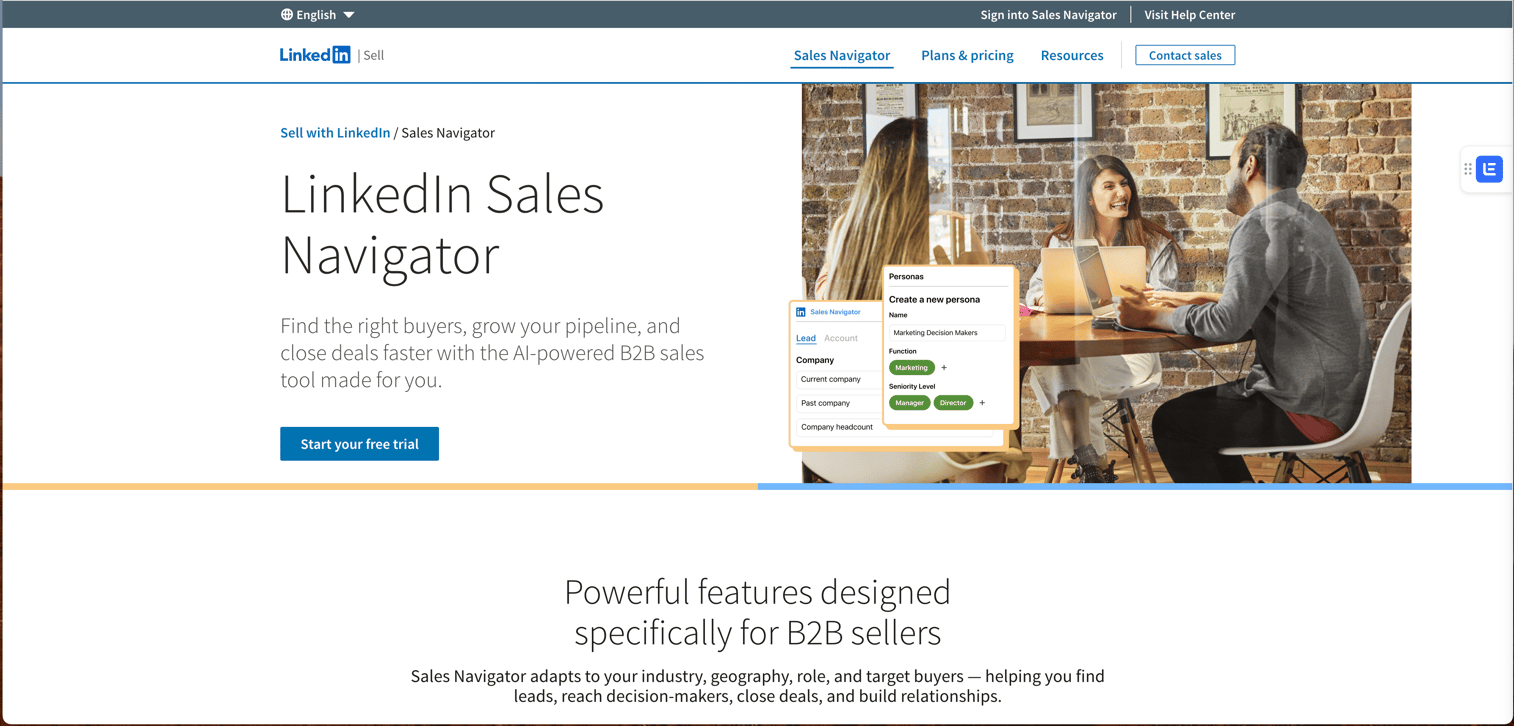
LinkedIn Sales Navigator is an advanced prospecting tool that leverages LinkedIn's professional network. It allows B2B teams to find, contact, and stay informed about key decision-makers.
Best for: B2B sales and growth teams targeting specific accounts and decision-makers.
Key strengths
- Advanced search filters for leads and accounts
- Lead recommendations based on your sales preferences
- InMail credits for messaging prospects outside your network
- CRM sync to integrate with your sales workflow
Why choose this tool: It's the most powerful tool for prospecting on LinkedIn, providing direct access to over 800 million professionals.
Pricing: Monthly or annual subscriptions starting at $99/month.
17. Apollo
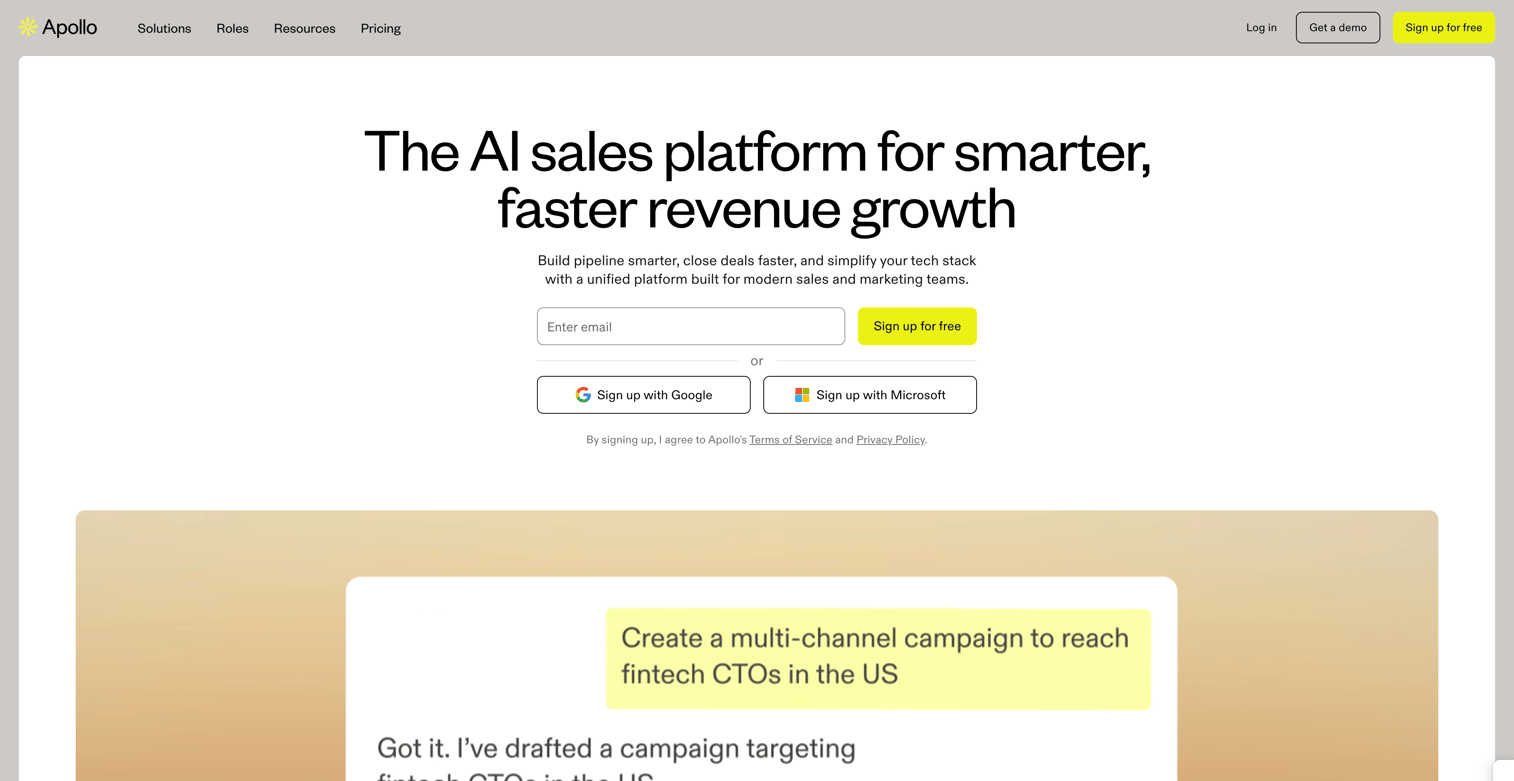
Apollo is a sales intelligence and engagement platform combining a massive B2B contact database with sequencing, dialing, and analytics tools.
Best for: Outbound teams that want to combine prospecting and sequencing in one platform.
Learn how to build targeted prospect personas in Apollo:
Key strengths
- Extensive database of contacts with verified emails and phone numbers
- Email sequencing and automated follow-ups
- Built-in dialer for making calls directly from the platform
- Buying intent signals to identify accounts actively researching solutions
Why choose this tool: Apollo consolidates the functionality of several sales tools into one, making it cost-effective for outbound teams.
Pricing: Free tier with limited credits. Paid plans based on credit usage.
18. Lemlist
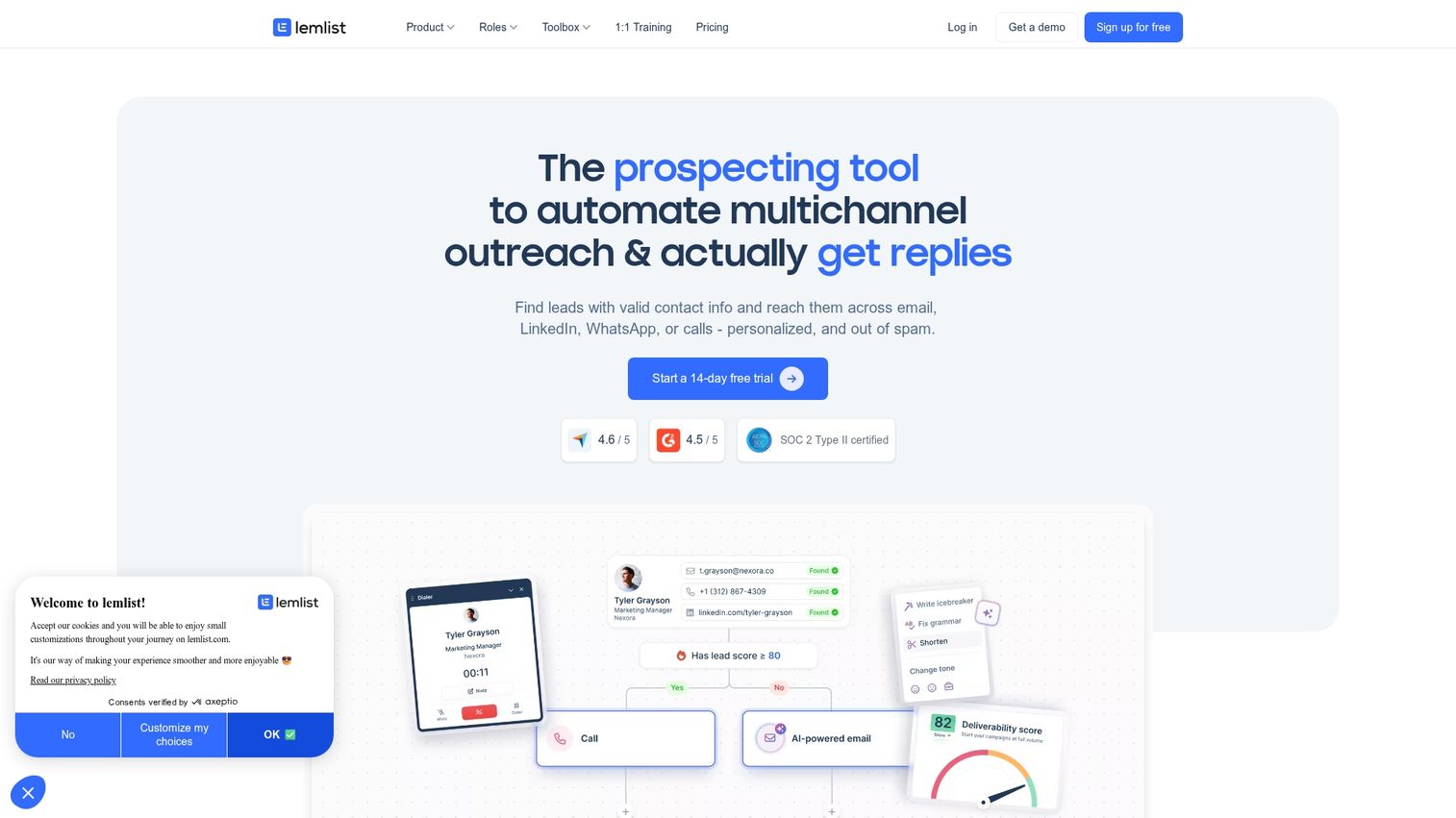
Lemlist is a cold email and outreach platform that focuses on deliverability and personalization. It helps teams run highly personalized outbound campaigns with dynamic images and videos.
Best for: Teams running personalized outbound campaigns with a strong focus on deliverability.
Follow this interactive demo to see how to add contacts to an outreach campaign in Lemlist:
Key strengths
- Automatic email warmup to build sender reputation
- Personalized images and videos to increase engagement
- Multi-channel sequences including email, LinkedIn, and calls
- Advanced deliverability monitoring and reporting
Why choose this tool: Lemlist's unique personalization features and commitment to deliverability help your cold emails stand out.
Pricing: Plans start at $59/month.
19. Unbounce
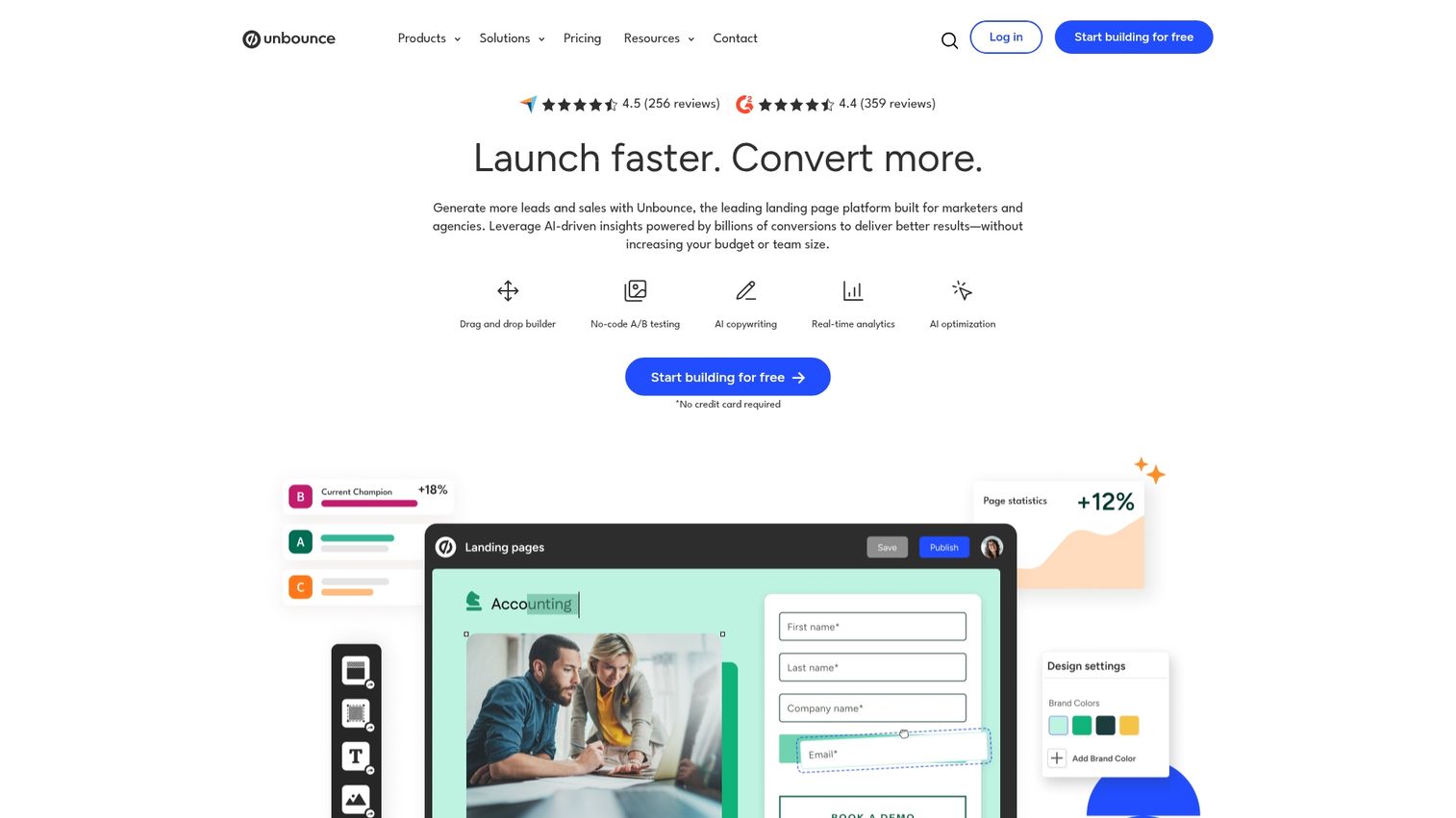
Unbounce is a leading landing page builder designed for conversion optimization. Its drag-and-drop editor allows marketers to create and test high-converting landing pages without developers.
Best for: Marketing teams that want to test and optimize landing pages quickly.
Key strengths
- Intuitive drag-and-drop page builder
- Built-in A/B testing for continuous optimization
- Smart Traffic feature that automatically routes visitors to the best-performing variant
- Popups and sticky bars to capture leads
Why choose this tool: Unbounce empowers marketers to quickly build and iterate on conversion-focused pages.
Pricing: Plans start at $99/month based on traffic volume.
20. Optimizely
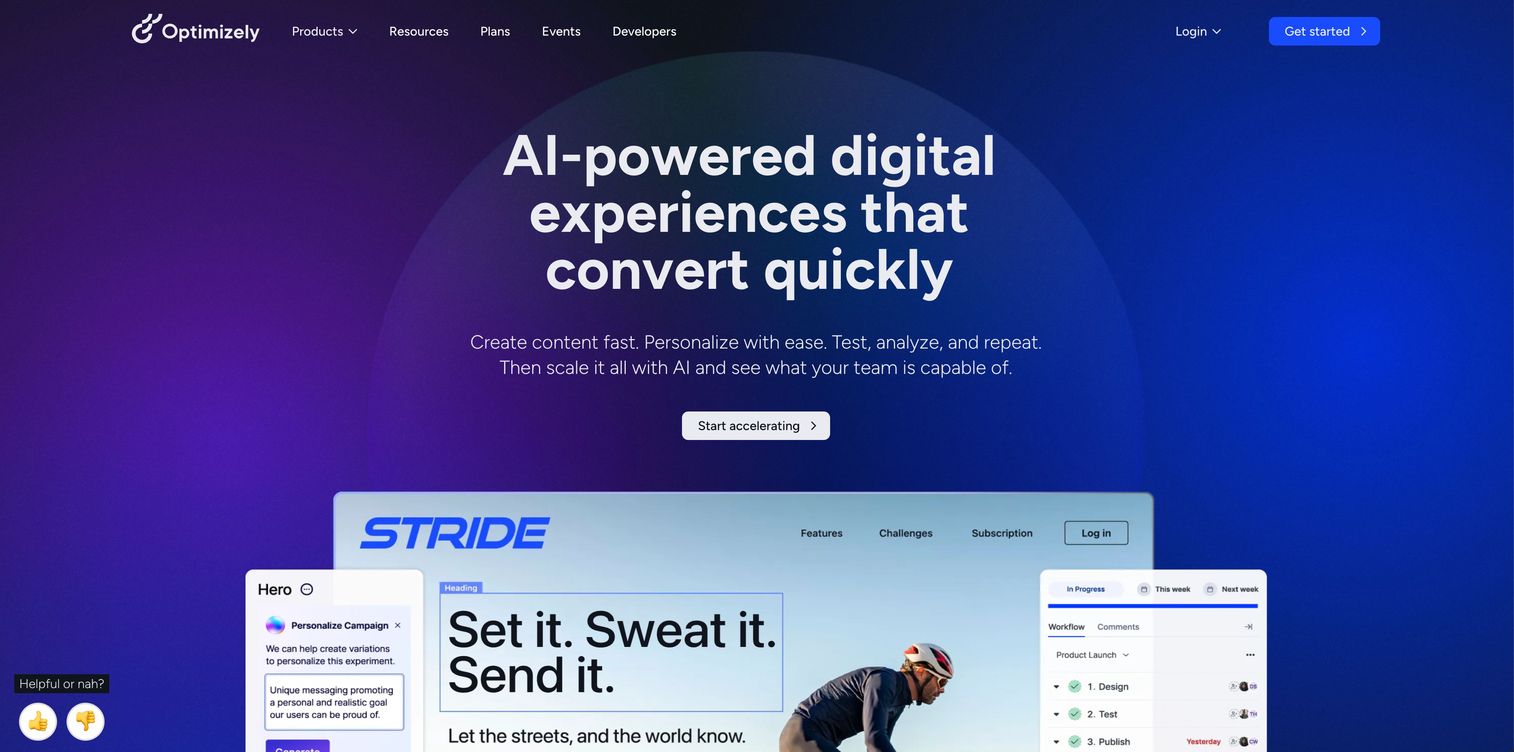
Optimizely is an enterprise-grade experimentation and A/B testing platform. It enables teams to run sophisticated conversion experiments backed by rigorous statistical analysis.
Best for: Teams running sophisticated, large-scale conversion experiments.
Key strengths
- Advanced web experimentation and multivariate testing
- Feature flags and in-product experimentation
- AI-powered personalization to tailor experiences
- Robust statistical engine to ensure valid results
Why choose this tool: Optimizely is the market leader for teams that require high control, statistical rigor, and scalability.
Pricing: Enterprise-level pricing tailored to customer needs.
21. Segment
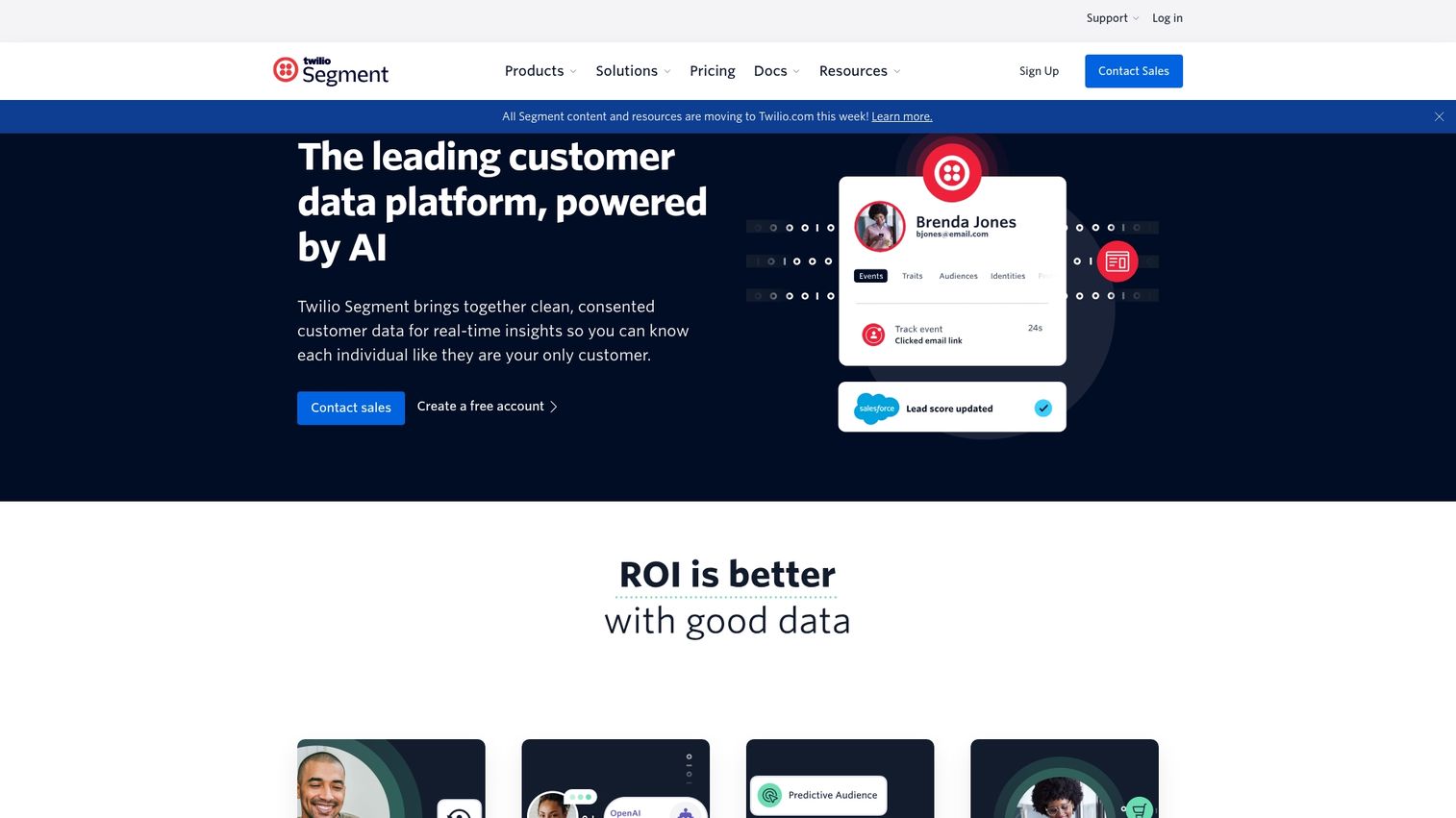
Segment is a Customer Data Platform (CDP) that helps companies collect, clean, and route customer data. It acts as a central hub, collecting data from all touchpoints and sending it to hundreds of other tools.
Best for: Teams looking to centralize customer data and streamline their tech stack.
Key strengths
- Single API for data collection across all platforms
- Identity resolution to create unified customer profiles
- Audience building for targeted campaigns
- Data sync to warehouses like Snowflake and BigQuery
Why choose this tool: Segment solves the problem of data silos, ensuring every tool in your stack has access to consistent customer data.
Pricing: Free plan for startups. Paid plans based on monthly tracked users.
22. Buffer

Buffer is a social media management tool that simplifies scheduling posts, analyzing performance, and engaging with your audience across multiple platforms.
Best for: Teams managing an organic social media presence efficiently.
Key strengths
- Intuitive post scheduling and content calendar
- Analytics dashboard to track key social media metrics
- Team collaboration features for drafting and approving posts
- Content planning and idea generation tools
Why choose this tool: Buffer's user-friendly interface makes it one of the easiest ways to manage and grow your social channels.
Pricing: Free plan for basic scheduling. Paid plans for more channels and features.
23. Typeform
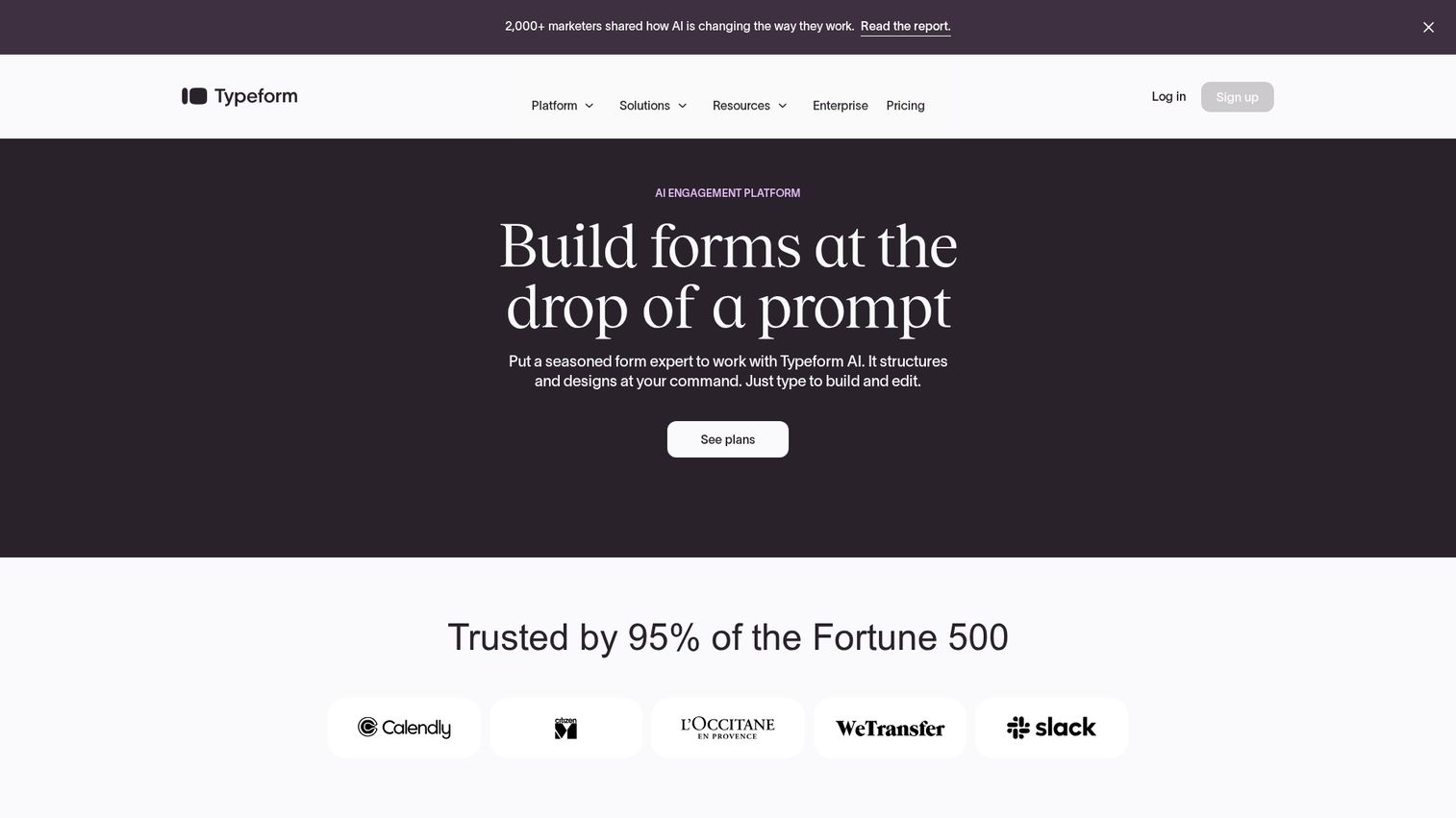
Typeform creates interactive and conversational forms, surveys, and quizzes. Its one-question-at-a-time format leads to higher completion rates.
Best for: Teams collecting leads and feedback with engaging, user-friendly experiences.
Key strengths
- Conversational form design that feels like a chat
- Logic Jumps to create personalized paths for respondents
- Integrates with hundreds of other tools
- Detailed analytics on responses and completion rates
Why choose this tool: Typeform turns data collection into a positive brand interaction, improving both quantity and quality of responses.
Pricing: Free plan with limited features. Paid plans based on responses.
24. Airtable
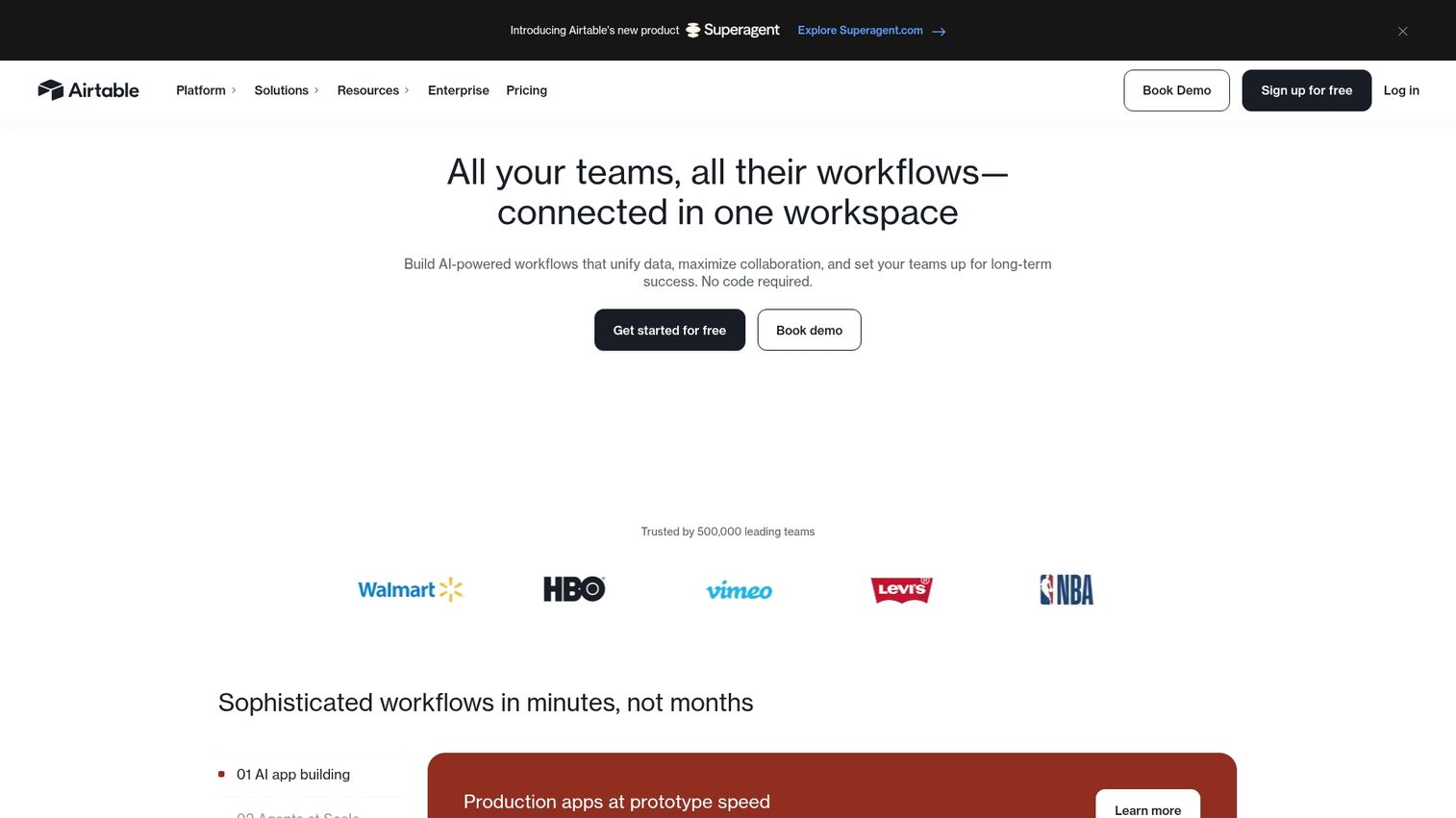
Airtable is a flexible, low-code platform combining spreadsheet functionality with database power. Growth teams use it to organize campaigns, manage content calendars, and track experiments.
Best for: Growth teams organizing campaigns, lists, and complex workflows.
Discover how to integrate Airtable with ChatGPT:
Key strengths
- Customizable views like Kanban, calendar, and gallery
- Built-in automations to streamline repetitive tasks
- App integrations to connect with other tools
- Real-time collaboration for teams
Why choose this tool: Airtable's flexibility allows teams to build custom solutions for nearly any operational challenge without writing code.
Pricing: Generous free tier. Paid plans add more capacity and automations.
25. Make
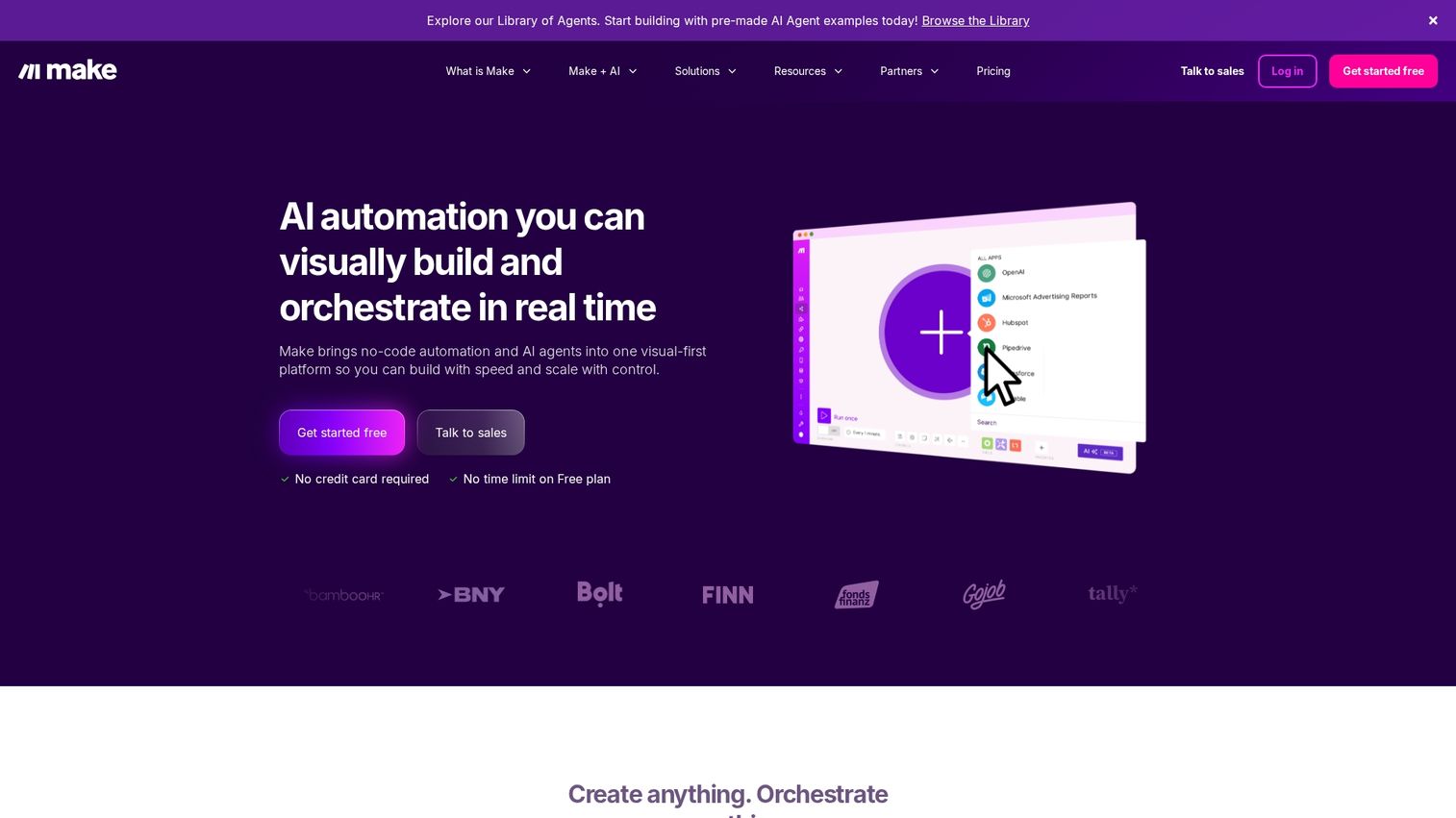
Make (formerly Integromat) is a visual workflow automation platform offering more control and complexity than simpler tools like Zapier.
Best for: Teams building complex automations that require advanced branching logic.
Key strengths
- Intuitive visual builder that shows the flow of data
- Advanced features like branching logic, error handling, and iterators
- Extensive library of app integrations
- More granular control over data manipulation
Why choose this tool: Make is ideal for users who want to build sophisticated, multi-step automations that go beyond basic trigger-action workflows.
Pricing: Free plan available. Paid tiers based on operations per month.
How to build your growth marketing stack
The best marketing tools and strategies work together as an integrated system. Assembling your stack is not about buying individual tools, but about creating a cohesive ecosystem that supports your entire customer journey.
Start with core conversion tools
Begin with tools that directly impact your ability to convert visitors into leads and customers. This includes analytics to measure performance, landing pages to capture interest, and interactive experiences to engage prospects.
Letting prospects experience your product firsthand always beats static content. Teams that add interactive demos to their landing pages typically see lifts in conversion rates because they reduce the friction between interest and understanding.
Layer in automation and data enrichment
Once you have your conversion basics in place, add workflow automation and data enrichment to scale your efforts. Connect your CRM software to enrichment tools to better understand your leads, and use automation to route them to the right salesperson or nurture sequence.
This is where demand generation tools become critical. They help you identify high-intent accounts and personalize outreach at scale.
Add analytics and optimization
Finally, add deeper analytics and testing tools to optimize what's working. Set up product analytics to track user behavior, implement A/B testing to improve conversion rates, and use attribution tools to see which channels drive the most value.
Key considerations for choosing marketing tools
The right tool depends on more than just its features. Consider the following factors before making a purchase.
Integration with your existing stack
Verify that the tool connects seamlessly with your CRM software, analytics platforms, and communication channels. Siloed data creates more problems than it solves. Always check for native integrations or robust API access.
Pricing and total cost of ownership
Look beyond the sticker price. Consider implementation costs, per-user seat limits, usage-based pricing tiers, and what happens when you scale. A free tier can become expensive quickly if the next plan up is a major price jump.
Implementation timeline and learning curve
Some tools require weeks of setup and training, while others work in minutes. Match the implementation complexity to your team's technical capacity and the urgency of your needs.
Measuring ROI from marketing tools
Define your success metrics before you purchase a tool. Track whether the software actually improves the outcomes it promises, whether that's a higher conversion rate, time saved through automation, or more pipeline influenced.
Scale faster with the right marketing tools and strategies
Building a growth stack is about choosing tools that work together to reduce friction across the entire buyer journey. The best stacks combine analytics, automation, and conversion tools that integrate seamlessly.
Start with one core category that solves your biggest bottleneck, and expand your stack systematically as your needs evolve. The goal is not to have the most tools, but to have the right tools working together.
Start your journey with Guideflow today!
FAQs about growth marketing tools
HubSpot offers the most complete free tier for startups needing CRM, email, and basic automation in one platform. Guideflow helps convert more visitors with interactive product demos. Together, they form a powerful foundation for early-stage growth.
Most startups can build an effective initial stack using free tiers and low-cost tools for under $200/month. A common approach is to invest more as revenue grows and specific needs become clear, rather than overspending upfront.
Yes, many leading tools offer generous free tiers that cover core functionality. HubSpot CRM, Google Analytics, and Guideflow's starter plan are all powerful free options that can drive results for teams just starting out.
Map each tool to a specific function and data flow before purchasing. Audit your stack quarterly to identify and remove redundant tools that create data silos or unnecessary costs. The goal is integration, not accumulation.
Most major growth marketing tools integrate with HubSpot either natively or through Zapier. This includes Guideflow, Clearbit, Intercom, and Segment, allowing for seamless data flow between platforms.
Interactive demos let prospects experience your product's value without scheduling a sales call. This reduces friction in the buyer journey, improves conversion rates at the top and middle of the funnel, and provides valuable engagement data for sales follow-up.
Growth marketing tools focus on experimentation and full-funnel optimization across acquisition, activation, and retention. Traditional digital marketing tools often focus on single channels like SEO or social media without the same emphasis on rapid testing and the entire customer lifecycle.
Most B2B growth teams use between five and fifteen tools from a landscape of over 15,000 martech solutions, depending on company size and complexity. Core categories typically include analytics, a CRM, marketing automation, and at least one dedicated conversion optimization tool.