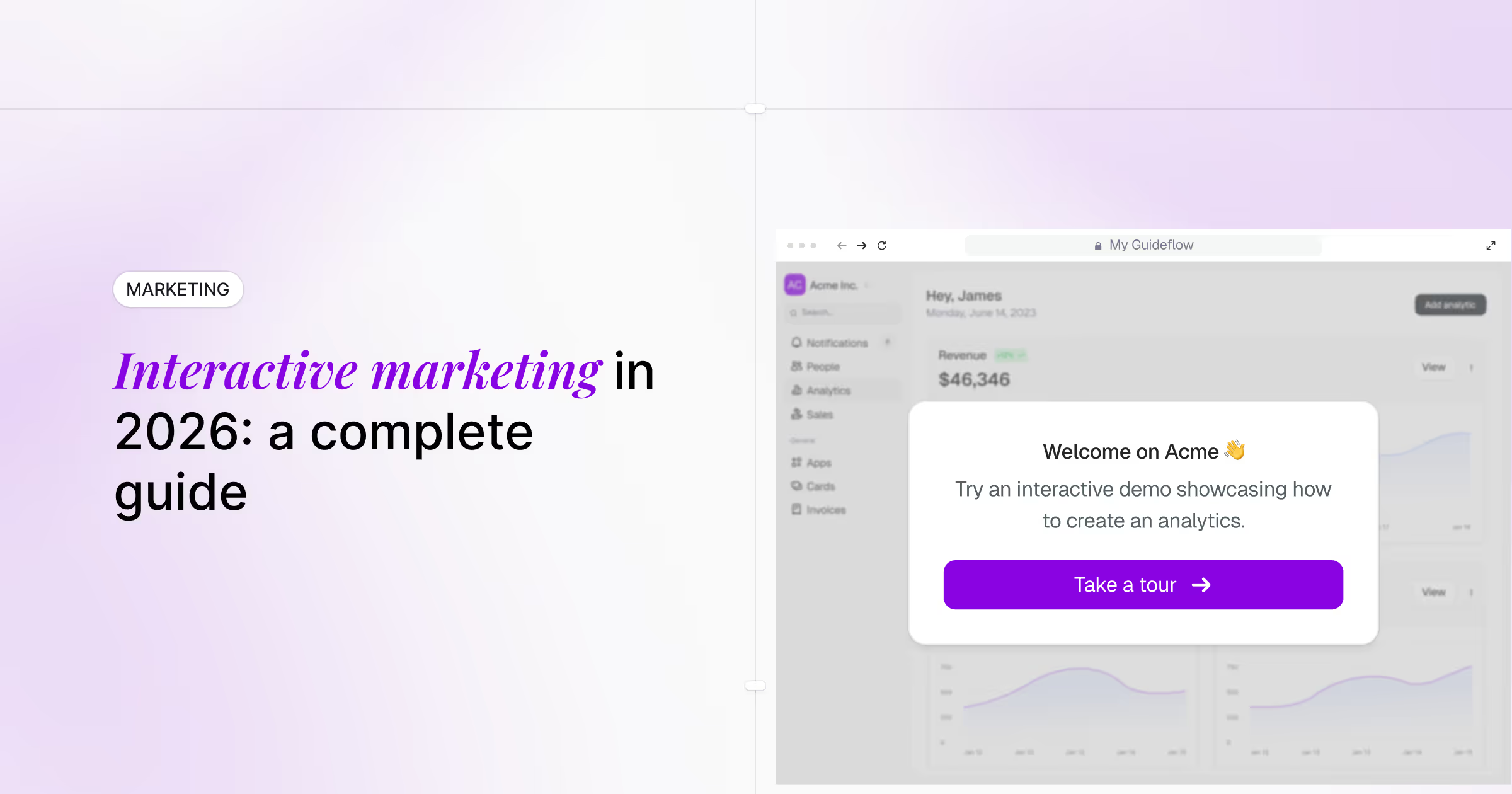
You sent 50 demo invites this week. Three replies. Zero booked meetings.
Most teams blame lead quality. Better targeting, they say. Tighter qualification. More research.
They’re solving the wrong problem.
Prospects aren’t ignoring you because they’re "unqualified". They’re ignoring you because evaluating an unknown vendor requires effort they can’t justify yet. Static PDFs, generic decks, 45-minute live demos- all ask for commitment before trust exists.
Interactive marketing flips this entirely.
Instead of asking prospects to commit before they understand, you let them explore, calculate, and self-qualify on their own terms. The result? 67% of prospects who ghost live demos reschedule when offered an interactive alternative.
And this isn’t about fancier content. It’s about lower friction.
In this guide, we'll explore:
- What interactive marketing is and why it’s important in 2026
- Practical examples across sales, marketing, support and enablement-where to use for maximum impact
- A step by step guide to building interactive demos that convert
What is interactive marketing?
Interactive marketing strategy that uses two-way content to engage prospects and customers, letting prospects and customers explore, test, and engage with products on their own terms. Instead of being passive readers or viewers, people become active participants.
Think about it: no one wants to wade through endless PDFs, sit through another generic webinar, or hear the same cookie-cutter pitch. Interactive marketing flips that around by letting users answer questions, play with different options, and navigate through experiences that actually matter to them.
Check out the interactive demo example below
As you can see, interactive content adapts to what users do. Understanding how your customers behave helps you tailor these experiences for different personas, industries, or stages in the buying process. They also generate data you can use to qualify leads and follow up effectively. Plus, they work across multiple channels - your website, outbound emails, onboarding sequences.
The common thread: prospects get real value before making any commitment. They engage with your content directly, which boosts engagement and lets you personalize what they see based on what matters to them.
Bottom line? They evaluate your solution on their timeline, not yours.
Why interactive marketing is important now
B2B buying changed.
Gartner found the average purchase now involves 8.4 stakeholders. Each one needs to evaluate your solution independently. Harvard Business Review reports 81% of customers try to solve problems on their own before reaching out. Buyers spend just 17% of their journey meeting with vendors.
Static content can’t keep up
Videos are passive - prospects watch but don’t engage. PDFs get skimmed and forgotten. Live demos require scheduling, commitment, and coordination across multiple calendars. By the time you get everyone in a room, half of them have already formed opinions based on incomplete information. Traditional direct marketing and digital advertising rely on one-way communication, pushing messages to audiences, whereas interactive marketing enables two-way engagement and adapts to changing buyer expectations for personalized, self-guided experiences.
Interactive marketing solves the problem
A single quiz can qualify thousands of leads without a sales call. A calculator can prove ROI to every stakeholder on the buying committee simultaneously. An interactive demo lets the VP of Engineering evaluate integrations while the CFO explores pricing - each on their own time, at their own pace.
Take a moment to explore the sandbox and see what I mean.
When prospects self-educate through interactive content, they enter sales conversations more qualified. When they’ve already explored your product, discovery calls focus on fit rather than features. When they’ve calculated ROI themselves, procurement conversations start from a position of confidence rather than skepticism.
For go-to-market teams under pressure to deliver more with fewer resources, interactive marketing scales high-touch experiences without the high-touch cost.
Types of interactive marketing
There are several types of interactive marketing, each using different interactive elements to engage users and drive results. Here are examples of interactive marketing that show how brands can use these strategies in practice.
1. Interactive demos give prospects hands-on product experience without scheduling a live meeting. They explore features on their own time, at their own pace.
2. Quizzes and assessments qualify leads while educating them. A “Sales Readiness Assessment” segments prospects by urgency while giving them useful insights about their own situation.
3. Calculators let prospects prove ROI to themselves. Pricing estimators, savings projections and ROI calculators remove the guesswork that stalls deals.
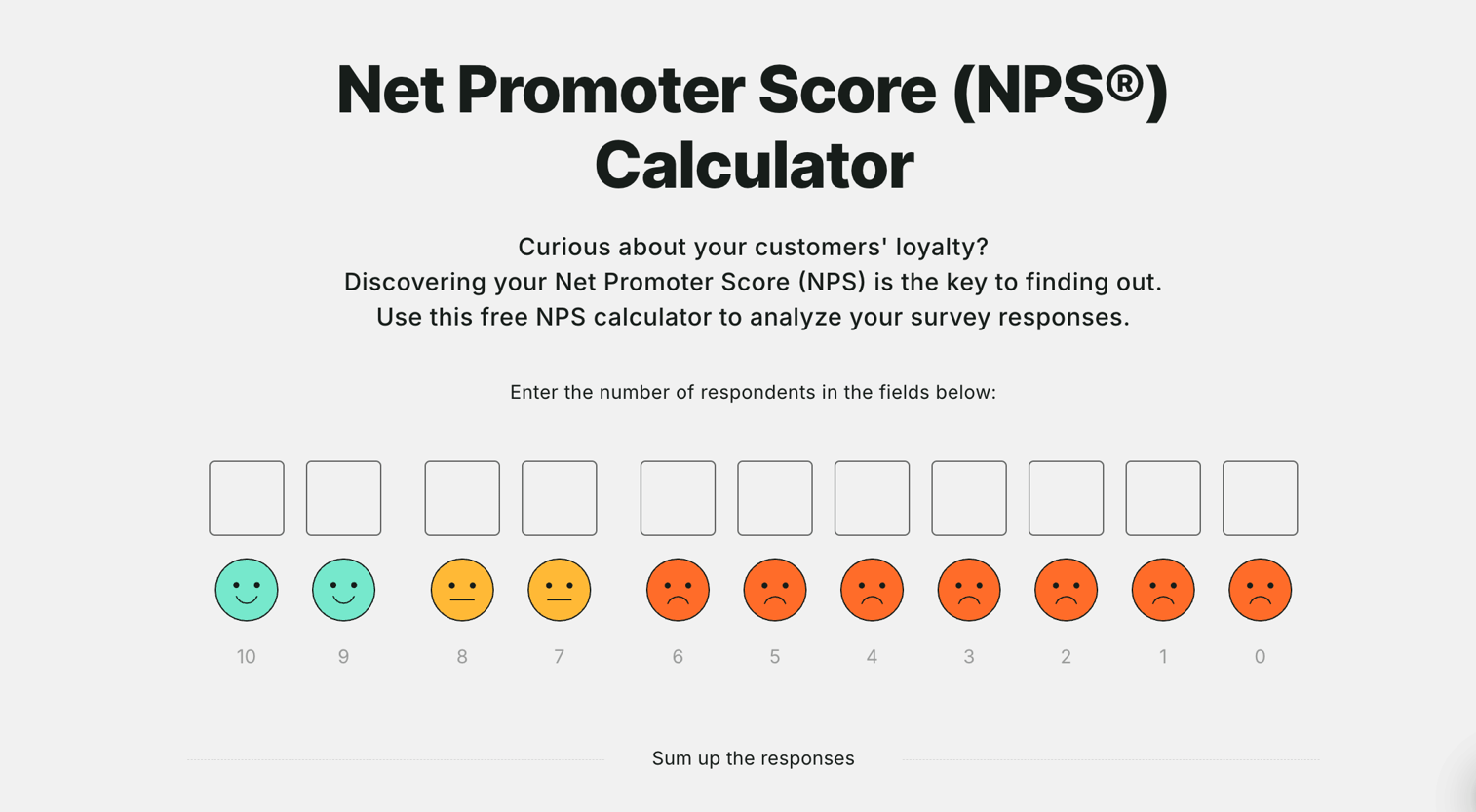
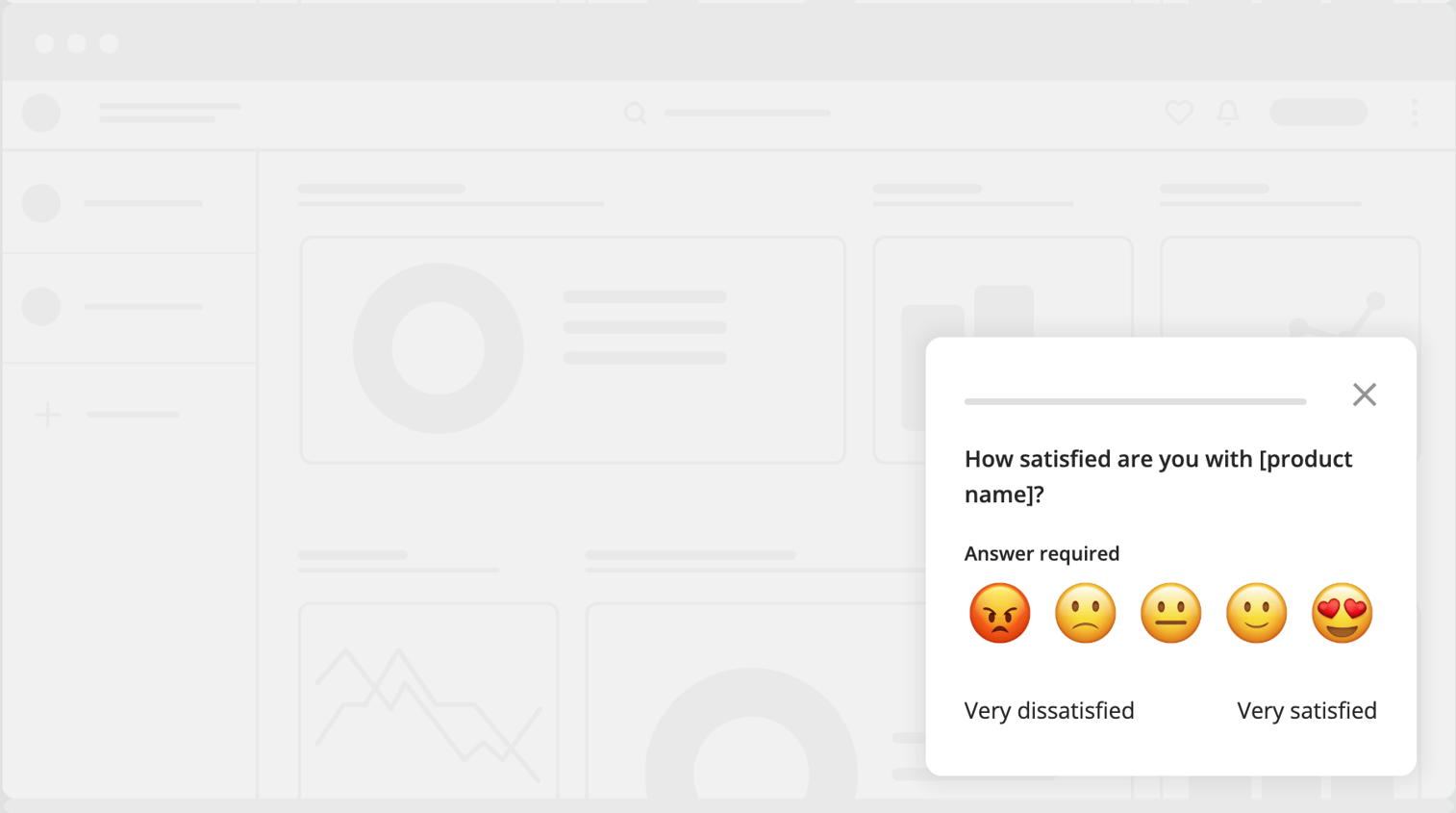
4. Polls and surveys drive quick engagement while collecting data you can use for segmentation and follow-up.
5. Interactive infographics turn static data into explorable experiences. Users click, hover and filter to find what’s relevant to them. Interactive marketing content like infographics is often used during high-profile events - such as elections, film festivals, sports competitions or motor shows - to boost engagement and collect valuable audience data.
5. Configurators let prospects customize products or pricing. Common on SaaS pricing pages where complexity makes static pricing tables useless.
When to use interactive marketing
Interactive marketing multiplies its value when deployed at friction points in the customer journey. The key is understanding where prospects get stuck - and removing the obstacle with the right format.
Website visitors bounce when they can't quickly understand what your product does. Embedding an interactive demo or product tour on your homepage gives them instant payoff - the ability to explore your solution right now, without signing up or scheduling anything.
Outbound campaigns fail when cold prospects have no reason to respond. Including an interactive asset - a quiz, a calculator, a personalized demo link - transforms passive interest into informed action. The prospect gets value from engaging; you get qualification data from their responses.
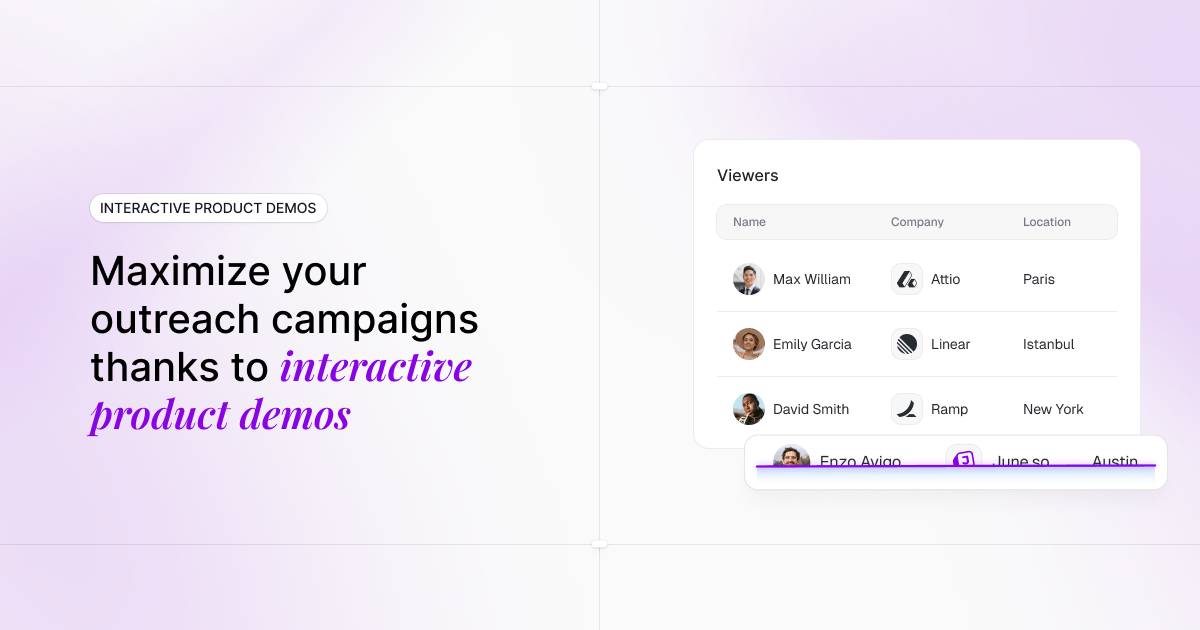
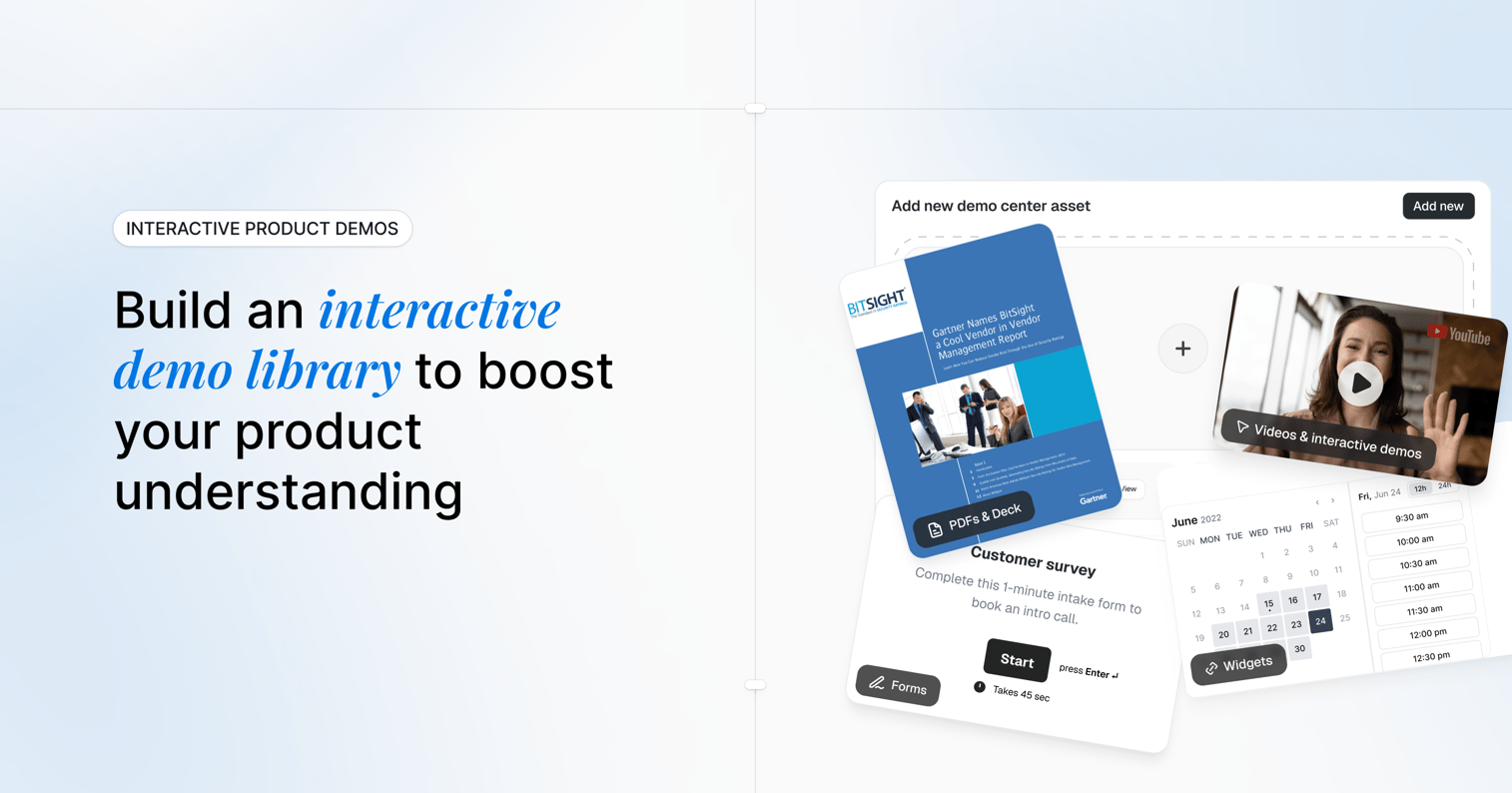
Sales conversations stall when reps can't adapt to different stakeholders. With a library of interactive assets organized by persona and use case, AEs can show the right story to the right buyer without waiting for SE availability or risking a buggy live environment.
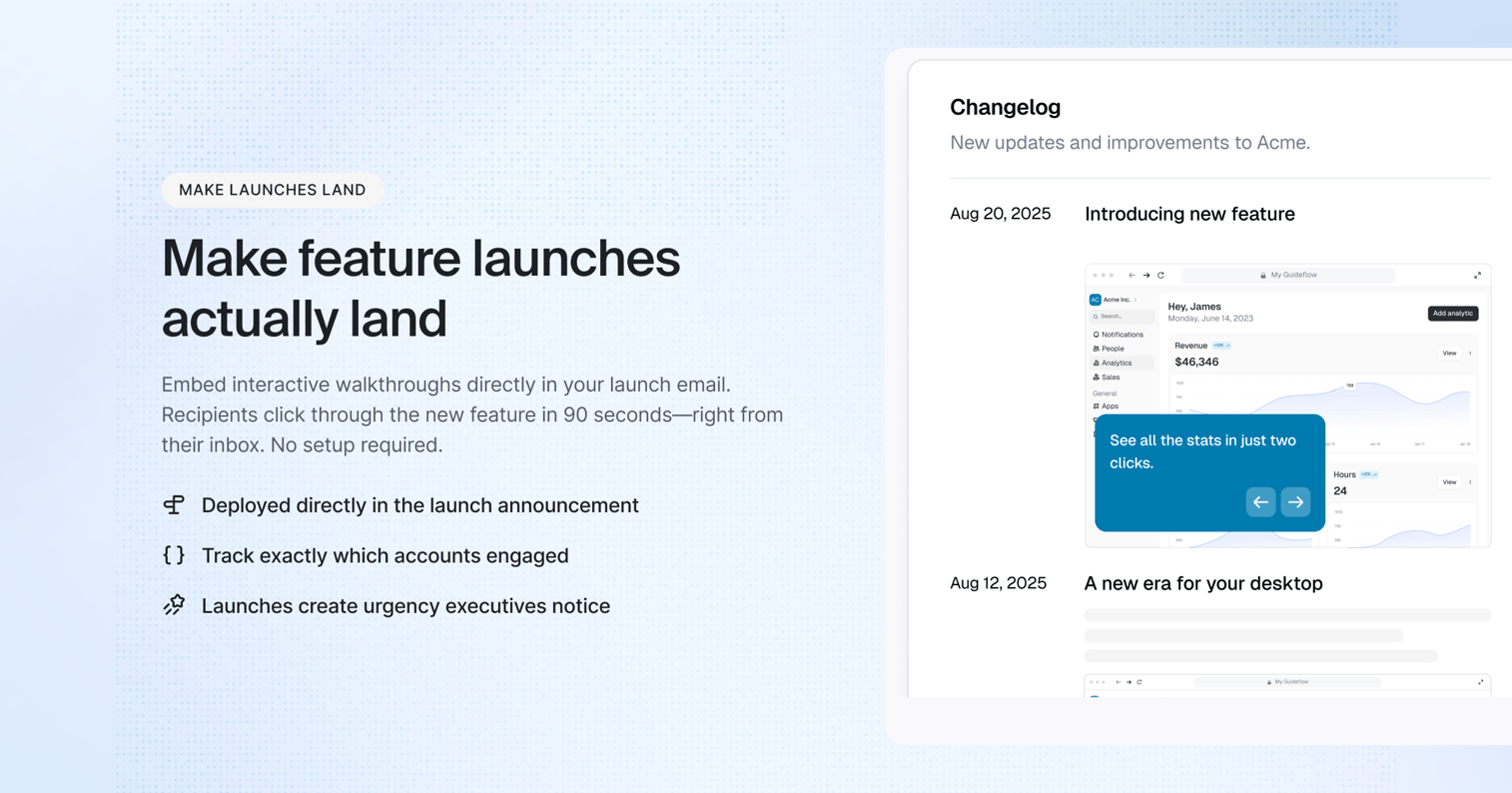
Product launches fizzle when users don't understand new features. Embedding interactive walkthroughs in release notes, lifecycle emails, and help docs lets users explore functionality hands-on - accelerating adoption without requiring CS calls.
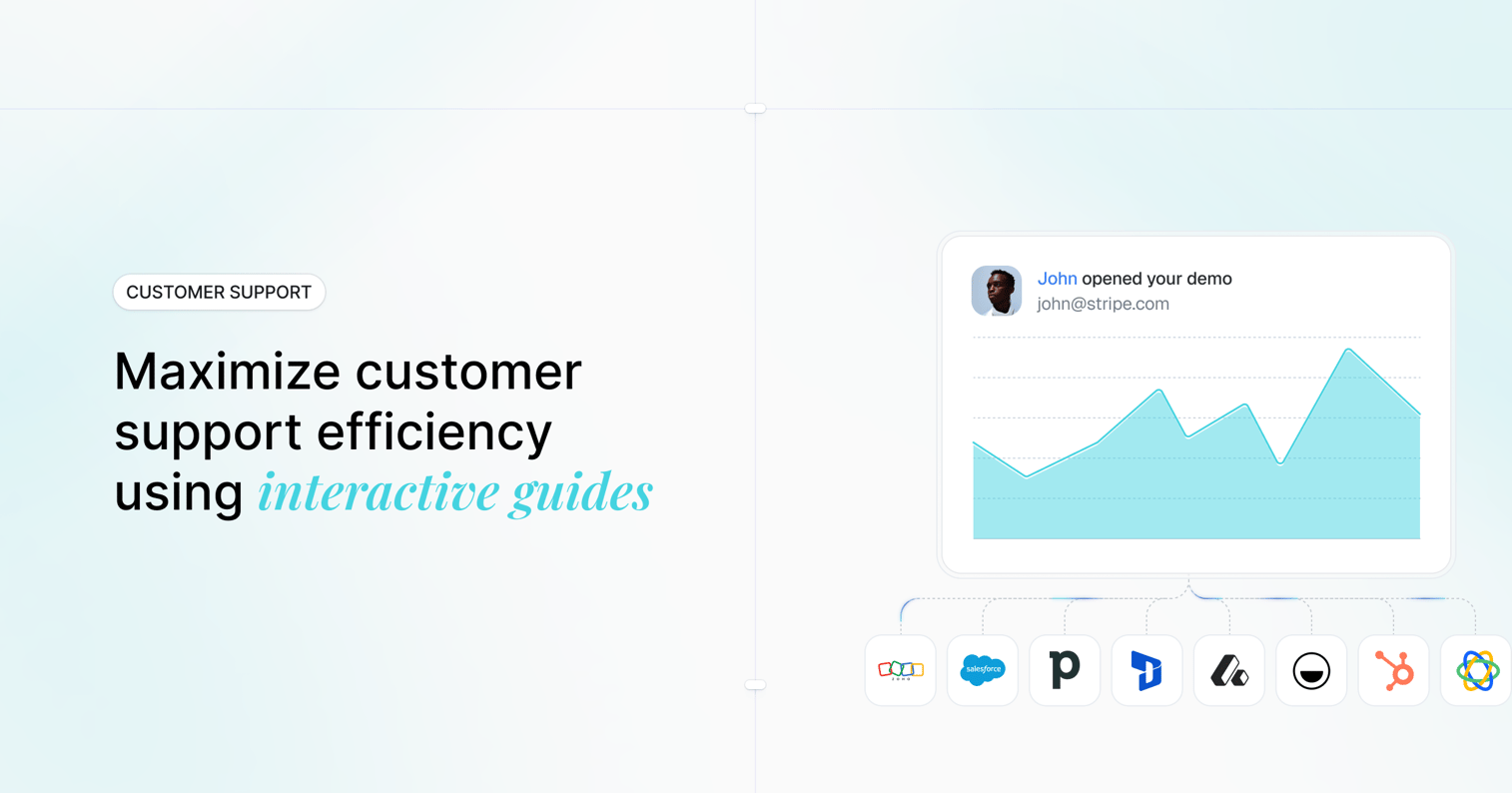
Support tickets drag on when written instructions get misunderstood. Interactive guides that walk customers through workflows visually resolve issues faster and reduce back-and-forth.
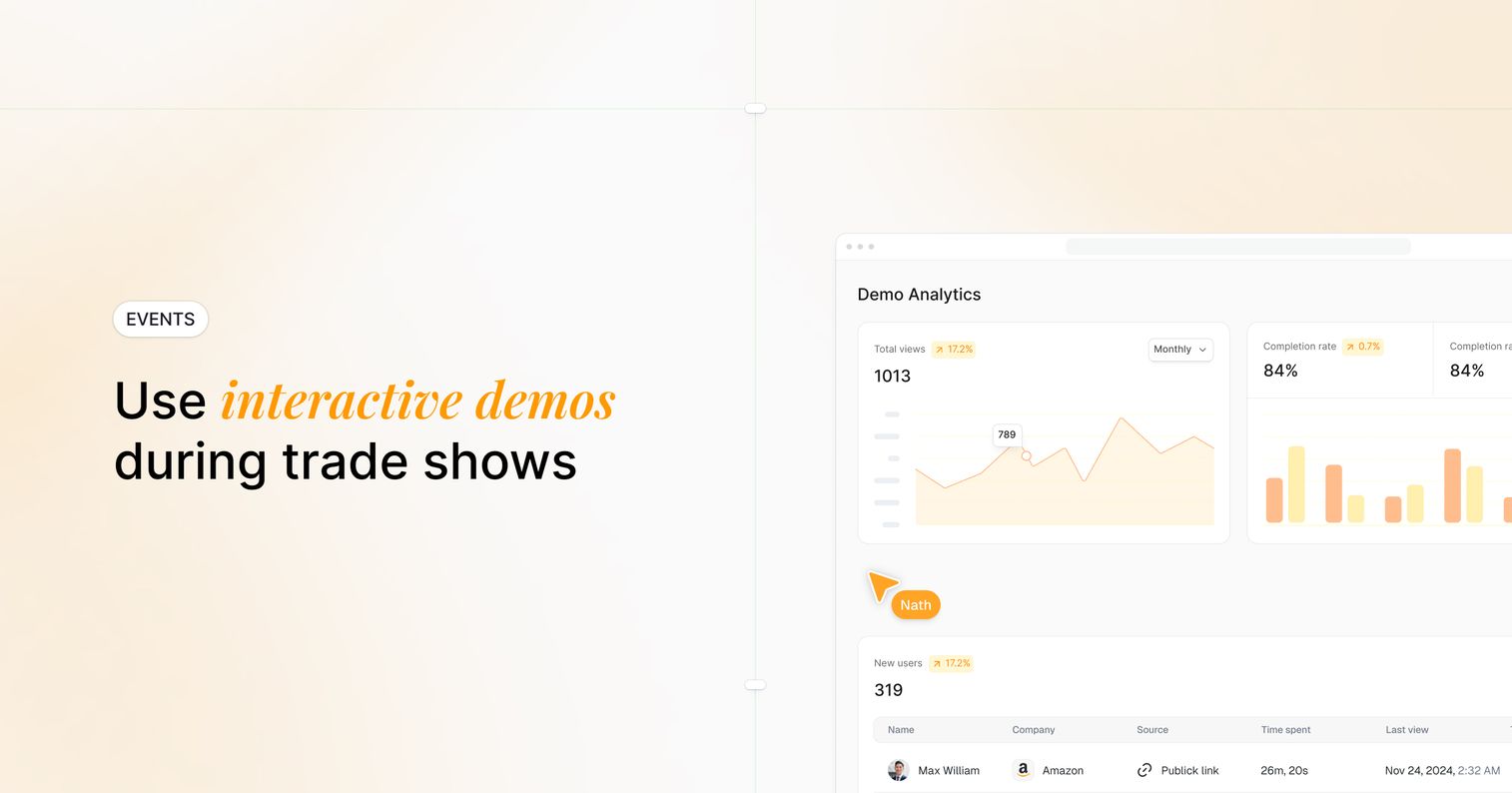
Events and trade shows disappoint when wifi fails or demo environments break. Pre-built interactive experiences work offline, on any device, with zero technical risk.
The pattern: wherever friction exists, interactive content can remove it.
Benefits of interactive marketing
Interactive marketing gets people to actually engage instead of scroll past. Use interactive videos, quizzes and polls - prospects stop being passive consumers and start making choices. Click here. Answer this. Choose that. This active involvement creates a personalized experience because people interact with content that responds to their specific interests and needs.
Here’s the real payoff: every interaction generates actual data about your prospects. Every click, answer and choice tells you something concrete about customer behaviors, preferences and pain points. Not vague “engagement metrics” - real insights. Which product features do they explore first? Where do they drop off? What questions do they ask? You can use this data to refine your strategies, segment your target audience more precisely and create content that actually resonates instead of hoping it will.
Interactive marketing works best through social media platforms and conversational tools. A real-time poll on Instagram. A chatbot that guides users through product options based on their answers. These touchpoints build stronger relationships and drive brand loyalty because they feel like conversations, not broadcasts. Interactive marketing doesn’t just grab attention - it creates engagement, builds customer relationships and turns consumers into advocates for your brand.
Practical use cases for interactive marketing
Interactive marketing delivers value from first impression to long-term retention. Here are the highest-impact applications across the customer lifecycle.
Use case 1: Qualify leads with assessments that educate
Challenge
Marketing generates leads, but most aren't qualified. A whitepaper download tells you someone was interested enough to fill out a form. It doesn't tell you if they have budget, authority, need, or timeline. Sales wastes hours on discovery calls with prospects who were never going to buy.
Solution
Deploy assessments that score prospects while providing value. A "Marketing Maturity Assessment" or "Sales Readiness Quiz" gives users insights about their own situation - benchmarks, recommendations, areas for improvement - while collecting the qualification data you need to prioritize follow-up.
Benefits
- Qualify leads before they hit sales, reducing wasted discovery calls
- Collect BANT data through engagement rather than interrogation
- Provide immediate value that builds trust and positions you as a resource
- Generate segmentation data for personalized nurture campaigns
When to use
- As a lead magnet alternative to gated PDFs
- In outbound campaigns to spark engagement and collect intent signals
- On high-traffic pages to qualify anonymous visitors
- In nurture sequences to re-engage stalled leads
Think of it as a discovery call that runs 24/7 - qualifying thousands of prospects without a single meeting.
Use case 2: Replace live demos with interactive walkthroughs
Challenge
Live product demos require scheduling, prep, and commitment from both sides. Reps spend hours preparing. Prospects block 45 minutes. Half no-show anyway. And when they do attend, you're stuck with a generic presentation that can't adapt to what each stakeholder actually cares about.
Solution
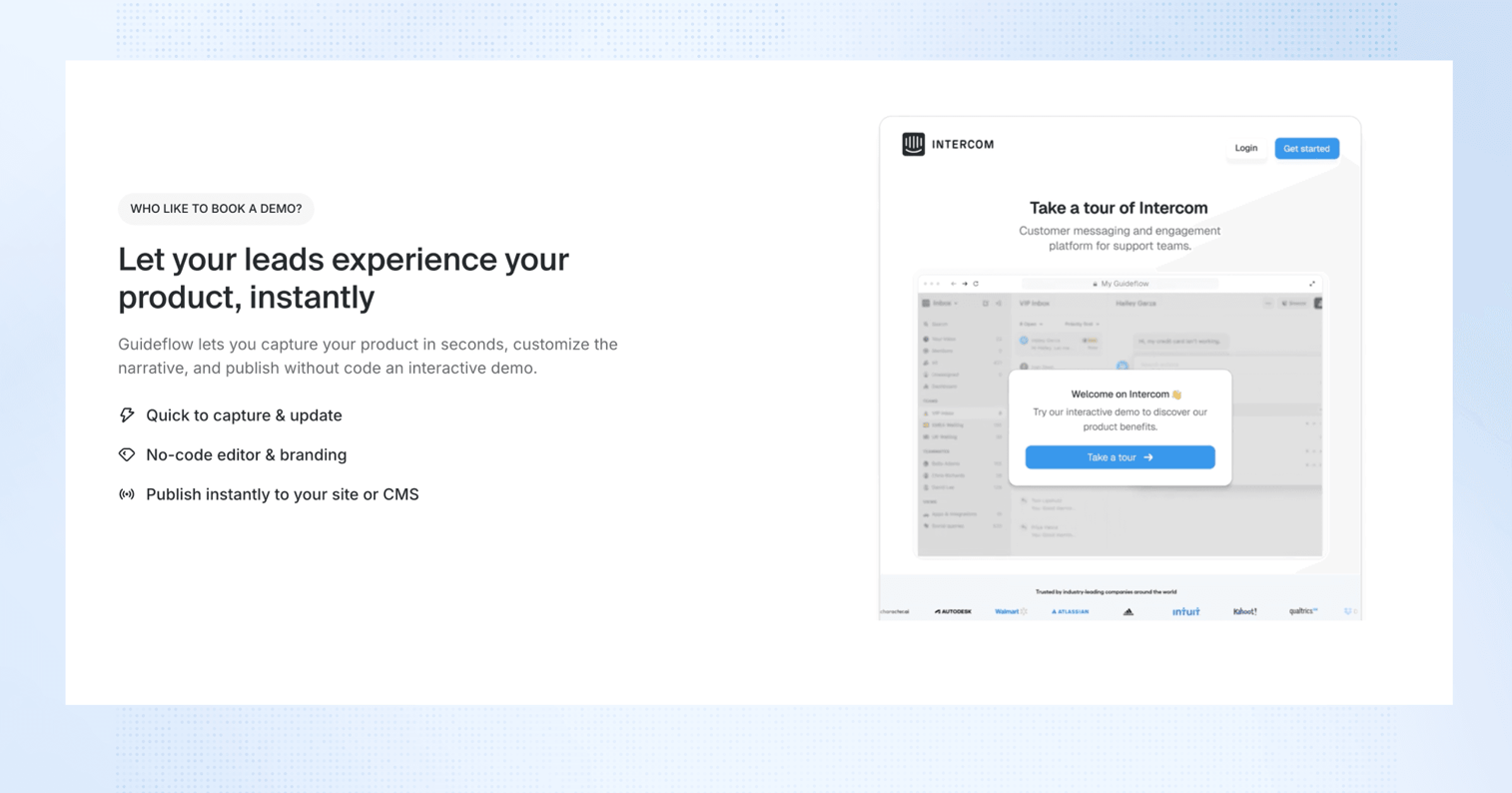
Create interactive product demos and sandboxes that let prospects explore on their own time. Pre-built, clickable experiences that mimic the real product - without requiring logins, staging environments, or technical prep. Prospects see exactly what they need; you see exactly what they engaged with.
Benefits
- Eliminate no-shows by removing scheduling friction entirely
- Let each stakeholder explore what matters to them independently
- Capture engagement data that reveals intent and priorities
- Free up SE time for high-value, late-stage opportunities
When to use
- In initial outreach to warm up cold prospects
- As a follow-up to discovery calls for deeper exploration
- When multiple stakeholders need to evaluate independently
- As a backup when live environments are unavailable or risky
Think of it as a demo that scales infinitely - always available, always polished, never buggy.
Use case 3: Accelerate support resolution with interactive guides
Challenge
Support agents spend hours writing step-by-step instructions for complex workflows. Customers misunderstand, get stuck, and reply with follow-up questions. Resolution times drag. CSAT scores drop. Agents burn out on repetitive explanations.
Solution
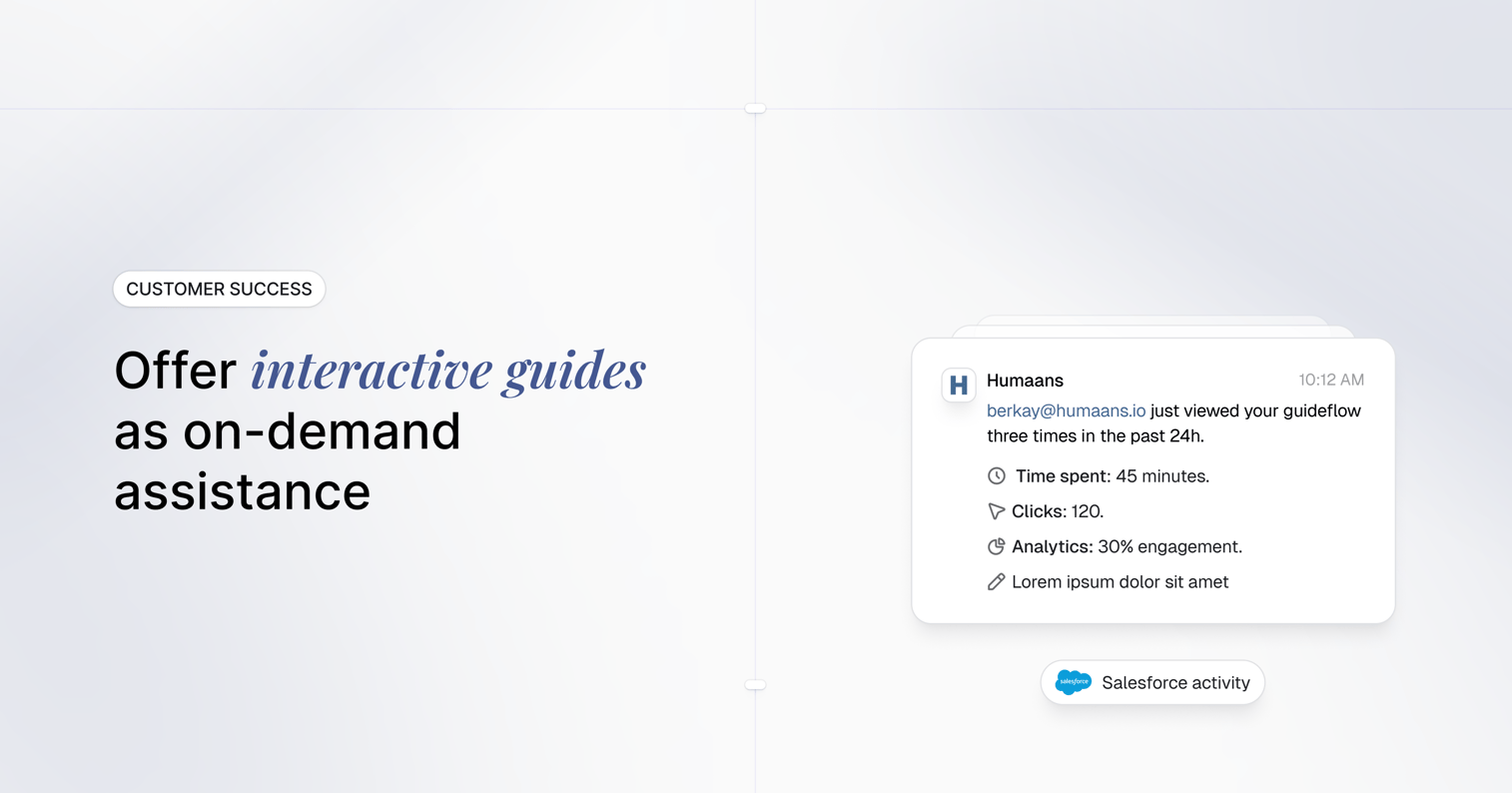
Replace text instructions with interactive guides that walk customers through workflows visually. Clickable, step-by-step experiences that show exactly where to click and what to expect. Embed them in support replies, help articles, and chatbot responses.
Benefits
- Cut resolution time by showing rather than telling
- Increase first-contact resolution rates for complex issues
- Build a library of reusable guides that scale support capacity
- Improve CSAT by delivering faster, clearer answers
When to use
- For multi-step troubleshooting scenarios
- In response to common "how do I..." questions
- Embedded in help center articles for self-serve resolution
- In onboarding flows to prevent support tickets before they happen
Think of it as embedding a mini training session in every support interaction.
Use case 4: Win at events without relying on wifi
Challenge
Trade show demos fail when they matter most. Wifi drops. Staging environments crash. Version mismatches cause unexpected bugs. Sales teams scramble to recover while competitors' booths run smoothly.
Solution
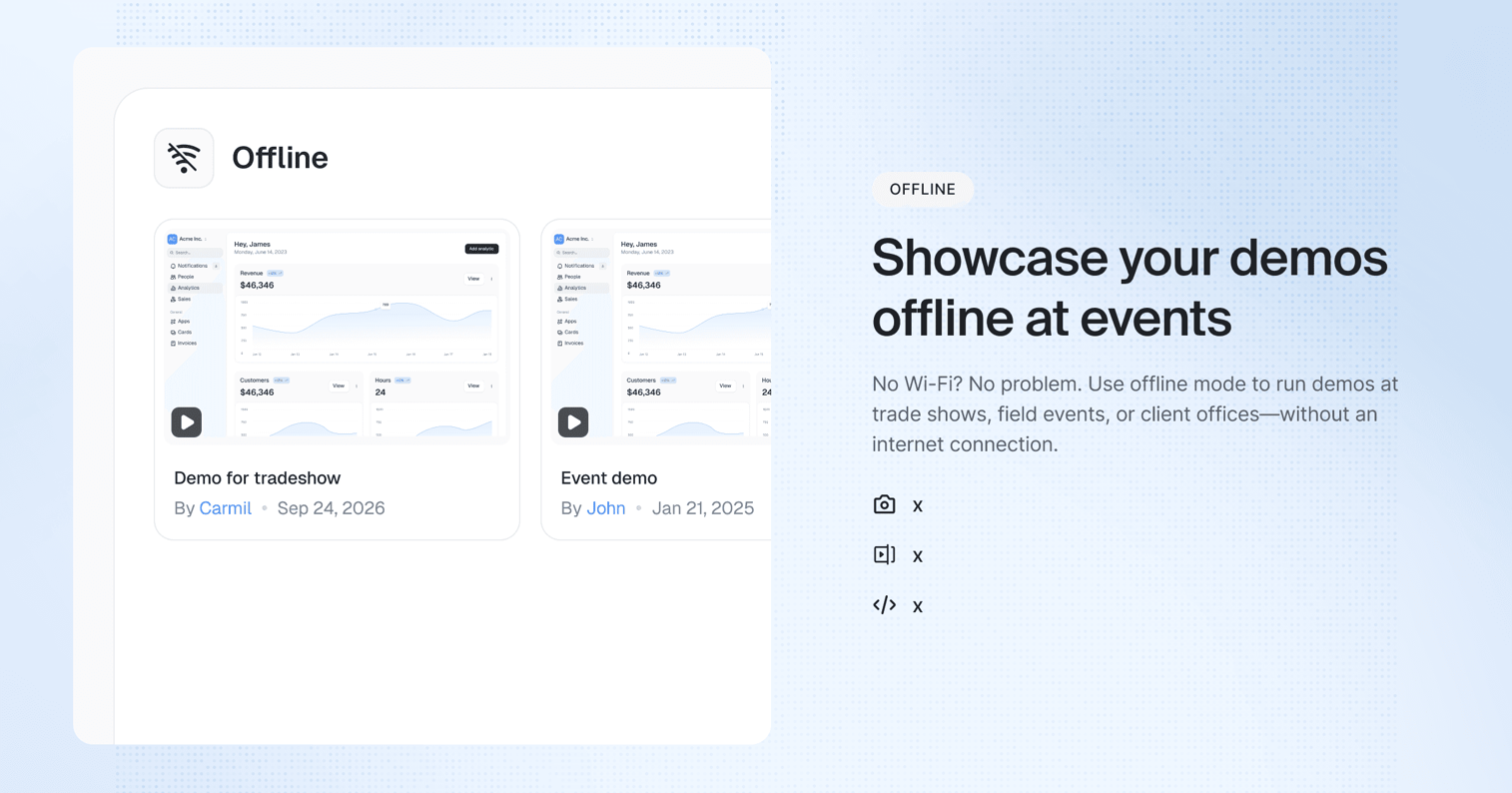
Use interactive experiences that work offline, on any device. Pre-built product tours and demos that run from a browser without live connectivity. Polished, predictable, and impossible to break.
Benefits
- Eliminate technical risk from high-stakes event demos
- Deliver consistent messaging across every booth conversation
- Enable self-guided exploration during high-traffic periods
- Follow up with the same demo link post-event for continuity
When to use
- At trade shows and conferences on tablets or kiosks
- During 1:1 booth conversations to show specific workflows
- In post-event follow-up emails to reinforce what you showed
- At roadshows or field events where connectivity is unreliable
Think of it as event insurance - guaranteed performance when it counts most.
Use case 5: Scale partner enablement without live training
Challenge
Partner training falls flat when it's built on PDFs, decks, and occasional webinars. Partners forget key details. Messaging drifts. And you can't scale live training across hundreds of partners in different time zones.
Solution
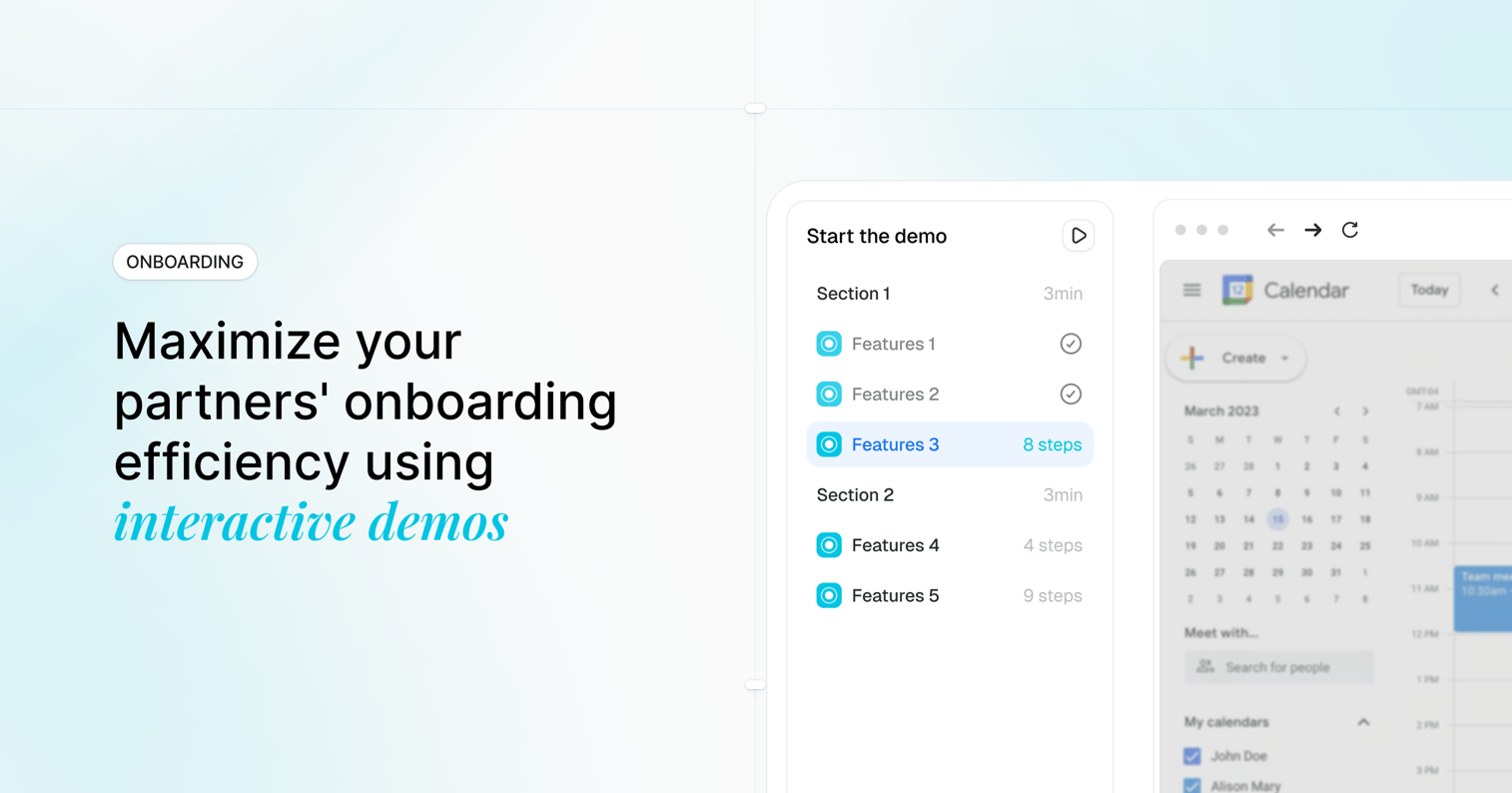
Replace static training materials with interactive, self-paced experiences. Partners explore product workflows hands-on, learning by doing rather than reading. Content stays current because updates propagate instantly - no need to redistribute files or schedule retraining.
Benefits
- Improve product mastery through interactive practice
- Scale training globally without time zone constraints
- Keep content current with instant updates across all deployments
- Track completion and competency at the individual partner level
When to use
- In partner certification programs and LMS platforms
- During onboarding for new channel partners
- As refresher training before major launches
- As pre-work for live enablement sessions
Think of it as on-demand training that partners actually complete - because it's built around doing, not watching.
Use case 6: Drive feature adoption with guided walkthroughs
Challenge
Product teams ship new features. Marketing writes announcements. Users ignore both. Email open rates are low. In-app tooltips get dismissed. Help docs go unread. Adoption stalls because users don't understand what's new or why it matters.
Solution
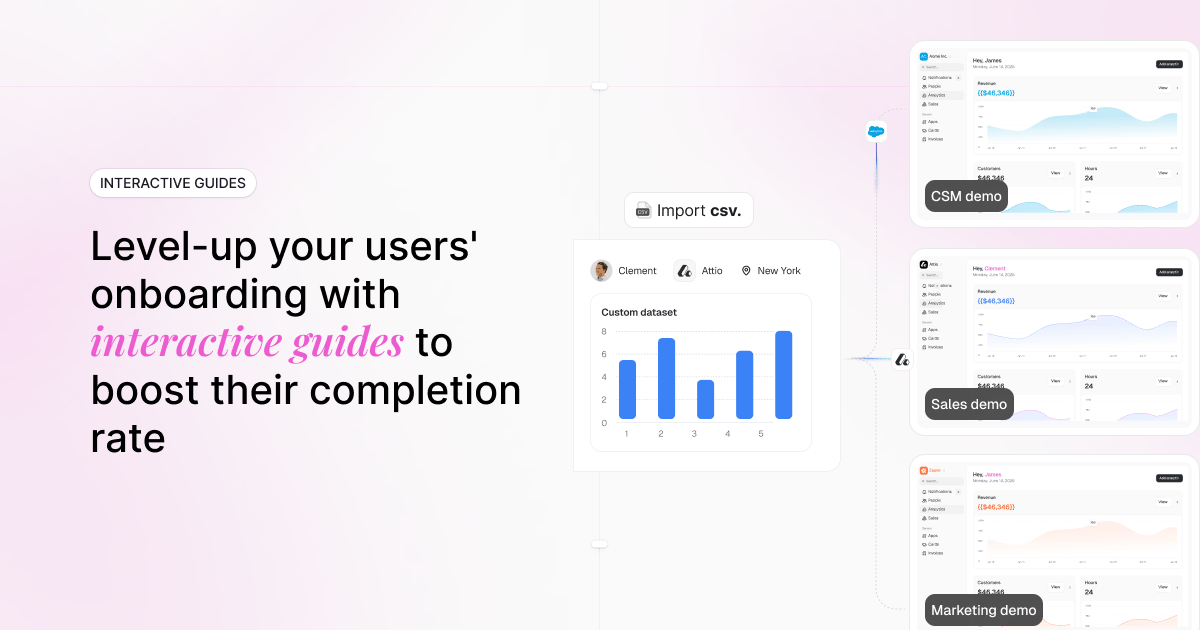
Create interactive walkthroughs that bring new features to life. Embed them in changelogs, release emails, onboarding checklists, and in-app messages. Users click through real functionality in a risk-free environment, experiencing value before they touch the live product.
Benefits
- Transform passive announcements into hands-on learning
- Accelerate time-to-value by guiding users to "aha" moments faster
- Reduce friction for first-time feature usage
- Collect engagement data to measure interest before full adoption metrics roll in
When to use
- On launch day to drive immediate engagement
- In onboarding flows to surface relevant capabilities
- In help centers for contextual feature education
- In lifecycle campaigns targeting users who haven't adopted key features
Think of it as a feature's first impression - designed to convert curiosity into confident usage.
Use case 7: Boost landing page conversion with interactive previews
Challenge
Landing pages are static. Screenshots don't convey what using the product feels like. Explainer videos require time commitment. Visitors bounce before they understand your value - and they won't fill out a form for something they haven't experienced.
Solution
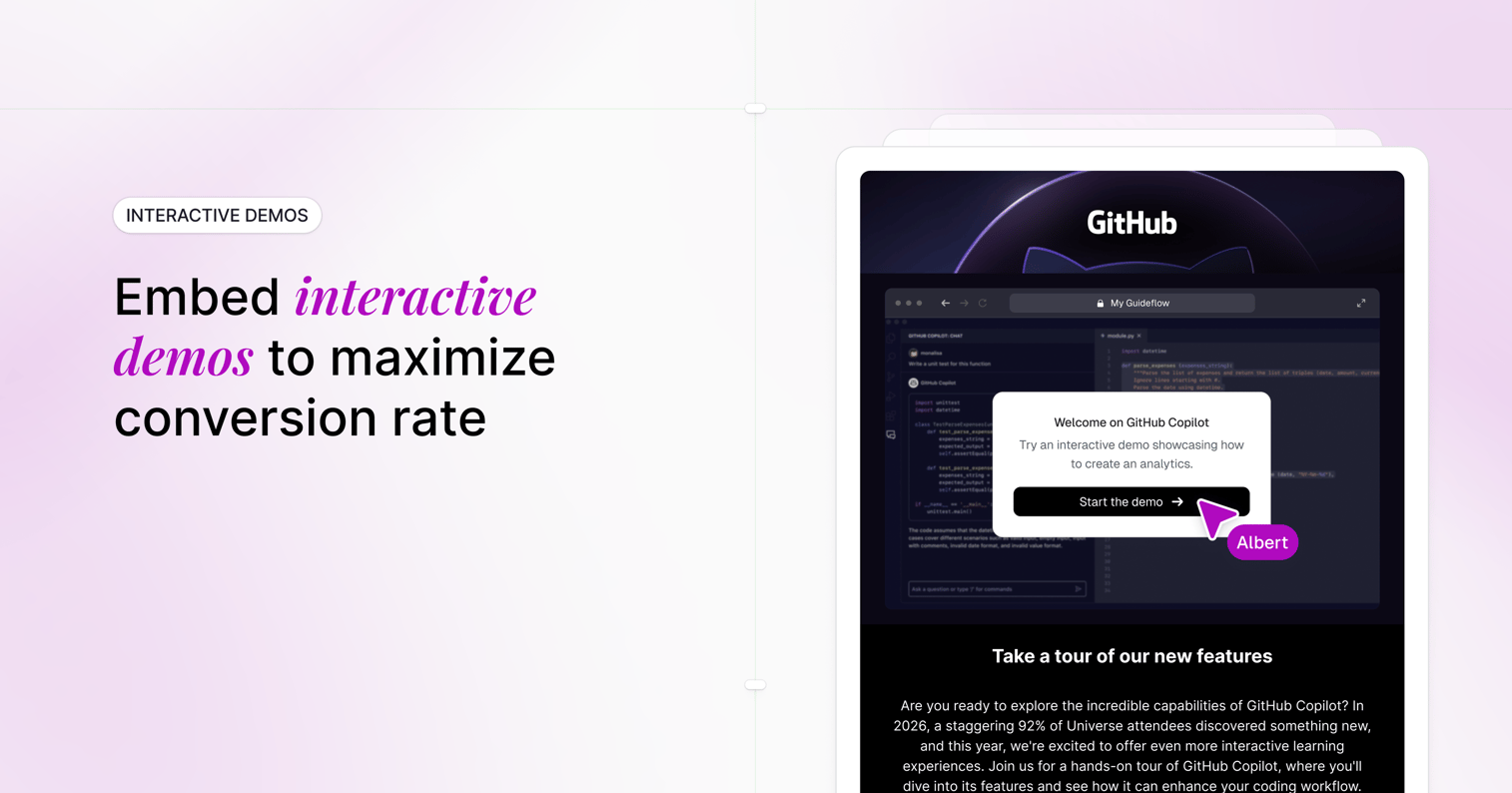
Embed interactive demos directly on high-intent pages. Let visitors click through key workflows without signing up. Give them a taste of the product experience right when interest is highest - before asking for anything in return.
Benefits
- Increase time-on-page and reduce bounce rates with real engagement
- Qualify visitors through interaction depth, not just form fills
- Improve conversion by letting users experience value before committing
- Collect behavioral insights on which features spark the most interest
When to use
- On your homepage hero for instant value communication
- On product and feature pages to show instead of tell
- On paid campaign landing pages to improve ROAS
- In A/B tests to measure interactive vs. static performance
Think of it as a real-time elevator pitch - one that visitors click through, not scroll past.
How to use Guideflow for interactive marketing
With Guideflow you can build interactive demos by capturing workflows directly from your browser or desktop. Guideflow eliminates engineering dependencies through multiple capture methods - screenshot-based, HTML-based, and video-based recording - so any team member can create professional interactive content without writing code.
Benefits
- Remove content creation bottlenecks
- Reduce asset creation time from days to minutes
- Let marketing, sales and CS teams create independently
- Consistent performance across devices and platforms
Experience editor
Transform captured workflows into guided interactive experiences with our intuitive editing tools. Add tooltips, CTAs, highlights and contextual info to create clear focused journeys that communicate value without human explanation.
Benefits
- Self-serve experiences that replace live walkthroughs
- Update content instantly without recreating assets from scratch
- Preview changes before publishing
- Standardize messaging quality across teams and touchpoints
Refine with AI
Use AI to generate step descriptions, create contextual explanations and translate content into multiple languages. Eliminate the manual overhead of writing copy and localizing for global markets.
Benefits
- Accelerate content creation with automated step descriptions
- Launch in new markets instantly without translation resources
- Add voiceovers and avatar overlays without recording studios
- Scale personalization without proportional content effort
Personalize smartly
Personalize experiences in real-time using variables from your CRM and other data sources. Customize text, visuals and embedded content to match individual prospect profiles, industries and use cases - without creating separate assets for each variation.
Benefits
- Relevance without manual customization per prospect
- Qualify through personalized engagement paths
- Data security while enabling realistic scenarios
- Scale personalized experiences across unlimited audience segments
Sharing infrastructure
Distribute interactive content through multiple channels: public links, private access, website embeds, email integration and downloadable formats. Advanced access controls for scalable deployment while maintaining security and tracking.
Benefits
- Deploy across all channels without channel specific asset creation
- Control access and targeting through sophisticated permissions
- Support self-serve and guided distribution models
- Export to PDF, GIF or video for offline use and integration
Track engagement
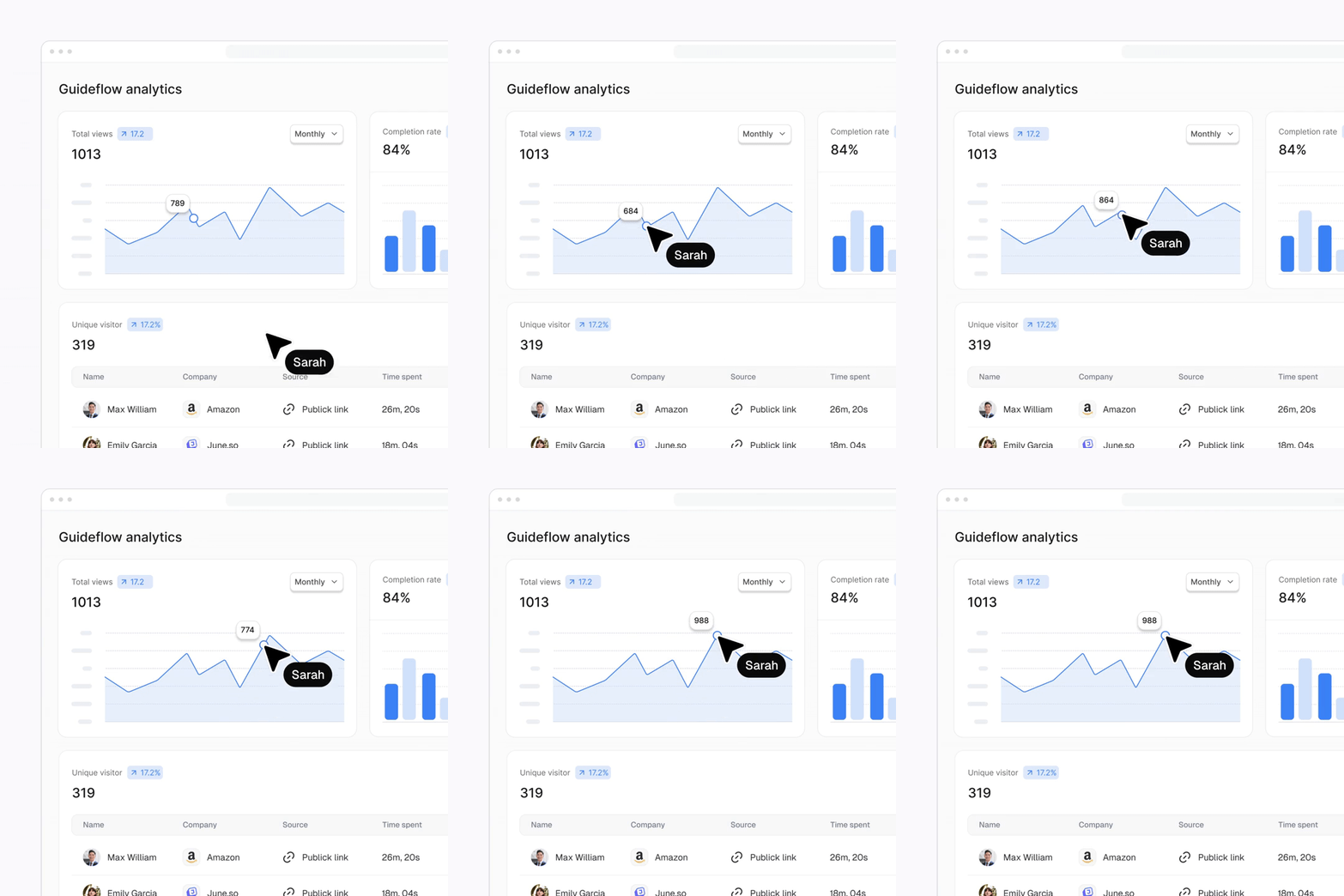
Track every interaction with your content: interactive demo completion rates, interaction patterns, time spent, drop-off points and click paths. Advanced analytics will surface qualification signals and optimization opportunities automatically.
Benefits
- Follow up based on engagement depth, not just form fills
- Optimize content with behavioral data
- Identify high intent prospects through interaction patterns
- Improve conversion rates with data driven refinements
Collaborate with your team
Collaborate on content through shared workspaces, version control and commenting. Organize assets by team, use case or audience segment while maintaining messaging consistency and quality standards.
Benefits
- Content development across distributed teams
- Messaging consistency through centralized management
- Reduce duplication with template systems and shared libraries
- Deploy updates across all channels at once
Integrate and automate
Connect to existing go-to-market systems: CRM platforms, product marketing tools, marketing automation, customer success tools, presales software tools and analytics platforms. Automated data flows and workflow triggers optimize operations while enriching prospect and customer records.
- Campaign management through automated workflows
- Reduce manual data entry while improving accuracy
- Automated resource allocation based on engagement signals
- Full tracking across the customer lifecycle
How to create interactive demos in 5 steps
Building effective interactive content takes clarity, intentional design, and a willingness to keep improving. Here's what actually works.
Step 1: Define your use case
Start by figuring out the specific problem you're solving. Are you trying to qualify leads? Prove ROI? Help your sales team close deals? Cut down on support tickets? Whatever it is, that use case will shape the format, how deep you go, and how you measure success.
Don't try to solve everything at once. Pick one problem, build one experience, measure it over one period.
Step 2: Gather the right inputs
Pull together the insights, data, and workflows that'll make your content genuinely useful. If you're building an assessment, think about which questions will tell you what you need to know. For calculators, figure out what inputs actually matter and what formulas will give meaningful results. For demos, pick the workflows that show what makes you different.
Remember: one powerful story beats a laundry list of features every time.
Step 3: Storyboard the experience
Map out the user journey before you start building. The best interactive content tells a story: it surfaces the problem, walks people through your solution, and gives them a clear outcome or next step. Think about where you'll add tooltips, where paths might branch, and where CTAs will turn passive viewers into engaged participants.
Keep it tight. Every extra step costs you. Design for the minimum viable interaction - you can always layer in more for power users later.
Step 4: Build and polish
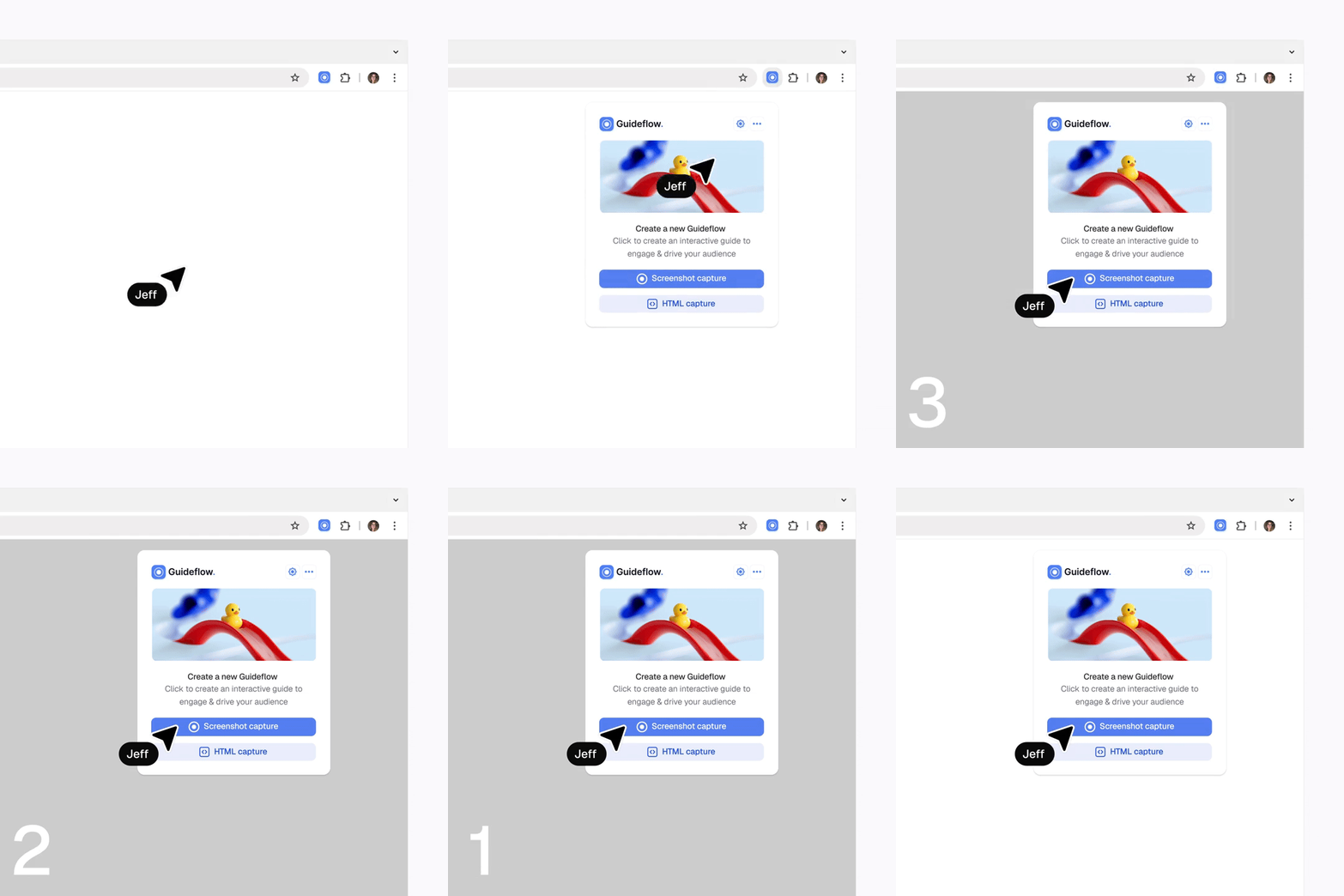
With Guideflow, the building part gets a lot easier. Capture your workflow straight from your browser. Drop in tooltips, highlights, and CTAs where they make sense. Make it look like your brand. Preview it, test it, and tweak until it feels smooth.
Then share it and start learning from the data.
Step 5: Measure and iterate
Launching is just the beginning. Watch your completion rates to see where people bail out. Track conversions to see if the asset is actually doing what you hoped. Look at engagement patterns to understand what's working.
Treat your interactive content like a landing page - keep testing and improving based on what the numbers are telling you.
Conclusion
Static content asks prospects to commit before they trust you. Interactive marketing flips that - letting them evaluate on their own terms, at their own pace. This isn't about fancier content or better technology. It's about lowering the friction. When you remove it, prospects start to engage more, qualify themselves, and enter sales conversations ready to buy.
Whether you're looking to increase qualified pipeline, shorten sales cycles, reduce support volume, or enable your team with scalable content, interactive marketing delivers compounding returns when used strategically.
The gap between showing and telling has never mattered more. In a world where buyers control their journey and expect immediate value, interactive content seals that gap. It simplifies complex solutions into clear value propositions, turning curiosity into conviction at scale.
Start with one friction point. Build one interactive asset. Measure what happens.
If 67% of your no-shows would reschedule for an interactive alternative, you don't have a lead problem. You have a friction problem.
Now you know how to fix it. Start your journey with Guideflow today