Your prospects want to see the product before they talk to sales because only 17% of buying time goes to vendor meetings. But most funnels still gate everything behind a form, then wonder why conversion rates stay flat. Modern demand generation tools address this by enabling ungated, interactive experiences.
Interactive sales funnels flip that sequence. They let buyers click, explore, and self-qualify before committing to a call. This guide covers the nine best tools for building funnels that convert, plus how to choose the right one for your team.
TL;DR
- An interactive sales funnel moves prospects from awareness to purchase through clickable, engaging content rather than static pages and "book a demo" forms.
- Guideflow stands out for adding interactive demos to any funnel stage, letting prospects experience your product before a call.
- Prioritize tools with CRM integration, personalization capabilities, and analytics that show what prospects actually explored.
- The biggest mistake teams make: gating everything behind forms before delivering any value.
What is an interactive sales funnel
An interactive sales funnel guides prospects through awareness, consideration, and decision stages using clickable content rather than passive pages. This approach aligns with broader interactive marketing strategies that drive 2x more conversions across channels. Traditional funnels rely on PDFs, videos, and "book a demo" forms. Interactive funnels let buyers explore, click, and self-qualify at their own pace.
The term "funnel system" refers to the combination of tools and workflows that guide this progression. Every effective funnel includes four core components:
- Lead capture: How prospects enter, whether through forms, gated content, or interactive demos
- Nurture sequence: Automated emails, retargeting, or self-serve content that educates over time
- Conversion point: The action you want, such as a demo request, trial signup, or purchase
- Engagement tracking: Visibility into what prospects clicked, watched, or explored
Interactive funnels vs static funnels
The difference comes down to buyer experience and the data you collect.
| Dimension | Static funnel | Interactive funnel |
|---|---|---|
| Buyer experience | Passive (read, watch, fill form) | Active (click, explore, self-qualify) |
| Engagement data | Page views, form fills only | Click paths, feature interest, time spent |
| Personalization | Limited (segment-based) | Dynamic (account, role, behavior-based) |
| Conversion mechanism | Requires live call to see product | Self-serve evaluation before call |
Static funnels force prospects to request a demo before seeing the product. Interactive funnels flip that sequence, letting buyers evaluate first and talk to sales when ready.
When to use interactive sales funnel software
Not every team needs dedicated funnel software. Here's when it makes sense:
- Complex products: When screenshots and videos fail to convey value
- Multi-stakeholder deals: When buyers share and socialize internally before committing
- High demo no-show rates: When prospects ghost scheduled calls
- Scaling sales teams: When you want consistent messaging without adding headcount
- Website conversion optimization: When traffic exists but demo requests lag behind
If your product is simple and your sales cycle is short, a basic landing page and email sequence might be enough. B2B SaaS teams with longer cycles typically see better results from interactive approaches.
Best interactive sales funnel tools
1. Guideflow
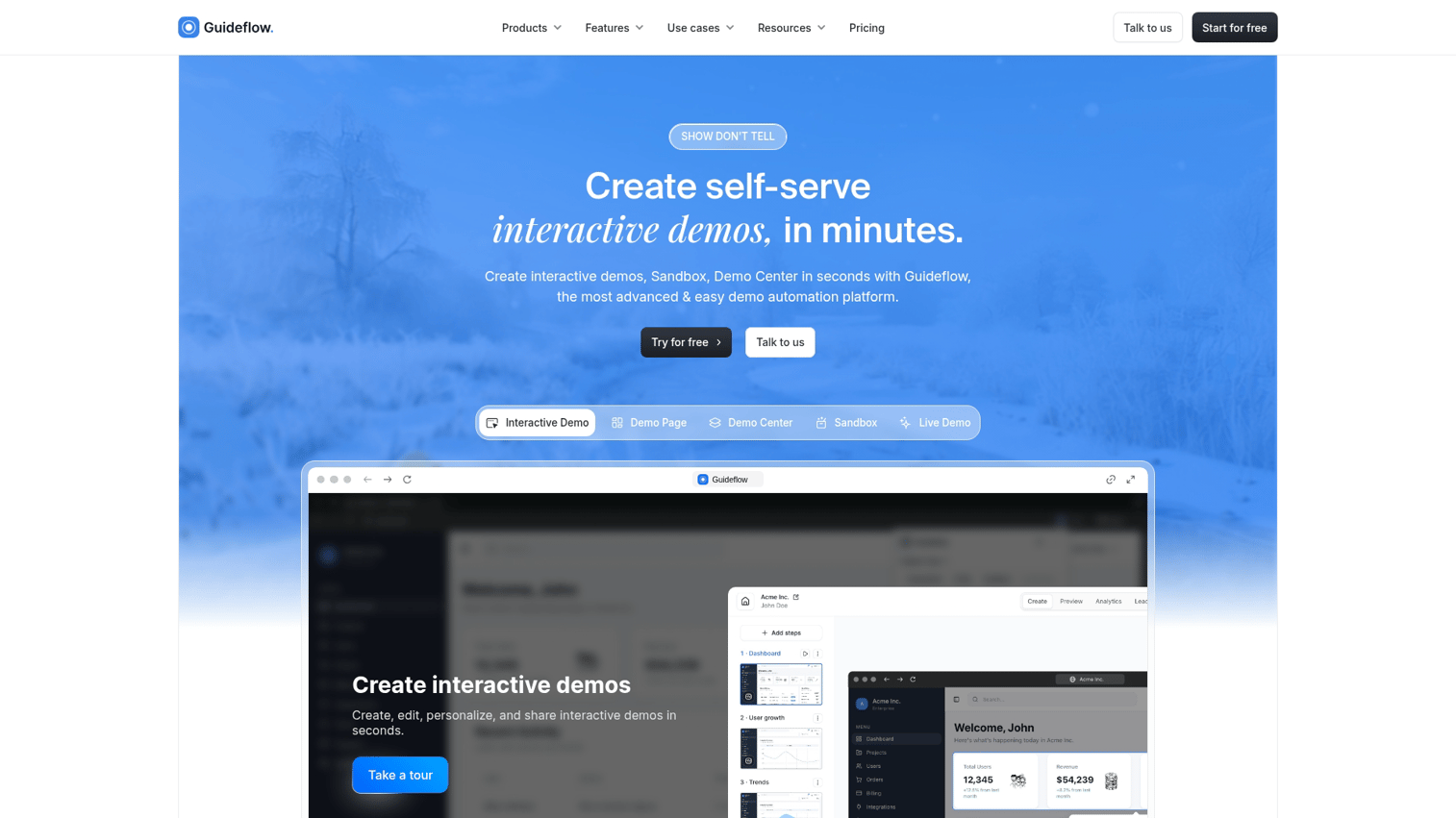
Guideflow adds interactive product experiences to any sales funnel stage. Capture any workflow directly from your browser, then turn it into a shareable, clickable demo in minutes. No engineering required.
What sets Guideflow apart is the combination of speed and depth. Record your product as you click through it, then personalize demos for every prospect using dynamic variables that pull from your CRM. Each viewer sees their company name, industry terminology, and relevant use cases without manual rebuilding.
- Capture any workflow: Record your product directly from browser, no staging environment
- Personalize at scale: Dynamic variables swap text, images, and data per prospect
- Embed anywhere: Works on landing pages, emails, Notion, LinkedIn, and ads
- Intent signals: See which features each prospect explored, not just "viewed"
Guideflow works across funnel stages. Embed demos on your website for top-of-funnel engagement, send personalized versions in nurture emails, or use them in sales follow-ups.
2. GetResponse
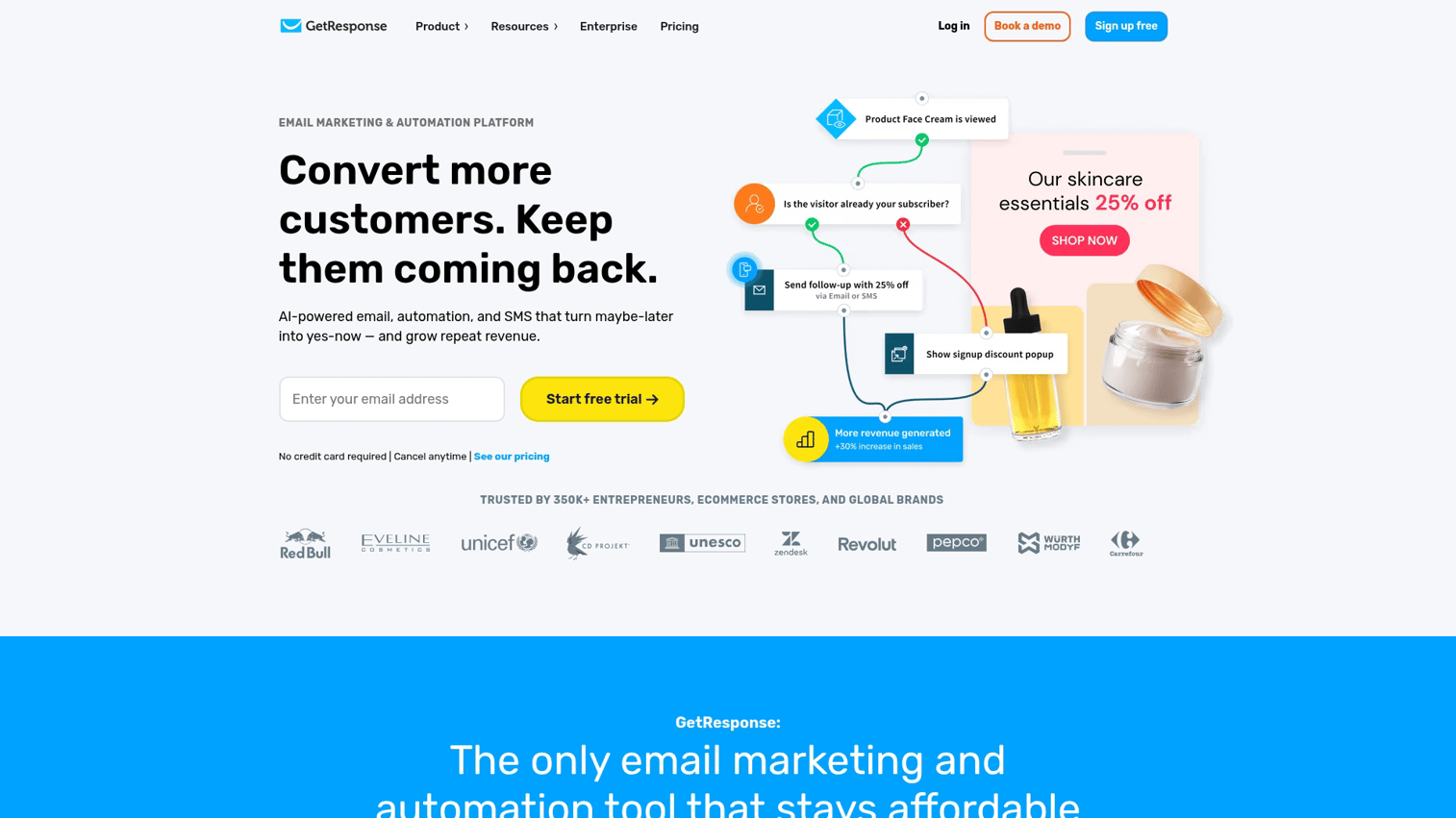
GetResponse combines email marketing with funnel building in one platform. It includes landing pages, webinars, and automation sequences. The funnel website builder handles simple lead-gen flows well. Best for teams already invested in email marketing who want to add funnel capabilities without switching platforms.
3. Systeme.io
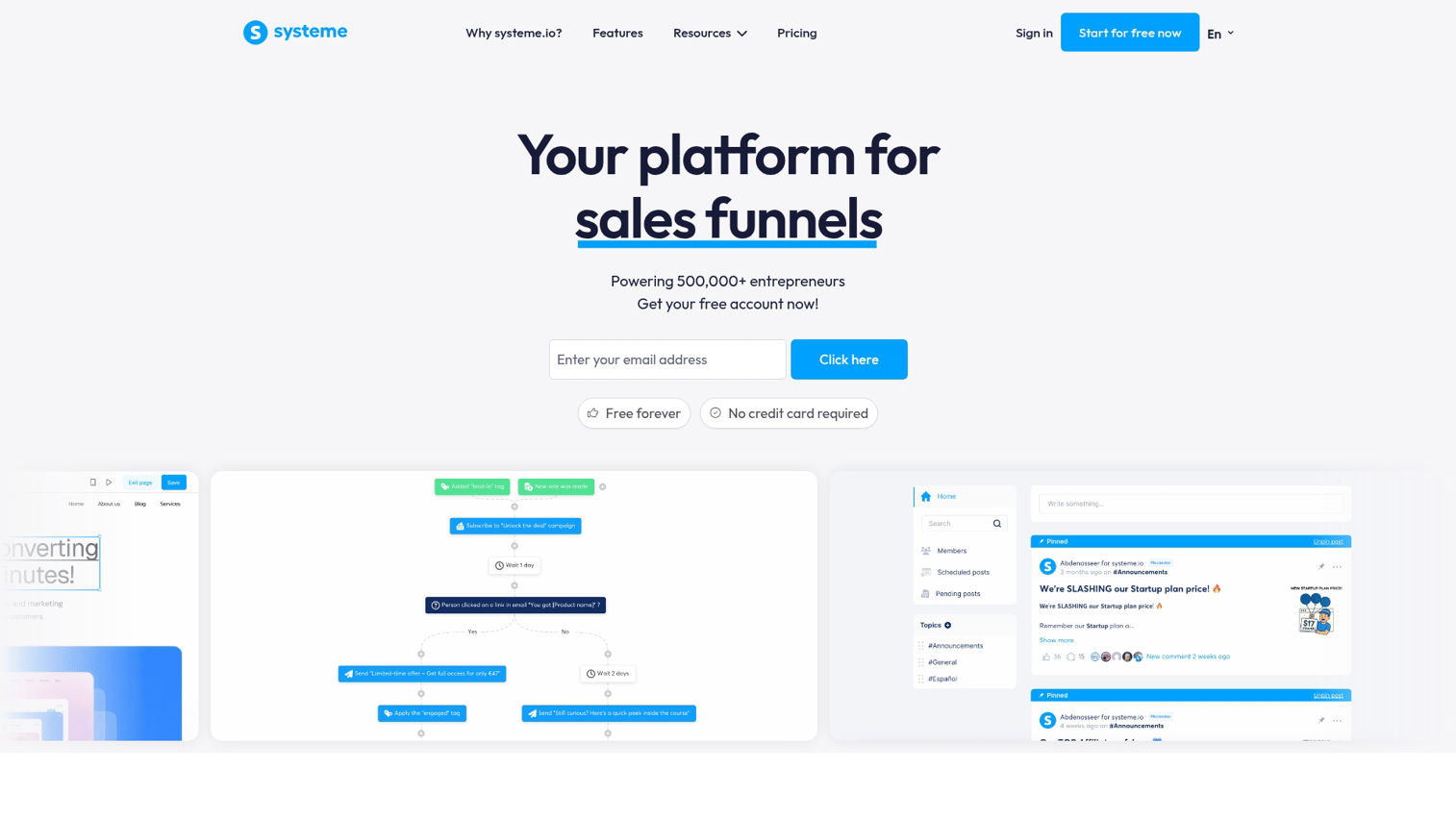
Systeme.io offers full funnel features at a budget-friendly price point. It covers landing pages, email sequences, courses, and basic automation in one tool. Best for solopreneurs and small teams exploring how to create a sales funnel for free or at low cost. The tradeoff: fewer advanced features and limited customization compared to enterprise options.
4. Kartra
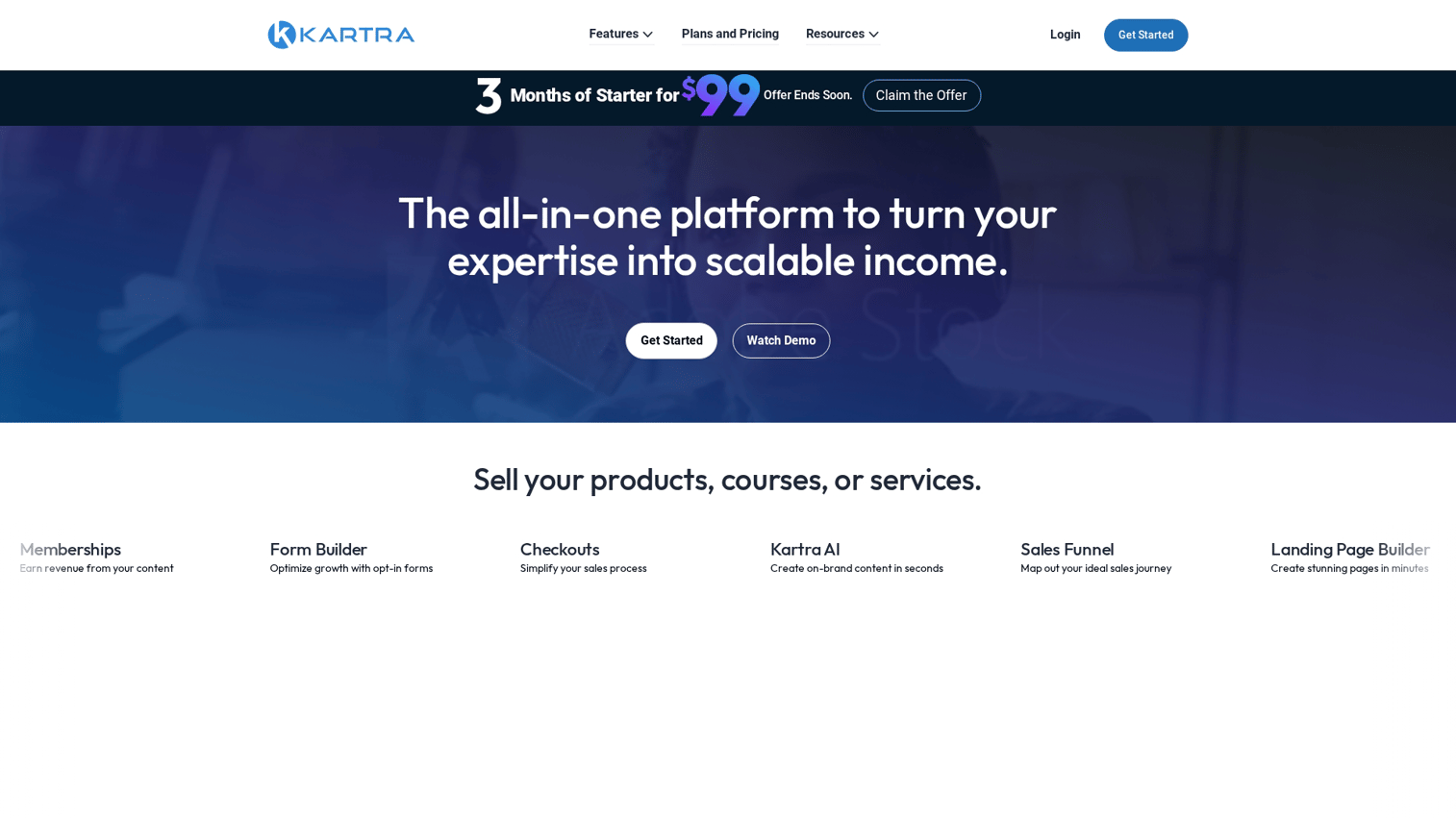
Kartra provides a comprehensive funnel marketing system with pages, email, memberships, and checkout. Course creators and coaches often choose it because everything lives in one platform. The learning curve is steeper than simpler tools, but the depth of functionality rewards teams willing to invest time in setup.
5. Involve.me
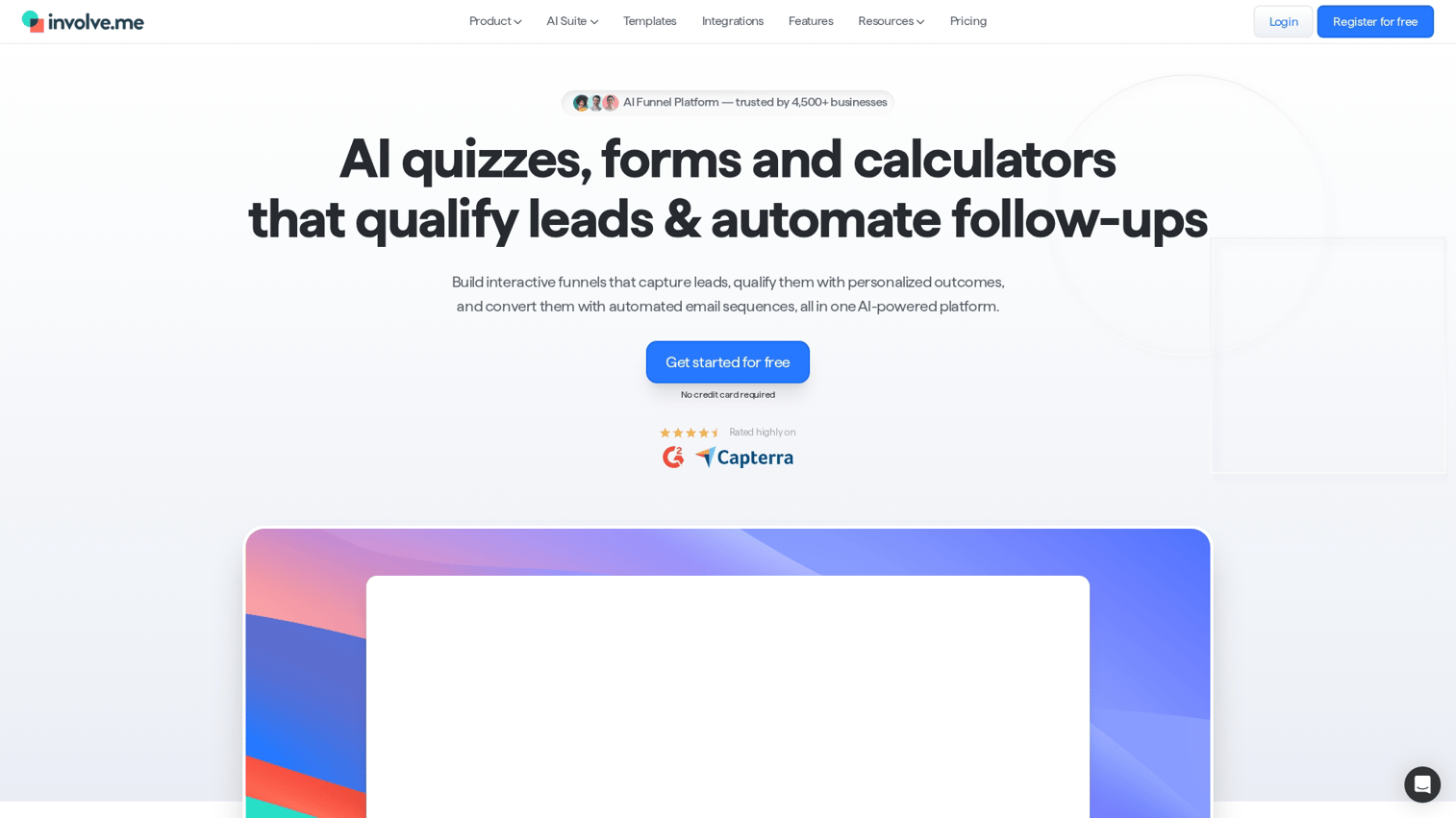
Involve.me specializes in quiz and calculator funnels. Interactive assessments qualify leads before routing them to the right funnel path. Best for teams using quizzes to segment prospects early.
6. ClickFunnels
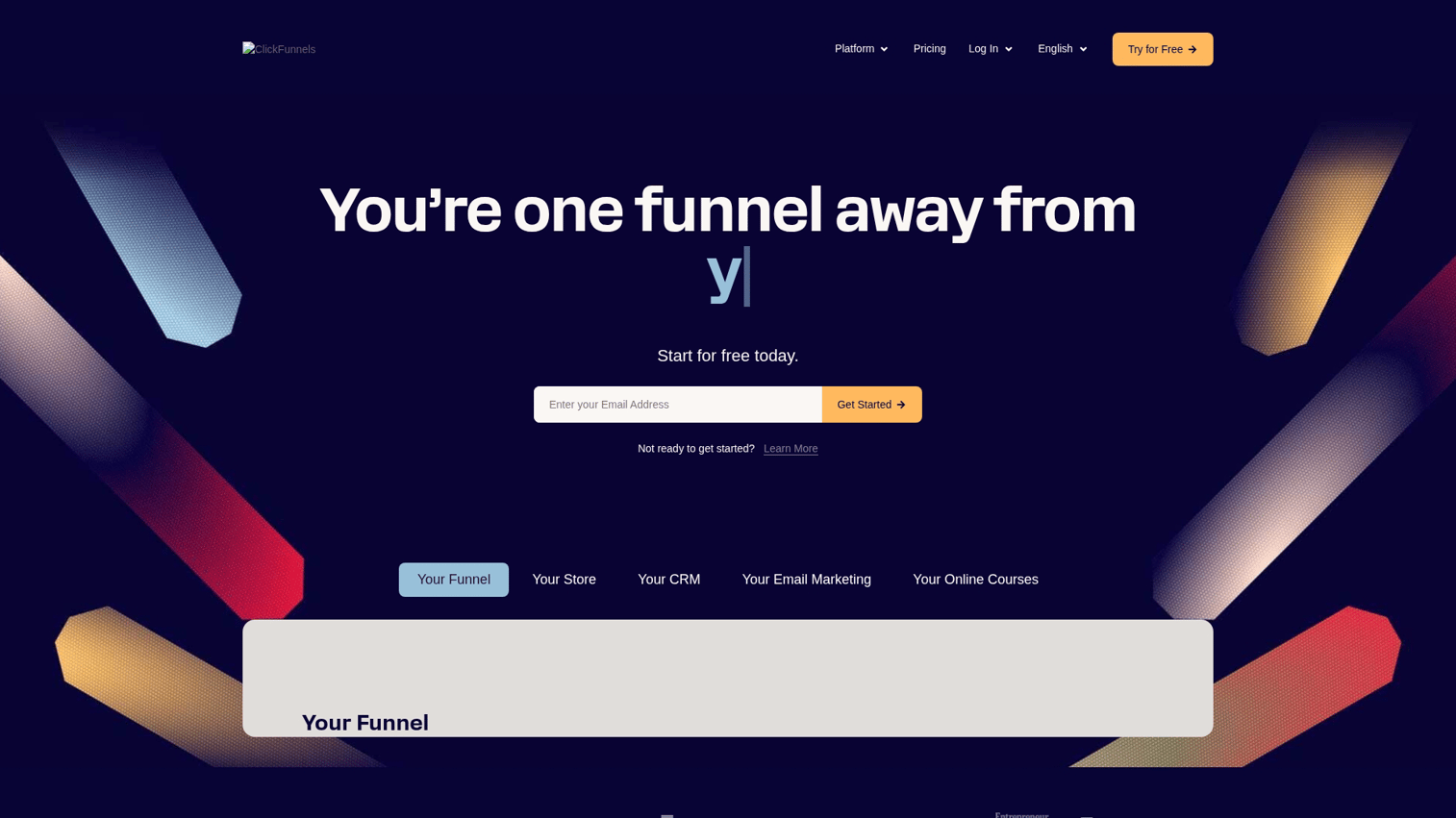
ClickFunnels pioneered the dedicated funnel builder category. It offers pre-built templates and a large community of users sharing strategies. Teams can also integrate ClickFunnels with CRM systems like Agile CRM to unify their sales data. Best for marketers who want proven templates for webinars, product launches, and lead magnets.
7. ActiveCampaign
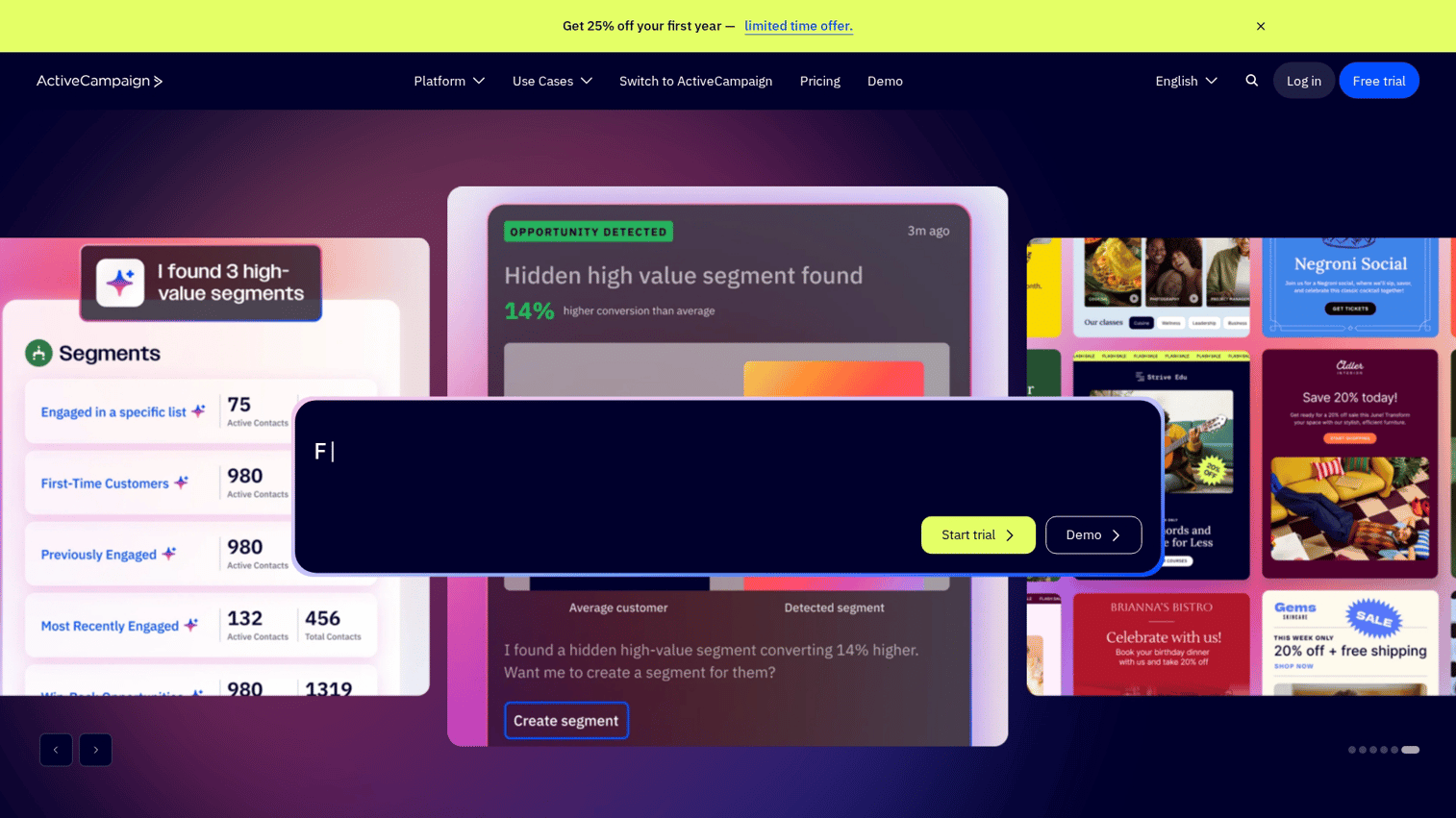
ActiveCampaign blends CRM functionality with marketing automation software. It connects email sequences to CRM stages for unified sales funnel management. Best for teams prioritizing email automation and lead scoring.
8. Leadpages
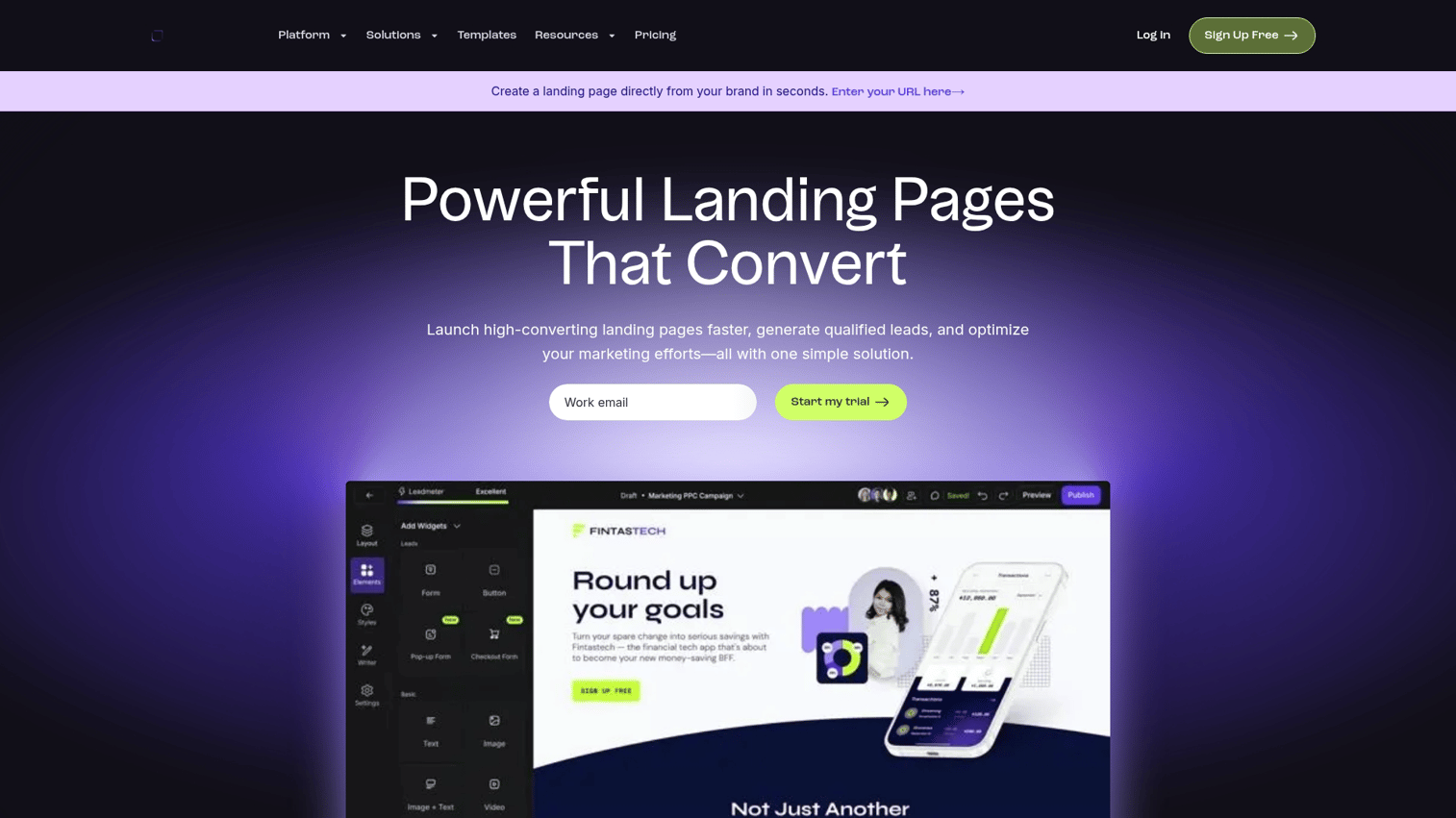
Leadpages focuses on landing pages and conversion optimization. It's not a full funnel platform, but it builds fast, conversion-optimized pages that integrate with email and CRM tools. Best for teams that want landing pages quickly without the complexity of all-in-one funnel software.
9. HubSpot
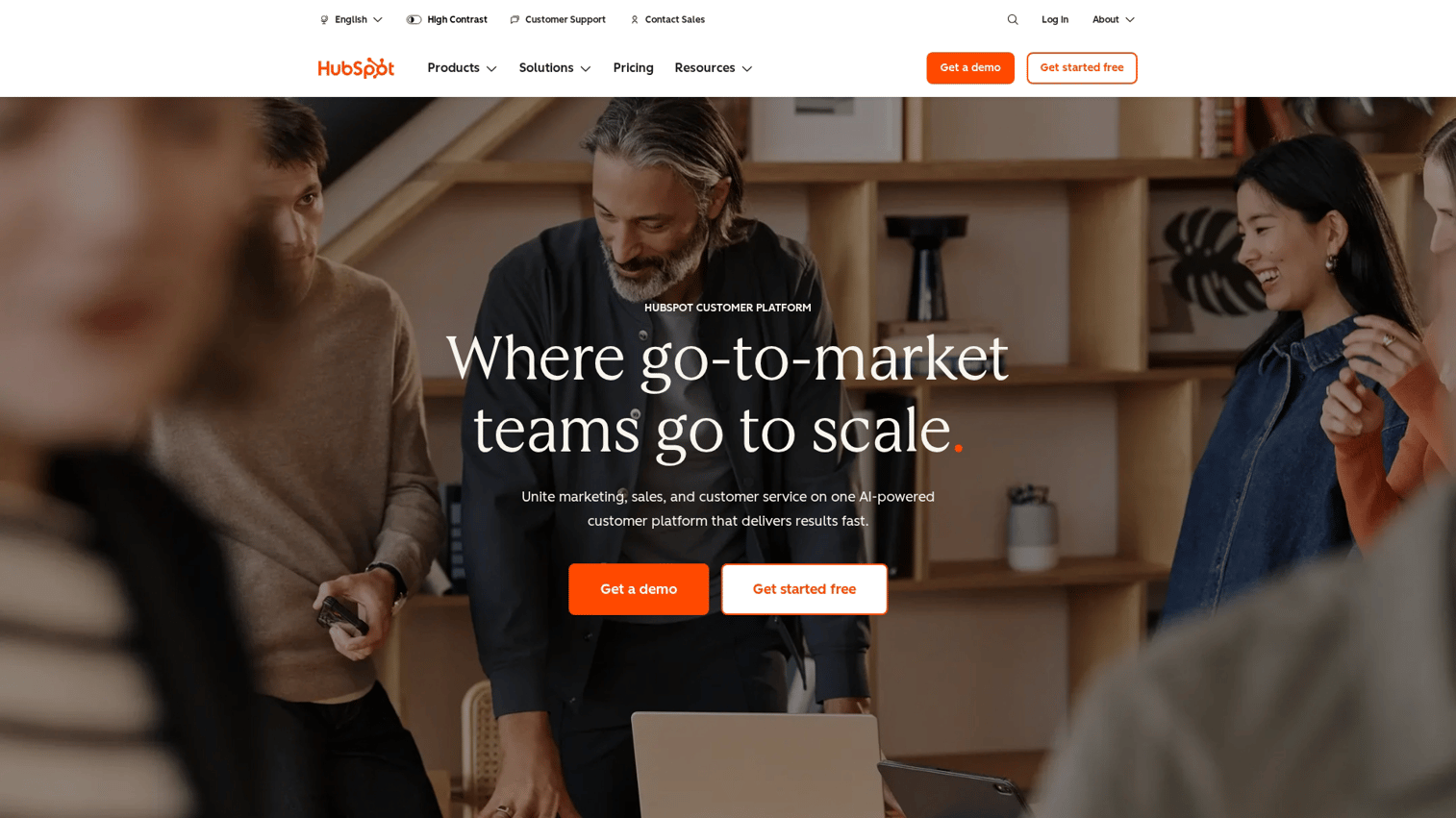
HubSpot offers enterprise CRM funnel software with marketing hub add-ons. It provides unified sales funnel management, reporting, and automation for larger teams. Complexity and cost scale with features, so smaller teams may find it overwhelming.
Features to look for in sales funnel software
AI sales funnel capabilities
AI in funnel software auto-generates copy, suggests optimizations, and personalizes content dynamically. An AI-powered editor reduces manual work in building and maintaining funnels, especially when creating multiple versions for different segments.
CRM funnel integration
CRM connection matters because lead data flows both ways. Sales sees engagement history, and marketing can trigger automations based on deal stage. Disconnected tools create data silos and manual work that slows down follow-up.
Personalization and dynamic content
Personalization goes beyond "Hi {FirstName}." Dynamic content changes based on industry, role, company size, or behavior. The more relevant the experience, the higher the conversion rate.
Marketing automation tools
Marketing automation in funnel context means triggered emails, lead scoring, behavior-based branching, and multi-channel sequences. This is how funnels run themselves after setup.
Analytics and funnel tracking software
Good funnel tracking shows where prospects stall, not just final outcomes. Look for conversion rate by stage, drop-off points, engagement depth, and attribution. You can analyze engagement data to understand which content drives action.
How to build an interactive sales funnel step by step
1. Define your funnel goal and target audience
Start with one specific outcome: demo requests, trial signups, or purchases. Define who enters this funnel by role, company size, and pain point. Vague goals create unfocused funnels.
2. Map each stage of the buyer journey
Outline what content and actions belong at each stage:
- Awareness: Prospect recognizes a problem, seeks education
- Consideration: Prospect evaluates solutions, compares options
- Decision: Prospect ready to buy, wants proof and confidence
3. Select your funnel builder software
Match the tool to your primary use case. Email-heavy funnels work well with ActiveCampaign. Demo-heavy funnels benefit from Guideflow. Page-heavy funnels fit ClickFunnels. Many teams use multiple tools together.
4. Create interactive content for each stage
Different content types work at different stages:
- Awareness: Blog posts, social content, educational videos
- Consideration: Interactive demos, comparison guides, webinars (including sandbox demos that drive 3x higher engagement)
- Decision: Personalized demos, ROI calculators, customer proof
5. Set up lead capture and qualification logic
Cover form strategy, progressive profiling, and qualification criteria. Interactive content generates behavioral signals (what they clicked) alongside form data (what they said).
6. Connect your CRM and marketing automation
Map fields, define triggers, and test data flow. Integrate with HubSpot, Salesforce, and more to route and score leads properly.
7. Test, launch, and iterate based on data
Test each stage before full launch. Check drop-off points weekly and run optimization experiments monthly. Funnels require ongoing refinement.
Free sales funnel software options worth trying
Several tools offer free tiers for teams testing the waters:
ToolWhat's freeLimitationsGuideflowFree tier for basic interactive demosLimited analytics, brandingSysteme.ioFull funnel features, limited contactsContact caps, no custom domainHubSpotFree CRM with basic emailMarketing features require paid tiers
Free options work for testing and small volume. Paid tiers unlock personalization, advanced analytics, and scale.
How to track and measure sales funnel performance
Focus on metrics that matter at each stage:
- Top of funnel: Traffic sources, content engagement, lead capture rate
- Middle of funnel: Email open and click rates, demo engagement, time to MQL
- Bottom of funnel: Demo-to-opportunity rate, sales cycle length, win rate
Avoid vanity metrics like page views. Action metrics like demo completions and qualified leads tell you what's actually working.
Common sales funnel mistakes and how to avoid them
- Gating everything: Requiring contact info before any value kills top-of-funnel volume because 61% prefer rep-free buying. Let prospects explore first.
- One-size-fits-all content: Generic funnels ignore that different roles have different questions. Segment and personalize.
- Ignoring the middle: Most teams optimize landing pages but neglect nurture content. Build the consideration stage.
- No feedback loop: Running funnels without reviewing analytics means repeating failures. Review data weekly.
- Tool sprawl without integration: Five disconnected tools create manual work and data gaps. Integrate or consolidate.
Turn your funnel into a conversion engine
Interactive funnels outperform static ones because they let buyers self-educate and self-qualify on their own terms. Demo centers help sales teams achieve similar results through structured interactive experiences.
Adding interactive demos to your funnel gives prospects hands-on product experience before they ever talk to sales. That means higher-quality conversations, shorter cycles, and fewer no-shows.
FAQs about interactive sales funnels
A marketing funnel focuses on generating awareness and capturing leads, while a sales funnel focuses on converting leads into customers. In modern B2B sales, live demos create authentic buyer experiences that bridge both funnel types. In practice, most B2B teams treat them as connected stages of one buyer journey.
Pricing ranges from free tiers with limited features to enterprise plans with custom pricing. Most mid-market funnel builder software charges based on contacts, pages, or team seats.
Yes. Modern funnel building software uses drag-and-drop editors and templates that require no code. You can create landing pages, email sequences, and interactive demos without developer help.
Interactive demos work best in the consideration and decision stages, especially since 94% of buyers want tailored demos before committing to a call. They also generate engagement data that helps sales prioritize follow-up.
Small businesses with limited budgets often start with Systeme.io or free CRM tiers. Teams selling complex products benefit from Guideflow's interactive demo capabilities even at small scale.
A basic funnel with landing page, email sequence, and CTA can launch in a few days. More complex funnels with personalization, multiple paths, and integrations typically take a few weeks to build and test.
Not necessarily. All-in-one platforms handle multiple stages, while specialist tools (like Guideflow for demos) integrate with your existing stack. Choose based on whether you prioritize simplicity or best-in-class functionality at each stage.