A critical pump fails at 2 a.m. The line stops. Nobody saw it coming because the last inspection was three weeks ago and the calendar said the asset was fine. By the time a technician arrives, you have lost a shift of production and a chunk of the quarter's margin.
That gap between inspections is where most maintenance budgets bleed. Calendar-based schedules service healthy assets on a fixed cadence and still miss the ones that are quietly degrading. The result is a mix of wasted labor and unplanned downtime, the two costs predictive maintenance software is built to cut.
The market has responded. The global predictive maintenance software market reached $7.2 billion in 2025 and is forecast to hit $26.8 billion by 2034, growing at a 15.7% CAGR, according to Dataintelo (2025). Cloud deployment already captured 54.2% of that revenue and is the fastest-growing mode at 18.3% CAGR. Buyers are moving fast, and the tooling has matured past dashboards that flag anomalies but leave your team guessing about what to do next.
That last point is the one most comparison guides miss. The best predictive maintenance tools do not just detect risk. They turn a vibration spike or a temperature drift into a scheduled work order, assigned to the right technician, with the right parts staged. Detection without execution is just a prettier alarm. If you are evaluating a predictive maintenance platform this year, workflow execution is the criterion that separates a science project from an operational system. For a sense of how engagement-first tooling gets evaluated in adjacent categories, our roundup of the best customer data platform options follows the same logic: capability means little without a path to action.
What's inside
This guide compares the best predictive maintenance software for teams evaluating AI-driven alerts, condition monitoring, CMMS integration, and work-order automation. It is written for maintenance and reliability leaders, plant operations managers, and the product managers at industrial SaaS companies who need to understand how these systems actually behave.
We selected and ranked tools on five criteria: workflow execution (does an alert become a work order), sensor and data integration depth, quality of anomaly detection and predictive maintenance analytics, ease of use for maintenance teams, and fit for industrial and manufacturing environments. Pricing and G2 ratings reflect publicly verified sources at the time of writing.
TL;DR
- Best for closed-loop maintenance execution: Fabrico pairs predictive signals with the work-order workflow that acts on them.
- Best for enterprise asset management: IBM Maximo unifies EAM, asset performance management, and predictive templates at scale.
- Best CMMS with predictive triggers: eMaint by Fluke connects maintenance management to Fluke-native reliability data.
- Best CMMS-first with IoT capture: Fiix balances ease of use with predictive capabilities and sensor data.
- Best for sensor-led machine health: Augury delivers vibration and acoustic diagnostics with AI-driven health scores.
- Best sensor-plus-software for rotating equipment: Tractian bundles condition monitoring hardware with maintenance execution.
- Best cloud CMMS with IoT connectivity: Fracttal One coordinates maintenance across locations with remote access.
What is predictive maintenance software?
Predictive maintenance software uses condition-monitoring data, machine learning anomaly detection, and automated scheduling to predict equipment failures before they happen and trigger maintenance action in time to prevent breakdown.
Under the hood, most predictive maintenance systems follow the same chain of logic:
- Data inputs: vibration, temperature, RPM, acoustic and oil analysis, motor current, and infrared thermography, captured from IoT sensors or existing control systems.
- Baseline determination: the software learns each asset's normal operating signature so it can tell drift from noise.
- Prediction and alerting: machine learning models flag anomalies and estimate remaining useful life, then surface alerts by severity.
- Work-order automation: high-confidence alerts convert into scheduled work orders, assigned to technicians with parts and instructions attached.
- CMMS and EAM integration: predictions flow into the maintenance management or enterprise asset management system that runs the shop.
- Analysis types: vibration analysis, thermography, ultrasonic and acoustic monitoring, oil analysis, and motor current signature analysis.
The category splits into two broad shapes. CMMS-based platforms start from work orders and asset records, then layer predictive triggers on top. Dedicated PdM platforms start from sensors and machine health science, then push insight into your maintenance workflow. Enterprise asset management suites sit above both, adding governance, capital planning, and asset lifecycle management. Knowing which shape you need is half the buying decision.
When to use predictive maintenance software
Reduce unplanned downtime
If unplanned stoppages are eating your production schedule, you need software that spots failure patterns early enough to act before the line goes down. Condition monitoring plus predictive analytics gives your team days or weeks of warning instead of a red light and a scramble. That lead time is the whole point: it converts a catastrophic failure into a planned intervention on your terms.
Replace calendar-only maintenance
Fixed preventive schedules waste labor servicing assets that are perfectly healthy, and they still miss failures that develop between service dates. Predictive maintenance vs preventive maintenance is not an either-or choice for most teams, but shifting the highest-risk assets onto condition-based triggers cuts both wasted labor and surprise breakdowns. Start with your most critical rotating equipment and expand from there.
Connect alerts to work orders
An anomaly dashboard that nobody acts on is just noise with better graphics. The value shows up when the system turns detection into scheduled action: an alert becomes a work order, the work order routes to a technician, and the parts are already staged. When you evaluate a predictive maintenance platform, trace that full path before you buy. Detection is table stakes now. Execution is the differentiator.
Comparison table
Here is how the seven tools stack up across intent, primary use case, verified pricing, and G2 rating. The list is ranked by overall relevance to predictive maintenance evaluation, with an emphasis on workflow execution.
| # | Product | Intent | Key use case | Pricing | G2 rating |
|---|---|---|---|---|---|
| 1 | Fabrico | Closed-loop PdM + execution | Predictive triggers tied to work orders | Quote-based | 4.9/5 |
| 2 | IBM Maximo | Enterprise asset management | EAM, APM, and asset lifecycle at scale | From under $40K/year | 4.4/5 |
| 3 | eMaint by Fluke | CMMS with predictive triggers | Maintenance management + Fluke reliability data | From $69/user/mo | 4.5/5 |
| 4 | Fiix | CMMS-first with IoT | Work orders, assets, and IoT capture | Free; paid from $45/user/mo | 4.6/5 |
| 5 | Augury | Dedicated machine health | Vibration and acoustic diagnostics | Quote-based | 4.8/5 |
| 6 | Tractian | Sensor + software | Condition monitoring for rotating equipment | From $60/user/mo | 4.7/5 |
| 7 | Fracttal One | Cloud CMMS + IoT | Multi-site maintenance coordination | Free version; paid by quote | 4.6/5 |
1. Fabrico
Fabrico leads this list because it treats predictive maintenance as a workflow problem, not just an analytics problem. The platform is built around the idea that a prediction only matters if it produces an action, so it wires condition data and AI anomaly detection directly into the maintenance execution layer. For plant and operations teams tired of dashboards that flag risk but leave the follow-through to email and guesswork, that closed-loop framing is the draw.
Best for: Maintenance and operations teams that want predictive signals and the work-order workflow that acts on them in one system.
Key strengths
- Closed-loop execution: Anomaly detection feeds directly into scheduled work orders, so alerts become assigned tasks rather than open questions.
- Data integration: Ingests condition-monitoring inputs and connects them to asset records, keeping detection and history in one place.
- AI anomaly detection: Machine learning models surface early-warning signals so teams intervene before failure, not after.
Why choose Fabrico: If your primary frustration is the gap between knowing an asset is degrading and actually getting someone to fix it, Fabrico is built for exactly that seam. It fits teams that value practical execution over a sprawling analytics project and want to see maintenance action come out the other end.
Fabrico pricing: Fabrico does not publish standard pricing on its site and directs prospective buyers to request a quote based on their asset count and configuration. There is no publicly listed free tier. Teams evaluating the platform should scope pricing against the number of assets and users they plan to monitor. Fabrico holds a 4.9/5 rating on G2.
2. IBM Maximo
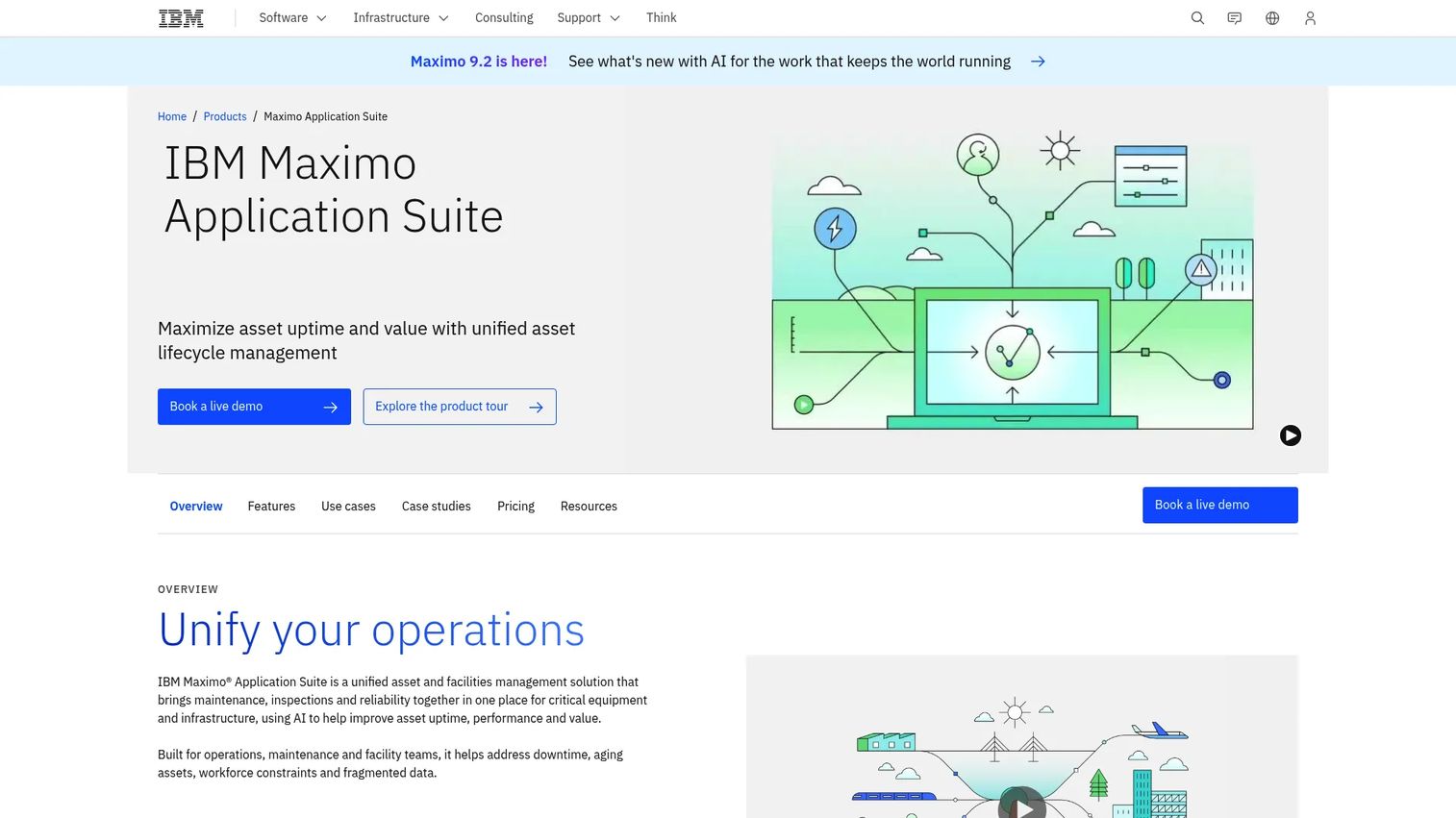
IBM Maximo is the enterprise asset management heavyweight of this roundup. The Maximo Application Suite unifies EAM, asset performance management, and asset investment planning into a single platform, with predictive templates and anomaly detection layered across the asset lifecycle. For asset-intensive enterprises coordinating maintenance, inspections, and reliability across many sites, it offers the governance and depth that lighter tools do not attempt.
Best for: Asset-intensive enterprises that need unified maintenance, reliability, inspection, and capital planning in one governed platform.
Key strengths
- Unified EAM and APM: Combines enterprise asset management with asset performance management so reliability and lifecycle planning live together.
- Predictive templates: Prebuilt models and anomaly detection accelerate deployment across large, varied asset fleets.
- Asset investment planning: Ties maintenance decisions to capital planning, useful for long-horizon reliability strategy.
Why choose IBM Maximo: Maximo fits organizations where governance, scale, and asset lifecycle management dominate the requirements list. It is a heavy platform, so it rewards teams with the reliability maturity and internal resources to deploy it fully rather than those wanting a quick condition-monitoring win.
IBM Maximo pricing: The Maximo Application Suite uses AppPoints-based licensing and is available as client-managed software or SaaS. IBM publishes starting prices for several tiers, with the Essentials tier starting under US$40K per year and specialized packages such as Inspection starting under US$47K per year. There is no free tier, though a trial is available. Enterprise buyers should model AppPoints consumption against their asset and user footprint. Maximo holds a 4.4/5 rating on G2.
3. eMaint by Fluke
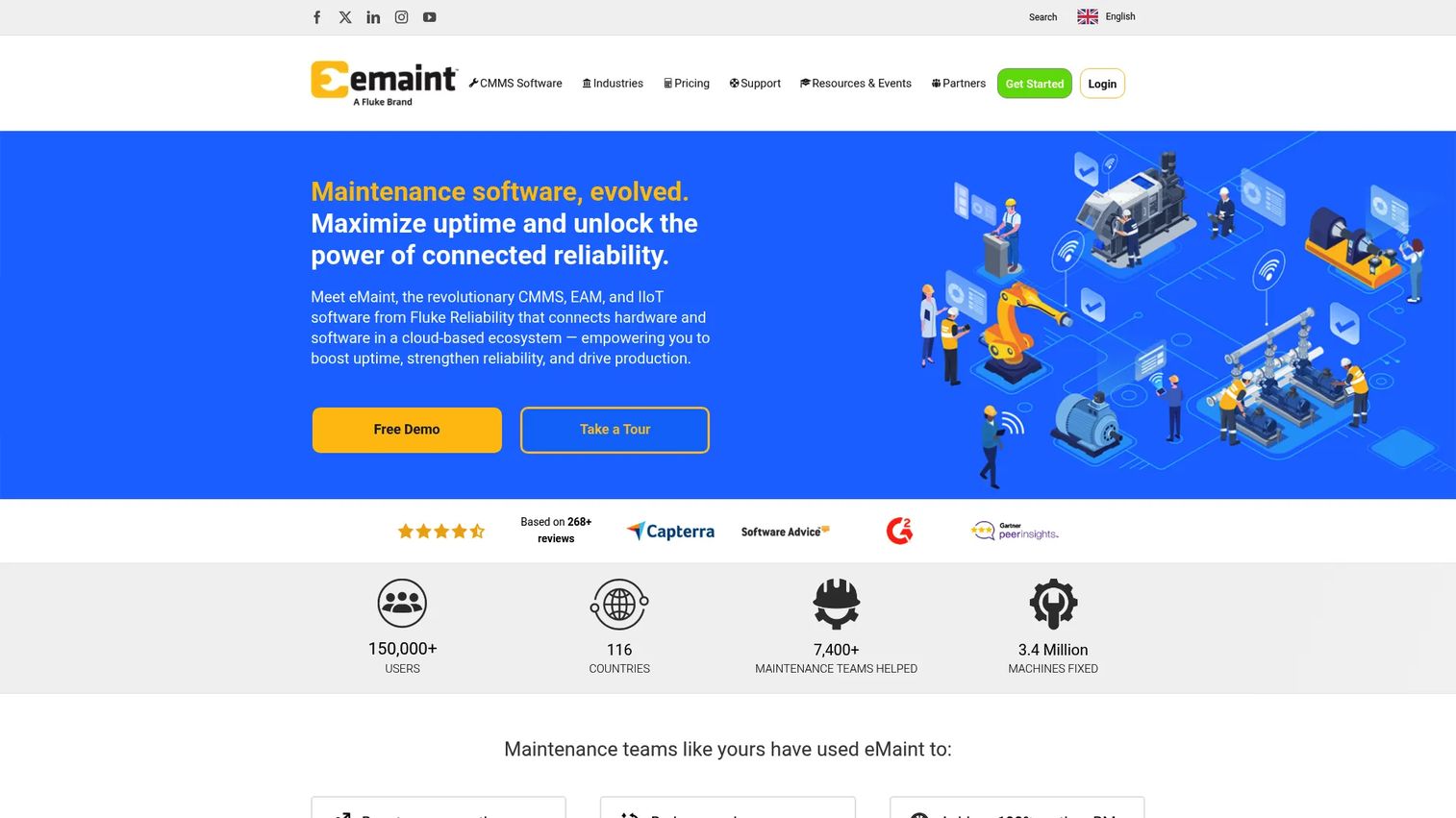
eMaint by Fluke is the CMMS-first choice for teams that want strong maintenance management with predictive triggers layered on, without launching a standalone analytics program. As part of Fluke Reliability, it connects naturally to Fluke's condition-monitoring hardware, so vibration and sensor readings can flow into asset history and work orders. It is a practical fit for maintenance teams that want configurable software rooted in day-to-day execution.
Best for: Maintenance teams needing a configurable CMMS with Fluke-connected reliability and condition-monitoring workflows.
Key strengths
- Work order and asset management: Full CMMS core with asset history, spare parts inventory, and preventive maintenance scheduling.
- Condition monitoring: Native connection to Fluke reliability tools brings vibration and sensor data into the maintenance record.
- Reporting and compliance: Configurable dashboards and regulatory compliance features support audit-ready maintenance operations.
Why choose eMaint: eMaint suits teams that want their predictive triggers grounded in a mature CMMS rather than a separate machine health platform. The Fluke ecosystem tie-in is a real advantage if you already run Fluke instruments or plan to.
eMaint pricing: eMaint publishes public pricing that starts with the Team plan at $69/user/month and the Professional plan at $85/user/month, with a custom-quoted Enterprise tier for larger deployments. A free demo is available. Final pricing is configurable and varies by user count, contract length, and setup. eMaint holds a 4.5/5 rating on G2.
4. Fiix
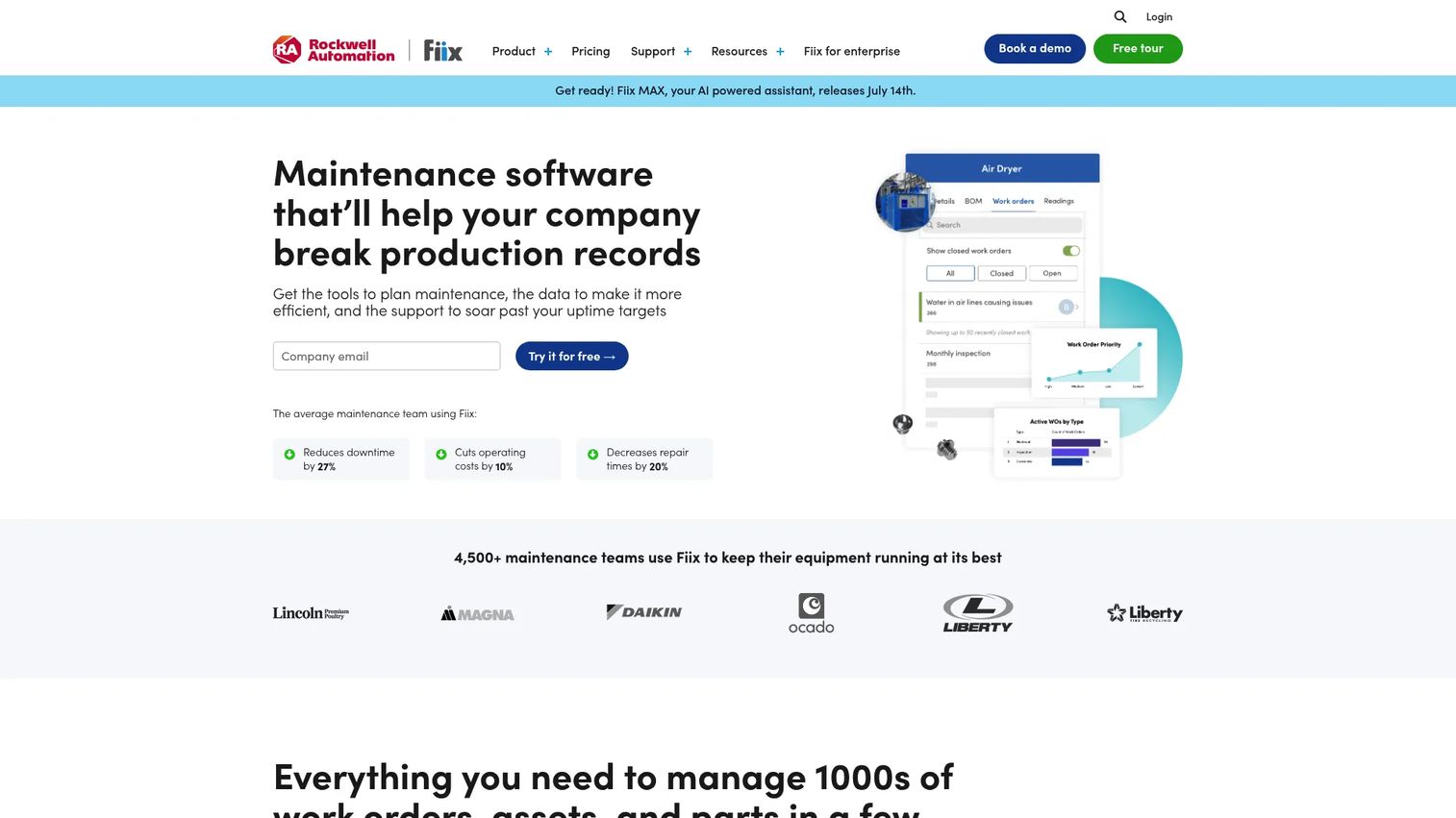
Fiix is a cloud CMMS with predictive capabilities and IoT data capture, aimed at maintenance teams that want a clean balance between ease of use and customization. It covers the CMMS fundamentals well, work orders, asset management, and inventory tracking, while supporting sensor data ingestion for condition-based maintenance. For teams that need to stand up maintenance management quickly and grow into predictive workflows, it is an approachable entry point.
Best for: Maintenance teams wanting a CMMS-first platform with work orders, asset tracking, and room to add IoT-driven predictive maintenance.
Key strengths
- Work order management: Streamlined creation, assignment, and tracking keeps maintenance execution organized.
- Asset management: Centralized asset records with history support both preventive and condition-based maintenance.
- IoT data capture: Sensor integration feeds condition data into the CMMS for predictive triggers.
Why choose Fiix: Fiix fits teams that value fast setup and usability without giving up customization as they mature. The free tier makes it easy to pilot before committing budget, which matters for teams proving predictive maintenance ROI internally.
Fiix pricing: Fiix offers a Free plan for a limited number of users, a Basic plan at $45/user/month, and a Professional plan at $75/user/month, plus a custom-priced Enterprise tier. The free tier and transparent per-user pricing make it one of the more accessible options here for smaller teams. Fiix holds a 4.6/5 rating on G2.
5. Augury
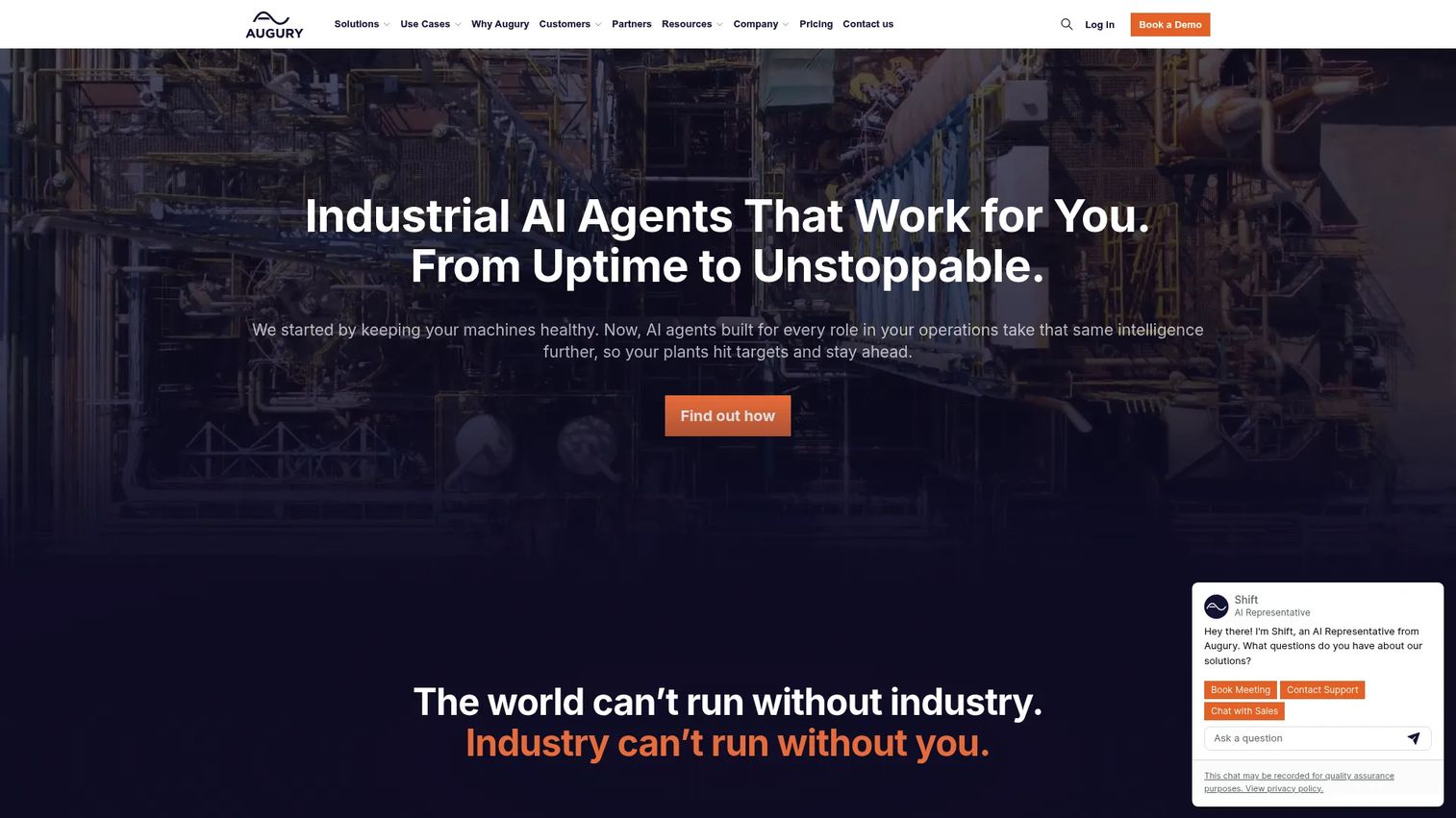
Augury is the dedicated machine health platform on this list, and it approaches predictive maintenance from the sensor side rather than the work-order side. Its Machine Health product uses IoT sensors for continuous monitoring, then applies AI diagnostics to generate health scores and prescriptive guidance. This is the difference between sensor-led machine monitoring and general CMMS software: Augury is built to tell you precisely what is wrong with a machine and what to do about it.
Best for: Manufacturers seeking AI-driven machine health monitoring with vibration and acoustic diagnostics on critical equipment.
Key strengths
- Machine Health monitoring: Continuous IoT-based monitoring purpose-built for predictive maintenance on rotating equipment.
- AI diagnostics: Machine learning models translate raw signals into specific fault diagnoses and prescriptive actions.
- Health scores: Clear asset health scoring helps reliability teams prioritize interventions by risk.
Why choose Augury: Choose Augury when machine health insight is the priority and you want diagnostic depth rather than a general maintenance management system. It pairs well with an existing CMMS, feeding high-fidelity condition data into whatever runs your work orders.
Augury pricing: Augury uses quote-based pricing and does not publish public plan prices, directing buyers to request a quote scoped to their equipment and monitoring needs. Because deployment involves sensors and continuous monitoring, pricing typically reflects the number of assets under coverage. Augury holds a 4.8/5 rating on G2.
6. Tractian
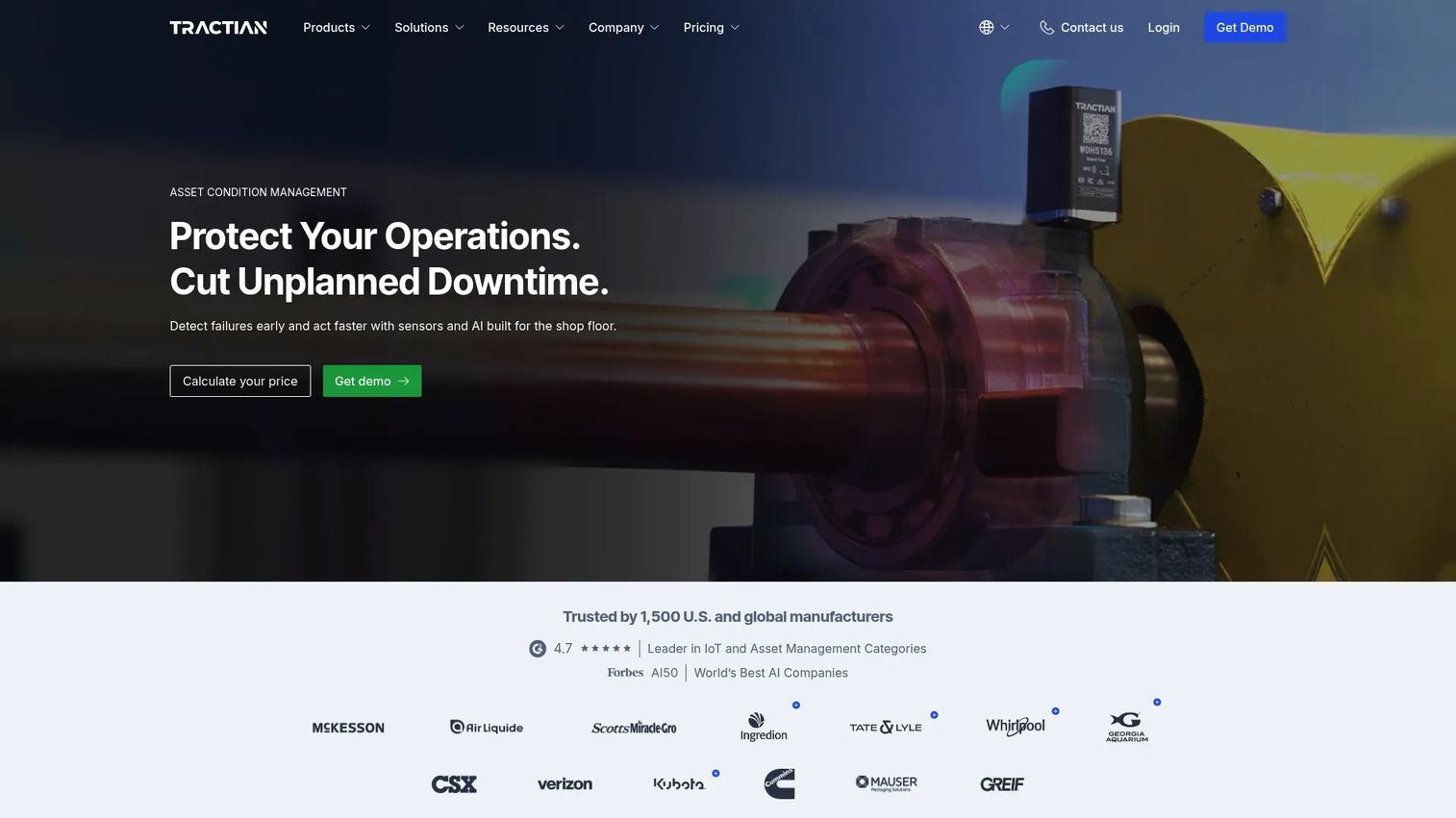
Tractian combines condition-monitoring hardware with maintenance software in a single industrial platform, which makes it a strong fit for teams that want fast setup around vibration and temperature monitoring. Its sensors capture vibration, temperature, RPM, and runtime with remote access, while the software side delivers CMMS core features, asset performance management, and AI-powered diagnosis. For reliability programs centered on rotating equipment, the sensor-plus-software bundle removes a lot of integration friction.
Best for: Manufacturing and industrial teams needing condition monitoring and maintenance execution together, especially for rotating equipment.
Key strengths
- Condition monitoring: Sensors track vibration, temperature, RPM, and runtime with remote access to asset health.
- CMMS core: Unlimited assets and requesters, work orders, and maintenance execution in one platform.
- AI-powered diagnosis: Asset performance management with machine learning surfaces the likely fault behind an anomaly.
Why choose Tractian: Tractian fits teams that want to skip the hardware-software integration project and deploy a reliability program quickly. The bundled sensors make it especially practical for rotating equipment where vibration and temperature are the leading failure indicators.
Tractian pricing: Tractian offers a free sandbox to test the platform, a Standard plan from $60/user/month starting at five users billed annually, and an Enterprise plan from $100/user/month starting at ten users billed annually. A custom Bundle plan is available on request. Tractian holds a 4.7/5 rating on G2.
7. Fracttal One
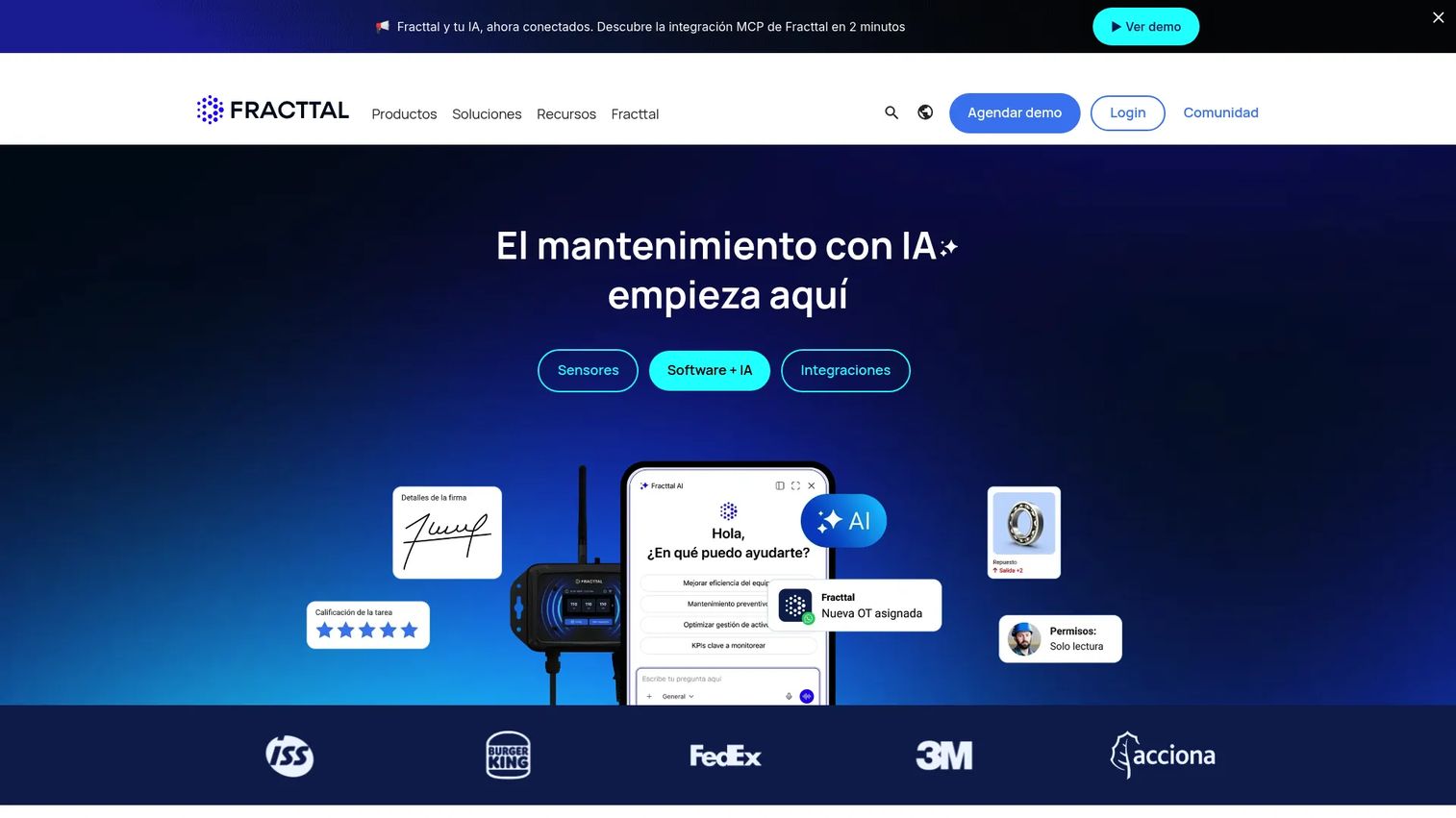
Fracttal One is a cloud CMMS and asset management platform with IoT connectivity, built for teams that need to coordinate maintenance across multiple locations. Its strengths sit in remote access, asset tracking, and mobile-friendly maintenance management, alongside preventive and predictive maintenance and IoT monitoring. For distributed operations where technicians and assets span sites, the cloud-native, mobile-first design keeps everyone working from the same asset record.
Best for: Mid-market and enterprise maintenance teams coordinating CMMS, EAM, mobile, and IoT capabilities across multiple locations.
Key strengths
- Work order management: Cloud-based work orders keep distributed teams aligned on maintenance execution.
- Preventive and predictive maintenance: Combines scheduled and condition-based maintenance in one platform.
- Asset, inventory, and IoT monitoring: Tracks assets and inventory while ingesting IoT data for condition-based triggers.
Why choose Fracttal One: Fracttal One suits teams whose defining constraint is geography, multiple plants, remote technicians, or mobile-first workflows. The cloud and mobile foundation makes it easy to keep maintenance coordinated without everyone tied to a desktop.
Fracttal One pricing: Fracttal offers a free version of Fracttal One, with paid plans sold as annual SaaS subscriptions priced by quote rather than published rates. Buyers should request pricing scoped to their user count and asset footprint. Fracttal One holds a 4.6/5 rating on G2.
Considerations before you buy
The right predictive maintenance system depends on where your bottleneck sits. Use this checklist to pressure-test any tool before committing budget.
Workflow execution
Trace the full path from anomaly to closed work order. Does an alert automatically create a task, route it to a technician, and attach the parts and instructions? A tool that stops at the dashboard leaves the hardest part, getting the fix done, to manual effort.
Data and sensor integration
Confirm which data inputs the platform accepts and how it connects to your existing sensors and control systems. Vibration, temperature, oil analysis, and motor current all matter for different assets. Verify whether you need the vendor's hardware or can bring your own.
Anomaly detection quality
Ask how the models establish baselines and how they handle false positives. Predictive maintenance analytics are only useful if the alerts are trustworthy enough that your team acts on them instead of tuning them out.
Implementation and maintainability
For product managers evaluating on behalf of a broader stack, weigh the opportunity cost of setup and ongoing upkeep. Bundled sensor-plus-software tools reduce integration work, while enterprise EAM suites reward teams with dedicated reliability resources. Match the implementation effort to your team's real capacity.
Integration depth
Check how the platform connects to your CMMS, EAM, ERP, and analytics stack. CMMS predictive maintenance works best when predictions flow into the system your team already lives in, not a separate tool they have to remember to check.
Conclusion
The best predictive maintenance software for your team depends less on ranking and more on which shape fits your bottleneck. If maintenance execution is your weak spot, a CMMS-first platform like Fabrico, eMaint by Fluke, Fiix, or Fracttal One keeps predictions tied to the work orders that resolve them. If machine health insight is the priority, a dedicated PdM platform like Augury or a sensor-plus-software system like Tractian delivers the diagnostic depth to act with precision. And if governance, capital planning, and asset lifecycle scale dominate, IBM Maximo is the enterprise asset management anchor.
The through-line across every strong option is the same: detection is only valuable when it produces action. Pick the tool that closes the loop for your assets, your team's maturity, and your integration reality.
Do not try to evaluate all seven at once. Pick the one that maps to your primary constraint, run a focused pilot on your most critical assets, and measure the downtime reduction before you expand. One well-scoped evaluation beats a broad comparison that never leaves the spreadsheet.
FAQs
Predictive maintenance software uses condition-monitoring data and machine learning to predict equipment failures before they occur, then triggers maintenance action in time to prevent breakdown. It shifts maintenance from a fixed calendar to the actual condition of each asset, cutting both wasted labor and unplanned downtime.
It collects sensor data such as vibration, temperature, and motor current, learns each asset's normal operating baseline, and uses anomaly detection to flag early signs of failure. High-confidence alerts then convert into scheduled work orders so a technician can intervene before the asset fails.
Common inputs include vibration analysis, temperature, RPM, acoustic and ultrasonic readings, oil analysis, motor current signature analysis, and infrared thermography. This data usually comes from IoT sensors or existing control and SCADA systems, feeding the models that detect drift from normal operation.
Preventive maintenance services assets on a fixed schedule regardless of condition, which can waste labor on healthy equipment and still miss failures between service dates. Predictive maintenance uses real condition data to act only when an asset actually shows signs of degrading, making it more precise and cost-efficient for critical assets.
You do not strictly need a CMMS, but CMMS predictive maintenance is where most teams see the payoff, because it turns predictions into scheduled, assigned work orders. Dedicated machine health platforms can feed condition data into an existing CMMS, so the two often work together rather than as alternatives.
The primary benefits are reduced unplanned downtime, lower maintenance labor costs, longer asset life, and better maintenance ROI. By catching failures early and scheduling repairs on your terms, teams avoid emergency stoppages and the cascading production losses that follow them.
Manufacturing leads adoption, particularly for rotating equipment like motors, pumps, and compressors, followed by energy and utilities, oil and gas, transportation, and facilities management. Any asset-intensive operation where downtime is expensive is a strong candidate for a predictive maintenance platform.
They overlap but are not identical. Predictive maintenance focuses on forecasting and preventing individual asset failures, while asset performance management (APM) is a broader discipline that includes predictive maintenance alongside reliability strategy, risk assessment, and asset lifecycle optimization. Many EAM predictive maintenance suites bundle both under one platform.