Your reps are spending 70% of their time on non-selling tasks rather than actual selling. Pipeline reviews reveal the same deals stuck in the same stages week after week, and forecasts feel more like guesswork than prediction.
Sales acceleration software exists to fix exactly this problem by automating the repetitive tasks that slow deals down and surfacing the insights that help reps focus on what actually closes. This guide breaks down the six main categories of sales acceleration tools, compares 17 platforms with pricing and use cases, and gives you a practical framework for choosing the right solution based on where your deals actually stall.
What's inside
This guide covers everything you need to evaluate and choose sales acceleration software for your team:
- A clear definition of sales acceleration software and how it differs from general CRM
- The six main categories of sales acceleration tools and when each applies
- A comparison table with pricing, ratings, and key differentiators for all 17 tools
- Detailed breakdowns of each platform with strengths, use cases, and costs
- A practical framework for selecting the right solution based on your sales process
TL;DR
- Sales acceleration software shortens sales cycles by automating repetitive tasks, prioritizing high-intent leads, and surfacing actionable insights so reps spend more time selling.
- The market includes six main categories: CRM, sales engagement, lead scoring, demo automation, conversation intelligence, and analytics.
- Guideflow stands out for demo automation and buyer enablement, letting prospects experience your product before a call.
- When choosing a platform, match the tool category to your specific pipeline bottleneck rather than buying an all-in-one solution you won't fully use.
- Check the comparison table below for a quick side-by-side view of all 17 tools.
What is sales acceleration software
Sales acceleration software speeds up the sales cycle by automating repetitive tasks, identifying high-priority leads, and providing actionable AI-driven insights. Unlike general CRM systems that focus on storing and organizing customer data, sales acceleration platforms specifically target deal velocity. The goal is helping reps move opportunities through the pipeline faster by removing friction at every stage.
The core functions break down into three areas:
- Lead prioritization: Scores and ranks prospects based on behavioral and firmographic signals so reps focus on winnable deals
- Task automation: Eliminates manual work like data entry, follow-up scheduling, and activity logging
- Actionable insights: Surfaces data that tells reps exactly what to do next, whether that's a call, email, or demo
Top platforms for 2026 include Salesforce for enterprise AI, HubSpot for inbound, Pipedrive for pipeline management, and Outreach for sales execution. Demo automation tools like Guideflow are increasingly critical because they let buyers self-educate before engaging with reps, which shortens cycles and improves lead quality.
Types of sales acceleration tools
The sales acceleration market, valued at $124.4 billion in 2024, includes several distinct categories. Each solves a different bottleneck in the sales process, so understanding where your deals stall helps you pick the right tool type.
CRM and pipeline management
CRM platforms form the foundational layer for tracking deals, contacts, and pipeline stages. They centralize customer data and provide visibility into deal progress. Think of CRM as the system of record that other sales acceleration tools plug into.
Sales engagement and outreach
Sales engagement platforms handle the execution of multichannel sequences across email, phone, and social. They automate follow-ups, track prospect responses, and help reps maintain consistent outreach without manual effort.
Lead scoring and prospecting
Lead scoring tools use behavioral and firmographic signals to rank prospects by likelihood to convert. Prospecting tools help identify and enrich new contacts. Together, they ensure reps spend time on the right accounts.
Demo automation and buyer enablement
Demo automation tools let prospects experience your product without scheduling a live call - critical given 6sense's finding that four out of five deals are won by the pre-contact favorite. Interactive demos reduce friction and let buyers self-educate on their own time. This category is where Guideflow fits, helping marketing teams and sales create product experiences that qualify leads before the first conversation.
Conversation intelligence
Conversation intelligence platforms record, transcribe, and analyze sales calls. They surface coaching insights, identify winning talk patterns, and reveal buyer sentiment that reps might miss in the moment.
Sales analytics and forecasting
Analytics tools aggregate pipeline data to predict revenue outcomes and identify deal risks. They give sales leaders accurate visibility into what's likely to close and where intervention is needed.
| Tool type | Primary function | Example use case |
|---|---|---|
| CRM and pipeline management | Track deals and contacts | Manage pipeline stages |
| Sales engagement | Execute outreach sequences | Automate email follow-ups |
| Lead scoring and prospecting | Prioritize high-intent leads | Focus rep time on best fits |
| Demo automation | Enable self-serve product experiences | Let prospects explore before calls |
| Conversation intelligence | Analyze sales calls | Coach reps on talk patterns |
| Sales analytics | Forecast revenue | Identify at-risk deals |
Why sales teams invest in sales acceleration solutions
The business outcomes from sales acceleration tools go beyond efficiency gains. Here's what actually moves the needle for revenue teams.
Shorter sales cycles
Automation and better lead prioritization remove delays between touchpoints. When reps don't have to manually log activities or chase down information, deals move faster through the funnel.
Higher rep productivity
Automating manual tasks like data entry, scheduling, and follow-ups frees reps to spend more time in actual selling conversations. The math is straightforward: if a rep saves 10 hours per week on admin work, that's 10 more hours for prospecting and closing.
Better lead prioritization
Lead scoring helps reps focus on prospects most likely to convert instead of working every lead equally. This matters especially when inbound volume is high and not every lead deserves the same attention.
Improved buyer engagement
Tools like interactive demos let buyers self-educate on their own time, increasing engagement and reducing no-shows. When prospects have already explored your product before a call, conversations start at a higher level.
Data-driven forecasting
Analytics tools give sales leaders accurate pipeline visibility to make better decisions. Instead of relying on gut feel or optimistic rep estimates, you get predictions based on actual deal behavior.
Key features in the best sales acceleration platforms
When evaluating sales acceleration software, certain capabilities separate the tools that get adopted from the ones that collect dust.
Workflow automation
Look for automation that removes repetitive manual steps like logging activities, sending sequences, and updating records. The best platforms handle tasks invisibly so reps can focus on selling.
CRM integration
Native integration with your existing CRM (Salesforce, HubSpot, etc.) matters for data sync and adoption. If the tool doesn't play well with your system of record, reps won't use it consistently.
Real-time analytics
Live dashboards showing pipeline health, rep activity, and deal progress help managers spot problems early. Stale data leads to stale decisions.
Personalization capabilities
Personalization in emails, demos, and outreach increases response rates and engagement. Generic messaging gets ignored; tailored content gets responses.
Ease of adoption
The best sales acceleration tools are intuitive enough that reps actually use them without extensive training. A powerful tool that sits unused doesn't accelerate anything.
Quick checklist for evaluation:
- Workflow automation: Automates sequences, data entry, and task creation
- CRM integration: Syncs with Salesforce, HubSpot, and other CRMs
- Real-time analytics: Dashboards for pipeline visibility and rep performance
- Personalization: Customizes outreach and demos by prospect
- Ease of adoption: Minimal training required for reps to start using
Comparison table
| # | Product | Intent | Key differentiation | Pricing | G2 rating |
|---|---|---|---|---|---|
| 1 | Guideflow | Demo automation and buyer enablement | Interactive demos, sandboxes, and engagement analytics | Free plan available | 5.0/5 |
| 2 | HubSpot Sales Hub | Inbound sales and CRM | All-in-one sales, marketing, service | Free tier, paid from $15/mo | 4.4/5 |
| 3 | Salesforce Sales Cloud | Enterprise CRM with AI | Advanced lead scoring and customization | From $25/user/mo | 4.3/5 |
| 4 | Salesloft | Revenue orchestration | Multi-channel cadences and coaching | Custom pricing | 4.5/5 |
| 5 | Outreach | Sales execution | AI-driven sequences and deal management | Custom pricing | 4.3/5 |
| 6 | Gong | Conversation intelligence | AI call analysis and coaching | Custom pricing | 4.7/5 |
| 7 | ZoomInfo | B2B data and prospecting | Contact database and intent signals | Tiered pricing | 4.4/5 |
| 8 | Pipedrive | Visual pipeline management | Simple, intuitive interface | From $14/user/mo | 4.2/5 |
| 9 | Apollo | Sales intelligence and engagement | Prospecting and sequences combined | Free tier available | 4.8/5 |
| 10 | Clari | Revenue intelligence | AI-powered forecasting | Enterprise pricing | 4.5/5 |
| 11 | Cognism | B2B prospecting with compliance | GDPR-compliant data | Custom pricing | 4.6/5 |
| 12 | LinkedIn Sales Navigator | Social selling | Advanced LinkedIn search and InMail | From $79/mo | 4.3/5 |
| 13 | Freshsales | CRM with built-in phone | Native communication tools | Free tier available | 4.5/5 |
| 14 | Zoho CRM | Affordable omnichannel CRM | Flexible customization | Free tier, paid from $14/mo | 4.0/5 |
| 15 | Mindtickle | Sales readiness | Training and coaching platform | Enterprise pricing | 4.7/5 |
| 16 | Fathom | AI meeting assistant | Automatic transcription and summaries | Free plan available | 4.9/5 |
| 17 | Aircall | Cloud phone system | Call routing and CRM integration | From $30/user/mo | 4.3/5 |
17 best sales acceleration software tools
1. Guideflow
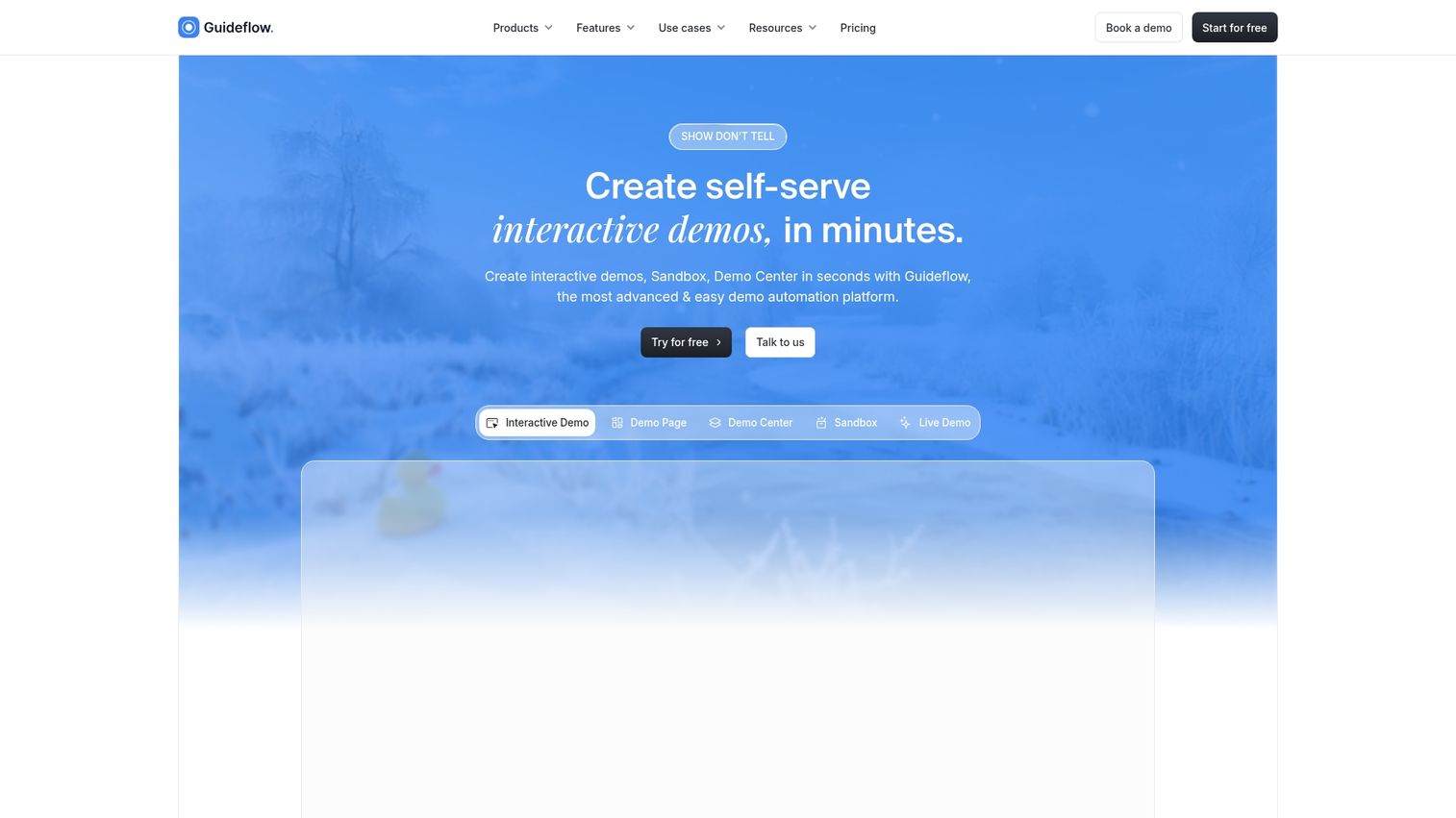
Guideflow is a demo automation platform for creating interactive product demos, sandboxes, and demo centers. Instead of pushing every prospect into a "book a demo" funnel, you capture your product flow in a few clicks and turn it into clickable, step-by-step experiences that prospects can explore on their own time.
The platform stands out for speed to create and depth of personalization. Analytics track engagement at the session level so you can identify high-intent prospects and prioritize follow-up.
Key strengths
- Capture and create in minutes: Record your product flow directly from your browser and generate interactive demos automatically
- Personalization at scale: Customize demos by lead, account, or persona using dynamic variables from your CRM
- Multi-channel distribution: Share via public links, embed on your website, add to emails, or post on social platforms
- Engagement analytics: Track impressions, completion rates, and conversion to identify which prospects are most engaged
- AI-powered editing: Auto-generate steps, translations, and voiceovers to polish demos quickly
Why choose Guideflow: Ideal for pre-sales teams and marketing teams who want to let buyers self-serve and qualify through product experience rather than static content. When prospects can explore your product before a call, conversations start at a higher level and close faster.
Pricing: Free plan available with 5 guideflows. Solo plan at $40/month includes unlimited guideflows and advanced analytics. Growth, Advanced, and Enterprise tiers scale with team needs.
Start your journey with Guideflow today!
2. HubSpot Sales Hub
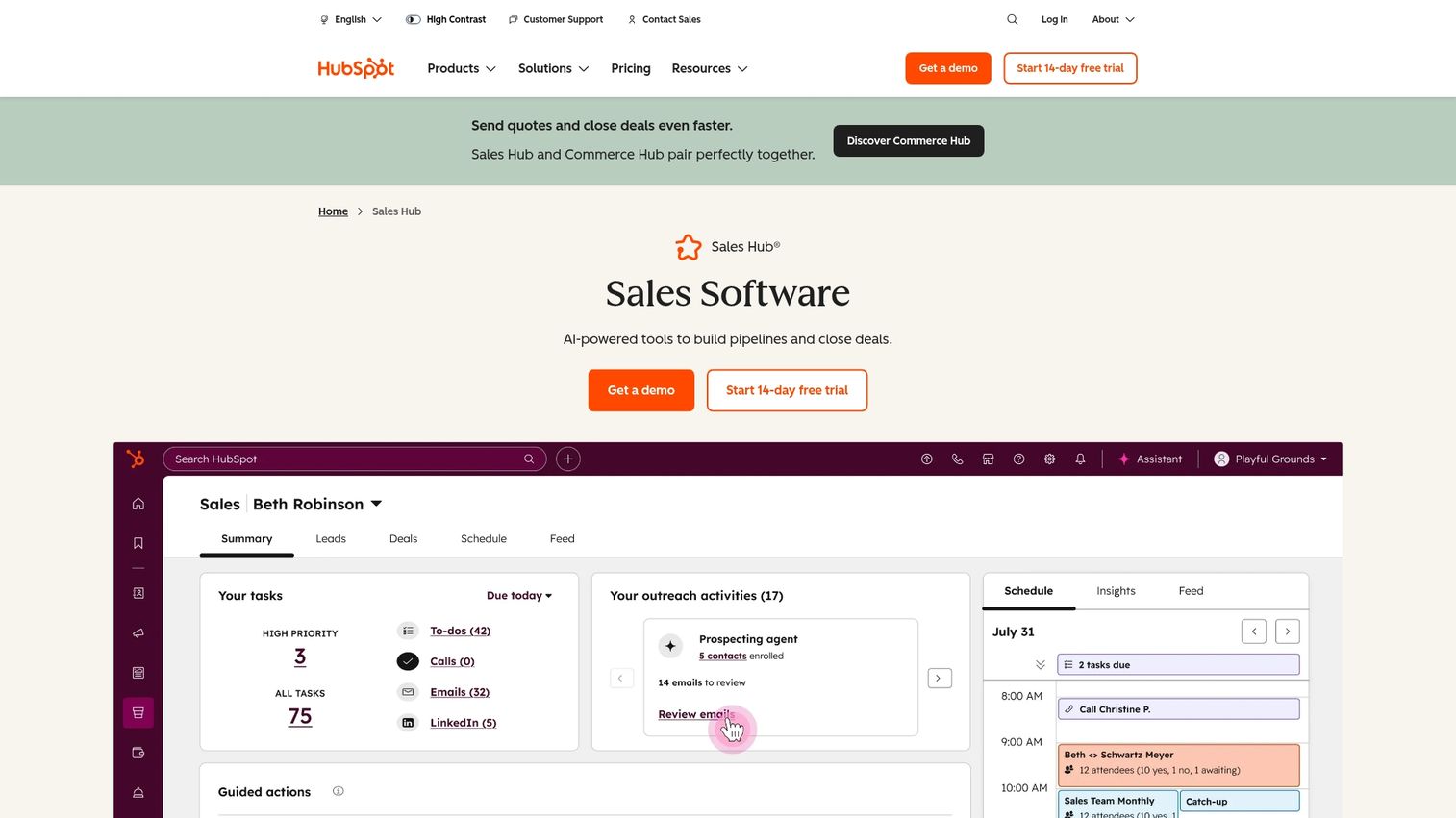
HubSpot Sales Hub combines CRM, email tracking, sequences, and meeting scheduling in one platform. It's particularly strong for inbound sales teams because it connects directly with HubSpot Marketing and Service, creating a unified view of every customer interaction.
Key strengths
- Email tracking and sequences: Know when prospects open emails and automate follow-up sequences
- Meeting scheduling: Eliminate back-and-forth with calendar links that sync automatically
- Pipeline management: Visual deal tracking with customizable stages and properties
- Guided selling: AI-powered recommendations for next best actions
Why choose HubSpot: Teams already using HubSpot or wanting an all-in-one platform that doesn't require extensive configuration. The learning curve is gentle, and the free tier is genuinely useful.
Pricing: Free CRM available. Starter at $15/user/month, Professional at $90/user/month, Enterprise at $150/user/month.
3. Salesforce Sales Cloud
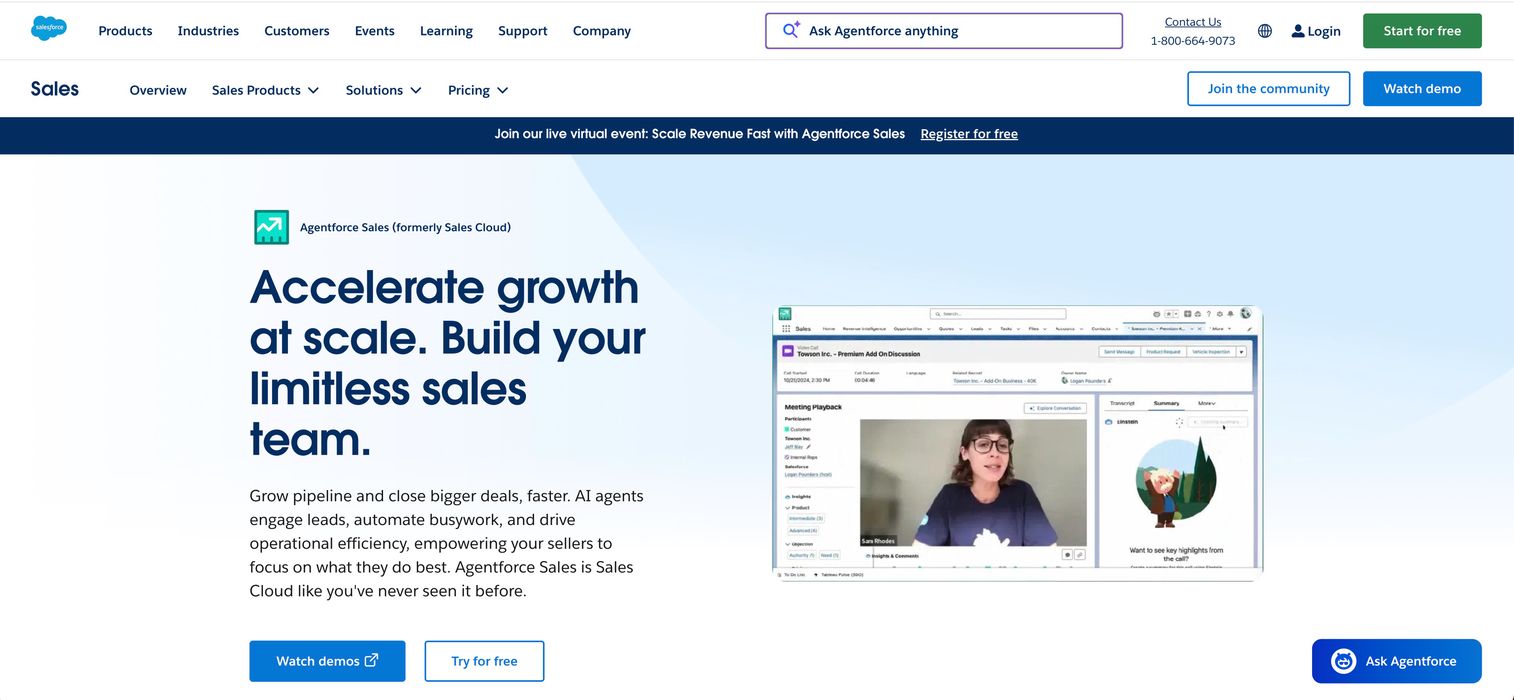
Salesforce Sales Cloud is the enterprise standard for CRM with advanced AI capabilities through Einstein. It handles complex sales processes with multiple stakeholders, approval workflows, and custom objects that match how your business actually operates.
Key strengths
- AI-powered lead scoring: Einstein analyzes patterns to identify which leads are most likely to convert
- Advanced customization: Build custom objects, workflows, and automations for any sales process
- Massive integration ecosystem: Connects with thousands of apps through AppExchange
- Territory and quota management: Enterprise features for complex sales organizations
Why choose Salesforce: Enterprise teams with complex pipelines needing deep customization and a platform that scales with growth.
Pricing: Essentials at $25/user/month, Professional at $80/user/month, Enterprise at $165/user/month, Unlimited at $330/user/month.
4. Salesloft
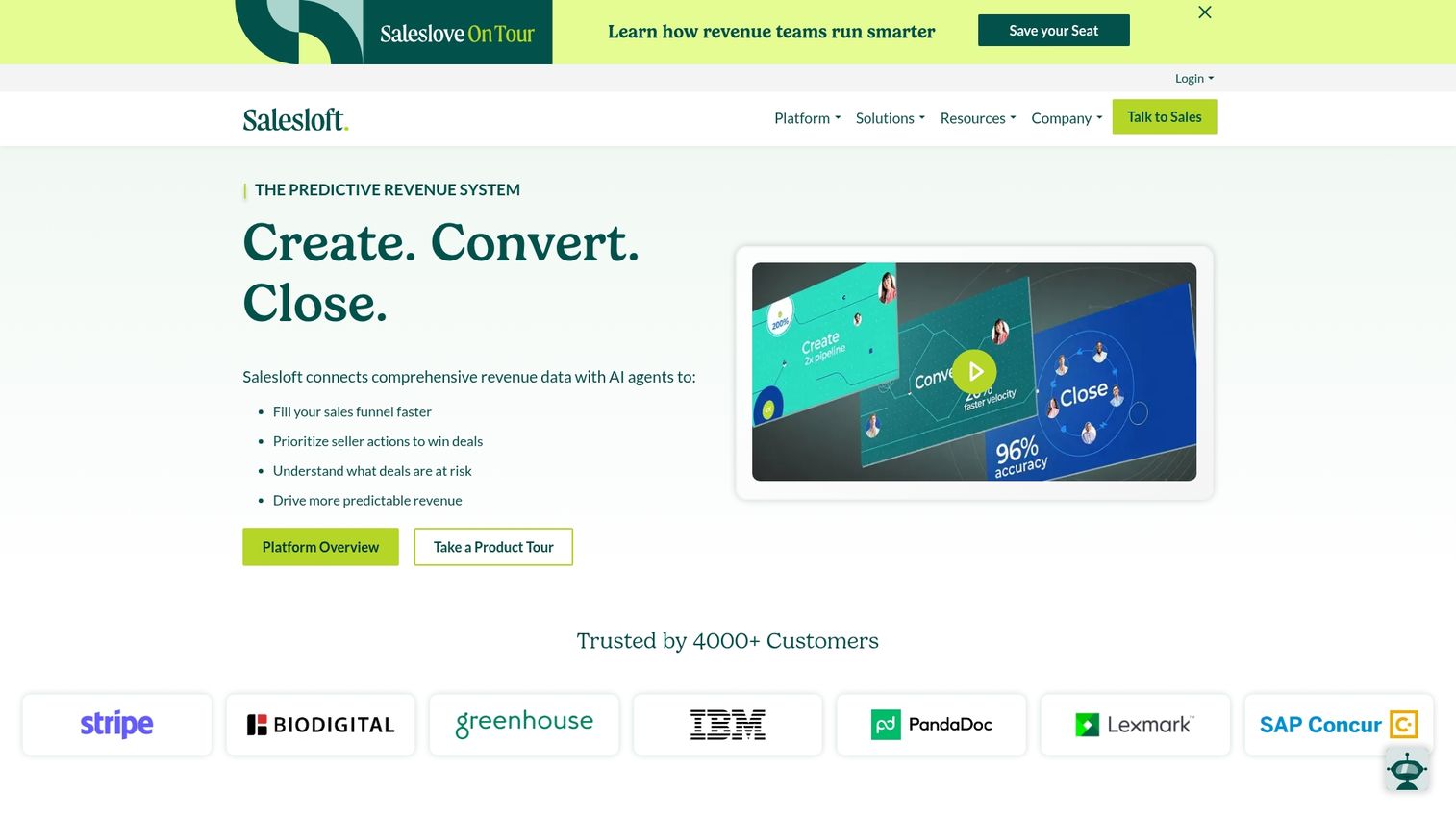
Salesloft positions itself as a revenue orchestration platform, combining sales engagement, conversation intelligence, and deal management. It's built for teams that want to standardize their sales process while giving reps flexibility in execution.
Key strengths
- Multi-channel cadences: Combine email, phone, and social touches in automated sequences
- Conversation intelligence: Record and analyze calls to surface coaching opportunities
- Deal management: Track deal health and identify risks before they become losses
- Forecasting: AI-powered predictions based on deal activity and engagement
Why choose Salesloft: Teams focused on outbound execution and deal management who want engagement and intelligence in one platform.
Pricing: Custom pricing based on team size and features.
5. Outreach
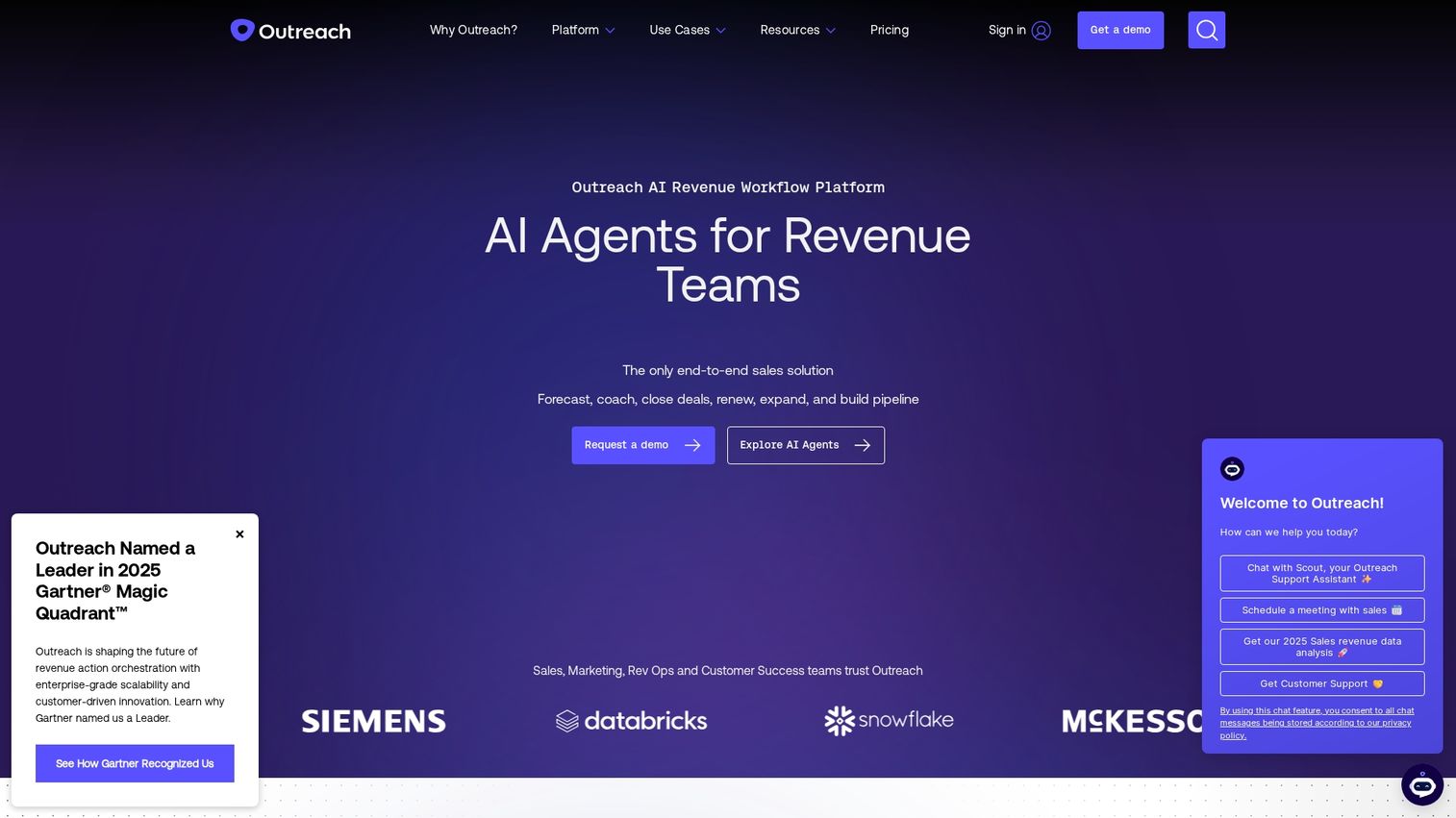
Outreach is a sales execution platform with AI-driven insights for sequences, deal intelligence, and conversation analytics. It's designed for high-velocity sales teams that run structured outreach at scale.
Key strengths
- AI-powered sequences: Automatically optimize send times and messaging based on engagement data
- Deal management: Visibility into deal health with risk indicators and next steps
- Conversation intelligence: Analyze calls and meetings to identify winning patterns
- Pipeline analytics: Understand where deals stall and why
Why choose Outreach: High-velocity sales teams needing structured outreach and deal visibility.
Pricing: Custom enterprise pricing.
6. Gong
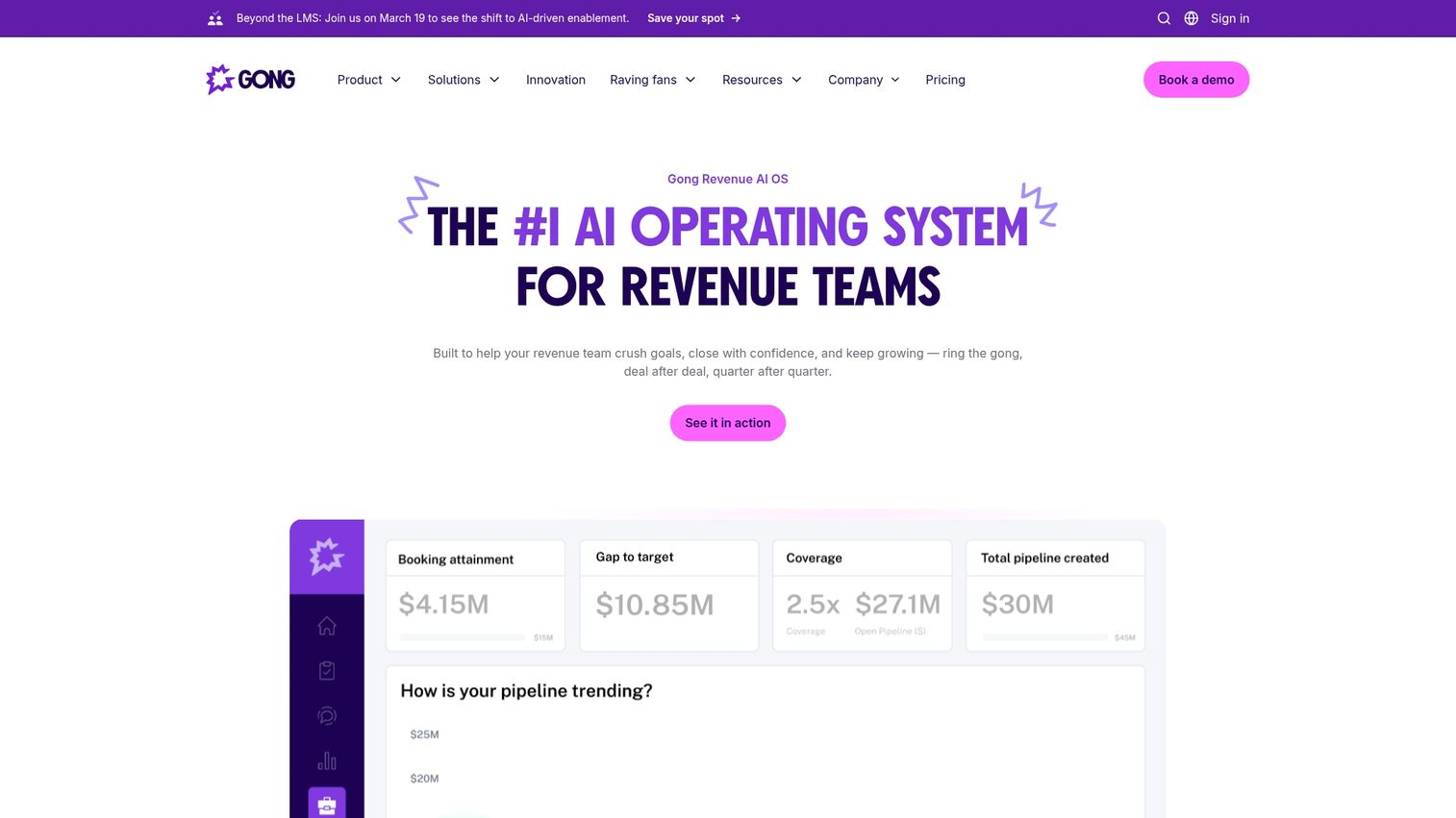
Gong is the leader in conversation intelligence, using AI to analyze customer interactions across calls, emails, and meetings. It surfaces insights that help reps improve and gives managers visibility into what's actually happening in deals.
Key strengths
- AI call analysis: Automatically identifies talk patterns, questions asked, and topics discussed
- Deal intelligence: Predicts deal outcomes based on conversation signals
- Coaching recommendations: Highlights specific moments for manager feedback
- Competitive intelligence: Tracks competitor mentions and how reps handle objections
Why choose Gong: Teams wanting to improve rep performance through call insights and managers who need visibility into deal conversations.
Pricing: Custom pricing based on team size.
7. ZoomInfo
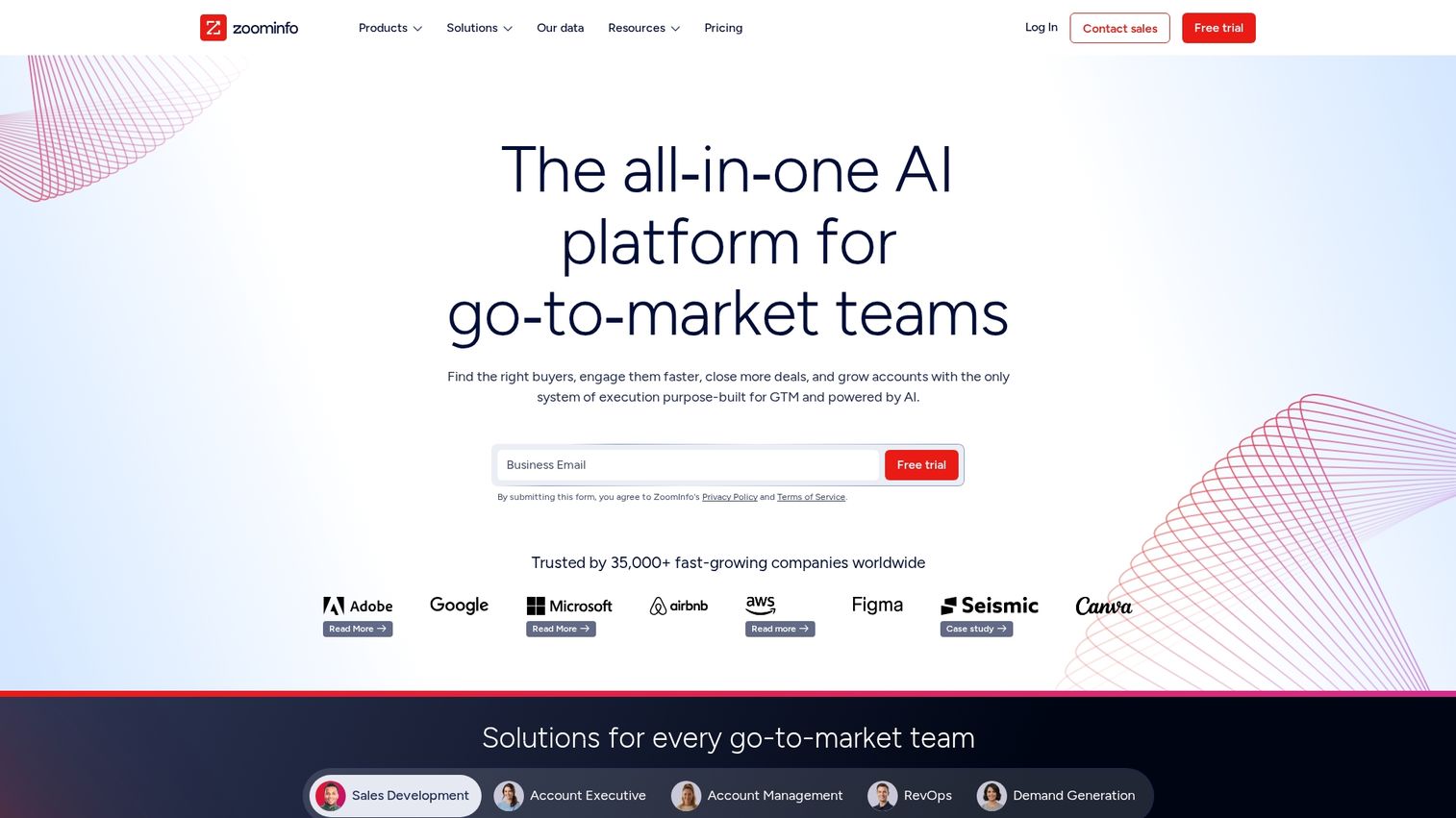
ZoomInfo is a B2B data and prospecting platform providing contact enrichment, intent data, and account intelligence. It helps sales teams find the right people to contact and understand when accounts are actively researching solutions.
Key strengths
- Contact database: Access to millions of B2B contacts with direct dials and verified emails
- Intent signals: Identify accounts actively researching relevant topics
- Company insights: Firmographic and technographic data for account prioritization
- CRM enrichment: Automatically update contact and account records
Why choose ZoomInfo: Teams needing accurate prospecting data and buyer intent signals to prioritize outreach.
Pricing: Tiered pricing based on data access and features.
8. Pipedrive
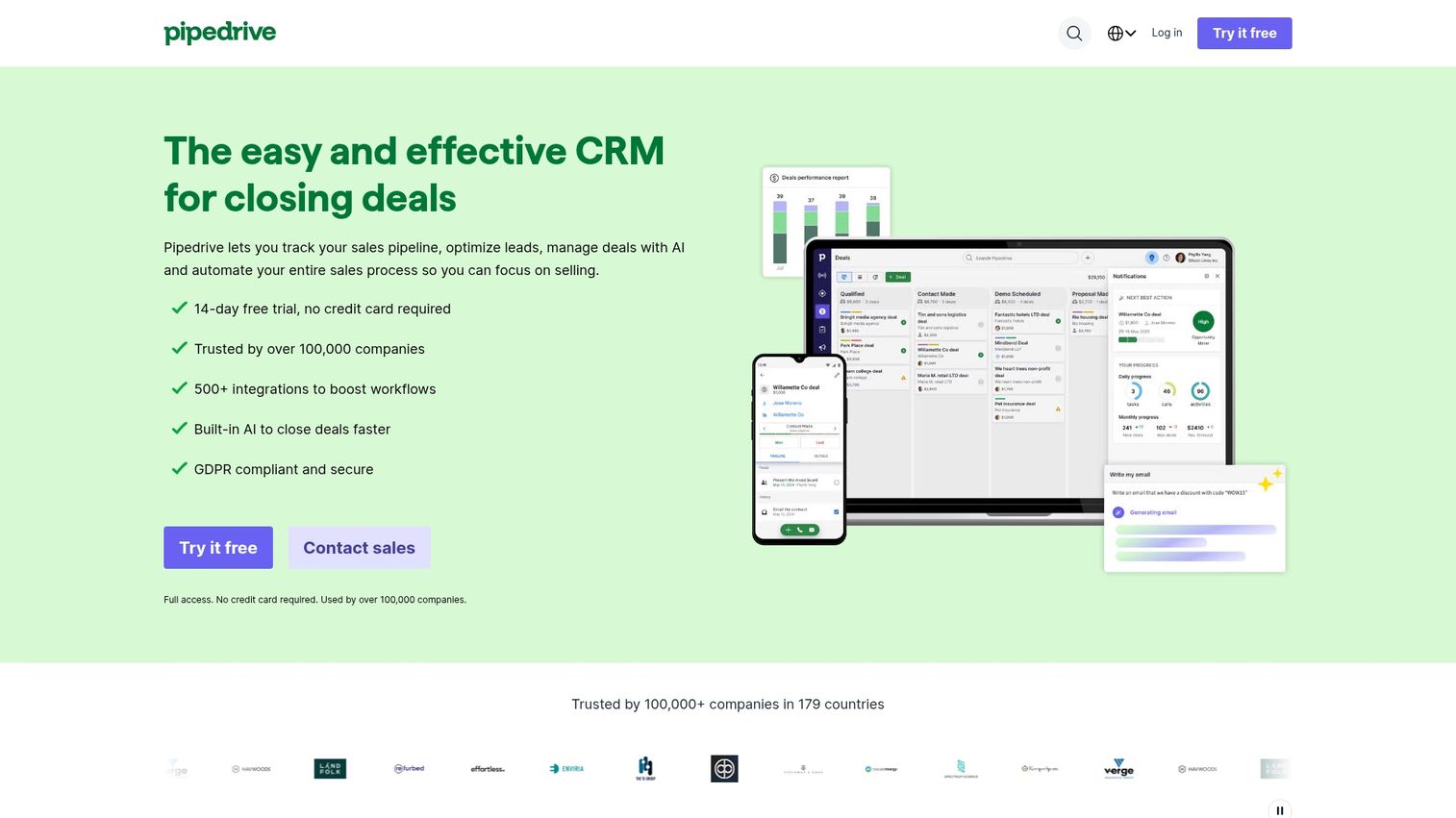
Pipedrive is a visual pipeline management tool built for simplicity and usability. It's especially popular with small to mid-sized teams who want intuitive deal tracking without the complexity of enterprise CRM.
Key strengths
- Visual pipeline: Drag-and-drop interface for moving deals through stages
- Automation: Create workflows that trigger based on deal changes
- Email integration: Send and track emails directly from the platform
- Mobile app: Full functionality for managing deals on the go
Why choose Pipedrive: SMB teams wanting intuitive pipeline management without complexity.
Pricing: Essential at $14/user/month, Advanced at $34/user/month, Professional at $49/user/month, Power at $64/user/month, Enterprise at $99/user/month.
9. Apollo
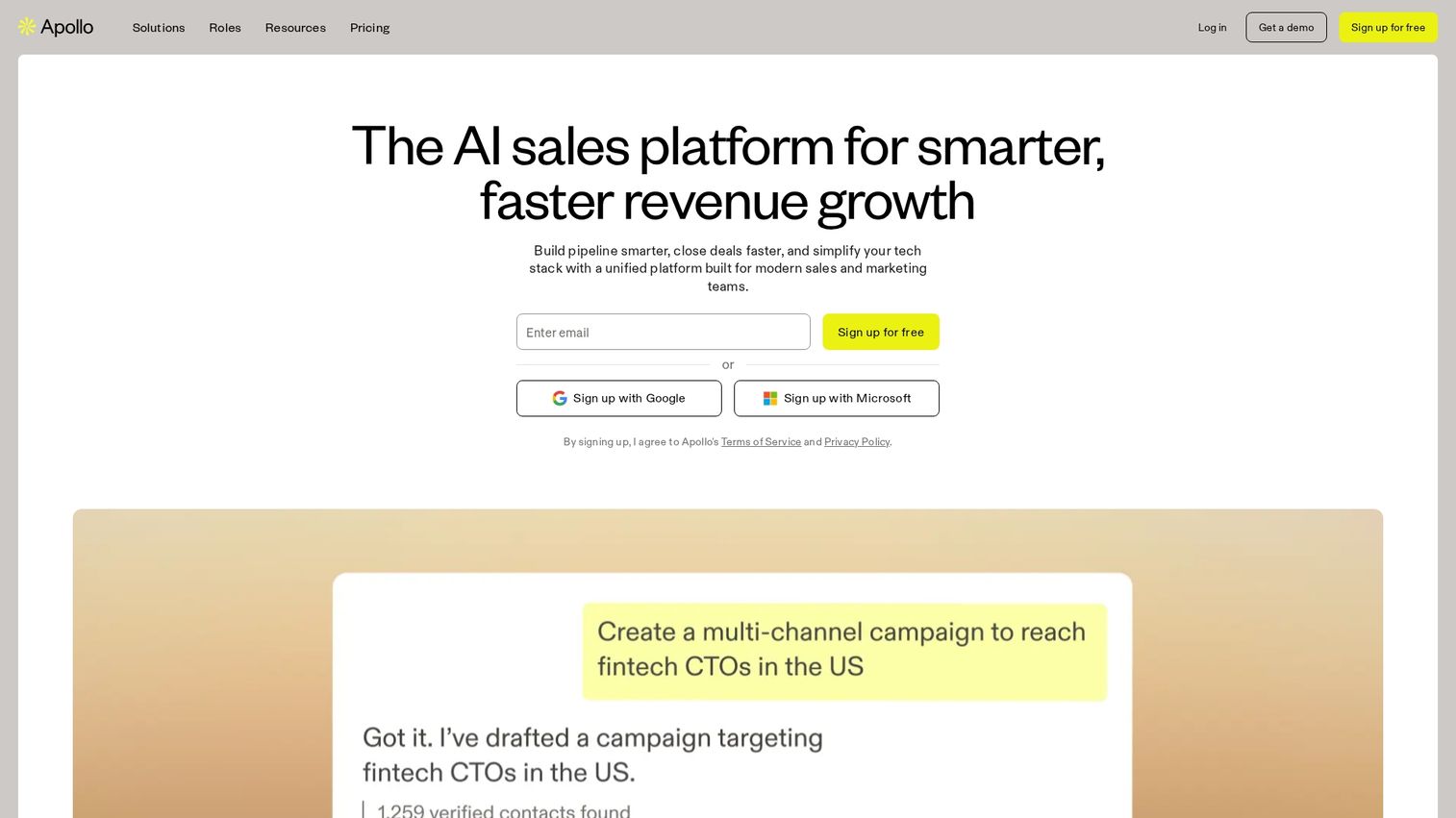
Apollo combines sales intelligence and engagement in one platform, offering prospecting, sequences, and data enrichment. It's positioned as an alternative to buying separate tools for data and outreach.
Key strengths
- Contact database: Access to millions of B2B contacts with filtering by role, industry, and company size
- Email sequences: Build and automate multi-step outreach campaigns
- Dialer: Make calls directly from the platform with automatic logging
- Data enrichment: Automatically fill in missing contact and company information
Why choose Apollo: Teams needing prospecting and outreach in one platform without enterprise pricing. The free tier makes it accessible for startups and small teams.
Pricing: Free tier available. Basic at $49/user/month, Professional at $79/user/month, Organization at $119/user/month.
10. Clari
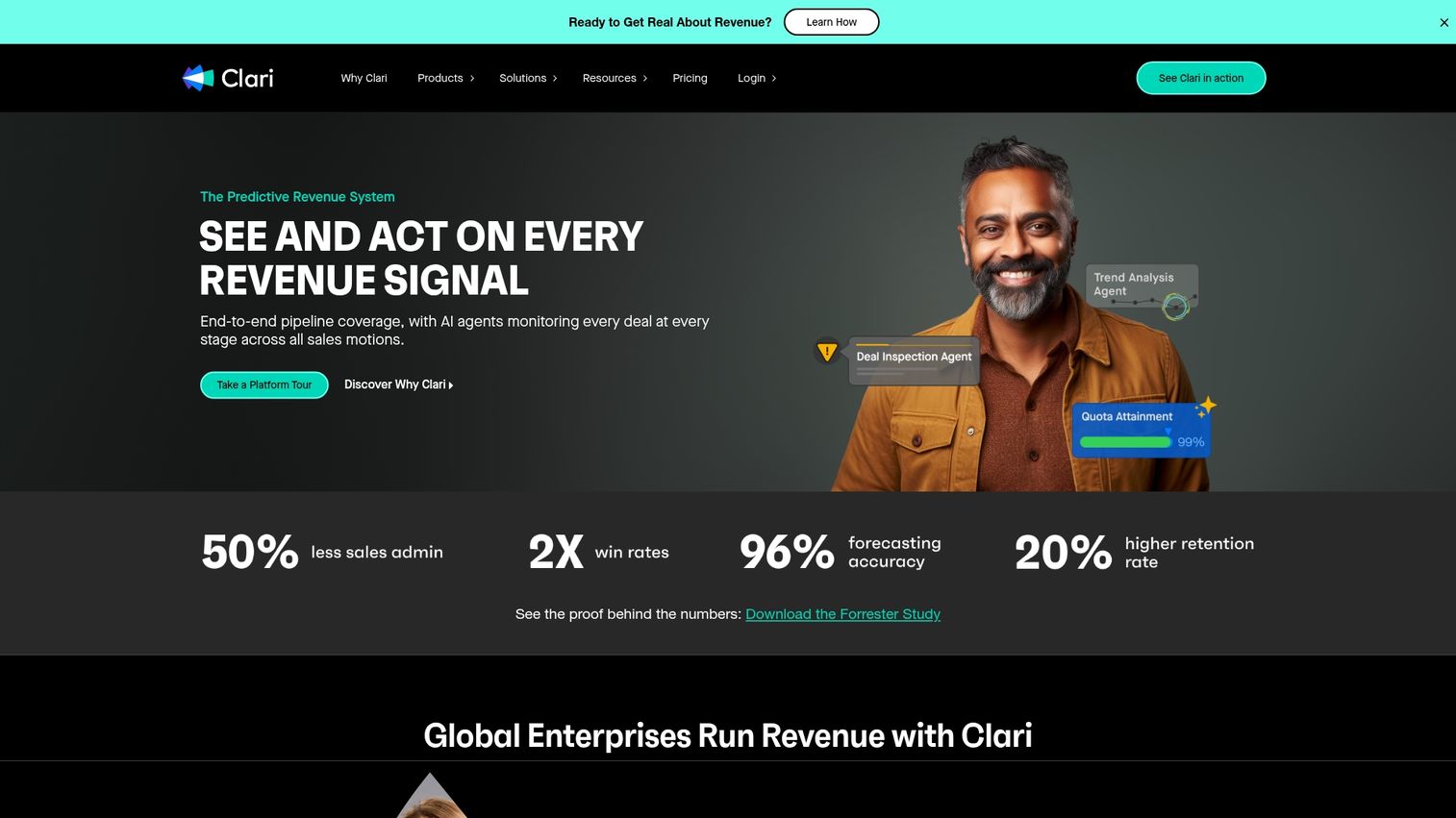
Clari is a revenue intelligence platform focused on forecasting and pipeline analytics. It aggregates data from CRM, email, and calendar to provide accurate predictions about what will close.
Key strengths
- AI-powered forecasting: Predictions based on actual deal behavior, not just rep estimates
- Pipeline inspection: Drill into deals to understand health and risk factors
- Deal analytics: Track engagement and activity patterns that correlate with wins
- Collaboration: Shared views for deal reviews and forecast calls
Why choose Clari: Sales leaders needing accurate forecasts and pipeline visibility.
Pricing: Enterprise pricing.
11. Cognism
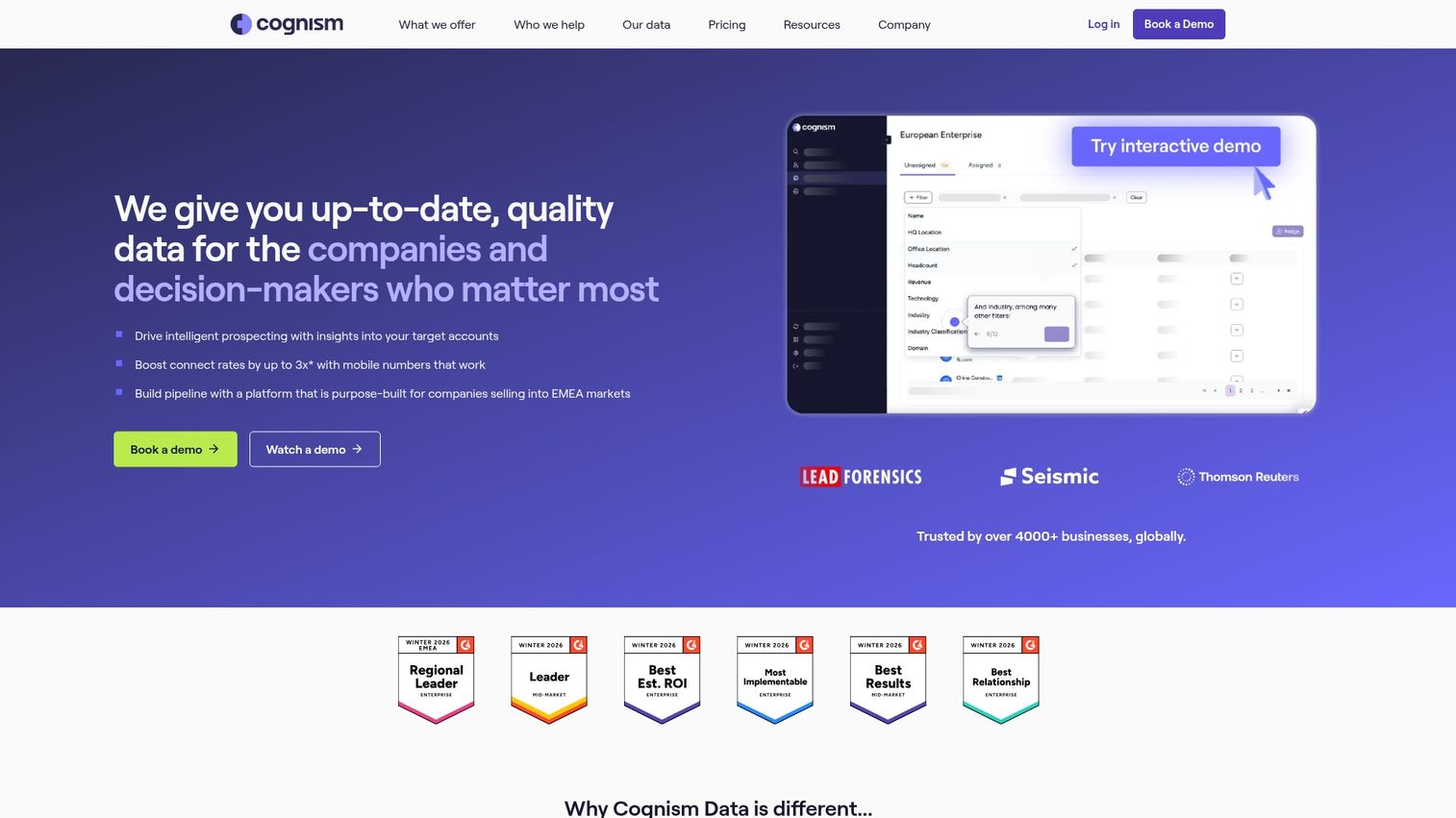
Cognism is a B2B prospecting and data platform with a strong focus on compliance, particularly for European markets. It provides phone-verified mobile numbers and GDPR-compliant data.
Key strengths
- Phone-verified mobile numbers: Higher connect rates with verified direct dials
- GDPR compliance: Data collection and processing that meets European regulations
- Intent data: Identify accounts researching relevant topics
- Chrome extension: Access data while browsing LinkedIn and company websites
Why choose Cognism: European teams or organizations prioritizing data compliance.
Pricing: Custom pricing based on data access and team size.
12. LinkedIn Sales Navigator
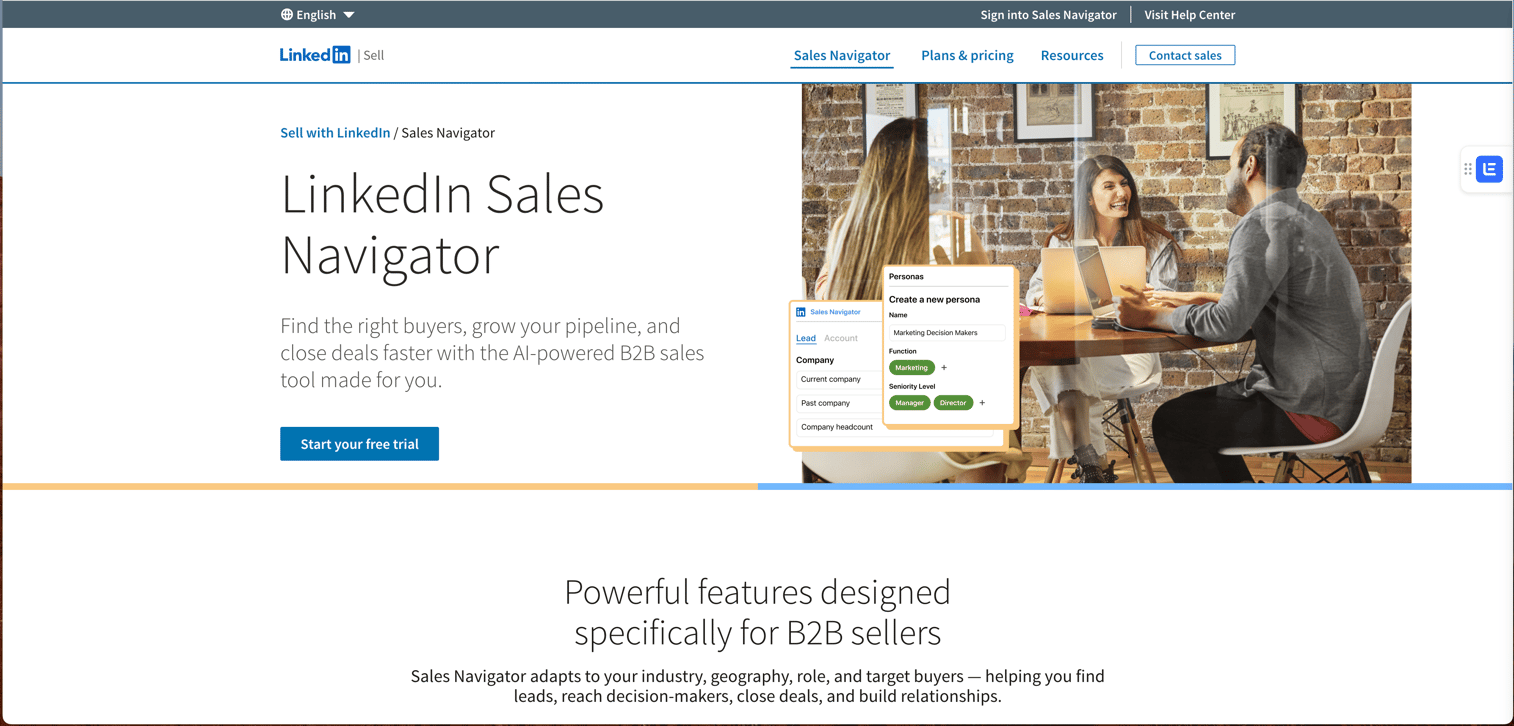
LinkedIn Sales Navigator is a social selling tool for prospecting and relationship building on LinkedIn. It provides advanced search, lead recommendations, and InMail credits for direct outreach.
Key strengths
- Advanced lead search: Filter by role, company size, industry, and many other criteria
- InMail credits: Send direct messages to prospects outside your network
- CRM sync: Connect with Salesforce and other CRMs to track LinkedIn activity
- Lead recommendations: AI-powered suggestions based on your ideal customer profile
Why choose LinkedIn Sales Navigator: Teams relying on LinkedIn for prospecting and relationship building.
Pricing: Core at $79/month, Advanced at $135/month, Advanced Plus with CRM integration at custom pricing.
13. Freshsales
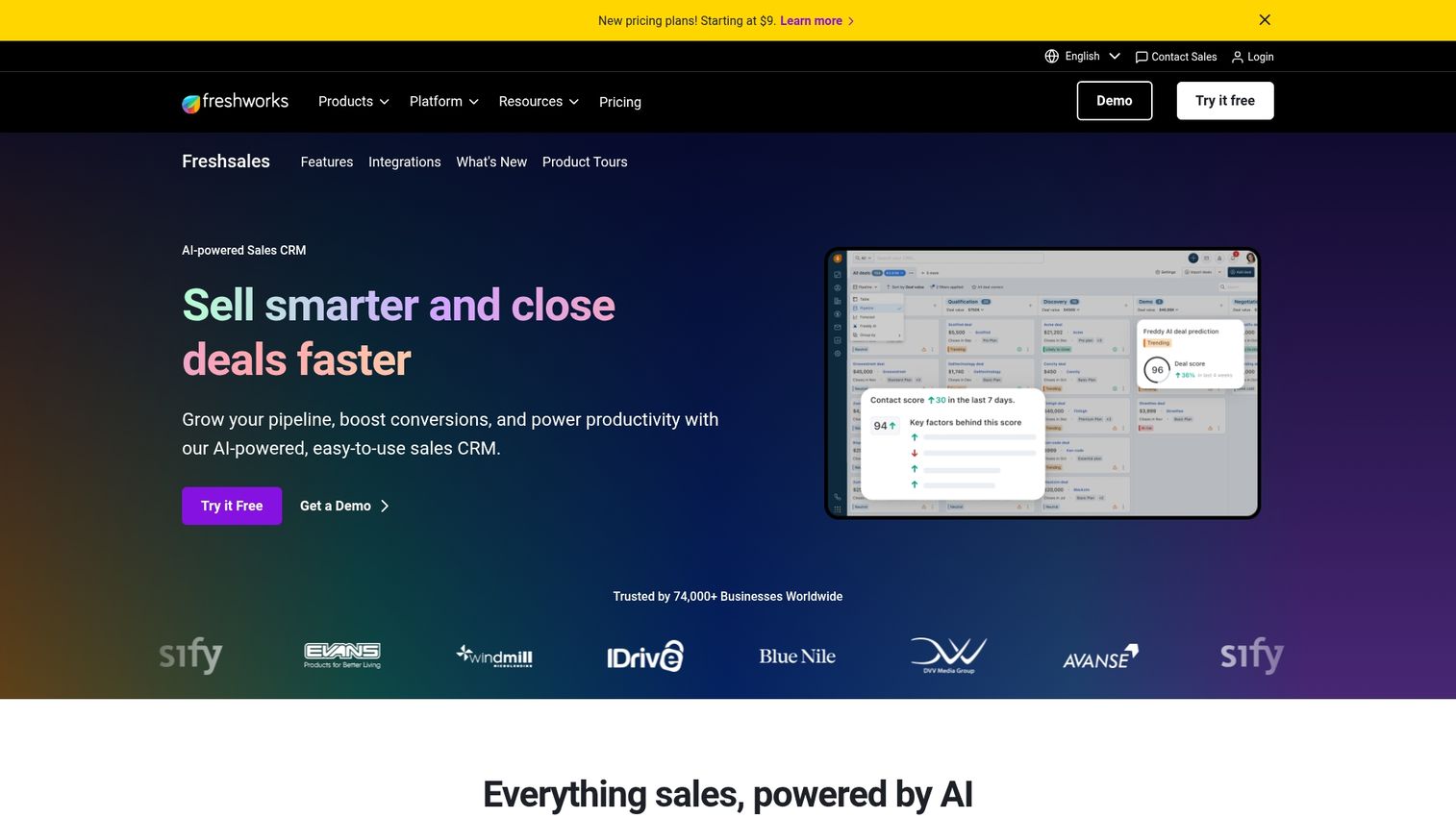
Freshsales is a CRM with built-in phone and email, designed for simplicity and affordability. It's part of the Freshworks suite, which includes customer support and marketing tools.
Key strengths
- Built-in phone: Make and receive calls directly from the CRM with automatic logging
- Email tracking: Know when prospects open emails and click links
- Visual pipeline: Drag-and-drop deal management with customizable stages
- AI lead scoring: Automatically prioritize leads based on engagement and fit
Why choose Freshsales: SMB teams wanting CRM with native communication tools at an affordable price.
Pricing: Free tier available. Growth at $15/user/month, Pro at $39/user/month, Enterprise at $69/user/month.
14. Zoho CRM
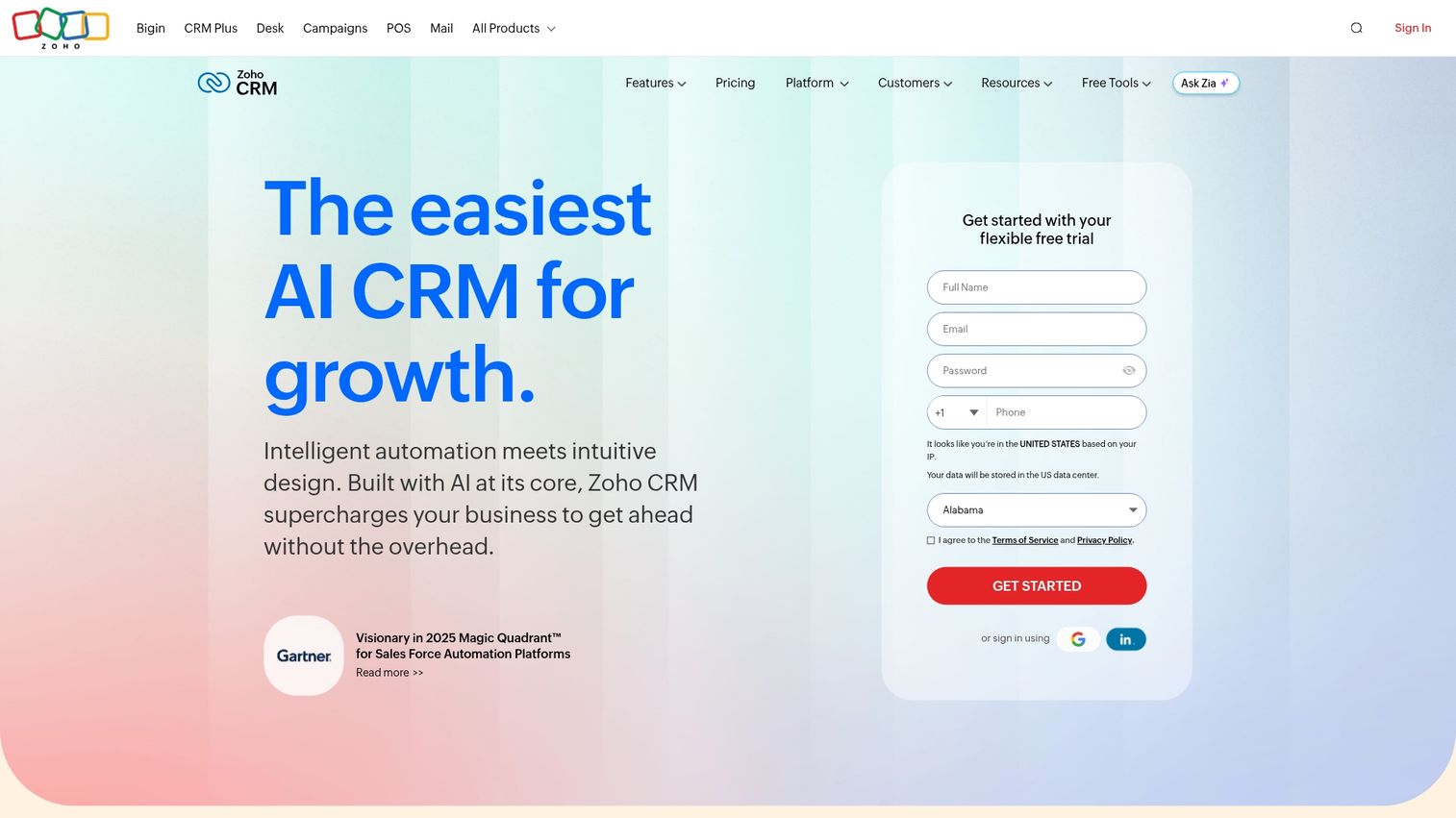
Zoho CRM is an affordable CRM with omnichannel engagement and extensive customization options. It's part of the broader Zoho ecosystem, which includes dozens of business applications.
Key strengths
- Omnichannel communication: Engage prospects across email, phone, social, and live chat
- Workflow automation: Build complex automations without coding
- AI assistant: Zia provides predictions, suggestions, and anomaly detection
- Customization: Create custom modules, fields, and layouts to match your process
Why choose Zoho CRM: Cost-conscious teams needing flexible CRM customization.
Pricing: Free tier for up to 3 users. Standard at $14/user/month, Professional at $23/user/month, Enterprise at $40/user/month, Ultimate at $52/user/month.
15. Mindtickle
Mindtickle is a sales readiness and enablement platform focused on training, coaching, and content management. It helps organizations onboard new reps faster and continuously develop existing team members.
Key strengths
- Sales training: Build and deliver learning programs with videos, quizzes, and certifications
- Coaching: Record and review practice pitches with manager feedback
- Content management: Organize and distribute sales content with usage tracking
- Readiness scoring: Measure rep preparedness across skills and knowledge areas
Why choose Mindtickle: Teams focused on onboarding and ongoing rep development.
Pricing: Enterprise pricing.
16. Fathom
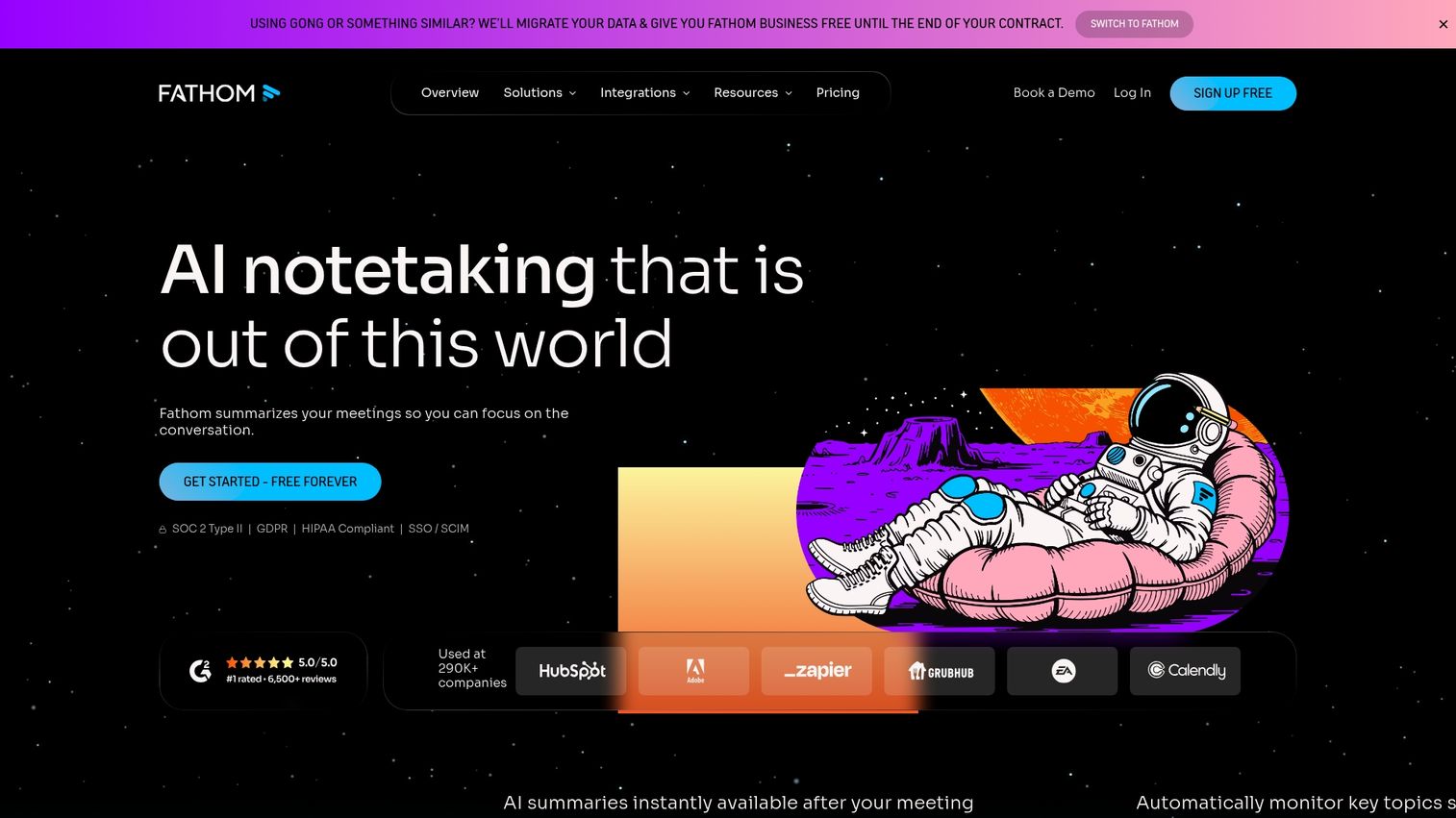
Fathom is an AI meeting assistant that automatically records, transcribes, and summarizes sales calls. It integrates with Zoom, Google Meet, and Microsoft Teams to capture conversations without manual effort.
Key strengths
- AI transcription: Automatic, accurate transcription of video calls
- Meeting summaries: AI-generated summaries with key points and action items
- CRM integration: Sync notes and summaries directly to deal records
- Highlight clips: Create shareable clips of important moments
Why choose Fathom: Reps wanting automated call notes without expensive platforms.
Pricing: Free plan available. Team plans with advanced features at custom pricing.
17. Aircall
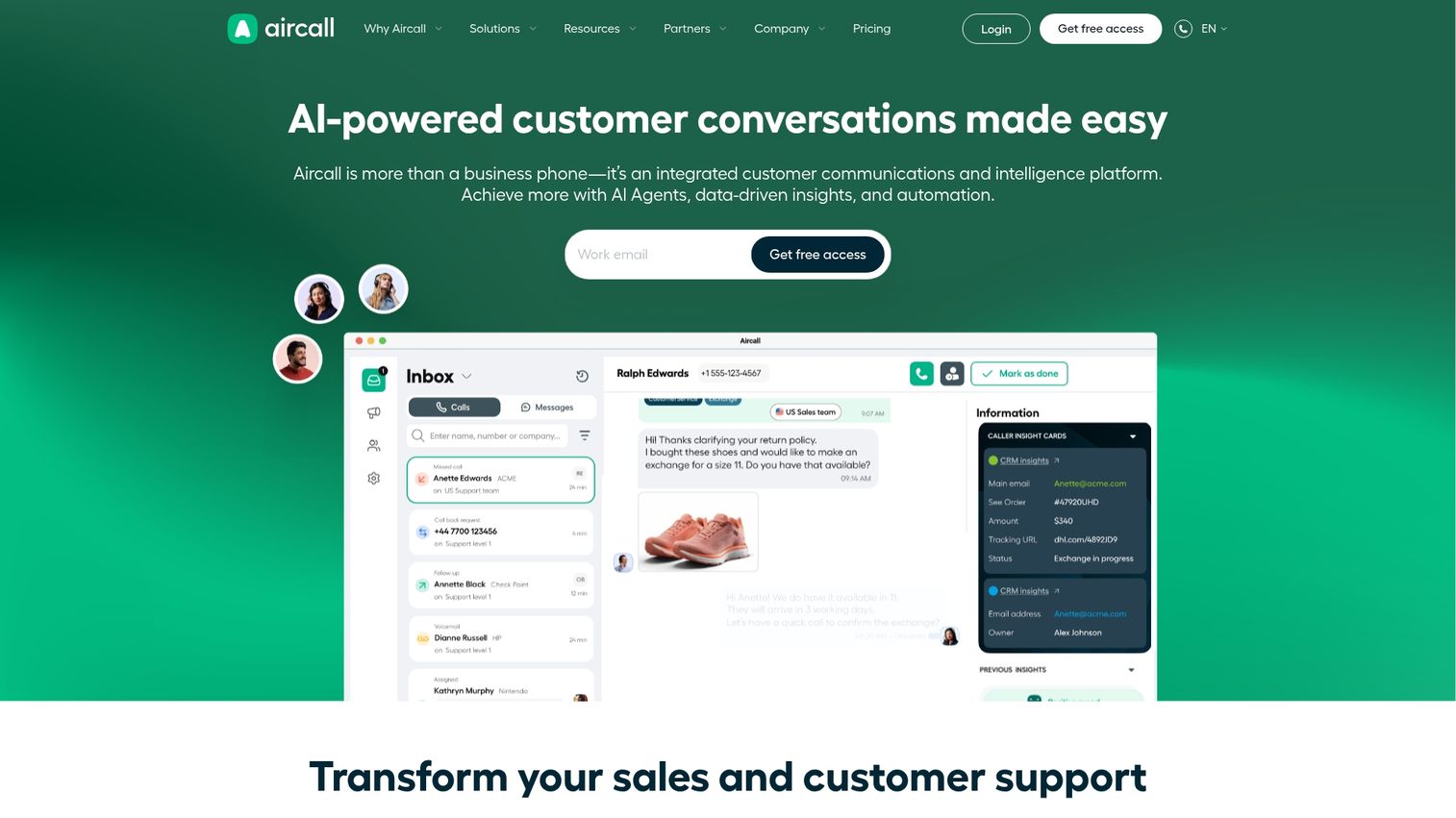
Aircall is a cloud phone system designed for sales and support teams. It provides call routing, IVR, and analytics with deep integrations into CRM and helpdesk tools.
Key strengths
- Cloud phone system: Make and receive calls from anywhere with internet access
- CRM integration: Automatic call logging to Salesforce, HubSpot, and other CRMs
- Call analytics: Track call volume, duration, and outcomes by rep and team
- Power dialer: Increase outbound call volume with automated dialing
Why choose Aircall: Teams needing a modern phone system integrated with their sales stack.
Pricing: Essentials at $30/user/month, Professional at $50/user/month.
How to choose the best sales acceleration solution
Selecting the right tool starts with understanding where your deals actually stall. Here's a practical framework for making the decision.
Identify your sales process bottlenecks
Map out your sales process and identify where deals slow down or drop off. If prospecting is the problem, look at data and engagement tools. If demos are the bottleneck, consider demo automation. If forecasting is unreliable, focus on analytics platforms.
Map integration requirements
Check compatibility with your existing CRM, marketing automation software, and communication tools before purchasing. A tool that doesn't integrate with your stack creates data silos and adoption problems.
Evaluate scalability and total cost
Assess whether pricing scales reasonably as your team grows. Include implementation, training, and per-seat fees in your calculation. A tool that's affordable for 5 users might become expensive at 50.
Run a pilot before full rollout
Test with a small team before committing to a full deployment. Measure adoption and impact on actual deal velocity, not just feature usage.
Evaluation checklist:
- Where do deals stall? Match tool type to bottleneck
- What integrations are required? Confirm CRM and stack compatibility
- What is the total cost? Include implementation and per-seat fees
- Can you pilot first? Test with a small team before full rollout
Accelerate your sales pipeline with the right tools
The best sales acceleration tools remove friction from every stage of the sales process. Demo automation is increasingly critical because buyers prefer to self-educate before engaging with reps. When prospects can experience your product on their own time, they arrive at conversations more informed and more qualified.
The key is matching tool categories to your specific bottlenecks rather than buying an all-in-one solution you won't fully use. Start with the problem, then find the tool that solves it.
Start your journey with Guideflow today!
FAQs about sales acceleration software
Sales acceleration software focuses on speeding up deal velocity through automation and prioritization. Sales enablement provides reps with content, training, and resources to sell more effectively. Acceleration is about moving faster; enablement is about selling better. Many organizations use both.
Interactive demos let prospects experience your product on their own time, reducing scheduling friction and helping reps focus on engaged buyers who have already explored the product. They accelerate deals by moving the "aha moment" earlier in the sales process.
Implementation timelines vary from hours for simple tools to several weeks for enterprise platforms requiring custom integrations and training. Demo automation tools like Guideflow can be set up in minutes, while CRM implementations often take months.
Yes, tools like demo automation platforms are especially effective for PLG because they let prospects self-serve and experience the product before talking to sales. This aligns with the PLG motion of letting the product drive acquisition and qualification.
Teams typically measure ROI by tracking changes in sales cycle length, win rates, rep productivity, and pipeline velocity before and after implementation. The clearest signal is whether deals move faster and close at higher rates.
Pricing ranges from free tiers for basic tools to enterprise contracts for comprehensive platforms. Most mid-market solutions charge $30-150 per user per month. Demo automation and conversation intelligence tools often use custom pricing based on usage and team size.