Your reps spend more time driving than selling. Salesforce found that reps spend only 28% of their week actually selling - hours lost to inefficient routes, missed follow-ups buried in spreadsheets, and customer data that never makes it back to the CRM.
Field sales software fixes the logistics so your team can focus on conversations. This guide covers 15 platforms that handle route optimization, territory management, visit tracking, and order capture, with honest takes on which tools fit which teams.
What's inside
This guide walks through 15 field sales platforms, covering what each does well, where it falls short, and who it fits best. You'll find pricing, G2 ratings, and honest takes on when to pick one tool over another. We selected tools based on real-world adoption, CRM integration quality, and how well they handle the offline scenarios that trip up most field teams.
TL;DR
- Field sales software gives outside reps route planning, territory management, visit tracking, and order capture from mobile devices
- Best fit: distribution teams, door-to-door sales, CPG merchandising, and organizations with reps covering geographic territories
- Key evaluation factors: offline access, CRM integration, mobile UX, and route optimization accuracy
- Teams presenting complex products during field visits often pair field sales tools with interactive demos that work without reliable connectivity
- Guideflow complements field sales software when reps show software or technical products face-to-face
What is field sales software and how does it work
Field sales software helps outside sales reps plan routes, manage territories, track visits, and capture orders from mobile devices. The category includes GPS territory mapping, CRM integration, and offline functionality so reps can work in areas with spotty connectivity. Popular platforms include Badger Maps, SPOTIO, SalesRabbit, and Repsly.
Here's the typical workflow: reps open a mobile app each morning, see an optimized route for the day, and navigate between customer visits. At each stop, they log check-ins, capture notes or photos, and record orders. Everything syncs back to the CRM when connectivity returns.
Core capabilities include:
- Route optimization: Plans efficient travel paths between customer visits, accounting for traffic and appointment windows
- Territory management: Assigns geographic areas to reps to prevent overlap and balance workloads
- Mobile CRM access: Lets reps view and update customer data without returning to the office
- Visit tracking: Logs arrival times, visit duration, notes, and photos at each stop
- Order capture: Records sales and syncs inventory in real time for distribution teams
- Offline functionality: Works without internet connection, then syncs automatically
When field sales management software makes sense
Not every sales team benefits from dedicated field software. Here's when the investment typically pays off.
Outside sales teams covering large territories
If your reps drive between accounts daily, route optimization alone can cut windshield time significantly. That translates to a 25-40% increase in daily visits and lower fuel costs. GPS tracking also gives managers visibility without constant check-in calls.
CPG and distribution companies
Brands selling through retail stores often require more than basic CRM. Order capture, shelf auditing, and inventory tracking become essential. Field sales automation software handles merchandising workflows that general-purpose CRMs don't support well.
Service organizations with mobile reps
Companies with technicians or account managers visiting customers benefit from visit scheduling, work order management, and mobile documentation. The same principles apply whether you're selling or servicing.
Teams replacing spreadsheets and manual tracking
Organizations still using paper forms, Excel, or basic CRM without mobile support lose data constantly. Field sales tools eliminate double-entry, reduce errors, and give managers real-time visibility into what's happening in the field.
Field sales software comparison table
| # | Product | Best for | Key differentiation | Pricing | G2 rating |
|---|---|---|---|---|---|
| 1 | Guideflow | Interactive field demos | No-code product demos for mobile presentations | Free tier available | 5.0/5 |
| 2 | Salesforce Maps | Enterprise CRM users | Native Salesforce integration with territory planning | Custom pricing | 4.3/5 |
| 3 | SPOTIO | Door-to-door teams | Multi-channel outreach with GPS tracking | Custom pricing | 4.5/5 |
| 4 | SalesRabbit | Canvassing teams | Offline mode with quick onboarding | From $25/user/mo | 4.5/5 |
| 5 | Badger Maps | Route-focused reps | Best-in-class route optimization | From $58/user/mo | 4.7/5 |
| 6 | Repsly | Retail execution | Merchandising and shelf audit workflows | Custom pricing | 4.3/5 |
| 7 | SimplyDepo | Wholesale distribution | B2B ordering with inventory sync | From $35/user/mo | 4.6/5 |
| 8 | Map My Customers | Visual pipeline teams | Map-based lead tracking | From $50/user/mo | 4.5/5 |
| 9 | Skynamo | Manufacturers | ERP integrations with order history | Custom pricing | 4.4/5 |
| 10 | Pitcher | Regulated industries | Compliant content sharing | Custom pricing | 4.4/5 |
| 11 | Pepperi | Consumer goods | Complex pricing rules with full offline | Custom pricing | 4.3/5 |
| 12 | Outfield | Visit verification | GPS check-ins with photo verification | From $10/user/mo | 4.4/5 |
| 13 | Geo Rep | Emerging markets | Low data usage on older devices | From $15/user/mo | 4.2/5 |
| 14 | ForceManager | Voice-first teams | AI voice reporting | From $19/user/mo | 4.5/5 |
| 15 | Mapsly | Multi-CRM teams | Flexible integrations with visual builder | From $25/user/mo | 4.6/5 |
15 Best field sales software platforms
1. Guideflow
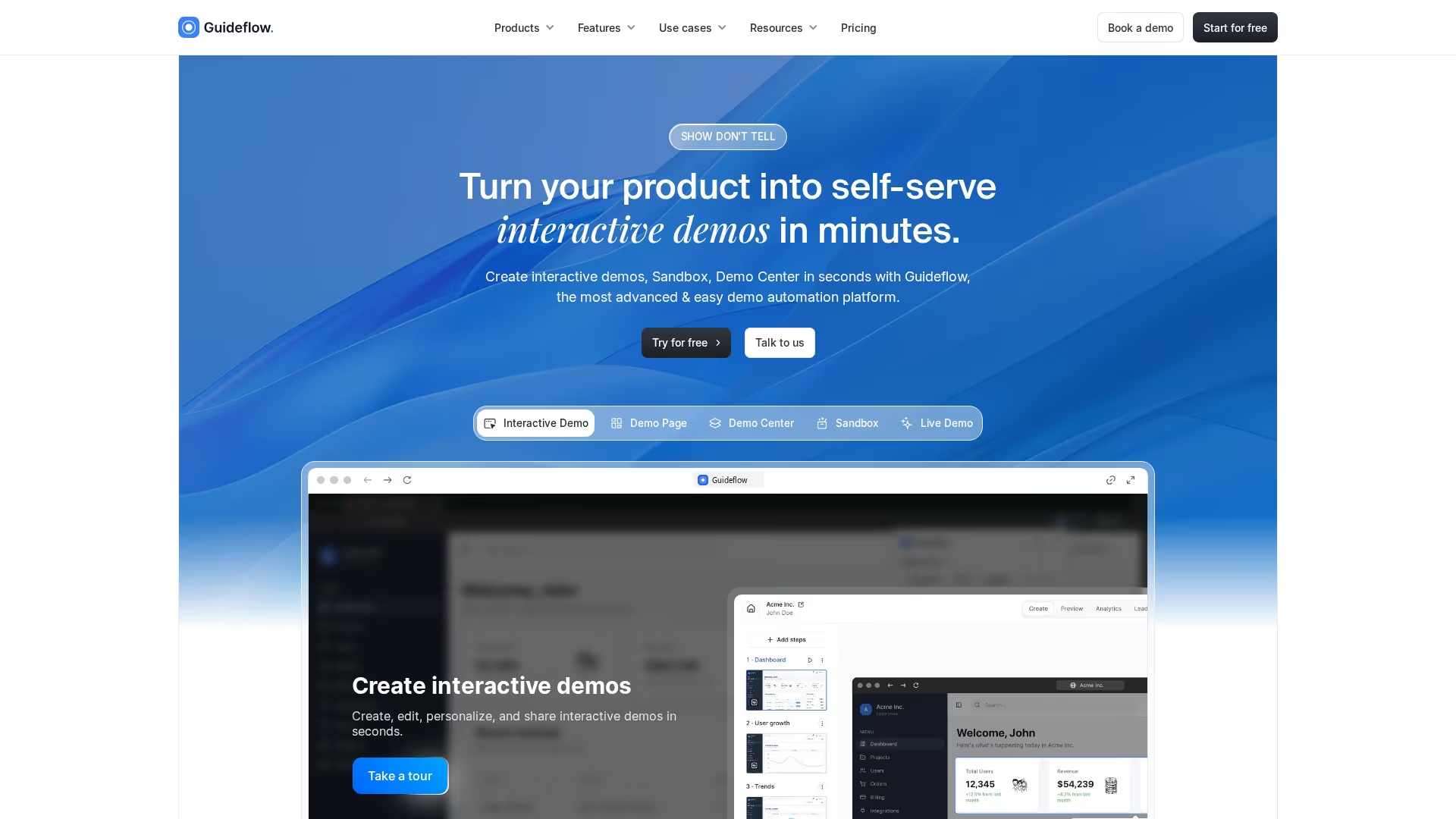
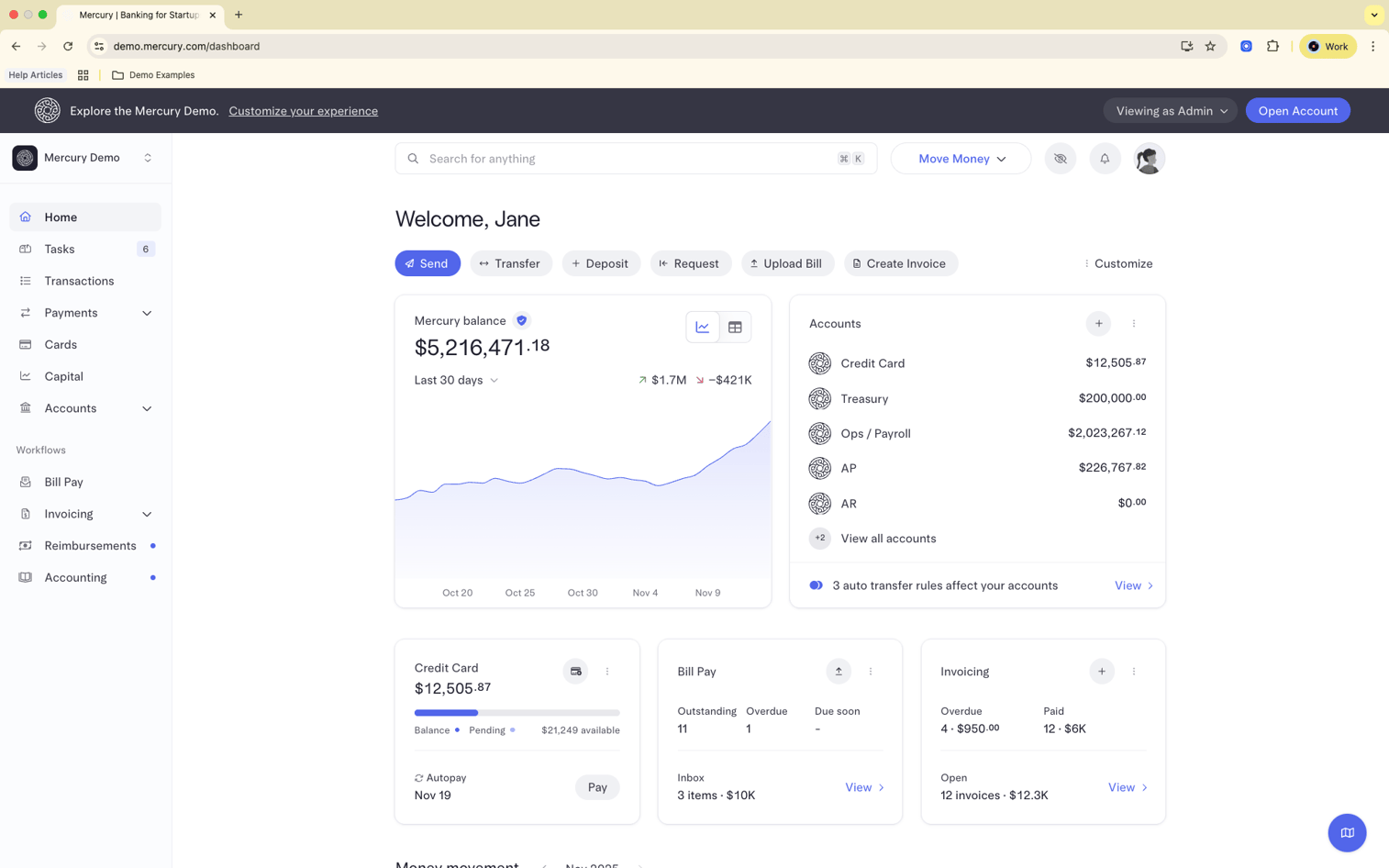
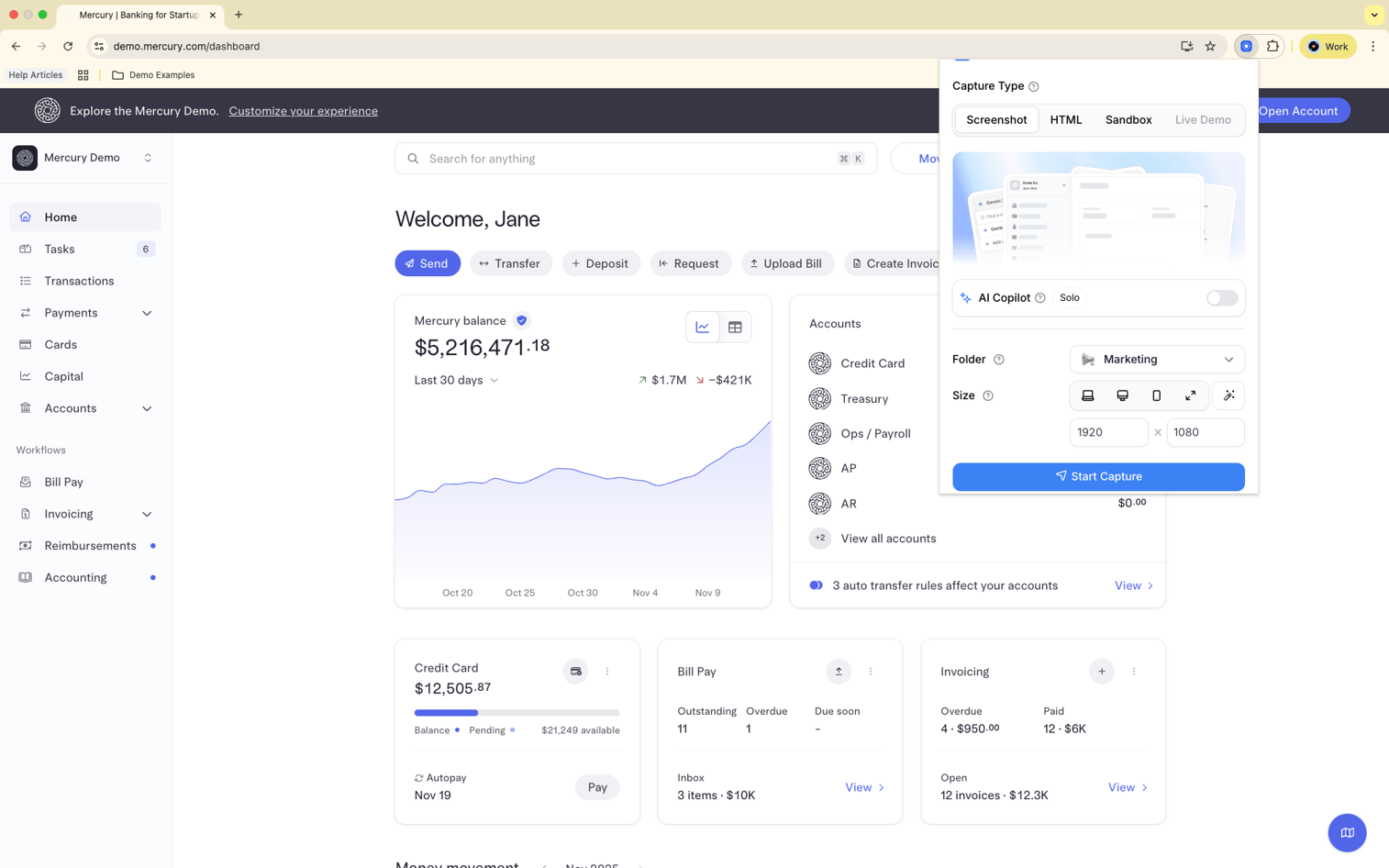
Guideflow addresses a gap most field sales tools ignore: showing complex products during customer visits when you can't rely on live environments or stable internet. Instead of fumbling with login credentials or waiting for pages to load, reps share clickable, step-by-step demos that work offline and look exactly like the real product.
This matters most for SaaS companies, tech vendors, and any organization where the product itself is part of the sales conversation. Traditional field sales software handles routes and orders. Guideflow handles the "show, don't tell" moment.
Best for: Tech and SaaS companies with field sales teams who present software products during customer visits.
Key strengths
- Mobile-friendly demos: Create demos that work on tablets during face-to-face meetings without connectivity requirements
- Personalization at scale: Customize demos for each prospect using dynamic variables and no-code editing
- Analytics on engagement: Track which features prospects explore and where they spend time
- No engineering required: Capture your product flow in clicks and publish without developer involvement
Capture Guideflow - Guideflow

Guideflow
Build interactive demos in minutes
Turn any product into an engaging, clickable demo. No coding or complex setup needed!
Let's Get Started
Guideflow pricing
Free tier available. Paid plans start at $40/month for Solo, scaling to Growth ($499/month) and Enterprise tiers.
Start your journey with Guideflow today!
2. Salesforce Maps
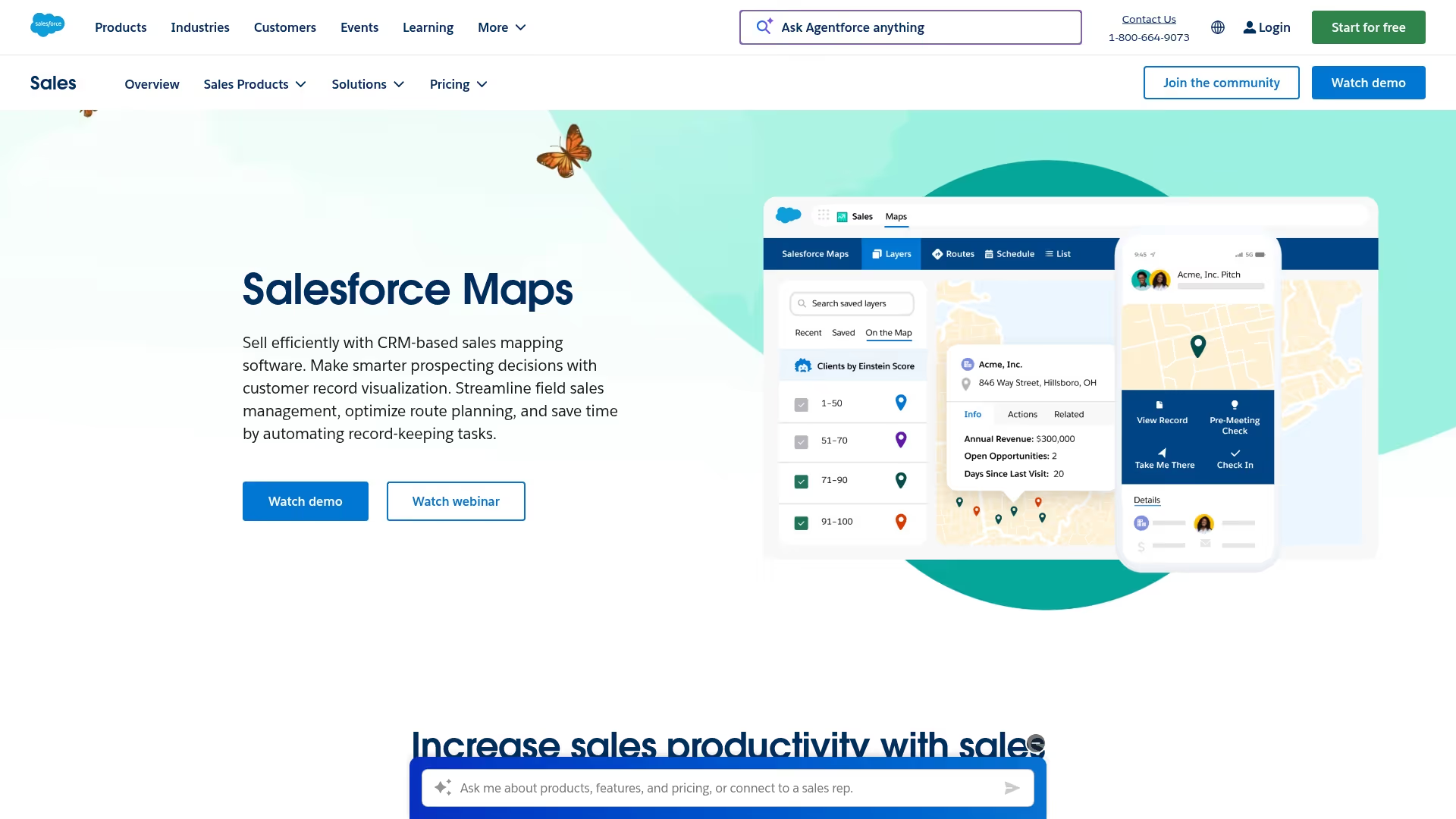
Salesforce Maps is the natural choice for teams already running on Salesforce CRM. Territory visualization, route optimization, and lead prioritization all happen within the platform you're already using. No data sync headaches, no duplicate records.
The tradeoff is complexity. Setup requires Salesforce admin expertise, and pricing adds to an already substantial Salesforce investment. For enterprise teams committed to the ecosystem, though, native integration eliminates friction that plagues third-party tools.
Best for: Enterprise sales organizations already using Salesforce who want territory and route planning without leaving their CRM.
Key strengths
- Native CRM data: Routes and territories pull directly from Salesforce records with no sync delays
- Automated scheduling: AI suggests optimal visit sequences based on priority and location
- Territory balancing: Visual tools help managers distribute accounts fairly across reps
Pricing: Custom pricing based on Salesforce contract.
3. SPOTIO
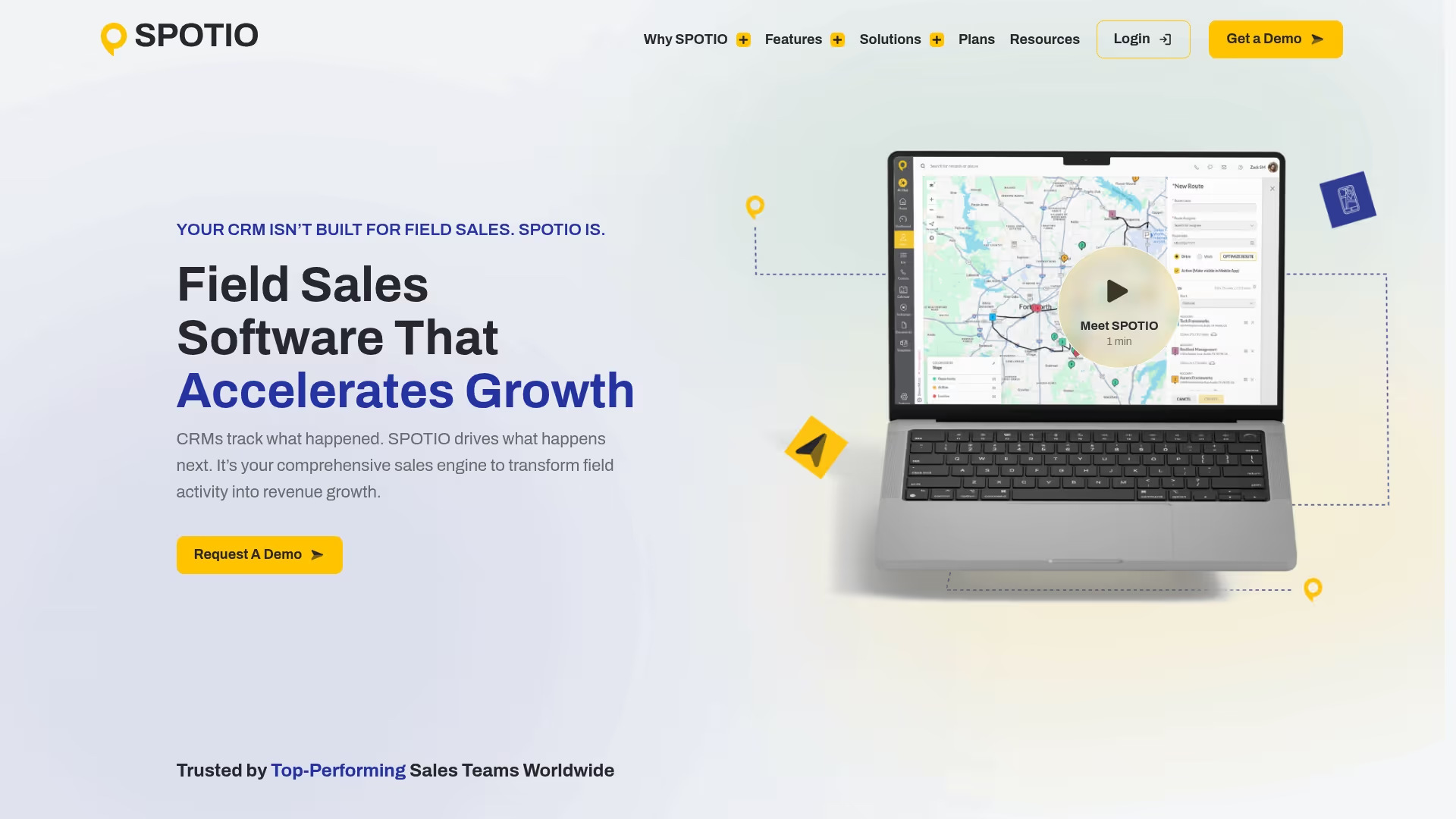
SPOTIO built its reputation with door-to-door sales teams who require more than basic tracking. Multi-channel outreach (call, text, email) combines with detailed activity tracking and territory management. Reps see exactly where they've been and what happened at each stop.
Gamification features help managers motivate teams, while real-time GPS tracking provides accountability without micromanagement. Lead generation tools also help teams build prospect lists within territories.
Best for: Door-to-door and canvassing teams who want activity tracking, multi-channel outreach, and territory management in one platform.
Key strengths
- Real-time GPS tracking: Managers see rep locations and visit verification without constant check-ins
- Multi-channel sequences: Combine calls, texts, and emails in automated follow-up workflows
- Gamification: Leaderboards and contests keep competitive teams motivated
Pricing: Custom pricing. Contact sales for quotes based on team size.
4. SalesRabbit
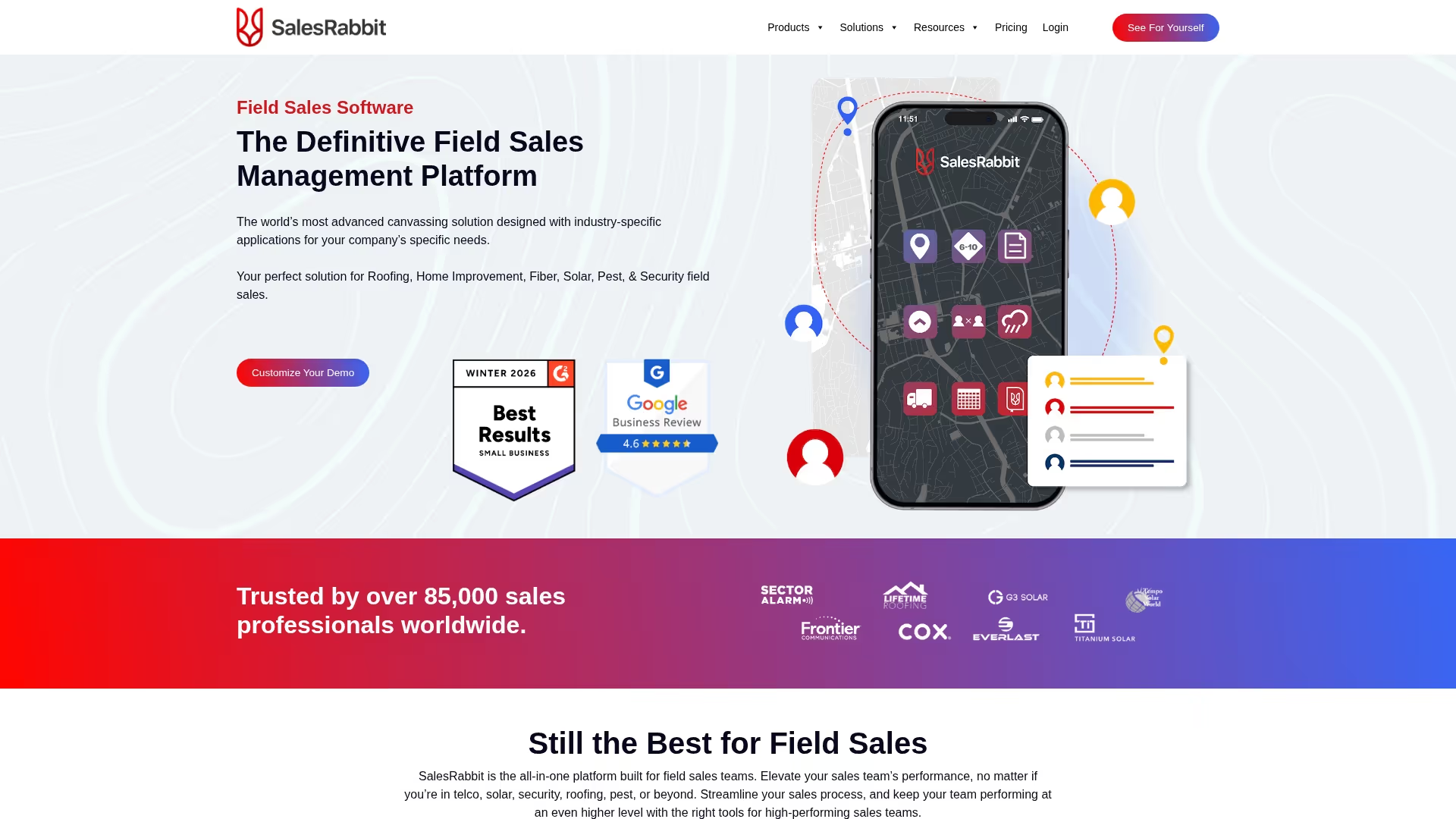
SalesRabbit focuses on simplicity for canvassing and door-to-door teams. Digital lead capture, territory mapping, and team leaderboards come in a package that's genuinely easy to learn. Most teams complete onboarding in days, not weeks.
Offline mode works reliably, which matters for reps knocking on doors in areas with spotty coverage. The affordable pricing also makes it accessible for smaller teams testing field sales software for the first time.
Best for: Small to mid-sized canvassing teams who want fast onboarding and reliable offline functionality.
Key strengths
- Offline mode: Full functionality without connectivity, with automatic sync when back online
- Quick onboarding: Intuitive interface means reps start producing faster
- Affordable entry point: Lower per-user costs than enterprise alternatives
Pricing: Plans start around $25/user/month with volume discounts available.
5. Badger Maps
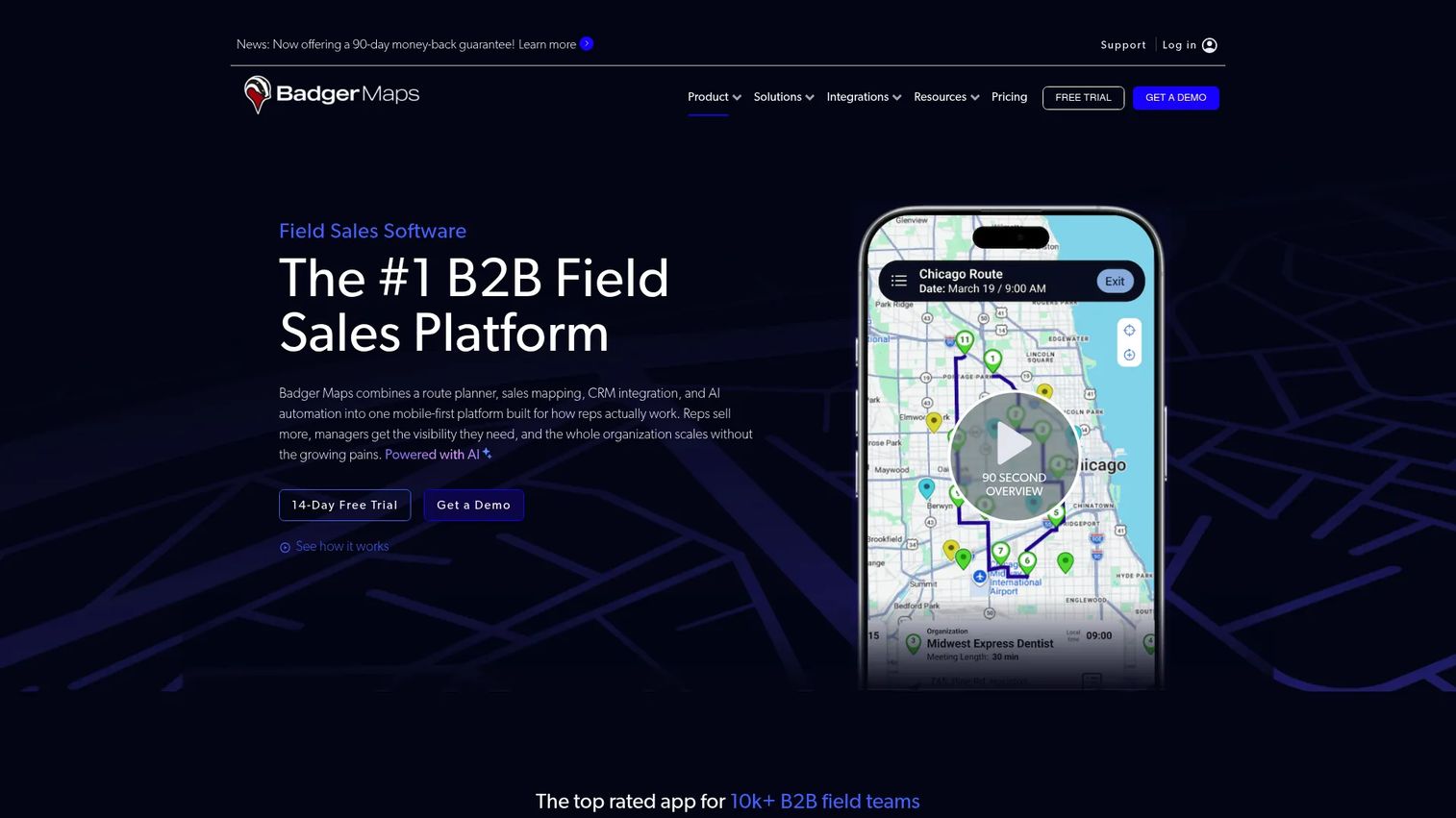
Badger Maps specializes in route optimization for reps who spend significant time driving between accounts. The lasso tool for territory planning, check-in logging, and calendar sync make it a favorite among outside sales teams focused on maximizing face time.
Integration with major CRMs (Salesforce, HubSpot, Zoho) means customer data flows both directions. Reps see account history before visits, and visit notes sync back automatically.
Best for: Outside sales reps who prioritize route efficiency and want tight CRM integration.
Key strengths
- Best-in-class routing: Multi-stop optimization with traffic awareness reduces drive time
- Lasso territory planning: Draw territories visually and assign accounts with drag-and-drop
- CRM sync: Bi-directional integration keeps field data and CRM records aligned
Pricing: Plans start at $58/user/month with annual billing.
6. Repsly
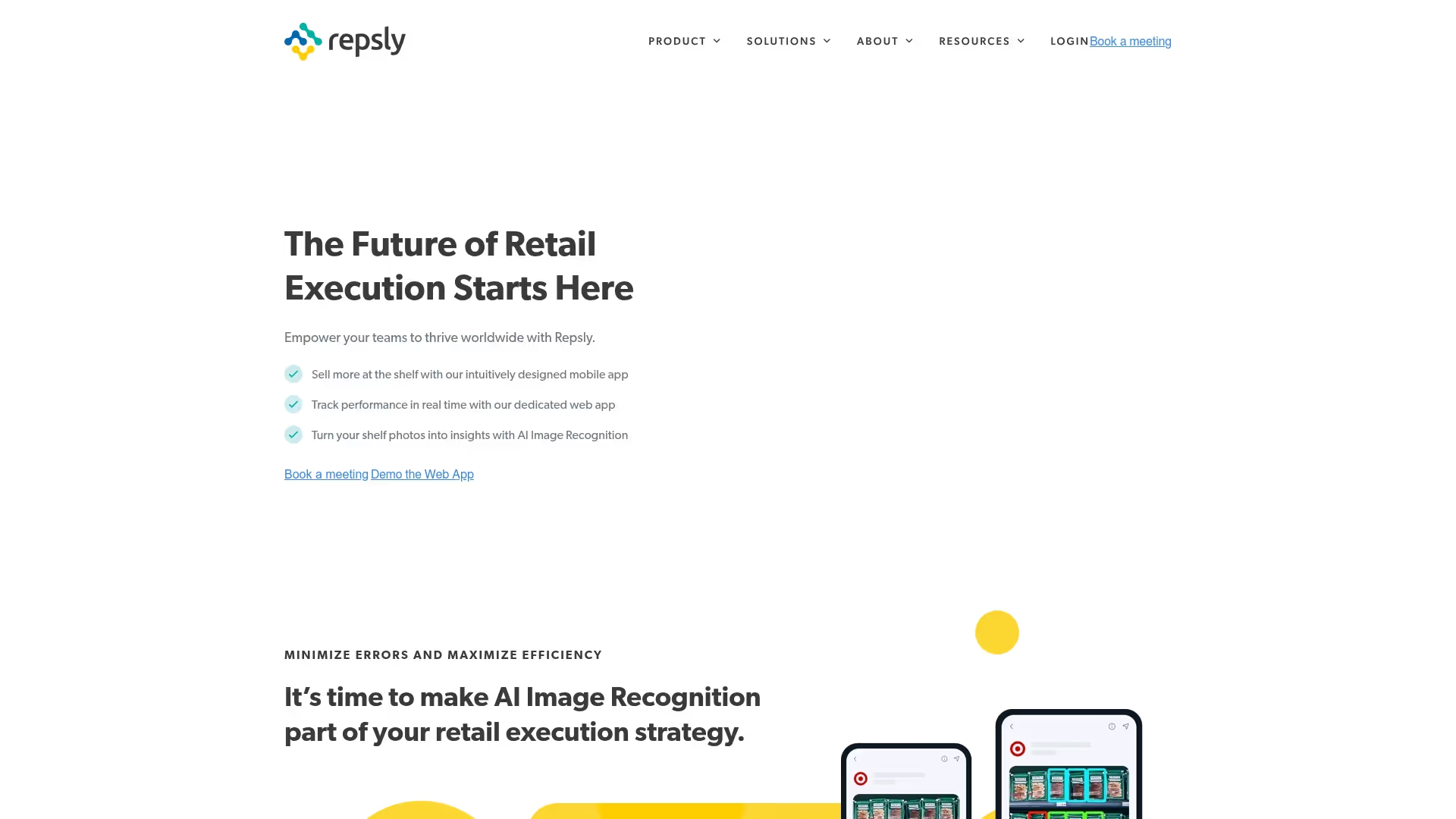
Repsly targets retail execution and merchandising teams specifically. Photo capture for shelf audits, task management, and compliance tracking address workflows that general field sales tools handle poorly.
The platform helps CPG brands ensure products are displayed correctly, promotions are executed, and retail partners follow through on commitments.
Best for: CPG brands and merchandising teams focused on retail execution and shelf compliance.
Key strengths
- Retail-specific workflows: Built-in templates for shelf audits, display checks, and promotion verification
- Photo documentation: Capture and annotate shelf photos with timestamps and location data
- Compliance tracking: Monitor execution rates across stores and identify underperforming locations
Pricing: Custom pricing based on team size and feature requirements.
7. SimplyDepo
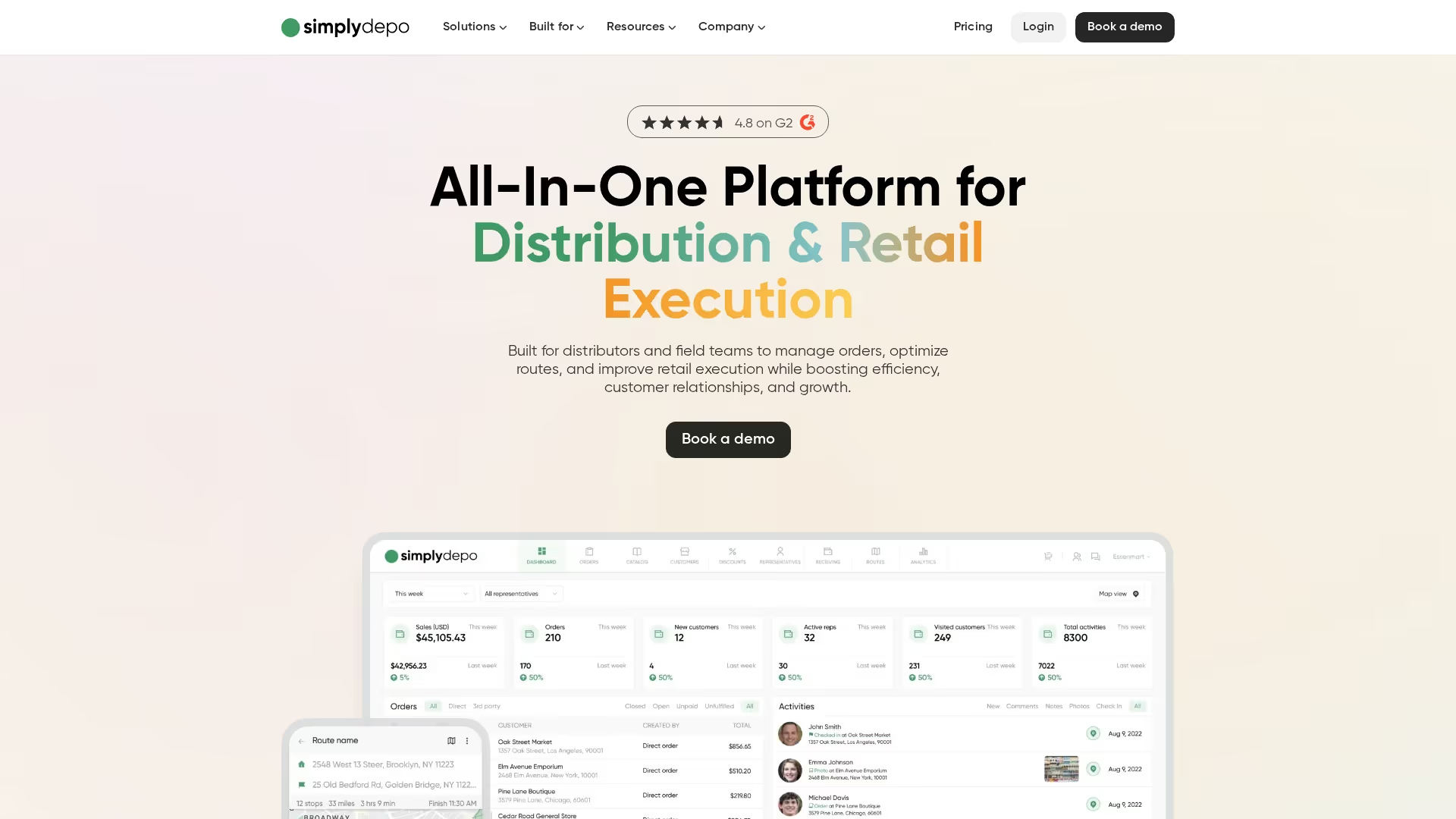
SimplyDepo serves wholesale and distribution teams who require order management alongside field sales functionality. Product catalogs, pricing rules, and invoice generation happen in the field, with inventory syncing in real time.
The B2B focus means features like customer-specific pricing, order history, and credit limits are built in rather than bolted on.
Best for: Wholesale distributors and B2B sales teams who capture orders in the field.
Key strengths
- B2B ordering: Product catalogs with customer-specific pricing and order history
- Inventory sync: Real-time stock levels prevent overselling
- Offline ordering: Complete orders without connectivity, sync when back online
Pricing: Plans start around $35/user/month.
8. Map My Customers
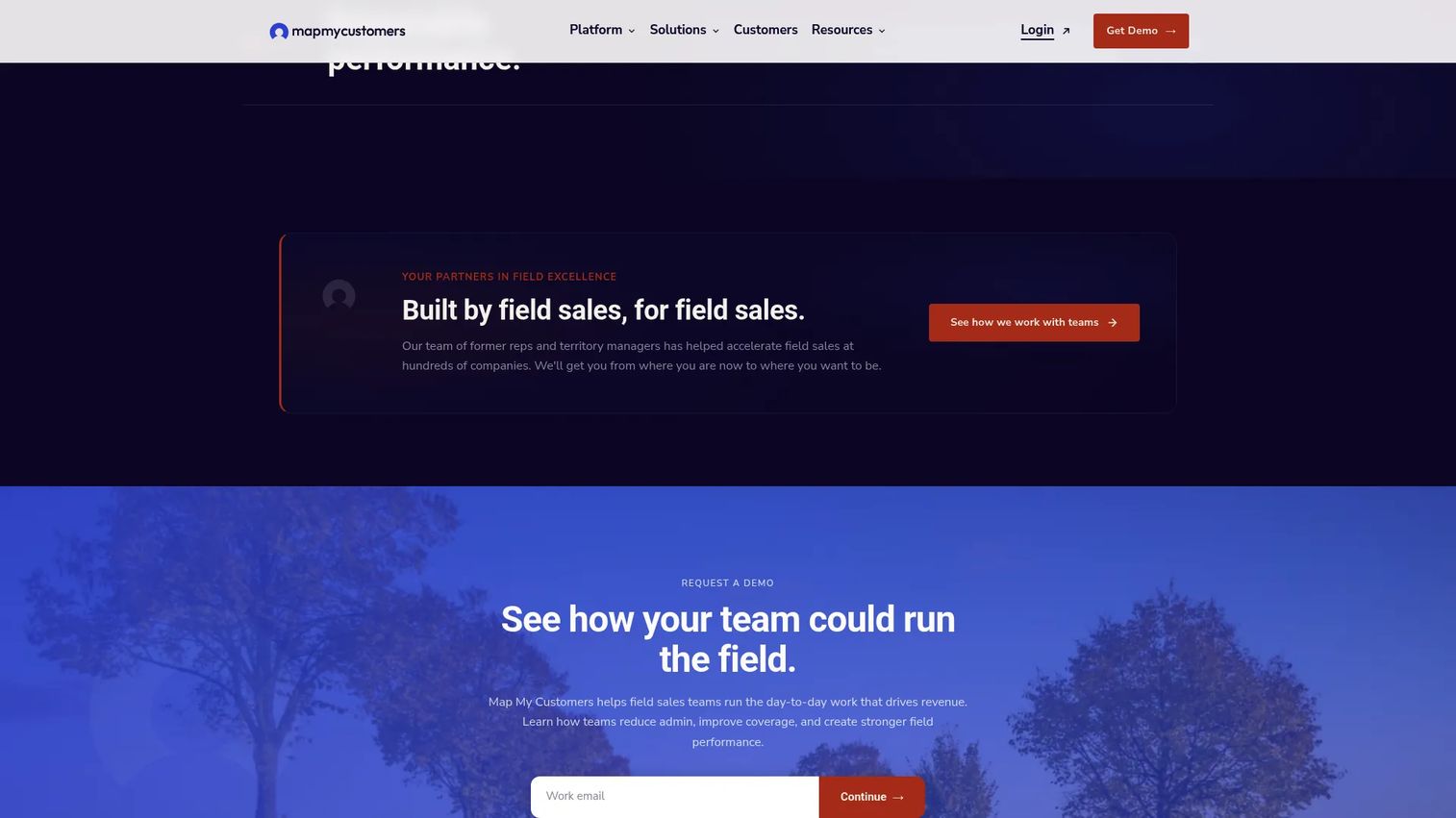
Map My Customers combines visual pipeline management with field sales functionality. The map-based interface shows leads, opportunities, and customers geographically, making territory planning intuitive.
Activity logging and route planning integrate with the visual pipeline, so reps see both where to go and why each visit matters for their quota.
Best for: Field sales teams who want visual pipeline management alongside route planning.
Key strengths
- Map-based pipeline: See opportunities geographically and plan routes around high-value accounts
- Activity logging: Track visits, calls, and notes with location context
- Sales funnel visualization: Understand territory health at a glance
Pricing: Plans start around $50/user/month.
9. Skynamo
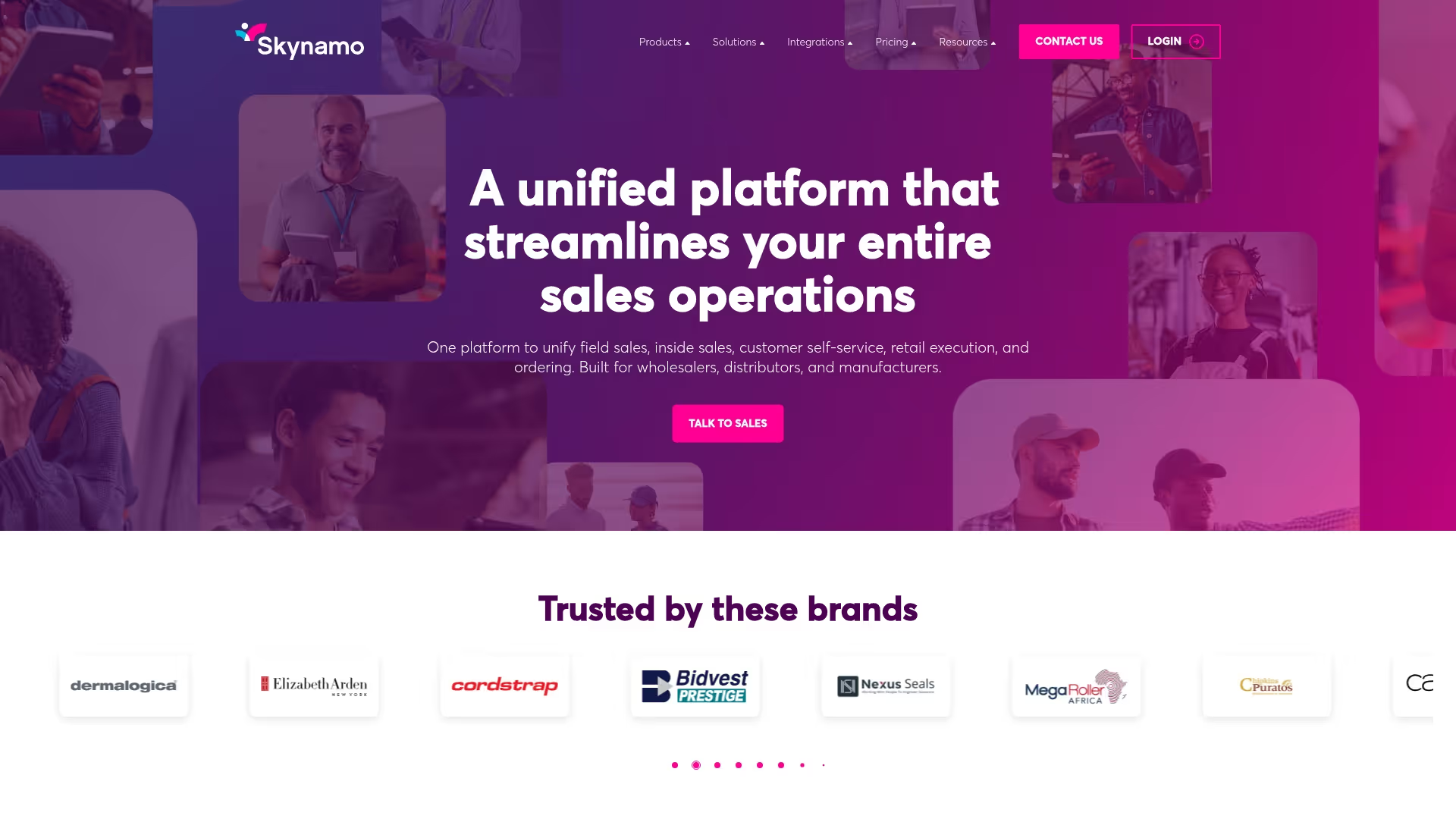
Skynamo targets manufacturers and distributors who require deep ERP integration. Order capture, customer visit planning, and sales analytics connect directly to backend systems, eliminating manual data entry.
Offline capability ensures reps can work in warehouses, rural areas, or anywhere connectivity is unreliable.
Best for: Manufacturers and distributors with complex ERP requirements.
Key strengths
- ERP integrations: Direct connections to major ERP systems for order and inventory data
- Offline capability: Full functionality without connectivity
- Order history access: Reps see complete purchase history during customer visits
Pricing: Custom pricing based on ERP integration requirements.
10. Pitcher

Pitcher combines sales enablement with field sales functionality, focusing on regulated industries like pharma and medical devices. Content management, interactive presentations, and CRM sync help reps deliver compliant messaging consistently.
Best for: Pharma, medical device, and other regulated industries requiring compliant content sharing.
Key strengths
- Compliant content sharing: Ensure reps only present approved materials
- Content analytics: Track which presentations and documents drive engagement
- CRM integration: Visit data and content usage sync to Salesforce and other systems
Pricing: Custom pricing for enterprise deployments.
11. Pepperi
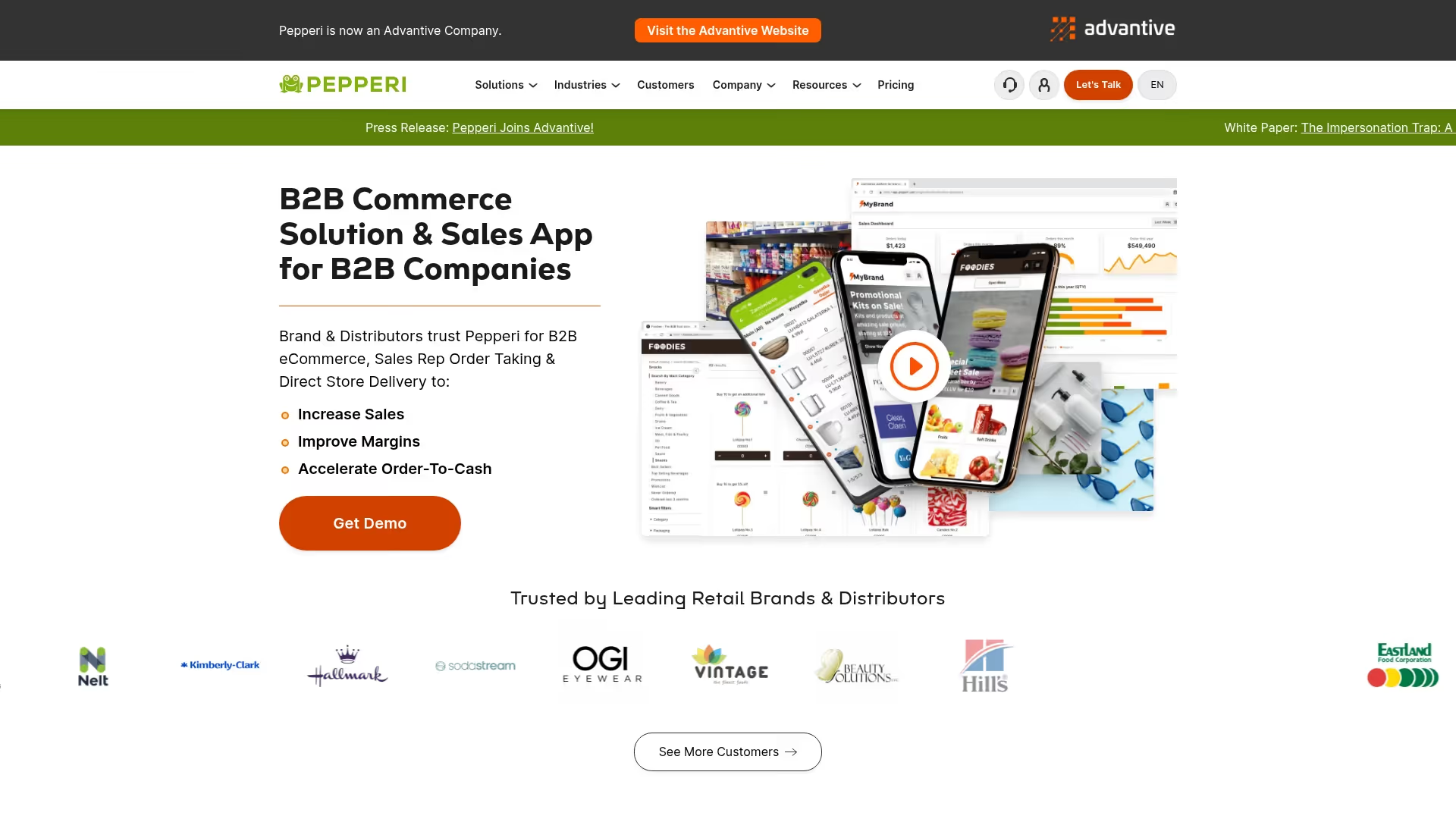
Pepperi serves consumer goods companies with complex B2B sales requirements. Catalog management, order capture, and trade promotions work together in a platform designed for field sales at scale.
Full offline mode means reps can browse catalogs, configure orders, and apply complex pricing rules without connectivity.
Best for: Consumer goods companies with complex pricing, promotions, and catalog requirements.
Key strengths
- Full offline mode: Complete functionality including complex pricing calculations
- Trade promotions: Configure and apply promotional pricing in the field
- Multi-channel support: Same catalog and pricing across field sales, e-commerce, and inside sales
Pricing: Custom pricing based on deployment scope.
12. Outfield
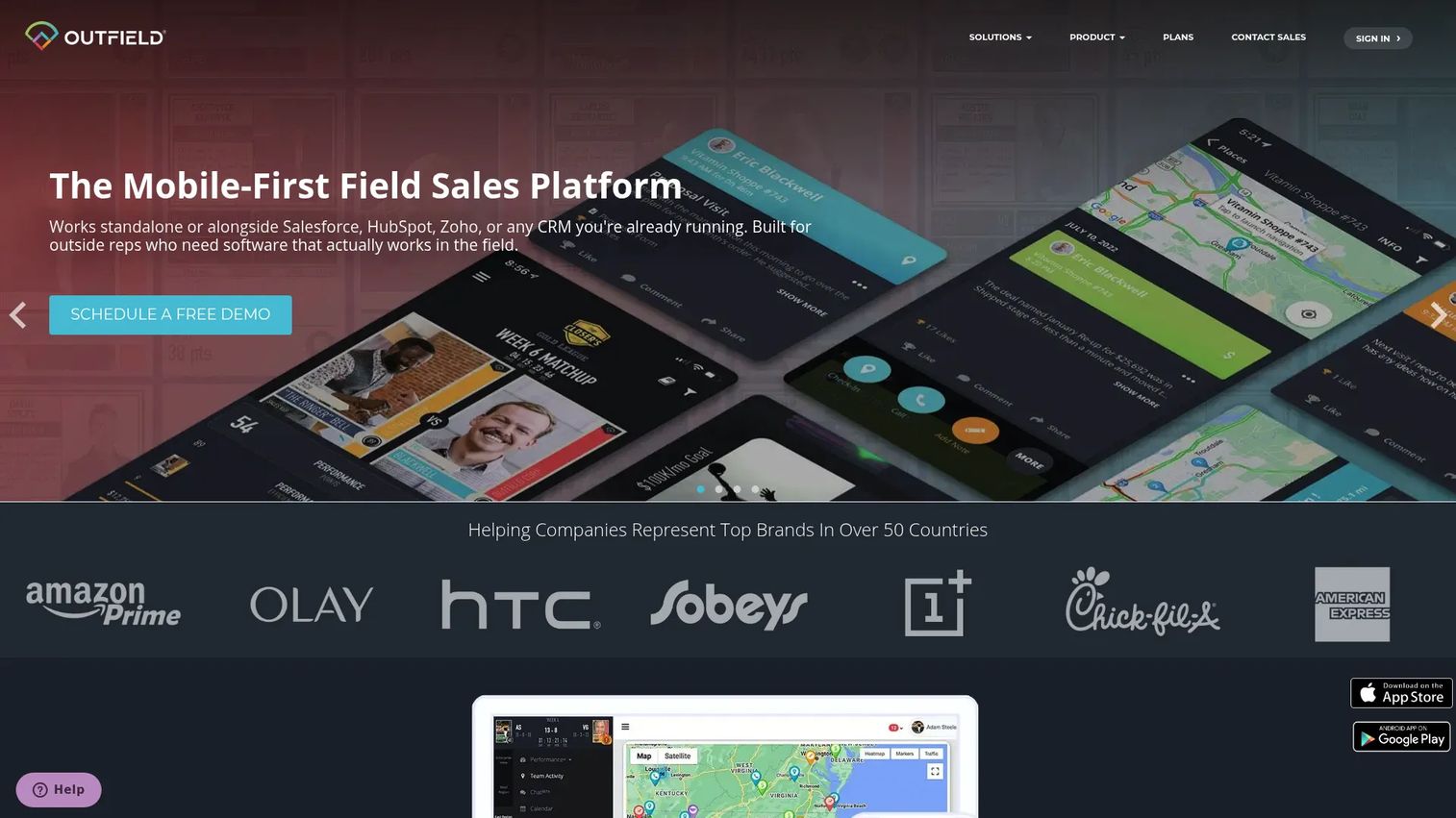
Outfield focuses on visit verification and team accountability. GPS check-ins, photo verification, and goal tracking help managers ensure reps are actually visiting accounts and completing required activities.
Best for: Teams prioritizing visit verification and rep accountability.
Key strengths
- GPS check-ins: Verify rep locations at each customer visit
- Photo verification: Document visits with timestamped, geotagged photos
- Goal tracking: Set and monitor activity targets for individuals and teams
Pricing: Plans start around $10/user/month.
13. Geo Rep
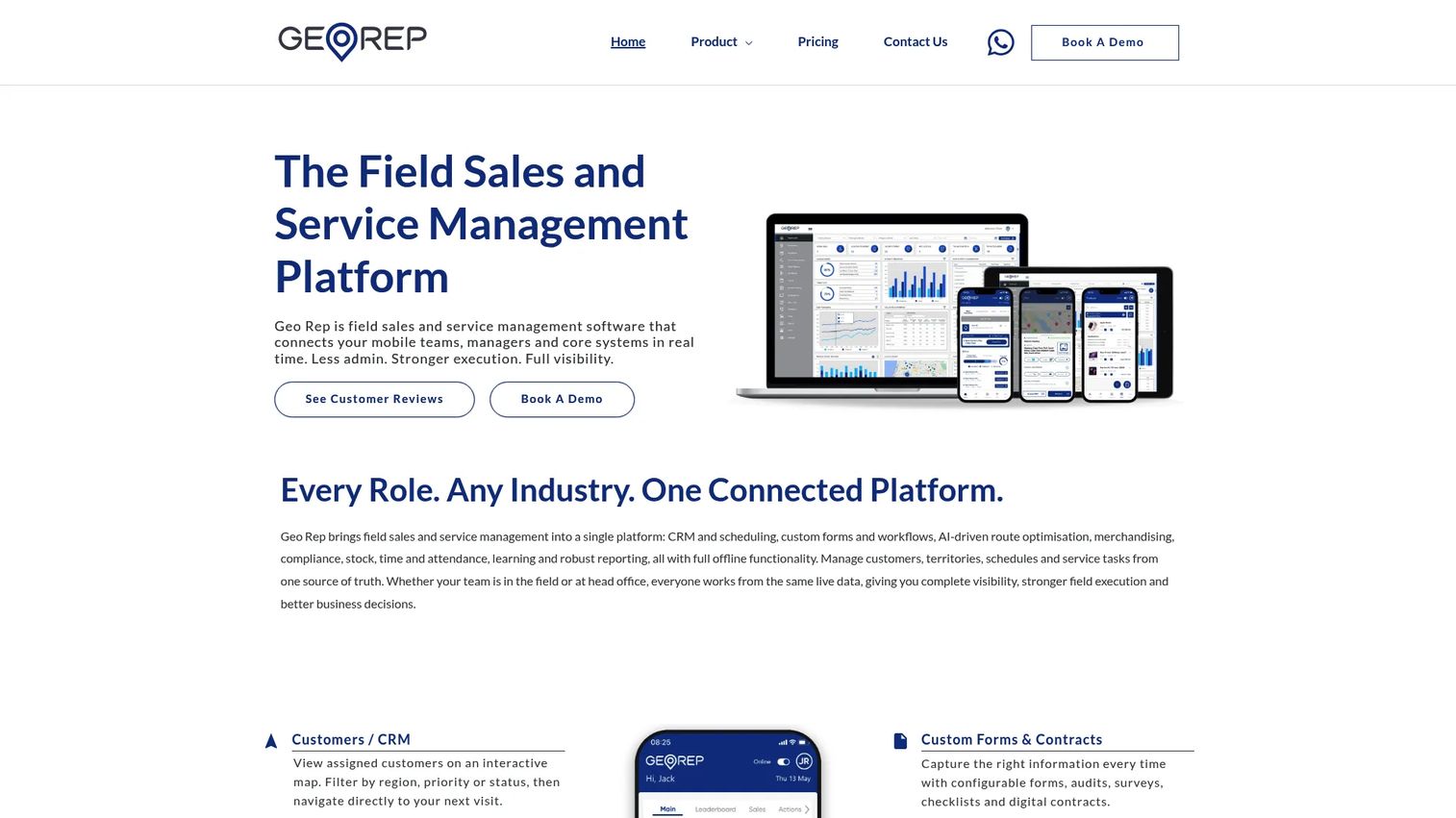
Geo Rep targets emerging markets where connectivity is unreliable and devices may be older. The lightweight app uses minimal data, works on budget smartphones, and provides basic route planning and activity logging.
Best for: Field sales teams in emerging markets with connectivity and device constraints.
Key strengths
- Low data usage: Works reliably on slow connections
- Device compatibility: Runs on older Android devices
- Affordable pricing: Accessible for cost-sensitive markets
Pricing: Plans start around $15/user/month.
14. ForceManager
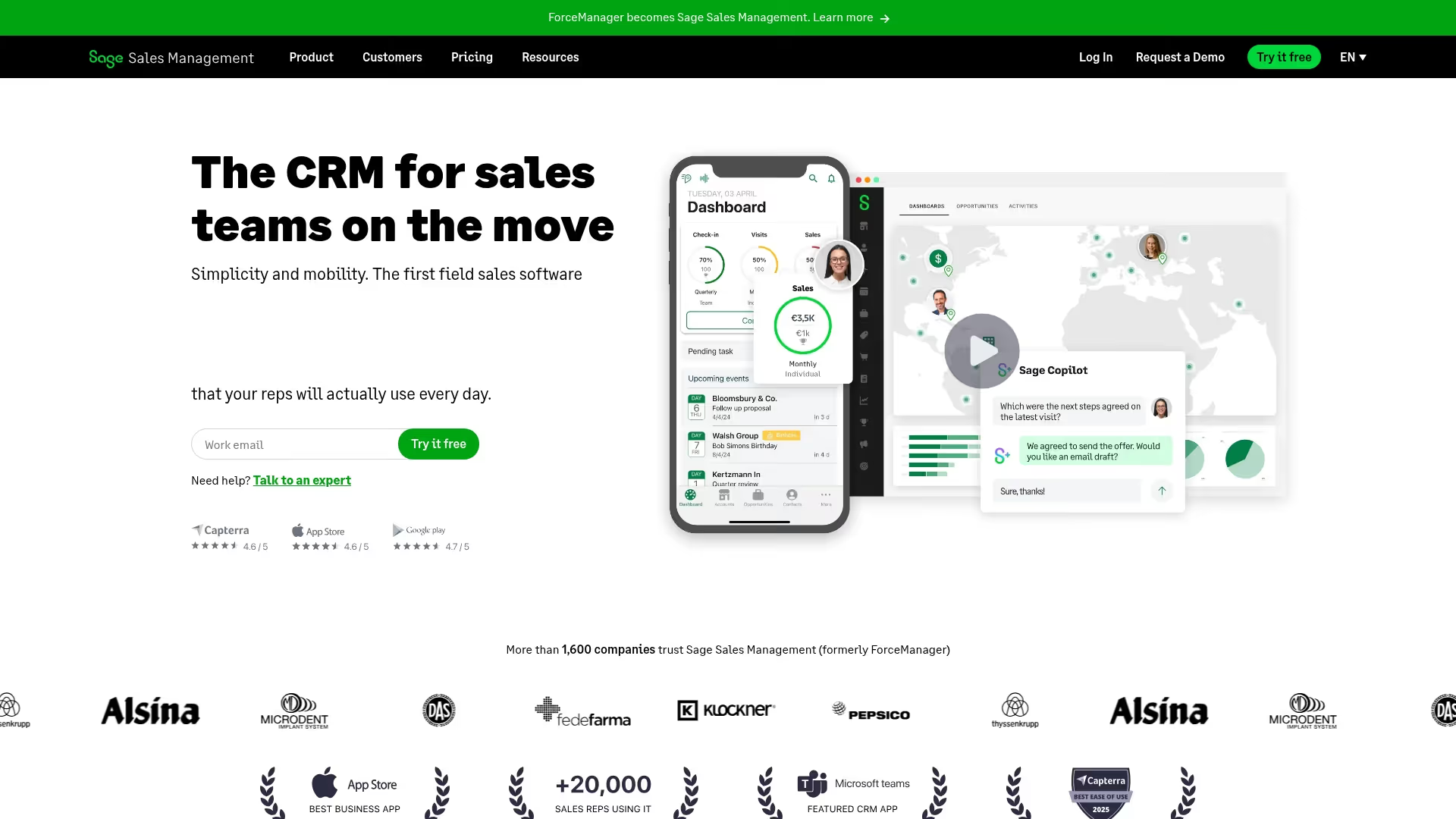
ForceManager differentiates with AI-powered voice reporting. Reps log activities by speaking rather than typing, which reduces admin time. Automated visit reports and coaching insights help managers improve team performance.
Best for: Field sales teams who want to minimize data entry through voice reporting.
Key strengths
- Voice reporting: Log activities by speaking instead of typing
- AI recommendations: Get suggestions for next best actions and coaching
- Automated reports: Visit summaries generated without manual input
Pricing: Plans start around $19/user/month.
15. Mapsly
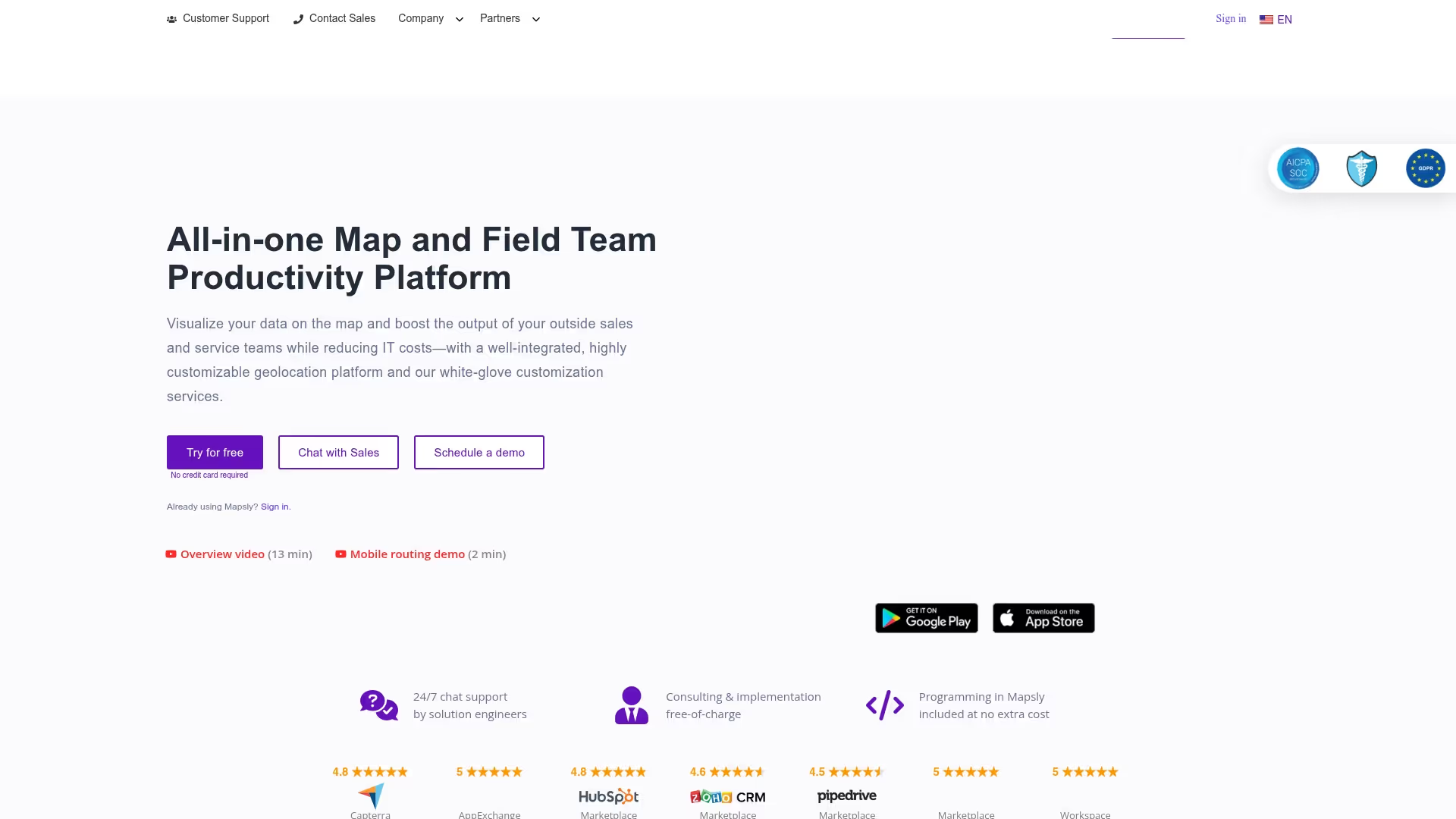
Mapsly provides territory mapping and route optimization that integrates with multiple CRMs. Custom map layers, territory assignment, and visual builders work with Salesforce, HubSpot, Pipedrive, and other systems.
Best for: Teams using various CRMs who want flexible territory mapping and route optimization.
Key strengths
- Multi-CRM support: Integrates with Salesforce, HubSpot, Pipedrive, Zoho, and others
- Visual territory builder: Draw and assign territories with drag-and-drop tools
- Affordable pricing: Lower cost than enterprise alternatives with similar mapping features
Pricing: Plans start around $25/user/month.
Key features to look for in field sales software
Beyond the basics, here's what separates adequate tools from great ones.
Route planning and optimization
Look for multi-stop planning that accounts for traffic, appointment windows, and priority accounts. The best tools let reps drag and drop to reorder stops and recalculate routes instantly.
Territory and account management
Visual map builders make territory assignment intuitive. Look for tools that help balance workloads across reps and prevent overlap.
Mobile CRM with offline access
This is non-negotiable for field teams - 78% without mobile CRM miss quota. Reps require the ability to view customer history, log notes, and capture orders without connectivity. Test offline functionality thoroughly before committing.
Visit tracking and GPS check-ins
Managers benefit from visibility without micromanaging. Look for automatic check-ins based on geofencing, visit duration tracking, and the ability to attach notes and photos.
Reporting and performance analytics
Real-time dashboards showing visits per day, territory coverage, and pipeline progress help managers coach effectively. Look for customizable KPIs and the ability to drill down into individual rep performance.
How to evaluate outside sales software for your team
Test the mobile app in real conditions
Download the app and use it while driving between locations. Evaluate speed, usability, and battery drain during a typical sales day.
Verify offline functionality
Turn off wifi and cellular data, then test core workflows: viewing accounts, logging visits, capturing orders. Check sync behavior when reconnected.
Check CRM and ERP integrations
Confirm the tool integrates with your existing systems. Evaluate data sync frequency and field mapping.
Compare per-user pricing models
Field sales tools typically charge per user per month. Calculate total cost for your team size and compare value across tiers.
How field sales CRM differs from traditional CRM
| Capability | Traditional CRM | Field sales CRM |
|---|---|---|
| Primary user | Inside sales, desk-based | Outside sales, mobile reps |
| Route planning | Not included | Core feature |
| Offline access | Limited or none | Full offline mode |
| GPS tracking | Not included | Visit verification |
| Territory mapping | Basic or add-on | Visual map builder |
| Order capture | Varies | Built for field ordering |
Traditional CRMs like Salesforce or HubSpot excel at pipeline management but lack field-specific tools. The best CRM for outside sales reps combines CRM data with route optimization, visit tracking, and mobile-first design. Many teams use both: field sales software feeding data into a central CRM.
Start improving your field sales operations today
The right field sales management software depends on your team size, industry, and existing tech stack. Route-focused teams gravitate toward Badger Maps. Door-to-door operations prefer SPOTIO or SalesRabbit. Distribution companies often choose SimplyDepo or Pepperi.
For teams that also present complex products during field visits, interactive demos complement field sales tools by letting reps show products without relying on live environments or internet connectivity.
Start your journey with Guideflow today!