
Your freelancer swears the article is original. Your student insists they wrote every word. Without a reliable way to verify, you're left guessing.
AI content detectors analyze text patterns to determine whether a human or an AI model like ChatGPT, Claude, or Gemini generated the content. This guide covers 11 tools for educators, content marketers, and publishers, with accuracy benchmarks, pricing breakdowns, and guidance on choosing the right detector for your workflow.
What's inside
AI content detectors analyze text to determine whether a human or an AI model wrote it. Tools like GPTZero, Copyleaks, and Originality.AI scan writing patterns to flag content that shows signs of machine generation from ChatGPT, Claude, Gemini, and similar models.
This guide covers 11 AI content detectors for educators, content marketers, publishers, and anyone verifying text authenticity. You'll find how detection algorithms work, which tools perform best for specific use cases, and how to evaluate accuracy before committing to a platform.
Selection criteria: detection accuracy, language support, integration options, and pricing transparency.
TL;DR
- Best for educators: GPTZero offers LMS integrations with Canvas and Google Classroom plus writing verification features
- Best for content marketers: Originality.AI bundles AI detection with plagiarism checking for freelancer and agency submissions
- Best for enterprise teams: Copyleaks provides SOC 2 compliance, API access, and source code detection
- Best free option: ZeroGPT requires no account for basic scans and supports WhatsApp and Telegram bots
- Best for high-volume publishers: Winston AI handles document uploads directly and highlights specific AI-generated passages
What is an AI content detector
An AI content detector is software that analyzes text to determine whether a human wrote it or an AI model generated it. You paste text into the detector, and it returns a probability score or classification. Some tools provide sentence-level highlighting to show which specific passages triggered the AI flag.
How AI detection algorithms work
Detection algorithms look for patterns that distinguish human writing from AI-generated text. The analysis focuses on three main signals:
- Perplexity: Measures how predictable the text is. AI-generated content tends to use more expected word choices, while human writing often includes surprising or unconventional phrasing.
- Burstiness: Checks variation in sentence length and complexity. Humans naturally write with more variation, mixing short punchy sentences with longer complex ones. AI output often maintains more consistent patterns.
- Pattern recognition: Identifies common AI writing signatures based on training data from known AI-generated samples.
Higher confidence scores mean the tool is more certain about its classification. No detector achieves perfect accuracy, though.
Which AI models can detectors identify
Leading AI content detectors can identify text from major language models: ChatGPT (GPT-3.5, GPT-4, GPT-4o, GPT-5), Claude, Gemini, Llama, DeepSeek, and Grok.
Detection accuracy varies by model and can fall to 71% on mixed content. Newer AI models are generally harder to detect because they produce more human-like output. Some detectors update their algorithms regularly to keep pace with new model releases.
When to use an AI content detector
Different teams use AI detectors for different reasons now that 74.2% of new web pages contain AI-generated content. The right tool depends on your specific workflow and what you're trying to verify.
Academic integrity verification
Educators and institutions use AI detectors to verify student work authenticity. LMS integrations matter here, since tools that connect directly to Canvas, Google Classroom, or other learning management systems reduce friction for instructors checking submissions.
False positives are a real concern in academic contexts when 61% of non-native essays were flagged as AI-generated. Incorrectly flagging a student's original work can damage trust and create appeals.
Content marketing quality assurance
Marketing teams use detectors to verify content before publishing. Google's helpful content guidelines make AI detection relevant for SEO, and checking freelancer submissions has become standard practice for content operations.
Publishing and editorial review
Publishers, news organizations, and editorial teams verify submissions to maintain quality standards. High-volume workflows benefit from batch processing and API access. Detection serves as one quality signal among many in the editorial process after 43,000 URLs studied showed AI articles surpassing human-written articles.
AI content detector comparison table
# | Product | Best for | Key differentiation | Pricing | G2 rating |
|---|---|---|---|---|---|
1 | GPTZero | Educators | LMS integrations and writing verification | Free tier available | 4.5/5 |
2 | Originality.AI | Content marketers | Combined AI and plagiarism detection | Credit-based | 4.7/5 |
3 | Copyleaks | Enterprise teams | SOC 2 compliance and source code detection | Free tier, enterprise pricing | 4.5/5 |
4 | Winston AI | Publishers | Document uploads and passage highlighting | Subscription tiers | 4.6/5 |
5 | QuillBot AI Detector | Writing suite users | Integration with paraphrasing and grammar tools | Free tier available | 4.4/5 |
6 | ZeroGPT | Individual users | Free access with messaging app bots | Free, premium available | 4.3/5 |
7 | Writer AI Detector | Writer platform users | Native to enterprise writing suite | Free detector | 4.5/5 |
8 | Crossplag | Academic institutions | Dual plagiarism and AI detection | Institutional plans | 4.4/5 |
9 | Content at Scale | Budget-conscious teams | Unlimited free scans | Free | 4.2/5 |
10 | Sapling AI Detector | Customer-facing teams | API-first design for integrations | Free tier, API pricing | 4.3/5 |
11 | Turnitin | Universities | Largest academic content database | Institutional licensing | 4.4/5 |
1. GPTZero
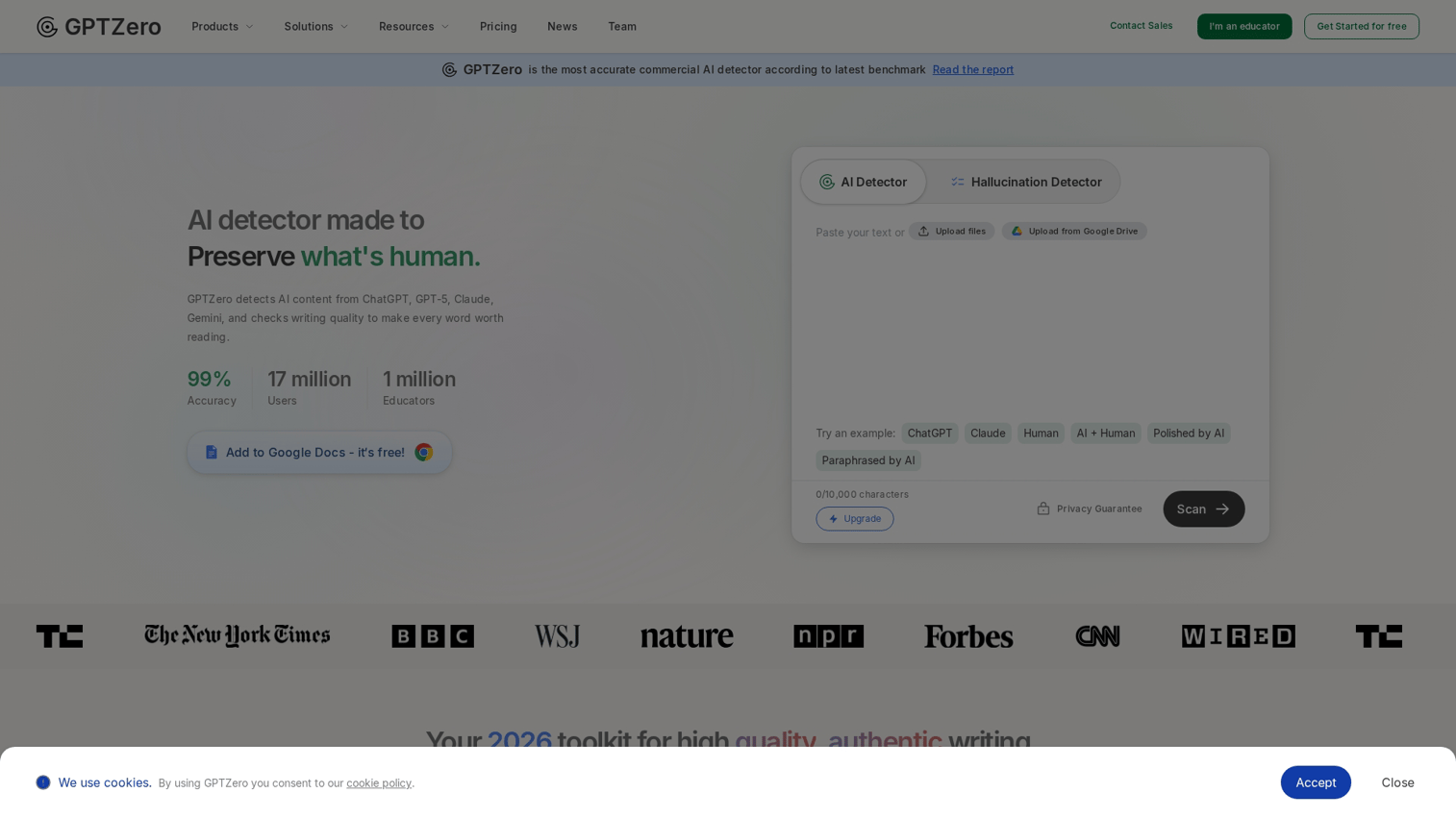
GPTZero was one of the first dedicated AI detectors, built specifically for educators. The platform has expanded beyond basic detection to include writing verification features that help prove content authenticity.
Best for: Educators and academic institutions requiring LMS integration and writing verification.
Key strengths
- Advanced scan mode: Deep analysis option provides higher confidence results for ambiguous text
- Writing verification: Video replay feature lets students prove their writing process, not just the final output
- LMS integrations: Native connections to Canvas and Google Classroom streamline classroom workflows
Why choose GPTZero
GPTZero fits teams who want to verify rather than just detect. The writing verification feature addresses a common complaint about AI detectors: they flag content but don't help prove authenticity.
GPTZero pricing
Free tier available for basic scans. Premium tiers for educators and teams unlock advanced features and higher volume limits.
2. Originality.AI
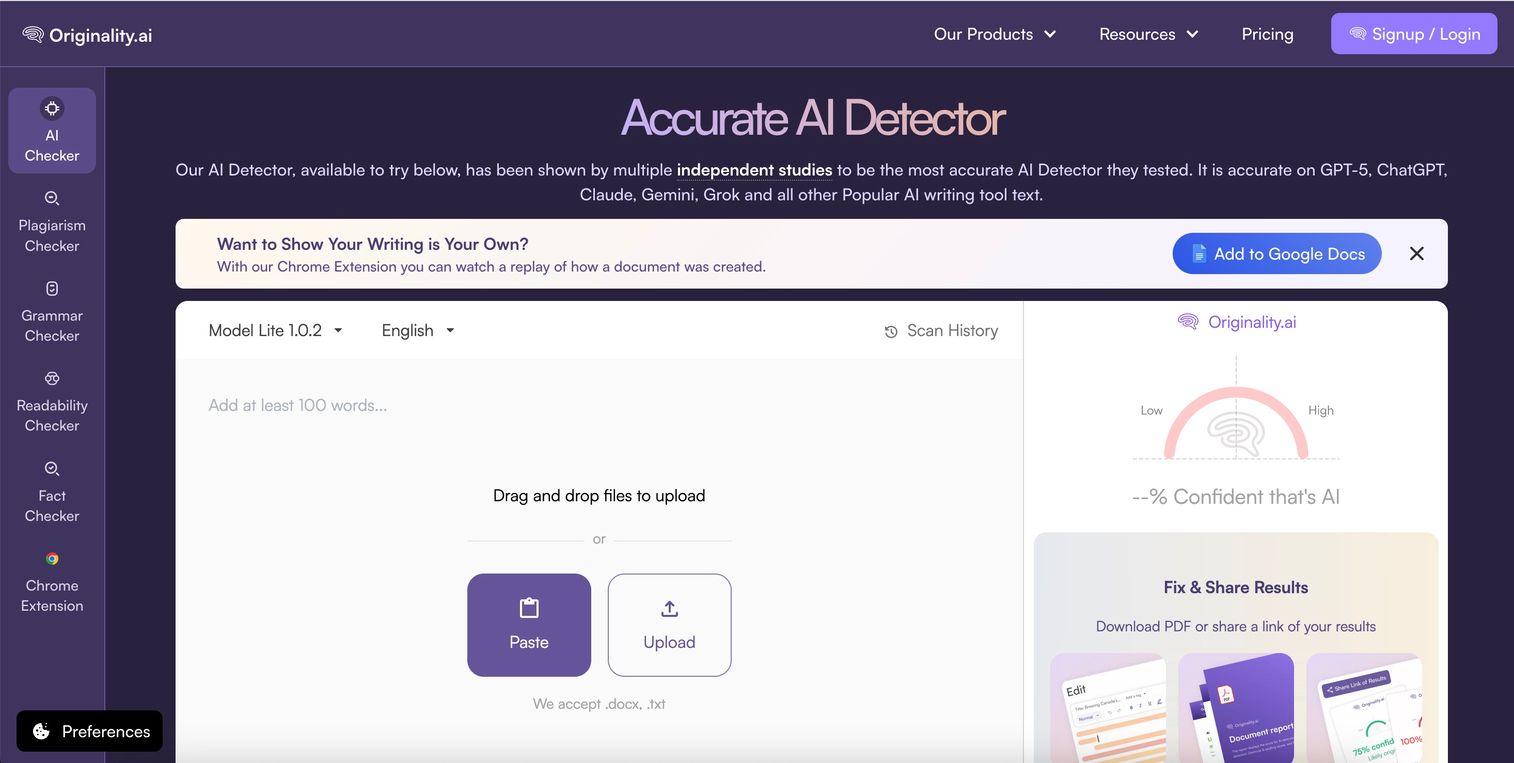
Originality.AI combines AI detection with plagiarism checking in one platform. The tool was built specifically for content marketers and publishers who check freelancer and agency submissions.
Best for: Content marketing teams checking freelancer and agency submissions at scale.
Key strengths
- Plagiarism bundled: Single scan checks for both AI generation and copied content
- Team workspaces: Shared dashboards let content managers review results across team members
- Site scanning: Bulk scan existing published content to audit your content library
Why choose Originality.AI
The combined approach saves time for teams who would otherwise run separate AI and plagiarism checks. Site scanning is particularly useful for content audits.
Originality.AI pricing
Credit-based pricing model. Bulk credit purchases reduce per-scan costs.
3. Copyleaks AI detector
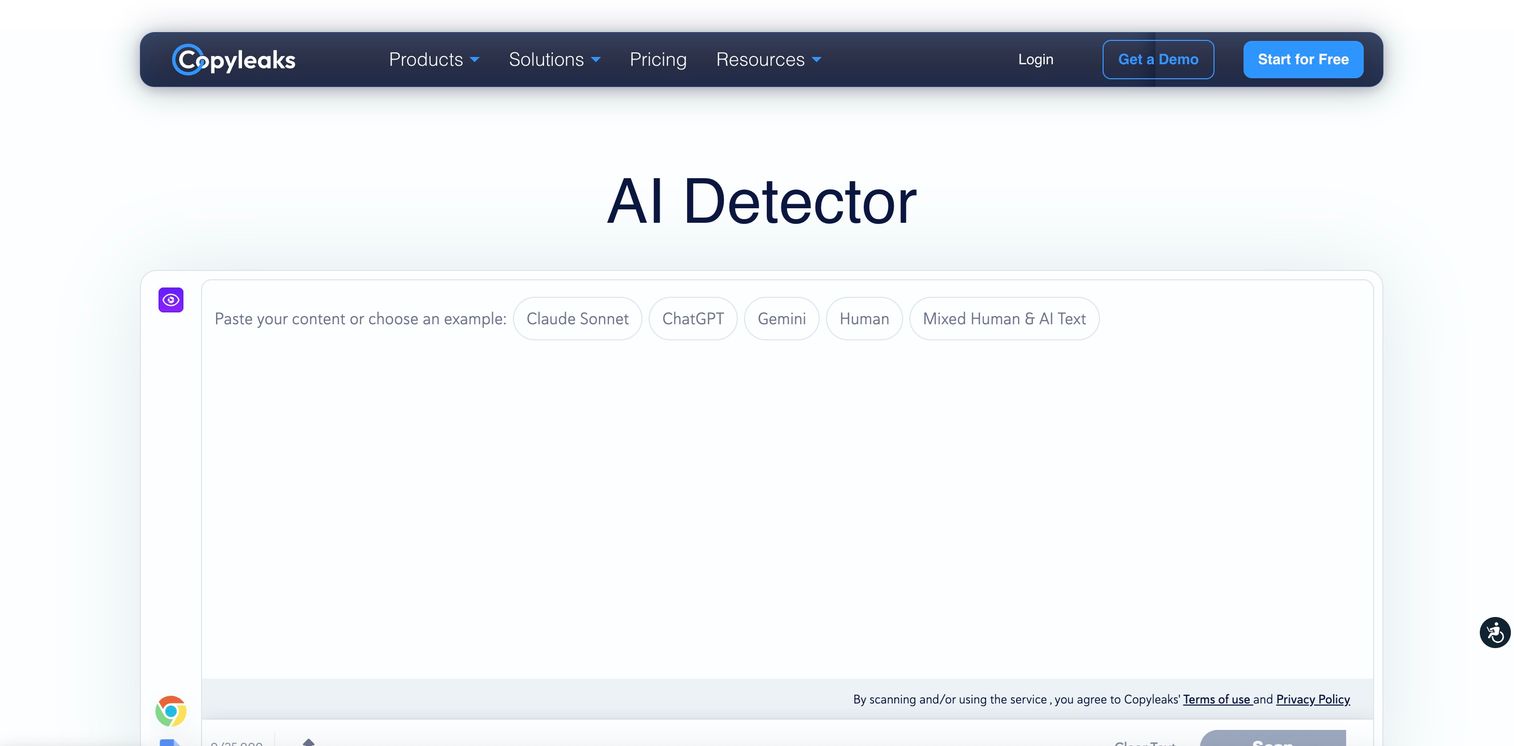
Copyleaks focuses on enterprise requirements: compliance, security, and custom integration. The platform supports multiple languages and can detect AI-generated code, not just text.
Best for: Enterprise teams requiring compliance documentation and API access.
Key strengths
- Enterprise security: SOC 2 compliance and data protection certifications for regulated industries
- Source code detection: Identifies AI-generated code in addition to text content
- API access: Robust API for building custom integrations into existing workflows
Why choose Copyleaks
Enterprise buyers often face procurement requirements that smaller tools can't meet. Copyleaks provides the security documentation and compliance certifications that IT and legal teams require.
Copyleaks pricing
Free tier with limits for basic use. Enterprise pricing available for teams needing compliance features and higher volume.
4. Winston AI
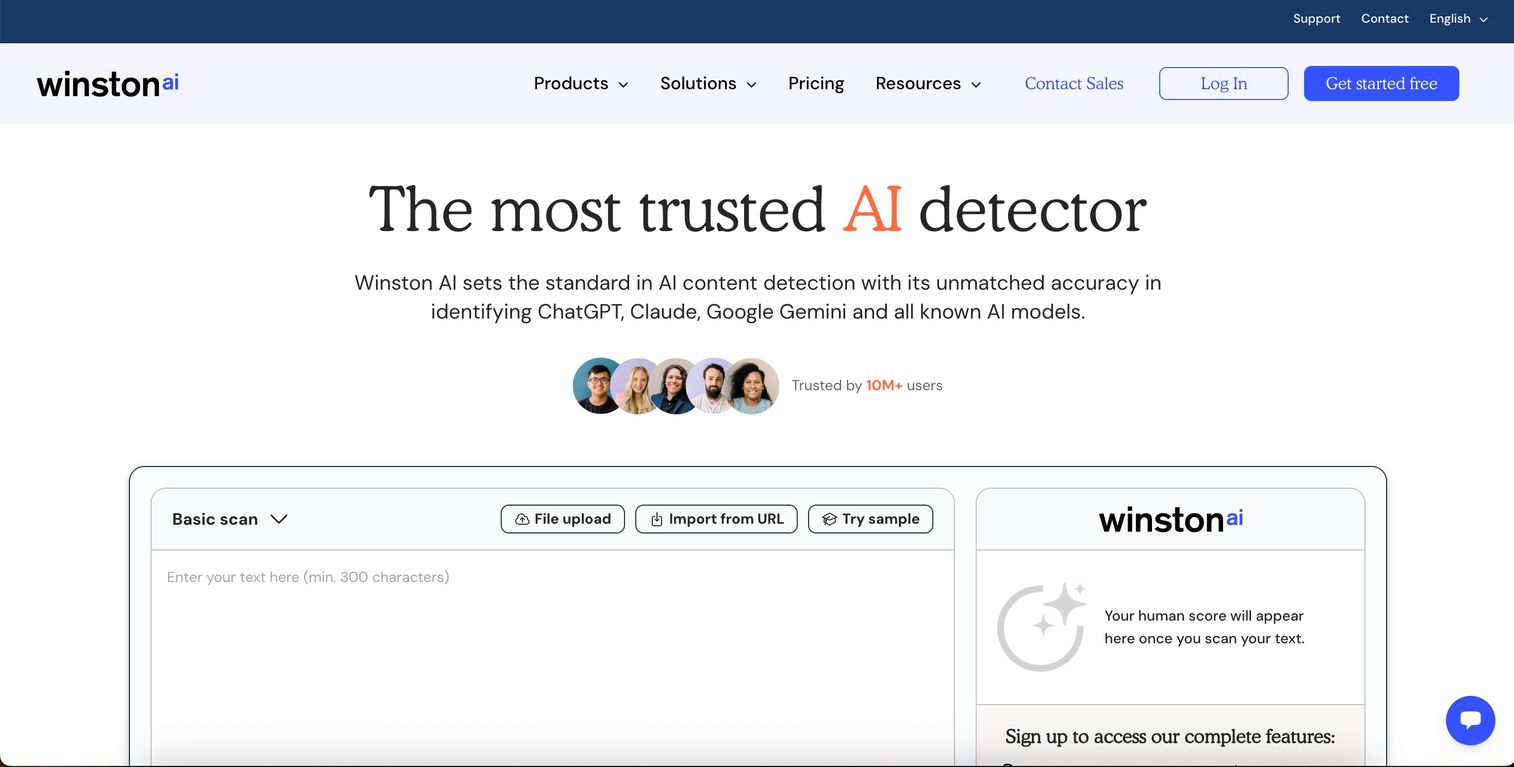
Winston AI emphasizes accuracy and supports direct document uploads. The platform provides readability scoring alongside AI detection.
Best for: Publishers and editors reviewing document submissions.
Key strengths
- Document uploads: Supports PDF, Word, and other file formats directly without copy-paste
- Readability scoring: Additional content quality metrics beyond AI detection
- Sentence highlighting: Pinpoints specific AI-generated passages within longer documents
Why choose Winston AI
Document-based workflows benefit from direct file upload support. The sentence-level highlighting helps editors understand which specific sections triggered the AI flag.
Winston AI pricing
Subscription tiers with free trial available.
5. QuillBot AI detector
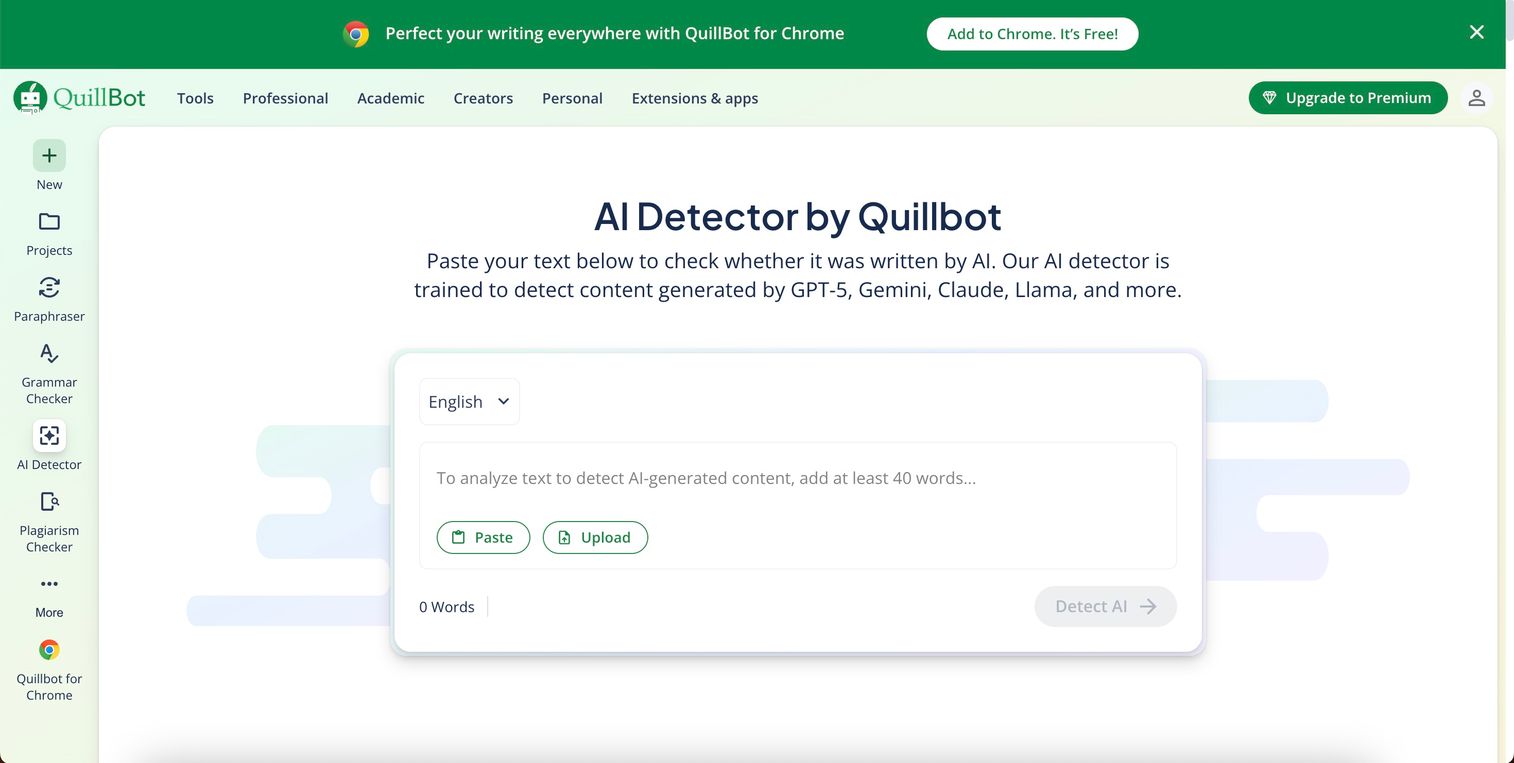
QuillBot offers AI detection as part of its broader writing suite. The detector appeals to users already using QuillBot's paraphrasing, grammar, and citation tools.
Best for: Writers already using QuillBot's paraphrasing and grammar tools.
Key strengths
- Writing suite integration: Works alongside paraphrasing, grammar, and citation tools in one platform
- Human verification badge: Certification option for proven human-written content
- Image detection: Can analyze AI-generated images, not just text
Why choose QuillBot
If you already use QuillBot tools, adding detection keeps your workflow in one place.
QuillBot pricing
Free tier available for basic detection. Premium subscription unlocks full features across the writing suite.
6. ZeroGPT
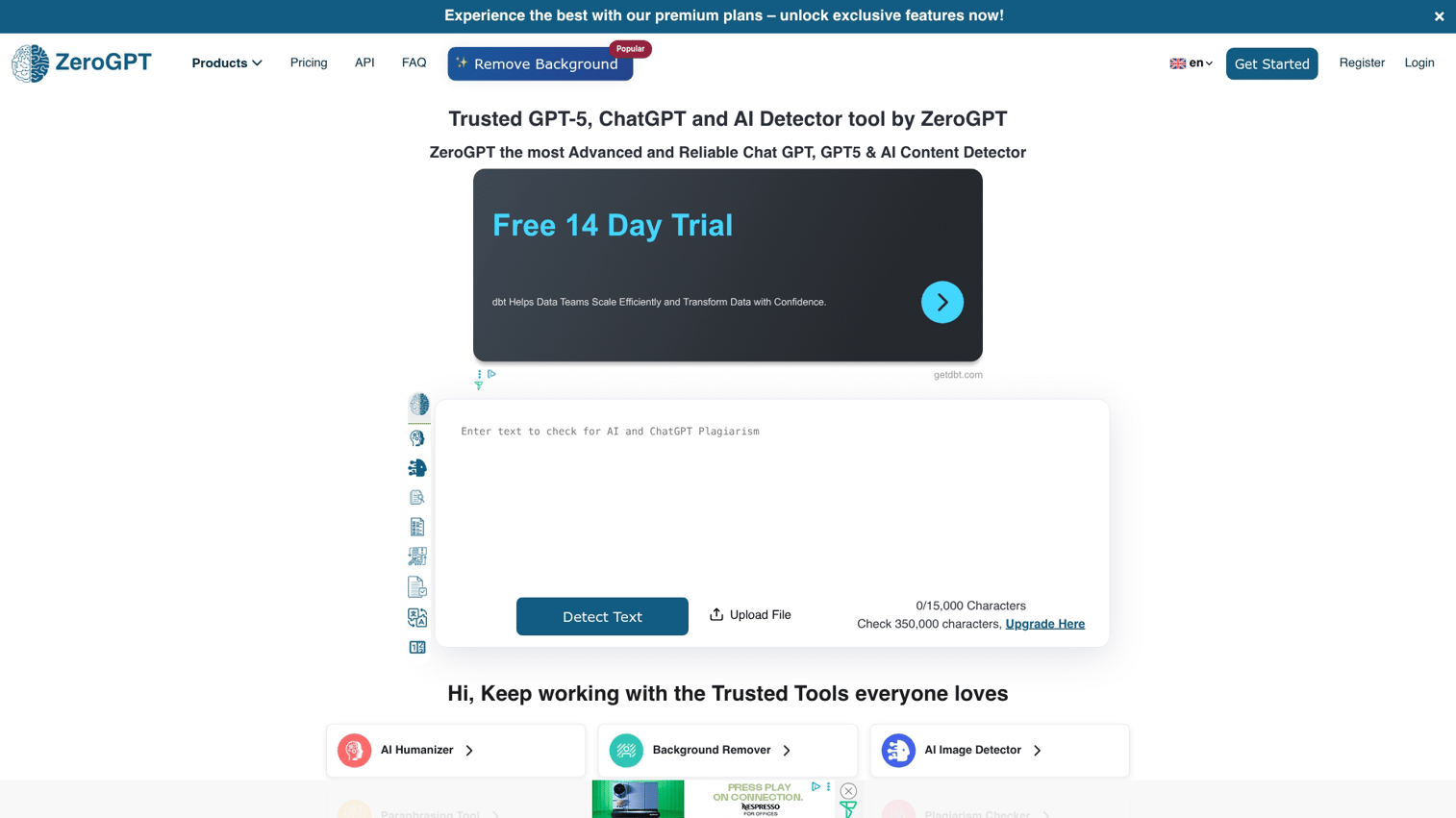
ZeroGPT provides free, accessible AI detection for quick checks. The platform supports WhatsApp and Telegram bots for mobile access.
Best for: Individual users needing quick, free AI checks without account creation.
Key strengths
- Free access: No account required for basic scans
- Messaging app bots: Check content via WhatsApp or Telegram on mobile
- Batch file upload: Process multiple documents at once
Why choose ZeroGPT
The low barrier to entry makes ZeroGPT useful for occasional checks or quick verification.
ZeroGPT pricing
Free tier is generous for casual use. Premium tier available for higher limits.
7. Writer AI content detector
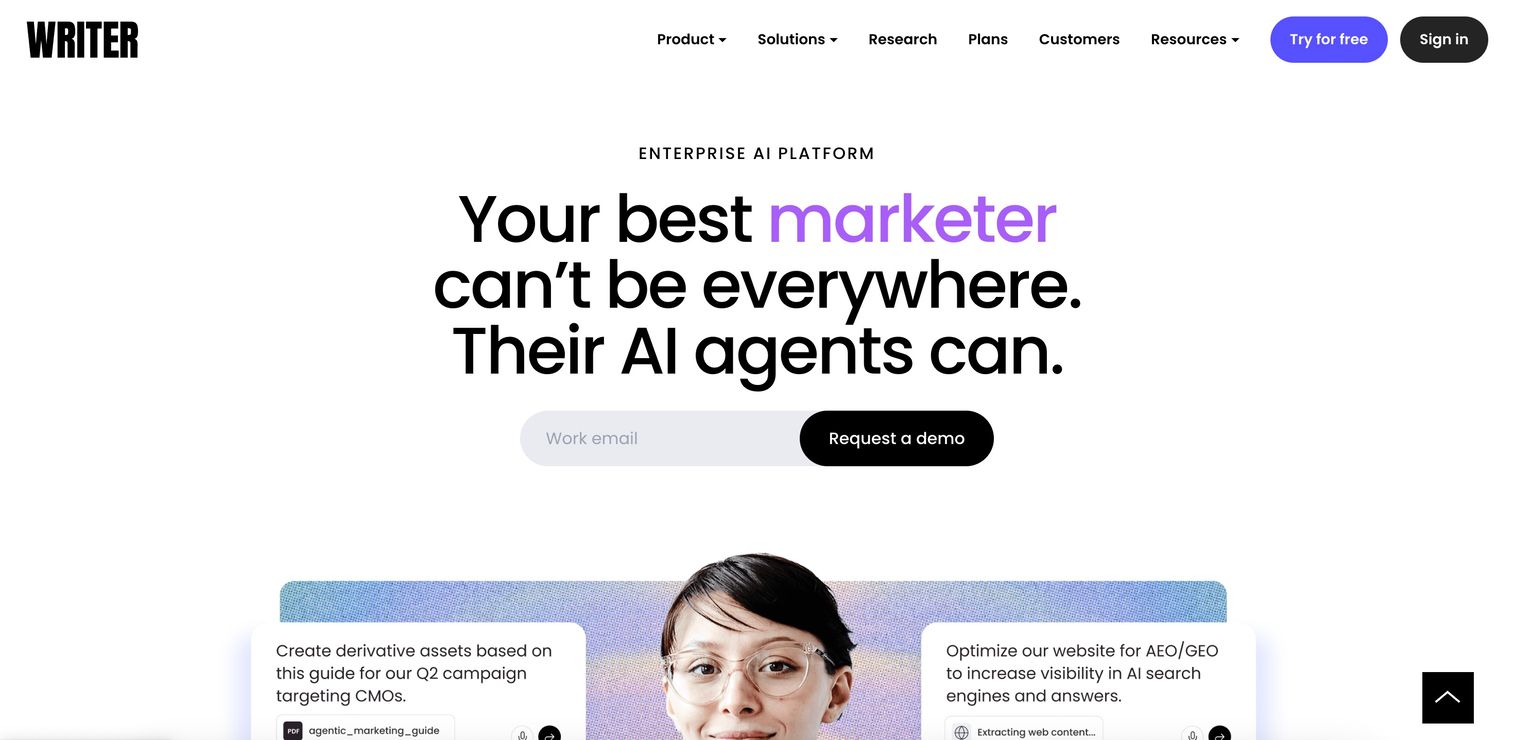
Writer offers a free AI detector as part of its enterprise writing platform. The detector is designed for teams already using Writer's content generation and style guide tools.
Best for: Teams using Writer's AI writing platform who want internal checks.
Key strengths
- Platform integration: Native to the Writer enterprise writing suite
- Brand voice alignment: Checks content against style guidelines alongside AI detection
- Team collaboration: Built for marketing and content team workflows
Why choose Writer
If you're already a Writer platform customer, the integrated detector keeps your workflow consolidated.
Writer pricing
Free detector available to anyone. Full platform is enterprise-priced with custom quotes.
8. Crossplag
Crossplag focuses on academic use cases, combining AI detection with plagiarism checking. The platform offers institutional licensing for schools and universities.
Best for: Academic institutions needing combined plagiarism and AI detection.
Key strengths
- Academic focus: Built specifically for educational use cases
- Dual detection: AI and plagiarism checking in one scan
- Institutional licensing: Volume pricing for schools and universities
Why choose Crossplag
Academic buyers comparing multiple options will find Crossplag competitive on institutional pricing.
Crossplag pricing
Institutional and individual plans available.
9. Content at Scale AI detector
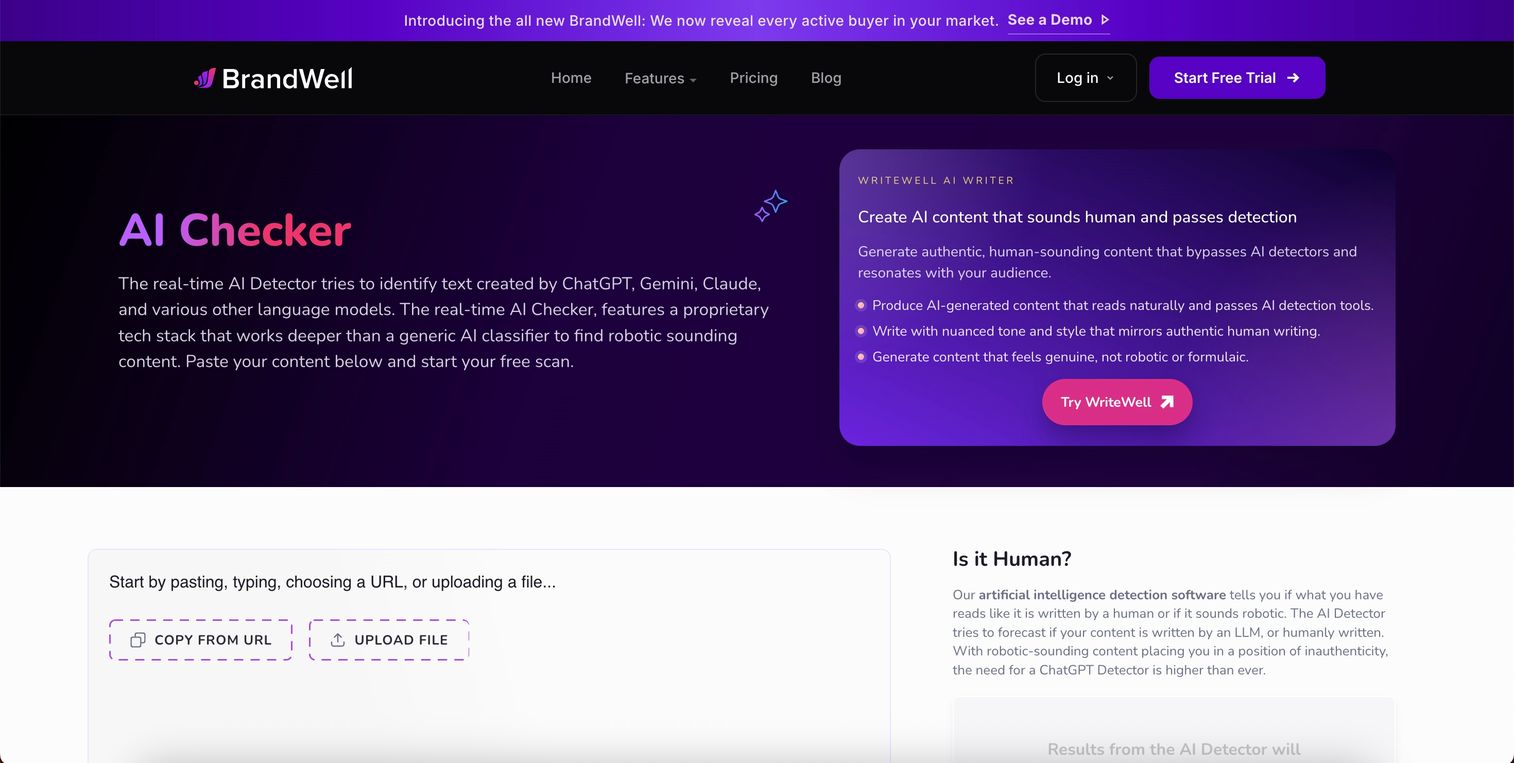
Content at Scale offers a completely free AI detector. The company also builds AI content generation tools, so their detector is informed by knowledge of how AI writes.
Best for: Content creators wanting a quick free check before publishing.
Key strengths
- Free unlimited scans: No credit limits or paywalls
- Human score output: Clear percentage-based scoring
- Built by AI creators: Developed by a team that builds AI writing tools
Why choose Content at Scale
When budget is a concern, free unlimited scans remove cost as a factor.
Content at Scale pricing
Completely free for detection features.
10. Sapling AI detector
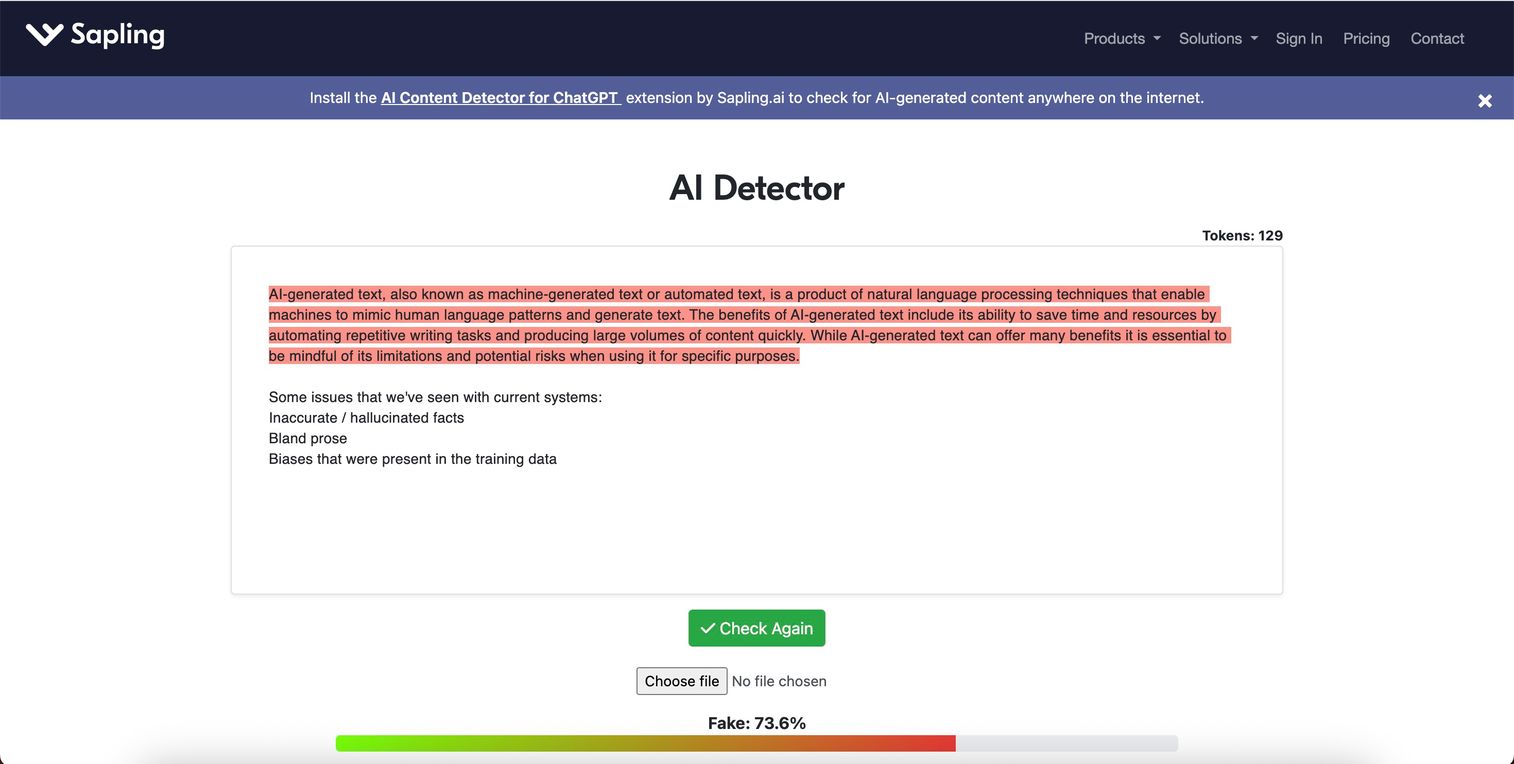
Sapling provides AI detection as part of its writing assistant suite for customer-facing teams. The platform takes an API-first approach.
Best for: Customer support and sales teams checking AI-assisted communications.
Key strengths
- API-first design: Built for developers and product integrations
- Support team focus: Designed for customer communication workflows
- Writing assistant bundle: Detection alongside grammar and suggestions
Why choose Sapling
Teams embedding detection into customer communication tools benefit from Sapling's API-first approach.
Sapling pricing
Free tier available. API pricing for volume use.
11. Turnitin AI detection
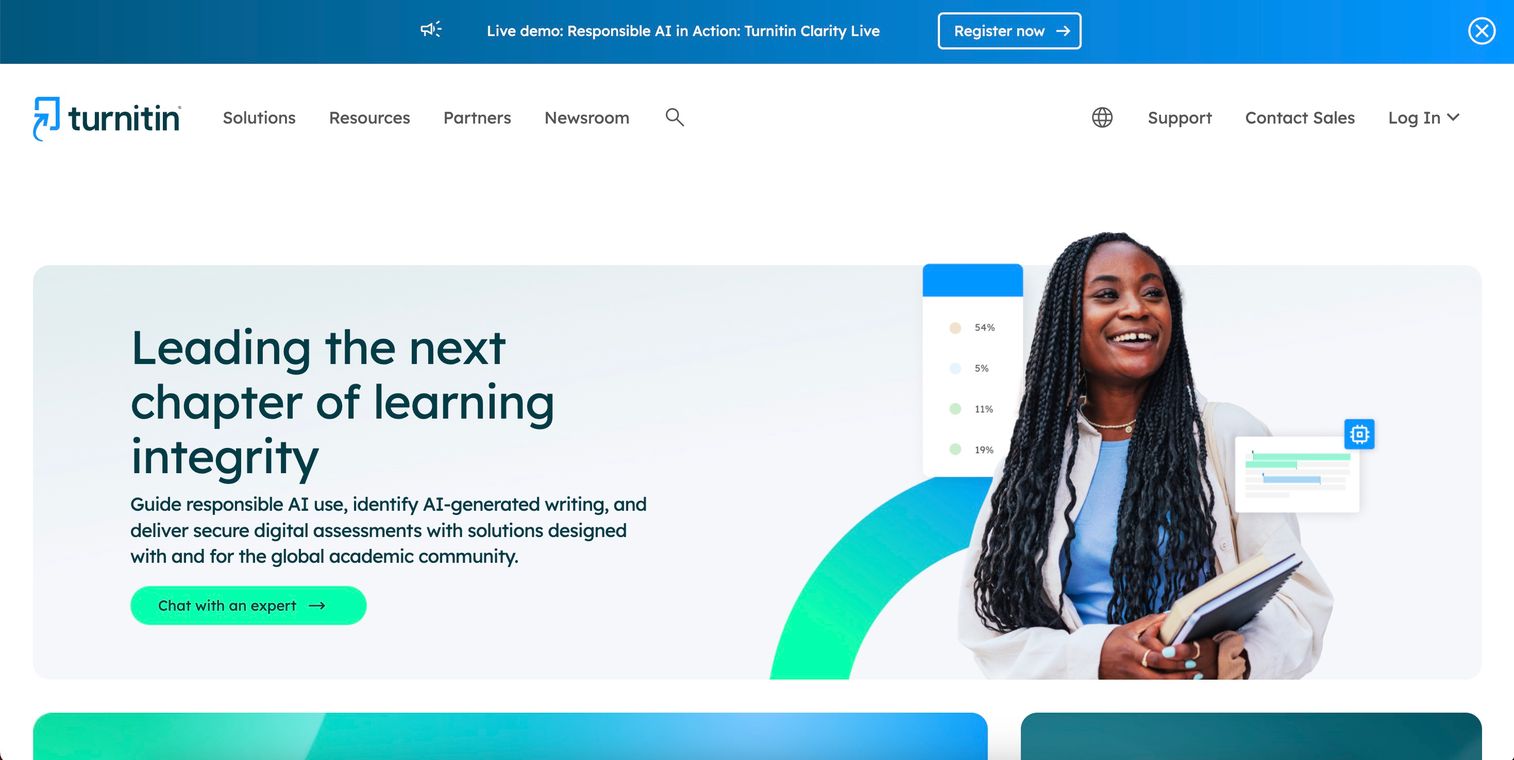
Turnitin added AI detection to its established academic integrity platform. The tool is already integrated into most university workflows for plagiarism checking.
Best for: Universities and schools already using Turnitin for plagiarism detection.
Key strengths
- Institutional standard: Already integrated in most university workflows
- LMS native: Deep integrations with all major learning management systems
- Academic database: Largest academic content database for plagiarism comparison
Why choose Turnitin
For institutions already using Turnitin infrastructure, adding AI detection requires no new vendor relationship or integration work.
Turnitin pricing
Institutional licensing only. Contact for pricing.
How to choose an AI content detector
The best tool depends on your specific workflow, volume, and integration requirements.
Accuracy and false positive rates
Accuracy claims vary widely across vendors. Independent benchmarks matter more than vendor claims, since every tool claims high accuracy.
False positives (flagging human content as AI) can damage trust with writers and students. Test multiple tools on known samples before committing. Run your own content through detectors to see how they classify text you know is human-written.
Language and format support
Some tools only work well with English, while others support multiple languages. Document format support (PDF, Word, plain text) also varies. Check whether your typical submission formats are supported without manual conversion.
Integration requirements
Consider how the detector fits into your existing workflow:
- API access: Required for custom workflows and automation
- LMS integrations: Critical for academic use cases
- Browser extensions: Useful for quick checks while browsing
Enterprise buyers typically verify SSO and compliance certifications during procurement.
Pricing and volume limits
Free tiers often have word or scan limits that don't work for high-volume use. Credit-based models charge per scan, while subscription models offer unlimited scans within tiers. The right model depends on your volume and predictability.
Privacy and data handling
Some tools store submitted content, others delete it immediately. GDPR and data residency concerns matter for enterprise buyers. Check where data is processed and stored, especially for regulated industries.
Tip: Before committing to any detector, run a test batch of 20-30 documents through your top two choices. Include content you know is human-written, content you know is AI-generated, and content that's been edited or mixed. Compare results to see which tool performs best for your specific content types.
AI detection vs plagiarism checking
AI detection and plagiarism checking serve different purposes, though many tools bundle them together.
Factor | AI detection | Plagiarism checking |
|---|---|---|
What it finds | Content generated by AI models | Content copied from existing sources |
How it works | Pattern analysis of writing style | Database matching against published content |
False positive risk | Higher (style overlap) | Lower (exact or near-exact matches) |
Many teams use both checks. AI detection catches generated content, while plagiarism checking catches copied content. Some AI-generated content might also be plagiarized if the AI reproduced source material, so running both checks provides more complete coverage.
Why accuracy matters more than speed
A false positive can damage relationships with writers, students, or freelancers. Incorrectly flagging someone's original work as AI-generated creates conflict and erodes trust.
A false negative can let AI content slip through quality checks. For publishers concerned about content quality or educators concerned about academic integrity, missed detections undermine the purpose of checking.
Prioritize tools with transparent accuracy benchmarks over tools that just promise instant results. Ask vendors for independent testing data, not just internal claims.
Start building trust with verified content
AI content detection has become standard practice for content teams, educators, and publishers. The tools in this guide cover the major use cases, from free quick checks to enterprise-scale workflows.
For teams focused on building trust through verified content, the detection step is just the beginning. Marketing managers looking to convert that trust into engagement can leverage interactive experiences alongside verified content.
Once you've confirmed content authenticity, showing your product's value through interactive demos lets prospects experience what you offer without scheduling a call.
Start your journey with Guideflow today!
FAQs about AI content detectors
Grammar and spell-check tools like Grammarly don't typically trigger AI detection because they edit rather than generate content. Heavy paraphrasing tools may cause flags if they substantially rewrite text.
Policies vary by vendor. Some store content for model training while others delete immediately. Check privacy policies before submitting sensitive material.
Periodic retesting makes sense when vendors announce major model updates. Detection accuracy can shift when new AI writing models are released.
Most tools focus on text, but some (like QuillBot) now offer AI-generated image detection as an additional feature. Image detection is less mature than text detection.
Treat conflicting results as inconclusive. Either request source documentation from the writer or use a third tool for a tiebreaker. No single detector is definitive.
Most institutions treat AI detection as one piece of evidence rather than definitive proof. Policies vary by school, and detection results typically support rather than replace human judgment.
Free tiers often use the same core detection model but may limit advanced features like detailed reporting, batch processing, or API access. Accuracy is usually comparable for basic scans.