Your sales may look fine. The margin is the problem.
It hides across supplier invoices, uncounted waste, labor overruns, and a POS report nobody checks until month end. By the time finance closes the books, the damage is already in the P&L and the window to fix it has passed.
Foodservice management software gives operators a system to connect front-of-house sales with back-of-house purchasing, inventory, labor, and financial performance. The restaurant management software market reached $6.6 billion in 2025 and is projected to grow at 18% annually through 2033, according to Grand View Research (2025). That growth reflects what operators already know: Spreadsheets and disconnected exports are not a financial operating system. According to the National Restaurant Association (2025), 67% of restaurant operators said they had incorporated more technology into operations over the previous two to three years, and 69% of those operators reported improved efficiency and productivity as a result.
This guide covers 12 platforms across POS, inventory, labor, food cost, safety, and catering, selected to help you shortlist based on the operating problem you are actually trying to solve.
What's inside
This guide compares 12 foodservice management software tools for restaurants, multi-location groups, caterers, and institutional operators. Selections were based on:
- Operational category fit (POS, inventory, labor, safety, catering, or back-office finance)
- Pricing model and implementation scope
- Integration depth across POS, accounting, inventory, and scheduling systems
- Suitability for single-site, multi-site, and specialized foodservice operations
TL;DR
- Best overall restaurant operating platform: Toast for operators that want POS, payments, and restaurant operations in one core system
- Best for inventory and purchasing control: MarketMan for food cost, supplier, and recipe workflows
- Best for multi-location finance and accounting: Restaurant365 for restaurant groups that need a stronger back-office operating layer
- Best for labor scheduling: 7shifts for restaurants managing hourly teams, shift swaps, time tracking, and payroll
- Best for food safety and repeatable operational checklists: Jolt for restaurant-specific execution, or SafetyCulture when the requirement spans broader inspection workflows across mixed operating environments
- Best for catering operations: Caterease for event-driven businesses that need proposals, BEOs, and production planning in one place
What is foodservice management software?
Foodservice management software is a category of tools that helps restaurants, caterers, institutions, and multi-unit food operators manage sales, inventory, purchasing, recipes, labor, safety, reporting, and financial performance.
This is not a single product type. It is a category spanning several distinct software disciplines, and most operators need more than one.
What the category includes
- Restaurant POS and payment processing
- Inventory and purchasing platforms
- Recipe costing and menu engineering tools
- Workforce scheduling and payroll tools
- Accounting and back-office suites
- Food safety, inspection, and checklist systems
- Catering and event management platforms
Core capabilities to evaluate
- Sales and labor data by location and time period
- Inventory counts, depletion tracking, and invoice capture
- Food cost, recipe cost, and purchase variance reporting
- Supplier ordering and purchase approvals
- Staff scheduling, time clocks, and labor-compliance workflows
- Multi-location reporting with role-based permissions
- Integrations with POS, accounting, payroll, and delivery platforms
Restaurant POS software versus foodservice management software
A POS handles transactions, menus, orders, payments, and front-of-house reporting. Foodservice management software extends into purchasing, inventory, recipes, labor, safety, catering, and enterprise finance. Some platforms span both. Others specialize in one layer. The decision often comes down to whether the POS is also meant to serve as the operational system of record, or whether you need a separate back-office layer to sit above it.
| POS-only stack | Broader foodservice management stack | |
|---|---|---|
| Handles | Transactions, orders, payments | All of the above plus inventory, labor, finance, safety |
| Best for | Single-site operators with simple reporting needs | Multi-unit groups or operators with margin visibility gaps |
| Common gap | No food cost, purchasing, or recipe costing | More tools to integrate and maintain |
When to use foodservice management software
Reduce food cost without waiting for month-end
Invoice volatility, uncounted waste, and portion inconsistency create margin leakage that only shows up retrospectively in accounting. Inventory and recipe-costing tools are most valuable when operators need weekly visibility instead of a surprise at close. If your food cost varies more than two or three points month to month without a clear cause, a purchasing and inventory platform is the right first investment.
Standardize operations across locations
Multi-site groups need consistent menus, purchasing rules, labor practices, and reporting. Before adding point tools at each location, prioritize platforms that enforce standard workflows through role-based permissions, centralized menus, and location-level reporting. Software cannot standardize what the operating model has not already defined.
Move managers from manual follow-up to repeatable workflows
Scheduling, checklists, supplier ordering, and daily close procedures often live in text messages or spreadsheets. Operational software creates an auditable process managers can run without founder or GM intervention. The test is simple: If a location manager leaves and their replacement cannot run the operation from documented systems, the process is not yet repeatable.
Foodservice management software comparison
Use the table below to route your shortlist. Choose a unified platform if POS, payments, and location operations are the central need. Choose a specialist tool if the immediate problem is food cost, labor, safety, or catering. Verify integration depth before buying two tools that duplicate reporting.
| # | Product | Best for | Key differentiator | Pricing | G2 rating |
|---|---|---|---|---|---|
| 1 | Toast | Restaurant POS and operating stack | Integrated POS, payments, ordering, and restaurant operations | From $0/mo (Starter Kit) or $69/mo | 4.2/5 |
| 2 | MarketMan | Inventory, purchasing, and food cost | Supplier, invoice, recipe, and cost-control workflows | From $249/mo | 4.3/5 |
| 3 | Restaurant365 | Multi-location restaurant finance | Restaurant accounting, operations, workforce, and reporting | Custom pricing | 4.6/5 |
| 4 | 7shifts | Restaurant scheduling and labor | Scheduling, time clock, payroll, and employee communication | From $89.99/mo per location | 4.5/5 |
| 5 | Lightspeed Restaurant | Hospitality POS and multi-location operations | Configurable POS with floor plans, menus, and reporting | From $69/mo | Not verified on G2 |
| 6 | MarginEdge | Invoice automation and restaurant cost visibility | Invoice processing, recipe costing, and daily P&L | From $350/mo per location | 4.6/5 |
| 7 | Jolt | Restaurant operations and food safety execution | Digital checklists, temperature logs, and manager accountability | Custom pricing | 4.4/5 |
| 8 | SafetyCulture | Inspections, audits, and distributed operations | Configurable inspections, issue reporting, and cross-site analytics | Free plan available; paid from $24/seat/mo | Not verified on G2 |
| 9 | Craftable | Beverage inventory and profitability | Beverage program controls, inventory, purchasing, and costing | Custom pricing | 4.5/5 |
| 10 | xtraCHEF | Invoice capture and food-cost analysis | Invoice automation and cost visibility for restaurant teams | Contact for paid tiers; free tier available | 2.4/5 |
| 11 | HotSchedules | Enterprise restaurant labor operations | Scheduling, labor management, and workforce communication | Custom pricing | 4.3/5 |
| 12 | Caterease | Catering and event operations | Event proposals, menus, BEOs, bookings, and production planning | From $99/mo (billed annually) | 3.5/5 |
Best 12 foodservice management software tools for 2026
1. Toast
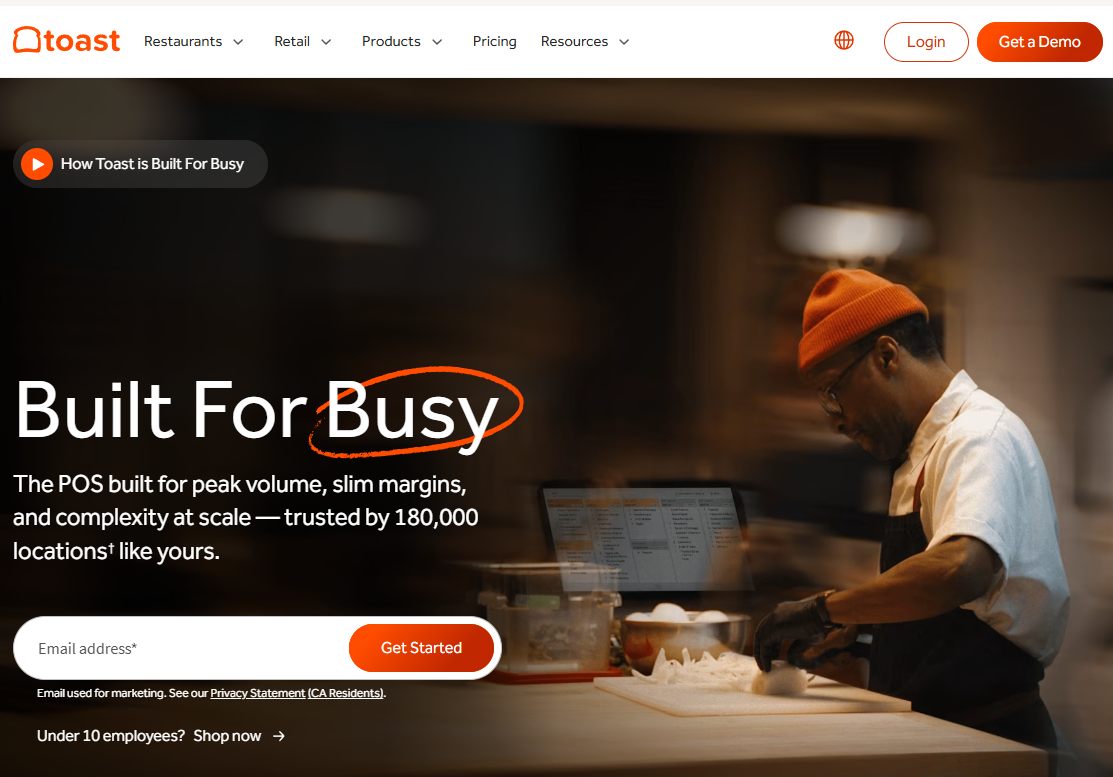
Toast is an all-in-one restaurant technology platform covering point of sale, payments, online ordering, kitchen display, payroll, and team management. It is built specifically for restaurants, which means the hardware, software, and payment infrastructure share a common design rather than requiring third-party connectors for the basics. For operators where the POS decision is also the operating-stack decision, Toast offers the broadest native coverage.
Best for: Single-location and multi-location restaurants that want restaurant-first POS, payments, and operational reporting from one provider.
Key features
- Cloud-based POS and payment processing
- Online ordering and delivery integrations
- Kitchen display system support
- Payroll, team management, and scheduling
- Inventory and supplier management modules
- Offline mode for connectivity issues
Why choose Toast: Toast makes the most sense when you want the POS to serve as the operational center of record for orders, payments, staff, and reporting. Model processing fees, hardware, and add-on modules alongside the subscription price before committing, as total cost varies materially by configuration.
Toast pricing: Starter Kit from $0/month for eligible new single-location customers; Point of Sale from $69/month. Custom pricing applies to broader platform configurations and restaurant groups. Verify current plan eligibility, device costs, and payment processing terms directly with Toast.
G2 rating: 4.2/5
2. MarketMan
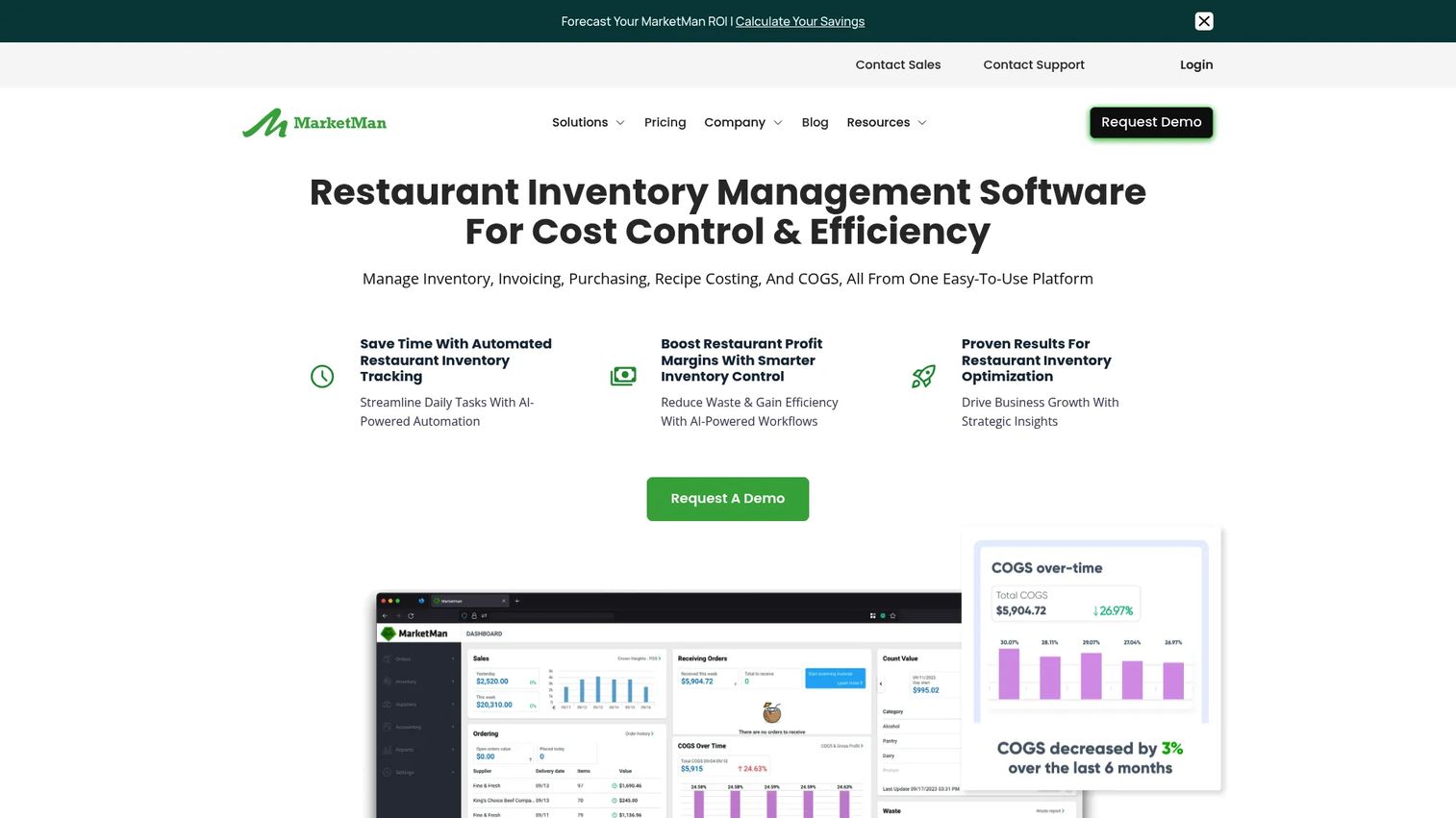
MarketMan is an AI-powered food inventory management software platform that connects purchasing, invoicing, recipe costing, and COGS reporting. It is designed for operators who have a functioning POS but are still managing food costs through spreadsheets, manager intuition, and delayed invoice processing. MarketMan makes back-of-house cost data available in near-real time rather than at month-end close.
Best for: Restaurant operators that need tighter food cost, purchasing, and recipe-cost visibility without replacing their existing POS.
Key features
- Inventory counts, depletion tracking, and waste logging
- Supplier ordering and vendor price comparison
- Invoice scanning and cost updates
- Recipe costing and menu profitability reporting
- Multi-location purchasing controls
Why choose MarketMan: The platform earns its place when food cost variance is the most urgent operating problem. If your managers are still emailing purchase orders and reconciling invoices manually, MarketMan removes that process dependency without requiring a full-stack replacement.
MarketMan pricing: Starter from $249/month, Growth from $299/month, Enterprise from $449/month. Billing is monthly. No free tier is available. API access and commissary features are available as add-ons.
G2 rating: 4.3/5
3. Restaurant365
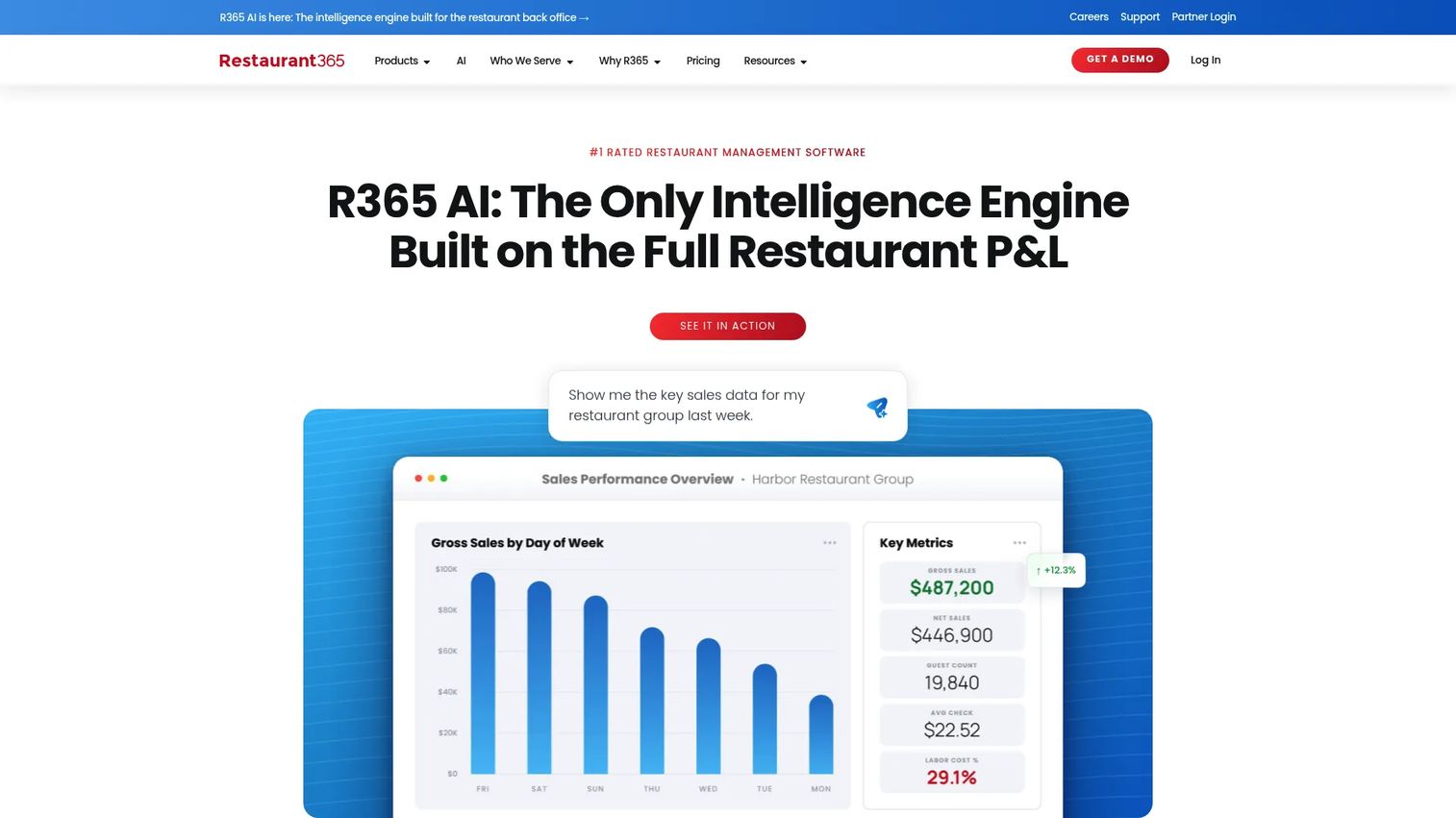
Restaurant365 is an all-in-one restaurant management platform that combines accounting, inventory, workforce management, payroll, and multi-location operations reporting. It is designed for restaurant groups that have outgrown POS exports and disconnected spreadsheet close processes. Finance leaders and operators at multi-unit companies use it as the back-office layer that sits above their POS and makes location-level unit economics visible and auditable.
Best for: Restaurant groups and growing operators that need a reliable accounting close process alongside location-level financial reporting.
Key features
- Restaurant accounting and financial reporting
- Multi-location operational dashboards
- Accounts payable and invoice management
- Labor and scheduling integrations
- Workforce, payroll, and HR modules
Why choose Restaurant365: This platform fits a founder or finance leader who needs clean metrics to survive a board conversation or a due diligence process. It is a more substantial implementation than a point tool, so ownership of menus, chart-of-accounts mapping, and report adoption needs to be assigned before go-live.
Restaurant365 pricing: Custom pricing based on locations and modules. No public plan prices are displayed. Contact Restaurant365 directly to scope a quote by location count, accounting, operations, and workforce modules.
G2 rating: 4.6/5
4. 7shifts
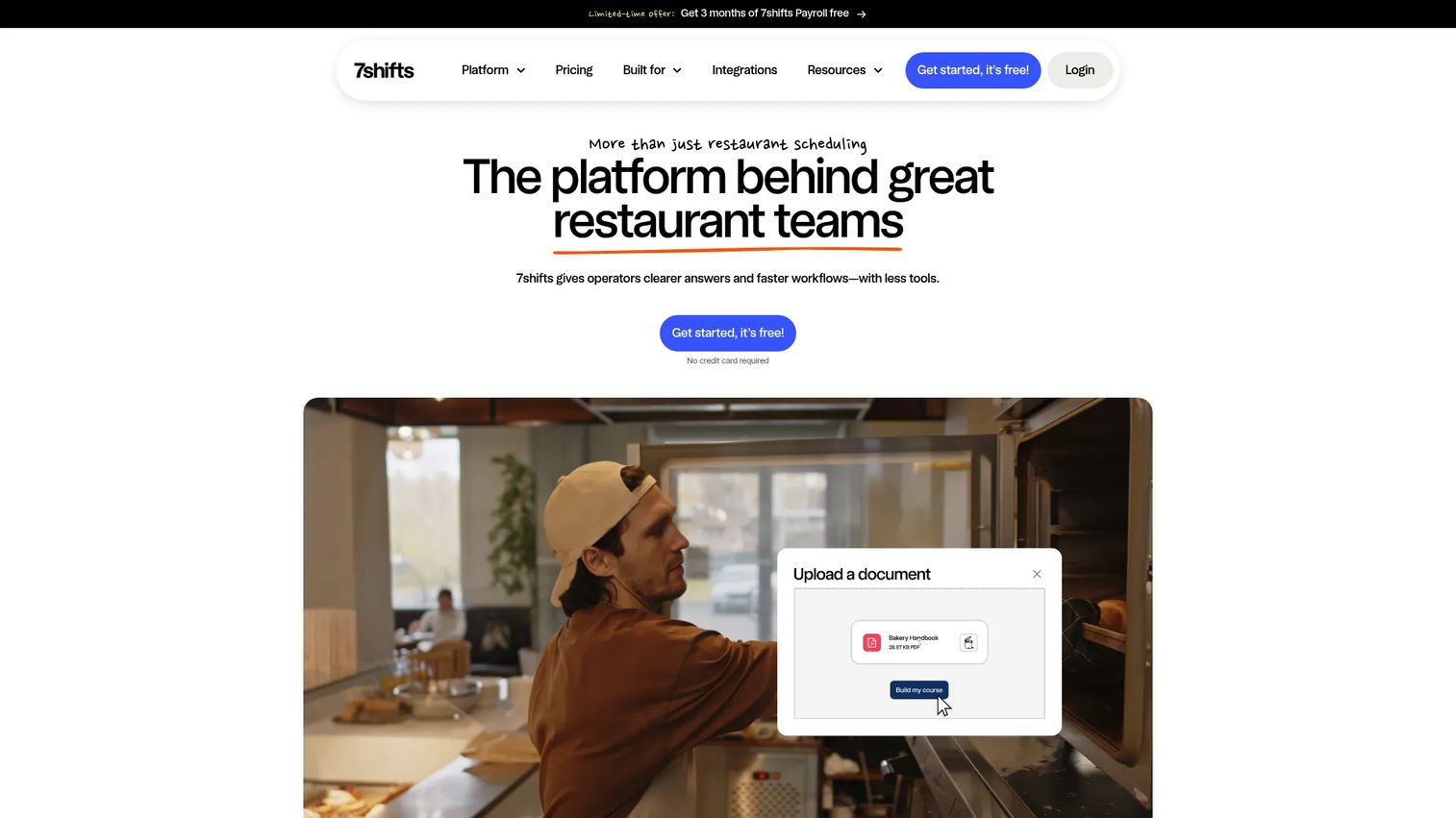
7shifts is a restaurant labor management platform covering employee scheduling, time clocking, payroll, hiring, and team communication. It is built around the operational reality of high-volume hourly teams where shift swaps, availability changes, and labor compliance errors consume significant manager time each week.
Best for: Restaurant teams where scheduling friction, labor cost visibility, and manager admin time are the immediate bottleneck.
Key features
- Employee scheduling by role and location
- Mobile shift swaps and availability management
- Time clock, labor compliance, and reporting
- Hiring and onboarding workflows
- Restaurant payroll add-on with tip management
Why choose 7shifts: A scheduling system only creates value when managers and hourly staff use it consistently. 7shifts is strongest when labor execution is the acute bottleneck and the team needs a tool with a low adoption barrier rather than a full workforce management suite.
7shifts pricing: Pro plan from $89.99/month per location; Premium from $149.99/month per location plus $6/month per paid employee. Payroll is included in the Premium plan. A free trial is available.
G2 rating: 4.5/5
5. Lightspeed Restaurant
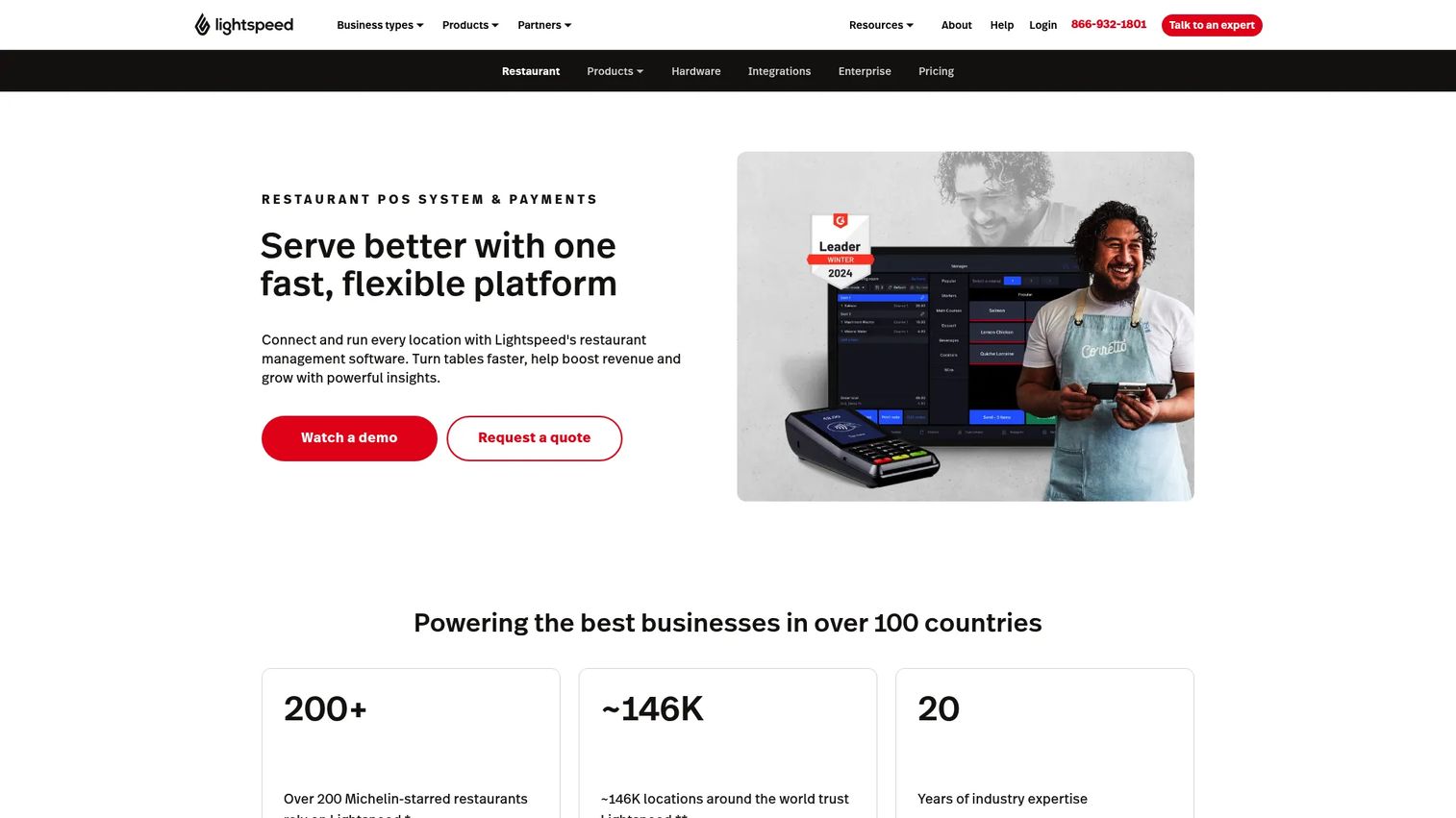
Lightspeed Restaurant is a cloud-based restaurant POS and management platform for ordering, payments, inventory, reporting, and multi-location operations. It covers floor plan configuration, menu and modifier management, integrated payments, online ordering, and reporting across sites, making it a practical option for restaurants and hospitality groups that need configurable front-of-house operations.
Best for: Hospitality groups that want a configurable POS with multi-site reporting and integrated ordering, rather than a basic payment terminal.
Key features
- Restaurant POS, menus, floor plans, and order management
- Integrated payments, online ordering, and delivery
- Multi-location reporting and permissions
- Kitchen display system support
- Inventory management and hospitality integrations
Why choose Lightspeed Restaurant: Lightspeed suits operators who prioritize front-of-house configurability and need more than a point-of-sale terminal but are not yet ready for a full back-office accounting layer. Verify integration requirements for your accounting, loyalty, and inventory tools before committing.
Lightspeed Restaurant pricing: Starter from $69/month, Essential from $189/month, Premium from $399/month. Enterprise pricing is custom. Billing frequency is not stated on the pricing page; verify terms directly with Lightspeed. No free tier is available.
6. MarginEdge
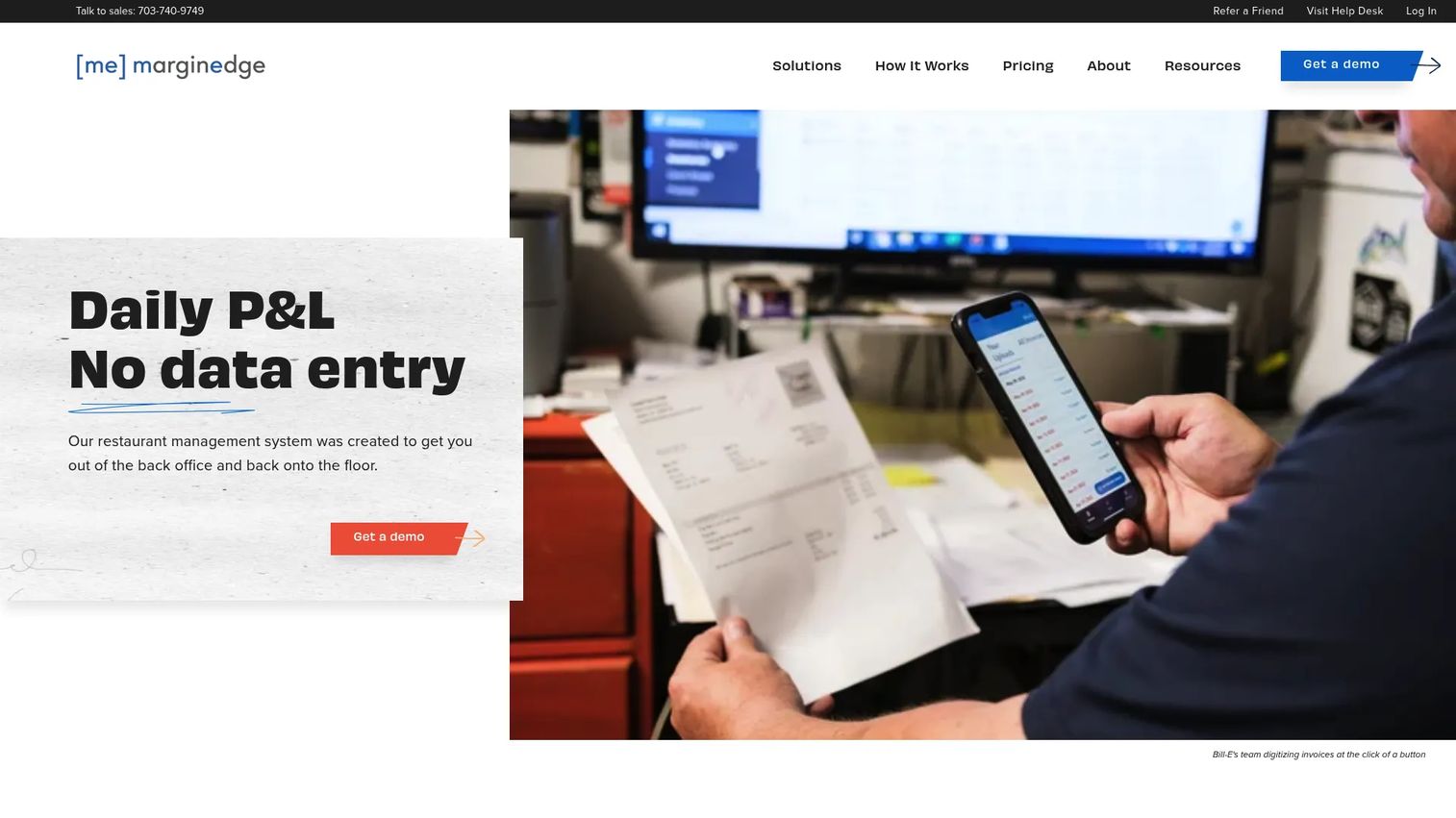
MarginEdge is a restaurant management platform that connects POS data and supplier invoices to deliver real-time food cost, recipe costing, daily P&L, vendor price monitoring, and bill payment in one back-office layer. It is designed for restaurant groups where finance and operations teams are losing hours to manual invoice entry, account coding, and delayed cost visibility.
Best for: Restaurant groups that want to shorten the path from invoice receipt to usable cost data without replacing their existing POS or accounting platform.
Key features
- Invoice capture, coding, and bill pay
- Recipe costing and plate-cost tracking
- Vendor price change monitoring and alerts
- Accounting platform integrations (QuickBooks, Sage, others)
- Daily controllable P&L and budget tracking
Why choose MarginEdge: MarginEdge removes the manual middle layer between what you buy and what you know it costs. The daily P&L feature is particularly useful for operators who need to make purchasing decisions mid-week rather than waiting for a monthly close.
MarginEdge pricing: $350/month per location, or $500/month per location with the Freepour beverage module. Annual billing carries a 10% discount. No free tier is available. Large groups can negotiate bespoke terms.
G2 rating: 4.6/5
7. Jolt
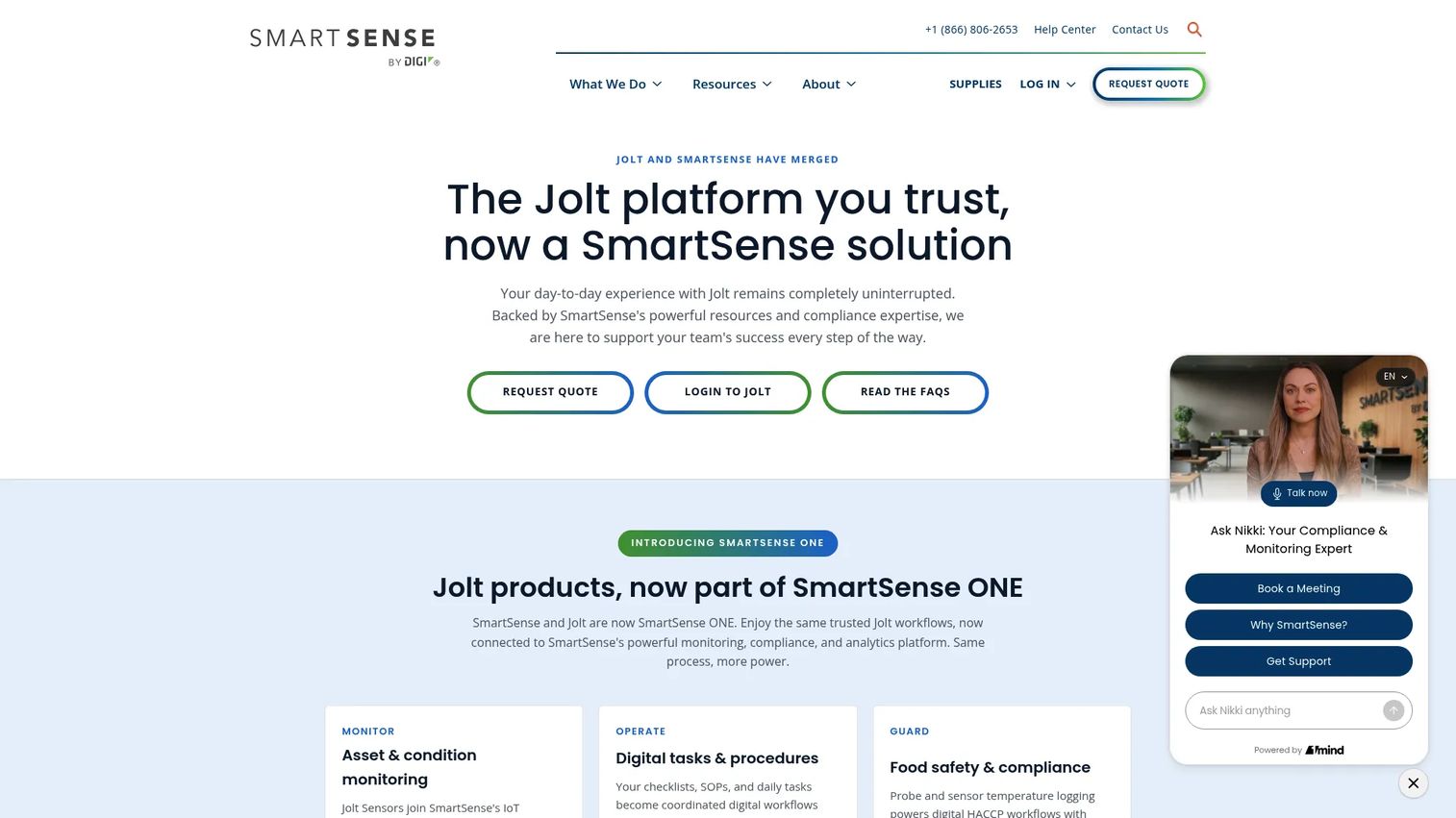
Jolt is an operations management platform for food service and multi-location businesses, now operating as part of SmartSense ONE. It focuses on repeatable daily tasks, food safety logs, temperature monitoring, food labeling, employee scheduling, and store-level accountability. Jolt makes operating standards visible and auditable without requiring a manager to physically verify completion of each step.
Best for: Multi-unit restaurant teams that need operating standards to survive manager turnover and peak-service periods consistently.
Key features
- Digital checklists and recurring task management
- Remote temperature and environmental monitoring with alerts
- Food labeling and expiration-date automation
- Employee scheduling, time clock, and team communication
- Information library for training and centralized content
Why choose Jolt: The platform earns its place when operating consistency depends too heavily on individual managers remembering tasks or maintaining paper logs. If a store inspection ever surfaced gaps tied to process discipline rather than intent, Jolt addresses the structural cause.
Jolt pricing: Custom pricing. The official pricing page directs visitors to request a quote. Contact Jolt directly for package details, location-based pricing, and trial availability.
G2 rating: 4.4/5
8. SafetyCulture
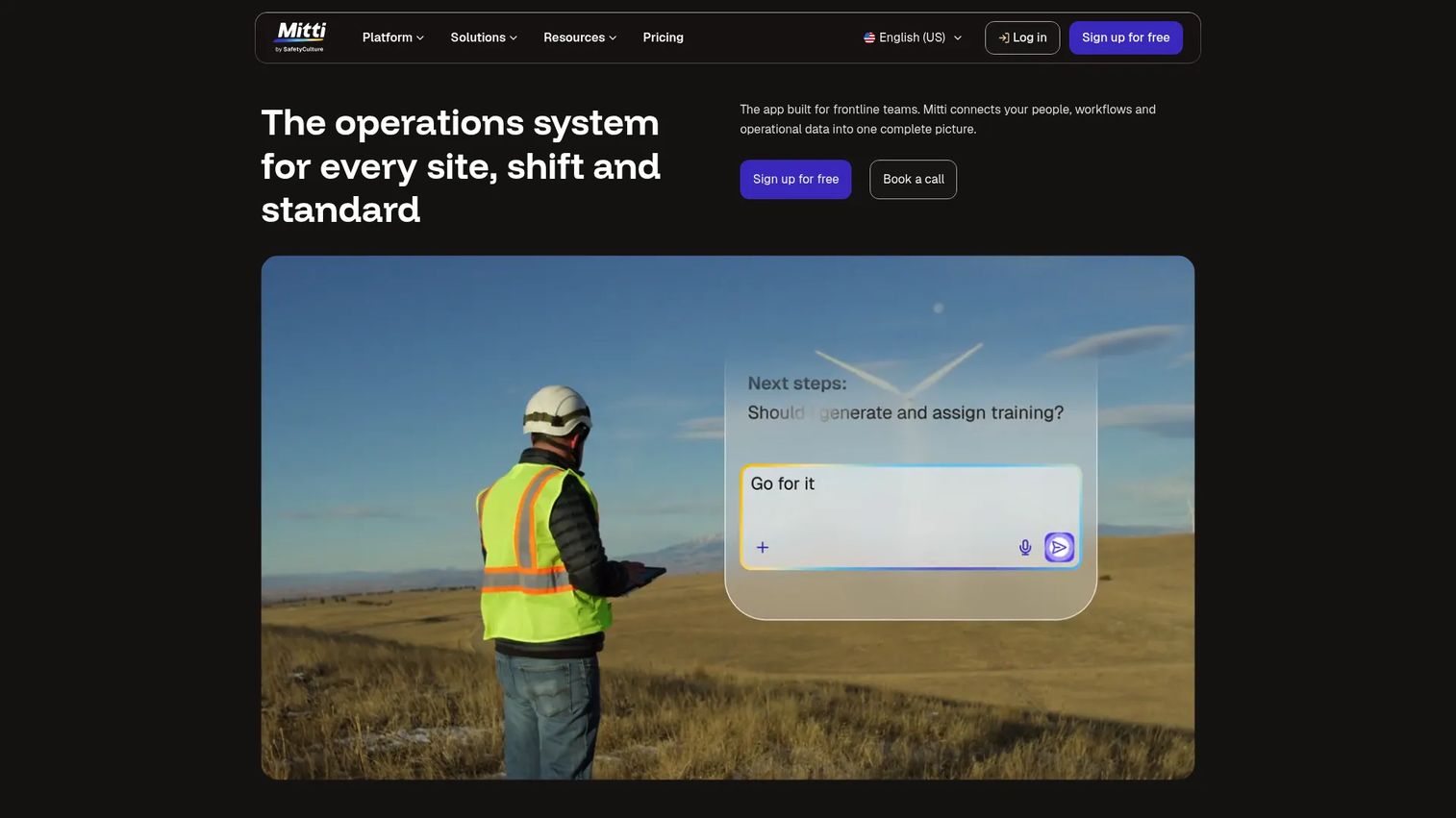
SafetyCulture is a workplace operations platform for digitizing inspections, training, issue reporting, asset management, and operational analytics. In foodservice contexts, it handles configurable food safety checklists, corrective action workflows, photo evidence capture, and cross-location compliance reporting. It is broader than a restaurant-specific platform, which makes it a strong fit for organizations that need one inspection system across mixed operating environments.
Best for: Foodservice organizations with distributed sites that need configurable inspections, incident reporting, and corrective-action workflows alongside broader workplace procedures.
Key features
- Configurable inspection templates for any audit type
- Mobile audits and issue capture with photo evidence
- Corrective action workflows and task assignment
- Cross-location analytics and compliance reporting
- Training, asset management, and IoT sensor integrations
Why choose SafetyCulture: SafetyCulture is the right choice when food safety governance is part of a larger operational oversight problem that spans different site types. For operators whose only requirement is restaurant-specific checklist execution, Jolt may be a more focused fit.
SafetyCulture pricing: Free plan for up to 10 seats with limited templates. Premium from $24/seat/month (billed monthly) or $5/seat/month for Lite seats added to paid plans. Enterprise pricing is custom.
9. Craftable
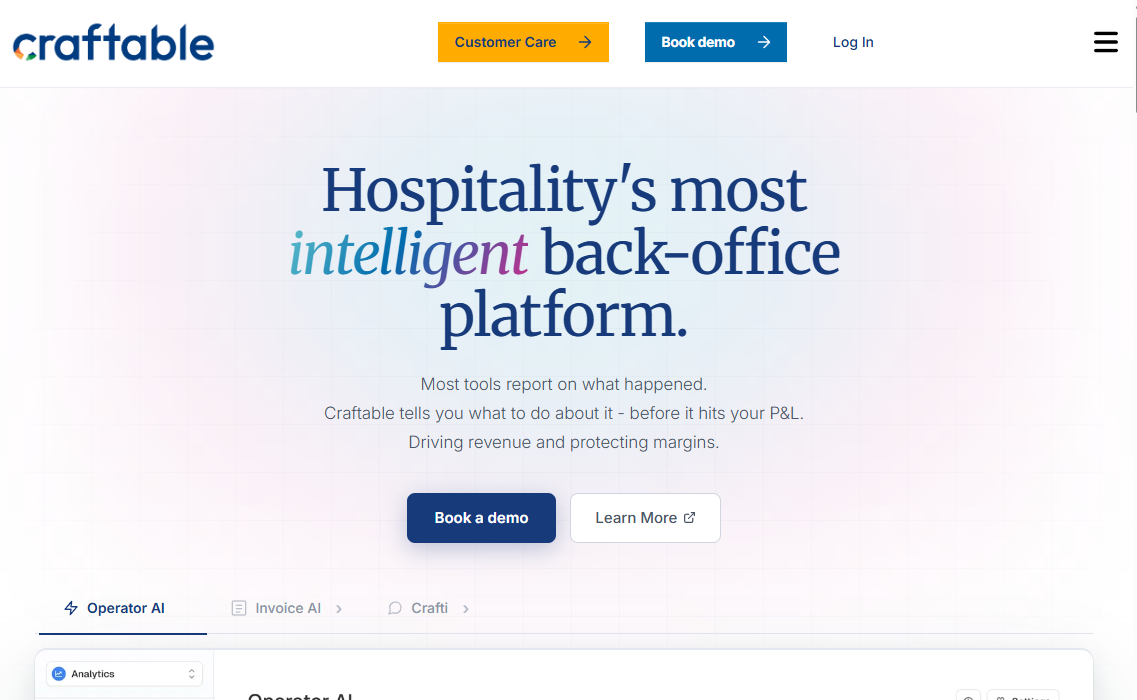
Craftable is a back-office platform for hospitality businesses that connects purchasing, inventory, accounting, and profitability analytics. It has particular depth in beverage program management, making it a fit for operations where bar and cellar inventory variance materially affects margins. Restaurants, bars, hotels, and multi-unit hospitality groups use it to close the gap between what they pour or plate and what they actually pay for it.
Best for: Restaurants, bars, and hospitality groups where beverage costs and inventory variance create margin complexity that POS reporting does not resolve.
Key features
- Beverage inventory management and variance tracking
- Purchasing, vendor controls, and invoice management
- Recipe and pour-cost tracking
- Profitability reporting by product and location
- Accounting integrations
Why choose Craftable: Craftable is the specialist choice for operations where beverage programs drive both revenue and cost complexity. Broad POS reports rarely surface pour cost by product or track variance at the bottle level; Craftable does.
Craftable pricing: Custom pricing. The official pricing page was not accessible during research. Contact Craftable directly for package details and location-based terms.
G2 rating: 4.5/5
10. xtraCHEF
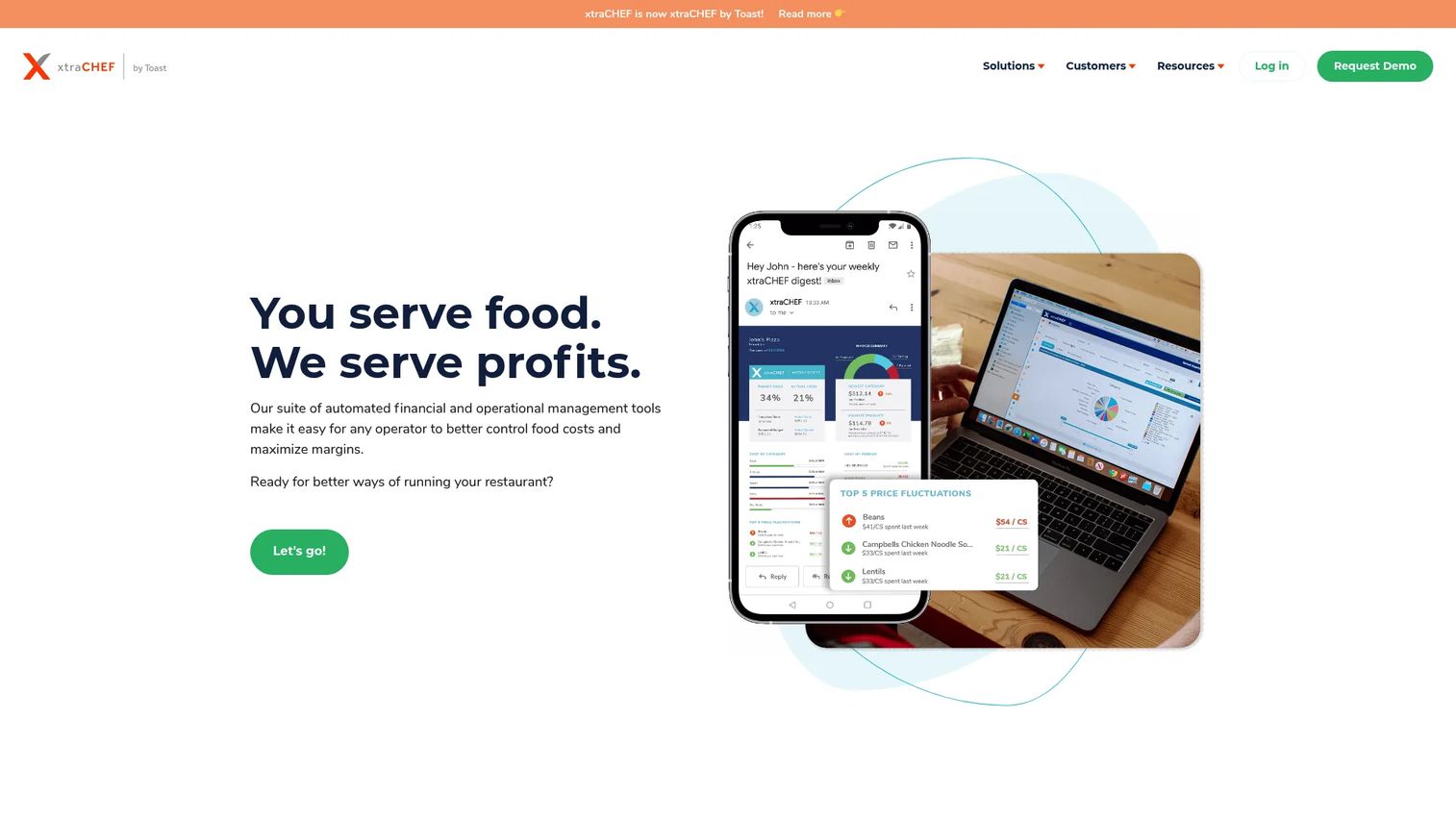
xtraCHEF is a restaurant financial and operational management platform focused on automating invoice processing, tracking ingredient price changes, and surfacing food cost data faster. It is positioned for independent restaurants and growing groups that need better invoice visibility before committing to a larger back-office suite. A free tier (On the House) is available alongside paid tiers.
Best for: Independent restaurants and growing groups that need automated invoice processing and clearer cost visibility as a first operational win.
Key features
- Invoice capture and line-item extraction
- Vendor price tracking and purchase history
- Food cost analysis and reporting
- Recipe and menu costing
- Inventory and order management
Why choose xtraCHEF: xtraCHEF fits teams that need to stop manually entering invoices and want a clearer picture of price changes and margin drivers before investing in a more comprehensive platform. The free On the House tier lowers the barrier to getting started.
xtraCHEF pricing: On the House tier is free. Starter and Chef's Choice plans require contacting xtraCHEF for pricing. Plan features and volume assumptions vary by tier.
G2 rating: 2.4/5 based on 12 reviews. A small review sample; consult Capterra or TrustRadius for additional reference points.
11. HotSchedules
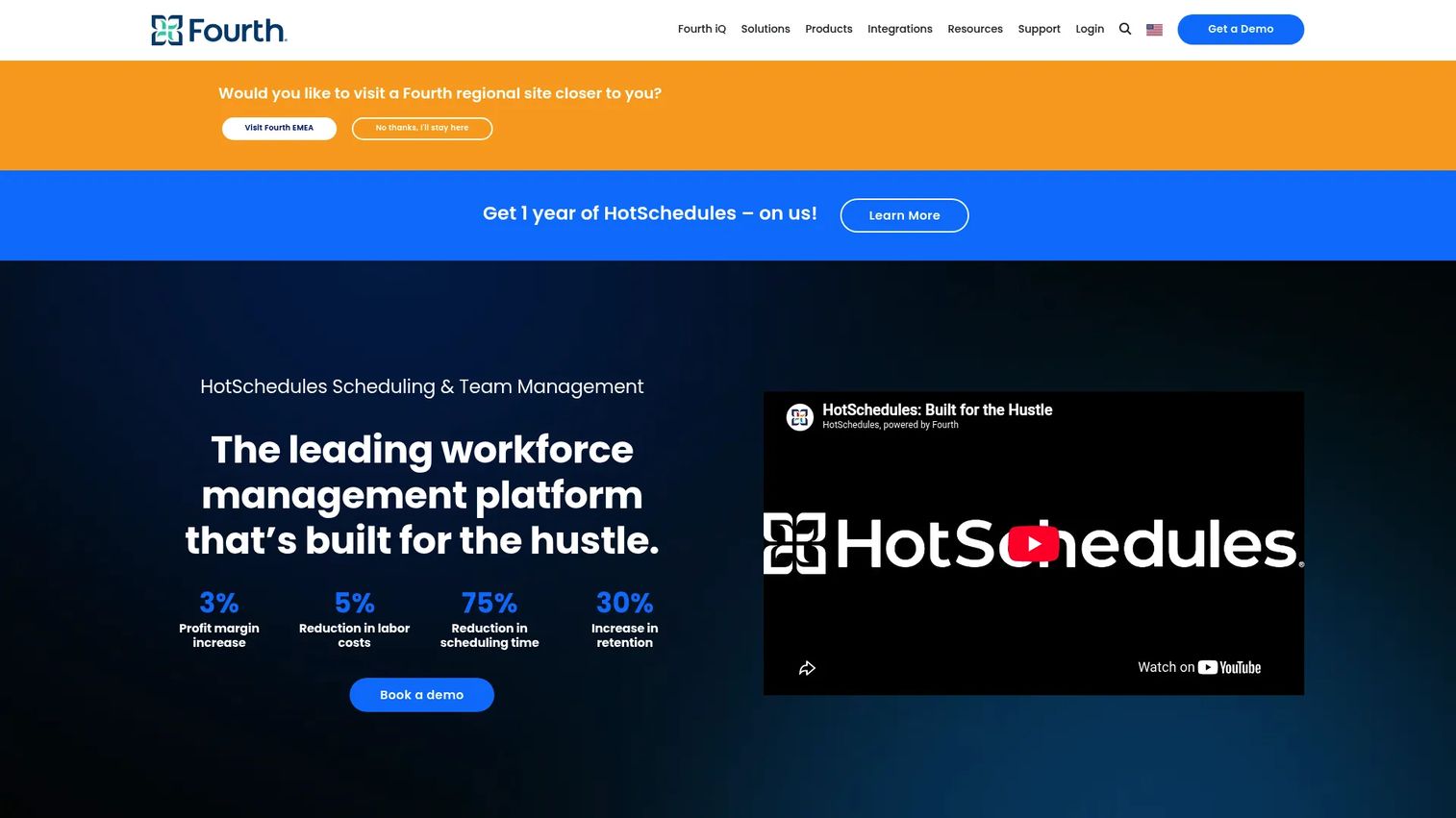
HotSchedules, now part of Fourth, is an enterprise workforce management platform for restaurant scheduling, labor planning, demand forecasting, and multi-location employee communication. It is designed for larger restaurant and hospitality operators where workforce scale, manager workflow consistency, and compliance reporting across many locations are more important than a lightweight scheduling tool.
Best for: Larger restaurant and hospitality operators managing high employee counts across multiple locations who need workforce coordination beyond basic scheduling.
Key features
- Employee scheduling with mobile access and real-time updates
- Demand-based labor forecasting and staffing optimization
- Labor-law compliance alerts and reporting
- Shift communication and team messaging tools
- Multi-location manager controls and workforce analytics
Why choose HotSchedules: HotSchedules is appropriate when workforce scale has made a simpler scheduling tool insufficient. Its forecasting and compliance features address problems that typically appear at larger location counts or in markets with complex labor regulations.
HotSchedules pricing: Custom pricing. The official product page directs visitors to request a demo. Contact Fourth directly for current package structure and location-based terms.
G2 rating: 4.3/5
12. Caterease
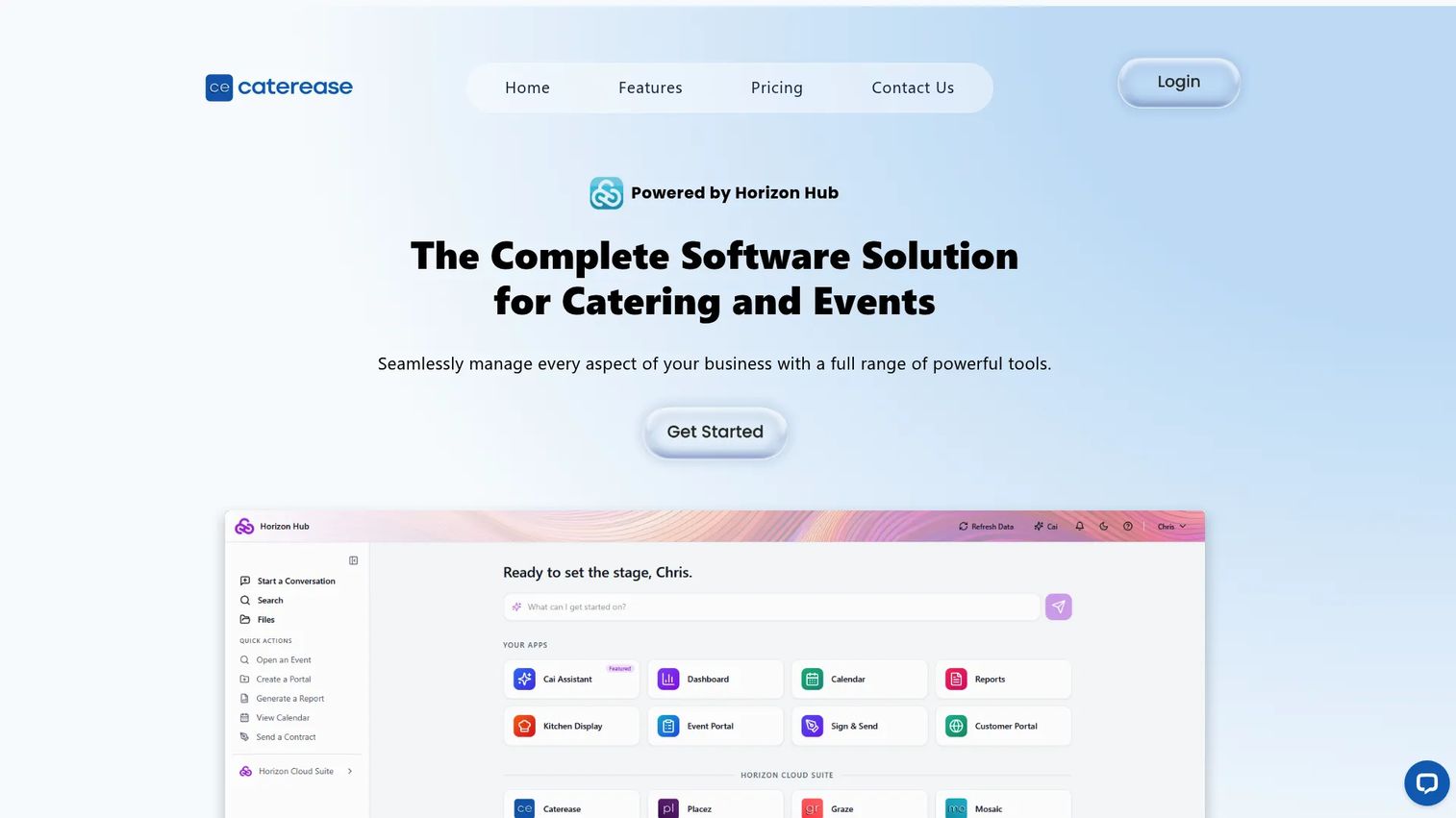
Caterease is a catering management software platform for booking, managing, staffing, reporting on, and processing payments for events. It covers event proposals, dynamic menu building, BEOs, production planning, staffing, client communication, payment processing, and event profitability tracking. Catering is a fundamentally different operating model from restaurant service, and Caterease addresses the workflows that a standard restaurant POS cannot.
Best for: Catering operators and event-focused foodservice businesses that need a system built around event bookings, proposals, and production coordination.
Key features
- Event booking wizards and calendar management
- Dynamic menu building and BEO creation
- Client management and communication workflows
- Staffing, recipes, and packing list tools
- Payment processing and electronic signatures
- Event profitability tracking and dashboards
Why choose Caterease: A catering business needs event-level margin visibility, proposal control, and production planning. These workflows do not map onto a restaurant POS, which is why purpose-built catering software pays back quickly for operators where events drive the business model.
Caterease pricing: Express from $99/month, Standard from $149/month, Professional from $199/month (all billed annually). Additional users cost $28/month each. Optional modules cost $25/month each. A one-time launch fee of $200 per user applies to all plans.
G2 rating: 3.5/5
Considerations when choosing foodservice management software
Start with the operating bottleneck
Identify the one problem creating the most recurring financial or managerial drag: Food cost variance, labor scheduling friction, POS and ordering workflow, multi-location reporting gaps, food safety execution, or catering coordination. Do not implement a full-suite platform when the operator has one narrow problem and limited adoption capacity. Software cannot fix an ownerless process.
Calculate total operating cost
Monthly subscription pricing is only the starting point. Model hardware, payment processing fees, additional locations, payroll or accounting modules, implementation and migration support, and integration costs. For POS-led platforms like Toast and Lightspeed, payment processing volume can significantly affect total annual spend.
Verify integration depth
"Integrates with" is not enough information. Ask whether the integration moves the right data at the right frequency into the right system. A MarginEdge integration with QuickBooks is not the same as a bidirectional sync. Get the specifics from the vendor before signing.
Match governance to growth stage
Single-site operators should prioritize speed to value and adoption ease. Multi-location groups need role-based permissions, standardized reporting, purchase approval workflows, and auditability at the location level. A tool that works for one site may not enforce consistent operating standards across ten.
Plan ownership before implementation
Assign ownership of menus, vendor lists, inventory count schedules, labor rule configuration, chart-of-accounts mapping, and report adoption before the implementation begins. Software accelerates the process the team has. It does not create one from scratch.
How to choose the right foodservice management software for your team
If your POS is the weak point
Toast or Lightspeed Restaurant are the strongest starting points. Toast fits operators who want a restaurant-native platform covering payments, hardware, and basic operations. Lightspeed suits hospitality groups that need more front-of-house configurability. The deciding factors are payment processing setup, hardware requirements, service model, and multi-location reporting needs.
If food cost is moving faster than your reporting
MarketMan, MarginEdge, Craftable, and xtraCHEF each address a different version of this problem. MarketMan is strongest for purchasing and inventory control across locations. MarginEdge is strongest when the bottleneck is invoice processing speed and daily P&L visibility. Craftable solves this specifically for operations where beverage programs drive the variance. xtraCHEF is a lower-commitment entry point for teams that need invoice automation before committing to a fuller platform.
If labor execution is inconsistent across locations
7shifts is the stronger pick when the immediate need is scheduling, shift communication, and time tracking for hourly teams. HotSchedules fits larger operators where workforce scale has made a lighter tool insufficient. If the larger problem is operational task completion and food safety log discipline, add Jolt to the evaluation.
If the company is scaling locations or needs a stronger financial close
Restaurant365 becomes the right answer when entity complexity, location count, and finance workflow requirements are driving the decision. It is more than a point tool, and it rewards operators who invest in implementation setup rather than treating it as a plug-in.
If catering drives the business model
Caterease is the purpose-built option. Event planning, BEO management, proposal workflows, and production coordination require dedicated systems that a standard restaurant POS does not replicate.
Conclusion
Foodservice management software covers a wide range of operational problems, and the right shortlist depends on which layer is breaking first.
For POS-led stacks: Toast and Lightspeed Restaurant. For margin visibility: MarketMan, MarginEdge, Craftable, or xtraCHEF depending on where the cost gap lives. For multi-location finance and back-office operations: Restaurant365. For labor scheduling and workforce management: 7shifts or HotSchedules. For operational consistency and food safety: Jolt or SafetyCulture. For catering-driven businesses: Caterease.
The most common mistake in this category is buying software before defining the operating process it is meant to support. Shortlist two tools that fit your operating bottleneck. Ask each vendor to show the same workflow using your menu structure, supplier model, location count, and reporting requirements. That exercise surfaces integration gaps and implementation scope before you sign.
For teams building a repeatable foodservice or restaurant technology stack, also see our guides on accounting software, audit management software, and asset inventory software for adjacent operational categories.
FAQs about foodservice management software
Foodservice management software is software used by restaurants, caterers, institutions, and foodservice groups to manage operational workflows including POS, inventory, purchasing, food cost, labor, safety, reporting, and finance. It is a category, not a single product type, and most operators combine two or more platforms to cover their full operating stack.
A restaurant POS manages transactions, order flow, menus, and front-of-house reporting. Foodservice management software extends into inventory, purchasing, recipe costing, labor, safety, finance, and multi-location operations. Some platforms, like Toast and Lightspeed Restaurant, combine both layers. Others, like MarketMan and MarginEdge, sit above an existing POS to fill the back-of-house gap.
Multi-location buyers should prioritize role-based permissions, standardized menus, location-level financial reporting, purchasing controls, accounting workflows, and labor reporting. Restaurant365 is the strongest back-office option for restaurant groups at scale. Toast and Lightspeed Restaurant handle multi-location POS operations. HotSchedules serves larger workforces that need centralized scheduling and compliance reporting.
Food cost control requires invoice capture, inventory counts, supplier price tracking, recipe costing, waste recording, and variance reporting. MarketMan provides the most complete purchasing and inventory control workflow. MarginEdge is strongest for invoice-to-P&L automation. Craftable addresses beverage-specific cost control. xtraCHEF is a useful starting point for teams that want invoice automation before committing to a fuller platform.
It depends on the existing POS, payroll provider, employee count, and state-level compliance requirements. Dedicated restaurant labor software becomes valuable when scheduling, time tracking, and manager approvals are consuming significant administrative time. 7shifts combines scheduling, time clocking, and payroll in one platform. HotSchedules focuses on scheduling and forecasting at scale, with payroll handled through its broader Fourth platform.
Pricing varies significantly by location count, module selection, and contract structure. Point tools like xtraCHEF and SafetyCulture start with a free or low-cost entry tier. Scheduling platforms like 7shifts run from $89.99/month per location. Inventory platforms like MarketMan start at $249/month. Back-office platforms like MarginEdge run $350/month per location. Full-suite platforms like Restaurant365 and HotSchedules use custom pricing based on scope. Model total operating cost, not subscription price alone, to get an accurate comparison.
Software can make waste visible through inventory counts, recipe costing, production forecasting, purchasing variance reports, and temperature logs. It does not replace operational discipline, physical counts, or staff training. The platforms most directly connected to waste reduction are inventory and recipe-costing tools like MarketMan and MarginEdge, where depletion tracking and purchase variance reporting surface where product is being lost.
Verify integrations with your POS, accounting platform, payroll provider, delivery platforms, and supplier ordering systems. For each integration, ask whether the data sync is bidirectional or one-directional, how frequently it updates, and which specific data fields are covered. A MarginEdge integration with your POS that only pulls daily sales totals is a different tool than one that pulls category-level sales for recipe-level cost matching. Get the specifics before signing.