Your sales team spent the morning calling leads who weren't ready to buy. Meanwhile, three prospects who visited your pricing page twice this week went untouched.
Lead scoring software fixes this by assigning numerical values to leads based on their behavior and profile data, so reps know exactly who to call first. This guide compares 15 of the best lead scoring platforms for 2026, covering what to look for, when scoring makes sense, and how to pick the right tool for your team.
What's inside
This guide compares 15 lead scoring platforms that help sales and marketing teams prioritize their best prospects. You'll learn what lead scoring software actually does, when it makes sense to implement, and how to evaluate tools based on your team's specific workflow. We picked these tools based on how well they integrate with existing CRMs, the depth of their scoring capabilities, and whether they actually help teams close more deals.
TL;DR
Best for CRM-native scoring: HubSpot
Best for enterprise: Salesforce Sales Cloud
Best for marketing automation integration: ActiveCampaign
Best for product-led engagement signals: Guideflow
Best for SMB simplicity: Freshsales
The best lead scoring tools combine behavioral tracking, demographic data, and CRM integration to help sales teams focus on the most qualified leads.
What is lead scoring software
Lead scoring software assigns numerical values to leads based on their behavior and profile data, helping sales teams prioritize which prospects to contact first. The tools track actions like website visits, email clicks, and demo engagement, then combine that data with firmographic information such as job title, company size, and industry. The result is a score that indicates how likely a lead is to convert.
Here's what lead scoring software typically does:
Assigns numerical scores: Combines lead actions and attributes into a single prioritization metric.
Tracks behavioral signals: Monitors website visits, email opens, content downloads, and product interactions.
Evaluates demographic fit: Assesses how well a lead matches your ideal customer profile based on role, company size, and industry.
Syncs with CRM: Pushes scores directly into sales workflows so reps can act on them immediately.
Triggers automated actions: Sends alerts or initiates workflows when leads hit specific score thresholds.
When to use lead scoring software
When sales wastes time on unqualified leads. If your reps spend hours on lead qualification - now the #1 seller challenge - scoring helps surface the ones actually ready to buy.
When marketing and sales disagree on lead quality. A point-based system creates a shared, objective definition of "qualified" that both teams can reference, critical when 53% of organizations experience hand-off misalignment.
When scaling outbound or inbound volume through demand generation tools. Manual prioritization breaks down once you're handling hundreds of leads per week. Automation keeps things moving.
When running product-led growth motions. You can track in-app behavior and engagement with interactive demos as powerful scoring signals. Teams using interactive demos can feed engagement data directly into their scoring models to identify the most interested prospects.
Comparison of the best lead scoring software tools
Product | Best for | Key differentiator | Pricing | G2 rating |
|---|---|---|---|---|
Guideflow | Product engagement signals | Demo engagement data | Custom | 4.8/5 |
HubSpot | CRM-native scoring | All-in-one platform | Starts free | 4.4/5 |
Salesforce Sales Cloud | Enterprise scale | Einstein AI scoring | Starts $25/user/mo | 4.3/5 |
ActiveCampaign | Marketing automation | Automation workflows | Starts $29/mo | 4.5/5 |
Marketo Engage | Enterprise marketing | Behavior/demographic scoring | Custom | 4.1/5 |
Freshsales | SMB simplicity | Freddy AI assistant | Starts free | 4.5/5 |
Zoho CRM | Zoho ecosystem | Zia AI assistant | Starts $14/user/mo | 4.0/5 |
Pipedrive | Visual pipeline management | LeadBooster add-on | Starts $14/user/mo | 4.2/5 |
Keap | Small business automation | All-in-one CRM/marketing | Starts $159/mo | 4.2/5 |
Clearbit | Data enrichment | Real-time firmographics | Custom | 4.4/5 |
Leadfeeder | Account-level scoring | Anonymous visitor ID | Starts $139/mo | 4.3/5 |
LeadSquared | High-velocity sales | Quality/engagement scores | Custom | 4.5/5 |
SugarCRM | Customization | SugarPredict AI | Custom | 3.8/5 |
Outfunnel | Marketing data sync | Simple CRM connection | Starts $29/mo | 4.5/5 |
monday sales CRM | Existing monday.com users | Flexible work OS | Starts $12/user/mo | 4.7/5 |
15 best lead scoring software platforms
1. Guideflow
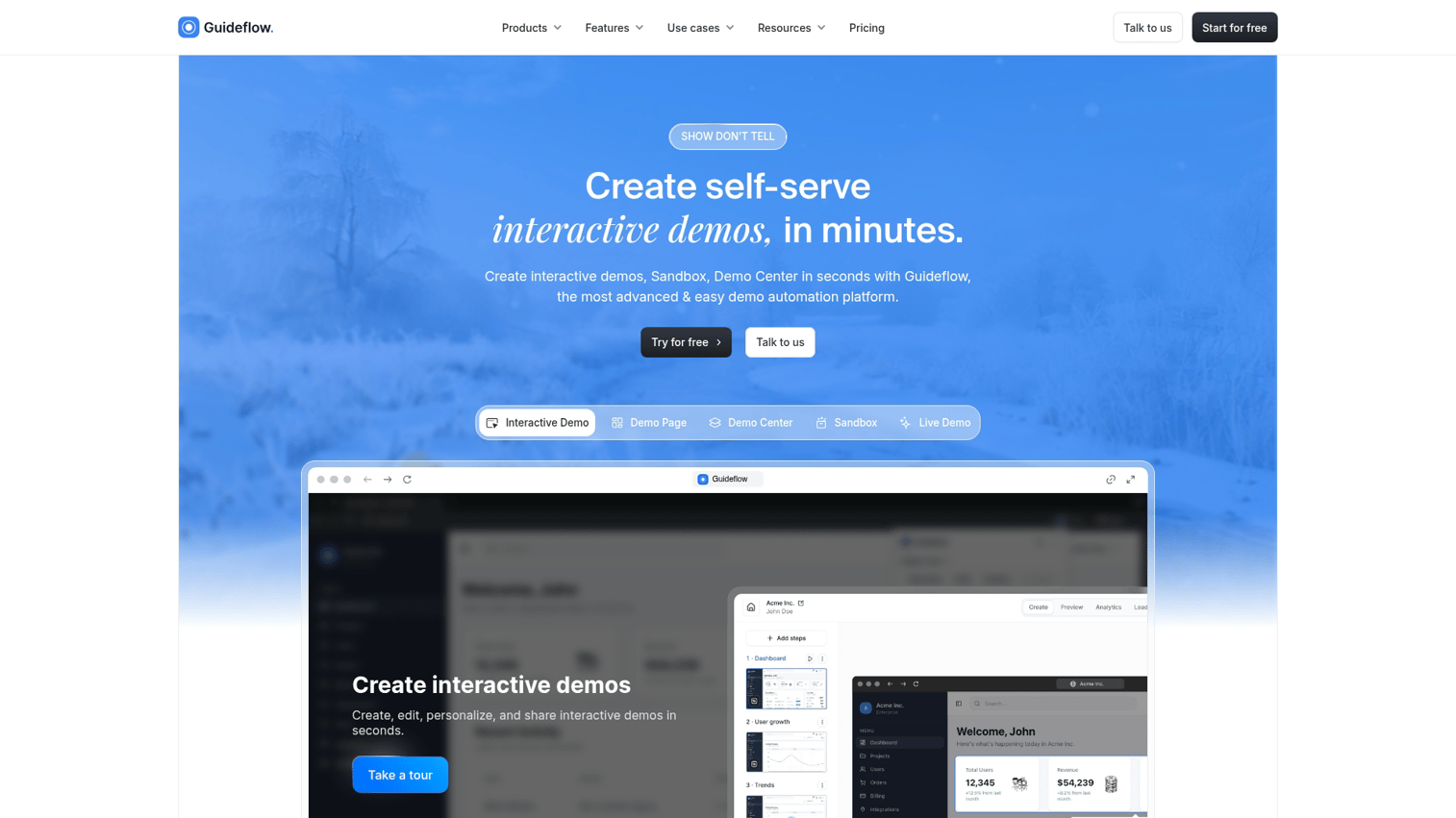
Guideflow captures engagement signals from interactive product demos and feeds them directly into your CRM for lead scoring. Unlike traditional scoring based on form fills, Guideflow tracks which features prospects explore, how long they engage, and where they drop off.
Best for: Teams using product-led or demo-led growth who want engagement-based scoring signals.
Key strengths
Captures demo engagement data like clicks, time spent, and completion rates
Integrates with CRM and marketing automation tools to sync engagement data
Provides deep analytics on prospect behavior within the product experience
Surfaces buying intent based on demonstrated product interest
Why choose Guideflow: Guideflow works well for B2B SaaS teams that want to score leads based on actual product interest rather than just form fills and email opens. Demo engagement signals show which prospects explored pricing, specific features, or key use cases.
Start your journey with Guideflow today!
2. HubSpot
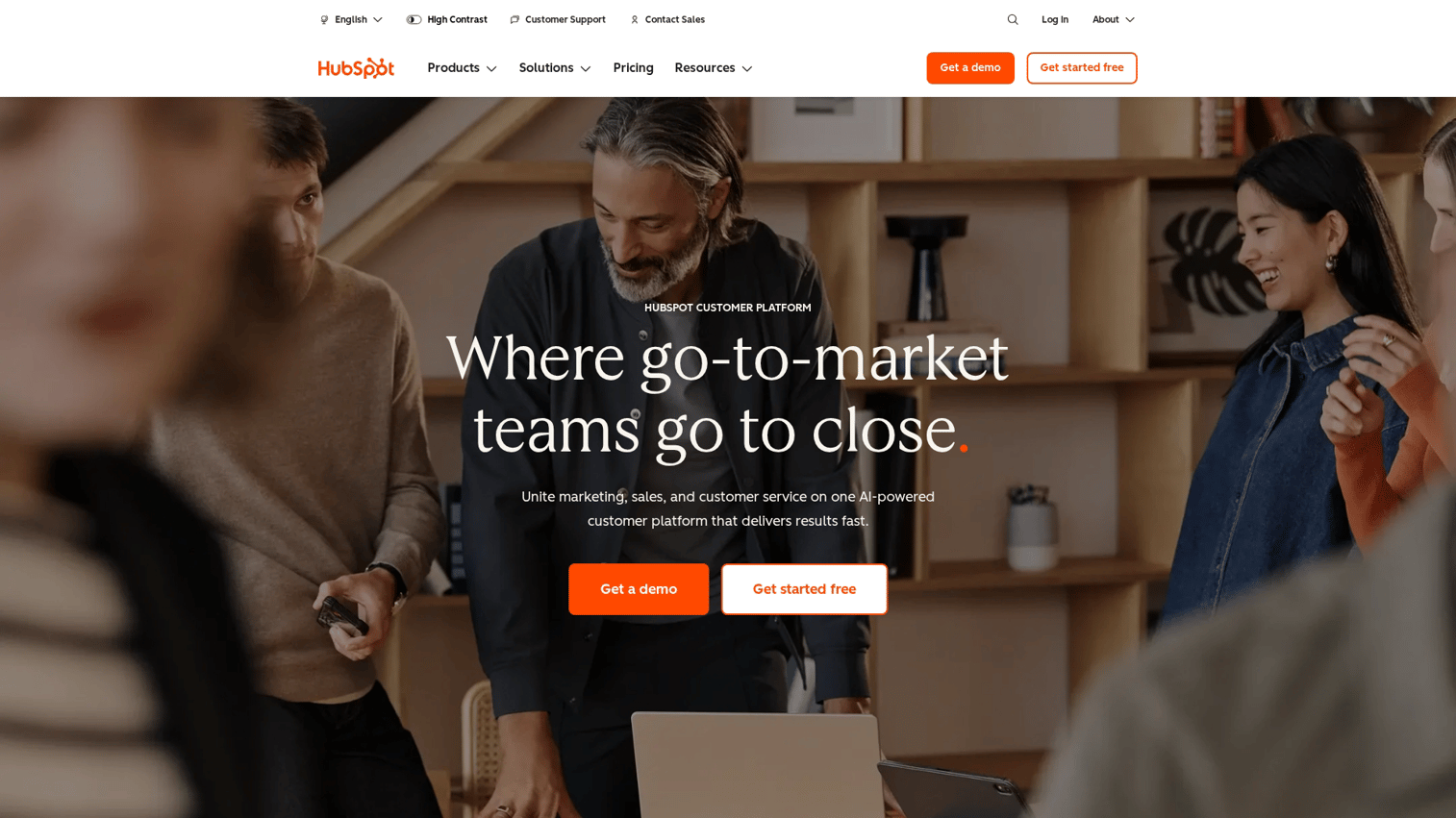
HubSpot offers built-in lead scoring within its Marketing Hub and Sales Hub products. The platform provides two scoring approaches: manual rules-based scoring where you define point values for specific actions (like email opens, form submissions, or page views) and demographic attributes (such as job title or company size), and AI-powered predictive scoring that analyzes your historical conversion data to automatically identify which lead characteristics correlate with closed deals. Predictive scoring requires at least 1,000 contacts and 100 closed deals to generate reliable models.
Best for: Teams using HubSpot CRM who want scoring built into their existing stack.
Key strengths
Rules-based and predictive AI scoring options
Native CRM integration with no data syncing required
Customizable scoring criteria across contact and company properties
Behavioral tracking across email, website, and forms
Why choose HubSpot: For businesses invested in the HubSpot ecosystem, native lead scoring eliminates the need for third-party tools and data syncing.
Pricing: Included in Marketing Hub and Sales Hub Professional and Enterprise plans.
3. Salesforce Sales Cloud
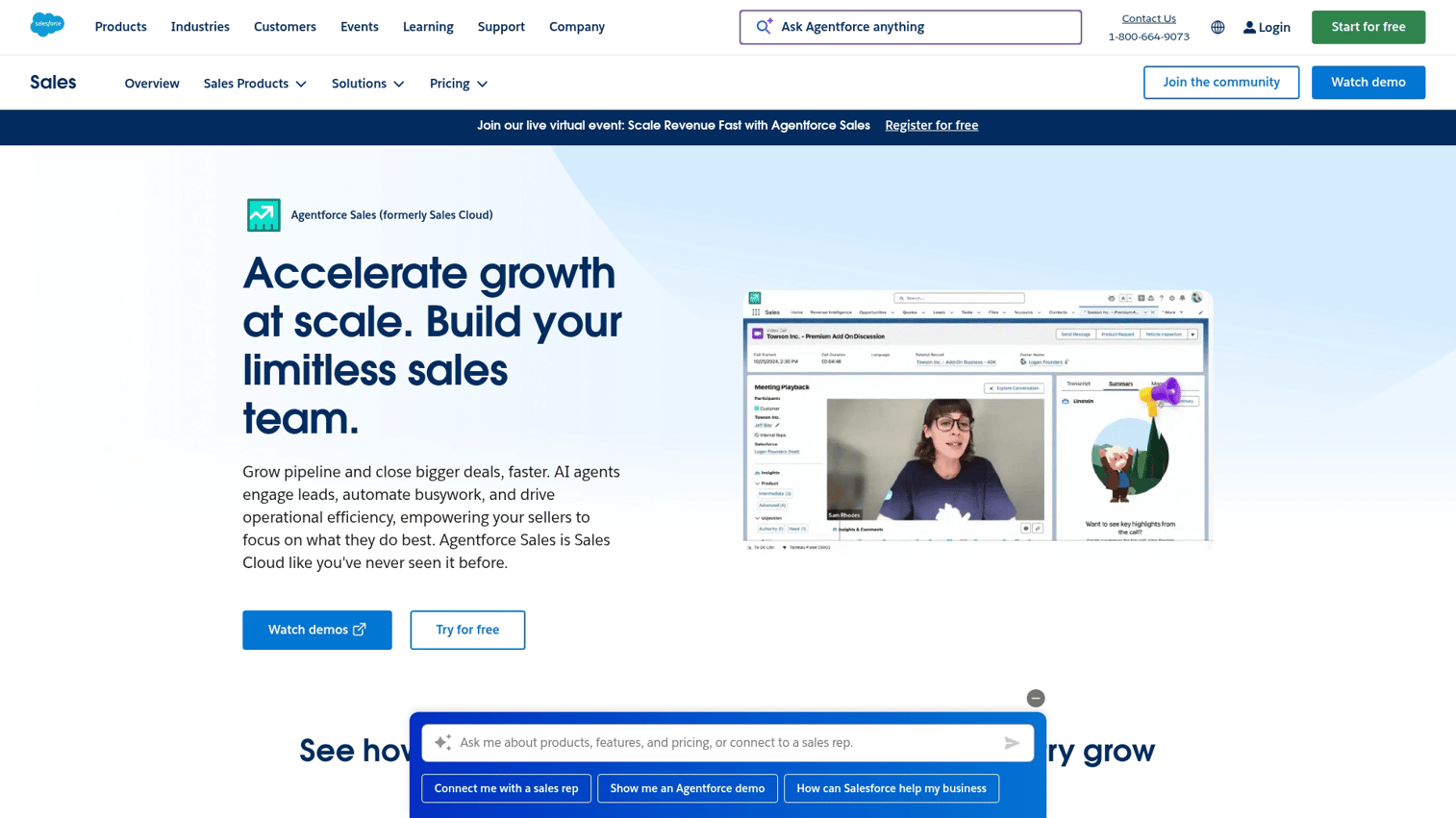
Salesforce Sales Cloud uses Einstein AI for lead scoring, analyzing historical conversion data to predict which leads are most likely to convert. The system examines patterns across your closed-won and closed-lost deals, identifying which combinations of demographic attributes, engagement behaviors, and sales activities correlate with successful outcomes. Einstein then applies these patterns to score new leads automatically, updating predictions as leads progress through your pipeline and new interaction data becomes available.
Best for: Enterprise organizations with complex sales cycles and existing Salesforce infrastructure.
Key strengths
Einstein AI analyzes historical conversion patterns
Scores update automatically as new data arrives
Deep integration across Sales Cloud and Marketing Cloud
Customizable scoring models by business unit or product line
Why choose Salesforce Sales Cloud: For large enterprises already using Salesforce, Einstein Lead Scoring provides data-driven, automated prioritization at scale.
Pricing: Einstein Lead Scoring is available in Enterprise and Unlimited editions.
4. ActiveCampaign
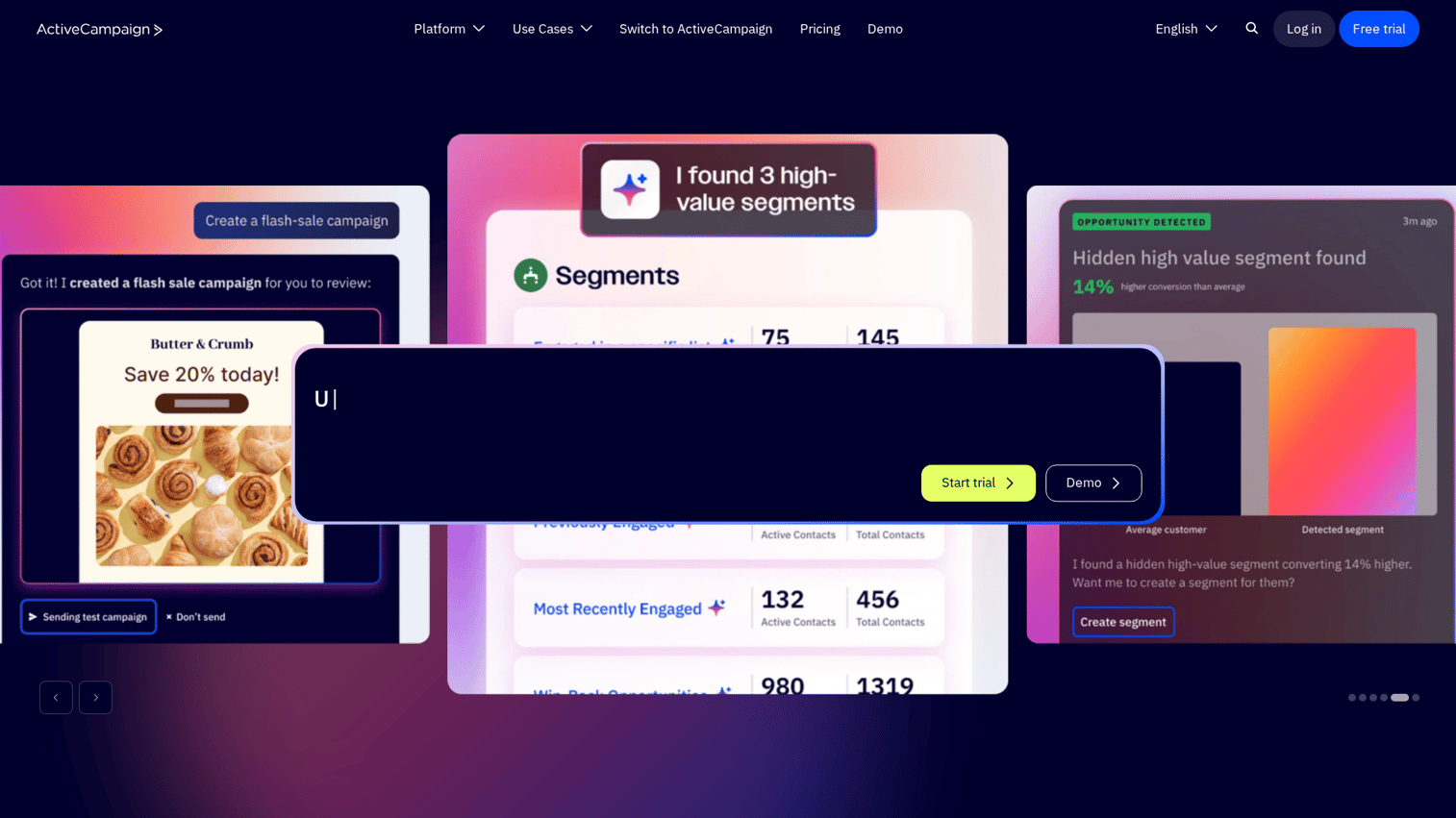
ActiveCampaign integrates lead scoring tightly with marketing automation, allowing you to build scoring rules that trigger specific nurture sequences or sales alerts. Scores adjust dynamically based on email engagement (opens, clicks, replies), site visits, form submissions, and custom event tracking. The platform supports both positive scoring (adding points for desired actions) and negative scoring (subtracting points for disengagement), with the ability to set score thresholds that automatically move contacts between automation workflows or notify sales reps when leads hit qualification criteria.
Best for: Marketing teams that want scoring integrated with email automation and nurture campaigns.
Key strengths
Scores automatically update based on email and site behavior
Triggers automations when leads hit specific score thresholds
Combines contact scoring with deal scoring
Visual automation builder for score-based workflows
Why choose ActiveCampaign: If your goal is to automate lead nurturing based on engagement, ActiveCampaign connects scoring directly to marketing actions.
Pricing: Lead scoring is available on Plus, Professional, and Enterprise plans.
5. Marketo Engage
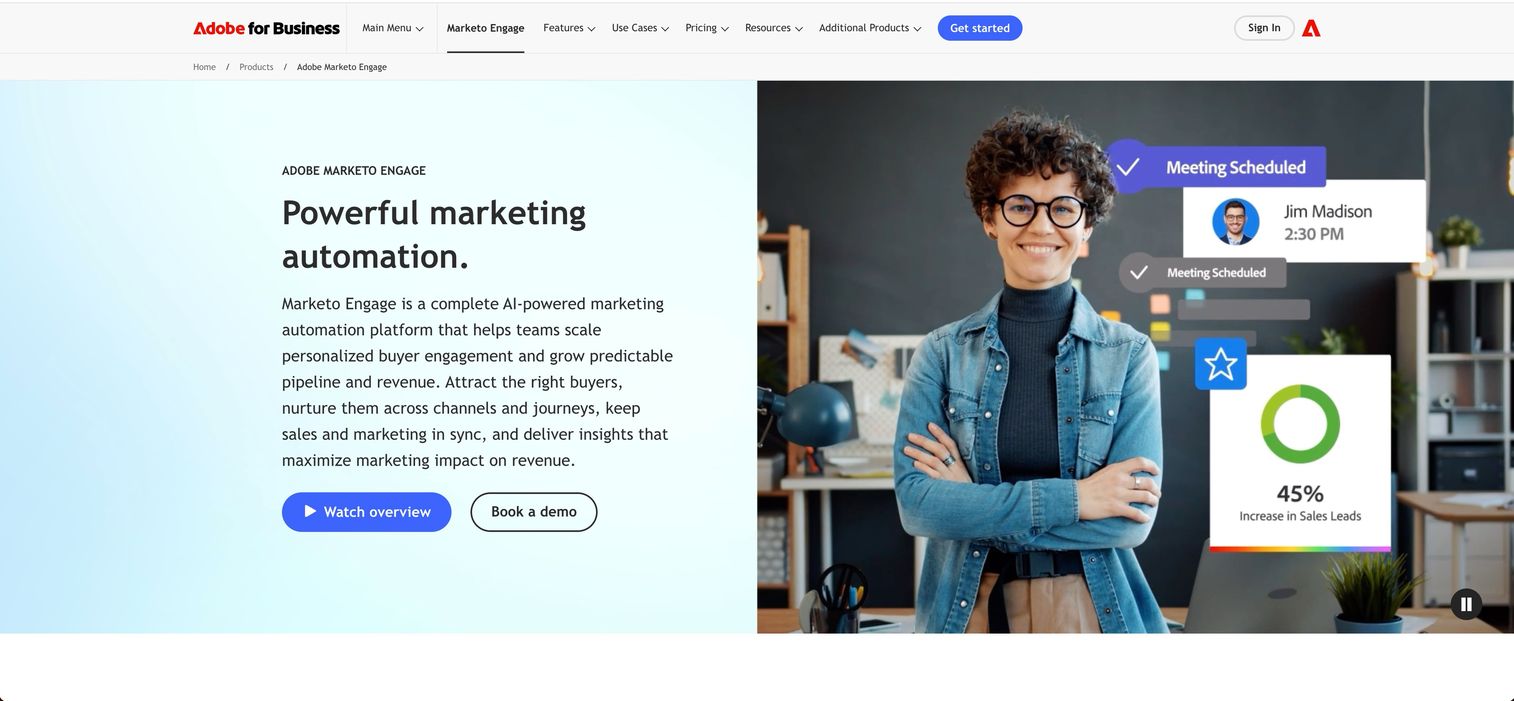
Marketo Engage offers sophisticated lead scoring for enterprise marketing teams managing complex, multi-touch campaigns. The platform separates scoring into two distinct dimensions: behavior scores that track engagement actions like email clicks, content downloads, webinar attendance, and website visits, and demographic scores that evaluate how well a lead matches your ideal customer profile based on attributes like company size, industry, job title, and revenue. This dual-scoring approach lets marketing teams identify leads who are both a good fit and actively engaged, rather than conflating the two into a single metric.
Best for: Enterprise marketing teams running complex multi-touch nurture programs.
Key strengths
Separate behavior and demographic scoring dimensions
Program-level scoring for better campaign attribution
Advanced scoring decay to deprioritize inactive leads
Deep integration with Adobe Experience Cloud
Why choose Marketo Engage: Marketo is built for complexity. Large marketing organizations that want granular control over scoring rules will find its feature set comprehensive.
Pricing: Custom pricing based on database size and features.
6. Freshsales
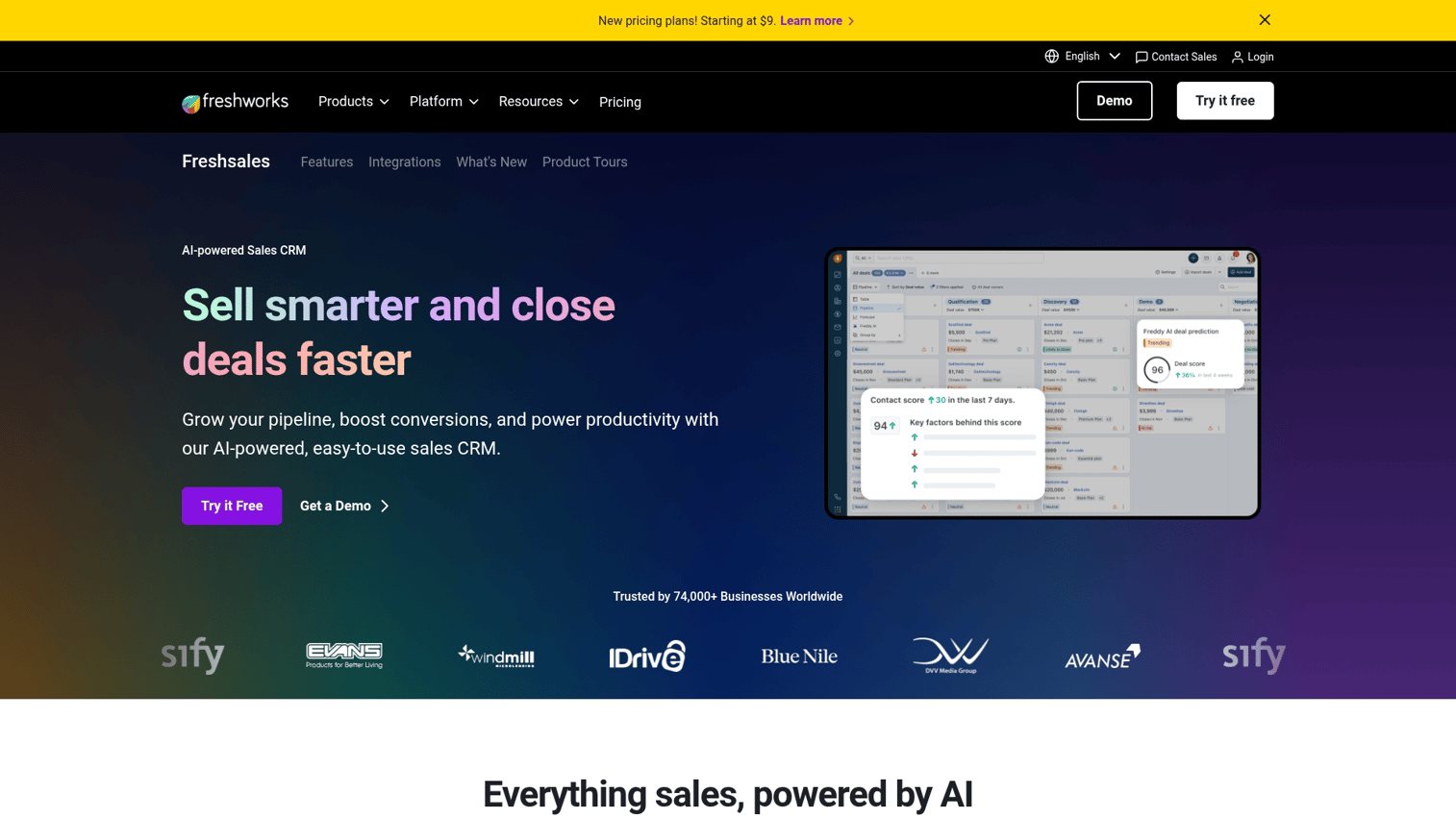
Freshsales offers straightforward, built-in lead scoring designed for SMBs who need prioritization without complex setup. The platform combines manual rules-based scoring with Freddy AI, which analyzes your historical deal data to predict conversion likelihood. Unlike enterprise tools that require data science teams to configure, Freddy starts generating predictive scores automatically once you have enough closed deals in your system. The scoring interface lives directly in the CRM, letting reps see lead scores alongside contact records, pipeline stages, and communication history without switching between tools.
Best for: Small to mid-size sales teams wanting simple, built-in scoring.
Key strengths
Freddy AI provides predictive lead scores out of the box
Visual sales pipeline with score-based sorting
Built-in phone, email, and chat for engagement tracking
Free tier available for small teams
Why choose Freshsales: Freshsales makes lead scoring accessible for smaller teams without a steep learning curve.
Pricing: Scoring is available on Growth, Pro, and Enterprise plans.
7. Zoho CRM
Zoho CRM provides a scoring rules engine that lets you define point values for specific lead actions and attributes, plus an AI assistant named Zia that analyzes historical deal data to predict conversion likelihood. The platform allows you to create multiple scoring rules that run simultaneously, adjusting lead scores based on email engagement, form submissions, website visits, and custom field values. It's particularly valuable for businesses already using the broader Zoho ecosystem, as scores can trigger workflows across Zoho Campaigns, Zoho Desk, and other connected applications without requiring third-party integrations.
Best for: Teams using the Zoho ecosystem who want integrated scoring.
Key strengths
Zia AI offers predictive scoring based on historical data
Customizable point-based scoring rules
Blueprint automation triggered by lead scores
Deep integration with Zoho Campaigns and Zoho Desk
Why choose Zoho CRM: If your business runs on Zoho, using its native CRM for lead scoring keeps everything connected.
Pricing: Scoring rules are available on Professional, Enterprise, and Ultimate editions.
8. Pipedrive
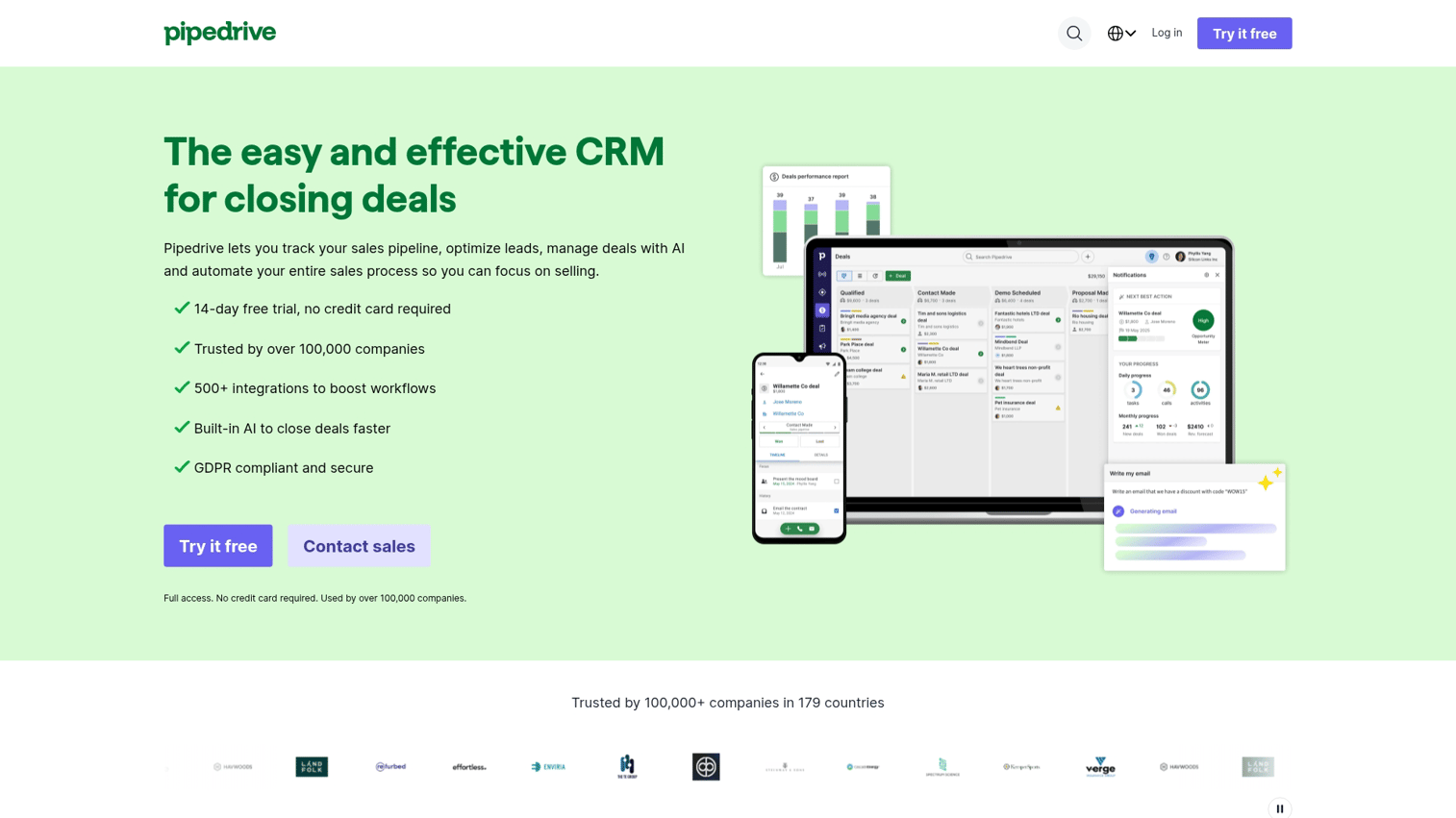
Pipedrive is a sales-focused CRM built around visual pipeline management that helps teams track deals through customizable stages. Its LeadBooster add-on extends the platform with lead scoring capabilities that assign point values based on prospect interactions, form submissions, and chatbot conversations. The scoring system integrates directly into Pipedrive's pipeline view, letting reps sort and filter leads by score alongside deal value and stage progression.
Best for: Sales teams that prioritize visual pipeline management with a scoring overlay.
Key strengths
Visual pipeline allows score-based lead prioritization
LeadBooster add-on includes prospecting and scoring features
Activity-based scoring tied to sales actions
Mobile app provides score visibility on the go
Why choose Pipedrive: Pipedrive works well for sales teams who live in their pipeline and want scoring integrated into that visual interface.
Pricing: Lead scoring is available via the LeadBooster add-on.
9. Keap
Keap is an all-in-one CRM and marketing automation platform designed specifically for small businesses that need to manage contacts, automate follow-ups, and score leads without juggling multiple tools. The platform assigns points to leads based on email opens, link clicks, form submissions, and tag applications, then automatically adjusts scores as prospects move through your nurture campaigns. Lead scoring integrates directly into automation sequences, meaning you can trigger specific follow-up actions - like assigning a lead to sales or moving them into a different nurture track—when they hit predetermined score thresholds.
Best for: Small businesses wanting CRM, marketing automation, and scoring in one tool.
Key strengths
Lead scoring tied to campaign engagement and automation
Automated follow-up triggered by score changes
Built-in invoicing and payment processing
Designed for non-technical users
Why choose Keap: Keap simplifies the entire sales and marketing process for small businesses with limited time and resources.
Pricing: Lead scoring is included in Pro and Max plans.
10. Clearbit
Clearbit is primarily a data enrichment platform that automatically appends firmographic and technographic data to leads in real-time. When a prospect fills out a form or enters your CRM, Clearbit instantly enriches that record with company size, revenue, industry, location, tech stack, and employee count. This enriched data enables precise "fit" scoring by ensuring your scoring model evaluates leads against complete, verified information rather than incomplete form fields.
Best for: Teams that want enriched firmographic data to improve scoring accuracy.
Key strengths
Real-time data enrichment on form submissions
Provides firmographic data including company size, industry, and tech stack
Reveal feature identifies anonymous companies visiting your website
Integrates with major CRMs and marketing platforms
Why choose Clearbit: If your scoring model suffers from incomplete data, Clearbit ensures your "fit" score is based on verified, comprehensive information.
Pricing: Custom pricing based on data volume and platform usage.
11. Leadfeeder
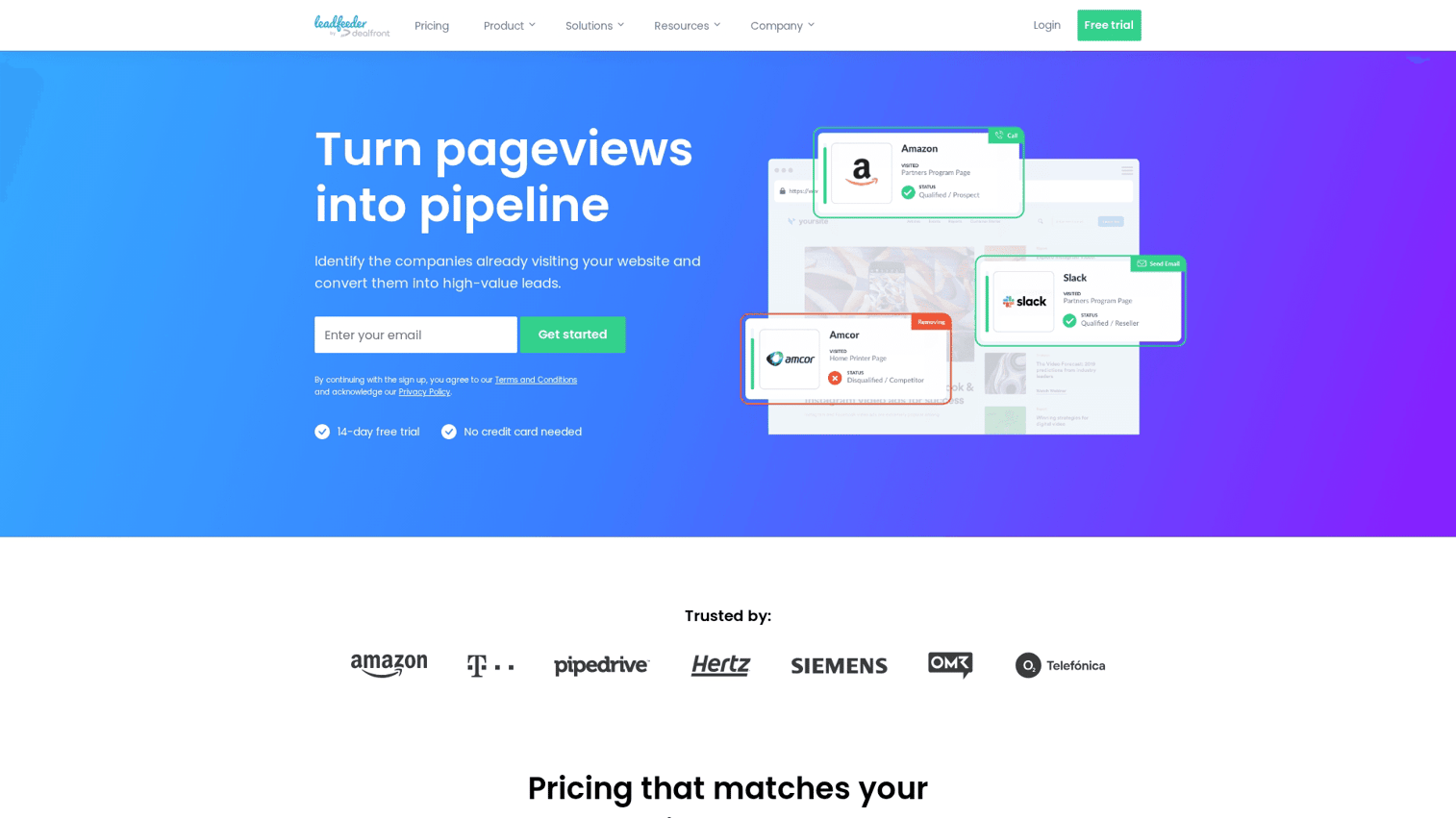
Leadfeeder identifies companies visiting your website by matching IP addresses to company records, capturing intent signals even when visitors don't fill out forms. The platform tracks which pages each company views, how frequently they return, how long they spend on specific content, and which employees from the same organization are researching your solution. It then scores these accounts based on behavioral patterns like repeat visits to high-intent pages (pricing, case studies, product features) and the depth of their site exploration, helping sales teams prioritize outreach to companies already demonstrating active interest.
Best for: B2B teams wanting to score accounts based on website visit behavior.
Key strengths
Identifies companies from anonymous website traffic
Scores accounts based on pages visited and time on site
Integrates with CRMs to create scored leads
Sends alerts when target accounts visit the website
Why choose Leadfeeder: Leadfeeder uncovers a hidden pipeline of interested accounts based on silent browsing behavior.
Pricing: Starts with a free plan; paid plans offer more features.
12. LeadSquared
LeadSquared is a sales execution platform built specifically for high-velocity sales environments where teams process hundreds or thousands of leads daily. The platform separates lead scoring into two distinct metrics: a "Quality Score" that evaluates how well a lead matches your ideal customer profile based on demographic and firmographic data, and an "Engagement Score" that tracks behavioral signals like form submissions, email responses, call connections, and website activity. This dual-scoring approach helps sales teams distinguish between leads that are a good fit versus leads that are actively interested, enabling more precise prioritization when managing large volumes.
Best for: High-velocity sales teams in industries like education, healthcare, real estate, and financial services that process large lead volumes daily.
Key strengths
Separate "Quality" scoring (fit) and "Engagement" scoring (interest)
Mobile-first design for field sales teams
Built-in telephony and email tracking
Advanced lead distribution rules based on score
Why choose LeadSquared: For businesses in high-volume, fast-paced industries, LeadSquared provides automation and speed for managing thousands of leads, complementing other presales software tools that streamline the qualification process.
Pricing: Custom pricing based on features and lead volume.
13. SugarCRM
SugarCRM offers a flexible, customizable CRM platform with AI-powered predictive scoring through SugarPredict. The platform analyzes historical deal data to identify which lead characteristics and behaviors correlate with successful conversions, then applies those patterns to score new leads automatically. SugarCRM's customization capabilities let you build scoring models tailored to specific business units, product lines, or regional markets, making it particularly valuable for mid-market companies with diverse sales motions that need more flexibility than out-of-the-box solutions provide.
Best for: Mid-market teams wanting flexible, customizable scoring models.
Key strengths
SugarPredict AI provides conversion probability predictions
Highly customizable scoring criteria
On-premise and cloud deployment options
Advanced workflow automation tied to lead scores
Why choose SugarCRM: SugarCRM fits mid-market companies that want more customization than SMB tools offer but don't require enterprise complexity.
Pricing: Custom pricing; requires contacting sales.
14. Outfunnel
Outfunnel is a data sync platform that bridges the gap between your marketing tools and CRM by automatically pushing engagement data—like email opens, link clicks, form submissions, and website visits - directly into contact records. This unified view enables lead scoring based on the complete picture of prospect behavior across channels, rather than scoring leads on CRM data alone while marketing engagement sits in a separate system.
Best for: Teams wanting to sync marketing engagement data to CRM for unified scoring.
Key strengths
Connects web and email engagement data directly to CRM records
Simple scoring rules based on marketing touchpoints
Native integrations with Pipedrive, Copper, HubSpot, and Salesforce
Lightweight setup without technical complexity
Why choose Outfunnel: Outfunnel solves the common problem of marketing data living separately from sales data.
Pricing: Starts at $29/month, with lead scoring available on all plans.
15. Monday CRM
Monday CRM is built on the monday.com Work OS platform, giving teams the flexibility to create custom sales pipelines and lead scoring workflows using visual boards and customizable columns. Unlike traditional CRMs with fixed scoring structures, monday sales CRM lets you define scoring formulas directly within your boards using custom fields, then automate actions based on score thresholds—like moving leads between pipeline stages or triggering sales rep notifications when prospects hit qualification criteria.
Best for: Teams using monday.com who want scoring within their existing work OS.
Key strengths
Customizable scoring formulas built directly within monday.com boards
Visual boards for score-based lead management
Automation recipes triggered by score changes
Integrates with a wide range of marketing and support tools
Why choose monday sales CRM: If your team already operates on monday.com, adding its sales CRM is a natural extension.
Pricing: Available on the Sales CRM plan, with pricing based on user seats.
Key features of the best lead scoring tools
AI and predictive scoring capabilities
AI-powered scoring analyzes your historical sales data to identify characteristics of leads that convert. Predictive models—used by 70% of high-growth companies - can uncover patterns you might miss, which contrasts with manual, rules-based scoring where you define all criteria yourself.
Customizable lead scoring models
Your business is unique, and your scoring model reflects that. Look for platforms that let you assign different point values to various attributes and behaviors, ensuring the score reflects what actually matters to your sales process.
CRM and marketing automation integration
Lead scores are only useful if they're visible in your sales team's daily workflow. Look for native, bidirectional integrations with your CRM and marketing automation tools so scores update in real-time.
Real-time lead scoring
Buyer interest can be fleeting. Real-time scoring means a lead's score updates instantly when they take a key action, like visiting your pricing page or completing a demo. Batch scoring that updates once a day often misses the window.
Behavioral tracking and intent signals
The strongest scoring models track behaviors that indicate buying intent: website page visits, email engagement, content downloads, and pricing page views. Engagement with an interactive demo provides particularly strong intent signals.
Lead scoring analytics and reporting
How do you know if your scoring model works? Good software provides analytics showing which scoring criteria actually correlate with conversions. Look for score distribution reports and conversion rate analysis by score range.
Types of lead scoring methods
Explicit lead scoring is based on information leads provide directly, typically through form fields. Examples include job title, company size, and industry. Explicit data helps determine a lead's "fit" with your ideal customer profile.
Implicit lead scoring is based on observed behaviors and digital body language. Examples include which website pages they visit, emails they open, and demos they complete. Implicit data indicates a lead's level of "interest."
Predictive lead scoring uses AI and machine learning to analyze historical conversion data. The model identifies which attributes and behaviors correlate with closed deals and applies patterns to score new leads automatically.
Fit and interest scoring combines explicit and implicit data into two dimensions. A "fit" score rates how well a lead matches your ICP, while an "interest" score rates their engagement level. The best leads are high on both.
Benefits of lead scoring automation
Improved sales team efficiency: Lead scoring helps reps focus their time on leads most likely to convert, leading to more productive conversations.
Better sales and marketing alignment: A shared, objective definition of a "qualified lead" reduces friction between teams.
Higher lead conversion rates: Prioritizing high-scoring leads ensures the most interested prospects receive the fastest follow-up.
Data-driven lead prioritization: Scoring replaces gut-feel with a consistent, data-based system for prioritizing leads.
Lower customer acquisition cost: Focusing resources on high-potential leads reduces time and money spent on prospects that won't convert.
How to choose the right lead scoring platform
Define your lead scoring objectives. Are you trying to prioritize inbound leads, identify expansion opportunities, or qualify event attendees? Different objectives require different approaches.
Evaluate CRM and tool integrations. Map out your existing tech stack and verify the platform offers seamless, native integrations. Bidirectional sync is essential for scores to be actionable.
Assess customization and flexibility. Determine whether you want simple threshold-based scoring or complex, multi-dimensional models with scoring decay.
Consider AI and predictive features. Evaluate whether you have enough clean, historical data to train a predictive model. AI tools typically require hundreds or thousands of closed deals to identify meaningful patterns.
Review total cost and expected ROI. Look beyond the sticker price to consider pricing tiers, per-lead fees, and implementation charges.
Test with a trial before committing. Run a trial or proof-of-concept, ideally in parallel with your current process, to validate that the tool delivers real improvement.
Build a lead scoring strategy that converts
An effective lead scoring strategy combines the right platform with well-defined criteria and continuous optimization. The most powerful models incorporate engagement signals from product experiences, as they provide direct insight into a prospect's buying intent. Pre-sales teams can leverage demo engagement data to precisely score leads based on the features they explore and the problems they're trying to solve.
Start your journey with Guideflow today!
FAQs about lead scoring software
Lead scoring assigns numerical values based on behaviors and engagement (interest), while lead grading assigns a letter grade (A, B, C) based on how well a lead fits your ideal customer profile using firmographic data (fit).
Basic rules-based scoring can be launched within a few days. More complex predictive AI models may require several weeks or months of historical data analysis and model training.
Yes, small businesses benefit greatly from lead scoring once their lead volume exceeds what a sales rep can manually prioritize, typically when inbound leads outpace the team's follow-up capacity.
Review your scoring model at least quarterly. Analyze score distributions against actual conversion outcomes and adjust point values based on which behaviors correlate with closed deals.
Common data sources include CRM records, marketing automation platforms, website analytics, form submission data, email engagement data, product usage or demo engagement data, and third-party data enrichment tools.
Tracking which features prospects explore in an interactive demo or product trial reveals specific buying intent that form fills cannot. Product engagement data allows for more accurate prioritization of leads actively evaluating your solution.