Your carrier invoices arrive in five formats from twelve carriers. Rates drift from what you negotiated. Accessorials show up that nobody approved. Somebody on your team spends half a week matching line items to contracts in a spreadsheet, and errors still leak through. That leaked margin is real money, and it compounds every month you run freight settlement by hand.
Freight audit software exists to close that gap. It centralizes invoice intake, runs automated pre-audit checks against your contracts and shipment data, flags exceptions before they get paid, and reconciles the rest. Some platforms stop at the audit. Others extend into full freight audit and payment, handling settlement and carrier payouts inside one workflow. The market reflects how much this matters: the global freight audit and payment market is projected to grow from $6.8 billion in 2025 to $14.2 billion by 2034 at an 8.5% CAGR, according to DataIntelo (2025), with software components already accounting for 58.4% of revenues in 2025.
For an operator, the question is not whether to automate freight auditing. It is which freight audit software companies actually reduce manual work, surface spend visibility you can act on, and give you repeatable process control. This guide is a practical shortlist for teams that want fewer spreadsheets and more logistics spend control.
What's inside
This guide compares 8 freight audit software tools for 2026. We selected them based on workflow coverage across invoice intake and reconciliation, automation depth in pre-audit and exception handling, analytics quality for freight spend visibility, compliance and audit trail support, and payment integration. The list covers both audit-only platforms and full freight audit and payment suites, so you can match a tool to your current workflow maturity rather than buying capabilities you will not use.
TL;DR
- Best overall freight audit and payment platform: Trimble Freight Audit, for teams that want audit, compliance, and an optional managed payment add-on in one system.
- Best for integrated transportation management: Oracle Transportation Management, when freight settlement should live inside broader transportation orchestration.
- Best for deeper spend analytics: Transporeon Freight Audit, for unified data and ready-to-use dashboards across modes.
- Best for payment workflow integration: Cass Information Systems, a managed-services, bank-based freight payment model.
- Best for software-first automation: Loop, an AI-native platform built for modern freight audit and exception workflows.
What is freight audit software?
Freight audit software is a system that verifies freight invoices against contracts, shipment records, accessorial rules, and payment terms, then flags discrepancies before payment and reconciles the rest. It replaces manual line-item checking with automated validation, so overbilling and rate errors get caught before money leaves the building.
A freight audit system typically covers these core capabilities:
- Invoice intake: Ingesting carrier invoices across EDI, API, PDF, and manual formats into one place.
- Pre-audit validation: Checking charges against negotiated rates and contract terms before payment.
- Exception handling: Routing discrepancies to the right person with context for fast resolution.
- Payment processing: Managing or triggering carrier payment in freight audit and payment software.
- Freight invoice reconciliation: Matching approved invoices to shipments and closing the loop with accounting.
- Reporting and freight spend analytics: Surfacing carrier trends, rate variance, and overbilling patterns.
- Compliance and audit trail: Keeping a defensible record of every check, exception, and approval.
The distinction that matters most when you evaluate freight audit software companies is scope. Audit-only tools verify and hand off to your accounts payable process. Freight audit and payment suites add settlement, post-audit reconciliation, and sometimes managed payment through a bank or third party. Both are legitimate. The right choice depends on how much of the settlement chain you want to own internally versus outsource.
When to use freight audit software
Reduce manual invoice checking
Freight auditing becomes a bottleneck when invoice volume climbs and exceptions are frequent. If someone on your team is manually matching hundreds of invoices a month against rate sheets, the error rate rises with the workload and margin leaks through the cracks. Freight invoice auditing software automates the repetitive validation so your people spend time on the exceptions that actually need judgment, not on the 80% that a rules engine can clear.
Improve freight spend visibility
Manual auditing gives you a per-invoice view and almost no trend view. Freight audit software turns settled and disputed invoices into freight spend analytics: carrier-level cost trends, rate variance against contracts, accessorial patterns, and where overbilling repeats. For a founder or finance lead trying to prove logistics spend control to a board, that visibility is the difference between a clean number and a guess.
Combine audit and payment
Freight audit and payment software makes sense when you want one workflow from invoice intake through settlement. Instead of auditing in one system and paying in another, a combined platform validates, reconciles, and pays inside a single flow, with a full audit trail attached. This matters most for high-volume, multi-carrier operations where the handoff between audit and payment is itself a source of delay and error.
Comparison table
Sorted by relevance to core freight audit software workflows. Pricing and ratings reflect verified sources where publicly available; several vendors gate pricing behind sales conversations, which is normal in this category.
| # | Product | Intent | Key use case | Pricing | G2 rating |
|---|---|---|---|---|---|
| 1 | Trimble Freight Audit | Audit and payment | End-to-end audit with managed payment add-on | Custom | Not available |
| 2 | Oracle Transportation Management | TMS-native audit | Freight settlement inside transportation orchestration | From $450/mo | 4.2/5 |
| 3 | Transporeon Freight Audit | Audit and analytics | Unified data and dashboards across modes | Custom | 4.1/5 |
| 4 | SAP Concur Intelligent Audit | Compliance audit | AI plus human auditors for policy compliance | Custom | 4.3/5 |
| 5 | Blue Yonder | Transportation analytics | Freight cost analysis and carrier performance | Custom | 4.4/5 |
| 6 | Loop | Software-first audit | AI-native freight audit and exception handling | Custom | Not available |
| 7 | Cass Information Systems | Managed payment | Bank-based freight payment and audit services | Custom | 5.0/5 |
| 8 | Intelligent Audit | High-volume audit | Freight audit, recovery, and spend intelligence | Custom | 4.8/5 |
1. Trimble Freight Audit

Trimble Freight Audit is automated freight audit and payment software built for shippers and logistics service providers that want the full audit-to-pay chain in one place. It automates invoice processing, flags exceptions in real time, and lets teams layer on a managed payment add-on through Triumph when they want settlement handled inside the same workflow. For an operator who does not want to stitch audit and payment across two vendors, that end-to-end coverage is the draw.
Best for: Enterprise shippers that need freight audit, compliance, and audit-to-pay workflows under one roof.
Key strengths
- Automated invoice processing and exception reporting: Clears routine invoices automatically and surfaces discrepancies as they happen, so nothing waits in a queue.
- Customizable dashboards and spend analytics: Turns settled and disputed freight into visibility you can act on across carriers and lanes.
- Optional managed payment add-on: Extends audit into settlement through Triumph, giving you one workflow from intake to carrier payout.
Why choose Trimble Freight Audit: If your team wants a single vendor for both freight invoice auditing and payment, and you already lean on Trimble for transportation technology, the combined audit-to-pay model reduces the number of handoffs where errors hide. It fits teams ready to consolidate rather than assemble a stack piece by piece.
Pricing: Trimble does not publish pricing for its freight audit product. The first-party page uses contact and get-in-touch CTAs, so expect a custom quote based on volume and whether you add managed payment. No public price or free tier is listed.
2. Oracle Transportation Management
Oracle Transportation Management handles freight audit and settlement as part of a broader transportation management workflow, rather than as a standalone audit tool. It plans and executes multimodal, multileg, and cross-dock transportation, monitors shipment milestones, and runs freight settlement inside the same system that orchestrates your logistics. For teams already running Oracle logistics processes, keeping audit and settlement native avoids a separate integration.
Best for: Enterprises that need global transportation planning, execution, and freight optimization with audit built into the same platform.
Key strengths
- Multimodal transportation planning: Covers multileg and cross-dock operations across a global network from one system.
- Automated shipment lifecycle and freight settlement: Ties milestone monitoring directly to settlement, so audit sits on real shipment data.
- Machine learning for status and ETA prediction: A digital assistant surfaces shipment status and predicts ETAs to reduce manual tracking.
Why choose Oracle Transportation Management: The case for Oracle is orchestration, not audit alone. If freight settlement should live inside the same platform that plans and executes shipments, and you want the audit-to-AP handoff to stay native, Oracle fits. It suits enterprises with the scale and existing Oracle footprint to justify a full TMS.
Pricing: Oracle's public global price list shows Transportation Management Cloud Service starting at $450 per month, with Transportation Operational Planning at $200 per month, Fleet Management at $125 per month, and Logistics Network Modeling at $250 per month. Standard term length is three years. There is no free tier.
3. Transporeon Freight Audit
Transporeon Freight Audit automates freight bill validation and delivers freight spend analytics inside the broader Transporeon platform. Because it pulls shipment and rate data directly from that platform, invoice checking runs against a unified data repository rather than files scattered across systems. Real-time analytics and dispute processing give shippers visibility into spend and exceptions across multiple transportation modes.
Best for: Shippers that want automated freight invoice audit and settlement inside a transportation platform with strong analytics.
Key strengths
- Automated freight bill validation: Checks invoices against contract terms without manual line-item matching.
- Integrated shipment and rate data: Uses the Transporeon platform's own data so audit runs on a single source of truth.
- Real-time analytics and dispute processing: Surfaces freight spend patterns and routes exceptions for fast resolution.
Why choose Transporeon Freight Audit: If your priority is deep freight spend visibility across modes and you value dashboards you can use out of the box, Transporeon's analytics depth stands out. Its modular freight audit and payment hub capabilities let you adopt what you need without buying the whole platform on day one.
Pricing: Transporeon does not display public pricing for its freight audit and payment hub. The first-party page directs visitors to contact the vendor, so pricing is custom based on volume, modes, and modules. The Transporeon product holds a 4.1/5 rating on G2.
4. SAP Concur Intelligent Audit
SAP Concur Intelligent Audit pairs human auditors with generative AI to audit expenses, enforce policy compliance, and flag potential fraud. It sits closer to the finance side of the house than the logistics side, which makes it a strong fit for organizations already inside the SAP Concur ecosystem that want audit and compliance discipline applied to spend. Receipt validation, expense matching, and tax and regulatory compliance support round out the workflow.
Best for: Mid-market and enterprise finance teams that need outsourced or AI-assisted audit and compliance support.
Key strengths
- Human auditors plus generative AI: Combines automated checks with expert review to catch what a rules engine alone would miss.
- Receipt validation and expense matching: Ties spend to documentation for a clean compliance and audit trail.
- Tax and regulatory compliance support: Adds audit analytics that help finance teams manage risk and control.
Why choose SAP Concur Intelligent Audit: This is the finance-friendly option. If your organization already runs SAP Concur and wants audit rigor and policy compliance applied across spend rather than a logistics-native freight tool, the ecosystem fit and the AI-plus-human model make it worth evaluating.
Pricing: SAP Concur does not publish pricing for Intelligent Audit. The product page directs visitors to contact sales for a quote tailored to your business. SAP Concur overall carries a 4.3/5 rating on G2. There is no public free tier.
5. Blue Yonder Business Analysis for Transportation
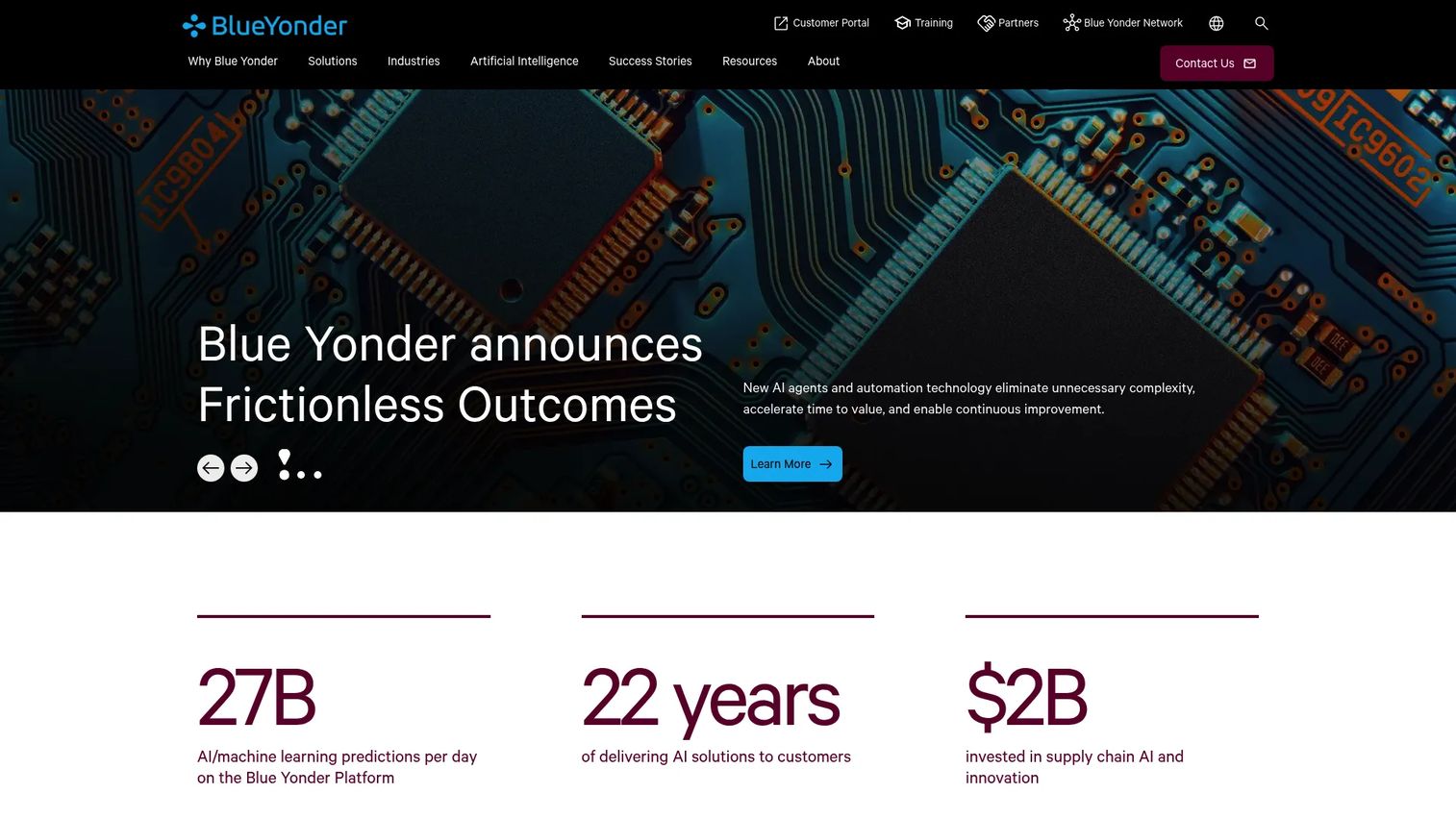
Blue Yonder approaches freight audit through the lens of broader transportation analytics rather than invoice checking alone. Its transportation management and modeling offering covers planning, execution, visibility, freight settlement, and what-if simulations. The emphasis is on predictive insight and carrier performance, so freight cost analysis becomes part of a larger picture of how your network behaves, not just a line-item review.
Best for: Enterprises that need a full transportation management suite with modeling, execution, and analytics.
Key strengths
- Transportation modeling and what-if simulations: Tests network scenarios so you can see cost impact before committing.
- Transportation planning and optimization: Plans and optimizes freight across the network from one platform.
- Execution, visibility, and freight settlement: Ties settlement to real execution data with network-wide visibility.
Why choose Blue Yonder: If you want freight cost analysis embedded in predictive transportation analytics and carrier performance reporting, rather than a dedicated audit-only tool, Blue Yonder fits. It suits enterprises that treat freight spend as one dimension of network optimization.
Pricing: Blue Yonder does not publish pricing on its first-party transportation pages, and pricing is not currently available on G2. Expect a custom quote scoped to your network and modules. Blue Yonder Transportation Management holds a 4.4/5 rating on G2.
6. Loop
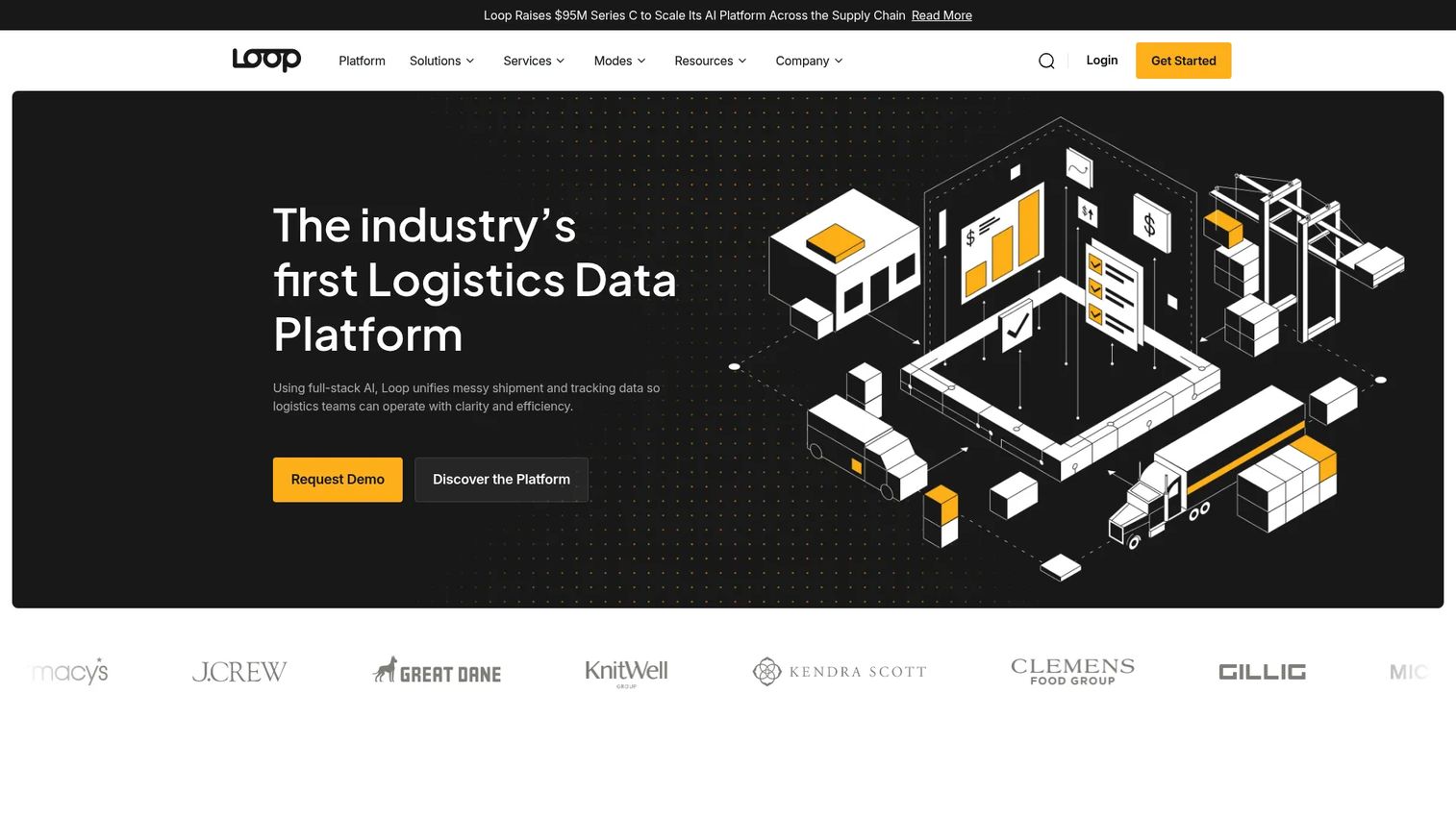
Loop is an AI-native logistics data platform built for freight audit, parcel visibility, carrier payments, and transportation spend management. Where legacy tools bolt audit onto older systems, Loop was built software-first, with capabilities like Loop Intelligence and an Exception Agent that automate exception handling and root-cause analysis. For a founder who wants a modern software approach to freight auditing rather than a services engagement, Loop is the clearest fit on this list.
Best for: Mid-market and enterprise shippers managing transportation spend and logistics data who want a modern software platform.
Key strengths
- Freight audit and real-time parcel visibility: Validates carrier invoices and tracks parcels in real time from one platform.
- Carrier payments and cost allocation: Handles payment and allocates freight cost accurately across the business.
- Loop Intelligence and Exception Agent: Applies AI to surface root causes and automate exception workflows.
Why choose Loop: If workflow visibility and a modern, software-driven approach matter more to you than a managed-services relationship, Loop is built for that. Its AI-native design fits teams that want automation and analytics without a people-heavy back office.
Pricing: Loop does not display public pricing on its site. There is no first-party pricing page or published price, so expect a custom quote based on volume and modules. No public free tier is listed.
7. Cass Information Systems
Cass Information Systems delivers freight audit and payment through a managed-services, bank-based model rather than a pure software subscription. It processes invoices, audits charges, and handles payment, with benchmarking that draws on decades of freight data. Because Cass operates as a payment processor, teams that want to hand off both audit and settlement to a managed partner get a single accountable relationship for the entire chain.
Best for: Enterprises that want outsourced freight and expense payment and audit management in a managed-services format.
Key strengths
- Freight audit and payment: Audits carrier invoices and handles payment through a bank-based managed model.
- Utility invoice management: Extends the same processing discipline to utility spend for consolidated expense management.
- Waste expense management: Covers waste invoices under one managed payment relationship.
Why choose Cass Information Systems: When you want managed payment to reduce internal workload and put audit plus settlement under one accountable partner, Cass fits. The bank-based model appeals to teams that prefer outsourcing the operational burden over running a software platform in-house.
Pricing: Cass does not publish public pricing; its pages direct visitors to contact sales. Pricing is scoped to volume and the mix of freight, utility, and waste spend you route through it. Cass holds a 5.0/5 rating on its G2 seller page, based on a small number of reviews.
8. Intelligent Audit
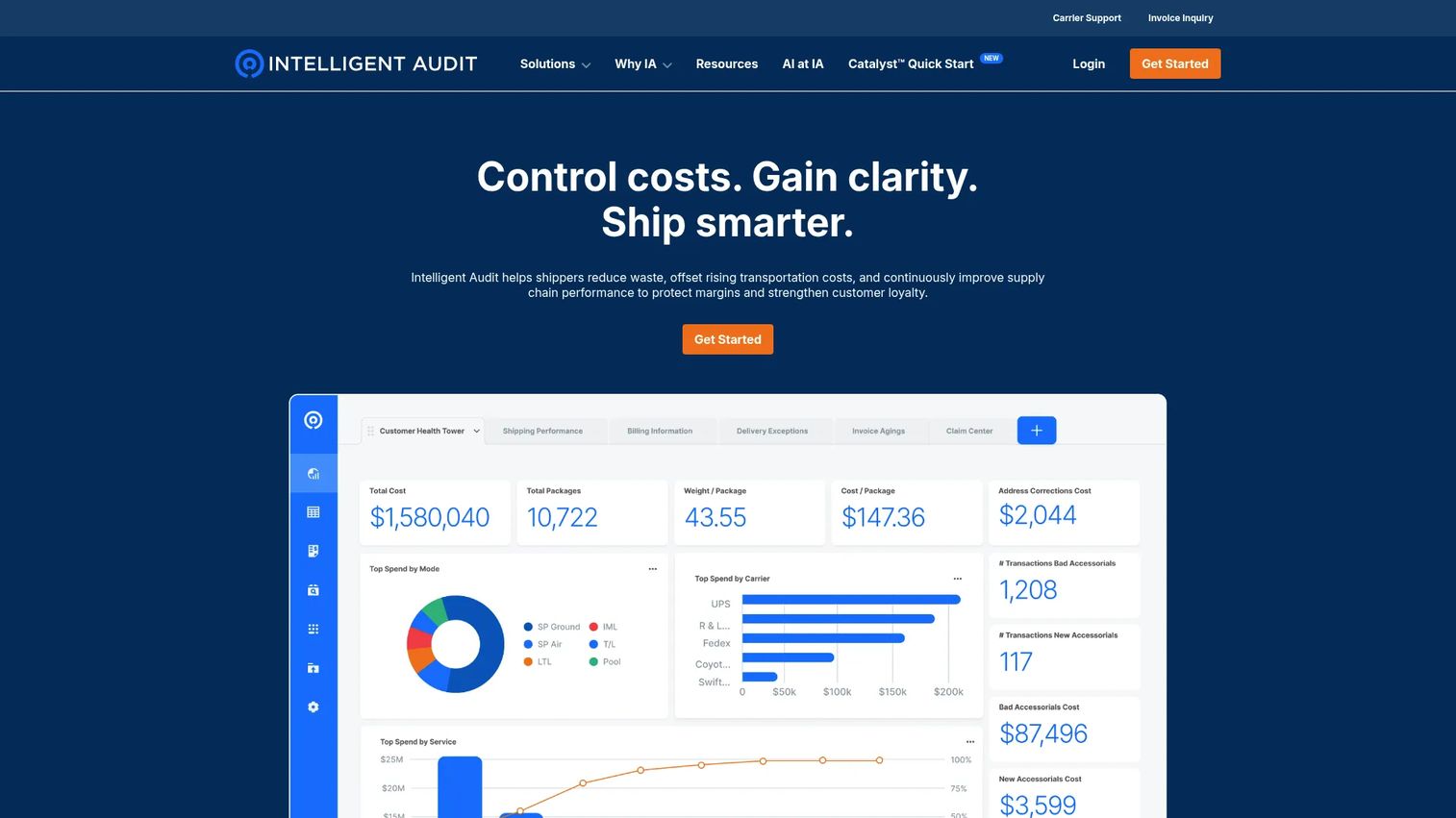
Intelligent Audit combines freight audit, recovery, analytics, and payment support for shippers that process high invoice volumes. Its DeepDetectAI anomaly detection surfaces discrepancies that manual review would miss, and its advanced reporting turns freight spend into intelligence rather than raw data. For teams that need carrier and rate validation at scale with operational discipline, this is a strong fit.
Best for: Enterprise shippers that need freight audit, recovery, and logistics spend intelligence at high volume.
Key strengths
- Freight Audit, Recovery and BI: Audits invoices, recovers overcharges, and delivers business intelligence in one platform.
- DeepDetectAI anomaly detection: Uses AI to flag discrepancies and carrier invoice validation issues at scale.
- Advanced reporting and analytics: Turns freight spend into carrier performance reporting and actionable insight.
Why choose Intelligent Audit: If your operation runs high invoice volume and you want recovery of overcharges alongside strong analytics, Intelligent Audit's combination of audit, recovery, and spend intelligence stands out. It suits teams that treat freight auditing as an ongoing discipline, not a one-time cleanup.
Pricing: Intelligent Audit does not publish public pricing on its site, so expect a custom quote based on invoice volume and services. Its G2 seller page shows a 4.8/5 rating from a small set of reviews. No public free tier is listed.
Considerations before you buy
Automation depth in pre-audit and exception handling
The value of freight audit software lives in how much it clears automatically. Ask how the rules engine validates against contracts, how it handles accessorials, and what percentage of invoices route to exception queues. A tool that flags everything is just a slower spreadsheet. The goal is a system that clears the routine 80% and gives your people context on the 20% that needs judgment.
Data centralization and rate and contract accuracy
Audit accuracy depends on the quality of the underlying rate and contract data. Evaluate how the platform ingests contracts, keeps rates current, and matches invoices to shipments. A unified data repository that pulls from your TMS and carrier feeds beats a system where someone re-enters rate tables by hand.
Analytics and freight spend visibility
Look past the invoice-level view. The platforms worth paying for turn settled and disputed freight into carrier trends, rate variance, and overbilling patterns you can present to a board. Ask what dashboards ship out of the box and whether you can export the data into your own analytics stack.
Compliance and audit trail
Every check, exception, and approval should leave a defensible record. For finance and ops leaders, a complete compliance and audit trail is not a nice-to-have; it is what makes the process survive scrutiny. Confirm the system logs who approved what, when, and against which rate.
Payment integration
Decide up front how much of settlement you want to own. Audit-only tools hand off to your AP process. Freight audit and payment software, or a managed payment partner, closes the loop inside one workflow. The right answer depends on your volume and how much operational burden you want to keep internal.
Conclusion
The right freight audit software depends on your workflow maturity, not on which vendor is largest. For an end-to-end audit-to-pay suite, Trimble Freight Audit covers audit, compliance, and optional managed payment in one system. If freight settlement should live inside transportation orchestration, Oracle Transportation Management keeps it native. For the deepest freight spend analytics across modes, Transporeon stands out, while Blue Yonder embeds freight cost analysis in predictive transportation analytics. When you want a modern software-first approach, Loop is built for it, and Intelligent Audit brings recovery and spend intelligence at high volume. For managed payment in a services format, Cass Information Systems puts audit and settlement under one accountable partner, and SAP Concur Intelligent Audit fits finance teams already in that ecosystem.
Start with the vendor that matches how you work today, then pressure-test it on two things: proof of logistics cost savings and the accuracy of its exception handling. Those two measures separate freight audit software that reduces manual work from software that just relocates it.
FAQs
Freight audit software verifies carrier invoices against your negotiated contracts, shipment records, and accessorial rules, then flags discrepancies before payment and reconciles the rest. It replaces manual line-item checking with automated validation, so overbilling and rate errors get caught before money leaves the building. Most platforms also turn that data into freight spend analytics.
Audit-only software verifies invoices and hands approved bills off to your accounts payable process for payment. Freight audit and payment software adds settlement, post-audit reconciliation, and sometimes managed payment through a bank or third party, closing the loop inside one workflow. The choice comes down to how much of the settlement chain you want to own internally.
High-volume shippers, multi-carrier operations, and teams with frequent accessorials get the most value. When invoice volume climbs and exceptions are common, manual auditing stops scaling and errors multiply. If someone on your team spends days a month matching invoices to rate sheets, you have crossed the threshold where software pays for itself.
It saves money three ways: catching overbilling and duplicate charges before payment, verifying that carriers billed the rates you negotiated, and cutting the manual labor spent on invoice checking. Recovery of past overcharges is a bonus some platforms provide. Together, these deliver measurable logistics cost savings that compound month over month.
Usually it complements accounts payable rather than replacing it. Audit-only tools validate freight invoices and pass clean, approved bills to your AP team for payment. Freight audit and payment suites go further by handling settlement, but even then they typically integrate with, rather than replace, your broader AP and accounting stack.
Prioritize automation depth in pre-audit and exception handling, data centralization for rate and contract accuracy, analytics that give you real freight spend visibility, a complete compliance and audit trail, and the level of payment integration your workflow needs. Match those to your volume and how much of settlement you want to own internally.
Managed freight payment is worth it when you want to reduce internal workload and put audit plus settlement under one accountable partner. Bank-based and managed-services models handle processing and payouts so your team does not run a platform in-house. It fits teams that prefer outsourcing the operational burden over building the capability internally.
It varies with vendor complexity and how many systems you integrate. A software-first platform with clean carrier feeds can go live faster than a full transportation management suite with deep TMS and ERP integrations. Ask each vendor for a realistic timeline based on your carrier count, contract volume, and the data sources they need to connect.