Your Shopify store shows 12 units in stock. Amazon shows 12. eBay shows 12. Three orders land in the same minute across all three channels. Now you owe four units you never had.
That is the exact failure mode multichannel selling creates. Inventory looks correct in every channel until orders arrive faster than the sync can update them. The gap between "what the channel thinks you have" and "what you actually have" is where oversells, cancellations, and refund emails come from. And it gets worse with every channel you add and every warehouse you split stock across.
The market reflects how urgent this problem has become. Global multichannel inventory management software revenue is projected to grow from USD 5.2 billion in 2024 to USD 12.4 billion by 2033, a 10.2% CAGR through 2033, according to Verified Market Reports (2024). Closely related multichannel order management is forecast to grow at a 12.2% CAGR through 2034, per Fortune Business Insights (2025). Teams are not buying these systems for fun. They are buying them because manual stock updates break the moment volume and channel count rise together.
The real job is not "track inventory." Spreadsheets track inventory. The job is keeping one true stock number reconciled across every place you sell and every place you store product, fast enough that no channel oversells. That requires reservation logic, real-time sync, and location-aware allocation working together. This guide breaks down eight tools that do exactly that, with honest notes on where each one fits.
What's inside
This guide is for ecommerce operators, inventory managers, and operations leads who need one source of truth for stock across marketplaces, warehouses, and fulfillment channels. It is written for people evaluating a real purchase, not skimming definitions.
We selected and ranked tools against five criteria that decide whether a multichannel inventory platform actually holds up in production:
- Real-time inventory sync speed and reliability across channels
- Channel and marketplace coverage (Shopify, Amazon, eBay, Walmart, and beyond)
- Multi-location and warehouse control
- Forecasting and replenishment logic
- Operational accuracy under order volume
Pricing and G2 ratings reflect each vendor's published figures at the time of writing.
TL;DR
- Best overall for retail and ecommerce operations: Brightpearl, for unified back-office control across inventory, orders, and fulfillment.
- Best for complex, high-volume ecommerce ops: Descartes Sellercloud, built for sellers running deep marketplace stacks.
- Best for manufacturers and assemblies: Katana, for inventory tied directly to production and BOMs.
- Best for budget-conscious teams: Zoho Inventory, with a free tier and low-cost paid plans.
- Best for multi-location warehouse precision: Finale Inventory, for barcode-driven stock accuracy.
- Best for marketplace-driven sellers who ship a lot: Veeqo, pairing free shipping tools with inventory sync.
What is multichannel inventory software?
Multichannel inventory software is a system that centralizes stock data across every sales channel and storage location, then synchronizes quantities in real time so each channel reflects true available inventory and no channel oversells.
In practice, it sits between your channels and your fulfillment operation as a single source of truth. When an order comes in on one channel, the software decrements stock and pushes the updated count to every other channel before the next buyer can order the same unit.
Here is what to expect from any serious tool in this category:
- Real-time inventory sync: stock counts update across all channels within seconds of an order, transfer, or receipt.
- Multi-location inventory management: visibility and control across stores, bins, warehouses, and 3PLs from one view.
- Channel and marketplace integrations: native connections to Shopify, Amazon, eBay, Walmart, and wholesale or B2B channels.
- Inventory forecasting and replenishment: demand planning and reorder logic that flag what to buy and when.
- Operational controls: barcode scanning, cycle counting, and stock audits that keep physical and system counts aligned.
- Bundles, kits, variants, and BOM support: accurate stock math when a sellable SKU draws down multiple components.
The best systems treat these as one connected workflow, not separate modules. Sync without forecasting still leaves you reactive. Forecasting without accurate counts is guessing on bad data.
When to use multichannel inventory software
Prevent overselling across marketplaces
Stock changes fast when you sell on Shopify, Amazon, eBay, Walmart, and wholesale at once. A unit sold on Amazon has to disappear from every other channel's available count immediately, or a second buyer commits to inventory that no longer exists. Manual updates cannot keep pace here. By the time someone edits a spreadsheet and re-uploads listings, three more orders have landed. Overselling prevention is the single clearest reason to move off manual processes: the software reserves and decrements stock centrally so channels stay honest under pressure.
Centralize stock across warehouses and locations
When inventory lives in two stores, a 3PL, and a fulfillment center, "how many do we have" stops having a simple answer. Multi-location inventory management gives you one reconciled number plus the breakdown by location, so you can route orders to the closest stock, transfer between sites intelligently, and stop shipping from the wrong place. Without a single source of truth, each location becomes its own island of half-accurate data.
Improve replenishment and planning
Stockouts lose sales. Excess inventory ties up cash. Inventory forecasting and reorder logic sit between those two failures. Good replenishment uses sales velocity, lead times, and seasonality to tell you what to reorder and when, before you run dry or overbuy. This is where teams graduate from firefighting to actually planning, and it is usually the capability that justifies the software spend on its own.
Comparison table
Use this table as a fast scan to build a shortlist. It maps each tool to who it fits, its main differentiator, published pricing, and its current G2 rating. Read the full sections below before deciding.
| # | Product | Intent | Key differentiation | Pricing | G2 rating |
|---|---|---|---|---|---|
| 1 | Brightpearl | Retail and ecommerce ops | Unified back-office across inventory, orders, CRM | Custom (request pricing) | 4.5/5 |
| 2 | Fishbowl Commerce Suite | SMB multichannel sellers | Inventory and order sync with QuickBooks | From $229/mo (billed annually) | 4.0/5 |
| 3 | Descartes Sellercloud | High-volume ecommerce | Deep marketplace and order orchestration | From $1,349/mo | 4.2/5 |
| 4 | Cin7 | Growing product brands | Inventory, warehouse, and manufacturing in one | From $349/mo | 4.1/5 |
| 5 | Finale Inventory | Warehouse-heavy teams | Multi-location barcode precision | From $499/mo | 4.8/5 |
| 6 | Katana | Manufacturers and assemblies | Inventory tied to production and BOMs | From $299/mo (free plan available) | 4.4/5 |
| 7 | Zoho Inventory | Budget-conscious teams | Affordable multichannel and warehouse control | Free; paid from $29/mo | 4.4/5 |
| 8 | Veeqo | Marketplace-driven shippers | Free shipping plus inventory sync | Free; paid from $19/mo | 4.5/5 |
1. Brightpearl
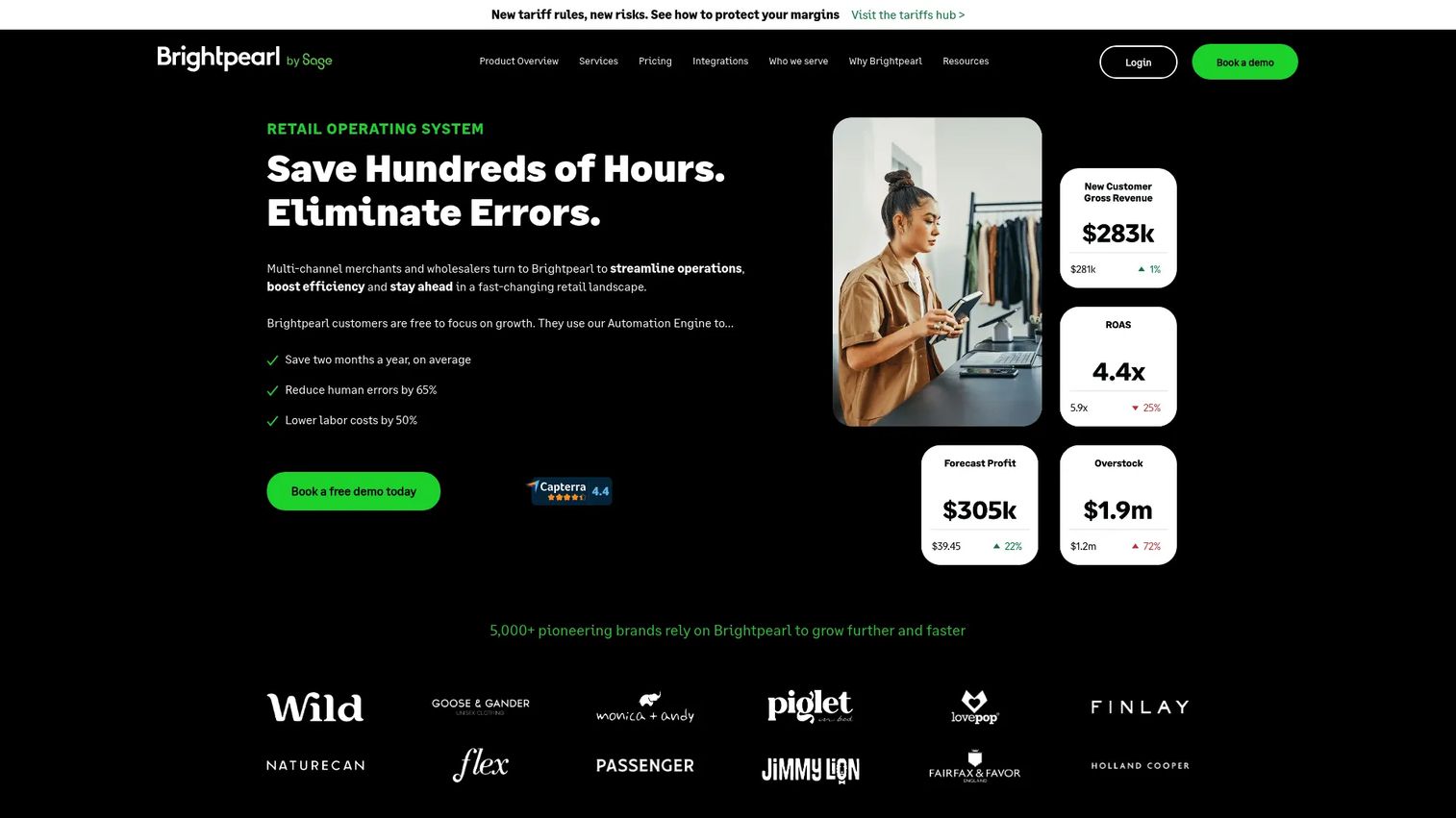
Brightpearl is a retail operations platform that unifies inventory, order management, CRM, reporting, and automation in one back office. It shows up constantly in educational content about multichannel control because it treats inventory as part of a full operating system, not a standalone tracker. For merchants who want channels, stock, orders, and fulfillment governed by the same rules, that consolidation is the whole pitch.
Best for: Retail and ecommerce merchants who need a unified back-office system rather than a point solution.
Key strengths
- Multi-channel and multi-location sync: stock stays reconciled across every channel and location, which is the foundation of overselling prevention.
- Automated order and fulfillment workflows: order processing and routing run on rules, cutting manual handling as volume grows.
- Integrated CRM and reporting: customer data and operational analytics live alongside inventory, so decisions draw on one dataset.
Why choose Brightpearl: Choose it when your operation has outgrown disconnected tools and you want inventory, orders, and reporting under one roof. The automation depth pays off for teams processing high order volume across many channels. If you only need lightweight sync between two channels, a simpler tool will serve you at lower cost.
Brightpearl pricing: Brightpearl does not publish list pricing. Its pricing page uses a request-pricing flow, with quotes tailored to each customer's channel count, order volume, and requirements. Expect a sales conversation rather than a self-serve signup. Its G2 rating is 4.5/5.
2. Fishbowl Commerce Suite
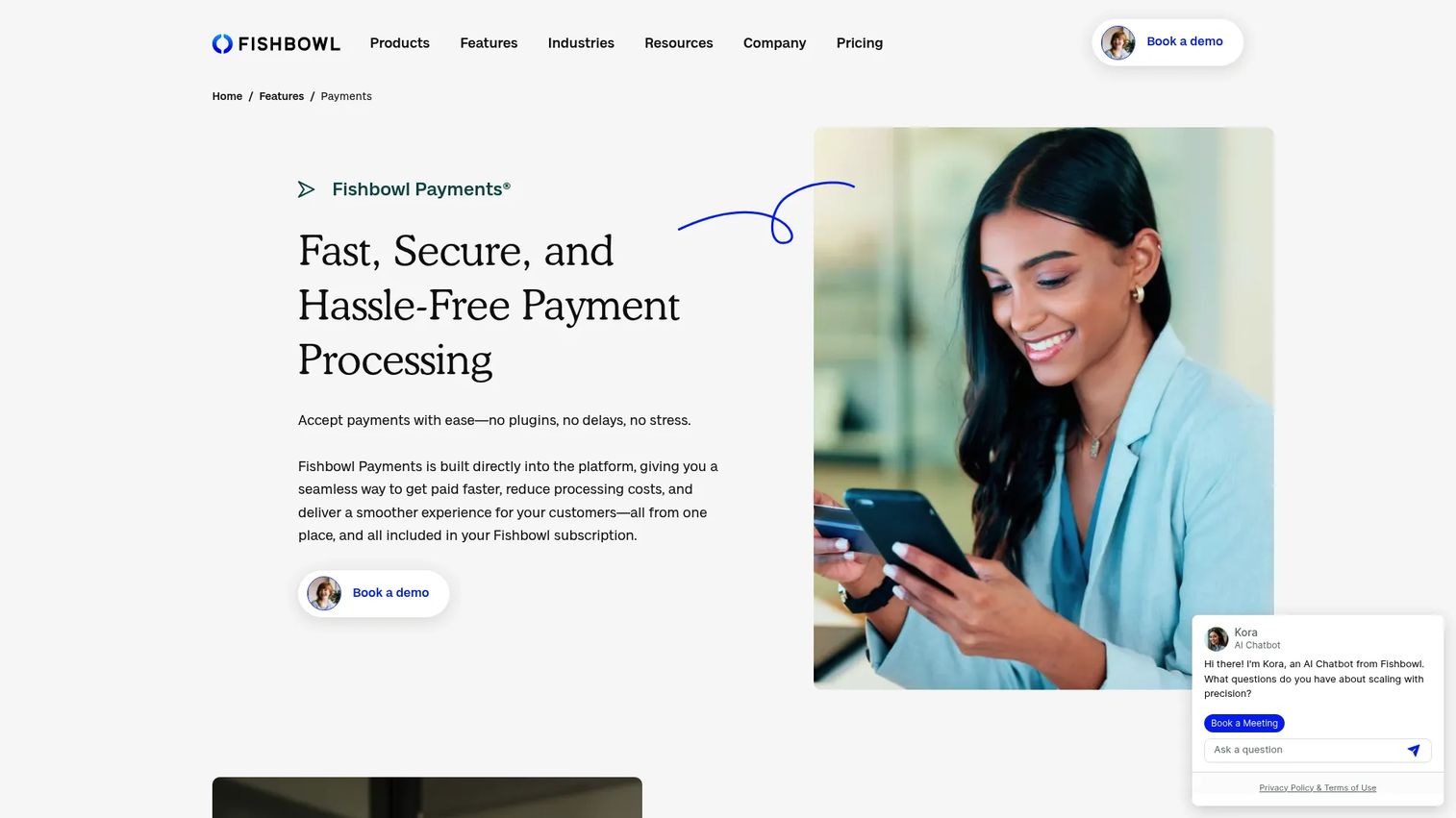
Fishbowl Commerce Suite is Fishbowl's cloud-based ecommerce operations product for multichannel inventory, order, and product data management. It fits teams that want operational rigor without enterprise complexity, and it leans on a strong QuickBooks Online integration for accounting-connected inventory. For SMBs already living inside QuickBooks, that connection removes a recurring reconciliation headache.
Best for: SMBs selling across multiple ecommerce channels that need inventory and order sync tied to QuickBooks.
Key strengths
- Real-time inventory syncing: stock updates across sales channels as orders and receipts hit, keeping available counts honest.
- Order management and fulfillment automation: repetitive order handling runs on automated workflows instead of manual touches.
- Product listing sync and forecasting: listings stay aligned across channels, and AI-powered dashboards support demand forecasting.
Why choose Fishbowl Commerce Suite: Choose it when accounting-connected inventory matters and your channels sit in the mid-volume range. The QuickBooks integration and forecasting dashboards make it a practical step up from spreadsheets. Note that implementation is part of the purchase, so plan for onboarding time before go-live.
Fishbowl Commerce Suite pricing: Plans are billed annually and start at Essentials for $229/month, Growth at $429/month, and Scale at $729/month, with an Advanced tier at custom pricing. There is no free tier, and implementation is required. Its G2 rating (for Fishbowl Inventory) is 4.0/5.
3. Descartes Sellercloud
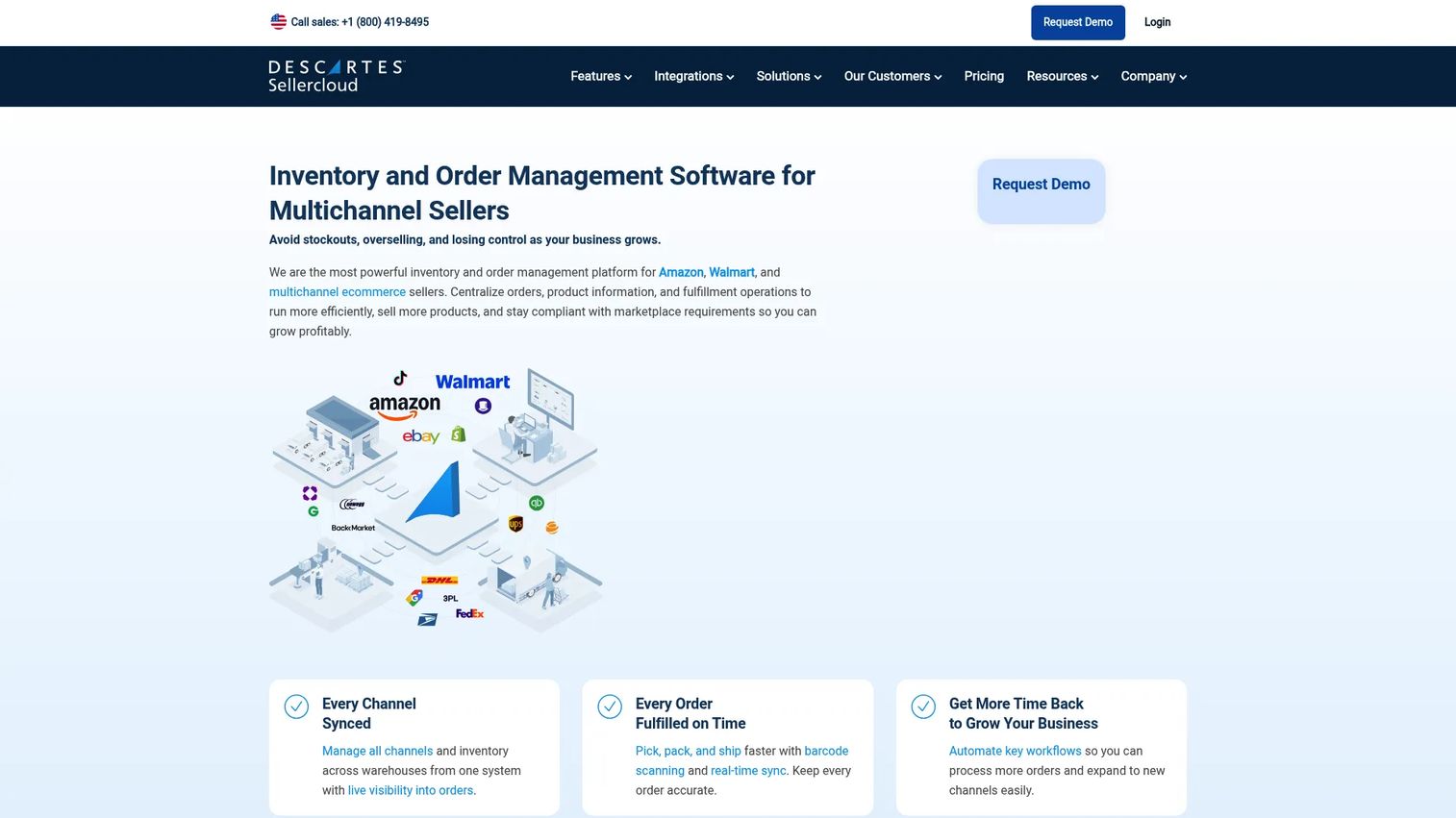
Descartes Sellercloud is omnichannel inventory and order management software built for ecommerce sellers running large, complex channel stacks. It leans into catalog management, inventory control, and multichannel order management at volume, with the orchestration depth that high-throughput sellers need. When you are managing thousands of SKUs across many marketplaces, that centralized control is the point.
Best for: High-volume multichannel ecommerce merchants who need centralized inventory and order operations at scale.
Key strengths
- Catalog management at scale: large SKU catalogs stay organized and synchronized across every connected channel.
- Centralized inventory control: one reconciled stock picture feeds every marketplace to prevent overselling across channels.
- Multichannel order orchestration: orders from all channels route and process through a single system with replenishment support.
Why choose Descartes Sellercloud: Choose it when your channel complexity has outgrown lighter tools and you need enterprise-style orchestration. It rewards sellers with high order volume and deep marketplace footprints. For smaller catalogs or a two-channel setup, the capability and price point will be more than you need.
Descartes Sellercloud pricing: Public pricing starts at $1,349/month, based on order volume with annual subscription and add-ons. There is no free tier. Its G2 rating is 4.2/5.
4. Cin7
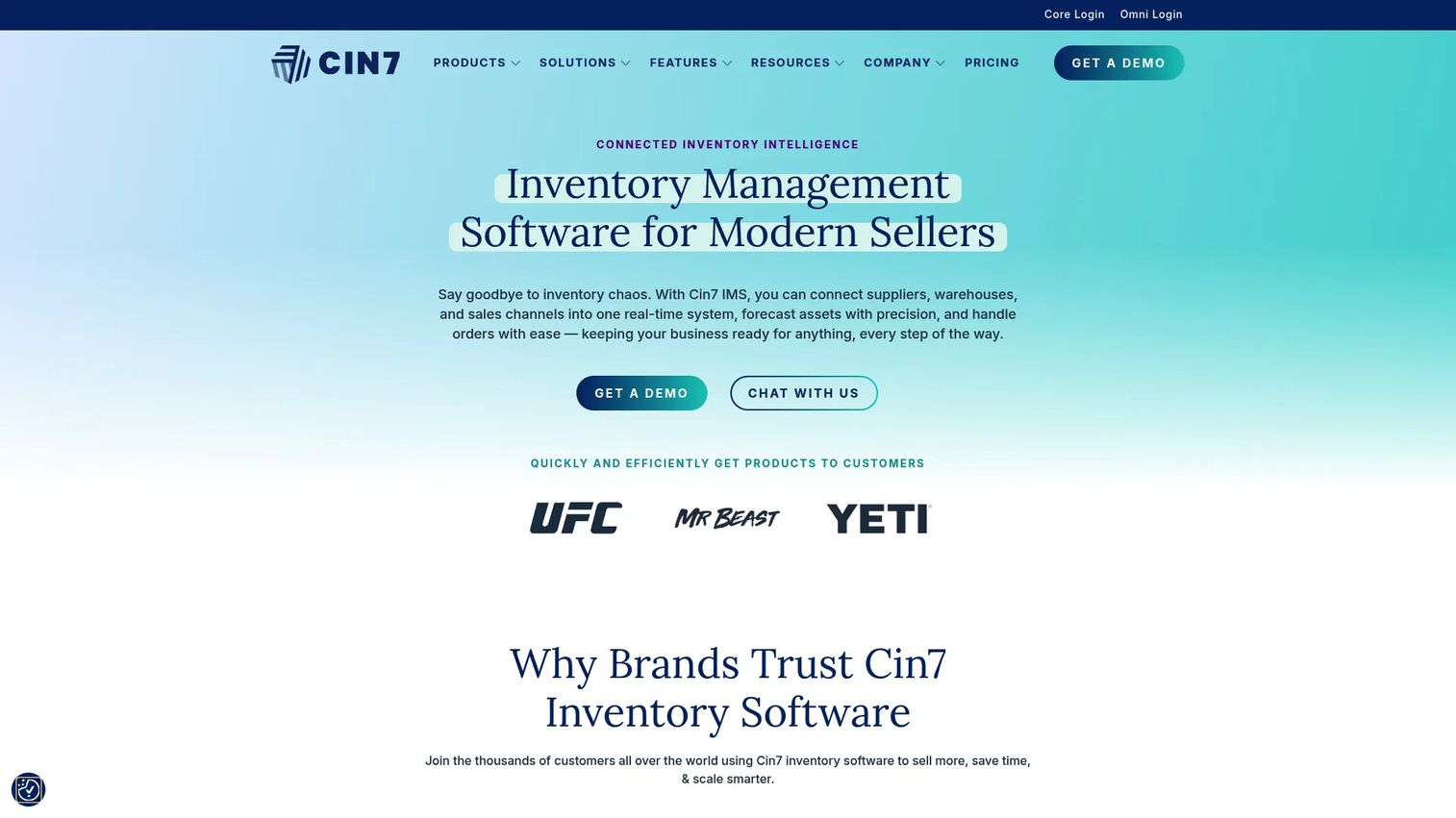
Cin7 is cloud inventory management software for product sellers, spanning inventory, sales channels, warehouse, and manufacturing workflows. It appeals to growing ecommerce brands outgrowing spreadsheets or basic tools, thanks to its integration breadth and warehouse visibility. For brands adding channels and locations quickly, having order routing and forecasting in the same system reduces tool sprawl.
Best for: Product-based businesses that need inventory, order, and warehouse management in one platform.
Key strengths
- Multi-channel inventory management: stock syncs across sales channels so available counts stay accurate everywhere you sell.
- Warehouse and order management: order routing and warehouse visibility keep fulfillment coordinated across locations.
- Manufacturing and MRP: built-in production workflows support brands that assemble or manufacture what they sell.
Why choose Cin7: Choose it when you are scaling past basic tools and want inventory, warehouse, and light manufacturing under one system. The integration coverage suits brands with a mix of ecommerce and wholesale channels. Teams that only need simple two-channel sync may find it broader than their current stage requires.
Cin7 pricing: Cin7 Core lists Standard at $349/month, Pro at $599/month, and Advanced at $999/month, plus an Omni plan at custom pricing. There is no public free tier. Its G2 rating is 4.1/5.
5. Finale Inventory
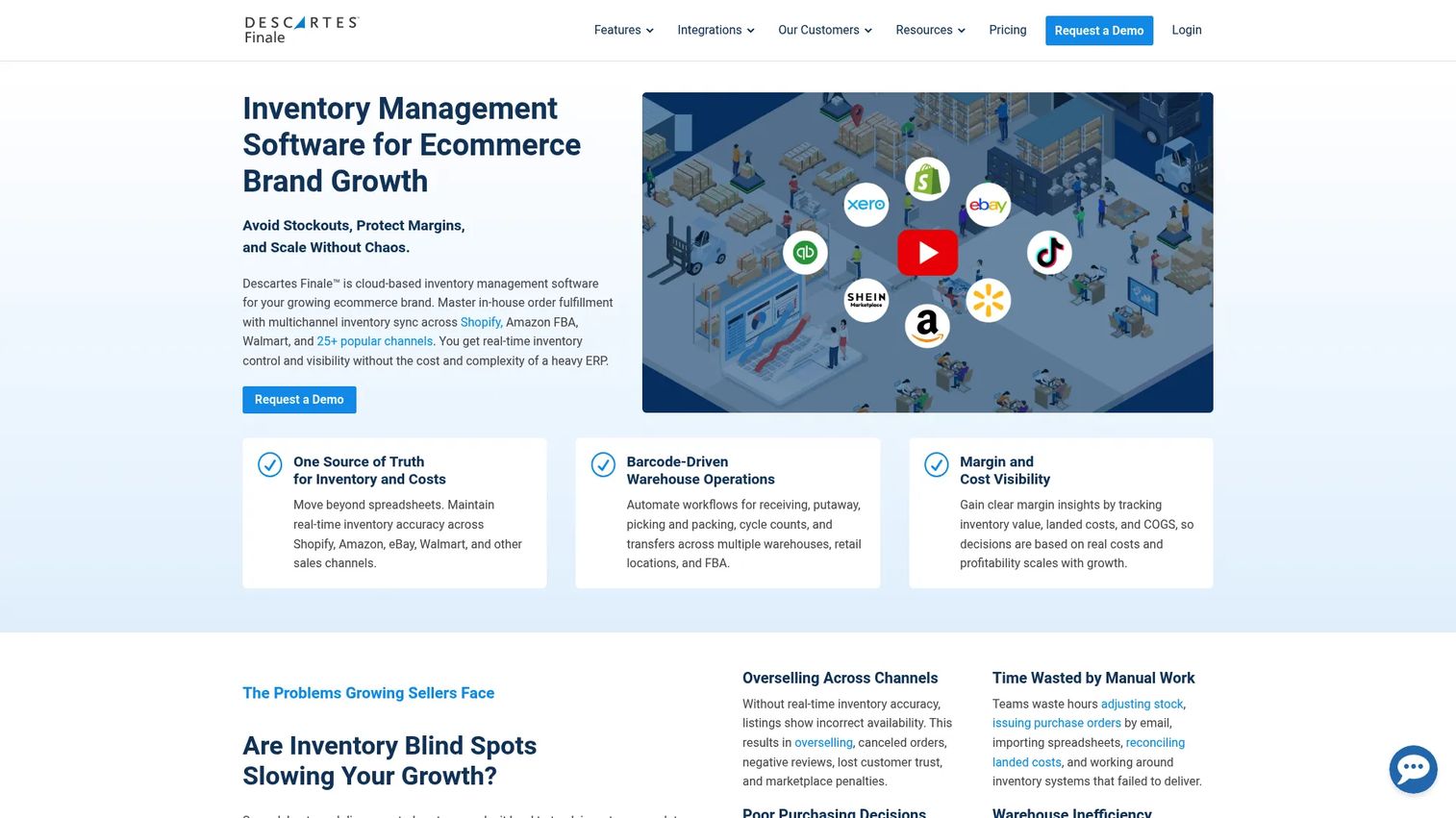
Finale Inventory is cloud-based inventory and warehouse management software built for multichannel ecommerce and multi-location operations. It is the pick for teams that prioritize inventory precision and warehouse-level control, with barcode workflows and real-time visibility at its core. When count accuracy is the metric that keeps you up at night, Finale's operational depth earns its reputation.
Best for: Growing ecommerce and warehouse teams that need multi-channel inventory control with strong physical accuracy.
Key strengths
- Real-time visibility across channels and warehouses: stock stays reconciled across sales channels and every storage location.
- Multi-warehouse management: transfers and replenishment between warehouses run from one system for multi-location inventory management.
- Barcode scanning and stock audits: barcode-driven workflows and cycle counting keep physical and system counts aligned.
Why choose Finale Inventory: Choose it when warehouse accuracy and barcode operations are central to your day. It rewards teams running real fulfillment operations across multiple locations. Its highest-in-class G2 rating reflects that operational focus. If you have no warehouse workflow to speak of, much of that depth goes unused.
Finale Inventory pricing: Plans start at $499/month, priced on users, integrations, order volume, and add-ons. A free trial is available on the site, though no permanent free tier is listed. Its G2 rating is 4.8/5, the highest on this list.
6. Katana
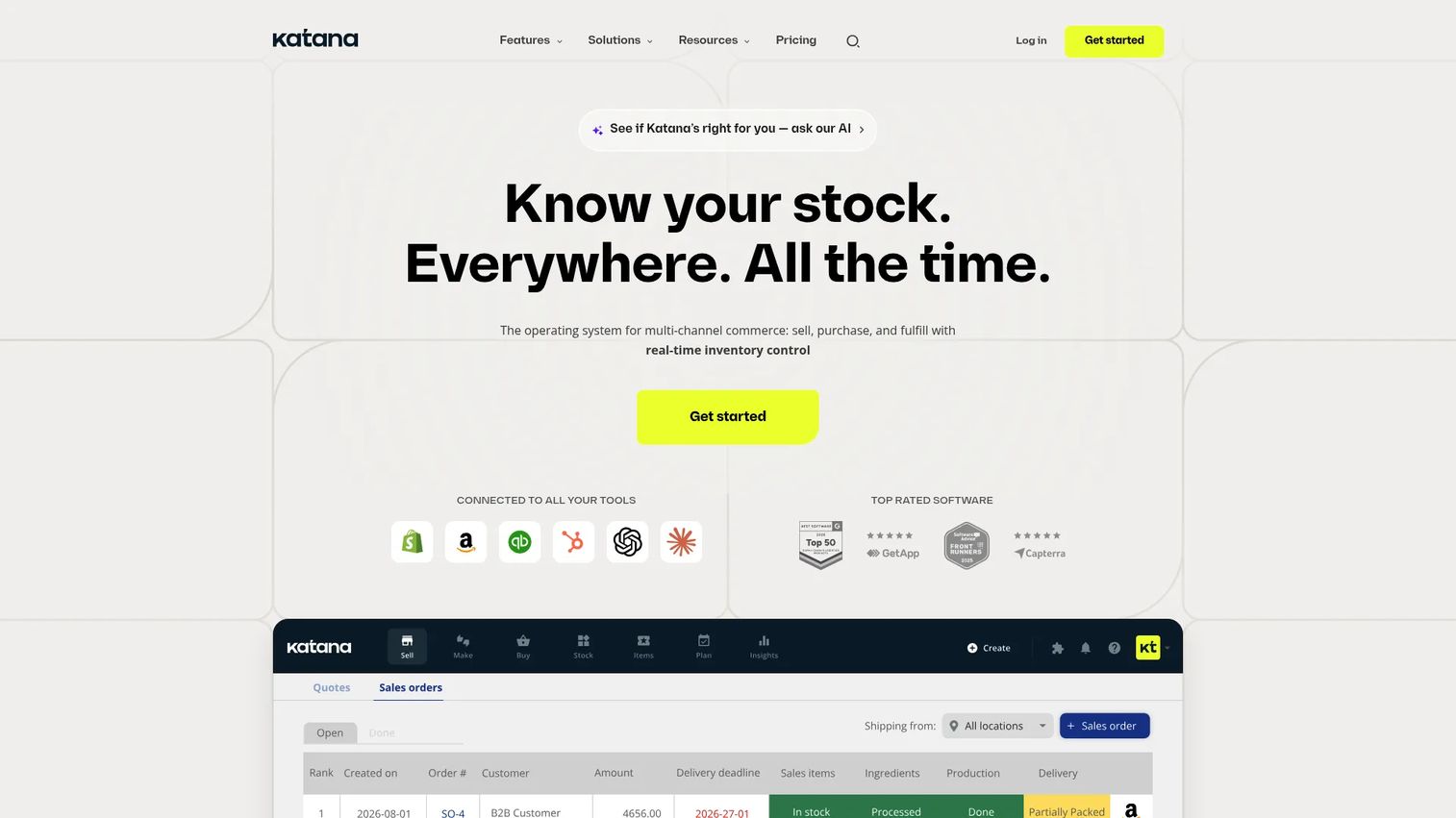
Katana is cloud inventory and manufacturing software for manufacturers and product brands. It stands apart by tying multichannel inventory directly to production planning, assemblies, and BOM tracking. For teams that build what they sell, inventory that ignores production is only half the picture, and Katana closes that gap.
Best for: Manufacturers that need inventory control plus production and sales order management in one place.
Key strengths
- Real-time inventory management: raw materials and finished goods stay accurate as production and sales draw down stock.
- Manufacturing planning and shop floor execution: production scheduling and BOM tracking connect inventory to what is being made.
- Multi-channel order management: sales orders and purchasing flow alongside production so channels and the floor stay in sync.
Why choose Katana: Choose it when your inventory problem is really a production-plus-inventory problem. Assemblies, BOMs, and demand planning are the differentiators, and they matter most for makers and light manufacturers. A pure reseller with no production step will not tap most of that value.
Katana pricing: Katana offers a free plan and a Core plan starting at $299/month. Add-on modules include Manufacturing management at $199/month and Inventory management at $249/month, with a custom-priced Advantage annual tier. Its G2 rating is 4.4/5.
7. Zoho Inventory
Zoho Inventory is cloud inventory management software covering order, warehouse, and multichannel operations. It is the accessible option for smaller or cost-conscious teams, with a free tier and low-cost paid plans that keep entry barriers down. For early-stage sellers, it delivers real multichannel controls without a five-figure commitment.
Best for: Businesses that need affordable multichannel inventory and warehouse management.
Key strengths
- Multi-warehouse management: stock tracks across multiple warehouses for multi-location inventory management on a budget.
- Purchase orders and reordering: built-in purchase orders support inventory replenishment as demand grows.
- Serial and batch tracking: serialized and batch-level control adds precision for teams that need traceability.
Why choose Zoho Inventory: Choose it when cost matters and your operation is still growing into complexity. Ease of use and the free tier make it a strong starting point, especially for teams already in the Zoho ecosystem. Growing brands with heavy warehouse workflows or deep marketplace stacks may eventually need a more specialized platform.
Zoho Inventory pricing: A free plan is available, with paid plans billed annually: Standard at $29 per organization/month, Premium at $79, Plus at $129, and Enterprise at $249. Its G2 rating is 4.4/5.
8. Veeqo
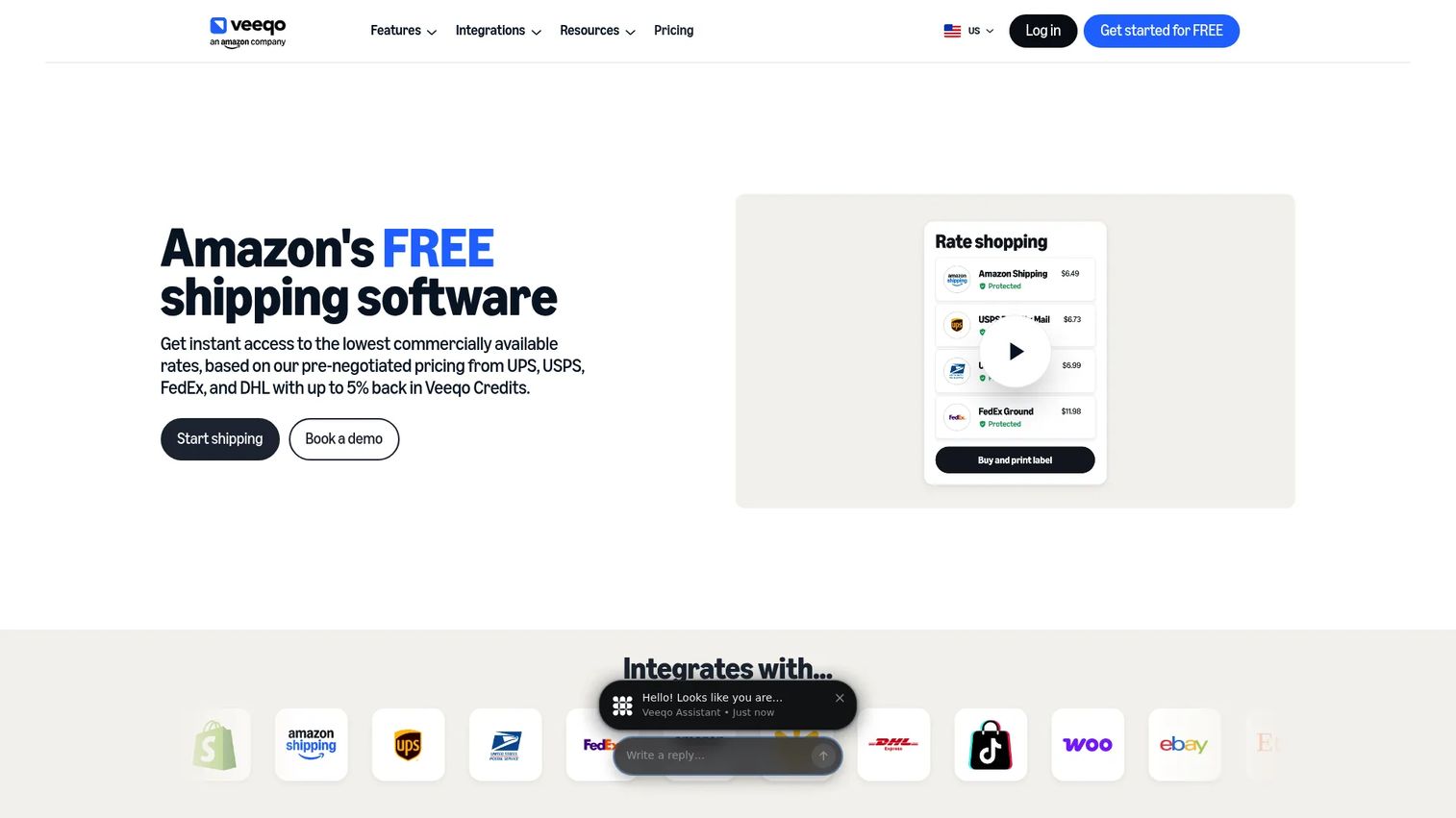
Veeqo is ecommerce shipping and inventory software for multichannel sellers. It centralizes order and inventory management across marketplaces while pairing it with free shipping tools and discounted carrier rates. For sellers who ship high volume, combining fulfillment convenience with inventory sync in one tool is a genuine draw.
Best for: Multichannel ecommerce sellers who need free shipping software plus paid inventory and warehouse tools.
Key strengths
- Free shipping software: discounted carrier rates and Veeqo Credits cut fulfillment cost for high-volume shippers.
- Automated inventory sync: stock syncs across channels automatically to support overselling prevention.
- Digital picking and multichannel listings: warehouse picking workflows and channel listings keep fulfillment and selling coordinated.
Why choose Veeqo: Choose it when shipping volume is central to your operation and you want fulfillment and inventory in one place. The free shipping plan lowers the barrier to entry for marketplace-driven sellers. If your needs skew toward manufacturing or deep forecasting, a more inventory-first platform will fit better.
Veeqo pricing: Veeqo offers three plans: Shipping (free), Inventory from $19/month, and High Volume from $350/month, with paid pricing scaling by monthly order volume. Its G2 rating is 4.5/5.
Considerations before you buy
The right tool depends on your specific channel mix, warehouse count, and how much production sits behind your SKUs. Run any shortlist through this checklist before committing.
Integration depth
A native integration to Shopify, Amazon, eBay, or Walmart is not the same as a good one. Verify how the tool handles listing sync, order import, and edge cases like bundles or multi-warehouse allocation on each channel you actually use. Ask about 3PL integration and FBA integration if fulfillment sits outside your walls. Shallow connectors create the exact reconciliation gaps you are trying to close.
Location and warehouse visibility
If you hold stock in more than one place, confirm the tool tracks quantity by location and supports transfers, bin-level detail, and location-aware order routing. Warehouse visibility that stops at a single aggregate number will not help you ship from the right site or avoid stranded inventory.
Forecasting and replenishment
Check whether forecasting uses real sales velocity, lead times, and seasonality, or just a static reorder point. Weak demand planning quietly leaves you overstocked and out of stock at the same time. Strong inventory replenishment logic is often what justifies the spend.
Bundles, kits, and assemblies
If you sell bundles, kits, or manufactured goods, confirm the tool does the component math correctly. A sellable bundle should decrement every component, and a BOM should update finished-goods availability. Get this wrong and your overselling prevention breaks on your most complex SKUs.
Reporting and operational controls
Look for barcode scanning, cycle counting, and audit workflows that keep physical and system counts aligned. Reporting should answer real operating questions: sell-through, aging stock, channel margin. Numbers you cannot trust are worse than no numbers.
Conclusion
Multichannel inventory software earns its place by doing one thing reliably: keeping a single true stock number reconciled across every channel and location so you stop overselling and stockouts. The right pick maps to your operation, not to a feature count.
Brightpearl fits retail and ecommerce teams wanting a unified back office. Descartes Sellercloud handles high-volume, complex channel stacks. Katana is the choice when production and BOMs sit behind your inventory. Zoho Inventory and Veeqo lower the entry barrier for budget-conscious and shipping-heavy sellers, while Finale Inventory rewards warehouse-precision operations and Cin7 suits growing brands consolidating tools.
The next step is simple: shortlist one or two tools based on your channel complexity, warehouse count, and replenishment needs, then run a trial or scoped demo against your real SKUs and order patterns. Test the messy cases (bundles, multi-warehouse orders, marketplace edge conditions) before you commit, because that is where the difference between tools actually shows up.
FAQs
It is a system that holds one master stock count and synchronizes it across every sales channel and storage location in real time. When an order arrives on one channel, the software reserves and decrements the unit centrally, then pushes the updated count to every other channel before a second buyer can commit to inventory that no longer exists. That single source of truth is what prevents overselling.
Sync speed and reliability come first, since slow updates are what cause oversells. After that, prioritize channel and marketplace integrations, multi-location and warehouse visibility, automation for order processing, inventory forecasting and replenishment, and accurate bundle, kit, and BOM support. The right weighting depends on whether your bottleneck is channel count, warehouse complexity, or production.
Yes, most tools on this list offer native integrations to Shopify, Amazon, eBay, and Walmart. The depth varies, though. Some connectors handle listing sync, order import, and multi-warehouse allocation cleanly, while others do the basics only. Verify the integration architecture for each channel you actually sell on before committing.
It uses centralized reservation logic and fast sync timing. The moment a unit sells anywhere, the system reserves it and updates available quantity across all channels, so no channel keeps advertising stock that is already committed. Real-time inventory sync is the mechanism, and centralized allocation is the safeguard when orders land simultaneously.
Not always. If volume is low and stock changes slowly, a disciplined spreadsheet can hold up for a while. Software becomes worth it when order velocity rises, when you add locations, or when manual updates start causing oversells and cancellations. The trigger is usually pace, not channel count alone.
Inventory software focuses narrowly on stock, orders, and fulfillment across channels and locations. ERP software is broader, covering finance, HR, procurement, and manufacturing alongside inventory as one integrated system. Many teams start with dedicated inventory software and only move toward ERP integration when operational scope outgrows a single-purpose tool.
Yes, especially when assemblies, BOMs, and production planning matter. Tools like Katana tie inventory directly to what is being made, so raw materials, work in progress, and finished goods all stay accurate. For manufacturers, inventory that ignores production leaves half the picture missing.
It depends on your specific mix. A brand outgrowing basic tools and consolidating channels and warehouses often fits Cin7 or Brightpearl, while a cost-sensitive early-stage seller may start with Zoho Inventory or Veeqo. If production sits behind your SKUs, Katana is the stronger match. Shortlist against channel complexity, warehouse count, and replenishment needs rather than chasing a single universal winner.