Most modern applications are mostly not written by the team shipping them. Open-source and third-party components make up the majority of a typical codebase, which means the biggest risk in your release often lives in code nobody on your team ever wrote. That is the exact gap software composition analysis exists to close.
The stakes are not abstract. The software composition analysis market was valued at USD 382.34 million in 2025 and is projected to reach USD 2,140.72 million by 2035, according to SNS Insider (2026). Spend is climbing because open-source risk keeps intensifying: new CVEs, malicious packages, and license obligations buried three layers deep in transitive dependencies.
If you sit in presales, security, or DevSecOps, you already know the pattern. A prospect asks how you handle open-source risk. Legal asks about license exposure before a deal closes. A security review stalls on whether you can produce an SBOM on demand. The right SCA tool answers all three without slowing developers to a crawl. If you build technical evaluations for a living, the same instinct that makes you compare demo formats and ab testing tools applies here: pick for workflow fit, not feature-sheet length.
This guide ranks 10 SCA tools for 2026, with pricing, differentiation, and where each one actually fits.
What's inside
This is a practical shortlist for teams choosing a software composition analysis tool in 2026. It is written for presales engineers, AppSec leads, and DevSecOps practitioners who need to explain SCA value to technical buyers, not just check boxes.
We selected tools based on four criteria: dependency and transitive dependency coverage, SBOM support and license compliance depth, remediation and vulnerability prioritization quality, and developer workflow fit across IDE, CI/CD, and source control. Every entry includes verified pricing where public, a G2 rating where available, and a clear "best for" so you can match the tool to your motion.
TL;DR
- Best for enterprise governance and license compliance: Black Duck, with deep SBOM and policy enforcement for compliance-heavy buying committees.
- Best for developer-first workflow: Snyk, built to scan and fix inside the IDE and CI/CD without leaving the developer's flow.
- Best for remediation automation: Mend, which pairs reachability-driven SCA with automated dependency updates.
- Best for license and legal exposure: FOSSA, purpose-built for open-source policy enforcement and SBOM reporting.
- Best for supply-chain control at the artifact layer: Sonatype Nexus IQ, the policy engine behind repository-level governance.
- Best for noise reduction: Endor Labs, using reachability analysis to cut false positives.
- Best free starting point: OWASP Dependency-Check, an open-source scanner for CI pipelines.
What is software composition analysis?
Software composition analysis is the practice of identifying, inventorying, and managing the open-source and third-party components inside an application, then flagging their known vulnerabilities, license obligations, and quality risks. In short, SCA answers a simple question with hard consequences: what is actually in your software, and what risk does it carry?
An SCA tool scans your dependency manifests and built artifacts, maps each component to known issues, and produces a software bill of materials (SBOM) you can hand to security reviewers, auditors, or customers. Because most risk hides in transitive dependencies, the components your dependencies pull in, good SCA traces the full graph, not just what you declared directly.
Core capabilities you should expect from software composition analysis software:
- Dependency inventory and SBOM generation: A complete, exportable list of every open-source component and its version, in formats like SPDX or CycloneDX.
- Vulnerability scanning: Mapping each component to disclosed CVEs, plus context on severity and exploitability.
- License compliance: Detecting license types (GPL, MIT, Apache, and others) and flagging obligations or conflicts before they become legal exposure.
- Transitive dependency analysis: Tracing the full dependency tree so nested risk does not slip through.
- Remediation guidance: Suggested version bumps, patches, or fixes that developers can act on.
- Policy enforcement: Rules that gate builds or block risky components at commit, build, or release.
- CI/CD integration: Scans that run automatically in the pipeline without manual steps.
Open source software composition analysis has moved from a nice-to-have to a baseline expectation in software supply chain security. Regulators, enterprise buyers, and frameworks now ask for an SBOM by default, which is why SCA sits at the center of most modern DevSecOps programs.
When to use software composition analysis tools
SCA is not a one-time scan. It works best when it runs continuously across the software development lifecycle. Here is where it earns its place.
Gate risk in CI/CD before it ships
Run an SCA scan on every pull request and build. A tool that integrates natively into CI/CD can block a merge when a critical vulnerability or forbidden license appears, so risky components never reach production. This is the highest-leverage use: catch issues while the fix is cheap.
Answer security reviews and compliance audits
When a prospect's security team asks for an SBOM or proof of open-source hygiene, you need an answer in hours, not weeks. SCA tools generate and export SBOMs on demand, which turns a stalled security review into a checkbox. For presales, that is often the difference between deal momentum and a two-week delay.
Manage license compliance before legal gets involved
Copyleft licenses and attribution requirements can create real legal exposure. Continuous license scanning surfaces obligations early, so legal reviews open-source risk before a contract, not after a customer flags it. Teams that care about license compliance treat this as a first-class use case, not an afterthought.
Comparison table: software composition analysis tools at a glance
The table below summarizes the 10 SCA tools by intent, key differentiation, pricing, and G2 rating. Use it to narrow the field, then read the item sections for the detail that matters to your evaluation. Pricing reflects publicly listed figures where available; several vendors quote by seat, project, or contract.
| # | Product | Intent | Key differentiation | Pricing | G2 rating |
|---|---|---|---|---|---|
| 1 | Black Duck | Enterprise SCA and supply-chain risk | Deep SBOM, policy enforcement, advisory intelligence | Quote-based | 4.0/5 |
| 2 | Snyk | Developer-first AppSec | IDE and CI/CD scanning with fix suggestions | Free; Team from $25/dev/mo | 4.5/5 |
| 3 | Mend | Automated remediation | Reachability-driven SCA plus auto dependency updates | Up to $1,000/dev/yr (AppSec) | 4.3/5 |
| 4 | FOSSA | License compliance and SBOM | Open-source policy enforcement and reporting | Free; Business $20/project/mo | Not listed |
| 5 | Sonatype Nexus IQ | Supply-chain governance | Policy engine for repository-level control | Custom | Not listed |
| 6 | Veracode SCA | Platform AppSec | SCA inside a broader security platform | Quote-based | 4.0/5 |
| 7 | Checkmarx One | Unified AppSec platform | SCA within one consolidated platform | Custom quote | 4.4/5 |
| 8 | Endor Labs | Risk prioritization | Reachability analysis to cut noise | Free Developer tier | 4.8/5 |
| 9 | GitHub Advanced Security | Repo-native security | Dependency review inside GitHub | From $19/committer/mo | 4.7/5 |
| 10 | OWASP Dependency-Check | Open-source baseline | Free CLI and CI scanning | Free | Not listed |
1. Black Duck
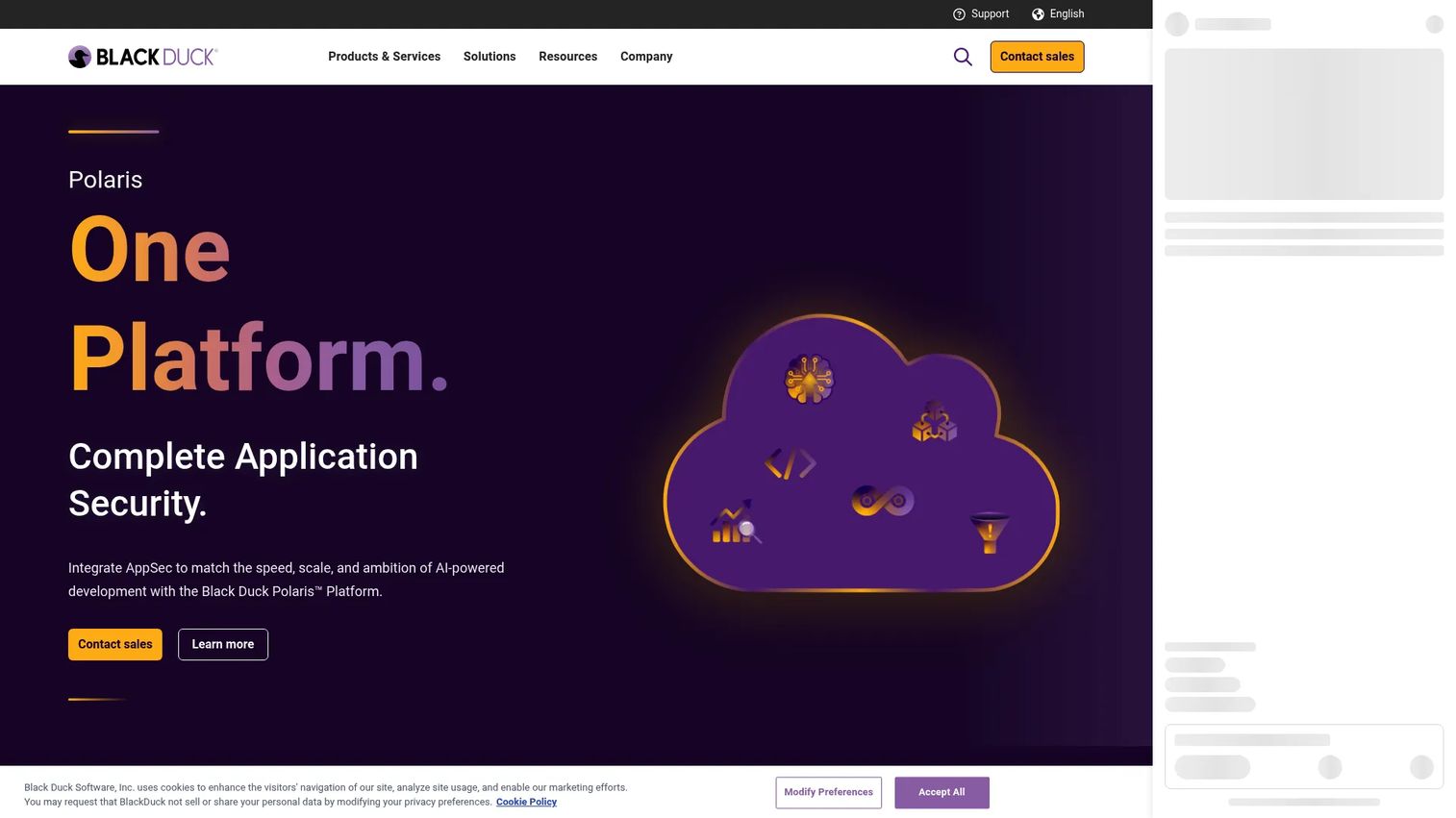
Black Duck is an application security platform for finding and managing open-source, binary, container, and AI-related code risk. Its SCA capabilities are among the most mature in the market, with deep coverage of vulnerabilities, license obligations, and code-quality issues. For enterprises with compliance-heavy buying committees, Black Duck SCA is often the reference point other tools get measured against.
Best for: Enterprises that need software supply chain and open-source risk management at scale.
Key strengths
- SBOM generation and import/export: Produces and ingests SBOMs in standard formats, ready for auditors, customers, and security reviews.
- Policy enforcement: Granular policies for vulnerabilities and licenses that gate builds and releases.
- Advisory intelligence: Proprietary vulnerability research that adds context beyond raw CVE feeds.
Why choose Black Duck: When a buying committee includes legal, security, and procurement, Black Duck's depth in license compliance and SBOM handling gives you defensible answers across all three. It is the enterprise choice for teams whose open-source risk management program has to survive audits and due diligence, not just developer scrutiny.
Black Duck pricing: Black Duck does not publish pricing on its first-party pricing page. The vendor uses a quote-based model, so you contact sales to scope licensing against your codebase and team size. Expect enterprise packaging aligned to a broad AppSec program rather than a per-seat entry tier.
2. Snyk
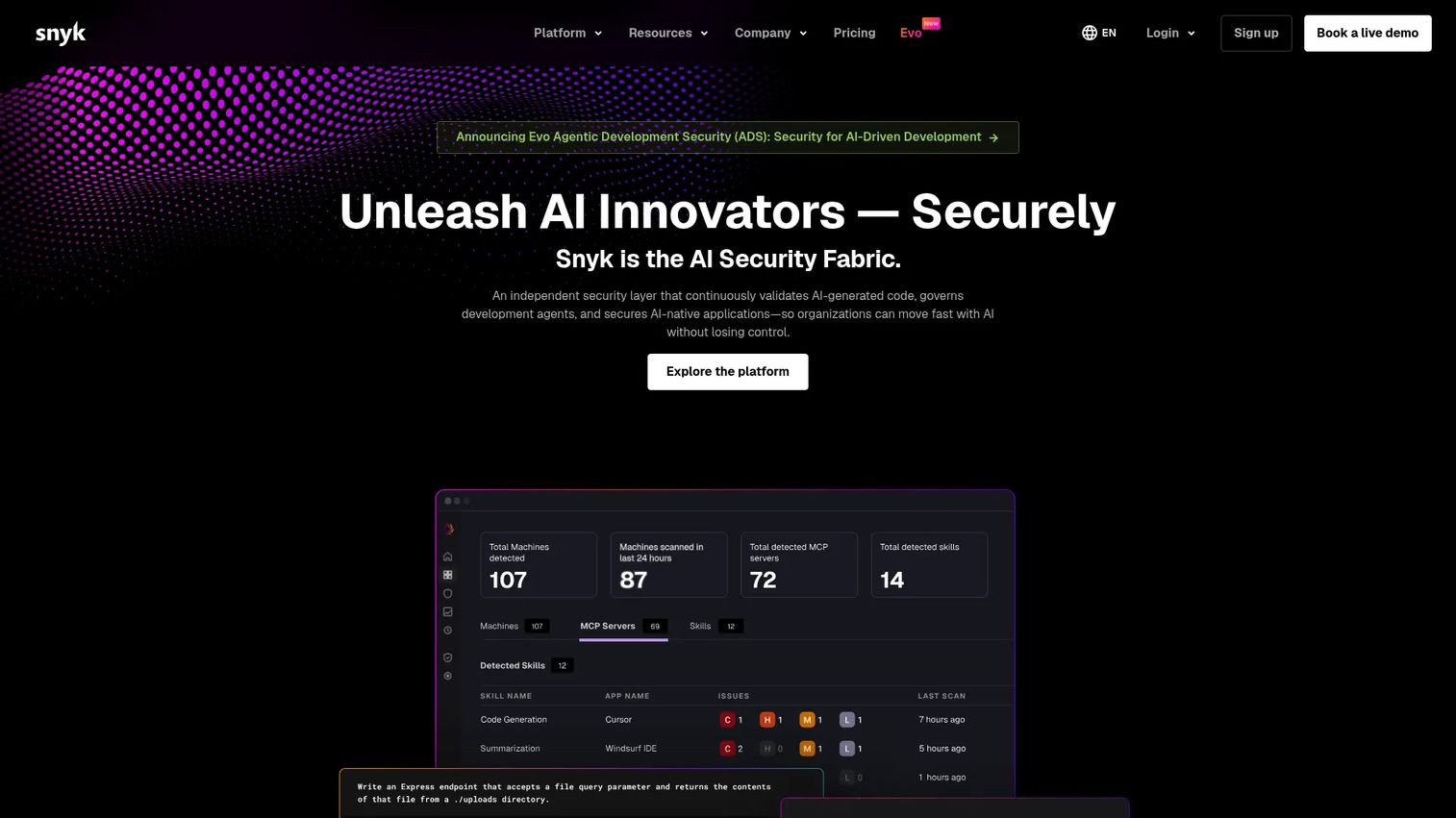
Snyk is a developer security platform for finding and fixing vulnerabilities across code, open-source dependencies, containers, and infrastructure as code. Its SCA lives where developers already work: the IDE, the CLI, source control, and CI/CD. That workflow proximity is why fast-moving engineering teams shortlist it first.
Best for: Teams that want developer-first application security scanning across the SDLC.
Key strengths
- SCA plus broader scanning: SCA, SAST, IaC, and container scanning in one platform.
- Developer-native integrations: IDE, CLI, SCM, and CI/CD hooks that fit existing dependency scanning workflows.
- Fix suggestions: Built-in rulesets, custom policies, and actionable remediation guidance developers will actually use.
Why choose Snyk: If developer adoption is the make-or-break factor, Snyk's in-flow experience gives it an edge. Developers get fast feedback where they code, which means fewer ignored alerts and faster fixes. It fits teams that value speed of remediation over centralized security governance.
Snyk pricing: Snyk offers a Free plan at $0 per contributing developer per month. The Team plan starts at $25 per contributing developer per month, and Ignite starts at $1,260 per contributing developer per year. Enterprise is contact-sales. Note that plan price varies by product, and all products must sit within the same plan tier.
3. Mend
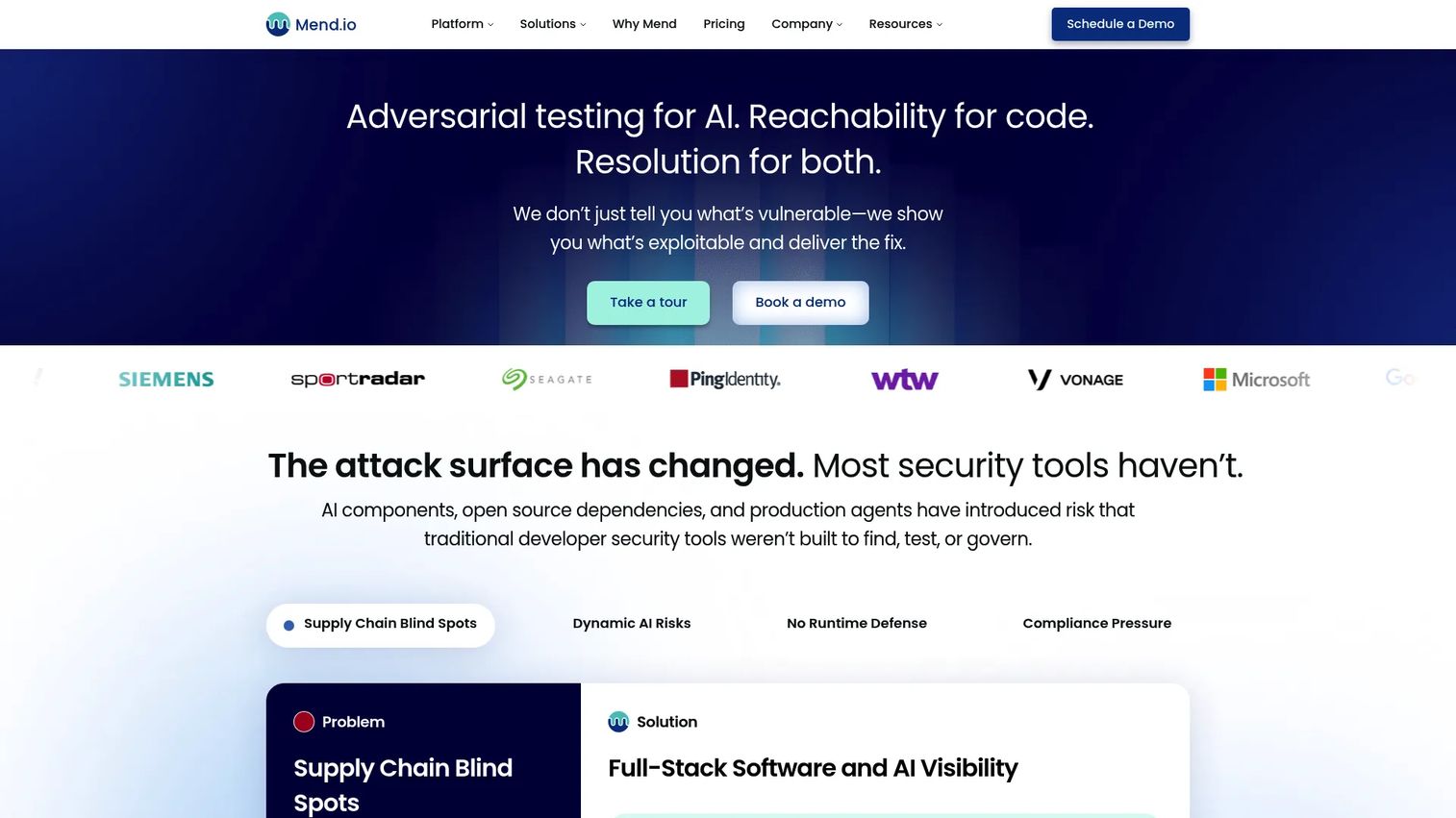
Mend is an application security and AI security platform for securing code, dependencies, containers, and AI components. Its standout is automated remediation: Mend can open pull requests to update vulnerable dependencies, which turns a backlog of findings into merged fixes. Reachability analysis helps teams focus on the vulnerabilities that actually matter.
Best for: Security teams needing unified AppSec and AI security with automated dependency management.
Key strengths
- Reachability-driven SCA: Prioritizes vulnerabilities that are actually reachable in your code, cutting noise.
- Automated dependency updates: Opens fix pull requests so remediation happens without manual grunt work.
- AI security coverage: AI-BOM discovery, red teaming, and runtime guardrails for AI components.
Why choose Mend: If your team drowns in findings and needs fixes to ship, not just alerts to triage, Mend's automation is the reason to pick it. It suits security teams that want remediation velocity built into the tool rather than bolted on through separate scripts.
Mend pricing: Mend lists per-developer annual pricing. Mend AppSec runs up to $1,000 per developer per year, Mend AI up to $300 per developer per year, and Mend Renovate Enterprise up to $250 per developer per year. Figures are shown as ceilings; contact Mend for scoped pricing.
4. FOSSA
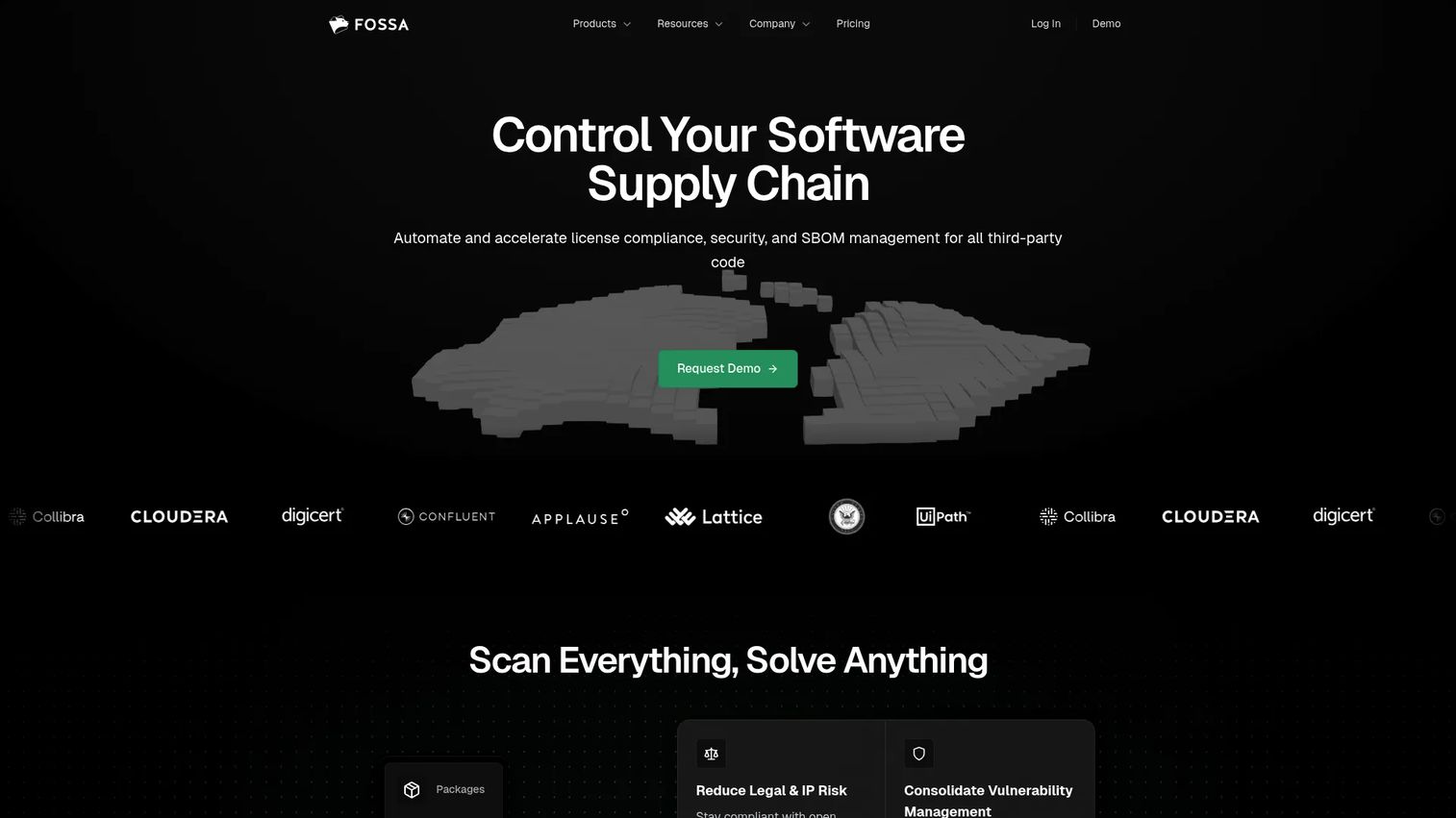
FOSSA is an open-source software supply chain management platform focused on license compliance, security, and SBOMs. Where many tools treat license compliance as a secondary feature, FOSSA treats it as the core job. That makes it a favorite of legal and security teams that need defensible open-source policy enforcement.
Best for: Engineering teams that need open-source compliance, security, and SBOM management in one place.
Key strengths
- License compliance and policy enforcement: Detects license types and enforces policy before risky components ship.
- SBOM management: Generates and reports SBOMs for audits, customers, and regulators.
- Vulnerability scanning and remediation: Surfaces known issues with paths to fix them.
Why choose FOSSA: If legal exposure from open-source licensing keeps your counsel up at night, FOSSA is built for that exact problem. It fits teams where compliance and license governance rank alongside vulnerability management, not below it.
FOSSA pricing: FOSSA offers a Free forever plan. The Business plan is $20 per project per month, billed annually, and the Enterprise plan is custom. The project-based pricing model is unusual in this category and can be attractive for teams with a bounded set of repositories.
5. Sonatype Nexus IQ
Sonatype Nexus IQ is the policy and analysis engine behind Sonatype's software supply chain security solutions. Rather than a standalone product, IQ Server powers security, license, and quality analysis for components across licensed Sonatype offerings. Its strength is control at the artifact and repository layer, where a repository firewall can block risky components before they ever enter your build.
Best for: Organizations that need self-hosted software supply chain policy enforcement and component risk analysis.
Key strengths
- Policy and access management: Centralized governance for IQ Server-powered solutions.
- Component risk analysis: Security, license, and quality evaluation of open-source components.
- Self-hosted deployment: Downloadable IQ Server binaries with current release and compatibility guidance.
Why choose Sonatype Nexus IQ: If your DevSecOps program wants to stop risky components at the repository boundary rather than catch them later, Sonatype's artifact-layer control is the differentiator. It fits organizations already invested in artifact management and repository governance.
Sonatype Nexus IQ pricing: Sonatype does not publish a standalone price for Nexus IQ Server. Its public pricing page shows custom pricing for Lifecycle and SBOM Manager, and IQ Server is licensed as part of those broader solutions. Contact Sonatype for scoped pricing.
6. Veracode SCA
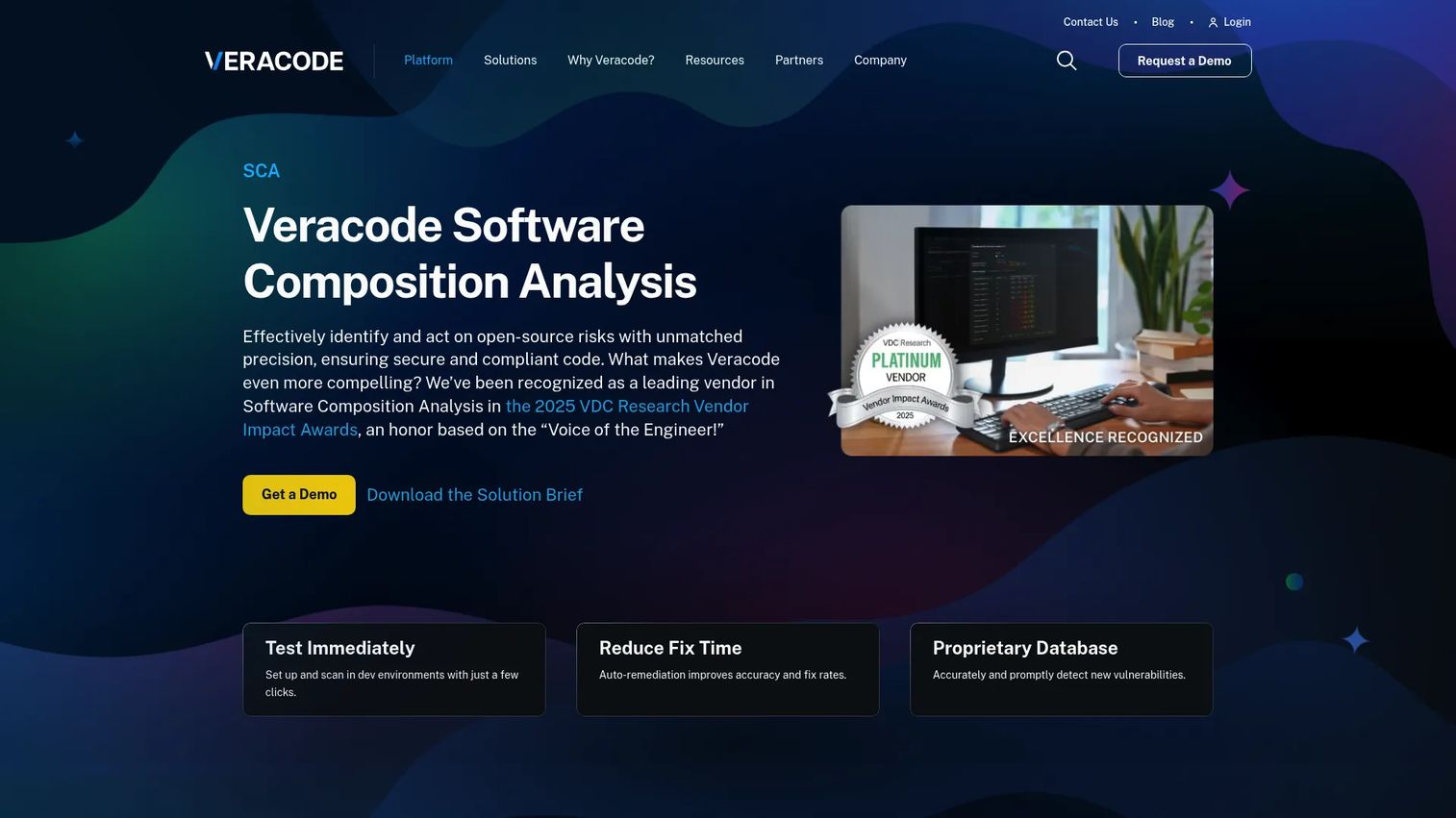
Veracode SCA identifies and remediates open-source and third-party component risk as part of Veracode's broader application security platform. For security programs standardizing on a single AppSec suite, Veracode's SCA fits neatly alongside SAST, DAST, and compliance reporting rather than living as a point tool.
Best for: Enterprises that need SCA inside a broader application security platform.
Key strengths
- Malicious package detection: Flags components that carry supply-chain attack risk.
- Reachability analysis: Prioritizes vulnerabilities based on whether they can actually be triggered.
- SBOM and dependency graphs: Generates SBOMs and maps the full dependency tree, with auto pull requests for fixes.
Why choose Veracode SCA: When consolidation and enterprise compliance reporting matter more than a best-of-breed point solution, Veracode's platform alignment is the reason to choose it. It suits security teams that want SCA governed under the same reporting and policy layer as the rest of their AppSec program.
Veracode SCA pricing: Veracode does not publish public pricing for SCA on its website. Packaging is quote-based and typically scoped as part of the broader platform, so contact Veracode to align pricing with your program's size and needs.
7. Checkmarx One
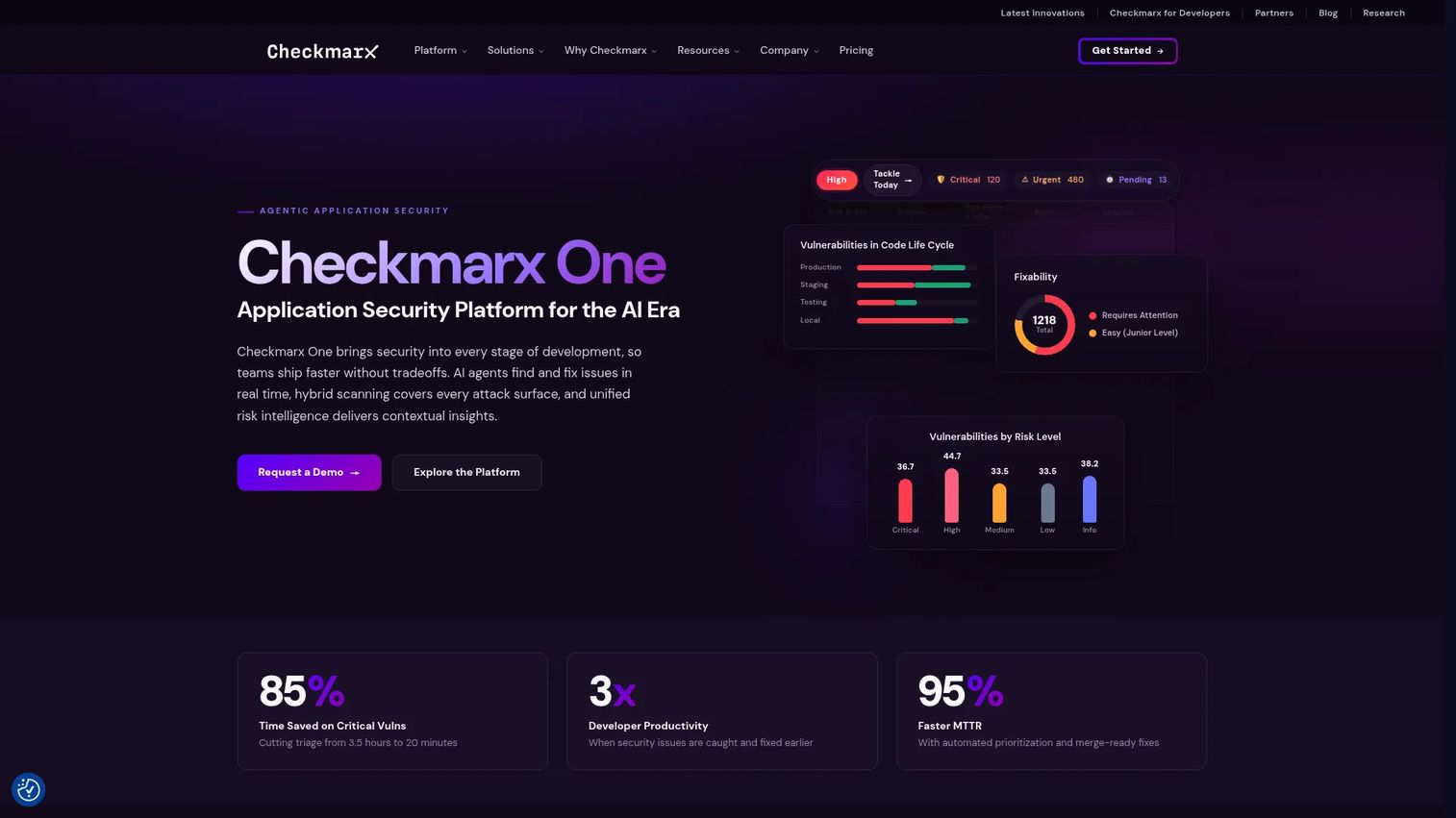
Checkmarx One is an enterprise application security platform that secures code across the SDLC, with SCA as one module in a unified suite. For large engineering teams consolidating tools, the appeal is a single platform covering ASPM, DAST, SCA, API security, containers, IaC, and secrets detection.
Best for: Large engineering teams that need a unified enterprise AppSec platform.
Key strengths
- Unified platform: SCA alongside SAST, DAST, API security, and more in one place.
- Broad integrations: Connects with IDEs, SCMs, CI/CD, and ticketing tools.
- ASPM coverage: Application security posture management to correlate findings across scanners.
Why choose Checkmarx One: If your priority is reducing tool sprawl and governing all of AppSec through one platform, Checkmarx One's consolidation is the case for it. It fits enterprises where a single vendor relationship and unified reporting outweigh point-solution depth.
Checkmarx One pricing: Checkmarx does not display a public price. Pricing is via custom quote based on developer seats, applications, and usage. Contact Checkmarx to scope packaging for your organization.
8. Endor Labs
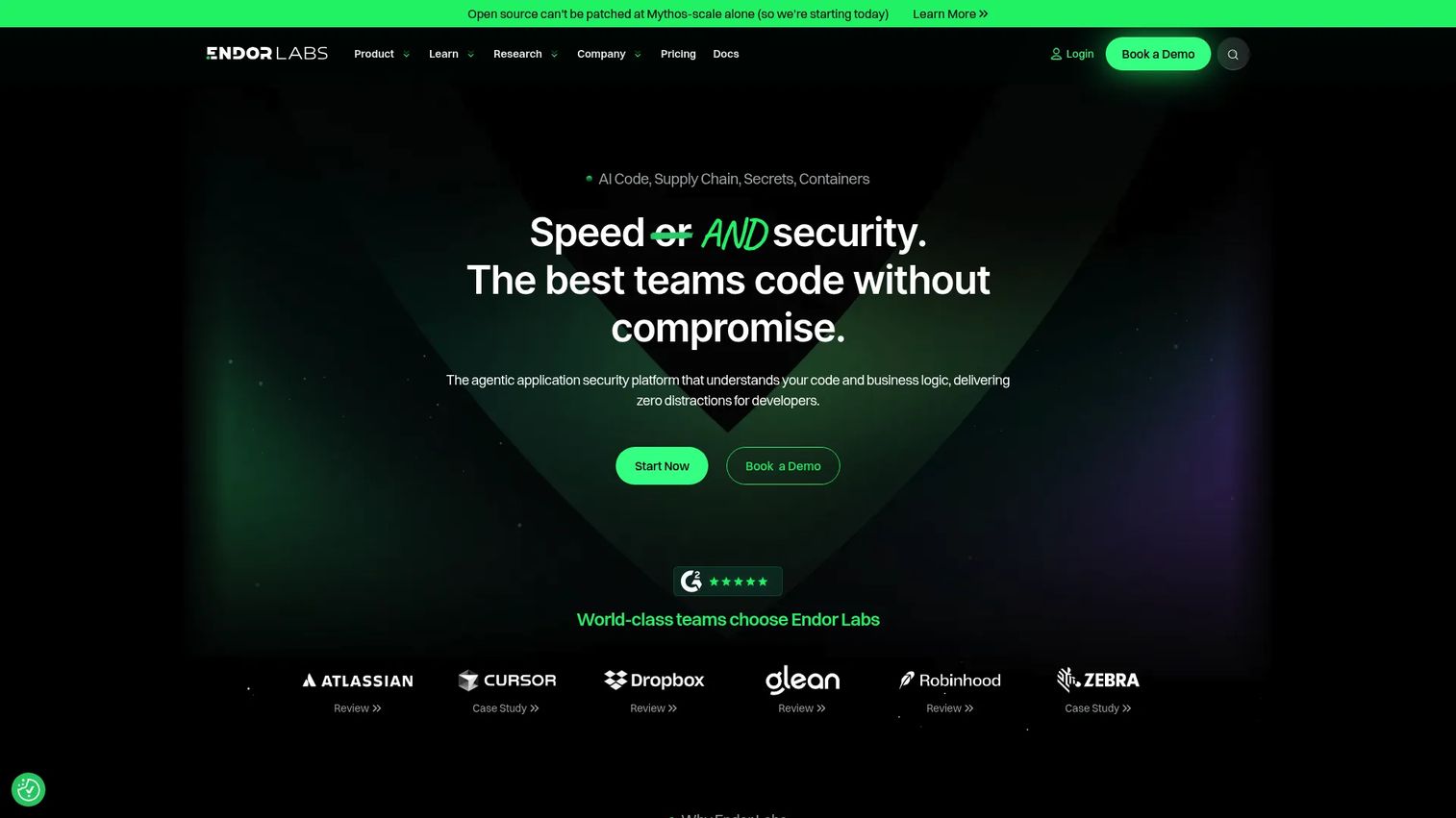
Endor Labs is an AI-native application security platform for securing code, dependencies, containers, and AI coding workflows. Its core pitch is signal over volume: reachability-based analysis tells you which vulnerabilities are actually exploitable in your code, so teams fix what matters instead of chasing every alert. Its 4.8/5 G2 rating is the highest on this list.
Best for: Teams that want developer-first application security with reachability-aware prioritization and AI-era code protections.
Key strengths
- Reachability-based SCA: Prioritizes dependency and container risk by whether it can actually be reached.
- Malicious package detection: Catches supply-chain attacks hidden in dependencies.
- AI SAST and secrets detection: Code scanning plus protections for AI-assisted development.
Why choose Endor Labs: If alert fatigue is killing your remediation program, Endor Labs' noise reduction is the reason to evaluate it. It appeals to teams that want better prioritization and modern open-source governance rather than a longer list of findings.
Endor Labs pricing: Endor Labs offers a free Developer tier, plus paid Core and Pro tiers. The pricing page does not display numeric prices; pricing is seat-based and varies by SKU. Contact Endor Labs to scope the paid tiers.
9. GitHub Advanced Security
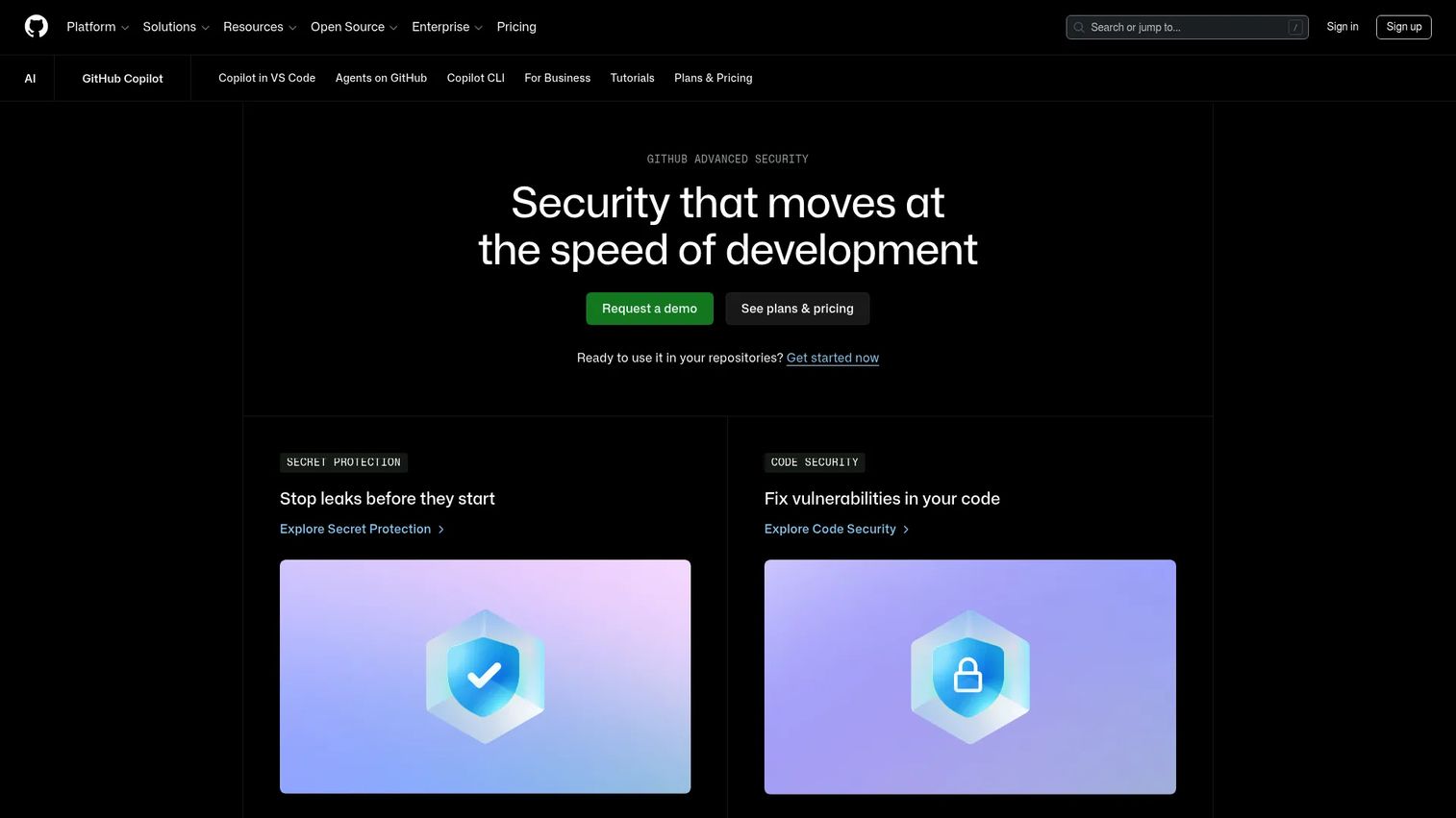
GitHub Advanced Security is GitHub's application security add-on for finding and fixing vulnerabilities and secret leaks in code. For teams already standardized on GitHub, dependency review and dependency alerts live right in the pull request, which makes adoption almost frictionless. There is no separate tool to learn.
Best for: Enterprises that want native GitHub security scanning and secret protection.
Key strengths
- Dependency monitoring and automated fixes: Alerts on vulnerable dependencies with fix suggestions in the PR.
- Secret Protection: Detects leaked credentials before they ship.
- Code Security: Static analysis integrated into the GitHub workflow.
Why choose GitHub Advanced Security: If your engineering org lives in GitHub, the repo-native experience removes the adoption barrier that trips up standalone tools. Developers get security signal inside a workflow they already use daily, which drives real developer adoption.
GitHub Advanced Security pricing: GitHub prices in two paid layers. Secret Protection is $19 per active committer per month, and Code Security is $30 per active committer per month. The per-active-committer model can be cost-effective for teams that already pay for GitHub.
10. OWASP Dependency-Check
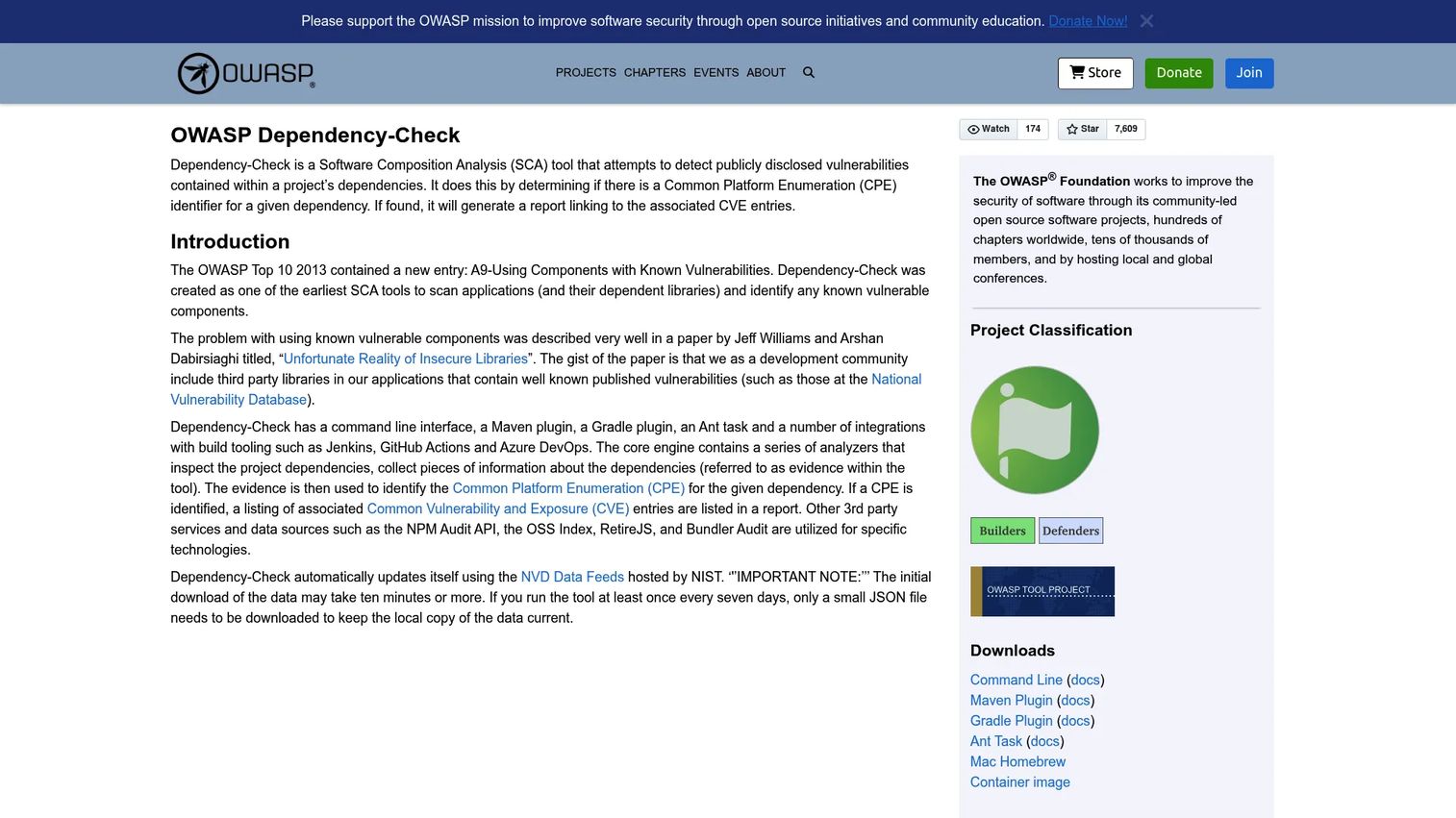
OWASP Dependency-Check is a free, open-source SCA tool for detecting publicly disclosed vulnerabilities in project dependencies. It identifies component CPEs, links them to CVEs, and runs in your build pipeline. For budget-conscious teams or those wanting a baseline before committing to a commercial platform, it is a common starting point.
Best for: Teams that want an open-source dependency vulnerability scanner in CI and build pipelines.
Key strengths
- Build-tool integrations: Works with Maven, Gradle, Ant, Jenkins, GitHub Actions, and Azure DevOps.
- CVE detection: Identifies CPEs and links to disclosed CVEs using NVD data feeds.
- CLI-first: Runs directly in CI pipelines with no license cost.
Why choose OWASP Dependency-Check: As a free, OWASP flagship project, it gives teams a real starting point for dependency scanning without procurement. It is strong as a baseline, though commercial platforms add license compliance depth, reachability prioritization, richer remediation guidance, and managed SBOM workflows that a self-managed scanner does not cover.
OWASP Dependency-Check pricing: OWASP Dependency-Check is free and open source. There is no paid tier or license cost; you self-host and maintain it within your own pipeline.
Considerations when choosing an SCA tool
A shortlist is only useful if you match it to how your team actually works. Weigh these criteria before you run a proof of concept.
Integration depth
An SCA tool only reduces risk if it runs where developers work and where builds happen. Check native support for your IDEs, source control, CI/CD, and ticketing. A tool that forces context-switching gets ignored, no matter how accurate its scans.
SBOM support
Confirm the tool generates and imports SBOMs in the formats your customers and auditors expect, typically SPDX and CycloneDX. If security reviews stall your deals, on-demand SBOM export is not optional. It is the feature that unblocks late-stage evaluations.
License compliance depth
Vulnerability scanning is table stakes; license compliance separates the serious tools. Verify the tool detects the license types you care about, enforces policy, and surfaces obligations from transitive dependencies, not just direct ones.
Vulnerability prioritization
Raw CVE counts create alert fatigue. Look for reachability analysis or risk-based prioritization that tells developers which issues are actually exploitable, so remediation effort goes where it matters.
Remediation workflow
The best tools do not just find problems; they help ship fixes. Evaluate whether the tool offers version suggestions, automated pull requests, and clear remediation guidance that fits your developers' habits.
Conclusion
The right software composition analysis tool depends on your motion, not a leaderboard. For enterprise governance and audit-ready license compliance, Black Duck and FOSSA lead. For developer-first workflow and fast remediation, Snyk and Mend fit best. For noise reduction through reachability, Endor Labs stands out. If you live in GitHub, GitHub Advanced Security removes the adoption barrier entirely, and OWASP Dependency-Check gives budget-conscious teams a real baseline. For platform consolidation, Checkmarx One and Veracode SCA, plus Sonatype Nexus IQ for artifact-layer control, cover the enterprise suite scenario.
The next step is simple: pick two or three tools that match your workflow, SBOM needs, and remediation depth, then run them against your real dependency tree in a proof of concept. The tool that surfaces the least noise while catching the most real risk, and that your developers actually adopt, is the one that wins. For presales teams supporting these evaluations, the same discipline you bring to any technical validation applies here, and a clean walkthrough of your own product remains the fastest way to build buyer trust with Guideflow.
FAQs
Software composition analysis is the practice of identifying and managing the open-source and third-party components in an application, along with their known vulnerabilities, license obligations, and quality risks. An SCA tool inventories every component, maps it to disclosed CVEs, and generates an SBOM. It is a core part of software supply chain security and modern DevSecOps.
SAST (static application security testing) analyzes the code your team writes for security flaws like injection or insecure logic. SCA analyzes the code your team did not write, the open-source and third-party dependencies, for known vulnerabilities and license risk. They are complementary: SAST covers your custom code, SCA covers everything you pulled in. Many platforms now bundle both.
An SBOM (software bill of materials) is a complete inventory of every component in your software. Enterprise buyers, auditors, and regulators increasingly require one, so on-demand SBOM generation turns a stalled security review into a quick answer. Without it, deals and audits slow down while your team assembles the inventory by hand.
Snyk, Endor Labs, and GitHub Advanced Security score highly on developer workflow. Snyk embeds scanning in the IDE, CLI, and CI/CD. GitHub Advanced Security surfaces dependency review directly in the pull request for GitHub-native teams. Endor Labs reduces noise with reachability analysis so developers act on real issues. The best fit depends on where your developers already work.
Good SCA tools trace the full dependency graph, not just the components you declared directly. They resolve each dependency's own dependencies, several layers deep, and flag vulnerabilities or license conflicts anywhere in that tree. Because most open-source risk hides in transitive dependencies, this graph analysis is one of the clearest differentiators between serious tools and basic scanners.
Pricing models vary widely: per contributing developer (Snyk, Mend), per project (FOSSA), per active committer (GitHub Advanced Security), and quote-based enterprise packaging (Black Duck, Veracode, Checkmarx, Sonatype). Match the model to how your team scales. Also check which capabilities, like SBOM export, reachability analysis, or policy enforcement, are gated to higher tiers before you commit.
Open-source tools like OWASP Dependency-Check give teams a strong baseline for dependency scanning at no license cost, and many production teams run them in CI. Commercial platforms add license compliance depth, reachability-based prioritization, richer remediation guidance, and managed SBOM workflows on top. The right choice depends on your compliance obligations, team size, and how much you want to self-manage.
SCA tools detect the license type of every open-source component, including those buried in transitive dependencies, and flag obligations or conflicts. They enforce policy, blocking or warning on licenses like GPL that carry copyleft requirements. This lets legal and security teams surface open-source risk early, before a contract closes or a customer flags it, rather than scrambling after the fact.