

You're spending thousands on campaigns targeting "marketing directors at mid-sized SaaS companies." So is everyone else. The targeting looks right on paper, but conversion rates keep sliding because demographics alone don't tell you what actually motivates a purchase decision.
Audience intelligence platforms analyze public data to reveal the psychographics, behaviors, and content affinities that demographics miss. This guide covers 15 platforms that help you understand not just who your buyers are, but why they buy and where they spend attention online.
What's inside
This guide covers 15 audience intelligence platforms that help marketing teams understand their buyers beyond surface-level demographics. We selected tools based on G2 ratings, data source diversity, integration capabilities, and real-world adoption by growth and demand gen teams.
You'll find platforms ranging from social-first audience analysis to survey-based consumer research, each suited to different use cases and team sizes.
TL;DR
Audiense and SparkToro lead for social audience research and discovering where your buyers spend time online
GWI and Helixa excel at deep psychographic profiling across international markets
Brandwatch and Meltwater combine social listening with audience analytics for enterprise teams
Choose based on your primary data needs: social behavior, survey panels, or web traffic analysis
Integration with your existing stack matters more than feature count
What is audience intelligence
Audience intelligence is the practice of gathering and analyzing public data about your target audiences to understand who they are, what they care about, and where they spend time online - a $5.52 billion market projected to reach $15.54 billion by 2033. Unlike basic demographics that tell you someone's age or job title, audience intelligence digs into psychographics, behavioral patterns, and content affinities. You're moving from "who" to "why."
Think of it this way: demographics tell you that your buyers are marketing directors at mid-sized companies. Audience intelligence tells you which podcasts they listen to, which influencers they trust, what topics spark their engagement, and what values drive their purchasing decisions.
Behavioral data: What your audience does online, including content consumption and engagement patterns
Psychographic data: Values, interests, attitudes, and lifestyle characteristics that shape decisions
Demographic data: Age, location, job titles, and company information
Affinity data: Brands, influencers, and media sources your audience follows
The platforms in this guide pull from social APIs, web behavior tracking, survey panels, and third-party data providers to build audience profiles. The quality of insights depends heavily on which sources a platform uses and how fresh that data stays.
Best audience intelligence platforms at a glance
Product | Primary use case | Key differentiation | Pricing | G2 rating |
|---|---|---|---|---|
Audiense | Social audience segmentation | Twitter/X analysis with IBM Watson personality insights | From $696/year | 4.4/5 |
SparkToro | Audience research for content strategy | Fast discovery of podcasts, YouTube channels, publications | From $50/month | 4.7/5 |
Helixa | Psychographic profiling | Cross-platform passion point analysis | Custom | 4.5/5 |
Pulsar Platform | Trend detection | Real-time conversation monitoring | Custom | 4.3/5 |
Meltwater | Media intelligence | Global PR monitoring with audience insights | Custom | 4.0/5 |
Brandwatch | Consumer intelligence | Historical social data depth | Custom | 4.4/5 |
Sprinklr Insights | Unified CXM | Part of broader customer experience platform | Custom | 4.3/5 |
GWI | Survey-based research | Panel data across 50+ markets | Custom | 4.5/5 |
Infegy Atlas | Sentiment analysis | Academic-grade social listening | Custom | 4.6/5 |
Talkwalker | Visual analytics | Image recognition and brand monitoring | Custom | 4.3/5 |
Affinio | Interest-graph clustering | Discovering unexpected audience affinities | Custom | 4.2/5 |
Synthesio | Market research integration | Ipsos ecosystem with consulting support | Custom | 4.1/5 |
Similarweb | Digital behavior intelligence | Competitive traffic and app analysis | From $125/month | 4.5/5 |
Semrush Market Explorer | SEO-adjacent research | Competitor audience and content gaps | From $139/month | 4.5/5 |
Quantcast | Advertising activation | Real-time measurement for programmatic | Custom | 4.2/5 |
What makes a strong audience intelligence platform
Before diving into specific tools, it helps to understand what separates useful audience intelligence from vanity metrics.
Data aggregation and source quality
The foundation of any audience intelligence platform is where it pulls data from. Some rely primarily on social APIs like Twitter/X and Reddit. Others use web behavior tracking, survey panels, or partnerships with data providers.
Source diversity matters because no single channel tells the complete story. A platform pulling only from Twitter will miss audiences who primarily engage on LinkedIn or through podcasts.
Behavioral and psychographic profiling
Demographics tell you who someone is. Psychographics tell you why they buy - a Simon-Kucher case study found psychographic segmentation drove a projected 29% revenue growth. The most useful platforms go beyond job titles and company sizes to surface motivations, values, and content preferences.
Psychographic profiling might reveal that your target buyers over-index on sustainability content, trust peer recommendations over analyst reports, or engage heavily with specific industry podcasts.
Audience segmentation and persona building
Raw data becomes actionable when platforms cluster audiences into meaningful segments. Static personas based on assumptions are being replaced by dynamic segments that update as new data flows in.
The ability to export segments directly to ad platforms or CRMs determines whether insights stay in a dashboard or actually reach campaigns.
Trend detection and predictive analytics
Leading platforms identify emerging topics and shifting preferences before they become obvious. Trend detection might mean spotting a rising interest in a competitor, detecting sentiment shifts around industry topics, or flagging cultural moments relevant to your audience.
Campaign activation and stack integration
Audience intelligence only creates value when it connects to execution. The best platforms integrate cleanly with ad platforms, CRMs, and marketing automation tools so insights flow directly into targeting and personalization.
15 best audience intelligence tools for marketers
1. Audiense
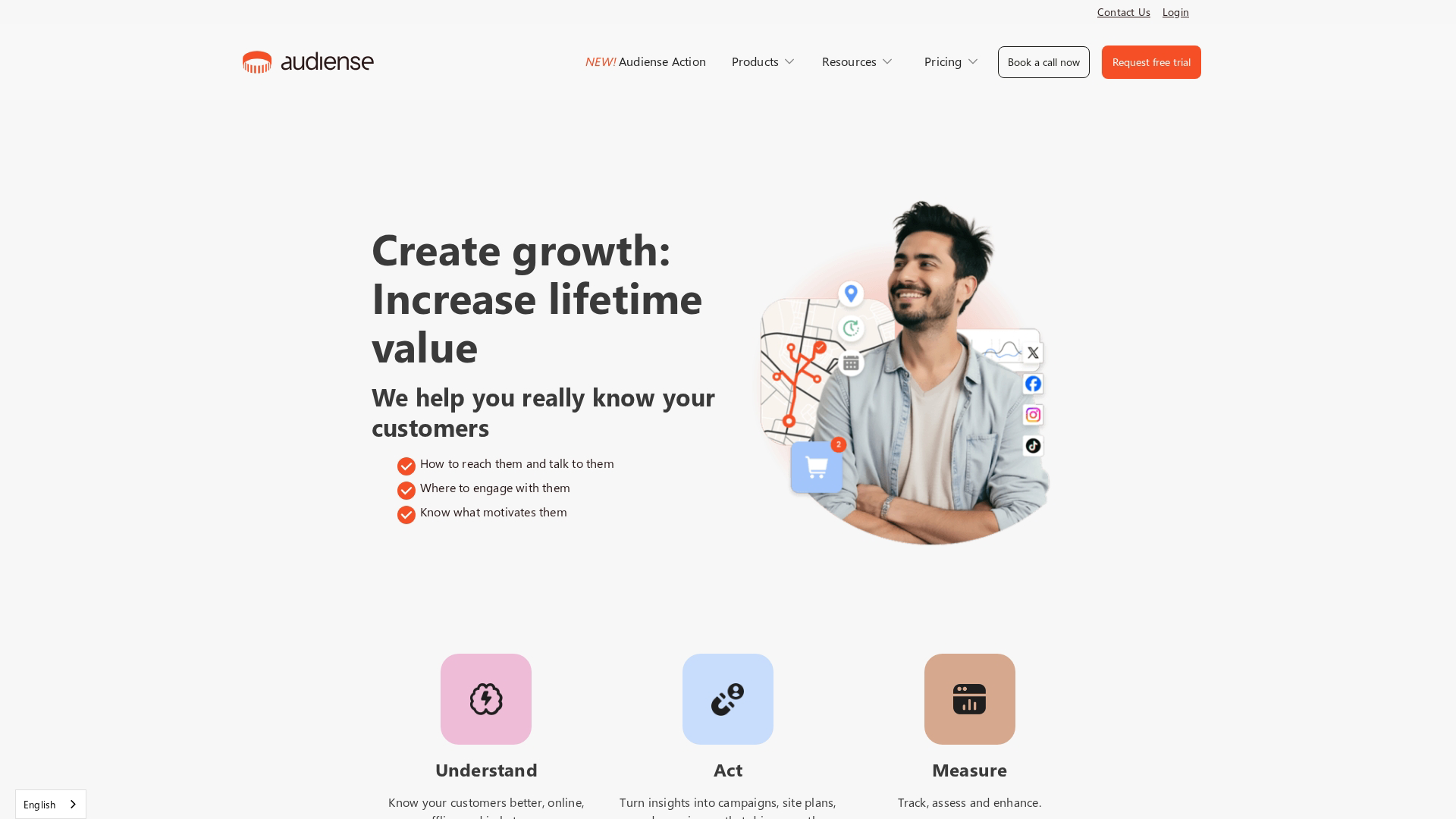
Audiense is the leading audience intelligence platform for teams focused on social-first segmentation and influencer identification. The platform analyzes Twitter/X audiences to reveal who follows your brand, competitors, or any account, then clusters those audiences by interests, demographics, and personality traits using IBM Watson integration.
Best for: Marketing teams running social campaigns who want to understand audience composition and identify relevant influencers based on actual follower overlap.
Key strengths
Twitter/X audience analysis: Deep segmentation of any public account's followers by interests, demographics, and behaviors
Personality insights: IBM Watson integration surfaces psychological traits and communication preferences
Influencer identification: Find creators whose audiences genuinely overlap with your target segments
Segment export: Push audience segments directly to Twitter Ads and other platforms
Pricing: Plans start at $696/year for basic features, with professional tiers for larger teams and API access.
2. SparkToro
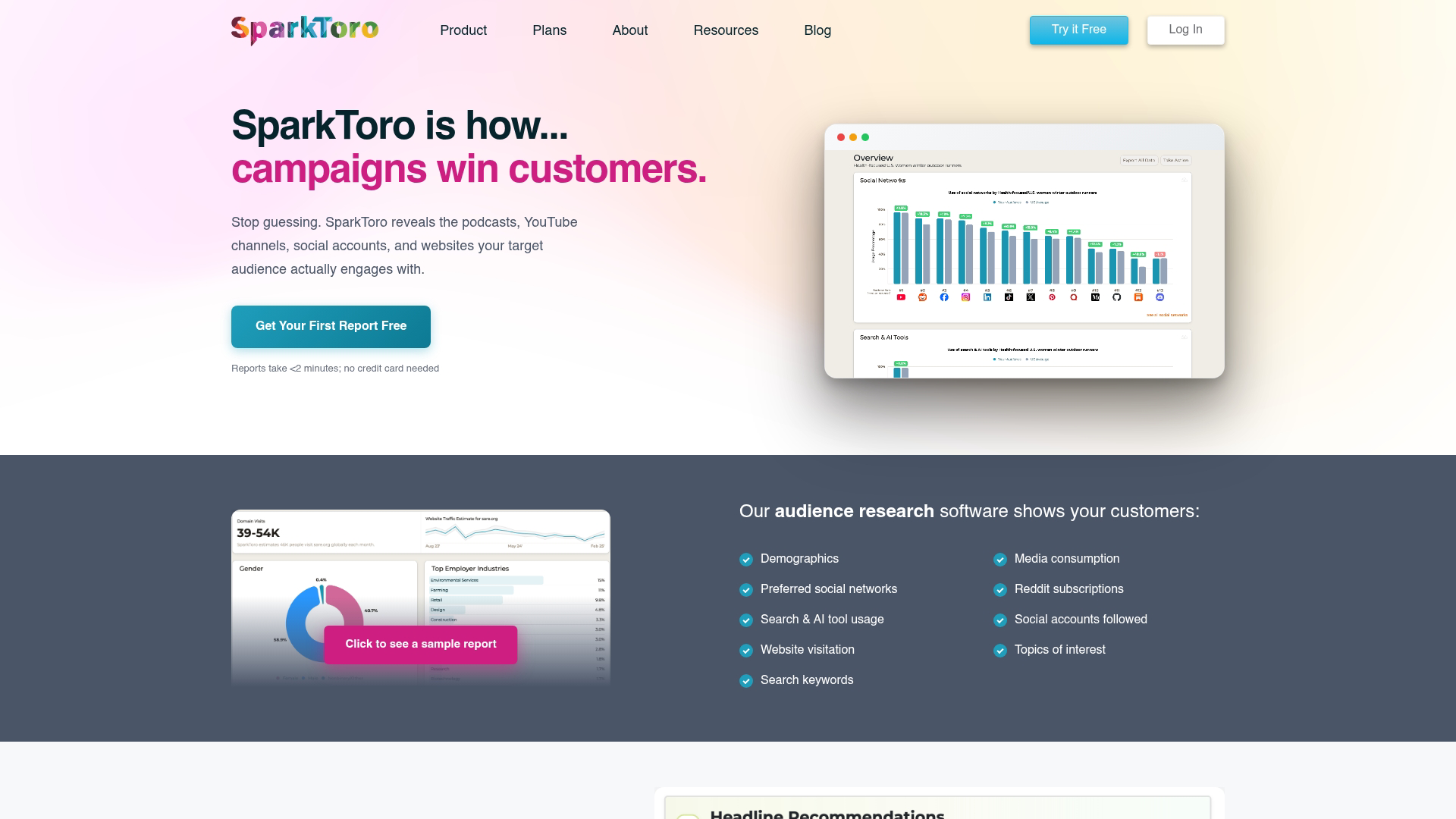
SparkToro takes a different approach by focusing on discovery rather than deep profiling. Enter a keyword, hashtag, or website, and SparkToro shows you which podcasts, YouTube channels, publications, and social accounts that audience follows.
Best for: Content strategists and media buyers who want to quickly identify where their audience spends time online without enterprise complexity.
Key strengths
Fast audience discovery: Results in seconds rather than days of research
Podcast and YouTube insights: Surfaces audio and video channels competitors often miss
Publication identification: Find niche blogs and news sources your audience reads
Social account analysis: See which accounts your target audience follows and engages with
Pricing: Free tier available with limited searches. Paid plans start at $50/month for individuals, scaling to $300/month for agencies.
3. Helixa
Helixa specializes in psychographic profiling that goes deeper than most platforms. The tool maps audience passion points across entertainment, brands, causes, and cultural interests to reveal what truly motivates your buyers.
Best for: Agencies and brand teams needing cultural intelligence and cross-platform audience understanding for creative strategy.
Key strengths
Passion point analysis: Understand what your audience genuinely cares about beyond professional interests
Cross-platform profiling: Combine social, survey, and behavioral data for complete pictures
Cultural trend tracking: Monitor shifts in audience interests and values over time
Pricing: Custom pricing based on use case and data needs.
4. Pulsar Platform

Pulsar Platform combines social listening with audience intelligence to help brands monitor conversations and understand who's driving them. The platform excels at trend detection and cultural shift monitoring.
Best for: Brands tracking cultural conversations and wanting to understand audience sentiment in real time.
Key strengths
Conversation analysis: Monitor discussions across social platforms and forums
Trend detection: Identify emerging topics before they peak
Audience clustering: Group conversation participants by interests and behaviors
Pricing: Custom pricing based on data volume and features.
5. Meltwater
Meltwater is an enterprise-grade media intelligence platform that includes audience analytics alongside PR monitoring. The platform covers global media sources and social channels with particular strength in earned media tracking.
Best for: PR and communications teams needing media monitoring combined with audience insights across international markets.
Key strengths
Global media coverage: Monitor news, blogs, and social across 190+ countries
Influencer database: Access millions of journalist and creator profiles
Competitive benchmarking: Track share of voice against competitors
Pricing: Custom enterprise pricing.
6. Brandwatch
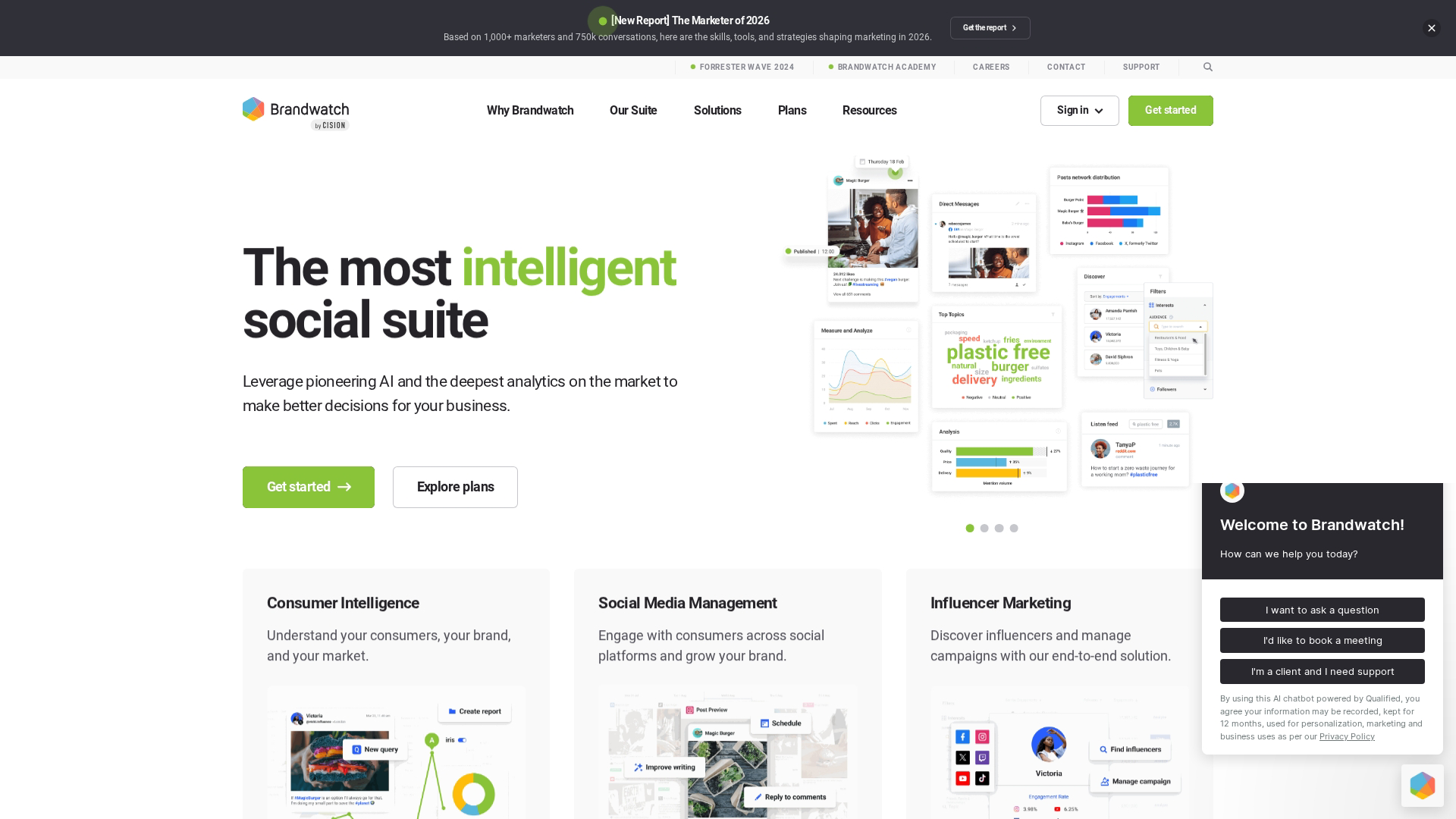
Brandwatch offers comprehensive consumer intelligence by combining deep social listening with audience analysis. The platform's historical data depth lets you analyze trends over years, not just recent activity.
Best for: Enterprise teams needing historical social data and robust audience segmentation for long-term trend analysis.
Key strengths
Historical data access: Analyze social conversations going back years
Image recognition: Detect logos and products in social images
Consumer research: Combine social data with survey capabilities
Pricing: Custom enterprise pricing based on data volume and features.
7. Sprinklr Insights
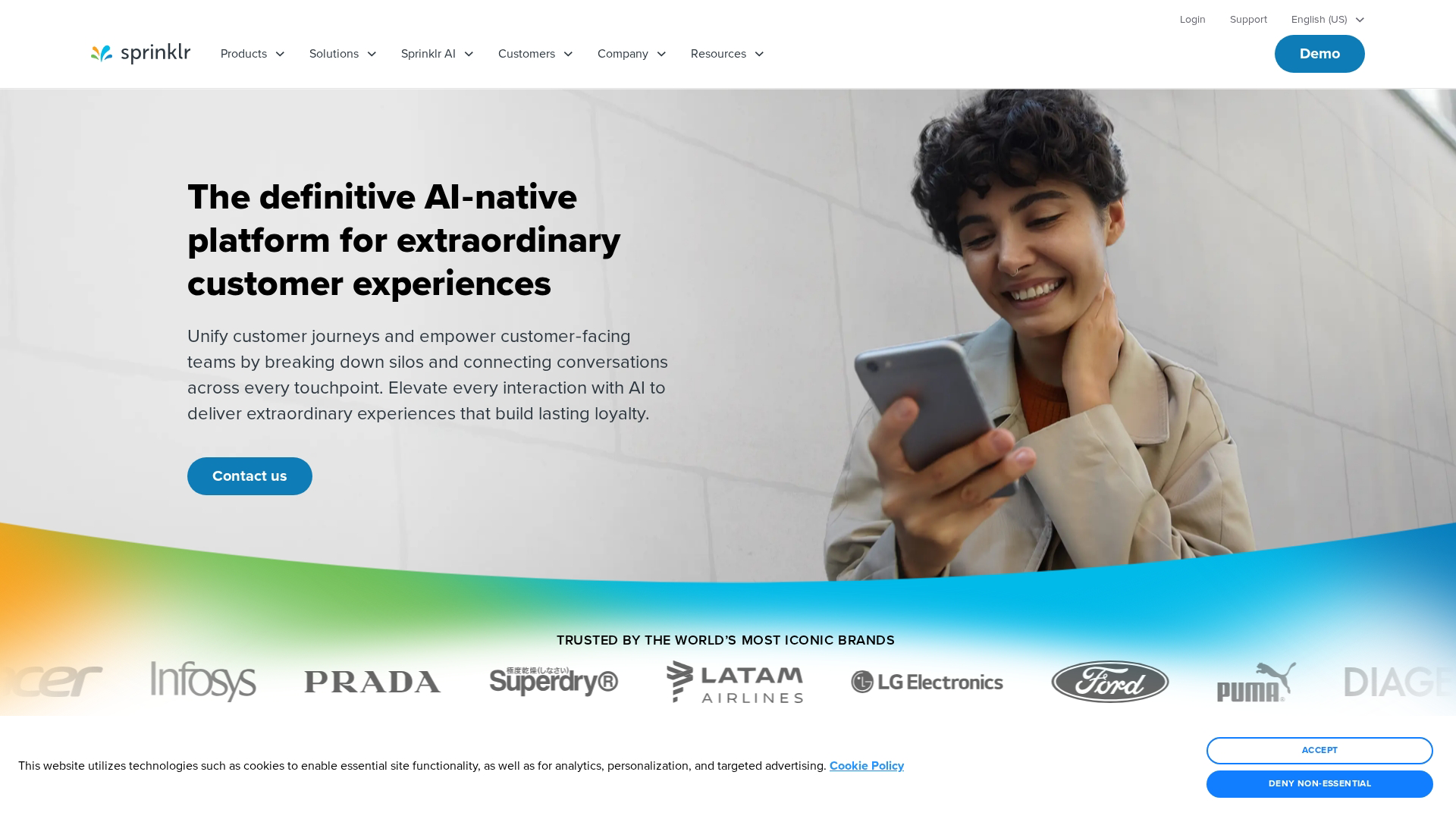
Sprinklr Insights is the audience intelligence component of Sprinklr's unified customer experience platform. It analyzes social, messaging, and review data to surface audience insights within a broader CXM ecosystem.
Best for: Enterprises already using Sprinklr for social management who want audience intelligence integrated into existing workflows.
Key strengths
Unified platform: Audience insights connect directly to publishing, engagement, and care
Multi-channel coverage: Social, messaging apps, reviews, and forums
Enterprise governance: Role-based access and approval workflows
Pricing: Custom enterprise pricing.
8. GWI
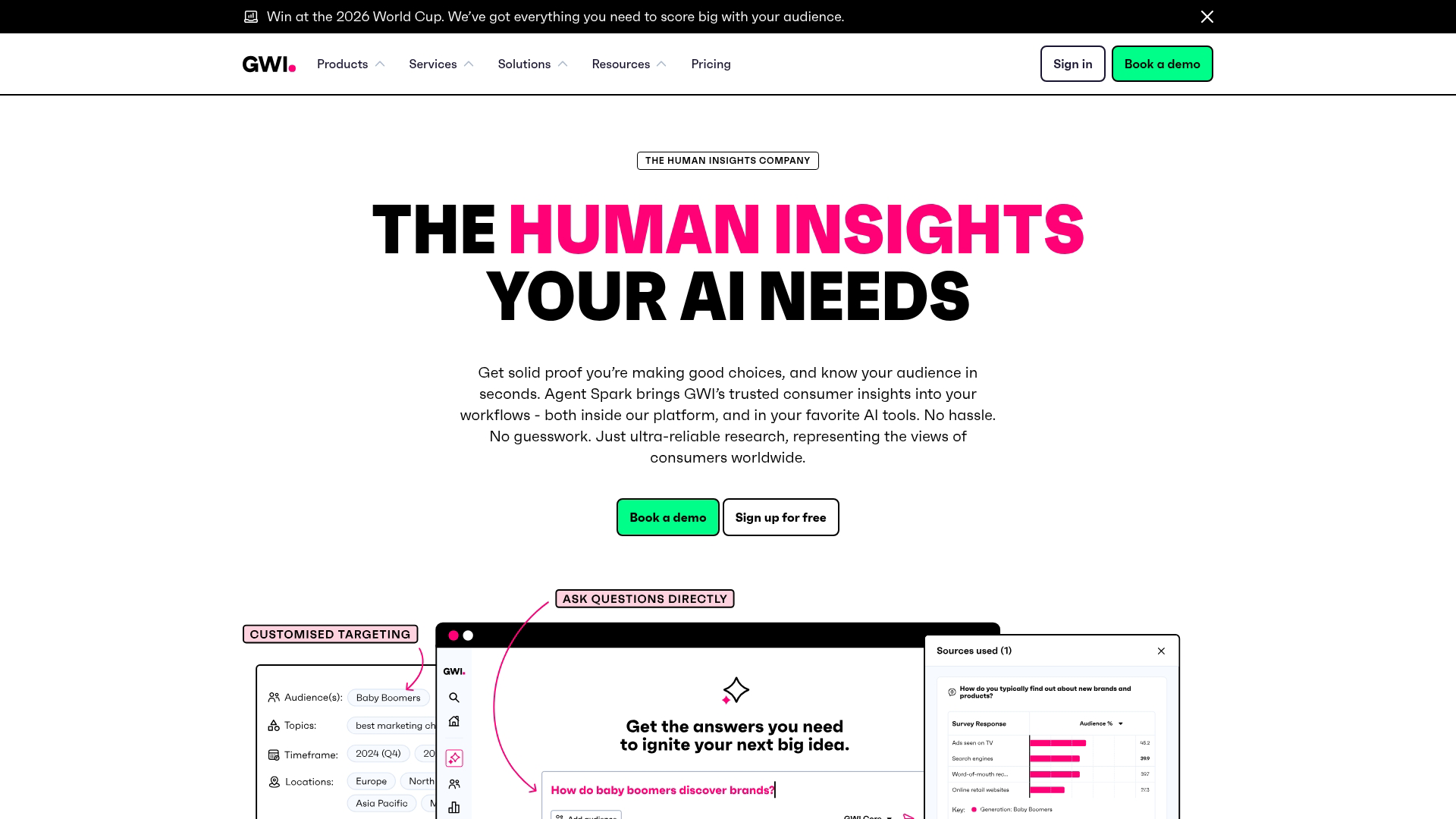
GWI (formerly GlobalWebIndex) takes a survey-based approach to audience intelligence, maintaining panels across 50+ markets. The platform provides attitudinal and behavioral data that social listening cannot capture.
Best for: B2C brands needing demographic and attitudinal data across international markets with statistical rigor.
Key strengths
Global panel data: Survey responses from millions of consumers across 50+ countries
Attitudinal insights: Understand opinions, preferences, and purchase intent
Custom surveys: Add your own questions to existing panels
Pricing: Custom pricing based on markets and features.
9. Infegy Atlas
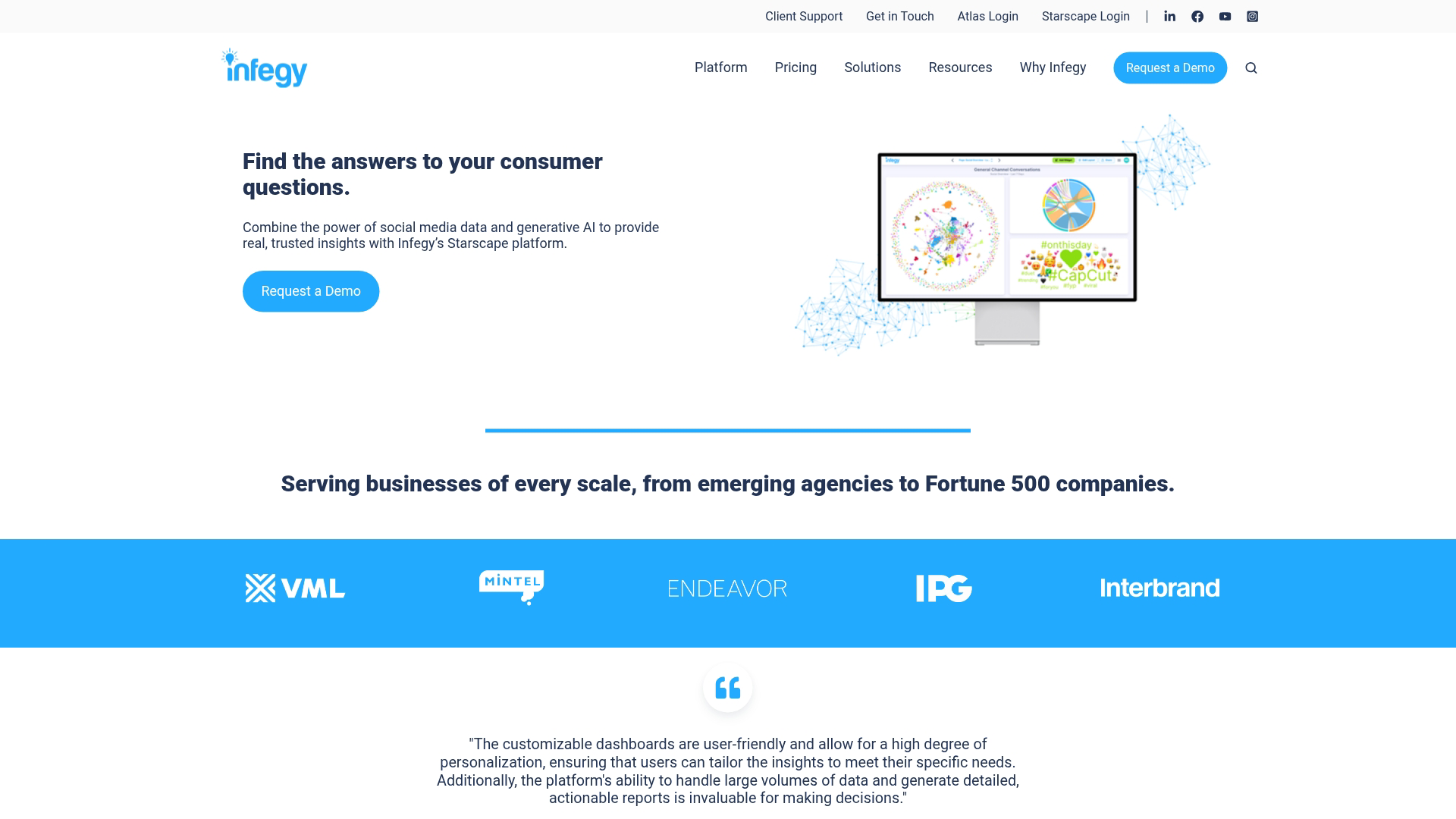
Infegy Atlas combines social listening with audience segmentation, offering sentiment analysis that meets academic research standards.
Best for: Teams needing sentiment analysis combined with audience understanding, particularly those with research applications.
Key strengths
Sentiment accuracy: NLP models trained for nuanced sentiment detection
Historical analysis: Access years of social data for trend research
Academic rigor: Methodology suitable for research publications
Pricing: Custom pricing based on data needs.
10. Talkwalker
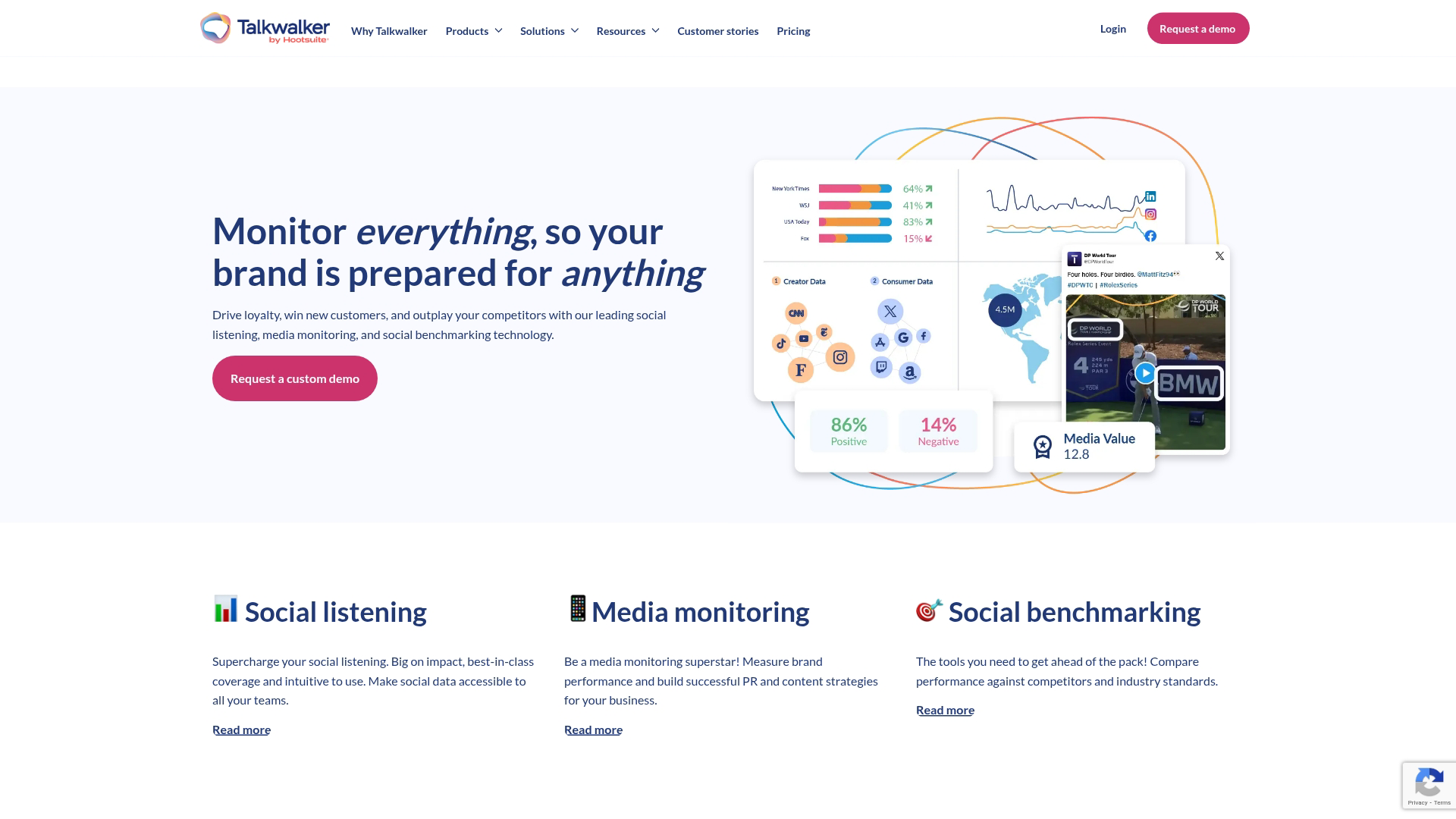
Talkwalker emphasizes visual analytics and image recognition alongside traditional social intelligence. The platform helps consumer brands track visual mentions and understand audiences engaging with visual content.
Best for: Consumer brands tracking visual brand mentions and wanting image recognition capabilities.
Key strengths
Image recognition: Detect logos and products in social images
Visual trend tracking: Monitor visual content trends across platforms
Crisis monitoring: Real-time alerts for brand mentions and sentiment shifts
Pricing: Custom pricing based on features and data volume.
11. Affinio
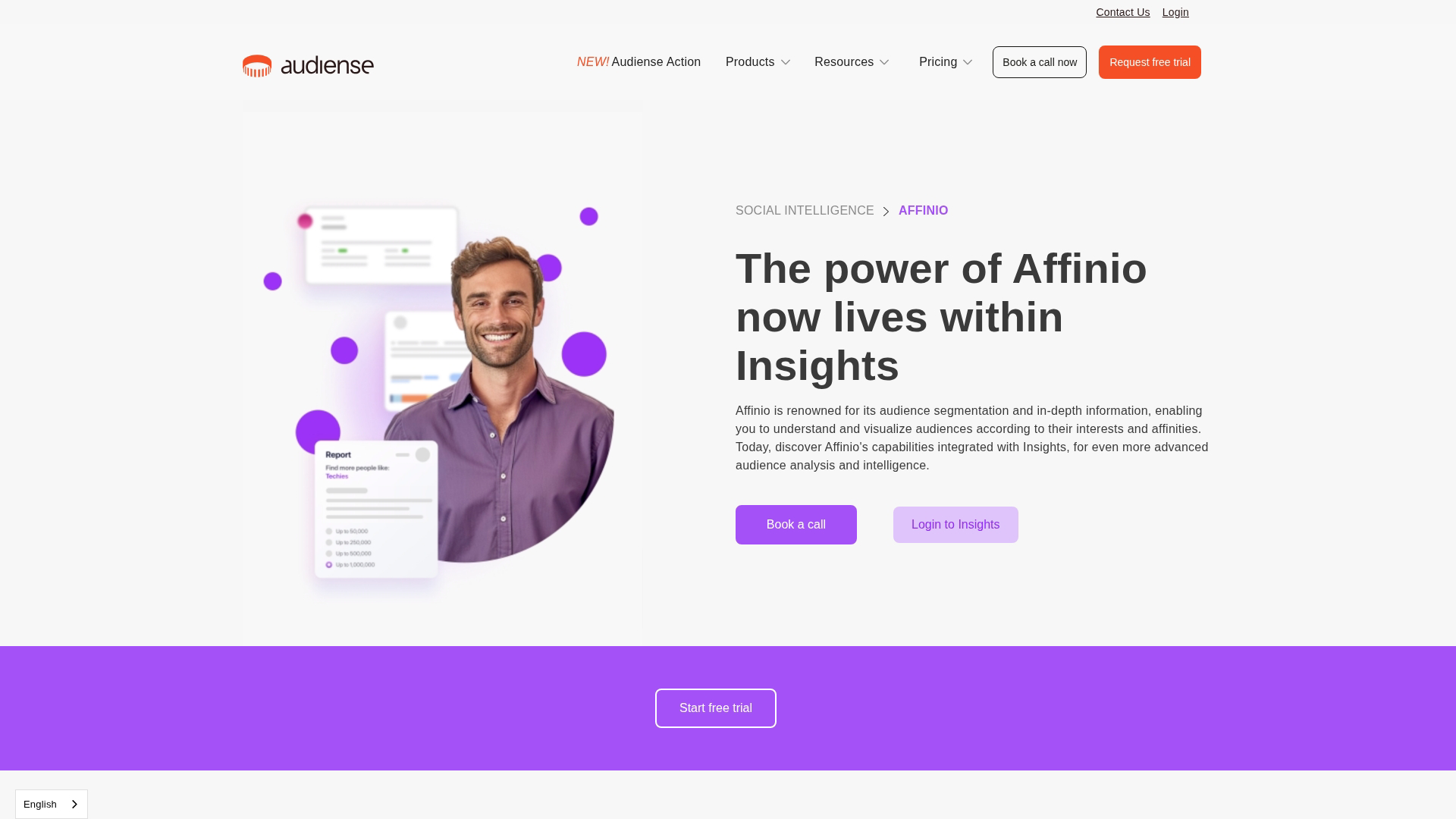
Affinio uses interest-graph technology to cluster audiences by shared affinities rather than demographics. The platform excels at discovering unexpected audience segments and connections.
Best for: Teams wanting to discover non-obvious audience segments and understand interest-based clustering.
Key strengths
Interest-graph analysis: Map audiences by shared interests and affinities
Segment discovery: Find audience clusters you didn't know existed
Influencer mapping: Identify creators who resonate with specific interest groups
Pricing: Custom pricing based on use case.
12. Synthesio
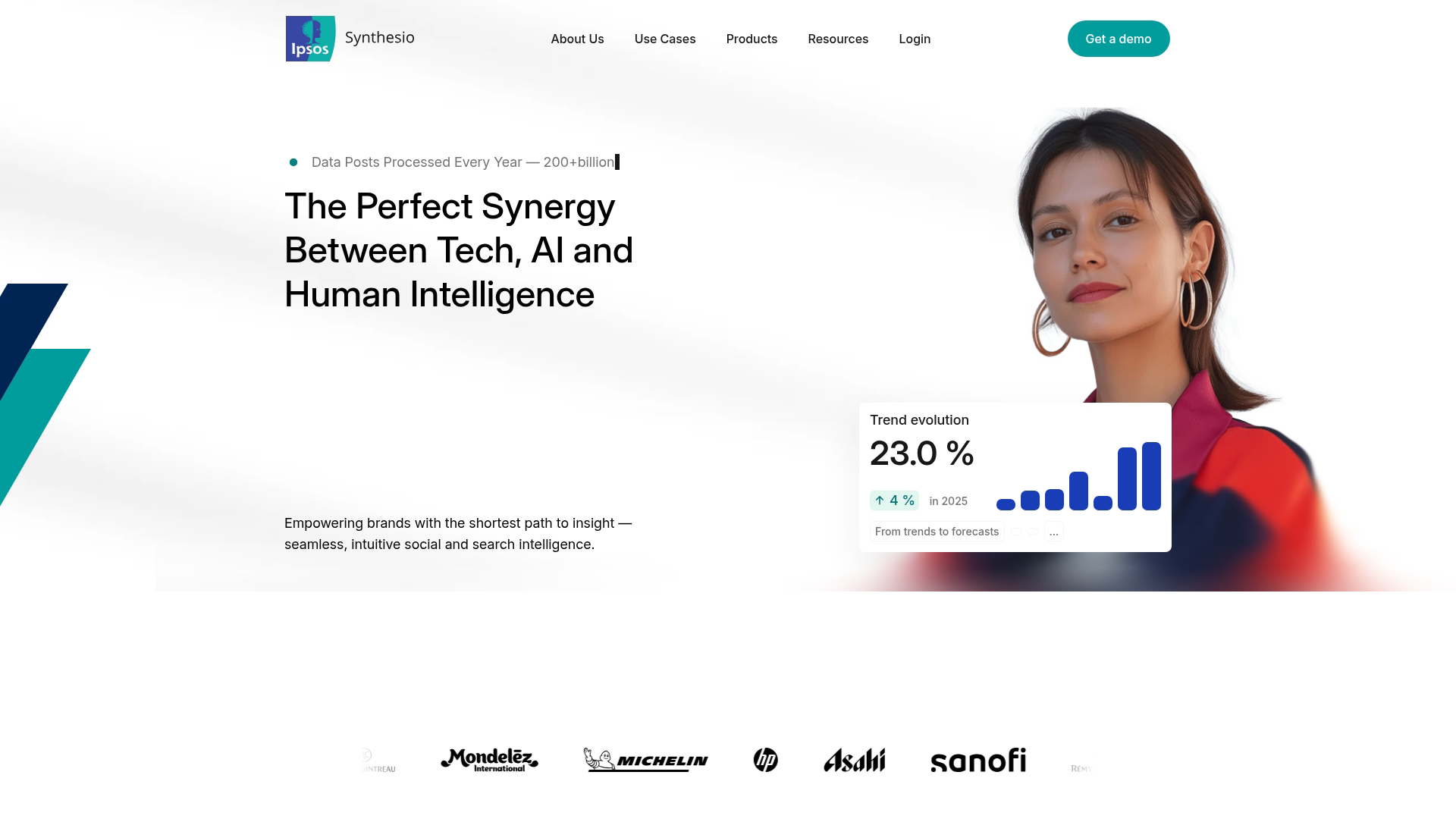
Synthesio operates within the Ipsos ecosystem, combining social intelligence with market research capabilities. The platform offers consulting support alongside self-serve tools.
Best for: Enterprise teams wanting social data combined with market research methodology and consulting support.
Key strengths
Ipsos integration: Access to broader market research capabilities
Consulting support: Expert guidance on research design and interpretation
Pricing: Custom enterprise pricing with consulting components.
13. Similarweb
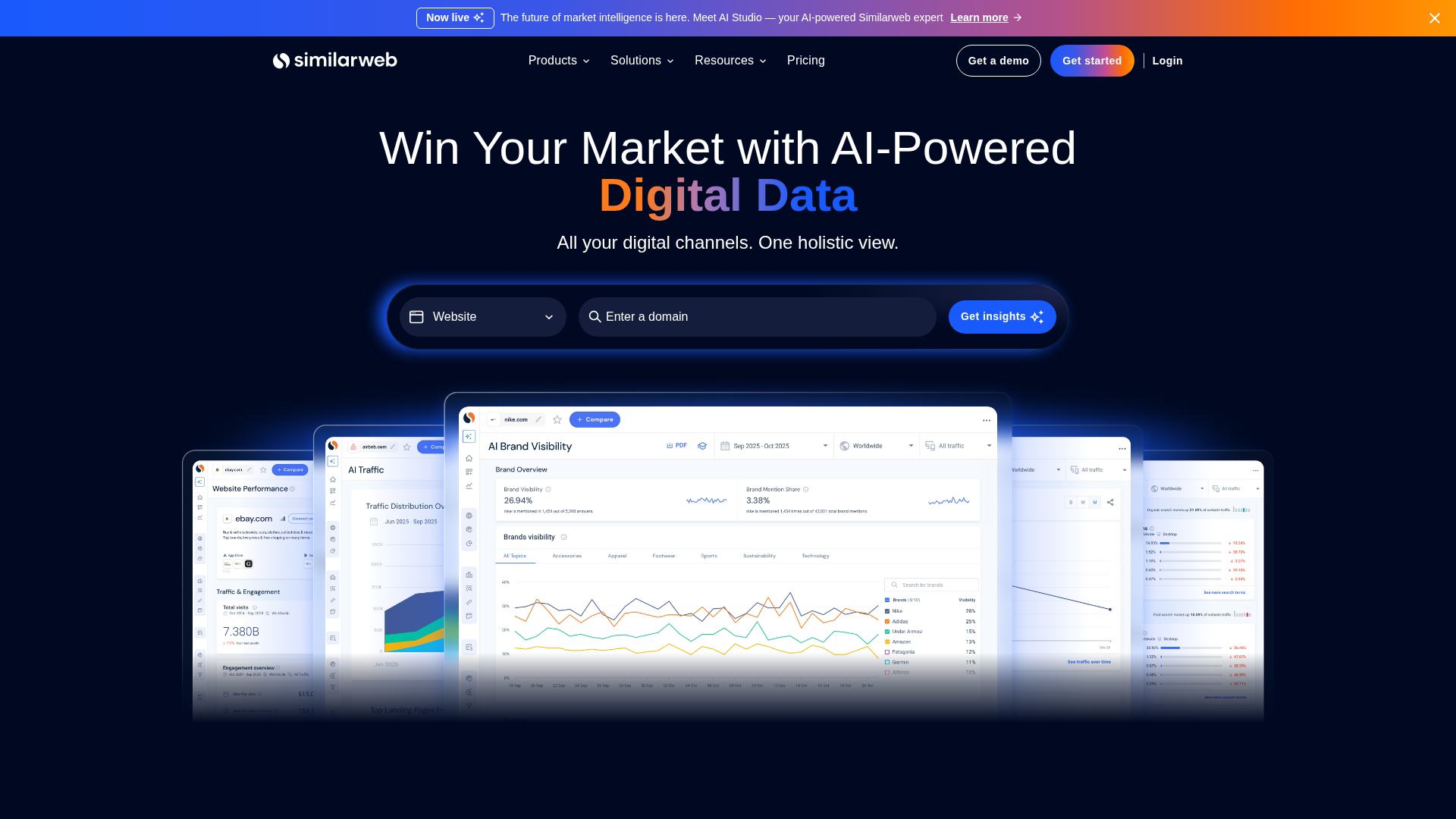
Similarweb approaches audience intelligence through web traffic and digital behavior analysis. The platform shows where audiences go online, how they discover websites, and how competitors' audiences compare.
Best for: Competitive intelligence and understanding digital behavior patterns across websites and apps.
Key strengths
Traffic analysis: See visitor volumes and sources for any website
Audience overlap: Understand which sites share audiences with competitors
App intelligence: Track mobile app audiences and engagement
Pricing: Free tier with limited data. Paid plans start at $125/month.
14. Semrush Market Explorer
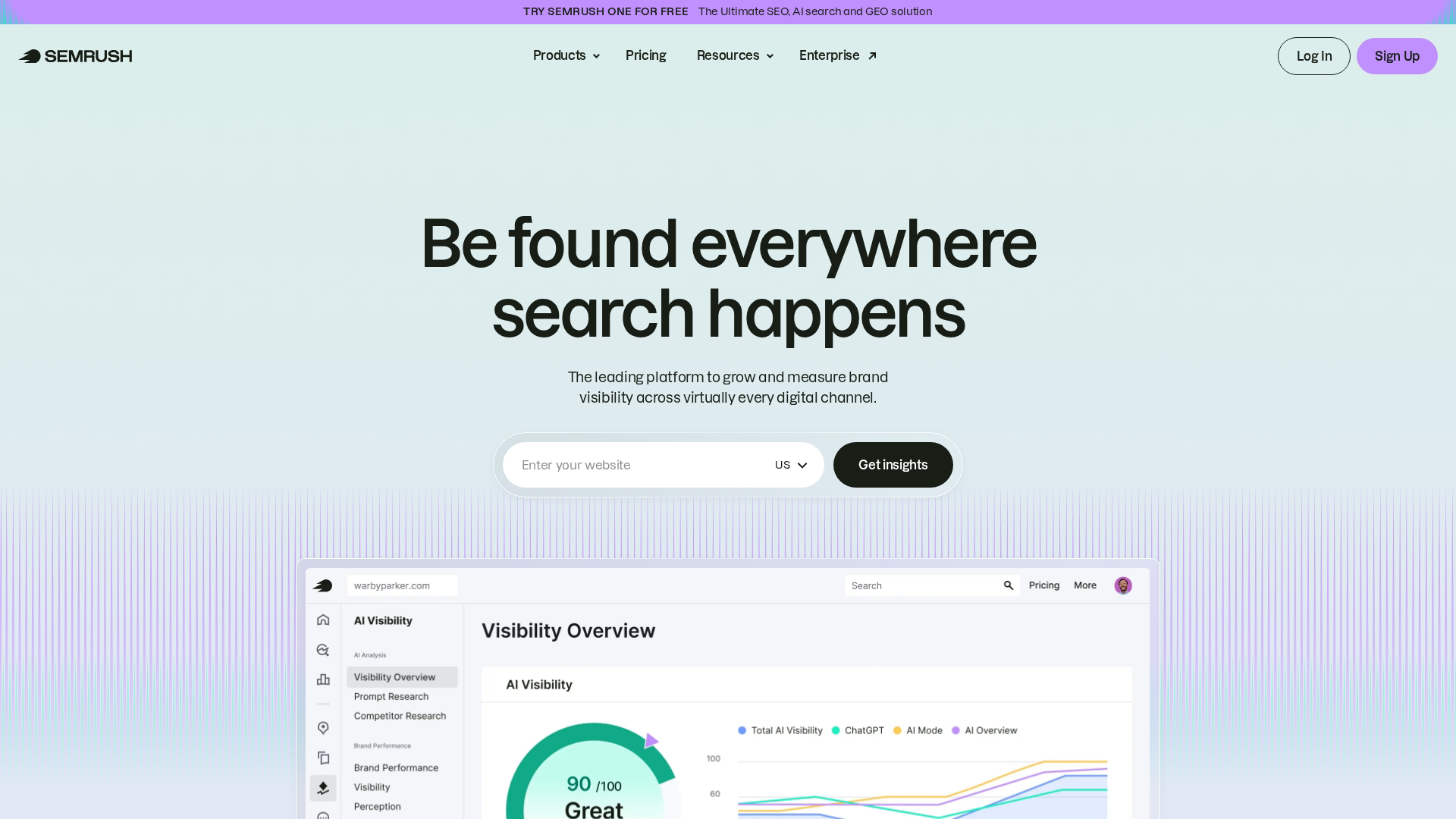
Semrush Market Explorer extends the SEO platform into audience research territory. The tool helps you understand competitor audiences, content gaps, and market positioning.
Best for: Teams already using Semrush who want audience insights integrated with SEO and content strategy.
Key strengths
Competitor audience analysis: Understand who visits competitor sites
Content gap identification: Find topics your audience searches for that you don't cover
Traffic source breakdown: See how competitors acquire their audiences
Pricing: Included in Semrush plans starting at $139/month.
15. Quantcast
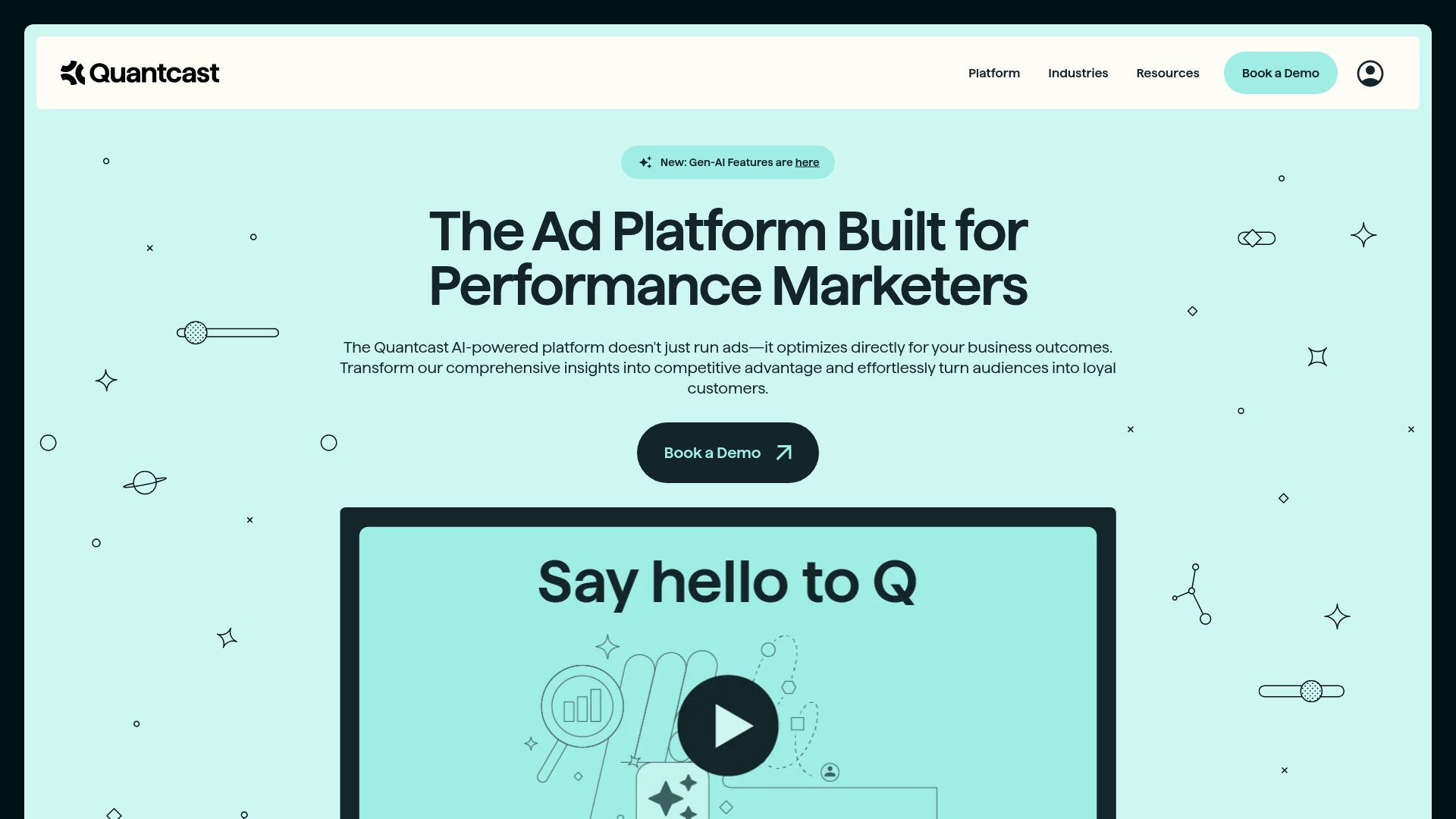
Quantcast focuses on audience intelligence for advertising activation. The platform provides real-time audience measurement and connects insights directly to programmatic media buying.
Best for: Media buyers wanting audience intelligence that connects directly to programmatic advertising activation.
Key strengths
Real-time measurement: Understand audience composition as it changes
Programmatic activation: Build and target audiences directly in ad platforms
Cross-device tracking: Understand audiences across desktop and mobile
Pricing: Custom pricing based on media spend and features.
When to use audience intelligence platforms
Audience intelligence platforms solve specific problems at specific moments. Understanding when these tools add value helps you avoid paying for capabilities you won't use.
Improving campaign targeting and media planning
When CPMs rise and conversion rates drop, the problem often traces back to targeting - McKinsey research found over 75% of consumers are turned off by content that doesn't feel relevant. Audience intelligence reveals which channels your buyers actually use, which publications they trust, and which influencers they follow.
Building data-driven personas and audience segments
Static personas based on assumptions decay quickly. Audience intelligence platforms replace guesswork with evidence, showing what your buyers actually care about rather than what you think they care about.
Identifying influencers and content alignment opportunities
Follower counts can be misleading. Audience intelligence reveals which creators actually reach your target buyers based on audience overlap rather than vanity metrics.
Validating messaging and creative direction
Before launching campaigns, audience intelligence can validate whether messaging angles resonate with target audience values and interests.
Monitoring competitor audiences and market shifts
Audience intelligence tracks how competitor audiences evolve and whether buyers are migrating between brands.
How to choose the right audience insight tool
The best platform depends on your data needs, team capabilities, and existing stack.
Data privacy and compliance requirements
Different platforms use different data collection methods with varying compliance implications. Panel-based tools like GWI collect data with explicit consent. Social API tools access public data. Some platforms scrape data in ways that may raise concerns.
Integration with your existing marketing stack
Audience intelligence creates value when insights reach campaigns. Check for native integrations with your CRM, ad platforms, and demand generation tools so insights flow directly into targeting and personalization.
Learning curve and team adoption
Some platforms require dedicated analysts to extract value. Others serve generalist marketers with minimal training. Match platform complexity to your team's skill level and available time.
Pricing models and long-term value
Audience intelligence pricing varies widely. Some platforms charge per seat, others by query volume, and many require annual enterprise commitments.
Consideration | Questions to ask | Red flags |
|---|---|---|
Data sources | Where does the data come from? How fresh is it? | Vague answers about methodology |
Integration | Does it connect to our CRM and ad platforms? | "API only" for basic connections |
Adoption | Can our team use this without dedicated analysts? | Requires weeks of training |
Pricing | What's the total annual cost including overages? | Hidden usage fees |
How to turn audience insights into pipeline
Understanding your audience only matters if that understanding changes what you do. The gap between insight and action is where most teams struggle.
Audience intelligence informs every touchpoint in the buyer journey. Segment-specific messaging tailors value propositions to what different audiences actually care about. Channel prioritization focuses budget on platforms where your buyers engage rather than where you assume they are.
One practical application: teams using audience intelligence to personalize product experiences see higher engagement. When you understand what matters to different segments, you can tailor interactive demos and onboarding flows to match their priorities.
Segment-specific messaging: Tailor value propositions to audience motivations
Channel prioritization: Invest in platforms where your audience actually engages
Content personalization: Match formats and topics to audience preferences
Sales enablement: Arm reps with audience context before conversations
Start converting the audiences you understand
Audience intelligence platforms reveal who your buyers are and what they care about. That knowledge only creates value when it shapes campaigns, content, and conversations.
The right platform depends on your primary use case. Social-first teams benefit from Audiense or SparkToro. Enterprise brands needing global coverage look to Meltwater or Brandwatch. Teams wanting survey-based rigor choose GWI.
Whatever platform you choose, the goal remains the same: turn audience understanding into experiences that resonate.
Start your journey with Guideflow today!
FAQs about audience intelligence platforms
How does audience intelligence differ from social listening?
Social listening tracks what people say. Audience intelligence profiles who says it. Listening tools monitor conversations, keywords, and sentiment. Intelligence platforms analyze the people participating in those conversations to reveal demographics, interests, and behaviors.
What data sources do audience intelligence platforms typically use?
Most platforms combine multiple sources: social APIs (Twitter, Reddit, Instagram), web behavior tracking, survey panels, and third-party data partnerships. Source diversity determines insight quality.
How quickly can teams get actionable insights from an audience intelligence platform?
Timeline varies by platform complexity. SparkToro delivers results in seconds. Enterprise tools like Brandwatch or Meltwater may require weeks of onboarding before teams extract full value.
Can audience intelligence platforms track B2B buyer audiences?
Yes, though capabilities vary. Some platforms specialize in B2C consumer data while others offer firmographic and professional data. For B2B, look for platforms that integrate with LinkedIn data or professional databases.
How do marketing teams measure ROI from audience intelligence tools?
Teams typically measure ROI through campaign performance improvements: higher conversion rates, lower CPAs, and reduced wasted spend on irrelevant channels.
What distinguishes audience intelligence platforms from customer data platforms?
CDPs unify first-party customer data you already have. Audience intelligence platforms analyze external market and prospect data you don't have.
Do audience intelligence platforms provide reliable data for international markets?
Coverage varies significantly. GWI maintains panels across 50+ countries. Social-focused tools depend on platform penetration in each market.
How frequently should teams refresh their audience research?
Quarterly reviews work for stable markets. Fast-moving categories or active campaign optimization may require monthly or continuous monitoring.