Influencer marketing platforms promise to simplify creator partnerships in a creator economy projected to reach $480 billion by 2027, but most teams discover the real challenge isn't finding influencers. It's managing the chaos that follows: scattered DMs, missed deadlines, spreadsheets that break at 20 creators, and no clear line between content and conversions.
This guide compares 17 influencer marketing platforms by use case, pricing, and feature depth, covering enterprise solutions, e-commerce tools, micro-influencer options, and budget-friendly alternatives for teams just getting started.
What is an influencer marketing platform
Top influencer marketing platforms for 2026 include GRIN, Upfluence, and CreatorIQ for comprehensive, AI-driven campaign management. Collabstr works well for quick, vetted influencer hiring. Specialized options like impact.com handle affiliate-focused strategies, while HypeAuditor focuses on audience analytics and fraud detection.
An influencer marketing platform is software that centralizes how you find creators, manage relationships, run campaigns, and measure results. Instead of tracking partnerships in spreadsheets or chasing influencers through DMs, you get a single system for discovery, outreach, contracts, content approvals, and performance reporting.
Core capabilities:
Creator discovery: Search filters for niche, engagement rate, audience demographics, and platform coverage
Relationship management: Outreach templates, contract storage, product gifting logistics, and communication history
Campaign management: Workflow automation for briefs, content review, deadlines, and approval chains
Analytics and reporting: Conversion tracking, ROI measurement, and content performance with attribution via promo codes or affiliate links
Payments and compliance: Secure payment processing, tax documentation, and FTC disclosure management
What's inside
This guide compares 15 influencer marketing platforms by use case, pricing tier, and feature depth. You'll find all-in-one enterprise solutions, e-commerce focused tools, micro-influencer platforms, and budget-friendly options for smaller teams.
TL;DR
Best all-in-one platforms for enterprise: GRIN, CreatorIQ, Upfluence, Influencity
Best for e-commerce and affiliate marketing: Shopify Collabs, impact.com, LTK, Upfluence
Best for influencer analytics and fraud detection: HypeAuditor, Brandwatch, Meltwater, Favikon
Best for European market compliance: Kolsquare, Skeepers
Best micro-influencer platforms for small teams: Afluencer, Heepsy
Best self-service platforms: Modash, Later Influence
Selection depends on team size, budget, social channels, and integration requirements with your existing marketing automation software
Influencer marketing platforms - comparison table
# | Product | Best for | Key differentiator | Pricing | G2 rating |
|---|---|---|---|---|---|
1 | Favikon | Data-driven creator selection based on authority scores | Proprietary creator authority scoring system | Custom | 4.4/5 |
2 | Upfluence | E-commerce affiliate and influencer programs | Shopify integration with purchase history data | Custom | 4.5/5 |
3 | Kolsquare | European market campaigns with compliance requirements | GDPR-compliant data handling and EU regulations | Custom | 4.5/5 |
4 | Skeepers | UGC and reviews alongside influencer content | Product sampling with review generation | Custom | 4.6/5 |
5 | GRIN | D2C brands with long-term creator programs | Creator CRM and product seeding workflows | Custom | 4.6/5 |
6 | CreatorIQ | Enterprise global influencer programs | AI-powered discovery and brand safety | Custom | 4.6/5 |
7 | impact.com Creator | Affiliate-influencer hybrid programs | Partnership management and affiliate tracking | Tiered | 4.5/5 |
8 | Influencity | Mid-market full-funnel campaigns | Large creator database with social listening | From $168/mo | 4.6/5 |
9 | Brandwatch | Social listening plus influencer marketing | Audience intelligence from organic conversations | Custom | 4.4/5 |
10 | Later Influence | Visual-first Instagram and TikTok brands | Content scheduling integration | Bundled | 4.4/5 |
11 | Modash | High-volume influencer outreach | Large database with email finder | From $99/mo | 4.9/5 |
12 | Heepsy | Startups launching first influencer programs | Affordable micro-influencer search | From $49/mo | 4.5/5 |
13 | Afluencer | Direct creator collaboration | Influencer marketplace with direct messaging | Freemium | 4.6/5 |
14 | LTK | Fashion, beauty, and lifestyle shoppable content | Creator shopping network with consumer app | Commission | 4.3/5 |
15 | Shopify Collabs | Shopify merchants starting creator programs | Native Shopify integration | Free | 4.2/5 |
16 | Meltwater | PR teams adding influencer to media monitoring | Journalist and influencer database combined | Custom | 4.0/5 |
17 | HypeAuditor | Audience quality and fraud detection | AI-powered authenticity scoring | From $299/mo | 4.6/5 |
17 best influencer marketing platforms and software
1. Favikon
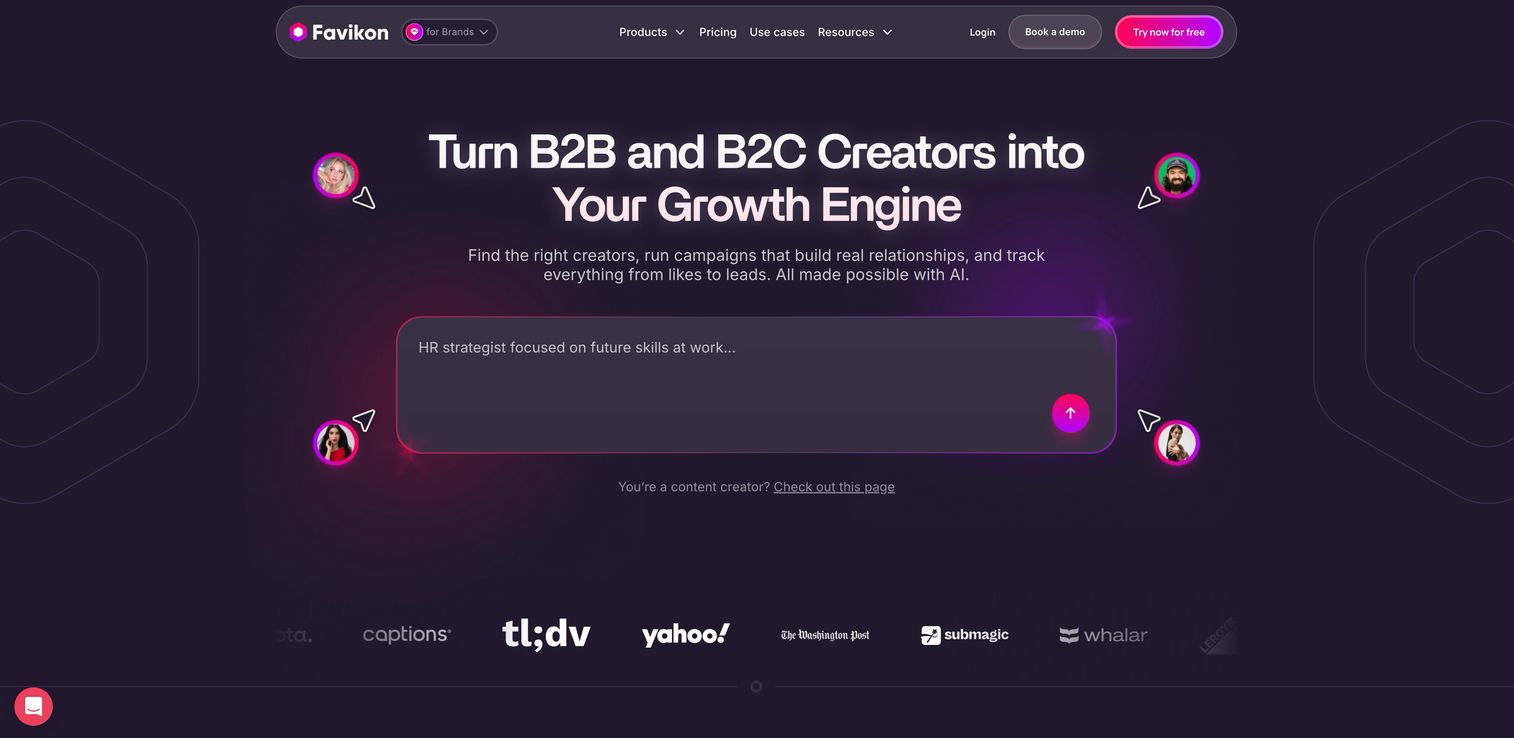
Favikon provides influencer discovery and ranking through a proprietary scoring system that evaluates creator authority, engagement quality, and content consistency across platforms. The platform maintains detailed creator profiles with historical performance data, audience demographics, and content analysis, helping you identify rising influencers before they reach premium pricing tiers. Favikon's ranking algorithm considers factors beyond follower count, including posting frequency, audience interaction patterns, and niche authority to surface creators with genuine influence in specific categories.
Best for: Brands seeking data-driven creator selection based on authority scores and performance trends.
Key strengths
Proprietary creator authority scoring system
Historical performance tracking and trend analysis
Multi-platform creator rankings by niche
Rising influencer identification
Pricing: Custom pricing based on access level and features.
2. Upfluence
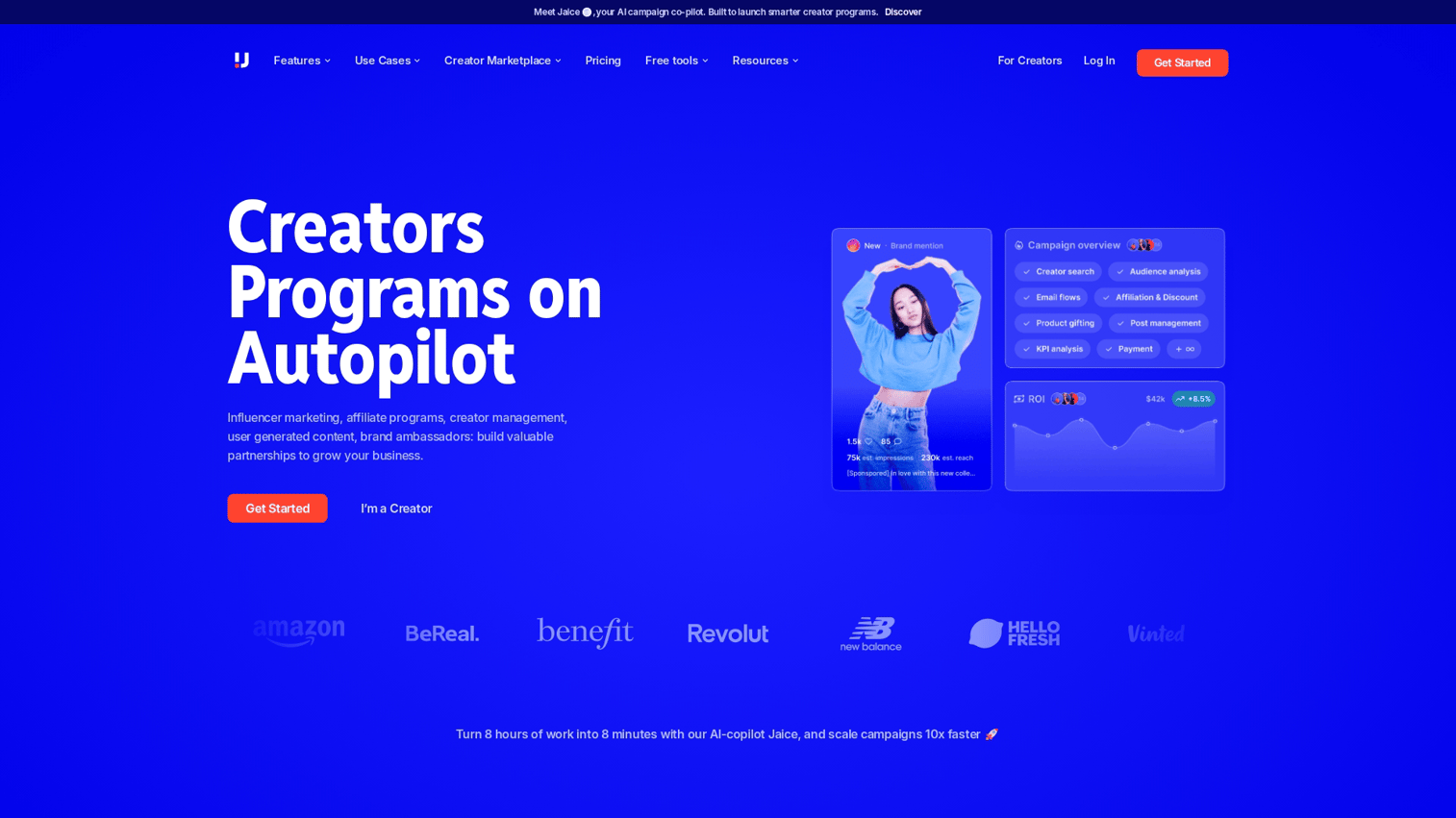
Upfluence combines influencer marketing with affiliate program management. The platform connects directly to Shopify and WooCommerce, pulling in customer purchase data to help you identify existing customers who are also influencers.
The AI campaign assistant helps with outreach messaging and campaign optimization. You can automatically generate promo codes, track affiliate conversions, and manage payments through the platform.
Best for: E-commerce brands running combined influencer and affiliate programs.
Key strengths
Shopify and WooCommerce integration with purchase history data
Automatic promo code generation and tracking
AI-powered campaign assistant for outreach
Creator database with 8M+ profiles
Pricing: Custom pricing based on creator volume and features.
3. Kolsquare
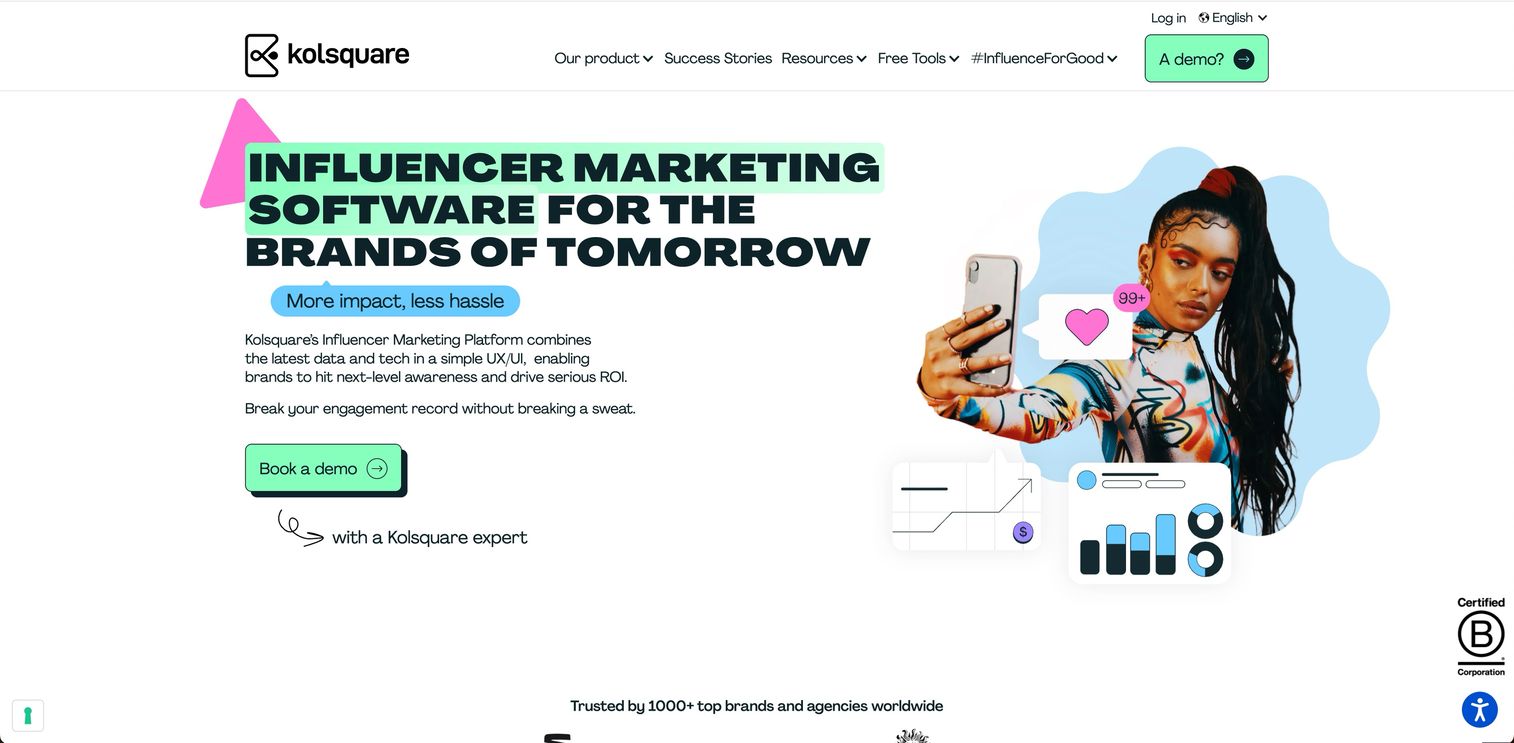
Kolsquare focuses on European and global influencer marketing with strong compliance features for GDPR and regional advertising regulations. The platform provides detailed audience credibility scoring that evaluates follower authenticity, engagement quality, and demographic alignment across Instagram, TikTok, YouTube, and Facebook. You can filter creators by country-specific requirements, language, and regional audience concentration, making it particularly useful for brands managing campaigns across multiple European markets. The compliance toolkit includes automated FTC disclosure checking, contract templates aligned with EU regulations, and audit trails for sponsored content verification.
Best for: Brands running influencer campaigns across European markets with strict compliance requirements.
Key strengths
Strong European market coverage and regional creator databases
GDPR-compliant data handling and contract management
Audience credibility scoring with fraud detection
Multi-language campaign management and reporting
Pricing: Custom pricing based on markets and features.
4. Skeepers
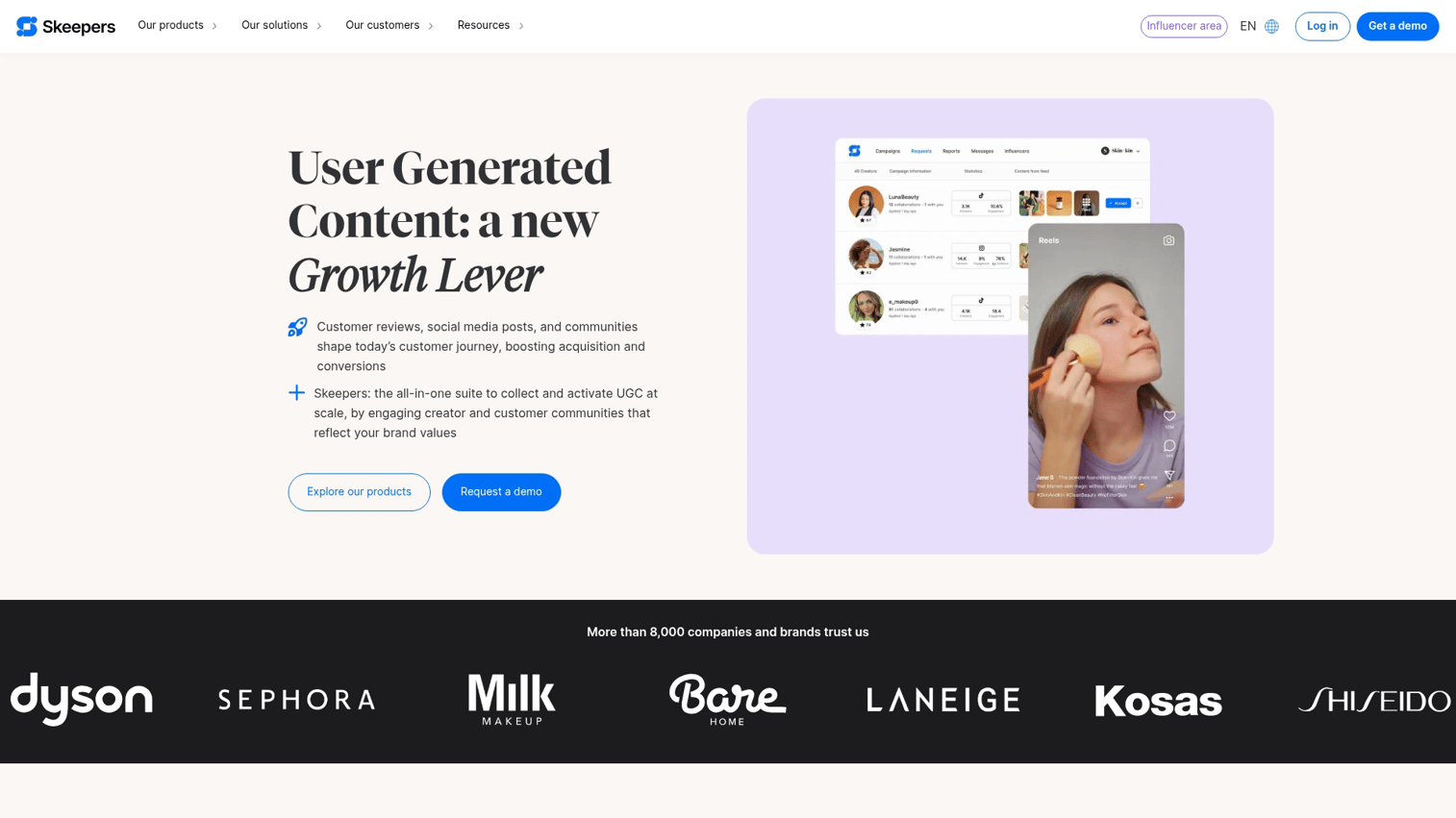
Skeepers combines influencer marketing with user-generated content and review generation, treating product sampling as a dual-purpose strategy that creates both social content and verified customer reviews. The platform coordinates sending products to creators and customers simultaneously, then captures their feedback through structured review forms and content submission workflows. You can track which samples generate Instagram posts, TikTok videos, or written reviews, then repurpose that content across your marketing channels. The system automates follow-up reminders to increase content submission rates and integrates review data with e-commerce platforms to display social proof at the point of purchase.
Best for: Brands prioritizing UGC and reviews alongside influencer content.
Key strengths
Combined influencer and UGC platform
Product sampling workflow management
Review generation integration
Strong European market coverage
Pricing: Custom pricing based on program scope.
5. GRIN
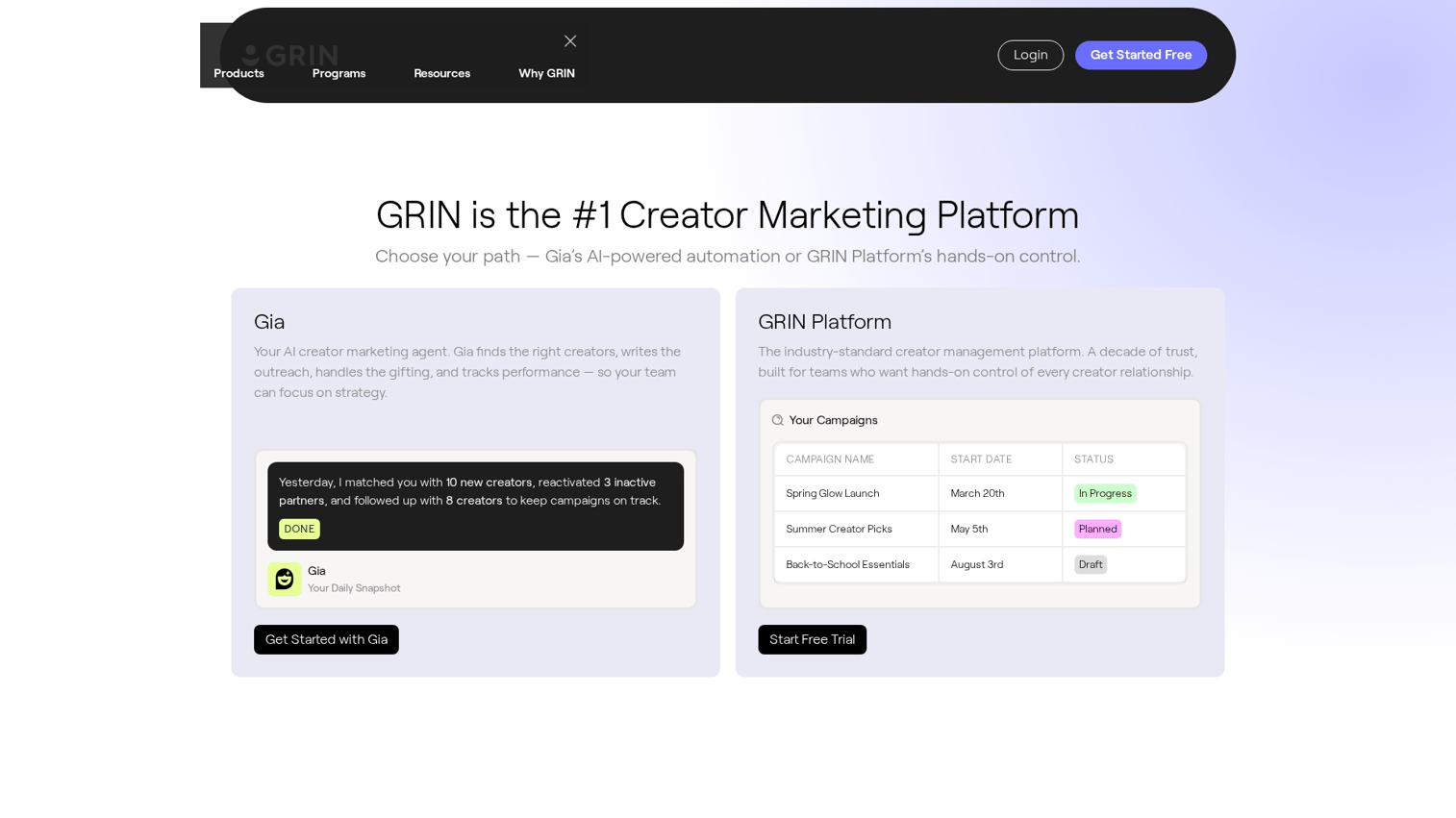
GRIN positions itself as the platform for brands that want authentic, long-term creator relationships rather than one-off sponsored posts. The system functions as a creator CRM where you track every interaction, manage product seeding, handle contracts, and monitor content performance from a single dashboard.
What sets GRIN apart is its focus on relationship depth. You can see a creator's entire history with your brand, from first outreach through every campaign. The product seeding workflow handles inventory, shipping, and tracking.
Best for: Direct-to-consumer brands building ongoing creator partnerships at scale.
Key strengths
Creator relationship management with full interaction history
Product seeding automation with inventory and shipping tracking
Content rights management for repurposing creator content
E-commerce integrations with Shopify, WooCommerce, and Magento
Pricing: Custom quotes based on program size.
6. CreatorIQ
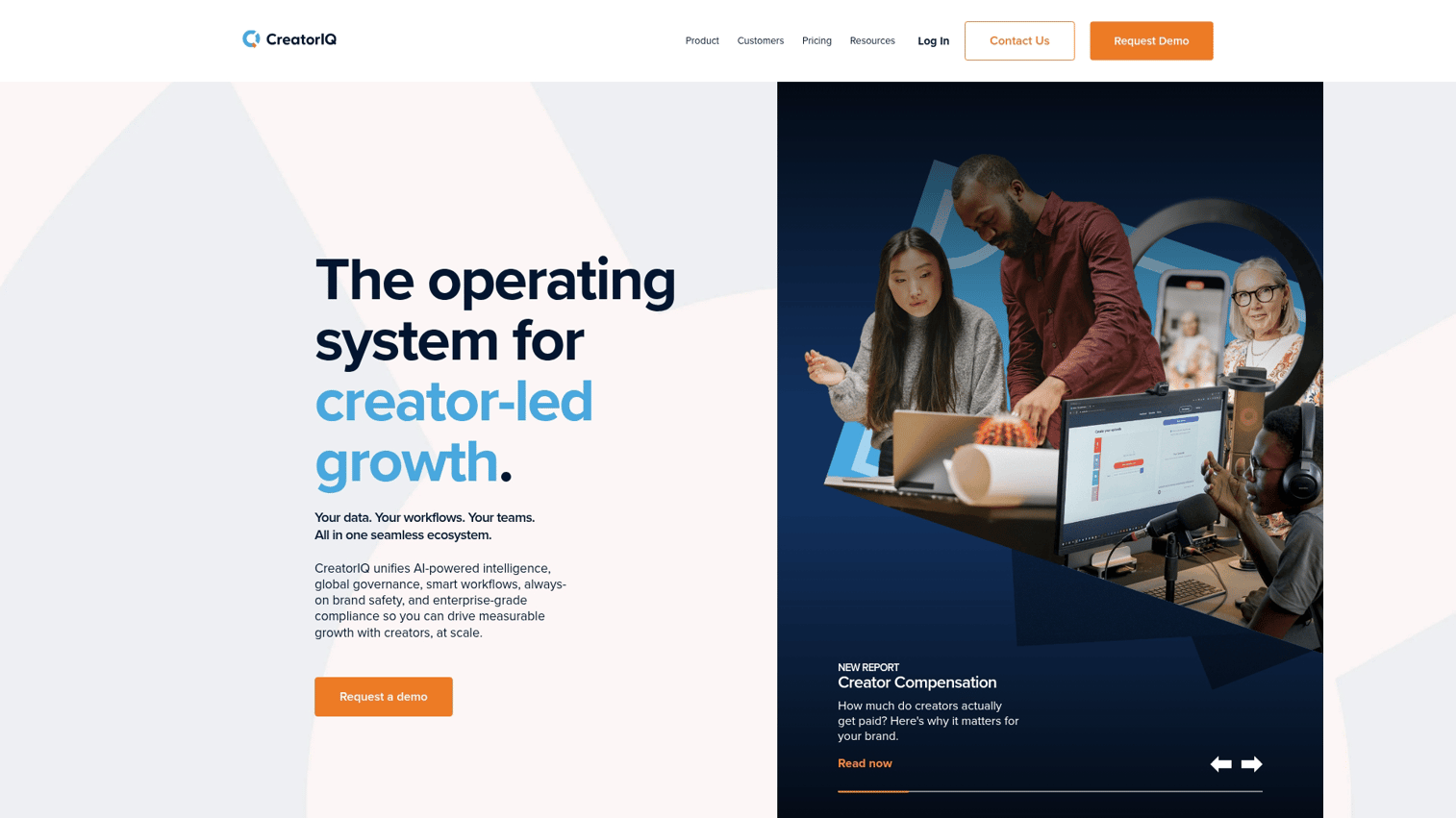
CreatorIQ serves enterprise brands and large agencies managing global influencer programs across multiple markets and teams. The platform uses AI to surface creator recommendations, flag brand safety concerns, and predict campaign performance.
The system handles complex organizational requirements like multi-team permissions, approval workflows, and consolidated reporting across regions.
Best for: Fortune 500 companies and large agencies with global influencer operations.
Key strengths
AI-powered creator discovery and recommendations
Brand safety monitoring and content screening
Multi-team permissions and approval workflows
Enterprise system integrations with Salesforce and SAP
Pricing: Enterprise custom pricing only.
7. Impact.com Creator
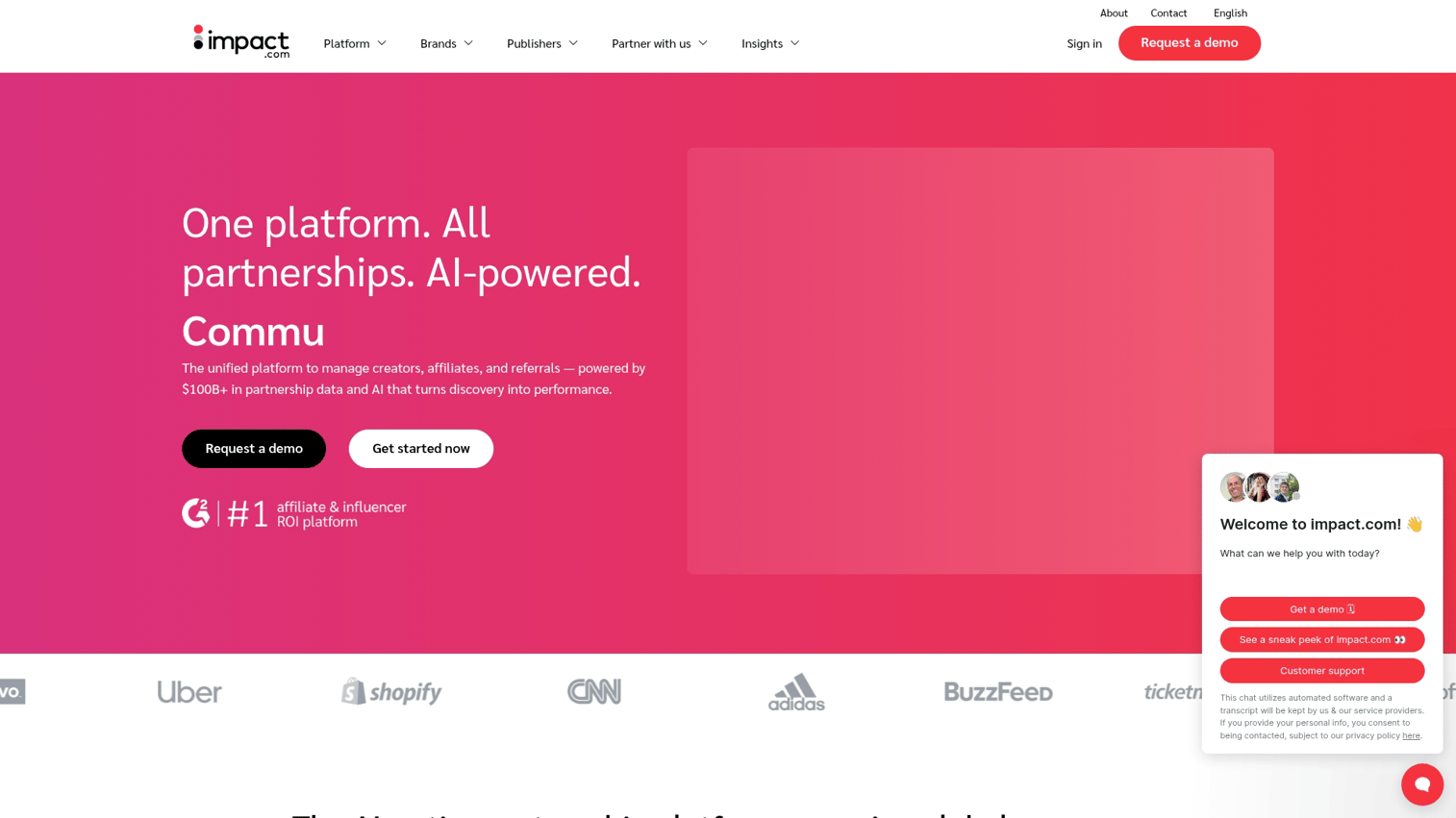
impact.com approaches influencer marketing through a partnership management lens, treating creators as one type of partner alongside affiliates, ambassadors, and referral programs. The platform tracks the full journey from influencer content to purchase.
Best for: Brands building hybrid influencer-affiliate programs with performance-based compensation.
Key strengths
Partnership management across influencers, affiliates, and ambassadors
Influencer-to-affiliate conversion workflows
Multi-touch attribution tracking
Automated payment processing
Pricing: Tiered pricing based on program size and features.
8. Influencity
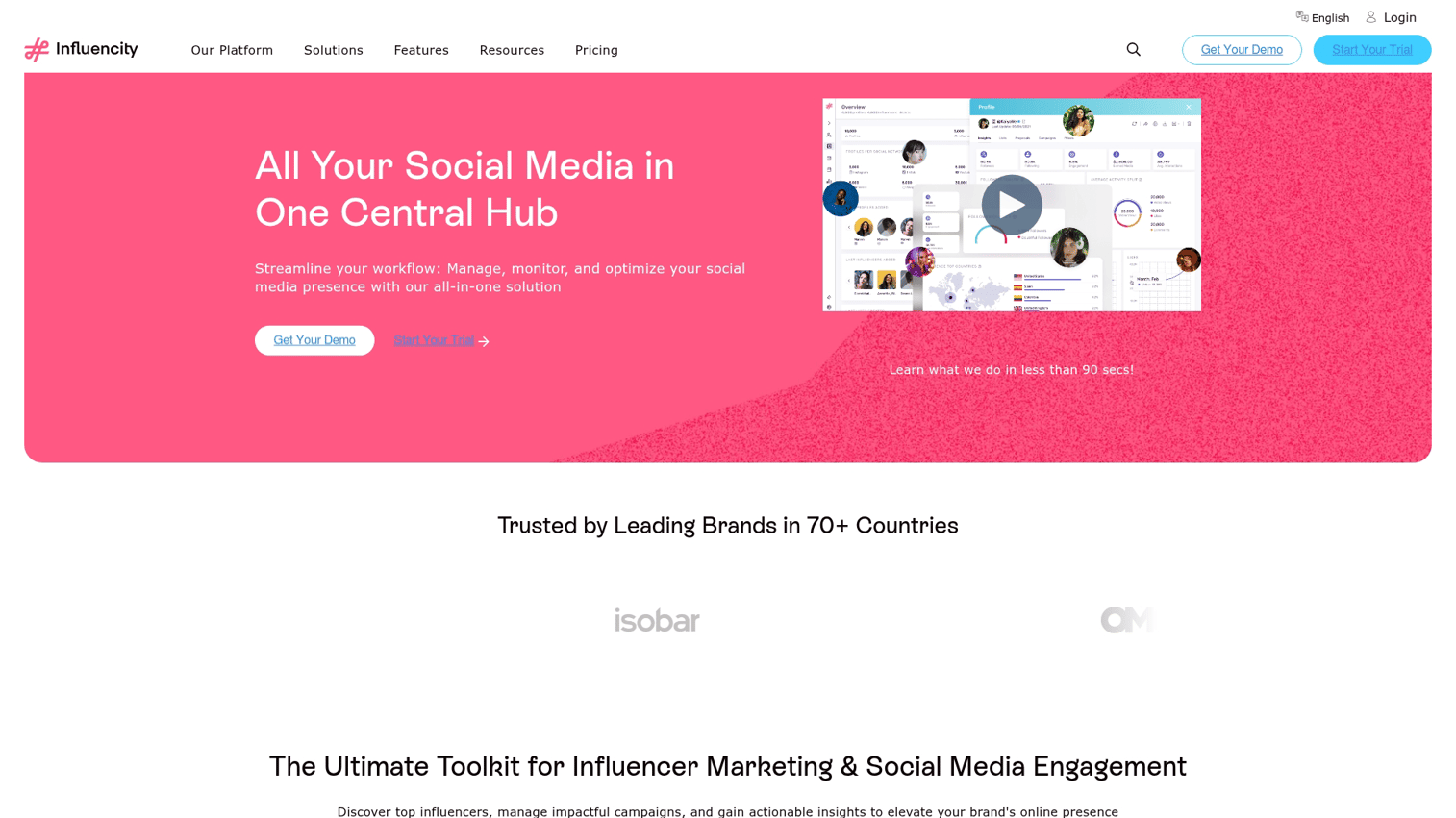
Influencity offers a full-funnel influencer marketing platform with a large creator database and campaign management tools at a more accessible price point than enterprise alternatives.
Social listening features help you identify creators already talking about your brand or category. The Instagram coverage is particularly deep.
Best for: Mid-market brands wanting comprehensive influencer management without enterprise pricing.
Key strengths
Database of 200M+ creator profiles
Social listening for brand mention tracking
Campaign workflow management
Audience demographics and authenticity analysis
Pricing: Plans start at $168/month.
9. Brandwatch
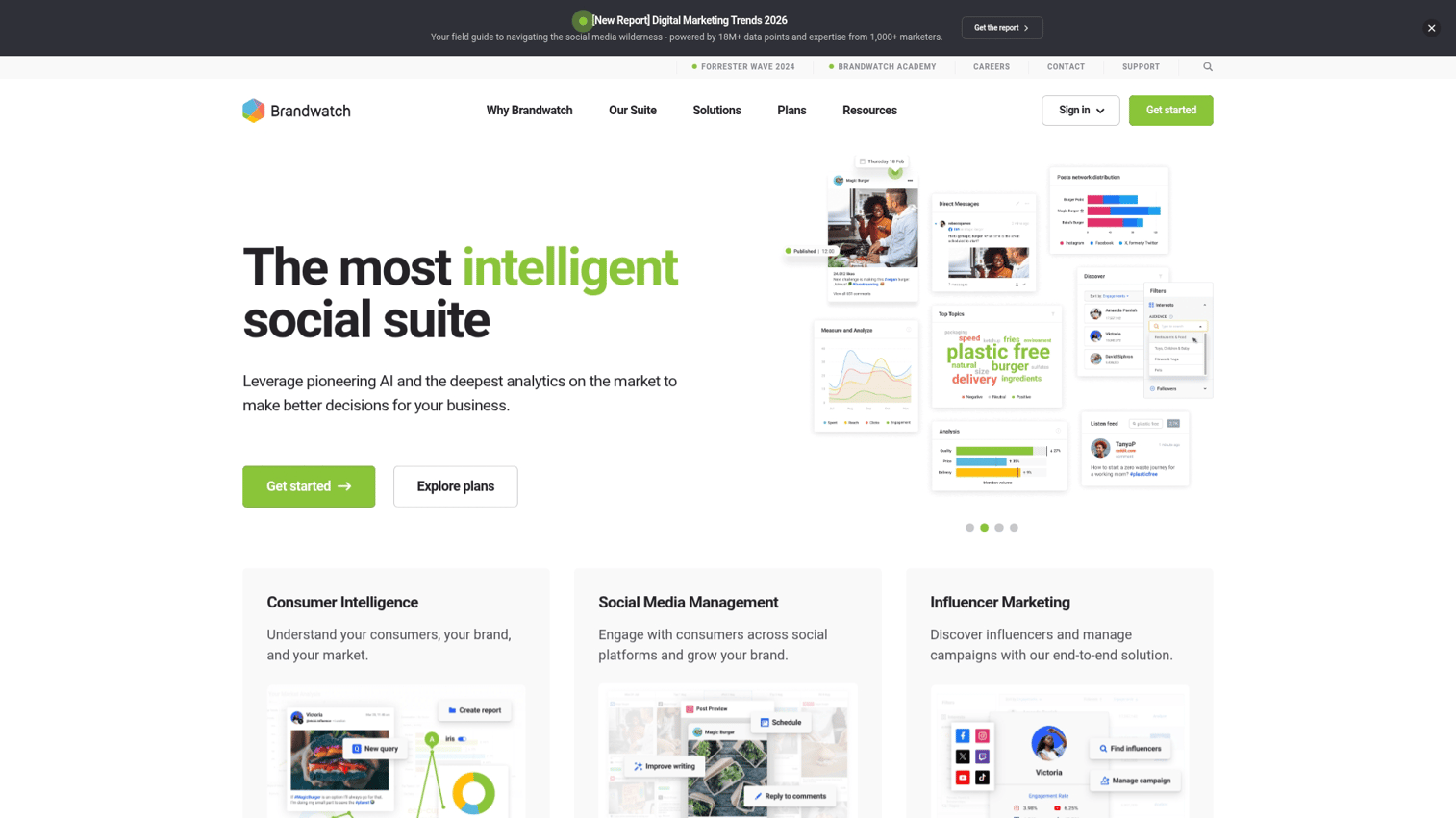
Brandwatch comes at influencer marketing from a social listening and consumer intelligence angle. The platform monitors millions of online conversations across social networks, forums, blogs, and news sites to identify potential creators from organic brand conversations. Instead of searching creator databases by follower count, you discover influencers based on what they're already saying about your brand, products, or category. This approach surfaces authentic advocates who have genuine interest and credibility in your space, often before they're on your radar through traditional discovery methods.
Best for: Brands prioritizing social listening and audience intelligence alongside influencer discovery.
Key strengths
Social listening with brand mention tracking
Influencer identification from organic conversations
Audience intelligence and sentiment analysis
Cross-platform conversation monitoring
Pricing: Custom enterprise pricing.
10. Later Influence
Later Influence integrates influencer marketing with Later's content scheduling platform, creating a unified workflow for visual-first brands on Instagram and TikTok. You can discover creators, manage campaigns, approve content, and schedule posts from the same dashboard where you plan your owned social content. The platform includes a vetted creator marketplace where you can browse influencers by niche, engagement metrics, and audience demographics, then coordinate collaboration timelines alongside your regular posting calendar.
Best for: Visual-first brands already using Later for social scheduling.
Key strengths
Integration with Later's content scheduling
Creator marketplace with vetted influencers
Campaign management and content approvals
Unified social and influencer calendar
Pricing: Bundled with Later subscription plans.
11. Modash
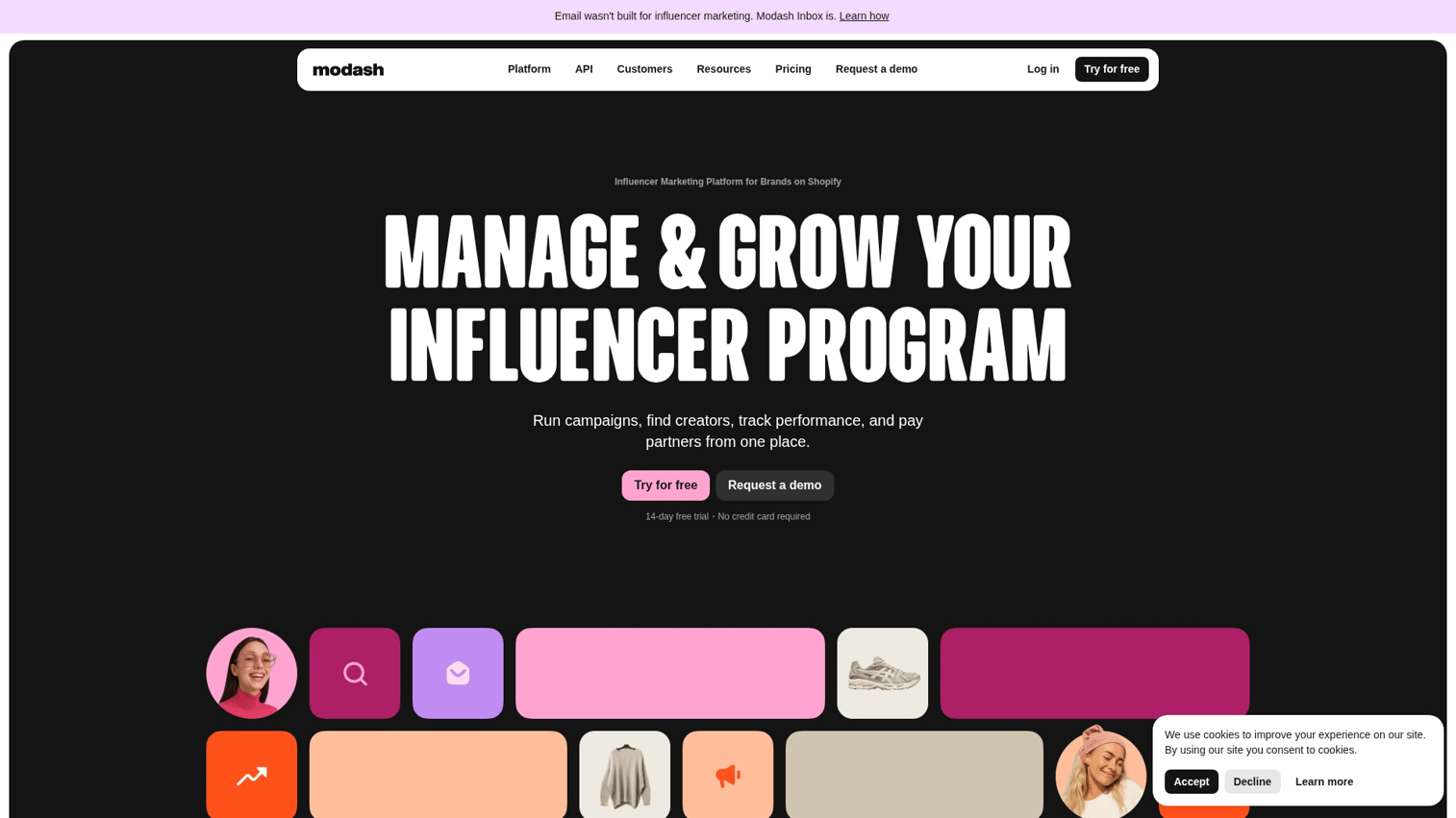
Modash focuses on high-volume influencer discovery and outreach, with a database covering 250M+ creators across Instagram, TikTok, and YouTube. The platform's search filters let you narrow by follower count ranges, engagement rates, audience location, and content categories to build targeted creator lists quickly. The built-in email finder extracts contact information for direct outreach, bypassing Instagram DMs and TikTok messages that often go unread. You can export creator lists with contact details, audience demographics, and performance metrics to coordinate outreach campaigns outside the platform or integrate with your existing CRM workflows.
Best for: In-house teams running high-volume influencer outreach campaigns.
Key strengths
Database of 250M+ creator profiles
Email finder for direct outreach
Audience analytics and authenticity checks
List export for custom workflows
Pricing: Plans start at $99/month per seat.
12. Heepsy
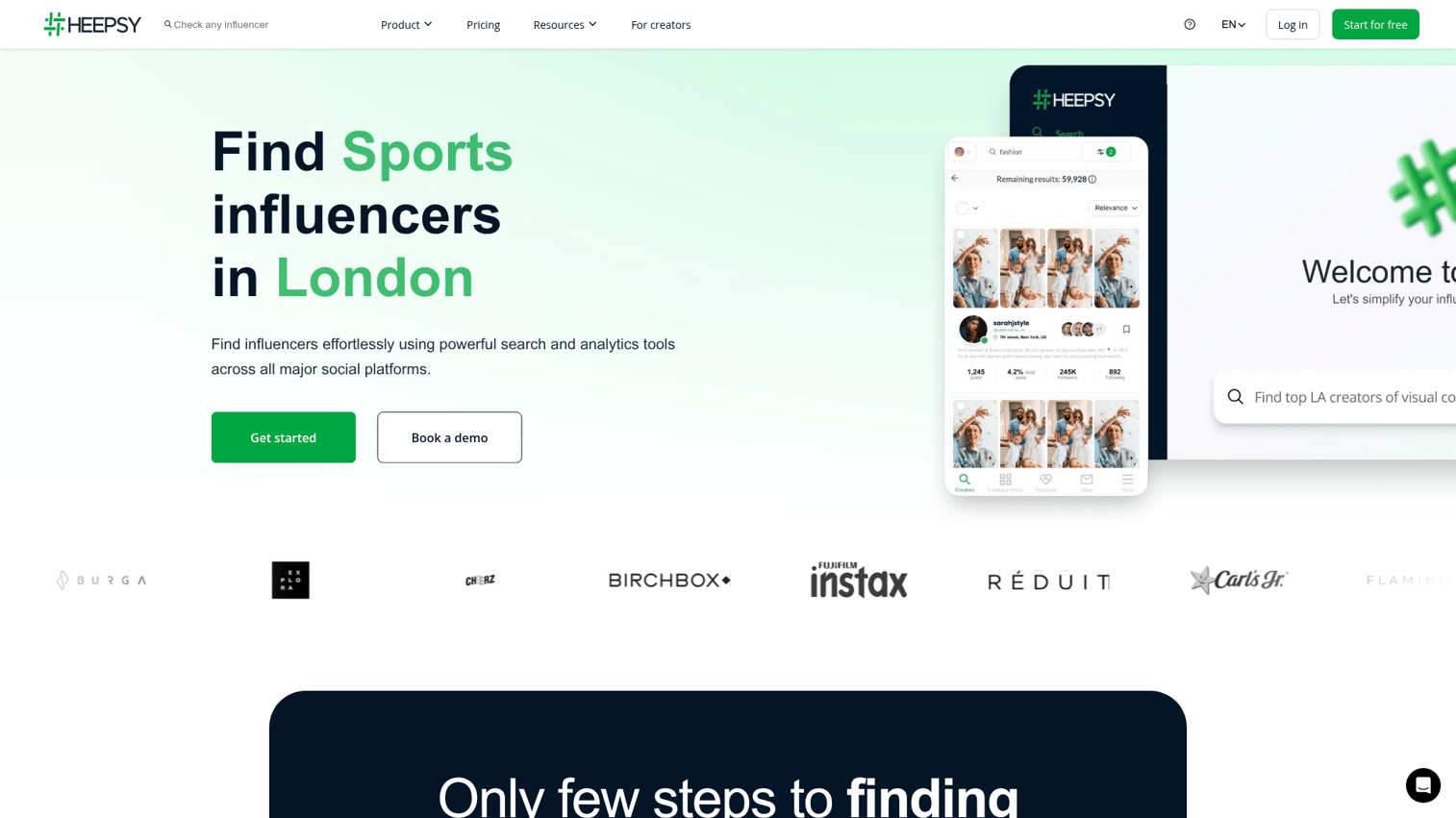
Heepsy provides affordable influencer search focused on micro and mid-tier creators, with filters for follower ranges, engagement rates, location, and content categories across Instagram, YouTube, and TikTok. The interface keeps things simple with straightforward search parameters and clear profile cards showing audience demographics, estimated reach, and contact information, making it accessible for teams launching their first influencer programs without overwhelming feature complexity or steep learning curves.
Best for: Startups and small teams launching first influencer programs on a budget.
Key strengths
Affordable entry-level pricing
Simple, accessible search interface
Micro and mid-tier influencer focus
Multi-platform coverage
Pricing: Plans start at $49/month.
13. Afluencer
Afluencer operates as a marketplace where creators apply to brand campaigns rather than brands cold-outreaching influencers. You post collaboration opportunities, and interested creators submit applications with their rates and content ideas. The platform focuses on micro and nano influencers, typically those with 1,000 to 100,000 followers who maintain higher engagement rates and niche audience connections. This reverse-application model reduces outreach time and connects you with creators already interested in your brand category.
Best for: Brands seeking direct creator collaboration without agency fees.
Key strengths
Marketplace model with creator applications
Direct messaging for collaboration
Micro and nano influencer focus
Freemium entry point
Pricing: Freemium with paid plans for additional features.
14. LTK
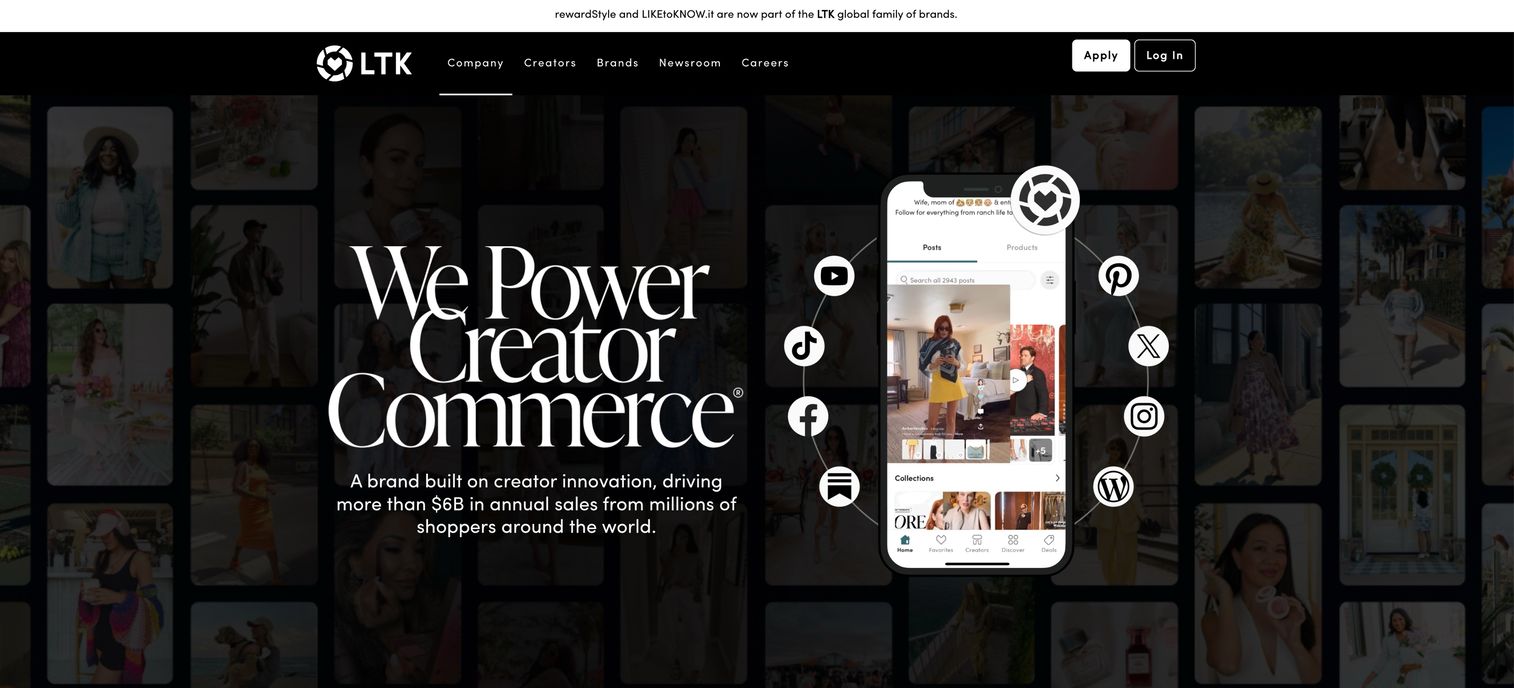
LTK operates a unique creator-brand-consumer ecosystem focused on shoppable content, connecting brands with established creators who have built-in audiences actively looking to purchase. The consumer-facing LTK app has millions of users who follow their favorite creators across fashion, beauty, home, and lifestyle categories, browsing curated product recommendations and shopping directly through affiliate links. Unlike traditional influencer platforms where you coordinate one-off sponsored posts, LTK creators maintain ongoing storefronts within the app, featuring your products alongside their regular recommendations. This creates a shopping destination rather than just social content, with consumers intentionally opening the app to discover and purchase products rather than passively scrolling past sponsored posts in their feeds.
Best for: Fashion, beauty, and lifestyle brands prioritizing shoppable creator content.
Key strengths
Consumer shopping app with millions of active users
Creator network with established audiences
Shoppable content and affiliate integration
Category expertise in fashion, beauty, and lifestyle
Pricing: Commission-based model.
15. Shopify Collabs
Shopify Collabs provides free influencer and affiliate program management built directly into Shopify's admin dashboard. The native integration automatically syncs product catalogs, inventory levels, and order data, so creator partnerships connect to your store without API configuration or third-party apps. You can generate unique discount codes and affiliate links that track which creators drive sales, with commission structures you define per creator or campaign. Product gifting workflows pull from your existing inventory system, and creators receive automatic notifications when their referred customers complete purchases.
Best for: Shopify merchants launching their first creator programs.
Key strengths
Native Shopify integration
Free for Shopify users
Affiliate link and commission tracking
Payment processing through Shopify
Pricing: Free with Shopify subscription.
16. Meltwater
Meltwater combines media monitoring, PR tools, and influencer marketing in a single platform, treating social creators as an extension of earned media strategy. The database includes both journalists and social influencers, letting PR teams coordinate traditional media outreach and creator partnerships from one system. You can track brand mentions across news outlets and social platforms simultaneously, identify journalists who also have influential social followings, and measure how influencer content amplifies press coverage. The platform monitors sentiment and reach across both channels, providing unified reporting that shows how earned media and influencer campaigns work together.
Best for: PR and communications teams adding influencer marketing to media monitoring.
Key strengths
Combined journalist and influencer database
Media monitoring and intelligence
Social listening integration
PR workflow tools
Pricing: Custom enterprise pricing.
17. HypeAuditor
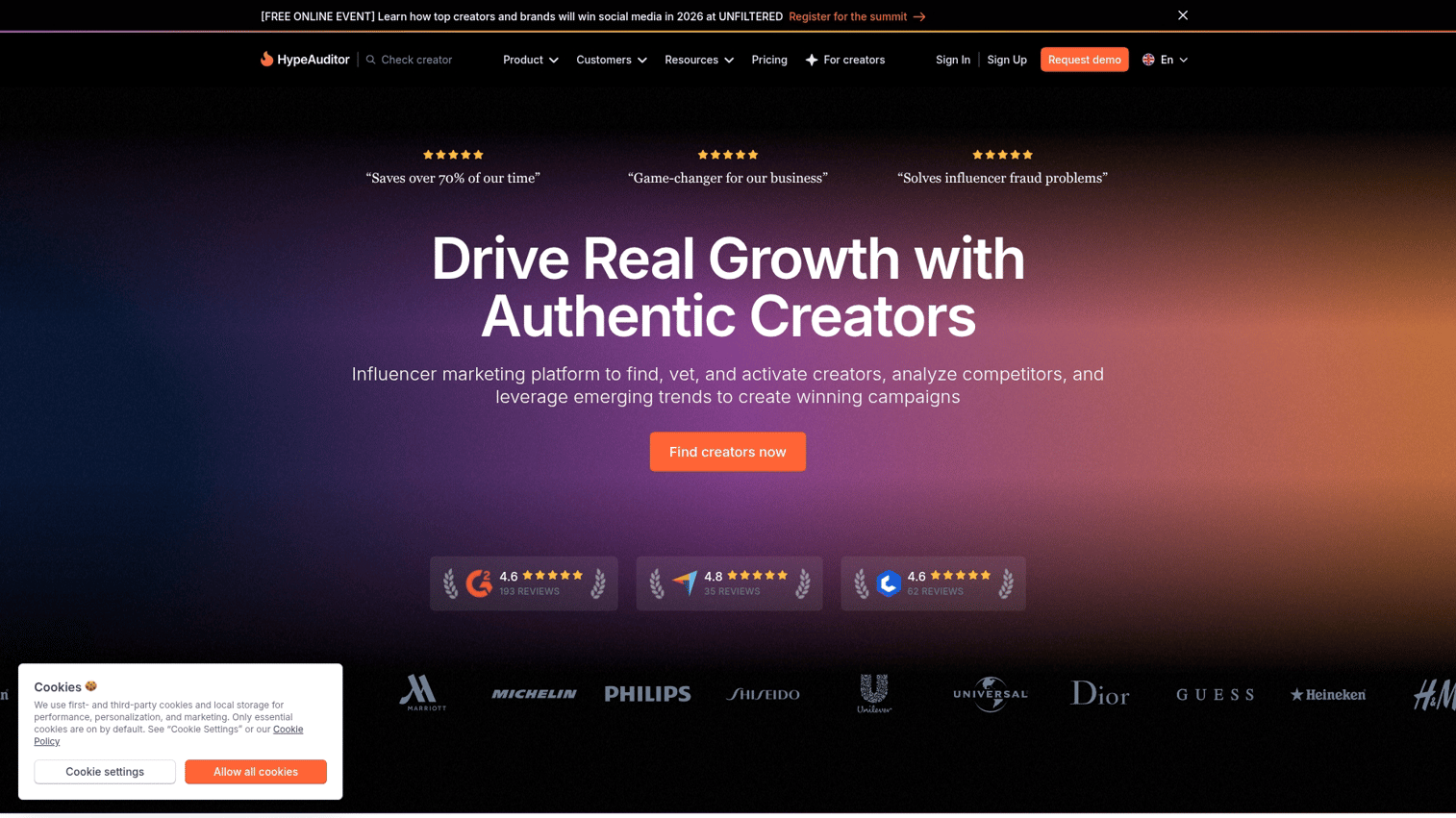
HypeAuditor specializes in influencer analytics and fraud detection, using AI to analyze audience quality, engagement authenticity, and creator credibility. The platform examines follower demographics, growth patterns, and engagement behavior to identify fake followers, bot activity, and suspicious engagement pods. Each creator receives an Audience Quality Score that breaks down the percentage of real followers versus mass followers, suspicious accounts, and influencers in their audience. The system also flags sudden follower spikes, unusual engagement patterns, and comment authenticity to help you avoid partnerships with inflated metrics.
Best for: Teams prioritizing audience quality verification and fraud prevention.
Key strengths
AI-powered audience authenticity analysis
Fake follower and bot detection
Engagement quality scoring
Competitive influencer analysis
Pricing: Plans start at $299/month.
How influencer marketing platforms help your business
Find and vet creators faster
Creator discovery filters replace manual Instagram scrolling and spreadsheet tracking. You search by niche, engagement rate, audience demographics, location, and platform, then drill into individual profiles to assess fit.
Audience authenticity checks flag accounts with suspicious follower patterns or bot engagement before you invest time in outreach.
Manage campaigns from one dashboard
A centralized workflow puts briefs, content approvals, communication history, and deadlines in one place. Marketing teams can collaborate on campaigns with clear visibility into status and next steps.
Track performance and measure ROI
Attribution connects influencer content to actual conversions - 86% of consumers make purchases influenced by creators -through promo codes, affiliate links, and UTM parameters. Reporting dashboards aggregate performance across campaigns and creators.
Scale micro-influencer programs
Micro-influencer strategies often deliver better engagement rates than celebrity partnerships - nano-influencers represent 75.9% of Instagram's influencer base - but they require managing more relationships. Automation makes it practical to coordinate dozens or hundreds of smaller creators through batch outreach, templated briefs, and streamlined approvals.
How to choose the best influencer marketing platform
Match the platform to your team size
Small teams benefit from simple, self-service tools with minimal setup. Enterprise teams typically require robust permissions, approval workflows, and multi-region support.
Set your budget before you compare
Pricing models vary significantly. Some platforms charge per seat, others by creator volume or percentage of influencer spend. Free options like Shopify Collabs exist but come with limitations.
Check integrations with your marketing stack
Influencer data becomes more valuable when it flows into your CRM, e-commerce platform, and analytics tools. Check for native integrations with systems you already use.
Prioritize the social channels you use
Not all platforms cover all networks equally. Some excel at Instagram but lack YouTube depth. TikTok coverage varies significantly between tools.
When to use an influencer marketing platform
Launching your first creator program
You're ready for a platform when you move beyond occasional sponsored posts to ongoing creator partnerships. Signs include: tracking in spreadsheets is breaking down, you're missing follow-up deadlines, and creator contact information is scattered across team members.
Scaling from manual outreach to automation
There's a tipping point where manual processes can't keep up. Most teams hit this point somewhere between 10 and 50 active creator relationships, depending on campaign complexity.
Running campaigns across multiple channels
Single-channel tools become limiting when you're coordinating Instagram, TikTok, and YouTube creators. Unified platforms provide consistent workflows and consolidated reporting across channels.
Get started with influencer marketing software
Start by mapping your requirements: team size, budget range, primary social channels, and integration requirements. Take advantage of free trials where available and test with a real campaign scenario rather than just clicking through features.
For teams also evaluating how to showcase products to prospects, interactive demos can complement influencer campaigns by giving creators and their audiences a hands-on way to experience your product.
Build your influencer marketing stack
Influencer marketing platforms work best as part of an integrated stack. The data they generate feeds into CRM, analytics, and attribution systems.
Product marketing teams often pair influencer tools with demo automation, content management, and analytics platforms. The goal is a connected system where insights flow between tools and inform decisions across channels.
Start your journey with Guideflow today!
FAQs about influencer marketing platforms
Influencer marketing software provides tools for your team to run campaigns in-house, handling discovery, outreach, management, and reporting. An influencer marketing agency handles strategy, creator relationships, and execution as a service. Many brands start with agencies to learn the channel, then move to software as they build internal capability.
Most platforms use algorithms that analyze engagement patterns, follower growth rates, audience demographics, and comment quality to flag suspicious accounts, with over 36% still impacted by fraud. Look for platforms that provide transparency scores, audience authenticity percentages, and specific metrics on bot likelihood.
Yes, though most platforms focus on consumer brands. B2B influencer marketing typically involves thought leaders, industry experts, and LinkedIn creators rather than Instagram personalities, often working alongside presales teams to accelerate deal velocity. Platforms like Brandwatch and Meltwater serve B2B use cases through their journalist databases and professional influencer coverage.
A micro-influencer platform focuses on creators with smaller but highly engaged audiences, typically under 100,000 followers. Brands use micro-influencer platforms when seeking authentic engagement and cost-effective partnerships rather than mass reach.
Most brands see campaign results within the first month of launching, but meaningful ROI data typically requires running multiple campaigns over a quarter. Platform setup, creator recruitment, and content production add time before first campaigns go live.
Many platforms offer free trials ranging from 7 to 30 days. Shopify Collabs is free for Shopify users, and Afluencer offers a freemium model. Enterprise platforms like CreatorIQ and GRIN typically offer demos rather than self-service trials.
For Instagram-focused campaigns, Later Influence, Heepsy, and Influencity offer strong coverage and analytics. The best choice depends on whether you require scheduling integration, affordable entry, or comprehensive campaign management.
Agencies typically require multi-client workspaces, white-label reporting, client permission controls, and scalable pricing based on client volume. CreatorIQ, GRIN, and impact.com offer agency-specific features including separate client environments and customizable reports.