You have inventory to sell, or budget to spend, and the stack to do either is held together with spreadsheets, manual deal sheets, and three dashboards that never agree. Revenue leaks happen in the gaps. A direct deal gets entered late. A programmatic line item gets the floor price wrong. Nobody can answer "what's our real eCPM this week" without an hour of reconciliation.
The global ad network software market was valued at $3.72 billion in 2025 and is projected to reach $9.67 billion by 2034, growing at an 11.1% CAGR, according to Dataintelo (2025). That growth is not abstract. It reflects how many publishers and advertisers are moving off ad hoc setups and onto software that gives them control over inventory, transparency into where money goes, and the levers to optimize monetization without filing a ticket every time.
That is the real decision behind "ad network software." It is not which logo has the prettiest dashboard. It is whether the platform gives you control over your inventory, transparency into your revenue, and monetization efficiency you can actually defend to finance. Picking right means matching the software to your operating model, whether you are a publisher squeezing more from existing inventory, an operator building a network from zero, or a performance marketer buying outcomes.
This guide ranks nine options and frames the build-versus-buy choice so you can move from "what is this category?" to "which tool fits my business model?" If you spend time elsewhere in your stack, you may also find our roundups of affiliate marketing software and AB testing tools useful, since ad monetization rarely lives in isolation.
What's inside
This guide is for digital marketers, publishers, and revenue teams evaluating ad network software in 2026. It covers what the category does, how it differs from adjacent adtech layers, and which tools fit which operating model.
We picked tools based on four criteria:
- Monetization model: what revenue logic the platform supports (CPM, CPC, CPA, direct deals, programmatic).
- Inventory control: how much say you get over placements, targeting, and demand.
- Reporting depth: how clearly the platform reports performance, fill rate, and eCPM.
- Compliance and setup: support for ads.txt, sellers.json, fraud controls, and how fast you can launch.
TL;DR
- Best for teams building or running a network: Epom Ad Server, for direct campaign and inventory control with a white-label option.
- Best for mobile app monetization: Google AdMob, for in-app ad formats and mediation.
- Best for publisher yield optimization: Opti Digital and Adpushup, for AI-driven revenue and ad layout optimization.
- Best for newsletter operators: beehiiv, for publishing, audience growth, and built-in sponsorship monetization.
- Best for performance and outcome buying: Perform[cb] and Blockchain-Ads, for CPA-style and specialized vertical reach.
- Best for omnichannel and CTV measurement: Innovid, for cross-channel ad delivery at enterprise scale.
For broader stack decisions, our guide to AI content creation tools covers the creative side that feeds your campaigns.
What is ad network software?
Ad network software is the platform that connects publisher inventory with advertiser demand, manages how ads are sold and delivered, and reports on performance. It sits between the people who have ad space and the people who want to buy it, automating the matching, delivery, targeting, and measurement that would otherwise happen by hand.
In plain terms, it is the operating system for an ad business. A publisher uses it to package and sell inventory. An advertiser uses it to find and buy reach. A network operator uses it to broker both sides and take a margin.
It helps to separate ad network software from the adjacent layers it gets confused with:
- Ad server vs ad network: an ad server is the delivery engine that decides which creative loads in a given slot and counts the impression. An ad network is the marketplace that aggregates inventory and demand. Many platforms bundle both, which is why the line blurs.
- SSP vs DSP vs ad network: a supply-side platform (SSP) helps publishers sell inventory programmatically. A demand-side platform (DSP) helps advertisers buy it. An ad network historically aggregated inventory and sold it in bulk, and modern network software often layers SSP and DSP logic on top.
- Ad exchange: the real-time bidding (RTB) marketplace where SSPs and DSPs transact, usually programmatically.
Core capabilities you should expect from ad network software:
- Inventory management: organize, package, and price ad placements.
- Targeting: audience, contextual, geo, device, and frequency controls.
- Campaign delivery: serve the right creative to the right slot, with pacing and weighting.
- Reporting: fill rate, eCPM, viewability, revenue, and ROAS by dimension.
- Monetization controls: floor pricing, backfill, direct deals, and programmatic demand.
- Compliance and fraud protection: ads.txt, sellers.json, and invalid traffic filtering.
The best ad networks and platforms in this category give you these capabilities without forcing you to stitch six tools together. That consolidation angle matters as much as raw features, especially if you are trying to cut the number of dashboards your team checks each morning.
When to use ad network software
Not every team needs a full ad network platform on day one. Here are the three situations where it earns its place in your stack.
Launch a monetization business from scratch
If you are a publisher, niche media company, or operator who wants to start selling inventory directly, you need software to package placements, set prices, and deliver ads. Building an ad network for publishers from zero means you need campaign management, targeting, and reporting in one place before you can take a single advertiser dollar. A white-label ad server lets you run the operation under your own brand.
Replace a messy ad hoc setup
Manual deal handling caps your revenue. If your team enters direct deals into spreadsheets, reconciles numbers by hand, and cannot see real-time fill rate or eCPM, you are leaving money on the table. Ad network software replaces that patchwork with a system that tracks every line item, automates delivery, and surfaces the metrics finance keeps asking about.
Scale direct and programmatic demand together
Once you run both curated direct deals and programmatic demand, you need one system that handles both. An ad network for advertisers and publishers alike benefits from unifying RTB logic, direct deals, and measurement so you are not optimizing two disconnected revenue streams against each other.
Comparison table
Here is a compact view of the nine tools, sorted by relevance to ad network software rather than alphabetically. Public pricing is noted where vendors publish it; several use quote-based or revenue-share models, which is normal in adtech.
| # | Product | Intent | Key differentiation | Pricing | G2 rating |
|---|---|---|---|---|---|
| 1 | Epom Ad Server | Build or run a network | White-label ad serving with direct and RTB control | From $212/mo (annual) | 4.6/5 |
| 2 | Google AdMob | Mobile app monetization | In-app formats plus mediation and bidding | Free (revenue share) | 4.3/5 |
| 3 | Opti Digital | Publisher yield optimization | AI-driven floor pricing and header bidding | Custom | 4.5/5 |
| 4 | Adpushup | Publisher revenue optimization | Ad layout optimization plus adblock recovery | Custom | 4.4/5 |
| 5 | beehiiv | Newsletter monetization | Publishing plus built-in ad network | Free; paid from $43/mo | 4.5/5 |
| 6 | Blockchain-Ads | Performance, Web3 verticals | Wallet-level and behavioral targeting | Request access | 4.9/5 |
| 7 | BidMachine | Mobile SDK monetization | SDK-first exchange with transparent auctions | Custom | 4.7/5 |
| 8 | Perform[cb] | Outcome-based buying | CPA media buying across 25+ channels | Custom | 4.7/5 |
| 9 | Innovid | Omnichannel and CTV | Cross-channel delivery and measurement | Custom | Not listed |
1. Epom Ad Server
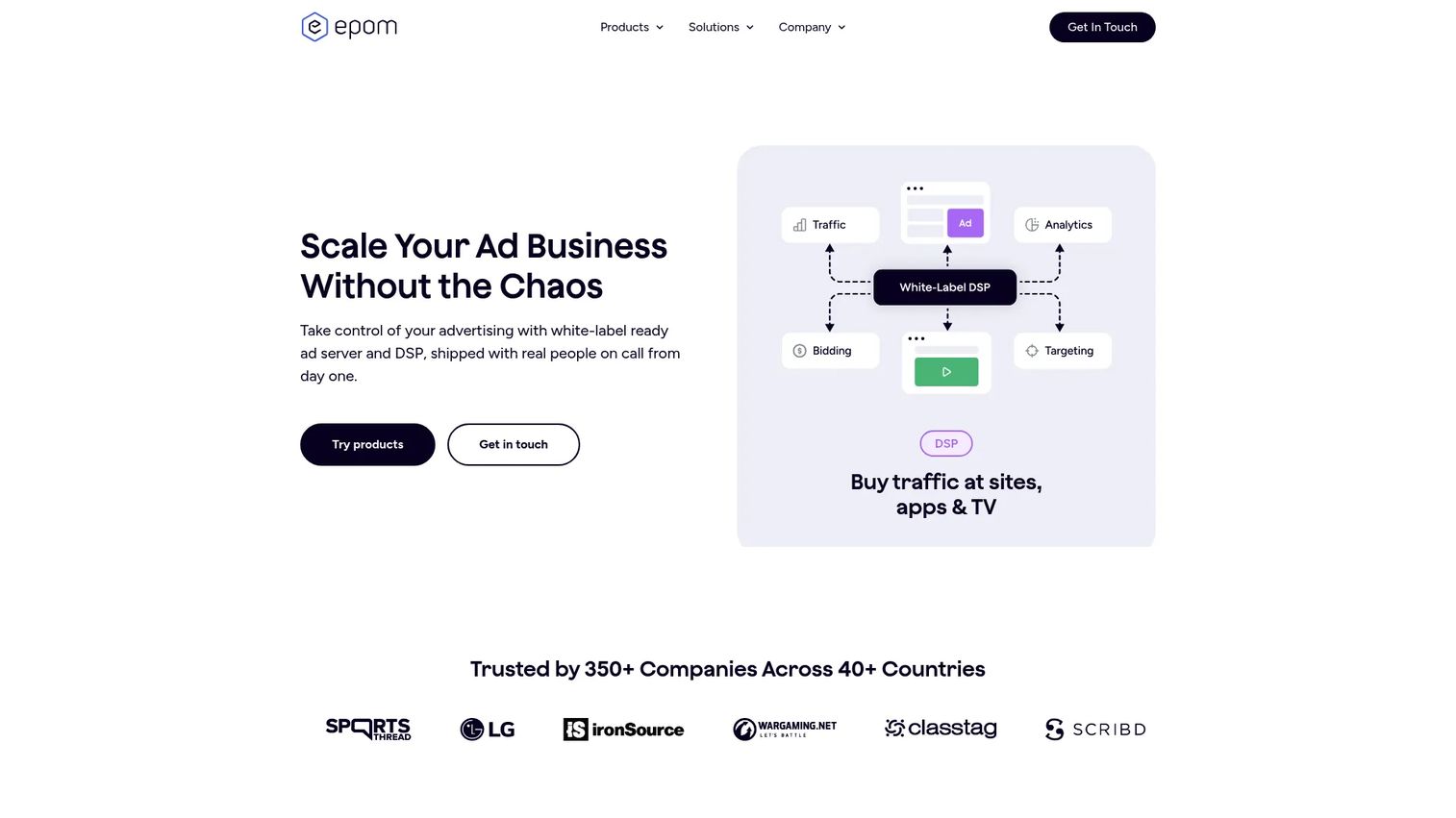
Epom Ad Server is ad serving software built for publishers, ad networks, brands, and even sportsbooks that need direct control over campaigns and inventory. It positions itself as the operational core for teams that want to run their own network rather than rent space on someone else's. The white-label angle is the headline feature, letting you launch under your own brand without building delivery infrastructure from scratch.
Best for: teams that need direct ad campaign and inventory control, especially operators building or running a network.
Key strengths
- Campaign and placement management: organize, deliver, and pace campaigns across your inventory from one console.
- Analytics and optimization: report across 40+ metrics and 10+ filters so you can slice performance by the dimensions that matter.
- White-labeling and SSP module: brand the platform as your own and manage RTB inventory through a built-in supply-side module.
Why choose Epom Ad Server: if your goal is to build an ad network or replace a fragmented setup with one system you control, Epom gives you the campaign management, targeting controls like frequency capping and banner weighting, and the white-label flexibility to do it under your own brand. It fits operators who want ownership over the stack, not just access to a marketplace.
Epom Ad Server pricing: public pricing lists four plans. Light starts at $212 per month billed annually, Growth is $850 per month, and Pro is $2,125 per month. Enterprise is custom and handled through sales. There is no free tier, though Epom offers a 14-day trial. Pricing is shown directly on the product page, which is rare enough in adtech to be worth noting.
2. Google AdMob
Google AdMob is a mobile app monetization platform that helps developers earn revenue from in-app ads. It is the default starting point for most app publishers because it combines a massive demand pool with mediation that pits networks against each other for each impression. If your inventory lives inside an iOS or Android app, AdMob is hard to ignore.
Best for: app developers monetizing mobile apps with ad inventory and mediation.
Key strengths
- Ad mediation: route each impression to the network most likely to pay the highest rate.
- Bidding: let demand sources compete in real time for your inventory.
- Ad formats: run rewarded, native, banner, and interstitial formats to match the app experience.
Why choose Google AdMob: if you are a mobile-first publisher, AdMob gives you reach, mediation, and format flexibility without the overhead of negotiating direct demand. It suits teams that want monetization running quickly and are comfortable inside the Google ecosystem. The trade-off is less control over the stack than a self-hosted ad server gives you.
Google AdMob pricing: AdMob is free to use. Google's documentation states publishers earn money from clicks, impressions, and other interactions with the ads they display, so there is no subscription price. Revenue works on a share model rather than a billed plan, which is why no list price exists to compare.
3. Opti Digital
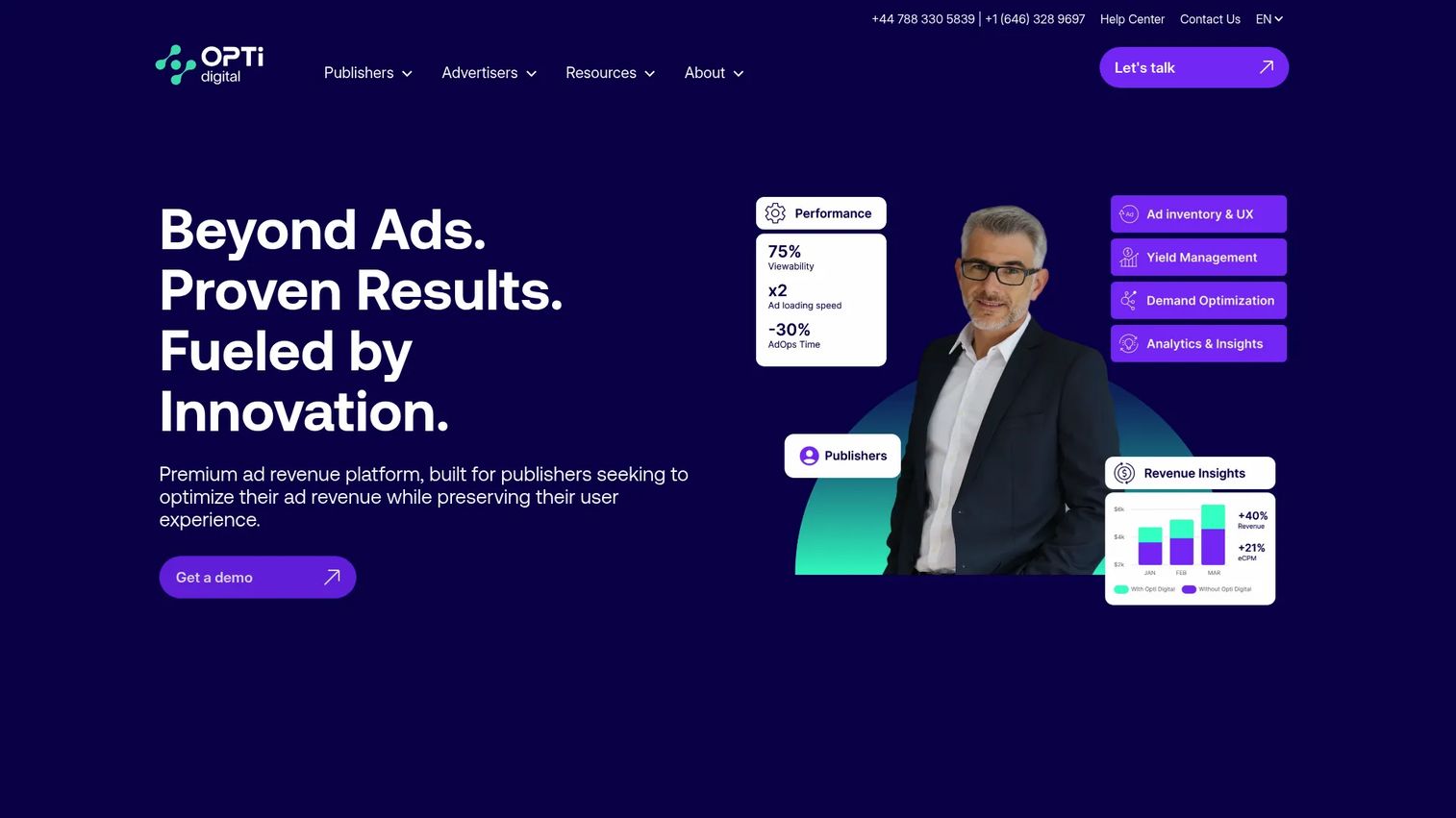
Opti Digital is an adtech platform for digital publishers and sales houses focused on ad revenue optimization and operational efficiency. Rather than replacing your stack, it layers intelligence on top of it, using AI to push floor pricing and yield management toward the numbers your inventory can actually command. It is built for publishers who already sell inventory but suspect they are leaving revenue on the table.
Best for: digital publishers seeking AI-driven ad revenue optimization and yield management.
Key strengths
- Ad Manager Hub: run a hybrid header bidding wrapper, dynamic ad placements, and real-time performance analytics.
- Yield Hub: apply AI-driven dynamic floor pricing, backfill, and traffic allocation for optimized revenue.
- Demand Hub: access exclusive demand, social display ads, and attention-based advertising with layout protection.
Why choose Opti Digital: if your problem is yield rather than infrastructure, Opti Digital focuses squarely on squeezing more eCPM from existing inventory. It fits publishers who want optimization expertise and AI floor pricing without rebuilding their delivery setup. The platform is demand-and-contact based rather than self-serve sign-up.
Opti Digital pricing: public pricing is not displayed on the website, which offers demos and contact instead. Pricing for this kind of yield optimization is typically structured around revenue share or custom arrangements, so expect a conversation rather than a checkout page.
4. Adpushup
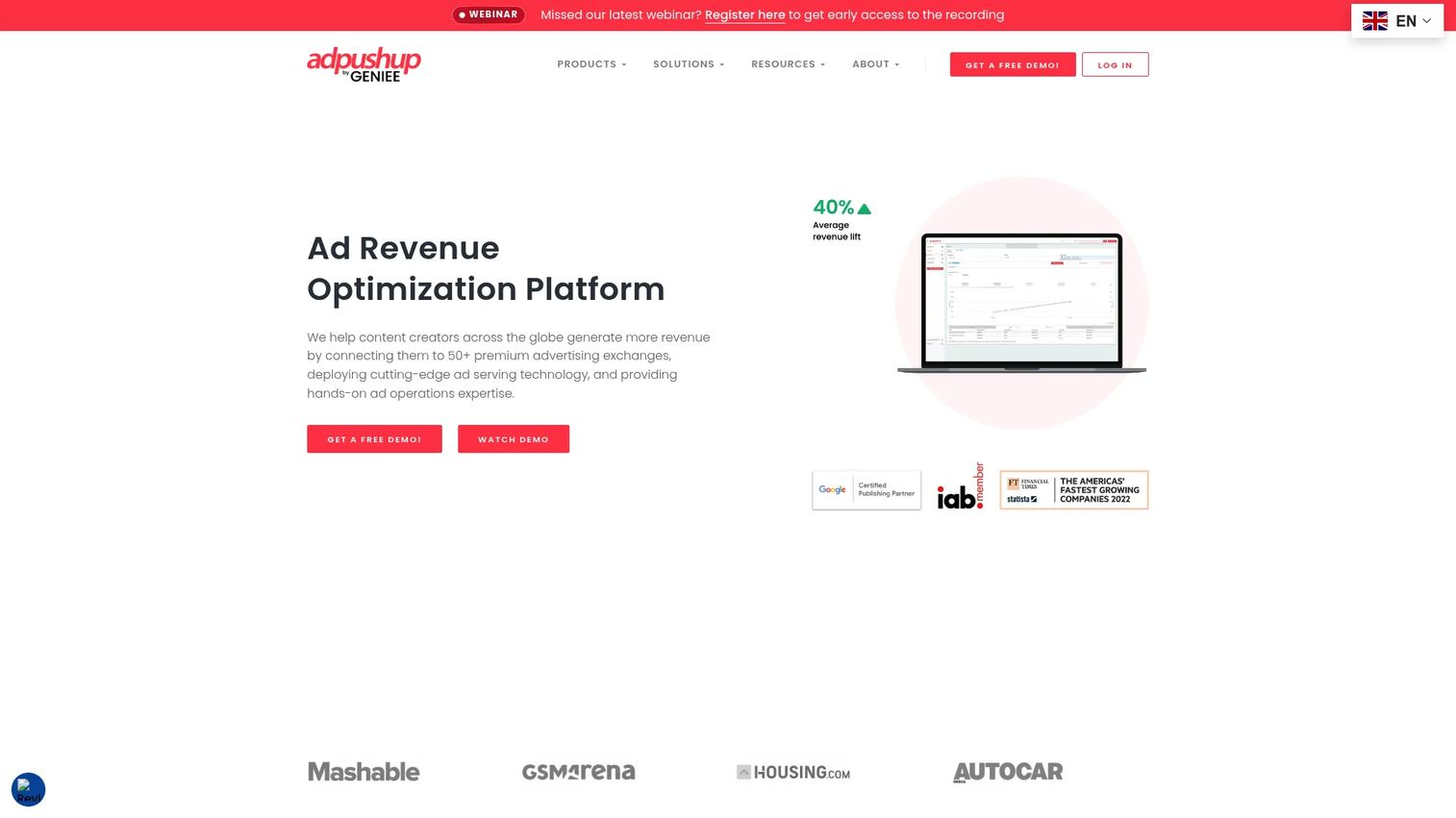
Adpushup is an ad revenue optimization platform for publishers. It overlaps with Opti Digital in mission but leans harder into ad layout optimization, automatically testing placements and configurations to find the arrangement that earns the most without wrecking the user experience. For publishers fighting both revenue ceilings and adblock erosion, it covers two problems at once.
Best for: publishers wanting to optimize ad revenue and manage monetization operations.
Key strengths
- Ad layout optimization: test and refine placement arrangements to maximize revenue per page.
- Header bidding: run bid competition so multiple demand sources compete for each impression.
- Adblock revenue recovery: recover revenue that would otherwise be lost to ad blockers.
Why choose Adpushup: if you want a managed approach to yield that includes layout testing and adblock recovery, Adpushup handles the optimization work so your team does not have to run experiments manually. It fits publishers who want revenue lift from existing traffic and are open to a managed-service relationship rather than a pure software license.
Adpushup pricing: Adpushup does not display public pricing on its site. Like most publisher optimization platforms, it operates on a revenue-share or custom model, confirmed through a conversation with their team rather than a published price list.
5. beehiiv
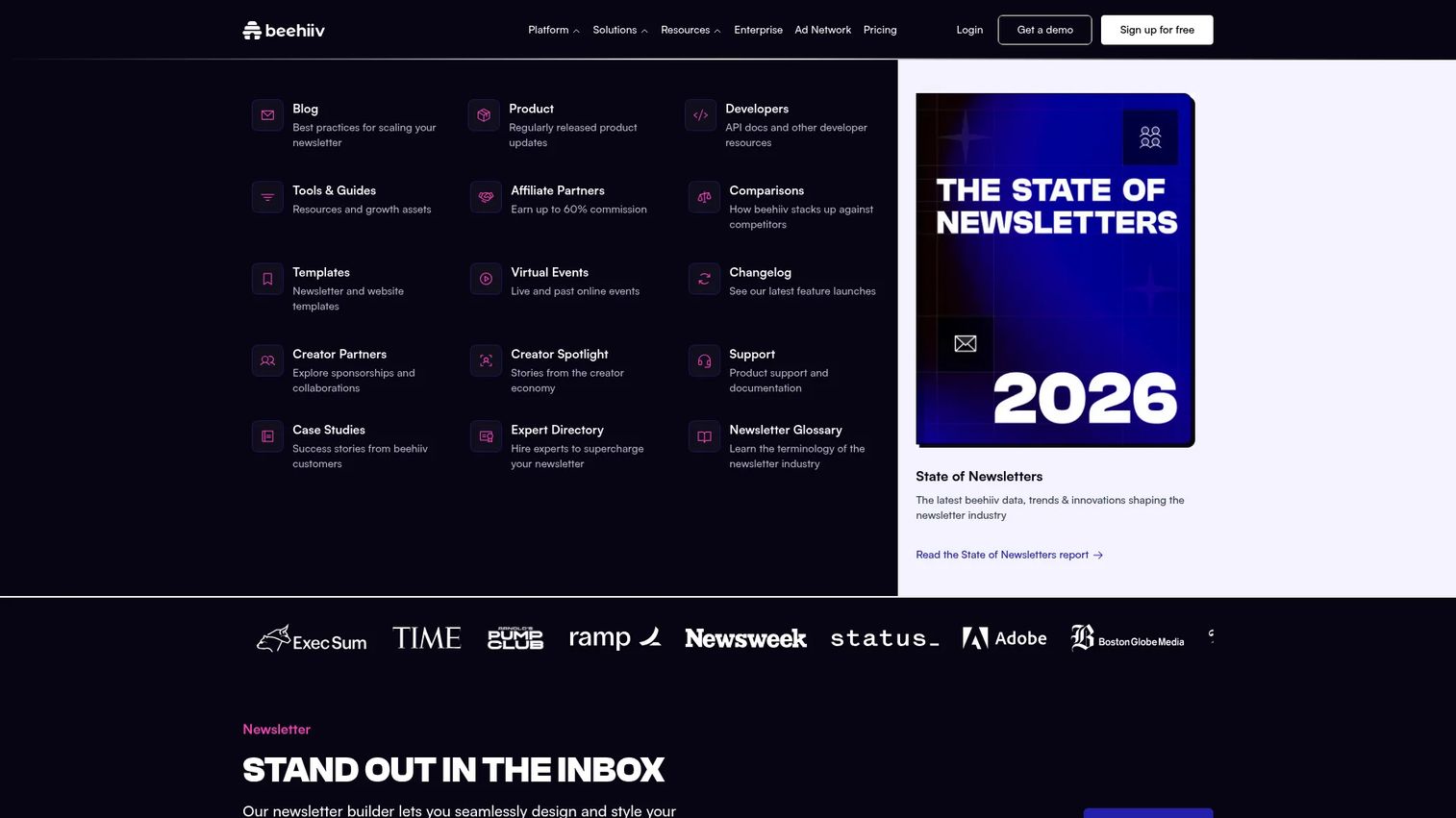
beehiiv is a newsletter platform for creators and brands to build, grow, and monetize email audiences. It belongs on this list because of its built-in ad network, which connects newsletter operators with sponsors without the manual outreach that usually eats into a creator's week. If your inventory is an email list rather than a website, this is the monetization model that fits.
Best for: newsletter creators and media brands that want publishing, audience growth, and monetization in one platform.
Key strengths
- Newsletter editor and publishing tools: write, design, and send without juggling separate tools.
- Website builder and custom domains: run a branded web presence alongside the newsletter.
- Automations and monetization tools: grow the audience and tap built-in sponsorship demand.
Why choose beehiiv: if you operate a newsletter and want monetization baked into the publishing platform, beehiiv removes the need to broker sponsorships by hand. It suits creators and media brands prioritizing audience growth and built-in ad revenue. Teams running traditional web or app inventory will find purpose-built adtech platforms a closer fit for that specific job.
beehiiv pricing: beehiiv has a free Launch plan available forever. Paid plans include Scale and Max, shown at $43 and $96 per month respectively on the pricing page, with a note that paid plans start at $49 per month. Enterprise is custom. A free tier plus transparent pricing makes it easy to start small and scale.
6. Blockchain-Ads

Blockchain-Ads is a performance ad network and user acquisition platform for Web3, crypto, iGaming, fintech, SaaS, and related verticals. Its differentiator is targeting that reaches users based on on-chain wallet activity, which mainstream networks cannot do. For advertisers in specialized verticals where standard targeting falls short, it offers reach that is otherwise hard to buy.
Best for: advertisers needing performance-focused crypto and Web3 user acquisition with wallet-level targeting.
Key strengths
- Wallet targeting: reach users based on their on-chain activity, not just cookies.
- Interest and behavioral targeting: layer intent signals on top of wallet data.
- Real-time tracking and optimization: adjust campaigns against performance as they run.
Why choose Blockchain-Ads: if you buy media in crypto, iGaming, or fintech, Blockchain-Ads gives you targeting and reach that general-purpose networks do not. It fits advertisers focused on outcomes in verticals where wallet-level signals matter more than broad demographic targeting.
Blockchain-Ads pricing: public pricing is not displayed. The site notes that campaign budgets and pricing are confirmed during a verification process, and access is request-based. Expect performance-oriented terms tied to cost-per-action rather than a flat subscription.
7. BidMachine
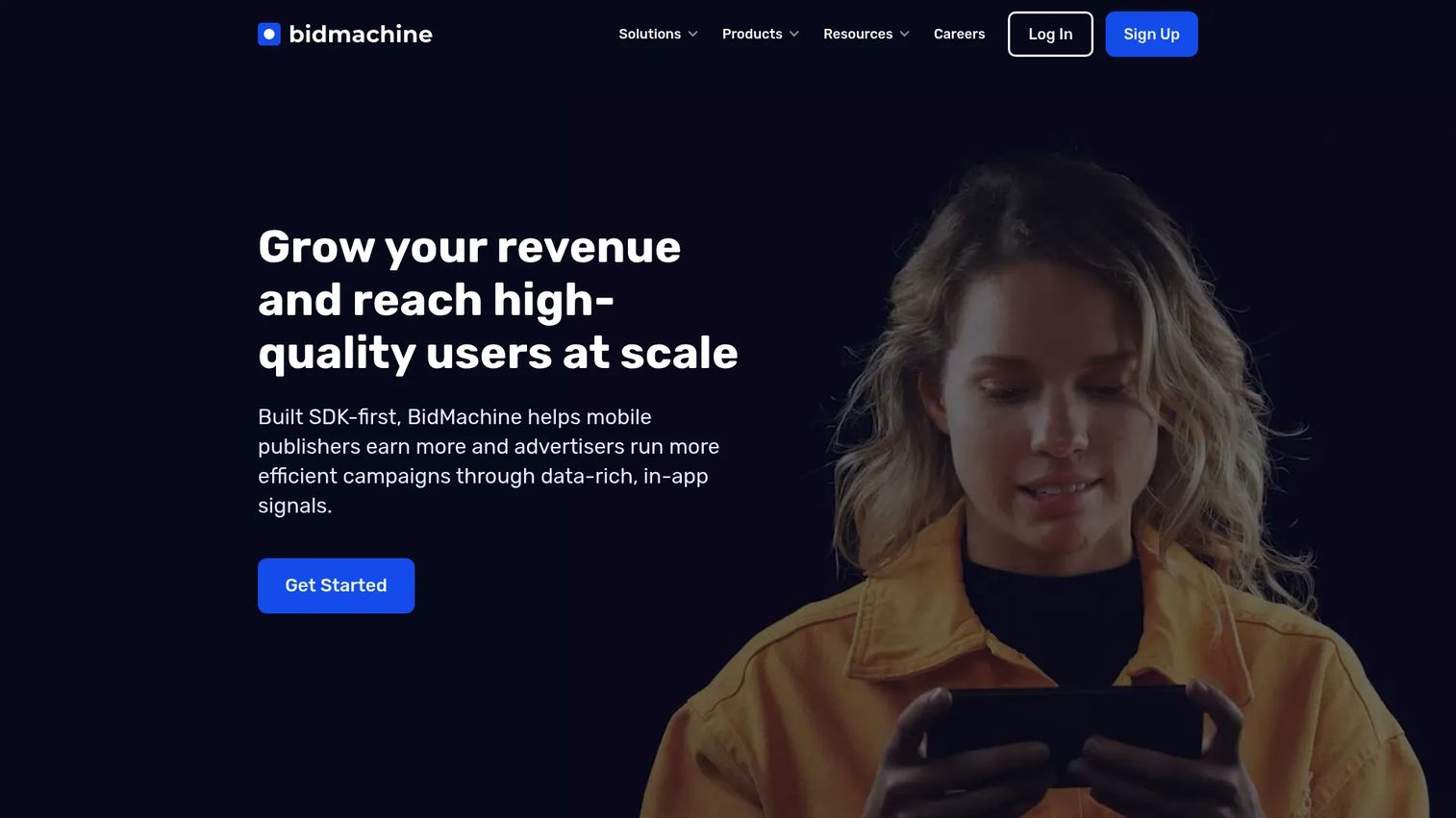
BidMachine is an SDK-first mobile ad monetization and exchange platform for publishers, advertisers, DSPs, and agencies. It sits closer to the infrastructure layer than a managed network, giving app publishers and demand partners a transparent exchange with auction-level visibility. For teams that want to see how their inventory clears rather than trusting a black box, transparency is the selling point.
Best for: mobile app publishers and performance buyers needing SDK-based ad monetization and premium in-app supply.
Key strengths
- SDK-first monetization and exchange: integrate at the SDK level for direct access to in-app supply.
- Transparent auctions and reporting: see how auctions clear with auction-level reporting.
- Ad mediation and user acquisition: mediate demand and support acquisition campaigns in one platform.
Why choose BidMachine: if you run mobile inventory and want infrastructure-level control with transparent auctions, BidMachine gives publishers and demand partners a clearer view than a managed network typically provides. It fits teams comfortable with SDK integration who value auction transparency over a fully managed experience.
BidMachine pricing: no public pricing is displayed on the site. Pricing appears to be sales-led and contact-based, which is standard for SDK-level monetization infrastructure where terms depend on volume and integration scope.
8. Perform[cb]
![Perform[cb] screenshot](https://cdn.guideflow.com/cdn-cgi/image/width=1514,quality=80,format=auto,onerror=redirect/uploads/6a4237f59ff486f95ff7d1ba_screenshot_e90735b9_41f4338ccc.webp)
Perform[cb] is an outcome-based user acquisition and performance marketing platform for brands, agencies, and publishers. It is built around the CPA model, meaning advertisers pay for results rather than impressions or clicks. For marketers who own a number and need to tie spend directly to acquired customers, that outcome-first model is the entire appeal.
Best for: brands seeking outcome-based customer acquisition at scale.
Key strengths
- AI-powered media buying: optimize buys with an AI-driven media buying platform.
- 25+ digital channels: reach audiences across more than 25 channels from one platform.
- Real-time performance and predictive analytics: apply granular optimizations against live results.
Why choose Perform[cb]: if your KPI is cost per acquisition and you want spend tied directly to outcomes, Perform[cb] is built around that model rather than retrofitted for it. It fits performance marketers and brands who care about defensible ROAS more than raw reach, and who want affiliate-style outcome buying at scale.
Perform[cb] pricing: public pricing is not displayed. The site uses a contact model, which fits the outcome-based structure where pricing is tied to performance goals rather than a fixed subscription. Expect CPA or CPL terms negotiated against your acquisition targets.
9. Innovid
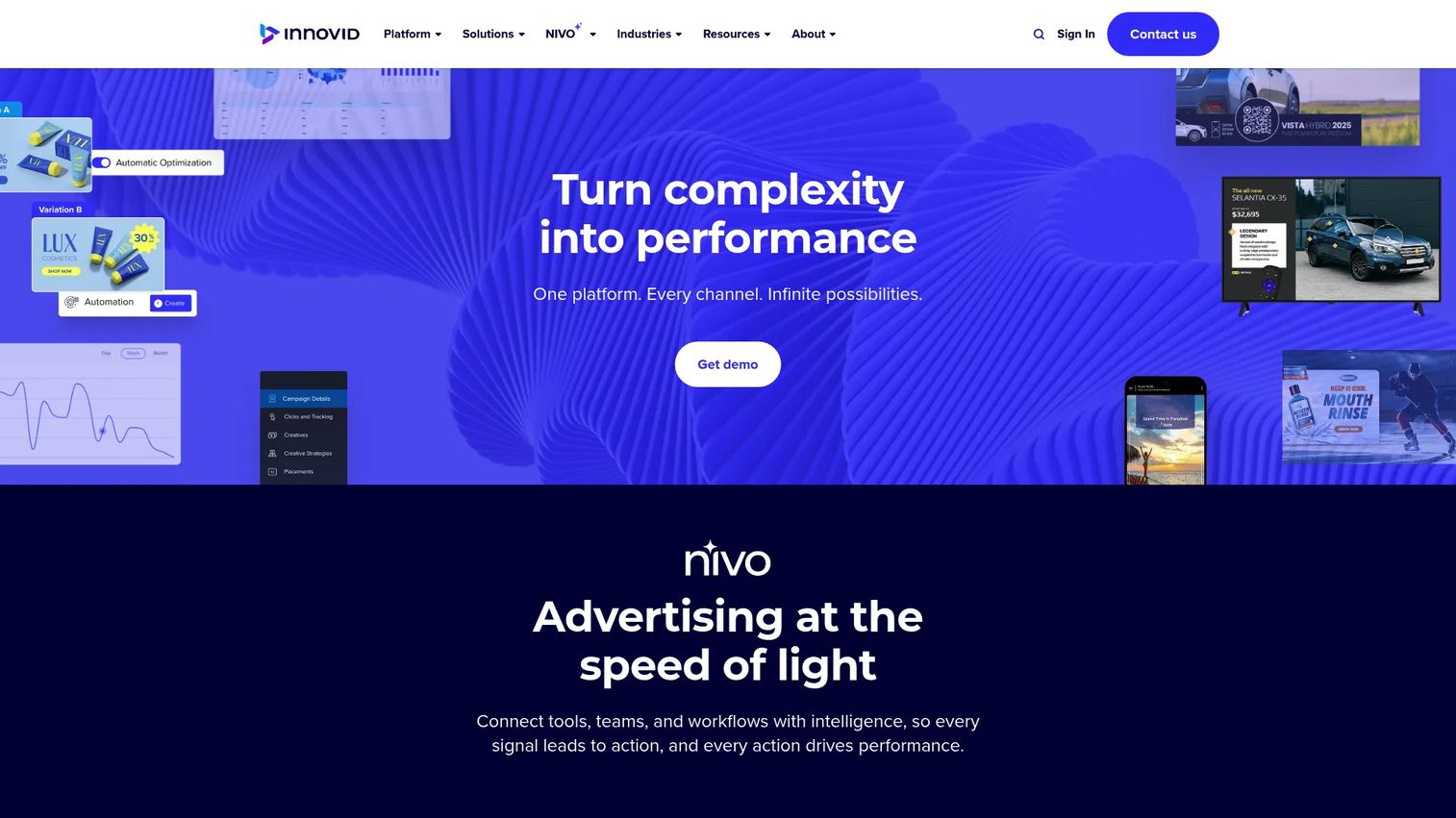
Innovid is an independent omnichannel advertising platform for creating, delivering, measuring, and optimizing ad experiences. It plays in more complex media environments than most tools on this list, spanning connected TV, linear, and digital from a single platform. For enterprises and agencies running video-led, cross-channel campaigns, Innovid is built for the scale and measurement those environments demand.
Best for: enterprises and agencies running omnichannel advertising across CTV, linear, and digital.
Key strengths
- Unified platform: create, deliver, measure, and optimize ads in one place.
- AI agents and orchestrator: automate ad workflows with AI agents and an orchestrator layer.
- Ad verification: apply built-in media quality and verification for cleaner delivery.
Why choose Innovid: if you run cross-channel campaigns that include CTV and linear, Innovid handles delivery and measurement at a scale most network tools do not target. It fits enterprise advertisers and agencies who need omnichannel reach plus the measurement to prove it worked across screens.
Innovid pricing: pricing is not publicly displayed, and the site directs visitors to contact sales. Enterprise omnichannel platforms almost always price by custom contract, scaled to channel mix, volume, and measurement needs.
How to choose ad network software
Once you have a shortlist, the differences come down to a handful of practical criteria. Run every contender through these before you commit.
Monetization model fit
Decide which revenue logic you need before you shortlist. CPM pricing rewards impressions, CPC rewards clicks, CPA and CPL reward outcomes, and direct deals reward relationships. A platform built for outcome buying serves a different goal than one built for programmatic yield, so match the model to your actual revenue motion.
Inventory control and transparency
Check how much say you get over placements, floor pricing, and demand sources. A white-label ad server gives you the most control, while a managed network trades some control for convenience. Ask how transparent the reporting is, since auction-level visibility is the difference between optimizing and guessing.
Reporting depth
Your CFO will ask for fill rate, eCPM, viewability, and ROAS. Make sure the platform reports these clearly and lets you slice by the dimensions you care about. Shallow reporting forces manual reconciliation, which is exactly the spreadsheet problem you are trying to escape.
Compliance and fraud protection
Confirm support for ads.txt and sellers.json, which are table stakes for legitimate inventory in 2026. Ask about invalid traffic filtering and how the platform handles compliance, because fraud and non-compliant inventory erode both revenue and reputation.
Setup speed and stack fit
Factor in how fast you can launch and whether the platform integrates with your existing tools. Some platforms run in days; others need integration work. If you are consolidating tools, prioritize one that replaces several rather than adding another dashboard.
Conclusion
The right ad network software depends entirely on who you are. Operators building a network gravitate to Epom Ad Server for its white-label control. Mobile app publishers default to Google AdMob for reach and mediation. Publishers chasing yield turn to Opti Digital and Adpushup. Newsletter operators find their fit in beehiiv. Performance marketers lean on Perform[cb] and Blockchain-Ads, and enterprises running CTV and cross-channel campaigns choose Innovid.
The pattern is clear: there is no single best tool, only the best fit for your operating model and monetization goals. Before you sign anything, compare pricing models against your actual revenue logic, confirm support for ads.txt and sellers.json, and pressure-test the reporting against the metrics your finance team will demand. Start with a shortlist of two or three, run them against your inventory or campaign targets, and let the numbers decide. For adjacent stack decisions, our guides to AI customer service software and AI writing tools for marketers can help round out the rest of your toolkit.
FAQs
Ad network software is the platform that connects publisher inventory with advertiser demand, manages how ads are sold and delivered, and reports on performance. It automates the matching, targeting, delivery, and measurement that would otherwise happen manually, serving publishers, advertisers, and network operators alike.
An ad server is the delivery engine that decides which creative loads in a given slot and counts the impression. An ad network is the marketplace that aggregates inventory and demand and brokers the deal. Many platforms bundle both functions, which is why the ad server vs ad network distinction often blurs in practice.
Not always, but it helps once you outgrow manual deals. Small publishers can start with a single network like Google AdMob for mobile or a yield optimizer for web. Once you sell inventory directly, run multiple demand sources, or want a white-label ad server, dedicated ad network software pays for itself by replacing spreadsheets and surfacing real-time fill rate and eCPM.
Ad network pricing varies widely. Some platforms charge a subscription, like Epom Ad Server's published tiers. Many use revenue-share or custom models, common with publisher yield optimizers and performance networks. Advertiser-facing tools often price by outcome, using CPM, CPC, CPA, or CPL terms tied to your campaign goals rather than a flat fee.
An SSP helps publishers sell inventory programmatically, and a DSP helps advertisers buy it, usually transacting through an ad exchange via real-time bidding. The SSP vs DSP vs ad network distinction matters because modern ad network software often layers SSP and DSP logic on top of traditional network functions, blurring the boundaries between these adtech layers.
For ad network software for publishers, prioritize monetization model fit, inventory control, reporting depth, and compliance support. Check that the platform reports fill rate, eCPM, and viewability clearly, supports ads.txt and sellers.json, and handles both direct deals and programmatic demand if you run both. Setup speed and stack fit matter too if you are consolidating tools.
Compliance and fraud controls directly affect revenue and reputation. Support for ads.txt and sellers.json is table stakes for legitimate inventory, and invalid traffic filtering protects both publishers and advertisers from wasted spend. When evaluating platforms, ask how they detect invalid traffic, enforce viewability standards, and handle first-party data and privacy compliance.
Yes. Platforms like Epom Ad Server offer white-label ad serving that lets you build an ad network and run it under your own brand without engineering a delivery system from scratch. Off-the-shelf software handles campaign management, targeting, RTB, and reporting, so you focus on demand and supply relationships rather than infrastructure. Building fully custom only makes sense at large scale with specialized requirements.