You signed a new client last quarter. Different SKUs, different billing rules, a portal your ops team promised would "just work." Two months in, someone is still reconciling storage fees in a spreadsheet at 11 p.m., and your account manager can't tell the client where their inventory actually is.
That's the moment most 3PL operators realize their tooling can't scale with their book of business. Spreadsheets and a generic warehouse app handle one client fine. They break the moment you add a second client with different rate cards, receiving rules, and reporting expectations. The 3PL market is not slowing down to let you catch up: the global third-party logistics market is projected to reach USD 1.3567 trillion in 2026 and grow to USD 2.5022 trillion by 2033 at a 9.1% CAGR, according to Grand View Research (2026). More than 57% of e-commerce companies now outsource fulfillment, per Productiv (2026), which means more clients, more SKUs, and more billing complexity landing on 3PLs every quarter.
The right third party logistics software turns that complexity into a repeatable system: inventory, receiving, shipping, client billing, portals, and integrations running in one place instead of five disconnected tools. If you're evaluating platforms the way you'd evaluate any piece of infrastructure that needs to earn its place in your stack, this guide breaks down seven real options by operational fit. If you also run software evaluations for adjacent categories, our roundups on contract lifecycle management software and best event management software follow the same buyer-first structure.
What's inside
This guide covers seven real 3PL software platforms selected for warehouse management depth, multi-client fit, billing and invoicing accuracy, integration breadth, customer visibility, and implementation support. We prioritized systems built or heavily adapted for third-party logistics, not general-purpose warehouse apps retrofitted for client billing.
It's written for operators and founders actually choosing software for scale: people who need to reduce manual work, keep data visible across clients, and stop routing every exception through a single person. If you're comparing on operational reality rather than feature-count, this is the list. For a wider view of buyer-side tooling, our guide to contract management software tools covers the paperwork side of onboarding new clients.
TL;DR
- Best for connected OMS/WMS/integration stack: Extensiv pairs order management, 3PL warehouse management, and integration management for brands and 3PLs that want one connected system.
- Best for freight and customs breadth: Magaya covers freight forwarding, customs compliance, rate management, and a digital freight portal in one logistics platform.
- Best for 3PL-exclusive WMS: Camelot 3PL Software builds warehouse management systems exclusively for third-party logistics, with published entry pricing.
- Best for high-volume, cloud-native fulfillment: Logiwa is an AI-native WMS and fulfillment system built for high-volume brands and 3PLs.
- Best for e-commerce fulfillment efficiency: ShipHero focuses on pick, pack, and shipping operations for fast-moving e-commerce warehouse teams.
- Best for enterprise supply chain execution: Deposco and Infios WMS both fit larger, more complex operations needing deep warehouse execution and visibility.
What is 3PL software?
3PL software is a warehouse management and fulfillment system built to run logistics operations on behalf of multiple clients, centralizing inventory, receiving, shipping, client billing, portals, and integrations in one platform. It's the operating layer a third-party logistics provider uses to move goods, bill accurately, and give each client visibility into their own stock and orders.
A 3PL warehouse management system differs from a general-purpose WMS in one core way: it's built for multi-client operations. A standard WMS manages one company's inventory in one or more warehouses. Warehouse management software for 3PLs has to separate inventory, rules, and billing by client while running shared physical space and labor. That's a fundamentally different data model.
Core capabilities of 3PL software solutions typically include:
- Inventory and order management: real-time inventory visibility per client, order routing, kitting, and replenishment across multi-warehouse operations.
- Receiving and shipping: standardized inbound workflows, pick-and-pack, and carrier rate shopping.
- Billing and invoicing for 3PLs: activity-based billing that tracks storage, handling, and value-added services per client and generates accurate invoices.
- Client portal: customer self-service tracking so clients see inventory and order status without emailing your team.
- API and EDI integrations: connections to shopping carts, marketplaces, carriers, and ERP systems that reduce manual data entry.
- Compliance automation: support for regulated goods, HazMat handling, and audit trails.
- Role-based workflows: permissions and views that match warehouse, admin, and client roles.
The 3PL software market itself is growing, valued at USD 1.5 billion in 2025 and projected to reach USD 2.8 billion by 2035 at a 6.4% CAGR, per Future Market Insights (2025). Demand is being pushed by client expectations: 74% of shippers say they would switch 3PLs based on AI capabilities, according to Productiv (2026).
When to use 3PL software
Replace spreadsheets and manual billing
One client on spreadsheets is manageable. Three clients with different storage rates, handling fees, and value-added services is where manual billing starts leaking revenue. Every miscounted pallet-day or forgotten kitting charge is margin you never invoice. 3PL fulfillment software with activity-based billing captures those charges automatically, so your invoices match what actually happened on the floor.
Manage multi-client, multi-warehouse operations
Multi-client warehouse software exists because shared physical space plus separate client accounting is genuinely hard to run manually. When two clients store product in the same aisle, you need a system that keeps their inventory, rules, and billing cleanly separated while giving your team one operational view. Add a second or third warehouse and that need becomes non-negotiable.
Improve customer visibility and self-service
Clients ask "where's my inventory?" constantly. A client portal answers that question without a human touch, giving each client real-time inventory visibility and order tracking under your brand. That cuts inbound emails, builds trust, and makes your operation feel bigger than it is.
Standardize shipping, receiving, and order flow
Process consistency is what lets you add clients without adding chaos. When receiving, put-away, picking, and shipping follow the same standardized workflow regardless of client, you can onboard new business faster and train staff once. Automation for fulfillment operations turns tribal knowledge into a repeatable system.
Comparison table
We chose this shortlist by weighting the criteria that matter most to a growing 3PL: warehouse management depth, multi-client and billing fit, integration breadth, customer visibility, and implementation support. The table below keeps it buyer-friendly. Where a vendor doesn't publish list pricing, we've said so rather than guess.
| # | Product | Intent | Key differentiation | Pricing | G2 rating |
|---|---|---|---|---|---|
| 1 | Extensiv | Connected OMS/WMS/integrations | Omnichannel fulfillment across order, warehouse, and integration management | From $39/month (Integration Manager) | 4.3/5 |
| 2 | Magaya | Freight, customs, and warehousing | Freight forwarding, customs compliance, and digital freight portal in one platform | Custom / demo-based | 4.4/5 |
| 3 | Camelot 3PL Software | 3PL-exclusive WMS | Warehouse management built exclusively for third-party logistics | From $350/month (Express WMS) | Not yet rated |
| 4 | Logiwa | High-volume cloud WMS | AI-native fulfillment management for high-volume brands and 3PLs | Custom pricing | 4.2/5 |
| 5 | ShipHero | E-commerce fulfillment | Pick, pack, and carrier rate shopping for e-commerce warehouses | Custom / demo-based | 4.5/5 |
| 6 | Deposco | Enterprise supply chain execution | Cloud-native supply chain execution and planning | Custom pricing | 4.2/5 |
| 7 | Infios WMS | Enterprise warehouse orchestration | WMS orchestrating people, processes, robotics, and automation | Custom / quote-based | 3.9/5 |
1. Extensiv
Extensiv is omnichannel fulfillment software that ties order management, 3PL warehouse management, and integration management into one connected system. It's built for brands and 3PLs that don't want to stitch a warehouse app to an order tool to an integration layer and hope the data lines up. The 3PL Warehouse Manager sits at the center, with order and integration management wrapped around it.
Best for: Brands and 3PLs that want a connected OMS, WMS, and integration stack in one place.
Key strengths
- Order management: Routing, bundling, and kitting handle complex order flows without manual intervention.
- Real-time inventory visibility: Live inventory and replenishment alerts keep every client's stock accurate across multi-warehouse operations.
- Full warehouse workflows: Billing, shipping, receiving, and reporting run in one system so charges match floor activity.
Why choose Extensiv: If your operation spans e-commerce brands and 3PL clients, Extensiv's connected approach means fewer integration gaps and one place to read inventory and order data. The integration breadth is the differentiator: it's designed to be the connective tissue between carts, marketplaces, and carriers rather than a standalone silo.
Extensiv pricing: Public pricing is published for Extensiv Integration Manager, starting at $39/month for the Merchant Plan (integrations only), $99/month for the EDI Merchant Plan, $99/month for the 3PL Plan (integrations only), and $199/month for the Master Account Plan, all billed monthly. The first month is free on the listed plans, and onboarding and premium support are priced separately. Broader WMS and OMS pricing is quoted directly.
2. Magaya
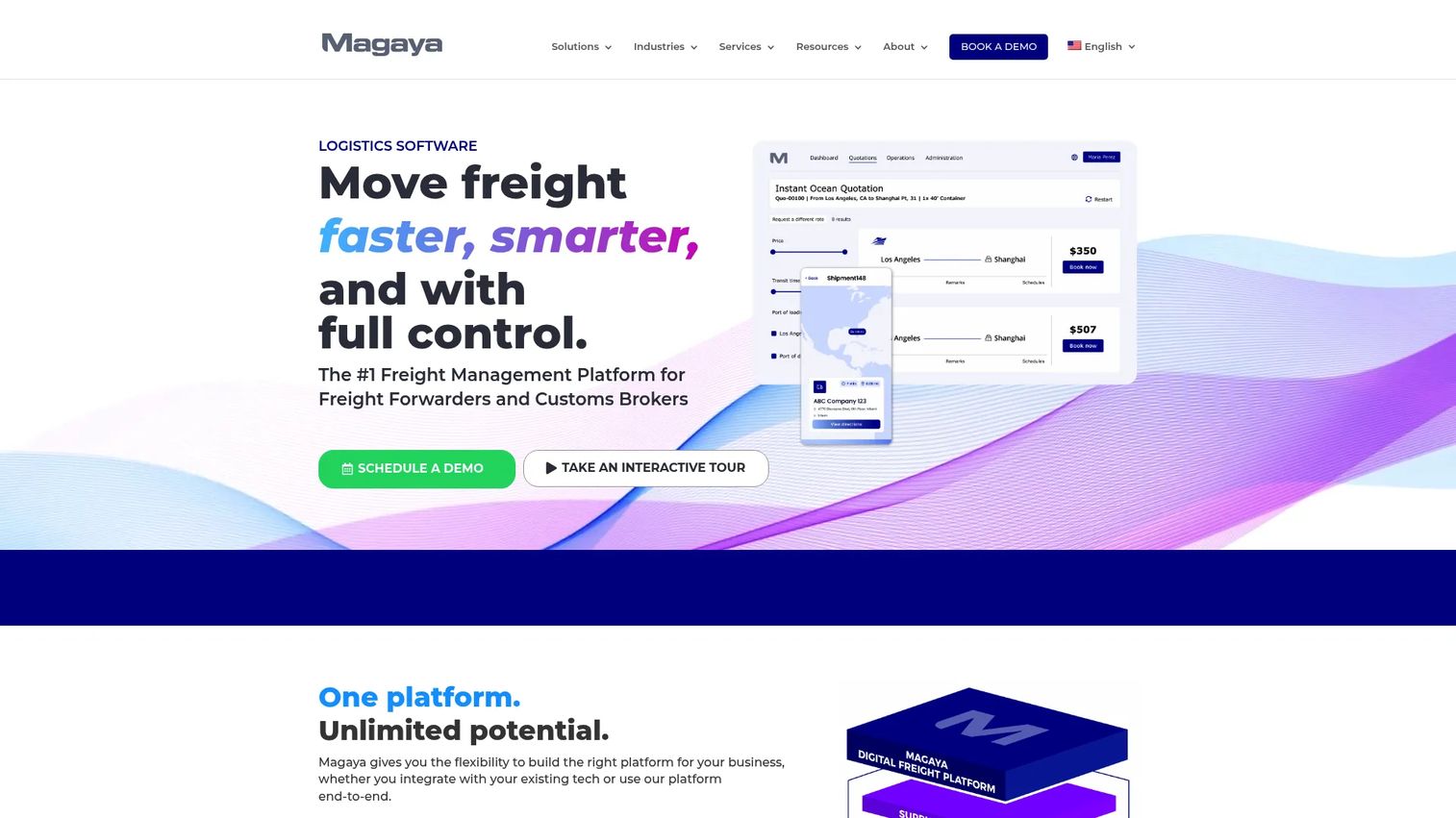
Magaya is a cloud-based 3PL software platform for freight forwarding, warehousing, customs compliance, rates, and customer experience. Where most WMS tools stop at the warehouse wall, Magaya extends across the freight and customs side of logistics, which makes it a fit for 3PLs that also move freight internationally. It's a modular 3PL platform: you run the pieces your operation needs.
Best for: Freight forwarders and customs brokers needing an integrated logistics platform beyond warehouse walls.
Key strengths
- Freight and warehouse management: One platform spans freight forwarding and warehouse management for 3PLs handling both.
- Customs compliance: Built-in compliance automation supports customs filing and documentation without bolt-on tools.
- Rate management and digital freight portal: Freight rate management plus a branded portal delivers an interactive online customer experience.
Why choose Magaya: If your 3PL touches international freight, customs brokerage, and warehousing, Magaya's breadth means you're not gluing a WMS to a separate freight system. Magaya was recognized in the G2 2026 Best Software Awards for top supply chain and logistics software products, which signals mature third-party validation.
Magaya pricing: Magaya does not publish list pricing on its site. Sales are subscription-based and quoted through a demo conversation, so expect a tailored quote based on the modules and volume your operation requires. Ask specifically about which modules (freight, WMS, customs, rate management) are included at your quoted tier.
3. Camelot 3PL Software
Camelot 3PL Software builds warehouse management systems exclusively for third-party logistics warehouses. That exclusivity is the point: the system is designed around multi-client operations, per-client billing, and the specialized handling needs 3PLs actually face rather than adapted from a general WMS. It's a configurable, modular 3PL platform with a customer-facing portal.
Best for: 3PL warehouses needing a configurable WMS with strong billing and inventory control.
Key strengths
- Inventory management: Purpose-built inventory control for multi-client warehouse operations.
- Shipping and receiving: Standardized inbound and outbound flows with API and EDI integrations to connect trading partners.
- Billing and invoicing: Activity-based billing and invoicing for 3PLs that captures storage, handling, and value-added charges.
Why choose Camelot 3PL Software: Because it's built only for 3PLs, the workflows assume multi-client complexity from day one. It also supports specialized needs like HazMat warehouse software requirements and cold storage WMS handling, plus e-commerce integration and the WebLink View client portal, backed by training and support.
Camelot 3PL Software pricing: Camelot publishes fixed-implementation pricing for its Express WMS at $350/month, and Express WMS with mobile scanning at $450/month, both billed monthly. Installation and training are listed separately at a one-time $1,200. Pricing for other products in the lineup is quoted directly.
4. Logiwa
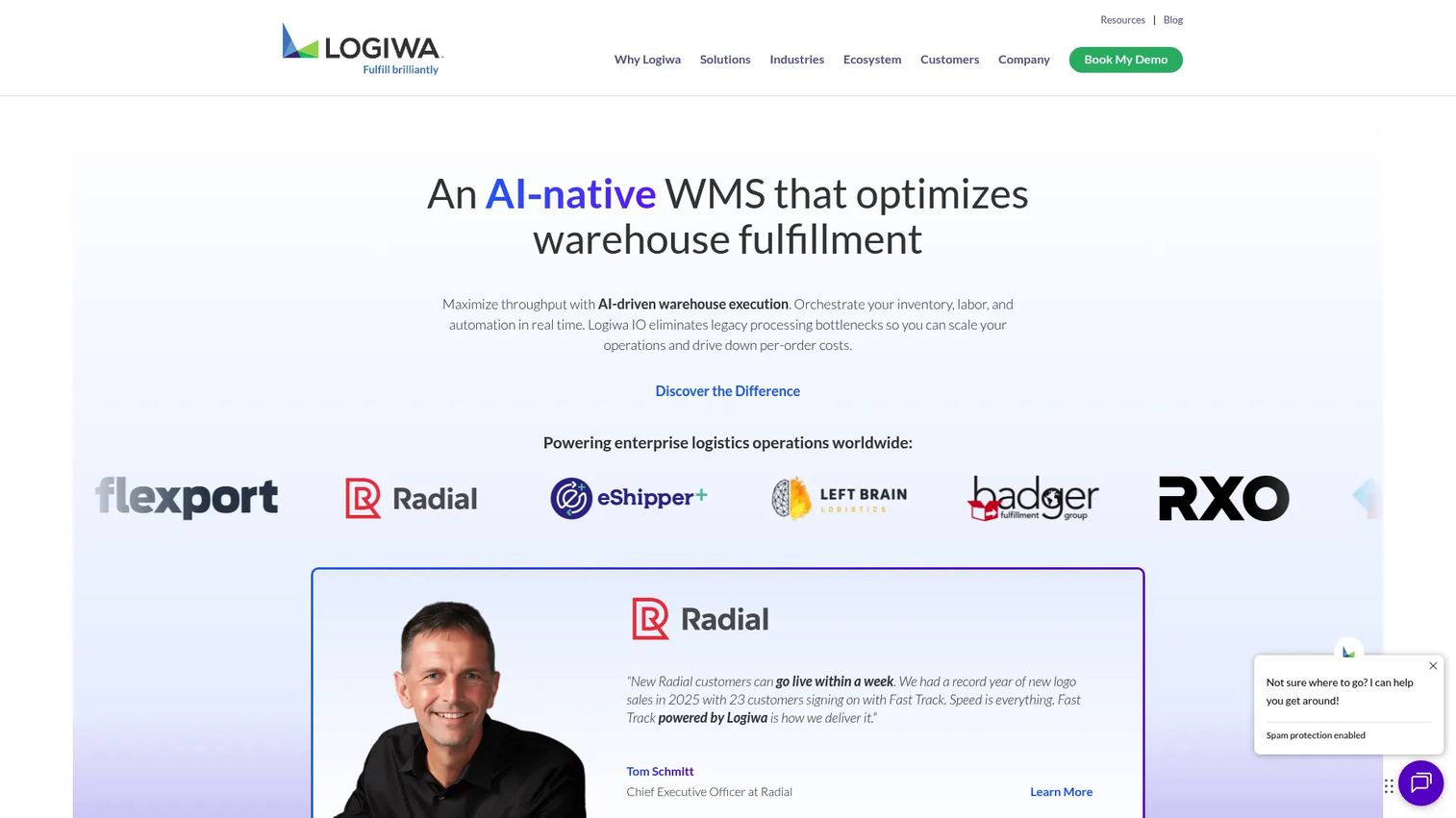
Logiwa is an AI-native, cloud-based 3PL software platform for warehouse management and fulfillment, built for high-volume brands and 3PLs. Logiwa IO is engineered for operations that ship at scale, where picking speed and order accuracy directly affect margin. The focus is operational control and throughput for growth-minded 3PLs.
Best for: High-volume e-commerce brands and 3PLs needing a cloud WMS and fulfillment management system.
Key strengths
- AI-powered optimization: AI-powered order and batch optimization improves picking efficiency at volume.
- Multi-client 3PL management: Complete multi-client warehouse software features handle separate clients on shared infrastructure.
- Real-time sync: Real-time inventory and order sync keeps stock and orders accurate across channels.
Why choose Logiwa: If your throughput is high and rising, Logiwa's optimization and cloud-native architecture are built for speed and operational control. It suits 3PLs that treat fulfillment velocity as a competitive advantage rather than a back-office function.
Logiwa pricing: Logiwa does not publish list prices. It offers custom pricing based on fulfillment volume and complexity, and asks prospects to request a demo or quote. Because pricing scales with volume, get a quote modeled on your peak-season order counts, not your average month.
5. ShipHero
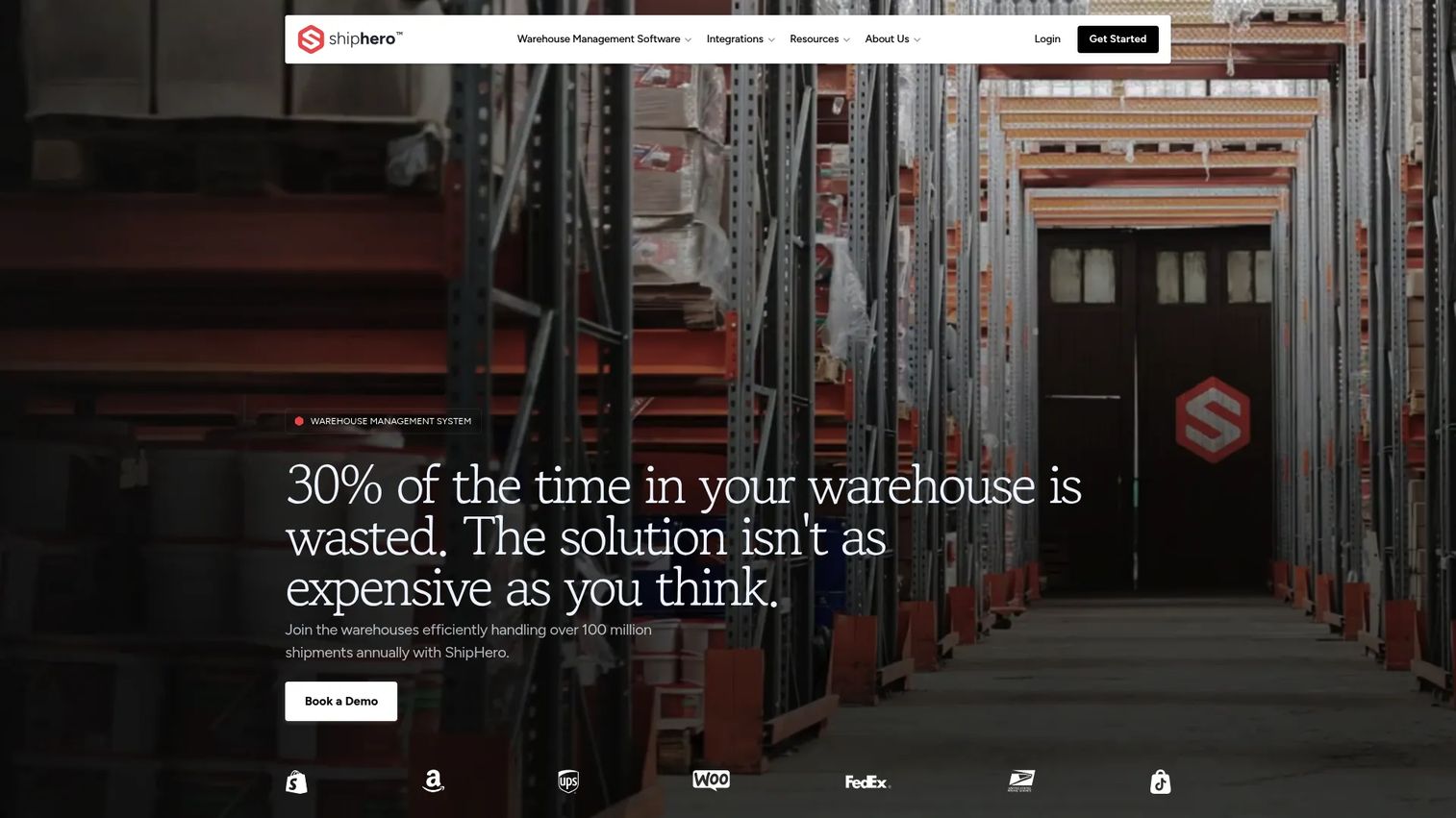
ShipHero is cloud-native warehouse management software for e-commerce brands and 3PLs, centered on fulfillment efficiency. It's built for fast-moving warehouse teams that live in pick, pack, and ship all day. If your 3PL is e-commerce-heavy and throughput-driven, ShipHero's workflows are designed for that reality.
Best for: E-commerce brands and 3PLs needing WMS and shipping operations software for fast fulfillment.
Key strengths
- Warehouse management: Full WMS covering receiving through shipping for multi-client operations.
- Pick and pack: Batch picking and packing workflows built for high order volume.
- Carrier rate shopping: Real-time carrier rate shopping selects the best shipping option per order automatically.
Why choose ShipHero: For e-commerce-first 3PLs, ShipHero focuses on the operational efficiency that drives fulfillment economics: faster picking, accurate shipping, and lower cost per order. Teams report meaningful gains in picking efficiency and shipping accuracy when workflows are standardized around it.
ShipHero pricing: ShipHero does not publish public pricing on its site. It directs prospects to book a demo and contact sales for a quote. Because it's e-commerce-focused, ask how pricing responds to order volume and how quickly you can go live during peak.
6. Deposco
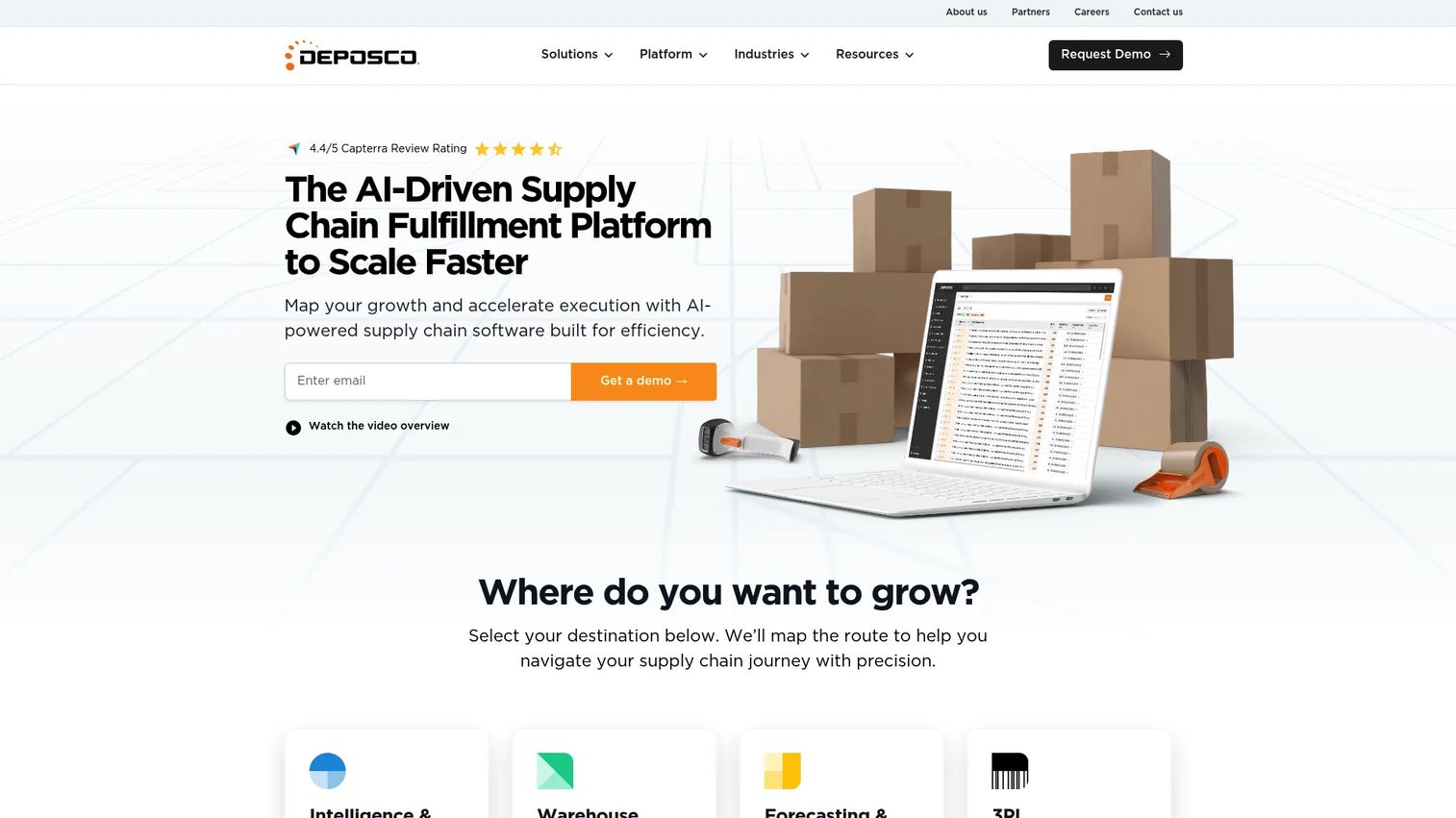
Deposco is a cloud-native supply chain execution and planning platform covering warehouse, order, shipping, and inventory operations. It fits mid-market to enterprise teams that need supply chain intelligence and executive-level visibility alongside warehouse execution. Deposco positions itself where operational complexity is high and reporting matters to leadership, not just the floor.
Best for: Mid-market to enterprise teams needing WMS, OMS, and supply chain execution software.
Key strengths
- Warehouse management: Warehouse execution with real-time inventory visibility across locations.
- Order management: Omnichannel fulfillment and order management for complex channel mixes.
- Shipping and carrier integrations: Shipping rate shopping and carrier integrations built into the execution layer.
Why choose Deposco: For larger or more complex operations, Deposco pairs warehouse execution with planning and visibility that executives can act on. Deposco reports that more than 3,000 businesses rely on it to guide over $10 billion in sales and facilitate more than 69 million consumer orders annually, which speaks to its scale credentials.
Deposco pricing: Deposco does not expose public pricing. Its pages indicate flexible, usage-based pricing tailored to your operation, quoted through a sales conversation. Given the enterprise fit, clarify which modules (WMS, OMS, planning) are in scope and how usage factors affect the number.
7. Infios WMS

Infios WMS is warehouse management software for orchestrating people, processes, robotics, and automation across warehouse operations. Formerly part of Körber Supply Chain Software, it targets mid-market to enterprise warehouses that need a configurable WMS with real automation and robotics support. It sits at the more complex, infrastructure-heavy end of this list.
Best for: Mid-market to enterprise warehouses needing a configurable WMS with automation support.
Key strengths
- End-to-end warehouse management: Receiving, slotting, picking, packing, and shipping in one configurable system.
- Real-time visibility and analytics: Live inventory visibility and analytics across warehouse operations.
- Automation and robotics integration: Integrations with ERP, OMS, and TMS systems plus automation and robotics orchestration.
Why choose Infios WMS: For 3PLs running or planning warehouse automation, Infios is built to orchestrate people and robots together, which the more specialized options on this list are not designed for. It fits complex environments where automation is part of the operating model, not an add-on.
Infios WMS pricing: Infios does not publish public pricing; it appears to be quote-based. Given the automation and enterprise positioning, expect scoping conversations around your warehouse footprint, automation plans, and integration requirements before a number lands.
Considerations before you buy
Choosing a 3PL WMS software platform is choosing operational infrastructure. Here's what to weigh before signing.
Multi-client and billing fit
Confirm the system separates inventory, rules, and billing cleanly by client. Ask to see activity-based billing in action: how it captures storage, handling, and value-added charges, and how invoices generate. Billing accuracy is where 3PL margin lives or leaks.
Integration depth
Map your required API and EDI integrations before demos. Which carts, marketplaces, carriers, and ERP systems must connect? A platform that covers 80% of your integrations still leaves 20% as manual work. Verify the connections you actually need, not the logo wall.
Onboarding and implementation support
Ask how long implementation takes and what the vendor does versus what falls on your team. Data migration from spreadsheets or a legacy system is where projects stall. Get a realistic timeline and named support model, and weigh disruption against the payoff.
Deployment and scalability
Decide between cloud-based 3PL software and on-prem based on your maintenance appetite and growth curve. Cloud speeds deployment and offloads maintenance; scalability matters if you expect to add clients and warehouses. Model pricing against peak volume, not your average month.
Conclusion
The right 3PL logistics software is the operating system for repeatable execution: accurate billing, clean multi-client separation, and customer visibility that doesn't route through a person.
For a connected order, warehouse, and integration stack, Extensiv is the strong pick. If your operation spans freight and customs, Magaya's breadth fits. For a WMS built only for 3PLs with published entry pricing, Camelot 3PL Software is worth a demo. High-volume, cloud-native fulfillment points to Logiwa or ShipHero, while enterprise supply chain execution favors Deposco or Infios WMS.
Prioritize the criteria that actually determine whether the system scales with your book of business: multi-client billing accuracy, integration depth, and implementation support. Shortlist two or three that match your operational complexity, then run a demo scoped to your real client mix and peak-season volume. Choose on operational fit, not feature count.
FAQs
3PL software centralizes warehouse, order, billing, and visibility workflows for a logistics provider managing multiple clients. It tracks inventory per client, runs receiving and shipping, generates activity-based invoices, and gives clients a portal to see their own stock and orders, all from one platform.
A general WMS manages one company's inventory. 3PL software is built for multi-client operations: it separates inventory, rules, and client billing while running shared warehouse space, and it adds client portals and activity-based billing that a standard WMS doesn't need.
Prioritize inventory and order management, standardized receiving and shipping, billing and invoicing for 3PLs, a client portal, API and EDI integrations, and compliance automation. For growing operations, multi-client separation and integration breadth usually matter most.
For most growing 3PLs, yes. A client portal gives customers self-service tracking and real-time inventory visibility under your brand, which cuts inbound "where's my order?" emails, builds client trust, and lets your team focus on operations instead of status updates.
Very. API and EDI integrations connect your WMS to shopping carts, marketplaces, carriers, and client ERP systems, which removes manual data entry and reduces errors. Missing integrations become recurring manual work, so verify the specific connections you need before buying.
It depends on complexity and volume. Compare by multi-client fit, integration breadth, and support model. High-volume e-commerce fulfillment fits Logiwa or ShipHero; connected order-and-warehouse operations fit Extensiv; enterprise complexity fits Deposco or Infios WMS.
Focus on onboarding time, data migration effort, total cost against peak volume, and operational disruption during cutover. The best system on paper still fails if migration stalls the floor, so get a realistic implementation timeline and a named support model before committing.
Cloud-based 3PL software deploys faster, offloads maintenance to the vendor, and scales more easily as you add clients and warehouses. On-prem offers more direct control but carries maintenance overhead. Most growing 3PLs choose cloud for speed and scalability unless specific requirements demand otherwise.