Your content calendar doubled. Your team didn't. That's the core tension with ai writing tools in 2026: 90% of content marketers now use them (Siege Media, 2025), but most "best of" lists just describe features without telling you what works for marketing teams specifically.
This is an honest ai writing tools review of 15 platforms, evaluated for marketing use cases. You'll get clear assessments of what each tool does well, where it falls short, and which alternative to pick instead. No affiliate rankings. No tool gets a pass on its limitations.
The scope: general-purpose AI writers, SEO-specific platforms, editing tools, and performance-focused copy generators, all judged by how well they fit into a growth marketer's actual workflow. If you're also evaluating tools across your broader marketing stack, our roundup of the best content creation software tools and best content marketing tools cover adjacent categories worth exploring.
What's inside
This guide covers 15 ai writing tools selected based on active user base in 2026, feature depth for marketing use cases, pricing accessibility, and integration with common marketing stacks.
- 15 tools reviewed with honest assessments and named limitations
- Comparison table with pricing, ratings, and use cases
- Use-case guidance for different marketing workflows
- Decision framework for choosing the right tool
- FAQs addressing common concerns about AI writing
TL;DR
- AI writing tools are not interchangeable. The best ai for writing depends on whether you need SEO content, ad copy, long-form drafts, or editing assistance.
- ChatGPT and Claude are the most versatile general-purpose options, but purpose-built tools like Jasper, Surfer SEO, and Frase outperform them for specific marketing workflows.
- Free tiers exist on most platforms, but output quality and volume limits vary significantly. The best free ai writing tools get you started, not finished.
- AI writing tools save time on first drafts, not on thinking. You still need a human for strategy, brand voice, and fact-checking.
- The biggest ROI comes from pairing AI writing with a clear content workflow, not from the tool itself.
What are AI writing tools?
AI writing tools are software applications that use large language models (LLMs) to generate, edit, rewrite, or optimize written content. The category spans everything from general-purpose ai writing assistants like ChatGPT and Claude to specialized platforms built for SEO, ad copy, or editing.
Think of an ai writing generator as any tool that takes your input (a prompt, keyword, or brief) and produces draft content. Ai content creation tools is another common label for the same category. The core capabilities include:
- Content generation (blog posts, articles, landing pages, social posts)
- Copywriting (ad copy, email subject lines, CTAs, product descriptions)
- SEO optimization (keyword integration, content scoring, SERP analysis)
- Editing and rewriting (grammar, tone adjustment, paraphrasing)
- Content research and outlining (topic clusters, brief generation)
The market breaks into three categories. General-purpose LLMs (ChatGPT, Claude) handle broad ai writing tasks across formats. Purpose-built marketing platforms (Jasper, Copy.ai, Writesonic) add brand voice, templates, and campaign workflows. Editing and optimization tools (Grammarly, Surfer SEO, Wordtune) focus on ai assisted writing, improving content you've already drafted rather than creating from scratch.
When to use AI writing tools
Scaling content production
When your content calendar demands more blog posts, landing pages, or email variants than your team can produce manually. Use ai for writing first drafts, then have humans handle strategy and editing. This is the most common use case: you need volume without proportionally increasing headcount or freelancer spend.
SEO content at volume
When you're targeting 20+ keywords per quarter and need structured, optimized content faster than manual research allows. Purpose-built ai tools for content writing like Frase, Surfer SEO, and GrowthBar are better for this than general-purpose LLMs because they integrate SERP data directly into the writing process. For a broader look at search optimization platforms, see our guide to the best SEO tools.
Ad copy and email variants
When you need 10-20 variations of a headline, subject line, or CTA for A/B testing. AI excels at generating variations quickly. This is where tools like Anyword and Copy.ai tend to outperform general-purpose LLMs with their scoring and template systems. If email is a major channel for you, our list of the best email marketing software tools covers the platforms that pair well with AI-generated copy.
Overcoming creative blocks
When your team is stuck on messaging angles, outlines, or opening hooks. AI is a useful brainstorming partner, not a replacement for creative direction. Using it this way is a legitimate, high-value use case.
When NOT to use AI writing tools
This matters more than any feature comparison:
- Thought leadership requiring original insight. AI can't generate the unique perspective that comes from your experience, your data, or your customers. It recombines existing ideas.
- Sensitive communications (crisis, legal, HR). The risk of tone-deaf or inaccurate output is too high. Human judgment is non-negotiable here.
- Content where factual accuracy is critical without human review. AI hallucinates. If you're publishing stats, claims, or technical details, every fact needs verification.
- Brand voice pieces requiring deep institutional knowledge. AI can approximate your tone. It can't replicate the nuance that comes from years inside your company.
- Highly regulated industries without legal review. Financial services, healthcare, and legal content carry compliance risks that AI doesn't understand.
AI writing tools comparison table
Here's how all 15 tools compare across use case, pricing, and user ratings. Use this as a starting point for your ai writing tools comparison, then read the detailed reviews below for the full picture.
| # | Product | Key Use Case | Pricing | G2 Rating |
|---|---|---|---|---|
| 1 | ChatGPT | Versatile drafting, brainstorming, and editing | Free; Plus from $20/mo | 4.7/5 |
| 2 | Claude | In-depth articles, analysis, and research synthesis | Free; Pro from $20/mo | 4.7/5 |
| 3 | Jasper | Brand-consistent blog posts, ads, and campaigns | From $49/mo | 4.7/5 |
| 4 | Surfer SEO | SERP-driven content scoring and keyword optimization | From $89/mo | 4.8/5 |
| 5 | Slate | AI-powered content creation and collaboration platform | Custom pricing | 4.6/5 |
| 6 | Writesonic | Blog posts, ads, landing pages, and product descriptions | Free; from $16/mo | 4.7/5 |
| 7 | Copy.ai | Email sequences, social posts, and GTM copy | Free; from $49/mo | 4.7/5 |
| 8 | Grammarly | Grammar, tone, clarity, and brand voice consistency | Free; from $12/mo | 4.7/5 |
| 9 | Anyword | Predictive scoring for ads, emails, and landing pages | From $49/mo | 4.8/5 |
| 10 | Koala | One-click long-form articles from keywords | From $9/mo | 4.6/5 |
| 11 | Wordtune | Sentence-level rewriting and summarization | Free; from $9.99/mo | 4.6/5 |
| 12 | Writer.com | Brand voice enforcement and AI content at scale | Custom pricing | 4.5/5 |
| 13 | Notion AI | Drafting, summarizing, and editing within Notion | From $10/member/mo add-on | 4.7/5 |
| 14 | Frase | Content briefs, SERP analysis, and AI drafting | From $15/mo | 4.8/5 |
| 15 | GrowthBar | Keyword research, outlines, and AI blog drafts | From $36/mo | 4.8/5 |
15 best AI writing tools reviewed
Here's the detailed breakdown of each tool, including what it does well, where it falls short, and who should use it.
1. ChatGPT
ChatGPT by OpenAI is the most widely adopted ai writing tool on the market, with 800 million weekly active users as of mid-2025 (NerdyNav). Its strength for marketers is versatility: brainstorming, outlining, drafting, editing, and data analysis all happen in one conversation. GPT-4o and later models handle nuanced writing tasks that earlier versions struggled with.
What sets ChatGPT apart is the breadth of what it can do in a single session. Custom GPTs let you build repeatable marketing workflows, and Canvas mode adds collaborative editing directly in the interface.
Best for: Marketers who need one tool for brainstorming, drafting, and editing across multiple content formats.
Key strengths
- GPT-4o and later models with strong reasoning and writing quality
- Custom GPTs for repeatable marketing workflows
- Web browsing, image generation, and file analysis in one tool
- Canvas mode for collaborative editing
- API access for integration into custom workflows
Pricing: Free tier available. ChatGPT Plus from $20/month. Team plan from $25/user/month.
Honest take: ChatGPT is the Swiss army knife of ai writing. Good at many things, purpose-built for none. If you need SEO-optimized content, Frase or Surfer SEO will outperform it because they integrate SERP data directly. For brand voice consistency across a team of five or more writers, Jasper or Writer.com offer governance features ChatGPT doesn't have. But for a single marketer who needs one affordable tool, it's hard to beat.
2. Claude
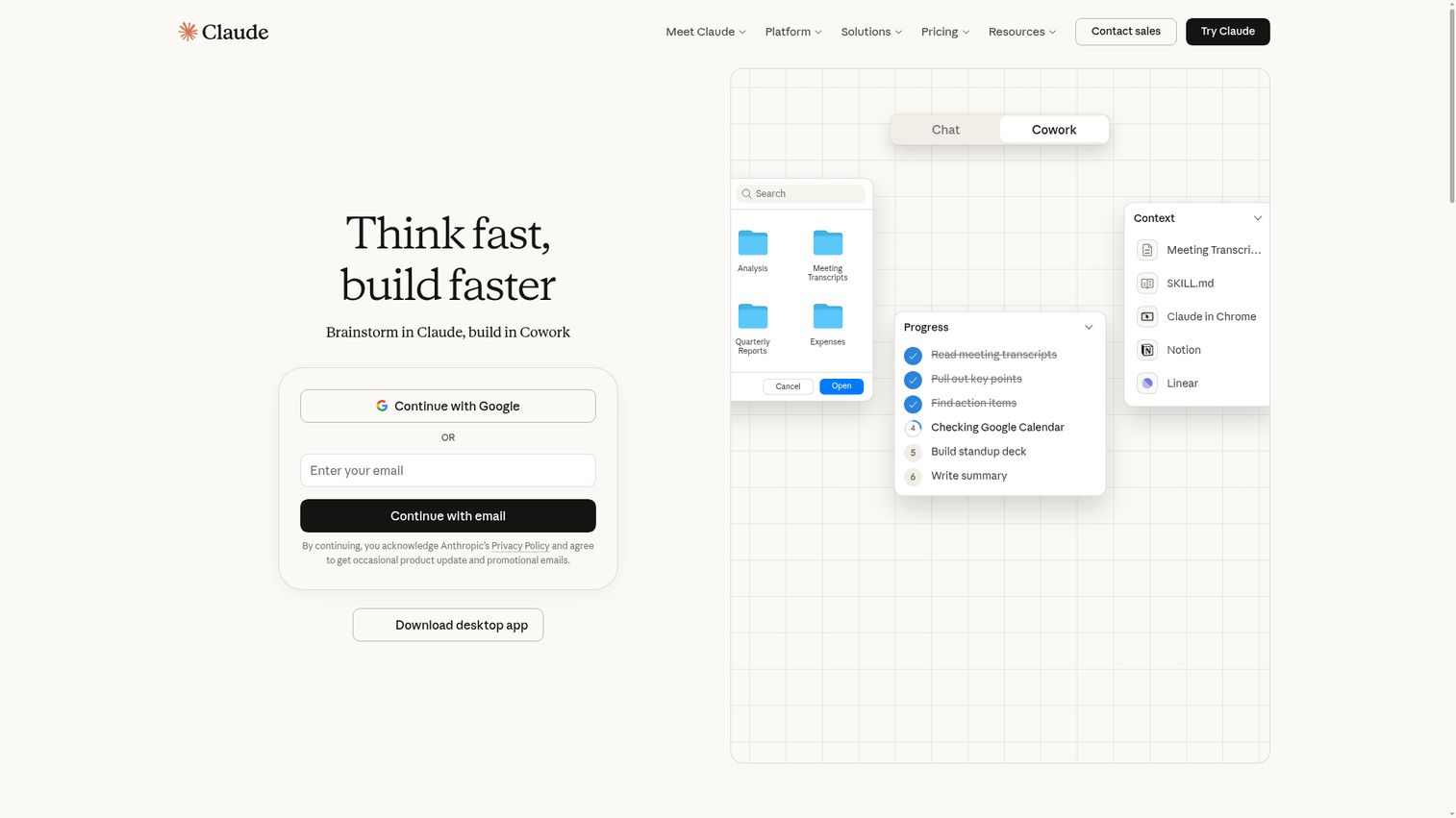
Claude by Anthropic is the strongest option for long-form, nuanced writing. Where ChatGPT excels at breadth, Claude excels at depth. Its 200K token context window means you can feed it an entire content brief, style guide, and reference material in one conversation and get coherent output back.
The prose quality tends to be the most natural-sounding of any ai writing assistant available. The Projects feature lets you organize ongoing content work with persistent context, and Artifacts generate structured outputs like tables and outlines in a separate pane.
Best for: Marketers who prioritize writing quality and need to process long documents or complex briefs.
Key strengths
- 200K token context window for processing long documents
- Consistently natural, human-sounding prose
- Strong at following complex instructions and maintaining tone
- Projects feature for organizing ongoing content work
- Artifacts for generating structured content outputs
Pricing: Free tier available. Claude Pro from $20/month. Team plan from $30/user/month.
Honest take: Claude produces the most natural prose of any AI writer. The trade-off: it's less integrated into marketing-specific workflows than Jasper or Writesonic. There's no built-in SEO scoring, no template library, no campaign builder. Use Claude for quality drafts, then move to Surfer or Frase for SEO optimization. If you write articles over 2,000 words regularly, Claude's context window makes it the better choice over ChatGPT.
3. Jasper
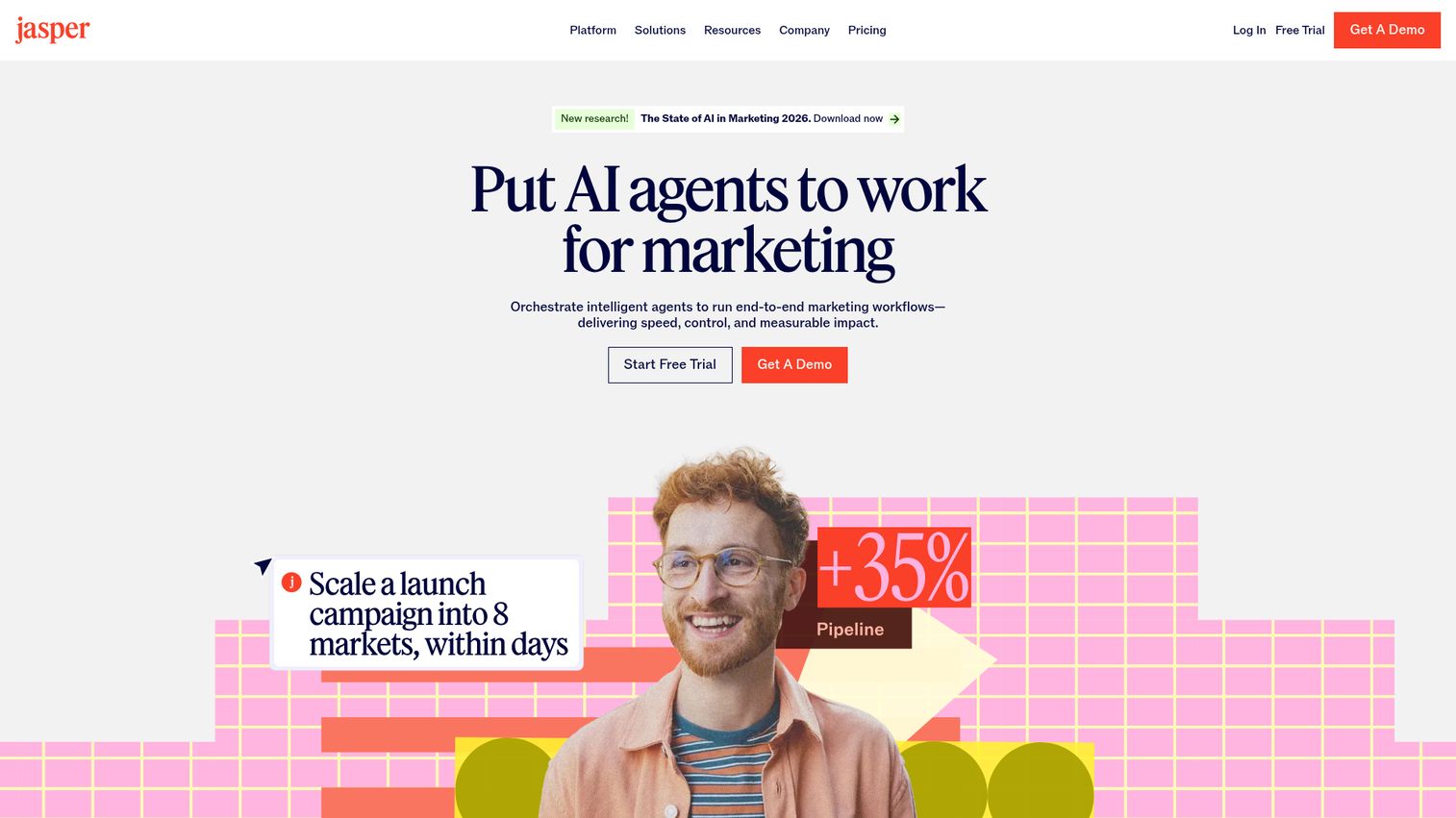
Jasper is the most established AI writing platform built specifically for marketing teams. The key differentiator is Brand Voice and Brand Knowledge: you train Jasper on your style guide, product docs, and past content, and it maintains consistency across every piece your team produces.
Campaign-level content generation is where Jasper pulls ahead. Feed it one brief, and it generates a blog post, social posts, and email copy in a coordinated set. For teams managing multi-channel content production, this workflow saves hours per campaign.
Best for: Marketing teams of 3+ who need brand-consistent content across multiple channels and formats.
Key strengths
- Brand Voice and Brand Knowledge features for consistent output
- Campaign-level content generation from a single brief
- Template library for 50+ marketing content types
- Team collaboration with approval workflows
- Integrations with Surfer SEO, Webflow, Google Docs
Pricing: From $49/month (Creator). Business plans from $69/month per seat.
Honest take: Jasper is the strongest option for brand consistency at team scale. The Brand Voice training genuinely improves output over time. The trade-off: it's expensive for solo users. If you're one person, ChatGPT or Claude at $20/month covers most of what Jasper does at $49+. Jasper earns its price when three or more people need to write in the same voice.
4. Surfer SEO
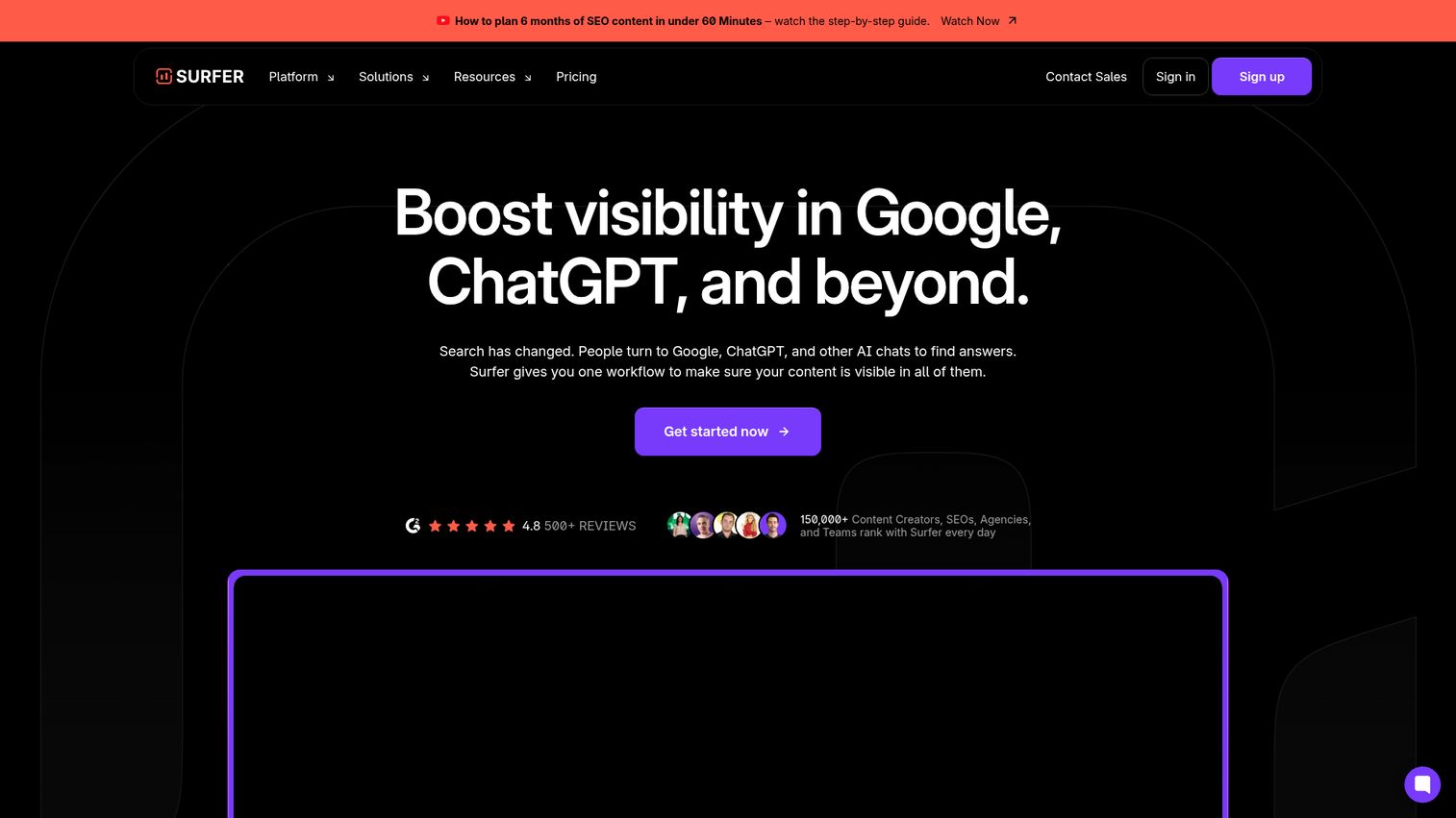
Surfer SEO is the leading AI tool for SEO-optimized content creation. It doesn't just write. It analyzes top-ranking pages for your target keyword and provides a real-time Content Score as you draft. NLP-driven keyword suggestions tell you exactly which terms to include and how often.
The Content Editor integrates with Google Docs and WordPress, so you can optimize without leaving your writing environment. The audit tool is equally valuable for improving existing content that's underperforming.
Best for: SEO-focused marketers who need content that ranks, not just content that reads well.
Key strengths
- Real-time Content Score based on SERP analysis
- NLP-driven keyword suggestions and term frequency guidance
- Content Editor integrates with Google Docs and WordPress
- AI writing assistant built into the editor
- Audit tool for optimizing existing content
Pricing: From $89/month (Essential). Scale plan from $129/month.
Honest take: Surfer is the best tool for closing the gap between "good writing" and "content that ranks." The limitation: it's an optimization layer, not a standalone writer. The built-in AI writer is decent but not as strong as ChatGPT or Claude for raw prose quality. Best results come from drafting in ChatGPT or Claude, then scoring and refining in Surfer.
5. Slate
Slate is an AI-powered content creation and collaboration platform designed for marketing teams that need to create, review, and publish content together. It integrates AI assistance throughout the content lifecycle, from ideation through publication, with built-in approval workflows and version control.
The platform's strength is combining AI writing with robust team collaboration. Content templates come with AI-powered customization, and team analytics track both content performance and AI usage across the organization.
Best for: Marketing teams that need AI writing and collaboration workflows in a single platform.
Key strengths
- Real-time collaboration with AI assistance at every step
- Built-in approval workflows and version control
- Content templates with AI-powered customization
- Integration with popular marketing tools and CMS platforms
- Team analytics to track content performance and AI usage
Pricing: From $29/month per user. Team plans with custom pricing available.
Honest take: Slate is the right pick for teams where the collaboration bottleneck is as painful as the writing bottleneck. Solo creators will find the collaboration features unnecessary overhead. If you're a one-person content operation, ChatGPT or Claude gives you better writing quality at a lower price. Slate earns its value when multiple people touch every piece of content.
6. Writesonic
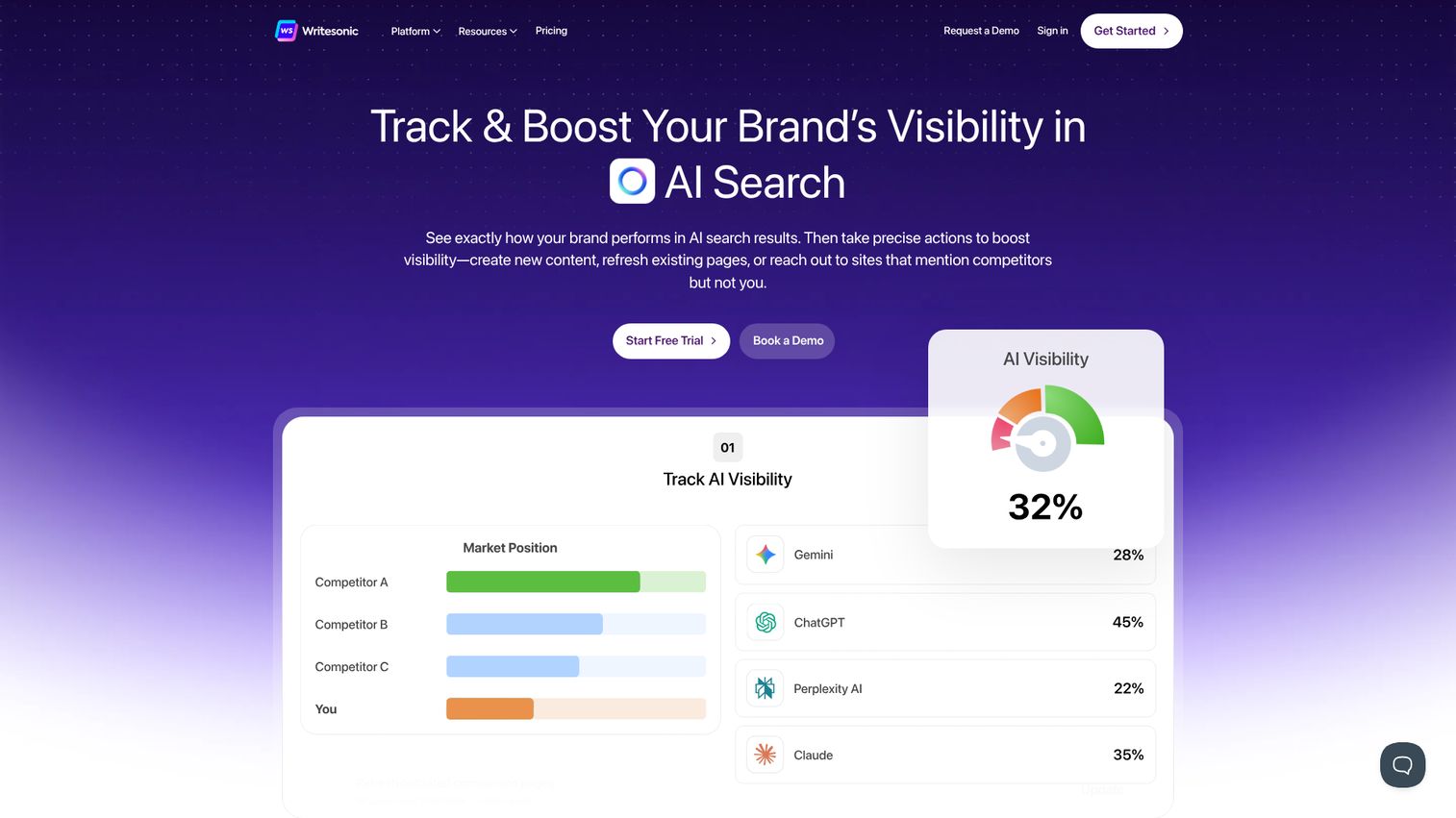
Writesonic is a multi-format AI writing platform that covers blog posts, ads, landing pages, and product descriptions. It positions as a more affordable alternative to Jasper, and the pricing backs that up. Chatsonic, its conversational AI, includes real-time web search for current information.
Article Writer 5.0 handles structured long-form content, and the Brand Voice feature maintains consistency across outputs. Bulk content generation works well for social posts and ad variations at volume.
Best for: Budget-conscious marketing teams who need multi-format content without Jasper's price tag.
Key strengths
- Chatsonic conversational AI with real-time web search
- Article Writer 5.0 for structured long-form content
- Brand Voice feature for consistency
- Bulk content generation for social posts and ads
- 100+ templates for different content types
Pricing: Free tier (10,000 words/month). Paid plans from $16/month.
Honest take: Writesonic is a solid middle-ground between ChatGPT and Jasper. Good value for money, especially at the $16/month tier. The trade-off: the interface feels cluttered compared to cleaner options like Claude or Jasper. If UX matters to your daily workflow, test it before committing. For pure output quality, Claude produces better prose at the same price point.
7. Copy.ai
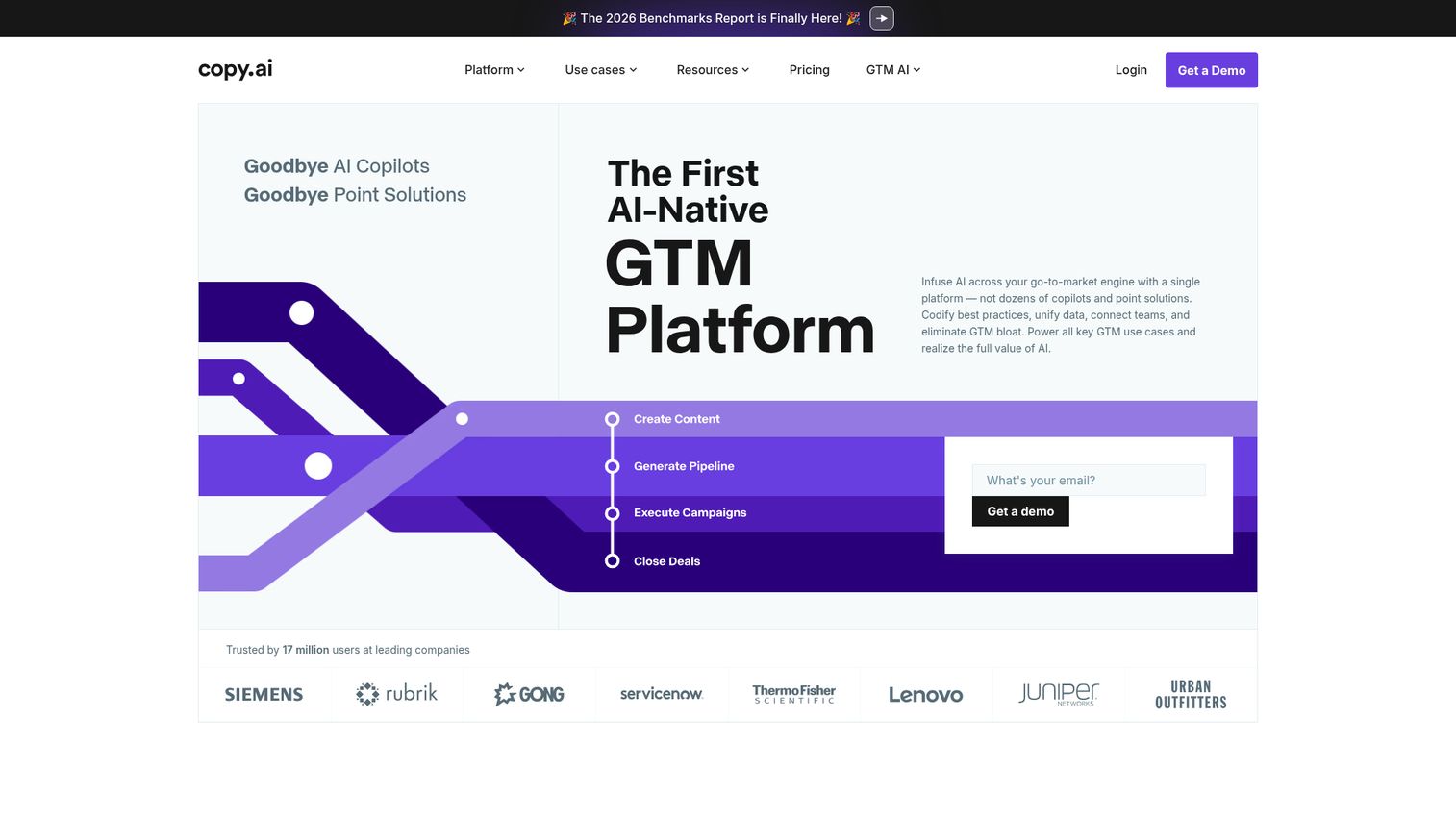
Copy.ai is the go-to for short-form marketing copy: email sequences, social posts, ad copy, and CTAs. The workflow builder lets you create multi-step content processes, so generating a full email sequence from a single input takes minutes instead of hours.
Team collaboration features and shared workspaces make it practical for GTM teams. The Brand Voice tool keeps output consistent, and 90+ templates are optimized specifically for conversion-focused copy.
Best for: GTM teams that need high-volume short-form copy (emails, ads, social) with fast turnaround.
Key strengths
- Workflow builder for multi-step content creation
- Strong at short-form copy (emails, ads, social)
- Team collaboration with shared workspaces
- Brand Voice for consistency
- 90+ templates optimized for conversions
Pricing: Free tier (2,000 words/month). Pro from $49/month.
Honest take: Copy.ai is the strongest option for short-form marketing copy. The workflow builder is genuinely useful for email sequences and ad variations. The limitation: it's not built for long-form. If you need blog posts over 1,000 words, Jasper or Claude will produce better results. Use Copy.ai for the quick-turn copy that fills your campaigns, not for your editorial calendar.
8. Grammarly
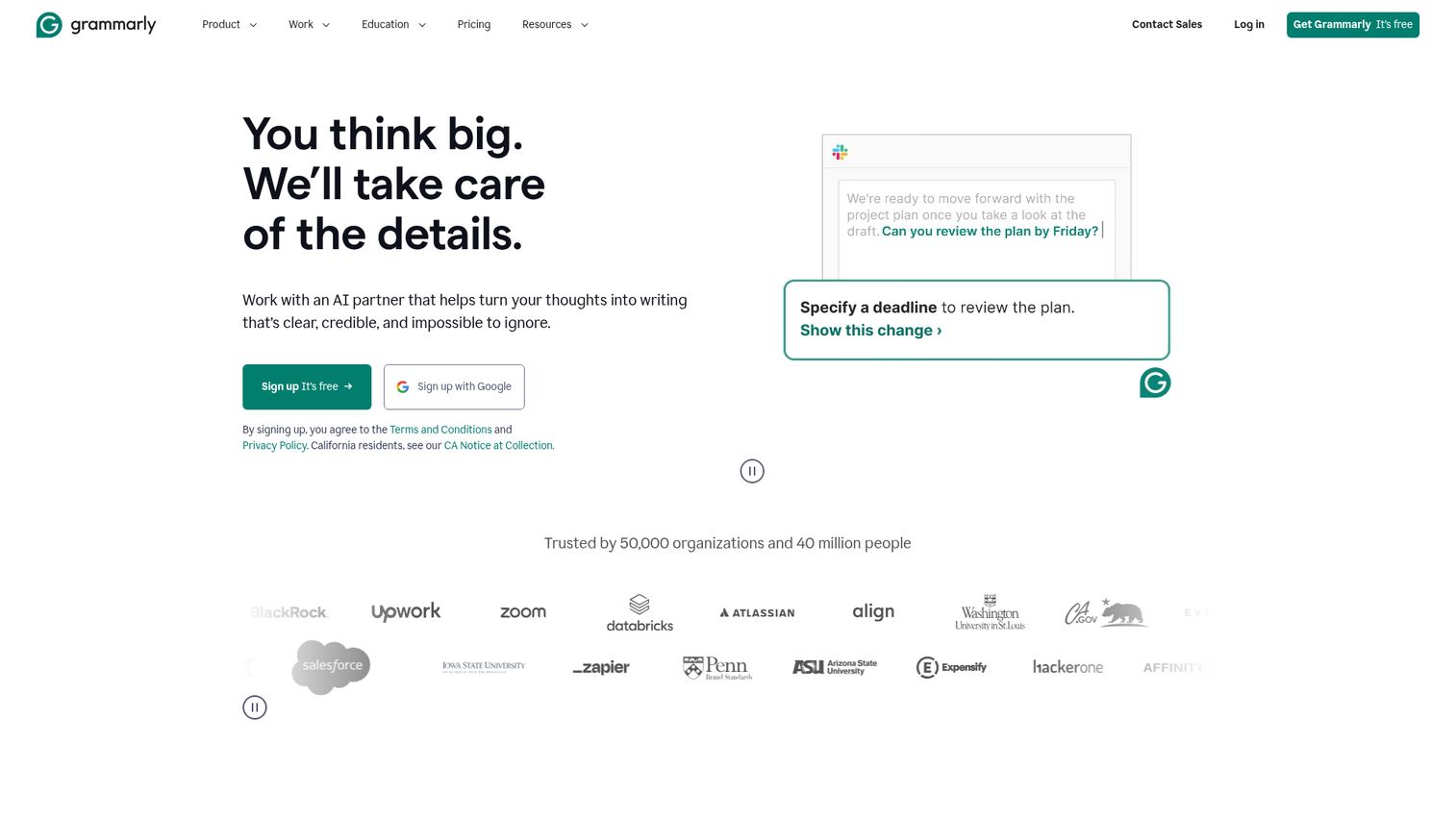
Grammarly is the category leader in AI-powered editing. While every other tool on this list focuses on creating content from scratch, Grammarly perfects what you've already written. Tone detection, clarity suggestions, and brand style guide enforcement make it the quality control layer every marketing team needs.
GrammarlyGO adds basic AI writing assistance, but that's not why you buy it. The plagiarism checker and citation generator round out the editing toolkit.
Best for: Every marketing team. Grammarly is the editing layer that pairs with any AI writer on this list.
Key strengths
- Top-tier grammar, clarity, and style suggestions
- Tone detection and adjustment
- Brand style guide enforcement for teams
- GrammarlyGO for basic AI writing assistance
- Plagiarism checker and citation generator
Pricing: Free tier. Premium from $12/month. Business from $15/member/month.
Honest take: Grammarly is essential for editing. Every marketing team should use it. The limitation: GrammarlyGO's content generation is basic compared to dedicated AI writers. Don't buy Grammarly expecting it to replace ChatGPT or Jasper for drafting. Buy it because it makes everything those tools produce better. At $12/month, it's the highest-ROI tool on this list.
9. Anyword
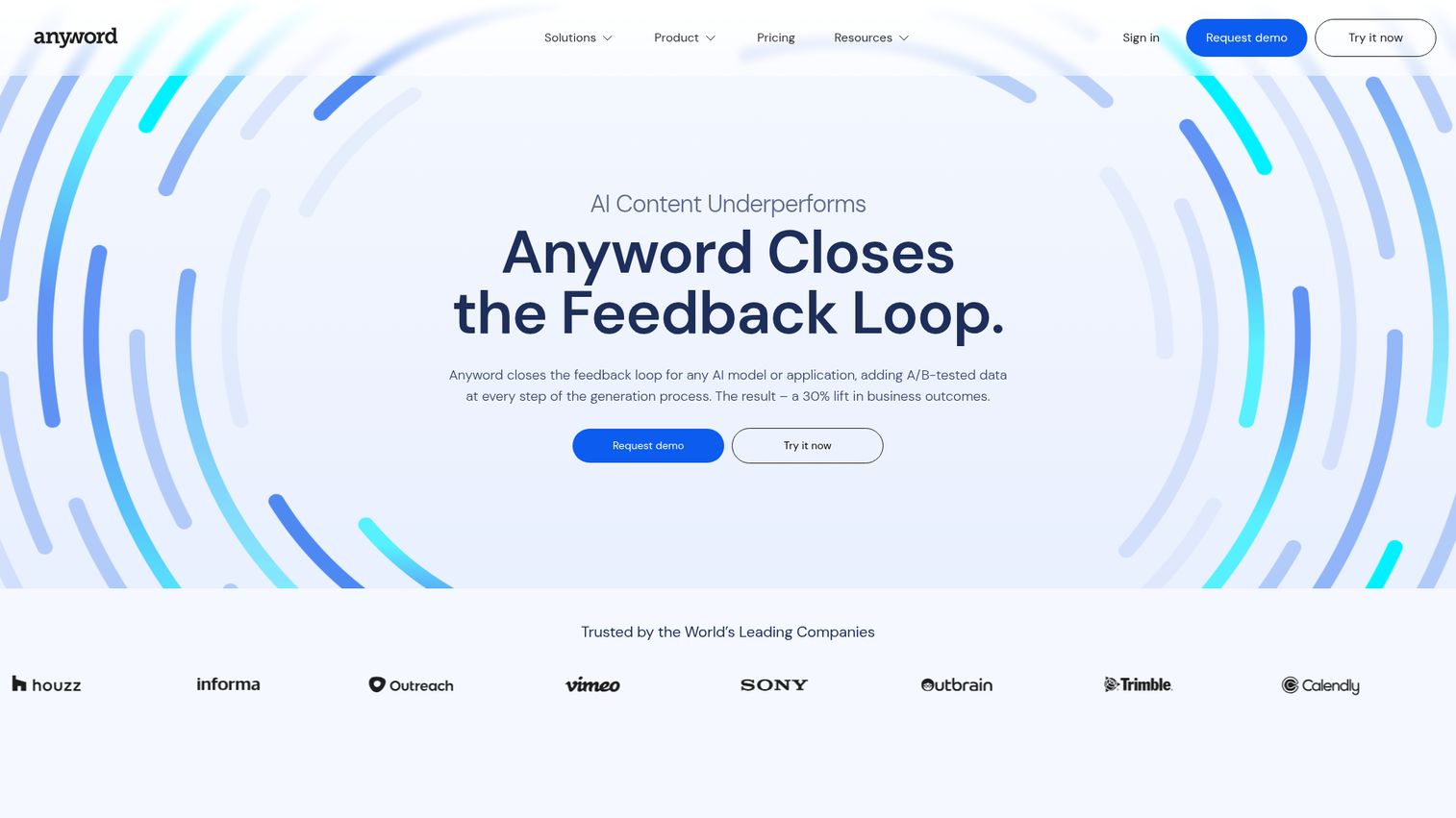
Anyword is the data-driven choice for performance marketers. Unlike other tools that focus on content quality, Anyword predicts performance with its Predictive Performance Score, built on billions of marketing data points. It tells you which copy variation is likely to convert before you spend a dollar testing it.
Channel-specific optimization for Facebook, Google, and email means the output is tailored to where it'll run. Custom AI models trained on your own performance data make the predictions more accurate over time. If you're building a full performance marketing stack, our roundup of the best CRO tools covers the conversion optimization platforms that complement Anyword's predictive scoring.
Best for: Performance marketers who optimize for conversions and want data-backed copy decisions.
Key strengths
- Predictive Performance Score based on marketing data
- Channel-specific copy optimization
- Built-in A/B testing for copy variations
- Custom AI models trained on your performance data
- Integration with ad platforms for performance tracking
Pricing: From $49/month (Starter). Data-Driven plans from $99/month.
Honest take: Anyword's unique value is the performance prediction. No other tool on this list does this. The trade-off: it's less useful for thought leadership or editorial content where conversion metrics aren't the primary goal. If you're writing brand content or long-form articles, Claude or Jasper are better fits. If you live in ad dashboards and email metrics, Anyword is worth the investment.
10. Koala
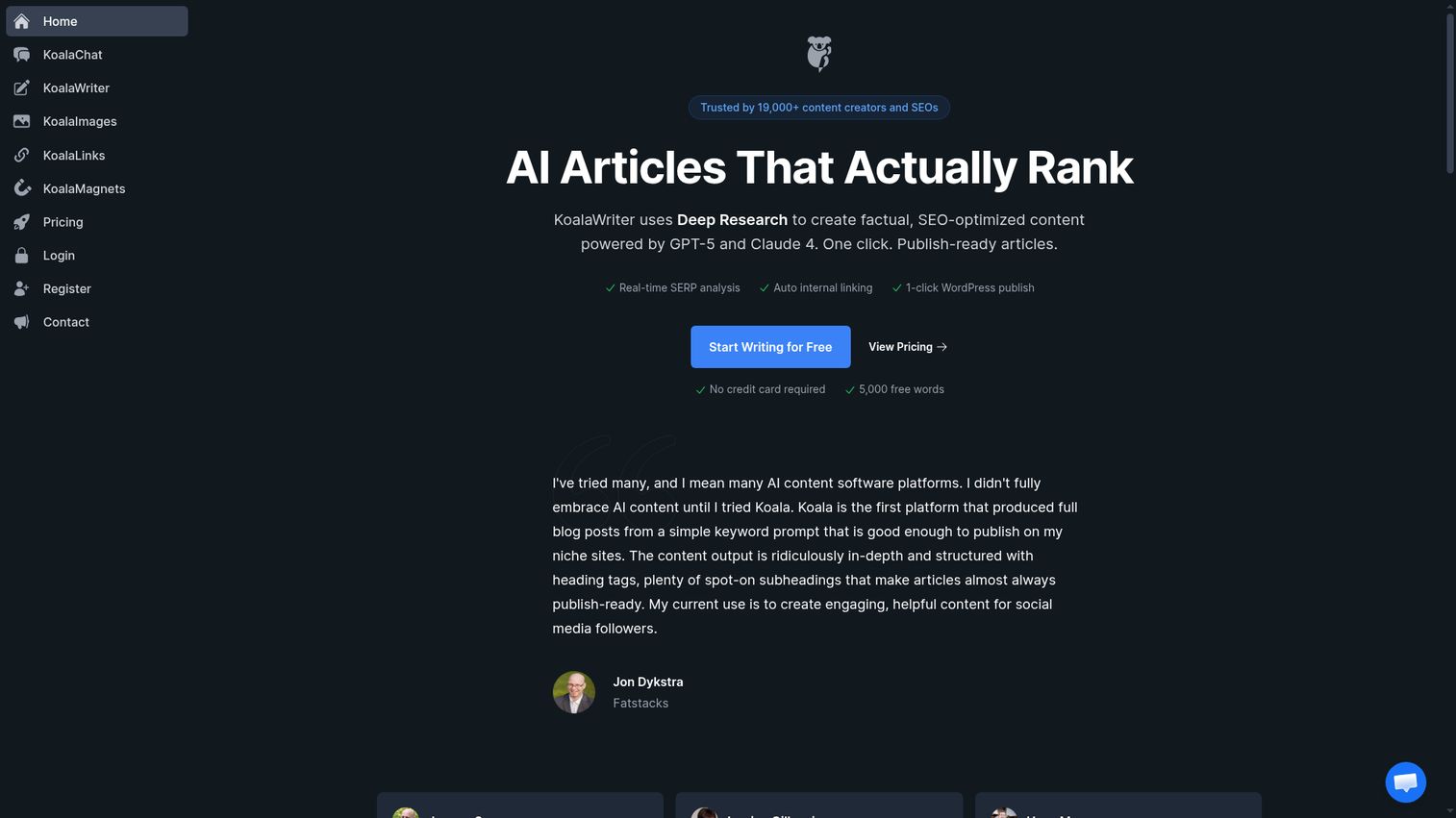
Koala is the "one-click" long-form content generator. Where other ai writing tools for bloggers require extensive prompting and editing, Koala generates complete articles from just a keyword. It pulls real-time SERP data, adds automatic internal and external links, and publishes directly to WordPress.
GPT-4 powers the generation with custom fine-tuning for article-length content. The output quality is surprisingly good for a one-click process.
Best for: Solo bloggers and content marketers who need SEO articles fast with minimal hands-on editing.
Key strengths
- One-click article generation from keywords
- Real-time SERP data integration
- Automatic internal and external linking
- Direct publishing to WordPress
- GPT-4 powered with custom fine-tuning
Pricing: From $9/month (Essentials). Professional from $25/month.
Honest take: Koala is the fastest way to generate SEO content at scale. At $9/month, it's also the most affordable dedicated writing tool on this list. The trade-off: less control over output than tools with more granular editing. If you need to shape every paragraph, Jasper or Claude give you more control. If you need 20 blog posts this month and you're one person, Koala gets you there.
11. Wordtune

Wordtune is the sentence-level rewriting specialist. While others focus on generation, Wordtune takes your existing text and makes it clearer, more concise, or more formal/casual depending on what you need. The Spices feature adds facts, examples, and even humor to flat paragraphs.
The Chrome extension means you can rewrite in context, wherever you're writing, without switching tools. Smart synonym suggestions and tone adjustment work at the sentence level, not the document level.
Best for: Writers who want to polish and improve existing drafts rather than generate from scratch.
Key strengths
- Sentence-level rewriting with multiple options
- Tone adjustment (formal/casual slider)
- Spices feature adds facts, jokes, and examples
- Smart synonym suggestions
- Chrome extension for in-context editing
Pricing: Free tier (10 rewrites/day). Plus from $9.99/month.
Honest take: Wordtune is the best tool for polishing existing content. It's not a content generator. Think of it as a complement to ChatGPT or Claude: they draft, Wordtune refines. The limitation: it works at the sentence level, so it won't help with structural issues or overall content strategy. For that, you need a human editor or a more comprehensive tool.
12. Writer.com

Writer.com is the enterprise choice for large marketing teams that need governance and brand consistency at scale. Custom Palmyra LLMs are trained on your brand's content, terminology, and style. Approval workflows and access controls ensure nothing goes out that shouldn't.
SOC 2 Type II compliance and enterprise-grade security make it viable for regulated industries. The API integrates with your existing tools, so Writer becomes a layer across your stack rather than another standalone app.
Best for: Enterprise marketing teams (20+ people) managing content across departments with strict brand governance.
Key strengths
- Custom Palmyra LLMs trained on your brand
- Enterprise-grade brand governance
- Approval workflows and access controls
- API for integration with existing tools
- SOC 2 Type II compliance
Pricing: Custom pricing only. Typically starts at $18/user/month for teams.
Honest take: Writer.com is overkill for small teams. The governance features, custom LLMs, and compliance certifications are built for organizations with 20+ content creators and strict brand requirements. For SMBs, Jasper offers similar brand voice features at a lower cost and faster setup. Choose Writer when the cost of off-brand content is measured in regulatory risk, not just embarrassment.
13. Notion AI
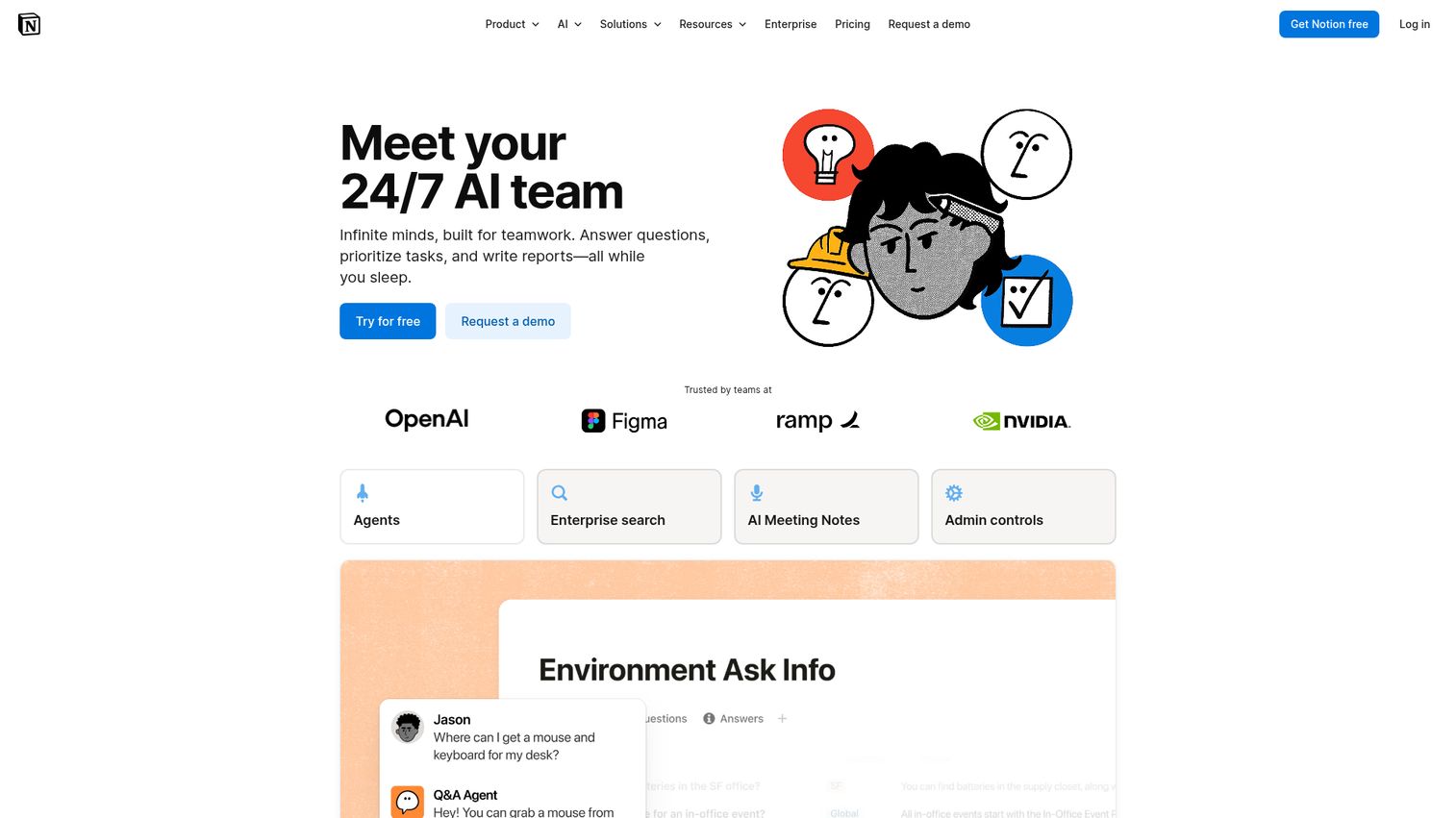
Notion AI is the best option for teams already living in Notion. It's not a standalone ai writing assistant. It's an AI layer within your existing workspace that drafts, summarizes, and edits without requiring you to switch tools.
The Q&A feature searches across your entire workspace to answer questions. Database autofill and property extraction automate repetitive tasks. For teams that already use Notion for content planning, adding AI keeps everything in one place.
Best for: Teams already using Notion for content planning who want AI assistance without adding another tool.
Key strengths
- Native integration with Notion workspace
- In-context writing without switching tools
- Summarize notes and documents instantly
- Q&A across your entire workspace
- Database autofill and property extraction
Pricing: Add-on to Notion plans at $10/member/month.
Honest take: Notion AI is perfect if you live in Notion. The limitation: it's not competitive with dedicated AI writing tools for serious content creation. The drafting quality is adequate for internal docs and first passes, but you'll want ChatGPT or Claude for anything customer-facing. Use Notion AI for summaries, brainstorming, and internal content. Use a dedicated tool for published work.
14. Frase
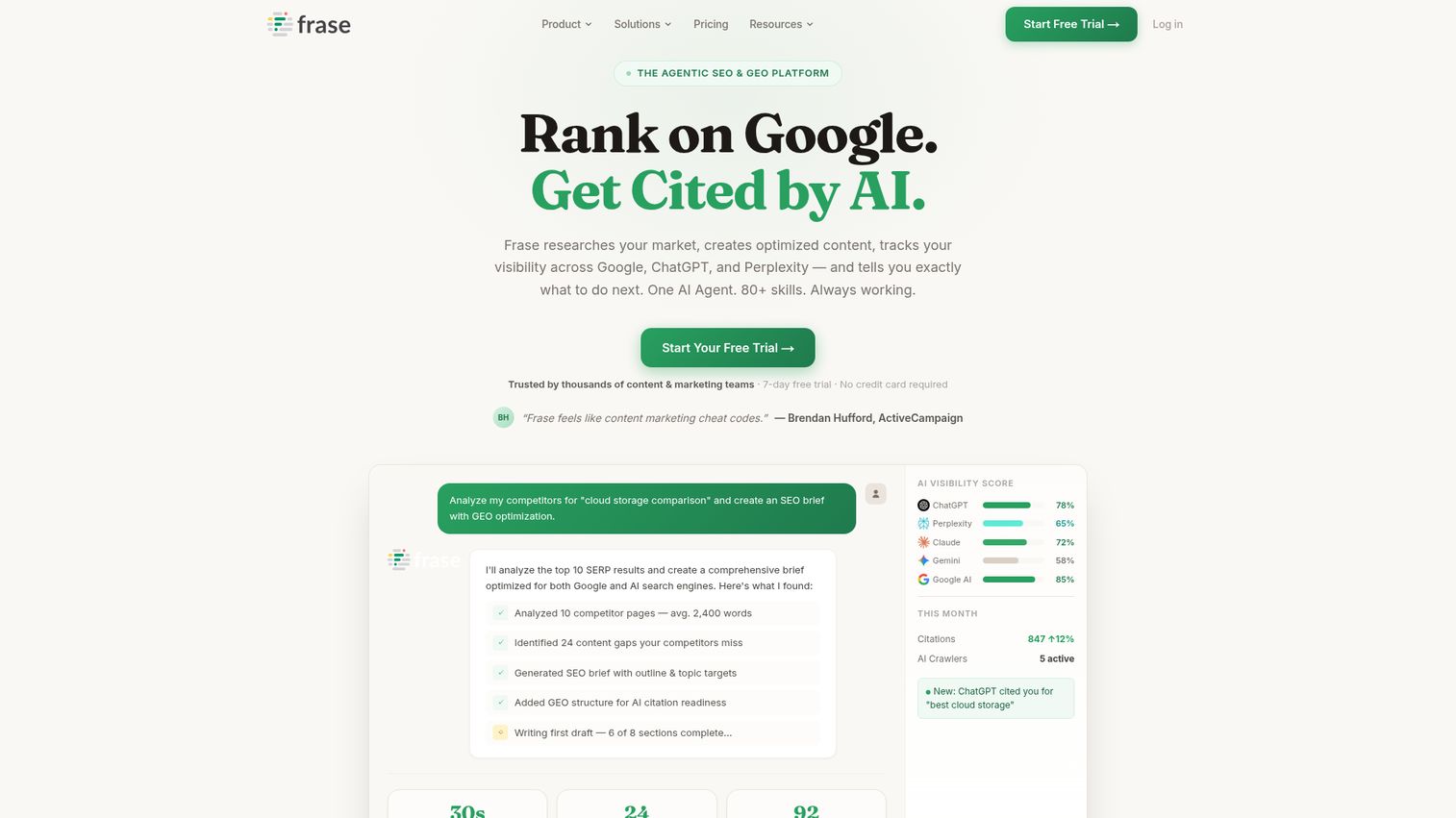
Frase is an all-in-one SEO content tool that combines research, outlining, writing, and optimization. It's particularly strong at the research phase: it pulls SERP data, identifies content gaps, generates structured briefs, and surfaces People Also Ask questions before you write a single word.
Content optimization scoring works similarly to Surfer, and topic clustering helps you plan content at the programmatic level. The research-to-draft workflow is tighter than most competitors.
Best for: Solo content marketers and small teams who need research, writing, and SEO optimization in one affordable tool.
Key strengths
- SERP analysis and content brief generation
- AI-powered content drafting from briefs
- Content optimization scoring similar to Surfer
- Question research (People Also Ask data)
- Topic clustering and content gap analysis
Pricing: From $15/month (Solo). Team plans from $115/month.
Honest take: Frase is the best value for solo marketers who need SEO content. The research-to-draft workflow is excellent, and at $15/month it's a fraction of Surfer's price. The trade-off: AI writing quality needs more editing than ChatGPT or Claude output. You'll spend more time polishing Frase's drafts. But for the research and optimization features alone, it's worth the price.
15. GrowthBar
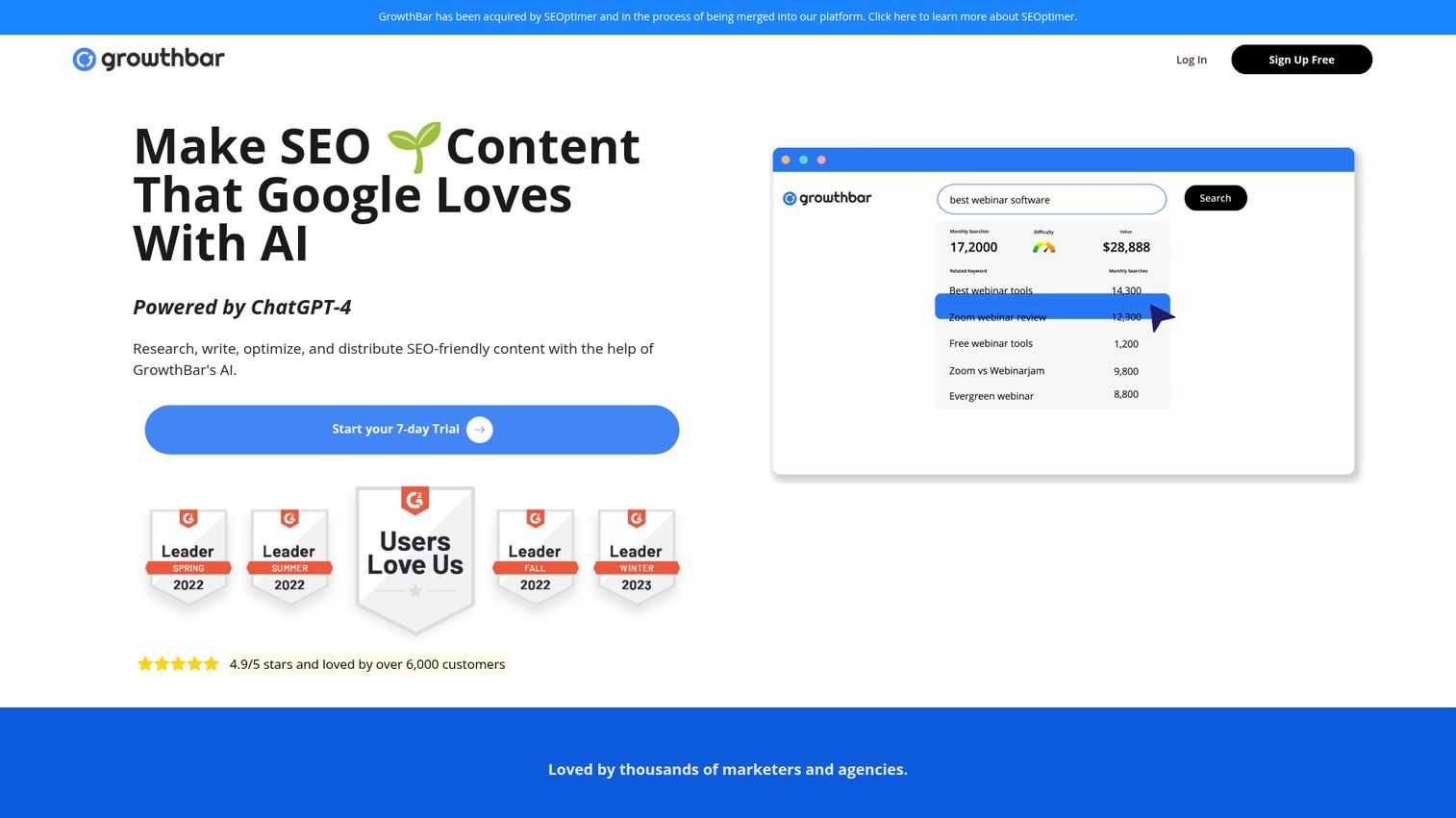
GrowthBar is the SEO-first AI writing tool for bloggers and content marketers. Unlike general-purpose AI writers, GrowthBar starts with keyword research and competitive analysis, then generates content. The Chrome extension provides on-SERP insights as you browse, and the AI blog builder creates optimized articles from keyword inputs.
Competitor content analysis and gap identification help you find opportunities others are missing. Meta description and title tag generation round out the SEO toolkit.
Best for: SEO-driven content marketers and ai writing tools for bloggers who want keyword research and writing in one platform.
Key strengths
- Keyword research built into the writing workflow
- Competitor content analysis and gap identification
- AI blog builder with SEO optimization
- Chrome extension for SERP insights
- Meta description and title tag generator
Pricing: From $36/month (Standard). Pro from $74.25/month.
Honest take: GrowthBar is the best all-in-one for SEO content on a budget. It's more affordable than buying Surfer ($89/month) plus a separate AI writer. The trade-off: it's not built for non-SEO writing like emails, social posts, or ad copy. If SEO blog content is your primary output, GrowthBar covers the full workflow. If you need multi-format content, pair a general-purpose LLM with Surfer instead.
How to choose the right AI writing tool
The right pick depends on your primary use case, not on which tool has the most features. Here's a practical framework:
If you need versatility on a limited budget
Start with ChatGPT or Claude. At $20/month, either one handles brainstorming, drafting, and editing across formats. Claude tends to produce more natural prose. ChatGPT offers broader utility with web browsing and image generation.
If you're focused on SEO content
Pair a general-purpose AI writer with Frase or Surfer SEO. Frase is the better value at $15/month. Surfer is more powerful at $89/month. GrowthBar splits the difference with keyword research and writing in one tool.
If you manage a team and need brand consistency
Jasper for mid-size teams. Writer.com for enterprise. Both offer brand voice training, but Writer.com adds governance and compliance features that larger organizations need.
If you're optimizing for conversions
Anyword's Predictive Performance Score is unique. No other tool predicts copy performance before you publish. Pair it with strong landing page builders and you have a full conversion-focused content stack.
If you need quick short-form copy
Copy.ai's workflow builder and template library are built for this. Faster than prompting a general-purpose LLM for ad variations and email sequences.
If you prioritize collaboration
Slate combines AI writing with team workflows. Notion AI works if your team already lives in Notion.
The realistic stack
Most successful content teams use 2-3 tools: a general-purpose AI writer (ChatGPT or Claude), a specialized tool for their main use case (SEO, ads, or email), and Grammarly for editing. Don't try to find one tool that does everything. It doesn't exist.
Closing
Choosing the best ai writing software feels overwhelming with 15 options on the table. The key insight: match tools to use cases, don't search for one perfect tool. Start simple with ChatGPT or Claude for general use, add a specialized tool as your needs become clear, and pair everything with Grammarly.
AI writing tools are a competitive necessity for marketing teams in 2026, not a nice-to-have. Organizations using them report 59% faster content creation and 77% higher output volume (Firewire Digital, 2026). The best ai for writing is the one that fits your workflow, your budget, and your team's actual needs.
Once your content is polished, consider how you present it. For SaaS and B2B teams, pairing written content with interactive product demos can significantly boost engagement on landing pages and in sales outreach. Tools like Guideflow let you turn your product into a hands-on experience prospects can explore alongside your written messaging.
The next step is straightforward: pick one general-purpose tool, run it for two weeks on real projects, and measure whether it saves you time on first drafts.
FAQs
Yes, if you choose based on your primary use case. A solo marketer can get 80% of the value from ChatGPT Plus ($20/month) or Claude Pro ($20/month) plus Grammarly. Only upgrade to specialized tools like Jasper or Surfer when you have consistent, specific needs they address.
Purpose-built tools like Jasper and Writer.com can get surprisingly close with proper training, achieving 70-80% accuracy on brand voice. General-purpose tools like ChatGPT and Claude require detailed prompting for each piece. Either way, human review remains essential for brand-critical content.
ChatGPT's free tier offers the most capability without payment, though it uses an older model. Writesonic's free tier gives you 10,000 words/month, and Copy.ai offers 2,000 words/month. But honestly, the $20/month for ChatGPT Plus or Claude Pro is worth it for any serious marketer. The best free ai writing tools get you started, not finished.
No. Use AI for first drafts, ideation, and high-volume content like product descriptions or meta descriptions. Keep human writers for thought leadership, customer stories, and anything requiring original research or deep expertise. The best results come from human-AI collaboration, not replacement.
Three tactics: (1) Edit heavily. AI provides the structure, you provide the insight. (2) Use specific examples, data, and stories that AI can't generate from its training data. (3) Choose tools with brand voice training (Jasper, Writer.com) or spend time crafting detailed prompts that capture your tone, audience, and point of view.