You can't manage a portfolio from five dashboards and a spreadsheet nobody fully trusts. Yet that's the operating reality for most investment teams, advisory firms, and finance-led founders trying to run a clean book.
The cost shows up in slow rebalancing decisions, unclear risk exposure, and reporting that gets rebuilt from scratch before every board or client meeting. According to Grand View Research (2026), the global portfolio management software market stands at $3.7 billion and is growing at 11.3% CAGR through 2033. That growth reflects a real shift: More teams are replacing stitched-together data workflows with systems that can answer "what do we own, how is it performing, and where is risk concentrated?" without a three-day scramble.
The right investment management software depends almost entirely on your portfolio type. An advisor running 200 client accounts needs something fundamentally different from a private credit team monitoring covenant compliance or an individual tracking assets across crypto and real estate. Pick the wrong category and you end up with expensive shelfware.
What's inside
This guide compares 15 investment portfolio management platforms and covers:
- Who each tool is built for: Advisors, RIAs, institutional investment teams, private-market managers, and individual investors
- Selection criteria: Portfolio visibility and aggregation, reporting depth, risk and rebalancing workflows, asset-class fit, and implementation complexity
- Verified pricing and G2 ratings from vendor pages and live review listings
- Where each platform excels and where buyers should verify fit before committing
TL;DR
- Best for enterprise risk and portfolio infrastructure: BlackRock Aladdin, for large institutions managing multi-asset portfolios at scale
- Best for institutional order management: Bloomberg AIM, for buy-side teams with active trading and compliance workflows
- Best for advisor rebalancing and reporting: Tamarac, for RIAs running multi-custodian advisory operations
- Best for alternative investment data: Addepar, for family offices and wealth teams with complex public and private holdings
- Best for private markets and credit teams: Allvue, for alternative investment managers needing front-to-back operational coverage
- Best free option for individuals: Empower's personal dashboard, free for net-worth and investment tracking
What is investment portfolio management software?
Investment portfolio management software helps investors, advisors, and investment teams track holdings, measure performance, analyze risk, rebalance portfolios, and report investment results from a centralized system.
It is not general accounting software, expense management, or personal budgeting. Some tools overlap with adjacent categories, but this list prioritizes investment portfolio visibility and decision support.
Core capabilities this category covers:
- Portfolio aggregation: Consolidates custodians, brokerage accounts, fund statements, and alternative assets into one view
- Performance reporting: Returns, benchmark comparisons, attribution analysis, and dashboards for clients, LPs, or leadership
- Risk and exposure analysis: Concentration, sector, geography, duration, liquidity, and factor-level views
- Rebalancing and optimization: Drift monitoring, model portfolio comparison, and tax-aware rebalancing where supported
- Alternative asset support: Private equity, private credit, real estate, venture capital, and other non-standard holdings
- Stakeholder reporting: Client reports, LP updates, board decks, and internal leadership dashboards
- Integrations: Custodians, CRMs, accounting systems, market data feeds, and planning platforms
What this category is not:
- Trading-only execution systems (though some platforms include order management)
- CRM or client relationship software (though several include CRM modules)
- Project portfolio management software (a different category entirely)
- Personal budgeting apps (though some personal tools include investment tracking)
The platforms below range from enterprise operating infrastructure to open-source individual trackers. The right one matches your portfolio type, reporting audience, and operational complexity, not a generic feature checklist.
When to use investment portfolio management software
Consolidate portfolio data before making decisions
When holdings, performance, and exposure data sit across multiple custodians, fund statements, brokerages, and spreadsheets, every decision involves a manual aggregation step. Portfolio management software replaces that weekly scramble with a trusted, current view. For a finance lead or investment team, the question shifts from "can we trust this number?" to "what does this number tell us to do?"
Monitor risk before it surfaces at a board or client meeting
Concentration, liquidity, sector exposure, and drawdown risks should surface in the system before they surface in a conversation. For founders evaluating their own investment or treasury positions, this connects directly to board-level operating discipline: Risks that get spotted in the dashboard don't become surprises during a quarterly review.
Report performance without rebuilding the same deck
Investor updates, client reviews, LP reports, and internal leadership dashboards all require consistent, repeatable data. The platforms in this list turn portfolio reporting from a one-off manual effort into a cadenced output, whether that's a quarterly LP letter, a weekly advisor client portal update, or a monthly board-grade summary.
Investment portfolio management software comparison
The table below covers 15 platforms ordered by relevance to the investment portfolio management keyword. This is not a universal ranking for every investor type. Match by portfolio category first, then evaluate implementation fit and pricing.
| # | Product | Best for | Key differentiator | Pricing | G2 rating |
|---|---|---|---|---|---|
| 1 | Envestnet | Wealth management firms and advisor networks | Broad advisor ecosystem with planning, trading, and reporting | Quote-based | 4.0/5 |
| 2 | Tamarac | RIAs needing reporting and rebalancing | Advisor-focused portfolio accounting and multi-custodian workflows | Quote-based | 4.0/5 |
| 3 | Allvue | Private capital, private debt, and credit teams | Alternative investment front-to-back workflows | Quote-based | 5.0/5 |
| 4 | Bloomberg AIM | Institutional buy-side investment teams | Multi-asset order management with compliance and trading | Quote-based | 3.5/5 |
| 5 | BlackRock Aladdin | Large institutions managing multi-asset risk | Enterprise risk, portfolio construction, and operating model | Quote-based | N/A |
| 6 | eMoney Advisor | Advisors connecting planning with portfolio context | Goals-based and cash-flow planning with client collaboration | Quote-based | 4.7/5 |
| 7 | Orion Advisor Solutions | Advisor firms scaling reporting and model management | Integrated advisor tech stack with billing and trading | From $13,000/year | 4.4/5 |
| 8 | Black Diamond | Wealth managers prioritizing client reporting | Client portal and portfolio reporting experience | Quote-based | 4.0/5 |
| 9 | Addepar | Family offices with public and private assets | Data aggregation and analytics for complex portfolios | Quote-based | 4.1/5 |
| 10 | Morningstar Direct | Investment research and portfolio analysis teams | Research, fund analytics, and manager due diligence | Quote-based | 4.1/5 |
| 11 | Ghostfolio | Privacy-conscious individual investors | Open-source and self-hosted portfolio tracking | Free tier available | N/A |
| 12 | Empower | Individuals tracking net worth and investments | Free consumer portfolio and wealth dashboard | Free; advisory from 0.5% AUM | N/A |
| 13 | Carta | VC firms and startup equity teams | Cap table and private market ownership tracking | Free for small companies; paid plans by quote | 4.3/5 |
| 14 | Anaplan | Finance-led organizations planning across business units | Scenario modeling and connected planning | Quote-based | 4.6/5 |
| 15 | Kubera | Individuals and families tracking broad assets | Net worth across traditional, digital, and private assets | From $250/year | N/A |
Best 15 investment portfolio management software tools
The order below reflects relevance to the investment portfolio management keyword. Evaluate each tool against your portfolio type before comparing features.
1. Envestne
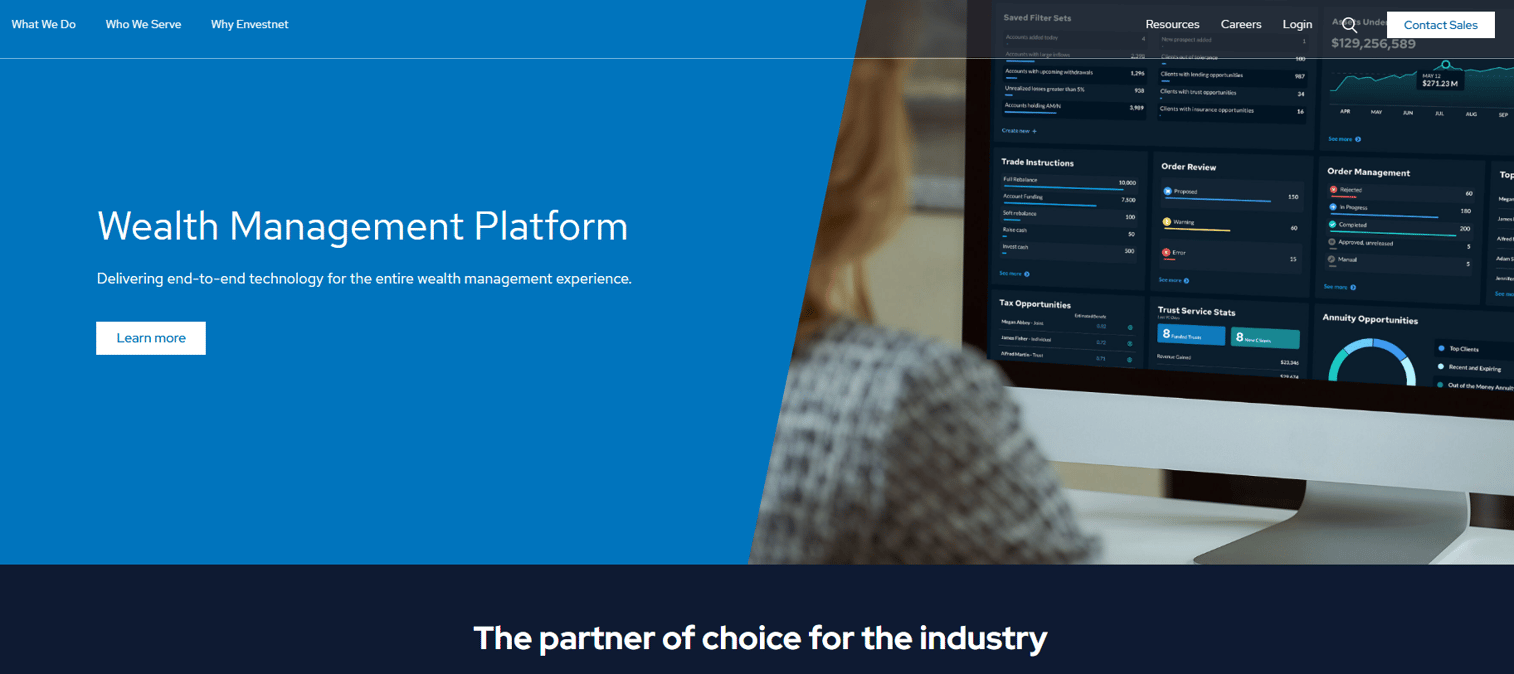
Envestnet is a wealth-management technology and services platform serving advisors, financial institutions, and asset managers. It covers portfolio analytics, managed account infrastructure, financial planning, trading, billing, and data aggregation from one advisor workstation. Firms that need broad investment management infrastructure, not just a portfolio tracker, tend to find the most value here.
Best for: Wealth management firms and advisor networks that want an integrated operating platform rather than a standalone portfolio tool.
Key features
- Portfolio analytics and performance reporting
- Advisor workstation with managed account support
- Financial planning and prospecting tools
- Portfolio trading, rebalancing, and tax-loss harvesting
- Client reporting and data aggregation
Why choose Envestnet: Strong fit when portfolio management sits inside a larger advisor technology workflow that includes financial planning, billing, and client engagement. Smaller teams should scope implementation effort carefully before committing.
Envestnet pricing: Envestnet prices through consultation and negotiated program arrangements. Contact sales for details on platform modules, advisor seats, data feeds, and implementation scope.
G2 rating: 4.0/5
2. Tamarac
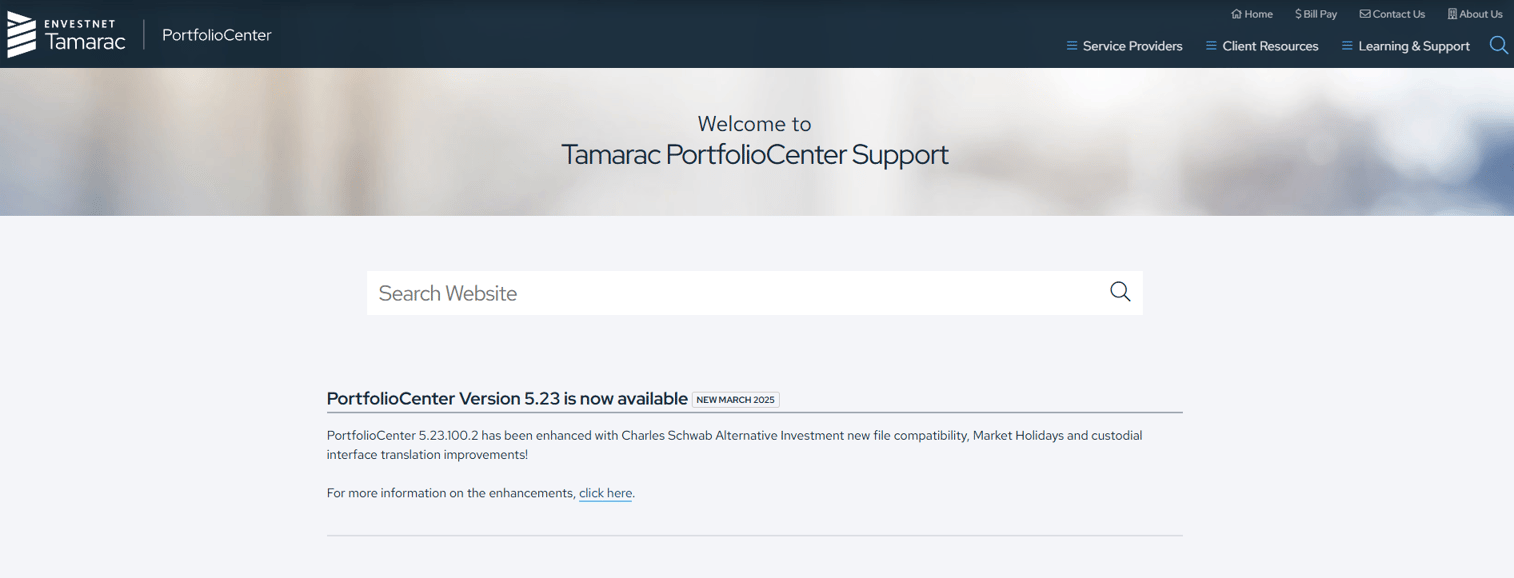
Tamarac is a wealth management platform built for independent registered investment advisors. It combines portfolio accounting, performance reporting, rebalancing, trading, billing, CRM, and client portal capabilities into one advisor-facing system. Multi-custodian environments are a core use case.
Best for: Independent RIAs and advisor firms that need portfolio reporting, rebalancing, and operational workflows running from the same platform.
Key features
- Portfolio accounting and performance reporting
- Multi-custodian rebalancing workflows
- Advisor billing
- Client portal with account aggregation
- CRM integration
Why choose Tamarac: Good fit when client reporting and portfolio operations need to run from one advisor workflow rather than separate tools. Verify custodian compatibility and data migration effort before signing.
Tamarac pricing: Contact sales for plan details, custodian setup costs, and migration requirements.
G2 rating: 4.0/5
3. Allvue
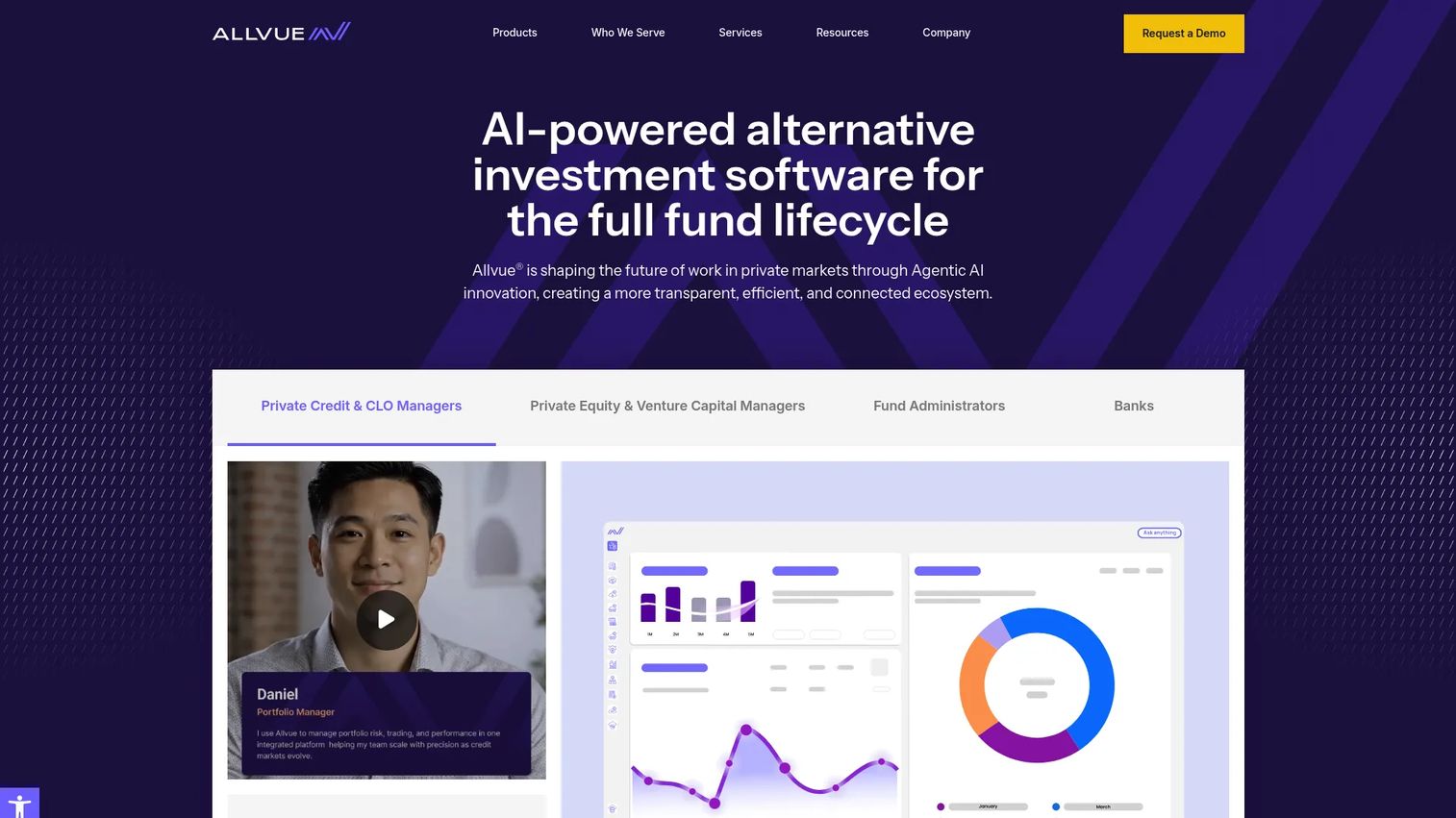
Allvue provides cloud-based software for alternative investment managers across private equity, private credit, venture capital, CLOs, and fund administration. Its platform covers fund accounting, portfolio monitoring, exposure analytics, investor CRM, fundraising management, and LP reporting. For teams managing private-market structures that standard advisor tools cannot handle, Allvue is purpose-built.
Best for: Private capital, private debt, and credit investment teams managing complex alternative portfolios that require front-to-back operational coverage.
Key features
- Fund accounting and investment accounting
- Portfolio monitoring, management, and analytics
- Covenant tracking and exposure analysis
- Investor portal, CRM, and fundraising management
- LP reporting workflows
Why choose Allvue: Strong fit when the portfolio includes private-market structures, credit workflows, and multi-entity LP reporting that generic advisor tools cannot accommodate. Individual investors and small advisory practices will find it significantly more system than they need.
Allvue pricing: Allvue sells through direct sales engagement. Pricing depends on modules, asset class coverage, user count, and implementation scope. Contact sales for a quote.
G2 rating: 5.0/5
4. Bloomberg AIM
Bloomberg AIM is a hosted, multi-asset investment workflow and order management system for institutional buy-side firms. It covers portfolio management, order management, electronic trading, compliance monitoring, post-trade settlement, reconciliation, performance measurement, and reporting. Asset classes include equities, fixed income, FX, listed options, futures, and OTC derivatives.
Best for: Institutional asset managers that need portfolio management and order management in one integrated workflow, with compliance and trade lifecycle coverage.
Key features
- Order and execution management with electronic trading connectivity
- Portfolio management with benchmarking, rebalancing, and scenario analysis
- Pre-trade and post-trade compliance with rule building and audit history
- Post-trade matching, settlement, and reconciliation
- Multi-asset coverage: Equities, fixed income, FX, futures, derivatives
Why choose Bloomberg AIM: Choose it when investment management depends on trade lifecycle coverage, compliance rules, and institutional data workflows. This is not a personal portfolio tracker or advisor reporting tool.
Bloomberg AIM pricing: Bloomberg directs prospective buyers to contact a specialist. Pricing reflects package structure, terminal dependencies, user licensing, and implementation scope.
G2 rating: 3.5/5
5. BlackRock Aladdin
BlackRock Aladdin is an enterprise investment operating, risk, and portfolio management platform serving institutional investors, asset managers, insurers, pension funds, banks, and wealth managers. Its capabilities span multi-asset risk analytics, portfolio construction, scenario analysis, compliance, operations, and investment data management. Whole-portfolio analytics cover both public and private assets.
Best for: Large institutions that need multi-asset risk, portfolio operations, and investment data integrated into a single operating model.
Key features
- Multi-asset risk analytics and scenario analysis
- Portfolio management and trading workflows
- Whole-portfolio analytics across public and private assets
- Integrated operations and compliance
- Open architecture with configurable data and analytics
Why choose BlackRock Aladdin: Strong fit when portfolio management, risk, and operations need to run across a complex institution with multiple asset classes and stakeholder reporting requirements. Smaller teams should only evaluate it if institutional-grade complexity is warranted.
BlackRock Aladdin pricing: Pricing is available by contacting Aladdin directly. Ask about modules, asset class coverage, users, data requirements, and implementation support.
6. eMoney Advisor

eMoney Advisor is a financial planning platform with integrated client portal, account aggregation, and wealth collaboration tools for financial advisors. Its three plan tiers, Plus, Premier, and Pro, cover goals-based planning, cash-flow planning, Monte Carlo analysis, Decision Center, and spending tools. Portfolio context lives inside the planning conversation, not as a standalone portfolio accounting system.
Best for: Advisors who want financial planning and client collaboration connected to portfolio visibility, rather than advisors who primarily need portfolio accounting and rebalancing.
Key features
- Goals-based and cash-flow financial planning
- Client portal and CoPlanner collaboration
- Account aggregation and secure document sharing
- Monte Carlo analysis and Decision Center
- Business analytics and powerful integrations
Why choose eMoney Advisor: Choose it when the portfolio discussion starts with financial goals and client relationships. Teams with heavy trading, rebalancing, or institutional reporting needs will likely require a dedicated portfolio accounting system alongside it.
eMoney Advisor pricing: eMoney offers Plus, Premier, and Pro plan tiers. Pricing is variable by organization and requires contacting eMoney directly.
G2 rating: 4.7/5
7. Orion Advisor Solutions
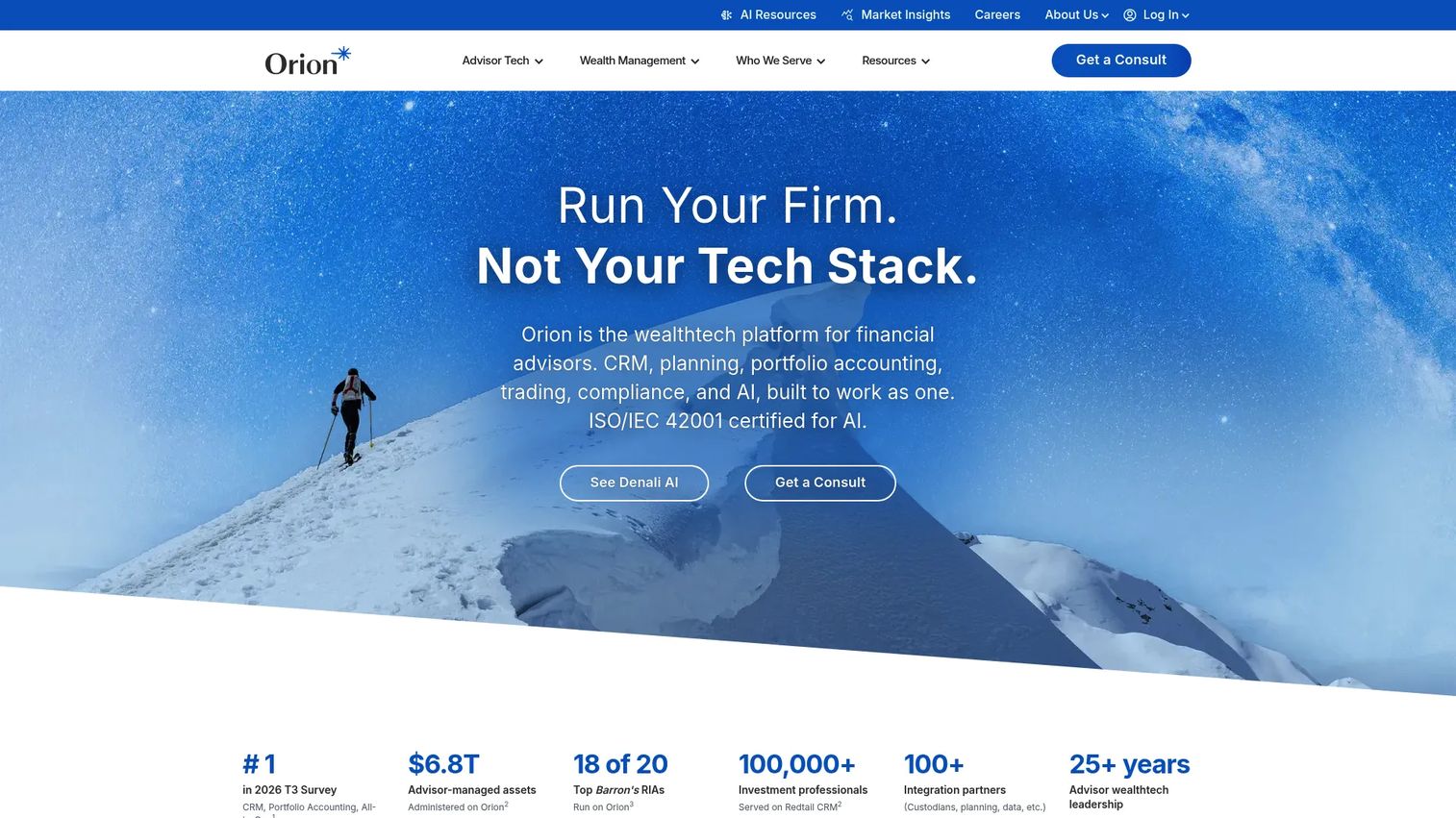
Orion Advisor Solutions is a wealth technology platform combining portfolio accounting, Redtail CRM, trading, financial planning, compliance, client portals, and AI tools for advisory firms. Its Foundation, Essentials, and Advantage stacks provide progressively broader coverage as advisory teams scale. Multi-custodian routing and tax-loss harvesting are included across relevant tiers.
Best for: Financial advisory firms, RIAs, broker-dealers, and family offices scaling reporting, billing, model portfolios, and client service from one advisor stack.
Key features
- Portfolio accounting, billing, and performance management
- Redtail CRM and client relationship management
- Trading, rebalancing, and multi-custodian routing
- Compliance tools and risk intelligence
- Client portal and financial planning
Why choose Orion Advisor Solutions: Good fit when an advisory firm wants portfolio operations and client experience connected in one platform. Confirm which modules your team needs before comparing tiers, as the stack structure significantly affects the effective price.
Orion Advisor Solutions pricing: Foundation Stack starts at $13,000 per year; Essentials Stack starts at $18,000 per year; Advantage Stack starts at $28,000 per year. All tiers billed annually.
G2 rating: 4.4/5
8. Black Diamond
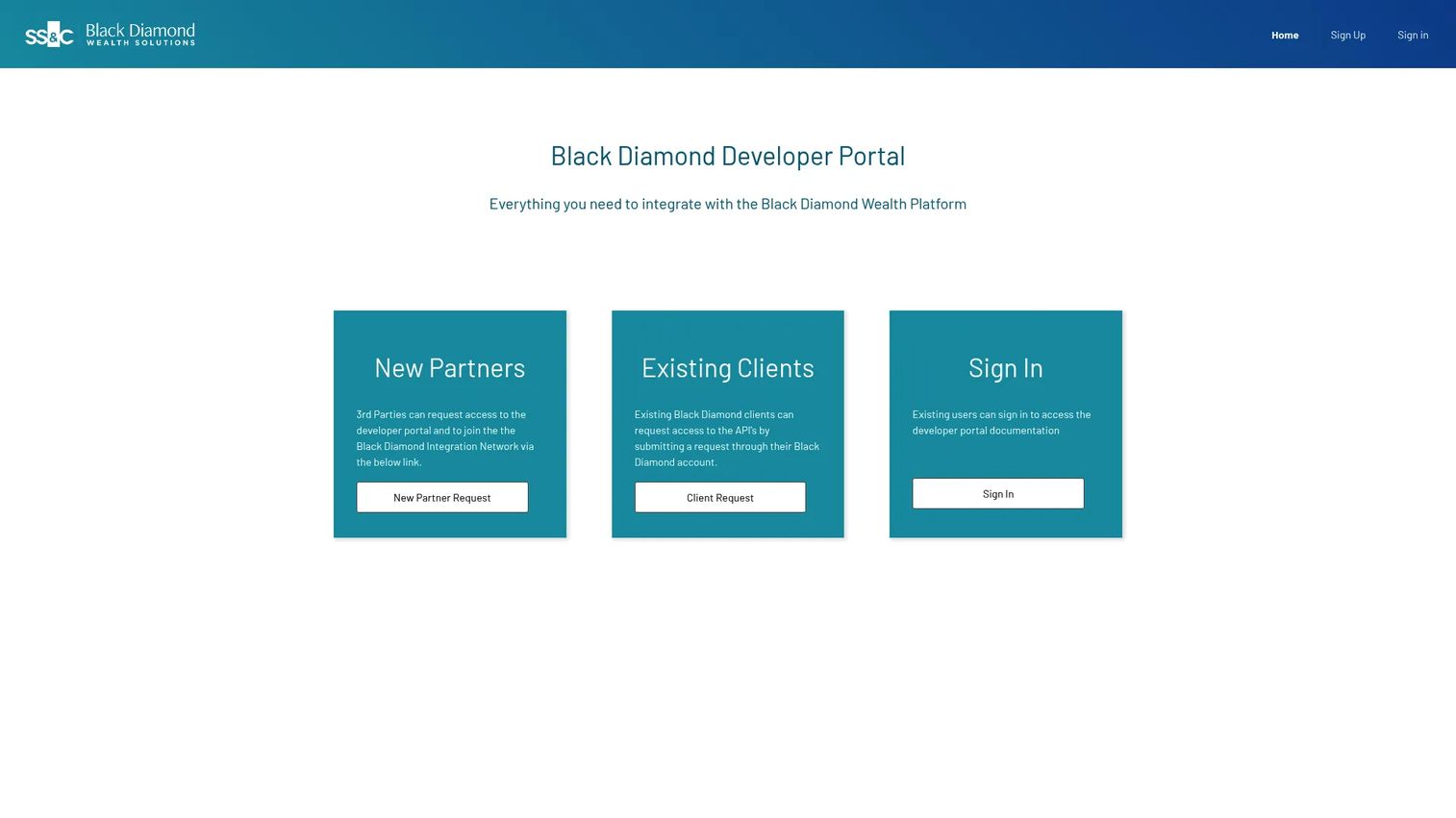
Black Diamond Wealth Platform is a wealth management technology platform from SS&C Advent focused on portfolio reporting, rebalancing, client portal, and API integrations. It is used by wealth managers and advisors who prioritize polished, client-facing reporting and a high-net-worth portal experience alongside internal portfolio analysis.
Best for: Wealth managers and advisors for whom the client reporting and portal experience matters as much as internal portfolio analysis capability.
Key features
- Performance reporting and portfolio dashboards
- Portfolio rebalancing
- Client portal with advisor connectivity
- API and integration capabilities
- Data aggregation
Why choose Black Diamond: Choose it when the reporting output clients see is a primary evaluation criterion. Verify integration coverage and reporting customization options before committing, particularly if you need deep multi-custodian accounting.
Black Diamond pricing: Contact sales for plan details, custodian coverage, and implementation costs.
G2 rating: 4.0/5
9. Addepar
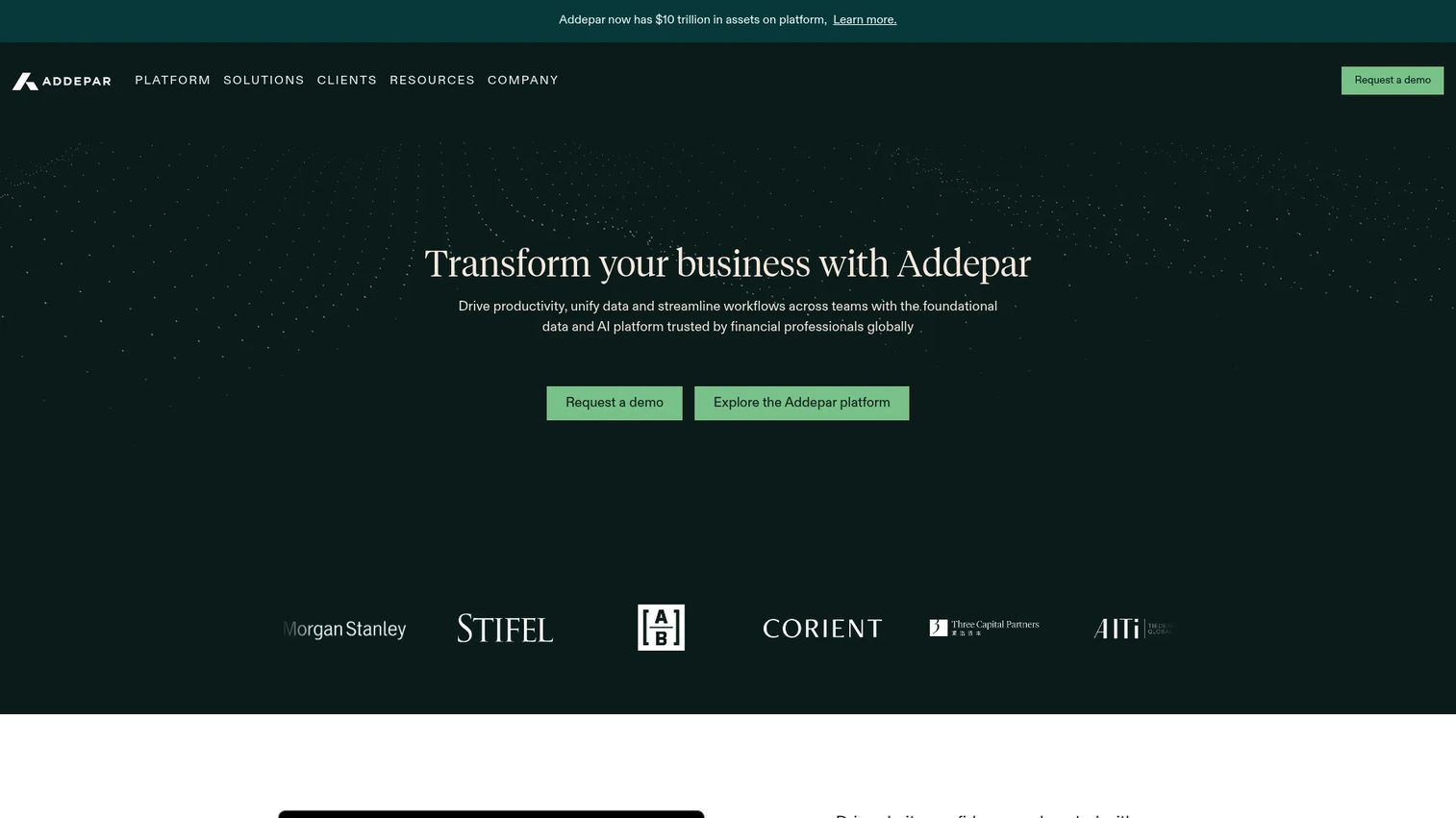
Addepar is a data and AI platform for financial professionals managing complex investment portfolios. It aggregates portfolio and market data, provides flexible analytics, supports dynamic reporting, and gives clients a portal view. Family offices, wealth managers, and institutional investors managing alternative assets alongside public securities use it to get consolidated visibility across complex ownership structures.
Best for: Family offices, banks, and wealth teams managing portfolios that mix public securities, private assets, multiple custodians, and complex entity structures.
Key features
- Portfolio and market data aggregation
- Flexible portfolio analysis
- Dynamic reporting and client portal
- Alternative asset support
- AI-powered portfolio insights
Why choose Addepar: Strong fit when the primary problem is consolidated visibility across illiquid assets, multi-entity ownership, and multiple custodians. Data cleanup and implementation deserve serious evaluation before signing, as the value depends heavily on data quality at ingestion.
Addepar pricing: Addepar sells through direct engagement. Pricing reflects assets, entities, reporting needs, and implementation scope. Contact sales for a quote.
G2 rating: 4.1/5
10. Morningstar Direct
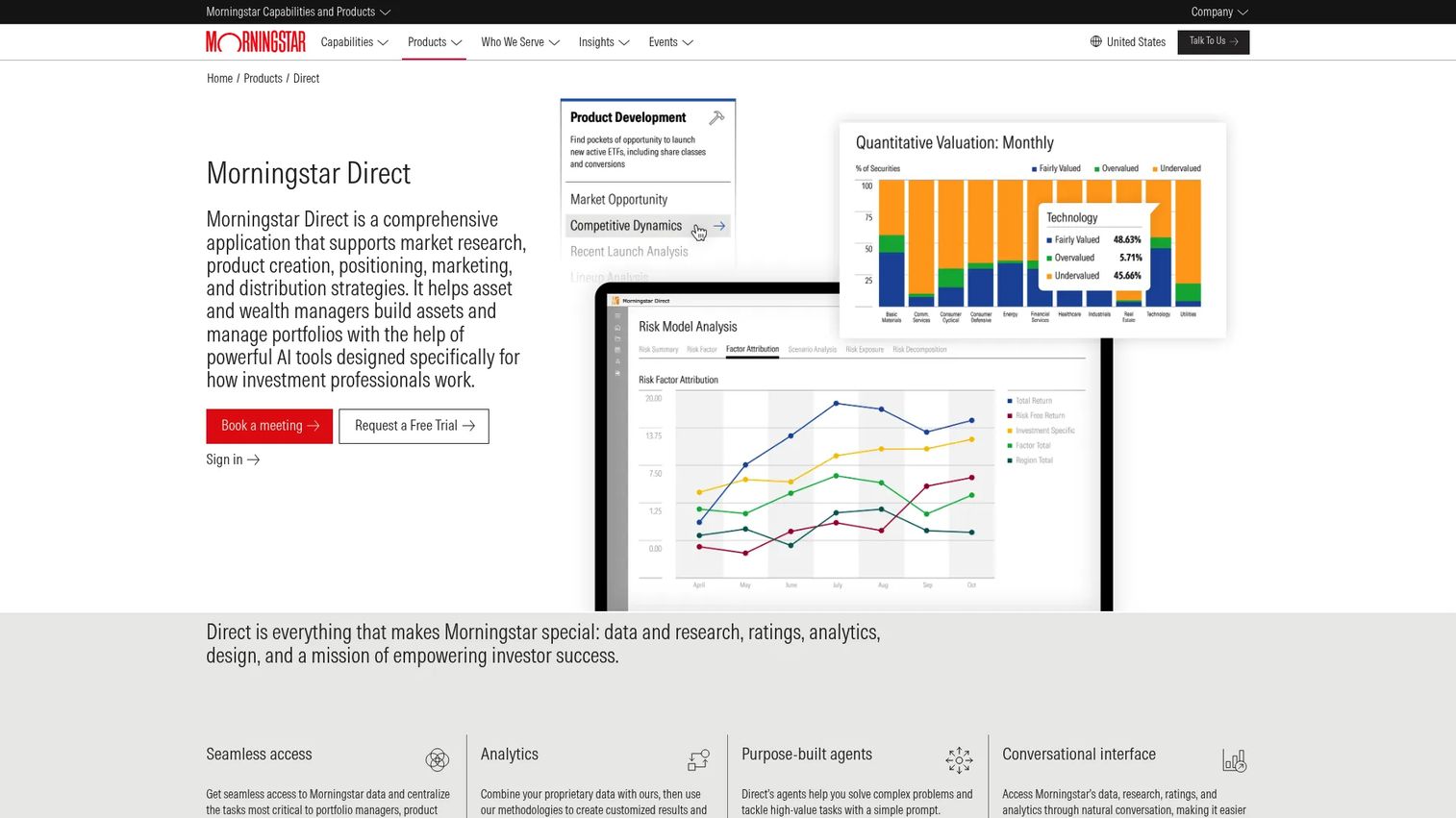
Morningstar Direct is an investment analysis application for market research, portfolio construction and management, product positioning, marketing, distribution, and reporting. Investment research teams, allocators, and advisors doing fund analysis and manager due diligence use it primarily for analytical depth rather than advisor operations.
Best for: Investment research teams, asset allocators, and advisors conducting fund analysis, manager due diligence, and portfolio review.
Key features
- Market research and investment analysis
- Portfolio construction and management
- Data, research, ratings, analytics, and AI tools
- Product positioning and distribution support
- Reporting and presentation capabilities
Why choose Morningstar Direct: Choose it when research depth, fund analytics, and portfolio comparison drive the workflow. Teams that also need trading, billing, or full advisor operations will need a separate platform alongside it.
Morningstar Direct pricing: Morningstar prices by license count, with additional fees possible for distribution or publication use cases. Contact Morningstar for a current quote.
G2 rating: 4.1/5
11. Ghostfolio
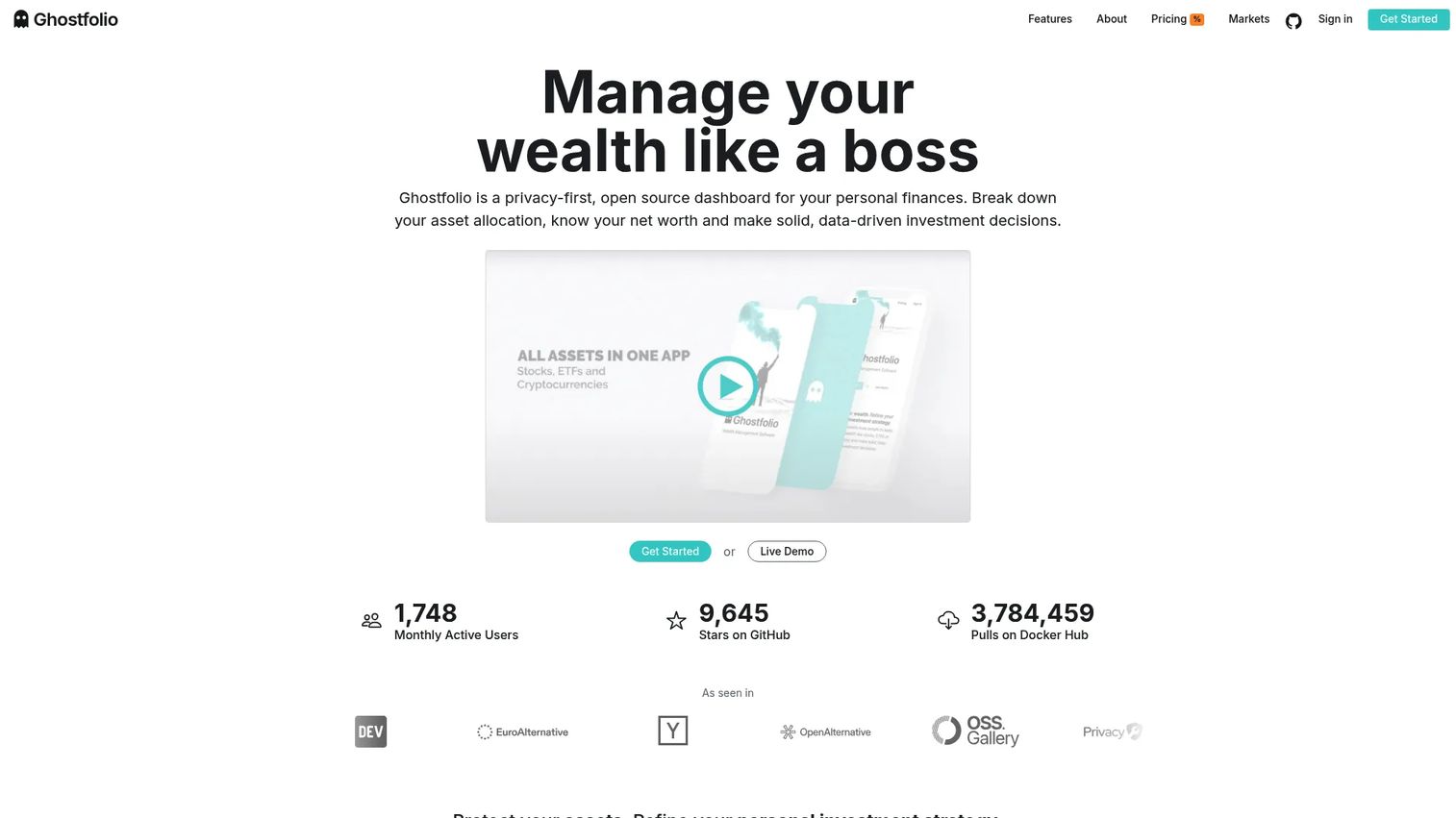
Ghostfolio is open-source wealth management software for tracking, analyzing, and visualizing personal investments. It supports stocks, ETFs, bonds, cryptocurrencies, dividends, emergency funds, liabilities, and other asset types. Self-hosting is available under AGPLv3 for privacy-first users who prefer full control over their data. Multi-account management, allocation views by region, sector, and currency, and a Fear and Greed sentiment indicator are built in.
Best for: Privacy-conscious individual investors who want open-source, self-hostable portfolio tracking with solid asset allocation and performance views.
Key features
- Open-source tracking under AGPLv3
- Self-hosting option for full data control
- Stocks, ETFs, crypto, bonds, and liabilities
- Portfolio allocation by asset class, region, currency, and sector
- Portfolio performance calculations and benchmark comparisons
Why choose Ghostfolio: Choose it when privacy, open-source transparency, and self-hosting matter more than enterprise workflow depth. Advisors and institutional teams will need stronger reporting, compliance, and multi-client operational controls than Ghostfolio provides.
Ghostfolio pricing: Ghostfolio offers a free tier and a premium plan. Visit the pricing page at ghostfol.io for current plan details, as the pricing page was not fully rendered at verification time.
12. Empower
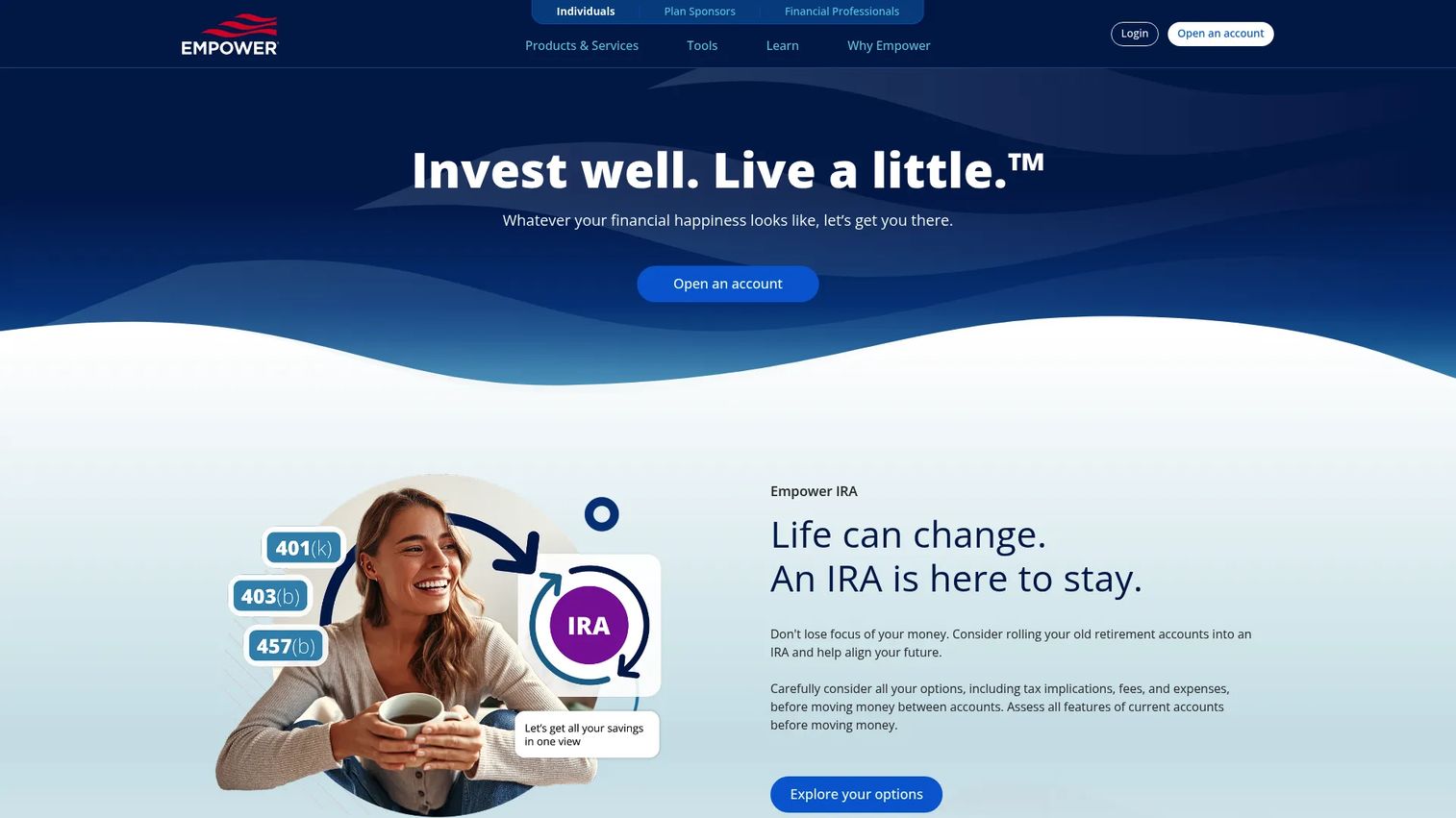
Empower is a financial services company offering personal financial tools, investing, cash management, and retirement planning. Its Personal Dashboard is free and provides budgeting, cash-flow views, net-worth tracking, debt paydown tools, and portfolio visibility across linked accounts. Investment management services, including managed portfolios and personalized financial planning, charge asset-based fees.
Best for: Individual investors who want a free, consolidated dashboard for net-worth tracking, account aggregation, and retirement planning.
Key features
- Free personal dashboard with net-worth and cash-flow tracking
- Account aggregation across brokerages and retirement accounts
- Retirement planning tools
- Empower Personal Cash with 3.50% APY
- Managed portfolio and advisory access
Why choose Empower: Choose it when the goal is personal financial visibility without implementing an advisor or institutional platform. Complex alternative assets, multi-entity structures, or institutional workflows require a more specialized system.
Empower pricing: The Personal Dashboard and financial tools are free. Investment management fees start at 0.5% of assets under management. Empower Personal Cash carries a 3.50% APY standard rate.
13. Carta
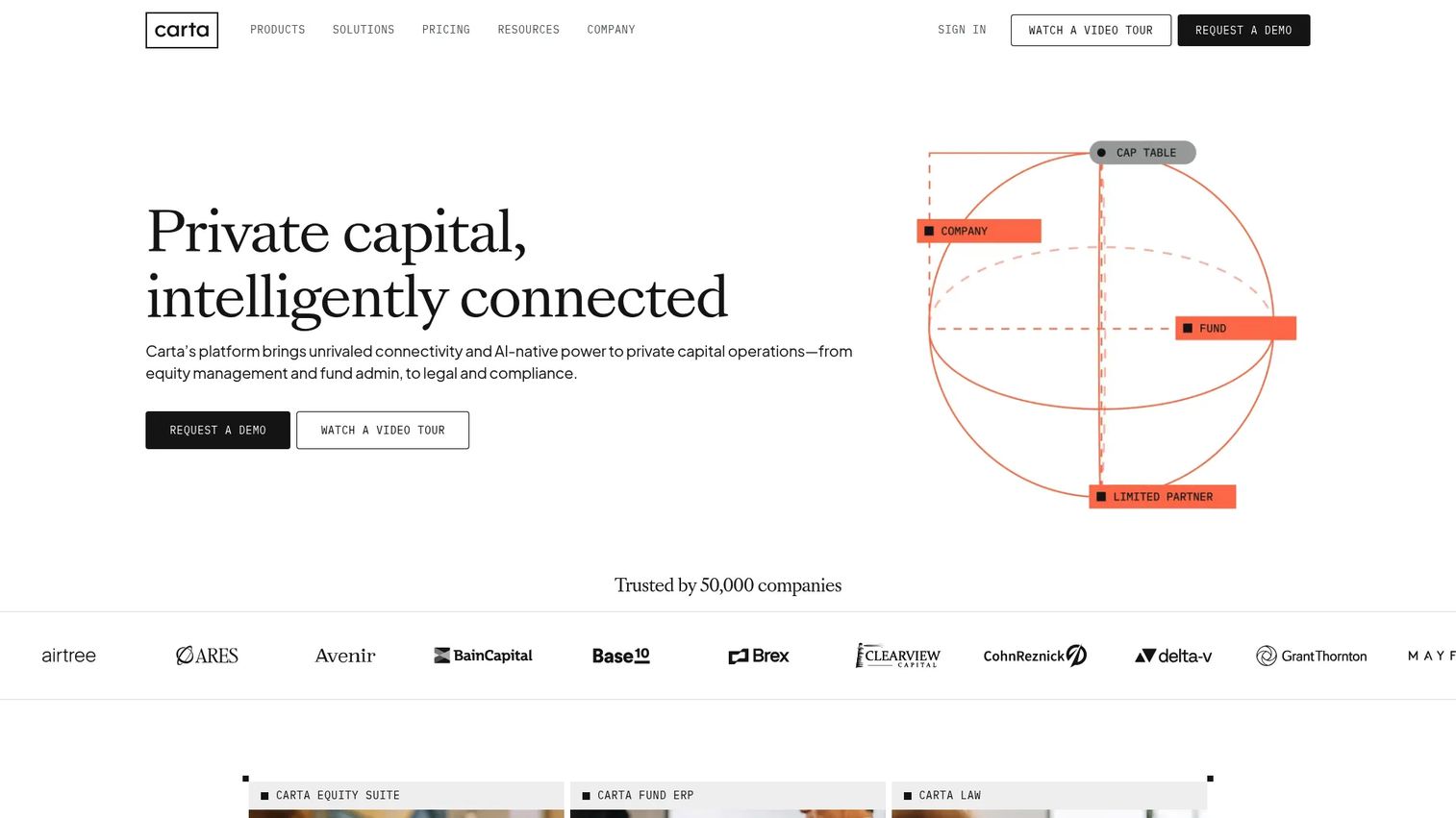
Carta connects equity management, fund administration, and private-capital operations for private companies, venture funds, and private-equity firms. Cap table management, 409A valuations, SAFE modeling, waterfall modeling, fund administration, and portfolio valuations are core capabilities. For VC firms and startup finance teams, Carta is the dominant system for tracking private company ownership and fund data.
Best for: VC firms, startup teams, and private companies tracking private company ownership, equity workflows, and fund administration data.
Key features
- Cap table management and securities issuance
- 409A valuations and SAFE modeling
- Fund administration and portfolio valuations
- Waterfall modeling and distributions
- Financial reporting
Why choose Carta: Choose it when the portfolio is made up of startup equity, private company ownership records, and fund administration workflows. Public-market investors looking for securities portfolio tracking should look at other platforms on this list.
Carta pricing: The Launch plan is free for companies with fewer than 25 stakeholders and up to $1 million raised. Build, Grow, and Scale plans are priced by contact with sales, and vary by stakeholder count, entities, and add-ons.
G2 rating: 4.3/5
14. Anaplan
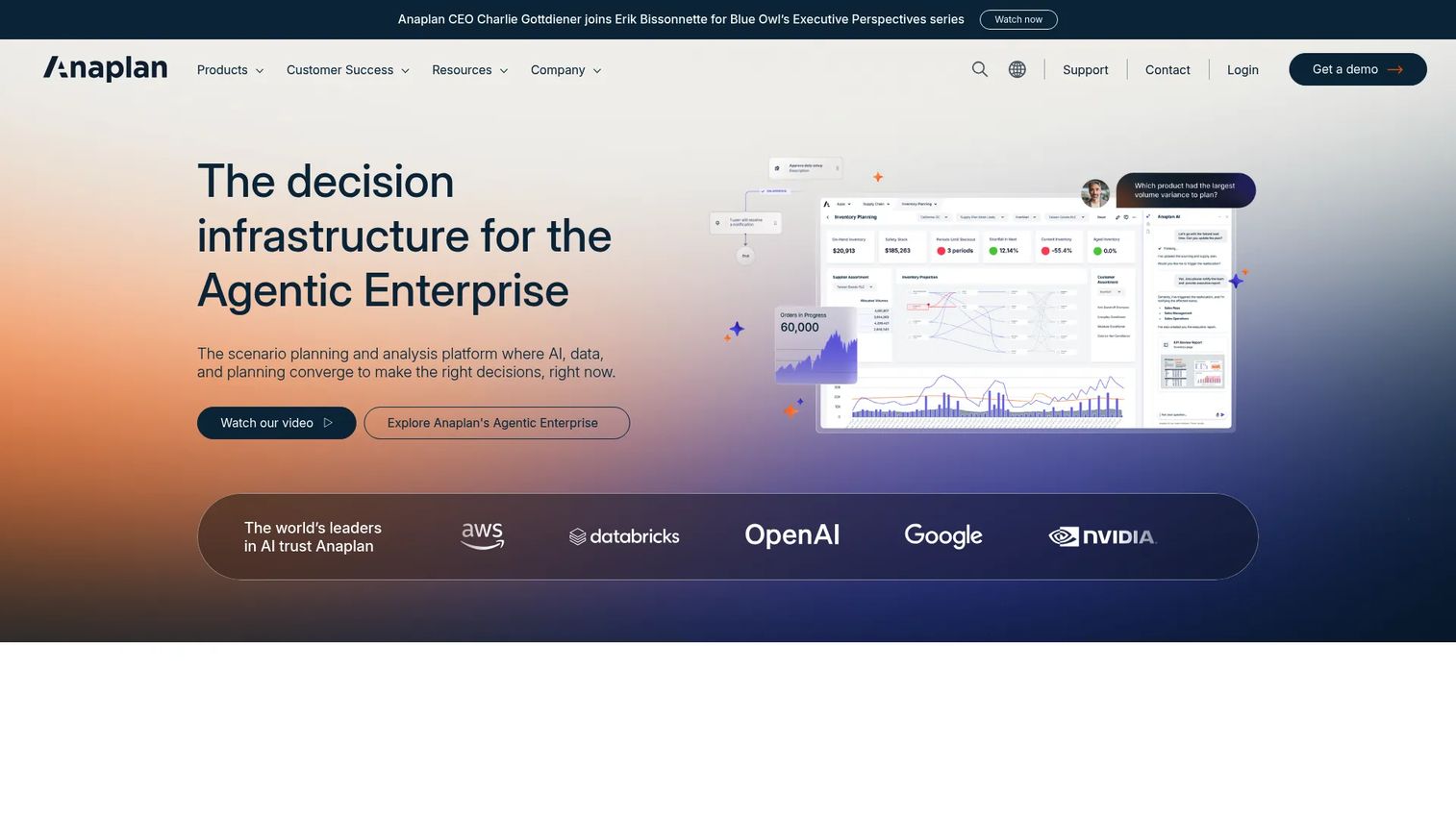
Anaplan is an AI-driven scenario planning and analysis platform for enterprise decision-making across finance, sales, supply chain, workforce, and retail functions. For holding companies or finance-led organizations, it can support portfolio planning by modeling capital allocation, forecasting, and scenario analysis across business units or subsidiaries. It is not a securities-level investment tracker.
Best for: Finance-led organizations planning capital allocation across business units, subsidiaries, or strategic portfolios at enterprise scale.
Key features
- AI-driven forecasting, optimization, and scenario analysis
- Enterprise planning and modeling with real-time calculations
- Data integration through connectors, APIs, and data orchestration
- Workflow automation and collaboration
- Mobile access, reporting, and analytics
Why choose Anaplan: Choose it when portfolio management means planning and forecasting capital allocation across businesses or operating units. Investment teams that need securities-level analytics, custodian data, or performance attribution should choose a dedicated investment platform.
Anaplan pricing: Anaplan prices through direct sales. Pricing depends on workspace complexity, model requirements, and user count. Contact sales for current plan details.
G2 rating: 4.6/5
15. Kubera
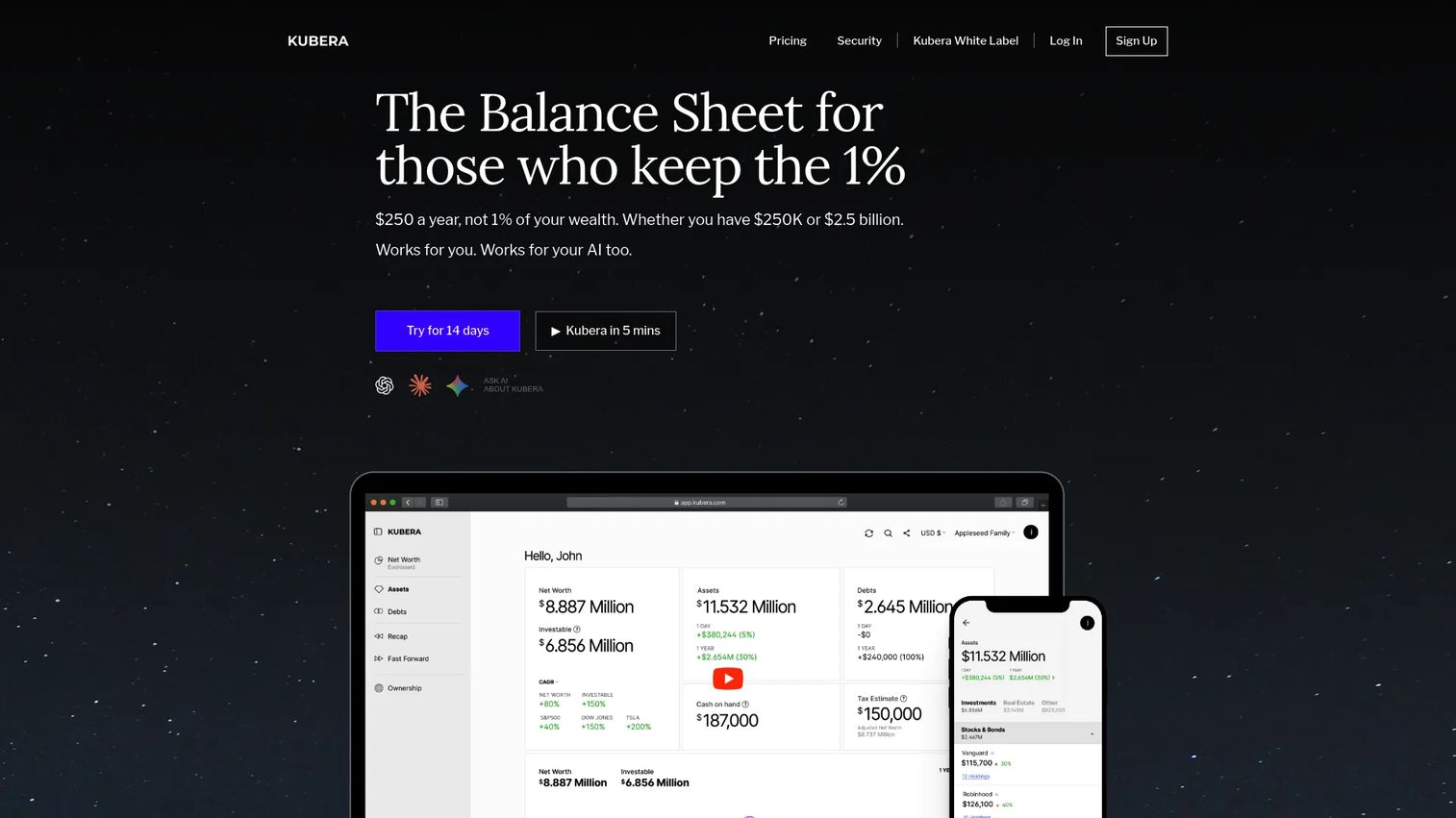
Kubera is a wealth-tracking platform that consolidates assets, debts, currencies, entities, and investment performance into one balance sheet. It aggregates banks, brokerages, crypto, DeFi, real estate, private funds, collectibles, and other assets. Features include CAGR and IRR tracking, multiple currencies, nested portfolios, granular sharing, proof-of-wealth statements, and Dead Man's Switch for estate planning. Individuals and families with broad, multi-asset wealth use it for consolidated personal visibility.
Best for: Individuals and families who want a consolidated balance sheet across investments, real estate, crypto, debts, and other asset types.
Key features
- Asset aggregation across banks, brokerages, crypto, real estate, and private assets
- Net-worth, CAGR, IRR, and allocation tracking
- Multiple currencies and entity structures
- Granular sharing and proof-of-wealth statements
- Dead Man's Switch for estate planning
Why choose Kubera: Choose it when the goal is personal asset visibility across a broad mix of traditional and alternative holdings without institutional complexity. Professional advisors managing client accounts or institutions with compliance requirements need stronger reporting and operational infrastructure.
Kubera pricing: Essentials plan is $250 per year for one household. Black plan is $2,500 per year and adds ownership tags, nested portfolios, guided or AI-assisted onboarding, and enhanced support for complex multi-entity wealth.
Considerations when choosing investment portfolio management software
Start with portfolio type
Define whether you manage personal assets, client portfolios, institutional fund assets, private company equity, or operating-company investments before evaluating any platform. An advisor tool will not handle private-market covenant tracking. An enterprise risk platform will be excessive for an individual tracking investments across three brokerage accounts. Matching category to category prevents shelfware.
Check data aggregation depth
The platform must connect to the data sources that create the most manual work today. That means specific custodians, brokerages, fund administrators, accounting systems, or data feeds. Get a confirmed list of supported integrations before the demo, not after. Gaps in aggregation coverage force the same spreadsheet workarounds the platform was meant to eliminate.
Evaluate reporting before analytics
Many platforms lead with analytics dashboards but leave teams rebuilding slides before every board, client, or LP meeting. Prioritize repeatable, exportable reporting if your primary workflow is investor updates, client reviews, or leadership summaries. Ask specifically whether the reports you need can be scheduled and distributed without manual reformatting.
Price the implementation, not just the license
Migration, data cleanup, user training, custom reporting setup, and ongoing administration add real cost to any enterprise or advisor platform. For a finance team or investment lead evaluating payback, factor in the first 90 days of operational load alongside the annual license. Quote-based platforms often have significant implementation fees that do not appear in the initial conversation.
Match controls to operational risk
Permissions, audit trails, approval workflows, and compliance monitoring matter differently at different firm sizes. Advisor firms managing client assets need appropriate access controls. Institutional teams may require audit logs and compliance rule engines. Verify that the platform's governance features match your regulatory environment and internal risk requirements before committing.
Conclusion
The decision comes down to portfolio type and reporting audience, not feature lists.
For enterprise and institutional teams, BlackRock Aladdin and Bloomberg AIM handle multi-asset risk and institutional order management at scale. Allvue covers private capital and credit teams that need front-to-back alternative investment workflows.
For advisors and RIAs, Envestnet and Tamarac cover broad advisor infrastructure and multi-custodian rebalancing. Orion Advisor Solutions adds a structured technology stack with published pricing. Black Diamond and eMoney Advisor fill specific niches in client reporting experience and planning-led advisory conversations.
For complex wealth and alternatives, Addepar and Morningstar Direct address data aggregation across illiquid assets and investment research depth, respectively.
For personal tracking, Empower is free for net-worth and investment dashboards. Ghostfolio serves privacy-first investors who want open-source control. Kubera covers broad multi-asset personal wealth at $250 per year.
For private-company equity and capital allocation planning, Carta handles cap tables and fund administration, while Anaplan suits finance-led organizations modeling investment decisions across business units.
Shortlist two platforms that match your portfolio type, then compare their reporting outputs using one real portfolio sample.
FAQs about investment portfolio management software
There is no universal best tool. The right platform matches your portfolio type, reporting audience, and operational requirements. Institutional teams should evaluate enterprise platforms with risk and compliance coverage. Advisors should prioritize reporting, rebalancing, billing, and custodian fit. Individuals should weigh privacy, aggregation breadth, and ease of use.
Portfolio management software tracks holdings, measures performance against benchmarks, monitors risk and exposure, supports rebalancing decisions, and generates reports for clients, LPs, leadership, or boards. It replaces fragmented data from spreadsheets and custodian statements with a consistent, current view that supports repeatable decisions.
Core capabilities include portfolio aggregation across custodians and accounts, performance analytics with benchmark comparison, risk and exposure reporting, rebalancing workflows, and stakeholder reporting dashboards. Look for integration support with your existing custodians, CRMs, and accounting systems, plus appropriate security and permissions controls for your regulatory context.
Stock portfolio trackers focus on personal holdings, current market values, and basic gain and loss calculations. Portfolio management software adds performance attribution, risk analytics, rebalancing automation, compliance monitoring, and advisor or institutional reporting workflows. Some personal tools overlap with entry-level platform features, but they serve a narrower buyer without the operational depth institutional or advisor teams require.
Advisors running multi-custodian practices should evaluate Tamarac, Orion Advisor Solutions, and Envestnet for portfolio accounting, rebalancing, and billing. Black Diamond suits firms prioritizing client-facing reporting. eMoney Advisor fits planning-led practices that want portfolio visibility within a financial planning conversation. The best fit depends on firm size, custodian relationships, and whether portfolio operations or client experience is the primary workflow.
Institutional teams commonly evaluate Bloomberg AIM for order management and trading workflows, BlackRock Aladdin for multi-asset risk and operating model coverage, Allvue for private capital and credit, and Addepar for complex data aggregation. Morningstar Direct serves research and due diligence workflows. Implementation diligence and data governance requirements are as important as feature coverage at institutional scale.
Costs vary significantly by tier. Personal tools like Empower's dashboard are free, while Kubera starts at $250 per year. Advisor platforms like Orion start at $13,000 per year and scale with modules and firm size. Enterprise and institutional platforms, including Bloomberg AIM, BlackRock Aladdin, Allvue, and Addepar, are quote-based with pricing driven by users, asset volume, modules, data feeds, and implementation scope.
Start with your asset mix and the audience for your reports. Then identify the integrations your current workflow depends on. Test reporting outputs with a real portfolio sample before committing, not a demo dataset. Compare implementation effort and migration cost alongside the annual license. Ask vendors for references from firms or investors with similar asset types and operational complexity.