A project manager is waiting on a number. Subcontractor pricing arrives at 4pm. The final margin depends on a spreadsheet only one person knows how to open. Sound familiar?
That bottleneck is exactly what construction estimating software is built to fix. The right platform turns the handoff from scope to takeoff, cost calculation, markup, and proposal into a repeatable process that doesn't route through a single estimator's head. Construction firms spent an average of $58,000 annually on technology and used 10 tools per business, according to Intuit (2025). The estimating layer is often where that investment pays off most directly: Standardized cost data, consistent markup rules, and a clean handoff after the bid is won.
A late estimate loses work. A weak estimate wins unprofitable work. Neither outcome scales well when you're trying to hand the function off to a team.
This guide covers seven construction cost estimating software tools, chosen for distinct contractor types and workflows, and explains which one fits your motion.
What's inside
This guide is for contractors, preconstruction leaders, and operators evaluating estimating software for residential, commercial, specialty trade, or heavy civil work. Items were selected based on:
- How each tool handles takeoff, cost databases, bid creation, and proposal delivery
- Verified pricing and G2 ratings from current vendor pages and listings
- Fit by contractor type, from remodelers to heavy civil teams
- Practical implementation considerations, including training overhead and post-bid data continuity
TL;DR
- Best for cloud takeoffs and bid workflows: STACK, which combines digital plan measurement, estimating, and field tools in a single cloud platform
- Best for commercial estimating depth: ProEst, built for general contractors needing structured estimates and bid management
- Best for accounting-connected estimating: Sage Estimating, which ties cost data directly into Sage construction and financial workflows
- Best for platform-level project delivery: Procore, where estimating connects to budgets, project management, and financials across the full job lifecycle
- Best for residential builders and remodelers: Buildxact, which runs estimating, quoting, scheduling, and client communication in one system
- Best for small contractors and remodelers: Clear Estimates, with localized cost data and homeowner-ready proposals at a low monthly price
- Best for heavy civil estimating: HCSS HeavyBid, designed around crew costs, production rates, and infrastructure bid structures
What is construction estimating software?
Construction estimating software helps contractors turn project scope, plans, quantities, labor assumptions, material prices, equipment costs, overhead, and markup rules into an estimate, bid, quote, or customer proposal.
The typical workflow runs in four steps:
- Import drawings, plans, scope notes, or a reusable template
- Perform takeoff and quantify labor, materials, equipment, or assemblies
- Apply cost data, production rates, subcontractor quotes, overhead, taxes, waste, and markup
- Produce an internal estimate plus a customer-facing proposal or bid package
Key capabilities to look for:
- Digital takeoff from plan files
- Cost databases with localized price updates
- Assemblies, line items, and reusable templates
- Labor productivity rates and equipment costs
- Markup and margin controls
- Proposal, contract, or bid export
- Collaboration, approvals, and version history
- Accounting, project management, or ERP integrations
What construction estimating software is not: It's not a replacement for accounting software, though most tools connect to one. It's not the same as project scheduling, even when scheduling features are included. And it's not only a spreadsheet replacement, though that's how many teams start thinking about it.
The difference between construction takeoff software and a full estimating platform matters too. Takeoff tools measure quantities from plans. Estimating software takes those quantities and turns them into labor costs, material line items, equipment charges, overhead allocation, markup, and a deliverable bid. Some platforms handle both. Others require an integration.
The global construction estimating software market was valued at $1.5 billion in 2025 and is projected to reach $3.8 billion by 2033, according to Grand View Research (2026). Cloud deployment represented 53% of that market in 2025, which explains why browser-based tools are increasingly the default rather than the exception.
When to use construction estimating software
Replace spreadsheet-dependent estimating
When estimates live in one person's workbook, the business has a single point of failure. Outdated labor rates, broken formula logic, and no audit trail mean every bid carries hidden risk. Construction estimating software creates a shared cost database and estimate structure that any trained estimator can use and update.
Bid more work without adding headcount
Estimating bottlenecks cap revenue. A team limited to eight bids per week isn't limited by lead volume; it's limited by process speed. Templates, assemblies, and digital takeoffs help standardize routine work so senior estimators spend time on complex bids rather than recreating line items from scratch.
Protect margin before work reaches the field
The best bid management software makes cost assumptions visible before a proposal is sent, then carries that data forward into budgets, purchase orders, and job-cost reporting after award. Without that continuity, estimated margin and actual margin are two separate numbers that rarely match. According to AGC and Sage (2025), 35% of contractors planned to increase investment in estimating software, driven largely by margin pressure and the need for better post-bid tracking.
Construction estimating software comparison
The table below gives a fast read on each tool's fit, pricing, and rating. Pricing and G2 ratings reflect verified data from each vendor's current pricing page and G2 listing. Use this table as a starting filter, not a final decision.
| # | Product | Best for | Key differentiator | Pricing | G2 rating |
|---|---|---|---|---|---|
| 1 | STACK | Cloud takeoffs and contractor bidding | AI-assisted takeoff linked to estimating and field tools | From $49/user/mo | 4.5/5 |
| 2 | ProEst | Commercial estimating and preconstruction | Cost databases, bid management, and construction integrations | Contact for pricing | 4.3/5 |
| 3 | Sage Estimating | Accounting-led construction firms | BidMatrix bid leveling and Sage construction integrations | Custom pricing | 4.1/5 |
| 4 | Procore | Platform-level project delivery | Estimating inside a full construction management platform | Custom pricing | 4.6/5 |
| 5 | Buildxact | Residential builders and remodelers | Estimating, quoting, scheduling, and client portal in one | From $199/mo | 4.3/5 |
| 6 | Clear Estimates | Small contractors and remodelers | Localized cost data and homeowner-ready proposals | From $59/mo | 4.0/5 |
| 7 | HCSS HeavyBid | Heavy civil and infrastructure contractors | Crew costing, production rates, and civil bid workflows | Contact for pricing | N/A (Capterra: 4.6/5) |
Best construction estimating software tools for 2026
1. STACK
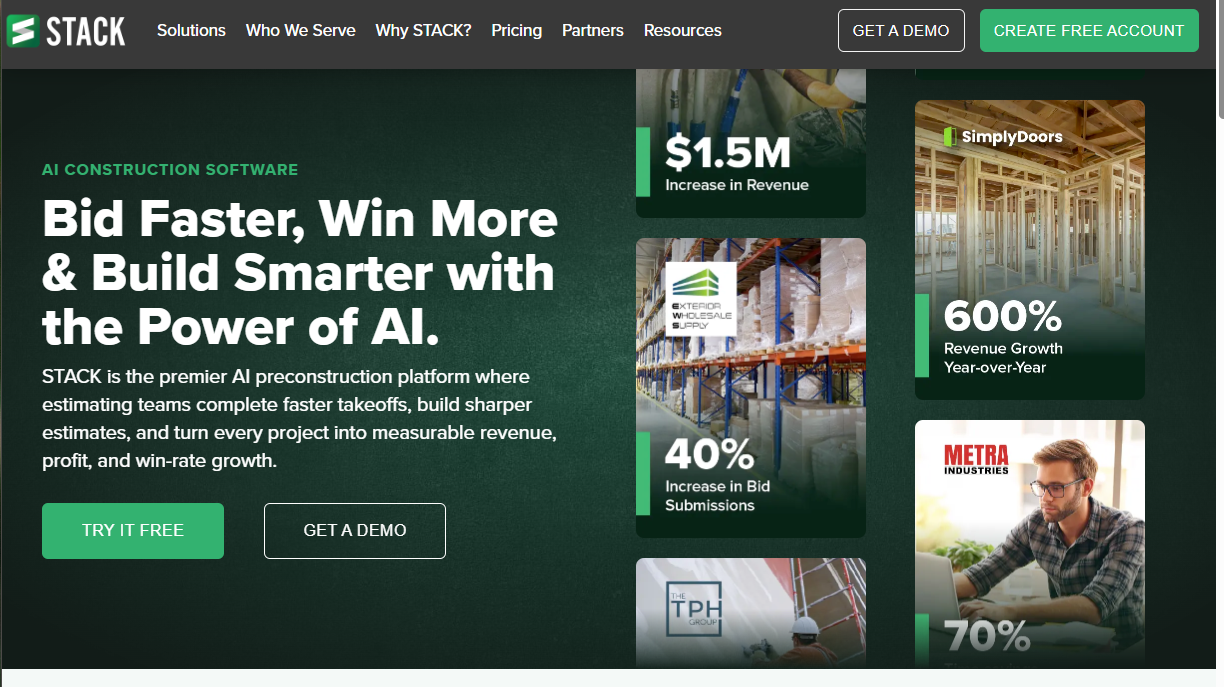
STACK is a cloud-based construction platform covering AI-assisted plan evaluation, digital takeoffs, estimating, and field collaboration. Teams access the same plan set from any browser, which matters when estimators, project managers, and trade leads are working across offices or job sites. The platform spans the full preconstruction workflow, from plan upload through bid delivery.
Best for: Commercial subcontractors and specialty trade contractors that estimate from drawings and need multiple team members accessing, measuring, and pricing the same plan set.
Key features
- AI-assisted plan and specification evaluation
- Linear, area, count, and volume takeoffs with AI auto-counting
- Worksheet-style estimating with items, assemblies, and pricing analysis
- Cloud collaboration and shared plan access
- Field workflow tools in the Build and Operate tier
Why choose STACK: It's the right fit when plan volume and bid coordination are the primary bottleneck. A team moving from manual blueprint measurement to browser-based estimating will find the takeoff-to-estimate workflow more direct here than in tools built primarily around residential templates.
STACK pricing: The Build and Operate plan starts at $49 per user per month. The Takeoff and Estimate plan runs $299 per user per month and includes a free version. Combining both into the Full STACK Platform is priced at $348 per user per month. A two-week free trial is available for Build and Operate.
G2 rating: 4.5/5
2. ProEst
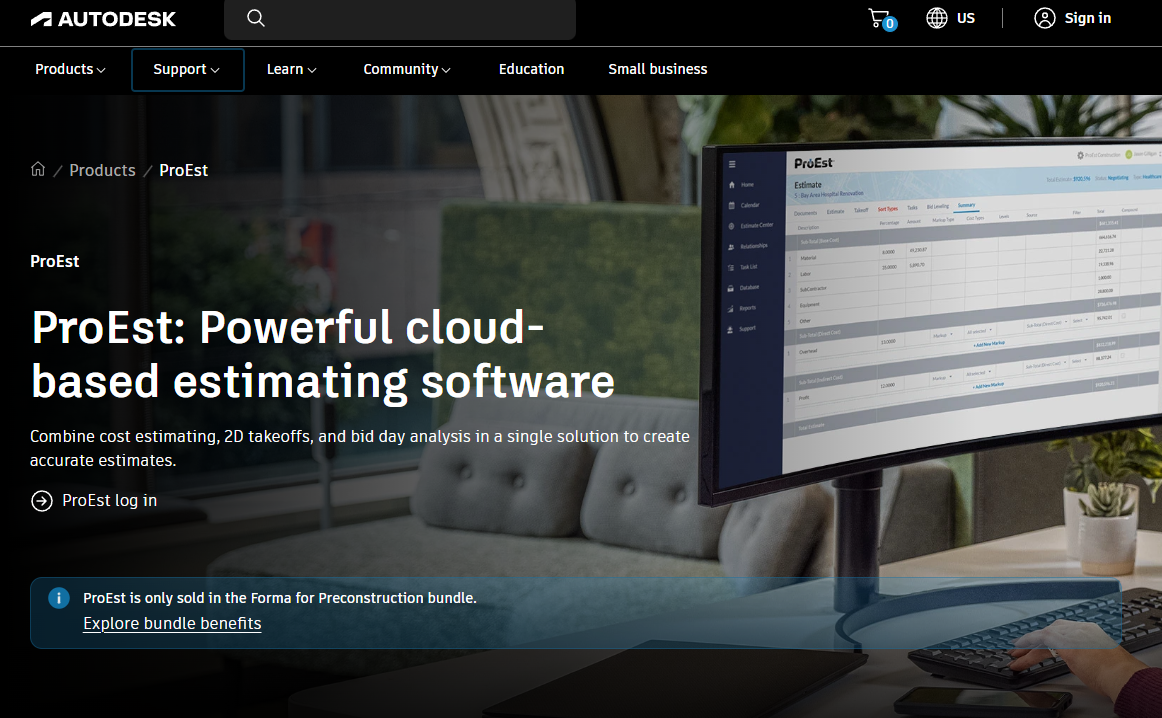
ProEst is a cloud-based construction estimating platform built for detailed cost estimating, bid management, and preconstruction workflow management. It combines cost databases, digital takeoffs, and bid-day analysis tools in a single system, making it a common choice for general contractors and commercial preconstruction teams. Integration support connects ProEst data into downstream construction operations systems.
Best for: General contractors and commercial preconstruction teams that need structured cost estimates, multi-user bid management, and reporting across complex projects.
Key features
- Detailed cost estimate breakdowns with cost codes
- Assemblies and cost databases
- Bid-day analysis and subcontractor bid comparison
- Reporting and estimate analytics
- Construction software integrations
Why choose ProEst: Commercial estimating at scale requires more than a pricing template. ProEst is built around the discipline of a structured preconstruction process: Consistent cost codes, estimate governance, and bid management workflows that work across a team. It's a better fit for firms that need estimating to function as a system rather than a per-estimator practice.
ProEst pricing: ProEst uses a quote-based model. Reach out to their team directly for current package pricing and trial options. G2 reviewer reports give useful context on ranges for teams evaluating budget fit before a sales conversation.
G2 rating: 4.3/5
3. Sage Estimating
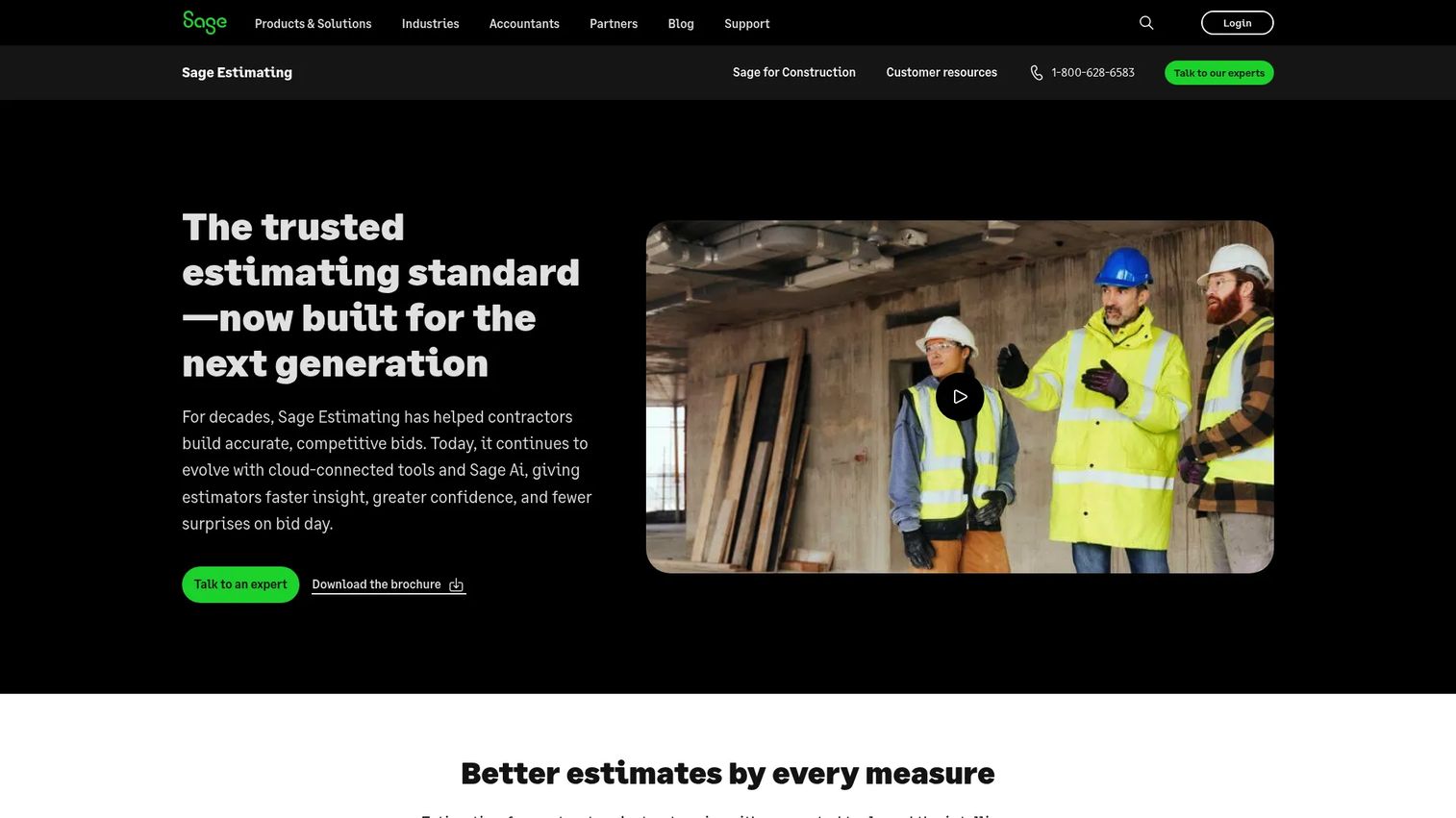
Sage Estimating is a construction estimating tool designed to connect tightly with Sage's construction accounting and operations products. It supports trade-specific cost databases, BidMatrix bid leveling, subcontractor bid comparison, and cloud collaboration across estimating teams. For contractors already running Sage 300 Construction and Real Estate, Sage Intacct Construction, or Sage 100 Contractor, estimating data moves directly into financial workflows without manual re-entry.
Best for: Established contractors that need detailed estimates connected to accounting cost codes and broader Sage construction operations, particularly general contractors and specialty contractors with multi-person estimating teams.
Key features
- Trade-specific cost databases and customizable estimates
- BidMatrix bid leveling and subcontractor bid analysis
- Cloud collaboration and centralized estimating data
- eTakeoff Dimension integration for digital takeoff
- Integration with Sage Intacct Construction, Sage 300 CRE, and Sage 100 Contractor
Why choose Sage Estimating: System fit drives the decision here. If finance, operations, and estimating already share Sage infrastructure, this tool adds the missing estimating layer without creating a separate data environment. For contractors outside the Sage ecosystem, the integration case is weaker.
Sage Estimating pricing: Sage directs prospective customers to contact an expert or authorized reseller for pricing. Reach out through their product page to get current package details and deployment options.
G2 rating: 4.1/5
4. Procore

Procore is a construction management platform that covers preconstruction, project execution, and financial controls across the full project lifecycle. Estimating and bid management sit alongside budget tracking, cost commitments, RFIs, submittals, quality, and safety in one connected system. For teams where data handoff between preconstruction and project delivery is the primary friction point, Procore addresses the problem at the platform level rather than through point integrations.
Best for: Growing general contractors and specialty firms that want estimating, project management, and financial controls operating from shared project data rather than separate systems.
Key features
- Estimating and bid management workflows
- Real-time budget and cost commitment tracking
- Project document management including RFIs, submittals, and drawings
- Quality, safety, and field collaboration tools
- Analytics and reporting across project portfolio
Why choose Procore: Procore is a platform decision, not just an estimating purchase. The value compound when estimating data flows into budgets, purchase orders, and job-cost reporting without re-entry. Before committing, confirm that the estimating and takeoff modules cover your specific trade or project type, since Procore's strongest fit is general contractors rather than specialty civil or heavy equipment work.
Procore pricing: Procore uses custom pricing that varies by products selected and annual construction volume. Annual contracts include unlimited users. Contact their team for a current quote.
G2 rating: 4.6/5
5. Buildxact
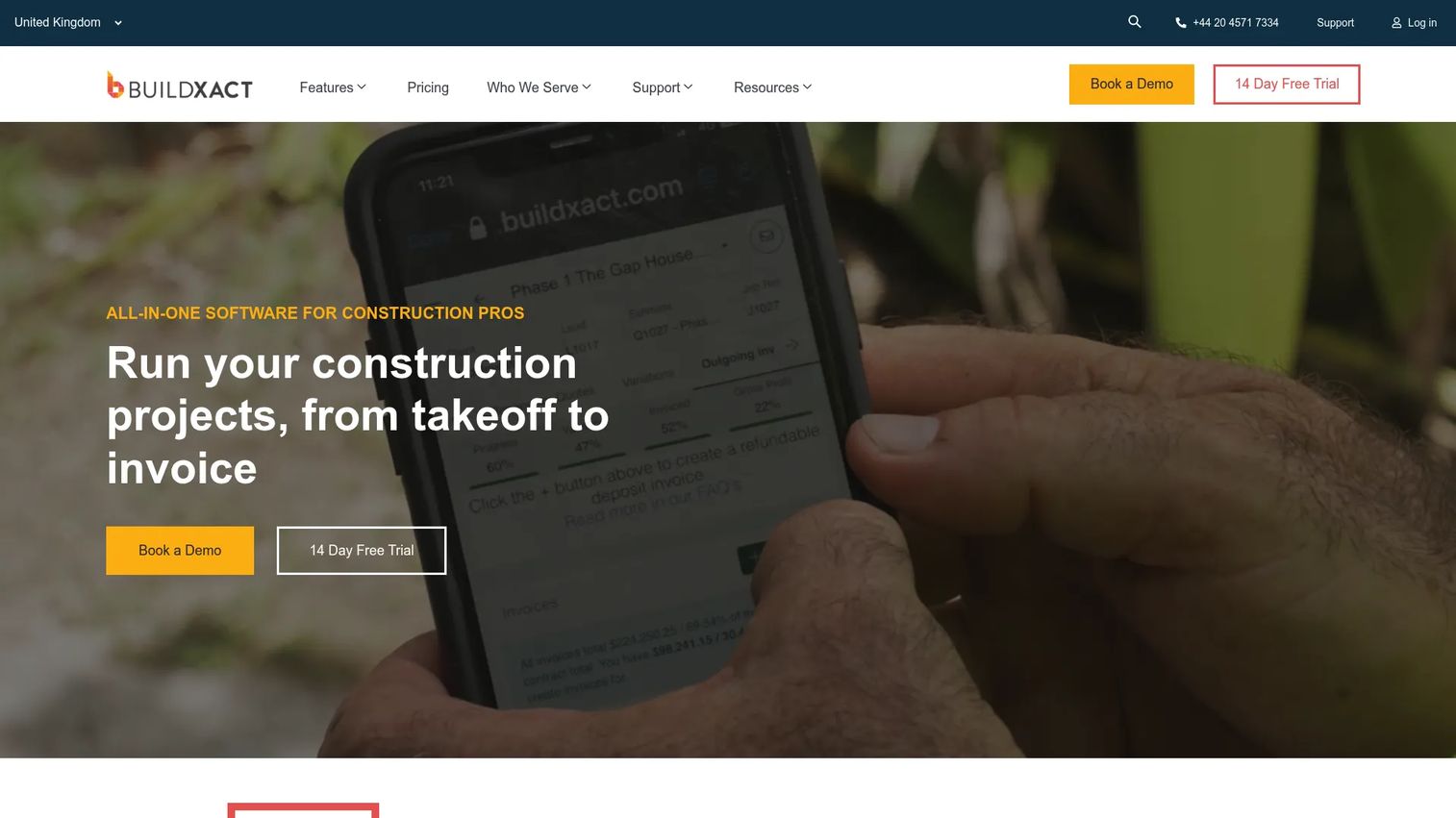
Buildxact is residential construction estimating and project management software built for home builders, remodelers, and small to mid-sized contractors. It combines digital takeoffs, quoting, client selections, job scheduling, and cost tracking in a single platform. The Blu AI assistant can help with estimation tasks, and the system includes a client portal so customers can approve quotes or track project progress without requiring phone calls.
Best for: Residential builders and remodelers who need their estimating workflow connected to the project work that follows, including scheduling, purchase orders, and client communication.
Key features
- Digital takeoffs and residential project estimating
- Quoting with digital signatures
- Lead management and client portal
- Job scheduling and cost tracking
- Dealer integration and accounting integrations (including Xero and QuickBooks)
Why choose Buildxact: For residential teams where the same person quotes work, manages the job, and communicates with clients, Buildxact reduces the number of systems in play. A business owner can delegate estimate production while retaining standardized templates and pricing logic, which matters when you're trying to get your estimating capacity off your plate and into the hands of a trained employee.
Buildxact pricing: Plans start at $199 per month (or $169 per month billed annually). The Pro plan runs $399 per month ($339 annually), and the Master plan is $599 per month ($509 annually). All plans include unlimited users. A 14-day free trial is available.
G2 rating: 4.3/5
6. Clear Estimates
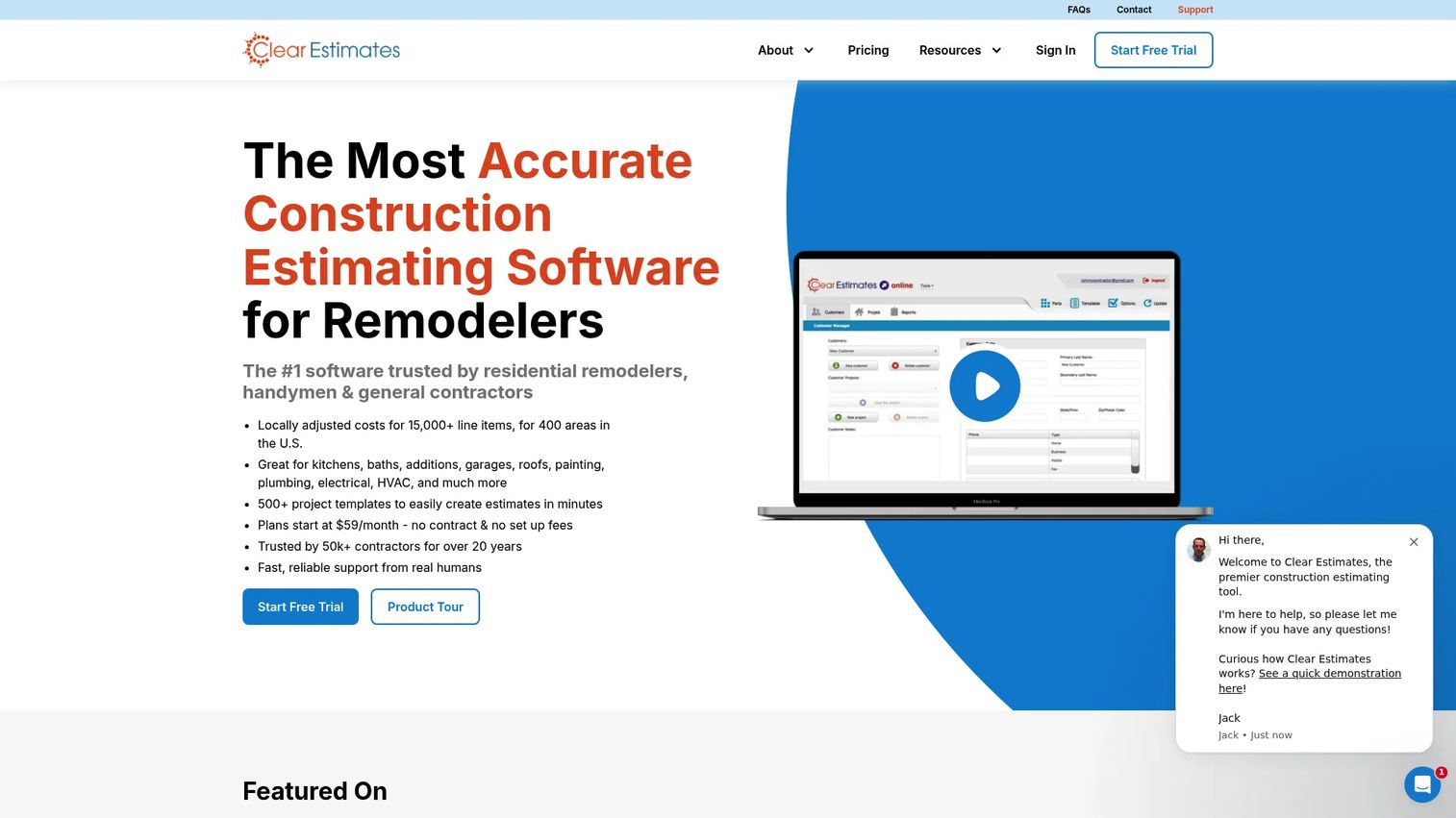
Clear Estimates is residential construction estimating software for remodelers, handymen, and smaller contractors. It builds estimates from localized labor and material cost data, gives users 500-plus project templates covering kitchens, bathrooms, decks, roofing, and similar scopes, and exports branded PDF proposals directly to clients. The Pro plan adds AI-powered estimating, plan uploads, Buildertrend integration, and ATTOM property data.
Best for: Owner-operators and small remodeling businesses that need fast, professional estimates and proposals without the complexity of a commercial preconstruction platform.
Key features
- AI-powered estimating (Pro tier)
- Localized material and labor pricing
- 500-plus project templates
- Branded PDF proposals with markup and profit tools
- QuickBooks export and Buildertrend integration (Pro)
Why choose Clear Estimates: Speed and simplicity are the main reasons. If you're pricing similar jobs repeatedly, kitchens, bathrooms, exterior work, the template library and localized cost data let you build a professional estimate in minutes. For contractors moving into larger commercial work with formal bid management requirements, a more structured platform will serve better.
Clear Estimates pricing: Plans start at $59 per month billed annually (or $79 per month billed monthly). The Pro plan is $99 per month annually ($119 monthly). A 30-day free trial is available on all plans.
G2 rating: 4.0/5
7. HCSS HeavyBid
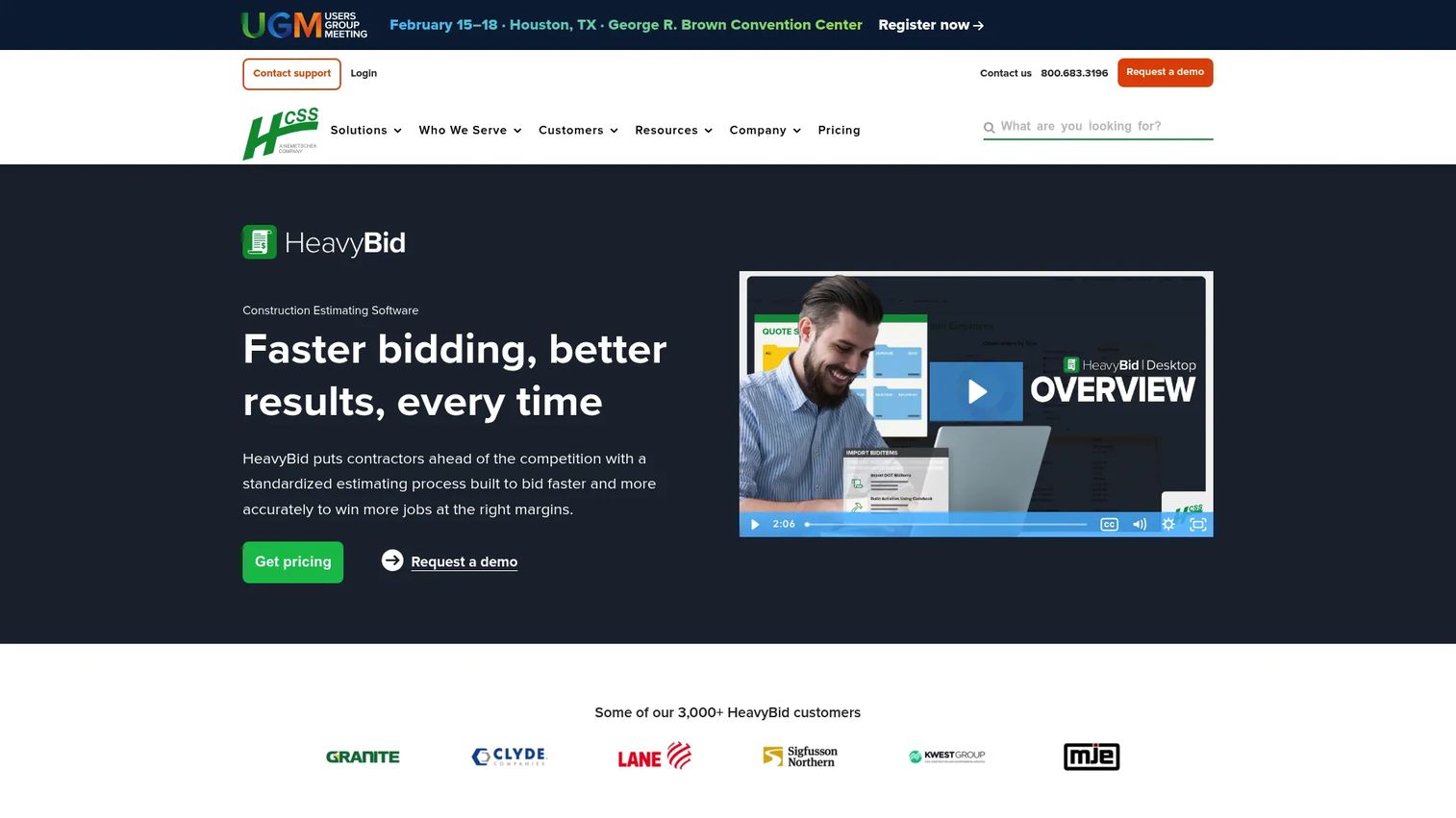
HCSS HeavyBid is construction estimating and bidding software purpose-built for heavy civil contractors. Infrastructure, earthwork, utilities, paving, and similar civil projects carry cost structures that general-purpose estimating tools handle poorly: Crew-based costing, equipment utilization, production-rate-driven labor, and bid-day management across dozens of pay items. HeavyBid is organized around these realities rather than around residential templates or commercial cost codes.
Best for: Heavy civil contractors, infrastructure specialists, and earthwork and paving companies needing estimating built around crew costs, production rates, and civil bid structures.
Key features
- Bid management and project pipeline tracking
- Estimate setup with pay-item libraries, work breakdown structures, and custom activities
- Vendor and subcontractor quote management
- Markup, historical-data calculations, and productivity-based estimating
- Proposal creation and project handoff to accounting and project management tools
Why choose HCSS HeavyBid: The fit is narrow by design. If your revenue comes from civil and infrastructure work, HeavyBid's cost model matches how you actually bid. A general-purpose estimating platform will require you to force civil economics into a residential or commercial cost structure, which adds errors and slows down bid preparation. Capterra reports a rating of 4.6/5 based on user reviews.
HCSS HeavyBid pricing: HCSS uses a sales-assisted model. Contact their team for current package details, seat structure, and available trial terms.
G2 rating: Insufficient reviews for a rated score on G2 at time of writing.
Considerations when choosing construction estimating software
Match the tool to your estimating motion
A remodeler pricing repeat kitchen projects needs different capabilities than a commercial subcontractor measuring plan sets. Define your primary revenue motion before comparing features. The wrong tool for your project type creates more re-entry and workarounds than it saves.
Check who owns cost data updates
Ask which person on your team will maintain labor rates, material prices, assemblies, and markup rules. A cost database improves margin only if someone reviews it on a regular schedule. If ownership is unclear before implementation, it will be unclear after.
Evaluate the handoff after the bid is won
The estimate should carry forward into budgets, purchase orders, and job-cost reporting. Check whether the system supports that continuity or whether your team will re-enter data manually after award. That re-entry is where estimated margin and actual margin start to diverge. If proposal software is a separate system, confirm the integration before committing.
Test with a real project, not a sample
Rebuild one recent estimate using your own plans, cost codes, and markup rules inside each tool you're evaluating. Measure how long it takes and where data has to be re-entered. A polished demo doesn't reveal where the friction lives.
Price for adoption, not just the first seat
Annual commitments, estimator seat counts, plan upload limits, training, and integration modules all affect total cost. The relevant question is whether the platform saves more in bid time and margin protection than it adds in software and process overhead.
Conclusion
Each of the seven tools here fits a different estimating motion. STACK works for cloud-based takeoff and bid coordination across trade or commercial teams. ProEst suits commercial preconstruction with structured cost management. Sage Estimating fits contractors already running Sage construction systems who need the estimating layer connected. Procore makes sense when estimating is one part of a broader platform decision covering project delivery and financials. Buildxact serves residential builders and remodelers who want estimating, scheduling, and client communication in one system. Clear Estimates covers small contractors and remodelers who need fast, professional proposals at a low monthly cost. HCSS HeavyBid is for heavy civil contractors where crew and production-rate estimating is the whole job.
The next step is narrow: Shortlist two tools that match your project type and rebuild a recent estimate in each one. The right system should reduce estimate turnaround time, enforce your margin rules, and create a clean handoff after the job is won. If you're evaluating adjacent tools for the rest of your software stack, our guides on bid management software and civil engineering software cover related categories in the same format.
Start your journey with Guideflow today!
FAQs
Small contractors should prioritize reusable templates, current localized cost data, client-ready proposals, and low training overhead. Clear Estimates and Buildxact are the strongest fits in that order, with Clear Estimates handling simple repeat-scope remodeling and Buildxact covering residential new construction with more project management depth.
STACK's Takeoff and Estimate plan includes a free version with core takeoff functionality. Most other tools offer free trials ranging from 14 to 30 days rather than permanent free tiers. Check whether plan uploads, proposal exports, cost databases, or multi-user collaboration require a paid plan, since those features are typically gated even when a free entry point exists.
For most estimating teams, yes. Version control, shared cost databases, digital takeoff integration, and proposal generation are all significantly harder to manage in a spreadsheet. A spreadsheet works for simple, low-volume jobs, but it becomes a liability when pricing logic or markup rules live with one person. The risk isn't the tool itself; it's the concentration of knowledge in a format only one estimator maintains.
The core features are digital takeoff, cost databases with localized pricing, assemblies and reusable templates, markup and margin controls, and proposal or bid document export. Collaboration, version history, reporting, and accounting integrations become more important as team size grows. The right feature set changes by work type: Residential, commercial, specialty trade, and heavy civil each have different cost structures and proposal requirements.
Takeoff software measures quantities from plan files: Linear footage, square footage, counts, volumes. Estimating software takes those quantities and applies labor costs, material pricing, equipment charges, overhead, and markup to produce a bid or proposal. Some platforms combine both. Others require an integration between a dedicated takeoff tool and a separate estimating system.
Pricing varies by model. Clear Estimates starts at $59 per month on an annual plan. Buildxact starts at $169 per month billed annually. STACK's Build and Operate plan starts at $49 per user per month, with the full Takeoff and Estimate plan at $299 per user per month. ProEst, Sage Estimating, Procore, and HCSS HeavyBid all use quote-based pricing. When calculating total cost, include training time, integration setup, and the number of estimator seats your workflow requires.
Most tools generate customer-facing quotes and branded proposal documents. Clear Estimates, Buildxact, and STACK all include proposal output. Whether contract templates, e-signature, change orders, and payment workflows are built in varies by platform and plan tier. Verify which proposal and contract features require add-ons or separate systems before committing, particularly if client-facing documents are a major part of your sales process.
Commercial estimating requires plan-based takeoff, structured cost codes, assemblies, bid management, multi-user collaboration, and reporting that connects to accounting or project management systems. ProEst is built specifically for this workflow. STACK covers the takeoff and bidding side well. Procore adds commercial value when estimating needs to connect to the broader project delivery and financial control stack. The right choice depends on whether you need a standalone estimating tool or a platform that spans the full project lifecycle.