You wired up an SMS messaging API, sent a test text to your own phone, and it landed in two seconds. Shipped. Then the OTP codes started arriving late for customers in another region. Some never arrived at all. Support tickets piled up. The problem was never "can this send a text." The problem was routing, sender registration, and carrier filtering, none of which show up in a hello-world test.
That gap is where most SMS API buying goes wrong. Sending a message is trivial. Sending it reliably, at scale, across carriers, while staying compliant with 10DLC and consent rules, is the hard part. And that hard part is exactly what determines whether your verification flow works or your marketing campaign gets blocked.
The market backing this is not small. Grand View Research valued the messaging application API market at USD 46.75 billion in 2024, forecast to reach USD 130.87 billion by 2030 at an 18.9% CAGR. Coherent Market Insights pegged global A2P messaging traffic at 2.2 trillion messages in 2024, with 39% of consumers preferring SMS for business communication. Text remains the channel people actually read.
For presales and technical buyers, the stakes are practical. You need a text message API that survives a proof-of-concept, integrates cleanly with your stack, and holds up under enterprise scrutiny on uptime and compliance. If your team is also evaluating adjacent categories, our guides on AI customer service software and AI content creation tools cover neighboring tooling. For teams building product experiences, an interactive demo can validate a messaging flow without spinning up live infrastructure, and Guideflow makes those experiences fast to build.
What's inside
This guide compares seven SMS API software options for teams choosing a provider in 2026. It is built for presales, sales engineers, and technical buyers who need to validate whether a messaging platform can support notifications, verification flows, and region-specific routing before they commit.
We selected and ranked each option on the factors that actually decide outcomes: developer experience and docs, deliverability and routing control, compliance features like 10DLC and consent handling, global coverage, pricing transparency, and support quality. Every entry includes verified pricing where public, a G2 rating where available, and honest guidance on which team each provider fits best.
TL;DR
- Best overall for enterprise-scale messaging: Twilio, the deepest developer ecosystem and broadest product coverage.
- Best for compliance-heavy routing: Vonage, strong on fraud protection, verification, and controlled delivery.
- Best educational sms provider for teams still scoping: Vibes, guide-first content plus enterprise mobile engagement.
- Best for glossary-style clarity and omnichannel basics: CM.com, clean framing across messaging and payments.
- Best for global CPaaS breadth: Sinch, direct carrier reach and verification at scale.
- Best for omnichannel orchestration: MessageBird (Bird), SMS inside a wider communication stack.
- Best for API-first control: Telnyx, transparent per-message pricing and network-minded infrastructure.
What is SMS API software?
SMS API software is a service that lets applications send and receive text messages programmatically through an API, without manual dialing or a physical device. You make a request from your app, the provider routes it through carrier connectivity to the recipient's handset, and a delivery receipt confirms the outcome.
Under the hood, a send SMS API call travels through several layers. Your application fires a REST request. The provider selects a route through an aggregator or a direct carrier connection. The message reaches the destination network, gets delivered to the handset, and a delivery receipt flows back so you know whether it arrived. Two-way messaging APIs handle inbound replies, powering support conversations and confirmations.
Core concepts every buyer should understand:
- Carrier connectivity and routing: how the provider reaches destination networks, and whether it uses direct connections or aggregators.
- Delivery receipts: confirmation signals that let you track delivery, retries, and failures.
- Sender types: 10DLC numbers, short codes, and toll-free numbers, each with different throughput and registration rules.
- Opt-in and opt-out: consent capture and STOP handling, which are compliance requirements, not optional features.
- Message logs: searchable records for auditing, debugging, and reporting.
What teams actually send through these platforms:
- Notifications: password resets, shipping updates, appointment reminders.
- Verification: OTP codes, 2FA, and login checks.
- Promotions: offers, launches, and reactivation campaigns.
- Two-way messaging: support threads and interactive replies.
- Cross-channel extensions: WhatsApp, RCS, voice, and email from the same provider.
If you are also assembling a broader GTM or product stack, our roundups on affiliate marketing software and AB testing tools pair well with a messaging layer.
When to use an SMS API
Send transactional alerts
Password resets, appointment reminders, shipping updates, and account alerts all live or die on speed and reliability. A customer waiting on a delivery notification will not tolerate a message that lands ten minutes late. For these use cases, prioritize a provider with strong routing control, low latency, and delivery receipts you can act on. An SMS API for notifications should surface failures fast enough to trigger a fallback.
Run OTP and verification flows
An SMS API for OTP is one of the most common reasons teams buy in the first place. Account creation, login verification, 2FA, and risk-based authentication all depend on codes that arrive in seconds and cannot be trivially intercepted. Look for throughput that handles spikes, fraud controls that block SIM-swap and pumping abuse, and dedicated verification products that manage the code lifecycle for you.
Support marketing and customer engagement
Bulk SMS for offers, product announcements, and reactivation campaigns can drive real revenue. MessageFlow reports companies now allocate an average of 18.76% of their marketing budget to SMS, and adoption of SMS marketing software rose from 55% in 2022 to 80% in 2024. But an SMS API for marketing lives and dies on consent. Segmentation, opt-in tracking, and clean opt-out handling are what keep campaigns compliant and inboxes unblocked.
Comparison table
Here is how the seven SMS API software providers stack up on intent, differentiation, pricing, and rating. Pricing reflects publicly listed figures at the time of writing, and G2 ratings reflect current listings where available.
| # | Product | Intent | Key differentiation | Pricing | G2 rating |
|---|---|---|---|---|---|
| 1 | Twilio | Enterprise messaging | Deepest developer ecosystem across SMS, Verify, Voice, and email | Pay-as-you-go, free trial | 4.1/5 |
| 2 | Vonage | Compliance-first routing | Fraud protection, verification, and identity insights | From $0.0001 per message | 4.3/5 |
| 3 | Vibes | Educational starter | SMS, MMS, RCS, and mobile wallet with AI analytics | From $20,000/year | 4.7/5 |
| 4 | CM.com | Omnichannel basics | Messaging, e-signature, and payments in one platform | Usage-based, quote for messaging | 4.7/5 |
| 5 | Sinch | Global CPaaS breadth | Direct carrier connections and verification at scale | Pay-as-you-go | 4.4/5 |
| 6 | MessageBird (Bird) | Omnichannel orchestration | SMS, voice, and WhatsApp in one platform | Free tier available | Not listed |
| 7 | Telnyx | Developer-first control | Transparent per-message pricing on owned network | From $0.004 per message part | 4.7/5 |
For teams evaluating other developer-focused categories alongside messaging, our guide to AI app builder software covers adjacent build tooling.
1. Twilio
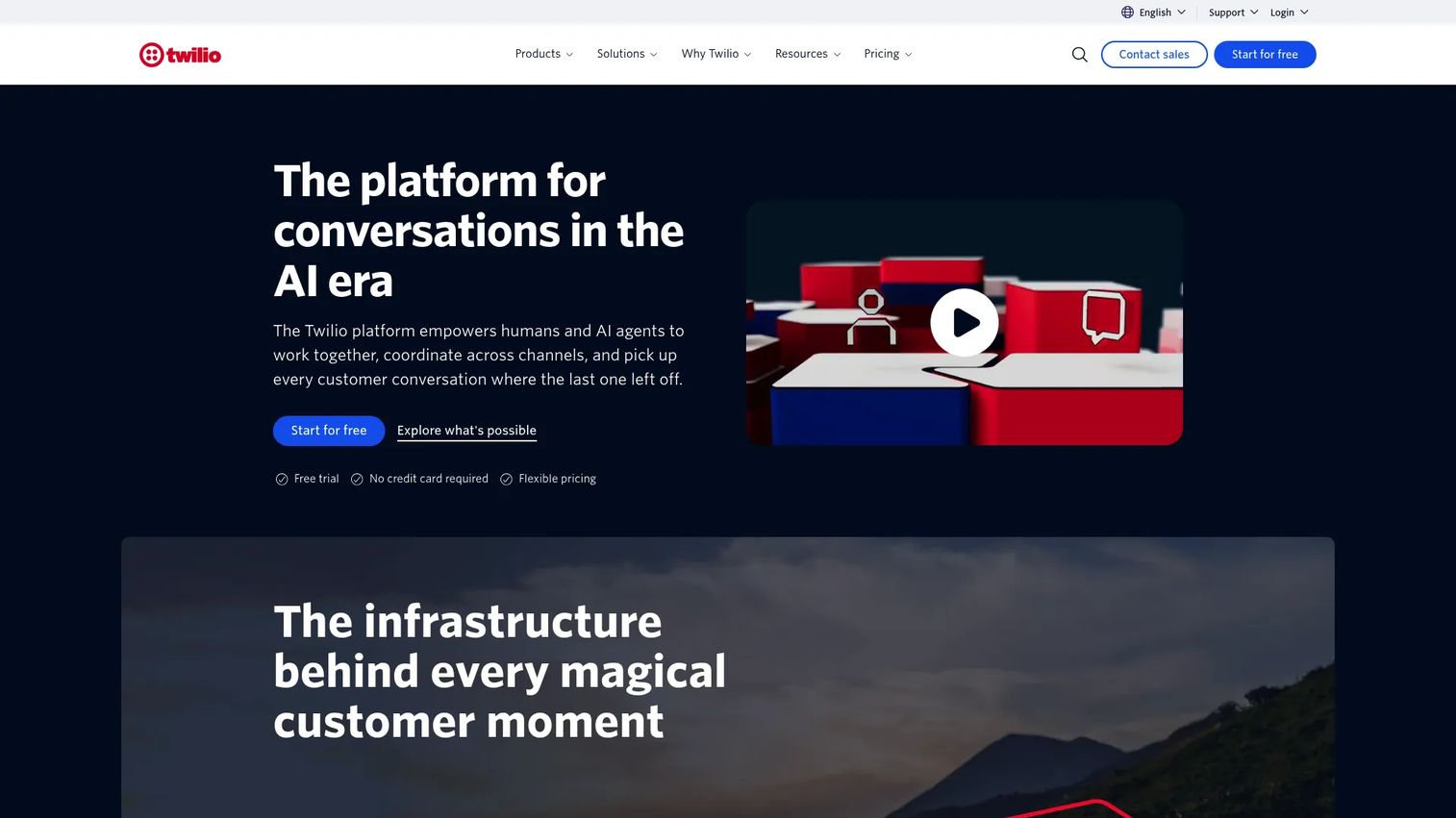
Twilio is the reference point for programmable communications. Its cloud platform covers SMS, WhatsApp, Voice, Email, Video, and Verify, backed by serverless tools and contact center capabilities. For most developers evaluating an SMS messaging API, Twilio is the baseline every other provider gets measured against, largely because its documentation, SDKs, and quick starts are so mature.
Best for: Developers and technical teams embedding programmable communications into apps and workflows across multiple channels.
Key strengths
- Broad product coverage: SMS, Verify for OTP, Conversations for two-way messaging, plus voice and email under one account.
- Developer ecosystem: REST API, SDKs across major languages, and documentation that gets teams from signup to first message quickly.
- Verification depth: the Verify product manages OTP delivery, retries, and fraud signals so you do not build the code lifecycle yourself.
Why choose Twilio: If your roadmap includes more than SMS, Twilio's breadth means one integration serves notifications, verification, marketing, and voice. That said, a team that only needs straightforward transactional SMS in one country may find a narrower, per-message provider simpler to reason about. Twilio rewards teams that will grow into its platform.
Twilio pricing: Twilio uses pay-as-you-go pricing with a free trial to start. Its main pricing page lists product-specific prices rather than one universal rate, including tiers such as $35 per monthly active user and $150 per named user for certain products. SMS pricing itself is usage-based by destination and sender type. Twilio holds a 4.1/5 rating on G2.
2. Vonage
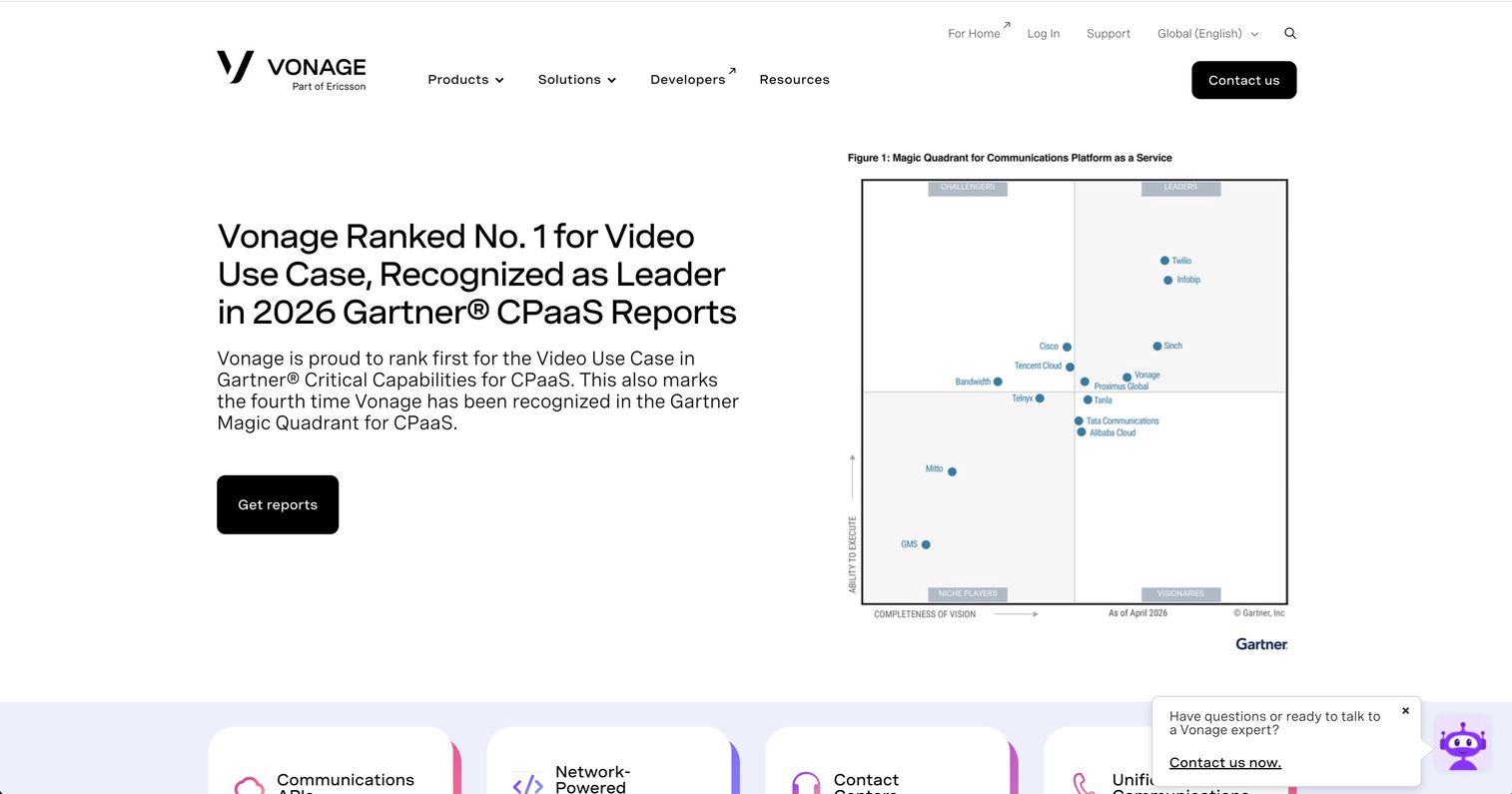
Vonage is a cloud communications platform spanning unified communications, contact center, and programmable APIs. For SMS specifically, its strength is controlled, compliant delivery: messaging, voice, video, and verification APIs paired with fraud protection and identity insights. Teams in regulated workflows tend to gravitate here for the governance and routing controls.
Best for: Businesses that need CPaaS, verification, and fraud-aware messaging at scale, especially in regulated industries.
Key strengths
- Fraud protection and identity: built-in insights help block fraudulent verification attempts before they cost you.
- Verification API: a dedicated flow for OTP and 2FA with delivery optimization across regions.
- Adaptive routing: intelligent path selection that improves deliverability across carriers and geographies.
Why choose Vonage: If your compliance and security teams will scrutinize how messages route and how fraud gets handled, Vonage gives you controls to point to. A team that just wants the absolute cheapest per-message rate for domestic sends might look elsewhere, but for governed, verification-heavy messaging, Vonage is a strong fit.
Vonage pricing: Vonage publishes pay-per-use API pricing, with a Messages API platform fee starting at $0.0001 USD per message and an Email API from $50/month. Voice is usage-based, and some product lines route to contact sales. A free credit offering lets you test before committing. Vonage holds a 4.3/5 rating on G2.
3. Vibes
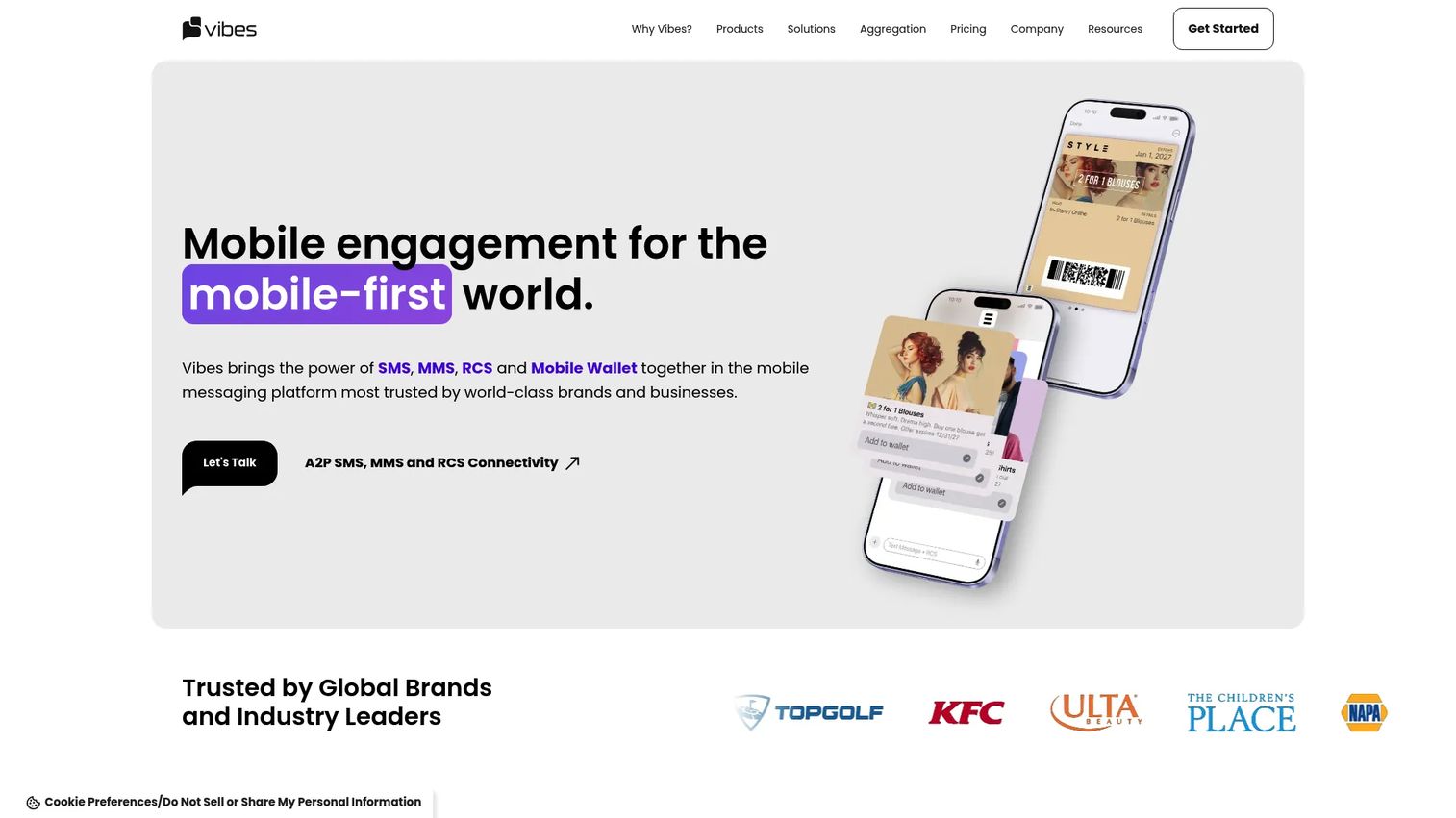
Vibes is a mobile-first engagement platform combining SMS, MMS, RCS, mobile wallet, and push in one system. What sets it apart for buyers still scoping requirements is its education-forward approach: clear guides on how SMS APIs work, carrier delivery, and provider selection criteria that help technical and nontechnical stakeholders align before a purchase.
Best for: Enterprise brands that need mobile messaging, wallet, and RCS engagement, plus teams still clarifying their requirements.
Key strengths
- Multi-format messaging: SMS, MMS, RCS, mobile wallet, and push managed from one platform.
- Direct carrier connections: Tier 1 aggregation for reliable delivery at enterprise volume.
- AI-powered analytics: marketing recommendations and performance insights layered on top of send data.
Why choose Vibes: If your team is bringing marketing, product, and IT stakeholders to the table and needs a shared understanding before committing, Vibes' guide-style content shortens that alignment. Its enterprise packaging also fits brands running loyalty and wallet programs alongside SMS. Smaller teams sending only transactional messages may find the enterprise entry point more than they need.
Vibes pricing: Vibes lists a Platform Professional tier starting at $20,000 per year, with Platform Enterprise and Tier 1 SMS/MMS aggregation available on a quote basis. A free trial applies to Mobile Wallet specifically rather than the full platform. Vibes holds a 4.7/5 rating on G2.
4. CM.com
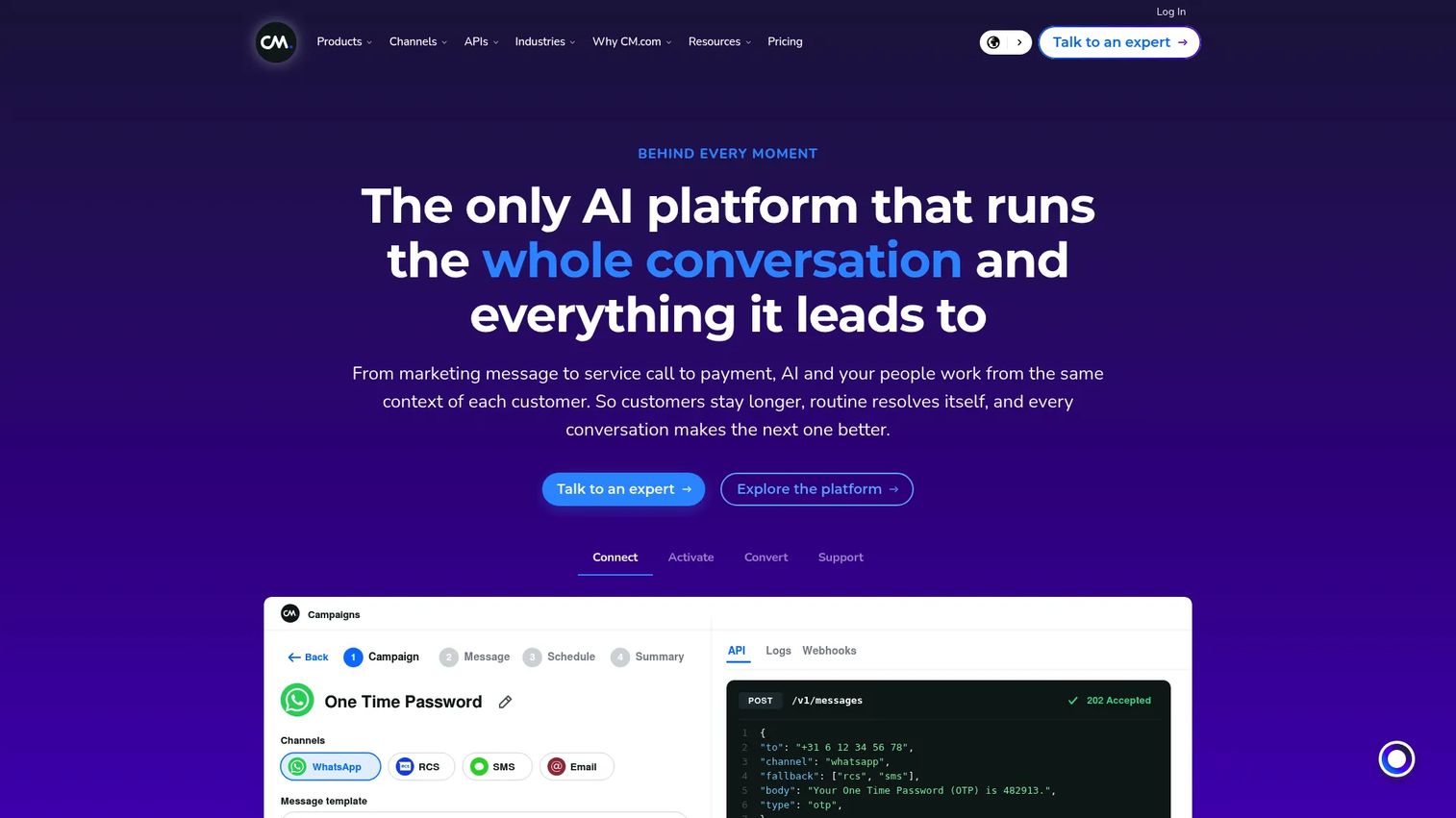
CM.com is a cloud software and payments platform covering messaging, conversational channels, e-signature, and payments. Its glossary-clean framing makes it approachable for teams that want messaging basics explained plainly alongside broader customer communication tooling. The value is operational straightforwardness across send and receive workflows.
Best for: Businesses that need omnichannel messaging, customer engagement, and payment tooling in one place.
Key strengths
- Omnichannel messaging: SMS plus conversational channels for two-way engagement across the customer journey.
- Automation and personalization: rules-based flows and personalized sends without heavy custom code.
- Adjacent tooling: e-signature and payments integrated with messaging for end-to-end customer workflows.
Why choose CM.com: If you want a provider that treats SMS as part of a wider communication and commerce stack, CM.com consolidates those pieces. Teams that only ever need a raw programmable messaging API might prefer a narrower developer-first option, but for operational breadth with clear onboarding, CM.com fits.
CM.com pricing: CM.com uses usage-based and quote-oriented pricing across products. Its clearest public numeric software price appears on the Sign product, from €2.00 per document, while messaging pricing is largely usage-based or quote-driven. CM.com holds a 4.7/5 rating on G2 based on its seller listing.
5. Sinch
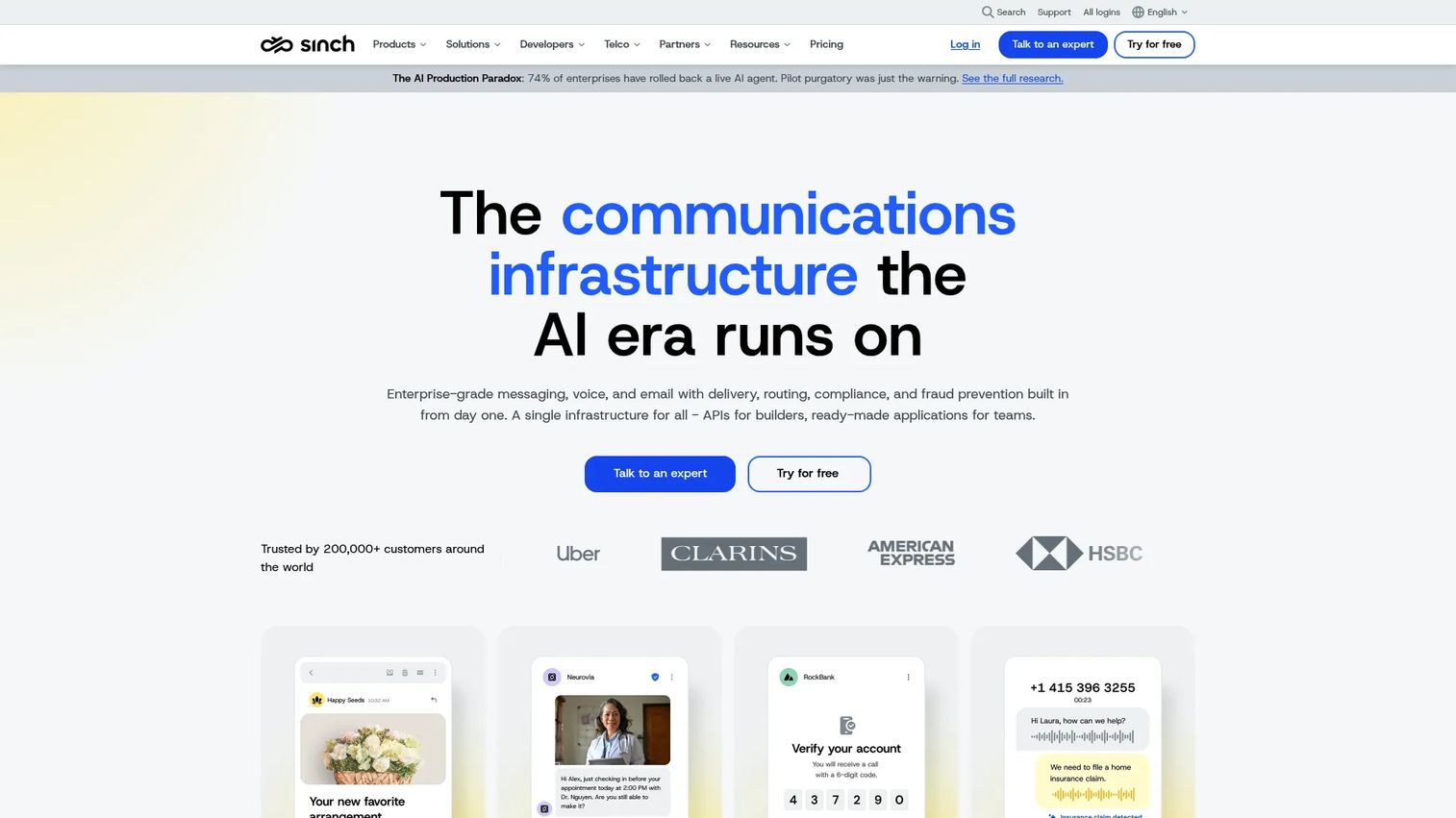
Sinch is a global cloud communications platform spanning messaging, voice, email, and verification. For teams evaluating broad CPaaS coverage, Sinch belongs on the shortlist for its direct carrier reach and enterprise scale. It is built to handle high-volume A2P messaging across many countries, which matters when your user base is global.
Best for: Enterprises that need global CPaaS coverage for SMS, voice, verification, and omnichannel communications.
Key strengths
- Global reach: direct carrier connections across a wide range of countries for reliable international delivery.
- Verification products: dedicated OTP and identity verification flows built for scale.
- Broad channel set: messaging, voice, email, and engagement products from one provider.
Why choose Sinch: If your messaging spans multiple regions and you need one provider that handles the routing complexity, Sinch's global footprint is a genuine advantage. Teams sending only domestically in a single market may not need that breadth, but for international scale, Sinch is purpose-built.
Sinch pricing: Sinch's core pricing page describes pay-as-you-go pricing for SMS, Voice API, and RCS. Its public USD Voice API pricing lists calling and numbers starting at $0.00, while full SMS and RCS rate tables are pay-as-you-go by destination. Sinch Engage is a separate product line with its own subscription tiers. Sinch holds a 4.4/5 rating on G2.
6. MessageBird (Bird)
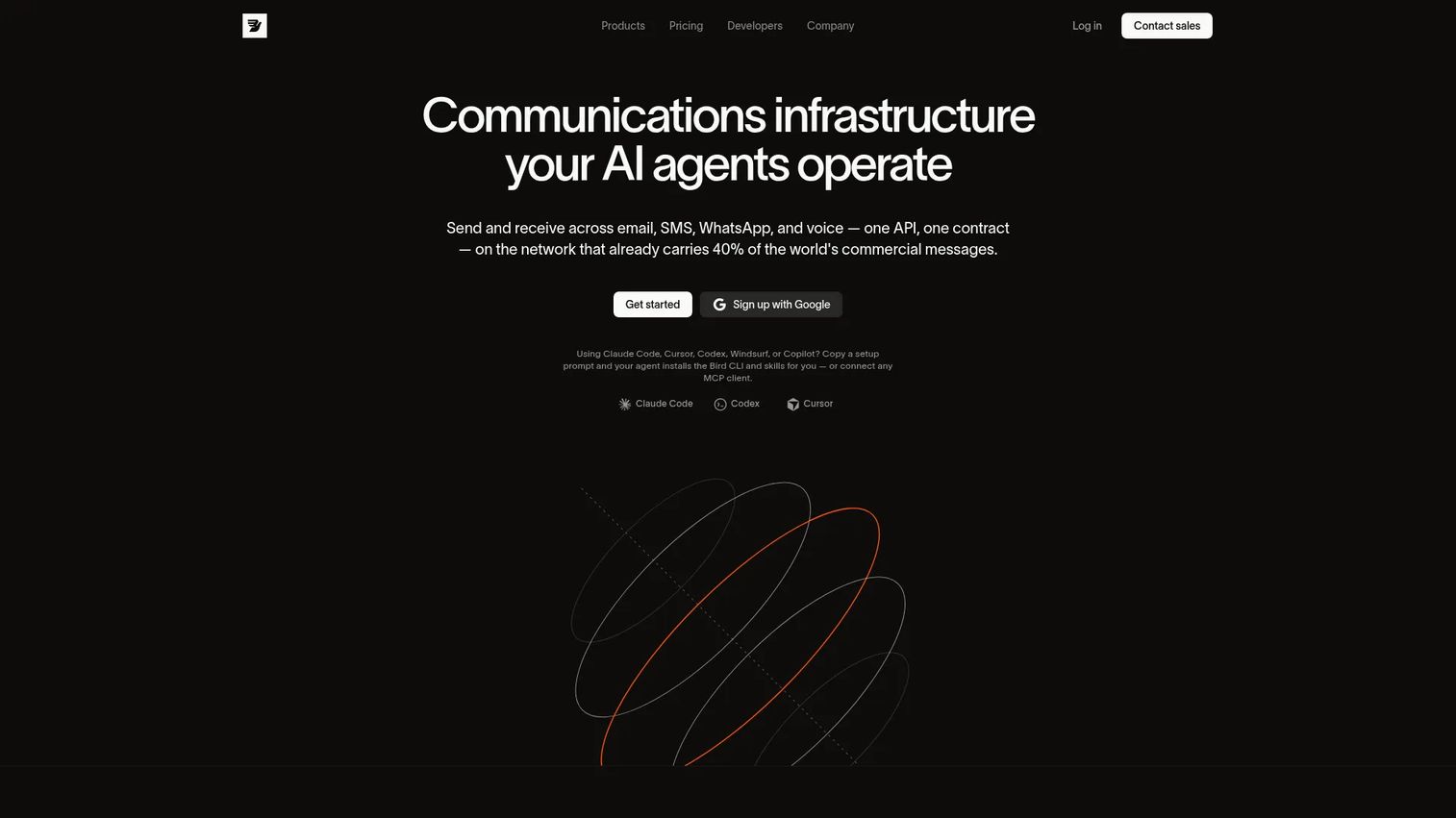
MessageBird, now operating under the Bird brand, is a cloud communications platform for messaging, voice, email, and related APIs. Its positioning centers on omnichannel orchestration: SMS as one channel inside a broader communication stack that includes WhatsApp and voice. This suits teams that want to manage cross-channel engagement from a single system.
Best for: Businesses that want programmable communications across SMS, voice, and messaging apps in one orchestrated workflow.
Key strengths
- Omnichannel orchestration: SMS, voice, and WhatsApp managed together rather than as separate integrations.
- API-first workflows: programmable messaging designed to slot into existing product and support stacks.
- Flexible entry point: a free tier lets teams start testing before scaling volume.
Why choose MessageBird: If your plan is multi-channel from the start, Bird lets SMS coexist with WhatsApp and voice under one roof, reducing integration sprawl. Teams that only need SMS today and nothing else may find a single-channel provider more direct, but for cross-channel roadmaps, Bird's orchestration is the draw.
MessageBird pricing: MessageBird now routes its pricing to Bird. The publicly visible pricing is email-focused, starting free with 1,000 emails per month, then Startup from $15/month and Growth from $80/month, with Enterprise custom. SMS and voice pricing is referenced but not fully exposed on the public page, so confirm current per-message rates during evaluation. No current average G2 rating was clearly listed at the time of writing.
7. Telnyx
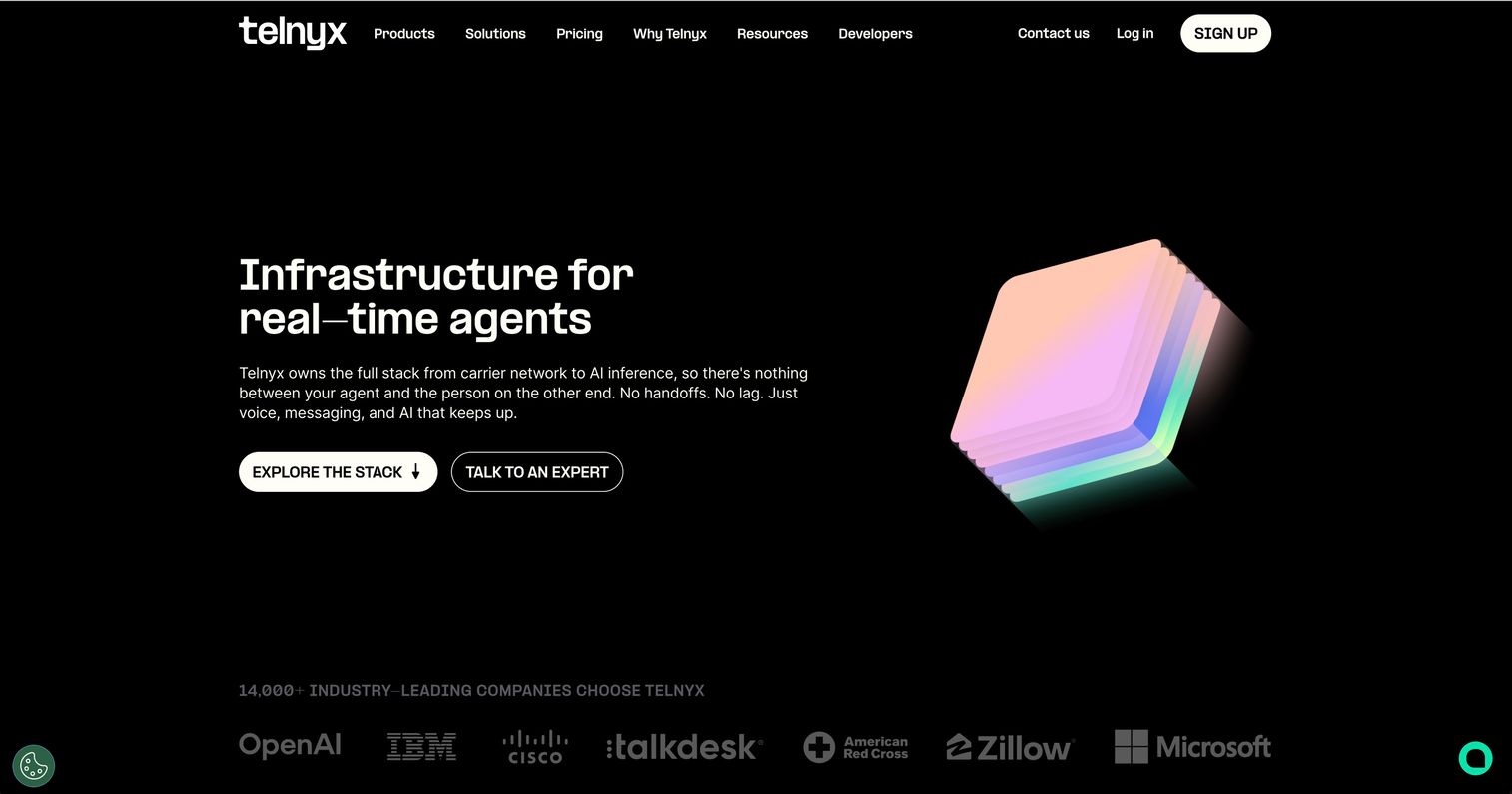
Telnyx is a cloud communications platform for voice, messaging, numbers, IoT, and related APIs, built on its own network. It appeals to teams that want direct control and infrastructure transparency. Because Telnyx owns much of its delivery path, it can offer clear per-message pricing and network-minded reliability that infrastructure-focused buyers value.
Best for: Teams building programmable voice, messaging, and connectivity workflows at scale who want control over routing and cost.
Key strengths
- Transparent messaging pricing: pay-as-you-go from $0.004 per message part plus carrier fee, published openly.
- Owned network: direct connectivity that supports reliable delivery and predictable routing.
- Full infrastructure stack: messaging, Elastic SIP Trunking, Voice API, global numbers, and IoT SIM connectivity.
Why choose Telnyx: If infrastructure transparency matters to you, seeing exactly how routing and pricing work, Telnyx is the developer-first pick. Its per-message rates are easy to model, and the owned-network approach appeals to teams that treat messaging as infrastructure. Teams that prefer a fully managed, hands-off experience with heavy hand-holding may weigh that against the control Telnyx offers.
Telnyx pricing: Telnyx publishes product-specific pay-as-you-go pricing. Messaging starts at $0.004 per message part plus carrier fee, with outbound SMS and MMS at $0.015 per message part plus carrier fee. Global local numbers start from $1 per month, and Elastic SIP Trunking begins at $0.005 per minute outbound. Telnyx holds a 4.7/5 rating on G2.
Considerations before you buy
A shortlist is not a decision. Before you commit, run each finalist against the criteria that separate a clean production launch from a support-ticket spiral.
Deliverability and routing
Ask how the provider reaches destination carriers. Direct connections generally beat long aggregator chains for reliability. Test delivery to real numbers across your actual target regions, not just your own phone, and watch the delivery receipts, not just the send confirmations.
Compliance and sender registration
10DLC, short codes, and toll-free numbers each carry different registration steps, throughput limits, and compliance obligations. Confirm the provider walks you through registration and handles opt-in and opt-out enforcement. Skipping this is the fastest way to get filtered by carriers.
Developer experience and docs
For an SMS API software for developers, documentation quality is a real cost. Time how long it takes a developer to send a first message, run a two-way flow, and read a delivery receipt. Good SDKs, sample code, and clear error messages save weeks.
Global coverage, uptime, and support
If you message internationally, verify coverage and routing in every region that matters, not just headline country counts. Check published uptime, escalation paths, and whether support is available at the tier you will actually buy. An enterprise SLA on a plan you cannot afford is not support.
Pricing transparency
Model your real volume. Per-message rates, carrier fees, number rental, and verification surcharges add up differently at scale. A provider with transparent published pricing makes forecasting far easier than one that quotes everything.
Conclusion
There is no single best SMS API software, only the best fit for how you send. Twilio wins on ecosystem breadth and developer maturity. Vonage leads on compliance and fraud-aware verification. Vibes and CM.com suit teams that want education and omnichannel breadth. Sinch covers global scale. MessageBird orchestrates multiple channels. Telnyx gives API-first teams transparent pricing and infrastructure control.
Narrow your choice by the factors that will actually bite in production: compliance and sender registration, routing control, developer experience, and pricing transparency. Then stop reading and start testing. Shortlist two providers, and run one transactional notification flow plus one OTP verification flow through each. Measure delivery time, delivery-receipt accuracy, and how quickly a developer gets to a working integration. That test tells you more than any comparison table.
And if part of your evaluation involves showing a messaging workflow to stakeholders without exposing live infrastructure, an interactive demo or a sandbox lets buyers explore the flow on their own terms, while a demo center keeps every walkthrough organized in one branded hub. Start your journey with Guideflow today!
FAQs
SMS API software is a service that lets your applications send and receive text messages through an API instead of a phone. Your app makes a request, the provider routes it through carrier networks to the recipient, and a delivery receipt reports the result. It powers notifications, verification, and marketing without manual sending.
Your application sends a REST request to the provider's send SMS API. The provider selects a route through a direct carrier connection or an aggregator, delivers the message to the destination network, and the handset receives it. A delivery receipt then flows back so you can track success, retries, and failures programmatically.
Prioritize deliverability and routing control, uptime, documentation quality, and sender-type support for 10DLC, short codes, and toll-free numbers. Then check compliance handling, global coverage in your target regions, and support at the tier you will actually purchase. Test delivery to real numbers before committing.
Yes. An SMS API for OTP is one of the most common use cases, powering account creation, login verification, and risk-based authentication. Before launch, verify throughput during spikes, fraud controls against pumping and SIM-swap abuse, and whether the provider offers a dedicated verification API that manages the code lifecycle for you.
10DLC (10-digit long codes) are standard local numbers registered for A2P messaging, good for moderate volume. Short codes are 5 to 6 digit numbers built for high-throughput campaigns but cost more and take longer to provision. Toll-free numbers support verified business messaging at scale. Each has different registration, throughput, and compliance requirements.
Yes, and it works well, but consent is non-negotiable. Marketing sends require documented opt-in, clean opt-out (STOP) handling, and segmentation to stay compliant and avoid carrier filtering. A text messaging service used for promotions should track consent per recipient and honor opt-outs automatically to protect both compliance and deliverability.
Compare them side by side on delivery reliability, published pricing, documentation and SDK quality, integration fit with your stack, and routing flexibility. The most reliable method is a hands-on test: send one transactional flow and one verification flow through each finalist, then measure delivery time, delivery-receipt accuracy, and time to a working integration.