Your last audit took six weeks. Three engineers pulled evidence out of cloud consoles by hand. Someone exported a CSV of IAM policies, someone else screenshotted encryption settings, and by the time the auditor asked a follow-up, half the configurations had already drifted. You passed. But you have no idea if you would pass today.
That gap between "we passed in Q1" and "we are compliant right now" is the core problem cloud compliance tools solve. Treating compliance as a quarterly event breaks the moment a developer spins up a new S3 bucket, a Kubernetes namespace loses a network policy, or an IAM role gets over-provisioned during a Friday deploy. Every one of those changes is a control that silently fell out of scope, and you will not know until the next audit or the next breach.
The market reflects the shift. The cloud compliance tools segment is projected to rise from about USD 3.56 billion in 2025 to USD 15 billion by 2035, growing at a 15.5% CAGR through 2035, according to WiseGuy Reports (2025). Audit and compliance management alone holds roughly 35% of cloud compliance application share in 2025, per Global Market Insights (2025). Buyers are moving budget toward continuous compliance because point-in-time checks no longer match how fast cloud estates change.
For presales and security teams, this matters twice. You need continuous cloud compliance monitoring for your own estate, and you need credible language to answer the security review questions your prospects fire at you. This guide covers both.
What's inside
This list covers cloud compliance tools built for teams that need continuous monitoring, automated evidence collection, framework mapping, and remediation across AWS, Azure, Google Cloud, Kubernetes, and OCI. We focused on platforms that reduce manual audit work rather than just flagging misconfigurations.
We selected and ordered tools by enterprise compliance fit using four criteria:
- Compliance coverage: breadth of frameworks and cloud platforms supported.
- Automation depth: evidence collection, remediation automation, and drift detection.
- Integrations: CRM, ITSM, Slack, Jira, and ServiceNow connectivity.
- Reporting and enterprise fit: audit reporting, executive summaries, and scale from mid-market to enterprise.
TL;DR
- Best overall for continuous multi-cloud coverage: Qualys TotalCloud.
- Best for agentless, broad cloud risk visibility: Orca Security.
- Best for compliance plus runtime context: SentinelOne Singularity Cloud Security.
- Best for GRC and crosswalk-heavy compliance operations: Hyperproof.
- Best for Microsoft-native environments: Microsoft Defender for Cloud.
- Best for cloud posture and attack-path prioritization: Wiz.
- Best for enterprise security and risk teams: Palo Alto Networks Cortex Cloud.
- Best for established cloud workload programs: Trend Micro Cloud One.
- Best for workflow-heavy enterprise compliance ops: ServiceNow Risk and Compliance.
What are cloud compliance tools?
Cloud compliance tools are software platforms that continuously monitor cloud infrastructure against regulatory and security frameworks, collect audit evidence automatically, and flag or remediate configurations that fall out of compliance. They replace manual, point-in-time audit prep with always-on assurance across cloud providers.
The category grew out of a simple mismatch. Traditional IT compliance assumed a static environment you could snapshot once a year. Cloud estates change hourly. Continuous compliance closes that gap by monitoring state constantly and generating evidence as changes happen, not weeks later when an auditor asks.
Most cloud compliance platforms cover a consistent set of functions:
- Cloud security posture management (CSPM): detects misconfigurations across accounts and services.
- Evidence collection: captures control status automatically for audit reporting.
- Compliance monitoring and reporting: maps findings to frameworks and produces executive summaries.
- Remediation automation: fixes or routes misconfigurations to the right owner.
- IaC scanning: catches compliance issues in Terraform and CloudFormation before deploy.
- Container scanning and Kubernetes compliance: extends checks to images and clusters.
- Identity and data coverage: flags over-privileged access and exposed sensitive data.
- Framework mapping: aligns controls to SOC 2, ISO 27001, PCI DSS, HIPAA, GDPR, FedRAMP, CSA CCM, NIST, and CIS.
One thing every platform assumes: the shared responsibility model. Cloud providers secure the infrastructure. You secure everything you configure on top of it, including access policies, encryption settings, and network rules. Nearly every compliance failure lives on the customer side of that line, which is exactly what these tools watch.
When to use cloud compliance tools
Replace spreadsheet-driven audit prep
Use a cloud compliance platform when your evidence lives scattered across cloud consoles, ticketing tools, and one-off exports. If audit prep means a team of engineers manually screenshotting configs for weeks, automated evidence collection pays for itself in the first cycle. The platform captures control status continuously, so the evidence is already assembled when the auditor arrives.
Monitor drift across multi-cloud estates
Use these tools when you run across AWS, Azure, Google Cloud, Kubernetes, or OCI and need always-on monitoring. Multi-cloud compliance is where spreadsheets collapse fastest, because every provider models identity, encryption, and networking differently. Drift detection catches the moment a resource falls out of a compliant state, instead of surfacing it at the next audit.
Support security reviews and procurement
Use them when buyers demand proof of SOC 2, ISO 27001, PCI DSS, HIPAA, GDPR, or FedRAMP alignment before they sign. For presales teams, a live compliance dashboard turns a stalled security review into a fast one. You answer questionnaires with current data instead of chasing engineering for screenshots mid-deal.
Comparison table
The table below is ordered by enterprise compliance fit, not alphabetically. Pricing for most cloud compliance software in this category is configuration-based and quoted by sales, so we note that where public pricing is not displayed. Ratings reflect current G2 listings where a verified rating was available.
| # | Product | Intent | Key use case | Pricing | G2 rating |
|---|---|---|---|---|---|
| 1 | Qualys TotalCloud | Continuous multi-cloud CNAPP | Posture, workload, and remediation across clouds | Configuration-based, 30-day trial | 4.4/5 |
| 2 | Orca Security | Agentless cloud risk visibility | Broad coverage without agents | Annual, by compute asset; free trial | 4.6/5 |
| 3 | SentinelOne Singularity Cloud Security | Compliance plus runtime context | CSPM with runtime and posture signal | Quoted by sales | Not listed |
| 4 | Hyperproof | GRC and crosswalk compliance ops | Evidence automation and framework mapping | Quoted by sales | 4.5/5 |
| 5 | Microsoft Defender for Cloud | Microsoft-native posture | Azure-heavy and hybrid estates | Free and paid tiers, 30-day trial | Not listed |
| 6 | Wiz | Posture and attack-path prioritization | Risk-ranked compliance findings | Quoted by sales | 4.7/5 |
| 7 | Palo Alto Networks Cortex Cloud | Enterprise cloud security | Unified posture, runtime, and CDR | Quoted by sales | Not listed |
| 8 | Trend Micro Cloud One | Mature cloud workload programs | Workload, container, and file security | Quoted by sales | Not listed |
| 9 | ServiceNow Risk and Compliance | Workflow-centric GRC | Issue routing and evidence orchestration | Quoted by sales | 4.4/5 |
1. Qualys TotalCloud
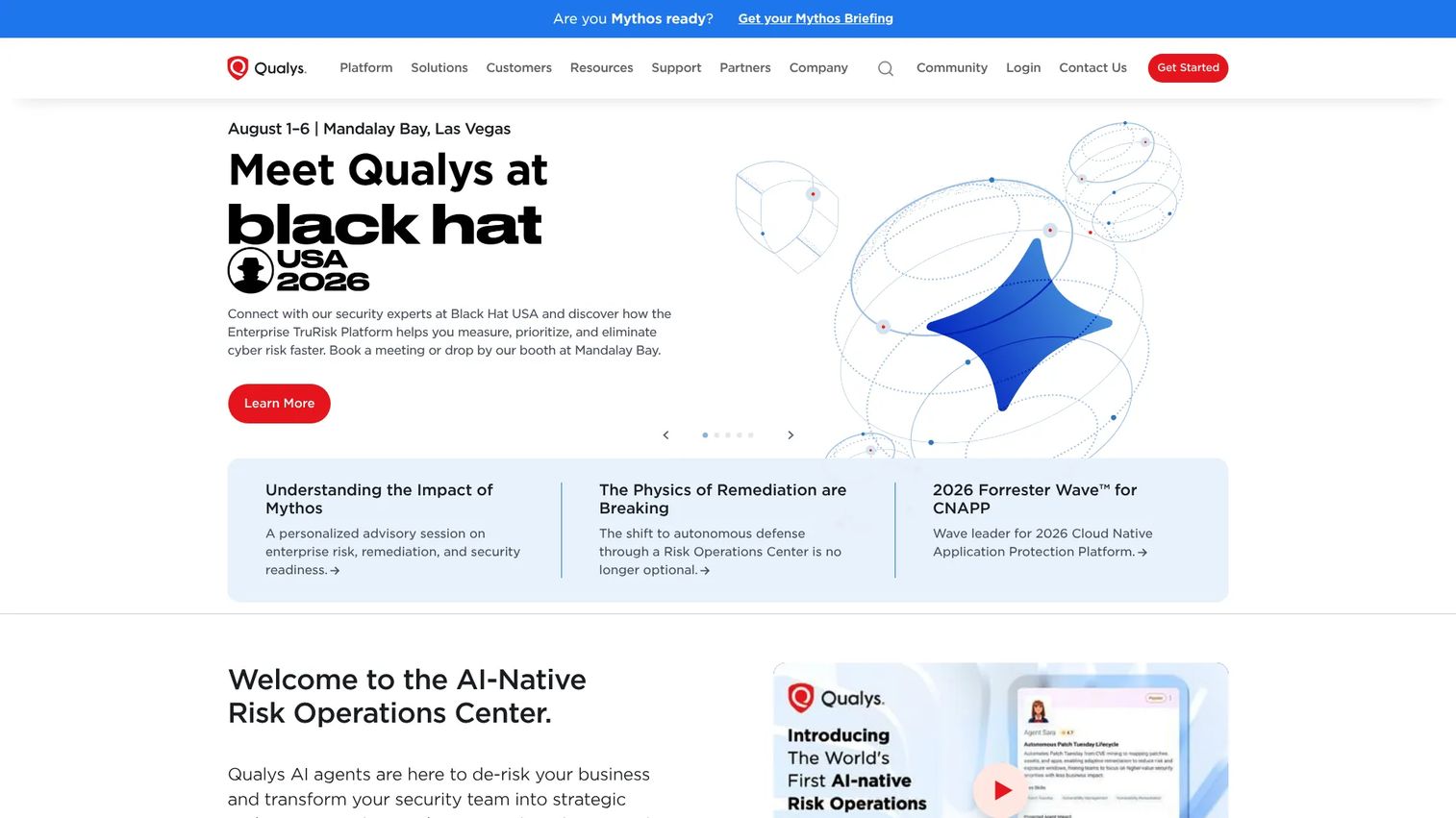
Qualys TotalCloud is Qualys's CNAPP for securing cloud infrastructure, workloads, containers, and related risks across major public clouds. It pairs continuous compliance monitoring with broader cloud risk management, so posture findings, vulnerabilities, and compliance gaps live in one view. For teams that want audit readiness without buying a separate risk tool, that consolidation is the draw.
Best for: enterprises needing a unified CNAPP for multi-cloud posture, workload, and remediation workflows.
Key strengths
- Unified cloud visibility: monitors posture and compliance across multiple cloud providers from one console.
- TruRisk prioritization: ranks findings by attack-path context so teams fix what matters first.
- QFlow remediation: automates fixes through workflow-driven remediation automation.
Why choose Qualys TotalCloud: it fits teams that already think about compliance as one slice of cloud risk. If you want misconfiguration detection, vulnerability data, and compliance evidence collection under a single platform rather than stitched together, TotalCloud earns its place. The attack-path prioritization also helps you defend remediation decisions during audit conversations.
Qualys TotalCloud pricing: Qualys does not display a public first-party price. Pricing depends on the cloud platform apps, IPs, web applications, and user licenses you select. The TotalCloud page promotes a 30-day no-cost trial, so you can validate fit before committing. Confirm exact scoping with Qualys sales during evaluation.
2. Orca Security
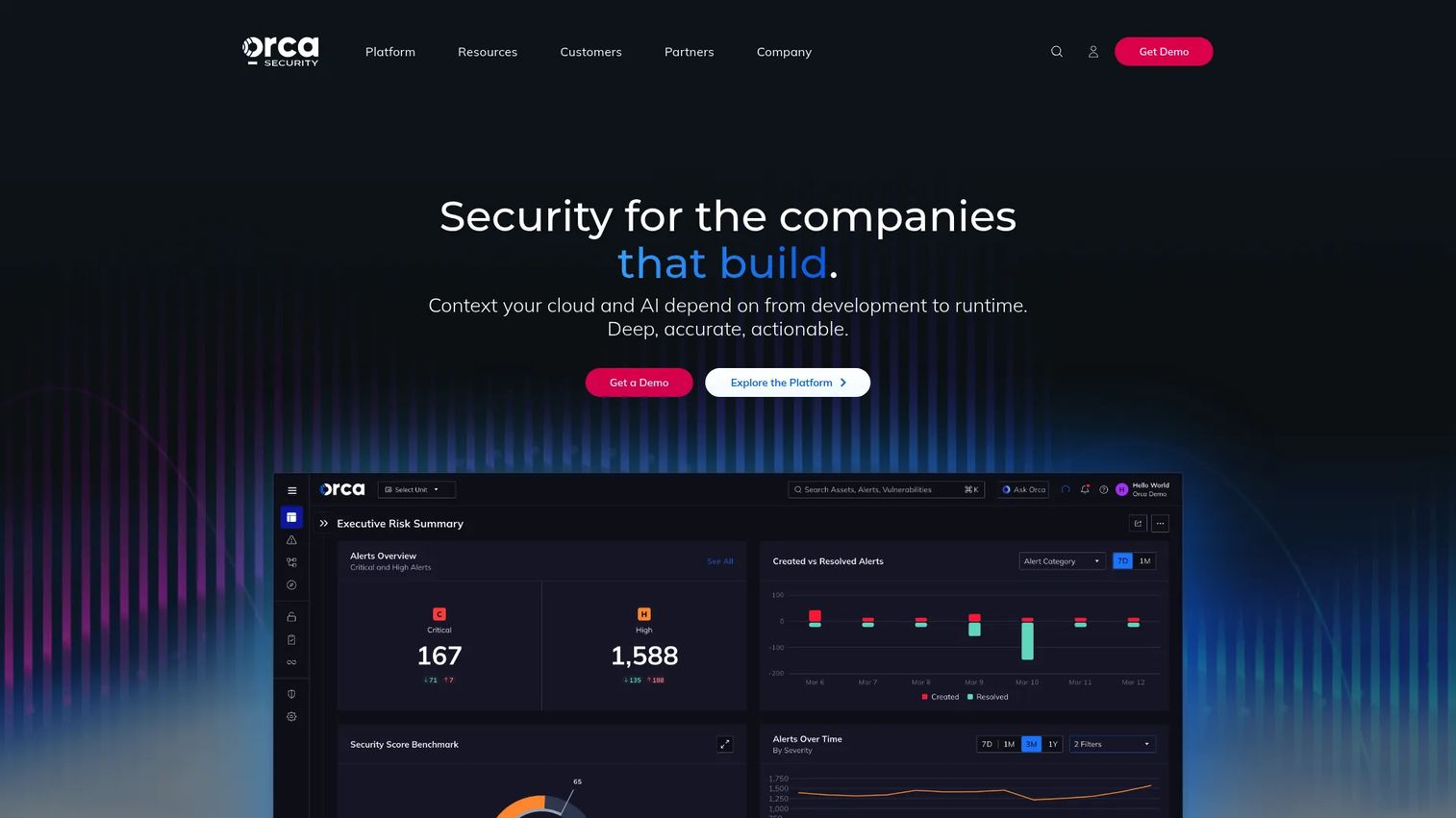
Orca Security is an agentless CNAPP for cloud security and compliance. Its SideScanning technology reads cloud workloads without deploying agents, which means broad coverage across your estate without touching every instance. For teams that want continuous compliance monitoring across a sprawling multi-cloud environment quickly, the agentless model is the reason to look.
Best for: enterprises needing agentless cloud security across multi-cloud environments.
Key strengths
- Agentless SideScanning: covers workloads, identities, and data without agent deployment.
- Unified CNAPP coverage: combines CSPM, CWPP, CIEM, DSPM, vulnerability management, API security, and compliance.
- Cloud-to-dev remediation: ties findings back to code with attack-path analysis.
Why choose Orca Security: it suits teams that want deep identity and data coverage plus compliance in one platform without the operational weight of managing agents across every workload. The unified model means posture, data security, and framework mapping share one context, which shortens the path from finding to fix.
Orca Security pricing: public first-party pricing is not displayed on Orca's site. G2 indicates annual subscription licensing by compute asset and notes a free trial, though exact tier prices are not published. Scope pricing with Orca directly, and use the trial to size your compute footprint before you commit to a term.
3. SentinelOne Singularity Cloud Security
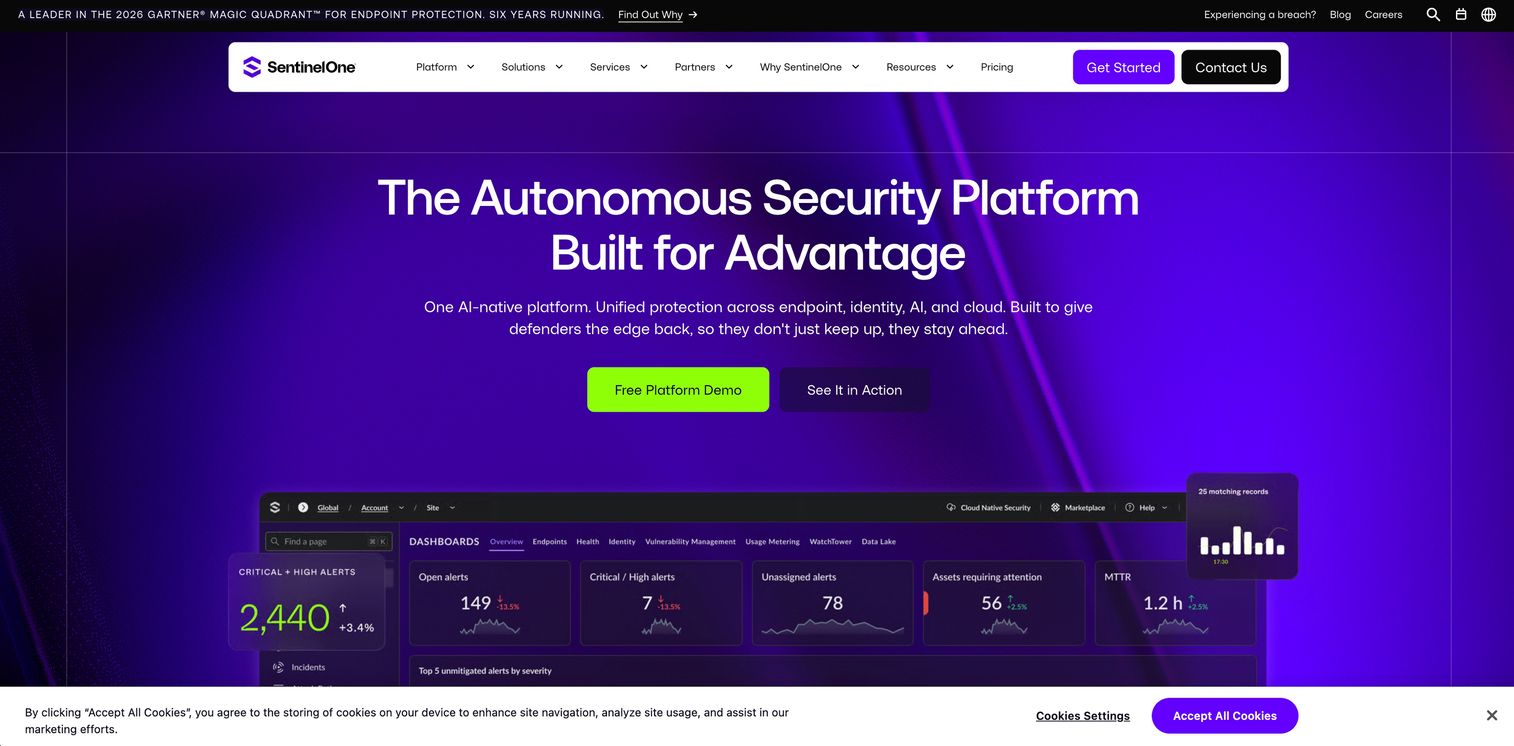
SentinelOne Singularity Cloud Security brings CSPM, CIEM, and cloud detection and response together, so compliance findings carry runtime and posture context. IaC scanning and Kubernetes security posture management (KSPM) extend checks left into the pipeline and out to clusters. For cloud security teams that want compliance evidence backed by what is actually happening at runtime, that context is the differentiator.
Best for: cloud security teams that want compliance mapping with live runtime and posture signal.
Key strengths
- Posture plus runtime: correlates CSPM findings with cloud detection and response data.
- Shift-left coverage: IaC scanning catches compliance issues before deploy.
- Kubernetes compliance: KSPM extends framework checks to container clusters.
Why choose SentinelOne Singularity Cloud Security: it fits teams where security operations and compliance sit close together. When an auditor asks whether a control is enforced and not just configured, runtime context gives you a stronger answer than a static posture snapshot alone. The vulnerability coverage rounds out a code-to-cloud compliance story.
SentinelOne Singularity Cloud Security pricing: pricing is quoted by sales rather than published as a public starting price. Scope it against your cloud accounts, container footprint, and the modules you need. Request a scoped quote and confirm which CSPM, CIEM, and CDR capabilities are included at your tier during evaluation.
4. Hyperproof
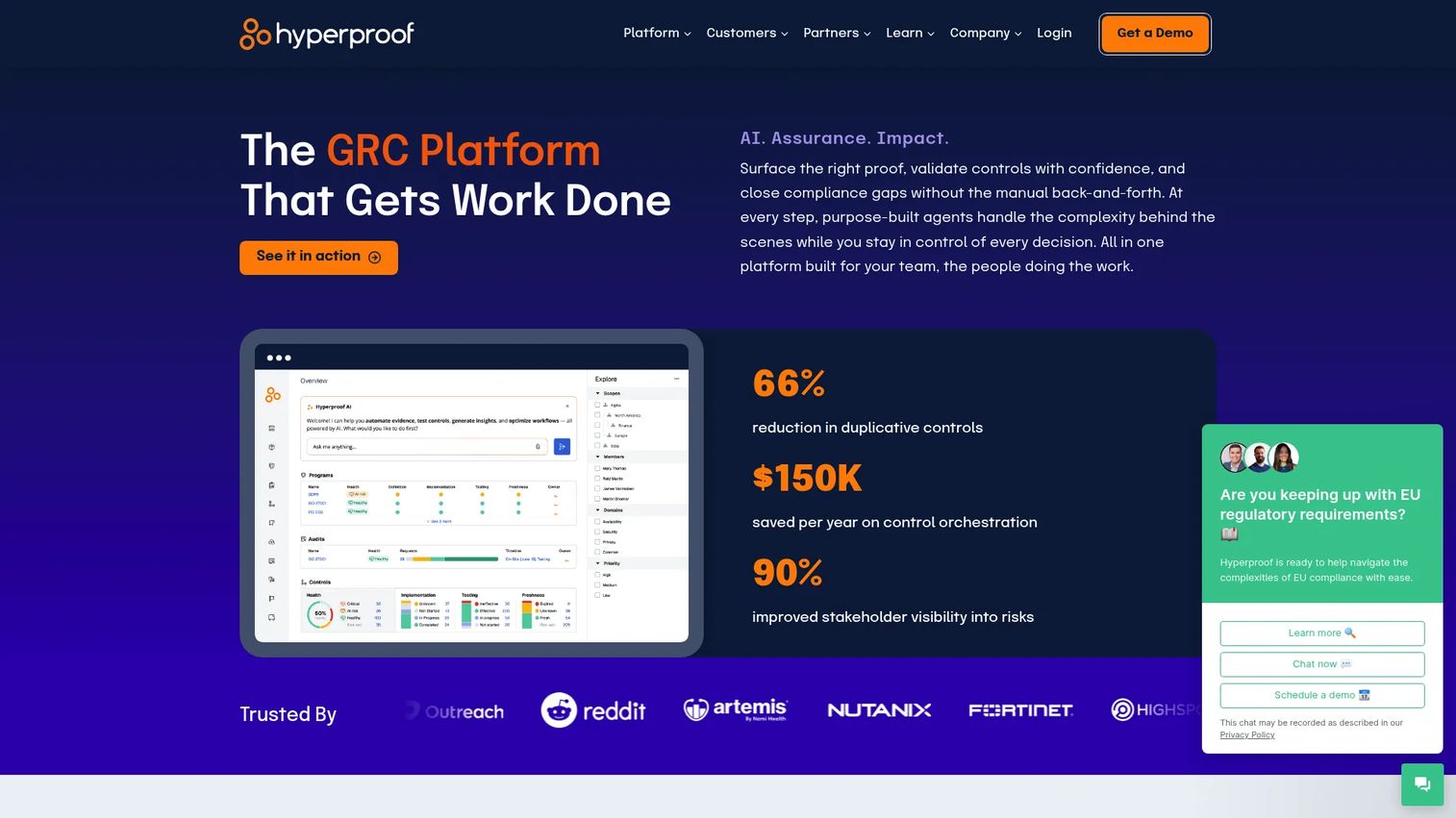
Hyperproof is an AI-powered GRC platform for compliance, risk, audit, and third-party risk management. Where CNAPP tools watch cloud configuration, Hyperproof runs the compliance operation itself: control libraries, framework crosswalks, evidence workflows, and audit management. For teams juggling multiple overlapping frameworks, the crosswalk and policy mapping are the reason it stands out.
Best for: security, compliance, and GRC teams managing audits and continuous compliance at scale.
Key strengths
- Centralized compliance workflows: brings compliance, risk, and security operations into one system.
- Automated evidence collection: 200+ Hypersyncs pull evidence from your stack automatically.
- Third-party risk management: questionnaires, assessments, monitoring, and a vendor catalog in one place.
Why choose Hyperproof: it fits teams that treat compliance as an operating model rather than a scanner output. If you manage SOC 2, ISO 27001, and PCI DSS at once, crosswalks let you satisfy overlapping controls without duplicating evidence work. It pairs well with a CNAPP that feeds cloud posture evidence into its control library.
Hyperproof pricing: no public first-party price was found on Hyperproof's site during this review. Pricing is arranged through sales. Ask how framework count, connected integrations, and user seats affect your quote, and confirm which Hypersyncs cover your specific cloud and SaaS stack.
5. Microsoft Defender for Cloud
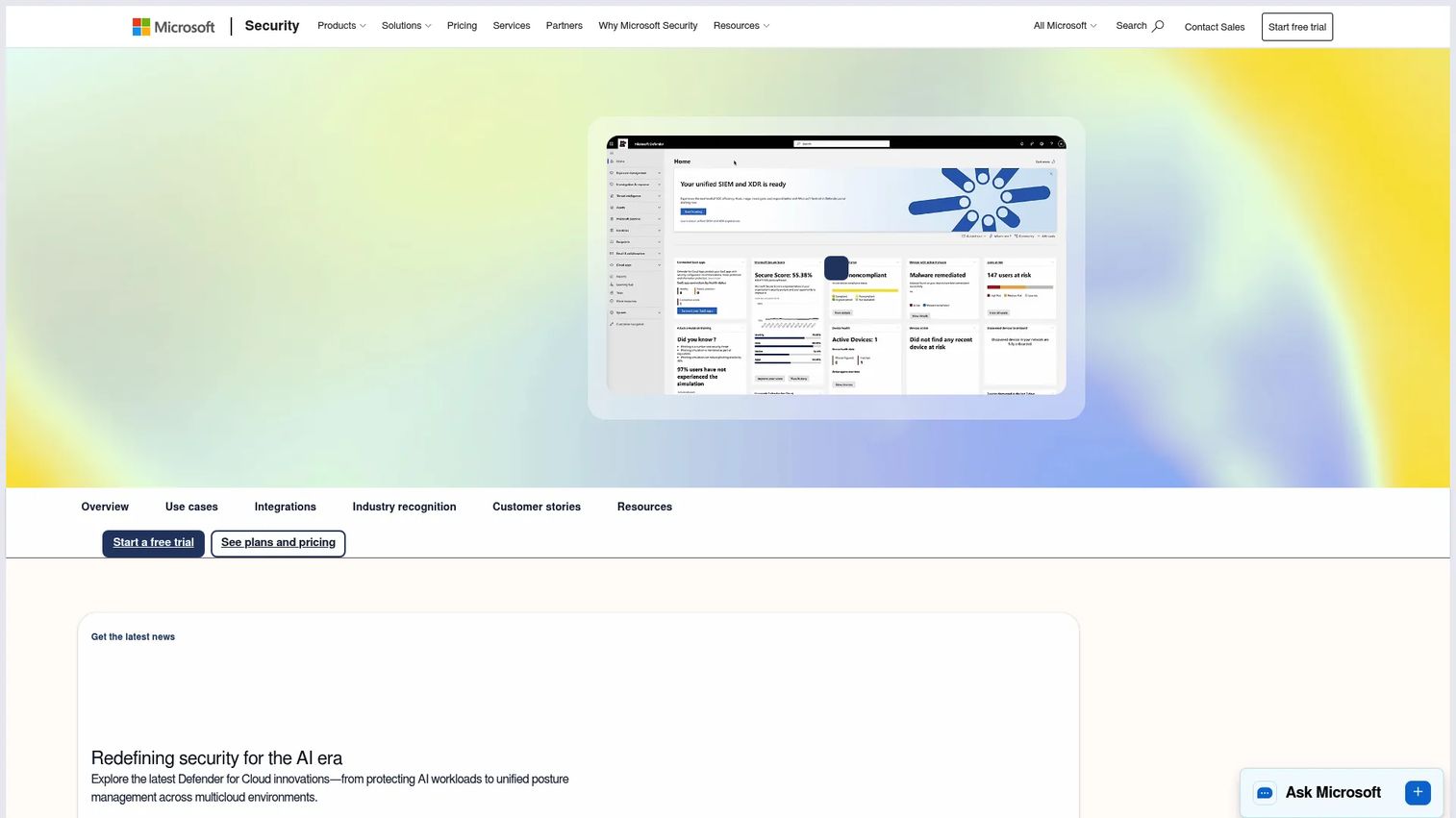
Microsoft Defender for Cloud is Microsoft's CNAPP for protecting applications and infrastructure across hybrid and multicloud environments. Its regulatory compliance dashboard maps posture findings to frameworks natively, and the Azure integration is tight enough that Azure-heavy teams get value fast. It also covers AWS and Google Cloud, so it is not Azure-only.
Best for: organizations needing Microsoft-native cloud security posture, workload, and DevOps protection across hybrid and multicloud estates.
Key strengths
- Cloud security posture management: continuous CSPM with a built-in regulatory compliance view.
- Workload protection: secures servers, containers, databases, and storage.
- DevOps security: extends checks into pipelines for shift-left compliance.
Why choose Microsoft Defender for Cloud: for teams already standardized on Azure and Microsoft governance, it removes a procurement conversation and a separate integration project. The regulatory compliance dashboard makes framework alignment visible without a bolt-on reporting layer, which speeds up both internal audits and customer security reviews.
Microsoft Defender for Cloud pricing: Microsoft offers both free and paid tiers, with a free 30-day trial and pay-as-you-go or Commit Units after the trial. The pricing page uses quote and contact-sales language for scoped estimates rather than a single public starting price. Start with the free tier to baseline posture, then size paid plans by resource type.
6. Wiz
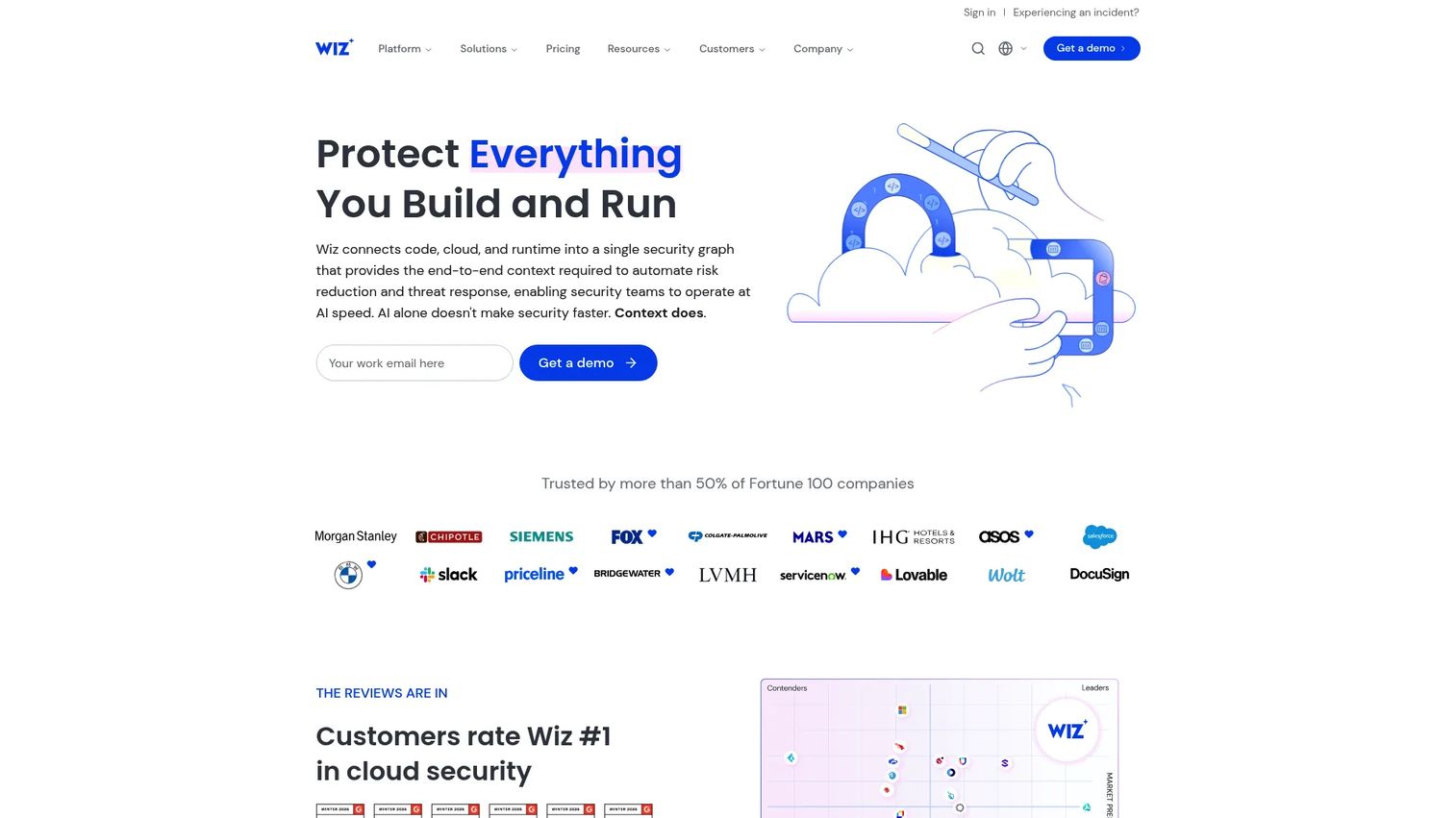
Wiz is a cloud and AI security platform for securing cloud workloads, code, and runtime. Its security graph connects findings into attack paths, so compliance teams can prioritize by real exposure instead of triaging a flat list of misconfigurations. For teams drowning in low-context alerts, that prioritization is why Wiz gets shortlisted.
Best for: teams needing a unified CNAPP for cloud and AI security with strong risk prioritization.
Key strengths
- Agentless visibility: covers cloud and AI resources without agent deployment.
- Security graph: contextualizes risk so remediation targets the highest-impact gaps.
- Runtime protection: Wiz Sensor adds runtime threat detection to posture data.
Why choose Wiz: compliance teams use it to turn a wall of findings into a ranked queue. When you can show an auditor or a customer that you fix the exposures that actually chain into an attack path first, your remediation story gets more credible. The graph also helps executive summaries land, because you can explain risk in terms of impact.
Wiz pricing: Wiz does not display public pricing. The pricing page requests contact details and routes to sales rather than showing a starting price. Scope your quote by cloud accounts and workloads, and confirm whether AI security and runtime modules are included at your tier before signing.
7. Palo Alto Networks Cortex Cloud
Palo Alto Networks Cortex Cloud unifies cloud posture, runtime, detection and response, and application security from Palo Alto Networks. For enterprise security teams that already run Palo Alto tooling, the unified handling of cloud compliance alongside broader SecOps means fewer consoles and one governance model across cloud risk.
Best for: enterprises wanting a unified Palo Alto Networks cloud security platform.
Key strengths
- Unified CNAPP and CDR: combines posture management with cloud detection and response.
- Posture and runtime security: covers configuration and live workload behavior.
- Attack surface and identity governance: manages cloud attack surface and permission risk.
Why choose Palo Alto Networks Cortex Cloud: it fits large security organizations that want compliance folded into a broader cloud security and SecOps platform rather than run as a standalone tool. The identity and permission governance is useful for CIEM-style compliance checks, and the unified model reduces the handoffs between security operations and compliance reporting.
Palo Alto Networks Cortex Cloud pricing: public pricing is not shown on the reviewed first-party pages. Product and metering pages route prospects to sales. Scope by cloud footprint and the modules you need, and ask how metering works for your workload volume so the quote matches your actual usage.
8. Trend Micro Cloud One

Trend Micro Cloud One is Trend Micro's cloud security platform for protecting cloud workloads, containers, files, and network environments. It leans toward mature cloud security programs that already have a workload protection strategy and want compliance support layered onto it. The container and file security depth is where established teams find value.
Best for: organizations needing a cloud security suite for workloads, containers, files, and network protection.
Key strengths
- Cloud network security: virtual patching and active blocking protect workloads inline.
- Container security: image scanning, admission control, and runtime protection for clusters.
- File security: malware scanning for cloud object and file storage.
Why choose Trend Micro Cloud One: it fits teams with an established cloud workload program that want compliance-relevant controls, like container scanning and virtual patching, backing their audit posture. The component model lets you adopt the pieces that map to your frameworks rather than buying everything at once.
Trend Micro Cloud One pricing: Trend Micro arranges pricing by contact for Cloud One subscriptions, and no single public starting price is shown on the reviewed pages. Some components have documented consumption-based hourly billing. Confirm which components you need and how billing works per component when you scope with sales.
9. ServiceNow Risk and Compliance
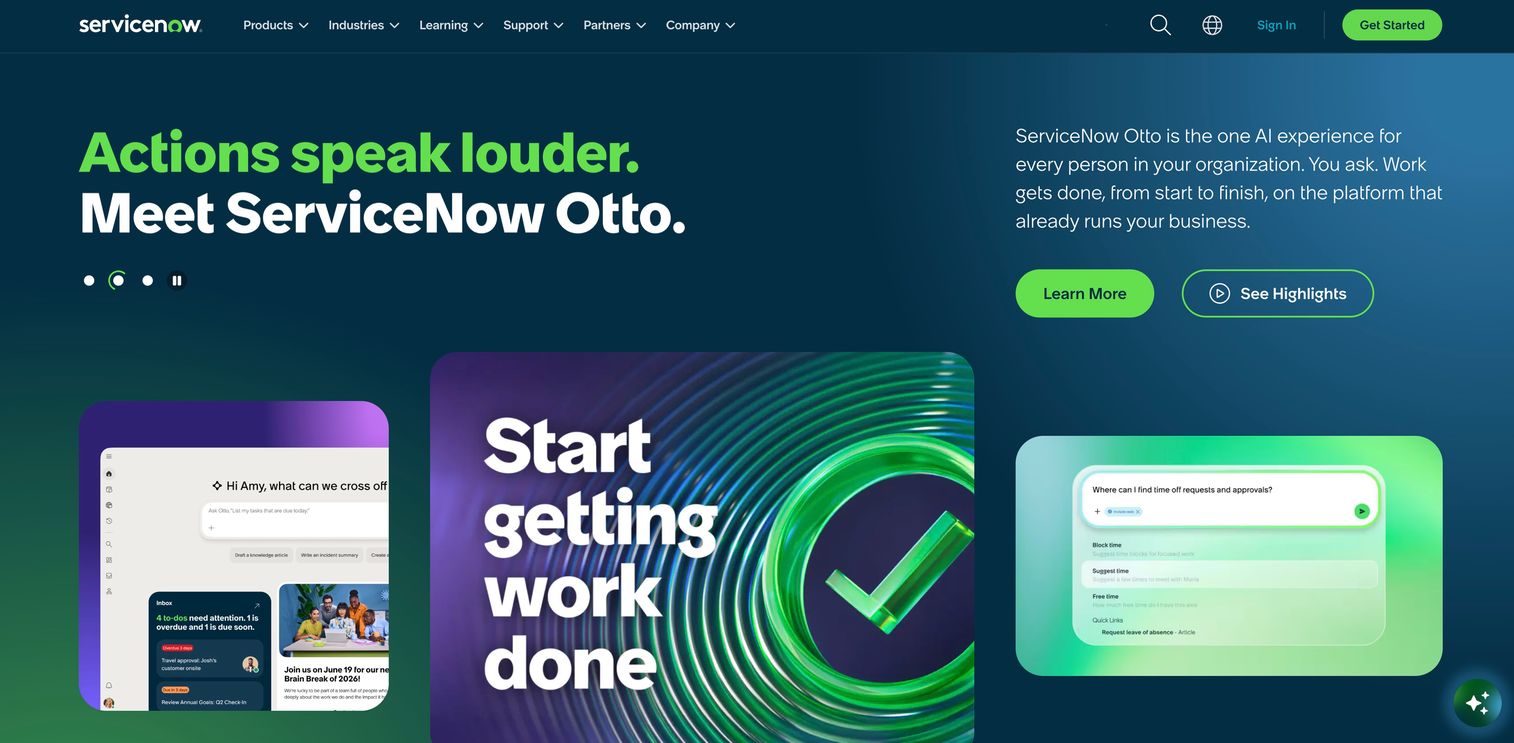
ServiceNow Risk and Compliance is ServiceNow's GRC suite for managing enterprise risk, compliance, resilience, and related workflows on the ServiceNow AI Platform. It is the governance and workflow layer, not a cloud scanner. For large enterprises that already run ServiceNow, it routes compliance issues, orchestrates evidence handling, and ties findings into existing ITSM workflows.
Best for: enterprises needing a unified platform for risk, compliance, and resilience workflows.
Key strengths
- Integrated Risk Management: centralizes risk and compliance across the enterprise.
- Third-Party Risk Management: manages vendor risk alongside internal compliance.
- Policy and Compliance Management: maps policies to controls and routes remediation through workflows.
Why choose ServiceNow Risk and Compliance: it fits large enterprises that want compliance issues flowing through the same ITSM engine that already runs their operations. When a cloud tool detects a gap, ServiceNow can route it, assign an owner, track remediation, and hold the evidence, all inside workflows your teams already use. It pairs well with a CNAPP feeding it cloud findings.
ServiceNow Risk and Compliance pricing: no public first-party price was visible on the reviewed pages. Pricing is arranged through sales and typically depends on your ServiceNow platform footprint and module selection. If you already run ServiceNow, ask how Risk and Compliance layers onto your existing licensing during scoping.
Considerations before you buy
Framework coverage that matches your obligations
Confirm the tool covers the specific compliance frameworks you are audited against, not just the popular ones. SOC 2 and ISO 27001 are table stakes, but check for PCI DSS, HIPAA, GDPR, FedRAMP, CSA CCM, NIST, and CIS if they apply. Ask how framework crosswalks work, because overlapping controls should not mean duplicate evidence work.
Evidence collection and audit reporting depth
The whole point is less manual work. Verify how evidence collection actually runs: what it pulls automatically, how it maps to controls, and whether audit reporting produces the executive summaries your auditors and buyers expect. A tool that flags issues but leaves you assembling evidence by hand only solves half the problem.
Remediation automation and drift detection
Look at how the platform handles the gap between detection and fix. Strong remediation automation routes issues to owners or fixes them directly, and drift detection catches when a compliant resource falls back out of state. Without both, you are back to point-in-time compliance with extra steps.
Integrations with your existing stack
Check for the ITSM integrations your teams already live in: Slack, Jira, and ServiceNow at minimum. Compliance work that does not flow into existing workflows gets ignored. The tool should push findings where owners already work, not create another console nobody checks.
Multi-cloud and code-to-cloud coverage
Confirm real coverage across AWS, Azure, Google Cloud, Kubernetes, and OCI if you run multi-cloud. Then check how far left it shifts: IaC scanning and container scanning catch compliance issues before deploy, which is cheaper than fixing them in production and stronger evidence at audit time.
Conclusion
The right cloud compliance tool depends on your operating model, not a feature count. If you want continuous multi-cloud coverage with compliance folded into broader cloud risk, Qualys TotalCloud, Orca Security, and Wiz lead on posture and prioritization. If runtime context matters to your audit story, SentinelOne Singularity Cloud Security connects compliance to what is actually happening in your workloads. Microsoft-native teams get the fastest path with Microsoft Defender for Cloud, and large enterprises already running Palo Alto tooling get unified coverage from Cortex Cloud.
For teams where compliance is an operating discipline rather than a scanner output, Hyperproof handles framework crosswalks and evidence automation, while ServiceNow Risk and Compliance orchestrates the workflows around it. Trend Micro Cloud One suits mature workload programs that want compliance layered onto an existing strategy.
Your next step: decide whether your primary need is continuous cloud compliance monitoring, evidence automation, or workflow-centric compliance operations. Then shortlist two tools that match, run the trials, and test them against a real framework you are audited on.
FAQs
A cloud compliance tool is software that continuously monitors your cloud infrastructure against regulatory and security frameworks, collects audit evidence automatically, and flags or remediates configurations that fall out of compliance. It replaces manual, point-in-time audit prep with always-on assurance across AWS, Azure, Google Cloud, and other providers. Most modern cloud compliance software combines posture management, evidence collection, and reporting in one platform.
Traditional IT compliance assumed a mostly static environment you could audit once a year. Cloud estates change hourly as teams deploy code, spin up resources, and adjust access. Cloud security compliance uses continuous monitoring and drift detection to catch violations as they happen, rather than surfacing them weeks later at audit time. The core difference is cadence: point-in-time versus always-on.
Prioritize continuous compliance monitoring, automated evidence collection, framework mapping, and remediation automation. Then check for multi-cloud coverage, IaC and container scanning, drift detection, and identity and data coverage. Integrations with Slack, Jira, and ServiceNow matter because compliance work that does not reach owners gets ignored. Finally, verify that audit reporting produces the executive summaries your auditors and buyers actually want.
At minimum, look for SOC 2 and ISO 27001, since most B2B buyers and auditors expect them. Depending on your industry and region, add PCI DSS, HIPAA, GDPR, CCPA, and FedRAMP. Strong cloud compliance platforms also map to CSA CCM, NIST, and CIS benchmarks, and offer crosswalks so overlapping controls across frameworks do not create duplicate evidence work.
Usually not. Most cloud compliance platforms focus on cloud posture, evidence, and remediation, while GRC software like Hyperproof or ServiceNow Risk and Compliance runs the broader compliance operation across control libraries, framework crosswalks, and audit workflows. The common pattern is pairing a CNAPP that watches cloud configuration with a GRC platform that manages the program and holds evidence.
Continuous compliance is the practice of monitoring your cloud environment against frameworks constantly, rather than checking once per audit cycle. The platform tracks control state in real time, detects drift when a resource falls out of a compliant configuration, and generates evidence as changes happen. This keeps you audit-ready year-round instead of scrambling for weeks before each audit.
They automate the two things that make audits painful: evidence collection and reporting. Instead of engineers manually pulling configurations, the tool captures control status continuously and maps it to your frameworks. When the auditor arrives, evidence is already assembled and current, and audit reporting produces the summaries they need. That cuts audit prep from weeks of manual work to a review of data the platform already holds.