A purchase request sits in someone's inbox for four days. The invoice arrives before anyone finds the matching PO. Finance closes the month with three approvals still unaccounted for and no clean view of committed spend. None of this shows up as a line item, but it drains cash, trust, and time.
The core problem is control, not just speed. When purchasing lives in email threads, spreadsheets, and one-off approvals, spend leaks before anyone sees it. The global procure-to-pay software market reached USD 10.3 billion in 2026 and is forecast to hit USD 16.07 billion by 2031 at a 9.31% CAGR, according to Mordor Intelligence. That growth tracks a simple shift: finance teams want enforcement built into the workflow, not bolted on after the spend already happened.
For a company scaling past its first finance hire, the stakes are higher. A procure to pay system that enforces policy, matches invoices automatically, and reports cleanly is the difference between a close you trust and a close you defend. Around 58% of enterprises report improved financial visibility after deploying procure-to-pay platforms, per Global Growth Insights. That visibility is what lets a founder hand finance operations to a team without losing the thread on where the money goes.
This guide breaks down 10 platforms worth shortlisting, what each does best, and how to match one to your actual bottleneck.
What's inside
This is a buyer's guide, not a feature dump. It covers the best procure to pay software for teams that want tighter spend control, faster approvals, cleaner invoice matching, and real ERP connectivity, from requisition through payment.
We evaluated each tool on five things that matter when you're choosing what earns a place in your stack:
- Workflow coverage: how much of the requisition-to-payment cycle it handles natively
- Integration depth: how cleanly it connects to your ERP and accounting system
- Automation strength: how much manual work it removes from AP and approvals
- Implementation ease: how fast a small finance team can get to first value
- Buyer fit: which company size and complexity it actually serves best
TL;DR
Short on time? Here are the shortcuts by buyer type:
- Best overall for end-to-end spend control: Coupa, for centralized business spend management across procurement, invoicing, and expenses.
- Best for AP-heavy teams: Stampli, when invoice processing is the bottleneck.
- Best for configurable workflows: Cflow, for no-code approval and process automation.
- Best for ERP-centric enterprise buyers: SAP Ariba, for source-to-pay with supplier network depth.
- Best for mid-market finance teams: Procurify and ProcureDesk, for straightforward procurement controls without a heavyweight rollout.
- Best for large procurement programs: GEP and Zycus, for AI-driven source-to-pay at enterprise scale.
What is procure-to-pay software?
Procure-to-pay software is a finance and procurement platform that manages the full purchasing cycle, from requisition and purchase order through receiving, invoice matching, approval, and payment, in one connected workflow.
Instead of stitching together email approvals, a spreadsheet of open POs, and a separate AP inbox, a procure to pay platform routes each step through defined policy and logs everything for audit. It sits between the people requesting purchases and the finance team paying for them, enforcing control at every handoff.
The full workflow covers:
- Requisitions: employees request a purchase against a budget, catalog, or preferred vendor.
- Purchase orders: approved requests convert to POs automatically, with committed spend tracked in real time.
- Receiving: goods or services are logged against the PO so finance knows what actually arrived.
- Invoice processing: vendor invoices are captured, usually with OCR, and coded to the right account.
- 2-way and 3-way matching: the system compares invoice to PO (2-way) or invoice to PO to receipt (3-way) before approving payment.
- Approvals and payments: routed by amount, department, or policy, then paid through the platform or the connected ERP.
- Analytics and audit trails: spend visibility by category, vendor, and department, with a complete record for close and audit.
Strong purchase to pay automation turns this from a manual chase into a repeatable system. That repeatability is the point: it removes founder and finance-lead dependency from routine spend decisions.
When to use procure to pay software
Not every team needs a full procure to pay solution on day one. Here's how to know the timing is right.
Control spend before it leaks
When purchases happen faster than finance can see them, you need policy enforcement built into the request itself. A procure to pay system applies approval thresholds, budget checks, and preferred-vendor rules at the moment of requisition, not after the invoice lands. If you're approving spend in Slack or discovering commitments at month-end, spend control is your trigger.
Remove manual invoice work
When AP is buried in keying invoices, chasing approvals, and resolving exceptions by hand, invoice automation pays for itself fast. Automated capture, coding, and 3-way matching handle the repetitive volume so your team works exceptions instead of every invoice. This is the moment to prioritize touchless AP.
Standardize purchasing across teams
When engineering buys one way, marketing another, and no one shares a vendor list, you have process drift. A single procure to pay platform gives every department the same requisition, approval, and receiving flow. That standardization is what makes spend reporting trustworthy and scale possible without adding headcount.
Comparison table
Here's how the 10 platforms compare on intent, differentiation, pricing, and G2 rating. Pricing for most enterprise-grade procure to pay solutions is quote-based, so treat public figures as starting points and confirm scope with each vendor.
| # | Product | Intent | Key differentiation | Pricing | G2 rating |
|---|---|---|---|---|---|
| 1 | Coupa | End-to-end spend management | Unified business spend management across procurement, invoicing, expenses | Custom quote | 4.2/5 |
| 2 | Stampli | AP-centric procure to pay | AI-driven invoice collaboration and processing | Request a quote | 4.6/5 |
| 3 | Cflow | Configurable workflows | No-code workflow and approval automation | From $11/user/mo | 5.0/5 |
| 4 | ProcureDesk | Process-first P2P | Procurement plus AP automation in one system | From $498/mo | 4.4/5 |
| 5 | SAP Ariba | Enterprise source-to-pay | Supplier network and procurement governance at scale | Price on request | 4.1/5 |
| 6 | Proactis | Source-to-pay for mid-market | Modular P2P with guided buying and budget control | Custom quote | 4.8/5 |
| 7 | Basware | Enterprise AP automation | Invoice lifecycle management and e-invoicing network | Custom quote | 4.0/5 |
| 8 | Zycus | AI source-to-pay suite | Agentic AI across intake-to-pay | Request a demo | 3.7/5 |
| 9 | GEP | Enterprise procurement transformation | AI-native unified procurement and supply chain | Custom quote | 4.3/5 |
| 10 | Procurify | Mid-market spend management | Purchasing, AP, and spend cards in one platform | Request pricing | 4.6/5 |
The 10 best procure to pay software platforms
1. Coupa
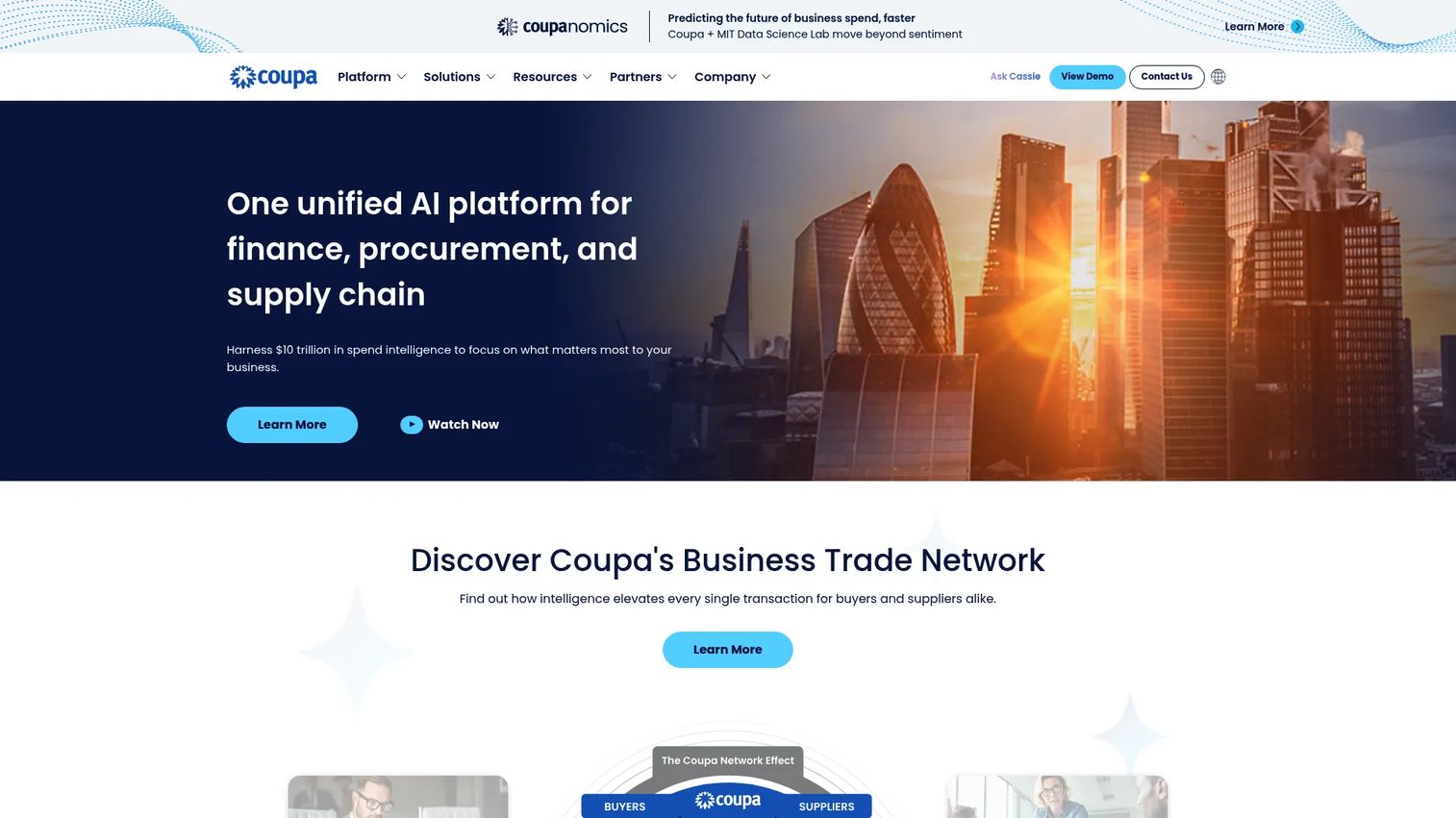
Coupa frames itself as a business spend management platform, meaning procurement, invoicing, and expenses live under one roof rather than in separate tools. For teams that want one system to govern committed and actual spend, that consolidation is the draw. It layers guided buying, compliance controls, and analytics on top of the core requisition-to-payment flow.
Best for: Mid-market and enterprise teams that want centralized spend management and procurement workflows in a single platform.
Key strengths
- Business spend management: procurement, invoicing, and expenses managed together for one view of total spend.
- Expense management: mobile apps, receipt capture, OCR, and credit card integrations for employee spend.
- Platform depth: reporting, contracts, compliance, workflow, budgets, AI, SSO, and integrations across the suite.
Why choose Coupa: If your problem is fragmented spend across procurement, AP, and expenses, Coupa's breadth is the point. It suits finance leaders who want guided buying to steer employees toward approved vendors while analytics surface where budget actually goes. The tradeoff is scope: this is a platform investment, not a point fix.
Coupa pricing: Coupa does not publish pricing. Its documentation indicates most products require a subscription and directs interested buyers to contact their Customer Value Manager for a quote. Expect enterprise-tier packaging scoped to your spend volume and module needs.
2. Stampli
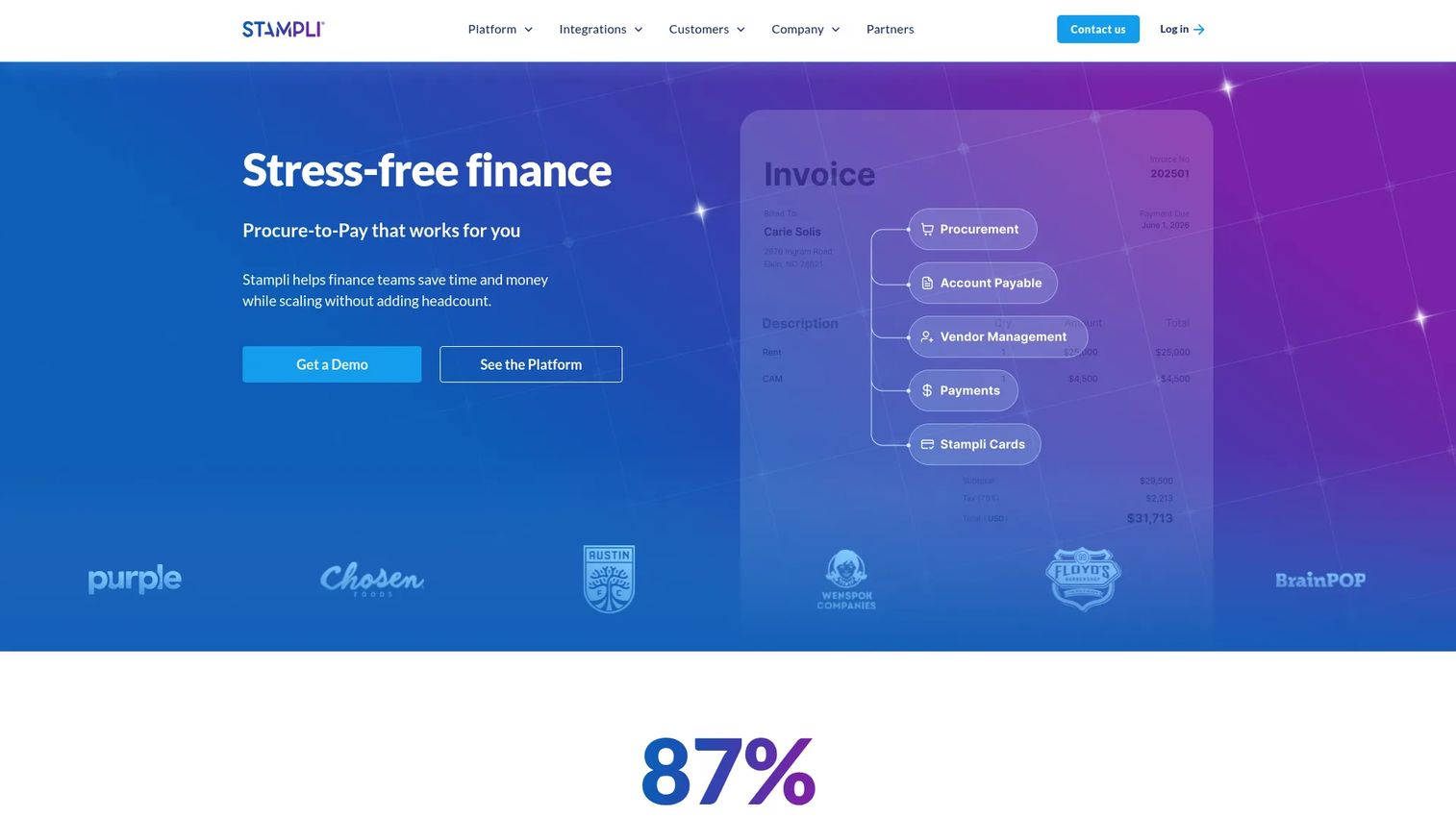
Stampli approaches procure to pay from the AP side. Its core strength is invoice processing: capture, coding, and approval, with collaboration built directly onto each invoice so questions and context stay in one place. Teams choose it when the invoice queue, not requisitions, is the thing slowing the close.
Best for: Mid-market and enterprise finance teams that want AP-centric procure-to-pay automation.
Key strengths
- Accounts payable automation: AI-driven capture and coding that cuts manual invoice keying.
- Procurement and purchase requests: requisition and PO workflows that feed clean data into AP.
- Payments and vendor management: payments, vendor records, and corporate card workflows in one place.
Why choose Stampli: When AP is buried in repetitive invoice handling and exception resolution, Stampli's invoice-centric design removes that drag first. The collaboration layer keeps approvers, AP, and vendors talking on the invoice itself, which shortens the back-and-forth that stalls approvals. It's the AP-first entry point to procure to pay automation.
Stampli pricing: Stampli does not display public pricing. Its site lists Accounts Payable and Beyond Accounts Payable offerings, both quote-based. Request a quote scoped to your invoice volume and module needs.
3. Cflow
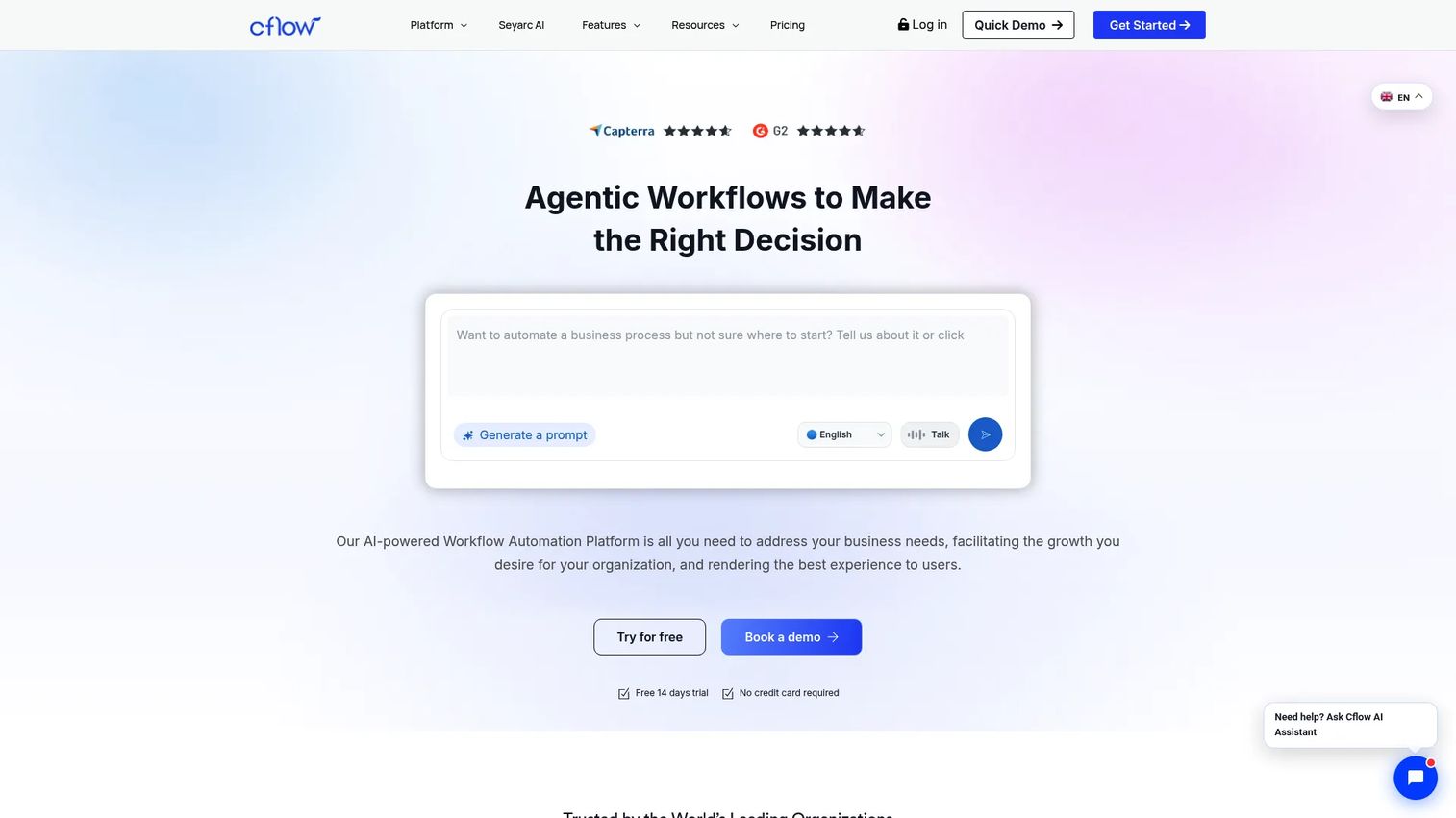
Cflow is a no-code workflow automation and BPM tool, which makes it a flexible fit for teams that want to build procure to pay approvals their own way. Instead of adopting a fixed procurement structure, you design the requisition, approval, and purchase flows visually. That configurability suits teams whose processes don't map cleanly onto a rigid template.
Best for: Teams that need no-code workflow and approval automation with transparent per-user pricing.
Key strengths
- Visual workflow builder: drag-and-drop process design for custom requisition and approval flows.
- Form designer: build the exact request forms your teams need without code.
- Approvals, rules, and integrations: conditional routing and connections into your existing tools.
Why choose Cflow: If your bottleneck is approval routing that never quite fits off-the-shelf procurement software, Cflow lets you shape the workflow to your rules. It's a practical pick for internal approvals and lighter procure to pay needs, with ERP and tool integrations to keep data flowing. The per-user pricing also makes it accessible for smaller finance teams.
Cflow pricing: Cflow publishes public pricing. The Joy plan starts at $11 per user per month billed annually ($22 billed monthly), and the Bliss plan is $16 per user per month billed annually ($32 monthly). The Zen tier is custom, quote-based pricing. A 14-day free trial is available, with no credit card required.
4. ProcureDesk
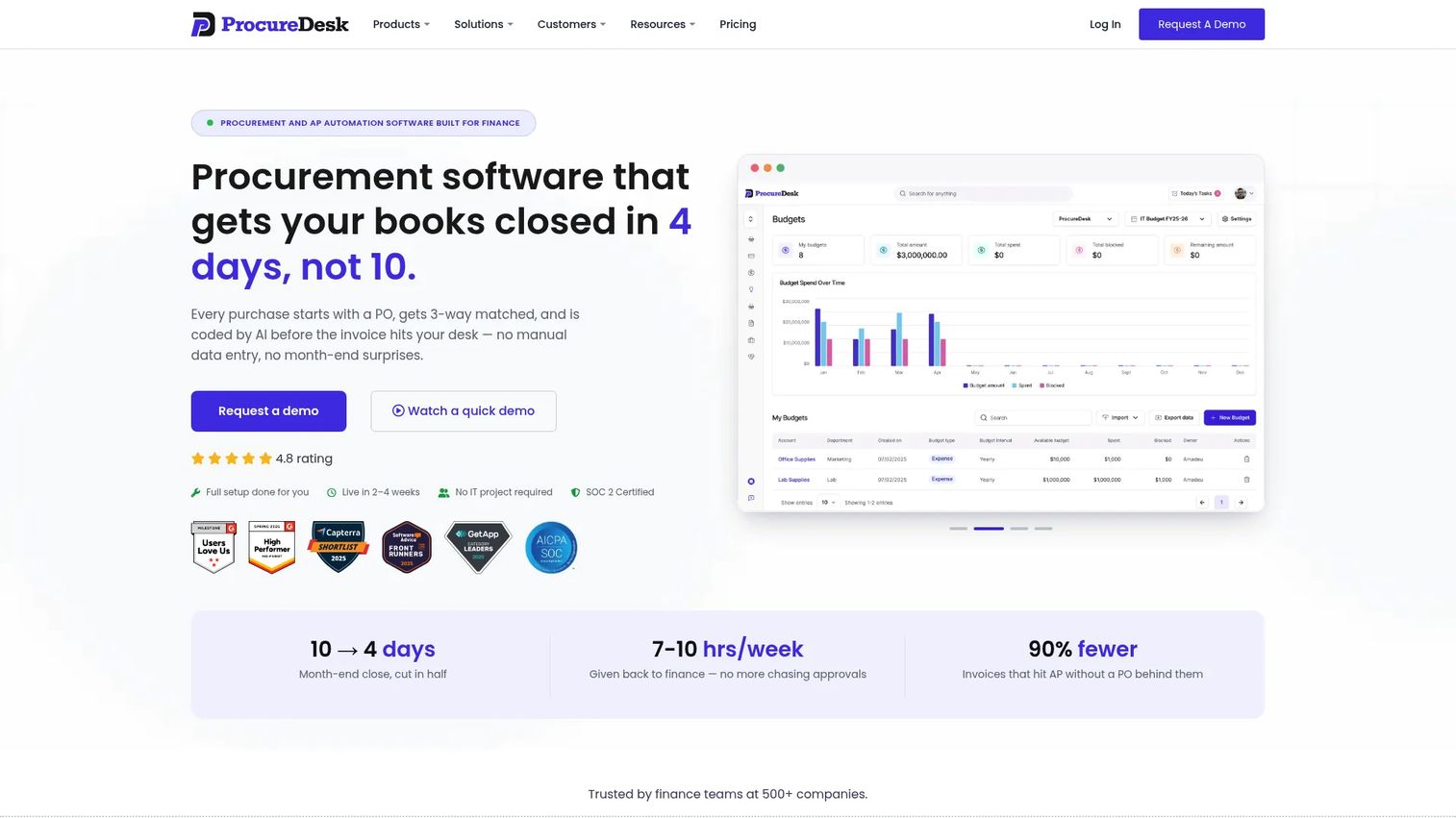
ProcureDesk is a process-first procure to pay system that pairs procurement controls with AP automation in one tool. It handles purchase requests, approvals, PO creation, and order tracking on the front end, then invoice matching and payments on the back end. For mid-market teams, that combination covers most of the cycle without a sprawling implementation.
Best for: Mid-market companies that want procurement and AP automation in a single, operationally simple system.
Key strengths
- Purchasing workflows: purchase requests, approvals, PO creation, and order tracking in one flow.
- Invoice matching and AP automation: 3-way matching and OCR to reduce manual invoice work.
- Payments and analytics: bill payments, virtual cards, spend analytics, and inventory tracking.
Why choose ProcureDesk: When you want procurement discipline and AP efficiency together without an enterprise-scale rollout, ProcureDesk's combined design fits. Built-in 3-way matching and OCR handle invoice volume, while budgets and vendor management keep spend in check. It's a strong fit for teams that need one system, not two.
ProcureDesk pricing: ProcureDesk publishes pricing. The Purchasing Automation plan is $498 per month billed annually, and the Purchasing and AP Automation plan is $850 per month billed annually. Month-to-month terms are available at higher rates, and the Enterprise tier is quote-based.
5. SAP Ariba
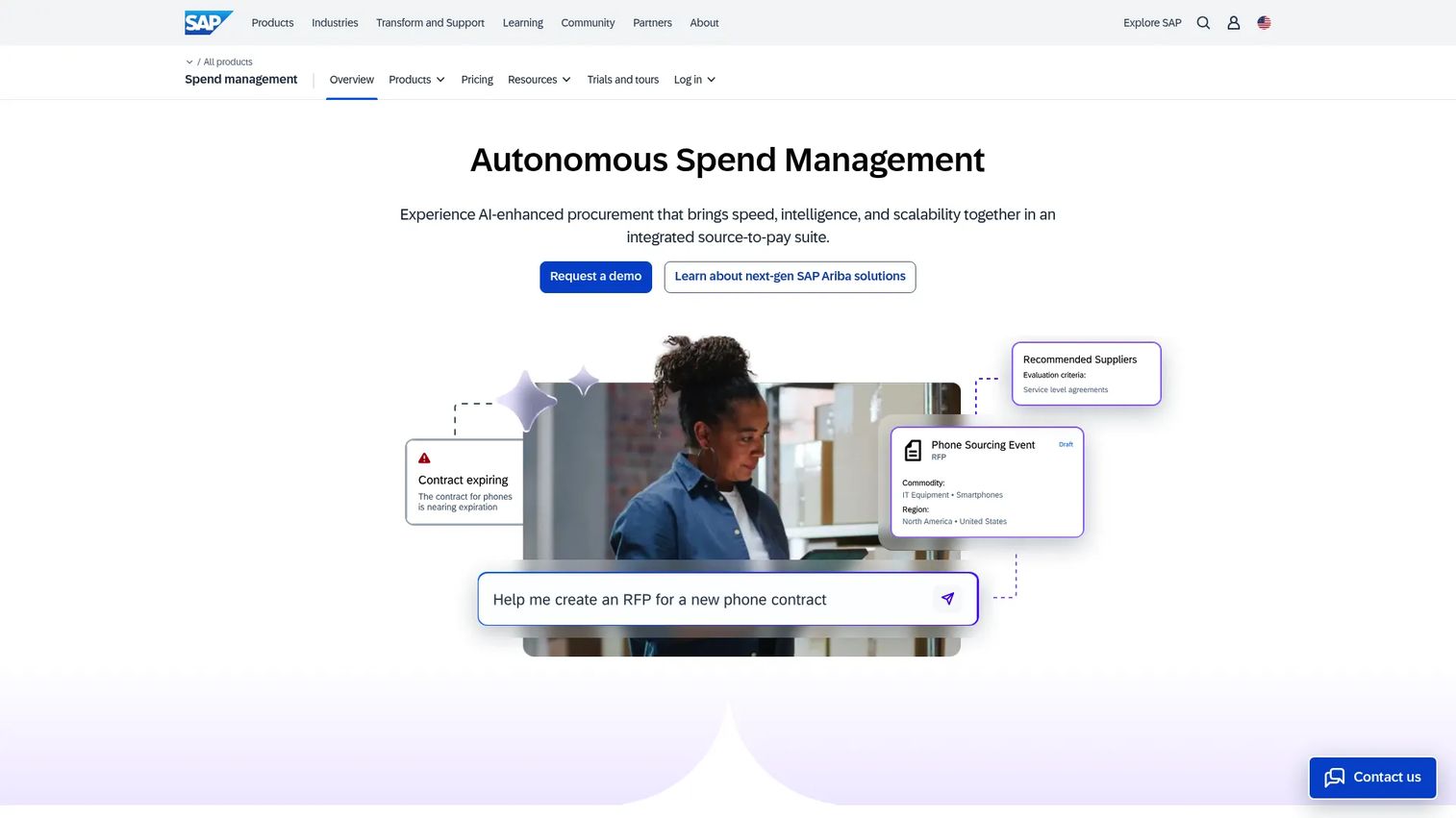
SAP Ariba is SAP's cloud source-to-pay suite, covering procurement, sourcing, contracts, buying, invoicing, and supplier management. Its defining strength is the Ariba Network, connecting buyers to a vast supplier base, plus deep procurement governance for complex, high-volume buying environments.
Best for: Enterprise procurement teams that need a broad source-to-pay platform with strong supplier collaboration.
Key strengths
- AI-supported intake management: guided intake that routes requests through the right process.
- Intelligent sourcing: automated sourcing across a large supplier network.
- AI-driven supplier management: holistic supplier records, risk, and collaboration at scale.
Why choose SAP Ariba: For large organizations that need supplier network reach and policy enforcement across many buying units, Ariba is a category standard, especially inside SAP-centric ERP landscapes. It handles complex, governed procurement that lighter tools aren't built for. The scope suits enterprise programs with dedicated procurement teams.
SAP Ariba pricing: SAP does not publish numeric pricing for Ariba. Product pages such as Ariba Sourcing, Buying and Invoicing, and Intake Management use price-upon-request and demo-request flows. Pricing is scoped to modules, users, and enterprise requirements.
6. Proactis
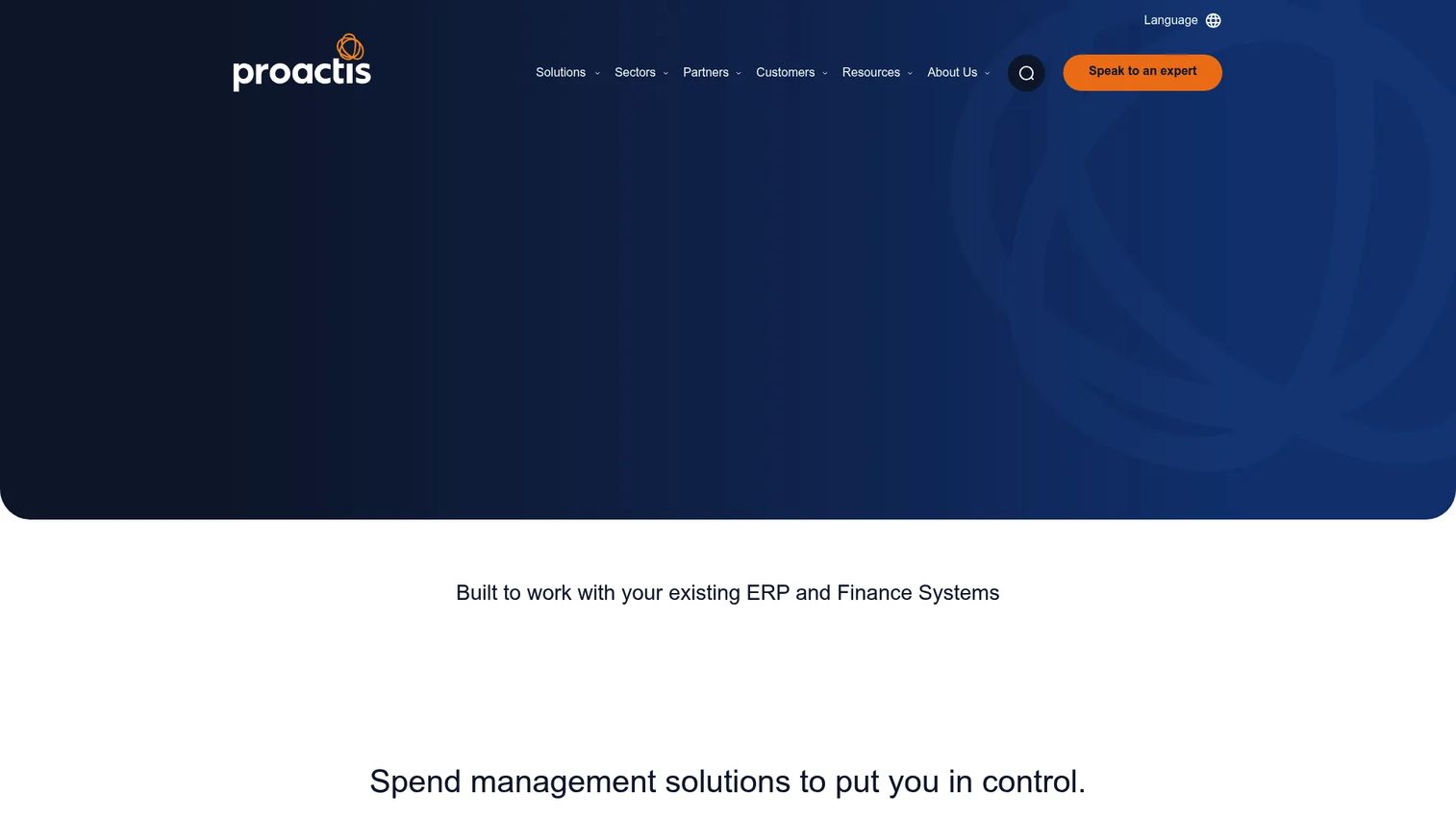
Proactis offers modular source-to-pay and spend management software aimed at mid-market, service-focused organizations. It combines purchase-to-pay with guided buying, approvals, and budget control on the procurement side, and invoice capture and matching on the AP side. The modular structure lets teams adopt what they need across complex spend processes.
Best for: Mid-market organizations that need controlled procurement and AP automation across complex spend.
Key strengths
- Purchase-to-pay: guided buying, approvals, and budget control built into requisitions.
- AP automation: invoice capture and matching to reduce manual processing.
- Supplier and sourcing modules: supplier relationship management, sourcing, contracts, and a marketplace.
Why choose Proactis: When an organization needs procurement discipline and AP efficiency together but doesn't fit an enterprise mega-suite, Proactis's modular approach lets it scale into the pieces it needs. Guided buying steers employees toward compliant purchases while budget control keeps spend visible. It suits service-led mid-market teams with layered spend processes.
Proactis pricing: Proactis does not publish public pricing and uses demo and contact-sales gating. Pricing is scoped to the modules and organization size you require, so request a tailored quote.
7. Basware
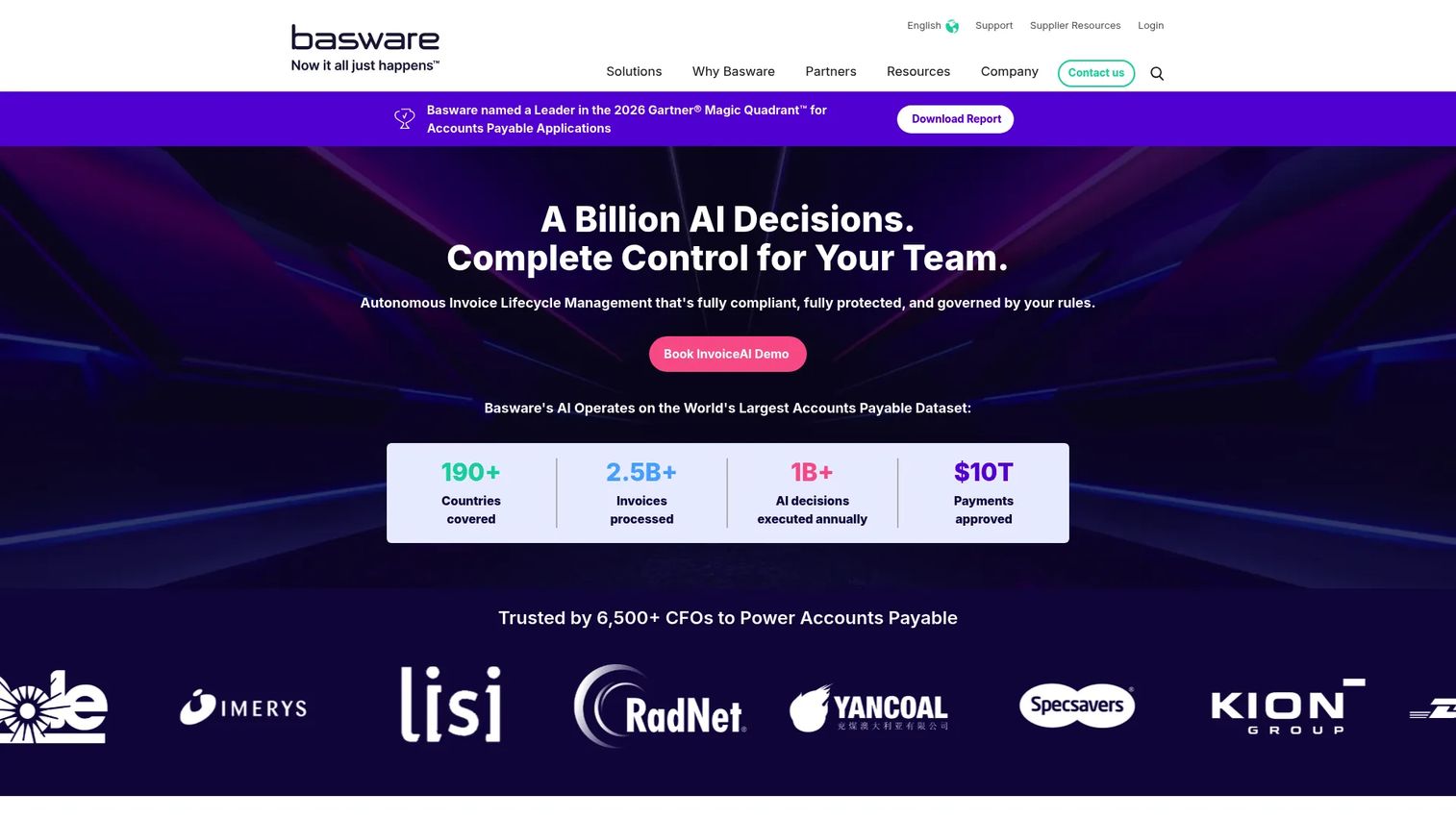
Basware specializes in AP and invoice automation for finance teams, with procure to pay orchestration built around invoice accuracy. Its invoice lifecycle management, e-invoicing network, and compliance capabilities make it a fit where matching accuracy and high invoice volume are the priority.
Best for: Mid-market to enterprise finance teams that need AP and invoice automation at scale.
Key strengths
- Invoice lifecycle management: automation across the full invoice journey from receipt to payment.
- E-invoicing network and compliance: connected e-invoicing plus built-in compliance capabilities.
- Insights and dashboards: AP visibility to spot exceptions and track processing performance.
Why choose Basware: When invoice handling and matching accuracy sit at the center of your finance operation, Basware's AP-first depth is the reason to shortlist it. The e-invoicing network and compliance tooling suit organizations with high volume and regulatory exposure. It's built for teams where touchless AP is the goal.
Basware pricing: Basware says pricing is custom and based on organization size and requirements. The pricing page directs visitors to contact the team rather than displaying a public rate, so request a scoped quote.
8. Zycus
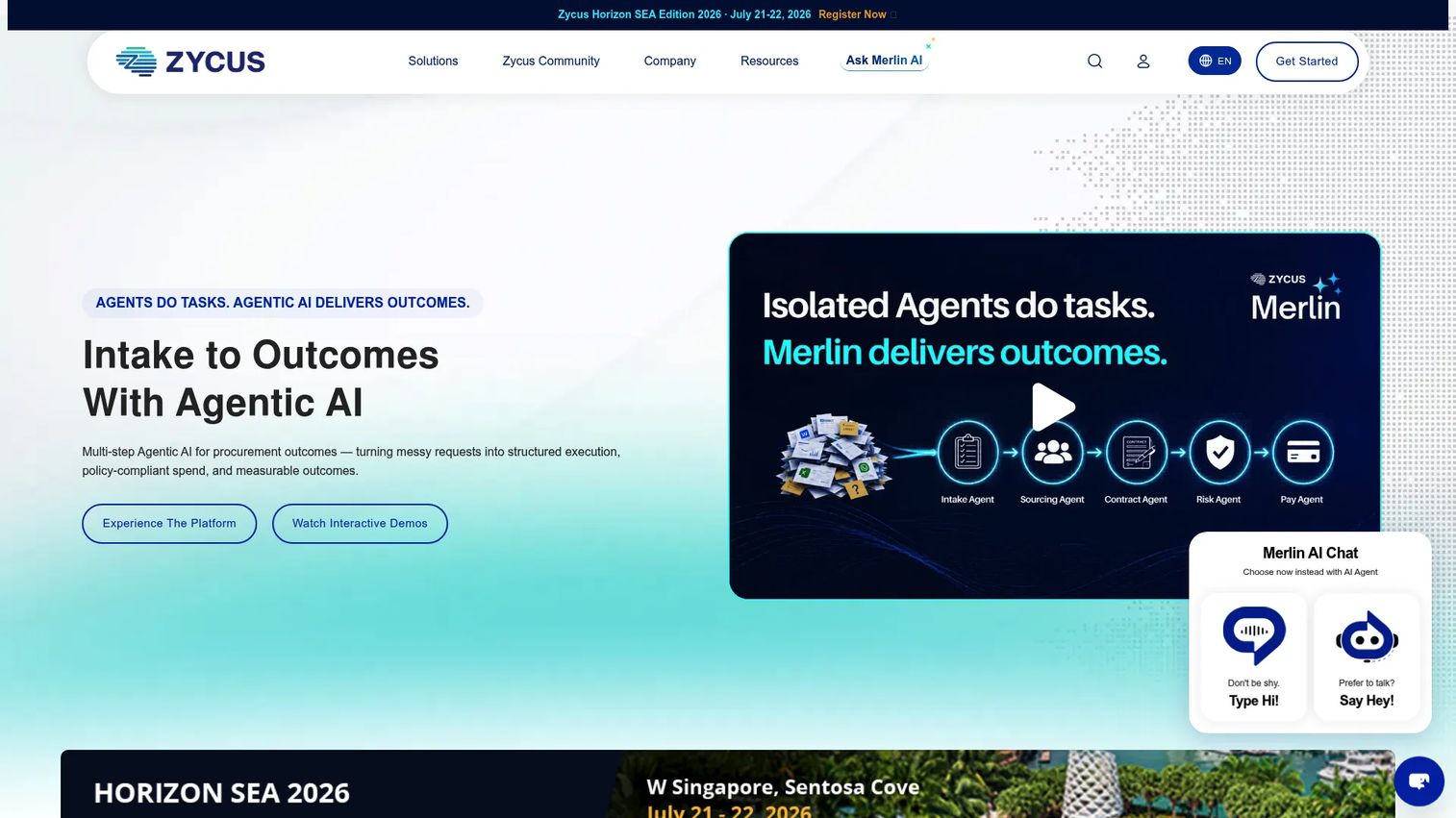
Zycus is an AI-powered source-to-pay suite covering intake-to-outcome workflows. Its Merlin intake, sourcing, supplier, contract, spend, and AP modules span the full procurement lifecycle, with agentic AI positioned as the automation layer. It suits teams standardizing procurement across the whole company.
Best for: Enterprises looking to automate procurement from intake through pay.
Key strengths
- Agentic AI platform: AI applied across intake, sourcing, and AP automation.
- Source-to-pay modules: sourcing, supplier, contract, and spend management in one suite.
- Merlin intake: guided intake that routes procurement requests through the right path.
Why choose Zycus: For enterprises that want AI-driven automation across a unified source-to-pay suite, Zycus offers breadth from intake through payment. Guided buying and procurement analytics help standardize how the whole company purchases. It fits programs consolidating fragmented procurement onto one platform.
Zycus pricing: Zycus does not publish public pricing and directs visitors to request a demo or contact sales. Pricing is scoped to the modules and enterprise requirements you need, so plan for a custom quote.
9. GEP
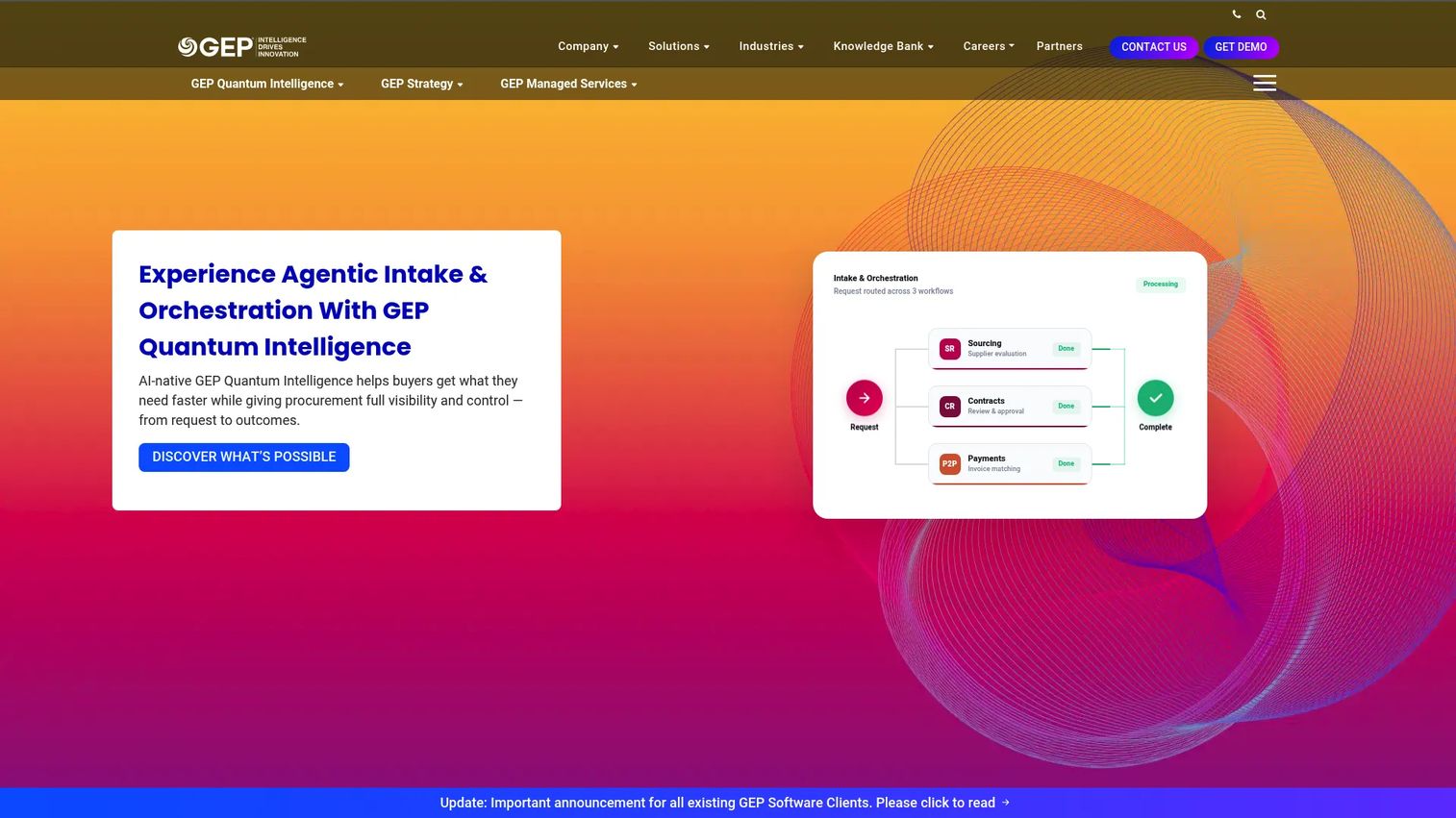
GEP delivers an AI-native procurement and supply chain platform alongside consulting and managed services. Its unified source-to-pay and procure-to-pay workflows, category management, and spend analysis target large-scale procurement transformation. GEP was named a Leader in the 2026 Gartner Magic Quadrant for Source-to-Pay Suites.
Best for: Large enterprises that need an AI-driven procurement and supply chain platform.
Key strengths
- AI-native platform: procurement and supply chain unified on one AI-driven system.
- Unified source-to-pay: connected procure-to-pay and source-to-pay workflows.
- Category and spend management: category management, contract management, supplier management, and spend analysis.
Why choose GEP: For large procurement programs that want software, consulting, and managed services from one provider, GEP's combined offering stands out. Enterprise orchestration, supplier collaboration, and analytics support transformation at scale. It appeals to organizations treating procurement as a strategic function, not just a back-office task.
GEP pricing: GEP does not publish public pricing. Reach out for a scoped quote based on your procurement footprint, module requirements, and any consulting or managed-services needs.
10. Procurify
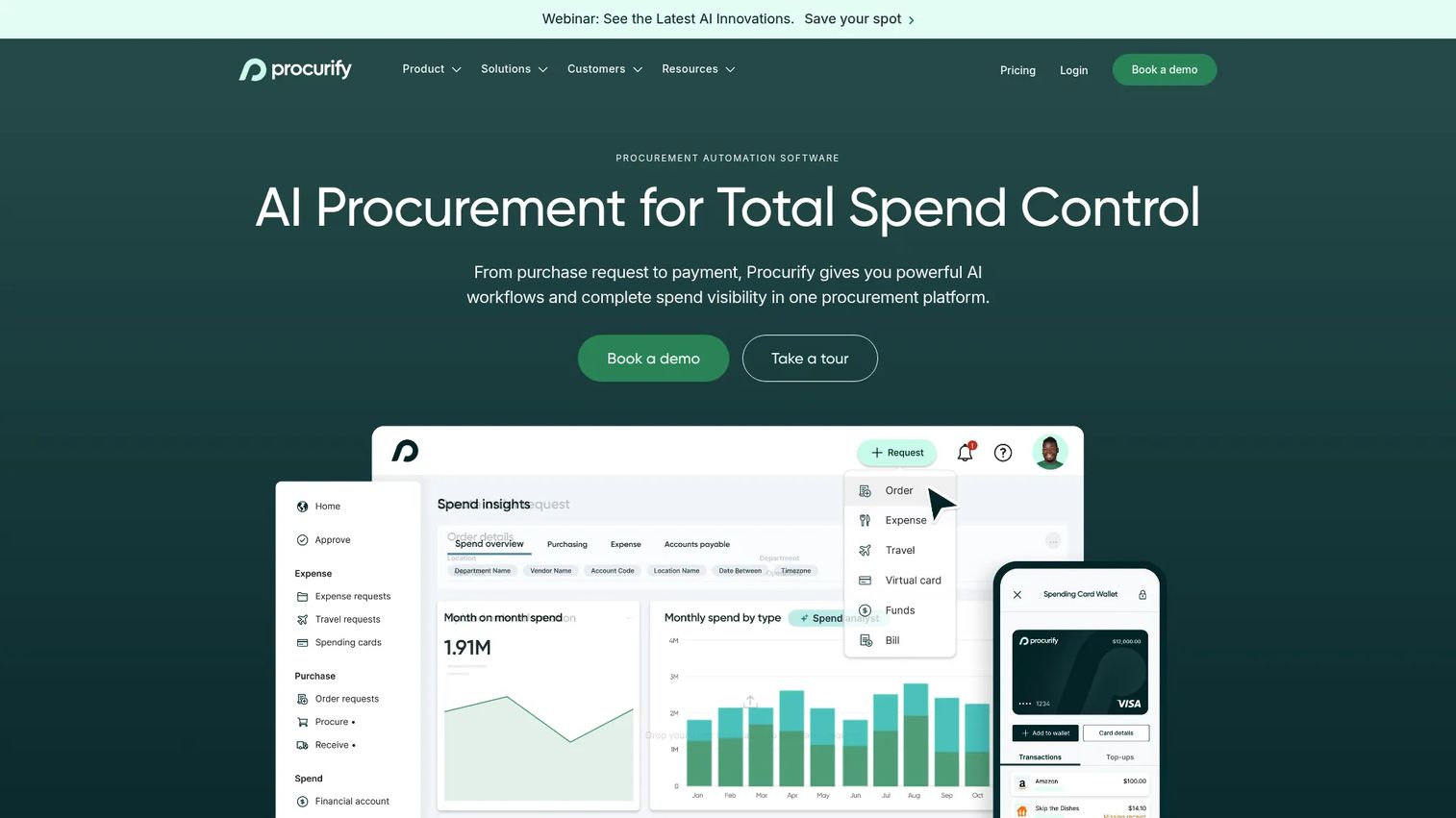
Procurify is an AI-powered procure-to-pay and spend management platform built for mid-market organizations. It brings purchasing, AP automation, expenses, and spend cards together with an emphasis on ease of use. For teams that want straightforward procurement controls without a heavyweight rollout, that simplicity is the appeal.
Best for: Mid-market teams that want to control purchasing, AP, expenses, and spend in one platform.
Key strengths
- Purchasing workflows: requisitions, approvals, purchase orders, receiving, vendor management, and catalogs.
- AP automation: invoice processing, matching, bill payments, and payment workflows.
- Spend cards and mobile: spending cards, a mobile app, integrations, and PunchOut catalogs.
Why choose Procurify: When a mid-market finance team wants spend control and AP automation without an enterprise implementation, Procurify's usability is the differentiator. Purchase requests, approvals, and budget control keep spend visible, while spend cards extend control to employee purchases. It's a fast path to procurement discipline for growing teams.
Procurify pricing: Procurify does not display public pricing and says its pricing is flexible, asking visitors to request pricing or talk to the team. Pricing is scoped to your team size, modules, and spend volume, so request a tailored quote.
Considerations before you buy
Shortlisting is easy. Choosing the one that earns its place in your stack takes a sharper look. Here's what to pressure-test before you sign.
Workflow coverage vs. your actual bottleneck
Map the tool to your real pain, not the full feature list. If AP is drowning, invoice automation and 3-way matching matter most. If spend leaks upstream, prioritize requisition controls and approval enforcement. Buying end-to-end when you only need one half wastes budget and slows adoption.
ERP and accounting integration depth
A procure to pay platform that doesn't sync cleanly with your ERP creates double entry and reconciliation headaches. Confirm the specific integration, not just that "integrations exist." Check whether it's native, API-based, or a flat-file export, and how invoice, PO, and payment data flows both ways.
Implementation time to first value
Ask how long a team your size takes to go live and reach first value. Enterprise suites can run months; lighter mid-market tools go live in weeks. For a finance team that needs a win this quarter, time-to-value is a real selection criterion, not a footnote.
Total cost relative to your stage
Most procure to pay solutions are quote-based, so model the fully loaded cost: platform fee, implementation, per-user seats, and any transaction or invoice-volume charges. Then weigh it against the AP hours and leaked spend it removes. The payback should be defensible in a board meeting.
Conclusion
The right procure to pay software depends on where your money is actually leaking. Match the tool to the bottleneck and the choice gets simple.
If spend control is the problem, start with a platform built for enforcement: Coupa for end-to-end business spend management, or Procurify and ProcureDesk for mid-market teams that want control without a heavy rollout. If AP is the bottleneck, prioritize invoice automation: Stampli and Basware lead when invoice volume and matching accuracy are the priority. If enterprise governance and supplier scale matter most, shortlist the bigger suites: SAP Ariba, Zycus, GEP, and Proactis for source-to-pay depth. And if configurable approval workflows are the gap, Cflow gives you no-code flexibility at transparent per-user pricing.
Your next step: name your single biggest friction point, requisition, matching, or approval, and demo two tools that solve it head-on. A repeatable procure to pay system that enforces policy and reports cleanly is what lets finance operate without routing every decision back through you.
FAQs
Procure-to-pay software manages the full purchasing cycle in one connected workflow: requisition, purchase order, receiving, invoice matching, approval, and payment. It enforces spend policy at each step and logs everything for audit, replacing scattered email approvals and spreadsheets with a single procure to pay system.
Accounts payable software handles the back end: capturing invoices, matching them, and paying vendors. Procure-to-pay software covers that plus the front end, requisitions, approvals, and purchase orders, so control starts before the invoice ever arrives. AP-only tools fix invoice processing; a full P2P platform governs the entire spend lifecycle.
3-way matching compares three documents before approving payment: the purchase order, the goods receipt, and the vendor invoice. When quantities and amounts align across all three, the system approves payment automatically. When they don't, it flags an exception for review. This catches overbilling and unauthorized spend without manual cross-checking.
Most procure to pay platforms offer ERP integrations, connecting to systems like NetSuite, SAP, and QuickBooks so PO, invoice, and payment data syncs both ways. Confirm the specific integration method, native, API, or file-based, and test how data flows before committing, since integration depth varies widely between vendors.
Prioritize based on your bottleneck. For spend control, focus on approval workflows, budget checks, and requisition enforcement. For AP load, prioritize invoice automation, OCR capture, and 3-way matching. Across the board, verify ERP integrations, reporting depth, and touchless AP capability, since these drive both control and cycle time reduction.
Mid-market teams often favor platforms that balance control with ease of implementation, such as Procurify, ProcureDesk, and Proactis. These handle procurement and AP automation without the multi-month rollout of enterprise suites. The right pick depends on whether procurement controls, invoice automation, or configurable workflows are your priority.
Compare on workflow coverage, ERP integration depth, automation strength, implementation time, and total cost relative to your stage. Map each tool to your actual bottleneck rather than the longest feature list, then run a scoped demo focused on your highest-friction step, requisitions, matching, or approvals.
ROI shows up as reduced AP labor, fewer duplicate or unauthorized payments, and faster cycle times, alongside cleaner spend visibility for the close. Around 58% of enterprises report improved financial visibility after deploying procure-to-pay platforms, per Global Growth Insights. Model your payback against the AP hours and leaked spend the platform removes.