Your competitors updated their pricing page last week. You found out from a prospect who asked why you're more expensive.
That's the gap competitive intelligence tools close. They automate the tracking of competitor websites, messaging, pricing, and product changes so your team responds in days instead of months. This guide covers 15 CI platforms for 2026, organized by use case, with honest evaluations of what each does best and where they fall short.
What's inside
This guide covers 15 competitive intelligence tools for 2026, organized by use case: all-in-one CI platforms, SEO and traffic analysis, market intelligence, and specialized monitoring. You'll find a comparison table, detailed reviews with pricing and G2 ratings, selection criteria, and answers to common questions about building a CI stack.
TL;DR
Competitive intelligence tools automate tracking of competitor website changes, pricing shifts, and messaging updates so teams can respond faster
All-in-one platforms like Crayon, Klue, and Contify focus on battlecard creation and sales enablement
SEO and traffic tools like Similarweb and SEMrush show where competitors get their audience
Market intelligence platforms like AlphaSense surface financial data and strategic insights
The right tool depends on your primary goal: arming sales with battlecards, tracking digital performance, or informing strategic planning
What is competitive intelligence software
Competitive intelligence software automates the collection, analysis, and distribution of information about competitors, markets, and industry trends. Top CI tools for 2026 include Crayon, Klue, and Similarweb, which track competitor website changes, pricing, marketing strategies, and digital performance automatically.
Think of CI tools as an always-on research assistant. Instead of manually checking competitor websites every week, the platform watches for you and surfaces what changed.
Core capabilities include:
Real-time competitor monitoring: Tracks website changes, pricing updates, product launches, and messaging shifts automatically
Battlecard creation: Builds one-page reference documents that help sales reps position against specific competitors during deals
Market and industry analysis: Aggregates news, financial reports, and trend data across your competitive landscape
Alert systems: Sends notifications when competitors make significant moves
CRM and workflow integrations: Pushes insights directly into Salesforce, HubSpot, Slack, and other GTM tools
A battlecard is a concise reference document, usually one page, that sales teams use to handle objections and position against a specific competitor. Among companies using battlecards, 71% report improved win rates. CI platforms help create and distribute battlecards at scale.
When to use competitor intelligence tools
CI tools become valuable when manual research can't keep pace with your competitive landscape. Crayon's research shows 68% of sales opportunities are competitive, making dedicated platforms essential. Here are the common scenarios where teams invest.
Tracking competitor messaging and positioning changes
Competitors update their websites constantly with new taglines, repositioned features, and adjusted pricing pages. CI tools monitor changes automatically and alert you when something shifts. This matters when your sales team keeps encountering new competitor claims they haven't seen before.
Creating and updating sales battlecards
Product marketing teams own battlecards, but keeping them current takes time. CI platforms pull in fresh competitor data and make it easier to update and distribute battlecards to sales. The best tools track whether reps actually use the content.
Monitoring industry and market trends
Some CI tools go beyond direct competitors to aggregate news, funding announcements, earnings calls, and analyst reports. This broader view helps with strategic planning and spotting market opportunities early.
Supporting product roadmap prioritization
Competitive insights inform product decisions by revealing feature gaps and pricing benchmarks. When product teams can see what competitors are building, they make better bets on what to build next.
Competitive intelligence tools comparison table
Tools are grouped by primary use case to help you find the right fit faster.
# | Product | Intent | Key differentiation | Pricing | G2 rating |
|---|---|---|---|---|---|
1 | Crayon | Sales enablement | Real-time website monitoring, automated battlecards | Custom | 4.6/5 |
2 | Klue | Battlecard distribution | Win/loss integration, sales adoption tracking | Custom | 4.7/5 |
3 | Contify | Market intelligence | Broad data sources, AI-powered curation | Custom | 4.5/5 |
4 | AlphaSense | Financial research | Earnings calls, SEC filings, expert transcripts | Custom | 4.7/5 |
5 | Kompyte | Product marketing | Automated tracking, Salesforce integration | Custom | 4.3/5 |
6 | Valona Intelligence | Enterprise CI | Multi-language, global coverage | Custom | 4.4/5 |
7 | SEMrush | SEO intelligence | Keyword gaps, backlink analysis, ad monitoring | From $139/mo | 4.5/5 |
8 | Similarweb | Traffic analysis | Audience demographics, market share estimates | Custom | 4.5/5 |
9 | SpyFu | PPC research | Ad history, keyword tracking, affordable pricing | From $39/mo | 4.6/5 |
10 | Feedly | Content monitoring | AI-powered filtering, RSS aggregation | From $6/mo | 4.5/5 |
11 | WatchMyCompetitor | Website monitoring | Change detection, job posting tracking | Custom | 4.3/5 |
12 | Wide Narrow | Strategic intelligence | Scenario planning, executive reporting | Custom | 4.2/5 |
13 | CI Radar | Curated intelligence | Human analysts, reduced noise | Custom | 4.4/5 |
14 | Visualping | Change alerts | Simple setup, screenshot comparisons | Free + paid | 4.6/5 |
15 | Owler | Company profiles | Community-powered data, free tier | Free + paid | 4.3/5 |
15 best competitive intelligence platforms
The tools below are organized by category: all-in-one CI platforms first, then SEO and traffic tools, market intelligence, and specialized monitoring solutions.
1. Crayon
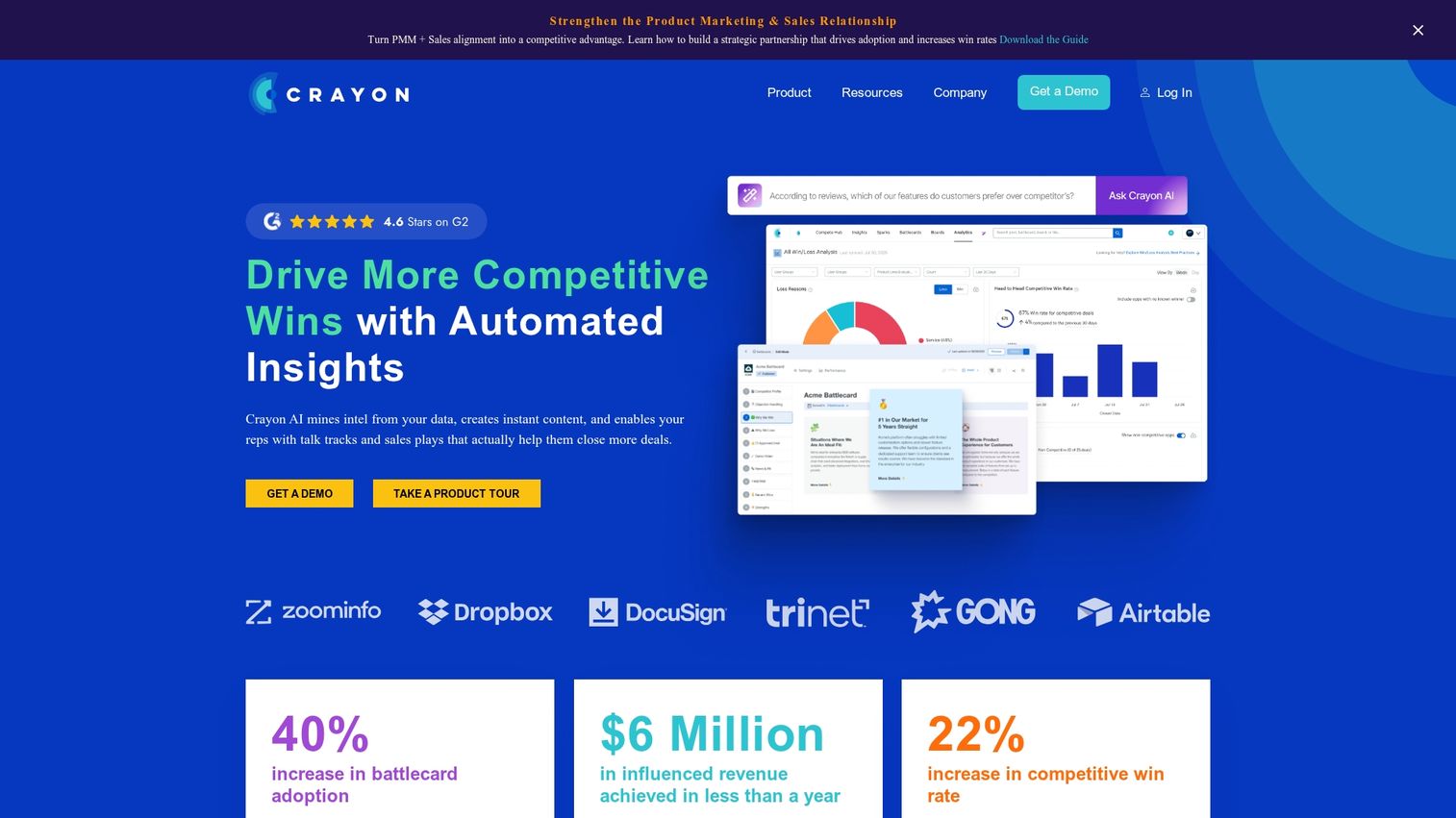
Crayon specializes in real-time monitoring of competitor websites, content, and pricing. The platform automatically tracks changes across millions of data points and surfaces insights that matter most to sales and marketing teams.
What sets Crayon apart is its focus on turning raw intelligence into actionable sales content. The platform doesn't just collect data; it helps you build and distribute battlecards that reps actually use during deals.
Best for: B2B sales and marketing teams that want automated competitor tracking tied directly to sales enablement.
Key strengths
Monitors competitor websites, pricing pages, product updates, and job postings in real time
AI-powered analysis highlights the most significant changes
Battlecard builder with templates and automated content suggestions
Integrates with Salesforce, HubSpot, Slack, and Gong
Why choose Crayon: Pick Crayon when your primary goal is arming sales with fresh competitive content and measuring whether it helps win deals.
Pricing: Custom pricing based on competitors tracked and team size.
2. Klue
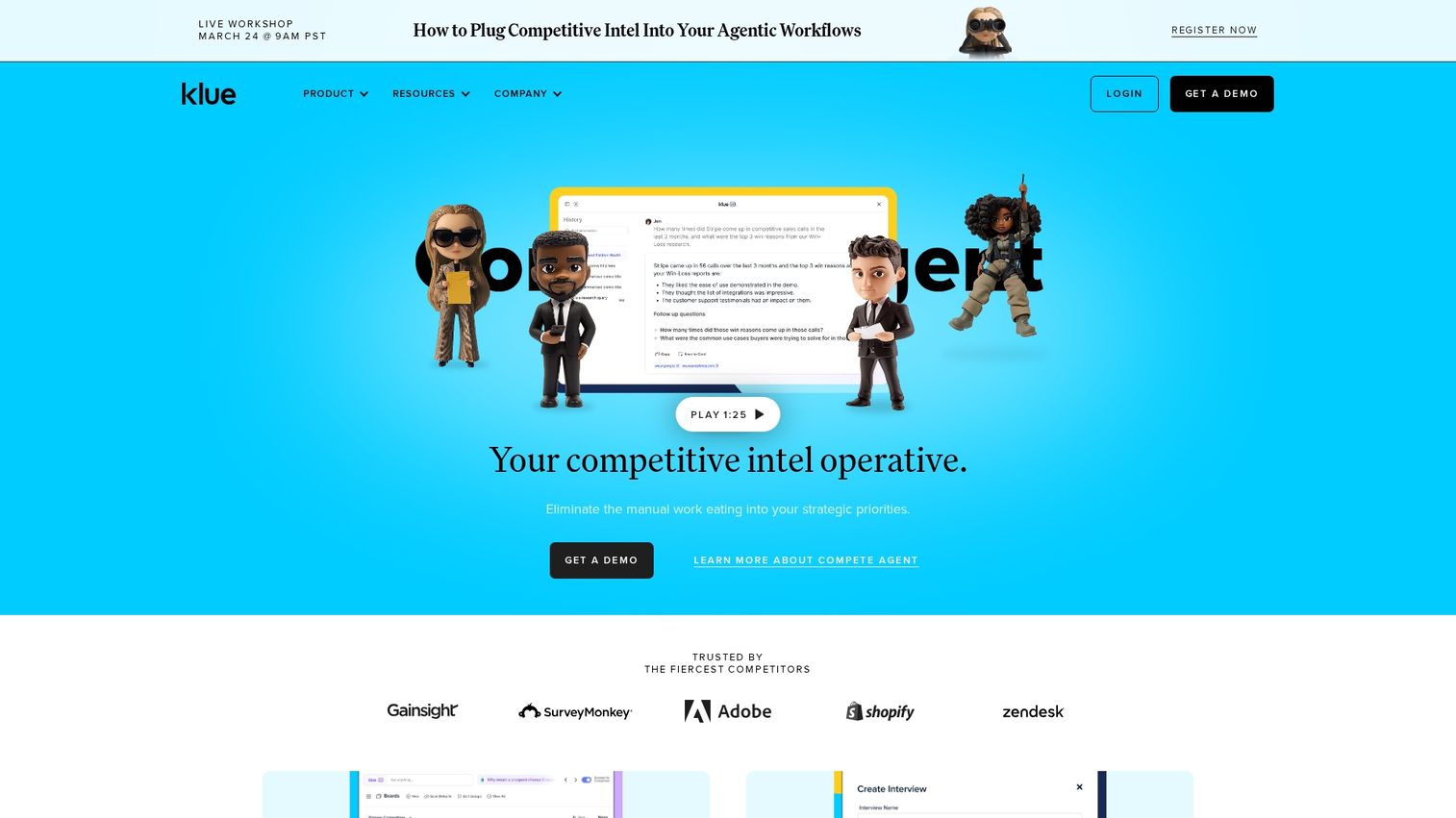
Klue focuses on the distribution and adoption side of competitive intelligence. While it collects competitor data, its real strength is helping product marketing teams build battlecards that sales actually uses.
The platform integrates win/loss analysis directly into the CI workflow, so you can see which competitive insights correlate with closed deals.
Best for: Product marketing and sales enablement teams focused on improving competitive win rates.
Key strengths
Battlecard management with version control and approval workflows
Win/loss integration shows which insights drive wins
Sales adoption tracking reveals which reps use competitive content
Integrates with Salesforce, Gong, Chorus, and Slack
Why choose Klue: Choose Klue when sales enablement adoption is your biggest challenge and you want to prove competitive content works.
Pricing: Custom pricing.
3. Contify
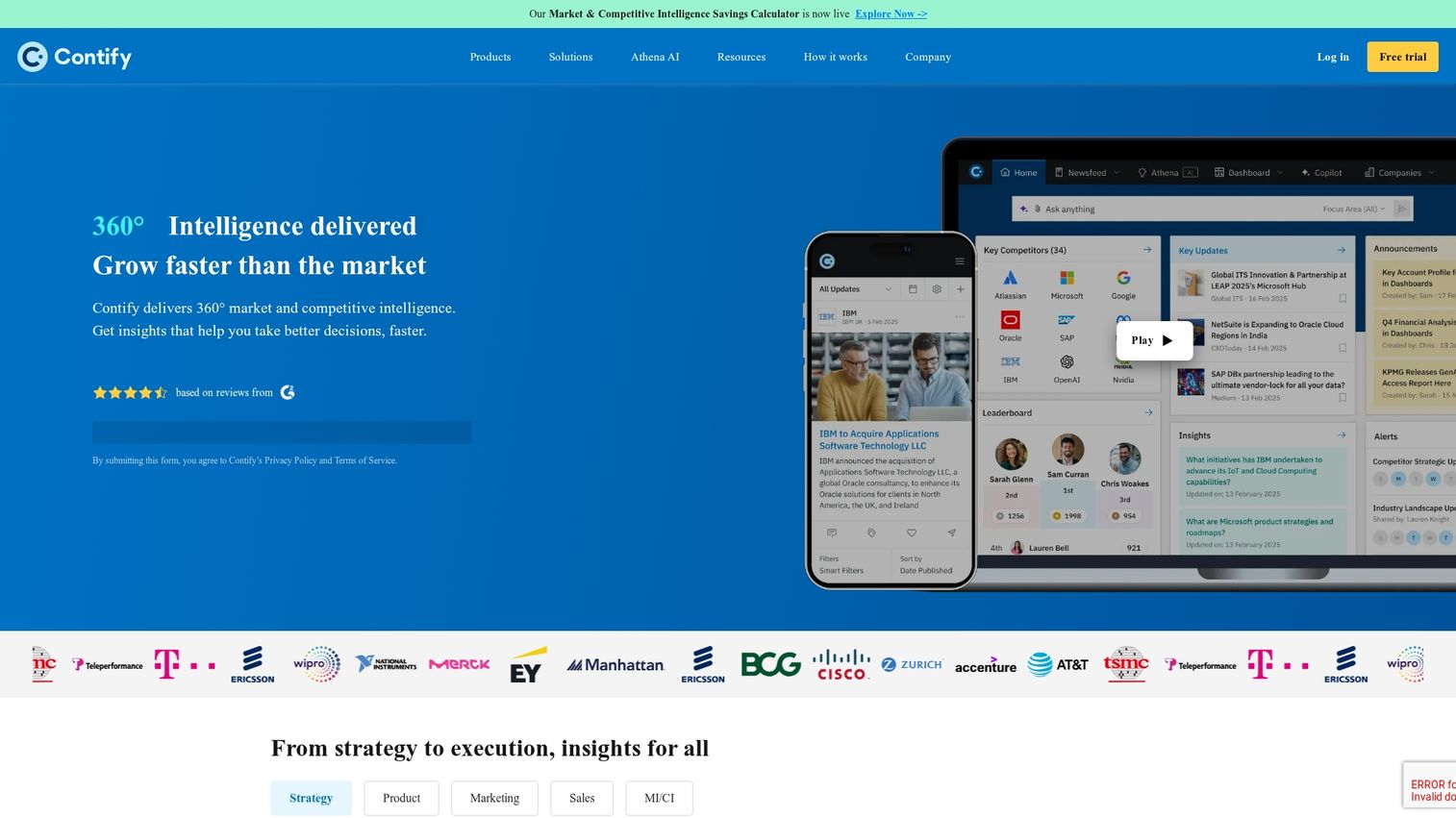
Contify is a versatile AI-powered platform for market and competitive intelligence across industries. Unlike tools focused narrowly on direct competitors, Contify aggregates intelligence from news, social media, regulatory filings, and custom sources.
Best for: Enterprise teams tracking large competitive sets across multiple markets or industries.
Key strengths
Monitors 500,000+ sources including news, social, regulatory, and custom feeds
AI-powered curation reduces noise and surfaces relevant insights
Customizable dashboards and newsletters for different stakeholders
Supports multiple languages and global markets
Why choose Contify: Pick Contify when you track dozens or hundreds of competitors and want broad market intelligence beyond direct competitors.
Pricing: Custom pricing based on sources monitored and users.
4. AlphaSense
AlphaSense, which reached a $4 billion valuation in 2024, is an AI-powered search engine for market intelligence, specializing in financial and strategic research. The platform indexes earnings calls, SEC filings, broker research, and expert transcripts.
This isn't a tool for tracking competitor website changes. It's for understanding market dynamics and strategic direction at a deeper level.
Best for: Strategy, corporate development, and investor relations teams that need financial and market research.
Key strengths
Searches across earnings calls, SEC filings, and broker research
Expert transcript library with thousands of industry interviews
AI summarization and sentiment analysis
Enterprise-grade security and compliance
Why choose AlphaSense: Choose AlphaSense when your competitive questions require financial analysis or market sizing rather than tactical sales enablement.
Pricing: Custom enterprise pricing.
5. Kompyte
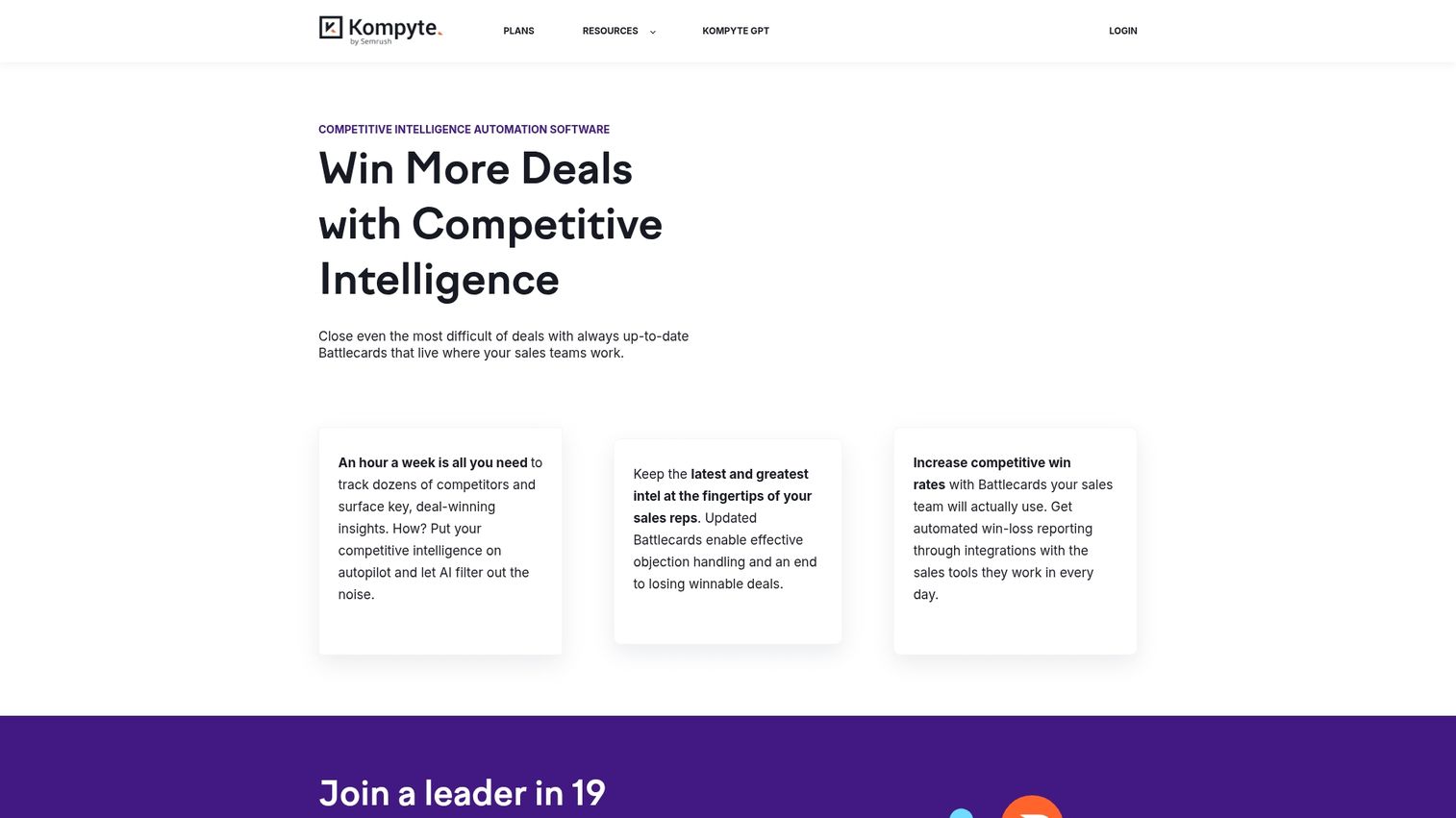
Kompyte targets product marketing teams that want automated competitor tracking tied to battlecard workflows. The platform monitors competitor websites, ads, and content, then helps you turn insights into sales-ready materials.
Best for: Product marketing teams at mid-market B2B companies with Salesforce-centric workflows.
Key strengths
Automated tracking of competitor websites, ads, and social content
Battlecard builder with templates and collaboration features
Deep Salesforce integration surfaces insights in deal context
Competitive alerts delivered via email or Slack
Why choose Kompyte: Pick Kompyte when you want solid competitor tracking with strong Salesforce integration.
Pricing: Custom pricing.
6. Valona Intelligence
Valona Intelligence serves enterprise organizations that track competitive intelligence across global markets and multiple languages.
Best for: Global enterprises with complex competitive landscapes spanning multiple regions.
Key strengths
Multi-language monitoring across global markets
Customizable intelligence feeds for different business units
Strategic planning and scenario analysis tools
Dedicated analyst support available
Why choose Valona: Choose Valona when you operate globally and want CI that works across languages and regions.
Pricing: Custom enterprise pricing.
7. SEMrush
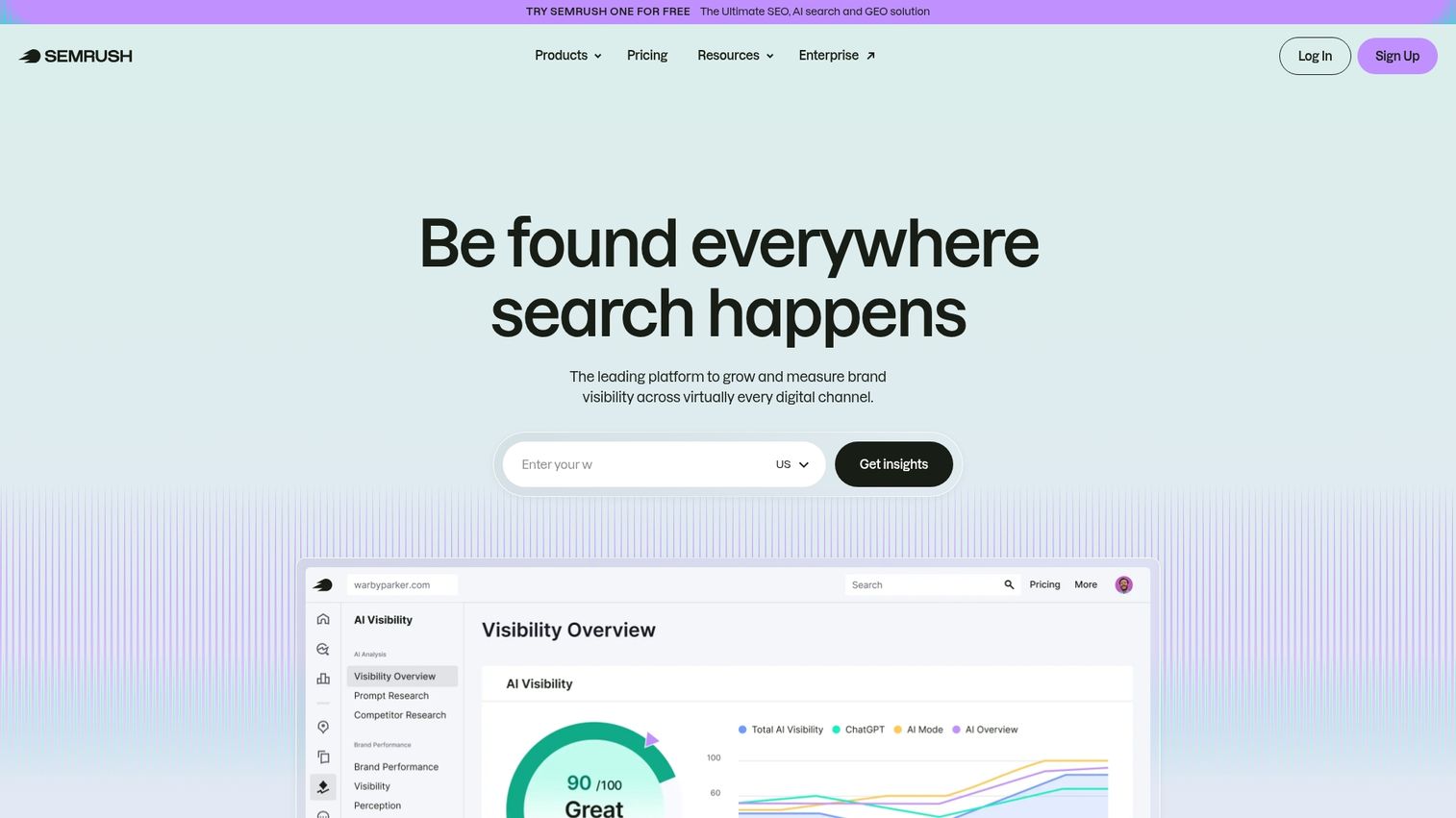
SEMrush is the leading tool for SEO and digital marketing competitive intelligence. The platform reveals where competitors rank, which keywords they target, what ads they run, and how their content performs.
Best for: Marketing teams focused on SEO, content, and paid search competitive analysis.
Key strengths
Keyword gap analysis shows where competitors rank and you don't
Backlink analysis reveals competitor link-building strategies
Paid ad monitoring tracks competitor ad copy and spend estimates
Content performance analysis identifies top-performing competitor content
Why choose SEMrush: Pick SEMrush when your competitive questions center on digital marketing performance: search rankings, content strategy, and paid advertising.
Pricing: Plans start at $139/month for Pro, $249/month for Guru, and $499/month for Business.
8. Similarweb
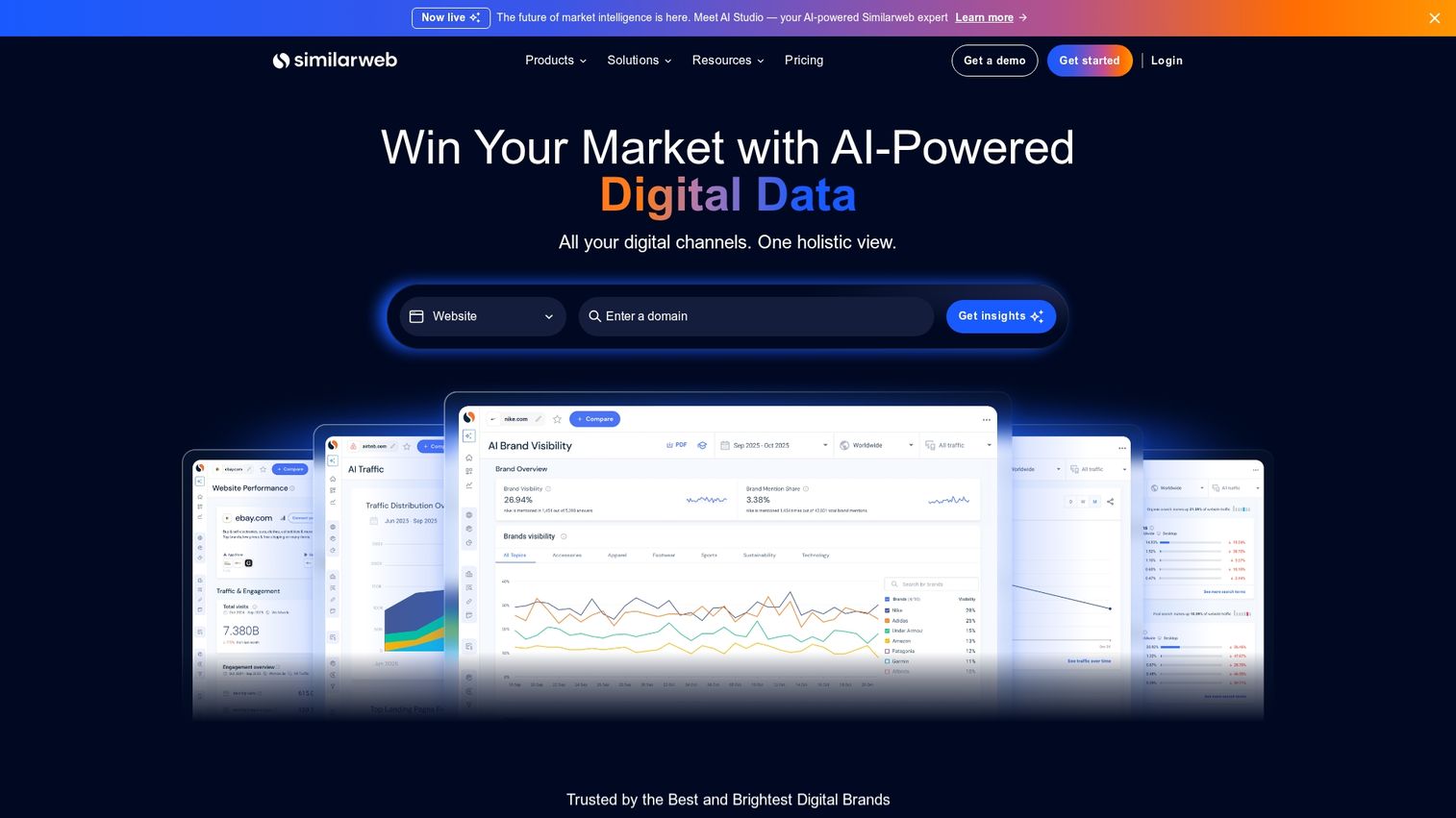
Similarweb provides insights into competitor web traffic, audience demographics, and digital market share. The platform estimates where competitors get their visitors and how engaged visitors are. For deeper competition research, combining multiple tools often yields the most comprehensive insights.
Best for: Marketing and strategy teams that want to understand competitor digital performance and audience composition.
Key strengths
Traffic source breakdown shows where competitors get visitors
Audience demographics and interests profiling
Engagement metrics including time on site and bounce rates
App intelligence for mobile competitor analysis
Why choose Similarweb: Choose Similarweb when you want to benchmark your digital performance against competitors.
Pricing: Free tier available with limited data. Paid plans are custom priced.
9. SpyFu
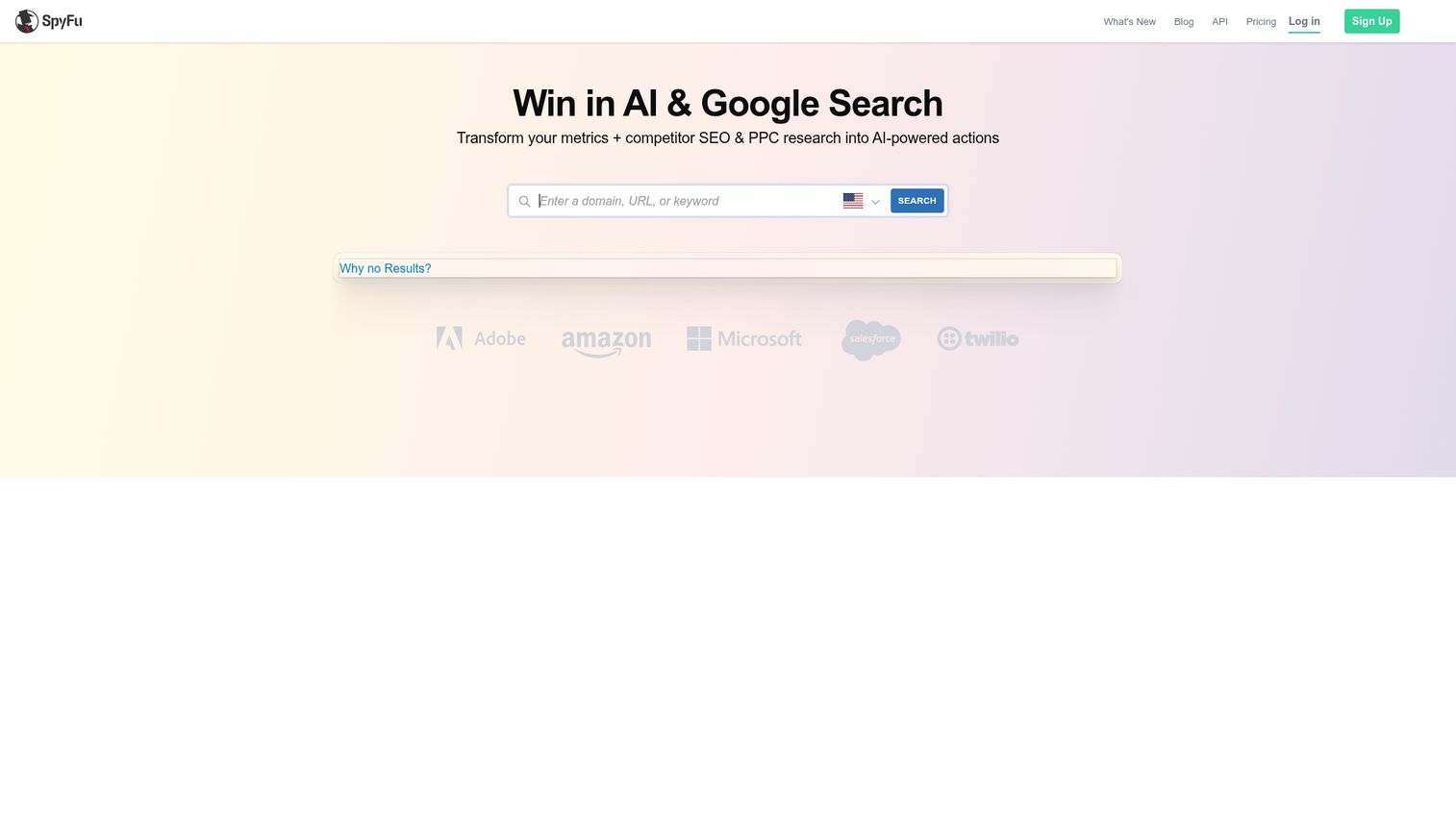
SpyFu offers SEO and PPC competitive research at a more accessible price point than enterprise tools.
Best for: Small to mid-sized marketing teams that want competitive SEO and PPC insights without enterprise pricing.
Key strengths
Competitor keyword tracking with historical data
PPC ad history shows competitor ad copy evolution
Ranking history tracks competitor SEO performance over time
Affordable pricing compared to enterprise alternatives
Why choose SpyFu: Pick SpyFu when you want solid SEO and PPC competitive data on a budget.
Pricing: Plans start at $39/month for Basic, $79/month for Professional.
10. Feedly
Feedly aggregates content from competitor blogs, news sources, and industry publications, then uses AI to filter and prioritize what matters.
Best for: Teams that want to monitor competitor content and industry news without a dedicated CI platform.
Key strengths
RSS aggregation from competitor blogs and news sources
AI-powered filtering prioritizes relevant content
Custom topic tracking with keyword alerts
Integrates with Slack, Teams, and productivity tools
Why choose Feedly: Choose Feedly as a starting point for content monitoring or as a complement to more comprehensive CI tools.
Pricing: Free tier available. Pro plans start at $6/month.
11. WatchMyCompetitor
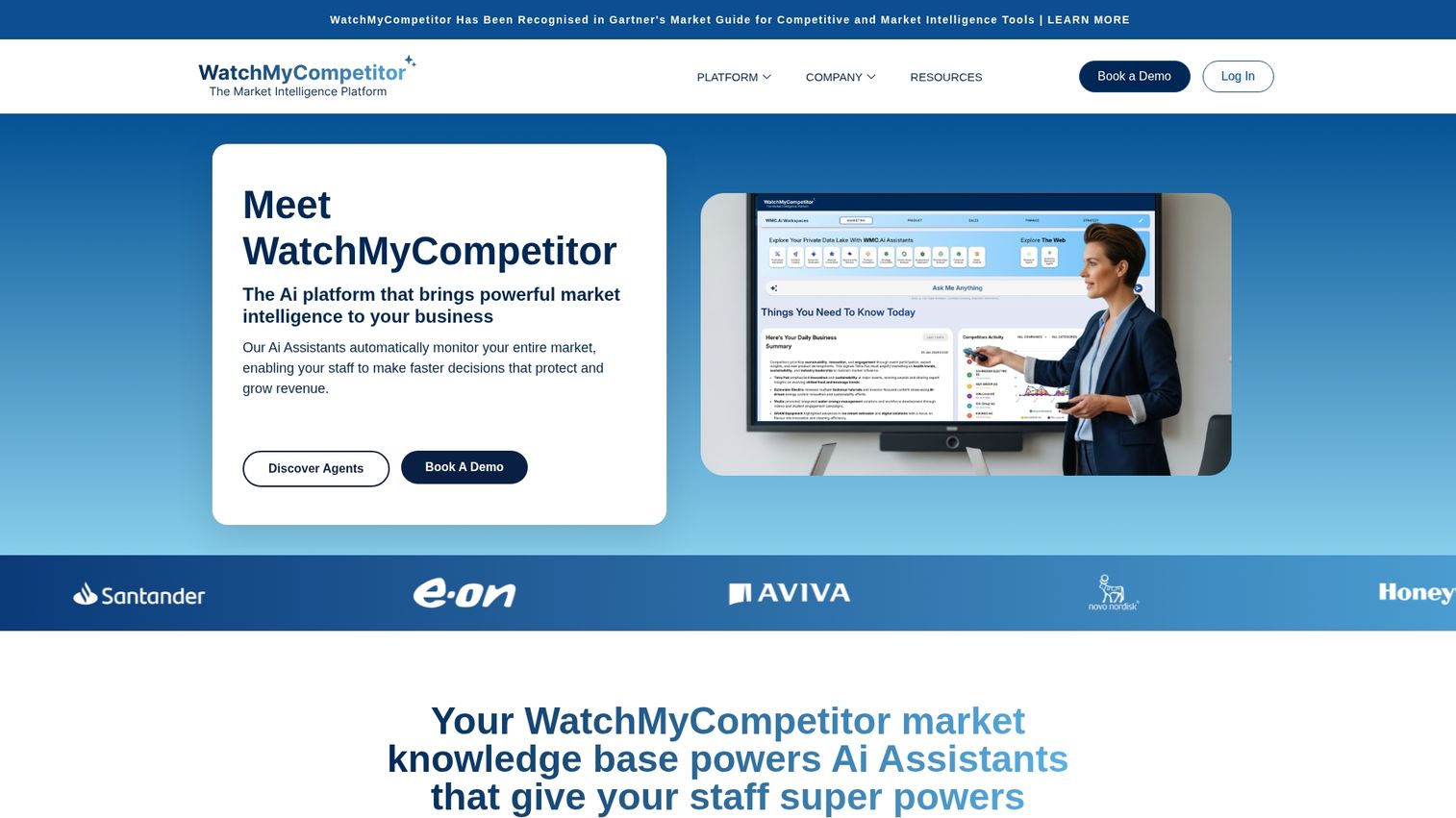
WatchMyCompetitor automates monitoring of competitor websites, detecting changes and alerting you when something shifts.
Best for: Teams that want automated website change detection without a full CI platform.
Key strengths
Website change detection with visual comparisons
Pricing page monitoring with historical tracking
Job posting tracking signals competitor hiring priorities
Automated alerts via email or Slack
Why choose WatchMyCompetitor: Pick this tool when website change monitoring is your primary focus.
Pricing: Custom pricing.
12. Wide Narrow
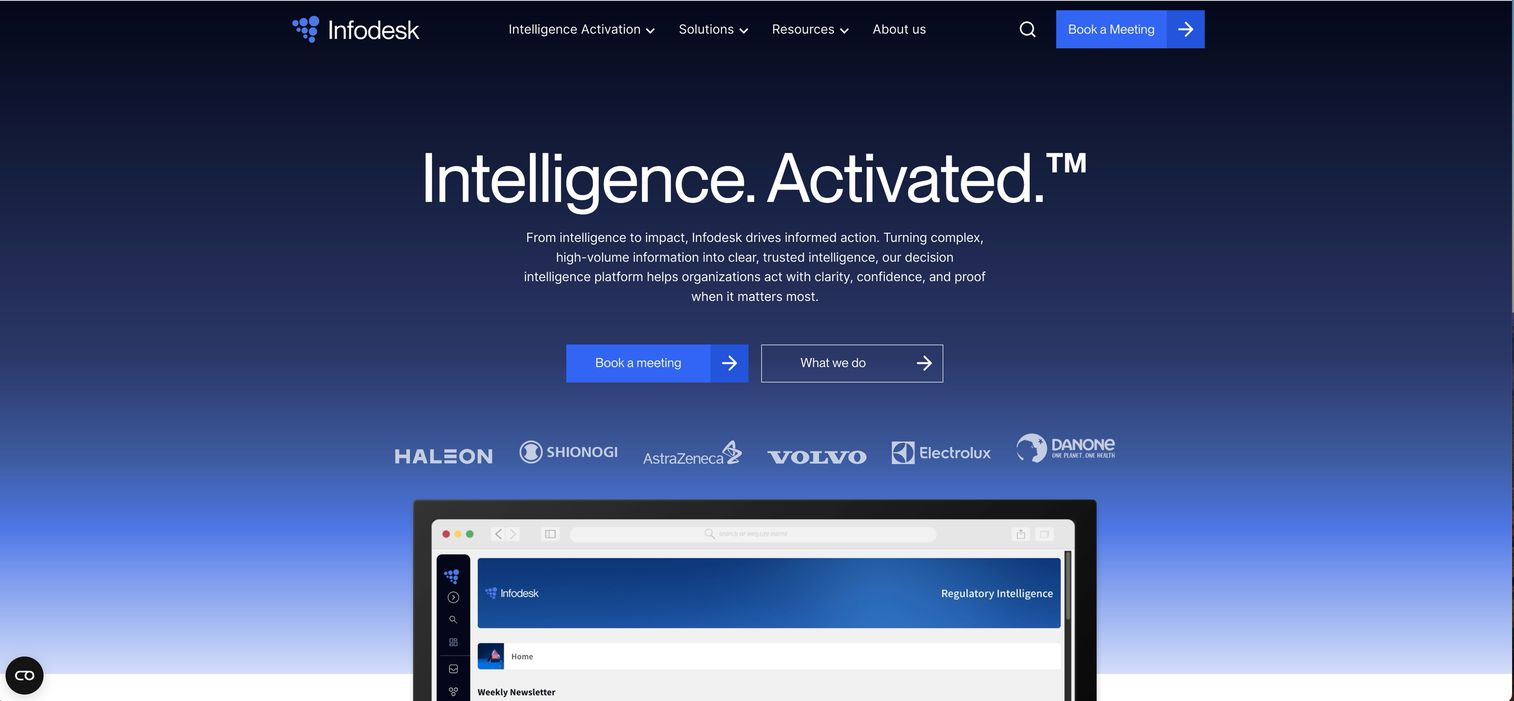
Wide Narrow serves corporate strategy teams that want competitive intelligence for strategic planning and scenario analysis.
Best for: Corporate strategy and planning teams at large enterprises.
Key strengths
Scenario planning and strategic foresight tools
Market sensing across multiple intelligence sources
Executive-ready reporting and visualization
Collaboration features for strategy teams
Why choose Wide Narrow: Choose Wide Narrow when your CI focuses on strategic planning rather than sales enablement.
Pricing: Custom enterprise pricing.
13. CI Radar
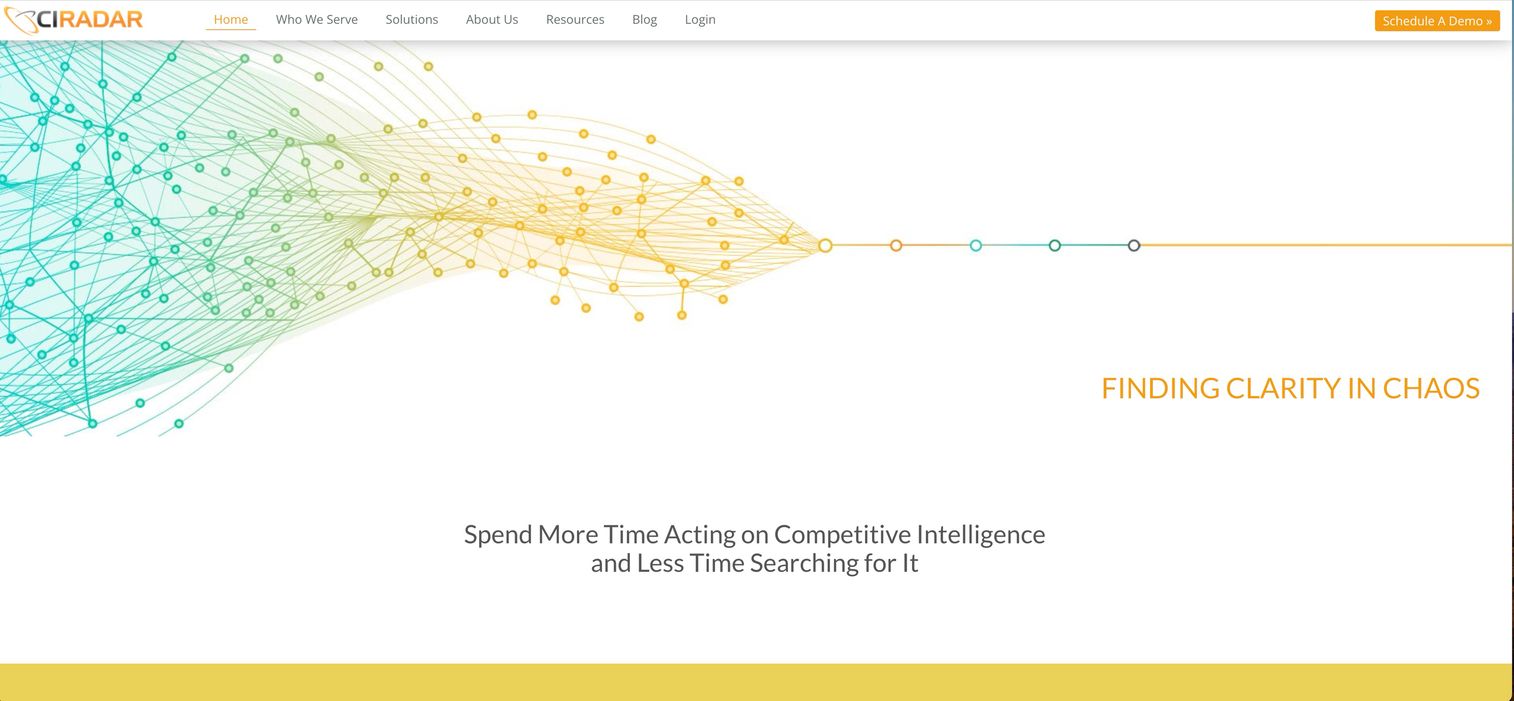
CI Radar takes a different approach: human analysts curate competitive intelligence rather than relying solely on automation. This reduces noise and delivers more relevant insights.
Best for: Teams that want curated intelligence with less noise than automated platforms.
Key strengths
Human analyst curation reduces irrelevant alerts
Customized monitoring based on your specific priorities
White-glove service with dedicated support
Works well alongside automated tools
Why choose CI Radar: Pick CI Radar when automated tools generate too much noise and you value analyst judgment.
Pricing: Custom pricing based on scope.
14. Visualping
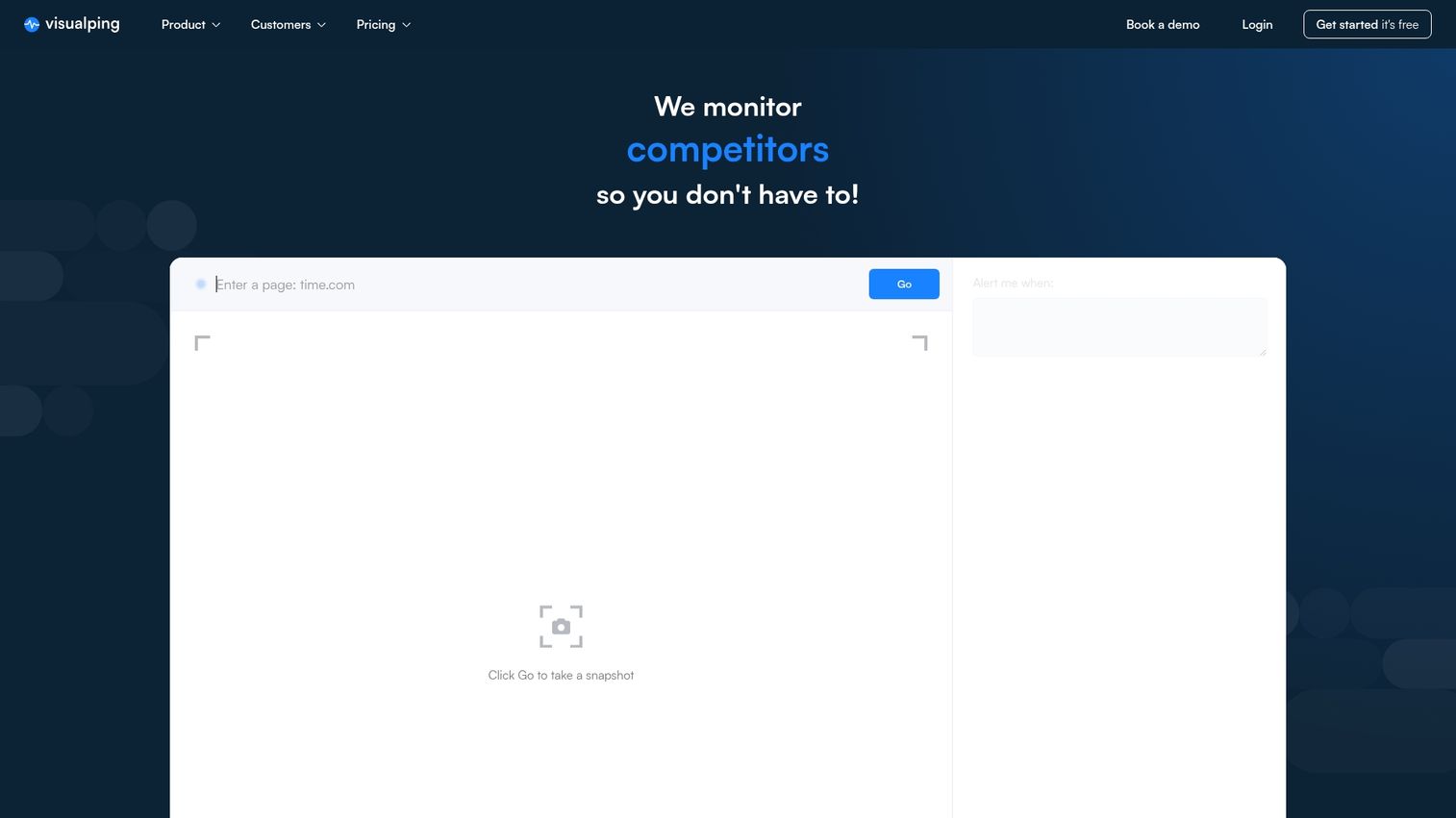
Visualping is a simple, affordable tool for monitoring webpage changes. Point it at competitor pages, and it alerts you when something changes with visual comparisons.
Best for: Teams with basic monitoring requirements or tight budgets who want simple change alerts.
Key strengths
Easy setup without technical complexity
Screenshot comparisons show exactly what changed
Affordable pricing with free tier available
Email and Slack alerts
Why choose Visualping: Choose Visualping as a lightweight starting point for competitor monitoring.
Pricing: Free tier with limited checks. Paid plans start at $14/month.
15. Owler
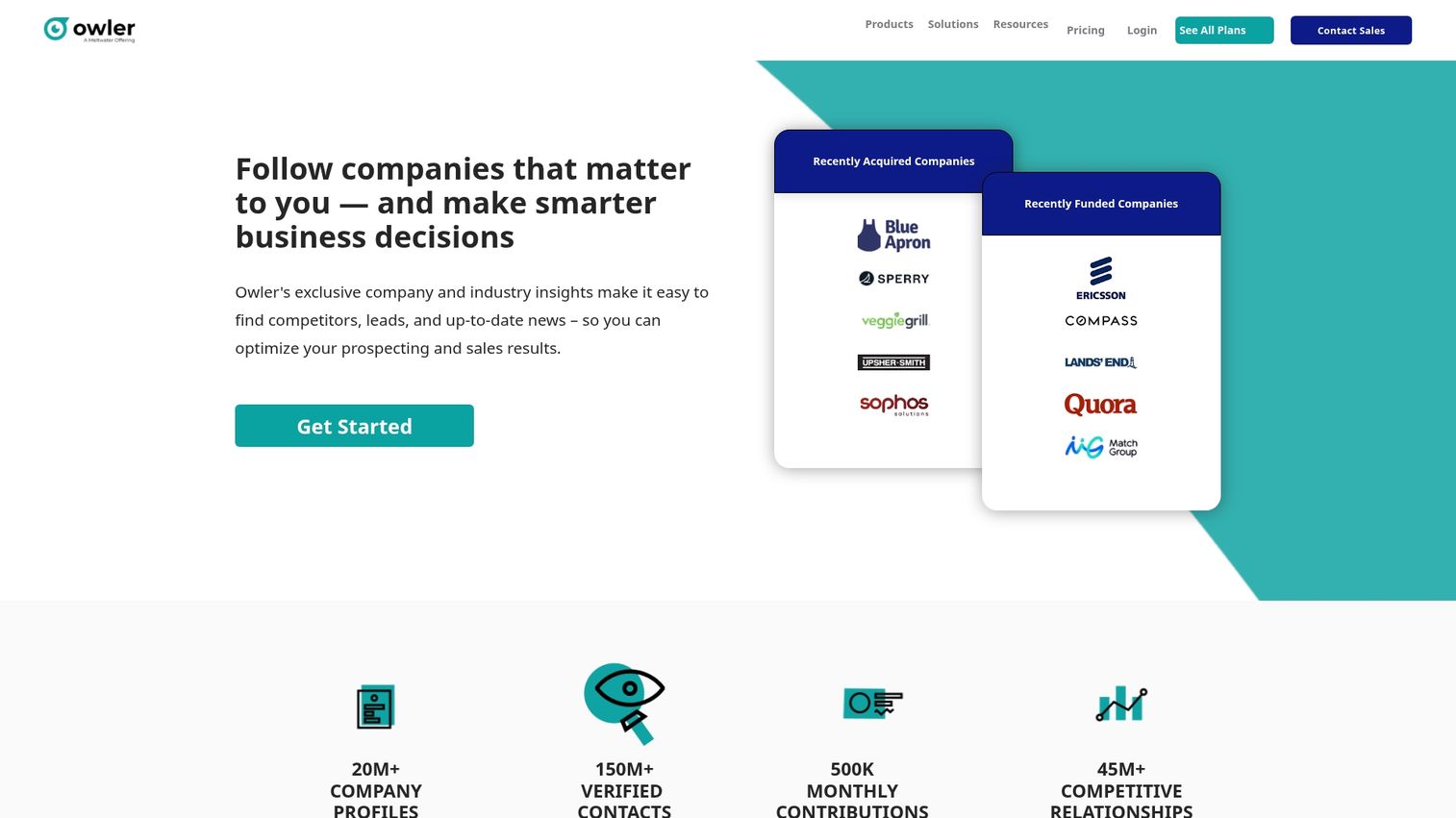
Owler provides company profiles with funding data, revenue estimates, and news aggregation. The community-powered model means data quality varies, but the free tier makes it accessible.
Best for: Teams starting with competitive intelligence who want basic company data without cost.
Key strengths
Company profiles with funding and revenue estimates
News aggregation for tracked companies
Free tier available for basic research
Integrates with CRM and sales tools
Why choose Owler: Pick Owler as a free starting point for company research.
Pricing: Free tier available. Pro plans start at $35/month.
How to choose the right competitive intelligence solution
The best CI tool depends on your primary use case, team size, and existing tech stack.
Data sources and competitor coverage
Tools vary significantly in what they monitor. Map your intelligence priorities to tool capabilities before evaluating.
Website and content monitoring: Essential for tracking competitor messaging and feature changes
News and PR aggregation: Important for staying current on competitor announcements
Financial and market data: Critical for strategic planning and investor relations
Social and review monitoring: Useful for understanding competitor reputation
AI features for automated intelligence gathering
AI capabilities range from basic keyword alerts to sophisticated summarization and trend detection. According to Mordor Intelligence, generative AI can cut data-processing time by 45%, but typically comes with higher pricing.
CRM and GTM stack integrations
Competitive insights are most valuable when they reach pre-sales teams in their workflow, not stuck in a separate platform. Prioritize tools that integrate with your CRM, Slack, and other daily tools.
Sales enablement and battlecard distribution
Some platforms focus on collection while others excel at distribution. If your goal is arming sales with competitive content, prioritize tools with strong battlecard and enablement features.
Pricing model and team scalability
CI tools range from free (Owler, Visualping) to enterprise pricing. Consider per-seat vs. flat-rate pricing, limits on competitors tracked, and implementation costs.
From competitive insights to buyer conversion
Competitive intelligence is only valuable when it reaches buyers and influences decisions. The best CI programs translate insights into content, messaging, and experiences that help prospects understand your differentiation.
One gap many teams face: they know their competitive positioning, but prospects can't experience it firsthand. Static battlecards and pitch decks tell the story, but they don't show it. Interactive demos can help product marketing teams turn competitive positioning into self-serve product experiences where prospects see your differentiation for themselves.
Start your journey with Guideflow today!
FAQs about competitive intelligence software
The 4 Ps are Product, Price, Place, and Promotion. This framework helps you analyze how competitors position and sell their offerings across feature sets, pricing models, distribution channels, and marketing tactics.
Competitive intelligence is legal and ethical when it relies on publicly available information, customer feedback, and legitimate research methods. Avoid deception, bribery, or theft of proprietary data.
Competitive intelligence focuses specifically on tracking and analyzing direct competitors. Market intelligence covers broader industry trends, customer behavior, and macroeconomic factors. Many teams use both.
Teams typically measure CI tool ROI through improvements in competitive win rates, reduced time spent on manual research, increased battlecard usage by sales, and faster response to competitor moves.
Platforms like AlphaSense, Crayon, and Contify lead in AI capabilities, offering automated summarization, trend detection, and intelligent alerting.
Review and update battlecards quarterly at minimum, with real-time updates triggered by significant competitor moves like pricing changes or new product launches.
Most enterprise CI platforms offer native integrations with Salesforce, HubSpot, and other CRMs, allowing competitive insights and battlecards to surface directly within sales workflows.