You spent three hours building that proposal in Word. The prospect opened it, skimmed the pricing table, and went silent. You have no idea what happened because static documents don't talk back.
Proposal software fixes that visibility gap by letting you create, send, track, and sign business proposals digitally - essential now that 80% of B2B sales interactions occur in digital channels. This guide breaks down what these tools actually do, when they're worth the investment, and reviews 11 of the best options for sales teams in 2026.
What's inside
This guide covers what proposal software is, when sales teams benefit most from it, and how to choose the right platform. We review 11 of the best tools available, complete with pricing, G2 ratings, and key features to help you make an informed decision and accelerate your sales cycle.
TL;DR
- Proposal software helps sales teams create, send, track, and manage business proposals digitally, replacing manual Word and PDF workflows.
- Top use cases include outbound prospecting at scale, managing multi-stakeholder enterprise deals, and standardizing proposals across distributed teams.
- For truly engaging proposals, tools like Guideflow allow you to embed interactive product demos directly into your documents.
- Key selection criteria include template design, tracking analytics, e-signature capabilities, and CRM integrations.
What is proposal software and why sales teams use it
Proposal software streamlines creating, sending, tracking, and signing business proposals. Top tools like PandaDoc, Proposify, Qwilr, and Better Proposals offer templates, e-signatures, analytics, and CRM integration, with pricing ranging from roughly $10 to $35+ per user/month.
The core problem: static proposals lose deals because buyers can't engage with them. When you send a PDF, you have no idea if the prospect opened it, which sections they read, or whether they forwarded it to a colleague. That lack of visibility makes follow-up guesswork.
Core features of proposal management software
- Template libraries: Pre-built, branded proposal templates for consistent messaging across your team
- Drag-and-drop editors: No-code builders for customizing content, pricing tables, and visuals
- Electronic signatures: Legally binding e-sign capabilities built into the proposal workflow
- Document tracking: Real-time notifications when prospects open, view, or forward proposals
- CRM integrations: Auto-populate client data from Salesforce, HubSpot, or other sales tools
How proposal automation speeds up sales cycles
Proposal automation eliminates manual copy-paste work, auto-fills client details from your CRM, and can trigger automated follow-up sequences - saving reps an estimated 2 hours 15 minutes per day on manual tasks. Automated approval workflows remove internal bottlenecks, ensuring proposals get to clients faster.
Tracking analytics help reps prioritize hot leads by focusing on prospects who show strong engagement signals. If someone spent 10 minutes on your pricing page, that's a different conversation than someone who never opened the document.
Static PDFs vs interactive proposals
| Aspect | Static PDF proposals | Interactive online proposals |
|---|---|---|
| Engagement | One-way, no feedback | Clickable, trackable |
| Personalization | Manual edits per client | Dynamic variables at scale |
| Tracking | No visibility | Real-time open/view alerts |
| Signing | Print, scan, return | Built-in e-signatures |
| Updates | Resend entire document | Edit live, notify client |
When sales teams benefit most from proposal software
While not every deal requires dedicated proposal software, certain scenarios make the investment worthwhile.
Outbound prospecting at scale
Proposal generation software helps SDRs and AEs send personalized proposals quickly without starting from scratch. Features like template libraries and mail merge functionality allow teams to maintain a personal touch while operating at scale.
Multi-stakeholder enterprise deals
Enterprise sales involve multiple decision-makers who share documents internally. Proposal tracking software shows which stakeholders opened the proposal and which sections they reviewed. That insight helps reps tailor follow-up conversations to the specific interests of each person involved.
Standardizing proposals across distributed teams
Proposal management tools create a single source of truth for pricing, messaging, and branding. Sales managers can lock certain sections while allowing reps to customize others. This control prevents rogue discounting and keeps all client-facing documents consistent.
Best proposal software comparison table
| # | Product | Best for | Key differentiation | Pricing | G2 rating |
|---|---|---|---|---|---|
| 1 | PandaDoc | All-in-one document automation | Templates + e-sign + payments in one platform | From $19/user/mo | 4.7/5 |
| 2 | Storydoc | Proposal automation and brand governance | Interactive AI proposals with CRM personalization and slide-level analytics | From $19.80/mo | 4.7/5 |
| 3 | Proposify | Sales proposal standardization | Content locking and approval workflows | From $49/user/mo | 4.6/5 |
| 4 | Qwilr | Design-forward web proposals | Interactive, mobile-responsive proposal pages | From $35/user/mo | 4.5/5 |
| 5 | Better Proposals | Small teams and freelancers | Simple editor with payment integrations | From $19/user/mo | 4.4/5 |
| 6 | GetAccept | Deal room + proposal combo | Video messaging and live chat in proposals | From $15/user/mo | 4.6/5 |
| 7 | Oneflow | Contract-heavy workflows | End-to-end contract lifecycle management | Custom pricing | 4.6/5 |
| 8 | DealHub | CPQ + proposal integration | Configure-price-quote with proposal generation | Custom pricing | 4.7/5 |
| 9 | Conga | Enterprise document automation | Salesforce-native with complex workflows | Custom pricing | 4.3/5 |
| 10 | Proposable | Mid-market sales teams | Balance of features and affordability | From $19/user/mo | 4.3/5 |
| 11 | HoneyBook | Creative agencies and consultants | Client management beyond proposals | From $16/mo | 4.5/5 |
11 best sales proposal software tools reviewed
1. PandaDoc
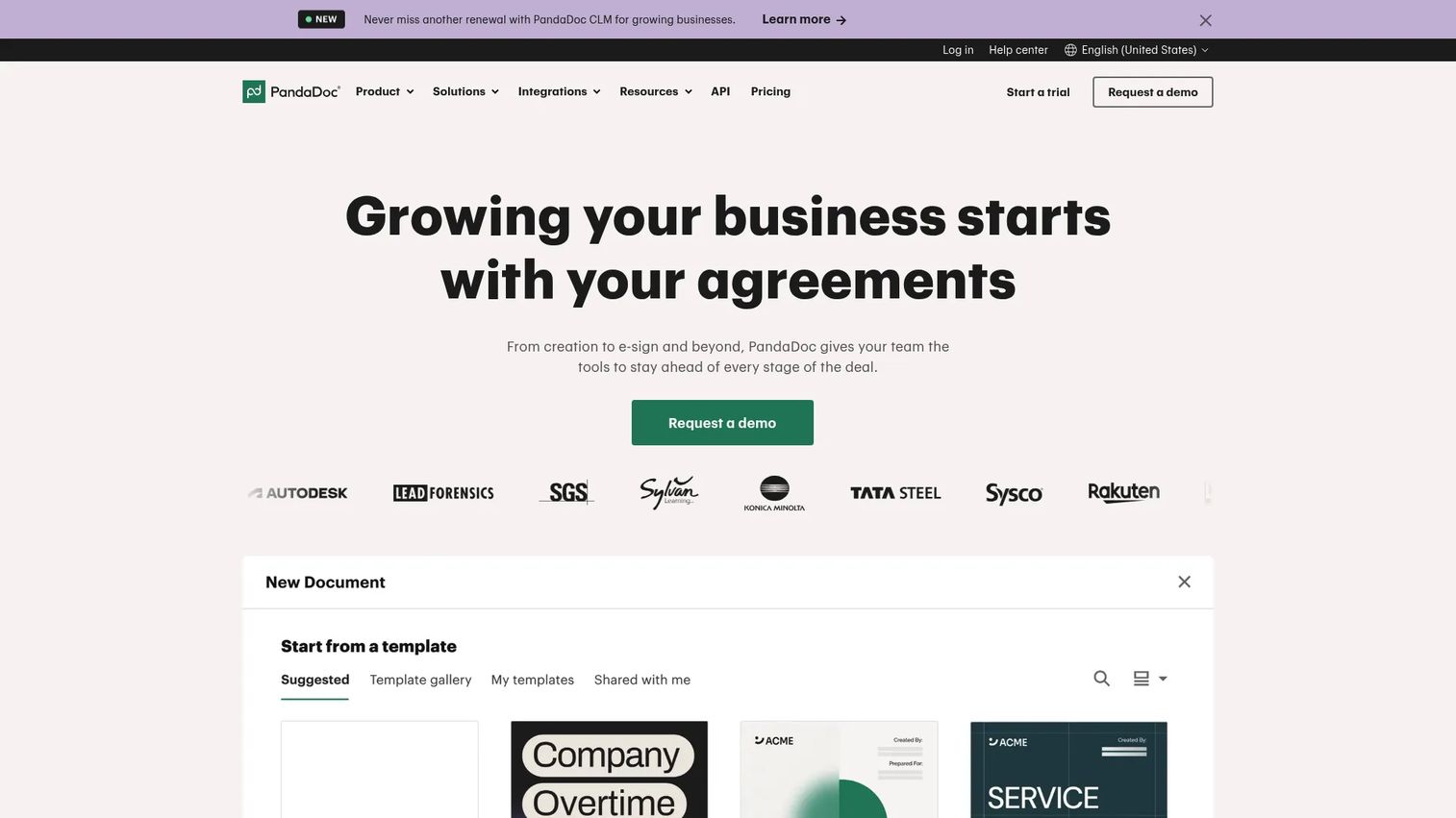
PandaDoc is an all-in-one proposal creation software that combines templates, e-signatures, and payment collection in a single platform. The drag-and-drop editor makes customization straightforward, and the central content library keeps messaging consistent across your team.
Best for: Teams who want to automate documents across the entire sales cycle, from proposals and quotes to final contracts.
To see how PandaDoc works in practice, this quick tutorial walks you through creating your first document - the starting point for building proposals.
Key strengths
- Library of proposal templates by industry
- Built-in e-signatures included in all paid plans
- Payment collection via Stripe integration
- Deep integrations with Salesforce and HubSpot
2. Storydoc
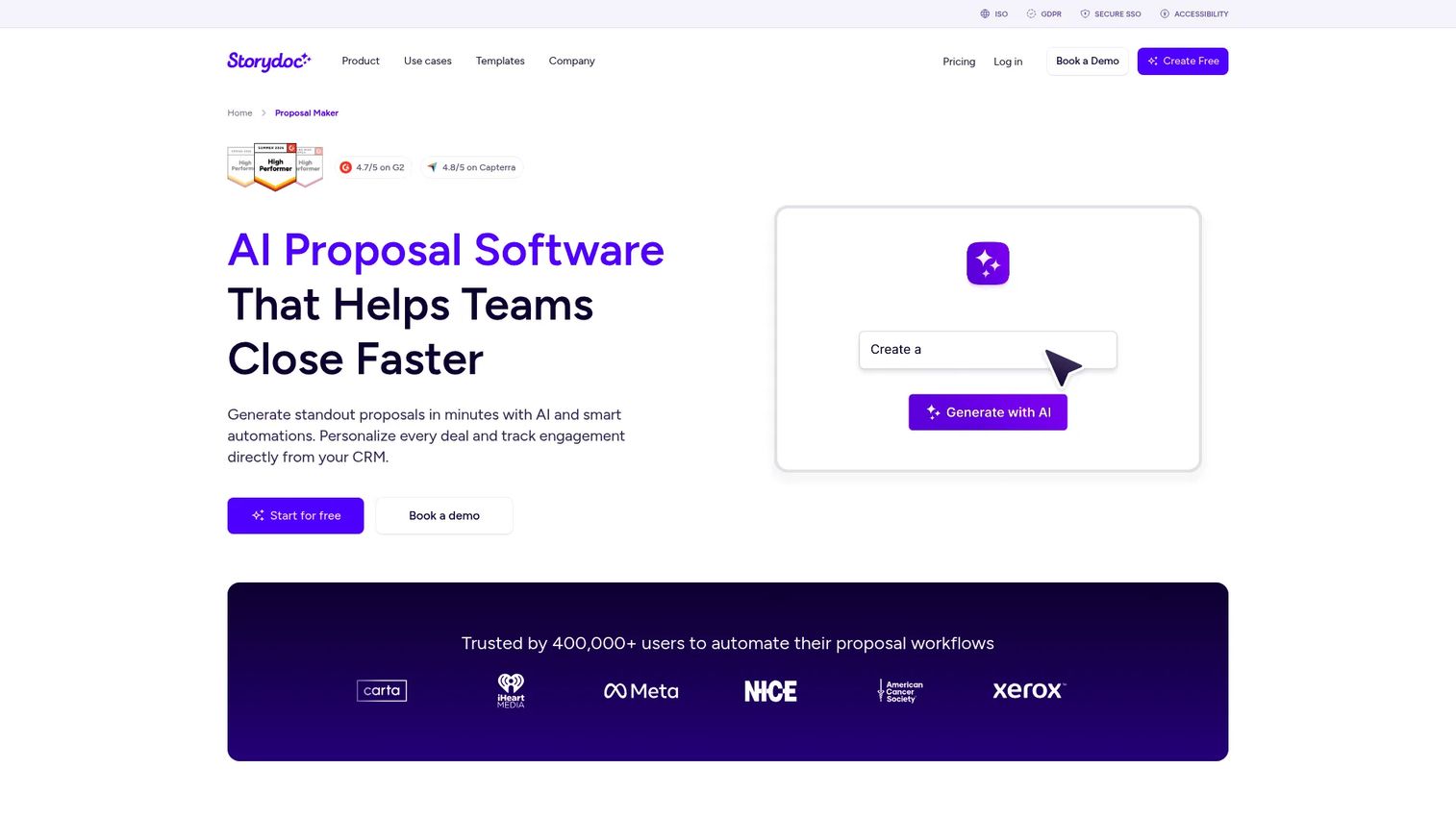
Storydoc is an AI proposal automation platform that stands out due to its interactive design. It leverages powerful CRM integrations to generate on-brand personalized proposals. Storydoc also comes with great embeds, such as video content, forms, calendars or e-signing tools.
Best for: Teams who want to automate their proposals and maintain brand governance and brand consistency.
Key strengths
- Template gallery or brand-controlled AI generation
- Brand governance and organization oversight
- Powerful integrations with HubSpot, Salesforce and other marketing tools
- Slide-level tracking analytics and engagement alerts
3. Proposify
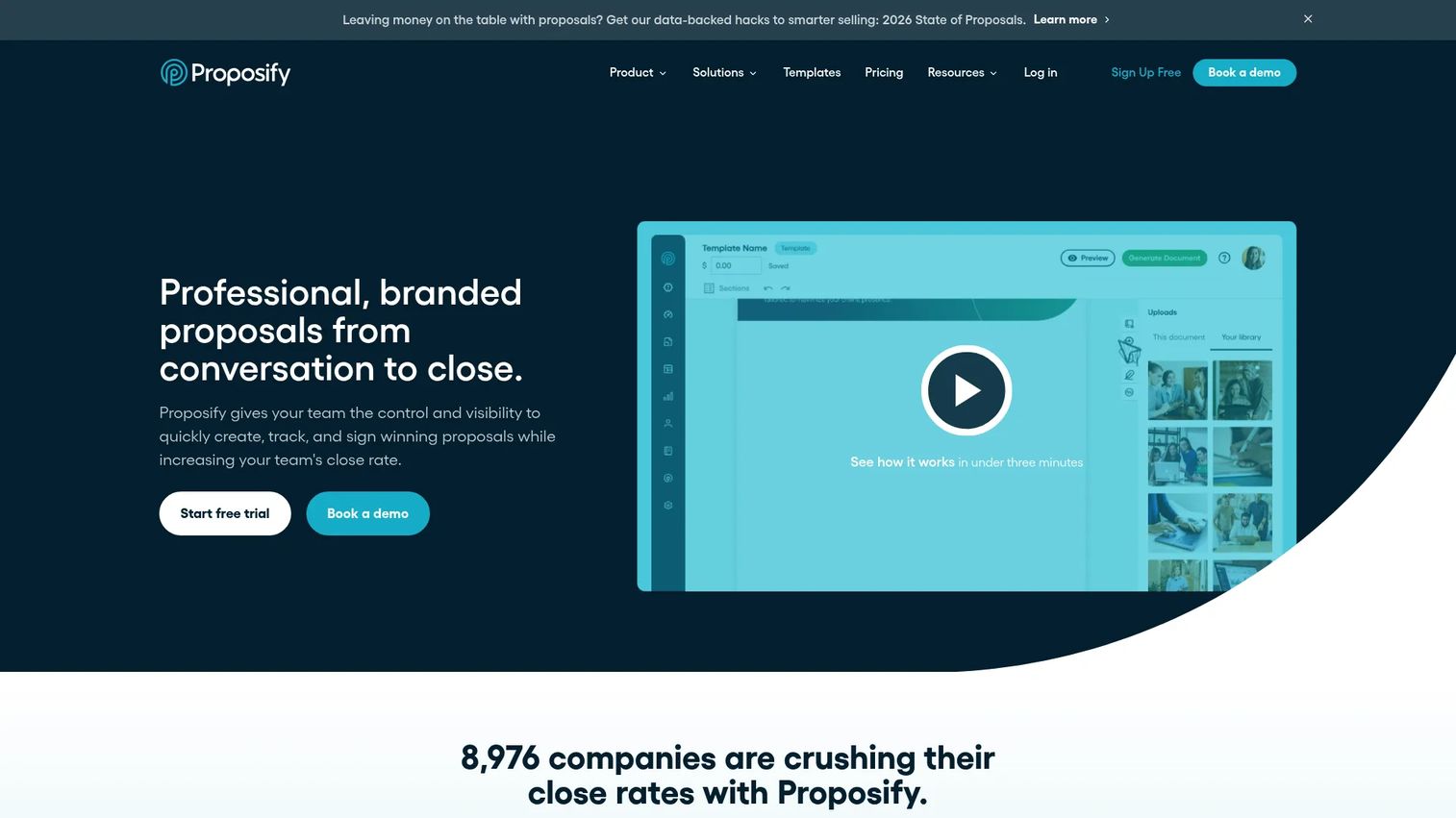
Proposify is proposal management software built for sales team control and consistency. Features like content locking and approval workflows ensure that pricing, legal terms, and branding remain consistent across all proposals.
Best for: Sales managers who want to standardize what reps send out.
Key strengths
- Content locking to protect pricing and legal terms
- Approval workflows before proposals go out
- Pipeline view showing proposal status across deals
- Detailed analytics on proposal performance
4. Qwilr
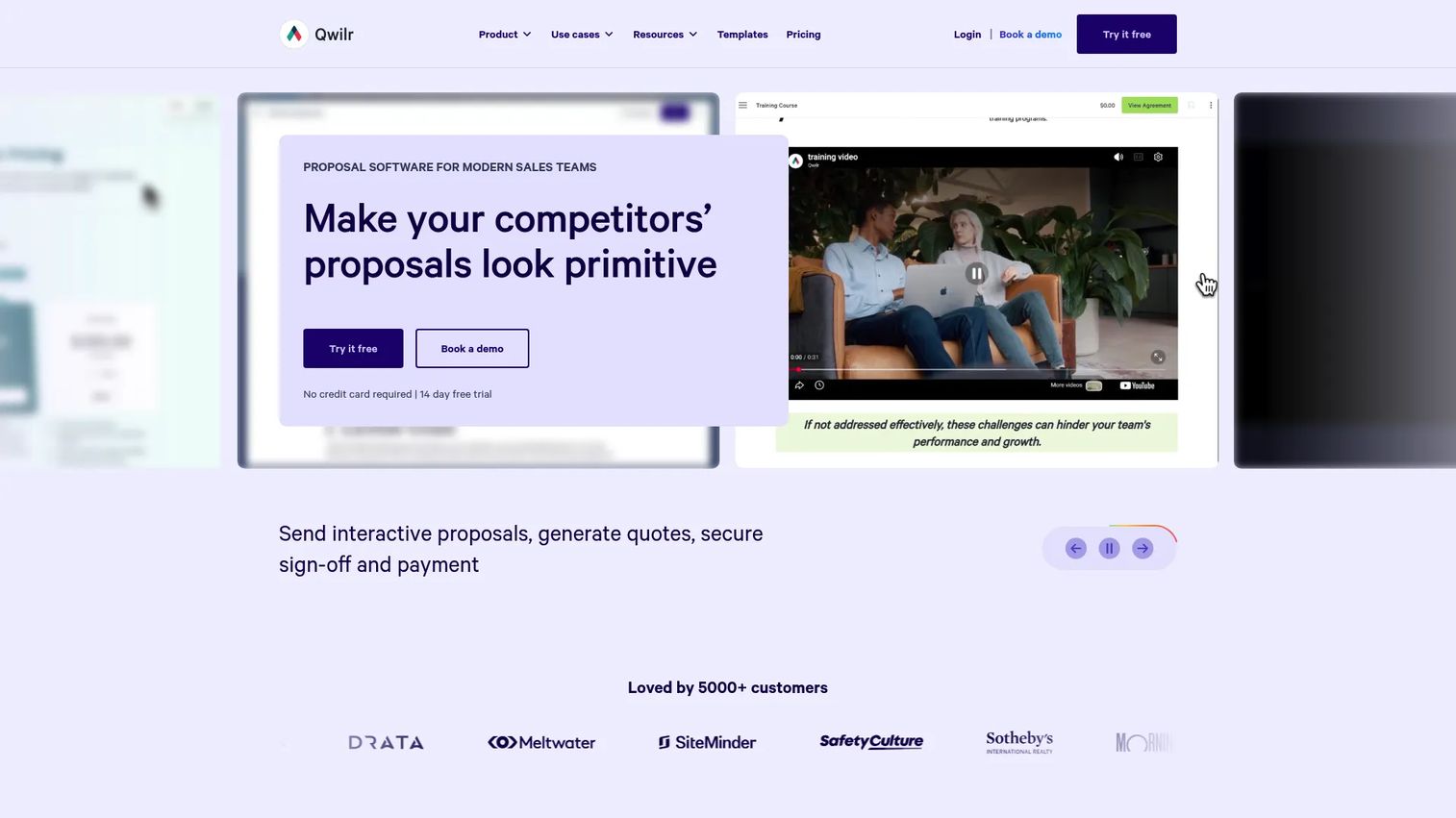
Qwilr is a design-focused online proposal builder that creates interactive, web-based proposal pages instead of static PDFs. The proposals look like custom landing pages, complete with mobile-responsive design.
Best for: Teams where brand presentation is paramount.
Key strengths
- Web-based proposals that look like landing pages
- Interactive pricing with accept buttons
- Mobile-responsive design out of the box
- Embeddable videos and custom blocks
5. Better Proposals
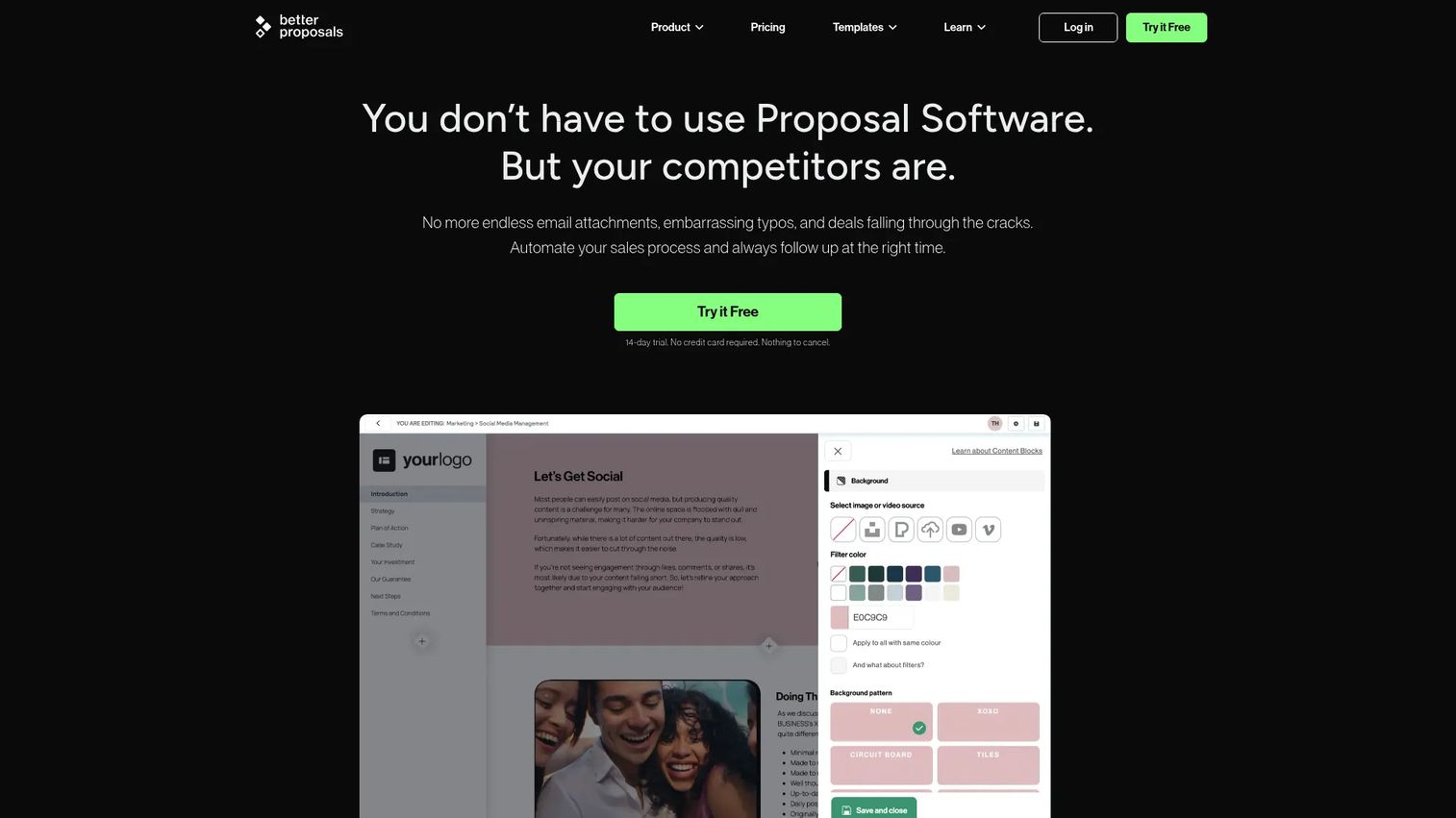
Better Proposals is proposal software designed for small businesses and freelancers who value simplicity. The template marketplace helps users get started without designing from scratch.
Best for: Consultants, agencies, and solo sellers who want to create professional proposals quickly.
Key strengths
- Simple editor with minimal learning curve
- Payment integrations with Stripe, PayPal, GoCardless
- Digital signatures included
- Automatic follow-up reminders
6. GetAccept
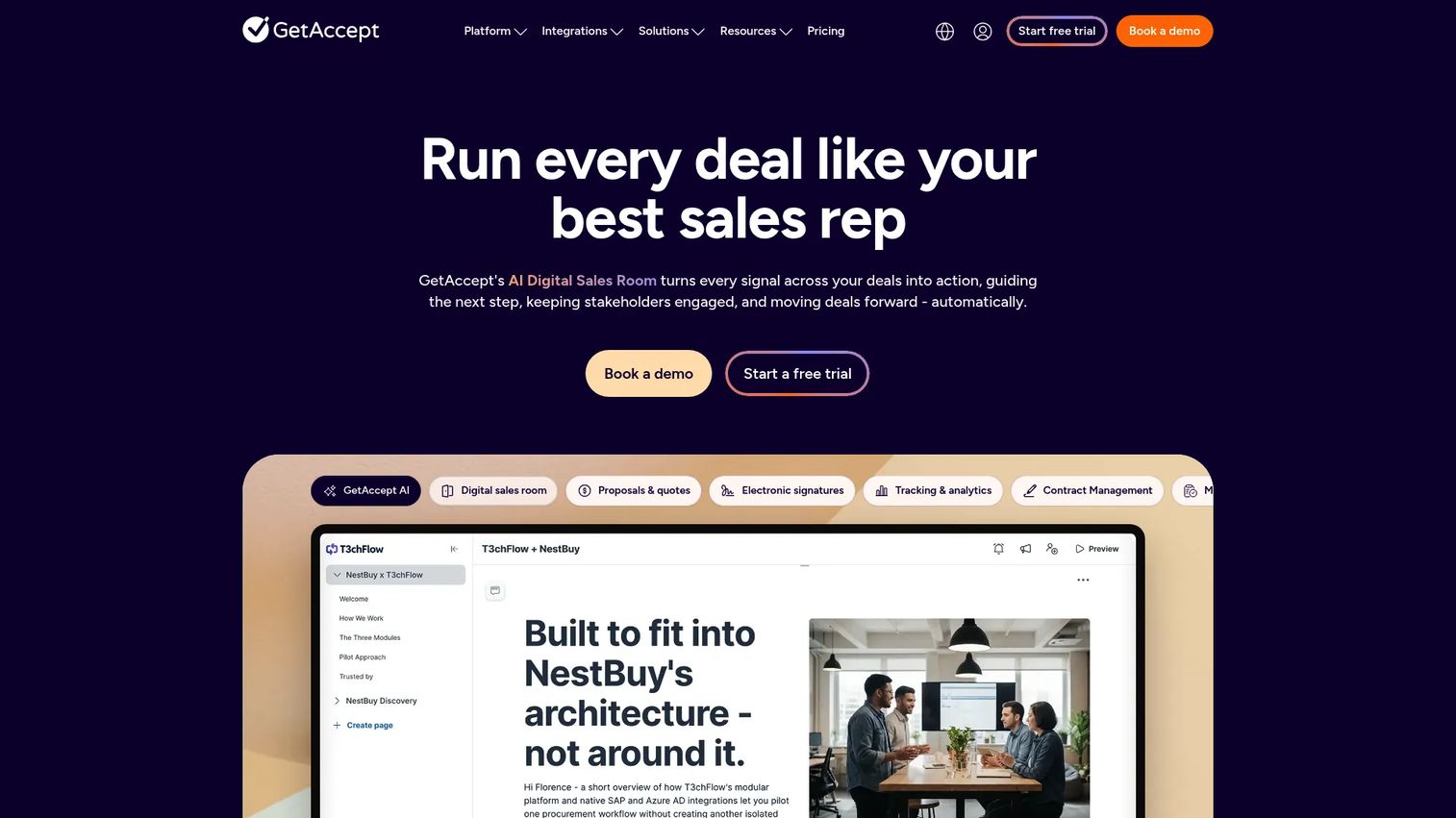
GetAccept is a digital sales room platform that combines proposals with video, chat, and engagement tracking. A standout feature is the ability to record and embed personalized video introductions for proposals.
Best for: Relationship-driven B2B sales where personalization is key.
Key strengths
- Video messaging embedded in proposals
- Live chat with prospects inside documents
- Deal room for multi-asset sharing
- Engagement scoring and intent signals
7. Oneflow
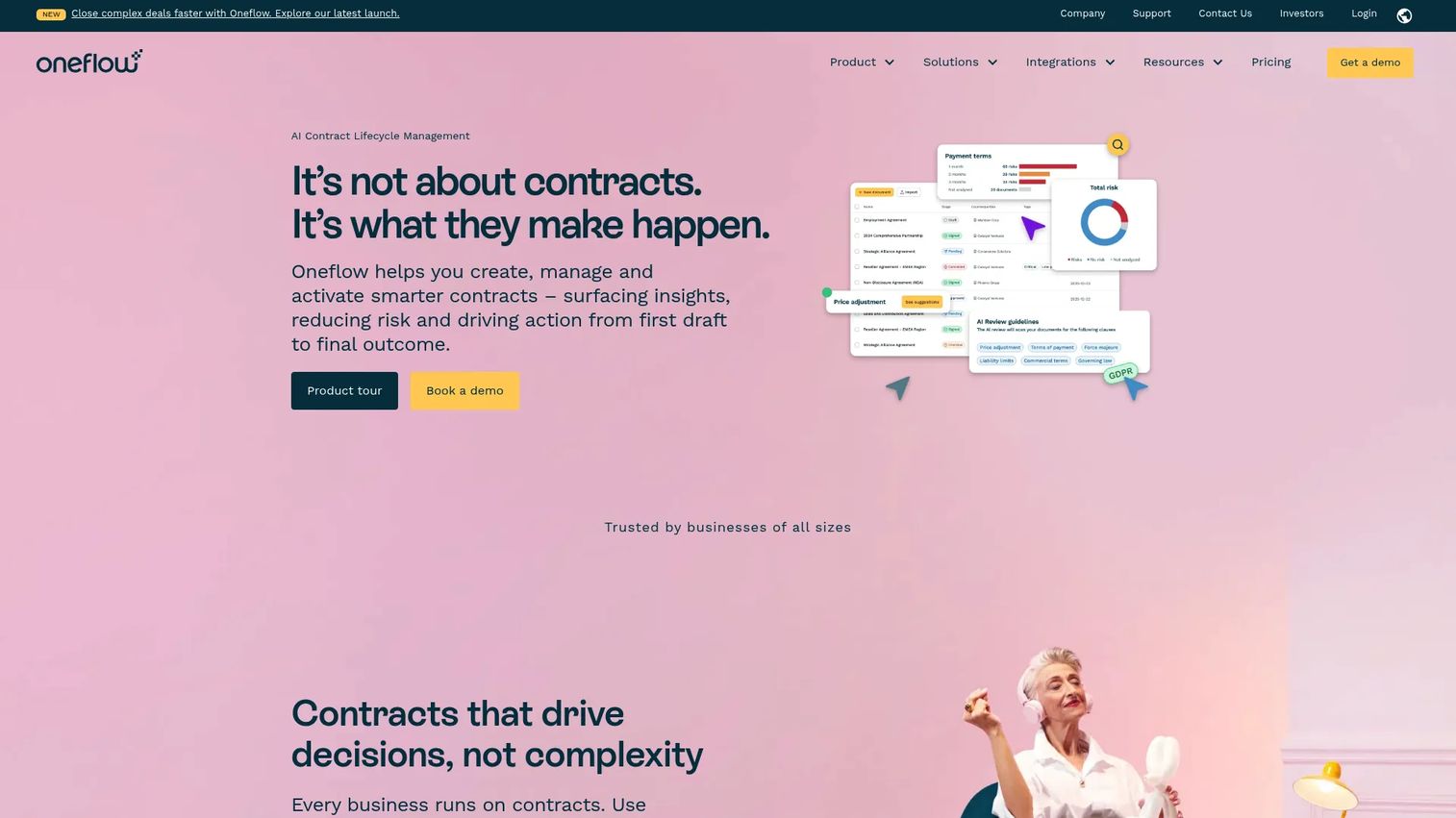
Oneflow is a proposal and contract software designed for teams with complex contract workflows. It manages the full contract lifecycle, from the initial proposal to the signed agreement and eventual renewal.
Best for: Legal-conscious organizations that require audit trails and collaborative editing.
Key strengths
- Contract lifecycle management in one platform
- Collaborative editing with prospects
- Automated contract reminders and renewals
- GDPR and data residency controls
8. DealHub
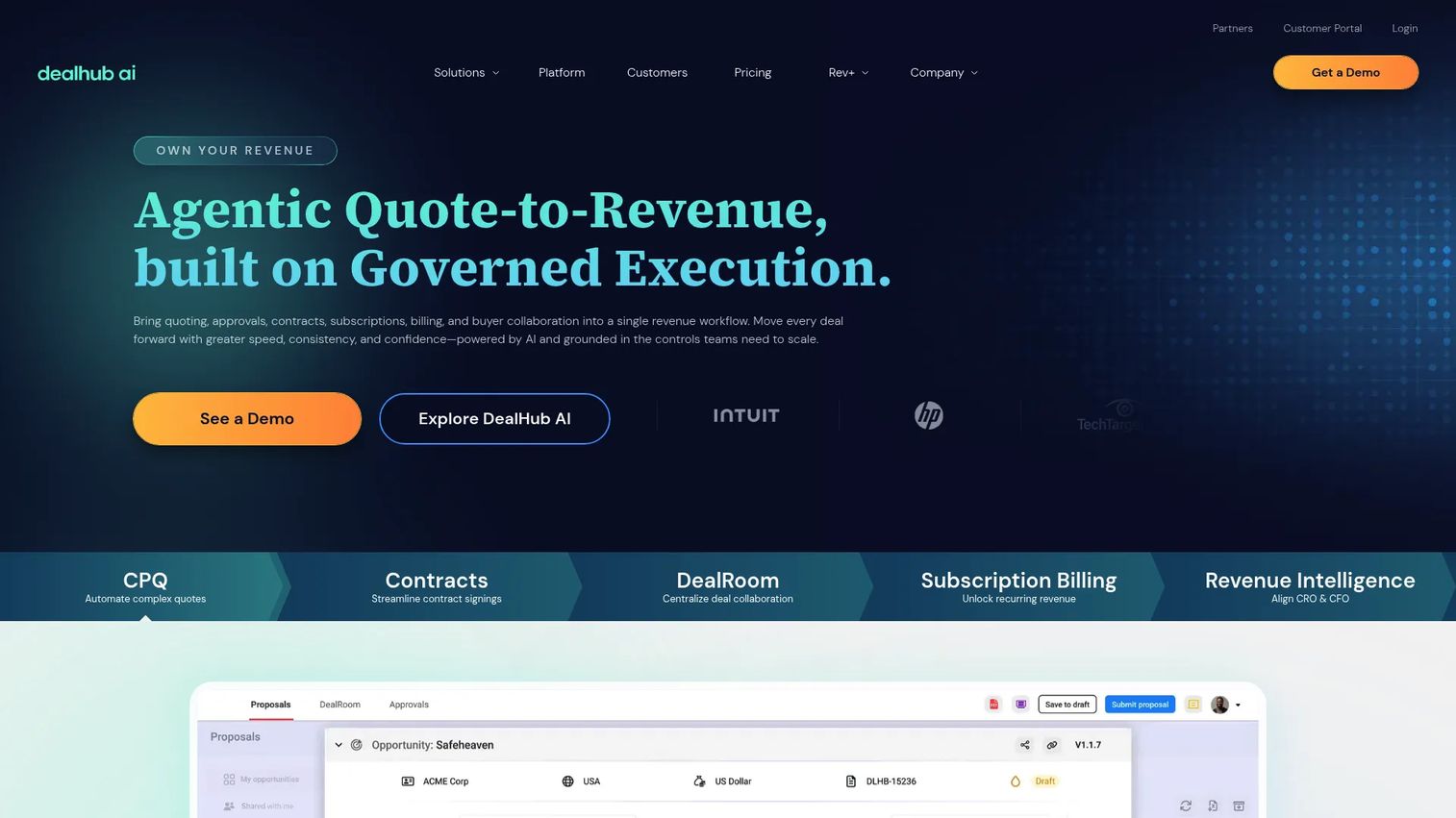
DealHub is a CPQ (configure-price-quote) software with built-in proposal generation. CPQ tools handle complex pricing logic and product configurations, then feed accurate quotes into proposal templates.
Best for: Teams with complex pricing, product configurations, or subscription models.
Key strengths
- CPQ engine for complex pricing logic
- Guided selling playbooks for reps
- Subscription and usage-based billing support
- Salesforce and Microsoft Dynamics native
9. Conga
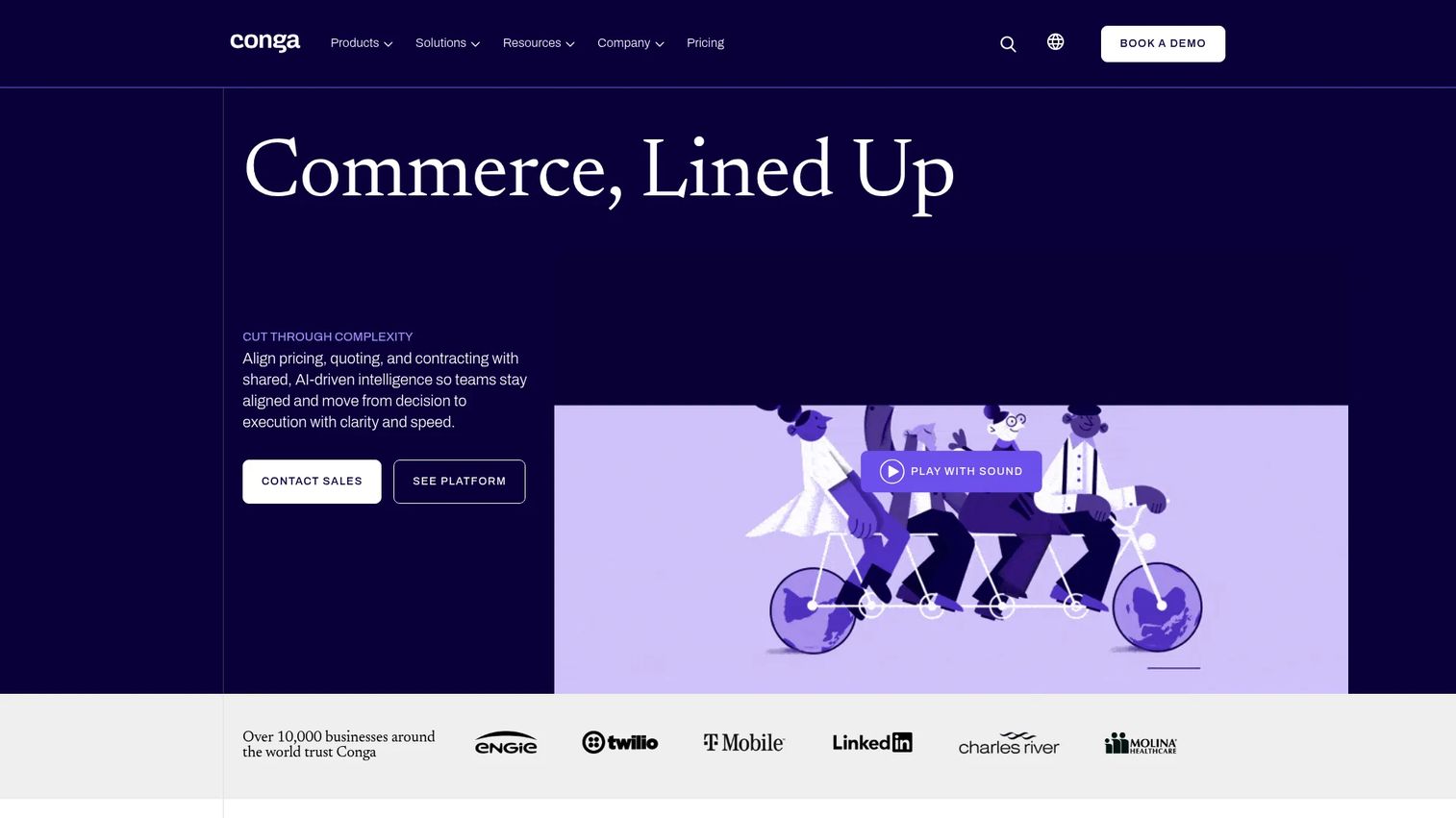
Conga provides enterprise-grade document automation and is designed for teams with complex approval chains and strict compliance requirements.
Best for: Large, Salesforce-heavy organizations.
Key strengths
- Salesforce-native architecture
- Complex approval and workflow automation
- Revenue lifecycle management
- Enterprise security and compliance
10. Proposable
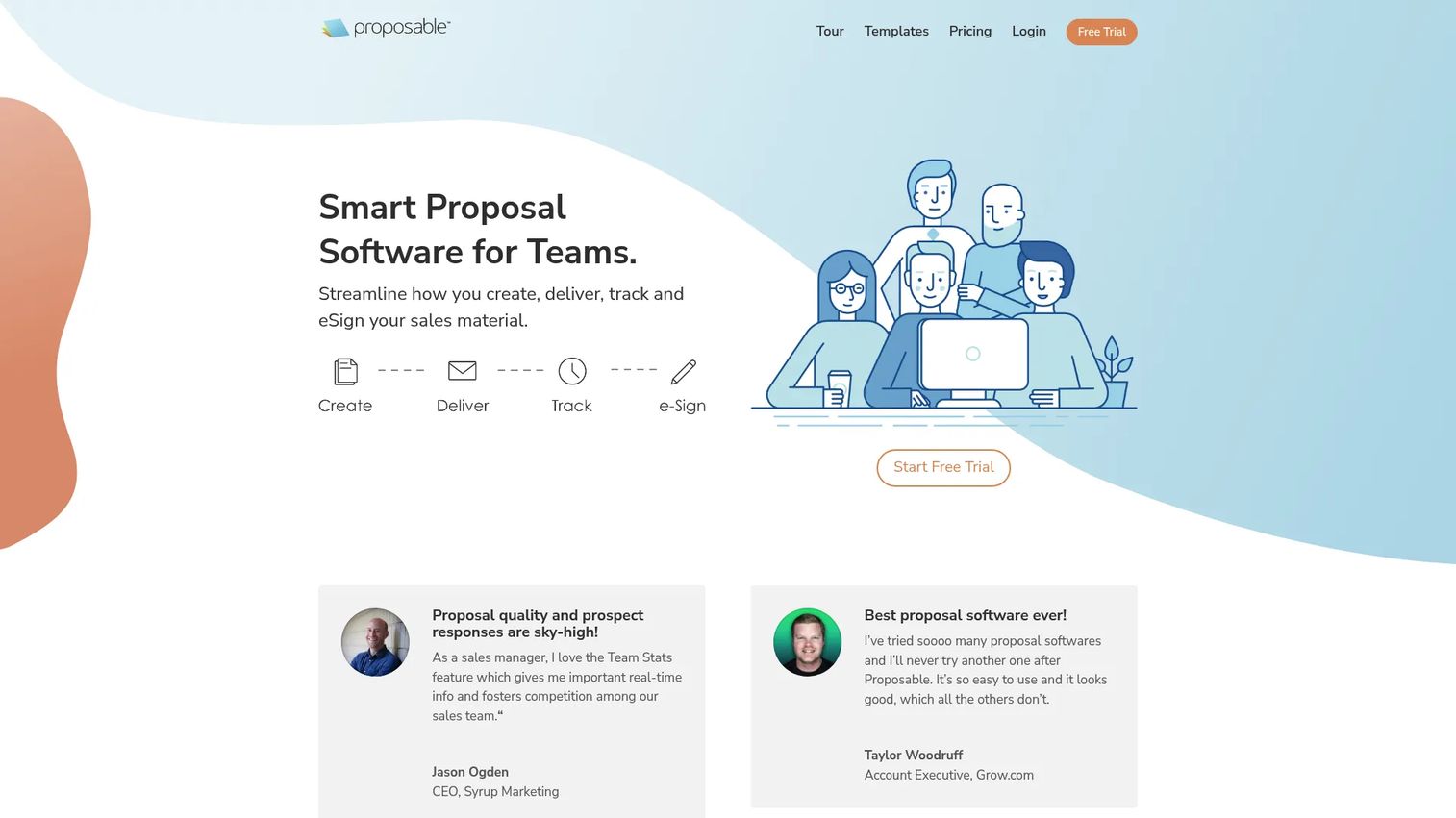
Proposable offers a balanced proposal tool for mid-market teams who want more than basic features but less than enterprise-level complexity.
Best for: Growing sales organizations looking for strong value for the price.
Key strengths
- Clean, intuitive proposal editor
- Video embedding in proposals
- Custom branding and templates
- E-signatures and tracking included
11. HoneyBook
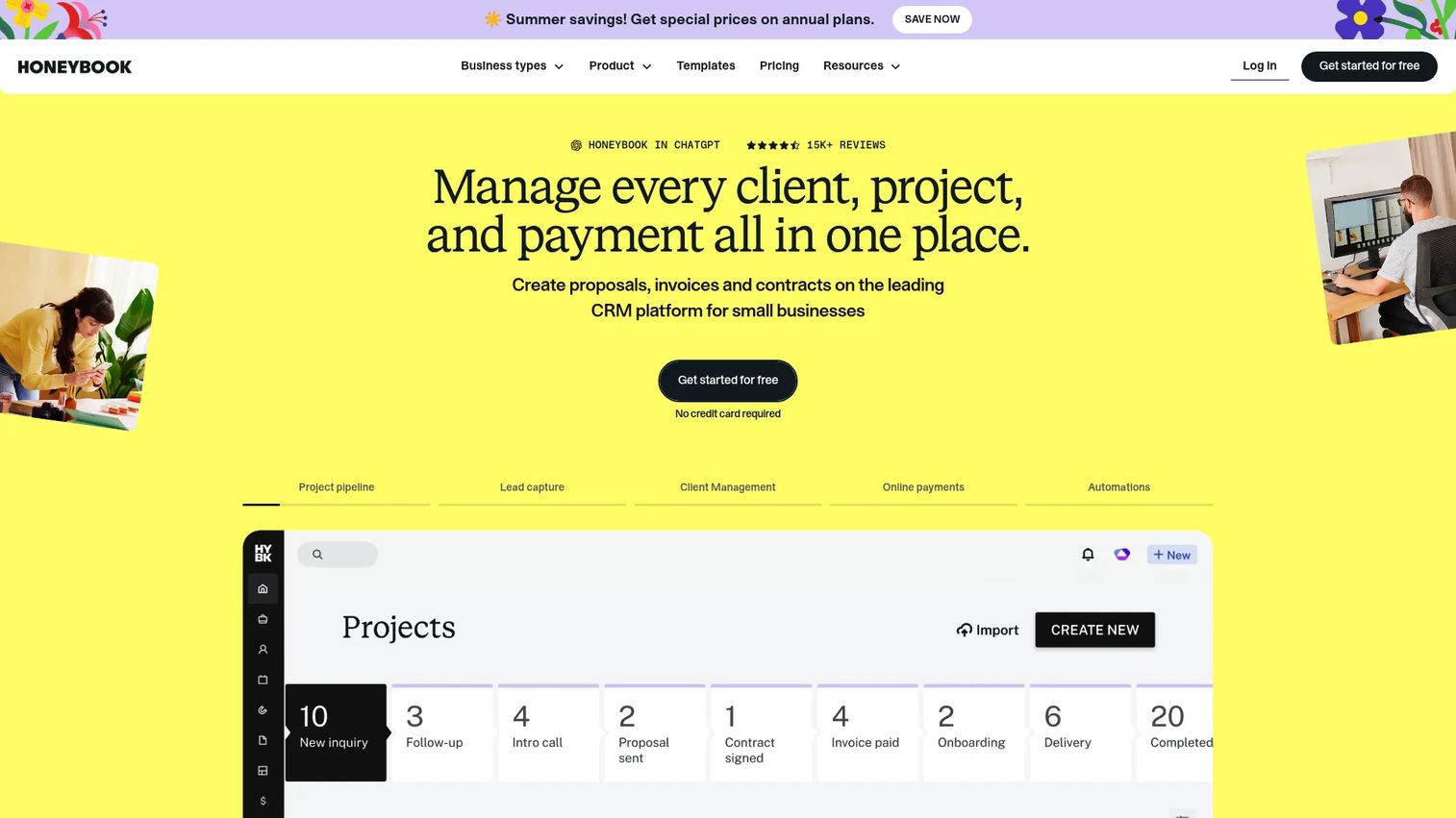
HoneyBook is a client proposal software designed for creative professionals, consultants, and agencies. The platform combines proposals with contracts, invoices, project management, and scheduling.
Best for: Service-based businesses that want an all-in-one solution for their client workflow.
Key strengths
- Proposals, contracts, and invoices in one flow
- Client portal for ongoing projects
- Scheduling and automation tools
- iOS and Android mobile apps
How to choose the right proposal builder for your team
Choosing the right proposal builder requires evaluating your team's specific circumstances. The best proposal software for you depends on factors like team size, deal complexity, and your existing technology stack.
Proposal creation and template design
Evaluate the platform's template library, customization flexibility, and whether you can import existing documents. Consider if the drag-and-drop editor matches your team's technical comfort level and if content locking capabilities are available.
Document tracking and engagement analytics
Real-time notifications, page-by-page viewing data, and time-spent metrics are critical for prioritizing follow-ups. Some advanced tools can even track which specific stakeholders viewed the proposal, providing valuable intelligence for multi-threaded deals.
E-signatures and approval workflows
Ensure the tool's e-signatures are legally valid and check for features like signing order capabilities, which are crucial when multiple parties sign. If your organization requires internal reviews, look for built-in approval workflows.
CRM integration and sales stack compatibility
Proposal automation tools connect to your CRM for data sync and activity logging, eliminating manual data entry. Look for native integrations with common CRMs like Salesforce, HubSpot, and Pipedrive. Also consider compatibility with your other tools, such as marketing automation software.
This tutorial shows how to integrate Pipedrive with PandaDoc
Pricing tiers and team scalability
Understand the different pricing models, whether per-user, flat rate, or usage-based. Be wary of hidden costs, such as limits on e-signatures or extra fees for premium templates. Calculate the total cost of ownership for your current team and consider how pricing will scale as your team grows.
Build a proposal stack that closes more deals
Proposal software is only as effective as the experience it delivers. Forward-thinking sales teams are moving beyond static documents and toward interactive experiences where prospects can engage with the product before signing - a shift driven by the fact that over half of large B2B purchases are now processed through digital self-serve channels.
Combining traditional proposal tools with interactive demos creates a "show and tell" approach that educates buyers, builds confidence, and shortens sales cycles. When prospects can click through your product while reviewing your proposal, they arrive at the signing stage with fewer questions.
Start your journey with Guideflow today!
FAQs about proposal software
Proposal software focuses on creating, sending, and tracking sales documents, while CPQ (configure-price-quote) tools handle complex pricing logic and product configurations. Many enterprise teams use both together, with CPQ feeding accurate quotes into proposal templates.
Yes, tools like Guideflow let you embed clickable, interactive product demos directly into proposals or alongside them. Prospects can experience your product before signing rather than just reading about it.
Small teams typically benefit from straightforward tools like Better Proposals, Prospero, or Proposable that offer essential features without enterprise complexity or pricing.
Free plans often limit templates, e-signatures, or tracking features that B2B deals require. Most teams outgrow free tiers quickly and benefit from budgeting for paid plans from the start.
Tracking features send real-time notifications when prospects open proposals and show which pages they viewed, how long they spent on each section, and whether they forwarded the document to colleagues.
Yes, most leading proposal software offers native integrations with major CRMs including Salesforce, HubSpot, and Pipedrive, allowing for automatic data sync and activity logging without manual entry.