A breach hits at 4pm on a Friday. Legal wants to know jurisdiction exposure. Security is still scoping what was touched. Privacy is asking who got affected. IT is pulling logs. Everyone is working from a different playbook, and the GDPR clock started ticking the moment the breach was discovered: 72 hours to notify the relevant supervisory authority under Article 33 of the General Data Protection Regulation 2016/679.
That is the real problem. Not the breach itself, but the scramble that follows it. Most teams handle their first serious incident with spreadsheets, shared docs, and a frantic Slack thread. It works once. It does not scale, and it leaves almost no defensible record of what was decided, when, and why.
The market has noticed. The global data breach notification software market was valued at roughly USD 2.43 billion in 2025 and is forecast to reach USD 7.74 billion by 2033, growing at about 15.6% CAGR according to SkyQuest (2025). The reason is simple. Regulators keep tightening disclosure rules, and manual breach handling creates legal risk no compliance team wants to own.
This guide is for product managers, privacy leads, security operators, and compliance owners who are past the spreadsheet stage and shopping for something repeatable. If you are evaluating how interactive product experiences shape buyer decisions in adjacent categories, our roundups of the best customer data platform options and best data visualization tools cover how teams compare workflow-heavy software. For breach notification specifically, here is what works.
What's inside
This guide covers seven tools that help teams manage breach intake, scope analysis, impacted-user identification, notification generation, and audit trails. Some are broad privacy and security platforms. Others are focused breach management or security operations products.
We selected and ranked them on five criteria that matter most when fragmented incident handling is the actual pain:
- Workflow coverage: does it span intake, scoping, notification, documentation, and remediation, or only part of the process?
- Compliance support: does it help with jurisdiction-specific regulatory notification logic and timing?
- Automation depth: does automation cut real manual work, or just speed up isolated steps?
- Collaboration: can legal, privacy, security, and IT work in one system without losing context?
- Auditability: is every key action logged and exportable as defensible compliance evidence?
TL;DR
- Best for unified data, privacy, and AI governance at enterprise scale: Securiti pairs breach notification automation with broad data security posture management.
- Best for legal and eDiscovery-adjacent teams: Relativity brings AI-assisted review and defensible reporting to large-scale breach response.
- Best for GDPR-first breach workflows: Data Breach Management Tool is built around EU notification logic and 72-hour deadlines.
- Best for privacy program consolidation: TrustArc and PrivIQ fold breach response into wider privacy operations.
- Best for security operations teams: IBM QRadar SOAR and Palo Alto Cortex XSIAM orchestrate incident response and can support notification workflows inside the SOC.
- The split that matters: privacy platforms own the regulatory and notification side; security operations platforms own detection and response coordination. Most mature teams end up running both.
What is data breach notification software?
Data breach notification software is a category of compliance workflow tooling that helps organizations intake a security incident, assess its scope, identify impacted users and data, determine regulatory notification obligations, generate the required notices, and produce an audit-ready record of every decision.
The core workflow moves through predictable stages. First, intake: someone logs the incident with initial details. Second, scoping: the team determines what data and systems were involved. Third, regulatory assessment: the tool maps the incident against jurisdiction-specific rules and deadlines. Fourth, notification: it generates notices for regulators, affected individuals, and sometimes the media. Fifth, documentation: every action is logged. Sixth, remediation: the team tracks fixes and follow-ups.
Capabilities you should expect from a strong breach management platform:
- Centralized incident logging so every breach lives in one repository, not scattered across inboxes.
- Automated risk and scope assessment that scores severity and recommends next steps.
- Jurisdiction decision support that flags which regulators apply and what timing each demands.
- Notification templates for regulators and impacted users, pre-mapped to legal requirements.
- Audit trail capture on every action, exportable as defensible compliance evidence.
- Collaboration controls so legal, privacy, security, and IT contribute without overwriting each other.
- Integrations into existing data, security, ticketing, and identity systems.
The distinction worth holding onto: this software governs the regulatory and notification side of an incident. It is adjacent to, but not the same as, the detection and response tooling that finds and contains the breach in the first place.
When to use data breach notification software
Respond to an incident without rebuilding the process
The first real breach exposes how fragile ad hoc coordination is. If your team is reconstructing who did what from Slack threads and email chains, you need a repeatable incident response workflow. Dedicated software gives you a fixed process: intake form, scoping checklist, assignment rules, and approval gates. The value is not speed alone. It is that the next incident runs the same way, regardless of who is on call.
Identify impacted users and data faster
When the main pain is figuring out who was affected and what data was involved, look for tools that link incident scope to identity and data systems. Manually cross-referencing exposed records against a user database burns days you do not have under a 72-hour clock. Software that can scope impacted users from connected data sources turns a multi-day investigation into a structured query, and that directly shapes your regulatory notification obligations.
Produce notification-ready outputs and audit trails
When legal defensibility matters most, the deciding factor is evidence quality. Regulators and courts care about what you knew, when you knew it, and what you did about it. A tool that generates regulator-ready notices and logs every decision into an exportable audit trail gives your legal and privacy teams defensible compliance evidence. This is the difference between a clean response and a second crisis during an investigation.
Comparison table
These seven tools differ less in whether they touch breach notification and more in where they sit in your stack. Some are privacy-first. Some are security-operations-first. The table below orients you by intent before you read the detail.
| # | Product | Intent | Key use case | Pricing | G2 rating |
|---|---|---|---|---|---|
| 1 | Securiti | Unified data, privacy, AI governance | Breach automation inside a broad data security platform | Custom quote | 4.7/5 |
| 2 | Relativity | Legal data intelligence | AI-assisted, defensible breach review and reporting | Request-based | 4.6/5 |
| 3 | Data Breach Management Tool | GDPR breach workflow | Centralized GDPR incident logging and notification | Request a demo | Not listed |
| 4 | TrustArc | Privacy program management | Breach response inside wider privacy operations | Contact sales | Not listed |
| 5 | PrivIQ | Privacy and risk management | AI-assisted compliance with incident response support | Request-based | 4.7/5 |
| 6 | IBM QRadar SOAR | Security orchestration | Incident response automation with breach support | Subscription | 4.0/5 |
| 7 | Palo Alto Cortex XSIAM | AI-driven security operations | SOC-wide detection, response, and orchestration | Not public | 4.4/5 |
1. Securiti
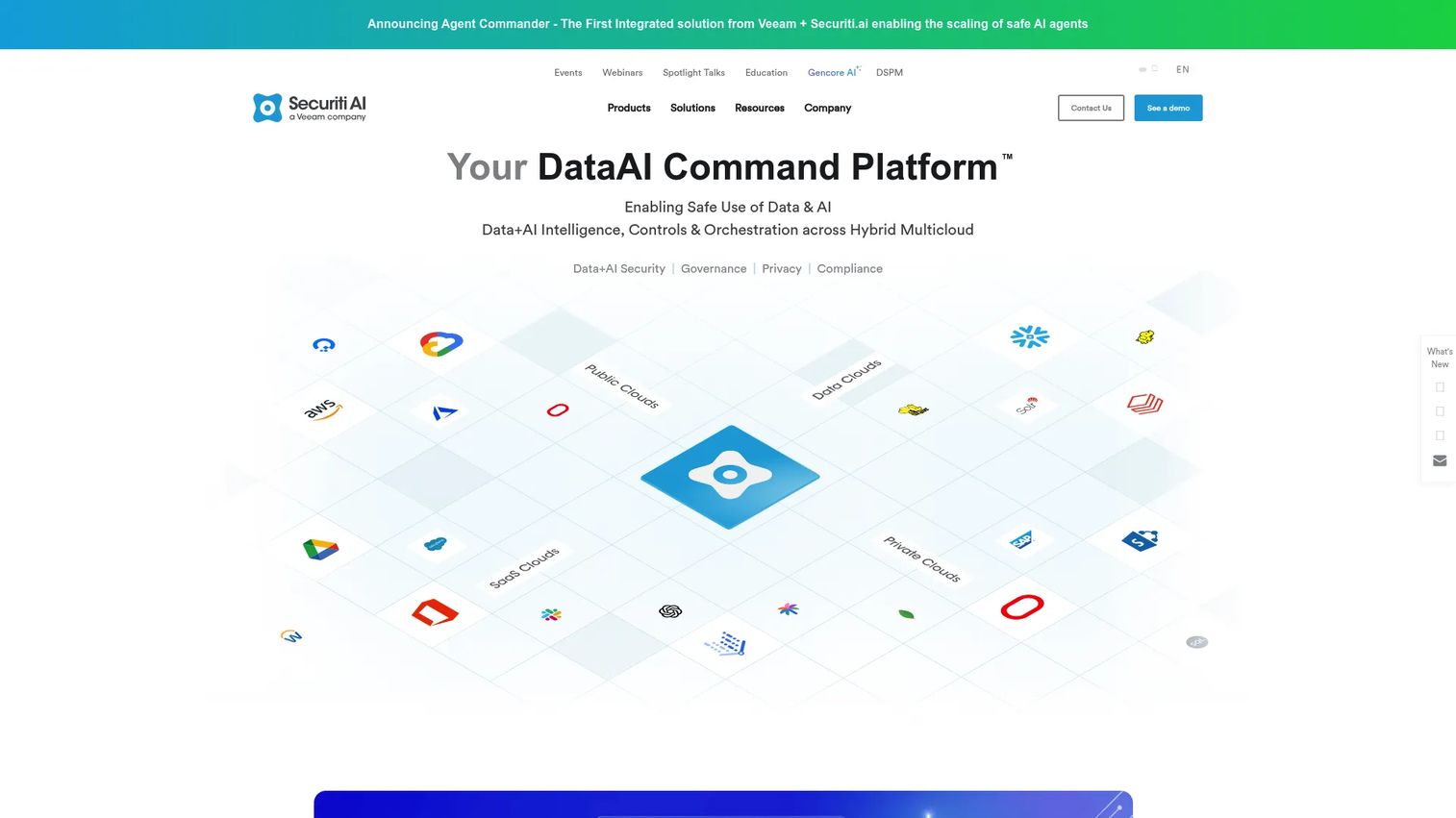
Securiti is an enterprise data and AI security, privacy, governance, and compliance platform. Breach management sits inside a much larger system that maps data, scores risk, and automates privacy operations. That breadth is the point: when a breach hits, the same platform that already knows your data inventory can scope the incident, identify impacted records, and orchestrate notification across jurisdictions.
Best for: Large enterprises that want breach notification embedded in a unified data security and privacy program, not bolted on as a separate tool.
Key strengths
- Data security posture management: maps and monitors sensitive data so breach scoping starts from a known inventory, not a blank page.
- AI security and governance: extends incident oversight to AI systems and models, a growing exposure surface.
- Privacy operations automation: runs notification logic, jurisdiction decisioning, and audit trails inside one workflow.
Because Securiti already understands where regulated data lives, the impacted-user question becomes a query against an existing map rather than a manual reconstruction. For teams running multiple regulatory regimes at once, that centralized workflow removes a lot of cross-referencing.
Why choose Securiti: It fits organizations that view breach response as one outcome of a broader data governance posture. If you are buying a point tool for breach alone, the platform breadth is more than you need. If you want privacy, security, and breach response under one roof, that breadth is the value.
Securiti pricing: Securiti does not publish numeric pricing. The pricing page directs you to request a personalized quote, which is typical for enterprise data governance platforms scoped to data volume and modules. Securiti holds a 4.7/5 rating on G2.
2. Relativity
Relativity is an AI-powered legal data intelligence platform built for e-discovery, investigations, and breach response. Its strength is review at scale. When a breach involves large volumes of unstructured data, Relativity culls, links, and reviews that data to identify impacted people and produce defensible reporting with human-in-the-loop oversight.
Best for: Larger legal and eDiscovery-adjacent teams that handle breaches involving heavy document review and need traceable, defensible output.
Key strengths
- RelativityOne cloud platform: scales review across massive datasets without on-prem infrastructure constraints.
- Built-in generative AI: aiR for Review, aiR for Privilege, and aiR for Case Strategy accelerate the review and analysis stages.
- Legal hold, collection, and breach response workflows: covers the full chain from data preservation to notification-ready reporting.
The AI-assisted breach response matters most when the impacted-user question hides inside terabytes of documents and communications. Relativity is built to surface who and what was exposed while keeping a reviewable trail, so the output holds up to scrutiny.
Why choose Relativity: It is the strongest fit when breach response overlaps with legal review and eDiscovery. Teams that already run Relativity for investigations get breach response inside a familiar, traceable environment. Teams without that legal-review weight may find lighter privacy-first tools a closer match.
Relativity pricing: Relativity offers flexible pricing, pay as you go or one- and three-year commitments, but does not display public numbers. Pricing is request-based. Relativity holds a 4.6/5 rating on G2.
3. Data Breach Management Tool
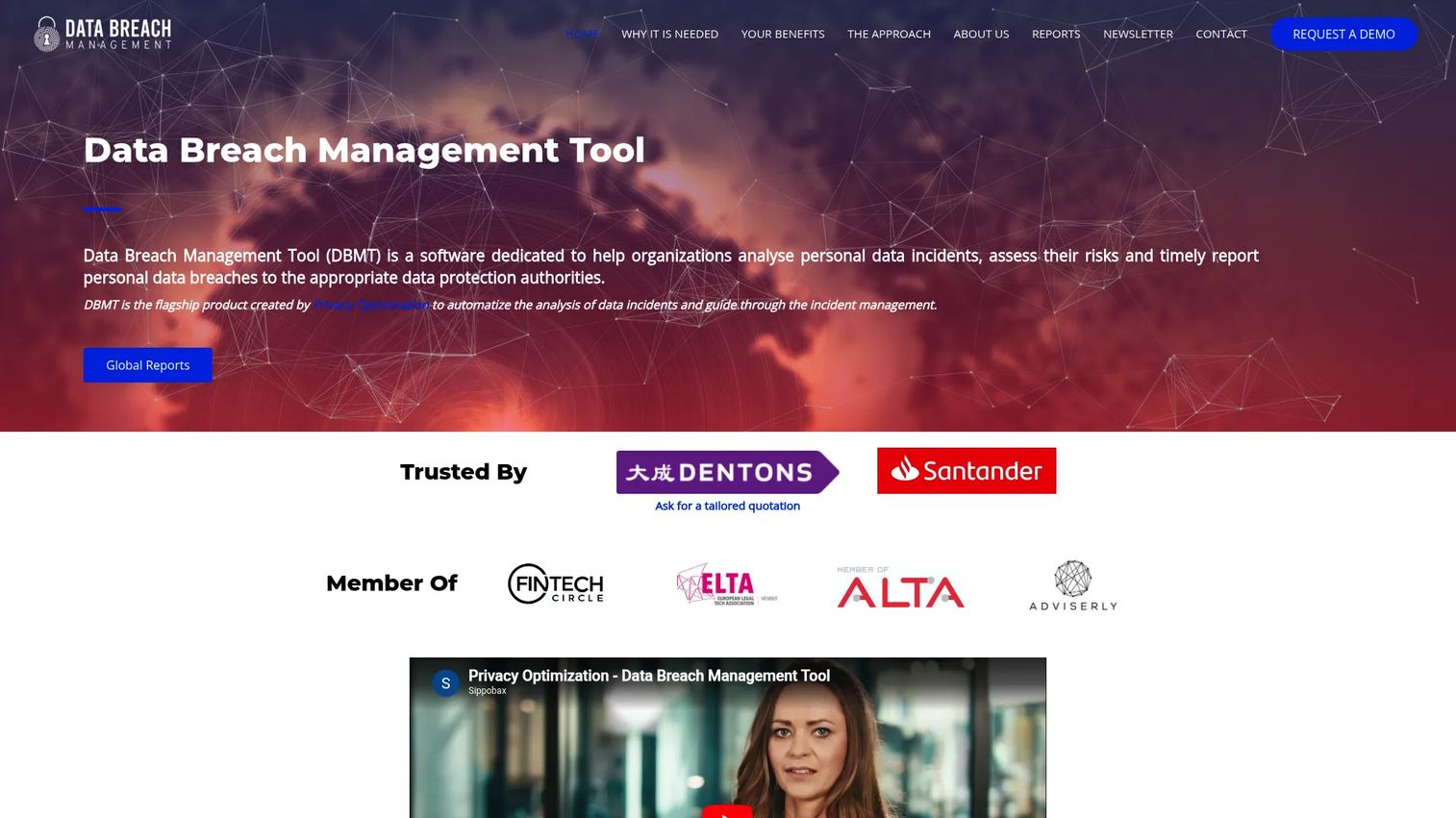
Data Breach Management Tool is GDPR-focused software for analyzing personal data incidents, assessing risk, and managing breach notifications. Where the bigger platforms treat GDPR as one regime among many, this tool puts EU notification logic at the center. It automatically identifies who needs to be notified, plus when and how each notification must be submitted for a given incident.
Best for: Organizations whose primary exposure is GDPR and who value direct, compliance-first framing over broad platform breadth.
Key strengths
- Central repository for incident reporting: every breach logged in one place, with consistent intake.
- Automated risk assessment and recommendations: scores incident severity and suggests next actions.
- Breach notification support and deadline tracking: maps each incident to the 72-hour GDPR clock and the right recipients.
The direct GDPR breach notification framing is the selling point. Businesses that mishandle these processes risk significant fines under the regulation, so a tool that tracks deadlines and recipients automatically removes a meaningful source of legal risk. The deadline tracking against Article 33 timing is exactly the kind of detail that gets missed in spreadsheet-driven response.
Why choose Data Breach Management Tool: It suits teams that want a focused GDPR breach workflow rather than a sprawling privacy or security suite. The narrower scope is a feature for EU-centric organizations that do not need posture management or SOC orchestration.
Data Breach Management Tool pricing: No public pricing is shown. The site uses a request-a-demo and tailored quotation flow. A G2 rating for this exact product was not available at the time of writing.
4. TrustArc
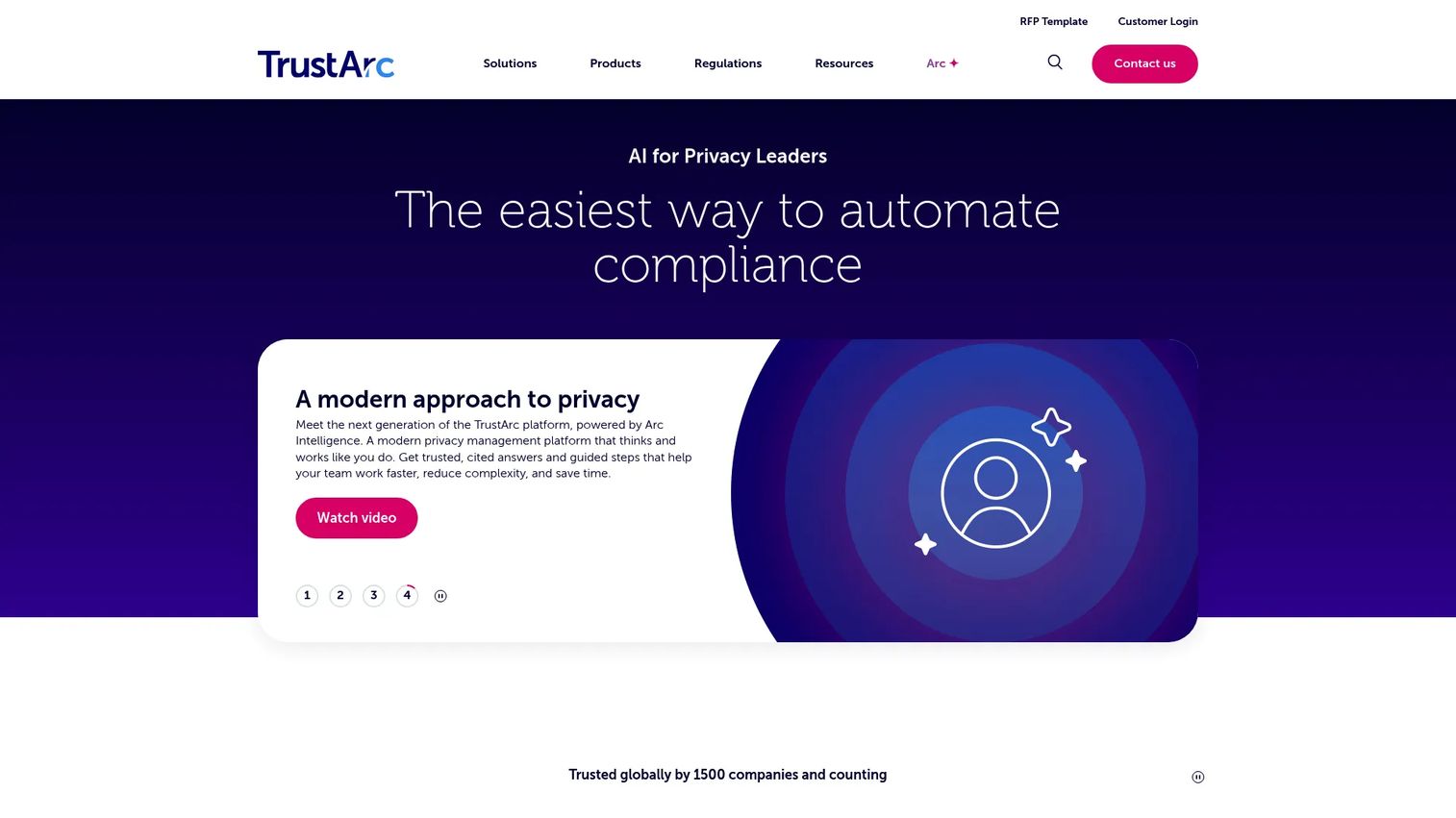
TrustArc is an enterprise privacy management platform for compliance, consent, and data rights workflows. Breach notification is one capability within a broader privacy program, not the headline. For teams that already run privacy operations centrally, that placement is the appeal: breach response inherits the same governance, automation, and evidence model as the rest of the privacy stack.
Best for: Large organizations that want a privacy governance platform where breach notification lives alongside consent, data rights, and program management.
Key strengths
- AI-powered privacy program management: Arc Intelligence drives automation across privacy workflows, including incident handling.
- Data subject request automation: individual rights handling that shares infrastructure with breach impacted-user logic.
- Trust Center publishing: a destination for privacy, security, and compliance artifacts that supports defensible transparency.
Positioning TrustArc as a privacy governance option rather than a point tool matters for the buying decision. If your team owns a wide privacy mandate, consolidating breach response into the same platform reduces the number of systems legal and privacy collaboration has to span.
Why choose TrustArc: It fits privacy-led organizations that want one platform for the full program. Teams looking for a standalone breach tool, or for SOC-side response orchestration, should weigh the more focused options on this list.
TrustArc pricing: TrustArc directs visitors to contact sales for pricing; no public numbers were visible on the pages reviewed. The brand offers privacy program management with automation and trust-center publishing across enterprise privacy operations.
5. PrivIQ
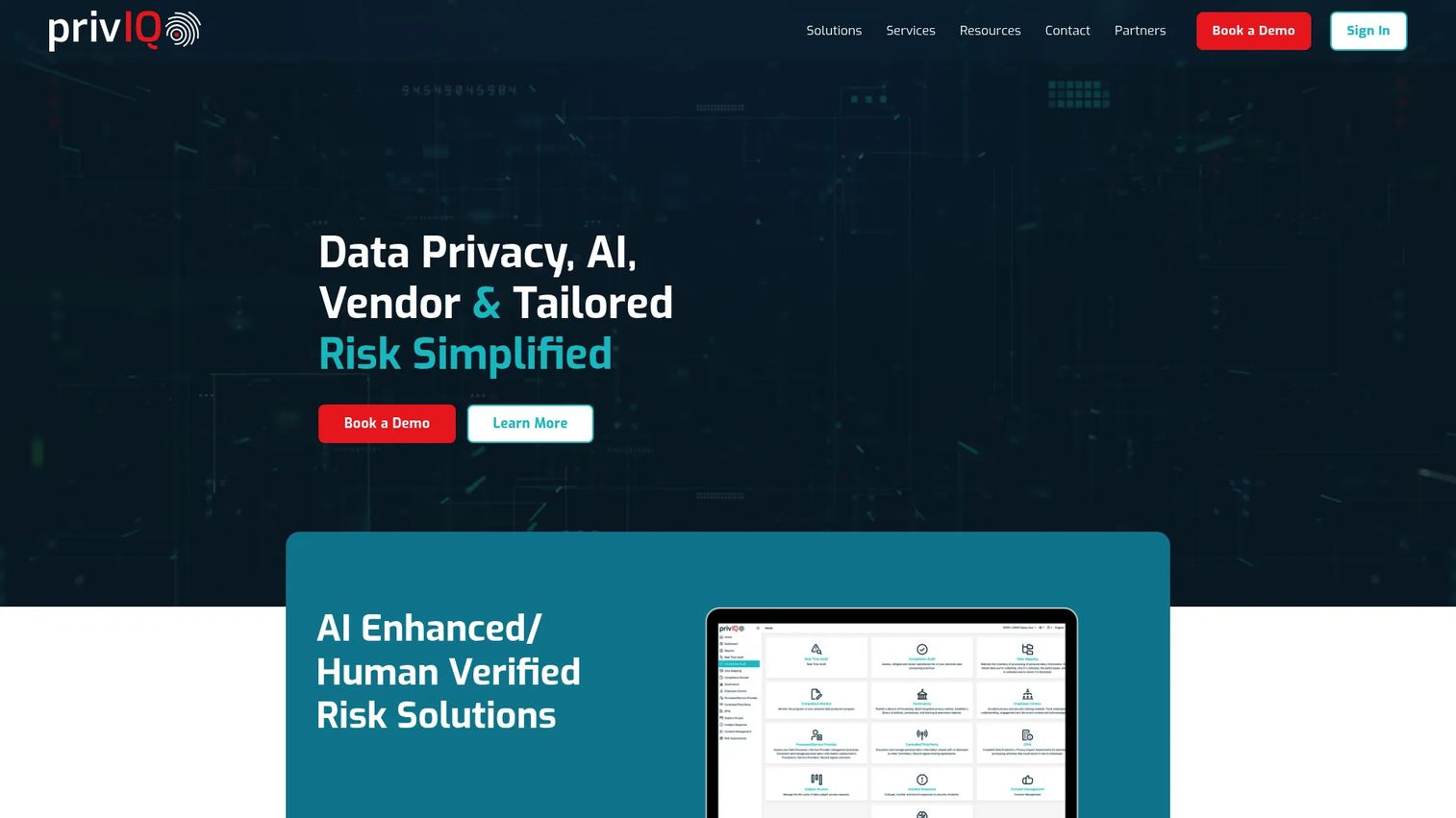
PrivIQ is AI-assisted, human-verified privacy and risk management software. It aims to make risk management clear, usable, and tailorable, with incident response and breach-related workflows folded into a wider compliance management platform. The human-verified layer matters in a category where AI-only output invites legal skepticism.
Best for: Organizations that want privacy program consolidation, including incident response, in one tailorable compliance system.
Key strengths
- AI-enhanced compliance automation: speeds up routine compliance work while keeping human verification in the loop.
- Data visibility and mapping: supports impacted-user and scope analysis by surfacing where regulated data sits.
- DPIA/TIA and incident/request control: ties breach incidents to assessments and data subject requests in one workflow.
For teams chasing privacy program consolidation, PrivIQ's breadth across mapping, assessments, and incident control reduces the tool sprawl that fragments breach response. The AI-assisted breach response is paired with human verification, which keeps the audit trail defensible rather than opaque.
Why choose PrivIQ: It suits compliance teams that want a single, approachable platform spanning privacy and risk, with breach response included rather than bought separately. PrivIQ also offers a free self-assessment and a free data privacy gap analysis, useful entry points before committing.
PrivIQ pricing: Public pricing is not shown; the site uses a pricing request form. Free self-assessment and free comprehensive data privacy gap analysis are available. PrivIQ holds a 4.7/5 rating on G2.
6. IBM QRadar SOAR
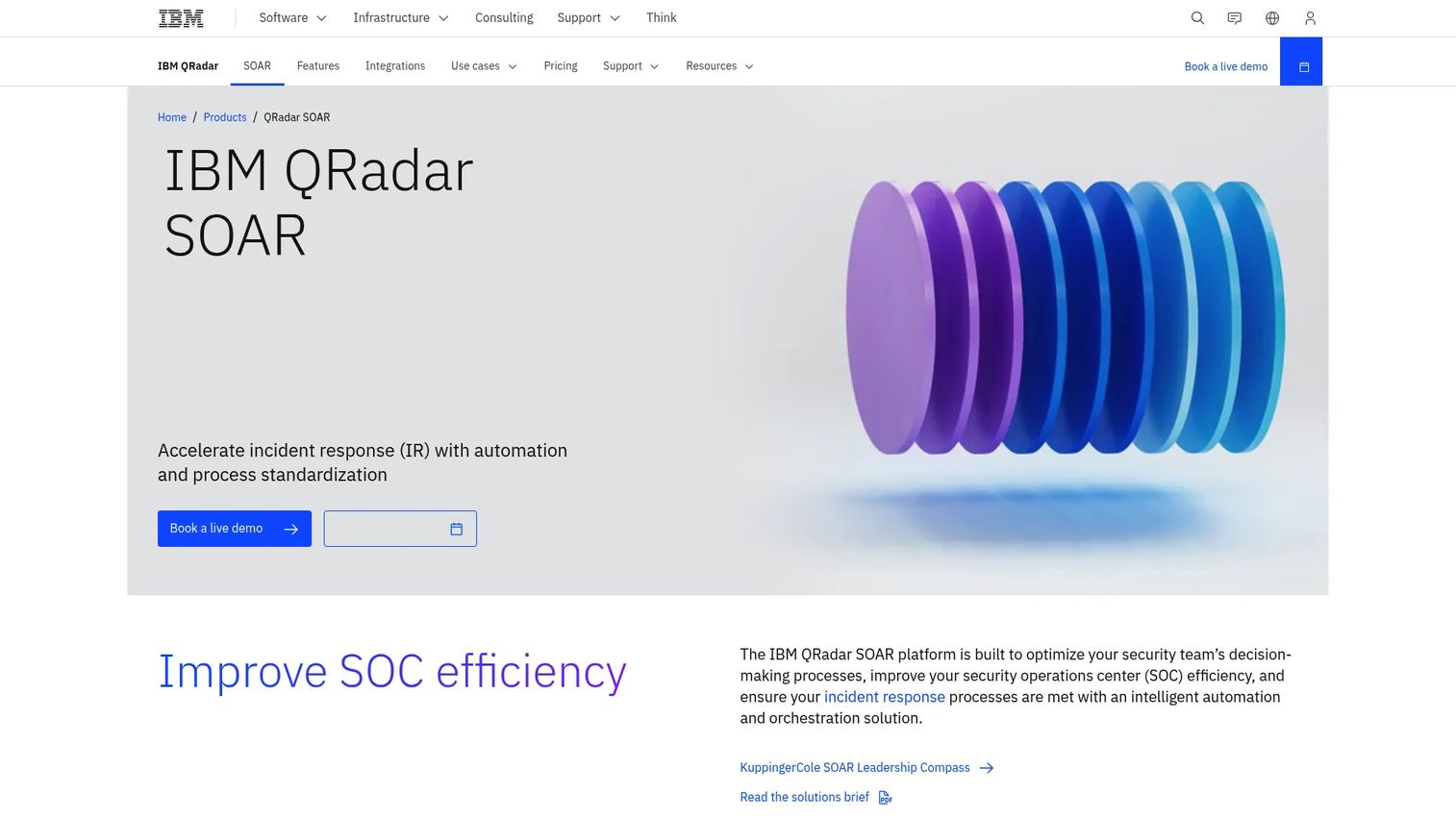
IBM QRadar SOAR is IBM's security orchestration, automation, and response platform for incident response workflows. It approaches breach response from the security operations side: optimize SOC decision-making, automate correlation and enrichment, and orchestrate the response. Breach notification support sits inside that broader automated breach response motion.
Best for: Security teams that want SOAR workflow automation, case management, and incident response orchestration, with breach support handled inside the SOC.
Key strengths
- Case management and reporting: structures every incident with consistent records and exportable reporting.
- Playbook Designer with low-code automation: builds repeatable response playbooks without heavy engineering lift.
- 300+ integrations and breach response support: connects across the security stack and supports notification-adjacent workflows.
QRadar SOAR makes sense when you want detection-to-response coordination centralized. IBM notes that its automation for correlation, enrichment, investigation, and case prioritization helped a client reduce incident time by approximately 85%. That kind of orchestration is where SOAR-first tooling earns its place: it compresses the response, then feeds clean records into your notification process.
Why choose IBM QRadar SOAR: Choose it when your bottleneck is response coordination across security tools, not regulatory notification logic. It pairs well with a privacy-side tool that owns the formal notification and jurisdiction decisions.
IBM QRadar SOAR pricing: IBM describes a simple, predictable subscription model with unlimited cases, actions, and playbooks, but shows no public price; users book a demo or contact IBM. QRadar SOAR holds a 4.0/5 rating on G2.
7. Palo Alto Cortex XSIAM
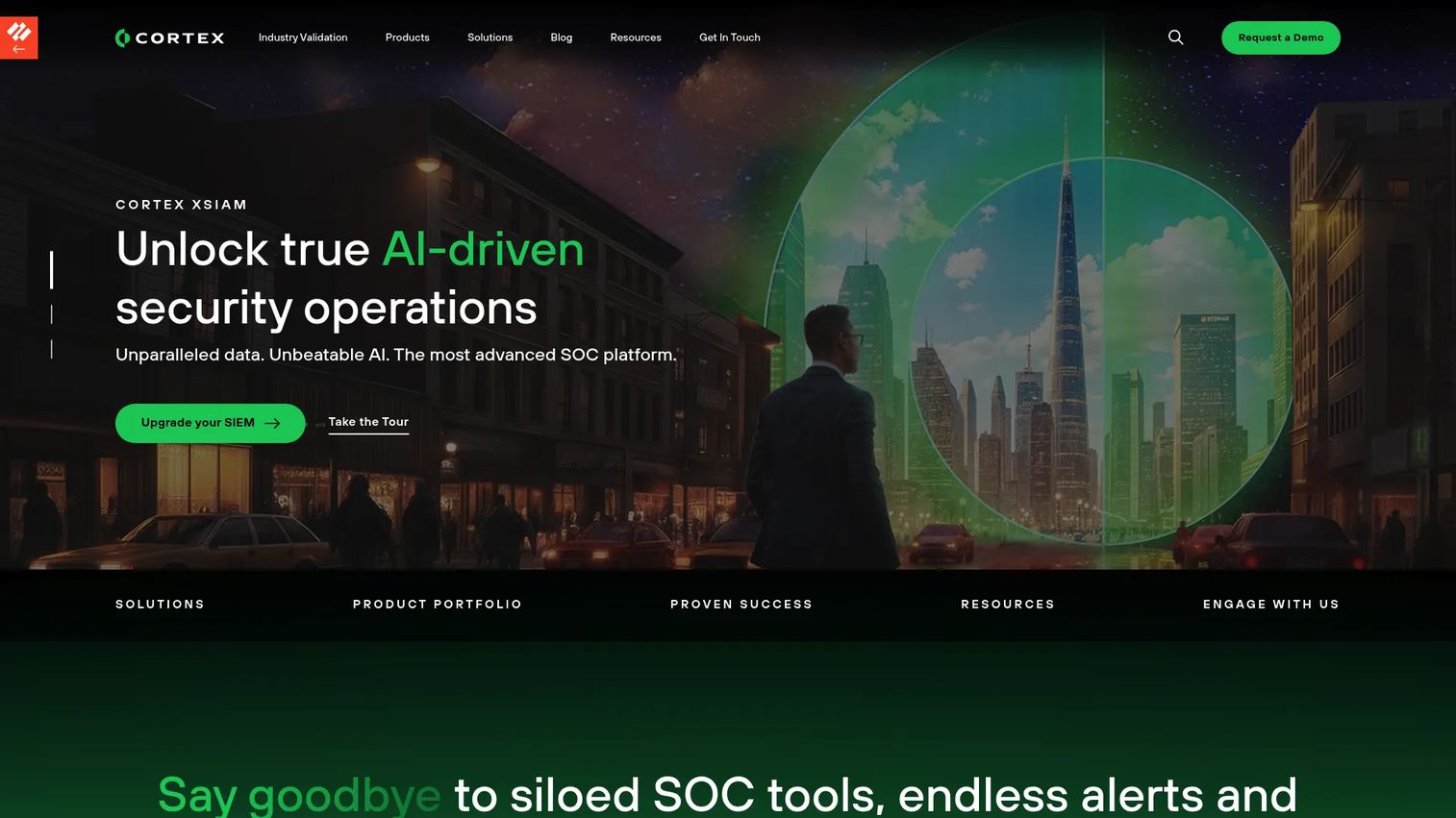
Palo Alto Cortex XSIAM is an AI-driven security operations platform that unifies data, automation, and detection and response for SOC teams. It consolidates SIEM, SOAR, EDR, XDR, ASM, UEBA, and TIP into one platform. For breach response, the value is scale: surface real threats fast, automate triage, and coordinate response across a unified SOC.
Best for: Enterprise SOC teams modernizing SIEM and security operations with AI automation, who want breach response handled at scale inside one platform.
Key strengths
- Unified SOC capabilities: SIEM, SOAR, EDR, XDR, ASM, UEBA, and TIP in a single platform, reducing tool sprawl.
- AI-driven automation: automates alert triage and incident response so analysts focus on real threats.
- Centralized detection, investigation, and response: runs the full response motion from one console.
When teams prioritize SOC workflow consolidation, Cortex XSIAM is built for that scale. The AI-driven triage and response coordination compress the detection-to-containment window, which is the part of breach handling that precedes formal notification. The cleaner and faster the response record, the easier the downstream regulatory notification becomes.
Why choose Palo Alto Cortex XSIAM: Choose it when the priority is consolidating security operations and accelerating response, with breach handling as one outcome of a modern SOC. Like QRadar SOAR, it pairs naturally with a privacy-side tool that owns formal notification and jurisdiction logic.
Palo Alto Cortex XSIAM pricing: No public first-party pricing is listed; pricing is not publicly available and routes through sales. Cortex XSIAM holds a 4.4/5 rating on G2.
Considerations before you buy
Workflow coverage
Map the tool against the full incident lifecycle: intake, scoping, notification, documentation, and remediation. Some tools own the whole chain. Others cover one strong segment and assume you pair them with something else. Neither is wrong, but you need to know which gaps you are accepting before you sign.
Regulatory support
Check whether the tool handles jurisdiction-specific notification logic, timing, and evidence requirements. A platform that maps an incident against the right regulators and deadlines, including the 72-hour GDPR window, removes a major source of human error. Ask how it handles multi-jurisdiction breaches, where deadlines and recipients diverge.
Collaboration and approvals
Breach response is cross-functional by nature. Assess whether legal, privacy, security, and IT can work in one system without losing context at every handoff. Look for role-based access, approval gates, and a shared timeline. The goal of legal and privacy collaboration in one place is fewer dropped threads under time pressure.
Audit trails and defensibility
Make sure every key action is logged and exportable as defensible compliance evidence. During a regulatory investigation, the audit trail is your defense. Verify what gets captured, how long it is retained, and whether you can export a clean record on demand. A weak audit trail turns a contained breach into a second exposure.
Integration fit
Confirm how the tool connects to your existing data, security, ticketing, CRM, and identity systems. Integration depth determines whether impacted-user identification is a query or a manual slog. The more the tool already knows about your data and users, the faster scoping and notification move.
Automation depth
Identify whether automation actually reduces manual work or just speeds up a few isolated steps. Real automation cuts across stages: intake routing, risk scoring, notification drafting, and deadline tracking. Surface-level automation that handles one step while leaving the rest manual will not relieve the operational burden you are trying to fix.
Conclusion
The right pick depends on where your breach pain actually lives. If breach response is one outcome of a broad data and privacy program, Securiti and TrustArc fit. If your exposure is GDPR-first and you want a focused workflow, Data Breach Management Tool is built for exactly that. If breach response overlaps with heavy legal review, Relativity brings defensible scale. If you want privacy program consolidation with incident response included, PrivIQ covers it. And if your bottleneck is detection-to-response coordination inside the SOC, IBM QRadar SOAR and Palo Alto Cortex XSIAM orchestrate that response.
The practical next step is not to pick a logo. It is to shortlist by workflow coverage first, then compare auditability and regulatory support against your real obligations. Map your current incident process, find the stages that break under pressure, and weigh each tool against those specific gaps. Most mature teams end up running a privacy-side tool and a security-side tool together, because the regulatory and response sides of a breach are genuinely different jobs.
If your evaluation extends to how interactive product experiences shape complex software decisions, Guideflow shows how teams let buyers experience workflow-heavy tools before committing.
FAQs
At minimum it should cover incident intake, scope and risk assessment, impacted-user identification, regulatory notification generation, and an exportable audit trail. The strongest tools also handle jurisdiction decisioning and remediation tracking. If a tool only automates one stage, treat it as part of a stack, not the whole solution.
Incident response software focuses on detecting, containing, and remediating the security event itself, usually inside the SOC. Breach notification software governs the regulatory side: who must be told, by when, in what format, with what evidence. They overlap, which is why SOAR platforms like IBM QRadar SOAR and Cortex XSIAM increasingly support notification-adjacent workflows, but most mature teams run both.
Yes, and it is a core reason teams buy them. GDPR requires controllers to notify the relevant supervisory authority within 72 hours of becoming aware of a personal data breach. Tools like Data Breach Management Tool, Securiti, TrustArc, and PrivIQ map incidents against GDPR timing and recipients so the 72-hour deadline is tracked, not missed.
It depends on integration depth. Tools connected to your data inventory and identity systems can scope impacted users as a structured query rather than a manual reconstruction. Platforms with strong data mapping, such as Securiti, or large-scale review, such as Relativity, are built to surface who and what was exposed faster than spreadsheet cross-referencing.
Evidence quality. Every decision, who made it, when, and why, should be logged automatically and exportable on demand. Regulators and courts assess what you knew and what you did about it, so the audit trail is your defense. Verify what gets captured, retention duration, and export format before you commit.
It is genuinely useful where the work is high-volume: culling and reviewing large datasets, triaging alerts, and drafting notifications. Relativity's review AI and Cortex XSIAM's automated triage are concrete examples. The caveat for compliance is human verification, which is why platforms like PrivIQ keep a human-in-the-loop layer so AI-assisted output stays defensible.
They solve different halves of the problem. Privacy platforms like TrustArc, Securiti, and PrivIQ own regulatory assessment, notification, and evidence. Security operations platforms like IBM QRadar SOAR and Cortex XSIAM own detection and response coordination. If your gap is regulatory notification logic, start privacy-side; if it is response orchestration, start security-side. Many teams need both.