

You sourced 200 candidates last quarter. You made 4 hires. The other 196 went quiet, and most of them never got a second message.
That gap is not a sourcing problem. It is a follow-up problem. Recruiters are buried under manual coordination, so the second touch never happens, the shortlist goes cold, and strong candidates take the next offer. Candidate ghosting runs both ways, and slow, generic outreach is what triggers it.
The market has noticed. The global candidate relationship management software market reached $1.4B in 2024 and grew 9.4% year over year, according to Apps Run The World (2024). Separately, Mordor Intelligence (2026) projects the same category climbing to $4.83B by 2031 at a 16.72% CAGR. Money follows the pain: keeping talent warm between application and hire is now its own software category, and it sits next to your ATS rather than inside it.
For a founder or recruiting leader trying to make hiring repeatable, that distinction matters. The right platform removes recruiter busywork, lifts response rates, and turns dormant pipeline into a source of hires.
What's inside
This guide is for recruiting leaders, talent acquisition managers, and operators who want software that keeps candidates engaged from first contact to signed offer.
We evaluated each tool against the criteria that decide whether the software earns its place in your stack:
- Automation depth: how much recruiter follow-up runs without manual effort
- ATS integration: whether it syncs with your system of record or forces a rip-and-replace
- AI sourcing and re-engagement: how it surfaces new candidates and revives dormant ones
- Analytics and reporting: whether candidate engagement analytics translate into pipeline decisions
- Personalization and channel coverage: how well it supports personalized candidate messaging across email, SMS, and more
TL;DR
- Best for enterprise recruiting teams: iCIMS, for broad talent acquisition coverage plus adjacent recruiting modules under one roof.
- Best for reactivating and re-engaging talent pools: Scout Talent, built around preventing candidate drop-off and reusing your existing database.
- Best for AI sourcing and end-to-end automation: Curately, which pairs AI sourcing with voice and chat candidate outreach automation.
- Best for smaller teams and agencies: Manatal, with transparent per-user pricing and an AI-native ATS.
- Best for skills-based enterprise nurturing: Beamery, for talent CRM, workforce intelligence, and candidate re-engagement at scale.
- Best for ATS-plus-automation on a budget: Zoho Recruit, a configurable ATS with a free tier and paid automation.
- Best for staffing and high-volume outreach: Bullhorn, purpose-built for agency workflow automation.
What is candidate engagement software?
Candidate engagement software is a system of engagement for recruiting that keeps candidates informed, responsive, and interested across the hiring lifecycle, from first outreach through offer. It sits alongside your applicant tracking system rather than replacing it.
Where an ATS stores records and moves candidates through stages, a candidate engagement platform handles the communication layer: timely follow-up, segmented outreach, nurturing, and response tracking. Think of it as recruitment CRM plus automation, focused on the human back-and-forth that decides whether a candidate stays warm or ghosts.
Core capabilities most platforms share:
- Candidate relationship management: organize contacts, history, and stage in one place
- Talent pool management: group candidates by role, skill, or status for targeted outreach
- Multichannel messaging: email, SMS, and sometimes chat or voice, coordinated in sequences
- Recruiter follow-up automation: triggered nudges so no candidate falls through the cracks
- AI sourcing: surface and rank candidates from your database and external sources
- Candidate engagement analytics: response rates, open rates, pipeline movement, and drop-off points
The value shows up in two places recruiters feel daily. First, dormant candidates and silver medalists (strong applicants you did not hire) become a reusable pipeline instead of dead weight. Second, the manual coordination that eats recruiter hours gets automated, so the second and third touch actually happen.
ATS vs candidate engagement software
This is the distinction most buyers get wrong, and it decides whether your two tools fight or cooperate.
What an ATS is built to do
An applicant tracking system is your system of record. It manages requisitions, stores applications, tracks candidates through hiring stages, handles compliance, and gives you an audit trail. It is built for structure and process: who applied, where they are in the funnel, and what happens next.
What an ATS is not built for is proactive, personalized nurturing at scale. Most ATS communication is transactional (application received, interview scheduled, rejected). That is fine for process. It does little to keep a passive candidate warm over three months.
What candidate engagement software is built to do
Candidate engagement software is your system of engagement. It focuses on the relationship: segmented outreach, personalized candidate messaging, recruiter follow-up automation, and candidate re-engagement. It treats candidates as an audience to nurture, not just records to track.
The measurable job is response rates and pipeline health. Where an ATS tells you a candidate exists, an engagement platform tells you whether that candidate is still interested, and nudges them if they go quiet.
Where they work together
The best setup is not either-or. Your ATS remains the source of truth. Your engagement layer reads from it, acts on it, and writes activity back.
| Dimension | ATS | Candidate engagement software |
|---|---|---|
| Primary job | System of record | System of engagement |
| Core function | Track applications and stages | Nurture, follow up, re-engage |
| Communication style | Transactional, status-based | Personalized, multichannel, segmented |
| Best measured by | Compliance, funnel visibility | Response rates, pipeline health |
| Handles dormant candidates | Stores them | Reactivates them |
The takeaway: the strongest tools sync rather than replace. If a platform forces you to abandon your ATS, treat that as a migration cost, not a feature.
When candidate engagement software is worth it
Not every team needs a separate layer on day one. These four triggers are where it starts paying for itself.
When candidates keep ghosting after first contact
You send the first message. Some reply. Then the thread dies because the follow-up never gets sent, or gets sent three weeks late. Recruiter follow-up automation closes that gap with triggered, timed nudges. The business outcome is a higher reply-to-interview conversion rate without adding headcount.
When your pipeline has dormant candidates and silver medalists
Every past search left behind strong candidates you did not hire. Those dormant candidates and silver medalists are the cheapest pipeline you own, and most teams never touch them again. A candidate engagement platform segments them and runs re-engagement campaigns when a relevant role opens. The outcome is faster time-to-fill from a warm pool instead of cold sourcing.
When recruiters need multichannel follow-up at scale
One recruiter cannot manually run email plus SMS plus reminders across 300 candidates. Multichannel recruiting sequences do the coordination so recruiters spend time on conversations that matter. The outcome is more touches per candidate with fewer recruiter hours per hire.
When the ATS is not enough for nurture and re-engagement
Your ATS is doing its job, but passive candidates still slip. That is the signal. When you are exporting lists to run outreach in a separate tool, or losing candidates between stages, the engagement layer earns its place. The outcome is measurable pipeline health instead of a leaky funnel.
Comparison table
Seven tools, ranked by relevance to candidate engagement, with verified pricing and ratings where public.
| # | Product | Best for | Key differentiator | Pricing | G2 rating |
|---|---|---|---|---|---|
| 1 | iCIMS | Enterprise talent acquisition | ATS, CRM, and talent marketing in one suite | Custom (contact sales) | 4.2/5 |
| 2 | Scout Talent | Reactivation and talent pools | Software plus recruitment services in one vendor | Custom (contact sales) | 4.4/5 |
| 3 | Curately | AI sourcing and automation | Voice and chat candidate conversations | From $49/mo | Not enough reviews |
| 4 | Manatal | SMB and agencies | AI-native ATS with transparent per-user pricing | From $15/user/mo | 4.8/5 |
| 5 | Beamery | Enterprise skills-based nurturing | Workforce intelligence plus talent CRM | Custom (on request) | 4.1/5 |
| 6 | Zoho Recruit | ATS-plus-automation | Configurable ATS with a free tier | Free, then $30/recruiter/mo | 4.4/5 |
| 7 | Bullhorn | Staffing and high volume | Purpose-built agency ATS/CRM | Custom (get a quote) | 4.2/5 |
1. iCIMS

iCIMS is enterprise talent acquisition software with an applicant tracking system, candidate relationship management, and onboarding under one configurable platform. It positions itself as a full recruiting suite rather than a point tool, which is why large hiring teams pick it when they want engagement plus adjacent modules together.
For candidate engagement specifically, iCIMS pairs its CRM with AI sourcing, segmentation, and multichannel outreach. Recruiters can build talent pools, run personalized campaigns, and nurture passive candidates over long cycles. Reporting ties engagement activity back to pipeline, so talent leaders can see which nurture campaigns actually move candidates forward.
Best for: Large and enterprise hiring teams that want one configurable platform covering ATS, CRM, and onboarding.
Key strengths
- Applicant tracking system for enterprise-scale requisitions
- Candidate relationship management for talent pool management
- Onboarding management inside the same platform
- AI sourcing and segmented, multichannel outreach
Why choose iCIMS: If you are consolidating recruiting tools and want candidate engagement to live next to your ATS and onboarding, iCIMS covers the breadth. It fits teams that value one vendor over a stitched-together stack.
iCIMS pricing: iCIMS does not publish numeric pricing. The site routes to a demo and sales contact flow, so plans are quoted based on scale and modules.
2. Scout Talent
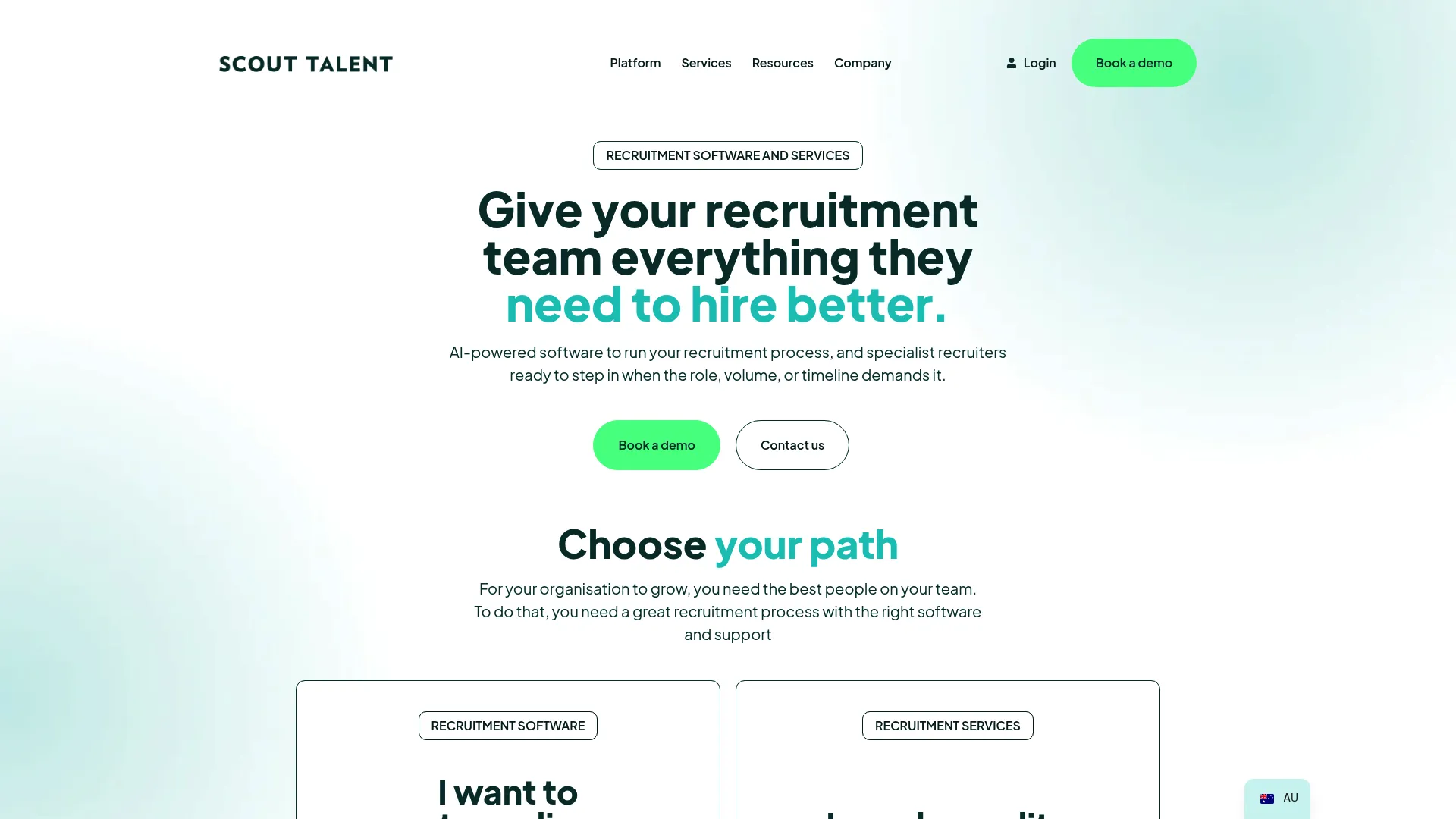
Scout Talent is a recruitment software and services platform built for in-house hiring teams. Its angle is practical: stop candidate drop-off by making follow-up timely and reusing the database you already paid to build. That framing lands with teams tired of watching good applicants go cold.
The platform combines applicant tracking and candidate management with AI screening and job ad drafting, plus analytics and reporting. For engagement, that means recruiters can automate candidate communications, keep talent pools active, and run re-engagement against past applicants. Because Scout Talent also offers recruitment services, teams that want a vendor to help execute, not just supply software, get both in one relationship.
Best for: Organizations that want an ATS plus recruitment services from a single vendor, with a focus on reactivation.
Key strengths
- Applicant tracking and candidate management
- AI screening and job ad drafting
- Analytics and reporting on pipeline health
- Talent pool reuse for candidate re-engagement
Why choose Scout Talent: Pick it if your existing candidate database is underused and you want software plus hands-on services to reactivate it. It suits in-house teams that need help executing, not just a tool.
Scout Talent pricing: Scout Talent does not list public pricing. It says subscription cost depends on HR user licenses, integrations, and modules, and asks teams to request a tailored proposal.
3. Curately
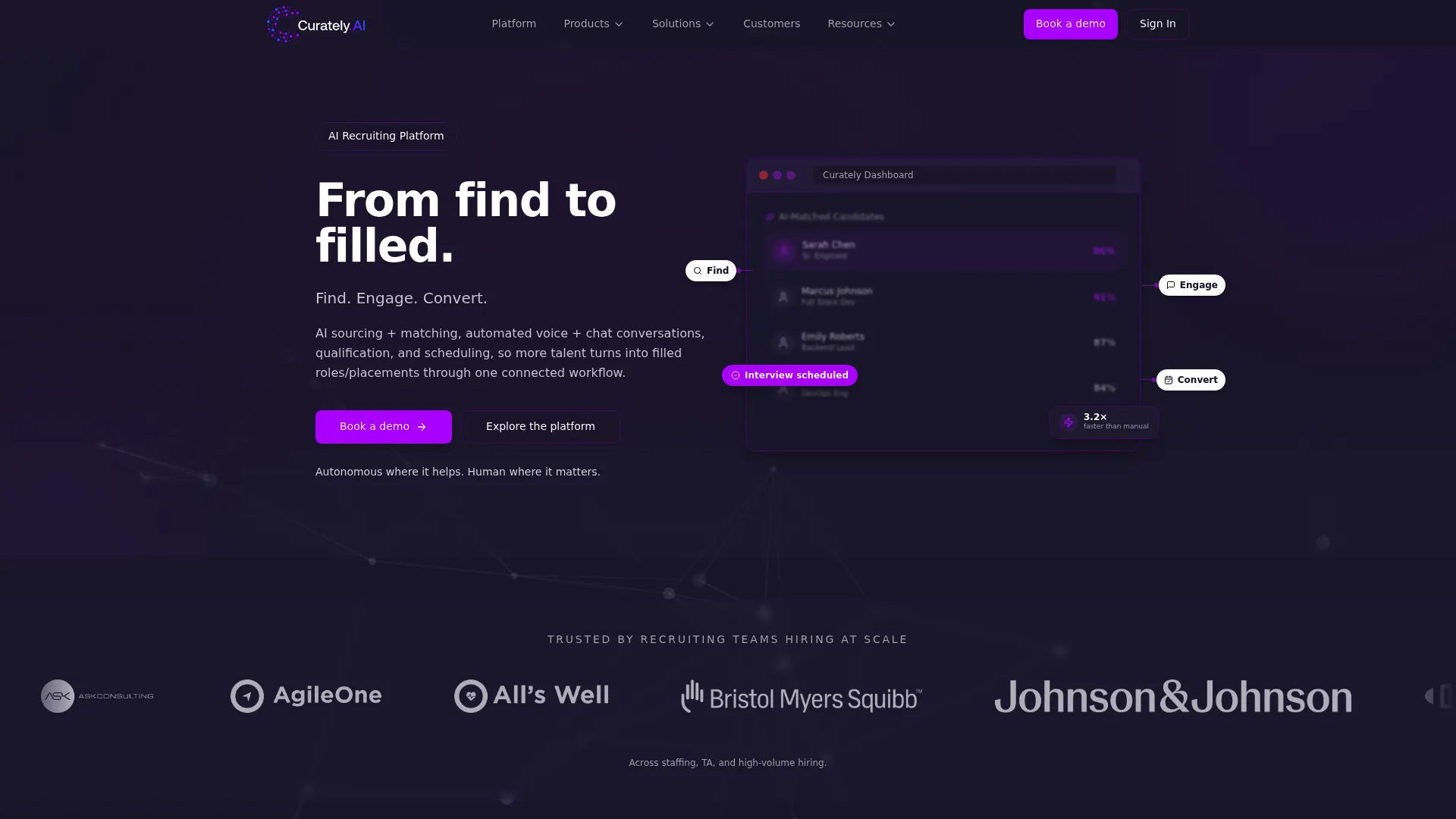
Curately is an AI recruiting platform covering sourcing, engagement, qualification, and scheduling in one workflow. It leans hard into automation: AI surfaces and matches candidates, then voice and chat handle the actual outreach conversations. For high-volume teams, that removes the manual bottleneck between sourcing and a booked interview.
The engagement story here is about speed and coverage. AI sourcing feeds the pipeline, candidate outreach automation runs the follow-up across voice and chat, and qualification plus scheduling move responders toward a slot without a recruiter chasing calendars. It is an end-to-end motion aimed at staffing and TA teams that measure success in filled roles per recruiter.
Best for: Staffing, TA, and high-volume hiring teams that want AI sourcing and automated conversations end to end.
Key strengths
- AI sourcing and AI match
- Voice and chat candidate conversations
- Qualification, routing, and scheduling
- End-to-end recruiting workflow in one platform
Why choose Curately: If your bottleneck is the manual gap between sourcing and a scheduled interview, Curately automates that stretch with AI conversations. It fits teams optimizing for volume and recruiter leverage.
Curately pricing: Curately is free to try, with plans starting at $49/mo. The published AI Sourcing plan begins at $49/mo.
4. Manatal
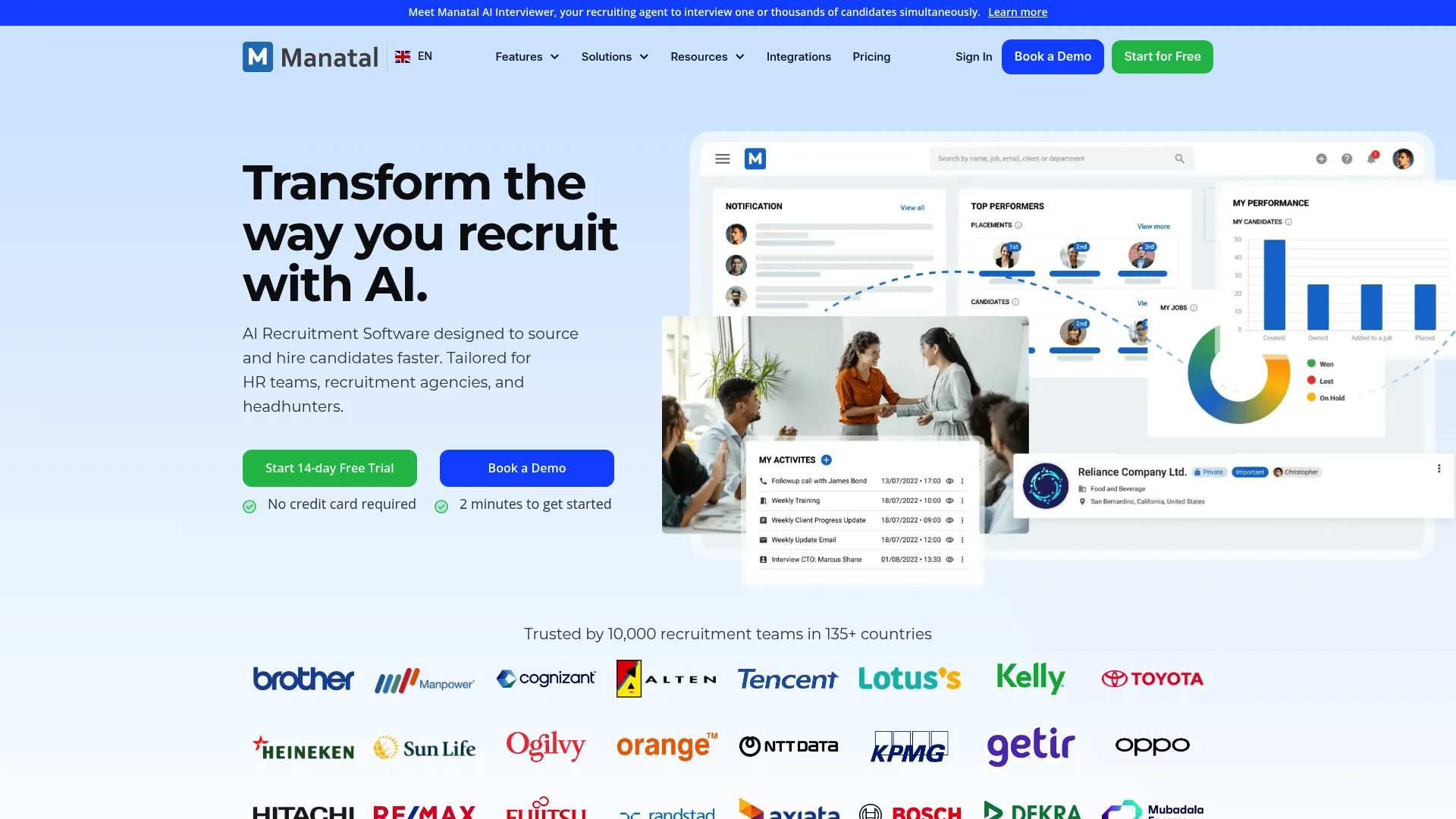
Manatal is AI-native recruiting software combining an applicant tracking system, recruitment CRM, and hiring automation. Its calling card is transparent per-user pricing, which makes it a low-friction pick for smaller teams and agencies that do not want to sit through an enterprise sales cycle to see a number.
For engagement, Manatal pairs its ATS pipelines and candidate management with AI enrichment and automated screening. Recruiters get candidate scoring, resume parsing, and enrichment that fills in missing context, so outreach can be more personalized without manual research. The result is a recruiting automation software stack that a two-person team can run without a dedicated ops hire.
Best for: Recruitment teams and agencies that want an AI-driven ATS with clear per-user pricing.
Key strengths
- Applicant tracking system with pipelines and candidate management
- AI candidate enrichment and resume parsing
- AI interviewer and automated screening
- Candidate scoring for prioritized outreach
Why choose Manatal: Choose it when you want AI recruiting features and transparent pricing without an enterprise commitment. It fits smaller teams and agencies that value speed to value.
Manatal pricing: Plans start at $15/user/month (Professional, monthly billing), with Enterprise at $35 and Enterprise Plus at $55. Annual billing runs $19, $39, and $59 respectively. A 14-day free trial is offered, no card required.
5. Beamery
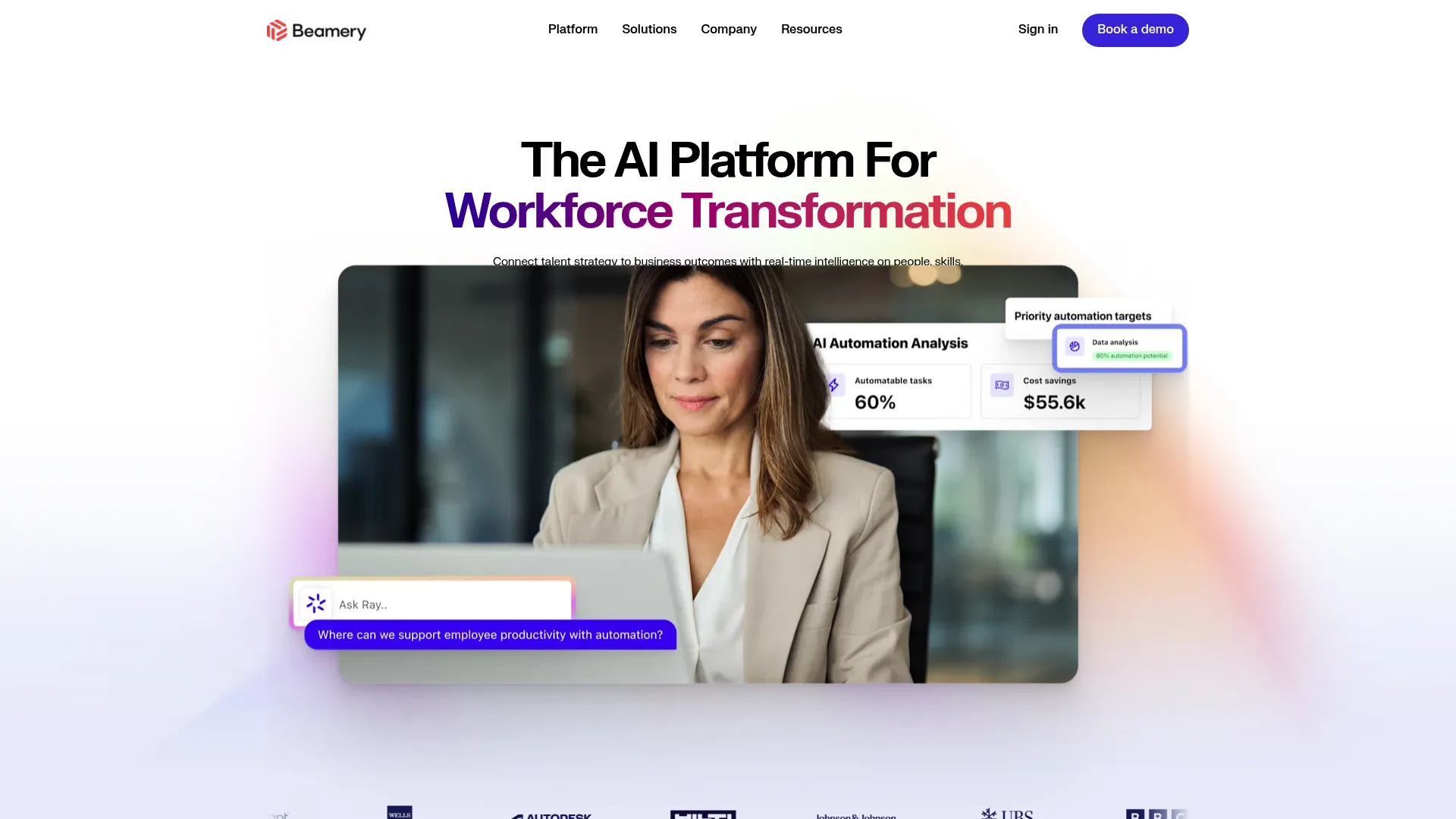
Beamery is an AI platform for workforce transformation, centered on skills, talent, and workforce intelligence. It sits at the enterprise end, where hiring is one part of a broader people-and-skills strategy. For large organizations planning against skills gaps, Beamery frames candidate engagement inside that bigger picture.
The engagement capabilities are deep: an AI-powered talent CRM handles sourcing and matching, talent marketing automates candidate engagement, and workforce intelligence connects hiring to planning. That means talent pools, automated nurture, and candidate re-engagement run against a skills model rather than a flat list. Analytics tie engagement to workforce outcomes, which is the language enterprise talent leaders and their boards speak.
Best for: Large enterprises that need skills-based hiring, nurturing, and workforce planning in one platform.
Key strengths
- Workforce intelligence for people, skills, and planning
- AI-powered talent CRM with sourcing and matching
- Talent marketing and candidate engagement automation
- Talent pools and nurture at enterprise scale
Why choose Beamery: Pick Beamery when candidate engagement is part of a wider skills and workforce-planning mandate, not a standalone recruiting task. It fits enterprises that need governance and depth.
Beamery pricing: Beamery does not publish pricing. It states that pricing and limits are available on request.
6. Zoho Recruit
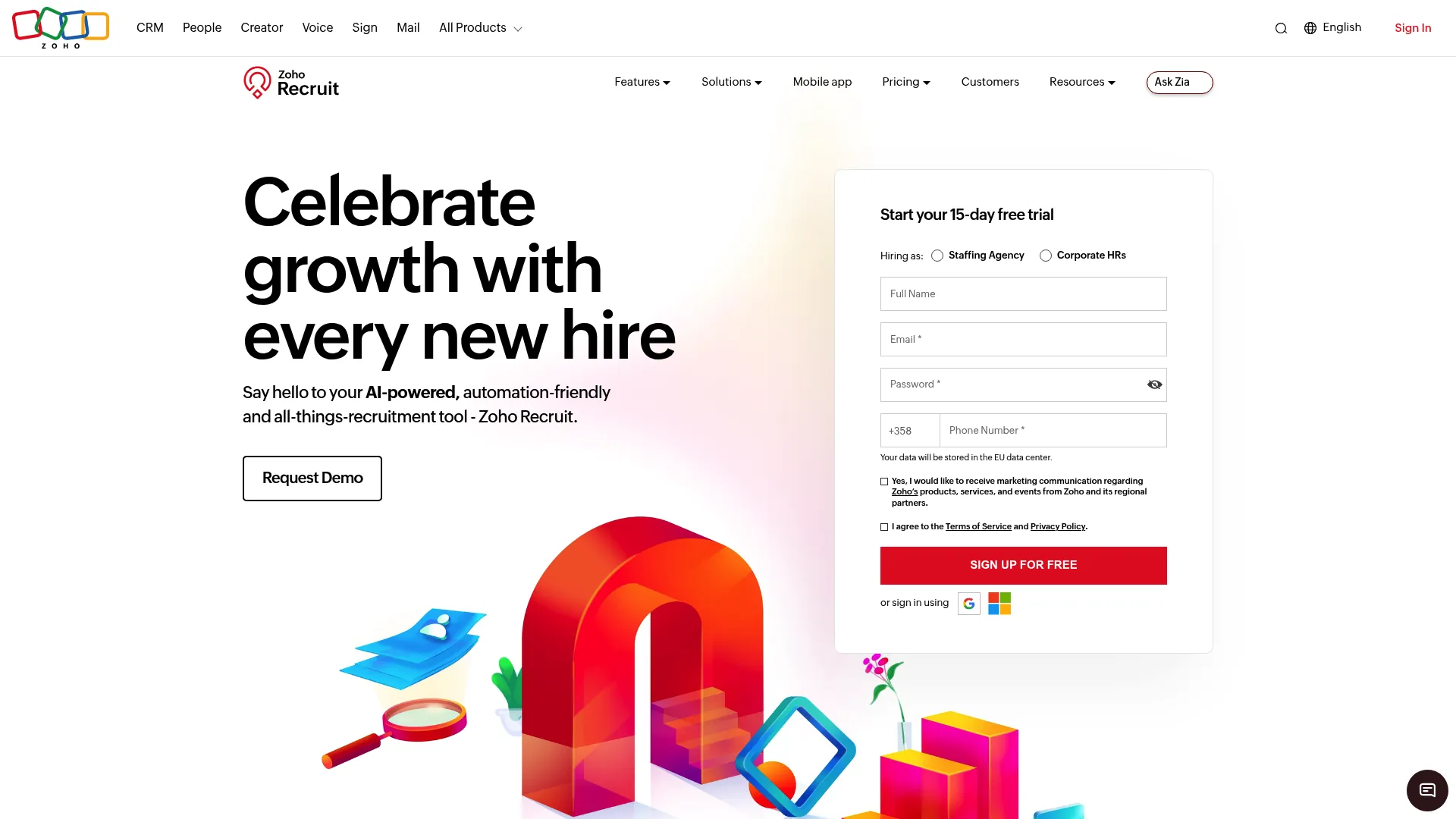
Zoho Recruit is a cloud-based hiring platform for HR teams and staffing agencies that want a configurable ATS plus recruitment CRM without a heavy enterprise stack. It is the pragmatic middle option: real automation, a free tier to start, and pricing you can read on the page.
On engagement, Zoho Recruit pairs applicant tracking and candidate management with AI-assisted sourcing, matching, and content generation. Its automation layer (workflows, blueprints, and integrations) handles candidate messaging and follow-up so passive candidates do not slip. For teams already in the Zoho ecosystem, the integrations make it an easy addition rather than a new silo.
Best for: SMB and mid-market teams that want a configurable ATS plus recruitment CRM in one affordable system.
Key strengths
- Applicant tracking and candidate management
- AI-assisted sourcing, matching, and content generation
- Automation with workflows, blueprints, and integrations
- Recruitment CRM for candidate outreach automation
Why choose Zoho Recruit: Choose it when you want ATS-plus-automation with transparent pricing and a free entry point. It fits smaller teams that need capability without enterprise cost.
Zoho Recruit pricing: A Forever Free edition is available. Paid plans are Standard at $30, Professional at $60, and Enterprise at $90 per recruiter per month. A 15-day free trial is offered.
7. Bullhorn

Bullhorn is recruiting and staffing software with an ATS, CRM, automation, analytics, and AI, purpose-built for staffing agencies and high-volume recruiting. When your business is placement velocity, Bullhorn's workflow automation is designed around that reality rather than corporate in-house hiring.
For engagement, Bullhorn combines its ATS and CRM with AI-powered recruiting and matching plus workflow automation. That supports outreach and follow-up at high volume, candidate pipeline management across many open roles, and analytics that track throughput. Staffing teams use it to keep large candidate pools active and moving, which is exactly where manual follow-up breaks down.
Best for: Staffing and recruitment firms that need a combined ATS/CRM with AI and high-volume automation.
Key strengths
- ATS and CRM built for staffing agencies
- AI-powered recruiting and matching
- Workflow automation for high-volume outreach
- Analytics on pipeline throughput
Why choose Bullhorn: Pick it when placement volume is the business and you need automation tuned to agency workflows. It fits staffing firms over corporate talent teams.
Bullhorn pricing: Bullhorn does not display public pricing. Its pricing page lists offerings like Bullhorn Pro and Amplify Digital Workers and directs teams to request a quote.
Considerations
Before you buy, verify these against your actual recruiting reality, not the demo.
Integration depth with your ATS and CRM
The engagement layer only works if it reads from and writes to your system of record. Confirm two-way sync with your ATS, not just a one-time import. Shallow integration means duplicate data entry, which kills adoption fast.
Automation versus manual control
Automation should remove busywork without removing judgment. Check that you can set triggers, pause sequences, and override any automated touch. A recruiter needs to step in on a high-value candidate without fighting the tool.
Candidate segmentation and personalization
Generic blast messaging is what causes candidate ghosting in the first place. Verify you can segment by role, skill, source, and status, then personalize messaging at scale across those segments. Talent pool management is only useful if the pools are actually targetable.
Analytics and reporting quality
Candidate engagement analytics should answer one question: is the pipeline healthy? Look for response rates, drop-off points, and pipeline movement, not just vanity opens. If the numbers do not change how you allocate recruiter time, they are decoration.
Implementation time and team adoption
A tool your recruiters ignore is a line item, not leverage. Ask about setup time, onboarding support, and whether reps work inside the tool or in another tab. First-week usability predicts long-term adoption better than any feature list.
Pricing relative to recruiting volume
Match the pricing model to your hiring volume. Per-user pricing suits small, stable teams. Custom enterprise pricing suits high scale but demands a longer buying cycle. Confirm what scales the bill: seats, candidates, or messages sent.
Conclusion
The right candidate engagement software depends on the bottleneck you are actually trying to fix.
For enterprise teams consolidating tools, iCIMS covers ATS, CRM, and onboarding in one suite, and Beamery goes deeper on skills-based nurturing and workforce planning. For teams focused on re-engagement, Scout Talent is built around reactivating dormant candidates and reusing your existing database. For teams that want AI sourcing and automated conversations end to end, Curately handles sourcing through scheduling.
For simpler ATS-plus-automation, Zoho Recruit gives you a configurable platform with a free tier and readable pricing, while Manatal offers an AI-native ATS with transparent per-user cost for smaller teams and agencies. For staffing and high-volume needs, Bullhorn is purpose-built for agency workflow automation.
Start with your worst leak. If candidates ghost after first contact, prioritize recruiter follow-up automation. If your database is full of untouched silver medalists, prioritize re-engagement and talent pool management. Shortlist two tools that fit your bottleneck, run a trial against real candidates, and measure response rates before you commit.
FAQs
Candidate engagement software is a system of engagement for recruiting that keeps candidates informed and responsive from first outreach through offer. It handles communication, segmentation, nurturing, and follow-up, and it works alongside your ATS rather than replacing it. The core job is lifting response rates and keeping pipeline warm.
An ATS is your system of record: it tracks applications, stages, and compliance. Candidate engagement software is your system of engagement: it runs personalized, multichannel outreach and re-engagement. The ATS tells you a candidate exists; the engagement layer keeps that candidate interested and nudges them when they go quiet. The best setups sync the two rather than choosing one.
Yes, mostly by fixing the follow-up gap that causes it. Ghosting often happens because the second and third touch never get sent, or arrive too late. Recruiter follow-up automation sends timed, personalized nudges so no candidate falls silent from neglect. Faster, more relevant contact directly improves reply-to-interview conversion.
At minimum, email and SMS, since candidates respond on different channels at different speeds. Stronger platforms add chat and, in some cases, voice for high-volume outreach. The point of multichannel recruiting is meeting candidates where they actually reply, coordinated in a single sequence so recruiters are not juggling tools.
It segments dormant candidates and silver medalists into talent pools, then runs targeted re-engagement campaigns when a relevant role opens. Instead of cold sourcing from scratch, you reach a warm pool that already knows your company. That shortens time-to-fill and lowers cost per hire, since the cheapest pipeline is the one you already built.
Track response rate, reply-to-interview conversion, time-to-fill, and pipeline drop-off by stage. Candidate engagement analytics should show where candidates go quiet so you can fix the leak. Vanity metrics like email opens matter far less than whether engagement actually moves candidates toward an offer.
Not always on day one, but the trigger is clear: when you are exporting lists to run outreach in a separate tool, or losing candidates between stages, a dedicated layer earns its place. Smaller teams often get most of the value from an ATS with strong built-in automation, like Zoho Recruit or Manatal, before adding a standalone platform.
AI sourcing feeds the top of the engagement funnel by surfacing and ranking candidates from your database and external sources. Engagement then takes over: automated, personalized outreach turns those sourced candidates into responders. Tools like Curately connect sourcing and outreach in one motion, while suites like iCIMS and Beamery layer AI sourcing onto broader talent CRM capabilities.