You just spent forty minutes building a quote. The shipper booked with someone else. They replied faster, and the rate they quoted was live, not a spreadsheet number from last Tuesday.
That is the daily tax on air freight teams still running on email threads, PDF rate sheets, and manual booking portals. Rates move. Capacity tightens. Someone forgets to check the fuel surcharge. By the time the quote goes out, the market has moved and the margin is gone. Meanwhile the shipper is chasing status updates you cannot answer without opening three different airline booking portals.
The market has noticed. The global air freight software market sat at roughly USD 6.57 billion in 2025 and is projected to reach USD 7.93 billion by 2034, according to Fortune Business Insights (2025). More telling for operators: Market Growth Reports (2024) found that 65% of logistics firms have adopted some form of digitalization, and over half of new deployments are cloud-based. The teams still quoting by hand are competing against teams whose air cargo software does it in seconds.
The point of good air freight forwarding software is not novelty. It is margin control and predictable execution. When rate intelligence, quoting, air freight rate management, booking, and shipment visibility live in one system, quotes go out faster, fewer bookings fall through, and your team stops chasing check-in emails. That is the difference between a motion that scales and one that routes every deal through your most experienced operator.
What's inside
This guide compares seven air freight management software platforms chosen for real commercial relevance in 2026. We weighted them on five things: rate management and quoting speed, booking and execution depth, shipment tracking and visibility, integration breadth (APIs, EDI, TMS), and operational fit for the team actually using it.
The list favors tools with broad workflow coverage and clear differentiation for freight forwarders, logistics operators, and air cargo commercial teams. It is built for readers who need a shortlist to evaluate, not a glossary of every vendor in the category. If you want a decision, keep reading. If you want an encyclopedia, this is not it.
TL;DR
- Best overall for end-to-end forwarder workflow: Freightos, for teams that want rate management, quoting, booking, and sales in one place.
- Best for broad forwarding execution and visibility: CargoWise, for larger operations running air alongside customs, warehousing, and transport.
- Best for transparent SaaS pricing: Logistaas, for smaller forwarders that want published per-user pricing.
- Best for real-time booking depth: cargo.one, for teams that live in live airline rates and fast eBooking.
- Best for air and inland rate workflow: 7LFreight, for forwarders quoting across air and ground.
- Best for airport and cargo operations digitization: Kale Logistics, for airports, handlers, and cargo terminals.
- Best for rate intelligence plus operational automation: Freightoscope, for independent forwarders wanting modern digital tooling.
What air freight software is
Air freight software is a category of logistics tools that helps freight teams source rates, build quotes, book capacity, execute shipments, track status, handle documents, and manage billing for air cargo. It sits between the forwarder, the airline, and the shipper, replacing the manual back-and-forth that slows quoting and hides shipment status.
Most platforms in the category cover a common set of capabilities:
- Freight rate management software: central storage of buy rates, sell rates, contracts, and surcharges, with real-time pricing where carrier feeds allow it.
- Air freight quoting software: branded, fast quote generation pulled directly from managed rates.
- Air freight booking software: eBooking and confirmations that connect to an airline booking portal or aggregator.
- e-AWB software: electronic air waybill generation and submission to cut paper handling.
- Air cargo tracking software: milestone tracking and shipment visibility across the shipment lifecycle.
- API and EDI connectivity: integrations into carrier systems, aggregators, CRM, and TMS integrations.
The stronger platforms treat these as one connected operating system rather than separate modules bolted together. That connection is where the time savings and margin protection actually come from.
What air freight software should do for a modern team
Rate management and quoting
Quote speed is a win-rate lever, not a nice-to-have. When a shipper sends an inquiry, the team that responds first with an accurate number usually wins. Good air freight rate management stores contract and spot rates in one place, applies surcharges automatically, and surfaces real-time pricing where the carrier feed supports it. The software should turn a managed rate into a branded quote in a couple of clicks, not a spreadsheet exercise. Rate intelligence, including volatility signals and benchmarking, helps teams price with confidence instead of guessing.
Booking and execution
Once a shipper accepts, booking and confirmation should collapse into the same workflow that produced the quote. The best air freight booking software connects to an airline booking portal or aggregator so the forwarder books capacity without re-keying data. Booking workflow automation pushes confirmations, generates documents, and moves the shipment into execution without a chain of copy-paste steps. That is how you stop bookings from falling through the cracks between quote and confirmation.
Visibility and compliance
Shippers want status, and they want it without emailing you. Air cargo tracking software delivers milestone tracking and shipment visibility from booking through delivery, so the whole team sees the same status. Compliance sits alongside it: automated sanctions and denied-party screening, e-AWB software for electronic air waybills, and document templates that reduce manual handling. When visibility and compliance are automated, the team spends less time on check-in emails and more on moving freight.
Integrations and data flow
APIs, EDI, and TMS integrations are table stakes in 2026, not premium features. A forwarder's data has to move between the airline, the aggregator, the CRM, accounting, and any broader transport management system. API and EDI connectivity is what keeps rates current, bookings synced, and billing accurate. Without it, you get islands of data and manual reconciliation, which is exactly the friction the software is meant to remove.
When teams use air freight software
Speed up quote turnaround
Use it when your team is losing deals to slower response times. If a shipper inquiry sits in an inbox while someone hunts for the right rate, the tool that pulls managed rates into a branded quote in seconds changes your win rate. This is the highest-leverage reason forwarders adopt air freight quoting software.
Reduce manual operations work
Use it when the team still copies rates between systems, chases updates by phone, or builds air waybills by hand. Cargo operations automation removes the repetitive keying and document work that eats operator hours. That time goes back into quoting and customer relationships, which is where forwarders actually make money.
Improve shipment visibility
Use it when your inbox is full of "where is my shipment" emails. Milestone tracking and shipment visibility give shippers self-serve status and give your team one source of truth. Fewer check-in emails, fewer surprises, and a customer experience that holds up under scrutiny.
Comparison table
Here is the shortlist at a glance. Pricing and ratings below reflect verified, publicly available figures at the time of writing; where a vendor does not publish numbers, we note that rather than guess. Use this table to narrow to one or two air freight management software tools, then read the sections that matter to you.
| # | Product | Intent | Key use case | Pricing | G2 rating |
|---|---|---|---|---|---|
| 1 | Freightos | End-to-end forwarder commercial workflow | Rate management, quoting, and booking in one place | Terminal data from $119/mo (billed annually); enterprise custom | 3.9/5 |
| 2 | CargoWise | Broad global logistics execution | Air freight alongside customs, warehouse, and transport | Value Pack model, priced per logistics transaction | 4.3/5 |
| 3 | Logistaas | Transparent cloud TMS for forwarders | Air booking, e-AWB, operations, and finance | From $45/user/mo | 4.5/5 |
| 4 | cargo.one | Real-time booking and rate access | Live airline rates and fast eBooking | Starter free; pro and Enterprise fee-based | 4.8/5 |
| 5 | 7LFreight | Air and inland rate workflow | Quoting and booking across air and trucking | Month-to-month or annual, modular | Not published |
| 6 | Kale Logistics | Airport and cargo community digitization | Cargo terminal, handler, and airport workflows | Transaction-fee model | Not published |
| 7 | Freightoscope | Rate management plus digital forwarding | Quoting, e-AWB, tracking for independent forwarders | Not published | New listing |
The 7 best air freight software tools
1. Freightos
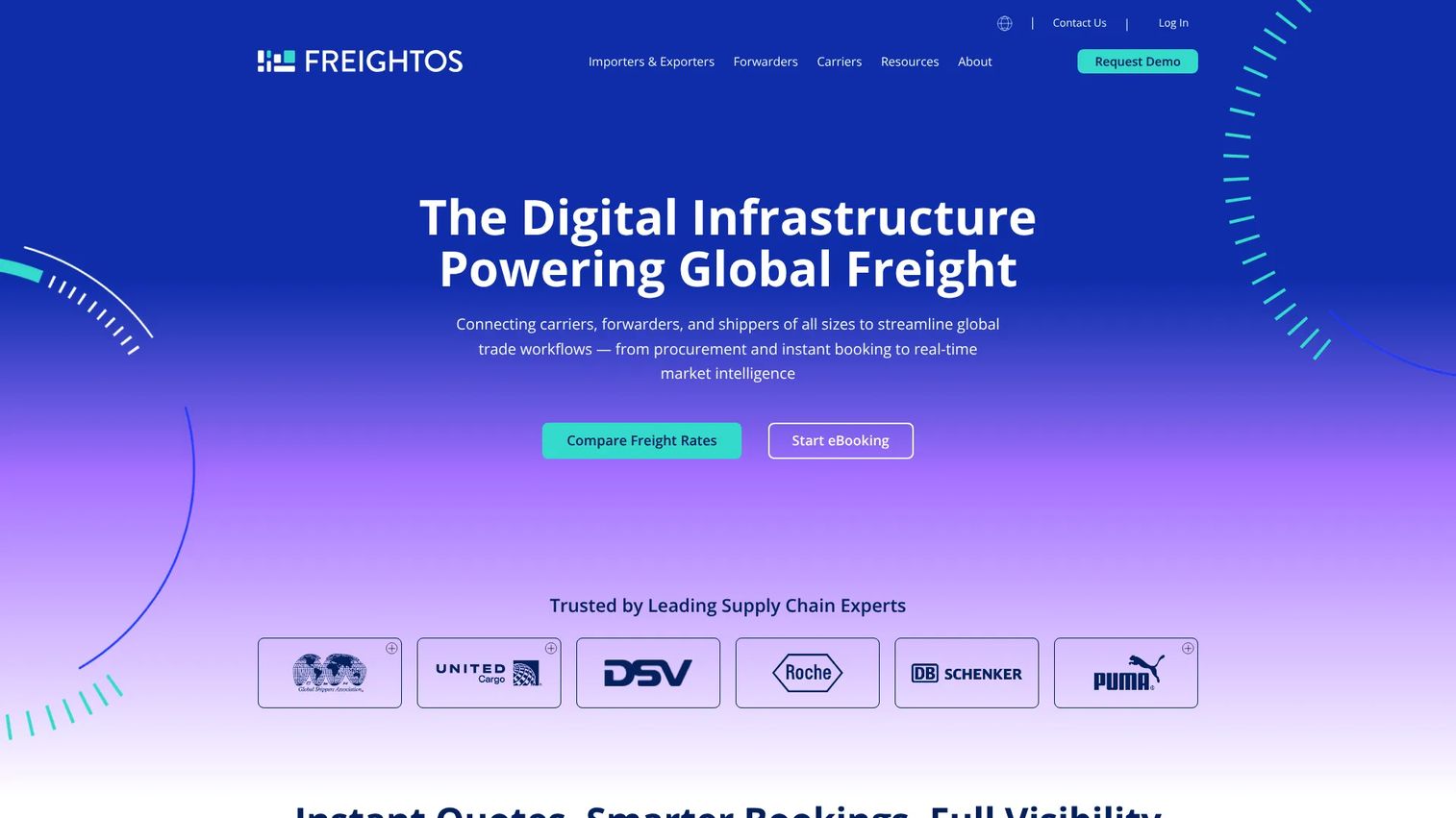
Freightos is a global freight marketplace and enterprise software platform built around pricing, booking, procurement, and market intelligence. For air freight teams, its strongest pull is the commercial workflow: managing rates, turning them into branded quotes, and pushing bookings, all in one connected system. It is the closest thing on this list to a purpose-built home for forwarder sales and air freight rate management.
Best for: Freight forwarders and logistics teams that want rate comparison, quoting, booking, and market intelligence in a single commercial workflow.
Key strengths
- Instant rate comparison and booking: Compare live freight rates and book without leaving the platform, which is the difference between quoting fast and quoting late.
- Enterprise rate, book, and manage workflow: A connected loop from managed rates through eBooking, so quotes and confirmations do not drift apart.
- Market intelligence and benchmarking: Freight benchmarking and rate intelligence help teams price against the market instead of guessing at surcharges.
Why choose Freightos: If your bottleneck is commercial speed, slow quotes, rate sheets that are always slightly stale, bookings that fall through, Freightos is the most direct fit. It centers on the sales and procurement motion where forwarders win or lose deals, and its market data gives commercial leaders a defensible view of where rates are heading.
Freightos pricing: Freightos publishes pricing for its Terminal data packages. The Individual Starter Ocean plan starts at $119 per month, billed annually, and the Individual Starter Air plan is $239 per month, billed annually. A Custom Enterprise Package is available by quote. There is no public free tier. Broader enterprise software pricing is quoted directly by their sales team.
2. CargoWise
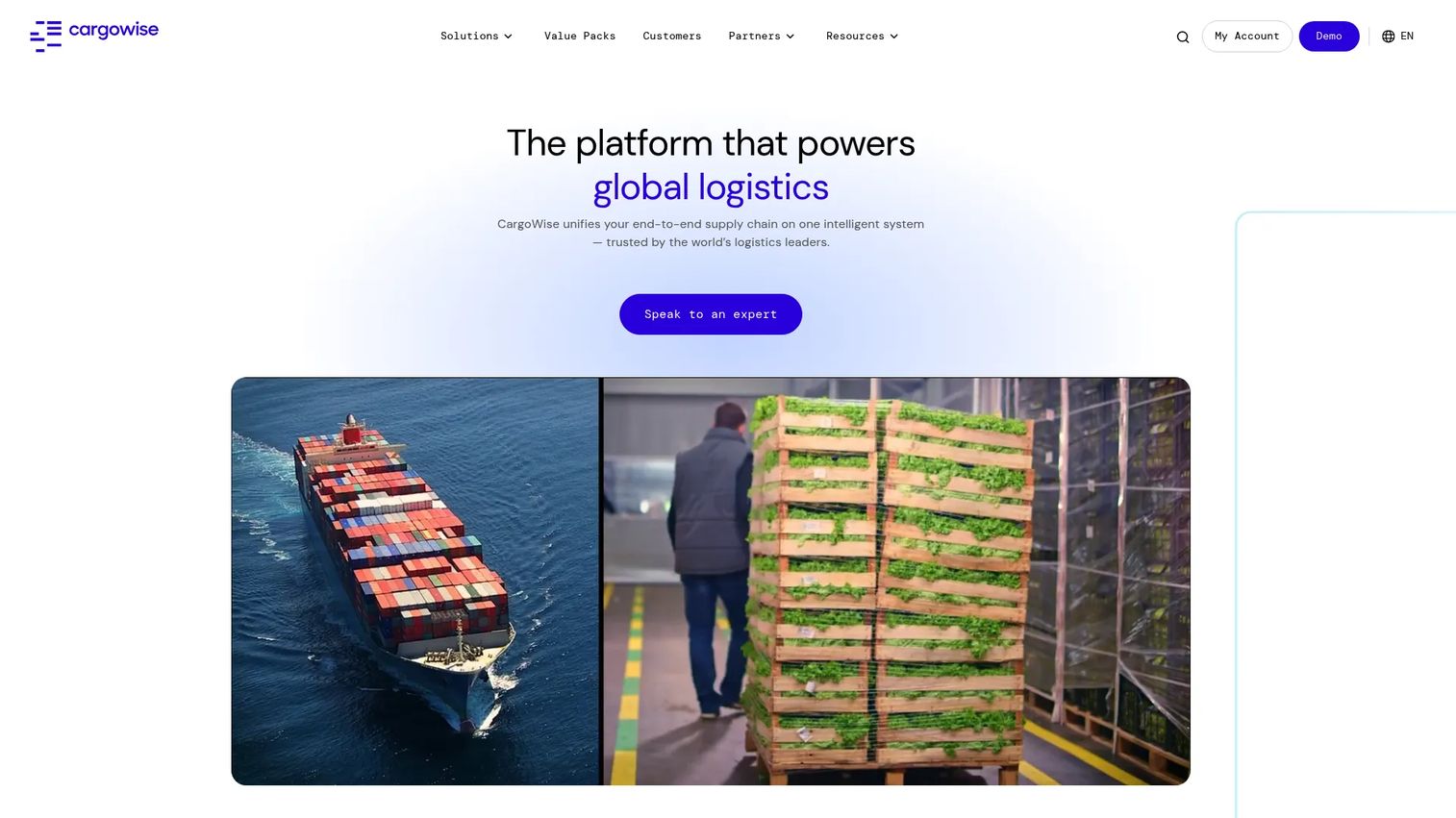
CargoWise is a global logistics execution platform that runs freight forwarding, customs, warehousing, transport, and compliance in one system. Air freight is one motion inside a much broader operation, which is exactly why larger forwarders choose it. Quote-to-book workflow, milestone visibility, airline connectivity, and rate management all sit inside a platform designed to run the whole business, not just one lane.
Best for: Freight forwarders and logistics providers that need an integrated global operations platform spanning air, customs, and warehousing.
Key strengths
- End-to-end shipment execution: Air freight forwarding software that connects to customs and compliance workflows, so a shipment moves through one system end to end.
- Airline and carrier connectivity: Booking connectivity and e-AWB support that keep air operations synced with the rest of the platform.
- Warehouse and visibility depth: Warehouse management and shipment visibility that scale to complex, multi-branch operations.
Why choose CargoWise: Pick CargoWise when air freight is one part of a larger, multi-service forwarding operation and you need one platform to run all of it. It is built for scale and breadth rather than a single commercial workflow, which suits established forwarders consolidating fragmented systems.
CargoWise pricing: CargoWise uses a Value Pack model that charges a published Community Price per eligible logistics transaction, with packs for forwarding, customs, warehouse, and land transport. Specific per-transaction figures are not shown publicly on the pricing page, so plan on a scoped conversation with their team to size it for your volume.
3. Logistaas
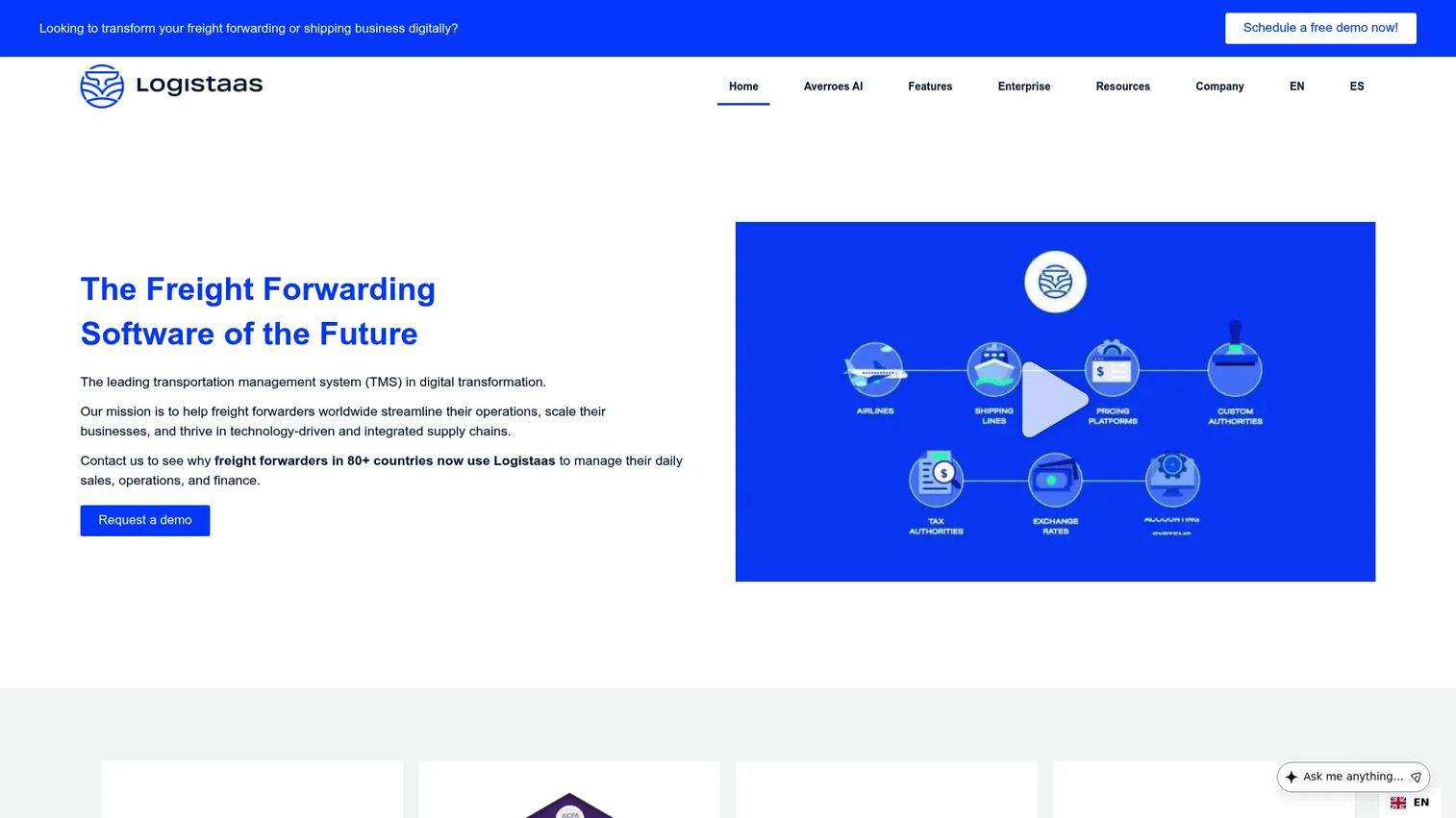
Logistaas is a cloud-based TMS built for freight forwarders, shipping lines, and NVOCCs. It covers sales and pricing, operations, and finance, with air freight booking, e-AWB software, and shipment visibility inside a straightforward package. Its integrations with WebCargo and Traxon CargoHUB give forwarders access to airline rates and booking without stitching together separate tools.
Best for: Freight forwarders that want a cloud TMS with CRM, operations, finance, and a customer portal, at published pricing.
Key strengths
- Sales and pricing management: Freight rate management software with quoting built in, so commercial and operations teams work from the same rates.
- Operations and e-AWB: Booking, e-AWB, and milestone tracking that reduce manual document handling.
- Transparent packaging: Published per-user pricing that smaller teams can evaluate without a sales cycle.
Why choose Logistaas: For a smaller or mid-sized forwarder tired of opaque enterprise quotes, Logistaas is refreshingly clear about what it costs. The WebCargo and Traxon CargoHUB integrations mean air rate access and booking are covered out of the box, and the module structure lets teams pay for what they actually use.
Logistaas pricing: Logistaas publishes four plans: CRM Only at $45 per user per month, Professional at $65 per user per month, Digital Freight Forwarder at $85 per user per month, and Accounting Users at $85 per user per month. Billing can be quarterly or yearly, and listed prices do not include a one-time implementation fee. The brand site references a free trial.
4. cargo.one
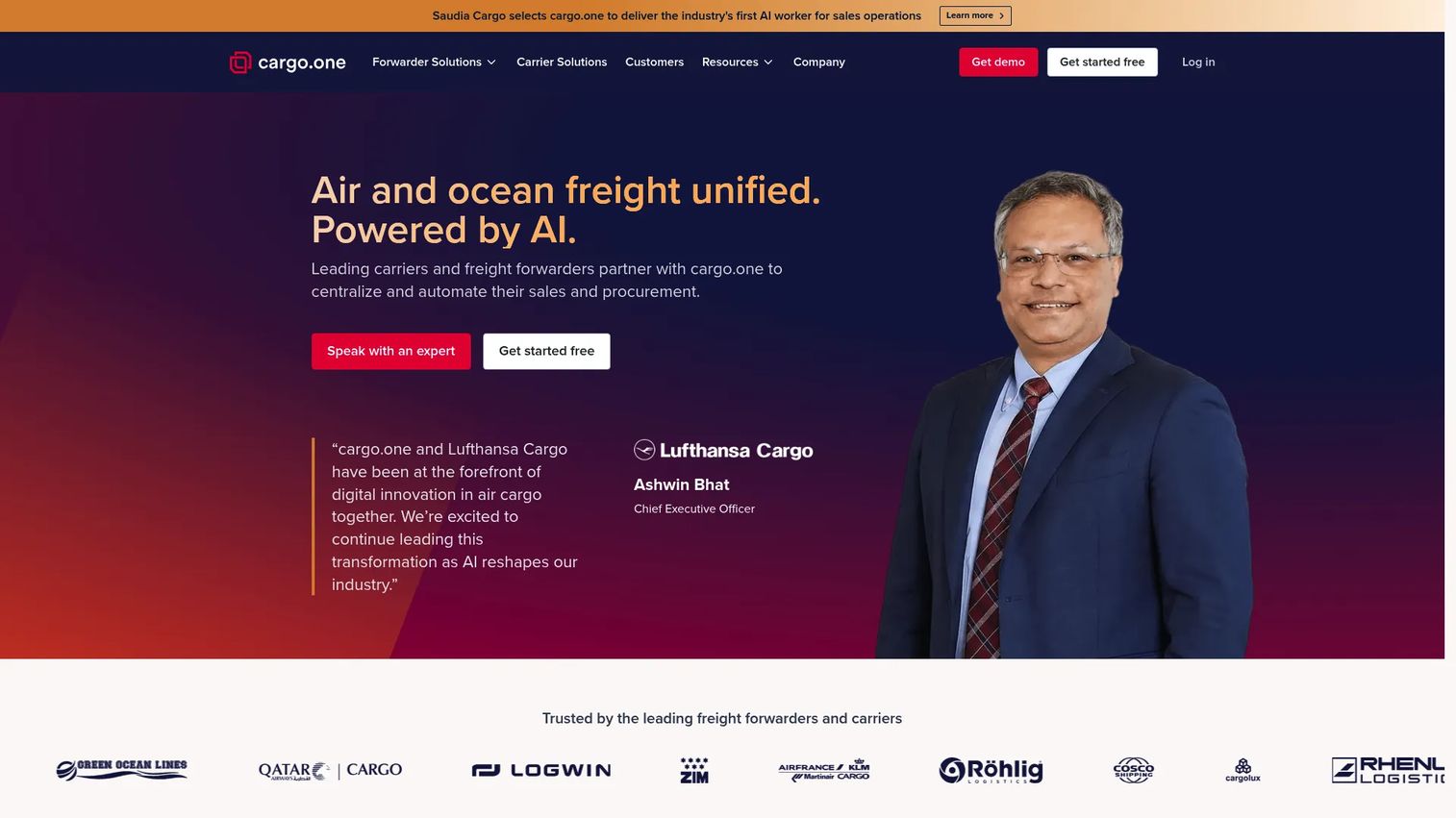
cargo.one is an AI-native operating system for air and ocean freight that helps carriers and forwarders centralize sales and procurement. Its reputation is built on booking depth: live airline rates, multi-airline comparison, and fast eBooking. For a forwarder whose day is booking capacity across many carriers, cargo.one is purpose-built for that motion.
Best for: Freight forwarders and carriers that need digital air freight quoting, booking, and pricing workflows with real-time rate access.
Key strengths
- Air eBooking with live airline rates: Real-time pricing and booking across a wide airline network, so procurement moves at market speed.
- Rate management across buy, sell, and internal rates: A pricing layer that keeps commercial and procurement teams aligned.
- Quoting, portal, analytics, and API/TMS integration: A customer portal plus API and EDI connectivity into existing TMS integrations.
Why choose cargo.one: If speed to book across many airlines is your central problem, cargo.one is built exactly for that. Its real-time rate access and broad carrier connectivity make it a strong fit for teams whose competitive edge is procurement velocity, and its 4.8/5 G2 rating reflects how users feel about that focus.
cargo.one pricing: cargo.one lists three service packages: a free Starter plan, a fee-based pro plan, and a fee-based Enterprise plan. Public fees for the paid tiers are not displayed, so sizing the pro and Enterprise plans means a conversation with their team. The free Starter tier lets a team try the core booking experience at no cost.
5. 7LFreight
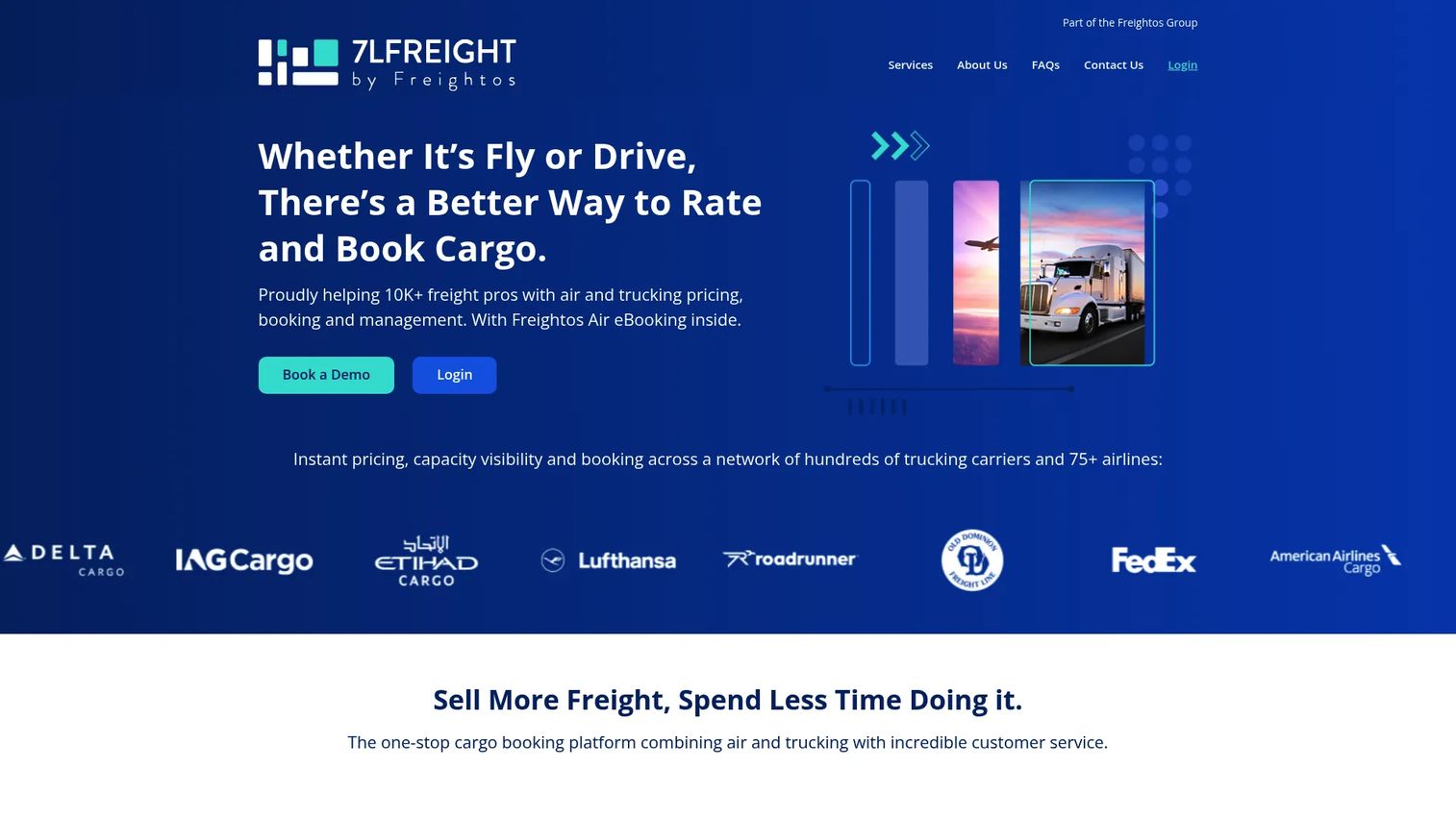
7LFreight is a freight pricing, quoting, and booking platform that spans air and trucking logistics. Its differentiator is coverage across modes: a forwarder can manage air freight rate management alongside inland rates in one pricing layer, with embedded eBooking and API connectivity into TMS workflows. For teams quoting door-to-door across air and ground, that single view is the draw.
Best for: Logistics teams that need air and trucking rate management, quoting, and booking in one integrated pricing layer.
Key strengths
- Air and inland pricing in one place: Freight rate management software that covers both air and trucking, so multimodal quotes come from one source.
- Embedded eBooking: Quoting and booking connected in the same workflow, cutting the handoff between price and confirmation.
- API connectivity for TMS workflows: API and EDI connectivity that slots the pricing layer into an existing transport stack.
Why choose 7LFreight: Choose 7LFreight when your quotes routinely combine air and inland legs and you want one rate and booking layer for both. The broader transport coverage suits forwarders who do not want to run separate tools for air and ground, and the modular contract structure lets teams start with what they need.
7LFreight pricing: 7LFreight does not display public pricing on its site. The company states that users can choose a month-to-month or annual contract and select the modules they need, which means pricing is scoped to the modules and volume you commit to. Contact their team for a quote tailored to your air and inland mix.
6. Kale Logistics
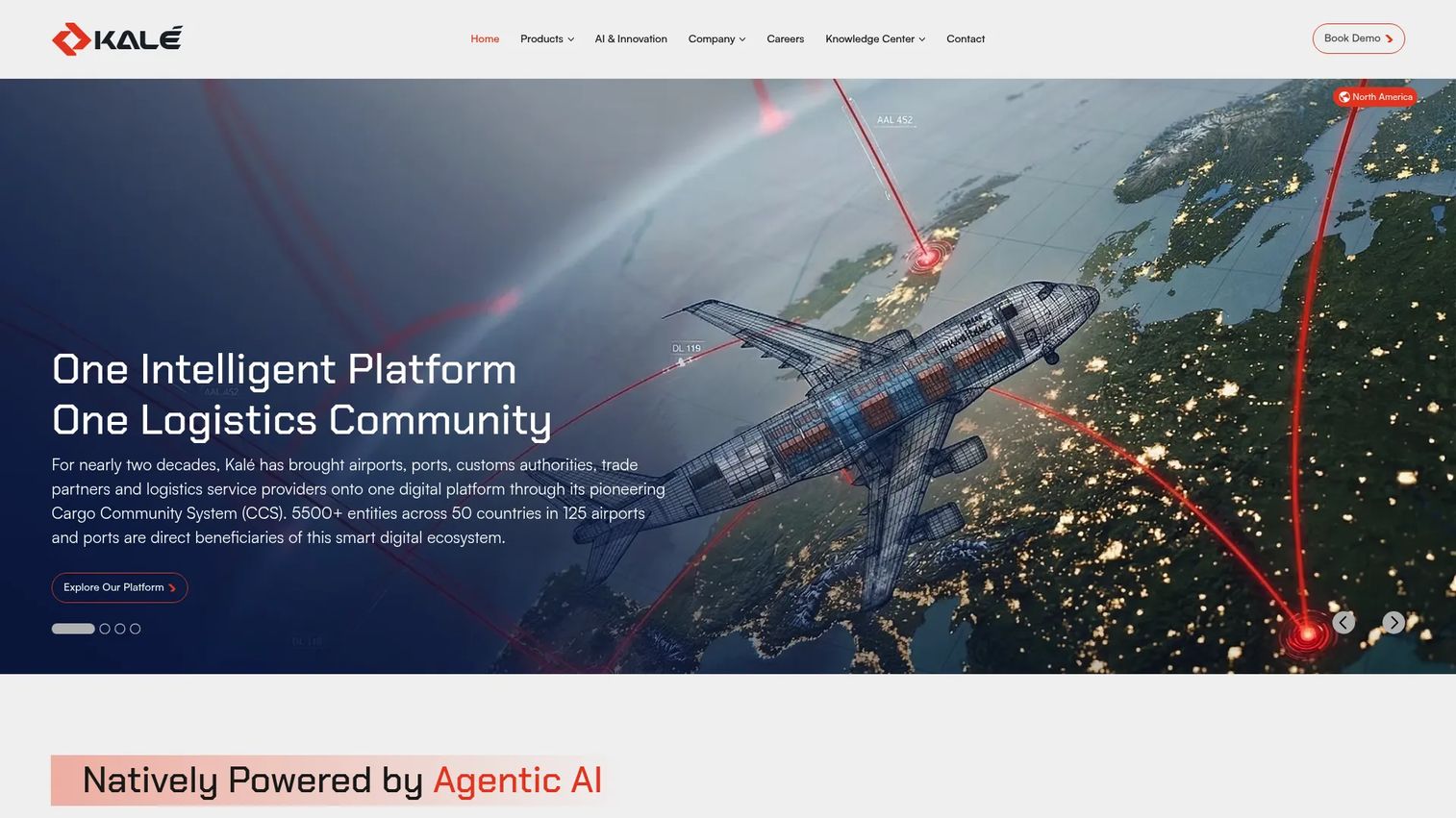
Kale Logistics is a cloud-based logistics software provider focused on cargo community, port, airport, and trade-facilitation operations. This one is different from the forwarder-first tools above. Kale digitizes the airport and cargo terminal side: cargo handling, document submission, e-payment, QR token generation, and airport workflow automation, often with AI and ML layered in. If you operate at the airport, handler, or terminal level, this is your category fit.
Best for: Airports, cargo handlers, terminal operators, and trade-gateway operators digitizing air, sea, or multimodal cargo workflows.
Key strengths
- Airport Cargo Community Systems: A shared digital layer connecting handlers, forwarders, and customs at the airport.
- Port Community Systems: Multimodal community platforms that extend the same model to seaports.
- Digital Trade Corridors: Cross-border trade facilitation that reduces paperwork across gateways.
Why choose Kale Logistics: Pick Kale when your problem is operations at the cargo community level rather than forwarder commercial workflow. Airports and handlers use it to digitize document submission, payments, and terminal flows, which is a fundamentally different job than quoting and booking freight. It is the right tool for the infrastructure side of air cargo.
Kale Logistics pricing: Kale does not publish numeric pricing. For its Cargo Community Systems it describes a zero-investment model where costs are recovered through a nominal transaction fee, so deployments are scoped per gateway. Expect a tailored conversation based on your operation and transaction volume.
7. Freightoscope
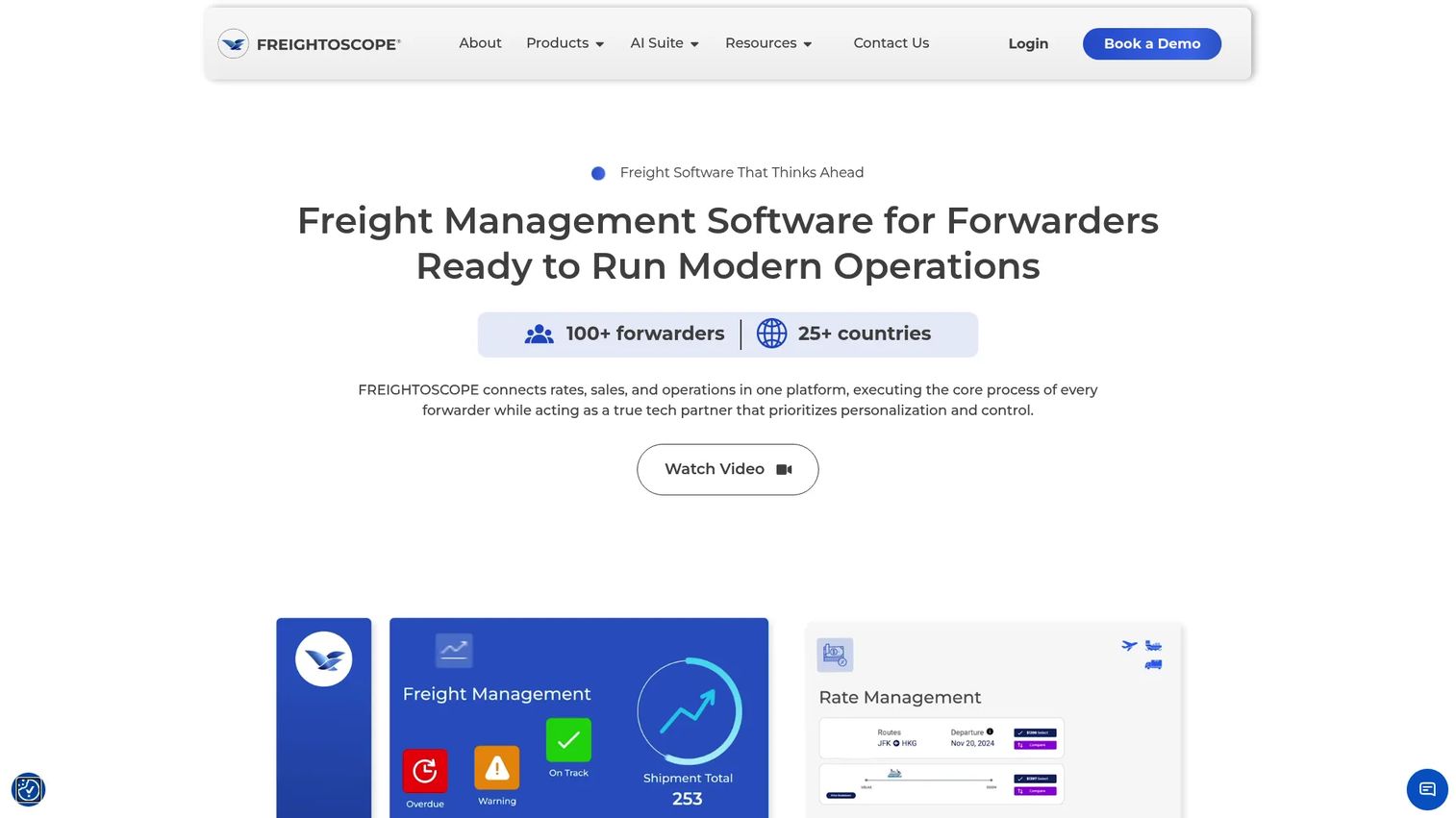
Freightoscope is freight forwarding software built for independent forwarders, centered on freight management, rate management, tracking, e-AWB, and AI tooling. It pairs a Freight Management System for sales, pricing, operations, documentation, and billing with a Rate Management System that handles live carrier rates, contracts, and quotes. For a smaller forwarder that wants modern operational tooling without an enterprise footprint, it fits the brief.
Best for: Independent freight forwarders that need an integrated digital forwarding platform with strong rate management.
Key strengths
- Freight Management System: Sales, pricing, operations, documentation, billing, and analytics in one place.
- Rate Management System: Live carrier rates, contracts, quotes, and customer and agent portals for fast air freight quoting.
- Tracking, e-AWB, and AI suite: Air and sea tracking, e-AWB software, FOS Connect, an AI suite, and mobile app access.
Why choose Freightoscope: Choose Freightoscope when you are an independent forwarder who wants rate intelligence and modern automation without the weight of a large platform. The combined FMS and RMS covers quoting speed, air contracts, and shipment workflow, and the AI tooling and mobile access point toward where the category is heading. Its G2 presence is new, so lean on a hands-on trial to judge fit.
Freightoscope pricing: Freightoscope does not publish pricing on its site, though it offers demos on request. Sizing the platform means a direct conversation, so use the demo to confirm the modules and workflow match how your team actually operates before committing.
Considerations before you buy
A shortlist is not a decision. Before you commit to any air freight software, run each finalist through the same checklist so you are comparing the same things.
Workflow fit
Map the tool to how your team actually works, not how a demo presents it. If your win rate depends on quote speed, weight rate management and quoting heavily. If you run air alongside customs and warehousing, breadth matters more than a single commercial workflow. The best platform on paper is worthless if it does not match your motion.
Integrations and data flow
Confirm API and EDI connectivity into your CRM, accounting, and any TMS integrations before you sign. Ask which airline feeds and aggregators are supported, and whether real-time pricing is genuinely live or refreshed on a delay. Islands of data are the friction you are trying to remove, so verify the connections exist.
Booking and document coverage
Check that booking connects to the airline booking portal or aggregator you actually use, and that e-AWB software and document templates cover your lanes. The value is in collapsing quote, book, and document into one flow. If any step still requires manual re-keying, factor that cost in.
Pricing clarity and cloud implementation
Some vendors publish per-user pricing; others quote by transaction or by scope. Neither is wrong, but you need to know the total cost including implementation fees and cloud implementation time. Push for a clear picture of what you pay and how long until the team is live.
Support and adoption
Software that the team will not use is a sunk cost. Ask about onboarding, training, and support responsiveness, and involve the operators who will live in the tool daily. Adoption, not features, decides whether the investment pays back.
Conclusion
The right air freight software depends entirely on what you care about most. If your problem is commercial speed, slow quotes and stale rates, Freightos centers on rate management, quoting, and booking in one workflow. If air freight is one lane inside a broad operation, CargoWise runs the whole business. Logistaas gives smaller forwarders transparent pricing, cargo.one delivers real-time booking depth, and 7LFreight covers air and inland in one pricing layer. Kale Logistics is the fit for airports and cargo handlers, while Freightoscope suits independent forwarders wanting rate intelligence plus modern automation.
Do not try to compare every vendor endlessly. Pick the one or two that match your operating model, run a real trial with the operators who will use it daily, and measure quote turnaround and booking completion before and after. That is how you turn a shortlist into a decision that actually protects margin and speeds up execution.
FAQs
Air freight software helps freight teams quote, book, track, and manage air cargo shipments more efficiently. It centralizes rate management, generates branded quotes, connects to airline booking, handles e-AWB and documents, and provides milestone tracking. The goal is faster quoting, fewer manual steps, and cleaner shipment visibility across the import export workflow.
The core capabilities are freight rate management, air freight quoting, air freight booking, air cargo tracking, e-AWB software, and milestone visibility. Underneath those, API and EDI connectivity and TMS integrations determine how well data flows between the airline, aggregator, CRM, and accounting. Prioritize the features tied to your biggest bottleneck, usually quote speed or shipment visibility.
They overlap but are not identical. Air freight forwarding software is often one module inside a broader freight forwarding software platform that also covers ocean, road, customs, and finance. Standalone air freight tools focus tightly on air rate management, quoting, booking, and tracking. Larger forwarders tend to want the broad platform; specialists often prefer the focused tool.
Yes, if quoting volume, manual work, or visibility problems are slowing the team down. A small forwarder losing deals to slow quotes or drowning in status emails gets a fast return from automating rate management and tracking. Tools with published per-user pricing make it easy to start small and scale as volume grows.
At minimum, look for airline connections and aggregators, API and EDI connectivity, CRM, accounting, and TMS integrations. Document and e-AWB systems matter for compliance, and CRM sync keeps commercial data aligned. The more of your stack the tool connects to, the less manual reconciliation your team does across the import export workflow.
Focus on workflow fit, pricing clarity, booking coverage, document automation, and support quality. Map each tool to your actual motion, confirm the integrations you need, and verify whether pricing is per-user, per-transaction, or scoped. Then run a hands-on trial with the operators who will use it daily rather than deciding from a demo alone.
Yes, especially when it supports e-AWB software, pre-alerts, document templates, and online submission. Electronic air waybills and automated document generation cut the paper handling and re-keying that eat operator hours. Combined with booking workflow automation, the software collapses quote, book, and document steps into one connected flow.