Most B2B companies spend 5x more acquiring new customers than expanding existing ones. Meanwhile, the accounts already paying you represent 70-80% of future revenue potential, and most teams have no systematic way to capture it.
Customer revenue optimization software fixes that gap by unifying your sales, success, and product data to surface expansion opportunities, predict churn, and forecast renewals with actual accuracy. This guide breaks down what CRO tools do, when you need one, and evaluates 15 platforms built to turn your customer base into predictable revenue growth.
This guide covers what customer revenue optimization software does, when your team benefits most from it, and honest evaluations of 15 tools built to grow revenue from existing customers. We selected tools based on core CRO capabilities like health scoring, expansion detection, and churn prediction, plus how well each platform integrates with your existing CRM and GTM stack.
TL;DR
- Customer revenue optimization software unifies sales, marketing, and customer success data to maximize revenue from accounts you already have
- Revenue, CS, and product teams at B2B SaaS companies with subscription models or high-value accounts benefit most
- Look for tools with strong health scoring, expansion triggers, and CRM integration
- Guideflow offers a product-led approach to CRO through interactive demos that accelerate feature adoption and surface upsell opportunities
- Start with a trial using real customer data before committing to any platform
What is customer revenue optimization software
Customer revenue optimization (CRO) software integrates sales, marketing, and customer service data to maximize revenue from existing accounts, reduce churn, and identify expansion opportunities. Unlike acquisition-focused tools that chase new logos, CRO platforms help you extract more value from relationships you've already built - where a 5% increase in retention can boost profits by 25–95%.
The category sits at the intersection of customer success, revenue intelligence, and product analytics. Most tools use AI for revenue forecasting, conversation analysis, and predicting which accounts are ready to expand or at risk of churning.
Core capabilities of CRO platforms
- Customer health scoring: Combines usage data, support interactions, and engagement signals into a single metric that predicts renewal likelihood
- Expansion opportunity detection: Identifies accounts showing buying signals based on feature adoption, seat utilization, or behavioral triggers
- Churn prediction: Flags at-risk accounts early so your team can intervene before renewal conversations go sideways - companies using predictive churn models report 25% reductions in churn
- Revenue forecasting: Projects revenue from renewals and expansions with more accuracy than gut feel
- Journey analytics: Tracks how customers move through your product and where they get stuck or disengage
CRO software vs revenue intelligence vs customer success platforms
| Category | Primary focus | Best for |
|---|---|---|
| Customer revenue optimization | Maximizing existing customer value | Post-sale revenue growth |
| Revenue intelligence | Sales activity and deal insights | Pipeline management |
| Customer success platforms | Retention and satisfaction | Reducing churn |
The categories overlap significantly. Many tools marketed as "customer success" now include revenue features, while revenue intelligence platforms have expanded into post-sale analytics. The distinction matters less than whether the tool solves your specific problem.
When to use customer revenue optimization software
You'll know it's time when one of the following situations sounds familiar:
- Your existing customer base is undermonetized. You suspect there's expansion revenue hiding in your accounts, but you can't systematically identify it.
- Expansion revenue is unpredictable. With median B2B SaaS NRR compressed to just 101%, many teams hit upsell targets some quarters and miss badly in others.
- Customer success lacks revenue visibility. Your CS team focuses on satisfaction scores while sales owns the number, creating a gap where expansion opportunities fall through.
- Multiple stakeholders complicate renewals. Enterprise deals involve buying committees, and you lose track of who's engaged and who's gone quiet.
- Product adoption data lives in a silo. You know which features customers use, but that data doesn't inform revenue conversations.
Teams using interactive demos for onboarding often pair them with CRO tools to track how product education correlates with expansion readiness.
Customer revenue optimization software comparison table
| # | Product | Intent | Key use case | Pricing | G2 rating |
|---|---|---|---|---|---|
| 1 | Guideflow | Product-led | Demo-driven expansion | Free + paid from $40/mo | 5.0/5 |
| 2 | Gainsight | Customer success-led | Enterprise health scoring | Contact sales | 4.5/5 |
| 3 | Totango | Customer success-led | Modular journey orchestration | Free + paid tiers | 4.4/5 |
| 4 | Clari | Sales-led | Revenue forecasting | Contact sales | 4.5/5 |
| 5 | ChurnZero | Hybrid | Real-time churn prevention | Contact sales | 4.7/5 |
| 6 | Planhat | Hybrid | Unified customer data | Contact sales | 4.6/5 |
| 7 | Catalyst | Customer success-led | CS team productivity | Contact sales | 4.6/5 |
| 8 | Vitally | Product-led | High-velocity SaaS | From $150/mo | 4.5/5 |
| 9 | ClientSuccess | Customer success-led | Relationship tracking | Contact sales | 4.4/5 |
| 10 | CustomerSuccessBox | Hybrid | AI-driven health automation | Contact sales | 4.5/5 |
| 11 | People.ai | Sales-led | Activity capture | Contact sales | 4.4/5 |
| 12 | Pendo | Product-led | Usage-based insights | Contact sales | 4.4/5 |
| 13 | Salesforce Revenue Cloud | Sales-led | Native CRM revenue lifecycle | Contact sales | 4.3/5 |
| 14 | HubSpot Service Hub | Hybrid | SMB service-to-revenue | Free + paid from $20/mo | 4.4/5 |
| 15 | Intercom | Product-led | Conversational expansion | From $29/mo | 4.5/5 |
Best customer revenue optimization software
1. Guideflow
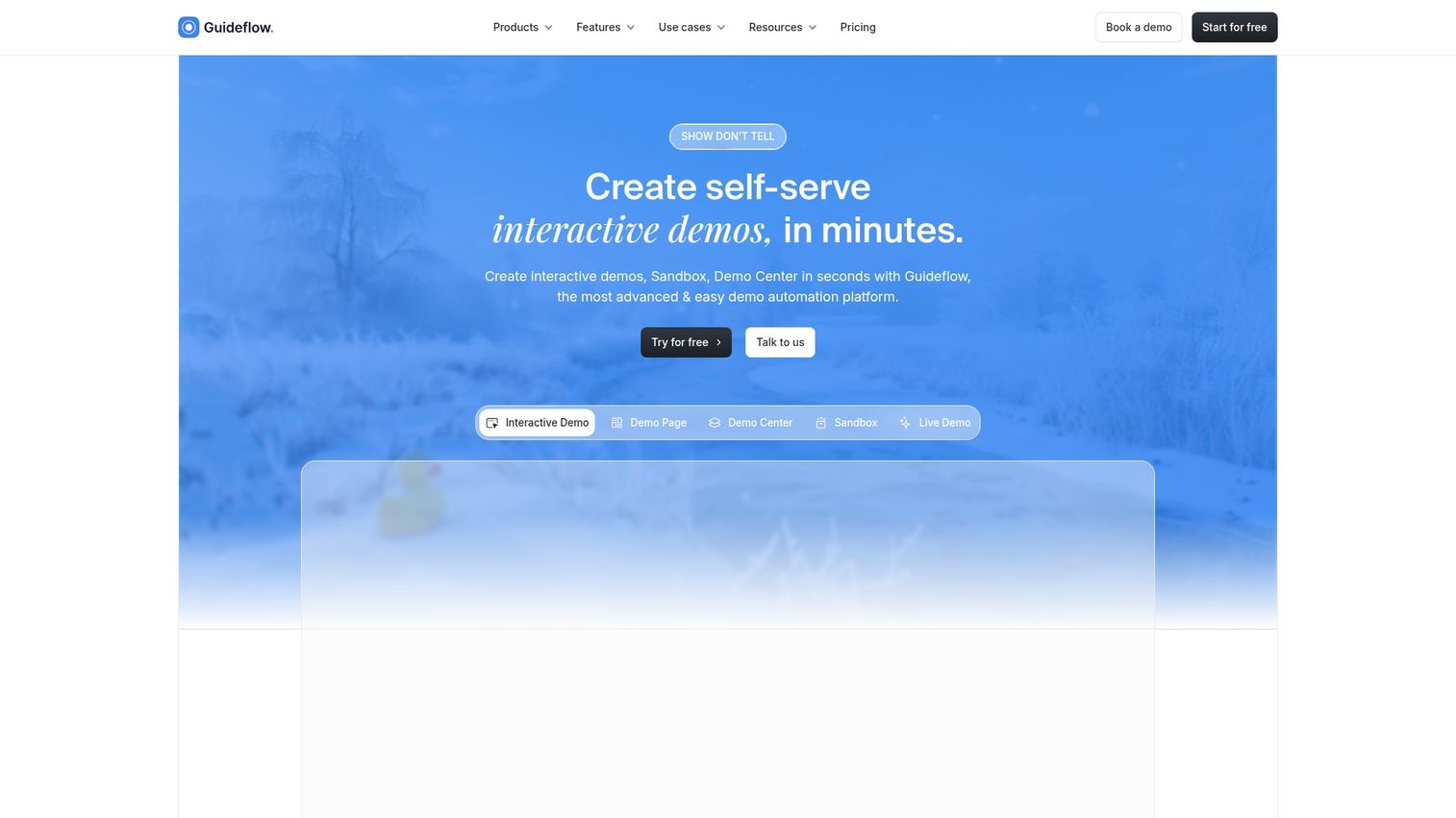
Guideflow takes a different approach to customer revenue optimization. Instead of tracking health scores after the fact, it helps you proactively educate customers on features they haven't discovered yet through interactive product experiences.
The logic is straightforward: customers who understand your product's full value expand faster. When your customer success team can share a personalized demo showing exactly how an advanced feature solves a customer's specific problem, the upsell conversation becomes a natural next step rather than a cold pitch.
Key strengths
- Demo personalization at scale: Create tailored product experiences for different customer segments, use cases, or expansion opportunities
- Engagement analytics tied to revenue signals: Track which features customers explore in demos and correlate that data with expansion readiness
- CRM and GTM integrations: Connect demo engagement data to Salesforce, HubSpot, and your broader revenue stack
- No-code creation: Build and update demos without engineering involvement
Best for: B2B SaaS teams using product-led motions who want to accelerate feature adoption and create natural upsell moments through product education.
Pricing: Free plan available. Paid plans start at $40/month for Solo, scaling to Growth ($499/month), Advanced ($1,499/month), and Enterprise (from $2,999/month).
Start your journey with Guideflow today!
2. Gainsight
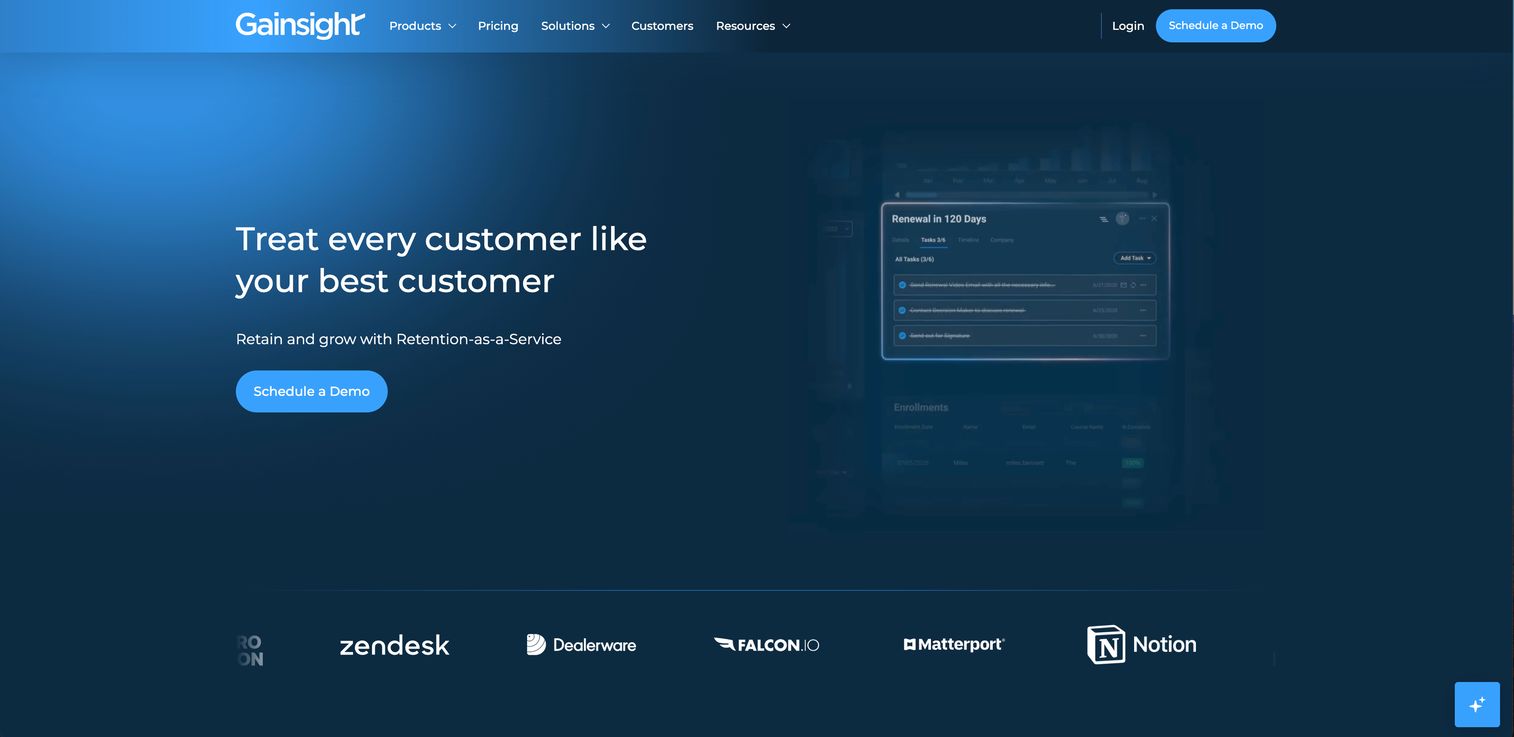
Gainsight is the category leader for enterprise customer success and revenue optimization. The platform provides a unified view of customer health across your organization, combining product usage, support tickets, survey responses, and engagement data into actionable health scores.
Where Gainsight excels is journey orchestration. You can build automated playbooks that trigger based on health score changes, usage patterns, or lifecycle milestones.
Key strengths
- Comprehensive health scoring: Configurable scoring models that weight the signals most predictive for your business
- Journey orchestration: Automated playbooks for onboarding, adoption, renewal, and expansion
- Revenue analytics: Track net revenue retention, expansion pipeline, and forecast renewals
Best for: Enterprise B2B companies with dedicated CS teams who want a mature, full-featured platform and have the resources to implement it properly.
Pricing: Contact sales. Enterprise-focused pricing typically starts in the mid-five figures annually.
3. Totango
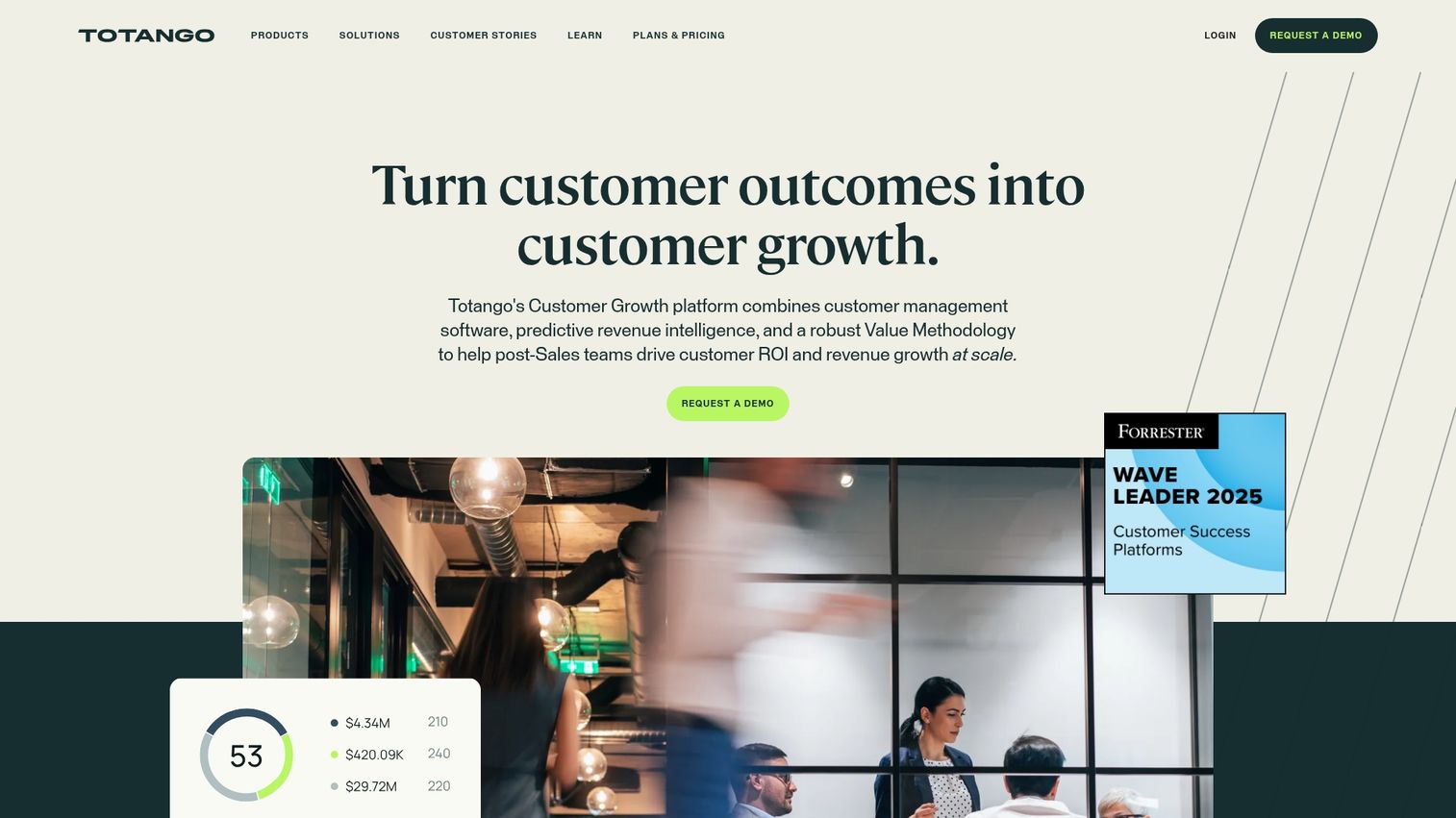
Totango offers a modular approach to customer success with its SuccessBLOCs framework. SuccessBLOCs are pre-built journey templates for common scenarios like onboarding, adoption, and renewal that you can customize and deploy quickly.
The platform works well for mid-market companies scaling their CS operations.
Key strengths
- SuccessBLOCs templates: Pre-built journeys that accelerate time-to-value
- Flexible health scoring: Configure scores based on your specific success criteria
- Freemium entry point: Start with a free tier before committing
Best for: Mid-market SaaS companies building out their CS function who want proven playbooks without starting from scratch.
Pricing: Free tier available for small teams. Paid plans scale based on customer count and features.
4. Clari
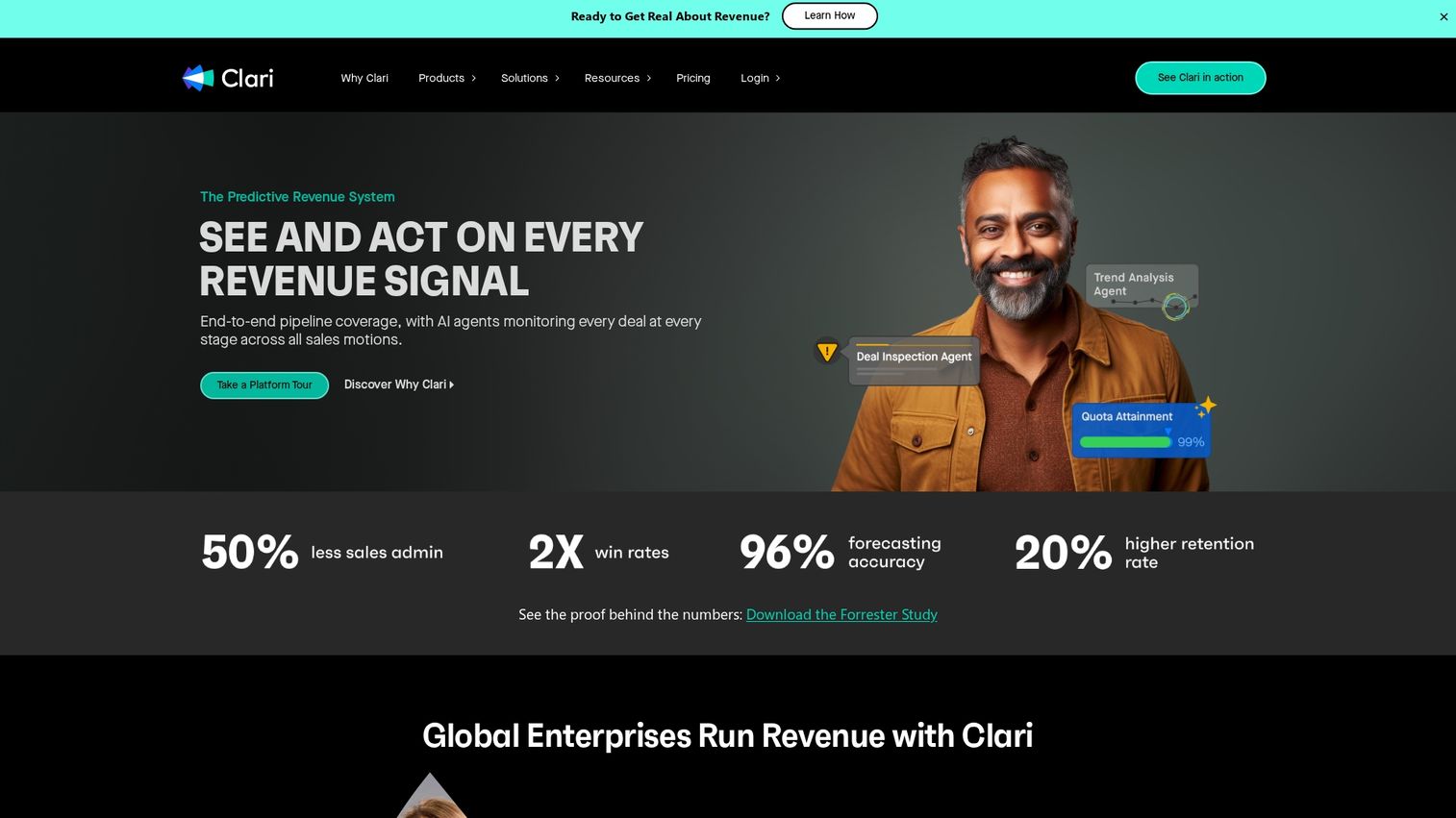
Clari approaches revenue optimization from the forecasting angle. The platform captures activity data from email, calendar, and CRM to give you visibility into deal health and pipeline risk, including renewals and expansion opportunities.
Key strengths
- AI-powered forecasting: Predicts revenue outcomes based on activity patterns, not just rep input
- Pipeline inspection: Identifies deals at risk before they slip
- Revenue analytics: Connects activity to outcomes across new business and expansion
Best for: Sales-led organizations with complex deals who want better forecasting accuracy and pipeline visibility across the entire revenue lifecycle.
Pricing: Contact sales. Pricing varies based on users and modules.
5. ChurnZero
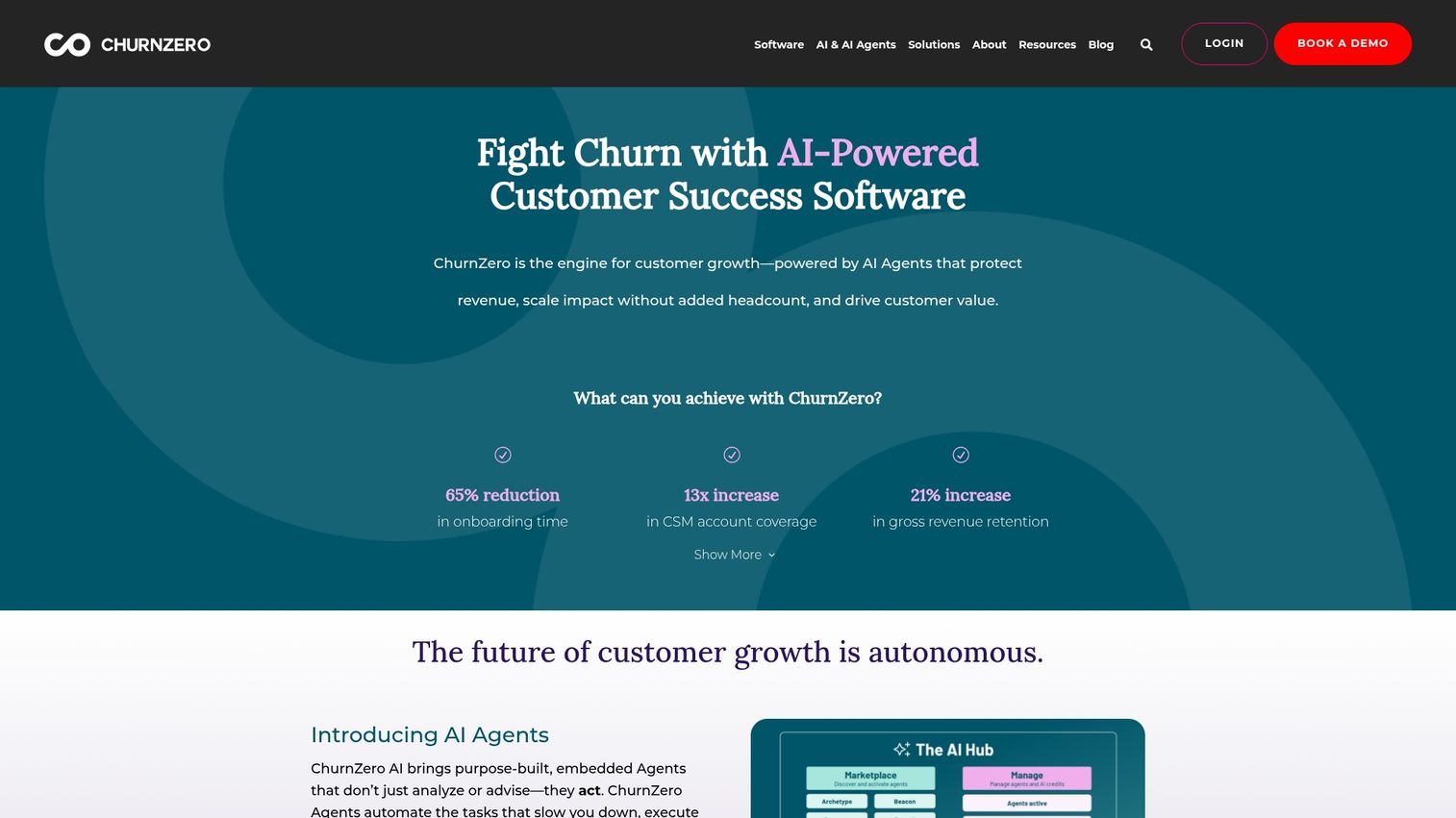
ChurnZero focuses on real-time customer engagement and churn prevention. The platform monitors product usage and triggers automated interventions when customers show signs of disengagement.
What sets ChurnZero apart is its in-app engagement capabilities. You can deploy walkthroughs, announcements, and surveys directly in your product based on user behavior or health score changes.
Key strengths
- Real-time health monitoring: Instant visibility into usage changes and risk signals
- In-app engagement: Deploy targeted messages and guides without engineering
- Renewal forecasting: Predict renewal likelihood and prioritize at-risk accounts
Best for: SaaS companies with self-serve or low-touch motions who want to scale CS through automation and in-app engagement.
Pricing: Contact sales. Pricing based on customer count and feature tier.
6. Planhat
Planhat provides a unified customer data model that brings together product usage, CRM data, support interactions, and financial information. The platform is particularly strong in Europe and serves mid-market companies well.
Key strengths
- Unified data model: Single view of customer across all touchpoints
- Revenue analytics: Track NRR, expansion, and churn by segment
- Modern interface: Clean UX that CSMs actually enjoy using
Best for: Mid-market B2B companies, especially in Europe, who want a modern platform that unifies fragmented customer data.
Pricing: Contact sales. Pricing scales with customer count.
7. Catalyst
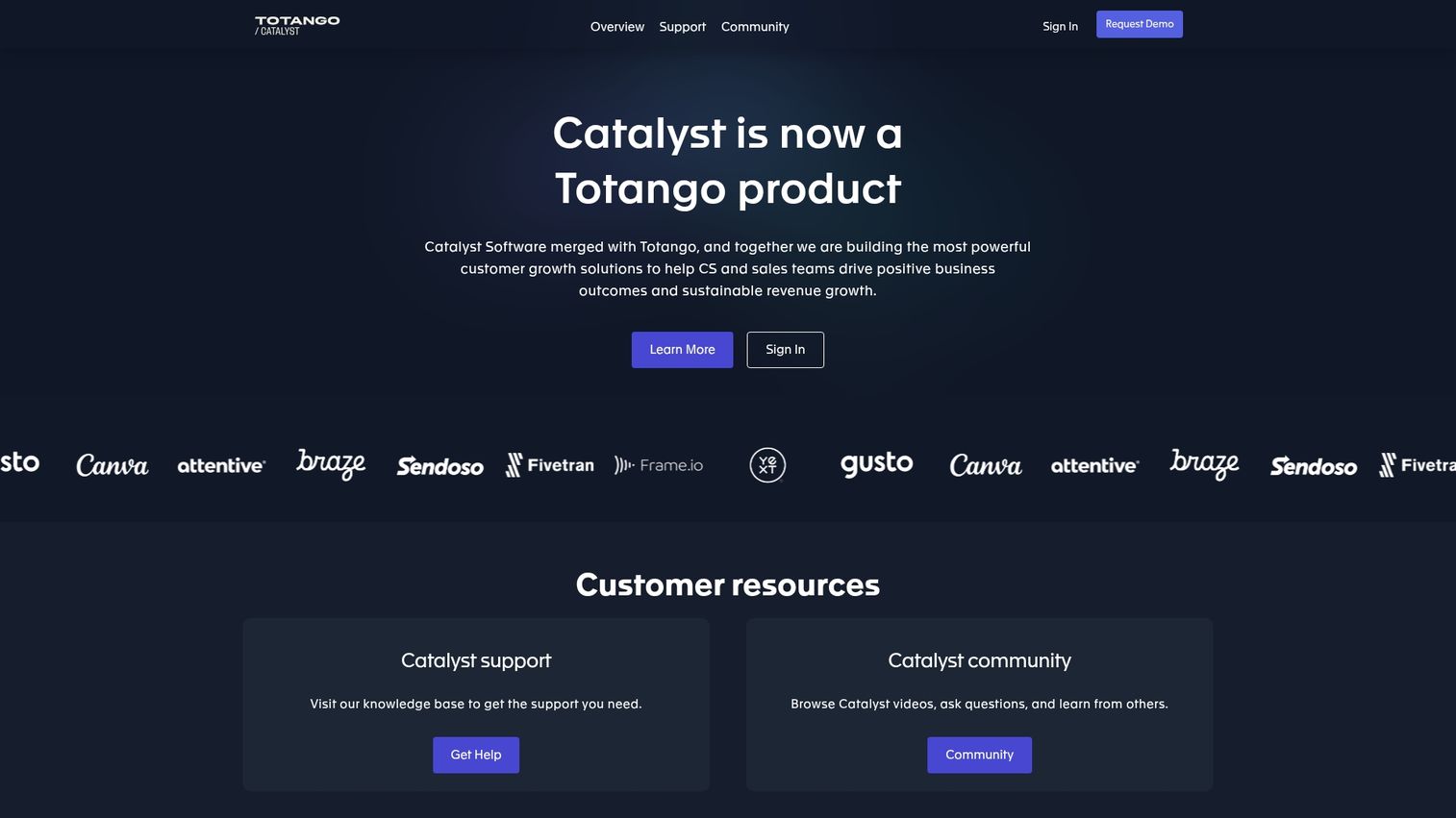
Catalyst emphasizes CS team productivity and expansion playbooks. The platform, now part of the Totango family, provides a streamlined interface for managing customer relationships and identifying growth opportunities.
Key strengths
- CSM productivity tools: Streamlined workflows for daily customer management
- Expansion playbooks: Structured approaches to identifying and pursuing upsells
- Salesforce integration: Deep bi-directional sync with your CRM
Best for: CS teams who want to improve daily productivity while building more systematic expansion motions.
Pricing: Contact sales.
8. Vitally
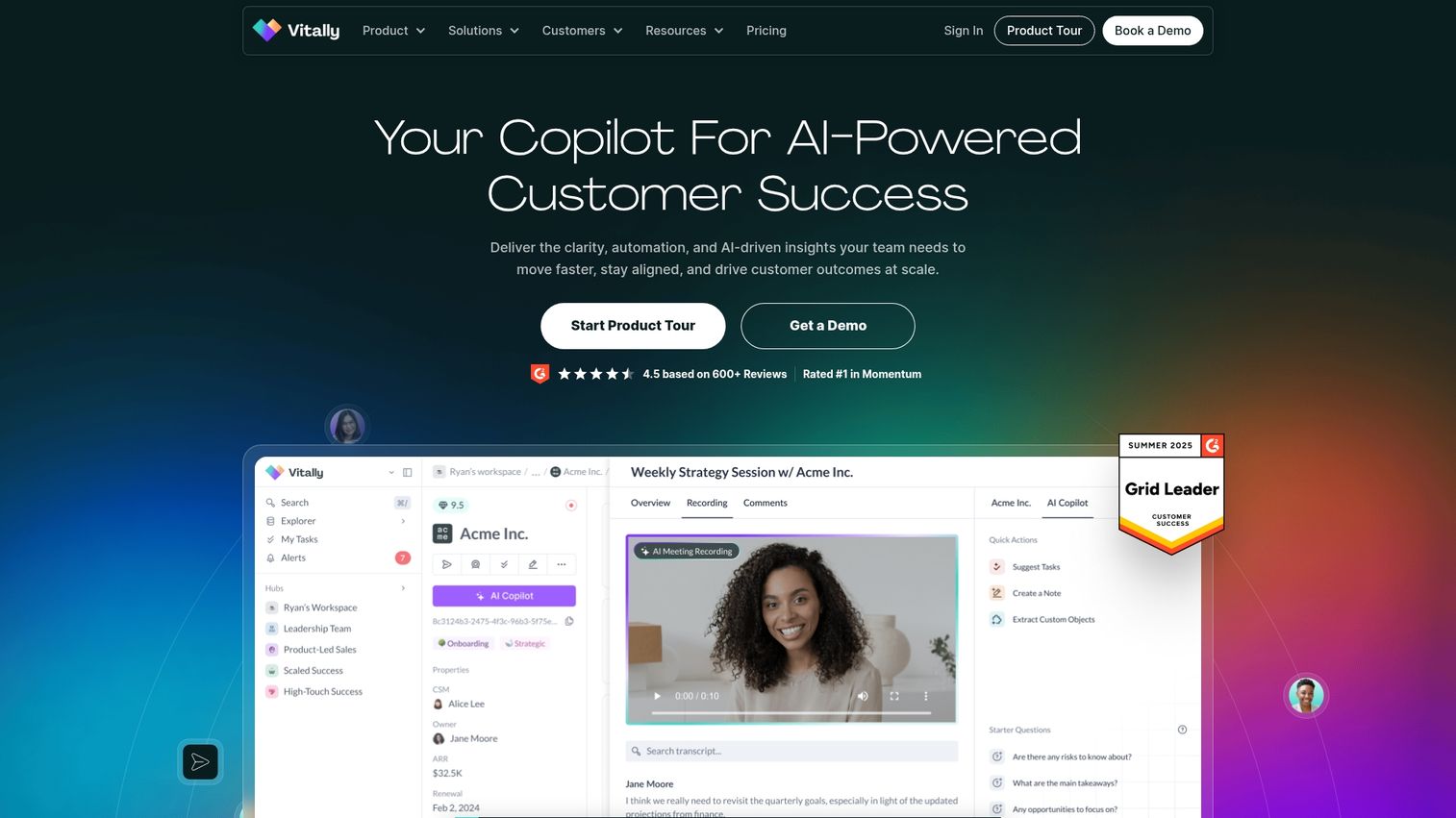
Vitally is built for high-velocity SaaS companies managing many accounts with lean teams. The platform provides real-time health indicators and automation capabilities that help you scale CS without proportionally scaling headcount.
Key strengths
- Real-time health indicators: Instant visibility into account status changes
- Automation at scale: Build workflows that handle routine CS tasks
- Modern API: Flexible data model for custom implementations
Best for: Product-led SaaS companies with high account volumes who want to scale CS through automation.
Pricing: Starts at $150/month. Scales based on customers and features.
9. ClientSuccess
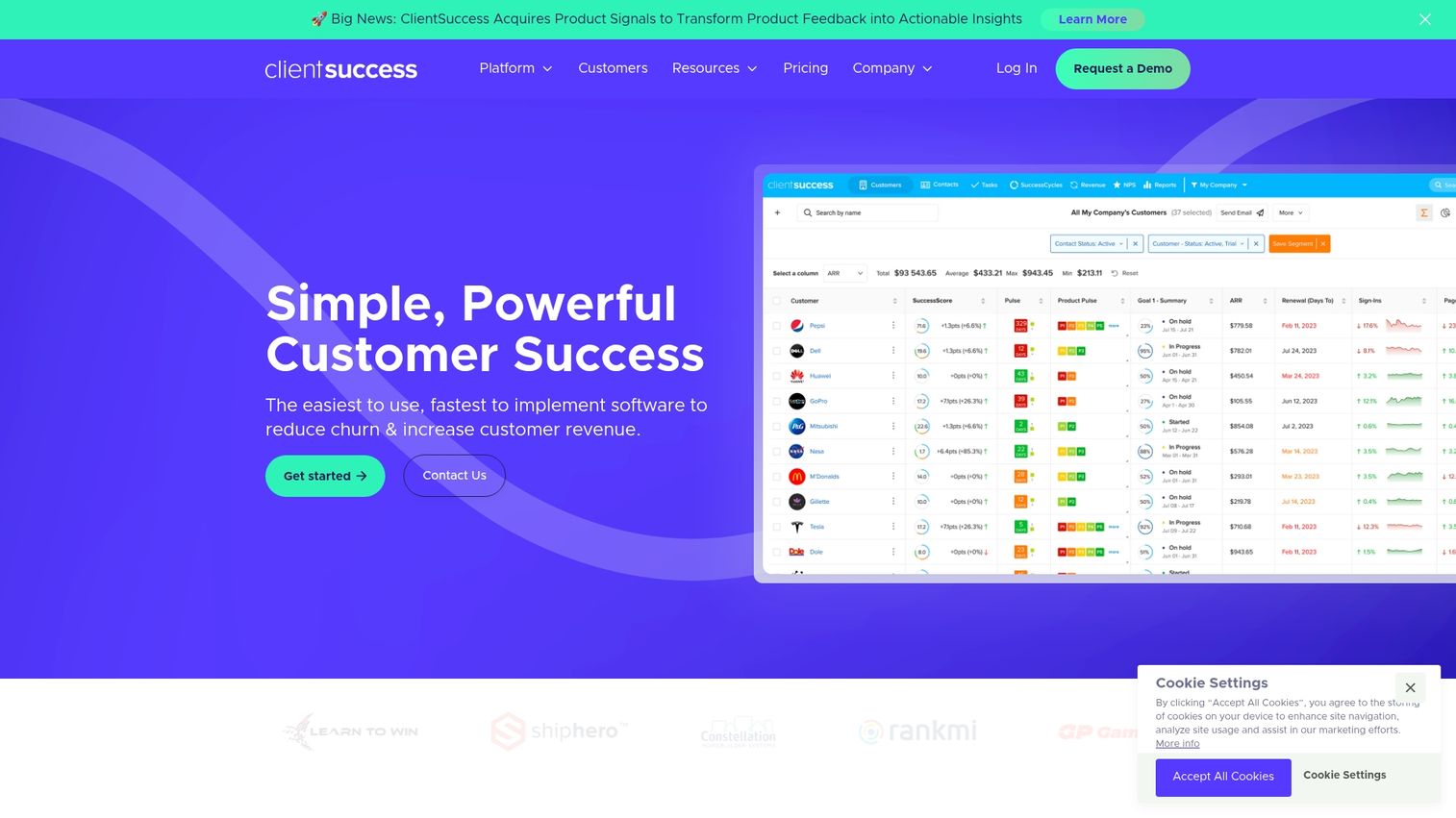
ClientSuccess provides straightforward customer success management focused on relationship tracking and renewal management. The platform works well for teams new to CS software who want to get started without overwhelming complexity.
Key strengths
- Relationship tracking: Manage contacts and engagement history
- Renewal management: Track upcoming renewals and forecast outcomes
- Ease of use: Lower learning curve than enterprise alternatives
Best for: Teams building their first formal CS function who want a straightforward starting point.
Pricing: Contact sales.
10. CustomerSuccessBox
CustomerSuccessBox uses AI to automate health scoring and provide prescriptive guidance on next best actions. The platform is particularly strong for companies wanting more automation in their CS workflows.
Key strengths
- AI-powered health scoring: Automated models that learn from your data
- Prescriptive actions: Recommendations on what to do next for each account
- Product adoption tracking: Monitor feature usage and adoption trends
Best for: B2B SaaS companies who want AI to handle more of the analytical work in customer success.
Pricing: Contact sales.
11. People.ai
People.ai specializes in automatic activity capture and relationship mapping. The platform pulls data from email, calendar, and other sources to give you visibility into customer engagement without relying on manual CRM updates.
Key strengths
- Automatic activity capture: No manual logging required
- Relationship mapping: Visualize stakeholder engagement across accounts
- Enterprise scale: Built for large, complex organizations
Best for: Enterprise sales organizations who want complete visibility into customer engagement without burdening reps with data entry.
Pricing: Contact sales. Enterprise pricing.
12. Pendo
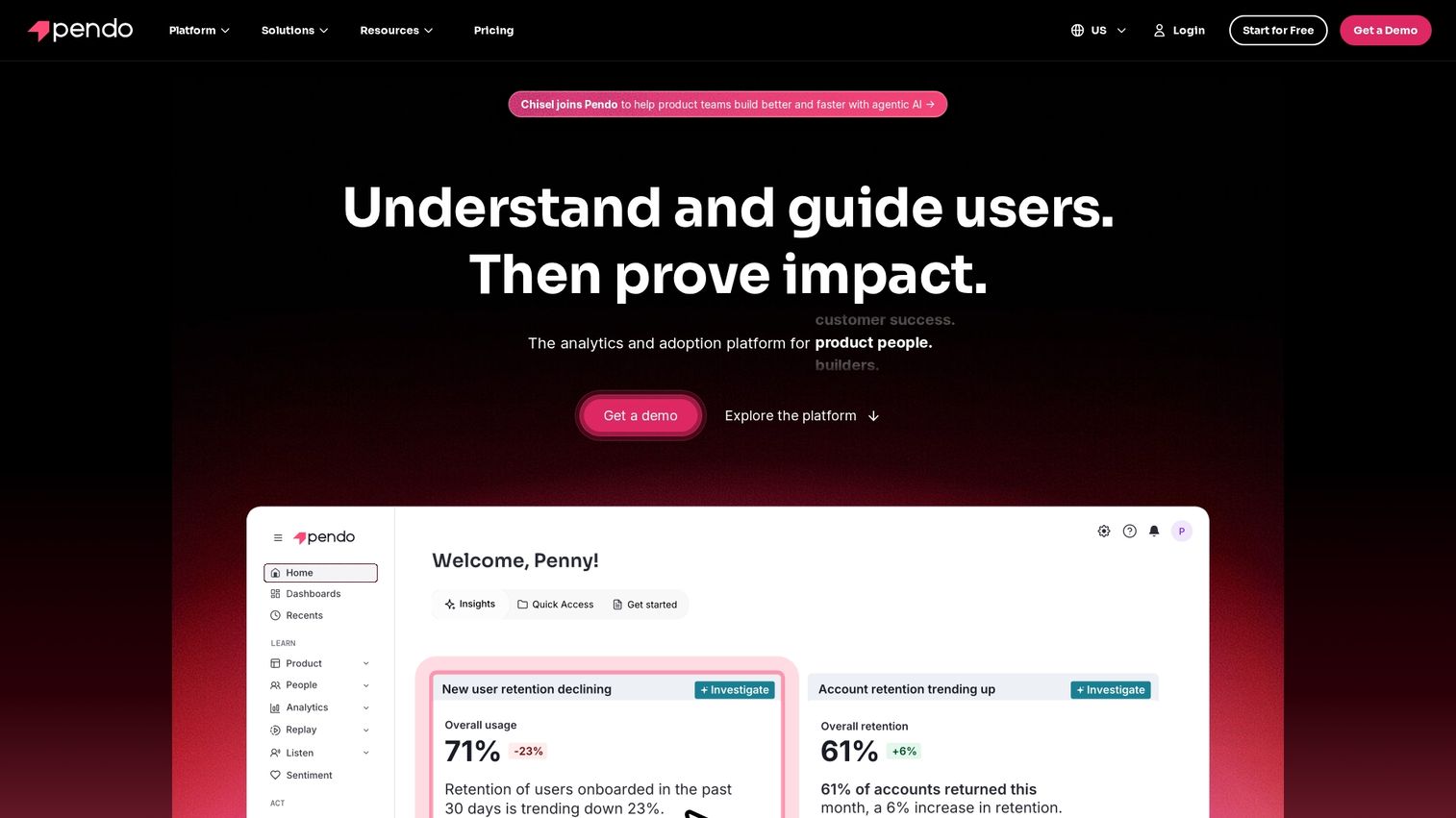
Pendo approaches revenue optimization through product analytics. The platform shows you exactly how customers use your product, which features drive retention, and where users get stuck.
Teams often pair Pendo with demo automation to guide users toward valuable features they haven't discovered.
Key strengths
- Product analytics: Deep visibility into feature usage and user behavior
- In-app guides: Deploy walkthroughs and tooltips without code
- Retention analysis: Understand which behaviors predict long-term success
Best for: Product-led companies who want to connect usage data to revenue outcomes and guide users toward valuable features.
Pricing: Contact sales. Free tier available for startups.
13. Salesforce Revenue Cloud
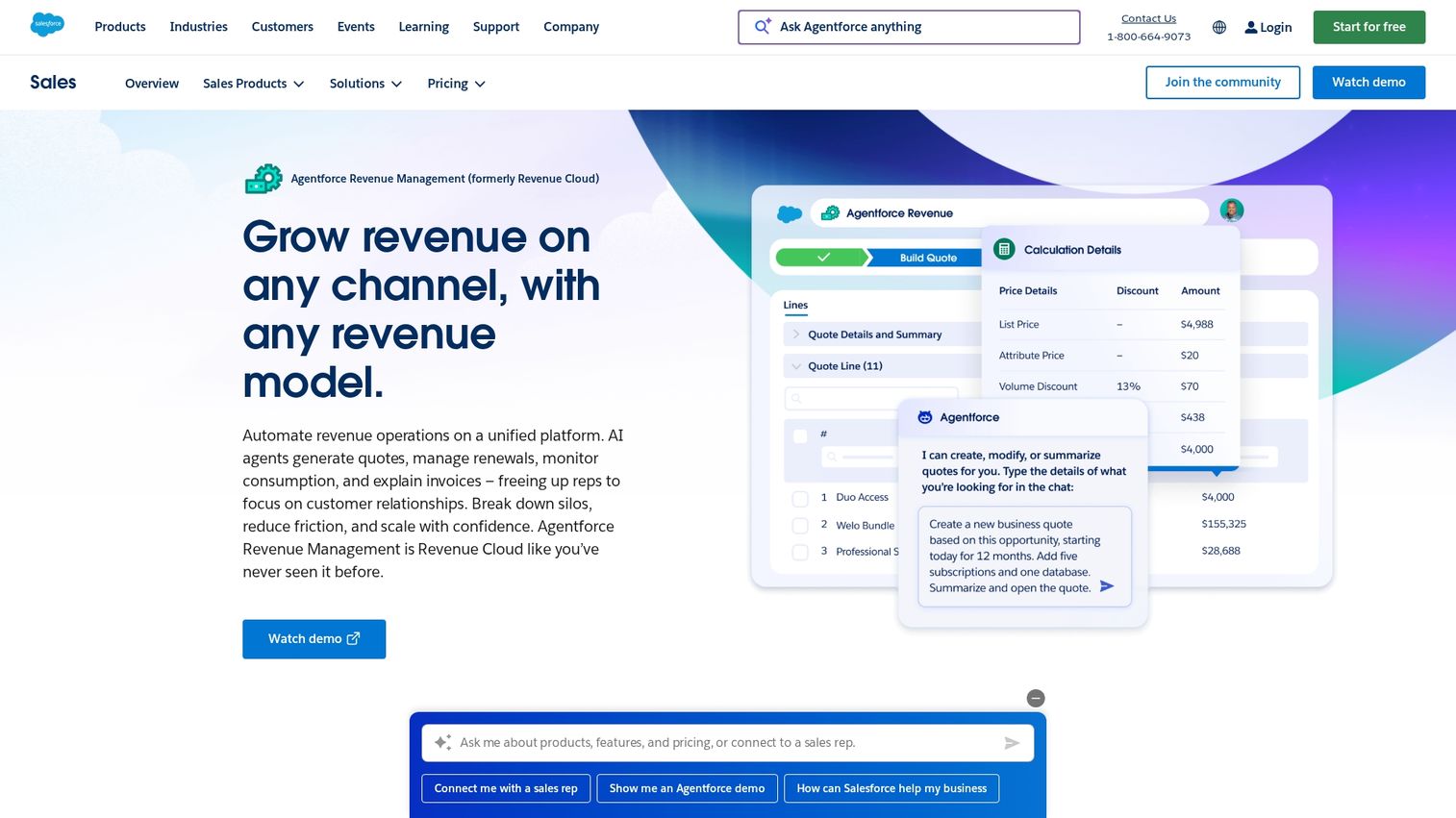
Salesforce Revenue Cloud provides native revenue lifecycle management within the Salesforce ecosystem. The platform combines CPQ, billing, and revenue analytics for organizations already invested in Salesforce.
Key strengths
- Native Salesforce integration: No data sync issues or integration maintenance
- CPQ capabilities: Configure, price, and quote within your CRM
- Revenue analytics: Track performance across the customer lifecycle
Best for: Organizations deeply invested in Salesforce who want unified revenue management without third-party tools.
Pricing: Contact sales. Pricing varies by module and user count.
14. HubSpot Service Hub
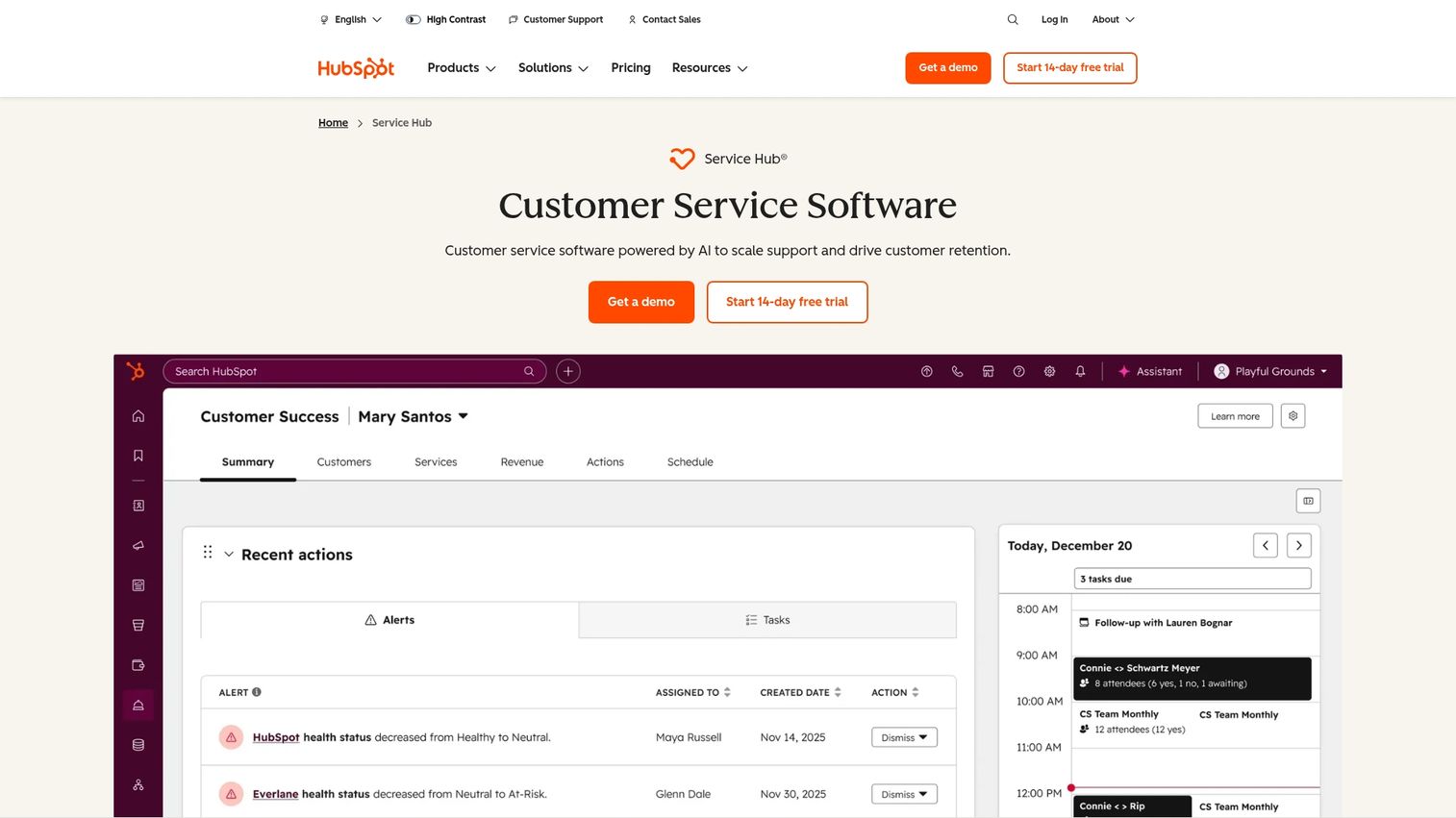
HubSpot Service Hub connects customer service interactions to expansion opportunities. For SMB and mid-market companies already using HubSpot, it provides a natural path from support to revenue.
Key strengths
- Unified HubSpot platform: Service, sales, and marketing in one system
- Ticket-to-revenue connection: Link support interactions to account health
- Feedback tools: Collect and act on customer sentiment
Best for: SMB and mid-market HubSpot users who want to connect service quality to revenue outcomes.
Pricing: Free tier available. Paid plans start at $20/month per seat.
15. Intercom
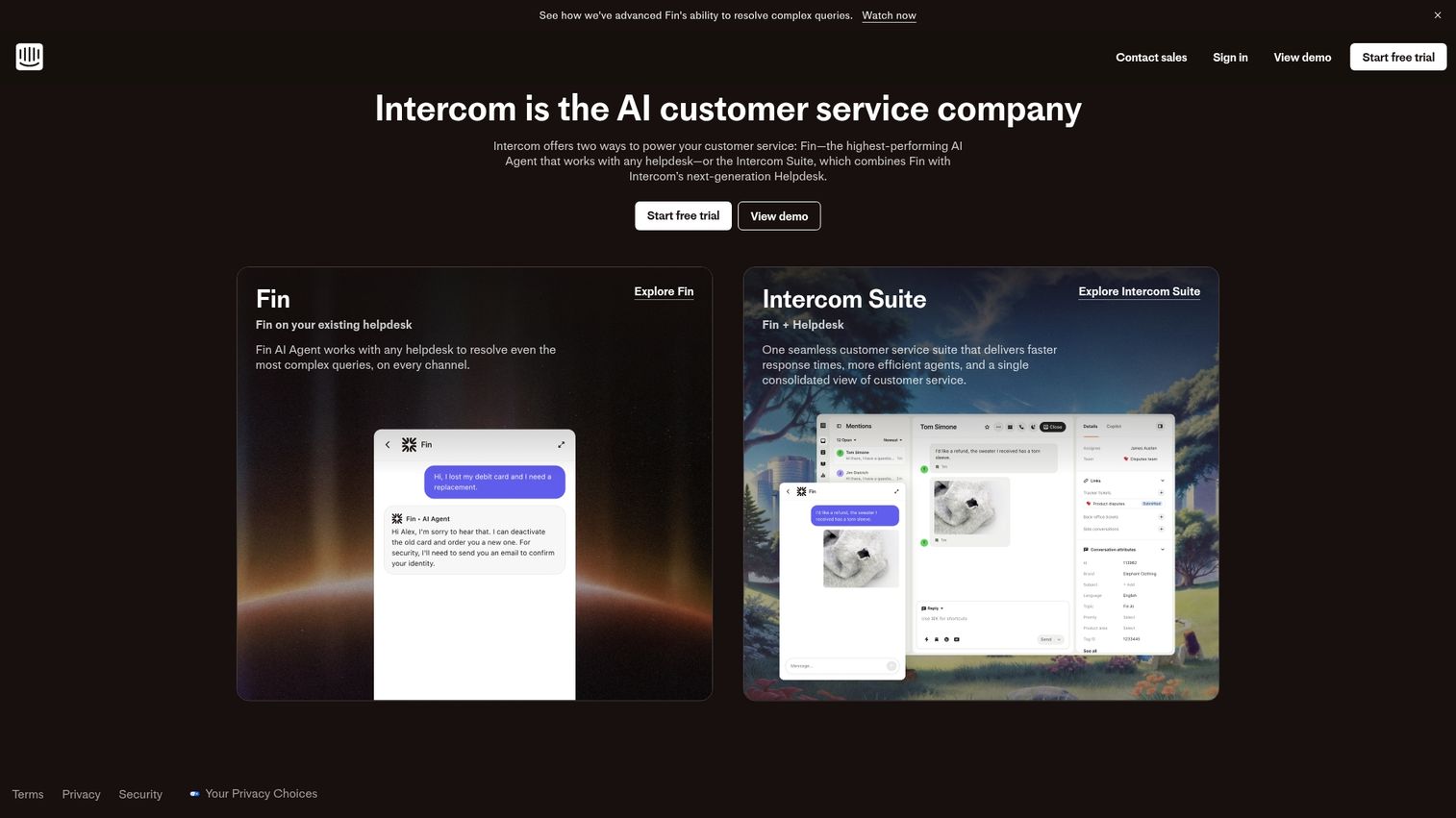
Intercom takes a conversational approach to customer engagement and expansion. The platform combines support, onboarding, and proactive messaging to drive product adoption and identify upsell opportunities.
Key strengths
- Conversational engagement: Meet customers where they already communicate
- Proactive messaging: Trigger outreach based on behavior or lifecycle stage
- AI-powered support: Automate routine inquiries to focus on high-value interactions
Best for: Product-led companies with chat-first support who want to blend service and expansion in conversational channels.
Pricing: Starts at $29/month. Scales based on seats and features.
Key features to look for in CRO software
Customer health scoring
Health scores combine multiple signals into a single metric that predicts account outcomes. The best implementations weight factors based on what actually predicts renewal and expansion in your business, not generic benchmarks.
Look for tools that let you configure scoring models and iterate as you learn what matters. Static, one-size-fits-all scores rarely capture the nuances of your customer base.
Expansion and upsell detection
Effective CRO tools identify expansion opportunities based on behavioral triggers, not just CSM intuition. Triggers might include hitting usage thresholds, exploring pricing pages, or adopting features that correlate with upgrades.
The goal is surfacing opportunities early enough that your team can act before the customer reaches out to competitors.
Revenue forecasting
Forecasting renewals and expansions requires different models than new business forecasting. CRO tools that analyze historical patterns in your customer base can predict outcomes with more accuracy than spreadsheet extrapolation.
Journey and engagement analytics
Understanding how customers move through your product and where they disengage helps you intervene at the right moments. The best tools connect engagement data to revenue outcomes so you know which patterns predict expansion.
CRM and tech stack integration
Your CRO tool is only as good as the data flowing into it. Look for native integrations with your CRM, product analytics, support platform, and marketing automation tools. Fragmented data leads to incomplete health scores and missed signals.
How to choose customer revenue optimization software
Consider the following factors when evaluating CRO platforms:
- Define your revenue motion: Sales-led organizations prioritize forecasting and pipeline visibility. Product-led companies focus on usage analytics and automated engagement.
- Assess your customer volume: High-touch enterprise accounts benefit from relationship-focused tools. High-velocity models require automation at scale.
- Map your existing stack: Integration requirements with your CRM and data tools often eliminate options quickly.
- Identify primary users: CS teams, RevOps, and cross-functional stakeholders have different workflow requirements.
- Evaluate reporting requirements: Executive dashboards serve different purposes than frontline CSM workflows.
Tip: Trial tools with real customer data before committing. Demo environments with fake data won't reveal integration issues or workflow friction.
Turn your customer into a revenue engine
Customer revenue optimization software turns relationships into predictable revenue growth. The right tool helps you identify expansion opportunities earlier, intervene before churn happens, and forecast renewals with confidence.
Product education accelerates the entire cycle. When customers understand what your product can do for them, expansion conversations become natural rather than forced. Showing customers their next step through interactive experiences creates upsell moments that feel helpful rather than salesy.
Start your journey with Guideflow today!
FAQs about customer revenue optimization software
Customers who understand your product's full value expand faster and churn less. Interactive onboarding and feature education reduce time-to-value and create awareness of capabilities that justify upgrades. Teams that invest in product education typically see higher net revenue retention.
Implementation ranges from weeks for simpler tools to several months for enterprise platforms. The main variable is data integration complexity. Tools requiring deep CRM customization or data warehouse connections take longer than platforms with native integrations.
Yes. Tools with strong product analytics, usage-based health scoring, and automated engagement features work well for PLG. The key is connecting self-serve behavior to revenue signals so you know which accounts are ready for expansion conversations.
Common metrics include net revenue retention improvement, expansion revenue growth, churn reduction, and CS team efficiency gains. Most teams compare metrics before and after implementation, though isolating the tool's impact from other changes can be tricky.
Customer success or revenue operations usually owns the platform, though cross-functional visibility is common. Sales teams access expansion pipeline data, product teams review usage analytics, and finance tracks revenue forecasts.
CRM systems track relationships and deal progression. CRO software focuses specifically on post-sale revenue optimization through health scoring, expansion detection, and churn prediction. Most CRO tools integrate with your CRM as a data source rather than replacing it.