Your vendor list lives in three spreadsheets, two inboxes, and one person's memory. A contract auto-renewed last quarter because nobody caught the notice date. A vendor's SOC 2 lapsed and you found out during an audit, not before it.
This is the daily reality for procurement, risk, and compliance teams. Vendor data is scattered, renewals slip, certifications expire quietly, and audit prep turns into a fire drill every time.
The cost of staying disorganized is rising. The global vendor management software market is estimated at USD 10.12 billion in 2025 and projected to reach USD 17.66 billion by 2030, growing at a CAGR of 11.79%, according to Research and Markets. That growth tracks a simple shift: regulators expect documented third-party oversight, and spreadsheets do not survive scrutiny.
A vendor management system fixes the structural problem. It pulls every vendor record, contract, risk score, and performance metric into one place. It automates due diligence, monitors certifications, screens vendors against sanctions lists, and produces audit-ready reports on demand. Instead of reconstructing what happened, you see it in real time.
This guide ranks ten tools built for that job. Each one centralizes vendor data, scores third-party risk, or both. Some specialize in cyber risk ratings. Others handle the full vendor lifecycle from intake to offboarding. A few are built specifically for banks and credit unions navigating regulatory pressure.
We focus on what procurement and risk buyers actually evaluate: risk and compliance depth, centralization, onboarding usability, integrations, and transparent pricing. No fluff, no padding, just a side-by-side comparison you can act on.
What's inside
This guide is for procurement managers, vendor and third-party risk managers, GRC leads, finance ops, and IT vendor managers building a shortlist. It is especially relevant if you work in a regulated industry like financial services, healthcare, or government contracting.
We chose tools using four criteria that matter to this buyer:
- Risk and compliance depth: third-party risk scoring, sanctions screening, certification tracking, and audit trails.
- Centralization and visibility: a single source of truth for vendor records, contracts, and dashboards.
- Onboarding and portal usability: intake workflows, vendor self-registration, and document collection.
- Integrations and pricing transparency: how each tool connects to your stack and how clearly it prices.
Every pricing figure and rating below reflects verified sources as of June 2026.
TL;DR
Short on time? Here are the decision shortcuts.
- Best for third-party cyber risk monitoring: UpGuard, with continuous security ratings and clear public pricing.
- Best for contract-linked vendor workflows: Gatekeeper, combining CLM, vendor risk, and spend in one platform.
- Best for regulated financial services: Ncontracts and Venminder, both built around banking regulatory guidance.
- Best for full vendor lifecycle plus GRC: Quantivate, covering risk, compliance, audit, and vendor management together.
- Best vendor management system for enterprise risk teams: Archer, a configurable integrated risk management platform.
- Best free entry point for cyber risk visibility: Bitsight, with a free Pulse tier for threat and risk monitoring.
What is vendor management software?
Vendor management software is a platform that centralizes vendor records, contracts, risk scores, and performance data across the entire vendor lifecycle, from intake and onboarding through ongoing monitoring and offboarding.
It replaces the patchwork of spreadsheets, shared drives, and email threads that most teams use to track suppliers. Instead of hunting for a contract or a certification, everyone works from the same source of truth. The category overlaps with supplier management software solutions, third party management software, and vendor risk management tools, and many platforms blend all of these. Adjacent buyers often evaluate this category alongside the best contract management software tools when contracts and vendors live in the same workflow.
A modern vendor management platform does more than store records. It scores third-party risk, automates due diligence, monitors compliance certifications, and generates the reporting auditors ask for. That shift from passive storage to active oversight is what separates a real vendor management system from a folder of PDFs.
Core capabilities
Most vendor management system software shares a common set of capabilities. The depth varies by tool, but the building blocks are consistent.
- Centralized vendor records: one repository for vendor profiles, documents, and contacts.
- Third-party risk scoring: automated risk ratings across cyber, financial, compliance, and reputational domains.
- Onboarding and intake portals: self-service registration and document collection for new vendors.
- Contract and CLM links: connect vendor records to contracts, renewal dates, and obligations.
- Performance scorecards: track KPIs, SLAs, and vendor performance over time.
- Compliance automation: monitor SOC 2 and ISO certifications, screen against OFAC and SAM.GOV, and flag expirations.
- Reporting and dashboards: executive views and audit-ready reports on demand.
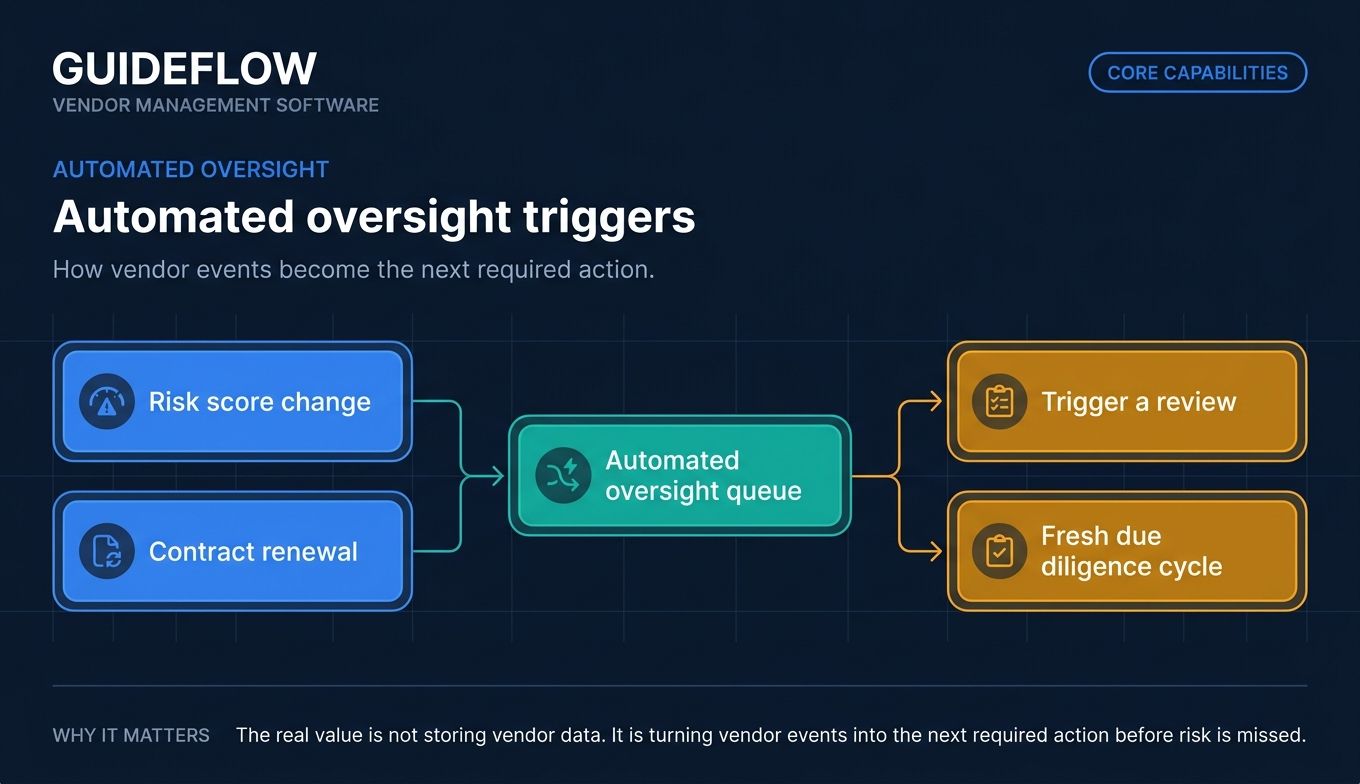
- Workflow automation: route approvals, trigger reviews, and send alerts without manual chasing.
The strongest platforms tie these together so a risk score change can trigger a review, and a contract renewal can prompt a fresh due diligence cycle.
When to use vendor management software
Not every team needs a dedicated platform on day one. Here are the three triggers that signal it is time.
Centralize scattered vendor records
When vendor data lives across spreadsheets, inboxes, and individual memory, you lose visibility. Renewals slip, duplicate vendors pile up, and nobody knows which contract is current. A vendor management solution replaces that chaos with one system where every record, document, and contact lives in a single place. If reconstructing your vendor list takes more than a few minutes, you have outgrown spreadsheets.
Reduce third-party and compliance risk
Regulators increasingly expect documented oversight of every vendor that touches sensitive data. A vendor risk management solution automates due diligence questionnaires, monitors SOC 2 certifications and ISO certifications, and screens vendors against OFAC and SAM.GOV. Instead of manually chasing evidence, you get continuous monitoring and alerts when a vendor's risk posture changes. This matters most in financial services, healthcare, and government contracting. Teams often evaluate these platforms alongside e-signature software to close the loop between due diligence and executed agreements.
Streamline vendor onboarding and self-service
Onboarding a new vendor often means repeating the same explanations, collecting the same documents, and answering the same questions. Self-service intake portals let vendors register, upload certifications, and complete questionnaires on their own. To reduce repetitive onboarding explanations even further, some teams pair their portal with interactive walkthroughs that guide vendors through setup clearly and at their own pace. Pairing an intake portal with a demo center of reusable guides means new vendors get consistent, self-paced instruction without extra calls. That clarity shortens time-to-onboard and frees your team for higher-value work. For broader process design, the best onboarding flow software roundup is worth a look.
Vendor management software comparison table
The table below ranks ten tools by relevance to procurement and vendor-risk buyers. Pricing reflects published figures where vendors disclose them; many enterprise platforms use quote-based pricing. G2 ratings reflect verified listings as of June 2026.
| # | Product | Intent | Key use case | Pricing | G2 rating |
|---|---|---|---|---|---|
| 1 | Venminder | Vendor risk + due diligence | Supplier risk screening for financial services | Contact Sales | 4.7/5 |
| 2 | Gatekeeper | Contract + vendor management | Unified CLM, vendor risk, and spend | Quote-based | 4.5/5 |
| 3 | UpGuard | Third-party cyber risk | Continuous security ratings and monitoring | From $1,750/mo (billed annually) | 4.5/5 |
| 4 | Bitsight | Cyber risk intelligence | External security ratings and benchmarking | Free tier available | 4.5/5 |
| 5 | SecurityScorecard | Security ratings | Third-party risk scoring and monitoring | Free Forever tier available | 4.3/5 |
| 6 | Black Kite | Third-party cyber risk | Risk quantified financially and by compliance | Quote-based | 5.0/5 |
| 7 | Quantivate | Full lifecycle + GRC | Vendor lifecycle and integrated GRC | Quote-based | Not listed |
| 8 | CobbleStone Software | Vendor management in CLM | Intake-to-contract with compliance connectors | Quote-based | 4.8/5 |
| 9 | Archer | Enterprise GRC | Integrated risk with third-party modules | Quote-based | 3.6/5 |
| 10 | Ncontracts | Vendor + risk + compliance | Built for banks and credit unions | Quote-based | 4.7/5 |
The 10 best vendor management software tools for 2026
Each section below covers what the tool does, who it fits, its key strengths, why teams choose it, and what it costs. Tools are numbered by relevance to the keyword, leading with vendor-risk and lifecycle platforms.
1. Venminder
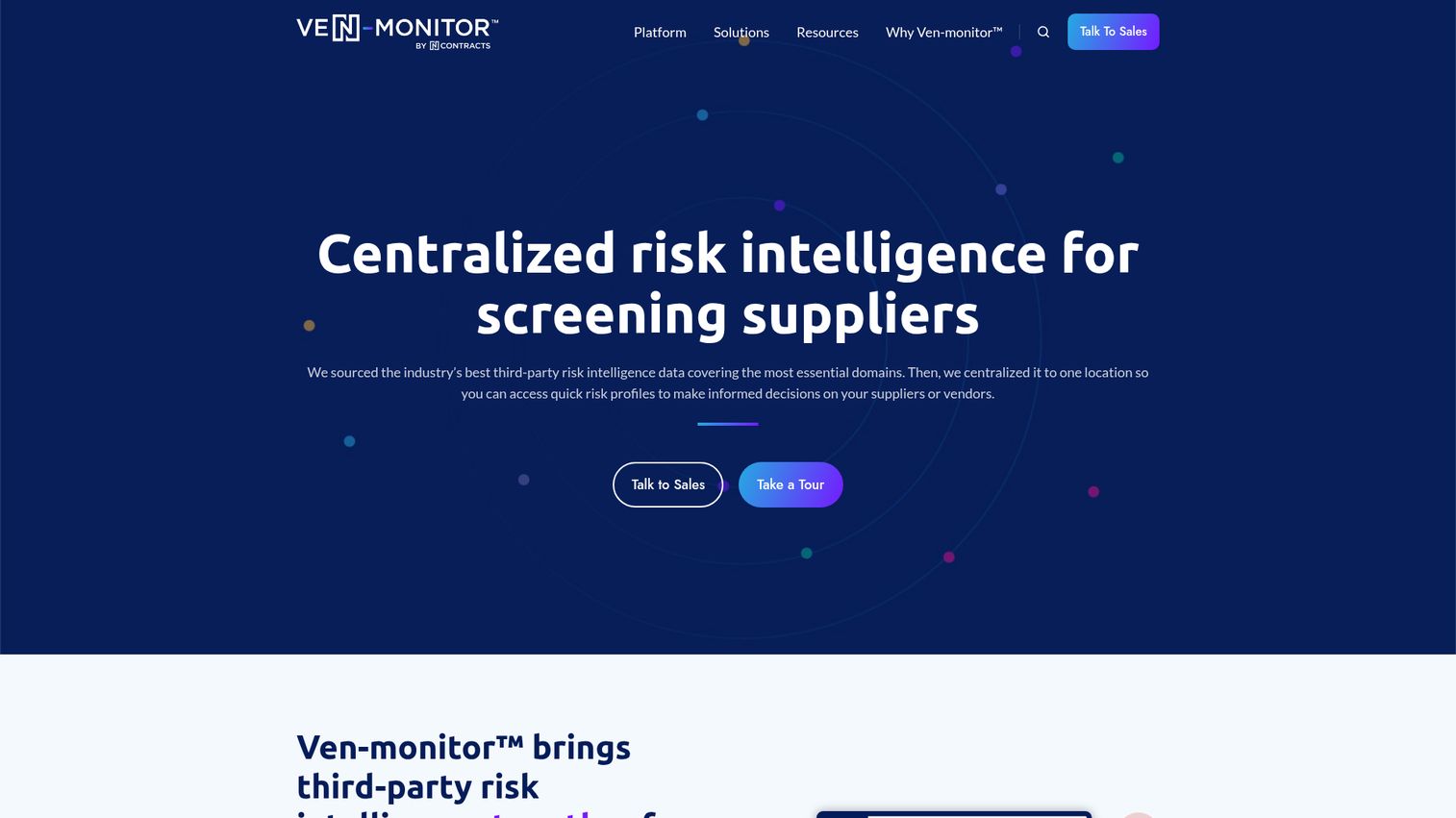
Venminder is third-party risk screening software that centralizes supplier risk intelligence and risk ratings across multiple domains. Its Ven-monitor product pulls cybersecurity, privacy, business health, KYV, adverse media, and ESG signals into one dashboard. It is purpose-built for organizations that need ongoing third-party vendor management software with deep due diligence support.
Best for: Financial institutions and regulated organizations that need supplier risk screening and continuous third-party risk intelligence.
Key strengths
- Centralized risk intelligence: A single dashboard for supplier risk profiles across cyber, privacy, financial, and reputational domains.
- Automated risk ratings: Supplier risk scores generated automatically and refreshed across multiple risk domains.
- Proactive alerts: Email notifications fire when a supplier's overall risk rating increases, so you act before issues escalate.
Why choose Venminder: Venminder combines software with managed due diligence services, which is rare in this category. Banks and credit unions that lack a large internal risk team lean on Venminder to fill the gap. Its focus on regulated financial services means the workflows map cleanly to examiner expectations.
Venminder pricing: Venminder lists Professional and Enterprise packages on its pricing page, both directing buyers to Contact Sales rather than publishing numeric pricing. Expect a quote tailored to your vendor count and the depth of due diligence services you need. Venminder holds a 4.7/5 rating on G2.
2. Gatekeeper
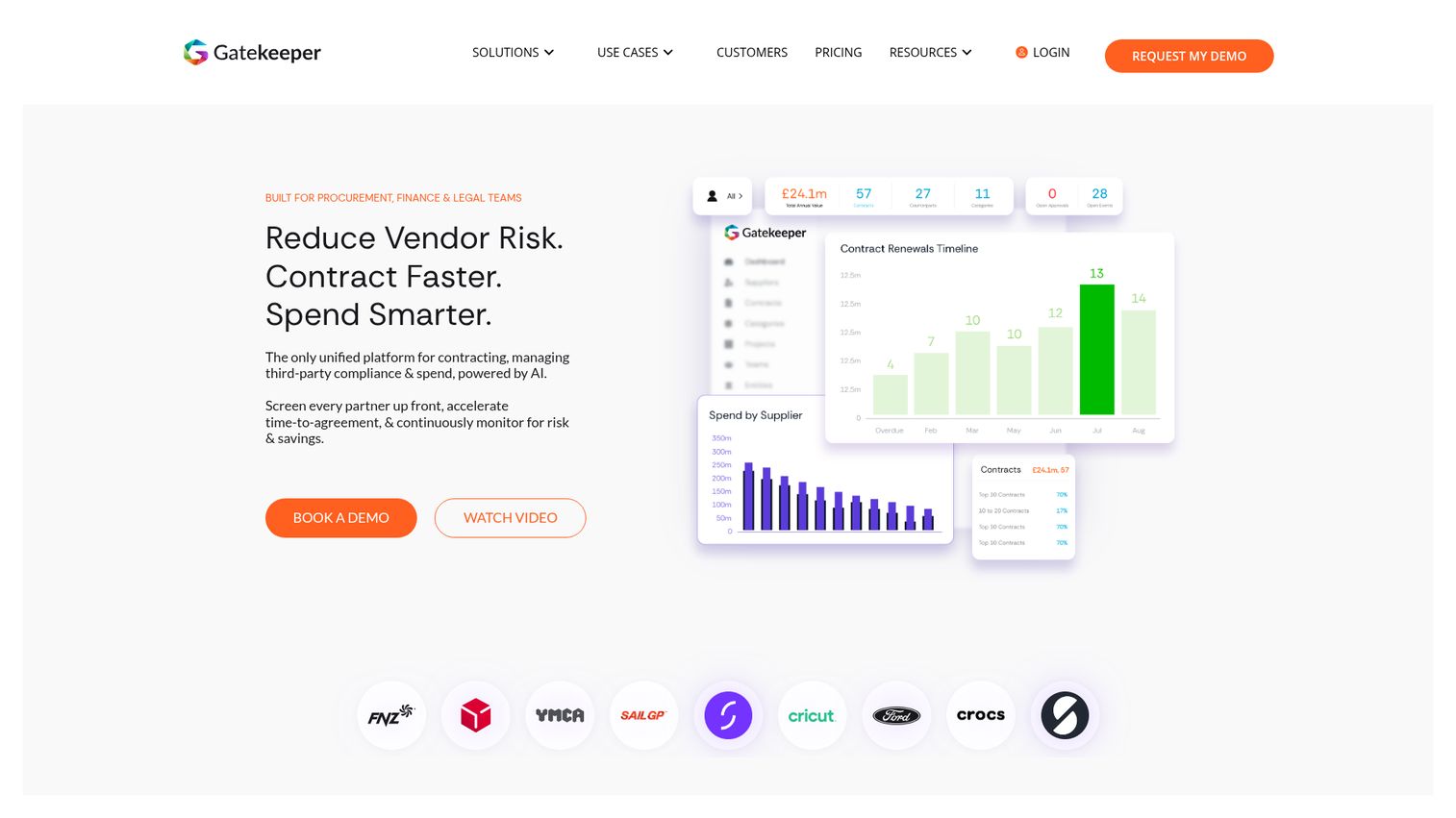
Gatekeeper is a unified platform for contract lifecycle management, third-party risk and compliance management, and spend management, powered by AI. It connects vendor records to contracts, risk scores, and spend in a single cloud based vendor management system. Procurement, finance, and legal teams use it to manage the full vendor and contract relationship from one place. If contract lifecycle management is your primary need, the best contract lifecycle management software guide compares dedicated CLM options.
Best for: Procurement, finance, and legal teams that want contracts, vendor risk, compliance, and spend visibility unified in one platform.
Key strengths
- Contract lifecycle management: AI summaries, clause suggestions, collaborative redlining, and automated contract tracking.
- Vendor and third-party risk: Onboarding, risk profiles, calculated risk scores, and continuous monitoring in one workflow.
- Spend management: Track third-party spend, compare forecast versus actuals, and surface consolidation opportunities.
Why choose Gatekeeper: Most tools handle either contracts or vendor risk well, not both. Gatekeeper ties them together, so a renewal triggers a risk review and spend stays visible across the relationship. Its self-service vendor portal reduces the manual back-and-forth of onboarding.
Gatekeeper pricing: Gatekeeper's pricing page lists Pro, Enterprise, and Enterprise Plus plans with usage limits and feature tiers, but does not publish numeric prices. Pricing is quote-based and scales with usage and plan. Gatekeeper holds ISO 27001 certification and carries a 4.5/5 rating on G2 from 91 reviews.
3. UpGuard
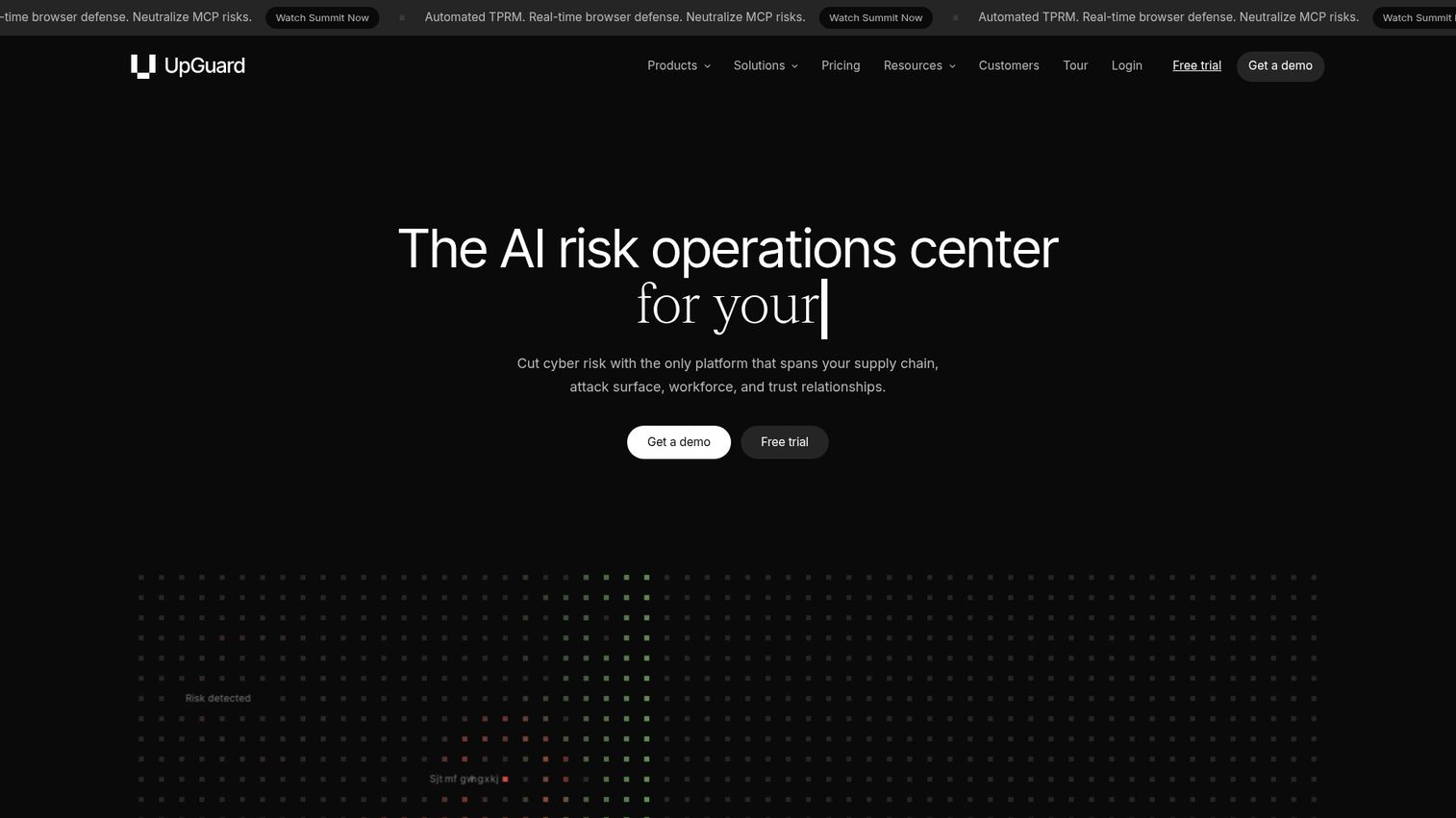
UpGuard is a cyber risk posture management platform for securing vendors, attack surfaces, workforce risk, and trust relationships. It delivers continuous security ratings, third-party risk monitoring, and security questionnaires. For teams that want a vendor risk management solution with transparent entry pricing, UpGuard stands out.
Best for: Security and risk teams that need automated third-party risk management plus external attack surface visibility.
Key strengths
- Vendor risk management: Continuous vendor insights, 360-degree assessments, and AI-powered workflows.
- Attack surface management: Continuous visibility into your digital footprint and external cybersecurity posture.
- Risk automations: Connect risk-stack APIs to automate discovery, notification, and remediation.
Why choose UpGuard: UpGuard is one of the few cyber risk platforms that publishes a starting price, which makes budgeting straightforward. Its combination of vendor risk and attack surface management means you monitor both your suppliers and your own exposure from one tool. Security teams value the automated questionnaires and continuous scoring.
UpGuard pricing: The Standard plan starts at $1,750 per month, billed annually, and includes 50 vendor monitoring slots. Professional, Corporate, Enterprise, and Enterprise+ tiers are contact-sales, with higher or unlimited vendor monitoring. UpGuard offers a free trial CTA but no permanent free tier, and holds a 4.5/5 rating on G2 from 702 reviews.
4. Bitsight
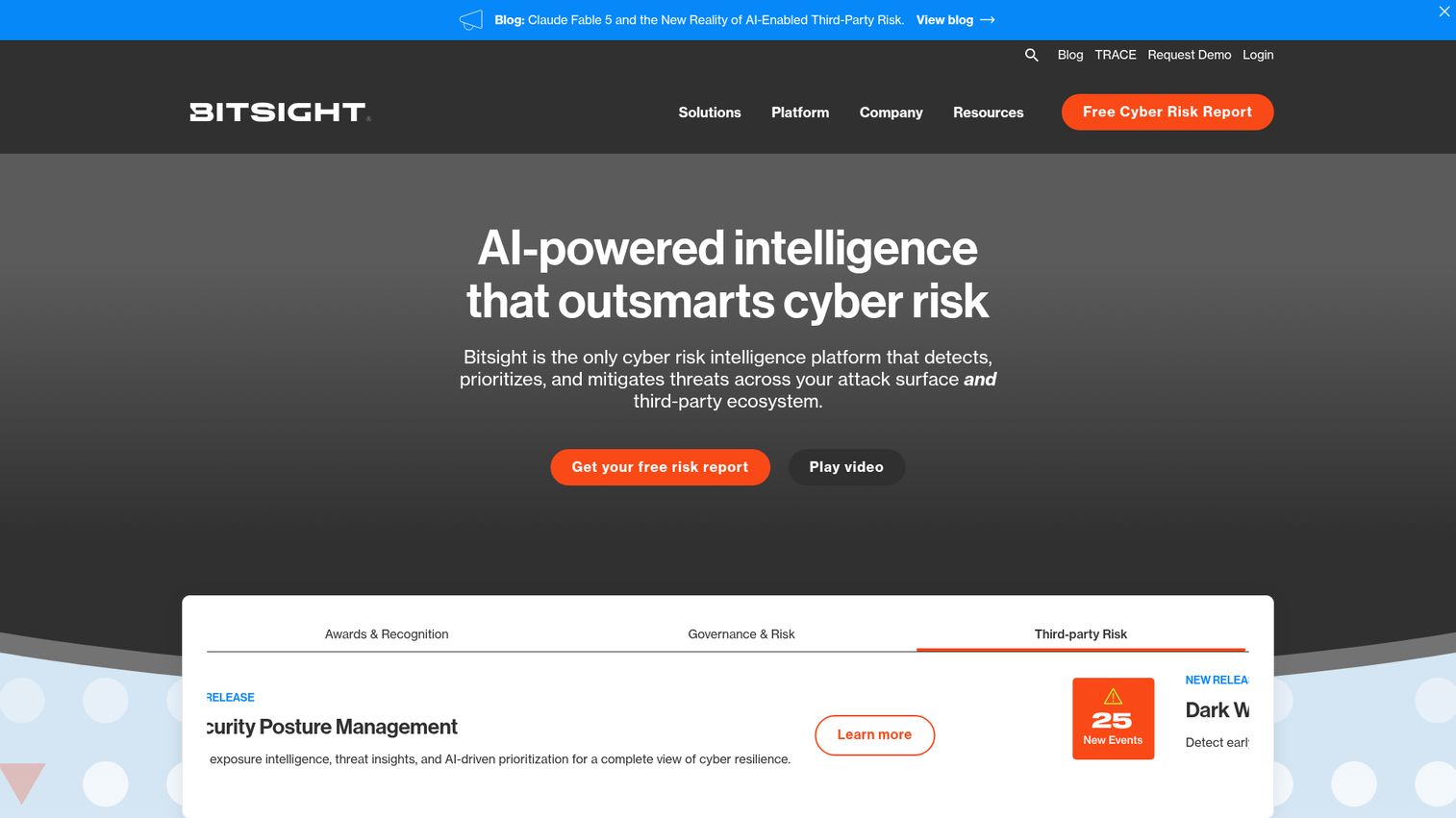
Bitsight is a cyber risk intelligence platform for detecting, prioritizing, and mitigating threats across an organization's attack surface and third-party ecosystem. It is best known for external security ratings that benchmark vendor posture. Teams use it for continuous third-party risk monitoring without touching vendor environments directly.
Best for: Enterprises that need external cyber-risk visibility, third-party risk monitoring, and security posture benchmarking.
Key strengths
- Third-party vendor risk management: Continuous monitoring with GRC integration across the vendor portfolio.
- Near-real-time alerts: Daily security ratings flag changes in a vendor's security posture as they happen.
- Threat intelligence: Deep and dark web, OSINT, advisories, and news feeds summarized with Bitsight AI.
Why choose Bitsight: Bitsight's security ratings are widely recognized, which matters when you need to justify a vendor decision to leadership or regulators. The free Pulse tier lets smaller teams start monitoring threat and risk events without a contract. Larger organizations use the full platform for portfolio-wide benchmarking.
Bitsight pricing: Bitsight Pulse offers a Free plan with threat and news event channels, related adversarial entities, and Bitsight AI reports per event. The Premium tier is offered via demo with no public price published. Bitsight holds a 4.5/5 rating on G2 from 76 reviews.
5. SecurityScorecard
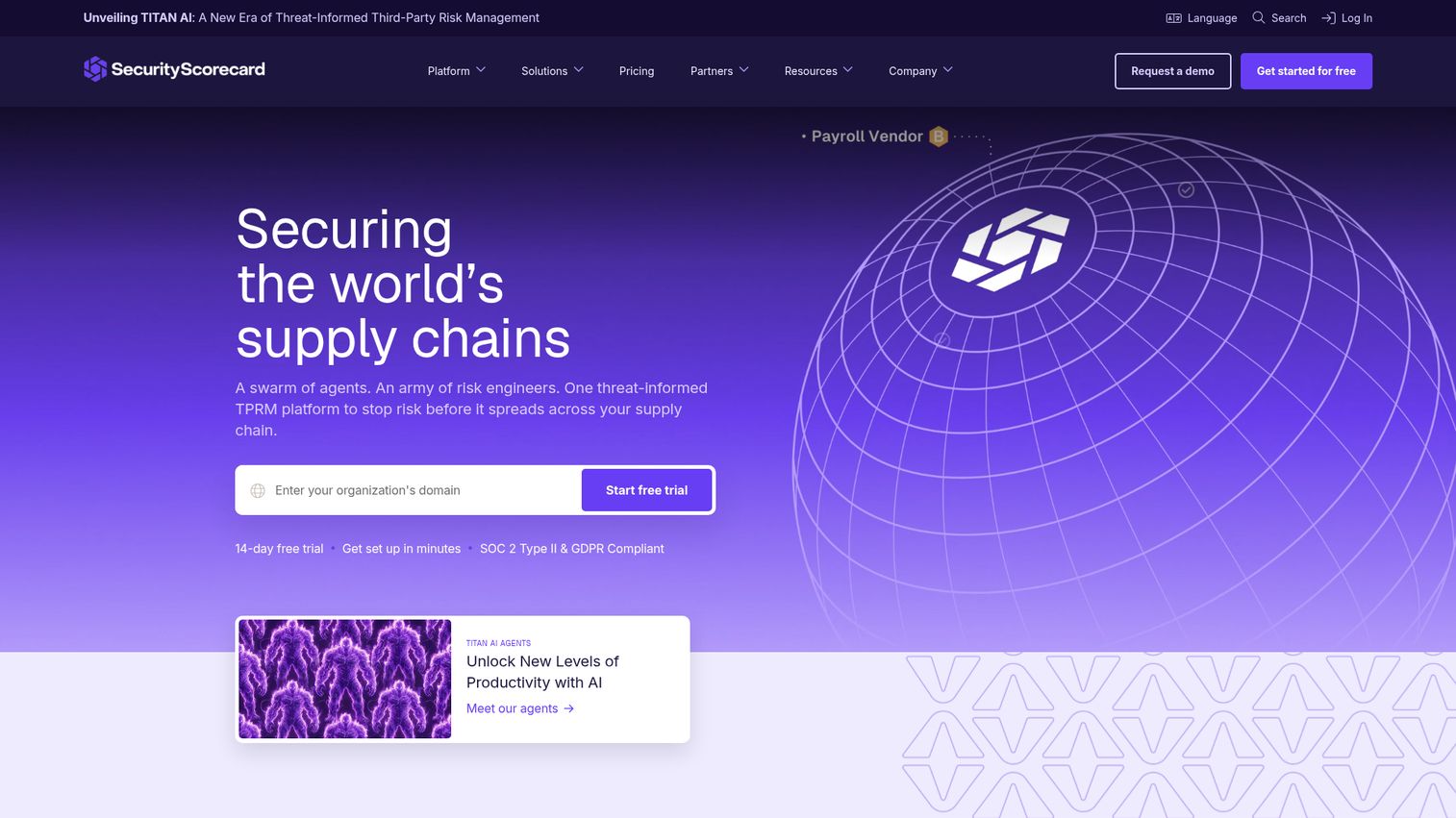
SecurityScorecard provides an AI-powered third-party risk management and security ratings platform for monitoring, assessing, and reducing supply chain cyber risk. It scores monitored organizations and supports continuous vendor monitoring at scale. The platform is a strong fit for teams managing large vendor portfolios with fourth-party exposure.
Best for: Organizations that need continuous third-party and supply-chain cyber risk monitoring, ratings, questionnaires, and vendor remediation workflows.
Key strengths
- Security rating scorecards: Build custom scorecards for any monitored organization and benchmark across your portfolio.
- Continuous vendor monitoring: A vendor system of record with alerts, dashboards, and third- and fourth-party discovery.
- AI-assisted questionnaires: Questionnaire management, document analysis, and threat-informed risk response.
Why choose SecurityScorecard: SecurityScorecard's fourth-party discovery surfaces hidden risk that lives in your vendors' vendors, which most tools miss. Its AI questionnaire automation cuts the manual effort of collecting vendor evidence. A Free Forever tier lets teams evaluate the ratings before committing.
SecurityScorecard pricing: SecurityScorecard offers Free Trial and Free Forever options, plus paid TITAN Watch packages named Core, Premium, and Elite. TITAN Assess and TITAN Secure are add-ons, and MAX managed services cover Questionnaires, Monitor, and Respond. Paid pricing is usage-based, driven by the number of organizations monitored, and not published numerically. SecurityScorecard holds a 4.3/5 rating on G2.
6. Black Kite

Black Kite is an AI-native third-party cyber risk management platform for vendor cyber risk intelligence, monitoring, assessments, and supply chain risk visibility. Its differentiator is quantifying cyber risk in financial and compliance terms, not just technical scores. That framing helps risk teams translate findings into language leadership and regulators understand.
Best for: Enterprise security, risk, and TPCRM teams that need continuous vendor cyber risk intelligence and extended supply chain visibility.
Key strengths
- Standards-based monitoring: Continuous cyber risk monitoring across vendor portfolios mapped to recognized frameworks.
- AI-powered assessments: Automated vendor risk assessments with document analysis, compliance gap identification, custom frameworks, and audit-ready reporting.
- Nth-party visibility: Relationship mapping, cascading risk, concentration risk, and sanctions and geopolitical risk.
Why choose Black Kite: Black Kite's financial quantification turns a cyber risk score into an estimated dollar exposure, which makes prioritization concrete. Its nth-party mapping extends visibility beyond direct vendors into the broader supply chain. The compliance correlation helps teams tie risk to regulatory obligations.
Black Kite pricing: Black Kite does not publish numeric pricing on its site, directing buyers to Book a Demo and Contact Sales. Public materials reference Standard and Enterprise tiers, but specifics come through a sales conversation. Black Kite holds a 5.0/5 rating on G2, based on a small number of reviews.
7. Quantivate
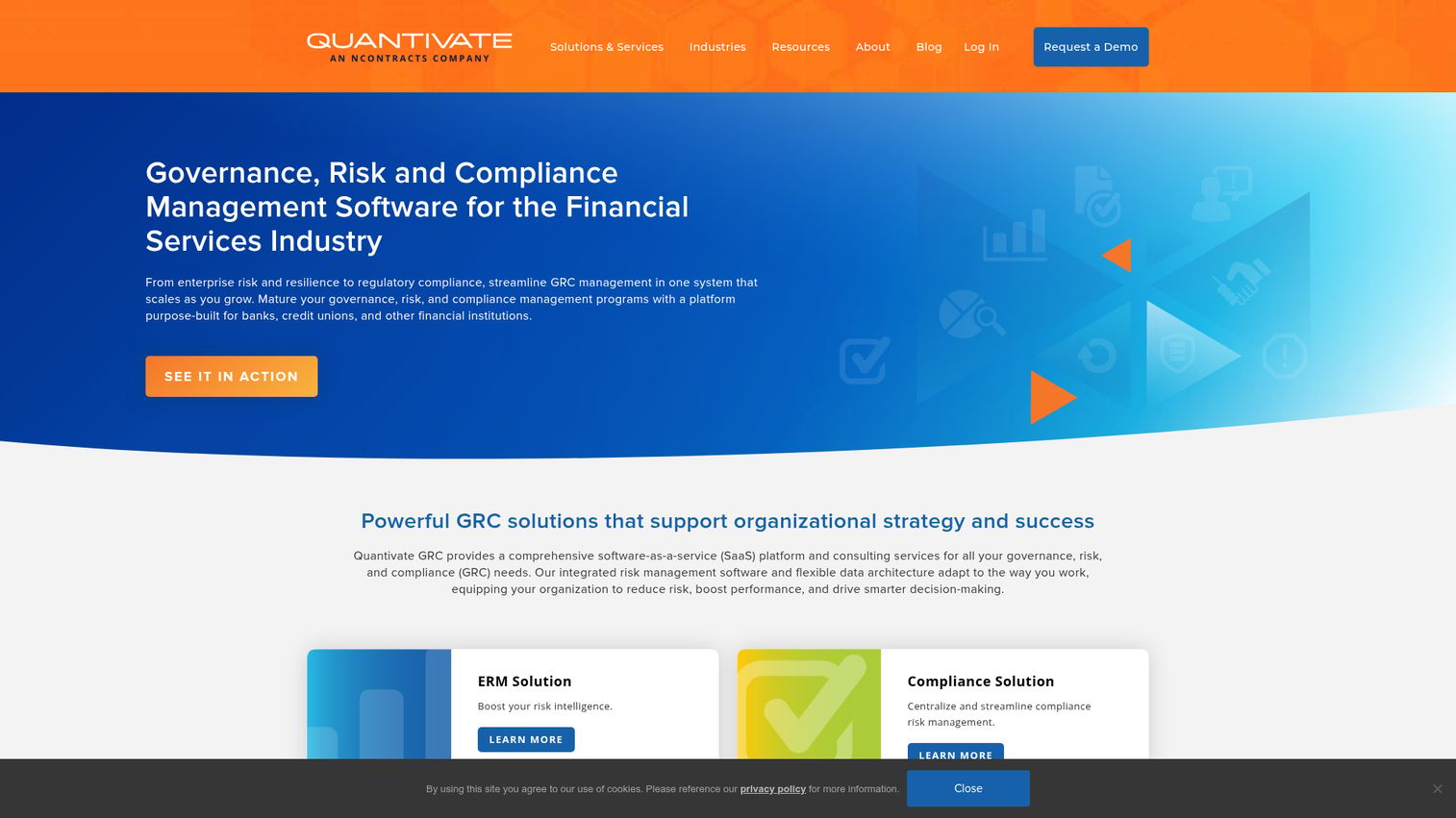
Quantivate provides SaaS governance, risk, and compliance management software and consulting services for financial services organizations. Its vendor management module sits inside a broader GRC suite, covering the full vendor lifecycle alongside enterprise risk, audit, and compliance. That integration appeals to teams that want one platform for risk and vendors together.
Best for: Financial institutions needing an integrated GRC platform spanning risk, compliance, vendor, audit, resilience, and policy management.
Key strengths
- Integrated GRC modules: Enterprise risk, vendor management, business continuity, IT risk, compliance, internal audit, and policy management in one suite.
- Centralized data and workflows: Shared data storage, task management, and flexible workflows across modules.
- Configurable reporting: Visual analytics, dashboards, single sign-on, API access, and SOC 2 Type 2 compliance.
Why choose Quantivate: When vendor management lives inside the same platform as your enterprise risk and audit programs, you avoid the data silos that fragment oversight. Quantivate's executive dashboards give leadership a unified view of vendor and organizational risk. Its consulting services help financial institutions stand up programs faster.
Quantivate pricing: Quantivate does not publish public pricing; engagements are quote-based and shaped by the modules you deploy and your institution's size. Capterra shows an overall rating of 5.0 based on a single review, and no G2 rating was verified for Quantivate at the time of writing.
8. CobbleStone Software
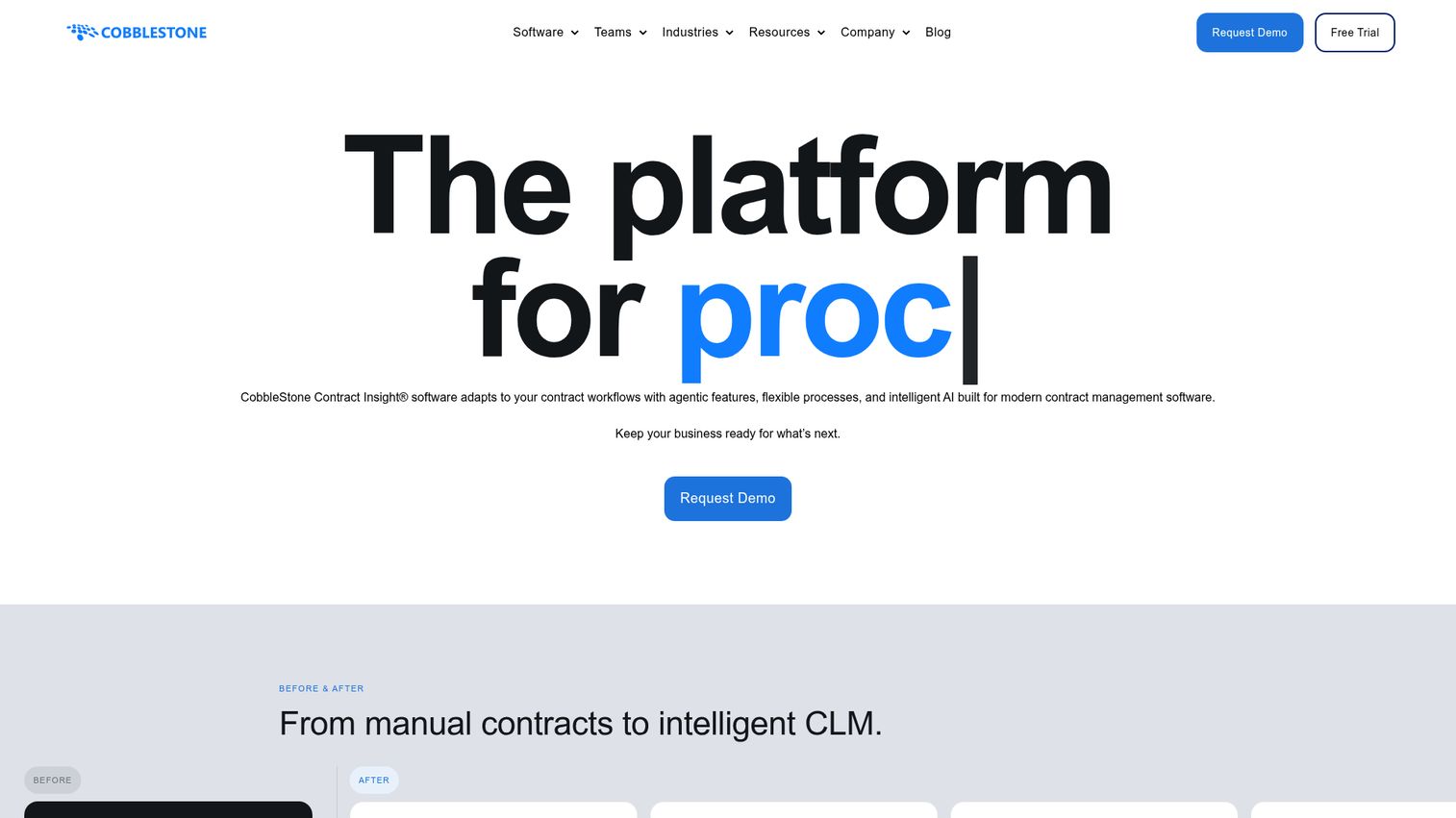
CobbleStone Software provides CobbleStone Contract Insight, a contract lifecycle management platform for managing, drafting, approving, signing, searching, and tracking contracts, with vendor management built in. It links vendor records to contracts and supports intake-to-contract workflows. Compliance connectors for sanctions and entity checks round out the third party management software story.
Best for: Organizations that need configurable CLM with a contract repository, workflow automation, AI-assisted review, e-signature, and enterprise integrations.
Key strengths
- Centralized contract repository: Full-text search across every contract and vendor record.
- No-code workflow automation: Configurable approval routing and intake-to-contract conversion.
- VISDOM AI: Contract data extraction, redlining, risk analysis, and chatbot assistance.
Why choose CobbleStone: CobbleStone shines when your vendor management is tightly coupled to contracts. Its public vendor portal and intake-to-contract flow let you move a vendor from request to executed agreement without leaving the platform. Compliance connectors for OFAC, SAM.GOV, and D&B support due diligence inside the contracting process. For deeper insight extraction, the best contract analytics software roundup is a useful companion read.
CobbleStone pricing: CobbleStone's core product pricing is gated behind a request-pricing form, with no public subscription tiers published. Its VISDOM+ AI add-on page lists package prices, but those require a Contract Insight license and are not the core starting price. CobbleStone Contract Insight Enterprise holds a 4.8/5 rating on G2.
9. Archer
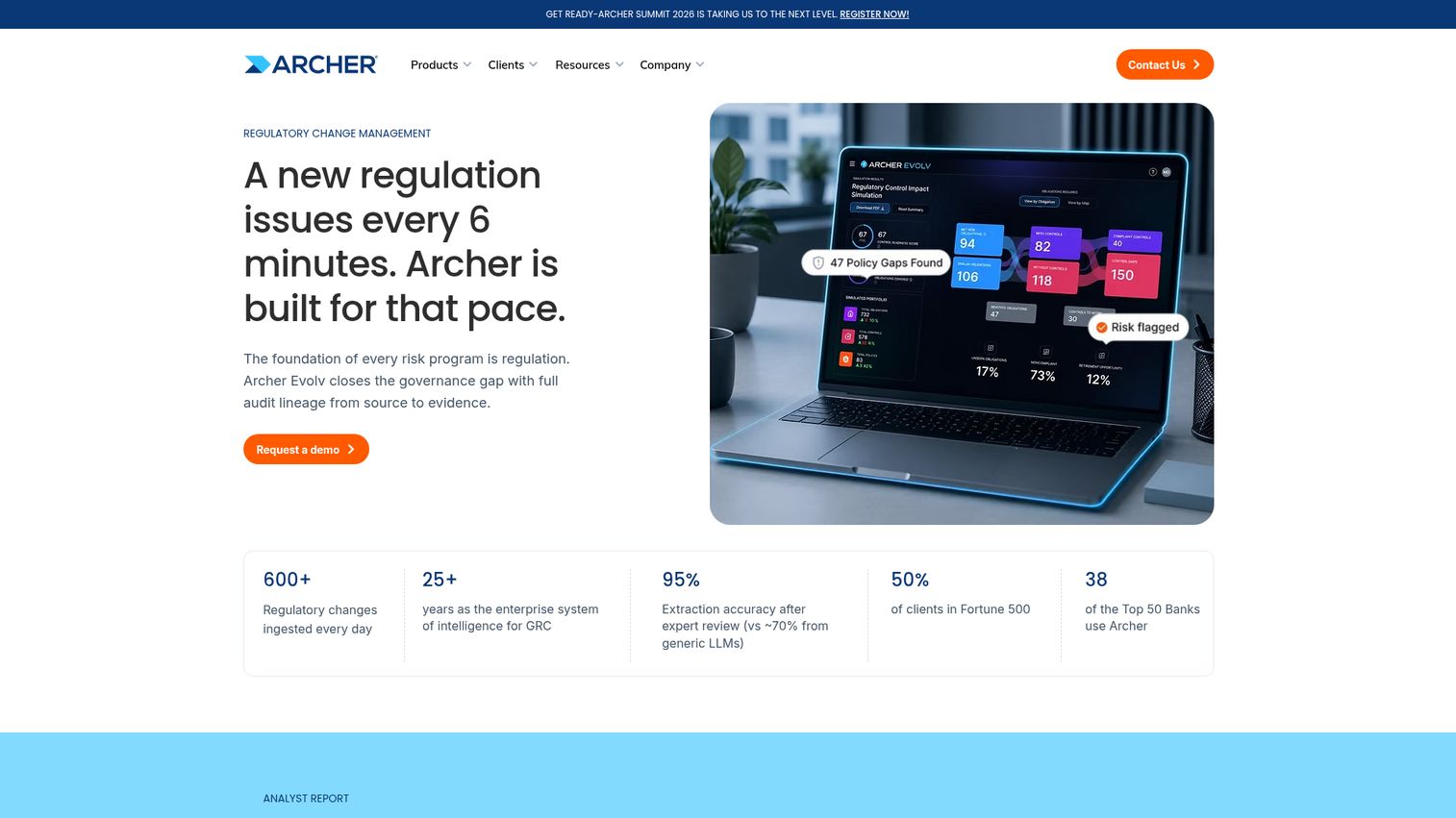
Archer provides integrated risk management and GRC software for managing risk, compliance, audit, third-party risk, resilience, ESG, and IT and security risk. Its third-party risk modules sit on a unified data model alongside enterprise and operational risk. Large, regulated organizations use Archer when they need a single configurable platform across many risk domains.
Best for: Large enterprises and regulated organizations that need a configurable GRC and integrated risk management platform.
Key strengths
- Regulatory intelligence: Obligation management, control mapping, policy alignment, and audit evidence with auditable lineage.
- Unified risk model: Enterprise, operational, IT, third-party, and AI risk on one data model with quantified scoring.
- Automated workflows: Collaboration, dashboards, analytics, and risk visibility across internal and third-party ecosystems.
Why choose Archer: Archer is built for organizations whose risk programs span far beyond vendors. If you need third-party risk to live inside the same platform as enterprise risk, audit, and compliance, Archer's unified model delivers that. Its configurability suits complex enterprises with specialized requirements.
Archer pricing: Archer does not publish public pricing; the site directs buyers to Contact Us or request a demo. Pricing is enterprise and quote-based, reflecting the breadth of modules deployed. The G2 profile for Archer by Archer Technologies shows a 3.6/5 rating, reflecting the trade-offs of a deep, highly configurable enterprise platform.
10. Ncontracts
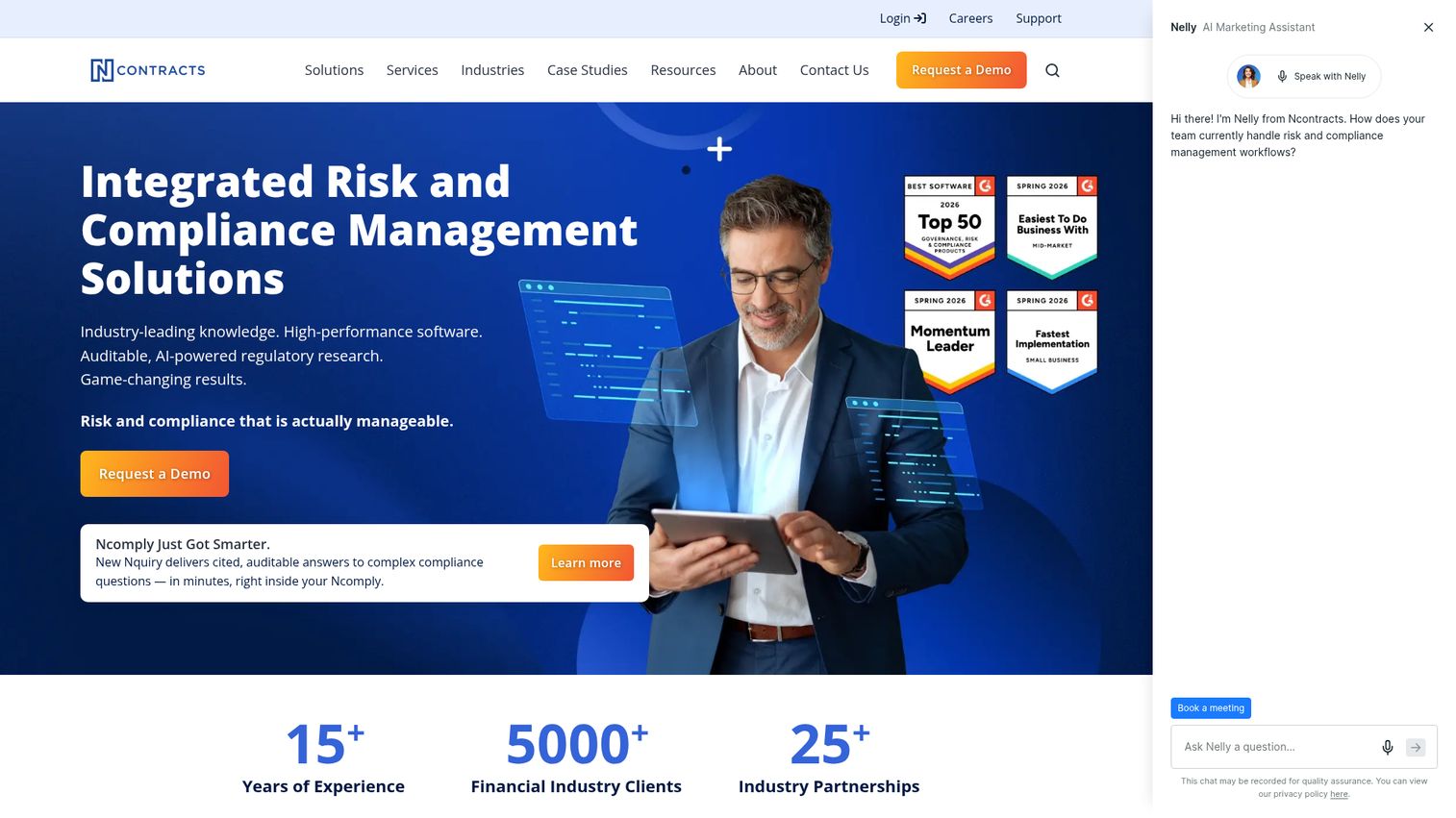
Ncontracts provides integrated risk management and compliance software for financial institutions, mortgage companies, and fintechs. Its vendor management module handles vendor reviews, lifecycle management, and contract management alongside risk and compliance. The platform is aligned to US banking regulatory guidance, which makes it a natural fit for banks and credit unions.
Best for: Financial services organizations that need integrated risk, compliance, vendor, audit, continuity, and lending compliance management.
Key strengths
- Risk management: Real-time risk analysis tools and advanced risk evaluation modeling.
- Compliance management: AI-assisted regulatory answers, tailored regulatory updates, requirements building, and policy management.
- Vendor management: Vendor reviews, lifecycle management, contract management, and expert guidance.
Why choose Ncontracts: Ncontracts is built around the realities of bank and credit union examinations, so its workflows map to FFIEC and OCC expectations. The combination of vendor management with broader compliance and risk modules means examiners see a connected program, not isolated tools. Expert guidance helps smaller institutions keep pace with regulatory change.
Ncontracts pricing: Ncontracts does not publish public software pricing; product and demo paths are the route to a quote. Pricing reflects the modules you deploy and your institution's size. Ncontracts holds a 4.7/5 rating on G2.
How to choose vendor management software: buyer's checklist
The right tool depends on what you are optimizing for. Run every shortlisted vendor through these five criteria before you book demos.
Risk and compliance depth
Decide how much third-party risk you need to manage. Look for third-party risk scoring, OFAC and SAM.GOV screening, SOC 2 and ISO certification tracking, and full audit trails. If you are in a regulated industry, prioritize tools aligned to your specific framework, whether that is FFIEC for banking or HIPAA for healthcare.
Centralization and visibility
A vendor management platform should be a single source of truth, not another silo. Check that it stores documents, links contracts to vendor records, and surfaces everything through dashboards. Ask whether reporting is configurable enough to answer the questions your leadership and auditors actually ask.
Onboarding and self-service portals
Evaluate how vendors enter the system. Self-service registration, document collection, and intake workflows reduce the manual chasing that eats your team's time. A clear onboarding experience also gets new vendors active faster, which matters when contracts are waiting. Teams that want to demonstrate portal workflows before a vendor logs in often build a live demo of the intake flow.
Integrations
Map the tool against your existing stack. Common integration points include CRM, ERP, e-signature, CLM, GRC platforms, and SSO for access control. A tool that connects cleanly to your systems avoids the double data entry that erodes adoption.
Deployment and pricing model
Confirm whether the platform is cloud based or on-prem, and most modern options are cloud SaaS. Then understand the pricing model: per-seat, flat, usage-based, or enterprise custom. Many vendor management software companies quote based on vendor count or modules, so clarify what drives your number before negotiating.
Common mistakes to avoid when choosing vendor management software
Even a strong shortlist can lead to a poor decision. Here are the mistakes that cost teams time and budget, and what to do instead.
Buying for risk scoring but ignoring onboarding. Teams often fixate on the depth of risk ratings and overlook how vendors actually enter the system. The fix: weight onboarding and portal usability alongside risk depth, because a tool nobody can onboard vendors into goes unused.
Skipping the integration plan. A platform that does not connect to your CRM, ERP, or CLM creates duplicate data entry that kills adoption. The fix: list your required integrations before demos and confirm each one works the way you need, not just that it exists.
Underestimating change management. The best tool fails if your team keeps using spreadsheets out of habit. The fix: plan for change management best practices like training, assign an internal owner, and migrate data deliberately rather than expecting adoption to happen on its own.
Choosing a tool that cannot scale across vendor tiers. A platform built for fifty vendors may buckle at five hundred, or fail to differentiate critical vendors from low-risk ones. The fix: confirm the tool supports vendor tiering and check reference customers at your target scale.
Conclusion
The best vendor management system is the one that matches your primary job. If third-party cyber risk is the priority, UpGuard, Bitsight, SecurityScorecard, and Black Kite lead on continuous security ratings, with UpGuard offering the clearest entry pricing. For contract-linked vendor workflows, Gatekeeper and CobbleStone tie vendors to contracts in one place.
Regulated financial institutions should look hard at Venminder and Ncontracts, both built around banking examination expectations. If you want vendor management inside a broader GRC program, Quantivate and Archer integrate it with enterprise risk, audit, and compliance.
Your next step is simple. Shortlist two or three tools that match your top criteria, then request demos and run a short pilot against your real vendor list. Pay attention to onboarding, reporting, and how the tool handles your specific compliance requirements. The differences that matter show up fast once you load your own data. If onboarding clarity is part of your evaluation, you can also create an interactive demo of your own vendor portal to test how intuitive the flow really is.
FAQs
Vendor management software centralizes vendor records, manages contracts, scores third-party risk, automates compliance checks, and tracks vendor performance. It replaces scattered spreadsheets and inboxes with one system of record. Teams use it to gain visibility, reduce risk, and stay audit-ready across the full vendor lifecycle.
Vendor management software covers the full lifecycle, including onboarding, contracts, performance scorecards, and risk. Third-party risk management software focuses more narrowly on assessing and monitoring vendor security and compliance risk, often through ratings and questionnaires. The two overlap heavily, and many platforms combine both into a single tool.
Pricing varies widely. Some tools publish entry pricing, like UpGuard at $1,750 per month billed annually, while many enterprise platforms are quote-based. Models include per-seat, flat-rate, usage-based (often tied to vendor count), and custom enterprise contracts. Free tiers exist for cyber risk tools like Bitsight and SecurityScorecard.
Smaller teams often start with tools that offer free or low-cost entry points. Bitsight Pulse and SecurityScorecard both provide free tiers for cyber risk monitoring, and UpGuard publishes a transparent starting price. Cloud based platforms reduce setup overhead, which matters when you lack a dedicated risk team.
Yes, most modern vendor management platforms are delivered as cloud or SaaS products. Cloud based vendor management systems offer anywhere access, automatic updates, and centralized records without on-prem infrastructure. Nearly all the tools in this guide are cloud-native, which is now the default for the category.
Look for centralized vendor records, third-party risk scoring, onboarding and intake portals, contract and CLM links, performance scorecards, compliance automation, reporting dashboards, and integrations. The strongest platforms connect these so a risk change can trigger a review and a renewal can prompt fresh due diligence.
It maintains audit trails, tracks certifications like SOC 2 and ISO, and sends alerts before they expire. Many platforms screen vendors against OFAC and SAM.GOV and map controls to regulatory frameworks. On-demand reporting lets you produce audit-ready documentation without reconstructing records manually.
Adoption is strongest in regulated, risk-sensitive industries. Financial services, healthcare, government and public sector, and manufacturing lead, driven by regulatory expectations for documented third-party oversight. Among risk management software vendors, several tools like Venminder and Ncontracts are built specifically for banking and credit union compliance.