Legal teams reviewing contracts manually spend an average of 20-30 minutes per agreement on routine data extraction. Multiply that across a portfolio of thousands of contracts, and you're looking at weeks of attorney time spent on work that AI can now handle in minutes.
Contract analytics software uses machine learning to automatically extract key terms, flag risks, and track obligations across your entire contract portfolio. This guide covers 15 platforms worth evaluating, with comparison tables, pricing insights, and a framework for choosing the right fit for your team.
What's inside
This guide covers what contract analytics software actually does, when it makes sense to invest, and 15 platforms worth evaluating. You'll find a comparison table with pricing and G2 ratings, detailed breakdowns of each tool's strengths, and a framework for choosing the right fit. We also cover the AI capabilities powering modern contract analysis and what to look for during vendor evaluation.
TL;DR
- What contract analytics software does: Uses AI to automatically extract key data, flag risks, and track obligations across your contract portfolio
- Who benefits most: Legal teams, procurement, finance, and operations managing hundreds or thousands of agreements
- Top considerations: AI extraction accuracy, integration with your CLM and CRM, implementation timeline, and total cost of ownership
- Action step: Test platforms with your actual contracts before committing to see real-world accuracy
What is contract analytics software
Contract analytics software uses artificial intelligence and machine learning to automatically review, extract, and analyze data from legal agreements. Unlike basic document storage or simple search tools, contract analytics platforms identify specific clauses, flag deviations from standard language, and surface insights across thousands of contracts in minutes rather than weeks.
The core value proposition is straightforward. Legal and procurement teams spend enormous amounts of time manually reviewing contracts for key terms, dates, and obligations. Contract analytics automates that extraction work and turns unstructured legal documents into queryable, actionable data.
Core capabilities of contract analytics platforms
- Automated data extraction: Pulls key information like parties, effective dates, payment terms, and specific clauses without manual tagging
- Risk identification: Compares contract language against your playbook and flags non-standard terms, missing clauses, or unfavorable provisions
- Obligation tracking: Monitors renewal dates, notice periods, and compliance deadlines with automated alerts
- Search and reporting: Makes your entire contract portfolio searchable and generates reports on trends, exposure, and performance
Contract analytics vs contract lifecycle management
| Aspect | Contract analytics | Contract lifecycle management (CLM) |
|---|---|---|
| Primary focus | Analyzing existing contracts | Managing contracts from creation to expiration |
| Core function | Data extraction and insights | Workflow automation and approvals |
| When to use | Legacy contract migration, M&A due diligence, compliance audits | New contract creation, negotiation, and execution |
| Typical buyer | Legal ops, procurement, finance | Legal, sales, procurement |
Many CLM platforms now include analytics features, and some analytics tools have expanded into lifecycle management. The distinction matters when you're evaluating vendors because your primary use case determines which capabilities to prioritize.
When to use contract analytics software
Not every organization benefits equally from contract analytics. Here's when the investment typically pays off.
High volume contract portfolios
Manual review becomes impractical once you're managing more than a few hundred active agreements. If your team is drowning in routine extraction work, analytics tools free them for higher-value activities.
Mergers and acquisitions due diligence
M&A scenarios often require rapid analysis of thousands of contracts for change of control provisions, assignment clauses, and potential liabilities. What might take a team of lawyers weeks to review manually can be completed in days with the right analytics platform, with one Deloitte case study showing 75% efficiency savings from AI-powered due diligence.
Regulatory compliance audits
When new regulations hit, organizations often discover they have no efficient way to verify compliance across their entire contract portfolio. Analytics tools can scan for specific language and flag gaps quickly.
Revenue leakage and spend optimization
Procurement and finance teams use contract analytics to identify missed rebates, unfavorable auto-renewal terms, and pricing inconsistencies buried in vendor agreements. The ROI case here is often the most concrete: according to World Commerce & Contracting, organizations lose 9.2% of annual revenue from poor contract management.
Contract analytics software comparison table
| # | Product | Intent | Key differentiation | Pricing | G2 rating |
|---|---|---|---|---|---|
| 1 | Icertis | Enterprise CLM with analytics | End-to-end contract intelligence platform | Custom quote | 4.4/5 |
| 2 | Docusign Analyzer | Post-signature analysis | Native Docusign ecosystem integration | Custom quote | 4.5/5 |
| 3 | Evisort | AI-native analytics | Pre-trained models, fast implementation | Custom quote | 4.6/5 |
| 4 | Conga Contract Intelligence | Revenue lifecycle integration | Part of broader Conga suite | Custom quote | 4.3/5 |
| 5 | Kira Systems | M&A due diligence | High accuracy clause identification | Custom quote | 4.5/5 |
| 6 | SirionAI | Enterprise contract management | Strong obligation tracking | Custom quote | 4.5/5 |
| 7 | LinkSquares | Legal team focus | Intuitive search and reporting | Custom quote | 4.6/5 |
| 8 | Lexion | Fast implementation | Simplicity over complexity | Custom quote | 4.7/5 |
| 9 | Malbek | Mid-market CLM | AI-powered with accessible pricing | Custom quote | 4.6/5 |
| 10 | Agiloft | Highly configurable | No-code customization | Custom quote | 4.6/5 |
| 11 | Ironclad | Workflow automation | Strong analytics dashboards | Custom quote | 4.5/5 |
| 12 | ContractPodAi | Legal tech integration | AI capabilities with ecosystem focus | Custom quote | 4.3/5 |
| 13 | Juro | Modern collaboration | Built-in analytics, browser-based | Custom quote | 4.7/5 |
| 14 | Precisely ContractExpress | Document automation | Analytics with template focus | Custom quote | 4.4/5 |
| 15 | SpotDraft | Startup-friendly | Growing analytics features | Custom quote | 4.7/5 |
1. Icertis
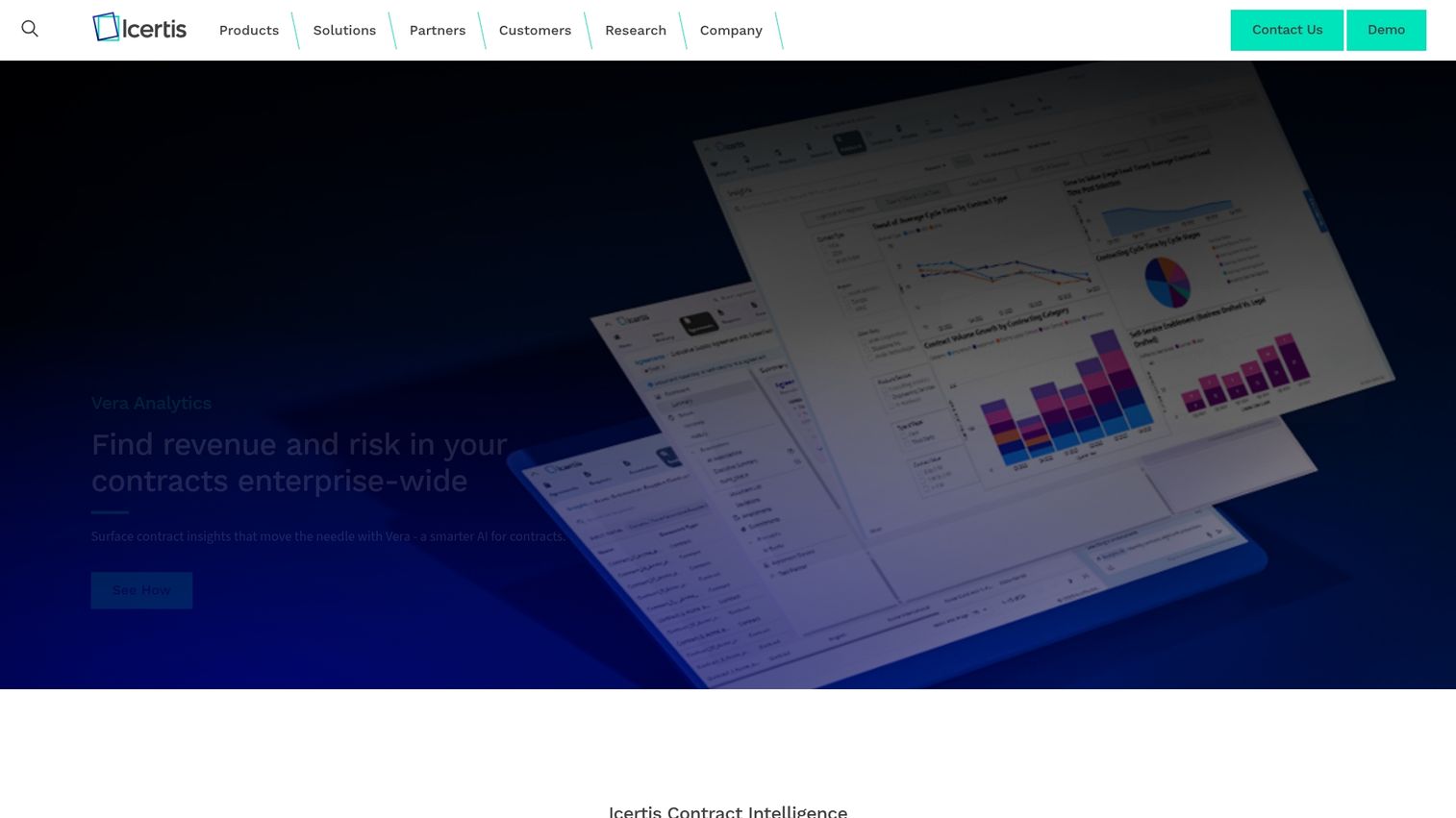
Icertis is the enterprise standard for organizations that want contract analytics embedded within a comprehensive contract lifecycle management platform. The platform handles everything from contract creation through analysis and renewal, with AI capabilities woven throughout.
Best for: Large enterprises with complex contract portfolios across multiple business units and geographies.
Key strengths
- Enterprise-grade AI: Pre-trained models for 90+ contract types with continuous learning from your specific agreements
- Risk scoring: Automated assessment of contract risk based on clause analysis and deviation from standards
- Obligation management: Tracks commitments across the portfolio with automated alerts and escalation workflows
- Global compliance: Built-in support for regulatory requirements across jurisdictions
Why choose Icertis
Choose Icertis when you're looking for a platform that can scale across the entire organization and you have the budget and implementation resources for an enterprise deployment.
Pricing: Custom enterprise pricing.
2. Docusign Analyzer
Docusign Analyzer focuses on post-signature contract analysis, making it a natural fit for organizations already using Docusign for agreement execution. The platform uses AI to extract data from existing contracts and surface insights without requiring you to change your signing workflow.
Best for: Organizations with heavy Docusign usage looking to add analytics without introducing a separate platform.
Key strengths
- Native integration: Seamless connection with Docusign Agreement Cloud for unified contract management
- Clause library: Pre-built extraction for common clause types with customization options
- Search and discovery: Full-text search across your contract repository with AI-powered filtering
Why choose Docusign Analyzer
Choose Docusign Analyzer when you're already invested in the Docusign ecosystem and want analytics that work with your existing workflow.
Check how to connect DocuSign with Salesforce
Docusign pricing
Custom pricing based on contract volume and feature requirements.
3. Evisort
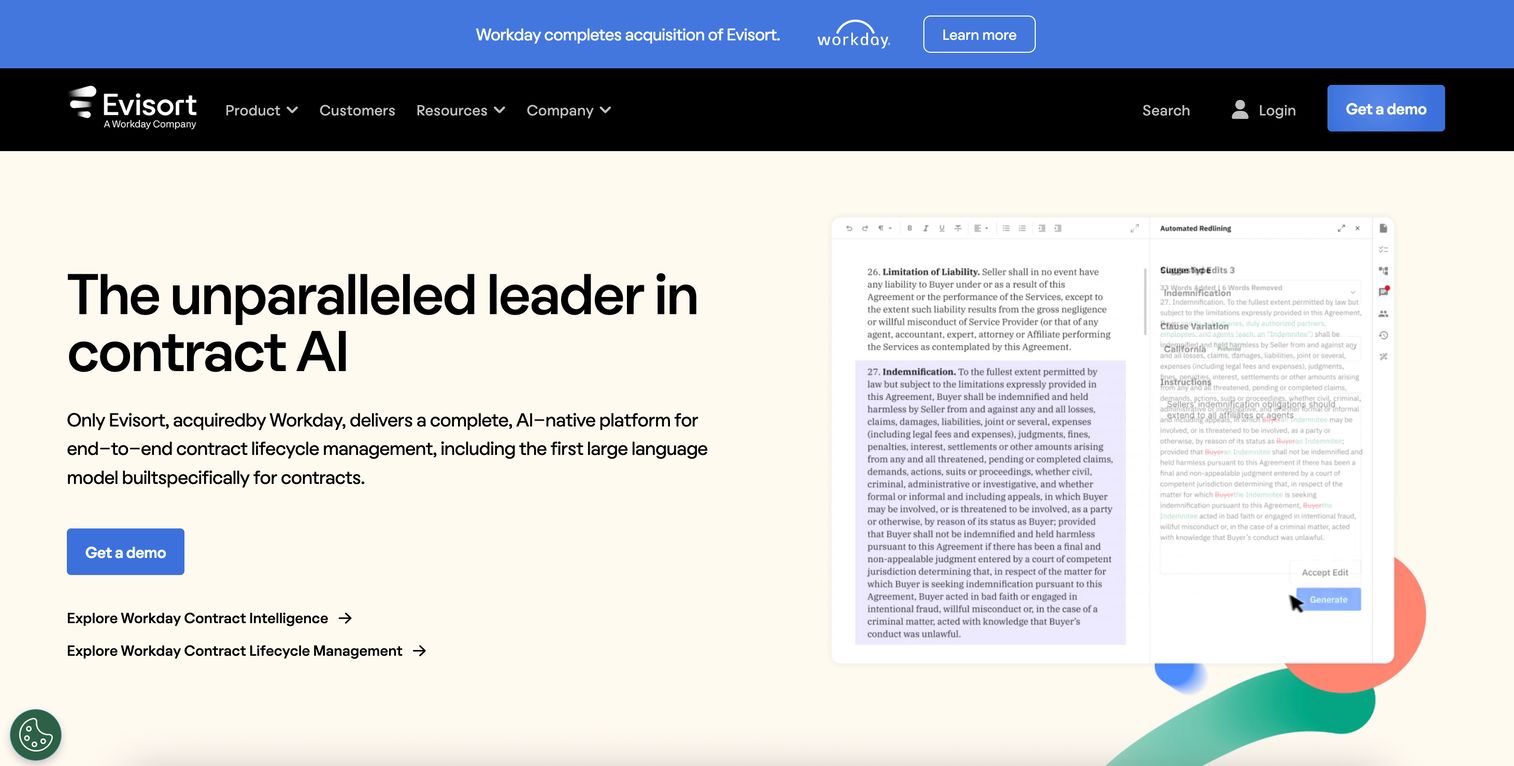
Evisort positions itself as an AI-native contract analytics platform built from the ground up around machine learning. The platform emphasizes speed to value with pre-trained models that work out of the box and improve as they learn from your specific contracts.
Best for: Legal and procurement teams that want powerful analytics without lengthy implementation projects.
Key strengths
- Pre-trained AI: Models trained on millions of contracts for immediate accuracy on common clause types
- Fast deployment: Typical implementations measured in weeks rather than months
- Custom field extraction: Train the system to identify organization-specific provisions and data points
Why choose Evisort
Choose Evisort when implementation speed matters and you want AI capabilities that work immediately.
Pricing: Custom pricing. Generally positioned as more accessible than enterprise CLM platforms.
4. Conga
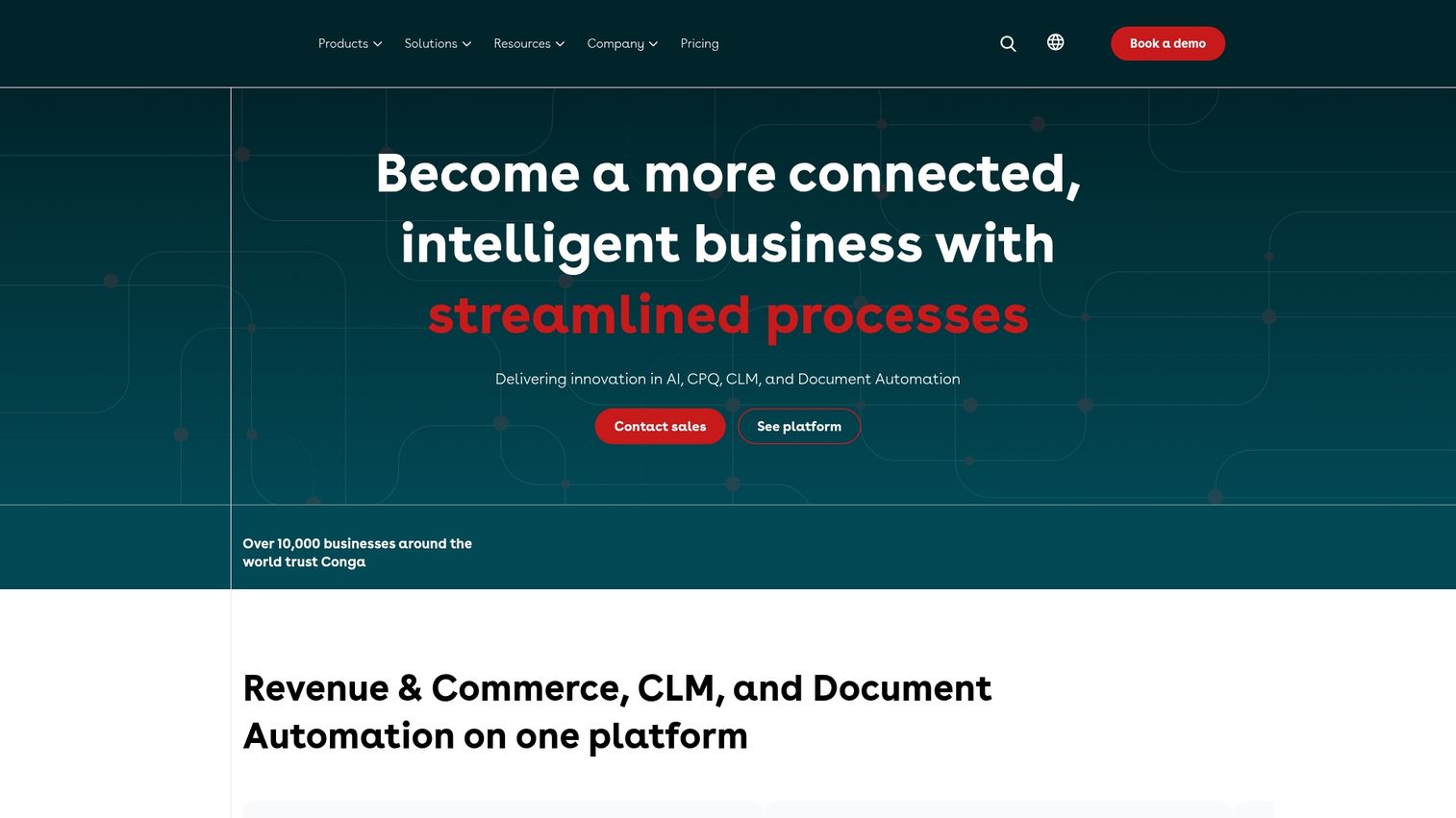
Conga Contract Intelligence sits within Conga's broader revenue lifecycle management suite, connecting contract analytics to document generation, CPQ, and billing.
Best for: Revenue operations teams that want contract analytics connected to the broader quote-to-cash process.
Key strengths
- Revenue lifecycle integration: Contract data flows into CPQ, billing, and renewal workflows
- AI extraction: Automated identification of key terms, obligations, and commercial data
- Salesforce native: Deep integration for organizations running on Salesforce
Pricing: Custom pricing based on modules and usage.
5. Kira Systems
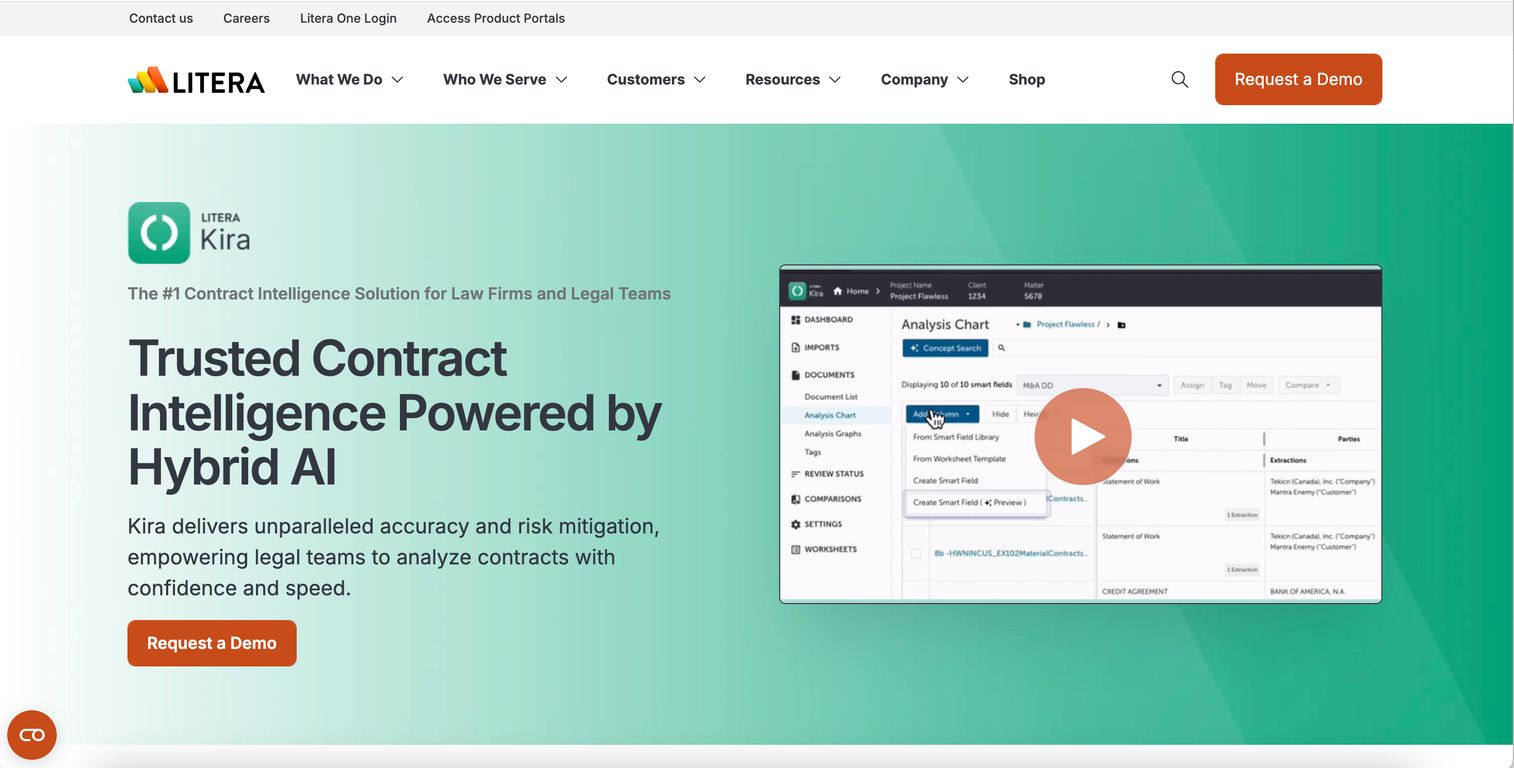
Kira Systems (now part of Litera) built its reputation on M&A due diligence, where accuracy and speed of contract review directly impact deal timelines.
Best for: Law firms and corporate legal teams handling M&A transactions and complex due diligence projects.
Key strengths
- Due diligence focus: Purpose-built workflows for M&A contract review
- High accuracy: Industry-leading precision on clause identification and extraction
- Custom model training: Build extraction models for organization-specific provisions
Pricing: Custom pricing. Typically licensed per project or on an enterprise basis.
6. SirionAI
SirionAI combines contract analytics with strong obligation management and supplier relationship capabilities.
Best for: Procurement and supplier management teams focused on obligation tracking and vendor performance.
Key strengths
- Obligation management: Comprehensive tracking of commitments, deadlines, and deliverables
- Supplier intelligence: Analytics that connect contract terms to vendor performance data
- Risk monitoring: Continuous assessment of contract and supplier risk
Pricing: Custom enterprise pricing.
7. LinkSquares
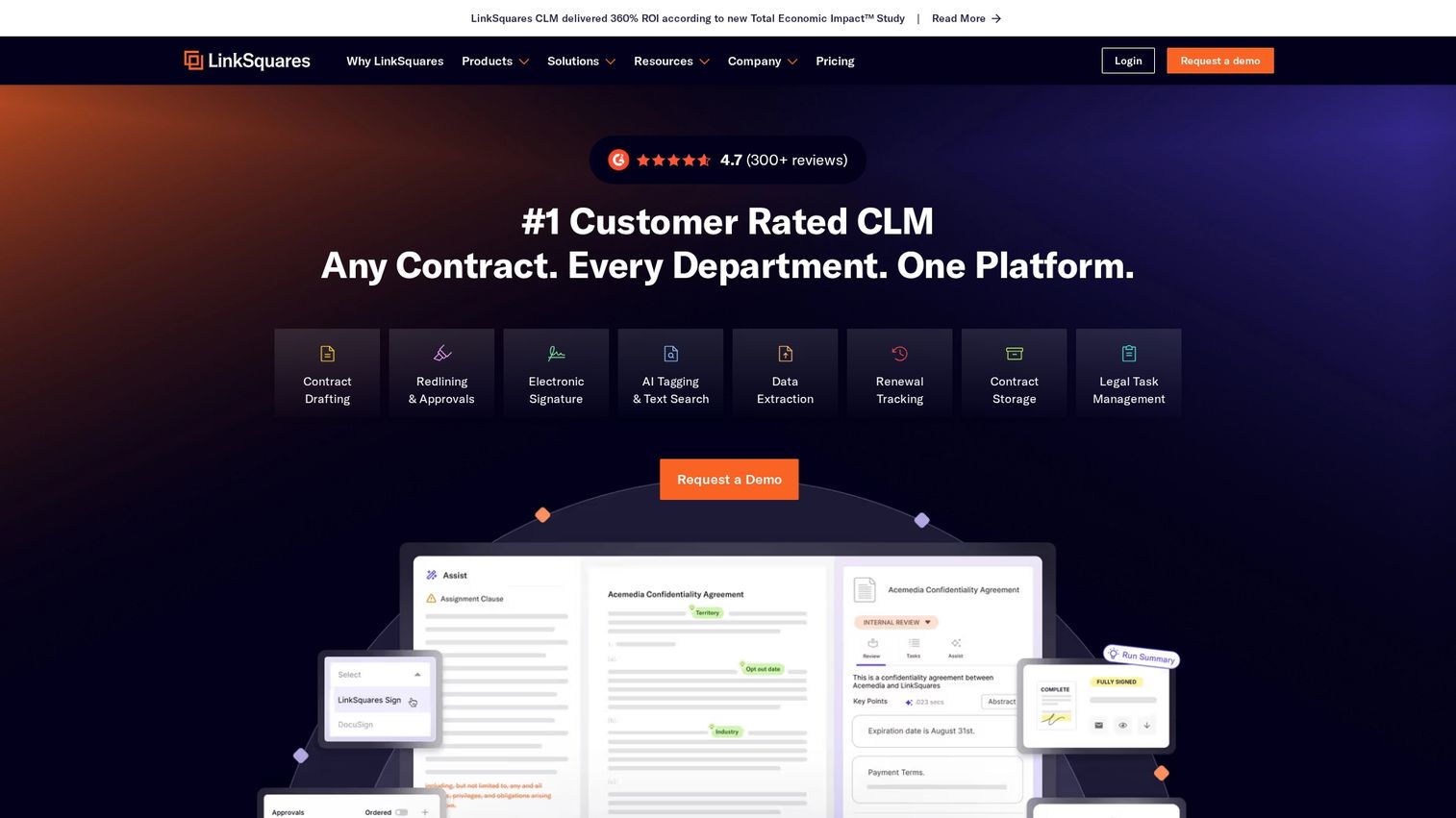
LinkSquares focuses specifically on legal teams, with an interface and feature set designed around how in-house counsel actually work.
Best for: In-house legal teams that want powerful analytics with a user experience designed for lawyers.
Key strengths
- Legal-first design: Interface and workflows built around legal team needs
- Smart search: Natural language search across your contract repository
- Custom reporting: Build reports and dashboards without technical expertise
Pricing: Custom pricing based on contract volume and features.
8. Lexion
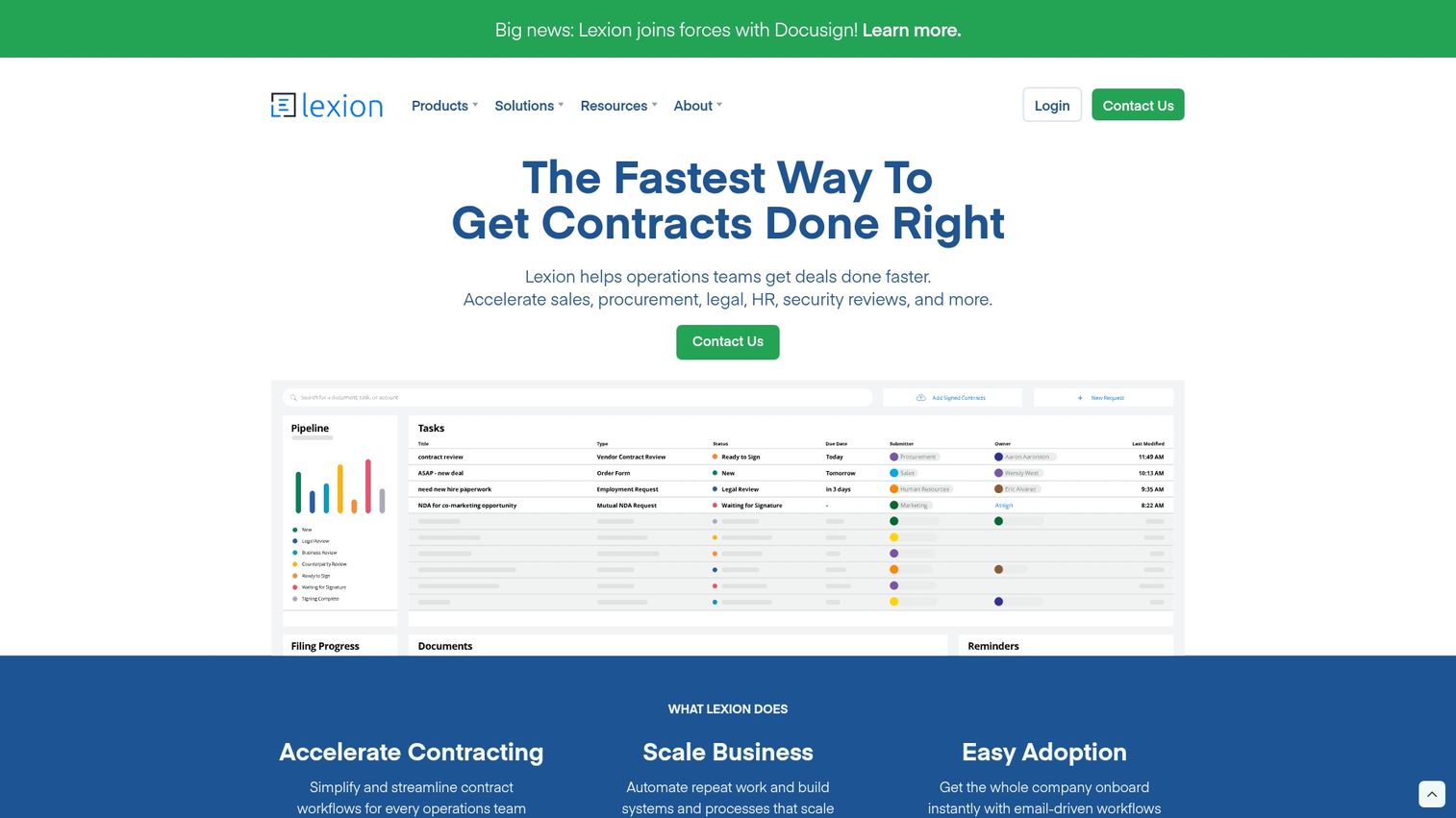
Lexion differentiates on simplicity and speed to value, positioning itself as the contract analytics platform that doesn't require a six-month implementation project.
Best for: Mid-market companies and growing legal teams that want analytics without enterprise complexity.
Key strengths
- Fast implementation: Designed for quick deployment with minimal configuration
- Intuitive interface: Clean, modern design that doesn't require extensive training
- AI extraction: Automated identification of key terms with continuous learning
Pricing: Custom pricing. Generally more accessible than enterprise platforms.
9. Malbek
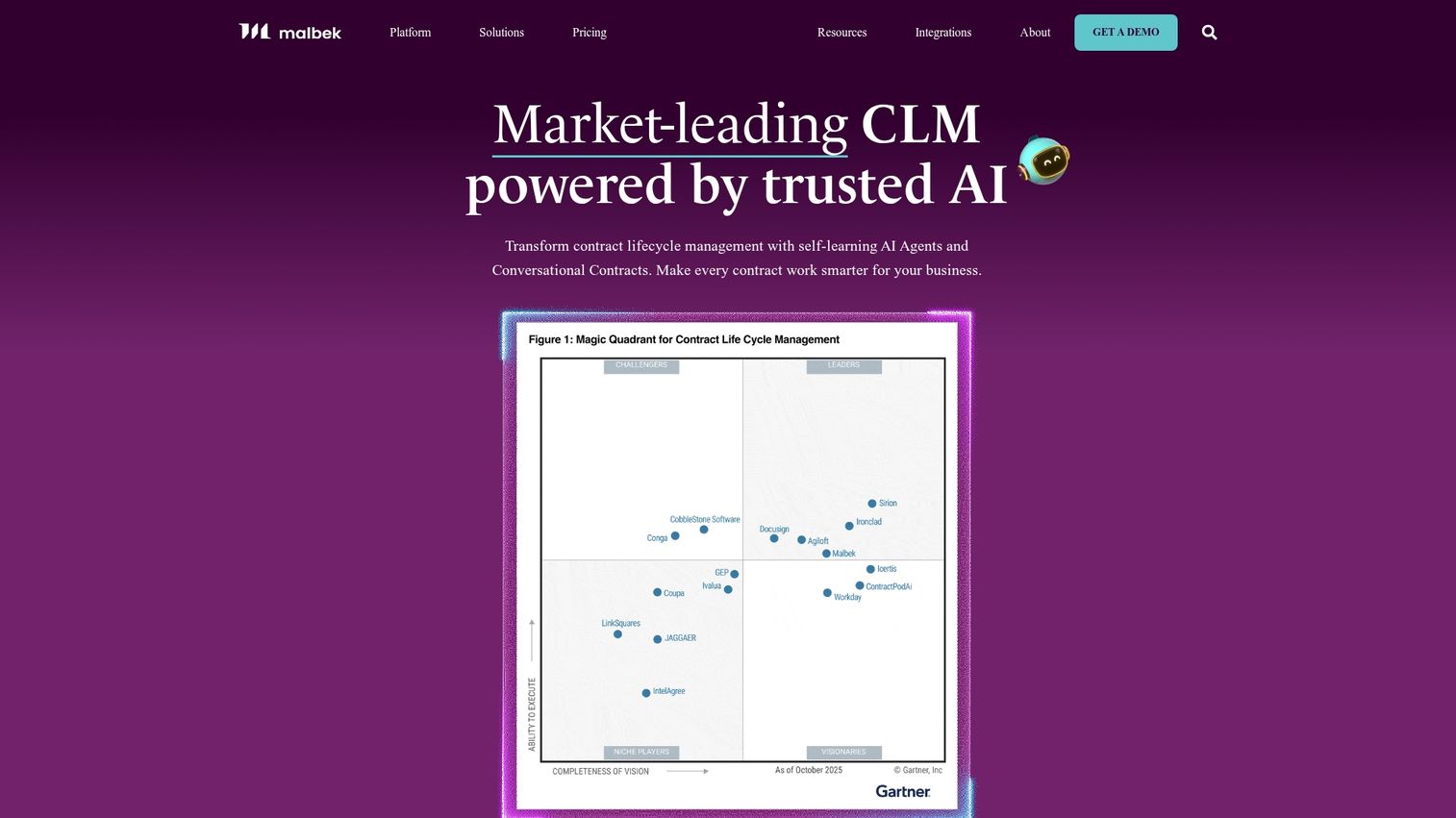
Malbek offers AI-powered contract lifecycle management with strong analytics capabilities, positioned for mid-market companies.
Best for: Mid-market companies that want comprehensive CLM with strong analytics at accessible price points.
Key strengths
- AI-powered extraction: Automated identification of key terms and obligations
- Configurable workflows: Adapt the platform to your processes without custom development
- Analytics dashboards: Visual reporting on contract portfolio performance
Pricing: Custom pricing. Positioned as more accessible than enterprise alternatives.
10. Agiloft
Agiloft is known for extreme configurability, offering a no-code platform that can be adapted to virtually any contract management workflow.
Best for: Organizations with unique processes that require highly customized contract management and analytics.
Key strengths
- No-code customization: Build custom workflows, fields, and reports without development resources
- AI extraction: Automated identification of contract data with trainable models
- Flexible deployment: Cloud, on-premise, or hybrid options
Pricing: Custom pricing based on deployment and usage.
11. Ironclad
Ironclad combines workflow automation with analytics, focusing on the full contract lifecycle from creation through analysis.
Best for: Legal and business teams that want unified contract creation and analytics in a modern platform.
Key strengths
- Workflow automation: Streamlined contract creation and approval processes
- Analytics dashboards: Visual reporting on contract performance and trends
- Collaboration tools: Designed for cross-functional contract work
Pricing: Custom pricing based on features and usage.
12. ContractPodAi
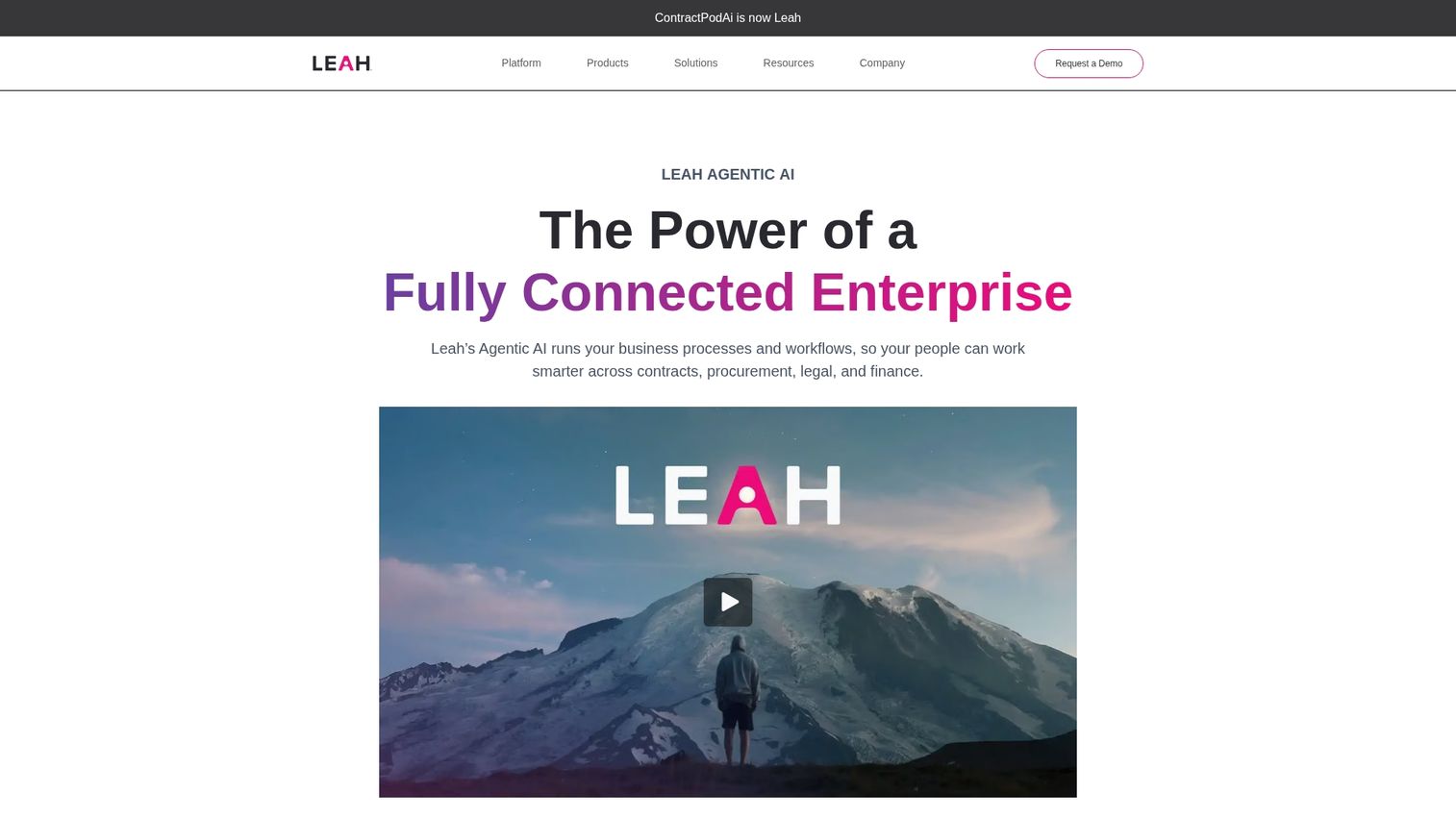
ContractPodAi combines AI-powered contract analytics with integration into the broader legal technology ecosystem.
Best for: Legal operations teams that want contract analytics integrated with their broader legal tech stack.
Key strengths
- Legal tech integration: Connects with matter management, e-billing, and other legal tools
- AI extraction: Automated identification of key contract data
- Obligation tracking: Monitors commitments and deadlines across the portfolio
Pricing: Custom enterprise pricing.
13. Juro
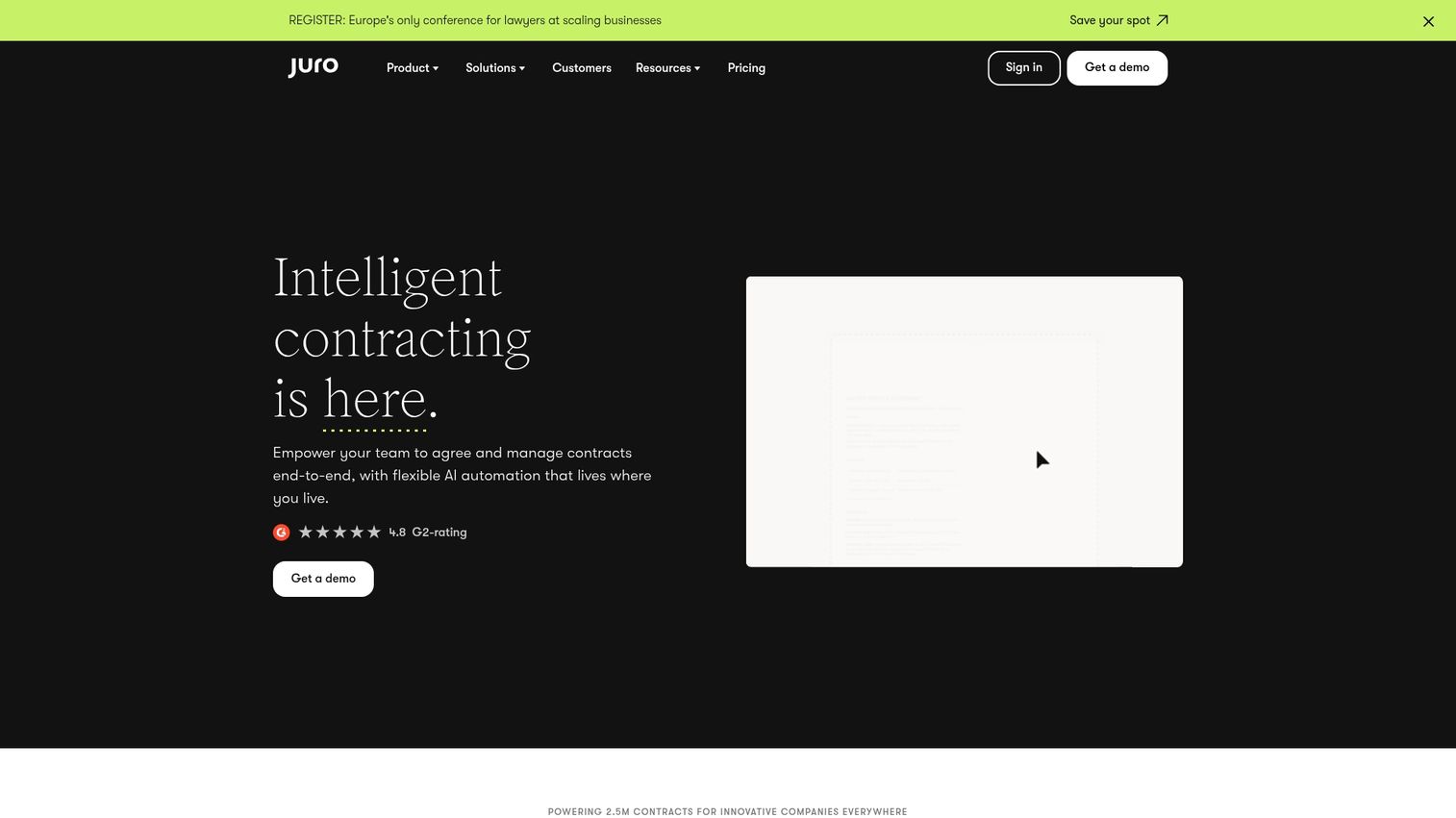
Juro takes a modern, browser-based approach to contract management with built-in analytics.
Best for: Growing companies that want modern contract management with analytics built in from the start.
Key strengths
- Browser-based editing: Create and negotiate contracts directly in the browser
- Built-in analytics: Contract data and insights without separate tools
- Collaboration focus: Designed for cross-functional contract work
Pricing: Custom pricing with options for different company sizes.
14. Precisely ContractExpress
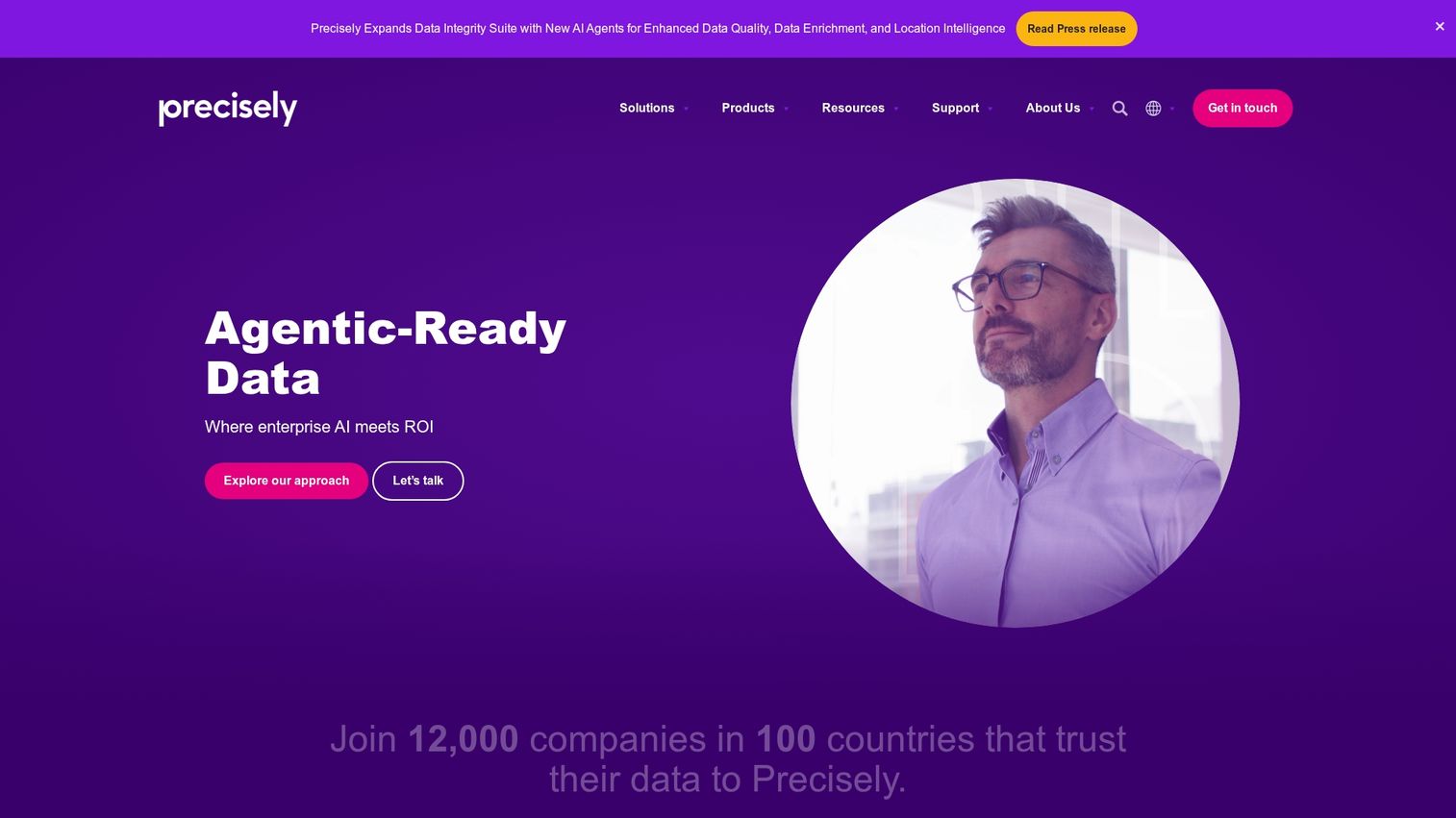
Precisely ContractExpress combines document automation with contract analytics, focusing on organizations that generate high volumes of contracts from templates.
Best for: Organizations with high-volume contract generation that want analytics on their templated agreements.
Key strengths
- Document automation: Sophisticated template and assembly capabilities
- Analytics integration: Track and analyze contracts created through the platform
- Clause libraries: Manage approved language and track usage
Pricing: Custom pricing based on usage and features.
15. SpotDraft
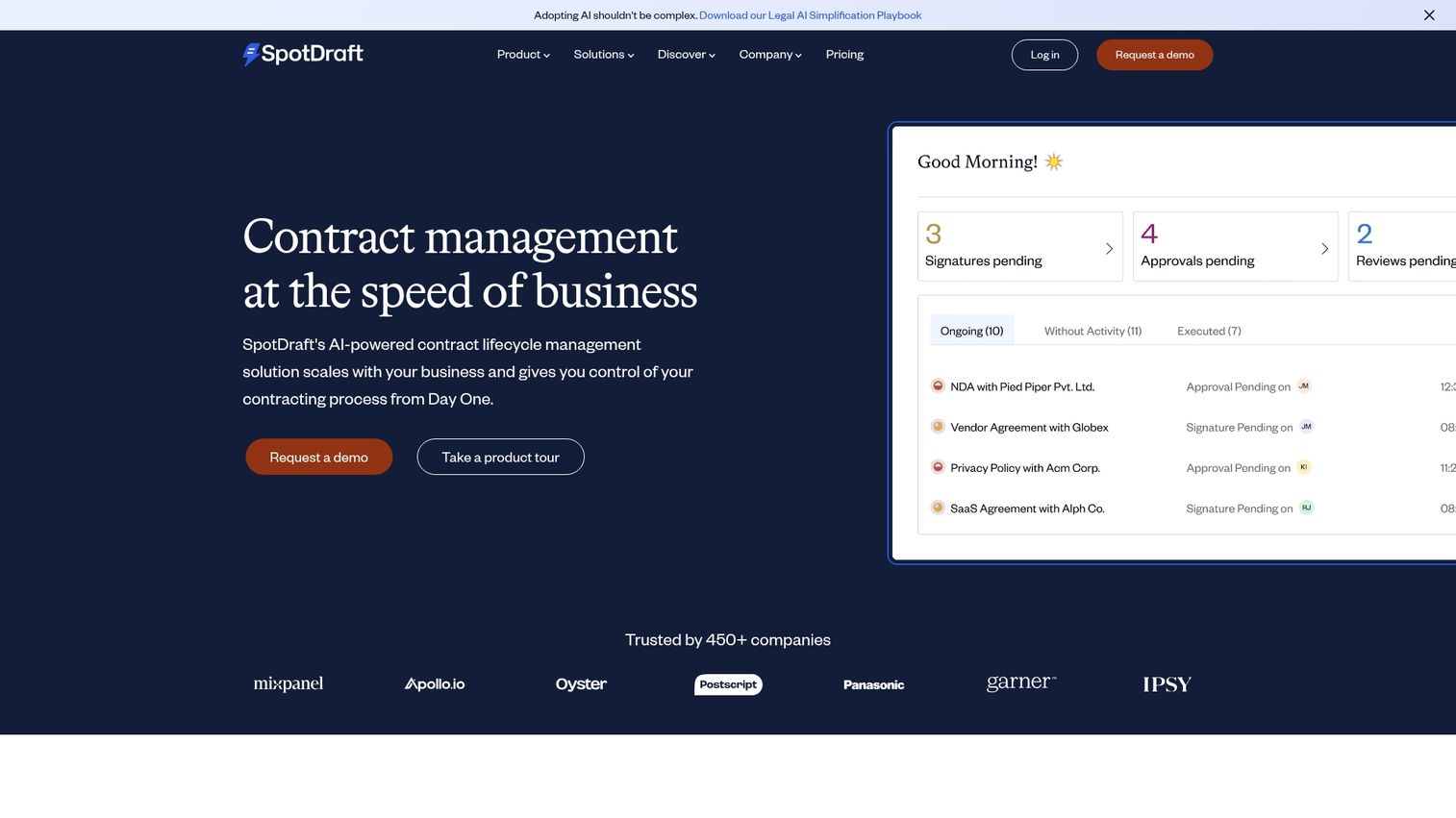
SpotDraft positions itself as a modern CLM platform for growing companies, with analytics capabilities that continue to expand.
Best for: Startups and growing companies that want contract management with analytics at accessible price points.
Key strengths
- Modern interface: Clean design built for non-legal users as well as legal teams
- AI extraction: Automated identification of key contract terms
- Fast implementation: Designed for quick deployment
Pricing: Custom pricing with options designed for different company stages.
Key features in advanced contract analytics
Understanding what capabilities matter helps you evaluate platforms more effectively.
AI powered data extraction
Modern contract analytics platforms use machine learning to identify and extract key data points without manual tagging. The best systems recognize parties, dates, payment terms, and specific clause types regardless of how the language is worded.
Risk identification and clause scoring
Beyond extraction, advanced platforms compare contract language against your standards and flag deviations. Risk identification might mean surfacing non-standard indemnification language, missing limitation of liability clauses, or terms that deviate from your approved playbook.
Obligation and deadline tracking
Contracts create commitments that extend well beyond signing. Analytics platforms track renewal dates, notice periods, and compliance deadlines, then alert the right people before obligations are missed.
Integration with CLM ERP and CRM systems
Contract analytics becomes more valuable when insights flow into the systems where decisions happen. Integration with Salesforce, SAP, Oracle, and other business systems means contract data can inform procurement decisions, sales forecasting, and financial planning.
How AI powers contract analysis software
Understanding the technology helps you evaluate vendor claims and set realistic expectations.
Machine learning for clause identification
ML models are trained on thousands of contracts to recognize clause types regardless of specific wording - in one benchmark, AI achieved 94% accuracy on NDA risk identification versus lawyers' 85% average. A well-trained model can identify an indemnification clause whether it's labeled "Indemnification," "Hold Harmless," or buried in a paragraph with no heading.
Natural language processing for contract review
NLP enables software to understand contract meaning, not just keywords. Natural language processing allows for contextual extraction and more sophisticated analysis of contract language.
Predictive analytics for risk assessment
Some platforms use historical data to predict which contracts are likely to have issues or require renegotiation. Predictive analytics is still maturing, but the best implementations can help prioritize review efforts.
How to choose contract analytics software
Assess your contract volume and complexity
Start by understanding your current situation. How many active contracts do you manage? What types of agreements dominate your portfolio? Simple vendor agreements require different capabilities than complex multi-party deals.
Evaluate integration requirements
Consider how contract analytics fits into your existing technology stack:
- Does the platform integrate with your current CLM or document storage?
- Can it push insights to your CRM or ERP?
- What data formats can it import from legacy systems?
Consider implementation timeline and resources
Enterprise platforms may require months of implementation and dedicated resources. Lighter solutions deploy faster but may offer less customization. Match tool complexity to your available IT resources and timeline requirements.
Request a demo with your actual contracts
The only way to truly evaluate accuracy and usability is to see the platform process your real contracts. Generic demos show best-case scenarios. Testing with your actual agreements reveals how well the AI handles your specific document types and language patterns.
Before committing to lengthy sales cycles, consider whether vendors offer interactive demos that let you explore the platform on your own terms. Self-serve evaluation often surfaces usability issues that scheduled demos miss.
Contract analytics software pricing
Most contract analytics vendors don't publish pricing, but understanding common models helps you budget and negotiate.
- Per-user licensing: Monthly or annual fee per seat, common for platforms emphasizing broad organizational access
- Volume-based: Pricing scales with contract count or pages processed, typical for analytics-focused tools
- Platform tiers: Basic analytics vs. advanced AI features at different price points
- Enterprise custom: Tailored pricing for large organizations with complex needs
Expect to request custom quotes from most vendors. Implementation costs often equal or exceed first-year licensing, so factor implementation into total cost of ownership calculations.
Next steps for evaluating contract analytics platforms
Choosing contract analytics software comes down to matching capabilities to your specific use case, contract volume, and integration requirements. The platforms in this guide represent different approaches, from enterprise CLM suites with embedded analytics to focused tools built around AI extraction.
Start by defining your primary use case. Are you trying to analyze a legacy contract portfolio? Support M&A due diligence? Track obligations across vendor agreements? The answer shapes which capabilities matter most.
Then test with real contracts. Vendor demos show ideal scenarios. Your actual agreements reveal whether the AI handles your specific document types and language patterns accurately.
Start your journey with Guideflow today!
FAQs about contract analytics software
Accuracy varies by vendor, contract type, and how well the AI has been trained on similar documents. Always test with your actual agreements before committing.
Many enterprise platforms support multiple languages, though accuracy often varies by language. English typically performs best. Confirm specific language support during vendor evaluation.
Most platforms support bulk import from document storage systems and use AI to extract data from uploaded PDFs or scanned documents. Migration complexity depends on document quality and volume.
Modern platforms emphasize intuitive interfaces that require minimal training for basic search and reporting. Configuring custom extraction rules typically requires vendor training or dedicated admin resources.
Leading platforms can link amendments to master agreements and track version history, though setup requirements vary. Clarify how the platform handles document families during evaluation.
Enterprise vendors typically maintain SOC 2 Type II certification at minimum, with many also holding ISO 27001. Data residency options vary by vendor.