Managing partners through spreadsheets and email threads works until it doesn't. One missed deal registration, two partners competing for the same account, and suddenly your channel program is creating problems instead of revenue.
Partner relationship management software exists to prevent exactly that. This guide breaks down what PRM platforms actually do, when they make sense for your business, and how the top 10 tools compare on features, integrations, and pricing.
What's inside
This guide covers the top 10 partner relationship management software platforms for B2B companies running channel programs. You'll find practical breakdowns of what PRM software does, when it makes sense to invest, and how each tool compares on features, integrations, and pricing.
We selected platforms based on feature depth for partner lifecycle management, CRM integration quality, portal usability, and real-world adoption by channel teams. G2 ratings and pricing transparency also factored into the evaluation.
TL;DR
Partner relationship management software automates how you recruit, onboard, enable, and track partners selling your product through indirect channels.
Impartner leads for enterprise-scale channel programs, while PartnerStack fits SMB SaaS teams managing affiliates and referrals.
Look for deep CRM integration first. Surface-level connectors create data silos that slow down deal attribution.
The right PRM platform reduces channel conflict, shortens partner time-to-first-deal, and gives you visibility into which partners actually drive revenue.
What is partner relationship management software
Partner relationship management software streamlines indirect sales channels by automating partner onboarding, training, lead distribution, deal registration, and performance tracking. PRM platforms provide a centralized portal where partners access resources, register opportunities, and monitor their pipeline.
For B2B companies selling through resellers, affiliates, distributors, or technology partners, PRM tools replace the spreadsheets and disconnected systems that cause deals to slip through the cracks.
The distinction from CRM matters here. CRM software manages your direct customer relationships. PRM software manages the external partners who sell on your behalf. Different users, different workflows, different feature sets.
Capability | CRM software | PRM software |
|---|---|---|
Primary focus | Direct customer relationships | Partner and channel relationships |
Users | Internal sales reps | External partners and channel managers |
Key features | Pipeline tracking, contact management | Partner portal, deal registration, MDF tracking |
Revenue model | Direct sales | Indirect and channel sales |
When to use PRM software
Scaling beyond manual partner management
If you're tracking partners in spreadsheets or juggling updates across email threads, you've probably already felt the pain. Lost deals because two partners competed for the same account. Partners asking for resources you can't locate. No visibility into what's actually in the partner pipeline.
Once your partner count exceeds what one person can reasonably track, a partner management platform becomes essential infrastructure rather than a nice-to-have.
Launching or restructuring a channel program
New channel programs benefit from having infrastructure in place before problems emerge. Channelnomics forecasts 5-7% global channel growth in 2026, making early investment in PRM infrastructure increasingly critical. A partner relationship management system provides onboarding workflows, training content delivery, and deal registration from day one. The same applies when you're restructuring an underperforming program.
Improving partner-sourced revenue attribution
Forrester reports 67% of B2B organizations expect significant indirect revenue growth. Without partnership tracking software, you can't measure which partners drive that revenue, which enablement content works, or where to invest market development funds. PRM tools close this visibility gap and give you the data to optimize channel investments.
PRM software comparison table
# | Product | Intent | Key differentiation | Pricing | G2 rating |
|---|---|---|---|---|---|
1 | Impartner | Enterprise channel management | AI-powered recommendations, multi-tier partner support | Contact sales | 4.5/5 |
2 | Salesforce PRM | Salesforce ecosystem users | Native CRM integration, Einstein AI insights | From $25/user/month | 4.3/5 |
3 | PartnerStack | SaaS affiliate and referral | Automated payouts, partner marketplace | Contact sales | 4.7/5 |
4 | Allbound | Partner portal adoption | Mobile-optimized, intuitive interface | Contact sales | 4.6/5 |
5 | Channeltivity | Mid-market flexibility | Customizable portals, transparent pricing | From $1,399/month | 4.5/5 |
6 | ZiftONE | Through-channel marketing | TCMA plus PRM in one platform | Contact sales | 4.4/5 |
7 | Mindmatrix | Sales enablement focus | PRM plus sales playbooks combined | Contact sales | 4.5/5 |
8 | ZINFI | Modular enterprise | Buy only the modules you need | Contact sales | 4.5/5 |
9 | Magentrix | Salesforce-native portals | Deep Salesforce integration, community focus | Contact sales | 4.4/5 |
10 | Kiflo | SMB and startup programs | Free tier available, quick setup | Free + from $249/month | 4.6/5 |
10 best PRM tools for managing partner programs
1. Impartner
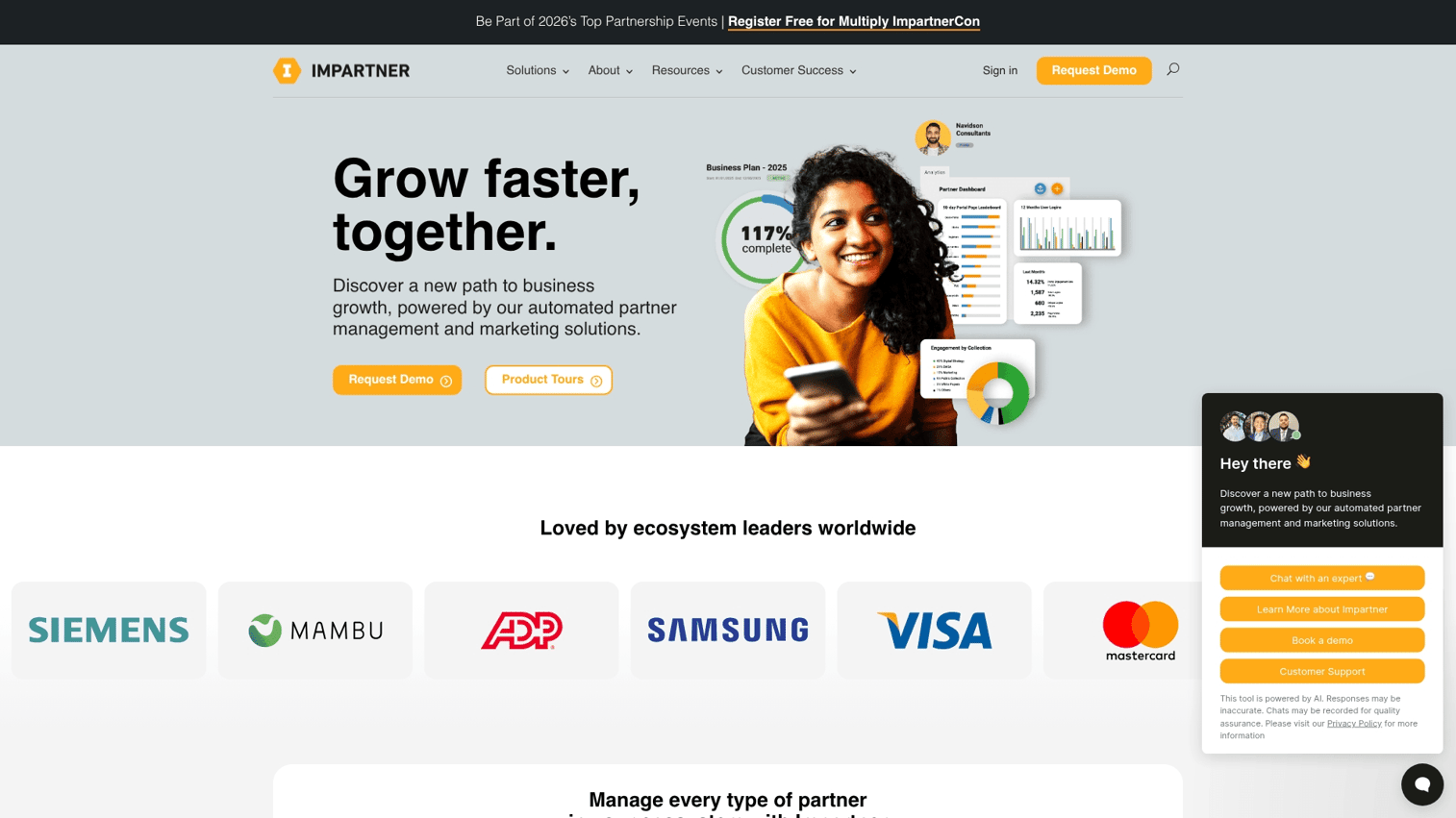
Impartner is the enterprise-grade partner management platform that large organizations with complex, multi-tier partner ecosystems typically choose. The platform handles everything from partner recruitment through performance optimization, with AI-powered recommendations that help channel managers prioritize actions.
Best for:
Large enterprises managing hundreds or thousands of partners across multiple tiers and regions.
Key strengths
Partner portal builder with extensive customization options for branding and workflows
Deal registration workflows that prevent channel conflict and track opportunity progression
Through-channel marketing automation for co-branded campaigns and content syndication
Partner training and LMS with certification tracking and learning paths
Analytics dashboard with AI-driven insights on partner performance
Why pick Impartner? The platform supports both transactional partners (resellers, distributors) and non-transactional partners (technology partners, consultants) in a single system.
Pricing: Contact sales for custom pricing based on partner count and modules.
2. Salesforce PRM
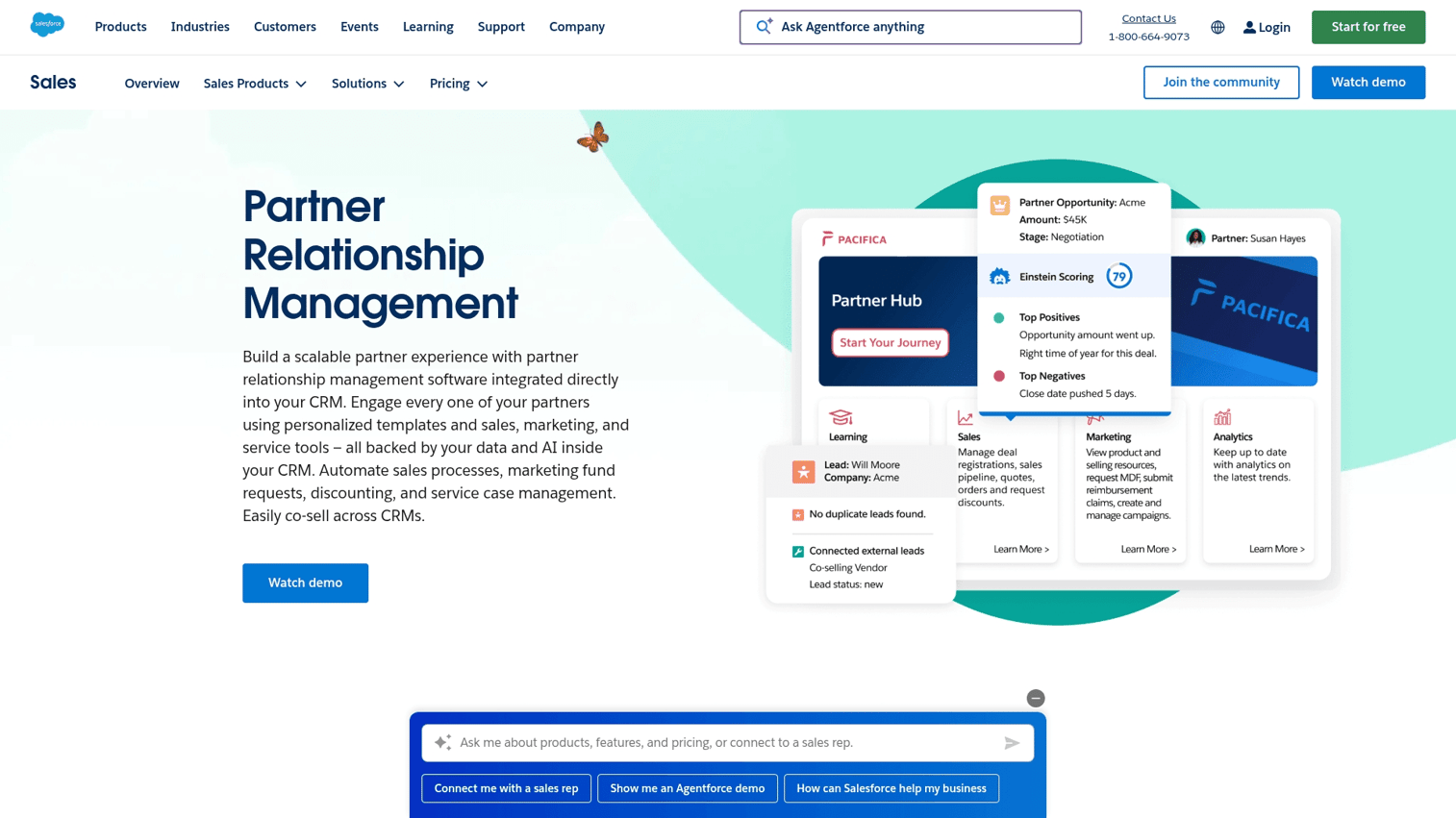
Salesforce PRM is the native choice for companies already invested in the Salesforce ecosystem. Because it's built on the same platform as Sales Cloud, partner data flows directly into your CRM without integration complexity.
Key strengths
Native CRM integration eliminates data silos between partner deals and your sales pipeline
Einstein AI provides performance predictions and next-best-action recommendations
Partner community portals built on Experience Cloud with drag-and-drop customization
Automated lead routing distributes opportunities based on territory, certification, or capacity
Why pick Salesforce PRM? If your sales team already lives in Salesforce, adding PRM to the same platform reduces training time and keeps all revenue data in one place.
Pricing: Starts at $25 per user per month for basic partner portal access.
3. PartnerStack
PartnerStack focuses specifically on B2B SaaS companies managing affiliate, referral, and reseller partnerships. The platform handles the operational complexity of diverse partner types, including automated commission calculations and payouts.
Best for:
SMB to mid-market SaaS companies with affiliate, referral, and reseller programs.
Key strengths
Automated commission payouts handle complex compensation structures across partner types
Partner marketplace helps you recruit new partners from PartnerStack's network
Referral and affiliate tracking with attribution across the customer journey
Self-service onboarding gets partners productive without manual intervention
Why pick PartnerStack? The platform excels at managing the financial side of partnerships. If you're spending hours calculating commissions or chasing down payout approvals, PartnerStack automates that work.
Pricing: Contact sales for pricing based on partner volume and program complexity.
4. Allbound
Allbound prioritizes partner portal adoption and ease of use. The platform's mobile-optimized interface means partners actually log in and use the resources you provide, which is often the biggest challenge with PRM implementations.
Key strengths
Mobile-optimized partner portal works well on any device
Content library management organizes co-selling assets by partner type and deal stage
Learning management delivers training with progress tracking and certifications
Deal registration with approval workflows and conflict detection
Why pick Allbound? Many PRM implementations fail because partners don't use the portal. Allbound's focus on usability and mobile access addresses that adoption problem directly.
Pricing: Contact sales for custom pricing.
5. Channeltivity
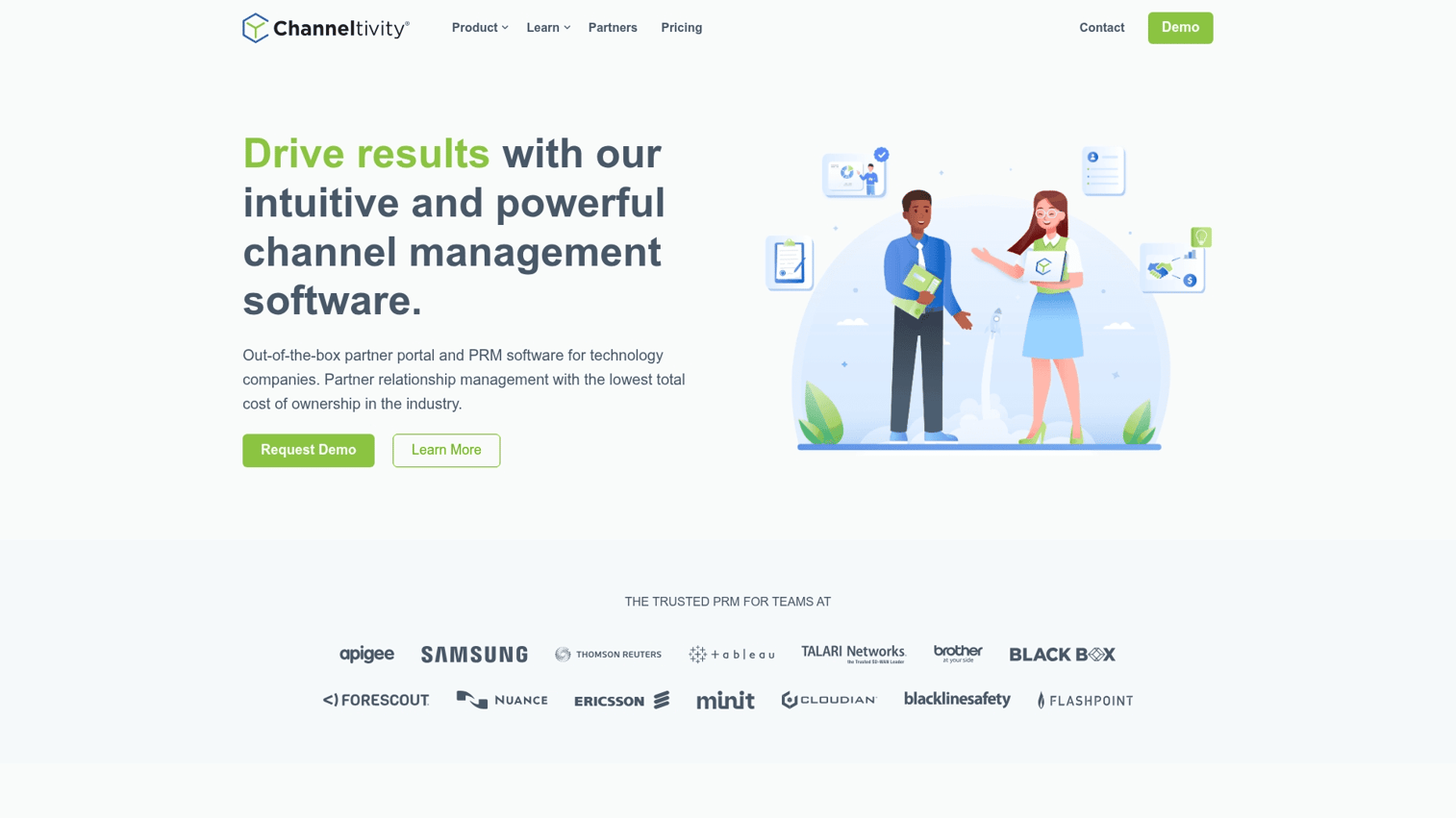
Channeltivity serves mid-market companies that want flexible partner portal software without enterprise complexity. The platform offers strong customization options and transparent pricing.
Key strengths
Customizable partner portals adapt to your branding and workflow requirements
MDF request workflows manage market development fund requests and approvals
Deal registration with configurable approval rules and expiration policies
CRM integrations with both HubSpot and Salesforce
Why pick Channeltivity? The transparent pricing model lets you budget accurately before committing.
Pricing: Starts at $1,399 per month for the standard package.
6. ZiftONE
ZiftONE combines PRM with through-channel marketing automation (TCMA) in a single platform. If your channel strategy depends heavily on co-marketing campaigns and content syndication, having both capabilities integrated saves significant coordination effort.
Best for: Companies needing through-channel marketing automation alongside partner management.
Key strengths
Through-channel marketing automation runs co-branded campaigns at scale
Content syndication distributes marketing assets to partners automatically
Demand generation tools help partners create local campaigns
Campaign analytics track performance across partner-executed marketing
Why pick ZiftONE? Most PRM platforms treat marketing as an afterthought. ZiftONE builds marketing automation into the core platform.
Pricing: Contact sales for custom pricing.
7. Mindmatrix
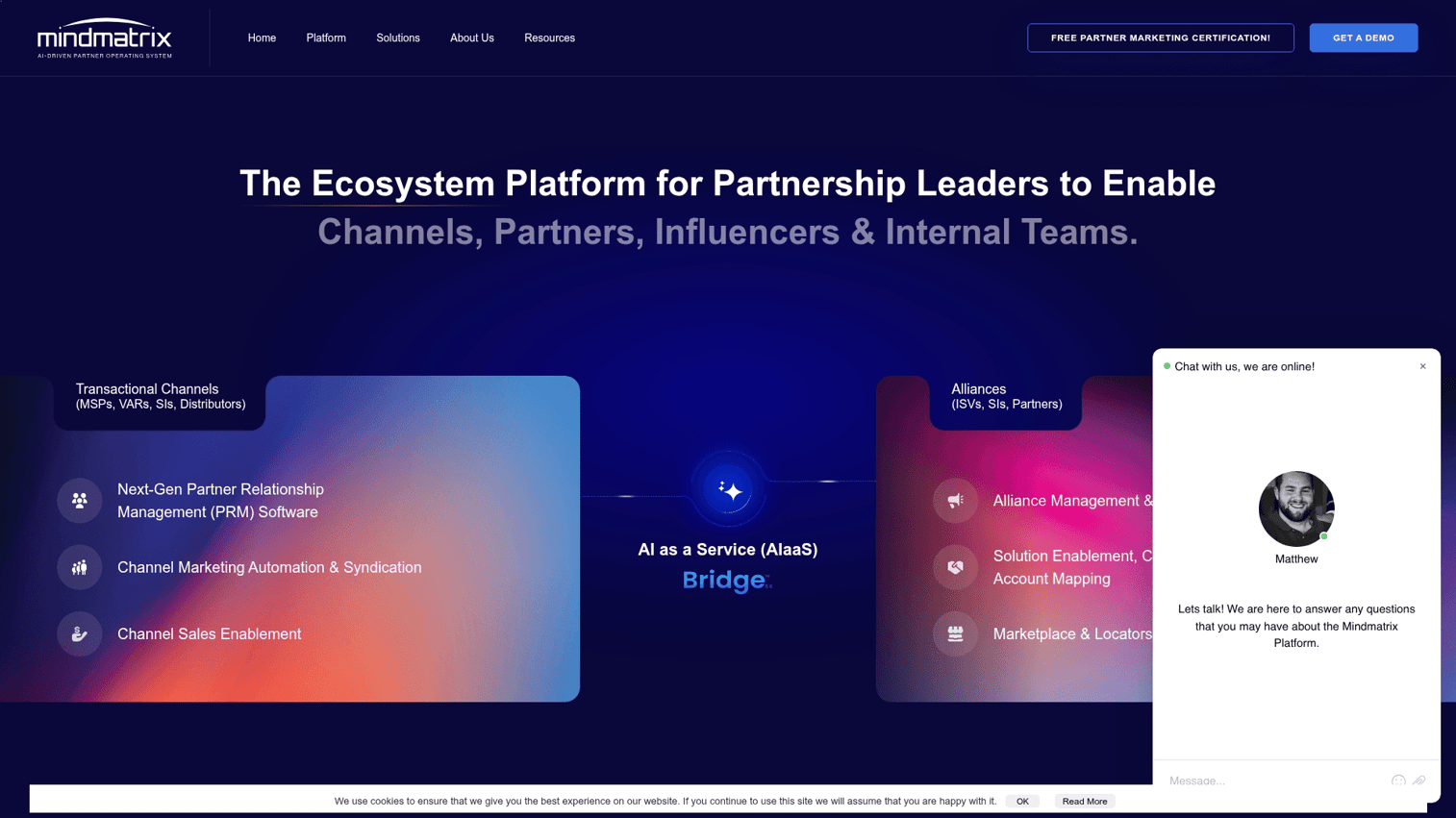
Mindmatrix blurs the line between PRM and channel sales enablement. The platform combines partner management with sales playbooks, content creation tools, and guided selling workflows.
Best for:
Organizations wanting PRM plus sales enablement in one system.
Key strengths
Sales enablement content with playbooks and guided selling paths
Co-branded asset creation lets partners customize marketing materials
Partner portal with resource libraries and training
Deal registration with pipeline visibility
Why pick Mindmatrix? If your partners struggle to articulate your value proposition or handle objections, the sales enablement features help them sell more effectively.
Pricing: Contact sales for custom pricing.
8. ZINFI
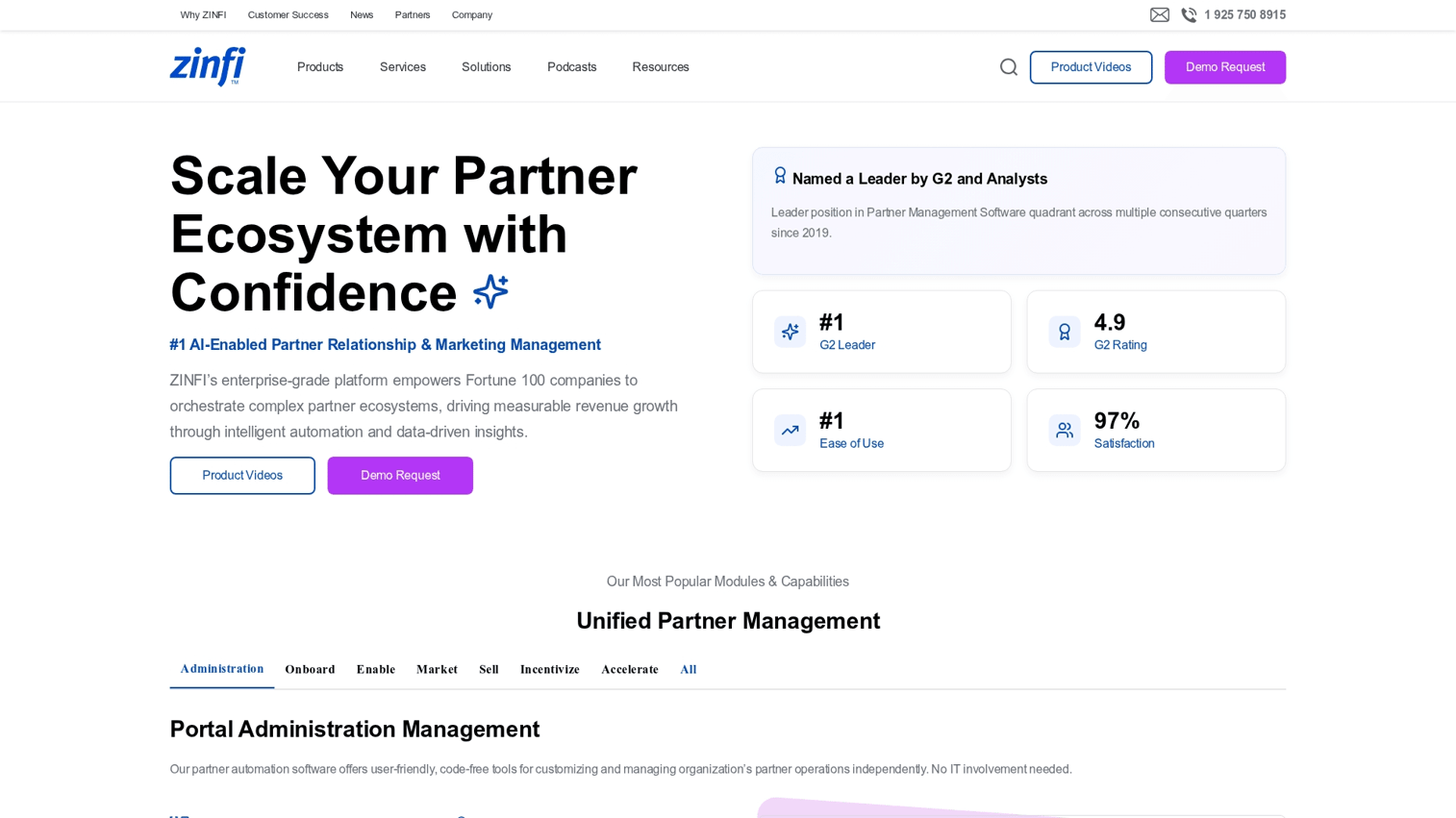
ZINFI takes a modular approach to unified partner management. Instead of buying a monolithic platform, you select the specific modules your program requires.
Key strengths
Modular platform design lets you buy only what you need
Partner marketing management for co-branded campaigns and MDF
Partner sales automation with deal registration and pipeline tracking
Granular reporting across all partner activities
Why pick ZINFI? The modular approach means you're not paying for features you won't use. As your program matures, you can add modules without switching platforms.
Pricing: Contact sales for module-based pricing.
9. Magentrix
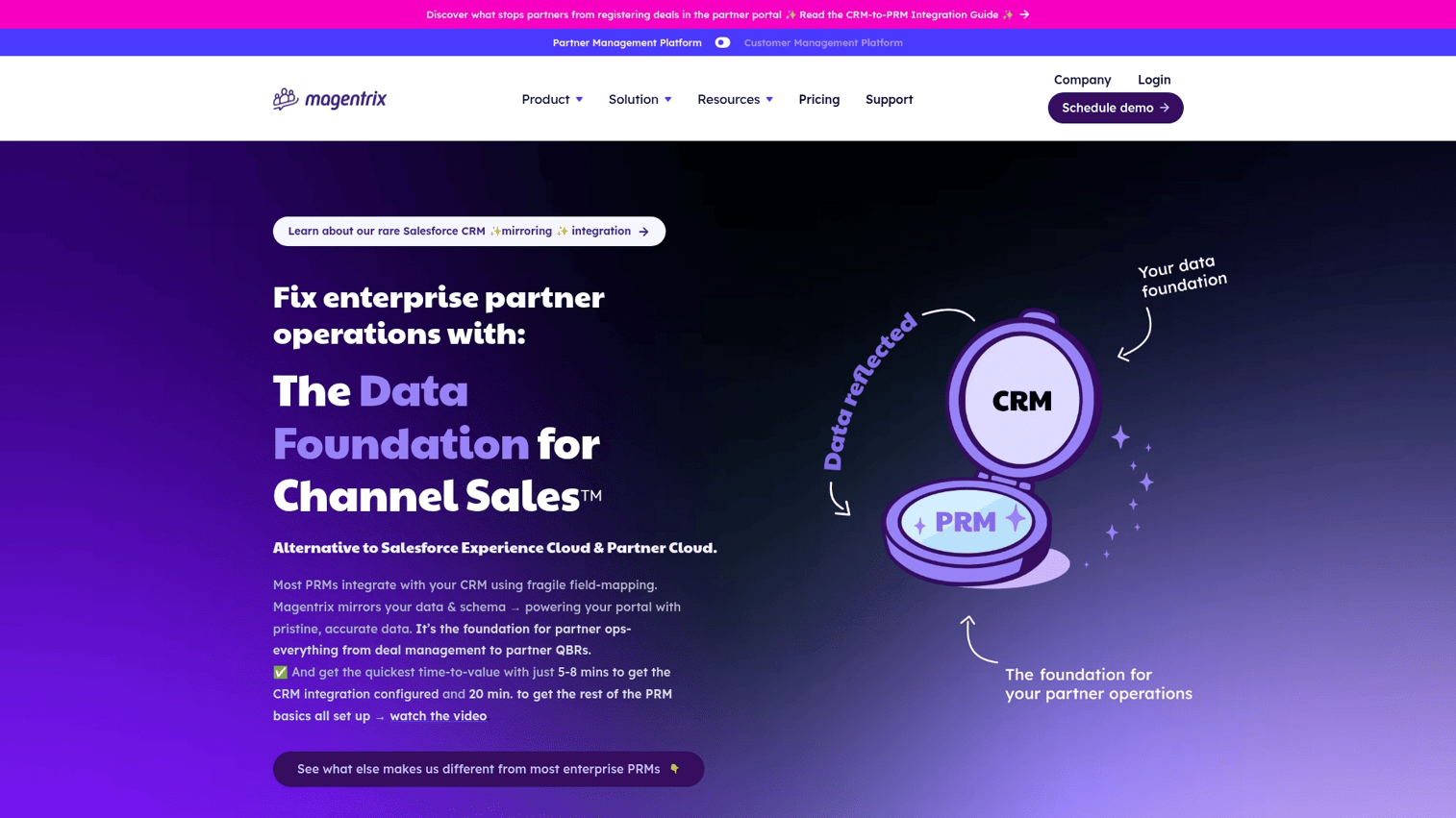
Magentrix focuses heavily on the partner portal experience, with deep Salesforce integration as a core strength. The platform builds community features into the portal, encouraging partners to engage with each other.
Best for:
Salesforce users who prioritize partner community and self-service experiences.
Key strengths
Salesforce-native integration keeps partner data synchronized automatically
Partner community portal with discussion forums and collaboration features
Case management for partner support requests
Knowledge base with searchable documentation
Why pick Magentrix? The community features differentiate Magentrix from portals that feel like static resource libraries.
Pricing: Contact sales for custom pricing.
10. Kiflo

Kiflo targets startups and SMBs launching their first partner programs. The platform offers a free tier that lets you start without budget approval, then scales as your program grows.
Key strengths
Free plan available for getting started without budget
Simple setup gets you running in days rather than months
Partner onboarding with automated welcome sequences
Basic performance tracking for partner activity and revenue
Why pick Kiflo? The low barrier to entry makes Kiflo ideal for testing whether a partner program works for your business before committing significant budget.
Pricing: Free tier available. Paid plans start at $249 per month.
Key features in partner management platforms
Partner portal and self-service access
A partner portal is a branded, secure hub where partners log in to access resources, register deals, and track their performance. Strong partner portal software reduces support burden because partners find what they need without emailing your channel team.
Deal registration and lead distribution
Deal registration is the process where partners claim opportunities to prevent channel conflict. Without it, two partners might compete for the same account, damaging relationships and channel performance and wasting effort. Lead distribution automates routing of vendor-generated leads to appropriate partners based on territory, certification, or capacity.
Partner onboarding and enablement
PRM platforms streamline bringing new partners up to speed with certification programs, training content delivery, and progress tracking. Onboarding speed directly impacts time-to-first-deal for new partners.
For complex products, interactive demos can accelerate partner training by letting them experience the product hands-on without requiring live support from your team.
Co-marketing and MDF tracking
Market development funds (MDF) are budget you allocate to partners for co-marketing activities. PRM tools track MDF requests, approvals, proof of performance, and reimbursement. Co-branded content creation tools let partners customize marketing materials while maintaining your brand standards.
Performance analytics and reporting
PRM platforms track partner-sourced pipeline, deal registration conversion rates, partner engagement scores, and training completion. The best platforms connect metrics to actual revenue, not just activity.
CRM and marketing stack integrations
Integration depth matters more than integration count. Partners in your PRM need to sync with opportunities in your CRM. Shallow integrations create data silos that make attribution impossible. Prioritize native integrations with your primary CRM (Salesforce, HubSpot, or Microsoft Dynamics).
How to choose the right PRM platform
Match capabilities to your partner types
Different partner types require different features:
Resellers and VARs: Deal registration, quoting tools, and sales enablement content
Affiliates and referral partners: Tracking links, commission automation, and payout management
Technology and integration partners: Co-marketing tools and joint solution documentation
Distributors: Inventory visibility and tiered portal access
Prioritize integration depth with your CRM
Evaluate how deeply the PRM connects with your existing CRM. Surface-level integrations that sync basic contact data create more problems than they solve. Native integrations reduce friction but limit flexibility.
Calculate total cost of ownership
List price rarely equals total cost. Include implementation, customization, training, and per-partner fees in your calculations. Some platforms charge per partner user, which scales costs as your program grows.
How we evaluated these partner management tools
Feature completeness: Portal, deal registration, onboarding, analytics, and integrations
Integration ecosystem: Depth and breadth of CRM and marketing tool connections
Ease of use: Partner adoption rates depend on portal usability
Pricing transparency: Preference for vendors who publish pricing
Market validation: G2 ratings and customer reviews
Build a partner program that actually sells
PRM software provides the infrastructure, but partner success also depends on enablement quality. Partners need to understand your product well enough to sell it effectively.
This is where many channel programs fall short. You invest in portal software and deal registration, but partners still struggle to communicate your value proposition to their customers. Interactive product demos help partners show rather than tell. Instead of relying on static PDFs or scheduling live calls with your team, partners can share clickable product experiences that prospects explore on their own.
Start your journey with Guideflow today!
Frequently asked questions
PRM software manages relationships with external partners who sell your product indirectly, while CRM software manages relationships with your direct customers. PRM includes partner-specific features like deal registration, partner portals, and MDF tracking that CRM platforms lack.
Partner portal software is one component of a PRM system, specifically the self-service hub where partners access resources and register deals. A full PRM platform includes the portal plus onboarding workflows, analytics, integrations, and channel management tools.
Implementation timelines range from a few weeks for simple setups to several months for enterprise deployments with custom integrations and data migration.
Most modern PRM platforms support multiple partner types including resellers, affiliates, referral partners, and technology partners. Look for platforms with flexible partner segmentation and tier management.
Prioritize integration with your primary CRM (Salesforce, HubSpot, or Microsoft Dynamics) since this connection determines data flow between partner deals and your sales pipeline.
Common ROI metrics include partner-sourced revenue growth, time-to-first-deal for new partners, deal registration conversion rates, and reduction in channel conflict incidents.