Your customers already talk about your product. The question is whether you're capturing that energy or letting it dissipate into random LinkedIn comments and one-off referrals that never get tracked.
Brand advocacy software turns scattered word-of-mouth into a structured program with measurable ROI. This guide breaks down the four types of advocacy platforms, compares 9 leading tools, and gives you a framework for matching the right software to your specific advocacy goals.
What's inside
This guide covers the best brand advocacy software for 2026, including platforms for employee advocacy, customer advocacy, and grassroots mobilization. You'll find a comparison table, detailed reviews of 9 platforms, and a framework for choosing the right tool based on your advocacy goals. Whether you want employees sharing content on LinkedIn or customers generating referrals, this breakdown helps you match platform type to your specific use case.
TL;DR
- Brand advocacy software turns customers, employees, and community members into active promoters through structured programs
- Four main types exist: employee advocacy platforms, customer advocacy tools, community-based solutions, and grassroots mobilization software
- Key differentiator to look for: strong analytics, CRM integrations, and frictionless content distribution
- Selection tip: match platform type to your primary goal (employee amplification vs. customer referrals vs. member mobilization)
What is brand advocacy software
Brand advocacy software helps companies mobilize customers, employees, or community members to promote the brand through word-of-mouth, social sharing, reviews, and referrals. These platforms provide the infrastructure to recruit advocates, distribute content, track participation, and measure program ROI.
Organic reach from trusted voices consistently outperforms paid advertising for both trust and conversion. The category breaks down into four distinct types, each designed for different advocacy goals and audiences.
Employee advocacy platforms
Employee advocacy platforms enable your workforce to share approved company content on personal social channels. These tools curate content libraries, suggest posts, and track which employees drive the most engagement.
Common use cases include employer branding, social selling for sales teams, and thought leadership amplification. Employee networks are typically 10 x larger than company followings, and content shared by employees tends to generate higher engagement than content shared through brand channels.
Customer advocacy platforms
Customer advocacy platforms focus on turning satisfied customers into references, reviewers, and referral sources. These tools typically include program gamification, reward structures, and workflows for collecting testimonials and case studies.
The best customer advocacy platforms make it easy to identify your happiest customers, invite them into structured programs, and track which advocates generate the most pipeline. Many include community features where advocates connect with each other.
Community-based advocacy tools
Community-based advocacy tools build branded spaces where advocates engage, share feedback, and support each other over time. Unlike one-time referral programs, community platforms create ongoing engagement through forums, events, and exclusive content.
The distinction matters: community tools generate sustained advocacy rather than transactional referrals. They work well for brands with passionate user bases who want to connect with peers.
Grassroots advocacy tools
Grassroots mobilization software organizes supporters to take specific actions like signing petitions, contacting legislators, or submitting public comments. These tools are common for nonprofits, associations, and public affairs teams.
Association member advocacy software falls into this category, helping organizations mobilize members around policy issues or industry causes. The focus is action-oriented rather than social sharing.
When to use a brand advocacy platform
Not every company needs dedicated advocacy software. Here are the specific triggers that signal it's time to invest.
Scaling word-of-mouth without increasing ad spend
If paid acquisition costs keep rising - up 60% over the past five years - and you want organic growth channels, advocacy platforms multiply reach through existing relationships. One employee or customer sharing content reaches their network at zero media cost.
Advocacy programs typically deliver lower cost-per-lead than paid channels because they leverage trust that already exists.
Generating social proof from customer and employee voices
When you want testimonials, reviews, and user-generated content systematically rather than ad hoc, advocacy software provides the workflow. The most effective programs combine testimonials with interactive demos to amplify credibility. Instead of chasing customers one by one for quotes, you create a program that surfaces willing advocates and makes participation easy.
Launching referral and ambassador programs
If you want structured programs with tracking, rewards, and attribution for customer referrals, purpose-built software handles the complexity. Spreadsheets break down quickly when you're managing hundreds of advocates - especially since the top 20% of advocates typically drive the majority of referrals (Pareto principle) - and you want to know which ones actually drive revenue.
Supporting association member advocacy
Associations and nonprofits using member advocacy to influence policy or raise awareness benefit from tools designed for that workflow. These platforms handle action alerts, legislator lookup, and campaign tracking in ways general marketing tools don't.
Best brand advocacy software comparison
Synthesized brand guidelines and corrected comparative data
| No. | Product | Best for | Key differentiator | Pricing | G2 rating |
|---|---|---|---|---|---|
| 1 | Influitive | Enterprise customer advocacy | Gamified challenge system | Custom pricing | 4.4/5 |
| 2 | GaggleAMP | Employee social amplification | Manager-curated content | From $300/mo | 4.4/5 |
| 3 | EveryoneSocial | Mobile-first employee advocacy | Content discovery | Free plan plus paid tiers | 4.5/5 |
| 4 | Ambassify | Combined employee and customer advocacy | Campaign templates | Custom pricing | 4.5/5 |
| 5 | PostBeyond by Influitive | Regulated industry compliance | Approval workflows | Custom pricing | 4.6/5 |
| 6 | Yotpo | Ecommerce reviews and UGC | Visual content galleries | Free plan plus paid tiers | 4.3/5 |
| 7 | Haiilo | Internal comms plus advocacy | Employee app | Custom pricing | 4.6/5 |
| 8 | Birdeye | Local business reputation | Multi-location dashboards | From $299/mo per location | 4.7/5 |
| 9 | Annex Cloud | Enterprise loyalty programs | Modular program design | Custom pricing | 4.2/5 (Capterra)* |
1. Influitive
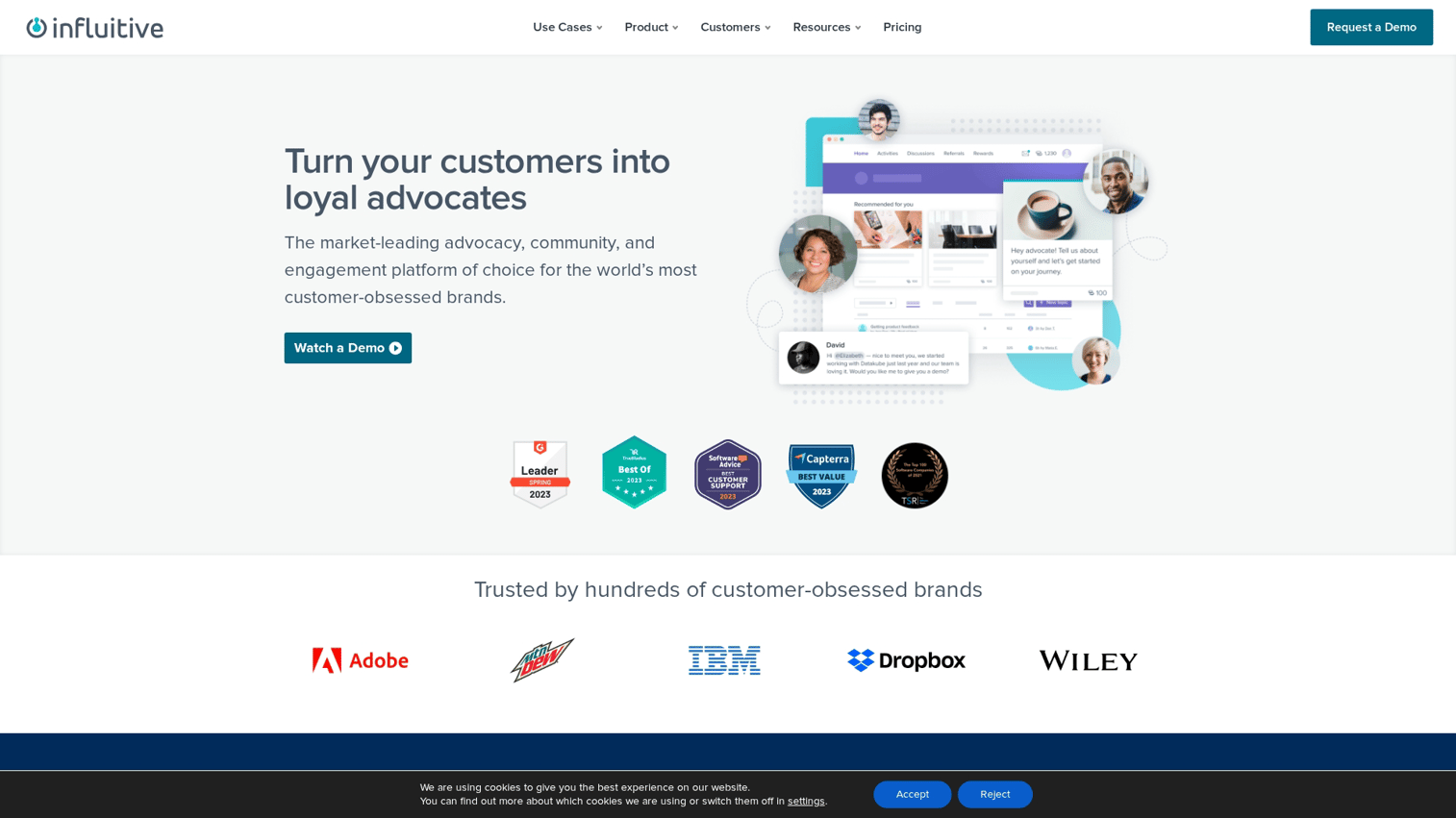
Influitive is the enterprise standard for customer advocacy, built around their AdvocateHub product. The platform uses gamified challenges to keep advocates engaged over time, rewarding them for activities like writing reviews, providing references, and participating in case studies.
The challenge-based system works well for companies with large customer bases who want to maintain ongoing advocate engagement rather than one-off asks. Advocates earn points and unlock rewards, creating a game-like experience that drives consistent participation.
Key strengths
- Gamification engine: Points, badges, and leaderboards keep advocates coming back
- Reference management: Track and fulfill reference requests without burning out your best customers
- Integration depth: Native connections to Salesforce, Marketo, and major CRM/MAP platforms
- Enterprise scale: Built for programs with thousands of advocates
Best for: Enterprise B2B companies running large-scale customer advocacy programs with dedicated program managers.
Influitive pricing: Custom pricing based on program size and features.
2. GaggleAMP
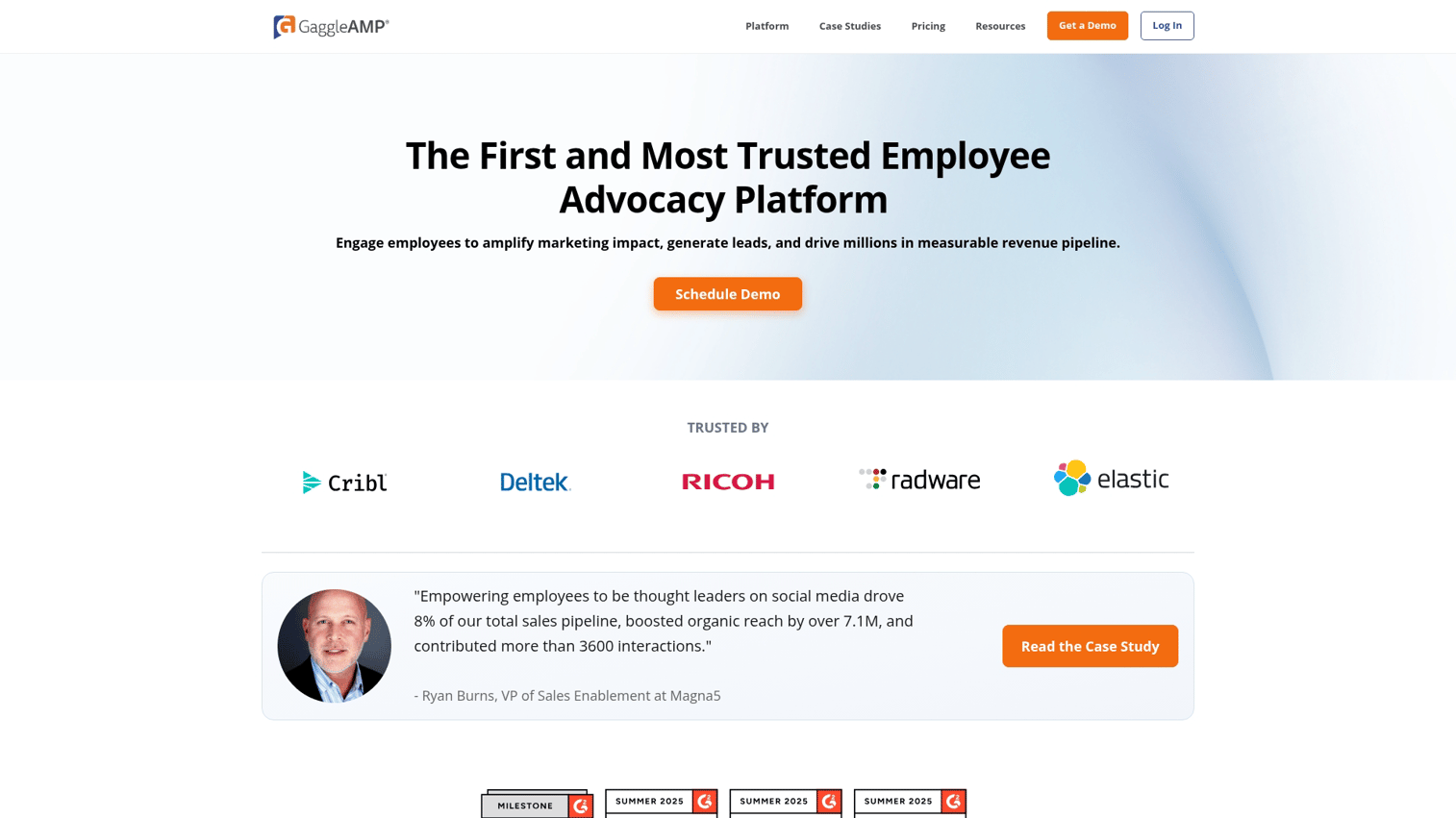
GaggleAMP focuses on employee advocacy with a manager-curated approach. Marketing or comms teams select content and push it to employee "Gaggles," where team members share to their personal networks with one click.
The curation model solves a common problem: employees want to share but don't know what's appropriate or don't have time to find content. GaggleAMP removes that friction by serving up pre-approved posts ready to share.
Key strengths
- Content curation workflow: Managers queue up posts, employees share with minimal effort
- Gamification and leaderboards: Track top sharers and create friendly competition
- Social selling support: Sales teams share thought leadership to warm up prospects
- Attribution tracking: See which employee shares drive traffic and engagement
Best for: B2B marketing teams who want to amplify content reach through employee networks with minimal employee effort.
GaggleAMP pricing: Plans start at $300/month. Pricing scales by number of members and features.
3. EveryoneSocial
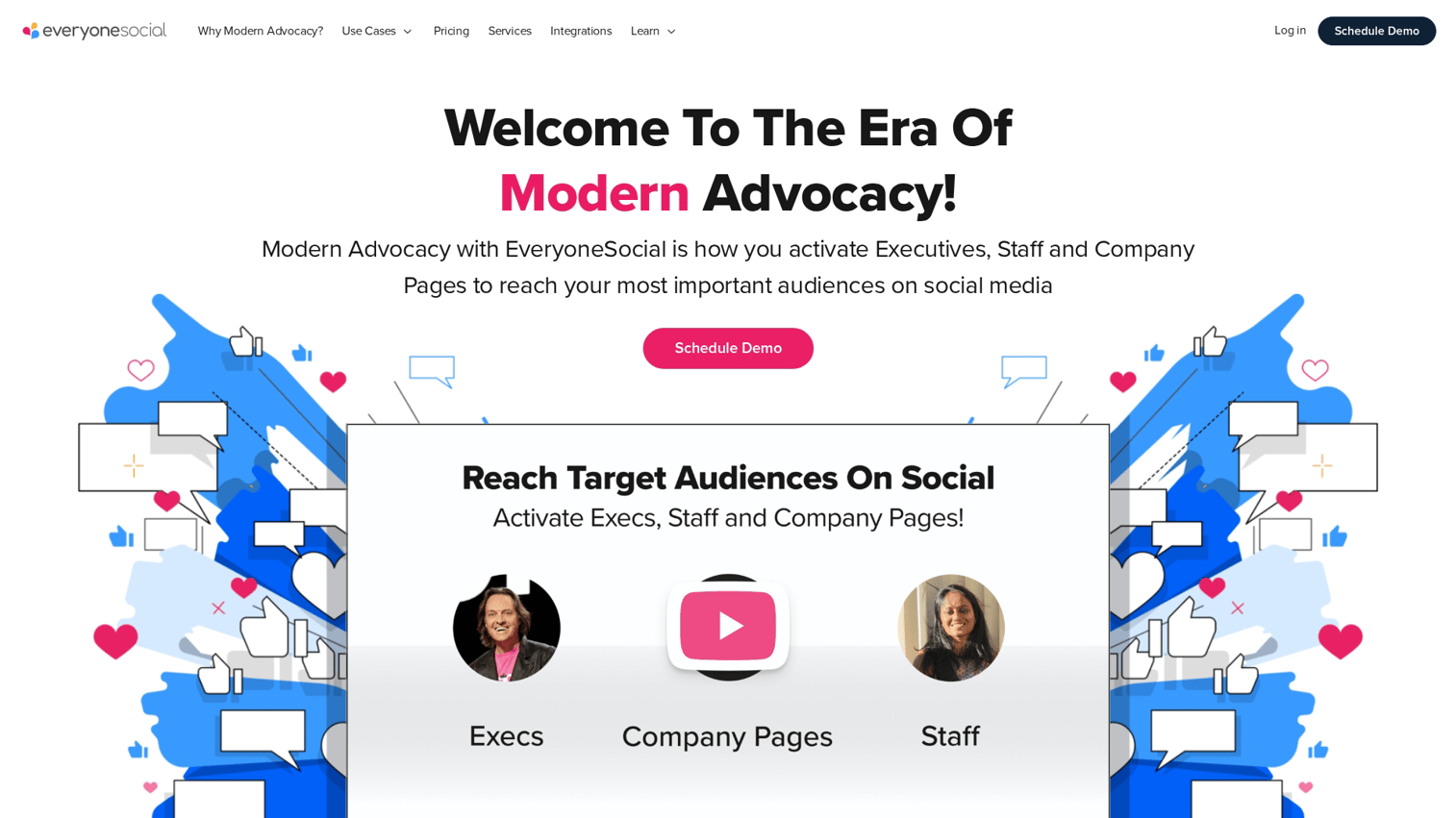
EveryoneSocial emphasizes making employee advocacy feel natural rather than forced. The platform focuses on content discovery and a mobile-first experience, so employees find and share relevant content from their phones.
The philosophy: if sharing feels like work, employees won't do it. EveryoneSocial tries to make advocacy as easy as scrolling through a social feed.
Key strengths
- Mobile app experience: Designed for sharing on the go, not just desktop
- Content recommendations: AI suggests relevant content based on employee interests
- Employee engagement metrics: Track not just shares but actual employee participation rates
Best for: Companies prioritizing employee adoption and engagement over pure content volume.
EveryoneSocial pricing: Free Starter plan available. Teams and Enterprise tiers priced by company size.
4. Ambassify
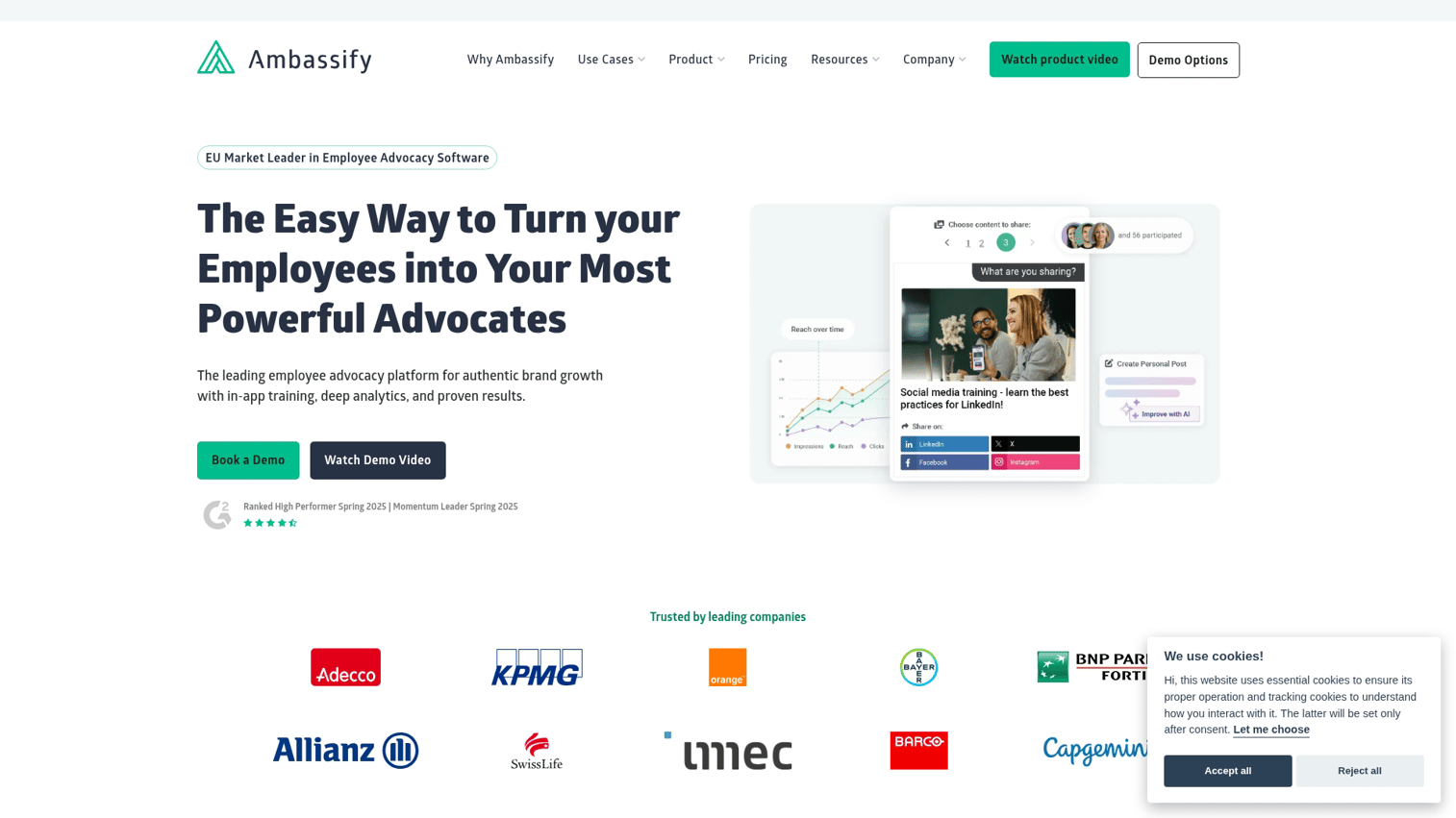
Ambassify handles both employee and customer advocacy in one platform, using a campaign-based approach. You create advocacy campaigns with specific goals, invite participants, and track results across both audience types.
The combined approach works well for companies who don't want separate tools for employee and customer programs. You get one dashboard, one set of integrations, and one reporting system.
Key strengths
- Combined employee/customer advocacy: One platform for both audience types
- Campaign templates: Pre-built campaigns for common advocacy activities
- Reward management: Built-in tools for incentives and recognition
Best for: Mid-market companies who want unified advocacy management without multiple tools.
Ambassify pricing: Custom pricing based on number of advocates and feature tier.
5. PostBeyond by Influitive
PostBeyond specializes in employee advocacy for regulated industries where compliance matters. The platform includes robust approval workflows, content libraries, and audit trails that satisfy legal and compliance teams.
If you're in financial services, healthcare, or another regulated space, generic advocacy tools often get blocked by compliance. PostBeyond is built to clear those hurdles.
Key strengths
- Compliance controls: Approval workflows and audit trails for regulated industries
- Content library management: Organize and tag approved content for easy discovery
- Scheduling features: Employees queue posts for optimal timing
Best for: Companies in regulated industries who want compliance-friendly employee advocacy.
PostBeyond pricing: Custom pricing based on company size and compliance requirements.
6. Yotpo
Yotpo focuses on customer advocacy for ecommerce, specializing in reviews, user-generated content, and loyalty programs. The platform automates review collection, displays visual UGC galleries, and runs referral programs tied to your store.
For ecommerce brands, customer advocacy often means reviews and photos more than formal programs. Yotpo is built around that reality.
Key strengths
- Review collection automation: Trigger review requests based on purchase and delivery events
- Visual UGC galleries: Display customer photos and videos on product pages
- Loyalty and referral programs: Points-based programs integrated with your store
Best for: Ecommerce brands who want reviews, UGC, and loyalty in one platform.
Yotpo pricing: Free plan available. Paid plans vary by product module and order volume.
7. Haiilo
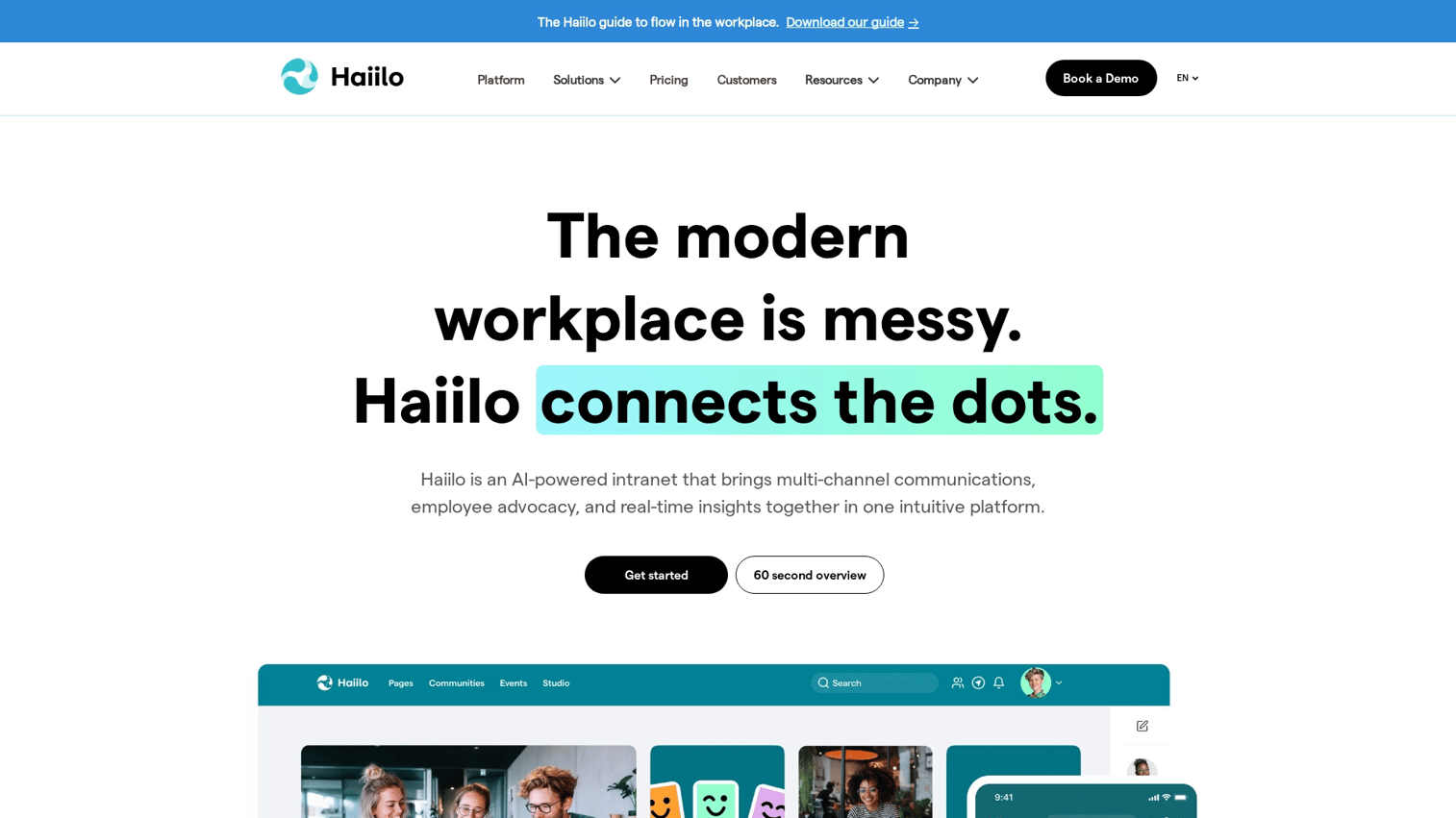
Haiilo combines internal communications with employee advocacy, providing an employee app that handles both company news and external sharing. The idea: employees who feel informed and connected are more likely to advocate.
The platform works well for companies who see advocacy as an extension of employee engagement rather than a separate marketing program.
Key strengths
- Internal communications hub: Company news, updates, and resources in one place
- Employee app: Mobile-first experience for both internal and external content
- Engagement analytics: Track both internal engagement and external advocacy metrics
Best for: Companies who want to connect employee communications and advocacy in one platform.
Haiilo pricing: Custom pricing based on company size and feature requirements.
8. Birdeye
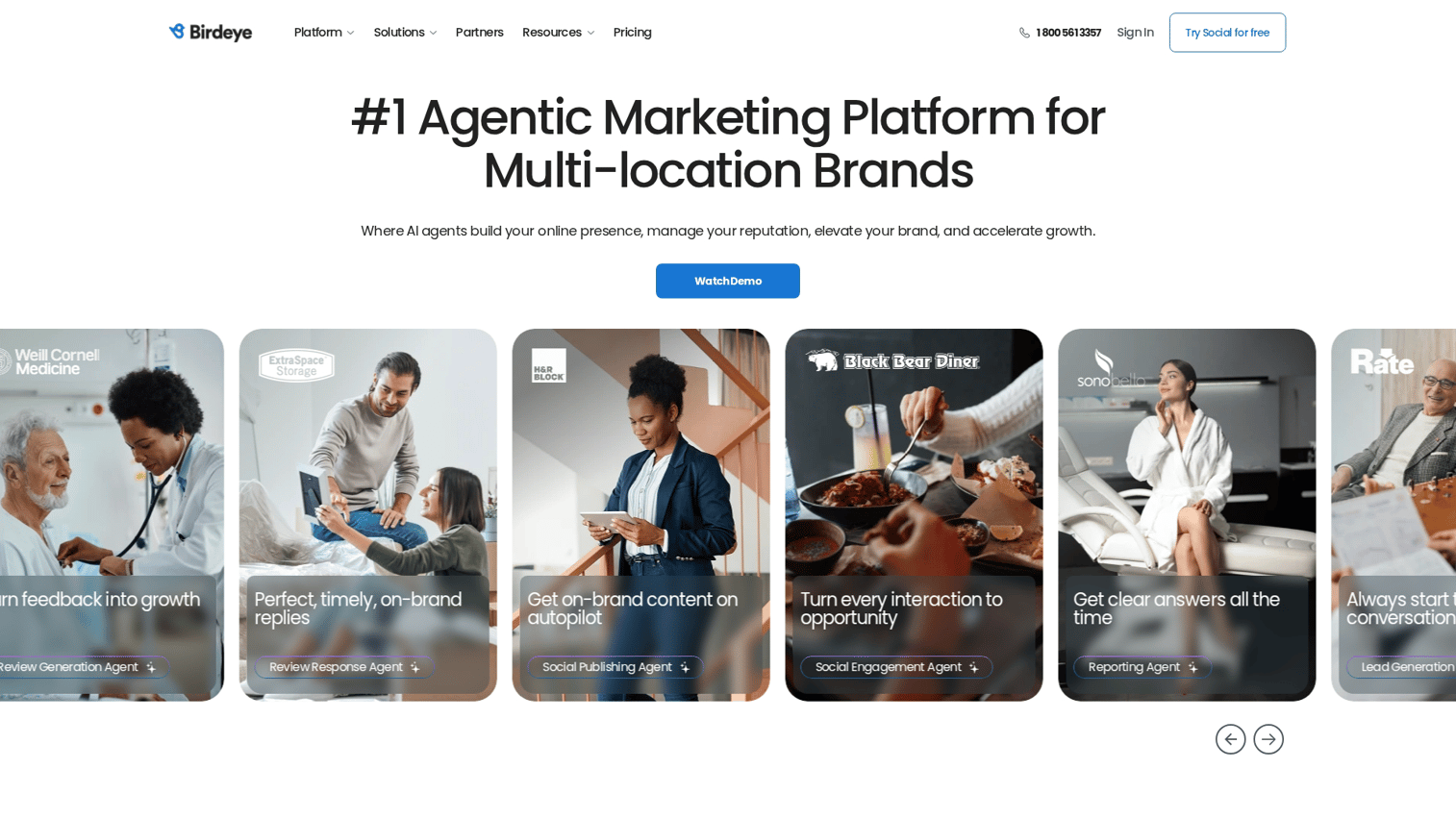
Birdeye focuses on online reputation management and review generation, particularly for multi-location businesses. The platform helps you collect reviews across Google, Facebook, and industry-specific sites, then manage responses from one dashboard.
For local businesses and franchises, customer advocacy often means reviews on the platforms where prospects search. Birdeye is built for that use case.
Key strengths
- Review management across platforms: Collect and respond to reviews from one place
- Local SEO support: Reviews feed into local search visibility
- Multi-location dashboards: Compare performance across locations
Best for: Multi-location businesses and franchises focused on local reputation.
Birdeye pricing: Plans start at $299/month per location. Multi-location businesses pay per-location fees.
9. Annex Cloud
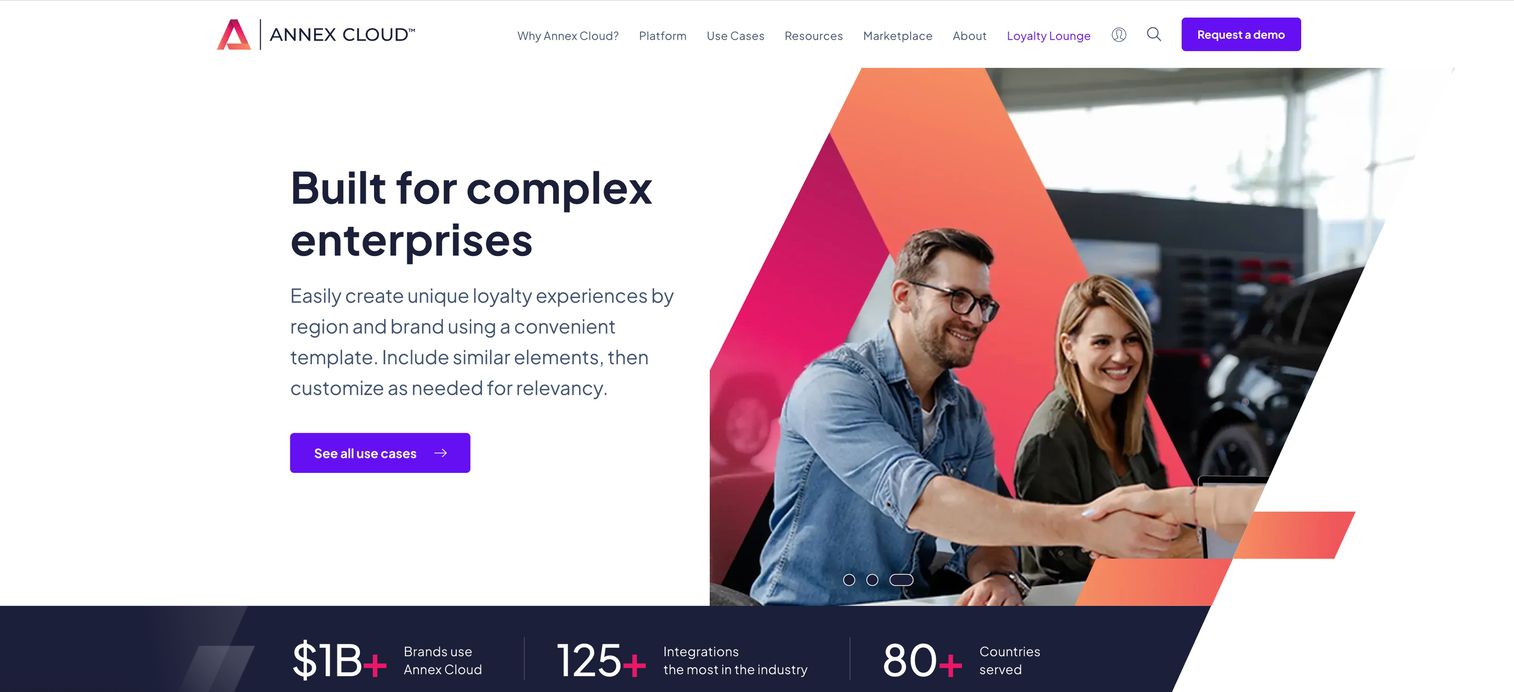
Annex Cloud provides enterprise loyalty and advocacy programs with a modular approach. You combine loyalty points, referral tracking, and UGC collection based on your specific program requirements.
The platform works well for large brands with complex program requirements who want flexibility in how they structure rewards and recognition.
Key strengths
- Loyalty program management: Points, tiers, and rewards for customer engagement
- Referral tracking: Attribution and rewards for customer referrals
- Enterprise customization: Flexible program design for complex requirements
Best for: Enterprise brands with sophisticated loyalty and advocacy program requirements.
Annex Cloud pricing: Custom pricing based on program scope.
Key features to evaluate in advocacy campaign software
When comparing platforms, focus on capabilities that directly impact whether advocates actually participate and whether you can prove program ROI.
Content sharing and distribution tools
Advocates won't share if it's hard. Look for one-click sharing, mobile apps, suggested copy, and scheduling features. The best platforms make sharing take seconds, not minutes.
Gamification and rewards programs
Points, leaderboards, badges, and tangible rewards drive ongoing participation. Without some form of recognition or incentive, advocate engagement typically drops off after the initial excitement fades.
Analytics and attribution capabilities
You want to prove ROI to keep budget. Look for engagement metrics, conversion attribution, and reporting dashboards that connect advocate activity to pipeline.
CRM and marketing automation integrations
Your advocacy platform connects with your existing stack. Check for native integrations with Salesforce, HubSpot, Marketo, and your other core tools. Without clean data flow, you can't score leads or attribute revenue.
Customer support and implementation
Don't overlook vendor support quality. Ask about implementation assistance, training resources, and ongoing customer success with interactive guides. A powerful platform that takes six months to deploy isn't actually powerful.
How to choose the best advocacy software for your team
Use this checklist to narrow your options:
- Identify your primary advocacy type: Employee, customer, or grassroots mobilization. Most platforms specialize in one.
- Map to your existing stack: Check integration requirements with CRM and marketing automation. Broken integrations kill programs.
- Assess content requirements: Some platforms excel at UGC, others at curated content distribution. Match to your content approach.
- Evaluate admin requirements: Consider team size and time available for program management. Some platforms require dedicated program managers.
- Test advocate experience: Sign up as an advocate to evaluate the actual user flow. If it's clunky, adoption will suffer.
Tip: Run a pilot with a small advocate group before full commitment. You'll learn more in 30 days of real usage than from any demo.
Build advocacy programs that actually convert
The best brand advocacy software matches your specific advocacy type and integrates with existing workflows. Employee advocacy platforms work differently than customer advocacy tools, and grassroots mobilization software serves entirely different use cases.
For product-led teams, consider how interactive demos can strengthen any advocacy program. When advocates share hands-on product experiences instead of static testimonials, prospects get immediate value and advocates have something genuinely useful to share.
Start your journey with Guideflow today!
FAQs about brand advocacy platforms
Brand advocacy leverages existing customers and employees who genuinely use your product, while influencer marketing pays external personalities for sponsored promotion. Advocates typically have smaller but more trusted audiences, and their recommendations carry more weight because they're not paid endorsements.
Most teams see measurable results within the first quarter of launching a structured program. However, building a large active advocate base typically takes six to twelve months. Early wins often come from review generation and referral programs, while sustained advocacy takes longer to develop.
Most enterprise-grade customer advocacy platforms offer native integrations with major CRMs like Salesforce and HubSpot. These integrations allow you to sync advocate activity with contact records, feed engagement data into lead scoring, and attribute pipeline to specific advocates.
Successful programs combine intrinsic motivation through recognition and leaderboards with extrinsic rewards like gift cards, experiences, or charitable donations tied to participation. The key is making sharing easy and showing employees the impact of their contributions.
Focus on reach and engagement from shared content, referral conversion rates, review volume and sentiment, and attributed pipeline or revenue from advocate-sourced leads. The most important metric depends on your program goals, whether that's brand awareness, lead generation, or customer retention.
Many advocacy platforms offer scaled pricing for small businesses, though teams with limited resources prioritize platforms with quick setup and minimal ongoing administration. Some platforms like Yotpo and Birdeye specifically serve SMB use cases, while others like Influitive target enterprise programs.