

Your happiest customers are already talking about you. The question is whether you're capturing that momentum or letting it evaporate into casual conversations that never reach new buyers.
Customer advocacy software turns scattered word-of-mouth into a systematic growth channel by helping you identify satisfied customers, give them reasons to participate, and make it easy for them to refer, review, and recommend. This guide breaks down 15 platforms across gamified advocacy hubs, referral tools, and review management systems so you can match the right tool to your primary goal.
What's inside
This guide covers what customer advocacy software does, how to evaluate platforms, and a ranked list of 15 tools organized by use case. You'll find practical guidance for marketing and customer success teams looking to turn satisfied customers into a scalable growth engine through referrals, reviews, and references.
TL;DR
Customer advocacy software helps you identify, engage, and mobilize happy customers to generate referrals, reviews, and testimonials at scale.
The main categories include gamified advocacy hubs, specialized referral platforms, and review management tools.
Guideflow offers a unique angle: using interactive demos to educate advocates so their recommendations carry more weight.
Match the platform's core function to your primary goal, whether that's driving referrals, collecting reviews, or building community.
What is customer advocacy software
Customer advocacy software enables businesses to identify, manage, and mobilize satisfied customers to act as brand advocates through referrals, reviews, and social sharing. Top platforms like Influitive, UserEvidence, and SlapFive offer gamification, rewards, and referral tracking to build loyalty and increase sales. The tools automate advocacy, turning satisfied users into testimonials, case studies, and brand enthusiasts.
This category is distinct from general CRM or customer support tools. The primary function here is activating customers as a marketing channel rather than managing support tickets or tracking deals.
Identify advocates: Find customers most likely to recommend you based on satisfaction scores, product usage, or engagement signals.
Engage advocates: Give customers compelling reasons and rewards to participate in your program.
Mobilize advocates: Make it simple for customers to share your brand, refer friends, write reviews, and participate in case studies.
How advocate marketing platforms turn customers into promoters
The typical workflow starts by inviting select customers to join an exclusive program or hub. Inside, they see challenges or requests like "refer a friend," "write a review on G2," or "join a case study." Upon completion, they earn points, badges, or tangible rewards.
Gamification is common and effective here. It makes participation feel less like a chore and more like a game, with gamified campaigns producing 100%-150% higher engagement rates than traditional approaches.
Types of customer advocacy platforms
The landscape breaks down into several distinct categories, each serving a different primary use case:
Gamified advocacy hubs: All-in-one platforms managing comprehensive programs with challenges, points, leaderboards, and rewards. Examples include Influitive and SlapFive.
Referral platforms: Tools laser-focused on tracking, managing, and rewarding customer referrals. Examples include Referral Rock and GrowSurf.
Review and testimonial tools: Platforms specializing in collecting, managing, and displaying social proof. Examples include Birdeye and Trustpilot.
Community platforms: Tools that help you build a dedicated community where advocates connect with each other and your brand. Higher Logic is a notable example.
Why customer advocacy software drives revenue growth
Customer advocacy platforms deliver tangible business outcomes by turning customer happiness into a predictable revenue channel. The impact shows up in lower customer acquisition costs, higher conversion rates through social proof, and improved retention among your most engaged customers.
Scale referrals and customer references
Advocacy platforms automate the entire referral process, from tracking who referred whom to issuing rewards. They also make it easy to find and manage reference customers for sales calls, replacing cumbersome spreadsheets and saving your sales team valuable time during deal cycles.
Collect reviews and testimonials at scale
Advocacy tools automate the process of asking happy customers for reviews at the perfect moment, such as after a positive support interaction or product milestone. This helps you consistently build fresh, positive social proof on sites like G2, Capterra, and Google that modern buyers expect to see.
Increase customer lifetime value and retention
Customers who actively participate in advocacy programs develop a stronger connection to your brand. This increased engagement often leads to higher customer lifetime value - Harvard Business Review research found referred customers have 25% higher lifetime value - as advocates are more likely to renew, expand their usage, and resist competitive offers.
Key features of the best advocacy software
When evaluating tools, the following capabilities separate the best platforms from the rest.
Gamification and rewards programs
Gamification makes advocacy engaging through points, badges, leaderboards, and tiered reward systems. Strong platforms support a mix of tangible rewards (gift cards, company swag) and intangible rewards (public recognition, exclusive access to new features, advisory board seats).
Referral and reference tracking
Look for robust tracking that shows exactly who referred whom and automatically attributes revenue to the correct advocate. The best platforms also include a searchable database of customers who have agreed to act as references, making it easy for sales to find the right person for a specific deal.
Review collection and management
Key features include automated review request workflows triggered by customer behavior and support for multiple review platforms. Top tools also offer features to monitor and respond to reviews from a central dashboard.
Analytics and revenue attribution
The ability to measure ROI is critical. Look for platforms with strong analytics that track referral-generated revenue, the influence of references on closed-won deals, and overall program engagement metrics.
CRM and marketing automation integrations
Native integrations with your CRM (like Salesforce) and marketing automation software allow you to sync advocate data, personalize outreach, and accurately attribute pipeline and revenue to your advocacy efforts.
AI and workflow automation
Emerging capabilities include AI-powered advocate identification, which analyzes customer data to predict who is most likely to become a successful advocate. Other advanced features include automated challenge assignment and smart timing for review requests.
Best customer advocacy tools compared
# | Product | Intent | Key differentiation | Pricing | G2 rating |
|---|---|---|---|---|---|
1 | Guideflow | Educate advocates with interactive demos | Shareable product demos for effective referrals | Starts at $79/mo | 4.8/5 |
2 | Influitive | Gamified, all-in-one advocacy hub | Enterprise-grade challenges and community | Custom | 4.6/5 |
3 | Higher Logic | Community-first advocacy | Deep community engagement and peer connection | Custom | 4.4/5 |
4 | SlapFive | Capture customer voice and manage references | Customer story and video testimonial capture | Custom | 4.7/5 |
5 | Referral Rock | Mid-market referral program automation | Flexible, multi-program referral management | Starts at $200/mo | 4.6/5 |
6 | Ambassador | Unified referral and affiliate management | Manages both customer and partner programs | Custom | 4.4/5 |
7 | Mention Me | B2C and retail referral marketing | A/B testing and name-sharing for referrals | Custom | 4.6/5 |
8 | Extole | Enterprise B2C referral platform | Robust segmentation and managed services | Custom | 4.5/5 |
9 | Birdeye | Review and reputation management | Strong multi-location and local service support | Custom | 4.8/5 |
10 | Yotpo | E-commerce reviews and loyalty | Unified reviews, loyalty, and SMS for e-commerce | Custom | 4.4/5 |
11 | Trustpilot | Public review platform with business tools | High-authority public platform for trust-building | Free plan, paid from $250/mo | 4.2/5 |
12 | GrowSurf | Lightweight, developer-friendly referrals | Quick setup and embeddable widgets for SaaS | Starts at $200/mo | 4.7/5 |
13 | Advocately | B2B software review generation | Automated G2/Capterra review campaigns | Custom | 4.8/5 |
14 | NextBee | Highly customizable advocacy platform | Modular and tailored for complex enterprise needs | Custom | 4.9/5 |
15 | Zuberance | Advocate identification and program management | Focus on advocate discovery and activation | Custom | 4.5/5 |
15 best customer advocacy platforms for marketing and success teams
1. Guideflow
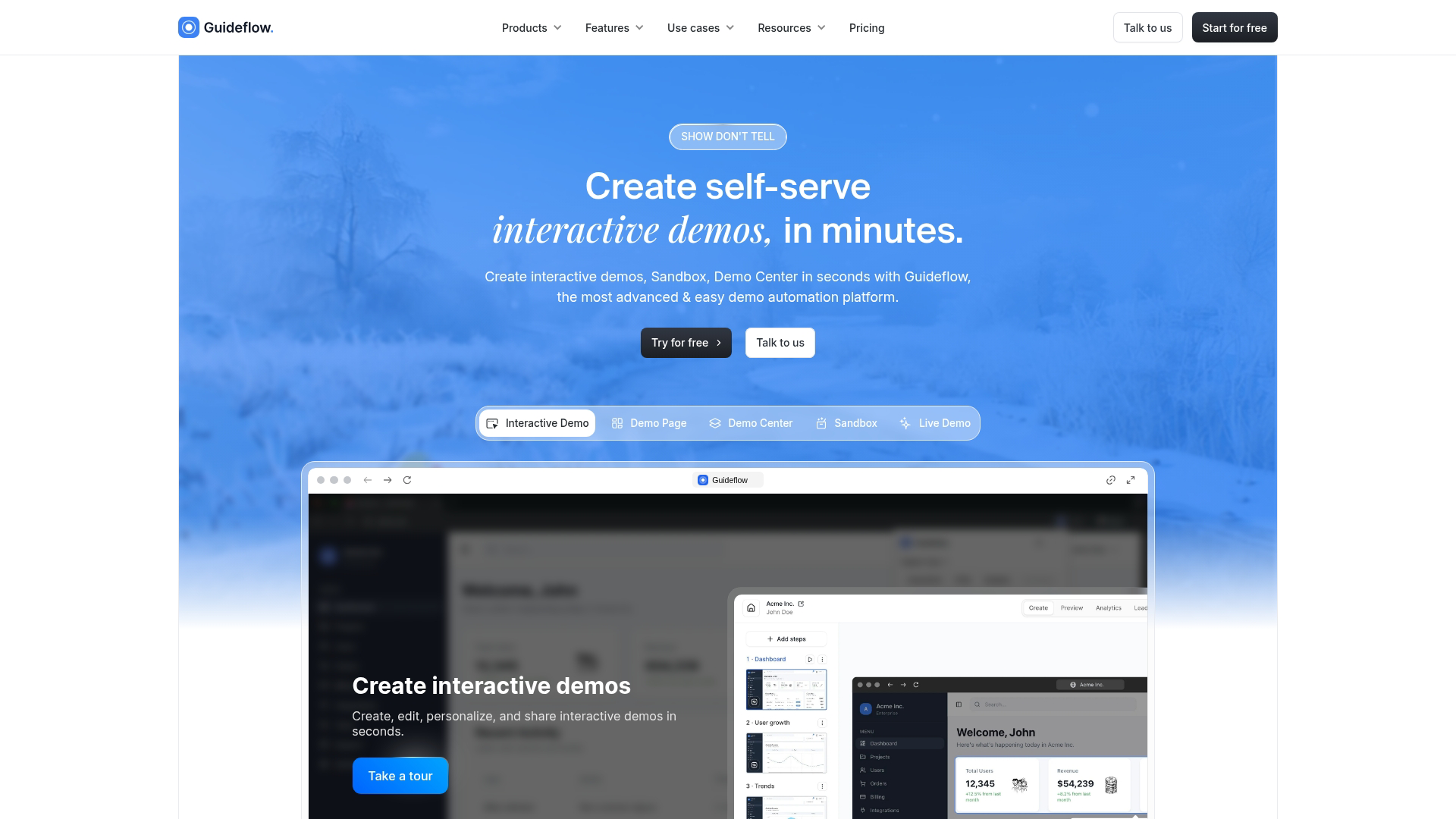
Guideflow turns customer advocacy into a powerful educational tool. It enables you to create interactive product demos that help your advocates deeply understand and explain your product, making them far more effective promoters.
The primary use case is equipping advocates with tangible, shareable product experiences they can send directly to their referrals. This moves beyond simple word-of-mouth to interactive show-and-tell.
Key strengths
Advocates who truly understand your product deliver higher-quality referrals
Interactive demos give advocates something valuable and tangible to share, not just a link
You can track which demos advocates share and how their referrals engage with the content
Start your journey with Guideflow today!
2. Influitive
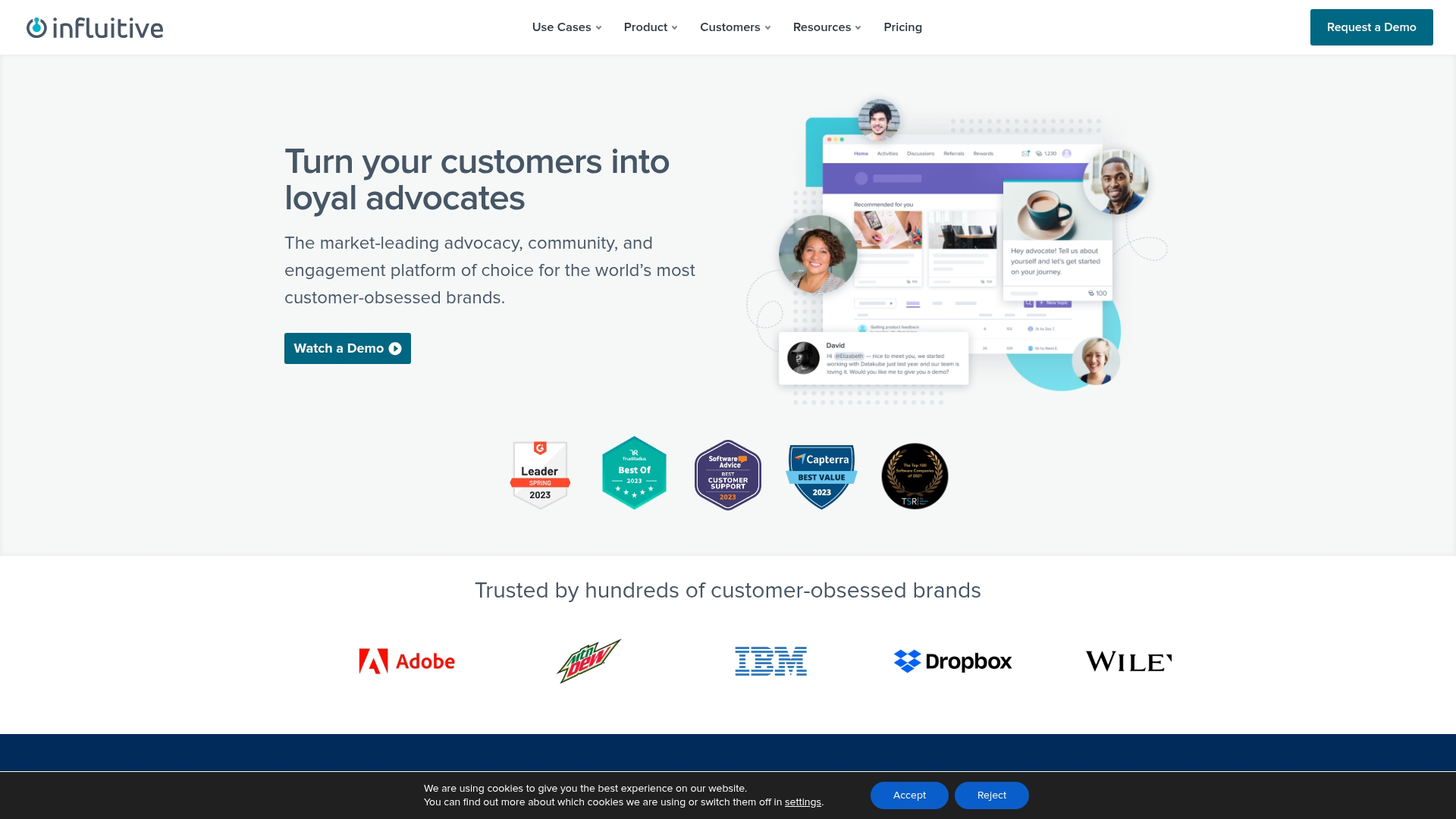
Influitive is the market-leading gamified advocacy platform, best known for its AdvocateHub product. It allows companies to build a centralized hub where they issue challenges, track completion, and manage sophisticated rewards and recognition programs. Best for enterprise B2B companies with dedicated customer marketing teams ready to manage a comprehensive program.
Key strengths
Enterprise-grade challenge and campaign management
Strong community features for peer-to-peer engagement
Deep integrations with major CRM and marketing platforms
3. Higher Logic Thrive
Higher Logic positions itself as a community-first advocacy platform. Its philosophy is that true advocacy grows from peer-to-peer connections and sense of belonging found in online communities. Best for companies that want to invest in deep, long-term community building as the foundation of their advocacy efforts.
Key strengths
Deep community engagement tools
Long-term relationship building over transactional asks
Integration with association management systems
4. SlapFive
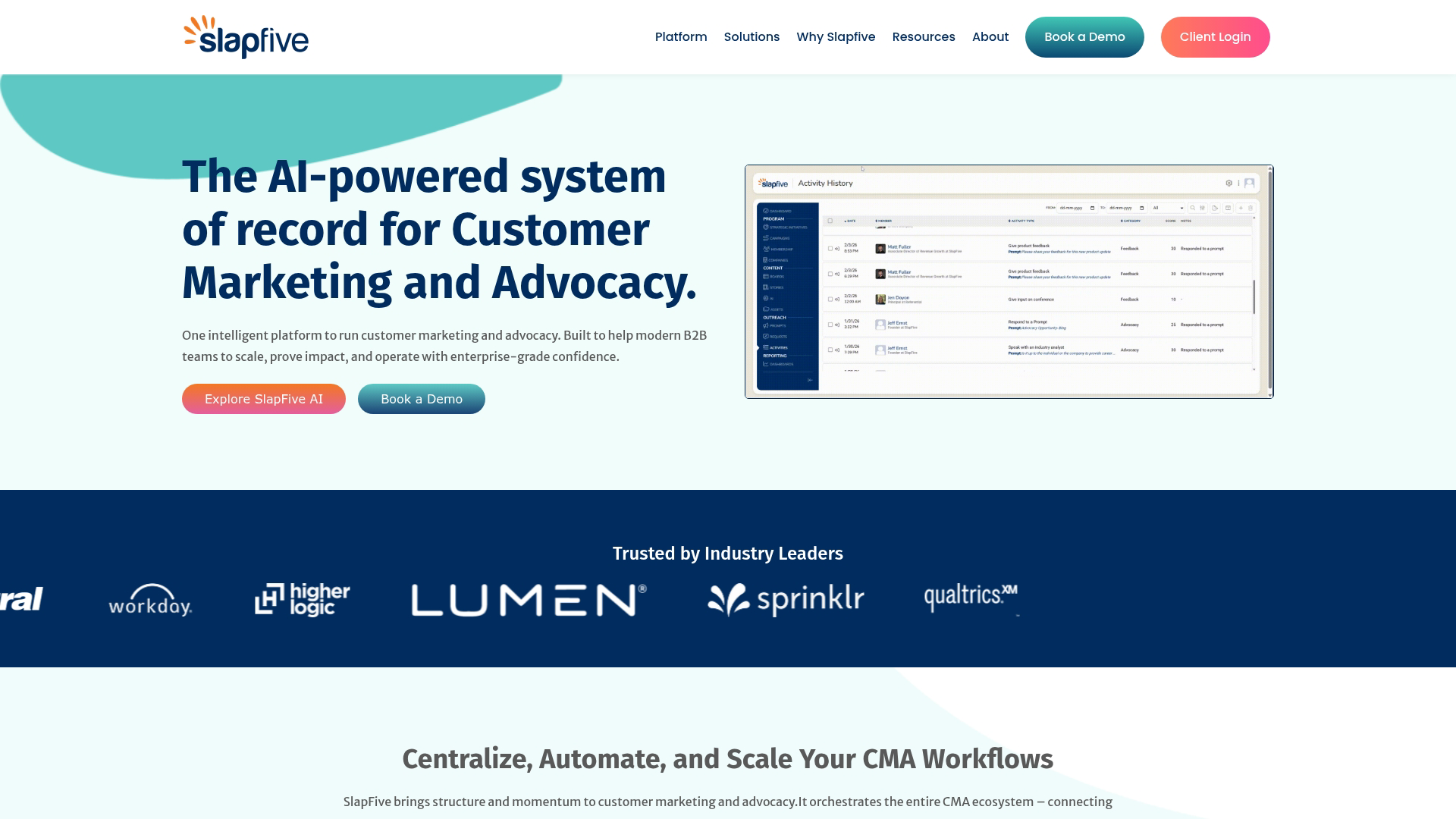
SlapFive focuses on capturing the voice of the customer and turning it into marketing assets. It excels at capturing customer stories, video testimonials, and managing a robust sales reference program. Best for B2B companies that heavily rely on customer stories and need a streamlined process for managing sales references.
Key strengths
Video testimonial capture and management
Sales reference database with search and matching
Customer story workflow automation
5. Referral Rock
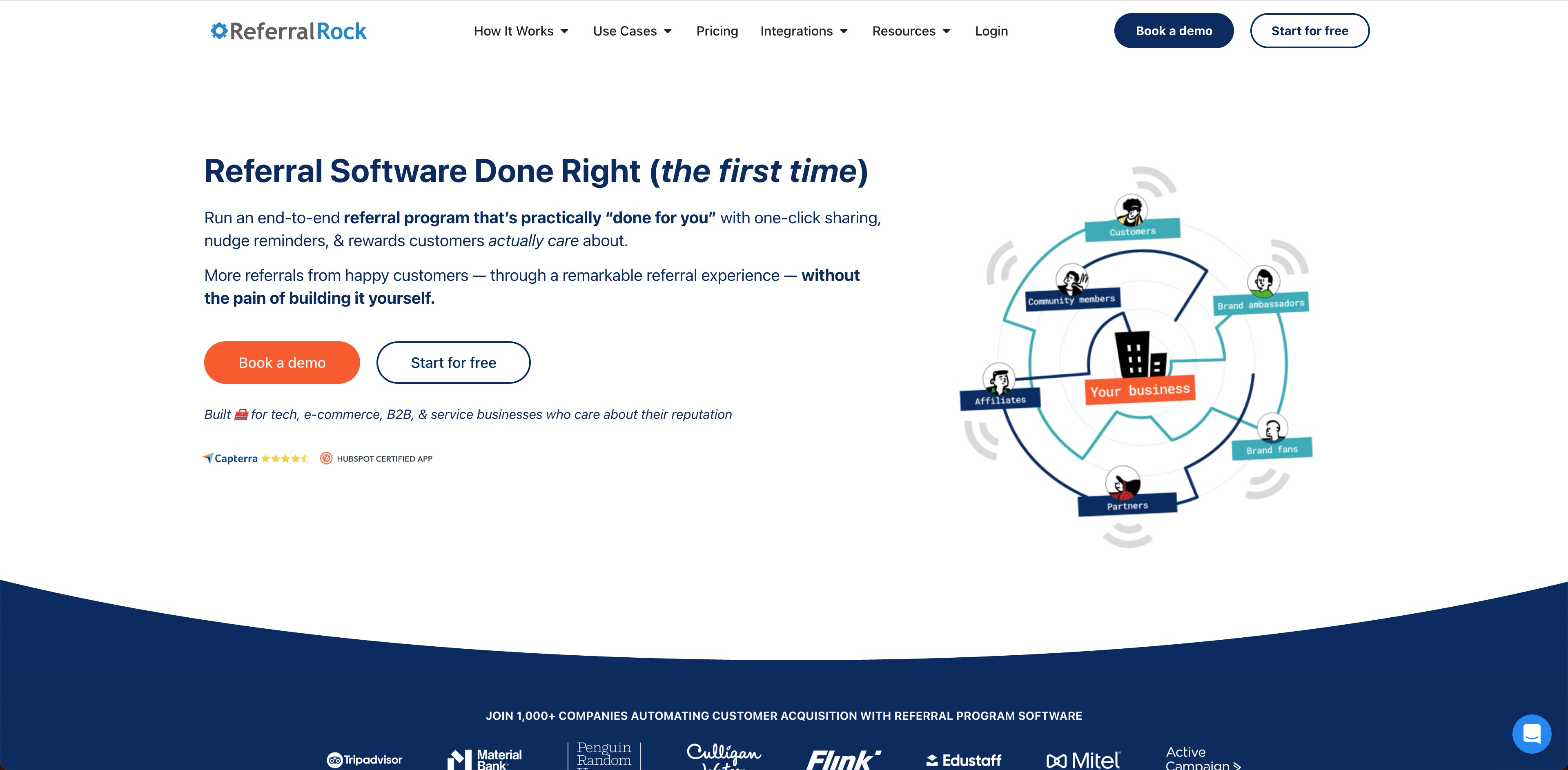
Referral Rock is dedicated referral program software designed for the mid-market. It provides all the tools to launch, automate, and manage a referral program, including customizable rewards and multiple program support. Best for companies whose primary advocacy goal is to generate and scale a customer referral program.
Key strengths
Flexible reward structures and payout options
Support for customer, partner, and employee referral programs
Easy setup without heavy technical requirements
6. Ambassador
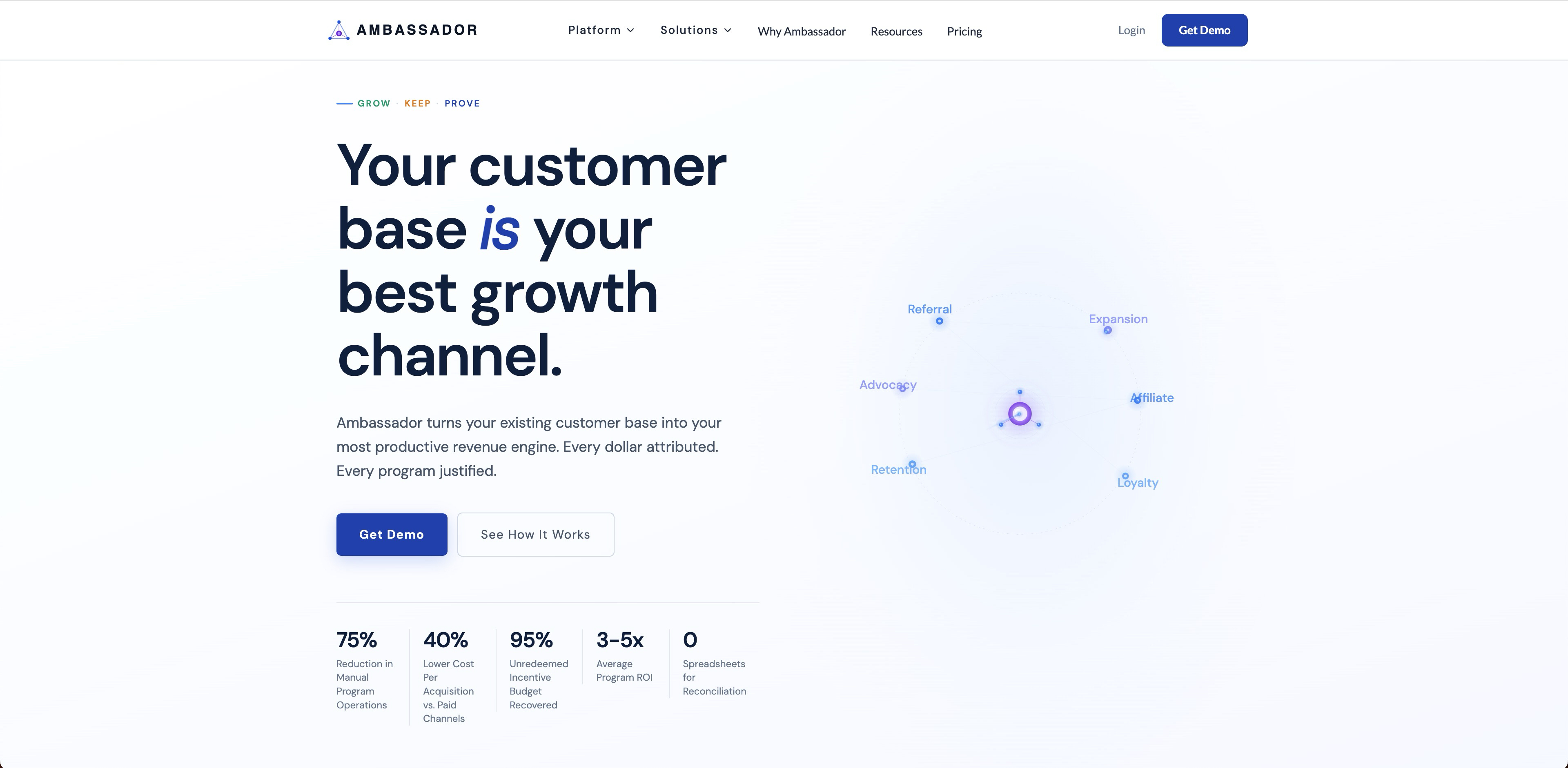
Ambassador is a flexible platform that manages referral, affiliate, partner, and influencer marketing programs. Its key strength is handling multiple types of advocate relationships within a single system. Best for companies that need a unified solution to manage both customer referrals and more formal partner or affiliate programs.
Key strengths
Unified management of customer, partner, and affiliate programs
Flexible reward structures across different advocate types
Comprehensive tracking and attribution across multiple channels
7. Mention Me
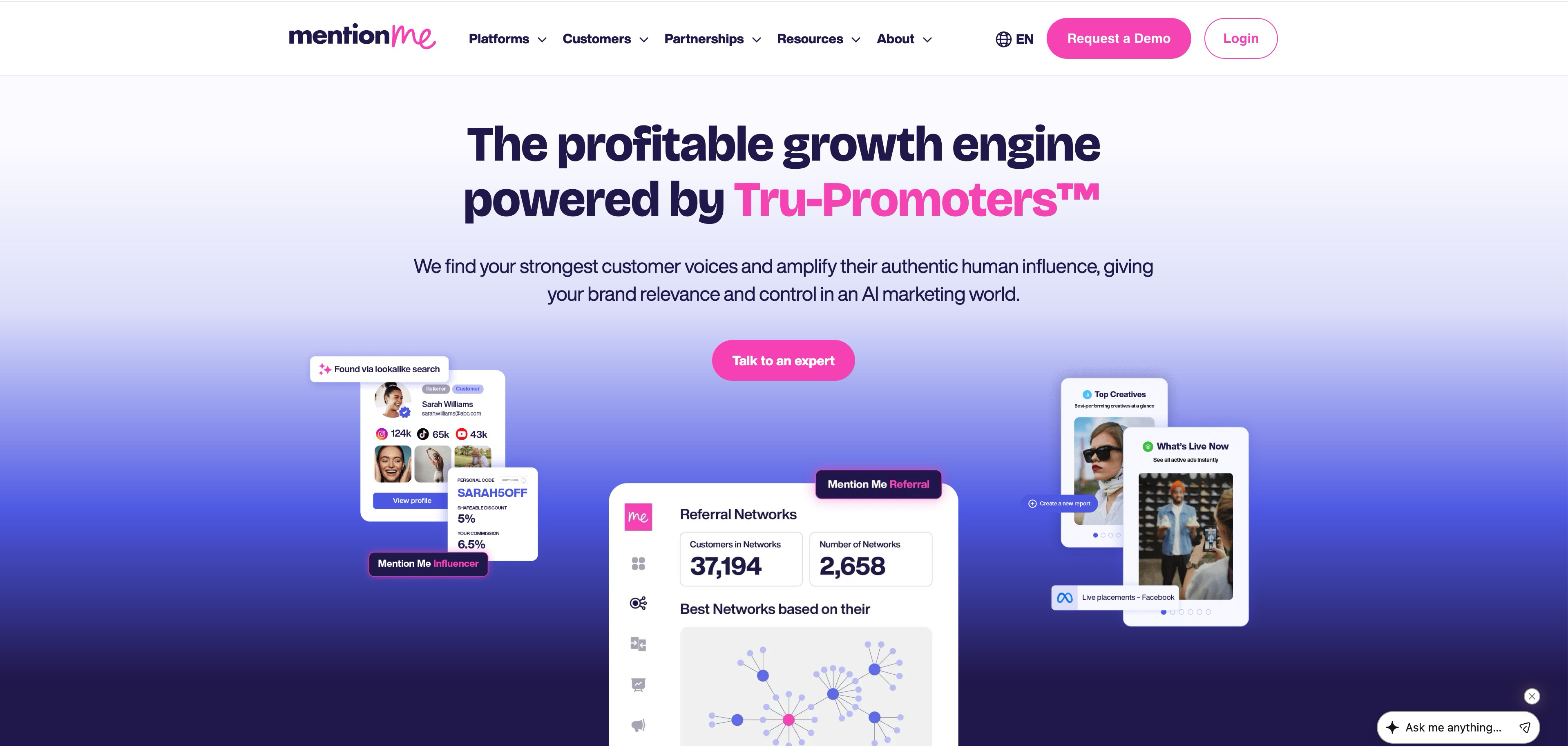
Mention Me is a referral marketing platform built for consumer brands and e-commerce. It offers sophisticated features like A/B testing of referral offers and "name sharing," which allows customers to refer friends simply by telling them to enter their name at checkout. Best for B2C and e-commerce companies looking to optimize referral performance.
Key strengths
Advanced A/B testing for referral offer optimization
Frictionless name-sharing referral mechanism
Strong focus on conversion rate optimization for consumer brands
8. Extole
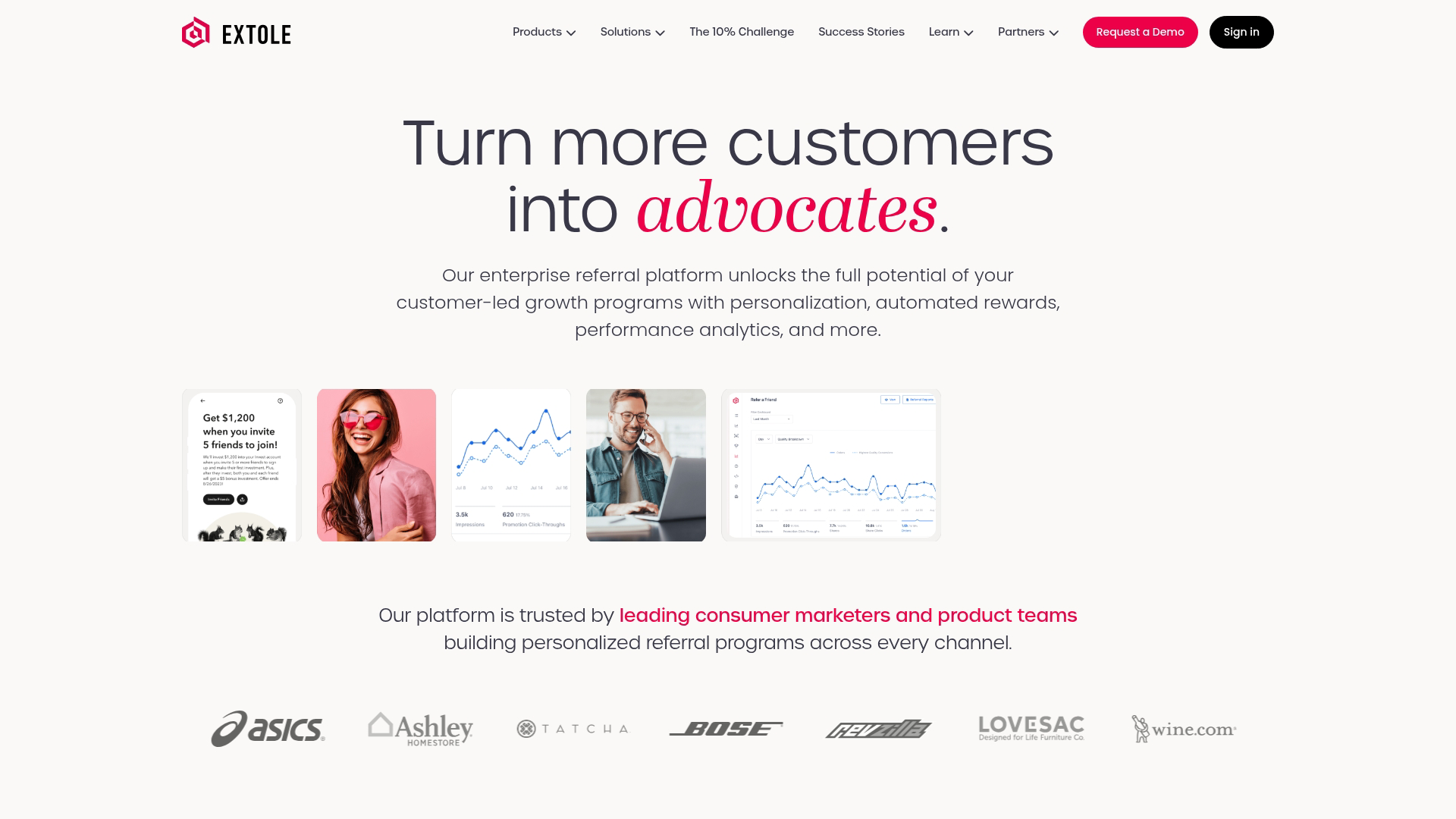
Extole is an enterprise-grade referral and advocacy platform. It provides robust segmentation capabilities, deep integrations with enterprise systems, and dedicated support to help large brands run complex programs. Best for large B2C brands that need a powerful, scalable solution to manage high-volume referral campaigns.
Key strengths
Enterprise-grade scalability for high-volume programs
Advanced customer segmentation and targeting
Dedicated managed services and strategic support
9. Birdeye
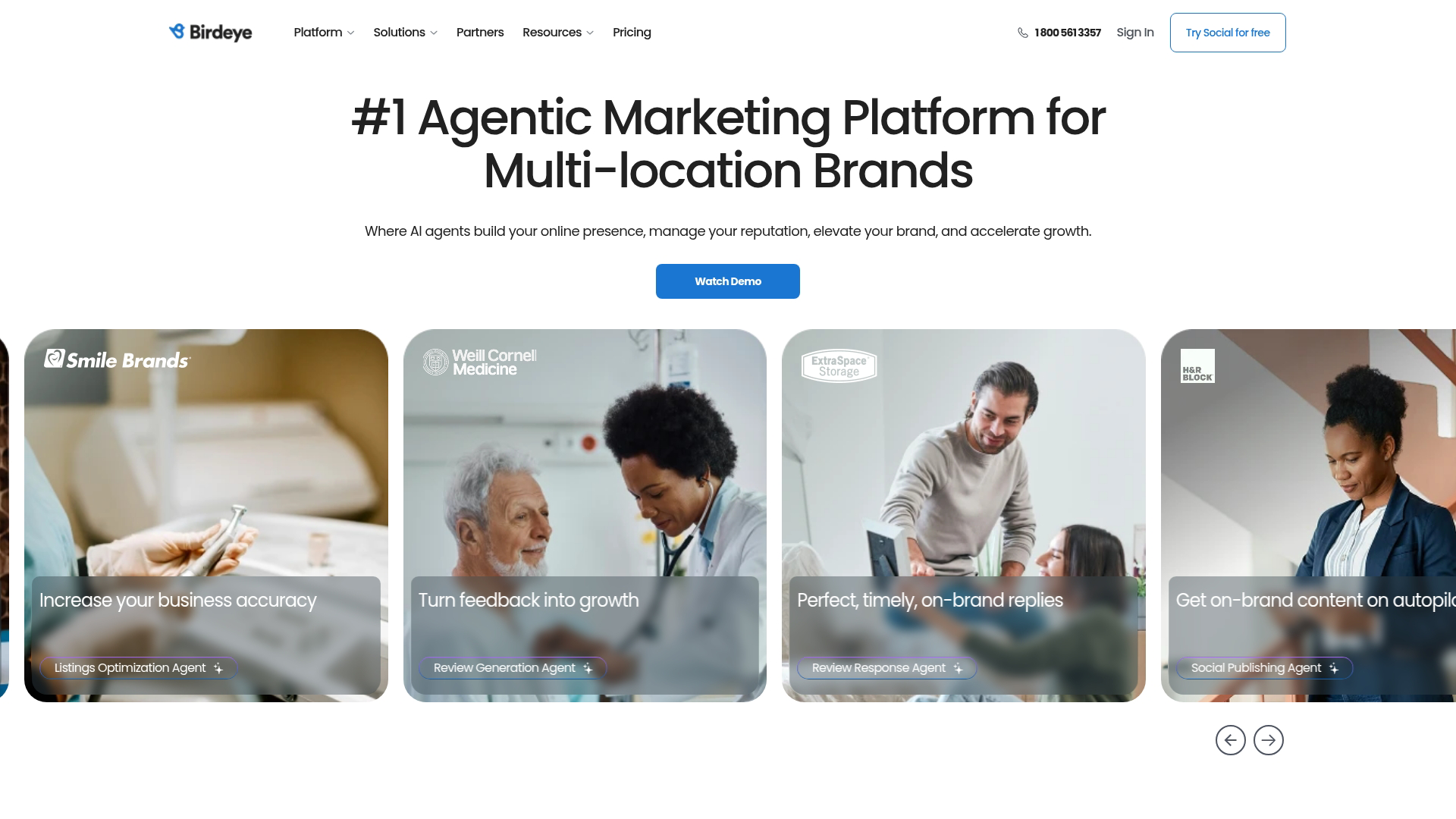
Birdeye is a leading review and reputation management platform. It helps businesses collect reviews across hundreds of sites, manage their online reputation from a single dashboard, and interact with customers through web chat and messaging. Best for local services, healthcare, and retail companies that need to manage their reputation across many physical locations.
Key strengths
Multi-location reputation management at scale
Automated review collection across 200+ sites
Integrated customer messaging and web chat
10. Yotpo
Yotpo is an e-commerce marketing platform that combines reviews, loyalty programs, user-generated content, and SMS marketing. Its strength lies in tight integration with e-commerce platforms like Shopify. Best for e-commerce brands that want a single platform to manage customer reviews, loyalty, and retention marketing.
Key strengths
All-in-one e-commerce retention suite
Native integrations with major e-commerce platforms
User-generated content collection and display
11. Trustpilot
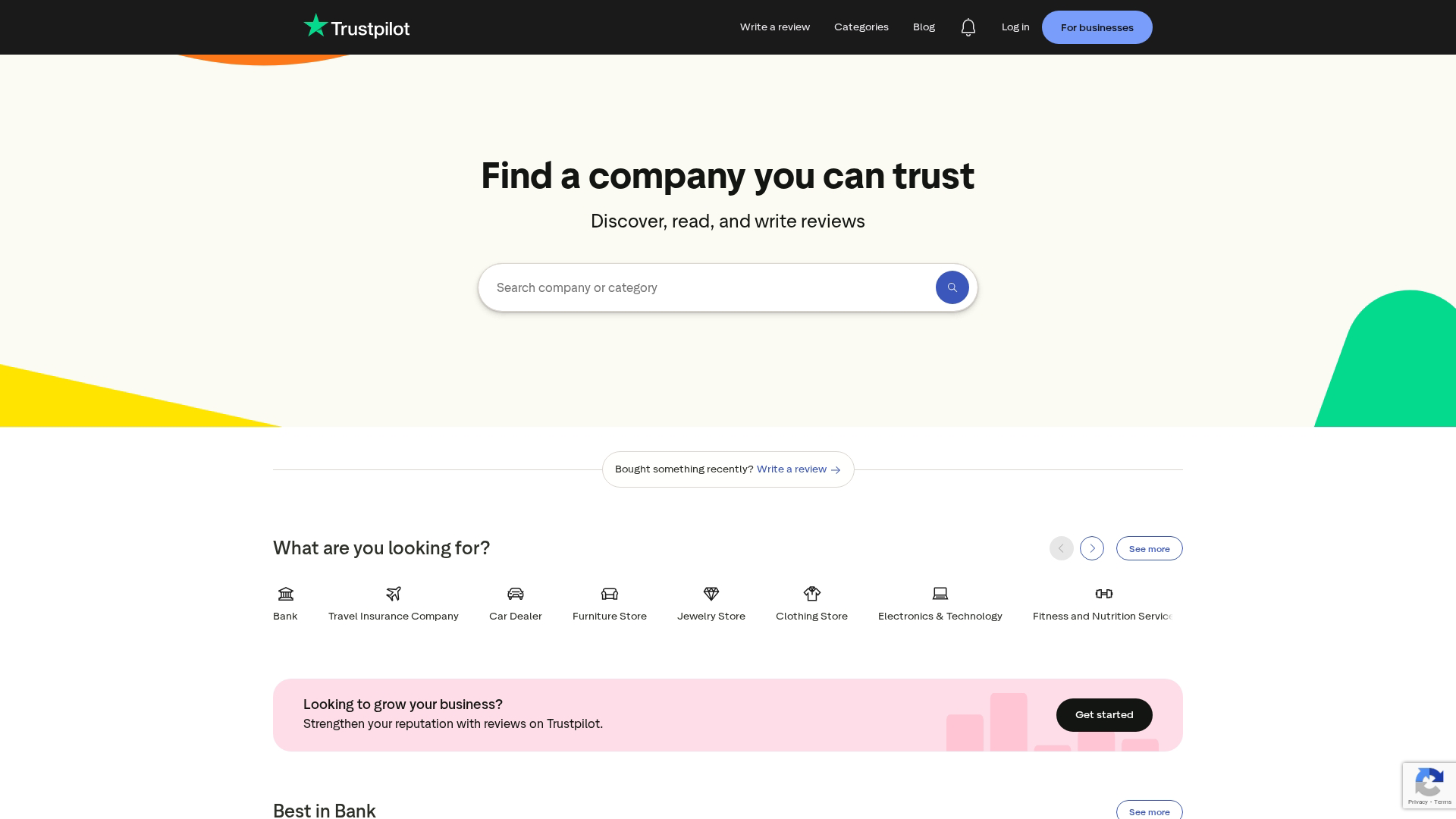
Trustpilot is a well-known public review platform that also offers business tools. Companies can proactively collect customer reviews, display them on their website, and leverage their public rating in marketing materials. Best for companies that want to build trust by collecting reviews on a high-authority, third-party public platform.
Key strengths
High-authority public review platform with strong SEO value
TrustBox widgets for displaying reviews on your site
Global reach and brand recognition
12. GrowSurf
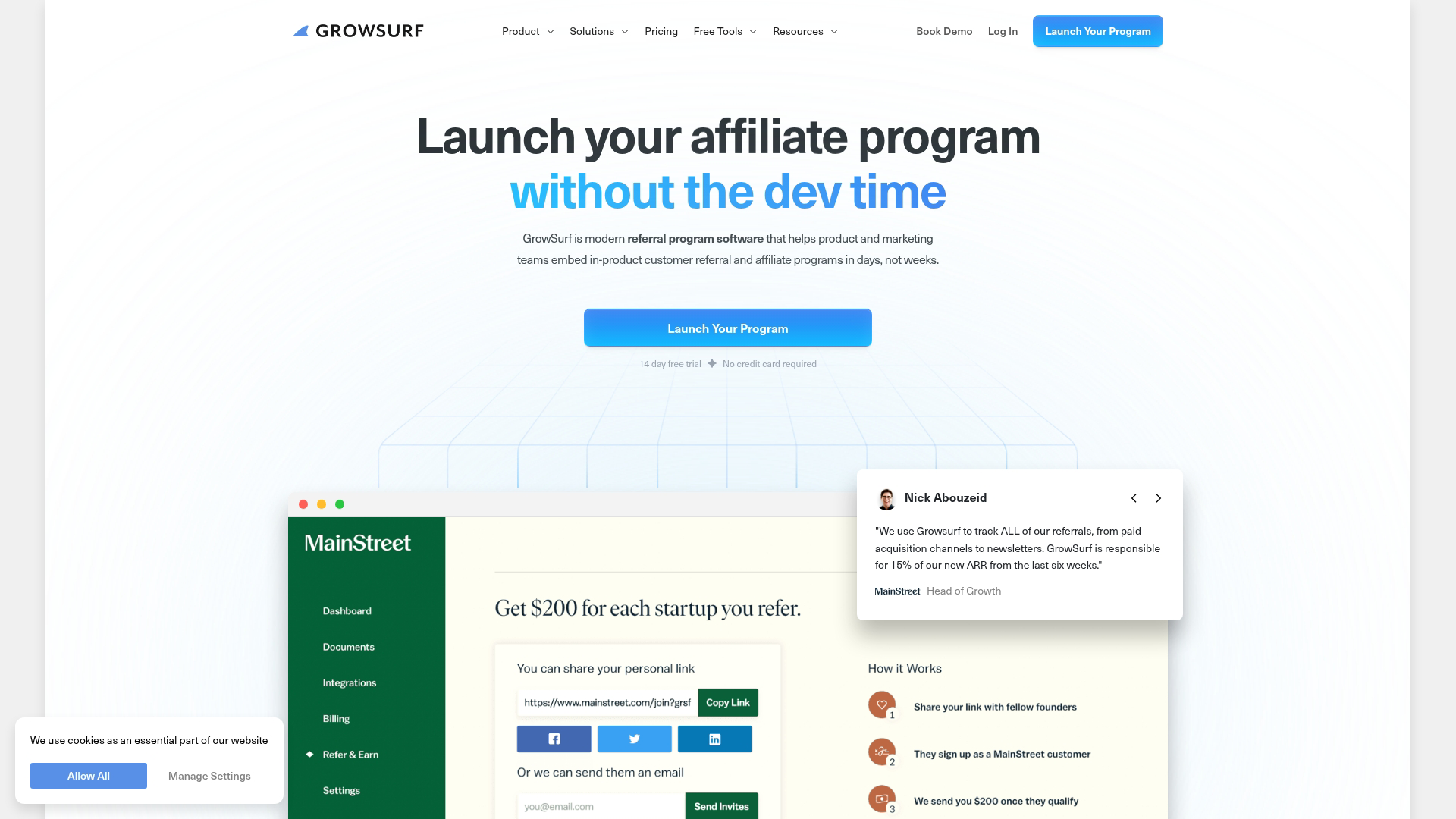
GrowSurf is lightweight and developer-friendly referral software. It's designed for quick and easy launch, allowing companies to embed referral programs directly into their product or website with minimal effort. Best for startups and SaaS companies that want to launch a referral program quickly without heavy implementation.
Key strengths
Quick setup with minimal technical requirements
Developer-friendly API and embeddable widgets
Clean, simple interface focused on core referral functionality
13. Advocately
Advocately is a specialized platform focused on generating reviews for B2B software companies on sites like G2 and Capterra. It automates the process of identifying happy customers and requesting reviews. Best for B2B SaaS companies whose primary goal is to increase their review count and rating on key software review sites.
Key strengths
Specialized focus on B2B software review sites
Automated review request workflows based on customer health
Campaign tracking and review attribution
14. NextBee
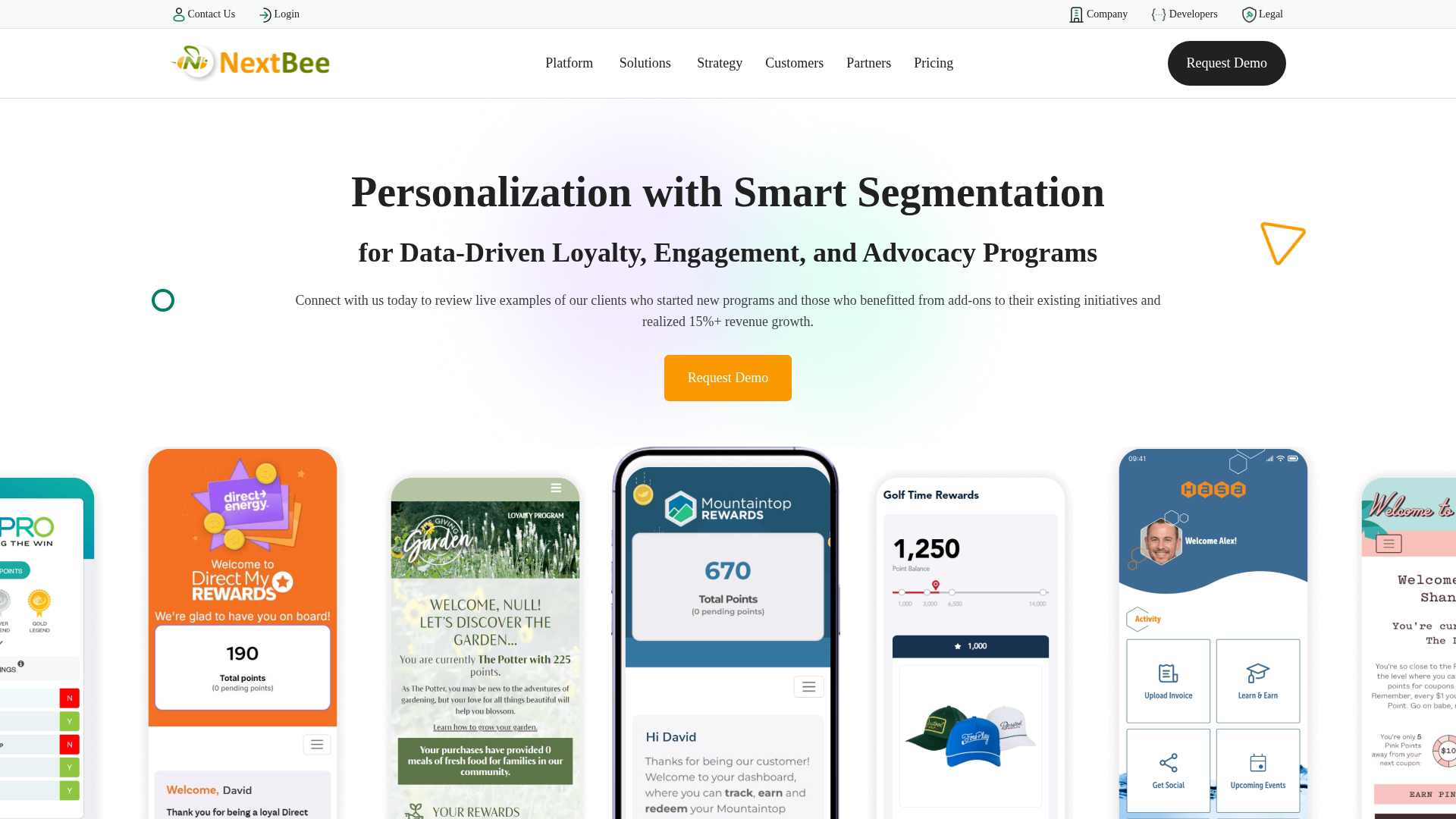
NextBee is a highly customizable loyalty and advocacy platform. It offers a modular approach, allowing companies to build a program with specific features they need, from referrals and reviews to gamification and contests. Best for large companies that have unique requirements and need a highly tailored advocacy program.
Key strengths
Highly customizable modular architecture
Flexible program design for complex enterprise needs
Support for multiple advocacy program types in one platform
15. Zuberance
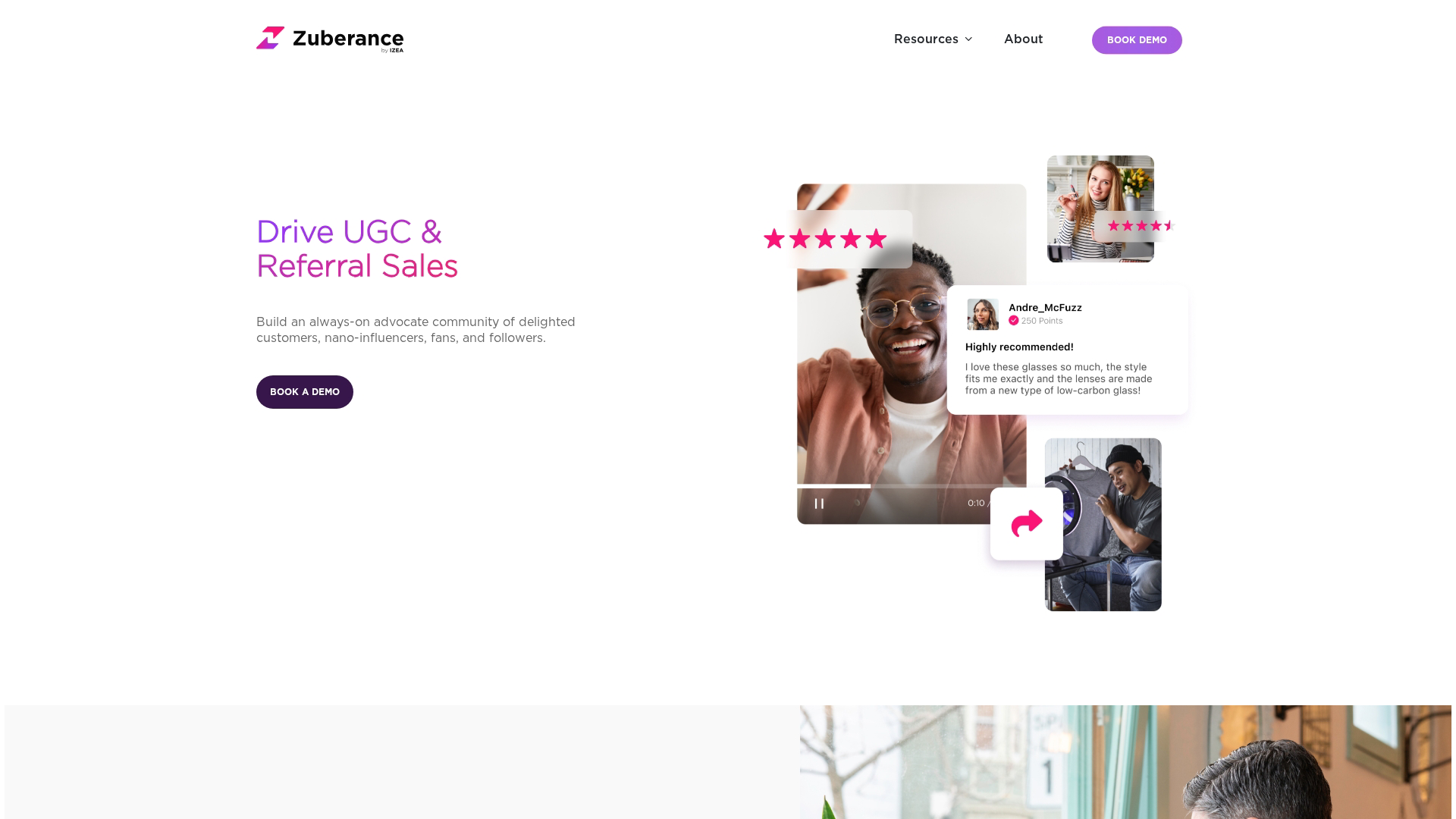
Zuberance helps companies identify their most passionate advocates and mobilizes them through structured programs. The platform focuses on advocate discovery, program creation, and providing tools for advocates to easily share content. Best for B2B companies looking to start a formal advocacy program from the ground up.
Key strengths
Strong advocate identification and scoring capabilities
Structured program frameworks for new advocacy initiatives
Content sharing tools and social amplification features
When to use an advocacy marketing platform
Understanding your company's stage and primary goals helps you decide if and when an advocacy platform is the right investment.
Building word of mouth at early-stage companies
Early-stage companies can benefit by capturing the momentum of their first happy customers before it fades. Instead of a full advocacy platform, start with lightweight referral tools to formalize word-of-mouth and begin tracking its impact.
Scaling B2B SaaS with long sales cycles
For B2B companies with long and complex sales cycles, advocacy platforms are invaluable. They provide a systematic way to source customer references and compelling stories that help sales teams build trust and close deals.
Driving social proof for e-commerce brands
In e-commerce, social proof like reviews and referrals has a direct and measurable impact on conversion rates—products with at least five reviews have a 270% greater chance of being purchased. Advocacy and review platforms help brands automate the collection of reviews, ensuring a high volume of recent, positive feedback.
Creating advocates through product education
For product-led companies, advocacy can be supercharged through education. When customers deeply understand your product's value, they become more confident and effective advocates. Using tools like interactive demos to educate customers can turn them into power users who refer more effectively.
How to choose the right customer advocacy platform
Use this practical guidance to evaluate your options and make an informed decision.
Match features to your primary use case
Different tools excel at different things. Start by defining your main goal:
Primary goal is referrals: Look at Referral Rock, GrowSurf, and Ambassador
Primary goal is reviews: Look at Birdeye, Advocately, and Trustpilot
Primary goal is full advocacy programs: Look at Influitive and SlapFive
Primary goal is community: Look at Higher Logic
Evaluate CRM and digital advocacy platform integrations
The depth and quality of integrations vary widely. Before committing, check for native, bidirectional integrations with your existing stack, especially your CRM, marketing automation, and analytics tools. Poor integrations lead to manual data entry and lost attribution.
Consider program maturity and team resources
Be realistic about the time and resources you can dedicate. Full-scale advocacy platforms like Influitive require a dedicated program manager. Lighter referral or review tools can often be managed with minimal oversight from a marketing team member.
Compare pricing models and ROI potential
Pricing varies widely, from free or low-cost tiers for basic referral tools to six-figure annual contracts for enterprise advocacy platforms. Most mid-market solutions fall in the range of a few hundred to a few thousand dollars per month.
Best practices for incentivizing customer advocacy
Follow these tactical tips to run an effective and authentic advocacy program.
Balance rewards with authentic recognition
While tangible rewards are effective, over-relying on monetary incentives can attract low-quality advocates motivated only by the reward. The most successful programs mix tangible rewards with authentic recognition, exclusive access, and elevated community status.
Segment advocates by engagement level
Not all advocates are created equal. Create tiered engagement levels to match the ask to the advocate's enthusiasm. Casual advocates might be perfect for simple asks like leaving a review, while power advocates can be tapped for case studies or speaking opportunities.
Create multiple advocacy pathways
Different customers want to advocate in different ways. Some are natural connectors who love making referrals, others enjoy leaving detailed reviews, and some may be willing to create content or speak on your behalf. A great program offers multiple ways for advocates to participate.
Build your brand advocacy stack
The right customer advocacy platform depends on your primary goal, your existing tech stack, and your team's resources. Before evaluating tools, start with clear objectives for what you want to achieve.
No matter which platform you choose, strengthening your program with product education through tools like interactive demos can make your advocates more confident, knowledgeable, and effective at sharing your product's value.
Start your journey with Guideflow today!
FAQs about customer advocacy software
What is the difference between employee advocacy and customer advocacy software?
Employee advocacy software helps a company's employees share approved content on their personal social media networks. Customer advocacy software mobilizes paying customers to refer, review, and recommend the company's products or services. The audiences and use cases are distinct.
How long does it take to implement a customer advocacy platform?
Implementation time ranges from a few days for simple, lightweight referral tools to several weeks or months for full-scale advocacy platforms that require deep CRM integrations and custom reward program configuration.
What budget should companies plan for advocacy campaign software?
Pricing varies widely, from free or low-cost tiers for basic referral tools to six-figure annual contracts for enterprise advocacy platforms. Most mid-market solutions fall in the range of a few hundred to a few thousand dollars per month.
Can digital advocacy platforms work for both B2C and B2B companies?
Yes, but the choice of tool and approach often differs. B2C companies typically prioritize high-volume review collection and automated referral programs. B2B companies tend to focus more on in-depth case study collection and managing a database of sales reference customers.
What is the difference between referral software and full advocacy platforms?
Referral software is specialized to do one thing well: track and reward customer referrals. Full advocacy platforms are more comprehensive, often including referral management alongside gamification, community features, reference management, and multiple engagement pathways.
How do interactive product demos support customer advocacy programs?
Interactive demos support advocacy by helping advocates deeply understand your product's features and value. Advocates gain shareable, hands-on assets to send to referrals, making their word-of-mouth recommendations more tangible and effective than verbal descriptions alone.